Blog Archives
Bong of the Living Dead (2017)
 I’m in a movie. That’s a pretty vain opening sentence but I wanted to get it out of the way. I was one of the very fortunate horror fans to attend the Nightmares Film Festival, which in two short years has already vaulted to being one of the top film festivals in the nation. I came to see the premiere of Bong of the Living Dead, a stoner zombie comedy that filmed in my hometown of Columbus, Ohio back in 2013 (oh what a simpler time). I had the good fortune to be a zombie extra, and wouldn’t you know, my shambling, bloody, stupid self made the final cut. I mention this not out of braggadocio but out of a desire for transparency. I am friends with many of the people in front of and behind the camera on this movie. I have personal connections to the production, Backwards Slate, and I’ve worked with several of the actors on other projects and plan to work with them again. I am going to write the most objective review I can for the film, as you would expect of me dear reader, but you should know of my potential personal biases. I was really dreading writing a review if the movie sucked. Happily, Bong of the Living Dead is still an enjoyably fun comedy even if you regrettably don’t happen to know anyone involved.
The zombie apocalypse is coming to Clintonville, Ohio, and our group of stoner friends has been waiting their entire lives for this moment. Childhood friends Hal Rockwood (Dan Alan Kiely), Christ Moser (Eric Boso), Tara Callahan (Laura E. Mock), and Jon Lance (Dan Nye) spend most of their time smoking pot and pontificating on the minutia of zombie pop culture. Christ is trying to hook up with a spacey new girl, Danielle DeWitt (Cat Taylor), and Tara and Jon seem to have something unspoken between them. Dr. Kate Mitchell (Tiffany Arnold) has been hearing strange cases of an infection passed through biting. Sure enough, the dead rise up and feast on the flesh of the living, and our stoners barricade themselves inside their house and gear up for the onslaught to come.
 This feels like it was plucked out of the 90s, and I do not mean that as a criticism at all. It feels like the kind of movie Kevin Smith would have made in his geeky prime (a mischievous recitation of randy porn titles seems wholly inspired from Smith). The core idea allows genre satire as well as genre self-indulgence: what if a group of pop-culture savvy potheads became embroiled in the zombie apocalypse? They speak in rapid-fire, hyper-verbal references because that’s how they process the world, as one long catalogue of pop-culture footnotes and influences. These characters are downright giddy with the prospect of finally getting to live within the realm of some of their favorite horror cinema, plus the added bonus of violence without a wider set of consequences. They get to be the stars of their own movie now. Except, to the credit of writers Tim Mayo and Max Groah, they don’t even know that they’re still the bit players. They oversleep a zombie cleanup mission and wake up late into the morning to discover much of their neighbors having already taken care of the task (one of them makes the entrepreneurial step of starting a zombie-aided car wash). Hal can’t hide his disappointment: “The whole point of the zombie apocalypse is that there’s not supposed to be any people around.” The apocalypse isn’t what it’s cracked up to be, and so the characters retreat and sulk, their knowledge of pop-culture raising their expectations to a level that could not be fulfilled.
It’s this clever undercutting of genre expectations where Bong of the Living Dead breaks from the mold of other zombie comedies. These characters are obsessively aware of zombie lore, and it’s a safe bet that a majority of the audience will have a loving knowledge base as well. They quickly accept their world-ending situation and it barely fazes them, perhaps still too inured by the inoculating effect of comparing it to the movies. It keeps the reality of the horror at a safe distance. Even while boarding up windows they can’t help but argue the merits of fast zombies versus slow zombies. A character makes a meta reference to breaking out a weapon that has never before been mentioned, and it was a big gut-busting laugh. Another clever undercutting is when the film transforms into more of a drama in the last act. I don’t know if enough has been established to make the leap from the Act One cartoon versions of the characters to the Act Three dramatic versions, but it was an interesting and unexpected development.
There’s one scene in particular that really exemplifies this dramatic pivot best while still undercutting the genre expectations (some spoilers). After all the close calls and zombie bashing, a character collapses and convulses not from having been bitten but simply from an ordinary and common medical emergency. The other characters are helpless and we watch the fear permeate the scene as everyone comes to the awful realization that this person is going to die from and there’s nothing that can be done. The panic in people’s eyes is genuine. This moment is without setup but I think it works better that way, placing the audience in the same confused and helpless position as the other characters. Groah, as director, gives the scene its necessary breathing room. In this world people can still die in ordinary, everyday ways, and death is not something that’s cool and distant. It’s terrifyingly real.
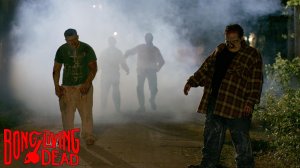 The loose, genial vibe of the overall production seeps into the script as well, especially during the lackadaisical second act that involves a lot of our characters just sitting around. Bong is a movie that finds time for little comic arias that other movies would blithely skip over. The loose feel allows the movie to find extra weirdness. There’s an ongoing run of silly media satire that reminded me of Paul Verhoeven’s social commentary. There’s a glib news anchor (Ralph Scott) trying to make the most of the dour news cycles, an opportunistic politician (Vidas Bardzukas) already promising to protect his constituency, a spookily spastic exercise host, a Spanish shopping channel host making love to the camera with his eyes, and a series of cheesy barbarian movies called Swords and Bitches with an evil whip-wielding arachnid queen (Brianne Jeanette). Bong of the Living Dead is chock full of little comical asides that you wouldn’t expect to be so good.
Though it’s also during the second act that I wish more had been going on. I wanted more examination on the difference between their perception of a zombie apocalypse and the reality they’re stuck with. I wanted a bit more setup for the payoffs, like maybe revealing that smoking pot slows down the zombie virus, etc. I wanted more of the VHS-quality flashbacks with the perfectly cast younger versions of the main gang. There aren’t as many central plot elements to make the bridge from start to finish. For much of the middle period, our characters kind of just sit around. They hang out, debate cereal superiority, and even go to the last remaining video store on Earth. It feels a bit like the movie is stuck in neutral, which might have also been the point to communicate the characters’ general malaise. I understand the absurdity of asking for more plot in a stoner comedy but this isn’t any ordinary stoner comedy, as its dovetail into heavy drama indicates. The first act is a lot of fun, the third act is effectively dramatic, but I wanted a bit more connective tissue. The characters could have been better developed (what exactly do they do when not smoking?) but I still cared when things got serious.
The performances across the board are good to great, with every actor, no matter how small the part, finding their specific comedic lane to work within. The biggest breakout performer is definitely Kiely (Axe Giant, Horrors of War) who is, to put it in a topical and never-to-be-dated analogy, the Tiffany Haddish of this particular Girls Trip. He goes above and beyond the call of duty to keep you entertained. Hal is the character that gets the most excited about the zombie apocalypse. The other characters are interesting but fairly subdued for the most part, as one would expect prolific stoners to behave. When Hal first sees a confirmed zombie, his wide-eyed expression is like a child on Christmas morning, and it’s the biggest applause moment for the film. Kiely is a live wire of energy that jolts every scene he’s in. His eyes speak a devilish madness. He reminded me of Jason Lee’s raucous debut in Mallrats, a full force that sweeps you away. After watching Bong of the Living Dead, you’ll wish every movie had a Dan Kiely in it.
 The rest of the ensemble find their moments, giving all the other moments to Kiely and his glorious beard. Arnold (Born Again, Seven Hells) is playing the most straight-laced of all the characters, a doctor trying to make sense of the irrational. Arnold has an instant screen presence and poise that causes you to sit up and pay attention. Her softer moments shared with Hal also help provide a nice antidote for the no-nonsense doctor. As much as Kiely is the draw of our attention, it’s Arnold that is often the one who grounds the picture. Boso (Underground 35) relentlessly pushes his character outside the box of socially awkward outcast. There’s a heaviness he feels from the consequences of getting close to others, and he doesn’t know fully how to deal with his frustrations with himself and the apocalypse, so he embraces his darker, nihilistic impulses. Boso is such a memorable film presence that it feels like he stepped off the set of a Richard Linklater film. Cat Taylor has a charming sense of daffy innocence to her. You can’t tell whether she’s dazed, cheerful, or not altogether there, and it fits very well for her character joining the group. She reminded me of Hannah Murray from the BBC’s Skins series. Nye (Harvest Lake, Dark Iris) is movie star handsome and has some sharp moments of comic aloofness. The romantic undercurrent he shares with Mock (The Tribunal) allows both of them something at stake that the audience can invest in. Nye and Mock have good heated exchanges that wake up the audience and allow each actor to effectively broaden their character range.
And then there are the little performances that make the most of their abbreviated screen time, like Ralph Scott’s (Stitches) wonderful clench-jawed bravado, Bardukas’ (The New Mr. Phillips) hilarious loose-elbow springiness in front of a green screen, Bill Koruna’s (The Shoes) crotchety neighbor, Ben Brown (After) as a powerfully self-loathing jock jerk who is wonderful fun to hate, Sarah Starr as a ditzy and easily bored sex object prone to gratuitous nudity, and the entire team inside the Conan-esque barbarian videos are a hoot for how committed they are to being silly. Just thinking about the Spanish home shopping host and his faces makes me smile and giggle to myself.
Bong of the Living Dead is a shaggy, scrappy, loose and lively zombie comedy with a charm all its own. It’s reliably fun and finds hidden gems of comedy from its deep supporting cast of oddballs. The main characters do fine work pushing at the boundaries of their stock archetypes, with Kiely as the wild man standout. There’s a definite love for the material here, over zombies and dumb comedies and the bonds of friendship. It’s evident in the care taken to creating a movie that doesn’t seem like it was churned out of a Hollywood assembly line, or something calculatingly checking the genre boxes (though the nudity does seem to linger a bit long…). Not everything always works but it’s a movie that tries a multitude of options. Bong of the Living Dead zigs instead of zags, undercutting the characters and our own expectations, finding ways to surprise as well as elate, and that includes going all-in on drama toward the end. It’s a silly movie that just might make you feel something by the time the credits roll. I don’t know what the release plans are for this homegrown horror flick, so stay alert for it on the horizon. Toke up, Backwards Slate Productions. You’ve earned it.
Nate’s Grade: B
Share this:

American Made (2017)
 American Made is a movie that floats by on the sheer enjoyment of Tom Cruise’s charismatic, devil-may-care performance as Barry Seal, a man who flew secret missions for the CIA, Colombian drug cartels, and Nicaraguan contras. It’s an appealing story with fun anecdotes of a scoundrel playing all sides against each other. Seal is unrepentantly without introspection and is simply having the time of his life. Under Doug Liman’s direction and Cruise’s sly performance, the movie flies by on good vibes until its inevitable crash once Seal cannot get out of the mess he’s made for himself. The film doesn’t have much in the way of depth or commentary on Seal’s actions or the CIA’s. Domnhall Gleeson (The Revenant) plays the enigmatic CIA handler who brings Seal into action and plots behind the scenes, and I wish he had a larger presence in the film. His character is the closest the film approaches legitimate satire. Other supporting characters leave little impression or have such limited roles, from Sarah Wright’s complicit wife, to Caleb Landry Jones’ bizarre screw-up of a brother-in-law, to Jesse Plemons as a small-town sheriff, to Jayma Mays as a frazzled prosecutor who can’t take down Seal. The near-escapes and comical skirting of legal consequences provide enough interest without making the film seem episodic. I’m even struggling to say more about the film because that’s how quickly it evaporates from memory. American Made isn’t going to make much more than a fleeting impression, but it’s fun while it lasts and a reminder about how entertaining movies can be when paired with a magnetic actor cutting loose.
Nate’s Grade: B
Share this:

Mark Felt: The Man Who Brought Down the White House (2017)
 We’ve seen this story before, the efforts to uncover the Watergate scandal and its sloppy cover-up from the perspective of Washington Post reporters Woodward and Bernstein who tirelessly collected clues, followed leads, and investigated the facts. That movie was All The President’s Men and was terrific. This movie is all about Mark Felt, the man who was the “Deep Throat” confidential informant, and it’s a bit less than terrific. It’s hardly even a movie because Felt’s story just isn’t that interesting. The film offers little new insights into Felt as a character or his personal struggles working against his own government. The FBI director is portrayed like a glowering Bond villain. The other characters come in and out, leaving little impact except to remind you that they’re famous. Felt’s personal life is also a bore, including Diane Lane in a thankless role as his alcoholic wife distraught over Felt being passed over as the new FBI director. He also has a missing daughter who ran off to a commune. There’s one moment where Felt feels paranoid and tears apart his office, but then we simply move on. There’s not enough here to justify a full-fledged movie. Whatever writer/director Peter Landesman (Concussion) does it’s not enough to make this story interesting, and that’s because Felt’s involvement in Watergate is minimal at best. All the President’s Men was about journalists uncovering the evidence and putting together the pieces. This movie is just about a guy who knows everything and has to get it out there. It’s inherently less interesting. Even the subtitle of The Man Who Brought Down the White House seems misinformed; I’m fairly certain that was Nixon. The Mark Felt story was told better when he was merely a minimal figure in someone else’s Watergate story. Just watch All the President’s Men instead.
Nate’s Grade: C
Share this:

The Mountain Between Us (2017)
 At what point can you tell an onscreen pairing just isn’t working? Chemistry is one of those elusive and ineffable qualities that can make or break a film, especially one that relies upon sexual tension and romantic yearning. If the actors don’t feel like they want to be with one another, it’s all going to fall apart. This is what I kept thinking as I watched The Mountain Between Us and was dumbstruck by the powerful lack of chemistry between its leads, each an accomplished actor in their own right. I don’t thin the movie could have been saved given its script but it certainly could have been at least better. If you’re going into The Mountain Between Us expecting a thrilling survival tale or a stirring romantic pairing, then you’ll be sorely disappointed.
Ben (Idris Elba) and Alex (Kate Winslet) are strangers who have the same problem. Their flights have been canceled and they have important places to be. He’s a surgeon. She’s a journalism photographer who is getting married. They share a single engine propeller plane to fly over the mountains and into the Denver airport. Unfortunately, the pilot suffers a stroke and the plane goes down, stranding Ben, Kate, and the pilot’s helpful labrador in the mountains. They’ll have to rely upon one another to survive in a hostile wilderness and seek rescue when nobody knows where they may be.
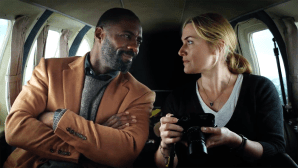 Watching pretty people endure hardships and persevere is as old a story as Hollywood, and The Mountain Between Us fails on so many levels, but none more so than chemistry. Elba and Winslet are meant to fall in love with one another over the course of their struggles and it is that love, we are told, that was the real key to their survival. If that sounds like Nicholas Sparks dribble, you’re on the right track, as the source material was very much a romance story. I’m sure the characters had to be better established and the romance felt more organic than what we get in the movie. I think the setup is an interesting place to start: two strangers who rely upon each other for survival and that co-dependence transforms into something they deem to be love. However, we don’t really get much in the way of the consequences of this except for an extended coda that doesn’t feel like nearly enough. Other than a spur-of-the-moment sex scene the movie doesn’t dwell on this looming romantic relationship in any way other than glances of gratitude. We hardly know anything about these characters before they are in a plane crash, and from there the survival against the elements takes precedence. Winslet spends most of the movie laying down and needing to be taken care of. If this movie needs to survive on their romance then it was doomed at casting. Granted, there is nil in the way of characterization and plot development for them to work with as well. At no point do you feel any emotional connection or even any sort of sensual heat between them. They seem far more irritated and put-upon by one another, but that’s supposed to melt away into something deeper and meaningful, though it never does. These are two talented actors but whoa do they not work together (other pairings were going to be Michael Fassbender and Margot Robbie, Charlie Hunnam and Rosamund Pike). Let this film be a lesson to everyone about the importance of hiring the right actors.
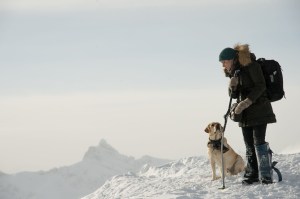 Given the life-and-death survival, it seems shocking that the film has such low or non-existent stakes. You never once feel like these characters are in real jeopardy. They always seem to luck out, whether it’s a perfectly placed flare gun to ward off a bobcat, a cabin that’s none too far from their crash site, or that same dead bobcat that can provide some nourishment. There doesn’t seem to be much of a struggle on screen other than walking through the snow. It’s missing the visceral realism that survival stories offer audiences as entertainment. Ever since watching Wind River, stories about characters running long distances in sub-zero climates is ruined for me. I keep thinking, “Why aren’t their lungs exploding now?” I was surprisingly bored through much of their survival outdoors because none of it felt that serious or memorable (this isn’t Kate Winslet’s personal Revenant). This is less a survival story than a sudsy romance. Apparently, how they survive is less important than their eventual acknowledgement of love. It removes all sense of danger. The inclusion of the dog is the single greatest antidote to realism. Ben and Alex have a cute pet this whole time. This makes The Mountain Between Us feel like a “movie” rather than a “story,” and so we just wait and wait for precious moments that will successfully entertain, few and far between they are.
Director Hany Abu-Assad (Paradise Now, Omar) makes fine use of the Canadian Rockies to provide breathtakingly picturesque landscapes. Even if you’re relatively bored with the characters there’s always the scenery to take in and enjoy. Abu-Assad does have one memorably effective sequence and that’s the plane crash itself. His camera bobs and weaves inside the tiny cabin as long unbroken shot, reminiscent of the famous sequence inside the car in Children of Men. It’s an effort level that isn’t really matched, or at least evident, for the rest of the movie. It peaks at the crash. The human drama seems more interested in the human drama than the survival thrills, which is fine, but if that was the case then we should have gotten better characters and the room for them to develop so that whatever romantic connections form feel and believable and desirable.
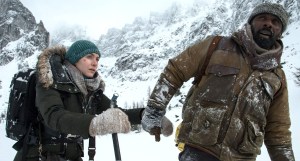 I have a solution to all of these issues except the chemistry one. This movie needed a radical rehaul at the structural level to be a better-developed and more interesting story. The movie needed to be told primarily AFTER Ben and Kate are rescued (spoilers, I guess, but I doubt many thought this was going to end in Greek tragedy). It’s during this fifteen-minute coda where the movie becomes its most interesting, and that’s because our characters have to readjust to the outside world but are forever changed. Starting from that point allows the characters to open up so much more and we see a different array of challenges, ones that are more relatable but also with an undetermined outcome. We know these actors are going to live by the film’s end without question. We don’t know if they’ll still be psychologically stable or whole though re-acclimating to their lives. This needed to be more like the second half of Room. This approach would give substantially more for these great actors to dig into. You could also use flashbacks to fill in notable experiences during their time stranded in the mountains. This would provide contrasts but it would also smartly allow us to skip all the dull stuff we know is just filler. This would also allow more genuine surprises and chances for narrative irony. At one point Alex develops the film roll she took during her time in the mountains, and at this point we already know she snapped a picture while Ben was asleep post-coitus. What if seeing these pictures was our first clue that some romantic intimacy happened? These two people bonded over the course of a couple weeks and no two other people may fully understand what they’ve gone through. Explore that with their difficulty to reconnect to the “outside world” and how much they have come to rely on one another after their rescue. That way it’s a character-piece about relationships with worthy material.
The Mountain Between Us is a mediocre romantic drama hindered by terrible chemistry, half-formed characterization, and a poorly developed story. When the life-and-death survival after a plane crash in the mountain feels lacking in stakes and peril, then you have a problem. When the romantic union between its mega-watt stars feels perfunctory, you have an additional problem, especially when it seems to be the point of the exercise. The Mountain Between Us plays, as one other astute critic wrote, as “Idris Elba fan fiction,” with the injured lead being tended to by the handsome and capable protector who can’t help but fall in love with this woman. It’s not an offensively bad movie but a fatally flawed disappointment that had potential given its premise. There needed to be a dramatic restructuring of the screenplay to emphasize their recovery, which would have better served the talents of these actors. Still, there are worse people to be stranded with.
Nate’s Grade: C
Share this:

Blade Runner 2049 (2017)
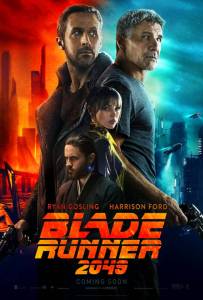 It’s confession time, dear reader. I do not love Blade Runner. In fact I find it to be overrated and then some. I’ll freely admit that it’s been an extremely influential science fiction work and its noir-soaked depiction of a cyber punk future has been the starting point for cinematic storytelling in that vein for decades. It’s got merits but I find the real merits to be its amazing use of production design, special effects, and the establishment of an overall atmosphere. It has some big ideas, yes, but it doesn’t know what to do with them, neglecting them for a slapdash story with some so-so acting. Rutger Hauer’s soulful yet doomed replicant should have been our central perspective. I wish I enjoyed the film more but I cannot attach myself without nagging reservation, and that’s not even accounting Ridley Scott’s numerous re-edits and the harebrained idea to imply that Harrison Ford was really a replicant after all even though that runs counter to the logic and themes of the film and Scott had to splice in unused unicorn footage from a movie he shot years later, thus proving this new twist ending was never part of anyone’s original story conceit. Anyway, what I’m saying is that the 1982 Blade Runner was not going to be an impossible hurdle to clear as far as I was concerned. The sequel 35 years in the making, Blade Runner 2049, is a better and more accomplished film experience and film story than the original, and it’s also one of the best, most visionary movies of the year.
Set in 2049, replicants have been shuttered and replaced with a new breed of android slave labor controlled by the enigmatic Niander Wallace (Jared Leto). He’s after a very special kind of replicant, one that will lead to even greater success, allowing mankind to reach further out into the stars. Agent K (Ryan Gosling) is a blade runner who finds himself looking for this same special kind of replicant. He must find it before Niander does and K’s journey of self takes him right to the doorstep of retired blade runner, Deckard (Ford).
 Apologies for the frustratingly vague plot synopsis above, but I’m trying to keep things as relatively spoiler-free as possible because I think that will improve the overall viewing experience. In an age where trailers and TV advertisements tell us everything about a movie in a zealous attempt to get our butts in seats, I was genuinely surprised at significant plot beats the 2049 advertising had successfully and deliberately kept under wraps. There are intriguing plot turns and character moments that I want to leave the reader to discover on their own. It will be worth the wait.
Director Denis Villeneuve (Arrival, Sicario) has created a filmgoing experience that immerses you in feeling. Every set, every little corner, every minor character goes toward enriching this world and making it feel real, like we’re just dropping in for a visit. He builds off the iconography from Scott in the first film and creates a future that is hypnotic and eerily beautiful, aided by the greatest living cinematographer, Roger Deakins. Seriously, if Deakins finally doesn’t win his long overdue Oscar for this, then the Academy is just never going to favor him. The visual landscapes of this movie are jaw dropping and the use of lighting is gorgeous. There’s a late sequence set in an irradiated Las Vegas where an orange fog hovers over the empty landscape of earthly pleasures. There’s a hiding sequence that takes place in a casino showroom, with holographic dancers and even Elvis fritzing in and out, static movements and bursts of sound that make for a dream-like encounter. Another wonderful hypnotic sequence is a threesome between K, a prostitute, and a virtual intelligence (V.I.) named Joi (Ana de Armas). Reminiscent of Spike Jonze’s Her, the sequence has one woman literally folded over another as hands caress, mouths kiss, and the whole sequence has an alluring disconnect during the acts of physical intimacy. This is a gorgeous movie to simply take in and appreciate the sumptuous visual brilliance. Villeneuve has quickly become one of the best big screen visual artists we have today.
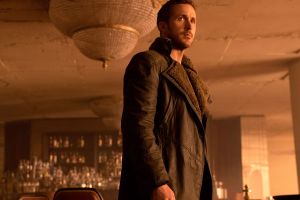 What separates 2049 and makes it better than the original is that here is a film that takes big ideas and knows what to do with them. This is an intelligent film that finds time to develop its ideas and to linger with them. This is a long movie (2 hours 43 minutes, the longest film so far of 2017) and one that many will decry as boring. That’s because Villeneuve and screenwriters Michael Green (Alien: Covenant) and Hampton Fancher (Blade Runner) commit to allowing the movie time to breathe, and scenes can take on an elegant life of their own becoming something of stunning power. Take for instance a scene where K visits the woman in charge of creating the false memories for replicants. Because of an autoimmune disorder, her life is behind glass, but she gets to create her own world to thrive in, and we watch her fine-tune the memory of a child’s birthday party while K asks her questions over her work. He has questions over the validity of memories, and this opens up a deep discussion over the concept of self, authenticity, and ownership over memory, all while still being character-based. It’s lovely. It’s like somebody saw the potential of the original Blade Runner and added the missing poetry.
2049 is driven by a central mystery but it’s also an exciting action movie. The sequences are few and far between but when they do happen they too luxuriate in the extra ordinary. The way the replicants are able to move again brings up that visual disconnect that can be so pleasing. A replicant-on-replicant fight is like a sci-fi superhero brawl. Dutch actress Sylvia Hoeks is our chief antagonist, Niander’s muscle on the outside. She might not have the languid magnetism of Daryl Hannah or playful philosophy of Hauer but she more than makes for a memorable and impressive physical force. The action and chase sequences are minimal, but when they do pop up Villeneuve doesn’t put the rest of the movie on pause. The characters are still important, the story is still important, and Deakins’ visual arrangements are still vastly important. 2049 is a movie at its best when it’s still and meditative, savoring the moment, but it can also quicken your pulse when called.
Gosling (La La Land) is uniquely suited for this character, another in the legacy of Sam Spade and Phillip Marlowe. His taciturn nature is essential to his character. This is a man going from day to day. His only emotional attachment is to Joi, the V.I. projection, and even that relationship is called into question knowing she is a product meant to serve. This relationship is given a healthy dose of ambiguity so that an audience never fully knows whether Joi genuinely cares or is just following the dictates of her programming. Gosling provides a quiet yet impactful turn as a man searching for answers. In the opening scene, Dave Bautista (Guardians of the Galaxy vol. 2) plays an older replicant that K must “retire.” Bautista says the difference between them is one of faith, as he has seen a miracle, and this allows him to believe in something greater. This opening interaction lays the foundation for K’s character arc, as he searches for his own faith. It’s not necessarily a spiritual faith per se but definitely a belief in a renewed hope.
 Another aspect lovingly recreated is the trance-inducing synth score from Vangelis, this time cranked up all the way to eleven by composers Hans Zimmer and Benjamin Walfisch (It). It comes in like waves, blaring loudly to the point that you swear you can hear the theater’s speakers rattling. It’s omnipresent and oppressive and it’s so freaking loud. I challenge anybody to fall asleep in the theater and actually stay asleep.
Blade Runner 2049 is one of those rare sequels that not only justify its existence but also improve upon its predecessor (again, not the biggest fan of Scott’s movie). It’s reverent to the older film and its film legacy while still charting a path all its own that it can stand upon. It takes a far more interesting narrative perspective to jump forward, possibly serving as a corrective to the original. I was fully engaged from the start as it challenged and entertained me to its concluding image of snowfall (oh no, spoilers!). This is a long movie but your patience pays off and then some. This is a deeper dive into the themes of author Phillip K. Dick and a better development of them. See it on as big a screen as possible, make sure to get your bathroom visits out of the way before it starts, and prepare for your eardrums to bleed from Zimmer’s blaring tones. Villeneuve has created a thoughtful, mature, exciting, and absorbing work of art that will stand the test of time. It won’t be as monumentally influential as the original Blade Runner but it is the better movie, and right now, in 2017, that’s a much more important factor for me as a viewer.
Nate’s Grade: A
Share this:

Stronger (2017)
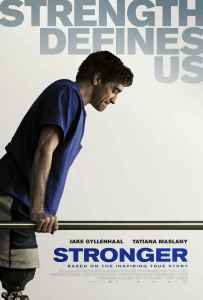 An inspiring true-life story that still manages to stay grounded on its own terms, Stronger is an emotionally affecting movie buoyed by two sensational performances. Jake Gyllenhaal plays Jeff Bauman, an ordinary guy who is present at the 2013 Boston Marathon bombing and loses his legs in the attack. He was there to support his on-again off-again girlfriend, Erin (Tatiana Maslany). Needless to say, his whole world changes and he has to adjust to a new life, a new identity, and the hardships placed upon others within his family sphere, especially Erin. This is a very solid meat and potatoes kind of drama. It’s not flashy or inventive but it has serious human drama and it treats it as such. I was on the verge of tears for a solid thirty minutes. Gyllenhaal delivers yet another Oscar-worthy performance, burrowing into an average screw-up thrust into the national limelight. Everyone tells him he’s a hero, but he doesn’t feel it. Everyone wants a piece of him and his doting mother (Miranda Richardson) often blurs the line between pride in her son and exploitation. The colorful, coarse, dysfunctional family dynamic will remind many of 2010’s The Fighter. I greatly appreciated that even after the terrorist attack Jake is not canonized. He’s no saint just because something terrible happened to him. Director David Gordon Green (Pineapple Express) takes great care to keep the movie grounded even as it hits the standard inspirational notes, finding moments of grace in unexpected places and people. The backbone of Stronger is the thoroughly moving relationship between Jake and Erin. They have exchanges of both ferocious anger and deep tenderness. A post-amputation sex scene between them is so intimately filmed by Green that you almost feel like you’re intruding. Maslany (Orphan Black) can break your heart or make it melt just with an expression. The non-verbal acting in this movie is truly exceptional. Stronger is a strongly developed drama with characters that earn every one of your hard-fought tears.
Nate’s Grade: B+
Share this:

Battle of the Sexes (2017)
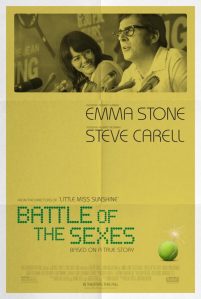 In 1973, tennis player Billie Jean King (Emma Stone) was the number one player in the world, but to many she was still only just a woman playing a man’s game. Bobby Riggs (Steve Carell) was a retired tennis player trying his hand at being a family man. He’s restless and eager to prove something. He’s a natural hustler and so he sees female tennis players fighting for equal pay as his opportunity at a comeback. Riggs wants to prove a point about the inferiority of female athletes. He will play and beat any female tennis pro. He embraces the term of being a male chauvinist and becomes a lightning rod. Men around the world cluck about their biological superiority in athleticism. Billie Jean King feel the full pressure to prove him wrong and make a stand for the women’s movement.
I was pleasantly surprised at the degree of depth given to the characters in Battle of the Sexes, turning what could have been a light-hearted and sprightly throwback to a sports novelty into something a bit deeper and more meaningful, a thoughtful character piece on this climactic conversion of sports, celebrity, and feminism that still resonates.
Billie Jean King is the number one women’s tennis player in the world at age 29. She’s also deeply in the closet and Battle of the Sexes gives considerable attention to this internal conflict of self. The film successfully makes you feel her yearning and unrestrained attraction to hair stylist Marilyn Barnett (Andrea Riseborough). The directors film their first interaction in extreme close-up, which forces them together tighter and allows us to see every little tremor of nerves play across Stone’s face. Her affair with Marilyn coasts on that combination of guilt and compulsion, the push and pull of what she desires and what she can have. Sponsors would not take kindly to an openly gay tennis star. Billie Jean King is struggling with her concept of who she is versus the expectations of others and society. By stepping up to Riggs’ challenge, she is fighting for her own sense of agency. She feels the intense pressure to perform with the credibility of women’s sports placed upon her shoulders. She’s fighting for equal pay and fair treatment, but what happens to that mission if she fails against a 55-year-old oaf? Billie Jean King comes across as a compelling specimen, feisty and independent but also hampered by what those around her would think over her feelings for another woman.
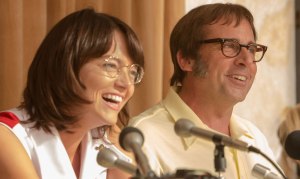 Stone delivers a far more layered and emotionally engaging performance here than in her Oscar-winning turn in La La Land. Hers is a character trying to become comfortable in her own skin. Riggs is the showboat while Billie Jean King is not comfortable in the spotlight. Stone displays the grit and tenacity as well as the vulnerability and complexity of her character’s self doubts and internal struggles. Her scenes with Marilyn have a vitality to them that is absent throughout the rest of the movie, allowing the audience to understand how that burgeoning romance unlocks something within her, something that she might not even fully comprehend. When she does win the big match, Stone seeks solitude and just cries her eyes out, finally able to let her guard down, acknowledge the toll of the moment, the relief of not letting down the women’s movement, and the sheer elation of rising to the occasion. It’s a moment where Billie Jean King feels her most free, where she’s sobbing by herself. Once that’s done she has to collect herself and get back in front of the cameras, adopting her shield once again to face the outside world.
And then there was Bobby Riggs, 55 years old at the time and languishing on the seniors’ tennis circuit and desperately missing the spotlight. The movie finds notes to make him more of a character rather than simply a misogynistic antagonist, and whether that shaded portrayal is deserved is another question. Riggs is fully convinced of his physical capabilities and that he can beat the stars of the women’s tour. These are women fighting for equality and equal pay but Bobby, and he’s certainly not alone, believe that the sexes are inherently unequal when it comes to physical competition. For him, it’s a way to prove his skills and send a message as well, but more so, as presented in the film, it seems like it’s the spotlight that he misses most. He’s enviously licking his lips at the tournament prize purses on the tennis circuit now, even the women’s prizes. He can make more money than he’s ever earned in his pro career. He can still contend, he can still prove something, and the money and stage has never been bigger. He’s getting far more attention at 55 than he ever received during his pro tennis career where he won four Grand Slam titles (he was the number one player for three years). Carell (The Big Short) is well suited to play broad characters that get even bigger with attention. He’s soaking up every moment as if he’s finally getting what he feels is long overdue, and every hammy PR stunt only magnifies the intensity of that attention. He’s a huckster who gleefully adopts the moniker of a misogynist. At 55, Bobby Riggs has found himself in the biggest spotlight with waves of adoring fans and he doesn’t want to give it up.
 You know who else comes across really well in this movie is Billie Jean’s husband, Larry King (not to be confused with the TV host of the same name). It’s not a film that props up the husband as the focal point of someone else’s story; there are more important aspects than how Billie Jean’s lesbianism affects him. However, he is still an important person in Billie Jean’s life and he is processing a form of loss. His relationship with her cannot stay the same, but Larry recognizes what she needs and chooses to be supportive rather than vindictive. He cares enough to put her needs ahead of his own, and that only increased my empathy for him. A marriage pulled in multiple directions is ripe for examination, and it’s rare to maintain sympathy for all of the participants and this movie does.
By the time that seismic tennis battle comes about, the directors Jonathan Dayton and Valerie Faris (Little Miss Sunshine, Ruby Sparks) smartly refrain from lots of edits and angles, instead preferring a standard TV shot to better immerse the audience. The camera angle allows for the entire tennis court to be displayed, and we’ll watch sets play out in long takes with the two athletes running up and down the court. This allows us better understand and appreciate the strategy of both players, and it also probably makes the special effects budget happy as they don’t have to do much to cover the presence of the stand-ins playing the game instead of our movie stars. Even though I knew how the match would end, I was glued to the screen because of everything the match represented. By forgoing the quick cuts and multiple angles that can jazz up the excitement of a tennis presentation, the film is able to carefully illustrate Billie Jean King’s strategy and skill. She intended to run Bobby Riggs up and down the court and exhaust him. Letting the tennis game play out in a wider presentation also better serves the sense of payoff. This is the moment we’ve all been waiting for, as were the 50 million Americans that tuned in. When she does win, I couldn’t get enough of the montage of chagrined male faces twisting in pained grimaces as this lady proved to be the superior player. You could give me a whole movie of pained reaction shots from misogynists and I would be ecstatic.
 It’s also hard to ignore the parallels Battle of the Sexes makes with our current climate. 44 years later, women are still fighting tooth and nail for equality and credibility without qualifiers. Serena Williams is not just the greatest female tennis player of all time; she’s also the greatest tennis player, period. Women’s sports are often seen as lesser in comparison to the men, and abhorrent pay discrepancies are still a reality. Look at the U.S. women’s soccer team, which won the World Cup in 2015, only earning a small fraction of the U.S. men’s team, who finished fifteenth out of a group of sixteen. The casual sexism and lowered expectations extend beyond the realm of sports, as the 2016 presidential election serves as a powerful reminder of the obstacles professional women face in modern society. It’s easy to view Battle of the Sexes through the lens of the 2016 election: a very capable woman who just wanted to do her job is lambasted by an inferior opponent coasting on puffed-up bravado, masculinity, sensationalism, and the sense that the established order of white males is losing something divinely theirs. I’ll admit that channeling this analogue does provide the ending with even more uplift.
Battle of the Sexes is an engrossing story with big personalities, big conflicts, and big stakes, and it feels just as socially resonant forty years later. The messaging can be a bit heavy-handed at time, as Bill Pullman’s character seems to be a composite of all male chauvinism personified, but it’s still easy to get swept along with its sunny cinematography, 1970s period soundtrack, and feel-good story that remembers to always be entertaining. The characters have more depth than I was expecting, and the actors bring extra layers and shades to their roles, making Bobby Riggs a better rounded character than he might have been in real life. Battle of the Sexes is a timely crowd pleaser that doesn’t lose sight of its characters in the guise of its message. By the end of the film, I was cheering, moved, and nicely satisfied, and what more could you ask for?
Nate’s Grade: B+
Share this:

It Comes at Night (2017)
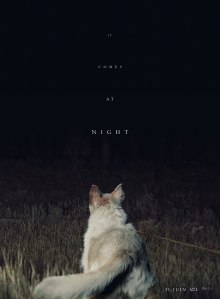 Like an earlier harbinger of the potential pitfalls of mother! marketing as something it’s not, the vaguely apocalyptic drama It Comes at Night is a paranoid thriller that is so bleak and absent resolution that you’ll wonder why anyone bothered. It’s not a bad film, and actually writer/director Trey Edward Shults has a knowing command on how to raise and develop tension with very precise camerawork and visual composition. The slow inspection of offscreen noise is still ready to build tension. The story has promise. Joel Edgerton is the father of a family trying to eek out an existence after the spreading of a deadly plague. He has a strict series of guidelines to protect his family members and keep them secure. This is put into jeopardy when he meets another family and invites them into his home. The rest of the film follows the slow dismantling of trust and the rise in suspicion and how it ruins both families. That’s essentially the movie. There is no “it” of the It Comes at Night. The post-apocalyptic element is at best tertiary to the plot, and the titular warning seems odd considering sickness can arrive at all hours. I think the reason audiences seemed to froth wildly at the mouth over this movie is due to its grossly misleading marketing. I re-watched the trailer and all of the supernatural imagery, which is extensively highlighted, is from dream sequences, and one dream sequence within a dream sequence. There’s a moment where the grandfather’s dog runs off into the woods at barks at an unseen force. You hear strange sounds but you never see anything, and this becomes just another unresolved, underdeveloped element. This is more a Twilight Zone parable about the destructive nature of man. The look of the film is moody, the performances are good, but I felt underwhelmed by the end and questioned the point of it all. It Comes at Night is okay. I can’t see what people loved and I can’t see what people hated, though I can see more of the aversion.
Nate’s Grade: C+
Share this:

Wind River (2017)
 With just two finished movies attached to his resume as screenwriter, Taylor Sheridan has enjoyed immediate success. Sicario and Hell or High Water were both some of the finest films of their respective years. Sheridan has a classical sense of structure but he also pumps his big, bold Hollywood dramas with meaningful commentary and substance to communicate a systemic rot from within, whether it is the spiraling war on drugs, the rapacious banking industry, or an entire enclave of people that are ignored as an act of historical penance. When you come to a Taylor Sheridan movie, you leave feeling full on a banquet of superior screenwriting. Wind River is his next feast.
A young Native American woman, Natalie (Kelsey Asbillie), is found barefoot and dead in the snow on a Wyoming reservation the size of Rhode Island. A confluence of law enforcement officers investigate while questioning who has rightful jurisdiction, the state police, the Native police, or FBI Agent Jane Banner (Elizabeth Olsen). She’s frustrated that, while the coroner will confirm she was raped the night of her death, Natalie is not being dubbed a homicide because of the cause of her death. Jane seeks out the assistance of Cory Lambert (Jeremy Renner), a wildlife hunter for the Fish and Game Department who watches out for predators. He knows the land, he knows the people, he personally knows Natalie’s family, and he knows the loss of a daughter. Cory agrees to help Jane discover who is responsible for the murder and seek justice and, possibly, vengeance.
 This is a deeply felt character-driven mystery that examines the lingering damage and defenses of a group of people often left on their own and often forgotten. Sheridan is quickly establishing himself as cinema’s finest voice when it comes to a twenty-first century cowboy ideal, the taciturn, wounded man soldiering onward in an unfair world. Sheridan has a commanding sense of place and character, but his perspective rarely connotes judgment. He’s more an observer, a therapeutic device for his characters to finally express themselves and their brokenness and how the world made them this way. He can be downright poetic but his instincts are for a large canvas with Hollywood thespians. He writes meaty, distinguished, and humane characters all around, not just for the leads. One of the hallmarks of Sheridan’s writing is how precise and generous he can be with his stable of supporting actors. As the story develops, we see just how the death affects the small community, a community struggling to hold itself together anyway through poverty, drug abuse, and limited work opportunities (according to a 2012 New York Times feature, life expectancy on the reservation was 49 years). There is a pervading sense of hopelessness that carries over the land. The people in this movie feel real, lived in, and haunted, and the location feels exactly the same. The ending text leaves a stark reminder of this feeling like a world on our peripheral: no statistics are kept for missing Native American women. Nobody has any sense how high that figure could be.
The leading man of Wind River is Renner (Arrival) but the real star is his character, a gritty and experienced wildlife hunter with an abiding reserve of unresolved issues pertaining to his own teenage daughter’s murder. He has some beautiful monologues in this movie, exquisitely written by Sheridan to showcase characterization and back-story. The first is when he helps his grieving friend by sharing the routine he went through with his own personal loss, specifically how forgetting the person, and the pain of their loss, is the worst thing one can do to honor them. “Take the pain. It’s the only way to keep her with you,” he says. Renner delivers his best performance since 2010’s The Town and it’s one that asks him to slow things down. This isn’t a flashy role, and even though there are some stunning monologues, it’s a role that asks for more understatement. Sheridan has a clear favorite archetype but he finds ways to make each person distinct.
Elisabeth Olsen’s (Ingrid Goes West) character is intended as the audience entry point into the land and history, so as such she will suffer as the rookie who always seems to be out of her depth. This is exemplified by just about every assailant getting the drop on her, even after a meth head answered the door by spraying her with pepper spray. To her character’s credit, other characters befell these same missteps but they aren’t the next most significant character. She’s an outsider trying to find her footing in delicate territory. Olsen is the one asking questions often, pushing others to explain, which usually means much of her performance is reactive, with characters uncorking those fantastic monologues. However, her best moment is during the end, when Cory is talking her through a traumatic recovery. It’s so obvious that he’s saying the words he always wish he could have said to his daughter, and so the psychological projection becomes too much for Jane who breaks down sobbing, serving as therapeutic vessel for empathy. It’s a powerful scene and the closest thing to catharsis the movie has to offer.
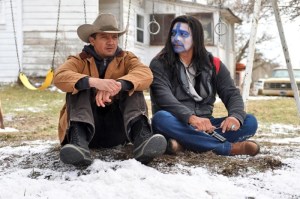 As such, the story is more a reflection and outlet for the characters, but it’s also an intriguing mystery until Sheridan decides to just throw up his hands and explain everything. Until the third act, the central mystery of who killed Natalie is filled with curious and dangling questions that are made all the more interesting from the unique setting and circumstances. Her lungs exploded from the cold after she ran, barefoot in the snow, for six miles for help before collapsing. That’s an interesting aspect I’ve never considered before when it comes to environmental dangers. Tracing back the events of her last night, Sheridan opens up an analysis on the precipitous lives of small-town America, except it’s a Native American reservation that’s sovereign from America. It’s an engrossing look into a culture and way of life few ever see. It’s a very unique setting that unfurls gradually over time, allowing the viewer to engage with the people, their fraying community, and the pain endured. And then the film hastily introduces its obvious culprits, shifts into an extended flashback sequence that explains everything, and zooms right into its tense climax. It all still works, don’t get me wrong. You’ll feel the mounting dread gnaw away at you during that flashback, and you’ll feel the rush of adrenaline during the shootout, and the sense of vindication by its conclusion. However, Sheridan was doing such a fine job at parceling out his elegiac story before that it almost feels like he quickly looked at the time and decided to rush into the finish.
This is also Sheridan’s first time behind the camera as director and he acquits himself well enough. A distinct sense of style doesn’t emerge but his directorial instincts follow his screenwriting strengths; the man knows when to get out of the way. The conclusion has a nasty snap of tension to it and the action hits its marks with power, having given quite the windup. Sheridan is best at directing his actors, who as stated above, give strong, emotive performances that linger with you. Wind River doesn’t prove that Sheridan has more to offer from a directing chair, but it does provide a baseline for a start to grow. I imagine from here on, having built up a reputation for writing critically acclaimed adult thrillers that big name actors flock to, that Sheridan will be directing the majority of his favorite scripts. He might not have the visual acuity or sense of vision that a Denis Villeneuve has, but he’ll reliably deliver strong performances from capable actors. He’ll also be the best steward for his stories, and I need so, so many of them.
Nate’s Grade: A-
Share this:

Tulip Fever (2017)
 Tulip Fever was originally filmed back in 2014 and has endured two years of delayed release dates. In the time it took the studio to make and release Tulip Fever, Alicia Vikander filmed The Danish Girl, it was released, and she won an Oscar, and now she’s going to portray Lara Croft in a new Tomb Raider franchise. The question arises why something seemingly so innocuous would take so long to release. The studio seems quite hesitant about the finished product. The Weinstein Company even packaged a rare red band trailer for their movie, something more associated with ribald comedies and bloody action films. A movie about tulips and love affairs seems like an odd choice, but hey, people got to see some extra Vikander nudity for free. It’s being dumped into theaters over a tepid Labor Day release and the advertising is billing it as an “erotic thriller,” which is a mistake on two fronts. It’s not truly erotic, lacking a primal carnal power, and it’s not really a thriller. It all smells less than rosy and more of desperation.
Set in the early 1600s in Amsterdam, and the nation has gone wild for tulips. The flowers are being traded and sold in the backs of taverns, and the tulip market seems limitless. Meanwhile, Sophia (Vikander) is a young woman who is married off to Cornelis Sandvoort (Christoph Waltz), the self-described “king of peppercorn.” The relationship lacks passion as their nightly sessions fail to deliver a child. Cornelis, thinking about his legacy, hires a painter, Jan Van Loos (Dane DeHaan), for a portrait of he and Sophia. The painter falls in love with his subject and he and Sophia begin having an affair. The servant woman, Maria (Holliday Grainger), is witness to her mistress’ secrets, and as their affair continues, both parties devise an elaborate means that they can be together.
 Tulip Fever is awash in strange and ineffective plotting. Firstly, the film never presents a suitable rationale for why Sophia would fall into bed with Jan. It presents her frustrations and malaise with her husband, so being in a position for finding a passionate alternative and outlet is established. After a few painting sessions with Jan, apparently they’re smitten with one another, though the movie never does the slightest work to establish a spark between them. It’s not like much would have been required. Make Jan a charmer who makes Sophia feel valued and desired. A handful of careful exchanges hinting at an inappropriate fascination are all that was needed. Instead their coupling feels largely arbitrary and from thin air. Movies directly hinging upon romantic affairs succeed on the virtue of making you feel the desire of the characters, whether that’s a romantic yearning or even just simple hardcore lust. Sexual tension is a paramount necessity. I felt no chemistry, desire, or even sexual tension between DeHaan and Vikander. There was no heat or sensuality here. Then there’s the matter of Sophia’s relationship with Maria, our curiously chosen narrator. We’re told that Maria sees Sophia like a sister, but once again the movie doesn’t show anything to indicate a particularly close relationship between the two. Then when Maria announces her pregnancy she threatens her “sister” if she gets thrown out of employment. She’ll tell Sophia’s husband what she’s been up to with her painter pal. Maybe it’s the hormones but that doesn’t exactly sound like a close, sisterly relationship. Although just when it seems like Maria might be a thorn in her mistress’ side and upset the power balance, the story abandons this idea altogether and Maria recedes back into a harmless cherubic aid.
It’s during Maria’s pregnancy where Tulip Fever’s plotting becomes its most tonally egregious, becoming a 17th century episode of Three’s Company. Sophia’s mission ever since her wedding has been to get pregnant and produce a son for her husband to carry on his family line, but due to a combination of erectile dysfunction and impotence, this seems like an unlikely task. So when Maria is pregnant, the two ladies scheme to do a switcheroo; they’ll pretend that Sophia is really pregnant, downplay Maria’s changes, and then pretend the newborn is Sophia’s child. This plan leads to several almost comical sequences to maintain the ruse, like when Sophia pushes Maria aside to take claim over her recent spate of morning sickness. The entire time I kept thinking that wouldn’t it be so much easier for Sophia just to get impregnated from her younger lover? Instead we’re given this storyline that approaches farce, and that’s not the end of it. Tulip Fever also features faking one’s death, sending the drunkest person out to retrieve the most valuable item in the country, a character conscripted into the Navy immediately, and contrived mistaken identity developments that also require characters to never do any follow-up questions to confirm the worst of what they think they just witnessed. These kinds of farcical plot elements indicate that the filmmakers were not confidant that their central relationships could sustain a narrative unto themselves. And yet I’ll admit that these unexpected plot turns provided a level of entertainment that was lacking beforehand.
The actors do what they can with their characters and marshal forward with straight faces. Vikander (The Light Between Oceans) is a luminescent actress who can communicate paragraphs through her tremulous eyes. She very capably conveys Sophia’s mixed emotions over her marriage, her gnawing sense of loyalty, and when in the throes of passion, an unburdening that serves as a personal awakening. Sadly, those romantic throes are paired with DeHaan, an actor I’m becoming more and more skeptical with every new performance. In the recent sci-fi bomb Valerian and the City of a Thousand Planets, he chose to speak in a bizarre voice that mimicked 90s Keanu Reeves. With Tulip Fever, I understood the origin of that voice, because in this movie he sounds like 90s Keanu Reeves gamely attempting his woeful British accent in Dracula. Does Dane DeHaan have range or is he incapable of playing anything without ironic detachment? He makes for a pretty pitiful romantic affair option, and I never cared what transpired to him. Waltz (Spectre) becomes the most sympathetic character by the film’s end and has a genuine character arc that might elicit some real emotion. He’s pompous and a bit oblivious, but he never really becomes the film’s villain. He doesn’t mistreat Sophia. He doesn’t threaten anyone. He just wants a child, and a wish he made to God haunts him. He truly cares about his wife, and it’s only later that Sophia realizes what her plot machinations have done to this man. Waltz’s performance is well within his nattering wheelhouse. The supporting cast includes Judi Dench, Cara Delevigne, a hilariously pervy Tom Hollander, Kevin McKidd, and an unrecognizable Zach Galifianakis. It’s enough to make you wonder what in this story got them all here.
 The story seems to exist only in parallel with the tulip market that gives the film its title. It feels like two different movies on different tracks that rarely come together. I hope you enjoy textbook economics lessons on market bubbles, because you’ll get plenty information imported on the buying and selling power of tulips. These little flowers just kept going up and up in value and investors believed that they would never go down (oh how familiar this sounds). At times the movie hints at being a Big Short in 17th century tulips futures. This could be an interesting topic because of how foreign it is today, the thought of flowers being so valuable that a person’s life savings might get squandered. However, the story that takes shape in Tulip Fever feels generally unrelated. It’s a love affair with comical complications but the only time the bullish tulip market factors in is when supporting characters get rich quick from some lucky bulb prospects. They just as likely could have gotten their fortunes through any form of gambling. It didn’t have to be tulips. The setting doesn’t feel integral to the story the movie wants to tell, which is a waste of such a supremely unique moment in world economics history. Although there is a moment where Maria narrates that a madness took over people, and I so dearly wanted her to follow up that statement with, “A tulip madness.” Unfortunately, she did not.
Tulip Fever is a costume drama that may have appeal for those usually left cold by the stuffy genre of half-glances and unrequited passions. It does have some screwy plotting linked to its screwy couple, so while it doesn’t quite work as a developed story with engaging characters, it does make for a fitfully entertaining experience. The messy plotting and arbitrary coupling limit the power and empathy. I ultimately felt more for Waltz’s character by the end than anyone else, and I don’t know if that was intended. It’s a handsomely made film with strong production design, costuming, and cinematography. If only the characters and their exploits were worthy of such efforts.
Nate’s Grade: C


You must be logged in to post a comment.