Blog Archives
The Incredible Jake Parker (2020)
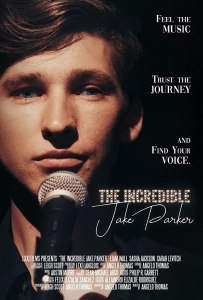 The Incredible Jake Parker is an Ohio indie written/directed/produced by Angelo Thomas, who just graduated from his arts college this spring. The 22-year-old adapted his own book into his first feature, all while finishing college and taking on activist responsibilities. The fact he has a finished feature film before he even graduated college, a film that was scheduled to open in multiple cities, is a damn impressive feat. Thomas is already well ahead of the game. Unfortunately, Jake Parker became another victim of COVID-19’s theater closings, and the limited release has been postponed. I was graciously given a digital link of the film to review and, even though I know people involved with the production, I vow to be as objective and constructive as possible with this film review. I honestly think the delay might help the movie, allowing for further critical examination and technical tinkering. As is, The Incredible Jake Parker is a well-made, albeit criminally short, indie that feels like it’s missing necessary development and potential drama to convey the steps in the journey of its titular star.
Jake Parker (Liam Wall) is a teenage musical sensation but he’s got a secret. He’s rapidly losing weight, enough to alarm doctors and his manager. Jake is anorexic. His tour is put on hold while he checks into a treatment center that will help him reflect and grow. He’s angry and eager to leave, but the more time he spends with the doctors and fellow patients, the more that Jake is able to tackle his personal demons with his body issues and figure out the man he wants to be.
The filmmakers behind The Incredible Jake Parker have an important and very personal message they take very seriously. Thomas has been open about his own troubles with an eating disorder and has spoken across the country about his experiences and insights. The character of Jake Parker is obviously informed from his own struggles and triumphs. Eating disorders are also a malady not typically associated with men, so smashing that taboo and educating viewers is admirable. We even see this flippant attitude in the movie where catty media figures wave away the implications of an eating disorder, especially for men, and prescribe just “eating a hamburger.” Body dysmorphic disorder is particularly affected by our omnipresent media culture that applies value to being thin, desirable, and staying within the codified boundaries of what is deemed appealing. That level of scrutiny and pressure can affect anyone’s mental health, let alone a performer whose press coverage and album sales can be affected by his good looks. It’s understandable to fall sway to negative thoughts that one’s body just simply isn’t good enough. The movie is filled with useful information about eating disorders as well as steps one can take to regain control over their body and mind and make healthy choices. By that regard, the movie can provide a great outreach to connect with people, especially young people, and inspire them to improve their own mental health and physical well-being. That’s what good art can do.
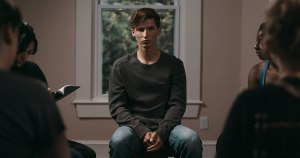 Now, with all that being said, it doesn’t feel like those good intentions have latched onto a suitable and engaging narrative to carry the burden of its worthy message. The movie is only 64 minutes long before its end credits and has the unmistakable feeling of missing development. We spend the first act establishing the problems for Jake and then in the last five minutes he finds effective solutions to those problems, but the connective tissue, the work, is missing in between. I’m going to go into some mild spoilers here though I don’t consider these to be significant because, realistically, did you expect Jake to not get better? I went back and re-watched what was Jake’s breakthrough therapy session and it amounts to being told that resilience is key and to find his inner strength. The very next scene involves Jake requesting ice cream to dine with a friend, seeming to now be able to manage his eating disorder, but why? Why was this a big breakthrough for Jake and why does it come with so much movie left? There’s another personal revelation that Jake is hiding that takes precedent in the last 15 minutes, which is odd to include so late after he seemed to overcome the movie’s big conflict, and even stranger to consider the fear it could pose to his musical career given modern-day sensibilities. It’s included to provide another scandal but it’s also there to get the plot even further across the hour-mark. Even his other late conflicts resolve so easily, some over text messages, that it begs the question of why introduce obstacles if they are so quickly overcome? When you wrap up your main internal struggle so early and with little elaboration, it leaves us questioning why we still have a movie.
So absent more in-depth examination on those problems, maybe we can use the extra time allotted to get to know Jake more as a character or the other residents of his treatment center, building a friendly network of lovable people leaning on one another to get better. The supporting characters are typically defined by their problem and stay that way. Mom (Rachel Coolidge) is an alcoholic, though we don’t see her drunk or even drink in hand if I recall, and Dad (John French) is a workaholic, though we don’t see him in a hurry to leave (the closest family Jake has is his British manager). Jordan (Sarah Levitch) has an eating disorder and was abandoned by her parents. I’m assuming the supporting characters at this treatment center all suffer from eating disorders but that could be my mistake. I have to go with this assumption because there is a raft of supporting characters that don’t open up about their specific problems, only occasionally their feelings of being helpless or being ashamed. A support group is a fantastic setting to derive some character-driven drama, forcing people to confront their pasts, mistakes, sense of self, vulnerabilities, relationships, and even butt heads before growing closer. It’s a conflict crucible ready for meaty scenes and yet it too is MIA. If Jake’s ultimate triumph over his personal demons is derived from the support he feels with the friends he’s made, then it would naturally need to feature meaningful interactions with supporting characters where we get to understand them and watch that progression of friendship and trust. It’s not that the material with these characters is bad, it’s just that they could all benefit from more of it.
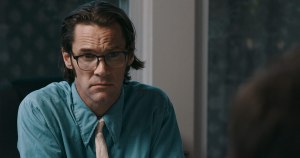 I do want to congratulate Thomas and his team for putting together a very professional looking movie. Even though its budget is a fraction of the Hollywood indie, The Incredible Jake Parker looks polished and proficient. The lighting and cinematography are a highlight of the movie, often finding compelling ways to frame the angular jawline of our titular star in anguish. It was filmed over nine days in Louisiana (boo) with some second unit work filmed in Columbus, Ohio (yeah). The songs we do get from Thomas and co-writers Austin Moore and Liam Wall are peppy and well composed with impressive production value. Just watching Wall sing is enjoyable and he seems at his most comfortable when he’s belting a tune and guitar in hand. The acting overall is generally good. Wall (Gold Dust) is a little stilted at times though it works for the awkwardness or clenched-jaw resentment he holds onto like a lifeline. Sasha Jackson (Blue Crush 2) has a few nicely delivered moments expressing her maternal worry and hope for Jake, who is more than just a client. The assorted supporting players make pleasant impressions, enough so that I desperately wanted them to have even more interactions to better allow the actors to shine.
Given Jake’s musical profession, I was expecting the film to include moments of his singing and guitar-playing for performances and songwriting, a reflection of his inner struggle for control and creative expression. What I wasn’t expecting was the movie to become a traditional movie musical where the characters just break into song and look into the camera. It first happens around the half-hour mark and took me aback, but I liked the two-minute introspective song and thought, “Okay, well if this is going to become a major element of the storytelling, I’m ready now.” I kept waiting for another moment of song-breaking and it didn’t occur until nearly the very end of the movie. It lasted, and I counted, 34 total seconds. Why break reality if it’s only going to last as long as a television commercial? If these two moments are the only ones that break reality to become a movie musical, then why include them if they only amount to two-and-a-half minutes? Could the sentiment not have been expressed with Jake merely playing his guitar and singing to himself rather than the music kicking in from on high? I was actually expecting more musical numbers simply because Wall can sing and play the guitar, as evidenced in the grabber of an opening scene where Jake records his amateur song that goes viral. He has talent so it would make sense that he writes a new song to discuss his journey, something he could perform at the very end to express his maturation and lessons learned, a new Jake Parker. That inspirational song, “Incredible,” plays over the end credits but why not actually see Wall perform the song to the camera, with the emotion pouring out of him, to mark the climax? It’s not like the film was running too long. Imagine the end of 2018’s A Star is Born and instead of Lady Gaga delivering that last powerful song to sum up her experiences, it just played over the credits.
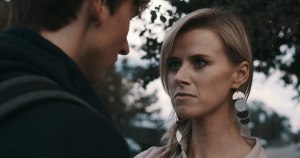 There are some other technical areas where The Incredible Jake Parker could benefit from some further attention before its big release rollout. The sound mix is often noticeably amiss with different shots having fuzzy interference that’s all the more noticeable when it’s edited with shots without. Some shots don’t seem to be using sound from other takes, so an off-screen character will sound distant because their dialogue was recorded away from the boom microphone. Why not pull sound from that character when they were on mic and layer it over? The color grading isn’t consistent at points, most notably when the film transitions from purchased stock footage that is vibrant in color to the more muted colors of the actual movie. I’m also hopeful that a new musical score can be applied (not the songs, the actual score) because it’s often too plain. The bigger technical element that could use another overview is the editing. Jake Parker is edited with a formula that a spoken line equals a shot cut. A character speaks. Next shot. A character speaks. Next shot. Repeat. It’s a stolid rhythm that can gum up the visual flow of scenes. The movie is crying out for another careful pass in the editing suite. It’s little things in the edit and pacing that can help mitigate whatever filming limitations there may have been.
The Incredible Jake Parker is a musical with a message and some spiffy technical acumen, especially considering that Angelo Thomas is only 22 years old and pulled this all off. Even though it’s only 68 minutes with credits, there is much to be impressed with this first film. There’s a late montage of real people (I’m assuming) who speak about their own struggles with eating disorders and mental health, their advice, and what a figure like Jake can mean to them, and while it may be manipulative my heart felt full-to-bursting while watching this genuine outpouring. It made me even more certain that had the film given more space to Jake’s journey, I would have been even more dazzled. Rare is the film I say could use an additional half hour minimum. The Incredible Jake Parker has all the hallmarks of great drama, with the insights of a man who lived it, so I wish we could have really dived into the development of its title character and his incredible story.
Nate’s Grade: C+
Share this:

The Ninth Gate (2000) [Review Re-View]
 Originally released March 10, 2000:
The latest from old school horror pioneer Roman Polanski is a dark and brooding thriller that is… very long and brooding. What begins with noir charm and decadence grows thin by the movie’s over-bloated running time – giving new definition to the term “tedium.” The visuals are grim and noirish, but hang forever. Half of the movie is seeing Johnny Depp walk from Point A to Point B; and then the other half is watching him light up a cigarette usually already with drink safely in hand. Depp plays a librarian that doesn’t play by all the rules, or something or other. He’s set out to authenticate the last three books of a Satanic worshiper only to discover they lead to a path of devilish power. By the time Ninth Gate reaches its climax at an Eyes Wide Shut-style group gathering the audience has already hopelessly lost feeling in their ass. The vague ending is a cop-out after what the viewer is forced to go through to finally find out the secrets of these special 15th century books/doorstops. When it’s not carelessly lingering The Ninth Gate has some interest to it, but too often than not, it just rolls ahead forgetful of the audience that paid to come see it.
Nate’s Grade: C-
——————————————————
WRITER REFLECTIONS 20 YEARS LATER

Times sure have changed for famous director Roman Polanski. He’s been filming movies entirely in Europe for years since he fled the United States to escape prosecution for rape charges. He even won an Academy Award in 2002 for The Pianist, though he wasn’t present to accept naturally. However, in a post-Me Too realm of improved scrutiny over the bad habits of bad men with power and influence, Polanski hasn’t had a movie with notable names since 2012’s Carnage. He’s made a few foreign-language films since but his sphere seems notably smaller, more confined, and more shut off from the industry and actors and moneymen that want to work with the famous director. They’ve even attempted to get him extradited back to the U.S. again. All of this cannot help but color re-watching The Ninth Gate, especially when it already plays upon memories of Polanski’s own Rosemary’s Baby. I wondered if this movie might actually be better twenty years later, and for a while I was feeling like my young film critic self was perhaps a little too quick to judgment. However, upon recent viewing, this is still a long and boring misfire.
 The premise is slightly intriguing until you realize what it exactly entails. Johnny Depp’s character, Dean Corso, is a rare book evaluator and unscrupulous profiteer. He’s been hired by wealthy magnate Boris Balkin (Frank Langella) to authenticate a book reportedly co-written by the Devil himself and, if real, has the ability to summon Old Scratch to boot. Hey, we got something there for an intriguing horror movie that delves into the occult. And for perhaps the first act, The Ninth Gate works well enough to establish its mood and its central conflict. Then it just kept going. And kept going. And that’s when you realize that much of this movie involves one man traveling to different chateaus and other European estates to simply look at books. There are three copies of this rare Devil-penned tome, so Dean Corso is traveling to at least two different locales simply to compare and contrast books. I don’t think I’m fully articulating just how boring this can get. Imagine a significant other sitting beside you and deep in thought with a dense textbook. Imagine watching them read and make the occasional verbal noise. That is The Ninth Gate. Watching people read is boring, especially when it’s done repeatedly. There are MULTIPLE scenes of simply watching Depp look over a book while music plays. Film is a visual medium, and reading is inherently an internal function unless adjusted in context. It’s not like he’s deliberating over whether to send a text to a special someone, what the personal correspondence means to his concept of his family, it’s a man compare old books for a job. It’s not like he’s obsessed over this book for years or is a true believer of its power.
Some of this might even be permissible if the stodgy 133-minute film wasn’t so tediously repetitive (spoilers to follow). Corso is paid to authenticate the book but every person he encounters that knows a little about this book ends up dead. The book dealer he has stash the book? Dead. The old man with the second copy who says he’ll never sell his book not even if his life depended on it? Dead. The old lady expert with the third copy who despises Boris Balkin? Dead. By the time that wheelchair-bound woman is found to be repeatedly running into a wall, and upon further inspection has her tongue hanging out her mouth in an unintentionally goofy sight, the plot structure of The Ninth Gate has entered farce. Dean Corso doesn’t seem terribly alarmed by any of this or observant of an obvious pattern of events. He has several run-ins with goons and a mysterious blonde woman (Emmanuelle Seigner) that follows his every move. He seems comically oblivious to the danger all around him. Part of this is the repetitive plot structure where over an hour of the movie follows Depp going to a place, discovering one minor addition of information, finding that person dead, being chased, then repeating. It takes over an hour simply to note that there are minute differences in the engravings in the three copies of the devilish book. Then it simply shifts into a game of who can capture all the copies, which it should have been from the start, and would have introduced a very necessary sense of urgency from a prosaic script. Another reason for that general turgid feeling is that Depp seems to be sleepwalking through this performance absent emotion. Even Polanski himself complained.
 This is a movie about a special book that can unleash the powers of the Devil, so why is the finished film so boring and frustrating to sit through? It has rival cults and business tycoons fending for ownership over that power. At least it does in theory. The fact that there are competing interests should have been a substantially larger element of the movie. Once Lena Olin’s rich widow character sleeps with Dean Corso to get the first copy back, she disappears from the narrative until the very end, where she’s dispatched without any intervention from her assembled cult of would-be Satanists. Seriously they just stand by and watch a guy strangle her to death and jump at the word “Boo!” They were never a threat even if they were responsible for one part of the mysterious stalkers. The other stalker, our ever-present blonde, will literally float at times and come to kung-fu kicking rescue, which made me snort out loud. It just comes across so goofy. Her identity is clearly in a supernatural answer but the movie never fully explains who she is, what her real motivations are, her allegiances, and even what the ending is supposed to mean. After 133 minutes, it’s egregious that Polanski doesn’t provide a conclusion that feels even fleetingly conclusive. The whole movie is a mystery that moves with irritatingly incremental steps that leads to one big shrug.
I can see the appeal of the idea of this story but I don’t see the appeal of making The Ninth Gate as is, beside visiting some fabulous locations in Portugal and Spain. Why get an actor of Depp’s caliber if he’s going to read on camera and not worry about his encroaching danger? Why does this movie need 133 minutes to set up a plot that could have done it in 100? I think Polanski was eager to revisit the old school horror of his early works and didn’t sweat the details. Mysterious castles of old. Dangerous strangers. Cults. The Devil. Book authentication. Okay, maybe not that last part. I suppose one could charitably say Polanski is trying to establish an unsettling mood with patient-yet-paranoid camerawork and a story that feels unhurried. It feels to me like Polanski doesn’t know what movie he wants to make and is in no rush to get there. The most overtly horror moments fall into self-parody. That’s really where the movie errs for me. It takes great horror story elements and says instead of running with cults and the Devil, what if we focused more on the slow authentication of dusty old books? Not their power or meaning or value to devious men and women, but on whether they are real. That would be like finding a treasure map and then trying to make sure the ink was authentic for its era rather than, you know, hunting for treasure.
My original review twenty years ago is a bit harsh and angry, though I can understand why especially after such an anticlimactic ending. I would say the movie is more than watching Depp walk from Point A to point B, though to be sure that is heavily represented onscreen. I might even slightly raise my letter grade but the criticisms still stand as stated. Even twenty years later, with a fresh set of eyes, The Ninth Gate is a disappointing story that says too little and takes too long to do so.
Re-View Grade: C
Share this:

The Wretched (2020)

Very reminiscent of Fright Night, this movie feels like a lost relic to 80s coming-of-age movies and horror-next-door thrillers, and it’s generally great. We follow a teenager who is staying with his father over the summer; he’s also recovering after a drug-related accident. He’s convinced that his neighbor is really a witch who kills children and then fiendishly erases the memory of those children from the families she has inserted herself into. Nobody will believe him, especially with his past drug abuse, so he takes it upon himself to investigate the strange goings on, Rear Window-style, and potentially save lives once the witch is forced to jump into a new host and terrorize a new family. The Wretched is barely 90 minutes long and is splendidly plotted with every scene being meaningful, advancing the plot, shading characters and conflicts, heightening the stakes and suspense. The new-kid-in-town and young crush story elements work as well as the creepy horror. Overall, it’s a very fun movie that can switch modes when needed, being funny or sincere or spooky, and it does each with great finesse and execution. Writer-directors Brett and Drew Pierce (Deadheads) have a great affection for their characters as well as their material. It shows in the level of thought they give even small details, finding clever ways to serve payoffs as well as work emotional investment into a briskly told tale. There’s a very late twist that I should have seen coming but made me want to start clapping, and it works entirely within the carefully set-up rules of the supernatural monster and supplies an organic elevation to the stakes. I only wish the movie had given me even more. The Wretched is a charming throwback and proof positive that you don’t need to reinvent the wheel to make a good horror movie, just keep to a vision and see through the story to best serve and elevate that vision. It’s well worth your 90 minutes and I predict a bright future for the Pierce brothers.
Nate’s Grade: B+
Share this:

The Vast of Night (2020)
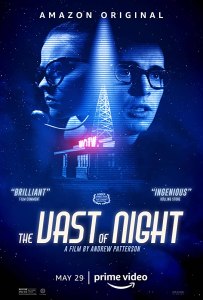 If you had told me that The Vast of Night was based upon a radio play or a narrative-driven podcast, something like the popular Welcome to Night Vale, I would have completely believed you. This is a very dialogue-driven story where the movie seems to hit pause and allow a speaker unfettered time to tell their tale in patient monologue, like a sci-fi edition of This American Life (I’m coming up with a lot of comparisons here). It’s a more high-concept, cerebral, imaginative-dependent science fiction. In 1950s New Mexico, a small-town radio DJ and a teen switchboard operator, both with dreams of leaving the town for bigger things, discover a strange signal and eyewitness reports of something in the sky. Over the course of one night, the characters investigate the signal and those who experienced it before. The Vast of Night flies right out of the gate, long takes giving space for fast-paced dialogue exchanges. The direction is very assured with long tracking shots to maintain the tightrope walk of a live theater performance that the screenplay imbues. I was always interested in what was happening but I can see many other viewers failing to click with the material and its narrative restraints. I do think the movie could use more of a resolution and errs by having the wrong combination of characters for a climax, denying the only real emotional catharsis that was offered by the screenplay. I’m sure many will simply find this movie slow and boring (it’s only 89 minutes but even that might be pushing it for many). The Vast of Night feels like an extended Twilight Zone episode, for better or worse. I applaud the ingenuity of the director and screenwriters on a small budget but I would not be surprised that bigger and better things lie ahead for each of these creatives.
Nate’s Grade: B
Share this:

Wonder Boys (2000) [Review Re-View]
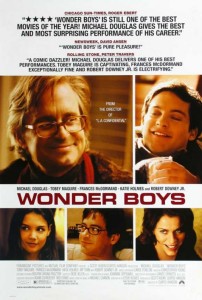 Originally released February 25, 2000:
A rather warm but ultimately meandering tale of Michael Douglas as a college professor going through one crisis after another, Tobey Maguire as a creepy kid (again?!), and Robert Downey Jr. as an editor who seems to have a taste for transvestites. Though likable, Wonder Boys goes nowhere and nowhere slow. It carries the feel of a novel that was never intended to be brought onto the screen because of what it would lose in transition and it does. Douglas’ performance is sincere and syrupy but Wonder Boys is not a night out on the town.
Nate’s Grade: C+
——————————————————
WRITER REFLECTIONS 20 YEARS LATER
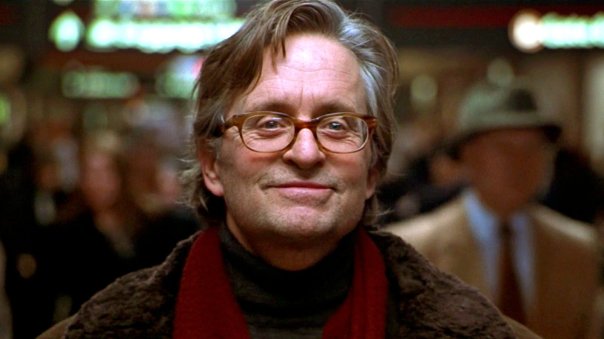
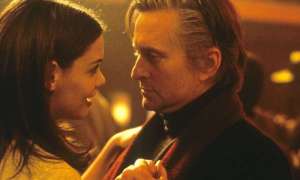
This was another film that I was curious to revisit because I was wondering whether or not I would find more of value than when I was 17-years-old and seeing Wonder Boys at a rare promotional screening with my good pals Kevin Lowe and Natalia Riviera (I recall none of us being particularly taken with the movie). It’s based upon an acclaimed book by Michael Chabon (The Amazing Adventures of Cavalier & Clay, The Yiddish Policeman’s Union), starring the eventual first big screen Spider-Man (Tobey Maguire), Iron Man (Robert Downey Jr.), Hank Pym (Michael Douglas), the first Rachel Dawes (Katie Holmes), and Oscar-winner Frances McDormand (Three Billboards Outside Ebbing, Missouri). It was director Curtis Hanson’s follow-up from his 1997 masterpiece, L.A. Confidential. The screenwriter, Steven Kloves, would go on to adapt every Harry Potter movie minus one. The studio even re-released the movie later in the fall of 2000 under new more ensemble-focused marketing to push for awards consideration (to my surprise, it was nominated for three Oscars: Editing, Adapted Screenplay, and winning Best Song for a craggy Bob Dylan tune). Maybe my indifferent review earlier was just a young man unable to connect with this brand of middle-class ennui. Now two decades later I can finally say… I still don’t connect with this ennui.
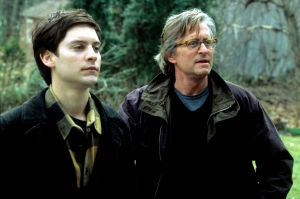
Wonder Boys is one of those shaggy dog stories where it’s not so much the destination but the journey, so you better enjoy the characters or else it will feel like a long ride. The problem with this story is that its protagonist feels so self-pitying and yet the universe seems designed to cheer him up. Grady Tripp (Douglas) is a celebrated creative writing professor just going through his days in a pot-fueled haze to dull the pressure of living up to his big breakout novel. It’s been over seven years and his next novel has no end in sight, already clocking over 2000 pages. Grady thinks he’s a has-been but every other character in this tiny bourgeois universe tells him how great he is. His publisher (Downey Jr.) is eager to peek at Grady’s next surefire literary hit. His students adore him and hang on his every word. He has multiple women throwing themselves at him, including McDormand, who wants to have his baby, and Holmes as his infatuated student/boarder. Everyone tells him how great he is as a writer. James Leer (Maguire) confesses that it was Grady’s book that inspired him to even be a writer, and he seems poised to become a great one. It’s exhausting for every other significant character to proclaim repeatedly how great our lead is and to have him repeatedly respond, “Yeah, but I just don’t know, you guys.”
Self-doubt is already relatable enough, on top of imposter syndrome for an artist or even just an adult, so the material is there for an introspective story about the struggles of creativity and responsibility, but that’s not what Wonder Boys presents as a movie. It’s filled with zany mishaps to fill up those meandering two hours. There’s Downey Jr. and his wandering eye, first with a trans women and then with James. There’s a man incorrectly labeled “Vernon” who stalks Grady demanding what he says is his car back. There’s also a dead dog that gets carried around for almost the entire movie, even though the plot covers days and it would seem like a very bad idea to continue hauling a decaying animal in one’s car. There’s no real reason why this dog’s corpse is even held onto. It belongs to Grady’s boss, the chair of the English department, and the husband to his mistress (McDormand). Why not dispose of the evidence especially with the personal connections? It’s yet one of several signs of the movie trying to be quirky and edgy over the consequences of character actions. Much of the plot beats follow retrieving a stolen coat once owned by Marilyn Monroe. Does the coat represent something of time gone by? A promise never fully able to be fulfilled? America’s innocence? Does it even matter? If Wonder Boys was going to explore the inner turpitude of Grady, why does the movie need so many dead ends and loping storylines as a means of distraction?
It’s not a terrible viewing experience but it feels like the movie is definitely missing material that made the book so effective. As I stated in my early and remarkably on-point review in 2000, it feels like a novel that would lose its appeal in translation and it has. The plot is treading water until Grady finally makes a big personal decision at the very end. He even gets a happy ending where his next great book is the recollections of the film’s events. The many supporting characters are not as interesting as the actors might make them appear. Even Maguire’s wonderkid writer, where the title is derived from, is a walking awkward quirk machine, an early representation of an autistic student before many of the characteristics were wider recognized. He provides a detached sense of comedy with his bluntly direct approach, like his encyclopedic knowledge of famous Hollywood suicides (fun fact: the home video versions edited out Alan Ladd’s name at request from his family estate). The problem with James as a character is he’s meant to represent promise to Grady, further compounding his sense of inadequacy. He’s the shiny new up-and-coming talent headed for great headlines, the kind Grady might have enjoyed but might now be too far in the rear view mirror. James has his own mini-arc of “cutting loose” but he wasn’t tightly wound from the start, just antisocial and aloof. He’s a symbol by design and an impenetrable autistic mumbly sidekick for offhand comedy observations, not so much a person.
Curtis Hanson’s direction is fine, the acting is fine, and even when relatively uninspired, the story is fine as it meanders and goes in self-defeating circles. It’s a movie that I think will be more remembered for weird little trivia, like a scene where future Iron Man and Spider-Man are in bed together. I don’t regret re-watching Wonder Boys but I didn’t get much more out of the experience than when I was 17. The main character is hard to fully embrace, especially his self-pitying problems of middle-class privilege, and the story is more a collection of chapter-based anecdotes and hasty character resolutions. Even if the two hours is amiable enough, it’s hard to connect with the characters and their conflicts, and it’s a prime example of an adaptation that can’t replicate its specific authorial charms. If I were 17 again, I’d make a pun on the word “wonder” but I’ll refrain. After all, I’ve grown.
Re-View Grade: C+
Share this:

Capone (2020)
 In 2012, after the found footage superhero movie Chronicle became a surprise smash, director Josh Trank was at the top of Hollywood’s hot new director list. Within three years, he was a pariah. The production behind 2015’s Fantastic Four was so troubled and fraught with reshoots, creative clashes, and secret edits that Trank was labeled as a malcontent who couldn’t be trusted with the big tentpoles. He was unceremoniously dumped by Star Wars and seemed to become the latest casualty of an industry that eats its own promising wunderkinds. I’d highly advise people read a very illuminating in-depth article from Polygon on Trank’s troubles and triumphs, including his insights on where Fantastic Four went awry. Trank spent years honing his next script, an Al Capone biopic of his late years, and waiting for star Tom Hardy to be available. Some critics have called Trank’s comeback movie a self-indulgent, surreal, campy mess, and indeed while I was watching I had visions of Mommie Dearest. However, that wasn’t a bad thing, at least for me. I cannot call Capone an unqualified success but I appreciated the bizarre lengths Trank goes to make a biopic that mocks and tears away the mystique of its macho idol.
Capone (Hardy), or “Fonze” as he’s referred to primarily, has been released from his prison sentence for tax evasion and living the rest of his days on his Florida estate. He’s suffering dementia from the effects of neurosyphilis, a condition he contracted as a teenager. His wife, Mae (Linda Cardellini), tries her best to keep him from harming himself or others. The F.B.I. is still listening, still watching, and newspaper reporters are still hiding along the bushes. Capone struggles to keep his mind from being completely lost but will lose, dying at age 47.
 First off, I think Trank’s initial creative approach is a genius way to explore a biographical film, running through the major points of a subject’s life in a hallucinatory, non-linear fashion that mixes fantasy and reality. From that standpoint alone, Capone is never boring because it can quite literally go anywhere as Capone retreats further and further into his fraying mind. That’s such a visually stimulating way of telling a story while also presenting a chaotic impression of a character’s perception, locking us into an empathetic experience with an unreliable guidepost. I think that alone makes Capone worthwhile, as does Hardy’s go-for-broke performance (more on that later). It’s a weird fever dream of a movie, constantly shifting between past and present, fantasy and reality, and I think this perspective adds much to the film’s appeal and ambition. One second the man is sitting down with FBI agents and the next he’s wandering a ballroom to go onstage with Louis Armstrong for a New Year’s Eve duet. It gets pretty crazy and that’s good.
I was wondering if Trank would glorify his title subject. I only had to wait for the first twenty minutes where Al Capone literally craps himself twice for my answer. This is not Capone at the height of his fearsome power where he ruled the Chicago ganglands; this is a decrepit, doddering middle-aged man, equally helpless and reckless, unable or unwilling to even control his bowels. He is rotten from the inside out, a vile human being whose own filth is leaking out to smother him. Gangster cinema has often glamorized the mafia and criminals as unorthodox folk heroes, like in 1967’s Bonnie and Clyde and the more recent Public Enemies in 2009. So, with all of that said, I enjoyed that Trank took a legendary figure of the criminal underworld and totally undercut his machismo power. He strips away the romantic notions of the man’s life. This isn’t the man on the pulpy radio dramas, this is a guy who craps the bed. Martin Scorsese’s The Irishman got plenty of acclaim for spending its final half-hour showing where a lifetime of crime leads its elderly protagonist, a sad, lonely life without any lasting personal benefit. Trank takes that much-heralded final half-hour and turns it into an entire 100-minute movie. I wish more movies would do this to deserving subjects.
 The biggest draw of the film is Hardy (Venom, The Revenant) who never met a film role he couldn’t grumble, mumble, growl, or unleash a funny voice for. To say he is committed does not to do the man justice. He is not only chewing scenery; he is rapidly inhaling it. He is playing to the cheap seats with this role, bloodshot eyes bulging out of his head with thousand-yard stares of confusion and paranoia. He’s barely intelligible at times, and that’s before he has a stroke that further impairs his ability to communicate. He can also be hard to recognize under layers of pock-faced makeup. The acting-with-a-capital-A style is so enthralling but perhaps not for the exact intended reasons. It’s fascinating to watch a highly respected, Academy Award-nominated actor just indulge every over-the-top impulse and tic, where each small decision feels like generating the question, “Really, you went with that choice?” The batty performance brought to mind Faye Dunaway’s breathtaking performance in 1981’s so-bad-it’s-good Mommie Dearest as Joan Crawford (she thought she was going to in awards for that performance!). It’s a level of camp with no earthly reservation, and it’s rare to see from such a famous actor, and I was spellbound. If you enjoyed Mommie Dearest for its unintentional camp hilarity, then Capone might be just for you.
While at turns confounding and fascinating, Capone falls short when it comes to examining the inner life of its title character. I assumed with the conceit of losing touch with reality that Capone would be experiencing some reckoning over his past misdeeds, and this happens to a very mild, opaque degree. There are some supporting characters that turn out to be, surprise, ghosts that Capone had killed in his past. But they stop there, failing to provide an opportunity for Capone to feel remorse and they don’t even push him on being guilty. You would think a man with a sizeable list of dead people he’s responsible for would be haunted by more ghosts from the past, forcing him to reconcile his idea of himself with his tortured deeds. Capone is also seeing images of a young boy that is meant to represent his poor youthful upbringing, but he doesn’t interact with this past representation other than look uncomfortable in his presence. The movie desperately needed more introspection with this man examining his sins and legacy and validations. A bad man coming to terms with the end and what it means has great dramatic potential. A bad man who bumbles around his luxurious home, sees some ghosts, and continues bumbling has less so. That’s where Trank’s screenplay really falters because it doesn’t push harder. Capone is too caught up in upending the image of Al Capone rather than digging deeper into the man himself and his inherent end-of-life drama.
 The supporting characters also do little to offer alternative sides to better know Capone. His long-suffering wife is nicely played by Cardellini (Green Book), brought to tears watching her strong man waste away, calling her an angel one minute and forgetting her face the next, but we don’t learn more about the central figure through her. He started poor. Got power. Now he’s incompetent (and incontinent). That’s it. There’s room for more here than a man physically and mentally falling apart. What about the other people in his life? What about plans for succession from those who spent their lives in his service? There’s even a storyline of a lovechild trying to get in contact with him and the movie miraculously does nothing with this abandoned son to add further dimension and insight.
I would be lying if I said I wasn’t laughing throughout Capone, though I think Trank is intending some degree of mockery with his biopic that plumbs the depths of the strange and grotesque. There’s a guy who gets stabbed in the neck maybe 50 literal times. There’s Capone shooting alligators, convinced they’re conspiring to munch on his testicles. There’s Capone applauding and singing along to The Wizard of Oz and arguing for the sake of the Cowardly Lion. There’s an ongoing subplot about different supporting characters trying to somehow sift the location of Capone’s hidden millions from his broken mind like a treasure hunt. There’s an entire sequence where Capone, with carrot-as-cigar in mouth, marches around firing a golden Tommy gun while his saggy adult diaper droops around his waistline. In short, there’s more than enough material here to enjoy on a strictly ridiculous, pulpy, heightened to the point of breaking campy variety. Hardy is fully unrestrained, for better and worse, but he’s always watchable, as I would say of the film itself. Even if it feels ultimately superficial and underdeveloped, Trank’s Capone is a mess of bad taste about a bad man going through some bad times and it just might be the good kind of bad.
Nate’s Grade: C+
Share this:

Wendy (2020)
 I was not a big fan of writer/director Benh Zeitlin’s first movie, 2012’s indie darling and surprise Oscar contender, Beasts of the Southern Wild. Some choice highlights from my mixed review include: “This movie is awash in all sorts of tones and storylines, failing to cohesively gel together or form some kind of meaningful message…. [it] offers half-formed ideas, strange, conflicting imagery, and characters that are rather thinly written and barely register… This is just a swampy mess of a movie, one that sinks under the weight of its own pretensions. It’s admirable from a technical standpoint but, as a movie, Beasts of the Southern Wild is an exercise in eclectic indie navel-gazing.” So as you can see, I wasn’t exactly heartbroken that Zeitlin took eight years for his follow-up, Wendy, a loose reinterpretation of the Peter Pan story. It has many of the same flaws as Beasts and not enough of its few virtues, which means Wendy is its own lost movie experience.
We follow a group of children from a working-class diner waitress in small-town Louisiana. They watch the trains speed by on the neighboring tracks and dream of far-off adventures. Wendy (Devin France) and her two younger twin brothers (Gage and Gavin Naqui) sneak off one night onto a passing train and meet Peter (Yashua Mack), a boy who promises to guide them to a magical island where they will never grow old as long as they believe in Mother, the spirit of the island and embodied as a giant glowing fish. Wendy enjoys the freedom but worries if she’ll ever see her mother again and if this extended excursion is worth that level of sacrifice.
 Maybe I’m just going through Peter Pan fatigue or maybe this latest variation on the mythology of J.M. Barrie just failed to provide any really thorough message, theme, or entry point of interest for me. Wendy seems to be going for whimsy and flights of fancy, once again attaching its perspective to that of children escaping into the realm of fantasy as a means of avoiding the hardships of their impoverished lives and what it means to be a working stiff (one child in the opening runs away at the prospect of becoming “a mop and broom man”). It’s meant to be diverting but it’s never really that exciting or involving, tapping into a wellspring of awe. There’s a beautifully idyllic island and a volcano, and of course our magic fish, but there aren’t nearly enough genuine magical elements to convey that desired whimsy. The freedom of a life without adults seems less free when there’s less to do. Much of the movie feels closer to The Florida Project where a group of poor kids are playing around junk to keep from being bored. This Neverland universe feels very limited as far as what can be done. They run around, they pretend, there are even some decrepit buildings, but what else? There isn’t really a society here in concert with our lost children and former lost children. It’s a pretty empty island retreat.
Perhaps that was Zeitlin’s goal, to strip away the romanticized notions we attach to forever staying young, chasing the fleeting feeling of the past while ignoring the present and adulthood, but this more critical theme doesn’t come across thoroughly either. There is one interesting aspect of the island’s unexplained magic and that is the older adults are former lost boys and girls who lost faith in Mother, thus activating their advanced aging and expulsion from Peter’s posse. I like the idea that the future villainous pirates of a Neverland are former lost boys; it gives an interesting personal dynamic for Peter. These adults, though, want to go back to being young again and they are convinced that killing Mother will achieve this, and it doesn’t go as planned. The deconstruction of fantasy with real violence doesn’t work because the consequences aren’t at the same level of realism. A child, in an effort to avoid growing old, makes a drastic decision, but the brushed-off aftermath makes the insertion of the harsher violence feel perfunctory. Peter is portrayed as an idealist leader one moment and ignorant and selfish the next, even with Wendy scolding him that there’s nothing wrong with growing up and becoming an adult, despite the mixed message of the former lost boys. The movie concludes with a goofy sing-a-long for magic resolution purposes that is played so earnestly that it makes it hard for me to believe Zeitlin was intending to be too critical of his magical world.
 Is Wendy about rejecting adulthood or the unavoidable perils of rejecting adulthood? I cannot say because the themes are so muddled with such a precious lack of significant storytelling content. Once again, a Zeitlin film feels like an improvised series of redundant scenes, where we watch kids play fight, we watch kids yell at one another, we watch kids run, we watch kids swim, all with headache-inducing handheld camerawork, but do we get to know these kids on a deeper level where they feel like people rather than figures? The plot of Wendy, written by Zeitlin and his sister Eliza, is very unclear about the rules of its magical world, which makes for a hard time to understand why anything is really happening. It also makes the movie less fun to experience because we don’t get to play along with the discovery of a fantasy world, its new parameters, and how we can develop and complicate them (not that there’s really much to discover; Neverland gets old quickly). This is definitely a movie that’s meant to convey more in feeling and inference, so the plot beats are very inconsequential outside of a few key movements. I didn’t find myself caring about any of the kids and their general well-being, even after they take it upon themselves to make some rash medical decisions. Wendy is our best realized character as she at least seems conflicted about the appeal and consequences of staying young indefinitely. The others are easily replaceable.
Wendy isn’t a bad movie and it’s clearly a very personally designed project from Zeitlin given the years of preparation. It has consistently gorgeous photography by Sturla Brandth Grovlen, the first film production shot on location on Montserrat island, and the score by Dan Romer (Maniac, Atypical) excels at the big swooning, churning melodies that crescendo into triumphant bliss. But even these positive technical qualities can only distract you momentarily from the missing center of Wendy, the story and characters and themes and discernible messages. I’m not asking for my entertainment to spoon-feed me what to think and feel from my art, but having a consistent message, or even an accessible entry point to decode and debate the art would help, as would engaging characters and a plot that felt more meaningful than just another disposable color to blend into a murky abstract mess of childhood whimsy, magic realism, and coming-of-age themes. A little of Wendy goes a long way, and two hours gets quite tedious. I just cannot foresee people falling under the spell of this movie. I wrote that Beasts had “half-formed ideas, strange, conflicting imagery, and characters that are rather thinly written and barely register,” and this much is also true with Wendy. I also wrote that Beasts was “an exercise in eclectic indie navel-gazing,” and this much is also true with Wendy. Maybe I’m just not the right fit for a Benh Zeitlin film. This is two hours of kids running around on an island without supervision and the occasional Peter Pan element thrown in. Maybe that sounds like a grand retreat as a viewer but it made me happy to be an adult and leave.
Nate’s Grade: C
Share this:

Constraint (2019) [PART THREE]
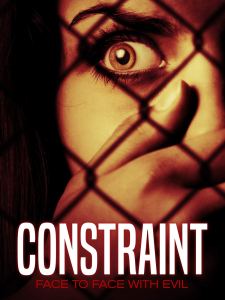 Please read PART ONE and PART TWO if you have yet to as I try and better articulate my questions over this Columbus, Ohio indie and its confounding creative decision-making. Dear reader, I am going to take you live through this very intellectual and artistic assessment as I continue to watch Constraint.
The main plot revolves around Oracabessa (Brooklyn Sabino Smith), a young cellist, who becomes entangled in a web of human traffickers, led by Tuco (Ralph Scott).
I’m now heading into Act Three with a half-hour left of movie to go with Constraint. Oracabessa mumbles the address from Tuco’s I.D. and wanders into the woods rather than call for help or use her moped or one of the cars at the scene of the accident. Magically, she finds the location. Her sense of direction must be superb while suffering from a concussion. Why would she think Tucco was holding the trafficking victims at his registered home address? I feel like the first step of human trafficking, after giving away one’s moral whole, is not to keep your victims at your home.
Dear reader, I am all about climaxes where our protagonist wreaks havoc among some very bad people who deserve some very bad justice dealt to them in hopefully poetic and painful ways. It’s a natural storytelling formula rife with catharsis and payoffs. But like other formulas, you need to still put in the work to reap the rewards. Just because our heroine is stumbling to a compound to free the victims and bring down their tormentors does not mean it works. It’s skipping to a climax the movie doesn’t really deserve because we spent so much precious time on side characters that didn’t matter and dawdled. Just in case if you mistook the good faith of the production, there’s also a gratuitous rape scene used as a setting device for one of the heretofore unknown bad men (at least she was clothed). One of the women from the beginning is found in the basement, she mistakes Oracabessa’s intentions, and runs to her to be saved, and she then gets gunned down in the back by the traffickers. She was let down twice by our heroine.
 Our leading lady wanders the compound and comes across two children, one white and one non-white, both of them trafficking victims, but she only addresses the white kid and says, “I’ve come to take you home.” They ask if she is the police, again a reminder that perhaps alerting the police to the whereabouts of this site might have been a higher priority than going alone. She is only here, it would seem, for these two children. Sorry the women she found in the confusingly oriented basement. I was already having a hard time liking this protagonist as is but this sealed it.
A lot of shots of running through the woods happen without much to connect a sense of spacing and geography, and then Oracabessa is saved when Derick drives up and they get inside his car and drive away to safety. The following then happens in our bulrush of a resolution:
1) Oracabessa is in a hospital bed. A nurse is asking her about medications.
2) Nicolas quickly rides a motorcycle to the hospital entrance outside.
3) The nurse says she “just got your blood tests back” (a certain The Room line echoed in my head) and then imparts, “Have you ever been pregnant before?” Why is this even being asked except to imply that she is currently pregnant or never had a son like she confessed before. We get no clear indication on either of these being true, so, again, why include it?
4) Cut to Nicolas running down the hospital corridor while SUDDEN electronica music begins blaring like we just dropped into an action set piece from Blade.
5) Nicolas comes into Oracabessa’s room and pulls up a blanket on her in a manner that seems less “tucking in” and more “pulling sheet over a corpse on a slab.”
6) We reveal in the same hospital is Oracabessa’s brother who was indeed the drug carrier that Tuco stabbed far earlier and has not been referenced since. The doctor says he lost a lung.
7) Nicolas thanks Derick for saving Oracabessa and they seem to part on good terms. In the same camera setup, with Derick in the same outfit, thus implying that same day, Oracabessa leaves on crutches, meaning she was discharged in hours. The ADR-ed line “Think you cracked the skull” occurs without Derick moving his mouth.
8) We jump to a new scene where Oracabessa has her hands around Derick’s face and she says, “I’m going to kiss you now, and it’s going to be the last time. I’ll never kiss you again.” It’s a repetitious line that screamed Neil Breen to me.
 9) We jump to a new scene where Oracabessa is hobbling to the ballet class teacher who shows no sympathy and literally tells her that her last performance “was an abortion.” Yikes! This is then immediately followed by Derick saying, “A woman has a right to choose” to Nicolas.
10) While talking to the creeper from before with the French accent who heads a music school, Oracabessa SUDDENLY remembers a time she saw him sitting in the passenger seat of Tuco’s car while it passed her on the street. Who else will she arbitrarily remember next? And how often did she see this one car drive around her entire town that she committed to memory? She, at long long LONG last, finally calls the police and has the human trafficker creeper arrested.
11) She then flies to Jamaica and visits her father, asking him about the little boy he ran over. Did this man serve jail time? Oracabessa blames herself for the kid’s death and now I feel like this should have been dealt with more if we’re going this route. It doesn’t feel like catharsis because it doesn’t feel like it was on her mind too often. Did I confuse the earlier scene of her talking about a son as this kid?
12) Nicolas surprises her in Jamaica. “Whatever happened to that Derick fellow?” asks dad at a dinner with the three of them. We’ve been told Nicolas was engaged to Oracabessa, so it seems peculiar that of the two men in his daughter’s life, this is the one he is unfamiliar with. Dad threatens Nicolas with great harm if he does anything to hurt his daughter. Is this comedy?
13) The voiceover overlaps and we jump to a wedding party dinner with the use of split screens. Why split screens? With how quickly we are rushing through plot content, I feel like this is the series finale of HBO’s Six Feet Under and I’ll see the next hundred years of these people’s lives.
14) The various characters mingle and dance in, what else, a wide angle that lasts an astounding FOUR MINUTES without cuts, as if the movie didn’t know it was over. It’s just lingering with no real purpose of why the audience needs to see any of this for four minutes. There is no dramatic change. Just people hugging. If the movie already wasn’t nearly two hours long, I would have accused the filmmakers of dragging this thing to a feature-length running time. Then the end credits just appear, which they could have done four minutes ago too.
 Finally, now I can derive my critical conclusions on this truly bizarre Ohio indie movie. Constraint feels overwhelmingly like Ohio’s own Neil Breen movie, plotted so loosely, so archaically, with characters behaving so randomly and nonsensically, and with a story that never seems to have traction, bouncing from one character to another and going on strange tangents and flashbacks, like it’s trying to pack in some half-formed Armistead Maupin ensemble piece. Constraint is just as much about a girl walking around town with her cello on her back (possibly one quarter of all shots) as it is about sex trafficking and finding the victims (when it’s not squeezing in some nudity from them). The pacing seems overstuffed and insufficient, with so many things happening but little connection to make those actions feel important even with life and death stakes. Perhaps having our main trafficker just wandering around town at all hours takes away from his mystery and danger. This is a movie where anything might happen at a moment’s notice because it doesn’t feel like much of what you’re watching builds off what came before. Being redundant at 110 minutes is just inexcusable. The scenes in a movie should matter, as should their placement, and the characters should learn, grow, progress, or at least present an interesting viewpoint for an audience to follow.
From a production standpoint, Constraint has some positive qualities but they are routinely hobbled by the exasperating creative choices of the man in charge, writer and director and editor and cinematographer Richard A. Nelson (The Endangered). The man likely should have only had one job on this project as director. He needed other creative supports that could better concentrate on seeing a vision through, a better writer to make a better story with fleshed-out characters, a better cinematographer to ensure more seamless camera arrangements for the edit, a better editor that wouldn’t sabotage the movie’s flow and literal comprehension with so many erratic edits. It’s not a bad looking movie despite some unfortunate edits and a heavy reliance on day-for-night filming. The acting is generally acceptable but I don’t hold the performances against the actors. The characters they are playing are very difficult to find a sustainable reality to inhabit. Smith (Indie Film School) has something about her that keeps you watching, which is good considering her cellist character doesn’t fulfill that same outcome. Scott (After) is dependably great. There are even moments, slivers, that give an idea of how good all these actors could be with better material, like the small scene between Alice and Tuco together. Constraint feels like a dozen movies that have been sloppily distilled together, with inorganic sections intruding upon one another. I don’t know if this approaches a so-bad-it’s-good quality but it’s flabbergasting to witness.
I cannot advise you to watch Constraint but I cannot not advise you to watch this. It’s Ohio’s own Neil Breen indie and I never thought I would discover something quite like that.
Nate’s Grade: D-
Share this:

Constraint (2019) [PART TWO]
Please read PART ONE if you have yet to as I try and better articulate my questions over this Columbus, Ohio indie and its confounding creative decision-making. Dear reader, I am going to take you live through this very intellectual and artistic assessment as I continue to watch Constraint.
The main plot revolves around Oracabessa (Brooklyn Sabino Smith), a young cellist, who becomes entangled in a web of human traffickers, led by Tuco (Ralph Scott).
I am now 45 minutes into the movie and screamed, “What?” to my screen. Oracabessa (Brooklyn Sabino Smith) is once again playing cello for a ballet class and the instructor doesn’t like the musical selection. She requests Wagner, and Oracabessa says she won’t. The instructor is animated and agitated and demands to know why she can’t play the composer. “I didn’t say I couldn’t play it. I won’t,” she replies. Why? Is this going to be like some character moment like in La La Land where Ryan Gosling gets fired for refusing to play the holiday music his boss asks for as dining accompaniment? I would think refusing to play what a client was requesting could cease in you getting more work from that client. And considering this one ballet class is the only thing we’ve watched her do for money, I wouldn’t be too pushy.
Oracabessa sees Tuco walking along the street again which begs the question of how protected does this guy think he is? She follows him but the ensuing tailing sequence goes through a blender of edits so it more implies the chase than allows it to establish. She then joins the college professor, and Derick, and others at a hookah bar to translate a French speaker. “What about having your own racial identity?” Why does this scene exist in a story about sex trafficking? Is the professor Oracabessa’s sister? Why was this never established earlier? There’s now a discussion over whether or not Jewish people should be defined by the Holocaust and its impact and it’s like a family dinner squabble, still with the omnipresent ADR dialogue, and I’m starting to lean into the arbitrary madness of Constraint as it further infects me.
 We transition back to the life of Tuco, our beleaguered sex trafficker. He kills a guy for being late to a drug deal and I cannot say but this might have been Oracabessa’s brother from the previous family dinner scene. Tuco has his kidnapped women line up in their underwear so they can be “inspected” by his superior. He warns them not to “embarrass him,” though I have no idea how that would be achieved. And then the women start stripping off their clothes and the camera angles are PURPOSELY AIMED to highlight their full-frontal nudity, even one side view that captures all three women’s breasts in a row while cutting off their heads. That’s when I stood out of my chair, cursed this movie out loud, and paced around the room in building anger.
Nudity in film by itself doesn’t have to be sexual or gratuitous, but this nudity is meant for titillation, framed for this purpose, and to squeeze this into the context of sex trafficking, a very depressing and all-too-real reality for many, I felt extremely grossed out. The scene doesn’t need visible nudity to feel the distress and vulnerability of the captured women. I love exploitation movies as entertainment, and have even supported a few financially, but story context and tone are key. The women of this moment are there to be objectified and the camera objectifies them too. You know how I know how these actresses felt about this scene? None of their last names can be found in the film’s credits, so I don’t think they were too happy to have their full names associated.
We now transition to another new perspective, this time Nicolas’ parents (Dino Tripodis and Kristina Kopf, The Street Where We Live). “He experimented with something exotic,” the father says, and I don’t know if this implies that dad is racist for thinking “black” equals “exotic.” This entire scene feels even more student film-esque than the rest, with the editing choices and the characters dancing around critiques of domesticity and parenting. The wide angles that suddenly cut to extreme close-ups of faces, the jump cuts, and ADR sound design, it’s all starting to make this feel like a foreign film that’s trying to be New Wave arty. “You didn’t even leave your son with the hopeful illusion that maybe his parents were in love at one time,” mom says. The dialogue in this movie feels like it was written by an A.I. at many points. Nicolas later confronts dad who is apparently out on a date with another woman, and he does so with his mom in tow. “My whole life, the one thing you’ve been good at, is making people cry,” Nicolas bemoans. The wide shots showcase a bar/restaurant with nobody else in attendance, again another mistake with revealing the limitations of filmmaking. Now the scene is suddenly in black and white, so is this an established flashback? If the whole thing was a flashback for Nicolas then why wasn’t it all coded in black and white? Wait, then Nicolas’ own voice over narration is coming in while dad is talking in the present. We then pull into a flashback of Nicolas telling the story of meeting his divorced father in the park to Oracabessa, so we witnessed a flashback-within-a-flashback for a side character. “What would you say is the most devastating thing to happen in your life?” he asks Oracabessa. Sheesh, if this is your pillow talk no wonder she dumped you, dude. There’s now a flashback 23 years to Jamaica with Oracabessa’s biological father. There’s an ongoing streak of whispered poetic voice over from Terrence Malick films. What movie am I watching now? I can’t keep up with the shifting perspectives and visual vocabulary that keeps being broken so flagrantly and randomly.
 Folks, the erratic edits have not gotten any better and a conversation will randomly jump from four different camera positions from line to line to completely obliterate flow.
Derick and Nicolas are fighting over Oracabessa, who doesn’t want either of them, and then Oracabessa is playing at a big recital, and again I have to remind myself this is supposed to be a movie about sex trafficking but it’s playing like some small-town ensemble piece (why else do the same people keep running into each other in a city of over a million?) but like a Christopher Guest mockumentary (Waiting for Guffman) played straight. Why does Tuco even attend this recital?! Oracabessa follows him and the chase has several nice camera angles for a low-budget indie, and it’s also edited in a way that maintains the suspense and is readable for the audience, going from better selected angles to convey the progression of the chase and Oracabessa following closely. The music, however, is way too overwrought and we watch Tuco go into a restaurant, eat, and then leave with Oracabessa following again. Why did we need a pitstop? She didn’t even go inside.
Tuco finally ambushes Oracabessa and runs her over, which triggers a flashback of her son (?) she confessed she lost (in the flashback with Nicolas) being run over in the past. The way the scene plays doesn’t make it seem like she was witness to this event for recollection. Nope, it’s just a kid that Oracabessa’s father ran over while she was a child, which explains why she could recall this moment but also makes it too confusing for an audience to adjust to what is being thrown at us without context as it plays. It wasn’t even in black and white, which is the established code for flashback. A drunk driver then plows into Tuco’s car, which smashes into Tuco, finally killing him and setting Ralph Scott (Minus One) free from the earthly bonds of this movie. Oracabessa takes his I.D., gun, and sets off, presumably, on a path of righteous vengeance as she… wanders into the woods, but what do I know?
So this one woman had her father run over a child, abandon her, then she lost a child of her own, and has been stalked by human traffickers. This is getting into telenovela territory of melodrama. And so ends PART TWO of my real-time review of Constraint.
Share this:

Constraint (2019) [PART ONE]
A most unusual thing happened when I was watching the Ohio-made indie Constraint on Amazon Prime; I was so bewildered by the filmmaking choices that I had to stop and begin writing my thoughts immediately on the movie even as it continued playing. This is a rarity, a movie that causes such confusion that I feel compelled to articulate my thoughts in the moment rather than, as I normally do, assessing them upon completion. I wasn’t expecting any of this. Constraint has a very serious subject, sex trafficking, and filmed in my hometown of Columbus, Ohio, which has itself a very serious problem with sex trafficking networks. It starred familiar faces from my other Ohio indie viewings of recent. But then within only three minutes, I had to pause at several points, walk around my room muttering questions to myself, and couldn’t go much further in the movie without repeating this process. So, dear reader, I am going to take you live through this very intellectual and artistic assessment as I continue to watch Constraint.
The plot revolves around Oracabessa (Brooklyn Sabino Smith), a young cellist, who becomes entangled in a web of human traffickers, led by Tuco (Ralph Scott). Other characters will come and go into her orbit but Oracabessa is our guiding point.
Within minutes, I was already starting to question decisions, or practical limitations, exhibited by writer/director/editor/cinematogpraher Richard A. Nelson (The Endangered). Even the opening credits are strange with listing an assistant director before blocks of cast names and then zipping by in a blink as to render their inclusion seemingly moot. Then there was the realization that all of the dialogue sounded like it had been ADR, meaning recorded later and indoors. Not just outdoors scenes, which can be notorious for wind and auxiliary noise, but also indoor settings. Honestly, it made me immediately think of the notorious Mystery Science Theater 3000 high point/low point, Manos: The Hands of Fate, a movie from 1966 where every line of dialogue was recorded after filming and, what sounds like, in a bathroom, and sometimes with one actor providing both voices to a conversation of two characters. Immediately, my mind starts going into formulating some kind of explanation why this might be, what could have led to this, and I’ll fully admit to striking some of my criticisms if they vanish later in the film.
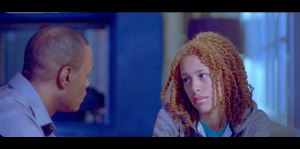 The editing choices can be jarring and forced me to stop the movie at several points. An early scene, at the four-and-a-half-minute mark, has our lead Oracabessa visiting her boyfriend, Nicolas (Aaron Geib). The camera moves to a wide angle as they settle at a kitchen table. Within seconds there are two jump cuts but they eliminate mere seconds or fractions of seconds of footage. Then there’s a quick cut to an exterior of the apartment, presumably to “clear the edit” and allow a passage of time or at least a new camera angle. Nope, we come right back to the same shot. Why? Why not just start with the shot from after the exterior cut of her passing her drink to him? Why did the previous moments need to be seen? What then follows is a close-up of the food, fully prepared, and the boyfriend has his line entirely off screen. This is the stilted dialogue that follows:
Him: “It’s a peace offering? What are we, at war?”
Her: “Man and woman in any kind of relationship are always at war. It’s just a matter of what degree.”
She then passes by him and it jump cuts (same camera angle) to him responding, then it pans over to her at the other end of a doorway, and then after her line it literally cuts back to his position on the doorway (same camera angle) to walk over to her. What? Why not just pan both ways? She responds and then we have ANOTHER JUMP CUT (SAME CAMERA ANGLE) and then ANOTHER JUMP CUT (YOU GET IT) of her a step forward walking past him, and then ANOTHER JUMP CUT (YOU KNOW IT) of him looking off screen at her. The camera angle then changes, mercifully, to a medium shot (with her head cut off) of her pulling off her ring followed by a different medium shot (with her head now visible) of her placing it atop a bookshelf. We then cut back to the EXACT SAME previous shot of the guy still looking off screen in response. There’s a couple more cuts as she leaves and then the movie jumps into a bizarre montage of images as she’s riding on her moped with a fixed handlebar-POV shot, a closeup in slow motion, and black and white inserts of her presumably as a child.
Ladies and gentlemen, I have no idea what to tell you beyond watch the segment (5:30-6:30) for yourself and join in my mounting alarm and confusion. Even if the production was stuck with minimal camera setups, why jump so haphazardly from moment to moment with jump cuts? Why use pans so sparingly when they could keep an audience in the moment? If the point of the scene is to impart a distance, a lack of engagement in this couple’s relationship, the staging and editing could have better communicated this without resorting to off-putting decisions.
The next moment of curiosity occurs seconds later as Oracabessa attends a very sparsely populated college lecture (I literally counted 12 people in a hall that likely seats 200). Again, the noticeable ADR sound, again the annoying jump cuts, and again confusing choices about the staging of the scene. The professor is arguing over reparations and there’s a moment where it cuts to a black and white still image of the professor and then cuts back to her talking. Is this an Oliver Stone movie? A (white male) college student protests he shouldn’t have to pay for his ancestors’ bad deeds and gets into a fight with another student, but the majority of the crowd shots are taken from one very wide angle. When the students confront one another, the camera doesn’t move, doesn’t get us closer, and they just occupy a small portion of our screen, which then cuts to another exterior shot and back to the same interior angle again. I’ll accept that the professor, and the older man monitoring her teaching, were filmed at a separate time and cut to look together with the crowd of students. I get scheduling shortfalls, but why make it all the more apparent to your viewer? Why film in a way that highlights how empty the space of this lecture hall is? Why shoot with such static angles? And why again do we get so much weird edits that break up the flow of the scene? Reader, I am only eight minutes in.
I just counted six edits and three different camera angles just to capture Oracabessa copying a paper on a copy machine. It’s a twelve-second scene which raises the question why multiple camera angles were needed to simply convey she copies something and why we needed twelve seconds on this task. I am just completely bewildered by the editing choices of this.
Credit where its due, the investigation scene of Oracabessa looking through old microfilm at the library on missing person reports is the place where jump cuts and rapid edits are beneficial. The black and white flashback is confusing though whether it constitutes the events that actually happened, seeing a young woman and little boy somehow separately being stalked by an unseen driver in a car regardless of the fact that they’re walking in opposite directions, or whether it’s Oracabessa’s imagination playing out over what might have taken place.
The movie then seems to transition its protagonist, switching to Alice (Maya Sayre), the mother of the missing boy, who is identified via a subtitle at the bottom as if this was a documentary subject. She seems to be sitting in a coffee shop with a stack of missing fliers and… signing them? I don’t know. There are more quick cuts of things like a closeup of a teacup and then Alice sitting alone at a park. The trees all around her have missing posters of her son tacked on, which starts to beg the question of why put it on twelve trees in close vicinity to one another unless Alice has an endless supply of disposable money for unlimited copies or really hates trees. She is literally posting the same flier within mere feet of one another.
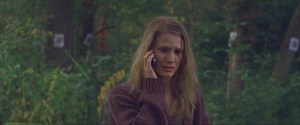 Here, finally, is an example I can praise for its filmmaking choices. Alice is postering the neighborhood when the bad trafficker Tuco then pulls up to her in his car and says, “Oh, your son is missing?” As he asks about her circumstances, the camera hangs on Sayre (One Dollar) to deliver the moment with her performance and it works. It works because the camera allows us to stay in the scene and because of the trust in the actors. She’s heartbroken but still unable to fully articulate her grief, and it’s a beautifully acted moment of desperation. She even looks like Jessica Chastain in certain angles, especially profile. When Tuco walks up to her, the camera angle remains the same but to the benefit of the scene this time, as his size towers over her, dwarfing her, his head cut out of the frame, his arm thrown around her shoulder, providing potential comfort or potential constraint, and we already fear for her safety. She invites him into her home and they have a nice talk, with Alice lamenting how people are no longer kind. The irony seems to be building, and finally Constraint feels like a movie with purpose.
This is legitimately a good scene as Tuco vacillates over what to do with Alice. Her dubbing him a gentleman seems to dial up his sense of shame and he leaves for another room where we see him take out his gun and then put it back. Will his compromised sense of morality win out? Even the clipped framing helps this case by placing the emphasis on Scott’s hands and the gun. Their conversation lingers and the camera continues running, and that’s how to drive tension. Unfortunately, her horny desperation to get him to stay and the weird song that plays in the background as if they were trapped in an elevator undermine the scene’s suspense.
More bizarre editing choices as the scene of Tuco talking with a crony literally jumps from a super wide shot to a closer shot as they trade lines. It makes me think of the Sesame Street bit where Elmo demonstrates near and far. After several more erratic edits, the film leaps to a shot of Tuco waiting in his car, but it’s being filmed from an angle where a pole or pillar is obscuring his very face from being seen on camera. Why choose an obstructed view of this? Even more baffling, a minute later the movie indicates Oracabessa is observing Tuco kidnap another young woman and throw her in his car and drive off. And. Oracabessa. Does. Nothing. Not even call the police, try and yell back and create attention, even jot down a license plate number. Perhaps she wasn’t literally viewing this spectacle, but when you cut to her walking in what looks like the same setting as this is going down, then you’re going to convey this interpretation to your audience.
A stranger who has been hardcore eyeballing Oracabessa as she played cello for some little ballet dancers stops her on the street. He compliments her playing and then leans a hand out and says, “May I?” and then bizarrely strokes the side of her face. “Your face is flawless,” he says in an accent that invites imitation, all while gripping her face. “It is like glass. Like caramel-colored glass.” Why is she allowing this creeper to continue doing this? This is even before he says he’s a music school bigwig and think she has real talent. Does this woman have any sense of self-preservation? The characterization for her doesn’t make any sense from scene to scene.
 There’s another flashback where she recognizes Callie (Jennifer Ann Hickey), the female partner for Tuco, and that she had the missing boy beside her in the same car Tuco was driving. Again, is she imagining this and trying to connect mental dots (it’s played in a kind of black and white) or did this happen, which means that yet again she should have recognized Tuco as he was abducting a new girl in front of her. Then I laughed out loud when the camera does a sudden zoom into Tuco’s car followed by a close-up of Callie turning to face the camera and glaring. I thought Tarantino’s Kill Bill music was going to commence. Does Callie somehow recognize Oracabessa too? She starts running away, and again this is an opportunity for Oracabessa to call the police or write down Tuco’s license plate number, and she does nothing, eventually fleeing herself.
The editing proceeds as follows: Oracabessa is on the run. We hear a classical music piece to note the tension. We then see Tuco’s car trailing Oracabessa. Inside Tuco’s car, the same classical music piece is playing but noticeably softer, trying to imply the music is diagetic to the car radio? Then we cut to a hand on an acoustic guitar and a young woman singing at a party, which also seems kind of like an attention-grabbing thing to do unless the party is centered upon your performance. It’s only revealed later that Oracabessa is at this party. The same professor from earlier asks to dance with Oracabessa and literally holds her hands and barely sways, like a child’s idea of what slow dancing would be. This same professor then admits to inviting Oracabessa’s ex Nicolas and then says to dance with her. All of this is the same shot too. Nicolas then hovers over Oracabessa, butts into her dance, and then they awkwardly stand next to one another without saying a word for thirty seconds, and then the other dancee comes back. What?
The movie jumps perspective again, this time following the ex Nicolas, who goes home and sits on the bed he and Oracabessa used to occupy. There’s a post-coital flashback, which features Smith nude, and I felt protective of the actress, like she shouldn’t have to get naked for this. There’s even more stilted dialogue between the pair:
Him: “In every great love affair, you gotta have a nickname. Yeah, I gotta come up with a nickname for you.”
Her: “I detest nicknames. They’re arbitrary.”
Him: “Naw, your birth name is given before your personality has time to develop. A nickname is usually based on a personal trait.”Her: “It’s an intimate thing naming a person.”
Him: “Well… I think you’re a… ‘Saffron.’’Her: “Why Saffron?”
Him: “It’s got a malevolous ring to it. And you with your angular edges. I gotta name you something pleasant, right?”
Oh my God, people do not talk like this, at least the people of Earth. This scene could have been cute and a snapshot of their better times as a couple but now it just makes whatever they had feel even more bizarre. The dialogue is very unnatural throughout Constraint and reminiscent of something I would find in a Neil Breen movie, and it pains me to make that comparison.
 Another guy, Derrick (Kenyatta Foster), is also interested in Oracabessa and having a flashback of falling for her, and why am I seeing any of this? Her anecdote about “sympathetic vibrations” from a cello is actually a well written aside that she can explain her dating goals with, but it’s hobbled by the guy just leering over her: “I can give that to you baby, you just have to see.” He goes for the kiss and she consents, which makes me question whether she cheated on her now-ex-boyfriend or what the timeline was for this, or even whether this might just be in his head. I do like that it cuts from him kissing Oracabessa to him kissing the professor, and he’s clearly not into her. That’s an honest-to-God clever editing choice and better conveys the character’s response.
So many jump cuts, so much day-for-night shooting, so many confusing geographies, so many quick exterior shots after spending time indoors just to cut back to the same indoors, and now even more nudity from our lead actress with a gratuitous shower scene. This woman deserves better.
Tuco has somehow tracked her though we have no idea how and hidden in her closet. Instead of killing her when she was in the shower, to avoid the Psycho homage I suppose, he waits until she’s performing her cello. They fight and she beats him with her cello and uses the bow like a riding crop. Yet she doesn’t call the police after nearly being stabbed by an intruder, when the assailant’s weapon is still there, as well as his blood, for physical evidence. Tuco comes back but she has a few intimidating dudes standing around as a posse. Then we cut to ballet! Why? Is the threat over? Why does this guy even see Oracabessa as a threat considering she’s never reported him? How did he find out where she lived? Her apartment looks like the interior of a school. How is any of this adding up to the larger narrative? I am just so lost with the creative choices here.
I’m actually going to turn this review into a multi-part series to make it more digestible for you, dear reader, so thus concludes PART ONE. Read PART TWO.


 nathanzoebl
You must be logged in to post a comment.