Blog Archives
Bugonia (2025)

A remake of a 2003 South Korean movie, Bugonia is an engaging conflict that needed further restructuring and smoothing out to maximize its entertainment potential. Jessie Plemons stars as a disturbed man beholden to conspiracy theories, namely that the Earth is populated with aliens among us that are plotting humanity’s doom. He kidnaps his corporate boss, a cold and cutthroat CEO (Emma Stone), who he is convinced is really an Andromedan and can connect him with the other aliens. The problem here is that the story can only go two routes. Either Plemons’ character is just a dangerous nutball and has convinced himself of his speculation and this will lead to tragic results, or his character will secretly be right despite the outlandish nature and specificity of his conspiracy claims. Once you accept that, it should become more clear which path offers a more memorable and interesting story. The appeal of this movie is the tense hostage negotiation where this woman has to wonder how to play different angles to seek her freedom from a deranged kidnapper. Both actors are at their best when they’re sparring with one another, but I think it was a mistake to establish so much of Plemons and his life before and during the kidnapping. I think the perspective would have been improved following Stone from the beginning and learning as she does, rather than balancing the two sides in preparation. The bleak tone is par for a Yorgos Lanthimos (Poor Things) movie but the attempts at humor, including some over-the-top gore as slapstick, feel more forced and teetering. I never found myself guffawing at any of the absurdity because it’s played more for menace. The offbeat reality that populates a Lanthimos universe is too constrained to the central characters, making the world feel less heightened and weird and therefore the characters are the outliers. I enjoyed portions of this movie, and Stone’s performance has so many layers in every scene, but Bugonia feels like an engaging premise that needed more development and focus to really get buggy.
Nate’s Grade: B-
Share this:

Zootopia 2 (2025)
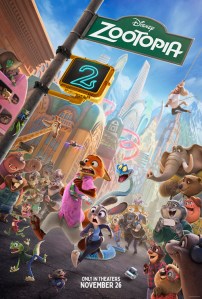 I’m genuinely shocked it took nine years for Disney to drum up a sequel to their billion-dollar “woke” allegorical hit, Zootopia. It used anthropomorphic animals living in a modern metropolis to analyze prejudice, racism, and segregation through the dichotomy of predators (untrustworthy animals beholden to vicious nature) and prey (docile animals). Specifically, it was about plucky police officer Judy Hopps (voiced by Ginnifer Goodwin) learning to work with con artist-turned-ally Nick Wilde (voiced by Justin Bateman). Now the partners are back and on another wild case uncovering yet another long-standing mystery of the city’s history entrenched in blame and suspicion of a “kind of people,” namely serpents/reptiles, who were driven out of town generations ago. There is a slight repetition in the message about looking beyond staid stereotypes and accepting other animals as equals (will Zootopia 3 be about finally accepting insects?), but when the tolerance message is essential to what made the 2016 original movie so much more thoughtful and relevant and satisfying, then keep it. The movie rises on the bickering but engaging buddy dynamic between Judy and Nick, who obviously love one another but don’t know how to admit it (consider me a shipper). The mystery tackles themes of gentrification, forced relocation, on top of its anti-prejudice and pro-tolerance foundation, so there’s plenty to unpack thematically while also taking in the visual whimsy and action slapstick. I laughed heartily at several points, including a very unexpected but transparent reference to a classic horror film complete with heavy music cues. It’s not as fresh or as finely developed as its predecessor but Zootopia 2 is further proof that this universe and its creativity can house many adventures, even if some of those plots and themes get repetitive.
Nate’s Grade: B
Share this:

Train Dreams (2025)
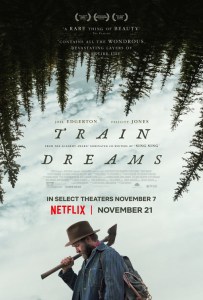 What a superb, tender, and deeply humanistic portrayal of life through the eyes of one man, Robert Granier (Joel Edgerton), a logger in Idaho in the early twentieth century. His life isn’t too different from the lives of many. He wants to spend more time with his wife (Felicity Jones) and child, less time away for months on end for logging, and he has difficulty making friends in his profession of hard work and inherent transience. He feels more connection to the natural world, of which he is felling one tree at a time. The nature of the script, adapted from the 2011 novella by author Denis Johnson, is episodic, people coming in and out of this man’s personal life. The narrative feels like a collection of memories, jumping back and forth in time, connected by ideas and imagery like we do in our minds, and providing a sum total for a life lived. There’s an inherent solemnity and awe to the movie, whether it’s about the transcendence of man’s place in the world, the march of progress, or merely the pull of tragedy and love that seeps into our core being. There is a personal tragedy that defines Robert, and it is devastating to experience and process with him. Director/co-writer Clint Bentley (one half of the same creative team behind last year’s Sing Sing, one of the best movies of 2024) uses this character to represent the totality of the human experience, making the movie feel deeply felt and empathetic even decades removed from its subject. That’s because logging isn’t the movie. It’s about the people, places, and experiences that define us. William H. Macy hasn’t been this good in years. You give me a wise, elegiac narrator in the spirit of Assassination of Jesse James by the Coward Robert Ford, with such pristine details readily supplied, and I’m already a sucker for your movie. The only thing holding back Train Dreams for me was that post-tragedy doesn’t get the attention I think it deserves. You’d expect the second half of the movie would be the process of grieving and coming to terms, and in essence it is, but the movie is far less direct about its processing, which I felt was a minor misstep for an overall great movie.
Nate’’s Grade: A-
Share this:

After the Hunt (2025)
 An unpleasant movie about unpleasant people being unpleasant to one another, After the Hunt is a movie supposedly about ethical dilemmas in academia but it comes across as insufferable people complaining about everything. The framing is about Maggie (Ayo Edebiri), a PhD candidate at Yale, who accuses an older male professor, Hank (Andrew Garfield), of sexual impropriety. He denies it and believes he’s the real victim of a post-Me Too witch hunt, especially after he suspected Maggie of plagiarizing her thesis. Maggie is looking for guidance from her mentor Alma (Julia Roberts) who feels pulled in many directions and unsure whom to believe. Given that premise, you would imagine there would be plenty of scorching drama and intrigue and characters divided by different loyalties and self-interest, especially when all these professors are supposed to be experts on ethics and philosophy too. I found myself so distant and disengaged with the characters because I found them all to be self-involved, cold, and entitled jerks. Worse than all of that, I found them all to be thoroughly boring. Watching After the Hunt feels like you’re trapped at a party with the worst people. That might as well be the moral of the movie: everybody sucks. I wasn’t expecting the characters to be shining examples of heroism, but I wanted them to be a little more interesting and the drama to be more insightful. Alma is our main character and she quietly seethes for most of the movie, that is when she isn’t running to puke into a toilet from her ulcers (symbols!). The movie is replete with characters just whining about “the kids today” and their brittle feelings. You know there’s only so many possibilities given the story; either the assault happened or it didn’t, either Maggie cheated or she didn’t. The score is absurdly discordant and intrusively obnoxious, sounding akin to a rack of instruments falling onto the ground. The abrasive score creates its own unintentionally hilarious jump scares. The more I think about After the Hunt the more I actively dislike it.
Nate’s Grade: C-
Share this:

Wicked: For Good (2025)

To paraphrase a famous debate line, I knew Wicked, Wicked was one of my top films of 2024, and you, Wicked: For Good, are no Wicked. Obviously that’s not completely true as For Good is the second half of the adaptation of the popular Broadway musical, of which only the first act compromised the prior movie released a year ago. The problem was that the first Wicked movie felt complete, and had there never been another second after, it would have served as a fitting and even moving portrait of the unknown back-story to the Wicked Witch of the West and the implied propaganda that would taint the perception of the citizens of Oz. The movie was two hours and forty minutes but it felt extremely well-paced and developed. It felt, more or less, complete, even though I know it was only adapting half the musical. In short, it did too good of a job, and now Wicked: For Good suffers as a sequel because what’s left to tell just isn’t as compelling or as emotionally or thematically coherent as its charming predecessor. Plus, all the banger songs were clearly in the first movie.
After the events of the first movie, Elphaba (Cynthia Erivio) has assumed the mantle of the Wicked Witch of the West and is sabotaging the Wizard of Oz’s (Jeff Goldblum) plans at expansion and animal abuse. Glinda (Ariana Grande) is the Wizard’s public ambassador and the “good witch” to inspire the masses, even though she doesn’t possess actual magical abilities. Glinda wishes dearly that Elphaba will change her mind and decide to work with her and the Wizard. However, Elphaba wants to expose corruption, and the Wizard is at the top of her list of the corrupt and powerful needing to be toppled for good.

For Good suffers from the adaptation struggles the 2024 Wicked film was able to avoid. The first movie was an effervescent treat built upon a poignant friendship and some killer songs given the full showstopper visual treatment. It was a vibrant adaptation, and while it expanded upon the stage show significantly, the extra time with the characters felt like breathing space, and it all contributed to what felt to me like an extremely well paced and well developed and arguably complete movie experience. Now the second act of a musical is almost always the shorter of the two, and For Good is about 30 minutes shorter than its predecessor. The filmmakers even added two new songs for Oscar eligibility and further padding, neither of which are winners (more on the songs later in the review). That sense of care is not present in For Good, as characters are frustratingly repeating beats they already worked through. Take for instance Glinda, who begins the first movie as an entitled popular girl used to getting her own way, and by the end of the movie, she’s grown to see the world differently and through her sisterly friendship with Elphaba, she has a more empathetic and grounded perspective. She has already changed for the better, and yet in For Good it feels like the movie kicks her character growth backwards. She has to again learn that maybe the Wizard and others are not the best people in charge just because they are. Wicked is a victim of its own success. The character development and arc was so well realized in the first movie that Glinda feels like she’s repeating lessons she’s already learned. I also don’t buy Elphaba being seriously tempted by the Wizard’s offer of collaboration after all she experienced and learned earlier. It’s irksome to have the characters seem curiously different from where we left them in 2024’s Wicked. There is also a character relationship revelation that I and many others had figured out FROM THE OPENING SCENE of the first movie. Behold, dear reader, For Good doesn’t even address this until the last twenty minutes of the movie and it does absolutely nothing with this revelation. I was flabbergasted.
The biggest time-waster and padding is when Wicked drags The Wizard of Oz characters and plot incidents awkwardly into its own universe. Granted, the entire enterprise is supposed to be the unknown back-story for the villain of The Wizard of Oz which gives it its identity. Except Dorothy and her lot are not essential at all to telling this story, as evident with the sense that the 2024 Wicked could feel complete. Dorothy and her motley crew of locals, some of whom are made up of previously established characters, are given the Rosencrantz and Gildenstern treatment, meaning they’re primarily kept off-screen and incidental. You don’t even see Dorothy’s face once. These characters feel annoyingly tacked-on and inconsequential to the story we’ve already spent three hours with. They’re knowing nods for the audience and they’re also making efforts to better pad out the running time. I don’t fully comprehend their importance in this new retelling. The treacherous Madame Morrible (Michelle Yeoh) sees the presence of Dorothy as an advantageous development, like she can use her as a Chosen One to thwart Elphaba. It’s never remotely explained why this makes sense. Why this person versus any other Oz citizen? Dorothy possesses special shoes but we’ve seen what can be accomplished with them. They’re not really some superpower or a weapon, more an item of personal attachment for Elphaba she would like returned. In this retelling, the entire inclusion of Dorothy and her friends is a means to an end for a public ruse. It might seem odd to say this Wizard of Oz back-story would have been better minus Dorothy but there it is.

Now it’s time to discuss the actual songs for this movie musical. The best known and most popular tunes were all in the first act and thus the first movie. The songs for For Good are a combination of middling ballads and continuation of the leitmotifs and themes of the previous one. There’s perhaps a bigger emotional current when characters bring back melodies and lyrics from the first movie to expand or contrast, like “I’m Not That Girl.” Did you want another song with Goldblum singing? The biggest number is “For Good” where Elphaba and Glinda face off and admit their shared sisterly love for one another, but again this was already established by the end of 2024’s Wicked. It’s more explicitly stated through song but the sentiment was evident to me already. Adding further disappointment, returning director John M. Chu (Into the Heights, Crazy Rich Asians) lacks the same thoughtful staging of the musical numbers in this edition. He is a filmmaker who innately knows how to adapt stage musicals into the medium of film, and he did so splendidly with 2024’s Wicked. With For Good, the staging lacks a real immersion and visual dynamism, often murky or overly saturated, like “No Good Deed” being performed almost entirely with intrusive sunsetting silhouettes dominating the screen. The less engaging songs, added with less engaging visual staging, make the movie feel longer and less jubilant. I don’t know if “For Good” has the intended emotional crescendo simply because this movie isn’t nearly as good.
As a personal note, the 2024 Wicked was the last movie I saw in theaters with my father while he was alive. We were supposed to see Gladiator II together as a family after Thanksgiving but he wasn’t feeling up to it, and then a little more than two weeks later he was unresponsive. I’m happy Wicked was such a pleasant and enjoyable experience for him, but as we left the theater, he asked me, “Wasn’t there supposed to be more?” We had seen the stage show when it toured through our city many years ago, and I remarked that there was going to be a whole second movie adapting the second act of the musical and it was going to be released in a year. He nodded and I felt the silent acknowledgement shared between us: he would not be around to see the conclusion, that it was a future unavailable to him. So it’s hard for me to not have some melancholy feelings with For Good, and I’ll admit maybe that’s influencing my critique.

Wicked: For Good is a frustrating, disappointing extension of what had been a sterling and magical original movie. It doesn’t outright ruin what came before it but confirms for me that 2024’s Wicked could stand on its own. The songs aren’t as good. The staging and visuals aren’t as good. The character development feels repeated and occasionally confounding. The plotting is stretched and unsatisfying. The inclusion of the more direct Wizard of Oz characters feels arbitrary and unnecessary. The actors are still charming and affecting and sing wonderfully, but they’re also unable to defy the gravity of the material they’re stuck with. If you’re a super fan of the source material, albeit the original story by L. Frank Baum, the 1939 Wizard of Oz movie, the Gregory Maguire book, the 2000s stage musical, or even the first movie, you will probably find enough to sing along to and walk away fairly happy. I loved the 2024 Wicked and was left mostly cold at the concluding half but I realize I very well may be a curmudgeonly minority here. My advice would be to consider the 2024 Wicked a complete movie and skip For Good.
Nate’s Grade: C+
Share this:

The Alto Knights (2025)
 The Alto Knights, from the creative team behind famous mafia movies like Bugsy and Goodfellas, feels like a dozen mob movies thrown into a blender: recognizable elements mashed together but lacking a cohesive vision and distinction. There’s also a major creative choice that makes little sense, mainly Robert De Niro plays two different roles. I assumed they would be twins or at the least brothers but no they are actually two different, unrelated people, Frank Costello and Vito Genovese. Why? I understand the appeal to De Niro fro an acting standpoint, as well as the potential marketing hook, but what about this makes sense for the viewer? What about this movie made it better by having one actor portray the two main characters? It made it harder for me to keep track, and that’s before there’s flash-forward interviews from an older Frank as well. The story is mostly set n the 1950s New York following the rivalry of two childhood friends-turned-mafia bosses but it feels so haphazard and jumbled, with story events crashing into one another but minus a clear sense of progression and consequence. It’s a strange experience to watch a movie with murders and marriages and the dissolution of personal relationships through paranoia and greed, and yet The Alto Knights lacks energy and direction. It’s hard to follow why these two guys are worthy of their own movie or even what their role in the larger mob ecosystem was, so watching scene after scene creates a “So what?” question. Unless you’re a non-discriminating fan of all mafia movies, The Alto Knights is the disappointing residue at the bottom of the mob blender. But hey you got extra De Niro!
Nate’s Grade: C
Share this:

Eddington (2025)

I’ve read more than a few searing indictments about writer/director Ari Aster’s latest film, Eddington, an alienating and self-indulgent movie starring Joaquin Phoenix on the heels of his last alienating and self-indulgent movie starring Phoenix. It’s ostensibly billed as a “COVID-era Western,” and that is true, but it’s much more than that. I can understand anyone’s general hesitation to revisit this acrimonious time, but that’s where the “too early yet too late” criticism of others doesn’t ring true for me. It is about that summer of 2020 and the confusion and anger and anxiety of the time; however, I view Eddington having more to say about our way of life in 2025 than looking back to COVID lockdowns and mask mandates. This is a movie about the way we live now and it’s justifiably upsetting because that’s where the larger culture appears to be at the present: fragmented, contentious, suspicious, and potentially irrevocable.
Eddington is a small-town in the dusty hills of New Mexico, neighboring a Pueblo reservation, and it serves as a tinderbox ready to explode from the tension exacerbated from COVID. Sheriff Joe Cross (Phoenix) has had it up to here with mask mandates and social distancing and the overall attitude of the town’s mayor, Ted Garcia (Pedro Pascal). Joe decides to run for mayor himself on a platform of common-sense change, but nothing in the summer of 2020 was common.

Eddington is a movie with a lot of tones and a lot of ideas, and much like 2023’s Beau is Afraid, it’s all over the place with mixed results that don’t fully come together for a coherent thesis. However, that doesn’t deny the power to these indefatigable moments that stick with you long after. That’s an aspect of Aster movies: he finds a way to get under your skin, and while you may very well not appreciate the experience because it’s intentionally uncomfortable and probing, it sticks with you and forces you to continue thinking over its ideas and creative choices. It’s art that defiantly refuses to be forgotten. With that being said, one of the stronger aspects of Aster’s movies is his pitch-black sense of comedy that borders on sneering cynicism that can attach itself to everything and everyone. There are a lot of targets in this movie, notably conspiracy-minded individuals who want people to “do their own research,” albeit research ignoring verified and trained professionals with decades of experience and knowledge. There’s a lot of people talking at one another or past one another but not with one another; active listening is sorely missing, as routinely evidenced by the silences that accompany the mentally-ill homeless man in town that nobody wants to actively help because they see him as an uncomfortable and loud nuisance. For me, this is indicative of 2025, with people rapidly talking past one another rather than wanting to be heard.
When Aster is poking fun at the earnestness of the high school and college students protesting against police brutality, I don’t think he’s saying these younger adults are stupid for wanting social change. He’s ribbing how transparently these characters want to earn social cache for being outspoken. It’s what defines the character of Brian, just a normal kid who is so eager to be accepted that he lectures his white family on the tenets of destroying their own white-ness at the dinner table, to their decidedly unenthusiastic response. I don’t feel like Aster is saying these kids are phony or their message is misapplied or ridiculous or without merit. It’s just another example of people using fractious social and political issues as a launching point to air grievances rather than solutions. The protestors, mostly white, will work themselves into a furious verbal lather and then say, “This shouldn’t even be my platform to speak. I don’t deserve to tell you what to do,” and rather than undercutting the message, after a few chuckles, it came across to me like the desperation to connect and belong coming out. They all want to say the right combination of words to be admired, and Brian is still finding out what that might be, and his ultimate character arc proves that it wasn’t about ideological fidelity for him but opportunism. The very advancement of Brian by the end is itself its own indictment on white privilege, but you won’t have a character hyperventilating about it to underline the point. It’s just there for you to deliberate.

Along these lines, there’s a very curious inclusion of a trigger-happy group in the second half of the movie that blends conspiracy fantasy into skewed reality, and it begs further unpacking. I don’t honestly know what Aster is attempting to say, as it seems like such a bizarre inclusion that really upends our own understanding of the way the world works, and maybe that’s the real point. Maybe what Aster is going for is attempting to shake us out of our own comfortable understanding of the universe, to question the permeability of fact and fiction. Maybe we’re supposed to feel as dizzy and confused as the residents of Eddington trying to hold onto their bearings during this chaotic and significant summer of 2020.
I think there’s an interesting rejection of reality on display with Eddington, where characters are trying to square news and compartmentalize themselves from the proximity of this world. Joe Cross repeatedly dismisses the pandemic as something happening “out there.” He says there is no COVID in Eddington. For him, it’s someone else’s problem, which is why following prevailing health guidelines and mandates irks him so. It’s the same when he’s trying to explain his department’s response to the Black Lives Matter protests that summer in response to George Floyd’s heinous murder. To him, these kinds of things don’t happen here, the people of Eddington are excluded from the social upheaval. This is an extension of the “it won’t happen to me” denialism that can tempt any person into deluding ourselves into false security. It’s this kind of rationalization that also made a large-scale health response so burdensome because it asked every citizen to take up the charge regardless of their immediate danger for the benefit of others they will never see. For Joe, the tumult that is ensnaring the rest of the country is outside the walls of Eddington. It’s a recap on a screen and not his reality. Except it is his reality, and the movie becomes an indictment about pretending you are disconnected from larger society. It’s easier to throw up your hands and say, “Not me,” but it’s hard work to acknowledge the troubles of our times and our own engagement and responsibilities. In 2025, this seems even more relevant in our doom-scrolling era of Trump 2.0 where the Real World feels a little less real every ensuing day. It’s all too easy to create that same disassociation and say, “That’s not here,” but like an invisible airborne virus not beholden to boundaries and demarcations, it’s only a matter of time that it finds your doorstep too.

You may assume with its star-studded cast that this will be an ensemble with competing storylines, but it’s really Joe Cross as our lead from start to finish, with the other characters reflections of his stress. I won’t say that most of the name actors are wasted, like Emma Stone as Joe’s troubled wife and Austin Butler as a charismatic conman pushing repressed memory child-trafficking conspiracies, because every person is a reflection over what Joe Cross wants to be and is struggling over. Despite his flaws and some startling character turns, Aster has great empathy for his protagonist, a man holding onto his authority to provide a sense of connectivity he’s missing at home. Our first moment with this man is watching him listen to a YouTube self-help video on dealing with the grief of wanting children when your spouse does not. Right away, we already know there’s a hidden wealth of pain and disappointment here, but again Aster chooses empathy rather than easy villainy, as we learn his wife is struggling with PTSD and depression likely as a result of her own father’s potential molestation. This revelation can serve as a guide for the rest of the characters, that no matter their exterior selves that can demonstrate cruelty and absurdism, deep down many are processing a private pain that is playing out through different and often contentious means of survival. I don’t think Aster condones Joe Cross’ perspective nor his actions in the second half, but I do think he wants us to see Joe Cross as more than just some rube angry with lockdown because he’s selfish.
It’s paradoxical but there are scenes that work so splendidly while the movie as a whole can seem overburdened and far too long. The cinematography by the legendary Darius Khnodji (Seven, City of Lost Children) expertly frames and lights each moment, many of them surprising, intriguing, revealing, or shocking. There can be turns that feel sudden and jarring, that catapult the movie into a different genre entirely, into a Hitchcockian thriller where we know exactly what the reference point is that I won’t spoil, to an all-out action showdown popularized by Westerns. Beyond Aster’s general more-is-more preference, I think he’s dabbling with the different genres to not just goose his movie but to question our associations with those genres and our broader understanding of them. It’s not quite as clean as a straight deconstructionist take on familiar archetypes and tropes. It’s more deconstructing our feelings. Are we all of a sudden in a forgiving mood because the movie presents Joe as a one-man army against powerful forces? It’s all-too easy to get caught up in the rush of tension and satisfying violence and root for Joe, but should we? Is he a hero just because he’s out-manned? Likewise, with the conclusion, do we have pity for these people or contempt? I don’t know, though there isn’t much hope for the future of Eddington, and depressingly perhaps for the rest of us, so maybe all we have are those fleeting moments of awe to hold onto and call our own.

Eddington is an intriguing indictment about our modern culture and the rifts that have only grown into insurmountable chasms since the COVID-19 outbreak. It’s a Western in form pitting the figure of the law against the moneyed establishment, and especially its showdown-at-the-corral climax, but it’s also not. It’s a drama about people in pain looking for answers and connections but finding dead-ends, but it’s also not. It’s an absurdist dark comedy about dumb people making dumb and self-destructive decisions, but it’s also not. The paranoia of our age is leading to a silo-ing of information dissemination, where people are becoming incapable of even agreeing on present reality, where our elected leaders are drowning out the reality they don’t want voters to know with their preferred, self-serving fantasy, and if they just say it long enough, then a vulnerable populace will start to conflate fact and fiction. I don’t know what the solution here is, and I don’t think Aster knows either by the end of Eddington. I can completely understand people not wanting to experience a movie with these kinds of uncomfortable and relevant questions, but if you want to have a closer understanding of how exactly we got here, then Eddington is an artifact of our sad, stupid, and supremely contentious times. Don’t be like Joe and ignore what’s coming until it’s too late.
Nate’s Grade: B
Share this:

The Black Phone 2 (2025)
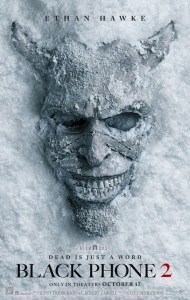
The original 2022 Black Phone was a relatively entertaining contained thriller where a kid was relying upon the ghosts of victims to escape the clutches of an evil kidnapper. It had other elements to fill it out as a movie, like a psychic sister, but the central conceit and execution worked well, especially a disturbing performance by Ethan Hawke as The Grabber, the aforementioned grabber and locker-away-er of unfortunate children. Then it was popular enough to demand a sequel, but where do you go when the villain has been killed and the source material, a short story by Joe Hill, has been exhausted? The answer is to turn the very-human Grabber into a Freddy Krueger-style supernatural predator terrorizing our survivors in their dreams. The kids from the first film are now teenagers and really the psychic sis is the main character. She’s the one most affected by the Grabber’s supernatural vengeance. Most of the movie is watching the sister get tossed around invisibly in the real world and talking to irritable ghost kids. There’s a mystery about uncovering the truth about what happened to their deceased mother, who too could have a personal connection to the Grabber from a Christian summer camp located in the far mountains. The snowy locale makes for a visually distinctive setting, though once you see the Grabber ghost ice skating it does take a little of the mystique away from the overall menace. The Black Phone 2 just didn’t work for me, feeling like another “let’s help these dead kids be at peace” adventure like a weekly TV series, but the scenario just didn’t have the draw and satisfaction of the original. I suppose the returning filmmakers wanted to expand their universe and its mythology, Dream Children-style, but the material doesn’t seem there to build a franchise foundation. The first film was simple and complete (makes me think of a variation on a line at the end of Bioshock Infinite: “There’s always a Grabber. There’s always a black phone. There’s always a ghost”). The sequel cannot compensate for that, and so it feels overstretched, underdeveloped, and goofy. At least they tried something different than just a straight replica of the original but it would have been best to leave the Grabber and us at rest.
Nate’s Grade: C
Share this:

Frankenstein (2025)
 One of the reasons Mary Shelley’s novel Frankenstein has been so richly relevant two hundred years later is because of her thought-provoking themes and concepts, which still prove potent with each new malleable reinterpretation from the newest creative caretaker. It’s the “be careful what you wish for” adage combined with man’s hubris and our self-destructive impulses to play with things we don’t fully understand. It’s also a monster story that asks us to reconsider the perception of who the monster may truly be, and under writer/director Guillermo del Toro, the answer is always and forever man himself. This isn’t a surprise from the same filmmaker who gave us Hellboy and The Shape of Water. The man identifies with the monsters more than other people. The man turned his astounding stop-motion animated Pinocchio movie into a deft Frankenstein allegory, so the famous story has been on his mind for quite some time. It’s been an obvious influence, and now that he’s gotten his chance on his own imprint, it’s hard not to see elements of del Toro’s other movies everywhere. It creates this bizarre echo chamber of creative influence where the movie can feel derivative at times even though the source material was an influence on those other del Toro works. It’s just the nature of finally tackling the influence later in his career. It reminds me of 2012’s John Carter, based on Edgar Rice Burroughs’ highly influential sci-fi series, and yet because it took 100 years to leap to the big screen, it couldn’t help but seem derivative of the same popular movies that were inspired by it. This is a convoluted way of saying del Toro’s Frankenstein is a much better Guillermo del Toro movie than a Frankenstein adaptation.
You probably know the story well enough to recite it yourself. Victor Frankenstein (Oscar Isaac) is obsessed with conquering death after his own mother’s demise in childbirth. He gathers the parts of criminals and dead soldiers to reanimate into a new being, a Creature (Jacob Elordi) of superhuman strength and regeneration who cannot die. Victor’s cruelty punishes the Creature and disowns it, setting the stage for a showdown between dysfunctional father and son and the havoc caused by recklessly playing God.
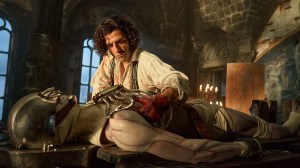 There are deliberate decisions that mitigate some of the more compelling characterization of the novel. With del Toro’s version, Victor is the clear-cut villain. There’s some setup given to his strict childhood where his domineering father (Charles Dance) would quiz him and physically abuse Victor if he failed to recite the correct answers to his medical questions. Dear bad dad was doing this, you see, out of a belief that good doctors need to know intuitively because any hesitation could cost lives. When we witness Victor abusing the Creature in the same manner, we’re meant to see the connection between abusive fathers confusing disappointment with defiance. In the original story, Victor abandons the Creature on the night of its birth and then it’s gone. In this version, Victor imprisons the Creature, keeps him chained, attempts to train him, grows frustrated, and then tries to destroy the evidence. That’s a little more diabolical than simple morning-after regrets. This Victor can also be viewed as a forefather of incels the way he projects his romantic feelings onto Elizabeth (Mia Goth) and then gets huffy when she doesn’t return them. There are other deaths later in the story that are directly attributed to the Creature that are now Victor’s doing, which continues to squeeze out moral ambiguity from Shelley’s novel. If the Creature is purely innocent and Victor is purely villainous, that makes the relationship between father and son, Creator and Creature, far less meaningful and layered. It’s so obvious that another character, in their literal dying words, says to Victor, “You are the real monster.” It all becomes an ongoing cycle of bad fathers and the Creature ultimately trying to reach forgiveness. Even if the Creature ultimately finds that, is this Victor even worthy of redemption?
Another significant feature of del Toro’s retelling is, how do I put this delicately, the inherent magnetism of the Creature, a.k.a. Sexy Frankenstein. Elordi (Saltburn) is a tall, lithe actor to begin with with classical Hollywood features, but there was a conscious choice to portray this figure in a certain light, a sexy light. You might find parts of you that are suddenly alive while watching the character onscreen. That’s why even though he’s a literal assembly of corpses the makeup effects are very minimal and less intentionally grotesque or monstrous. The delicate lines around his body make me think of a cross between the Engineers in Prometheus and the body paint of that Gotye music video “Somebody I Used to Know.” The gentle makeup is meant to further convey the Creature as a sensitive figure; granted, he’s also capable of ripping the jaw off a wolf. By swerving away from the Creature’s physical deformities, the movie is also inadvertently downplaying the isolation that he felt that led to such rage and resentment. Is this man that hideous that some good woman couldn’t love him as is? The movie is already presenting Elizabeth as someone who sees through to his gentle nature, and she certainly also seems more than a little attracted to what he’s got going on. This Sexy Frankenstein reconfirms del Toro’s penchant for identifying with the monster, the outcasts, the underdogs. However, Sexy Frankenstein also takes something away from the horror and cost of the creation if he’s just going to be another brooding, misunderstood Byronic hero. Still, there are definitely worse pieces of meat you could be watching, so enjoy monster sweethearts.
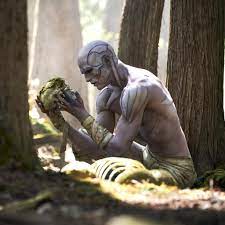 With all that being said, del Toro’s Frankenstein is still a sumptuously made and entertaining Gothic spectacle. The production design is immense and immersive with del Toro’s knack for perfect details to create such a lived-in sense of mood (never enough giant stone face edifices). I loved Victor’s models of human torsos that looked almost like ballet dancers at rest; granted, ballet dancers having their skin peeled back by dozens of hooks. I just wanted to spend as much time as possible soaking up these sets and this heightened Gothic realm. It’s the kind of world where Victor’s laboratory needs to be an opulent abandoned castle complete with a pit in the middle of the floor plan that goes through several floors to a sewar/aqueduct basement level. There’s even what appears to be a water slide out of the estate, and the Creature gets to escape it in the most fun way. The movie is gorgeous with del Toro’s signature orange/green color palette bathing his universe. Even if the story isn’t quite reaching the heights it could, the visuals are always sterling and inviting. There’s also a surprising amount of gore, which maybe shouldn’t have been that surprising. I don’t know if we needed as much of the Arctic framing device, which itself was structured as a series of letters in the novel. It’s a platform for del Toro to demonstrate the Creature’s physical prowess and get some quality big-screen bloodshed flowing. I don’t know if we needed to keep cutting back throughout the whole running time like it’s a Christopher Nolan movie. Regardless, if you’re a general fan of monster movies, there’s going to be plenty here to proverbially sink your teeth into and savor on that super Netflix budget.
Mary Shelley’s Frankenstein gave birth to science fiction in 1818 and the James Whale movies from the 1930s gave birth to some of cinema’s most iconic and lasting images and influences. There’s quite a legacy for anyone who wants to put their own stamp on the material, so it helps that Guillermo del Toro has quite a legacy himself, a career built upon the dark recesses of a verdant imagination (I’ll always lament what could have been his version of The Hobbit movies, alas). His Frankenstein has all the hallmarks of a classic del Toro film experience, from the impeccable technical qualities, to the celebration of the mythic and Gothic, to the sympathetic portrayal of the outsiders condemned by a society too square to accept them, and an unironic emotional undercurrent that can approach self-parody. It’s a little long, a little ungainly in its shape, and a little too simplistic with its themes and characterization, but it can also be fittingly transporting and romantic and easy to feel that swell even if it’s all too familiar. For my money, the best Frankenstein adaptation is still the 1994 Kenneth Branagh version, flaws and all.
Nate’s Grade: B
Share this:

Sorry, Baby (2025)
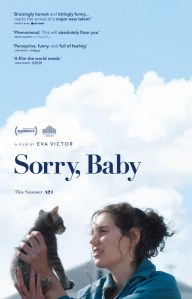
Sundance favorite Sorry, Baby takes several serious subjects and provides its own little bittersweet treatise through a character study of one woman navigating her complex feelings after being assaulted by her college professor. Written, directed, and starring Eva Victor, the movie feels like a combination of one of those small-town slice-of-life hangouts and something a little more arch and peculiar, but it still coasts on its vision and authorial voice. Victor’s portrait rings with honesty and empathy as her character, Agnes, wants to live a “normal life” but doesn’t quite understand what that might be. Her best friend is pregnant from a sperm donor, she’s adjusting to her workload as a literary professor at her alma mater (in an ironic twist, she occupies the same office as her former mentor and attacker), she’s flirting with the possibility of a romance with a nice neighbor (Lucas Hedges), and she just adopted a stray cat. The present, suffused in indecision and depression, is juxtaposed with flashbacks to her before, immediately after the assault, and the infuriating aftermath. This is where some of Victor’s darker sense of humor arises, like when Agnes is consoled by university officials who tell her there’s nothing they can do because her attacker has resigned but, hey, they’re also women, so, you know, they get it. Sorry, Baby walks a fine line between making you wince and making you want to laugh. It’s an impressive debut for Victor on many fronts, though I wish I felt like it amounted to something more emphatic or emblematic. It can feel more like a lot of self-contained scenes than a full movie, like Agnes going through jury selection before being excused when she has to confess her own history and her conflicted view of her attacker. I really enjoyed the concluding monologue Agnes gives to a newborn, explaining that the world she’s just entered will probably eventually hurt her but that there’s still good people and goodness that can be found. It’s heartfelt but in-character and feels completely on her own terms. Sorry, Baby is a little slow and a little closed-off, but it also deals with trauma and perseverance in a manner that doesn’t feel trite, condescending, or misery-prone.
Nate’s Grade: B


 nathanzoebl
You must be logged in to post a comment.