Blog Archives
The Hours (2002) [Review Re-View]
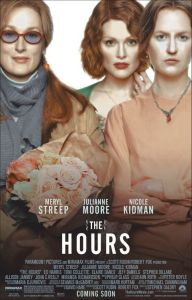 Originally released December 25, 2002:
Okay, after watching the Golden Globes award show and seeing The Hours crowned with the highest prize, and hearing incessantly about Nicole Kidman’’s fake prosthetic nose in the movie, it was time to venture into that darkened theater and see how good the awards-friendly The Hours was. Little did I fully realize what I was getting myself into.
Nicole Kidman plays Virginia Woolf, who is in the midst of writing her novel Mrs. Dalloway, where she proposes to display a woman’s entire life through the events of a single day. Julianne Moore plays Laura Brown, a housewife in 1951 having difficulty adjusting to a domestic life that she feels ill equipped for. Meryl Streep plays Clarissa Vaughan, a gay copy-editor in 2001 planning a party for a poet and former lover (an emaciated Ed Harris), who is suffering from the late stages of AIDS. These three storylines will be juggled as the film progresses, with each woman’s life deeply changing before the end of the day.
The Hours is a meandering mess where the jigsaw pieces can be easily identified. The attempt at a resolution for an ending, tying the three storylines together, is handled very clumsily. The film spins on and on that you start to believe the title may be more appropriate than intended. What this movie needed was a rappin’ kangaroo, post haste! The film is wrought with victimization and screams “Give me an award already!” Before you know it you’’re being bludgeoned to death with what is profoundly the most over serious Lifetime network movie ever assembled. And there’s nothing fundamentally wrong with Lifetime movies but The Hours does not share the sensibilities of its TV brethren.
 Kidman, nose and all, gives a strong performance displaying the torture and frailty of a writer trapped within her own mind but too often relies on wistful staring or icy glares. Moore is effectively demoralized but cannot resonate with such a shallow character. Streep is the least effective of the three and fizzles among an over-stuffed assembly of characters.
The supporting cast is unjustly left for dead. The characters are seen as parody (Toni Collette as Moore’s un-liberated homemaker neighbor), extraneous (Claire Danes as Streep’s daughter, Allison Janney as Streep’s lover, Jeff Daniels as Harris’ ex-lover, you know what, almost anyone in the Streep storyline), one-note (the workmanlike John C. Reilly who plays yet another doting and demystified husband) or merely obnoxious (Moore’s brat child that refuses to separate from her). It appears The Hours is the three lead actress’ game and everyone else is not invited to play along.
Stephen Daldry’s direction shows surprising stability and instinct after his art-house pandering Billy Elliot showed little. The technical aspects of ‘lThe Hours are quite competent, especially the sharp editing and musical score, which just points out further how slickly hollow and manufactured the film is.
The Hours is an over-glossed, morose film that is too self-important for its own good. It sucks the life out of everything. And for all its doom and gloom and tsunami of tears, the only insightful thing The Hours is trying to pass off onto the public is that women are more depressed than you think.
Nate’s Grade: C
——————————————————
WRITER REFLECTIONS 20 YEARS LATER
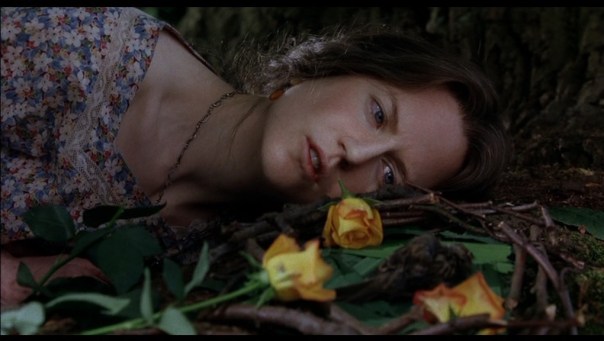
I thought 2002’s The Hours would be a good movie to come back to not necessarily because I thought it would be revelatory but because I thought it may have been emblematic of my more dismissive, glib attitude when I was a twenty-year-old smart alack getting published in his college newspaper and considering myself a hotshot wordsmith. I was worried that my initial review would come across as snide and condescending considering the subject matter. I dubbed it the “most over serious Lifetime network movie ever assembled” and yet, twenty years later, after having devoted two more hours watching The Hours, I must say that this comment still holds merit.
I was fully ready to disavow my younger self as being unkind to this movie, or being too quick to dismiss a movie about women’s suffering through three generations, especially as a young man trying to be clever and, by early 2000s standards, snarky and cynical. Well, even in 2022, I still dislike The Hours, and it’s because of how overwrought everything comes across in this movie. This movie is overstuffed with the trapping of importance, and the 1950s section featuring Julianne Moore as an unhappy housewife stifling her desires (not to be confused with her 1950s unhappy housewife also stifling her desires in 2002’s Far From Heaven) is played to the point that it could be self-parody. That’s not the kind of artistic approach you’d think you would want in something so transparently desirous of special award consideration. For me, it was unmistakable even early on, and the heightened melodramatic atmosphere made me, at several points, almost want to giggle at how obvious and cloying and annoyingly reaching each moment came across. There is no subtlety to be had with The Hours, and that’s fine, but there is also no real striking substance beyond a few transitory moments of grace that stand out. The Moore segment has her drifting through the day like a zombie and almost on the verge of tears at every single turn. I felt sorry for Moore, who is coasting on emotional instinct as the character she’s been given is, at best, meant to be a symbolic placeholder of millions of women of her era. Her interaction with her son makes her sound like a deranged android grasping for human behavior. The moment where they sift flour together and claim it’s beautiful was just so stupifying. It’s amazing to me that Moore was nominated for Best Supporting Actress for this role. She’s also the example of the kind of woman that Woolf was writing about with her titular Mrs. Dalloway heroine, but without Woolf explicitly commenting, the entire 1950s segment is one big airless melodrama, meant as a misdirect of the movie’s miserablist obsession with suicide. By the time old lady Julianne Moore shows up to unload a hasty monologue explaining decades of unknown drama, you may have decided that the three stories could have been two (or one).

Each of the three plot segments is intended to better inform the other, to coalesce into a thesis statement on the plight of women, except each storyline is so thinly written. Without the others to provide direct companionship, each one of these storylines would be pitifully minimal and fail to evolve the notions of feminine hardship. Virginia Woolf (Nicole Kidman) is sad because she feels stifled by the country and doctors who are trying to improve her mental health. Laura Brown (Moore) feels stifled because she is a cloested lesbian pretending to be a happy and doting housewife to her oblivious husband (John C. Reilly, not to be confused with his other oblivious husband in 2002’s Chicago). And Clarissa Vaughan (Meryl Streep) is sad because one of her closest friends (Ed Harris) is dying from AIDS. That’s it. Each of the three timelines is threaded together for the intention of greater relevance, but what it really does is put the onus on the viewer to find more relevancy in context. Sometimes the three women will be doing the same actions, sometimes one will make a comment that seems to be answered by another, and sometimes they’ll inadvertently quote one another or Woolf’s novel. Except the connections and layers are superficial and clinging to an obvious thesis and biding its overlong time for absent depth.
Much of the early publicity around The Hours circulated around Kidman’s fake nose, which producer Harvey Weinstein hated (he also hated the score by Phillip Glass that would later be nominated for an Academy Award) but Kidman absolutely loved. During the time of production, she was divorcing Tom Cruise and was a tabloid magnet but the prosthetic nose allowed her a degree of refreshing anonymity with the paparazzi. She kept the nose on for the entire movie. I’ve been more critical of Kidman’s since her early 2000s career summit (Moulin Rouge, The Others, The Hours), but she legitimately is good in this and has more spark and reserved melancholy than she’s shown in numerous latter roles. Whether she deserved the Best Actress Oscar over the likes of Diane Lane (Unfaithful), Salma Hayek (Frida), Renee Zellweger (Chicago), and Moore (Far From Heaven), is another question I think I already know the answer to, but it allowed every single critic and would-be Oscar historian to use the same hacky joke: “she won by a nose.”

This cast is stacked to the point that even small parts are played by great actors. On top of the big three you’ve got Harris and Reilly, Toni Collette, Claire Danes, Margo Martindale, Eileen Atkins, Allison Janney, Miranda Richardson, and Jeff Daniels. It’s an embarrassment of acting riches, which makes it all the more disappointing when they are kept strictly as archetypes and stereotypes.
Director Stephen Daldry is a complete mystery to me. His first three directing features earned him three Oscar nominations for Best Director (2000’s Billy Elliot, The Hours, 2008’s The Reader). I thought The Reader was horribly misguided but it led to Kate Winslet winning her first Oscar, and I thought his follow-up, 2011’s Extremely Loud and Incredibly Close, was also horribly misguided and was still nominated for Best Picture. I don’t understand the adulation.
In my original review, I concluded by saying, “The Hours is an over-glossed, morose film that is too self-important for its own good. It sucks the life out of everything. And for all its doom and gloom and tsunami of tears, the only insightful thing The Hours is trying to pass off onto the public is that women are more depressed than you think.” I thought re-evaluating the movie twenty years later would prove more insightful and perhaps prove my younger self wrong, but the me of the year 2022 was the one in the wrong. I agree that its central thesis is relevant, but having three underwritten stories of sorrow stacked atop each other and expecting poetry is asking a lot. I wish this movie was indeed better but it’s prime early 2000s overwrought Oscar bait.
Re-View Grade: C
Share this:

She Said (2022)
 The fall of Harvey Weinstein was a long, long time coming, and the journalistic procedural drama She Said demonstrates just how hard it is to hold bad men accountable. This is a very similar movie to 2015’s Best Picture-winning Spotlight, following hard-nosed professionals as they go through beat-after-beat of assembling their case, following the leads, and convincing those who have been wronged to come forward and share their personal stories. The star is the details, the main crusading New York Times journalists (Carey Mulligan, Zoe Kazan) being defined by their tenacity and determination. As should be obvious, it’s galling how many people protected this awful man, including the police, because of how influential he was as a movie producer. Peeling back the layers of protection revolves around working on the niggling moral concerns of many who looked the other way, out of financial incentive or fear or disregard for rocking the “way things were.” When the expose picks up actual momentum, you can feel the same excitement of holding the powerful to account, even already knowing the end results that would land Weinstein in jail for the remainder of his life. It’s a simple yet effective approach. She Said is little more than a dramatized in-depth news article on its relevant subject, but the ensemble of actors give it a fire that simply scanning the written word can miss. The direction is very matter-of-fact, the writing is thoughtful though a bit heavy with data dumps, and outside of the victims narrating their experiences, or relatives discovering the extent of those experiences that have been kept hidden from them, there isn’t much sustainable tension. Much has been made of Samantha Morton’s one-scene wonder but I think Jennifer Ehle (Braveheart) does even more with her scenes as a victim choosing to speak during a health scare that reassess her thinking. I wish the movie had extrapolated about the entire film industry protecting abusers, but it keeps its focus squarely narrowed on taking down Weinstein. She Said is a worthy movie with a worthy subject and heavy in the details but maybe light on its own drama.
Nate’s Grade: B
Share this:

Aftersun (2022)

I feel slightly like a movie philistine for my opinion concerning Aftersun. This indie drama has become one of the critical darlings of 2022, enough so that there may even be some serious Oscar buzz starting to foment. It’s a movie with a strong beating heart and rich in authentic details and naturalistic performances, a movie that feels practically like a home video ripped from the past. However, while I appreciated the artistry on display, I kept waiting for the actual “movie” to form, the reason this story was given its big screen status. Aftersun is a lyrically felt movie but also one I wish had a more sustained plot to better develop its dramatic potential.
It’s the mid 1990s and Sophie (Frankie Corio) is staying at a seaside Turkish resort with her father, Calum (Paul Mescal). Her parents are separated and she has a complicated relationship with her father, who covers up his own spiraling sadness by trying to be the “fun dad.” At eleven years of age, Sophie is feeling that awkward middle-ground of not being a child but still not being fully grown, and over her vacation, she observes her world and father with new eyes.

The strength of the movie is the richness of its characters and world, with each moment feeling like it was plucked straight from the memory of debut writer/director Charlotte Wells. The movie is framed as a home video of Sophie’s and makes clever use of her narrating footage, allowing the perspective to be directed literally by its source. It’s also interesting because there’s a degree of performance for Sophie, as the presence of a camera usually goads people into acting differently, to play up to the camera, and this channels Sophie into being a goofy performer. Off camera, she’s less prone to making jokes and being broad and silly. She jokes with her father, chiding him for his “advanced age” and other such topics, but there’s more hesitancy and relatable awkwardness with Sophie in real life. Her dad says she should go introduce herself to other children at the resort, to make friends and have partners in play, and she scoffs that at eleven she’s “not a little kid anymore.” She wants to hang out with the older teens and eavesdrop on their conversations, not fully aware of their meaning and context, as that hurried desire that young children have to cast aside their childhoods in favor of immediate maturity. There isn’t any defining experience at this resort, no direct humiliation or formative wisdom to point to. It’s more the small moments of a young girl between the different phases of her life. Sophie comes across as an achingly realistic portrayal of adolescence and the yearning for real connections.
The majority of the movie is about the relationship between father and daughter, and I was waiting for the movie to hit me hard, especially as I’ve recently become the stepfather to an eleven-year-old daughter. The relationship is there but there’s nothing too demonstrative of what is going on between these two people. It’s unclear whether this might be the last time Sophie will see her father for some time, or whether the divorce was recent and still a sore subject, or anything of extra significance. It just feels like a vacation, and that’s as it’s presented, and maybe that’s the larger unspoken point of Wells, that the mundane moments only become more cherished in hindsight or when we realize they were the last moments before whatever happened.

I think Wells might suspect the narrative on its own is missing that larger significance, so distributed throughout the movie are flashes from a rave with an older woman, and it’s revealed later that this thirty-something woman is actually Sophie as an adult, and a new parent herself. This juxtaposition then serves as an ongoing film-length Kuleshov Effect. This cinematic effect, named after the Soviet filmmaker from one hundred years ago, reasons that placing two objects together forms an implicit connection or reaction, so seeing a picture of soup and then a man looking forward might convey hunger or a picture of a coffin and then a man looking forward might convey grief. By this juxtaposition, we’re left to infer larger meaning and processing, as older Sophie is looking back on these scenes as distant memories. We’re left to deduce what that means to her, what new insights she has as an adult looking back, and what has happened since, and I’m sure some viewers will find this a tantalizing human puzzle to unpack. For me, it felt like extra homework without the key elements to make the depictions dramatically involved.
The acting is another laudible element that adds to the overall authenticity of the movie. Corio is a star in the making and has a natural screen presence. Mescal (God’s Creatures, Normal People) carries much of the film’s larger thematic weight, and I kept waiting for some small moment that would provide more meaning behind the surface level. Mescal is very good and his dynamic with his young co-star feels heartwarming and genuine. I enjoyed spending time with both of these actors, and while they charmed me, I kept wishing that they had a little more material to flex.
Aftersun is an easy movie to admire and see what Wells was going for, reflecting perhaps some biographical experience and something that every adult can insert themself and think about their own parental relationships, wondering what sort of things they took for granted during those innocent days of childhood and the acknowledgement of the quiet struggles of parents. It’s filmed beautifully and acted with sensitivity and plenty of understatement, the kind of thing that indie film fans and critics vaunt as revelatory filmmaking. It’s a solid movie that only comes to 90 minutes, but it also felt like I was watching a stranger’s home movies without context.
Nate’s Grade: B
Share this:

Causeway (2022)
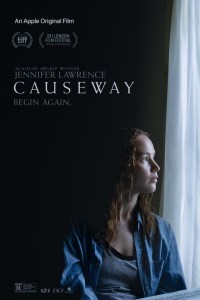 Jennifer Lawrence has been in four movies since 2017, so the once ubiquitous Oscar-nominated actress is getting more selective with her film roles, so now with each role the question becomes what made this project the one. Causeway is a fairly straightforward drama following Lynsey (Lawrence), a soldier who is recovering from her traumatic brain injury and ensuing memory loss. She’s stateside and living back in her hometown and trying to speed through physical therapy to re-enlist back to the life she knows but may not be equipped to handle. This is definitely a character piece but I don’t know if there’s enough interesting material here with these characters. Causeway is one of those indie dramas that lean into a lot of contemplative staring, which could be very meaningful if I felt like I had been given access to the characters internal dilemmas beyond a general assessment. Much of the movie follows Lynsey’s friendship with a local mechanic, James (Brian Tyree Henry), who has his own tragic past that he’s trying to come to terms with. The movie is at its best when they’re sharing time together and it begins to feel like an introspective hangout movie that will allow both of these people to let down their guards and develop. It moves in starts and stops but Causeway never feels like it gets anywhere fast or that transcendent. By the end, the journey doesn’t feel earned. Lawrence is good, though rather restrained, as the movie fills much of its time with her long pensive stares. There’s a movie here, for sure, but nobody feels in a hurry to uncover it. It’s a perfectly “nice movie” but one that underwhelms because it feels too afraid of pushing too hard or delving too far, for that would betray some artistic ode of “realism.” Causeway is a minimal, plaintive drama with much left unsaid, but what is said and honestly dealt with is compelling enough to make me wish I could trade in the many stares for more words spoken by these talented thespians.
Nate’s Grade: B-
Share this:

Emily the Criminal (2022)
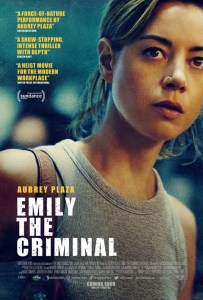
This Sundance indie thriller packs more anxiety into 90 minutes than most Hollywood thrillers combined. It’s a starring vehicle for Aubrey Plaza as the titular Emily, a woman with a prior criminal record who finds herself in debt and struggling to find a better paying job. In desperation, she joins a small-time credit card fraud squad, using stolen identities to purchase expensive electronics and pass along to her employer to resell. At first, it’s a quick and easy fix and she can walk away at any time, but the money is good and Emily begins to take on bigger and riskier jobs. It’s here where I really started sweating as Emily gets into some very serious jams, but she comes back swinging, and it’s a thrill. At the same time, you worry that she’s going too far and there may be no turning back. The movie reminded me a lot of 2016’s Good Time, an electric indie thriller that vibrated with anxiety as well as a surprising but thoughtful cause-effect story flow. Emily the Criminal begins as an indictment on the social mechanisms that trap the poor into poverty but then in its second half escalates urgently, spiraling into a tragic confluence of violence and vengeance. Plaza is outstanding from the first scene onward. Even her posture speaks volumes about her character. It’s a performance where you can see the gears of her decision-making, whether it’s fight-or-flight impulses, swallowing her pride, holding to a façade, or regaining what has been taken from her. The very ending of the movie is perfect and a fitting end of Emily’s character arc. It’s the American Dream turned into a modern nightmare of perfectly perpetual desperation.
Nate’s Grade: A-
Share this:

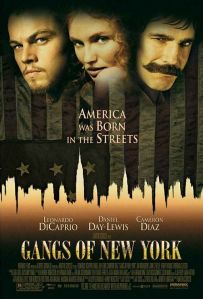
Gangs of New York (2002) [Review Re-View]
 Originally released December 20, 2002:
Watching Martin Scorsese’s long-in-the-making Gangs of New York is like watching a 12-round bout between two weary and staggering prize fighters. You witness the onslaught of blows, see the momentum change several times, and in the end can’t really tell which fighter is victorious. This is the experience of watching Gangs of New York, and the two fighters are called “Ambitions” and “Flaws.”
The film begins in the Five Points district of 1840s New York among a vivid gang war over turf. Amsterdam (Leonardo DiCaprio) witnesses the slaying of his father, Priest Vallon (Liam Neeson), at the blade of William “Bill the Butcher” Cutting (Daniel Day-Lewis) and his “Native” Americans gang. So what does this son of a dead preacher-man do? Well he grows up, plots revenge by making a name under the wing of the Butcher becoming like a surrogate son. But will vengeance consume him?
 Watch Leo DiCaprio assemble toughs, rake heels, and ne’er do wells to his Irish gang of rapscallions with facial hair that looks to be tweezed! Witness a one-dimensional Leo suck the life out of the film like a black hole! See Leo become the least frightening gangster since Fredo. Watch the horribly miscast Cameron Diaz play pin-the-tail-on-an-accent! Witness as she tries to play a pickpocket with a heart of gold that falls hopelessly and illogically in love with Leo! Marvel how someone looking like Diaz would exist in a mangy slum! See the brilliant Daniel Day-Lewis upstage our stupid hero and steal every scene he inhabits! Witness one of the greatest villains in the last decade of movies! Watch Day-Lewis almost single-handedly compensate for the film’s flaws with his virtuoso performance! Admire his stove-top hat and handlebar mustache!
Witness a wonderful supporting cast including John C. Reilly, Jim Broadbent and Brendan Gleeson! Wish that they had more screen time to work with! Wonder to yourself why in all good graces this film took nearly two years of delays to get out! Speculate away!
Gangs has the sharp aroma of a film heavily interfered with by its producers. The whole exercise feels like Scorsese being compromised. Gangs is a meticulous recreation of 1860s New York that often evokes an epic sense of awe. The story has more resonance when it flashes to small yet tasty historical asides, like the dueling fire houses and the Draft Riots. But all of these interesting tidbits get pushed aside for our pedantic revenge storyline with Leo front and center. You know the producers wanted a more commercial storyline, which probably explains why Diaz has anything to do with this.
 The script is credited to longtime Scorsese collaborator Jay Cocks, Steven Zallian (Academy Award winner for Schindler’’s List) and Kenneth Lonergan (Academy award nominee for You Can Count on Me). So with all these writing credentials, don’t you think one of them would realize all of the dumb things going on with the story? The ending is also very anticlimactic and ham-fisted. Just watch as we segue from a graveyard to present day New York, all thanks to the Irish rockers of U2!
I know this much, Day-Lewis needs to stop cobbling shoes and act more often. Gangs is his first visit to the big screen since 1997’’s The Boxer. He spent part of this hiatus in Italy actually making shoes. I don’’t know about everyone else but this man has too much talent to only be acting once every five years. Somebody buy his shoes and get him a script, post haste!
Scorsese’s Gangs of New York is at times sprawling with entertainment in its historic vision and at other times is infuriating, always dragging behind it a ball and chain called “stupid revenge story/love story.” I’’m sure the film will get plenty of awards and Oscar nods in prominent categories, and this seems like the Academy’’s familiar plan: ignore a brilliant artist for the majority of their career and then finally reward them late for one of their lesser films. So here’’s hoping Scorsese wins the Oscar he deserved for Raging Bull and Goodfellas.
Nate’s Grade: C+
——————————————————
WRITER REFLECTIONS 20 YEARS LATER
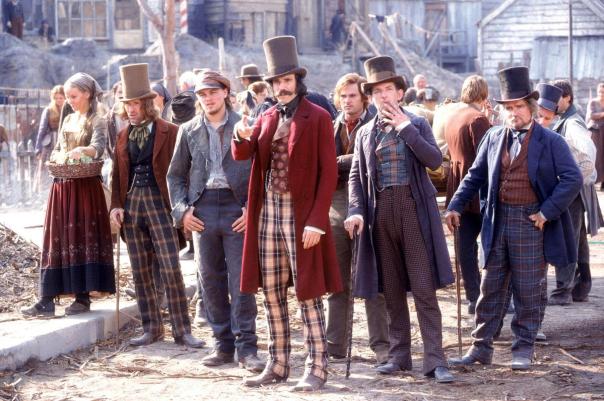
It is rare to find a movie that is almost exact in its percentage of good aspects and poor aspects. This 50/50 balance is best exemplified by 2002’s Gangs of New York. The ten-time Oscar nominated movie (and zero-time winner) was intended to be director Martin Scorsese’s epic, and twenty years later it’s still his biggest movie in size. Scorsese waited twenty years to tell this sprawling story of New York City’s early criminal underworld, so at 160 unwieldy minutes it’s no surprise how overstuffed and unfocused the finished product ended up. It’s a movie with so many engrossing historical anecdotes, amazing texture and supporting actors, and a stunning return to upper-tier acting by Daniel Day-Lewis, and yet it is hampered by Leonardo DiCaprio’s lackluster storylines, both for vengeance and for love (maybe a love of vengeance?). It’s so bizarre to watch this movie because there can be sequences where the movie just excels, and then there are sequences where I just want to sigh deeply. It’s like the movie is in conflict with itself, and you, the viewer, are ultimately the frustrated victim.
Let’s focus on the good first. Day-Lewis had essentially retired from acting and went to work in Italy as a cobbler until Scorsese appealed to him to reconsider acting. Every second this man is onscreen deserves your utmost attention. DiCaprio was the advertised star of the movie but Day-Lewis was the real star. The movie is almost a Trojan horse of sorts, luring you in with a standard revenge plot line only for you to lose all interest and root for the charismatic villain. Day-Lewis is so enthralling, so commanding as Bill the Butcher that every moment he is absent feels like an eternity. He remained in character for the duration of the shoot, spooking waitresses, and learned how to throw knives from circus performers and how to cut meat from an actual butcher. Considering the man’s famous Method-acting approach, I wonder just how many skills Day-Lewis has acquired over decades. This man could be the living embodiment of Michelle Yeoh’s character in Everything Everywhere All at Once, able to, at a moment’s notice, tap into a uniquely honed skill-set upon need. I wish that itself was a movie; Day-Lewis filming a role when terrorists invade the set, and now he has to utilize every lesson and skill of his past acting roles to defeat the baddies and save the day. He may be the most interesting man in the world. Since Gangs, Day-Lewis has only appeared in five other movies, and amazingly he has been nominated for Best Actor three times, winning twice (that averages an Oscar every 2.5 movie roles). This man has become like an acting Halley’s Comet, waiting for him to swing around again and burn brightly and then, just as suddenly, pass back into the lengthy waiting period.
I loved the historical asides in this movie. I loved the scene showing, in one unbroken take, Irish immigrants stepping off the boat into New York harbor and getting immediately signed into service, given a rifle and uniform, and lined up to board another boat to fight the Confederacy. I loved the entire character of Boss Tweed (Jim Broadbent) and how transparently corrupt he is, reminding me of Claude Rains in Casablanca. I loved him competing with the dozens of other firefighting units squabbling over turf while a house burned down to cinders. I loved him scrambling for some entertainment for the masses, and he asks Bill to gather up four nobodies that they can publicly hang, and then we cut right to these relatively innocent men saying their last words before being hanged, including one man’s young son watching. It’s an incredible sequence. The culmination of the 1863 Draft Riots is terrific and maximizes the messy nature of the movie best, communicating the many breaking points that lead to this notorious riot. The opening of this movie is wonderful and a terrific mood setter as we watch the members of the Dead Rabbits assemble for battle, with the rattling percussive score by Howard Shore (The Lord of the Rings), finally breaking outdoors and watching gangs advance like armies. I loved the narrated history of the different gangs settled in New York and their peculiarities and fixations. I loved the before and after stories of Happy Jack (John C. Reilly), who settled as a corrupt police officer, and Monk McGinn (Brendan Gleeson), a mercenary who tries to go straight through, of all things, politics. I loved that the movie reminds us that just because these people reside in the North doesn’t stop them from being racist (an archbishop is especially aghast at a black man being allowed in his church). I loved the occasional P.T. Barnum appearance. I loved the proliferation of so many tall hats amidst all the handlebar mustache-twirling villainy. I loved when the movie felt like a living documentary, soaking up the richness of the recreated history.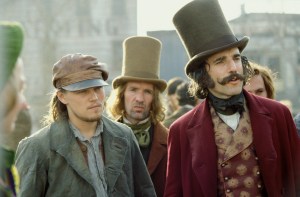
Where the movie sputters is with just about all that involves DiCaprio’s character, Amsterdam. The revenge storyline is just so boring compared to everything else going on, enough so that I think even the movie forgets about it. Amsterdam becomes Bill’s budding protege and literally saves his life at several points (if your goal is for him to die, why save the man?). He’s such a boring character because all he thinks about is vengeance, so every relationship he builds is only about how much closer to achieving his goal he can be. Amsterdam is a thoroughly dull character, and DiCaprio doesn’t come across as a credible tough guy yet, especially diminished in the large shadow from Day-Lewis’s Butcher. It wasn’t until 2006’s The Departed where I felt like he shed his boyishness fully to play a credible adult man. DiCaprio has been great with Scorsese, and this movie was the start of a decade of collaborations (four movies, two Oscar nominations), but he feels miscast here as a brooding hero given inordinate attention.
Worse is the romance with a pick-pocket prostitute played by Cameron Diaz. I pity Diaz. She’s been given the spunky love interest role in the Oscar-bait movie, which is generally underwritten and only viewed as aiding the hero’s journey of our male lead or being the offramp not taken (“Don’ get y’er refenge, Amsti’dam, ‘stead come wit me to San Fran in Calyfer’nia”). This is not a good character and she’s meant to give voice to the female underclass perspective, so it’s even more irksome when her headstrong, defiant nature gets sublimated as a rote romantic option. Diaz is also woefully miscast and my 2002 quip of her playing “pin-the-tail-on-the-accent” is accurate. I might argue that maybe dramas aren’t her strong suit, but she was great in Being John Malkovich and In Her Shoes and The Holiday, though all of those had notable comedy elements. She has the ability but this might just have been too unfamiliar for her, and so she struggles throughout with a character defined by her sexual connections to the villain and the hero.
While these characters and the performances are the biggest misses in Gangs of New York, there are other misguided or poor elements adding to that 50/50 margin. The opening sequence is great until the actual gang warfare begins and you realize that Scorsese, arguably the greatest living American director, cannot direct action to save his life. The action is choppy and lacking any of the kinetic qualities we associate with most Scorsese movies. Not even the talents of editor Thelma Schoonmaker can help save this deficit. The movie’s overall scattershot nature also makes it rather uneven and difficult to build momentum. The ending plays out like a footnote to the Draft Riots and robs the viewer of whatever catharsis could be granted from the long vengeance plot. If the whole movie has been leading up to Amsterdam’s vengeance, well robbing him of it could be meaningful, if the self-destructive nature of vengeance had been a theme. It’s not like Amsterdam has suffered at all, beyond the occasional stab wound or black eye, so him learning a lesson about the futility of vengeance would seem inappropriate and trite. I also want it known for posterity that there is an un-credited actor listed online as playing “Hot Corn Girl.”
”Twenty years later, Gangs of New York is still a frustrating and sometimes exhilarating viewing. It began a road for Scorsese that led to him finally winning his first, and still only, Oscar for directing The Departed. The sprawling nature of the movie is both a blessing and a hindrance. It allows for a wider scope and cast of characters but it also means that if you’re liking a subplot or a supporting character, you’ll have to wait your turn before they re-emerge. My old review back in 2002 perfectly sums up the majority of my feelings in 2022. There’s much to see and much to like with Gangs of New York but also too much to restrain its potential greatness.
Re-View Grade: C+
Share this:

The Banshees of Inisherin (2022)
 The Banshees of Inisherin is a melancholy movie that aspires for tragi-comedy but comes up short. I’m a big fan of writer/director Martin McDonagh’s past films, especially 2017’s Three Billboards and 2008’s In Bruges, and his command of character writing and finely hewn tonal shifts. With Banshees, it’s the tale of a falling out between two friends, Colm (Brendan Gleeson) and Padraic (Colin Farrell), and the repercussions of this disunion. Colm (pronounced Call-em) looks at his long-time daily drinking partner as unrepentantly dull and as a drain on his emotional energy. As he’s getting older, he’s more mindful of his time and wants to try and create a violin piece to outlive him. Padraic (pronounced Patrick) cannot accept that his friend can just abruptly end things, so he persists, wanting to know why, wanting to know what he can do to mend this friendship, and not listening to Colm’s threats if he doesn’t leave well enough alone. The film is set in 1923 on the island of Inisherin during the short-term Irish civil war, and the backdrop gives way to gorgeous landscapes and an overwhelming sense of isolation. Every character in this movie is feeling some gnawing sense of loneliness and discontent, from Colm and Padraic looking at their friend and wondering why, to Padraic’s sister Siobhan (Kerry Condon) who pines to leave and start a life on the mainland on her own, to Dominic (Barry Koeghan) who is looking for any human connection beyond his alcoholic and abusive father. McDonagh is terrific at writing his characters and interspersing droll humor and establishing the staid rhythms of this small world. The actors are all uniformly fantastic with special attention to the sad-eyed Farrell and super-charged Koeghan. I was enjoying my time but then I started to worry what this would all amount to, and the answer remains a big question mark. The movie’s story feels like an over-extended parable, and in doing so that holds many of the characters to be less developed and nuanced, serving their role as perspectives or victims of the folly of fate. By the end, I don’t really know what the larger theme or message of McDonagh’s movie. Maybe it’s about the facile nature of so many friendships, maybe it’s about what we choose to signify the fullness of a life lived, or maybe it’s just that a man’s donkey is nothing to trifle with. The Banshees of Inisherin is more funny than profound, but even kept too strictly in parable terms, it’s still an entertaining and occasionally heartbreaking watch.
Nate’s Grade: B
Share this:

The Fabelmans (2022)
 Steven Spielberg has been the most popular film director of the last fifty years but he’s never turned the focus squarely on himself, and that’s the draw of The Fabelmans, a coming-of-age drama that’s really a coming-of-Spielberg expose. The biographical movie follows the Fabelman family from the 1950s through the late 60s as Sammy (our Steven Spielberg avatar) becomes inspired to be a moviemaker while his parents’ marriage deteriorates. As a lifelong lover of movies and a childhood amateur filmmaker, there’s plenty here for me to connect with. The fascination with recreating images, of chasing after an eager dream, of working together with other creatives for something bigger, it’s all there and it works. I’m a sucker for movies about the assemblage of movie crews, those found families working in tandem. However, the family drama stuff I found less engaging. Apparently Sammy’s mother (Michelle Williams) is more impulsive, spontaneous, and attention-seeking, and may have some un-diagnosed mental illness at that, whereas his father (Paul Dano) is a dry and boring computer engineering genius. I found the family drama stuff to be a distraction from the storylines of Sammy as a budding filmmaker experimenting with his art and Sammy the unpopular new kid at high school harassed for being Jewish. There are some memorable scenes, like a girlfriend’s carnal obsession with Jesus, and a culmination with a bully that is surprising on multiple counts, but ultimately I found the movie to be strangely remote and lacking great personal insight. This is why Spielberg became the greatest filmmaker in the world? I guess. I’ll credit co-writer Tony Kushner (West Side Story, Lincoln) for not making this what too many modern author biopics have become, a barrage of inspirations and connections to their most famous works (“Hey Steven, I want you to meet our neighbor, Ernest Thalberg, or E.T. as we used to call him back at Raiders U.”). The Fabelmans is a perfectly nice movie, with solid acting, and the occasional moment that really grabs hold of you, like a electrifying meeting with a top Hollywood director in the film’s finale. For me, those moments were only too fleeting. It’s a family drama I wanted less family time with and more analysis on its creator.
Nate’s Grade: B
Share this:

Women Talking (2022)
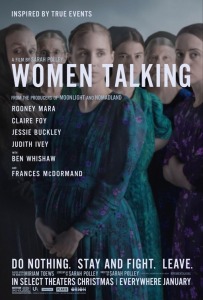 The hard-hitting Oscar-worthy drama Women Talking could have been titled Twelve Angry Women, but with the necessary subtitle: But They’re Very Justified in Their Rage. It is, as the title suggests, a movie almost entirely about women talking in one central location, enough so to feel like a stage play captured for the screen. However, the reason these women are assembled is heartbreaking, infuriating, and eminently engrossing. Women Talking demands to be heard.
The dozen women have gathered to debate the future of their participation in their community, a closed-off Mennonite coalition. They are victims of heinous sex crimes and general repression, debating between staying and fighting and abandoning their way of life. These women are talking about their own agency and what their collective response will be to the great wrongs that have prevailed upon them. It’s not just that the women of this community have been preyed upon by predators in their midst, their trauma has been dismissed as ghosts and devils until literal men were literally caught and apprehended. The next part is even more galling, as the guilty men will be returning back to the community and the women are expected to forgive the predators and go back to life as it has been. Except how exactly has life been for the women of this small community? The assaults have been going on for decades, enough that many of the children are the byproducts of their abusers. One grandmother is brought to tears that she should have done more to protect her adult daughter, herself married to an abusive man. The systematic nature of this abuse is the core of their deliberation. Can they stay and reform a broken society from inside, or is the best hope radically breaking away and starting anew without the men?
 The movie also serves as a debate over the capacity for grace and forgiveness, reminding me in subject as well as the approach of last year’s equally hard-hitting and equally spellbinding indie, Mass. I found it especially insulting that these women are expected, by the male leaders, to simply forgive and forget, to shuffle back to subservience. It’s a larger philosophical discussion over the nature of grace and accountability. It would be showing grace to these men to forgive them when they do not deserve it, and surely the male leaders would underline this point in a comparison with their religious text, akin to Jesus forgiving those who crucified him. However, if forgiveness is not the catalyst for reform and reclamation, then it’s just another empty gesture that maintains the status quo of abuse going unpunished and the abusers being protected. It’s easy to make larger connections to larger societies protecting predators through conditioned silence. The entertainment industry has been rife with bad men, and yes it’s typically men, behaving criminally and being protected by their position, and it might be easy to make connections with Women Talking and She Said, the fact-based take-down of Harvey Weinstein. Are these people worthy of forgiveness or is the patriarchal system of power (women aren’t even allowed to learn to read and write in this community) beyond salvaging? Within minutes of watching, I was already shaking my head and saying they should burn it all to the ground.
Women Talking is powerful and somber without being overly grave to the detriment of the material. It’s never taken anything less than serious, but the subject matter is handled very sensitively and even rated PG-13. Under the careful guidance of writer/director Sarah Polley (Away From Her, Stories We Tell), the film doesn’t soft-pedal the abuse these women have suffered but it doesn’t wallow in it either, getting overloaded with sordid details. The screenplay unfolds key pieces of information over time, allowing the audience to piece together a fuller picture (I didn’t even realize the family connection of the dozen women until an hour in). It would be easy if the only response explored was one of unfathomable rage, best exemplified by a stirring monologue where Claire Foy (The Crown, First Man) rattles off what she will do to protect her young daughter including murder, including vying with the Almighty, and even including spending eternity in hell. It’s easy to be all teeth-gnashing vengeance and fury, and entirely deserved considering these women are already looked upon as second-class citizens. However, Polley aligns her movie as a debate between anguish and hope and the difference between false and real hope. Is it real to hope that these men will change? Is it real to hope that August (Ben Whishaw), a college-educated child of a former outcast, can break the cycle? By the end, the main feeling I had was catharsis, that these women can chart a new, better path.
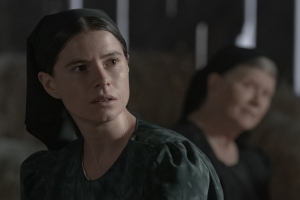 Given the heavy subject matter and the ensemble nature of the production, you would be right to assume that this is an actors’ showcase. The three biggest roles belong to Foy’s Salome, Rooney Mara’s Ona, and Jessie Buckley’s Mariche, each presenting a different perspective. Salome wants to stay but mostly as a means of collecting vengeance for her and her daughter. Mariche wants to forgive the men because, if they do exile themselves, they are told their immortal souls will be denied the kingdom of heaven. It also happens that Mariche’s alcoholic husband is one of the accused men returning. Ona is pregnant with her attacker’s child and questioning which setting would be best for her, staying with what she knows or risking a new life, for better or worse. Foy and Buckely (The Lost Daughter, Men) each have a signature monologue opening up their character perspective and each of them cinches it (call it their “Oscar clip moments”). Mara (Nightmare Alley) has the more contemplative and subdued role, which makes it less showy. Her character is the one who questions the most the value of forgiveness, and of course whether it counts when forgiveness is forced with the threat of eternal damnation. If Salome is the movie’s fury, then Ona is a reflection of begrudging hope, and Mara succeeds with a noble sense of grace.
There are two minor quibbles I have with Women Talking that hold it slightly back for me, and it’s not the locked-in setting making the proceedings feel like a staged play. Polley uses visual inserts and cutaways to devastating effect to highlight the women’s trauma, from awakening to the aftermath of assault to miscarriages, notions to heighten the visual storytelling potential of the medium without digging into exploitation and losing the tasteful tone. The directing even takes a few cues from Sydeny Lumet’s work from 12 Angry Men. One critical aspect that holds back the movie, again only slightly, is that the characters tend to feel a little more like various points of view rather than finely developed characters. Given the nature of the debate, there’s a lot of ground to cover, and it’s a smart storytelling move to coalesce. It just slightly limits some emotional engagement; it’s still there because of the skill of the actors and every drop of empathy they rightly earn, but the characters aren’t as well realized as they could have been. This can also be simply because we’re dealing with a dozen characters to try and supply enough material for. Even in 12 Angry Men, not every juror is going to be given equal importance (nobody cares about you, juror #7, so sit down). I reflect back to Mass, an excellent 2021 movie that you should seek out, and how personable and in-depth those characters came across over their feature-length sit-down. It also helps that it only had four characters to balance. The other minor criticism I have is the overemphasis the movie places on a long-in-the-works romance between Ona and August, who maybe has more screen time than maybe any woman. For a movie dealing with the sexual and emotional trauma of women and them taking account, I’m left uncertain about the amount of time we spend on an unrequited romance. It’s not like Polley is elbowing in wacky rom-com material, as it all likewise carries the same subdued tone. I just don’t know if this movie needs a romance elevated during its otherwise 100 plaintive minutes.
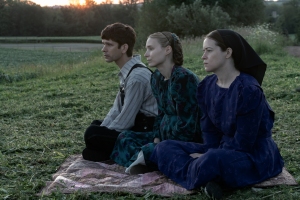 Women Talking is an urgent movie that every person should watch. The central dynamic is radiating with dramatic potential, and the actors are uniformly excellent, even the youngest actors handling some very touchy material. Polley’s direction is stately and subdued without removing any of the surging emotional power inherent in her drama. I’m overjoyed that Polley has returned back to filmmaking as she hasn’t made a movie in ten years. It’s a triumphant return for Polley, one that will likely have her vying on the biggest stages come awards season. Women Talking is timely and, unfortunately, also timeless. By the end, you’ll feel slightly exhausted but better for it, like the euphoria that comes after a good cry and you feel like, having pushed through, you’ll be better for it.
Nate’s Grade: B+
Share this:

RRR (2022)

The Indian film sensation that has converted millions across the world has one new convert: me. I’ve been hearing about RRR all year and how outlandish it is, how wild and audacious this three-hour action historical musical can be, and that it’s a celebration of the exuberant possibilities of film, and to every part of that sentence I pump my fist and declare an enthusiastic yes. Think of it as a superhero movie that also happens to be a musical. RRR is set in 1920s India and follows two real-life figures central to India’s independence from Britain. Komaram Bheem (N.T. Rama Rao Jr.) and Alluri Sitarami Raju (Ram Cgaran Teja) never met in real life, but the movie makes them not just enemies but also the best of friends. Both men are set on a collision course, with Bheem searching for his little sister who was kidnapped into the big city by the British governor (Ray Stevenson), and Raju is working his way through the ranks of the British police and searching to arrest Bheem. What might get in the way is the greatest bromance in years, as these guys don’t just like one another, they will swear their undying allegiance and love for the other. Raju helps his BFF talk to a nice British girl he is crushing on, and he even helps Bheem by leading a dance off between hilariously haughty British elites. That “Naacho Naacho” dance is a shot of pure joy and encapsulates the movie: it’s frantic, frenetic, overpowering, and purely genuine. There isn’t a hint of irony in any of the overzealous 186 minutes here. The lead characters act like super powered gods, or burst into song and dance, complete with cover-worthy poses, but at no point does the movie want you to laugh at it; it wants you to get on board and enjoy how perfectly crazy the movie is. It took me about an hour, but I was won over completely by RRR. There is a man getting whipped who moves the crowd into a revolutionary mob through the power of his song. There’s a guy throwing a leopard at another man’s head. A man kicks a running motorcycle into the air and then uses it as a projectile. It’s got spectacular action with more style than a hundred Hollywood movies. The action is so well choreographed and clear to understand that it’s immensely gratifying to watch. The extravagant wire work adds to the grandiose mythic nature of the movie. The arc that Raju has is more compelling and satisfying than many in even American indies. Not only are these gents buff as hell, and effortlessly charming, but they can and will dance circles around the competition. I won’t pretend I have a deep knowledge of Indian cinema but this seems like an excellent entry for many Western fans to explore the stylistic heights of Indian cinema. This is a wild romp with cheer-worthy heroes, a bromance for the ages, and villains you can’t wait to topple. RRR is a bit exhausting by the end but I was never bored during its different tonal shifts. It might not be the best movie of the year but it’s certainly going to be the most movie you’ll get in 2022.
Nate’s Grade: A-


 nathanzoebl
You must be logged in to post a comment.