Blog Archives
Hitch (2005)
 Isn’t it peculiar that most romantic comedies are written or directed by men? Sure you’ll have your occasional Nora Ephron or Nancy Myers, but it seems that the vast majority of people behind these popular, simplistic, romantic fantasies are men. Is it all a conspiracy? Is Hollywood keeping a nation of women docile with a slew of movies aimed at their soft, gooey middles (no, not the love handles)? We may never know. Hitch is written and directed by men too. Will it be any different from other rom-coms?
Alex “Hitch” Hitchens (Will Smith) is New York City’s most popular love guru. He’s got the methods and the advice to turn any zero to a hero in the dating world. His latest client is Albert (Kevin James), a mild-mannered attorney lacking the confidence to ask the beautiful Allegra (super model Amber Valletta) on a date. Hitch agrees to assist Albert in learning the fine art of impressing women, behavioral signs, and the proper steps to insure a fantastic first kiss (Hitch believes 80% of women can tell all they want from that first kiss). Meanwhile, Hitch is also trying to woo Sara (Eva Mendes), a prickly gossip columnist distrustful of most men, especially the ones that show interest in her. Hitch persists and sets up elaborate dates that seem to misfire one after the other. His sure-fire rules and methods aren’t working on Sara, so Hitch will have to dig deep to discover the true meaning of love.
 Will Smith the actor was put on Earth to do two things, save the world and woo the ladies. Hitch focuses more on the later. Smith oozes charisma and is a natural charmer. He’s all but tailor-maid for the romantic comedy genre as an affable, sly, and lovable lead. He’s an actor that can truly connect with an audience, for better or worse.
James (TV’s The King of Queens) gives the film its biggest laughs and its best moments of heart. His geek chic dance sequence (involving Q-tip wiping, spinning a pizza, and hiney shaking) is a gut-buster, and James plays it with bravado. He’s the doughy everyman and his courtship of Allegra provides some tender moments, like that first awkward kiss. James doesn’t overplay the nervous tics or the low self-esteem but lets Albert feel like a real schmo coming alive.
The lone sour note in this well-cast fable comes from Eva Mendes. I’ve never been impressed with Mendes as an actress so far. What almost kills Hitch is that Mendes is stuck playing a wholly unlikable character. Sara is whiny, mean-spirited, and short-sighted in her actions. When she tries to get revenge against Hitch she ends up rashly destroying innocent lives. She’s supposed to be guarded, the one nut Hitch can’t crack with his dating axioms, but instead she comes off as a rather terrible human being. After a while I started rooting for Hitch to lose because he’d be far happier without being saddled to this insufferable, egotistical, close-minded, bitter human being.
What saves Hitch is that the film wisely decides to put more time and energy on Albert dating Allegra. Albert serves as the underdog, the rooting point for the audience, and he’s true to what he believes. This is quite a contrast to a gossip columnist unafraid to rip people on unsubstantiated assumptions.
 Another element that can make a romantic comedy sink or swim is the chemistry of its stars. Here Hitch presents an intriguing dilemma. You see, Mendes and Smith have no connection whatsoever, which is fine because Hitch is just as much a buddy film as it is a rom-com. Smith and James have terrific chemistry and play off of each other with an excellent comedic give and take. This is where Hitch separates itself from the usual rom-com fluff. It’s a tale of three couples, Albert and Allegra, Hitch and Sara, and Albert and Hitch. The film’s about male relationships as much as male-female relations (and the pursuit of male-female relations), and there are hints of truth behind the comic desperation. There is something romantic to Hitch but it cannot be found whenever Mendes steps onscreen.
Hitch has appeal but it can’t help but get caught in the clichés of romantic comedies. As always, misunderstandings loom and push people away when one good level-headed conversation could clear everything up. The climax even involves people chasing after their loved one to stop them from getting on that bus/train/boat/plane/you name it. The climax to Hitch feels way too drawn out, like the film is stubborn to tie up its characters despite a horrendously long running time of two hours. And am I alone on this, or are the majority of romantic comedies now built around some premise of deceit? That doesn’t sound like a good way to start a relationship to me.
Romantic comedies play on our love of the familiar. What makes Hitch work are the characters and the performances. Smith and James make an excellent mismatched team and both men are charismatic, funny, and relatable. Hitch is sweet but not too sappy. This isn’t anything groundbreaking but it is pleasant and good-natured. Hitch is your typical rom-com, a fine buddy flick, and a showcase for the near irresistible charms of Smith. It’s hard not to fall under Hitch‘s spell despite Mendes’ character’s best efforts to sabotage your viewing pleasure. This is one date movie not to dread.
Nate’s Grade: B
Share this:

Miss Congeniality 2: Armed and Fabulous (2005)
 Sandra Bullock is the nation’s most famous tomboy. She began in action flicks but soon settled under the familiar road traveled by so many winsome, likeable young actresses: romantic comedies. She even turned down the role in Million Dollar Baby that Hilary Swank would later ride to Oscar gold. Bullock has now publicly stated that she wants to step away from romantic comedies and challenge herself as an actress. She of course must have felt this way before agreeing to Miss Congeniality 2: Armed and Fabulous.
Just weeks after foiling a beauty pageant tragedy, Gracie Hart (Bullock) is returning back to the FBI undercover field. Her newfound celebrity makes her stick out in a crowd of autograph-seekers. She cannot work undercover anymore so the FBI, in a stroke of public relations, wants Gracie to be the new face of the bureau. She gets a makeover (again) and a hot-tempered bodyguard (Regina King) to shadow her on talk show circuits, book signings, and other public appearances. Just when things are looking rosy, the reigning Miss United States, Cheryl, and the pageant host (William Shatner, gleefully hammy) are kidnapped. The kidnappers want millions or else they?ll kill them both. Gracie regroups from her makeover madness and jumps on the case to save her friend.
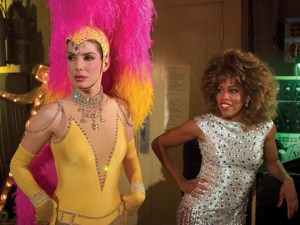 Bullock is a very likeable actress but seems prone to more pratfalls than Buster Keaton combined with two of the Three Stooges. The physical comedy comes off being tired this go-round. Watching Bullock be clumsy can be funny, but the comedy of Miss Congeniality 2 is too forced to crack a smile. The friction between Gracie and her bodyguard is one conversation away from evaporating. The girls have to pose as Vegas entertainers to get backstage, when they just could have used their “oh I don’t know?” FBI status. When Gracie goes undercover Bullock becomes unhinged and flounders around in rubbery ethnic stereotypes. Miss Congeniality 2 isn’t funny because the film doesn’t know what to do.
The finer moments of Miss Congeniality involved the dry wit of Michael Caine, and he is sorely missed in this sequel. The strangely necessary role of gay makeover artist is passed to Deidrech Bader (The Drew Carey Show). He amps up the sass but can’t really replace Caine. King is a greatly underrated actress (Jerry Maguire should have made her a star), but she suffers from the constraints of a rough-around-the-edges loner character. She mainly scowls and grumbles.
What made Miss Congeniality appealing was the fish-out-of-water conceit of an ugly ducking in a world of swans. Even though I didn’t like the film, it could at least muster up broad humor from its comic premise. Miss Congeniality 2 is a lot like Austin Powers 2, in that the sequel puts the fish back into the water. As a result the film loses whatever comic firepower it might have had. Miss Congeniality 2 attempts to be a female-buddy-cop caper, but the butting heads rarely produce any comedy. This film didn’t make me laugh until after 20 minutes in, and the ratio of screen time to laughs didn’t improve much afterwards (and that includes jokes about bad breath and tampons!).
 Miss Congeniality 2 has some of the dumbest police work ever. Characters go to extreme lengths for basic information, make wild assessments on little to go with, and key clues are tripped over with the subtlety of a jackhammer. The idiotic police work syncs up with the preposterous nature of the crooks? scheme. They are ex-employees of the Treasure Island casino, so to take revenge they?re going to trap their prey inside the pirate ship display, which is set to sink as part of the attraction’s script. Yes, death by casino attraction.
There are also some wildly brainless moments. Gracie is about to flee the sinking pirate ship, when her elaborate showgirl costume gets trapped under a heavy canon. Now, with time and air running out, any normal person would quickly strip out of the costume and swim away. Instead, Gracie tugs at her costume trying to yank it out, and she does this until she nearly drowns. I don’t care who you are, if you’re about to drown then modesty isn’t going to get in the way. Better to be alive and naked than dead and soggy. For that matter, when Gracie discovers that the pirate ship has her friends she runs to get inside. Wouldn’t it be infinitely easier to find someone at the casino that could stop the animatronic attraction? I’m sure something that organized doesn’t just run without safety controls.
Miss Congeniality 2: Armed and Fabulous is clumsy and riddled with contrivances and inanities. The jokes are forced and dead on arrival, and Bullock falls into what she does best, which is falling down. There is no reason for this film to exist other than that the original made money. Die-hard fans of Miss Congeniality may be the only ones to get some enjoyment out of this tepid sequel. Even casual fans of Bullock’s romantic comedies will likely be disappointed. You know you’re watching a tired comedy when they make Dolly Parton boob jokes in the year 2005. Miss Congeniality 2 is a film that doesn’t make the cut.
Nate’s Grade: C-
Share this:

The Incredibles (2004)
 You’ve been there before. You know the drill. You’re staring up, mouth agape, at the multiplex’s list of new titles wondering what to see. It happens to the best of us. Who can you trust in these situations? Most people used to think they could trust Tom Hanks, but after his accent experimentation in The Ladykillers and The Terminal, not to mention his giant creepy mustache in The Polar Express (with accents!), that train of trust might have left the station. A lot of people felt they could trust an Oliver Stone movie, and, well, look how that turned out. No, moviegoers, the only trustworthy name that won’t let you down is Pixar. With hits like Toy Story and Finding Nemo you know that those computer wizards are looking out for you. Their newest work, The Incredibles, will keep Pixar alive in the moviegoer circle of trust.
The Incredibles takes place in a world where superheroes walk, run, jump in single bounds, and zip through the sky. They’re beloved and revered, with the super-strong Mr. Incredible (Craig T. Nelson) at the head of the pack. But then a fiend strikes more powerful than any dreaded super villain: litigation. A mountain of lawsuits pile up against superheroes, and the government disbands its programs and relocates all super-abled beings into new identities and homes.
Fifteen years later, Bob Parr, a.k.a. Mr. Incredible, has married Helen (Holly Hunter), a.k.a. Elastigirl, who can stretch her shape, which comes in handy keeping their two children in line. Dash (Spencer Fox) begs his parents to allow him to use his power of super speed, especially at his schools sports. Violet (Sarah Vowell), all long haired Goth angst, uses her power of invisibility to just disappear during school and other functions she feels she doesn’t fit. It seems the only member of the family fully adjusted and happy to a “normal” life is Jack Jack, the Parr’s infant son who may or may not develop super powers of his own. Bob feels crushed by the grind of office work and hiding what makes him and his family special. He escapes at nights with old friend Frozone (Samuel L. Jackson) and the two of them relive the good old days with attempted heroic acts. Helen catches on and they have a huge fight with the kids as witnesses. Helen explains to her family in the best way that she can that their days as superheroes are over. They have to adjust to a different life now.
 Bob’s wanderlust is soon quenched when he receives a mysterious invitation from a beautiful, white-haired woman named Mirage. She offers Bob the chance to become Mr. Incredible once more, to use his gifts and abilities to stop a robot on the loose on some island. Bob leaps at the chance, hiding his ongoing super exploits from his wife, and regains a sense of purpose. He hasn’t been this happy in ages; however, it all comes to a head when he learns that Syndrome (Jason Lee), the one responsible for the run-amok robots, has other plans. Not only this, upon capture Mr. Incredible realizes that he has ties to Syndrome way back during one of his less-than-super moments.
Helen is shocked when she finds out what Bob’s been up to, but also partially relieved it’s not an affair. She visits their old costumer Edna Mode, whose glasses and black wig may be bigger than the rest of her shrimpy body. Edna has redesigned a team of superhero costumes, and with them in hand Helen becomes Elastigirl once more and takes Dash and Violet on a journey to save their father and become a family once more.
The Incredibles is a film bursting with entertainment. This is an explosion of imagination, of wit, of grand storytelling, that the audience should sit and soak up every loving and beautiful second of it.
The voice work is wonderful. I’m sure Disney execs were scratching their heads over Craig T. Nelson, but I cannot imagine anyone else that could deliver as much in the role. Hunter is excellent, as always, as a doting mother and crime fighter. Lee is great with a villainous role that has a lot more depth to it than near any live-action film. His verbal gymnastics are perfectly suited for a slighted super villain.
Writer/Director Brad Bird’s first feature was the 1999 masterpiece, The Iron Giant, which I consider the finest animated film of all time (you heard me, Walt). Bird’s first film was a masterful mixture of little boy fantasy, reality, strong characters, humor, and excuse-me-there’s-something-in-my-eye tenderness. I know many people who, after seeing The Iron Giant, say they were, “crying like they watched a puppy get hit in the face with a shovel.”
 With this being said, my trust in Bird as a master storyteller is still there. The Incredibles is the first Pixar film concerning real people, not just toys, ants, fish, monsters, and, uh, more toys, and the results are astounding. This is a film rich in complexity, human insights, family warmth, and, again, realism. Bird has fully realized The Brady Bunch of superheroes. They feel just as flesh and blood as any characters I’ve seen in any film this year. They have desires, secrets, shame, guilt, anger, burdens, pride, and above all, love. I mean, how many animated films have an actual subplot involving marital suspicion? You won’t find that in The SpongeBob Squarepants Movie. When Elastigirl and the kids go off to save her heroic hubby, she has a sit-down with her children and warns them that, yes, death is very real, and that these people will indeed kill them if discovered (this is the first PG-rated Pixar film, by the way). It’s a great moment that reminds you how much you care for these people.
Bird’s imagination seems incomparable. He has a razor-sharp feel for comedy, like Elastigirl’s scene caught between several sliding doors or the lively, hysterical Edna Mode personality, but he also possesses the ingenuity for crafting some of the most exciting action sequences in a long time. The Incredibles has uncanny action scenes, set to Michael Giacchino (TV’s Lost) blazing jazz score, which should make the James Bond producers die from envy.
Bird has created a stupendous action film, a heartwarming family drama, a hilarious comedy, and a gorgeous film to watch. Movies rarely get this entertaining, but for Pixar, it’s all just part of the norm. I hope someday we don’t take Pixar’s accomplishments and staunch consistency for granted, because they aren’t just reinventing what animation can do, they’re also reinventing what films themselves can do. You can have all the accents you want Tom Hanks; I’ll gladly take The Incredibles and its bounty of offerings.
Nate’s Grade: A
Share this:

Bridget Jones: The Edge of Reason (2004)
 You don’t see too many sequels to romantic comedies, and that?s practically by design. Most romantic comedies consist of keeping the leads apart as long as possible, and then in that final climactic moment they connect, embrace, kiss, usually while a camera pans around them and some up-tempo Top 40 songs swells on the soundtrack. Then we end, our story finished. You see, romantic comedies are essentially modern fairy tales, and they end on the “happily ever after” moment, the most joyous moment. We don?t think about what their lives could be afterwards. I doubt few in the audience are biting their nails to know who does the dishes or if their sex life diminishes.
So for all of these stated reasons, sequels to romantic comedies are rare, unless, of course, they’re based on a book series that’s a cash cow of chick lit. Thus, America, we are given Bridget Jones: The Edge of Reason, the sequel to the smash 2001 film Bridget Jones’s Diary.
 The movie takes place four weeks after Bridget (Renee Zellweger) and Mark Darcy (Colin Firth) cuddling in the falling snow. Their relationship is all lovey-dovey, until Bridget starts reconsidering if she made the right choice of men. Her former boss, Daniel (Hugh Grant) has gone on to fame as a travel correspondent for TV news. He’s a bad boy, for sure, but sparks flew with him. Bridget also suspects Mark of cheating on her with a leggy colleague (whose final plot revelation is quite dumb). Bridget tries her best to fit in with Mark’s upper crust society, but is starting to feel unaccepted. Then she becomes a partner to Daniel on his travel reports, and the two visit exotic locales and sparks begin once more.
Edge of Reason feels like a poor slapdash grab at money. The film lifts entire scenes from the first Bridget Jones movie and tries reworking them for similar effect. Watching Firth and Grant sissy fight each other is amusing … the first time I saw it in 2001. For the most part, it seems like the filmmakers behind Edge of Reason were straining to come up with things after that “happily ever after” moment. What other reason can there be for some of the disastrous plot turns in Edge of Reason? The revolving door of writers (including author Helen Fielding herself) manufacture petty and foolish nitpicks for Bridget that she treats as life or death. It’s hard to feel concern for her. When you strand your main character -in a romantic comedy, no less- in a Thailand prison because she was caught smuggling drugs -in a romantic comedy, remember- then you have some giant plot issues.
The wit and biting commentary from Bridget seem to be stripped away. She only makes two journal entries, which open and close the film, and they were responsible for some of the greatest comedy bits in the original movie. She no longer comes across as a snappy, ordinary girl with a big heart and some big neuroses (did I mention the Thailand prison?). The Bridget of Edge of Reason seems a bit obnoxious at times. The comedy of Edge of Reason doesn’t generally rise above slapstick. Watch Bridget parachute into a dung field (Ha!), watch Bridget ski backwards down a slalom (Hilarious!), watch Bridget get stoned from magic mushrooms (You’re killing me!), and don?t forget to watch her fall down, like, a lot (R.I.P. Nate; cause of death: laughing too hard). The makers of Edge of Reason are just trying too damn hard.
It’s a wonder that Edge of Reason does work at times, and that reason is because of the acting of our romantic trio. Zellweger is still incredibly charming despite some of the things she’s forced to do. She’s never looked better than when she has her Bridget Jones physique; she’s practically glowing. Grant is at his best when he’s a cad, and once again he gets the best lines, especially when he’s undressing Bridget during a work trip. The movie comes alive when he and Zellweger start their flirtatious battle. Firth adds shades of humanity and adoration to his fuddy-duddy role. He’s got a great everyman appeal even when he’s being a twit.
Edge of Reason also seems to flog whatever it feels is funny. If Bridget saying something inappropriate in front of a group of dignitaries and ambassadors is funny, then expect it to happen again five or six times. And it does, sadly. Edge of Reason is almost a wall-to-wall torture chamber of public embarrassment for Bridget, and if the filmmakers thought that would endear her to audiences they were wrong. We were endeared already by her wit and charm, but I guess the people behind Edge of Reason thought we didn’t want more of that. I miss you old Bridget Jones, wherever you are.
 The first Bridget Jones movie was directed by Sharon Maguire, a personal friend of Fielding. Maguire was close enough to know how to adapt the story and retain the elements that made Bridget Jones entertaining. Edge of Reason‘s director Beeban Kidron seems to be assembling a Bridget Jones movie for a focus group. We lose the personality of Bridget and get an accident-prone buffoon. All that’s missing are the banana peels.
Everything about Edge of Reason screams laziness. A great example of this is the film’s choice for music. The songs are so obvious, from “All By Myself” to “I’m Not in Love” to songs that simply have “love” in their title, like “I Believe in a Thing Called Love” to Beyonce’s “Crazy in Love.” Chances are, if your band ever released a song with “love” in the title, the music director of Edge of Reason considered using it.
Bridget Jones: The Edge of Reason will likely entertain its core audience (there were very few men unaccompanied by women in my theater). The cast makes this stilted sequel worth watching. If you really liked Bridget Jones’s Diary, you’ll probably be intermittently amused with Edge of Reason, because it’s the same meal, only reheated with a bit of a chill. Let this be an example of why Hollywood doesn’t make sequels to romantic comedies. We’re happy enough with “happily ever after.”
Nate’s Grade: C+
Share this:

Surviving Christmas (2004)
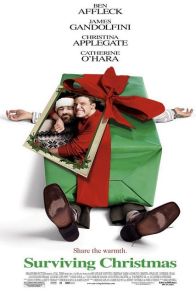 Surviving Christmas was originally supposed to be released, get this, a whole year ago for Christmas 2003. Paramount objected to the original release, saying it was too close to the release of their own Ben Affleck action flick, Paycheck (I doubt anything could have helped that turkey). So Dreamworks held onto it for another year and released it around the holidays. Halloween that is. The nation hasn’t even experienced Halloween or Thanksgiving yet, and we’re already getting a Christmas movie in our stocking. Given Affleck’s recent track record (the man hasn’t had a hit movie since 2002’s Sum of All Fears), audiences might not expect more than a lump of coal when his name’s above the title.
Drew (Affleck) is a cynical ad executive trying to figure out his plans for the approaching Christmas season. He gives his girlfriend tickets to Fiji, but she expected an engagement ring, so she dumps him right there claiming he doesn’t know what family life is. Drew finds his old family home now populated by the Valco family. He offers Papa Valco (James Gandolfini) $250,000 for him and his wife (Catherine O’Hara), son, and daughter (Christina Applegate) to be his family for Christmas. Papa Valco accepts. Drew is a stickler for family tradition, and mandates tree shopping, hat wearing, dinner script reading, and sleeping in his old room. The family’s hostility begins to wear down but things get even stickier when Drew falls for the Valco’s daughter, and then his ex-girlfriend shows up wanting to see his family.
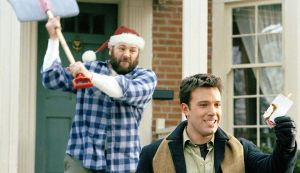 The central flaw of the film is Affleck’s character. Drew is a jerk. That’s all there is to it. Somehow Affleck has become the go-to actor for arrogant, work obsessed men that desperately need to see that there’s more to life (Bounce, Jersey Girl, Forces of Nature). I think this is also the second or third time he’s played an ad executive. Surviving Christmas seems to exist in some weird dimension where a jerk shows us the true meaning of Christmas and family togetherness. What’s even worse is that Drew doesn’t change as a character, he doesn’t seem to grow, and the ending actually seems to reward him for his selfish, material, obnoxious ways.
I like Affleck, I really do. I like his work in Kevin Smith’s films, and he can make a good action hero if given the right material (Say a Sum of All Fears, and not so much a Paycheck). The man is charming, he’s eloquent, and he’s self-deprecating and constantly funny. He’s the kind of guy you want to buy a beer. Now, having said all this, Surviving Christmas is Affleck’s worst performance of his career. Affleck can do comedy, and not just in a Greek tragedy kind of way with his life in the tabloids. In Surviving Christmas, Affleck mugs like nothing is sacred. His eyes bug out. He exaggerates near any expression, from his smug grin to his childish fits. For a man who has Gigli, Reindeer Games, and Pearl Harbor to his credit, it’s something when it’s said that Surviving Christmas may be his acting low point.
Gandolfini seems to have been cast to play against type. He’s still got that flinty stare and slow simmer of anger, but he’s generally wasted. He’s the comic foil to Affleck’s jerk, and yet he still doesn’t come across that much better. His monstrous woolly beard is also mildly disturbing. Applegate brings more life to her love interest role than the role deserves. Her romance with Drew seems so spontaneous, especially given her natural hostility to him. The only actor that has any real moments to stretch and shine is O’Hara. A veteran of improv, O’Hara has some of the film?s funnier moments, like when she makes mini marshmallows with a butcher’s knife, or her wild photo shoot Drew arrangers for her.
Surviving Christmas is indeed a chore to sit through. The movie, at its gooey heart, doesn’t know what kind of holiday film it wants to be. A good example is the opening montage of holly jolly Christmas sequences. In between standard, saccharine moments of feeling, there?s an old grandmotherly woman who bakes a tray of gingerbread men, with frosted frowns, and then sticks her head in an oven. Huh? Surviving Christmas tries to have it both ways. It wants to lampoon Christmas sentiment with the occasional touch of dark humor, but then it plays into a feel-good holiday formula complete with sled rides, tree lighting, and hot cocoa. The result is a schizophrenic comedy that doesn’t work being dark or cuddly.
 The whole wacky premise of Surviving Christmas screams sitcom, and the conventional proceedings and stock characters that follow guarantee it. The only way this could be more of a sitcom is if they drew a line down the middle of the house, the boss was coming over for dinner unexpectedly, and a pesky cat swallowed someone’s wedding ring. Surviving Christmas‘ relation to a sitcom is the only way I can explain why the film has stale jokes about internet porn (What, there’s porn on the Internet? When did this happen?). There’s even horny old men and wedgie jokes too! This is a movie in desperate need of a laugh track. I kept expecting everyone to turn their heads and go, “Dreeeeeeeeew” and then Affleck shrugs his shoulders, bugs his eyes out, smirks, and the studio audience goes wild.
It probably doesn’t help that Surviving Christmas is credited to over five writers and was directed by the director of Deuce Bigalow: Male Gigolo. The comedy rarely hits its marks because it’s so frustratingly tied up in its identity. The film wants to make incest jokes, but then in the same breath it wants us to listen to some syrupy back story explaining why Drew is the lonely, socially challenged jerk he is. The laughs of Surviving Christmas are mostly limited to broad slapstick and the occasional inappropriate remark. The preview audience I watched the film with seemed to be rolling in the aisles while I mostly rolled my eyes.
There will be a section of the public that enjoys Surviving Christmas. Fans of Christmas cheer and broad PG-13 comedies may find laughs amongst the wreckage. Surviving Christmas doesn’t have the gusto to commit to black comedy like Bad Santa (a new Christmas classic), but it also doesn’t build its characters strongly enough for an audience to care about them. They’re all mainly jerks and twits. This is a Christmas movie that doesn’t know what stripes it is. How else to explain it coming out in late October.
Nate’s Grade: C
Share this:

Shaun of the Dead (2004)
 This British import was described as a “rom-zom-com” (something tells me that genre is rather spare). Director Edgar Wright and star/co-writer Simon Pegg plunk down an assortment of typical British sitcom characters and then throw zombies into the mix. Shaun of the Dead is hilarious from start to finish. Pegg and his batch of survivors go through the strange scenario with wit, grit, and a genial sense of irrelevance. It’s as if even flesh-eating zombies can’t ruin their day (Shaun devises a plan that involves killing his zombie step-dad and drinking a cup of tea). Shaun of the Dead gives a knowing wink to the Romero films but also tweaks the zombie genre’s rules and clichés. Wright has a clever sense of visuals and the film does provide some sticky, gory goods for horror fans. If more films were this much fun I’d probably never see natural light again.
Nate’s Grade: A-
Share this:

Napoleon Dynamite (2004)
 Napoleon Dynamite was an audience smash at the 2004 Sundance film festival. Fox Searchlight jumped at the chance to distribute a film written and directed by Mormons, starring a Mormon, and set in film-friendly Idaho. MTV Films, the people behind alternating good movies (Better Luck Tomorrow, Election) and atrocious movies (Crossroads, Joe’s Apartment, an upcoming film actually based on Avril Lavigne’s “Sk8r Boi” song), came aboard and basically said, Look, we really like the movie, and we want to help bring it to a wider, MTV-influenced audience. And thus, Napoleon Dynamite seems to have become the summer biggest must-see film for sk8r bois and sk8r grrrls nationwide.
Napoleon Dynamite (John Heder) is an Idaho teen that marches to the beat of his own drum. He lives with his Dune Buggy riding grandmother and 31-year-old brother Kip (Aaron Ruell), who surfs the Web talking to women. When their grandma gets injured, Uncle Rico (John Gries), stuck in the 80s in fashion and mind, takes up shop in the Dynamite home and coerces Kip to hustle money from neighbors. Meanwhile, Napoleon befriends Deb (Tina Majorino), an otherwise normal girl with a sideways ponytail, and Pedro (Efren Ramirez, who was actually in Kazaam!), the new kid at school. Together, they try and get Pedro elected to class president, but standing in their way is the mighty shadow of Summer (Haylie Duff), the most popular girl in school. Oh yeah, there’s also a llama.
 First time director, Jared Hess, and first time cinematographer, Munn Powell, orchestrate shots very statically, with little, simple camera movements and many centered angles. The style is reminiscent of the films of Todd Solondz (Welcome to the Dollhouse), or, more precisely, Wes Anderson. This shooting technique makes the characters stand out even more, almost popping out at you behind flat backgrounds like some Magic Eye picture. Hess easily communicates the tedium of Idaho with his direction. Can anyone name any other film that takes place entirely in Idaho? (Please note that My Own Private Idaho takes place in Portland and Seattle, mostly).
The star of the show is, of course, Heder. His wickedly funny deadpan delivery helps to create a truly memorable character. He achieves a geek Zen and, judging from the incredible amount of kids under-14 that appeared both times I saw this film, is most likely the greatest film realization of a dork. Its grand dork cinema, a genre long ignored after the collapse of the mighty Revenge of the Nerds franchise. So while Napoleon isn’t exactly relatable (llamas, Dune Buggy grannies and all), the right audience will see reflections of themselves. You’ll be quoting from Napoleon all summer.
Napoleon Dynamite is going to be an acquired taste. Its filled to the brim with stone-faced absurdities and doesn’t let up. If you’re not pulled in with the bizarre antics of bizarre characters in the first 10 minutes, then you may as well leave because otherwise it will feel like the film is wearing you down with its indie weirdness. Napoleon Dynamite seems to skirt the sublimely skewed world of Wes Anderson, but Napoleon lacks the deep humanity of Andersons films. What the audience is left with is a sugary, sticky icing but little substance beneath, and, depending on your sweet tooth, it’ll either be overpowering and a colossal disappointment or it’ll taste just right for the occasion. Alright, I’m done with baking analogies for the year.
 Some will find a certain condescension against the characters. Napoleon Dynamite doesn’t outright look down upon its characters, but it does give them enough room to paint themselves fools. Uncle Rico is really the films antagonist, yet hes too buffoonish to be threatening. It’s a fine line for a film to have condescension toward its characters, but Napoleon Dynamite ultimately leaves with a bemused appreciation for its characters. The film presents the good characters as unusual but lovable and ready for growth (Kip, Pedro, and of course Napoleon), but the bad characters (Summer, Uncle Rico) aren’t demonized. In essence, Napoleon Dynamite is the best example of a film that makes an audience laugh at and with its characters simultaneously.
Napoleon Dynamite is assuredly an odd duck. Some will cheer; others will want to head out the door after a few minutes. It’s hard to say which reaction an individual will have. If you have a geek-enriched history populated with unicorns, Dungeons and Dragons, and/or social ostracism, then you may be more inclined to admire Napoleon Dynamite. I laughed out loud throughout the film and found it to be an enjoyable diversion, and I went the whole review without one Jimmy Walker reference.
Nate’s Grade: B
Share this:

Jersey Girl (2004)
 Writer/director Kevin Smith (Dogma) takes a stab at family friendly territory with the story of Ollie Trinke (Ben Affleck), a music publicist who must give up the glamour of the big city to realize the realities of single fatherhood. Despite brief J. Lo involvement, Jersey Girl is by no means Gigli 2: Electric Boogaloo. Alternating between edgy humor and sweet family melodrama, Smith shows a growing sense of maturity. Liv Tyler stars as Maya, a liberated video store clerk and Ollie’s real love interest. Tyler and Affleck have terrific chemistry and their scenes together are a playful highlight. The real star of Jersey Girl is nine-year-old Raquel Castro, who plays Ollie’s daughter. Castro is delightful and her cherubic smile can light up the screen. Smith deals heavily with familiar clichés (how many films recently end with some parent rushing to their child’s theatrical production?), but at least they seem to be clichés and elements that Smith feels are worth something. Much cute kiddie stuff can be expected, but the strength of Jersey Girl is the earnest appeal of the characters. Some sequences are laugh-out-loud funny (like Affleck discovering his daughter and a neighbor boy engaging in the time-honored game of “doctor”), but there are just as many small character beats that could have you feeling some emotion. A late exchange between Ollie and his father (George Carlin) is heartwarming, as is the final image of the movie, a father and daughter embracing and swaying to music. Jersey Girl proves to be a sweetly enjoyable date movie from one of the most unlikely sources.
Nates Grade: B
Share this:

Starsky & Hutch (2004)
 The big screen adaptation of yet another 1970s television show has about one joke in it that the 70s were funny. So after scene after scene of people with funny hair, in funny clothes, and talking funny, Starsky and Hutch doesn’t so much coast as it skids to a flat, lifeless halt. Ben Stiller and Owen Wilson are an amiable duo and Vince Vaughn makes a credible cocaine creep, but director Todd Phillips (Road Trip) is left to unsuccessfully hammer his film with sight gags. Scenes and jokes will stretch on much longer than their recommended shelf life. Will Ferrell makes a welcomed cameo to give the film its only moment of juice. Snoop is wasted. You may laugh at all this but the Beastie Boys did it better with their “Sabotage” video and that was ten friggin’ years ago.
Nate’s Grade: C
Share this:

Confessions of a Teenage Drama Queen (2004)
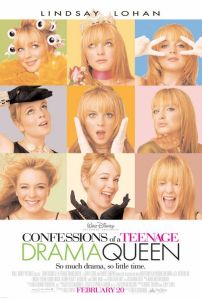 There was a glut of teen-oriented princess fantasy films in 2004 but none seemed as artificial, as simplistic, as transparent, and as dull as Confessions of a Teenage Drama Queen. Lindsey Lohan played Lola, a flamboyant new girl at school trying to fit in and find her way. This Disney confection aggressively spoon feeds its life lessons. You can successfully guess the entire plot of this trifle from the first second on. Confessions of a Teenage Drama Queen has a prolonged musical climax that’s a shameless ploy to set up Lohan as a pop singer and ensnare preteens into buying the soundtrack. When you get down to it and count the life lessons, simplicity, costume changes, and musical numbers, Confessions of a Teenage Drama Queen isn’t a movie, it’s an awards show patting itself on the back.
Nate’s Grade: C-


 nathanzoebl
You must be logged in to post a comment.