Blog Archives
The Phoenician Scheme (2025)
 It’s so nice to connect with a Wes Anderson movie again. I’ve been mostly a fan from the beginning but his career has as many ups as downs for me, often getting lost in his distinct dollhouse style of artifice and losing the sense of wounded humanity that marks his best movies. I haven’t truly loved a Wes Anderson movie since 2014’s The Grand Budapest Hotel, which I consider one of his very best. It’s been a long ten years of feeling indifferent or distant to that signature Anderson twee whimsy. I took my wife to see 2021’s The French Dispatch in the theater, and this was her first Anderson movie, and it also happened to be his worst movie, plus with Timothee Chalamet, an actor she isn’t fond of. I feel like I ruined her impression of this indie auteur and the question over his enduring popularity. 2023’s Asteroid City had some interesting ideas and dramatic potential, but its multiple framing devices and layers of obfuscation smothered what I could have enjoyed about its drama buried underneath. It is with that accruing disappointment that I began to question whether new Wes Anderson movies just weren’t for me, and that’s why I find The Phoenician Scheme a welcomed return to form that makes me relieved. The idiosyncratic tactician that is Anderson can still make a movie that engages me on different levels, including an emotional one, which I’ve been missing for so long from his recent output.
So I’m going to do something a little different with this review. I’m going to specify and articulate why this movie works for me, namely why it resonates and succeeds where his other movies of late have not. I suppose you could argue every film critique is charged with explaining the nuts and bolts of an opinion, but I’m going to really try and crack open why The Phoenician Scheme is a better movie overall.
 1) Emotional investment. Primarily Anderson is known for his heavily mannered, expertly curated style, which is why he seems to be the go-to pastiche for A.I. film juxtaposition experiments (“What if Wes Anderson directed Star Wars?” etc.). Many of Anderson’s movies are populated with hurt people trying to reconnect, a subject that has great emotional appeal. However, if you cannot connect with the characters or their dynamic or the relationship stakes, then it can feel like an afterthought to all that fancy production design and camera placement. With The Phoenician Scheme, the movie is an adventure film but it’s really about a father (Benicio del Toro as Zsa-Zsa Korda) trying to reconnect with his estranged adult daughter (Mia Threapleton as Sister Liesel). The father is a billionaire robber baron set in a vaguely mid 19-century setting. The daughter is a newly enshrined nun who believes that her father had her mother killed. Right away, we have very different perspectives and exciting conflict between them. He’s an arms dealer and willing to have key parts of his scheme involve a famine and slave labor. Her very involvement in the convent is itself a reaction to her father, who sent her away to live there at age five. She doesn’t want to be like him, who she views as on the wrong side of morality, but she also wants to get to know this man better and get her own answers. Her convent needs her to proceed to get a significant donation from her father. He wants to hire her on a trial basis to see if she’s fit to be his sole heir. They’re stuck together on an adventure that forces them closer, and the ensuing relationship that begins to build, with old hurts melting away to new revelations and new aches of yearning, comes across as very involving and emotionally rewarding. I was actually quite taken by the father-daughter relationship and their bickering, which organically gives way to better understanding and personal growth from both parties. They make each other a little better than they could be, and they recognize that despite their differences and hurt, they do genuinely care about the other. Korda is such an unflappable dilettante and yet the very notion that his daughter thinks he might have killed her mother from rumors deeply upsets him. The rest of the movie is essentially both characters directly and indirectly trying to prove themself to the other and also acknowledge and accept the other person. The core of this movie works because the core relationship is given serious and deliberate development to be meaningful. It’s about a broken family recognizing their connection to one another and desire to be connected.
2) The vignettes do add up. The folly of The French Dispatch was that it was a collection of short films, meaning that every twenty-minutes or so it felt like having to start over again with character introductions and relationship development. It didn’t feel like it added up to much. With The Phoenician Scheme, the film is structured around the different investors that Korda has to convince to cover a higher percentage of a budget shortfall for the big plan. It might sound pretty lackluster on paper but it becomes a larger goal that each segment builds to, and each new investor and setting allows Anderson to explore a new aspect of his characters. One situation involves a literal game of basketball and another involves taking a bullet to save an investor. Each situation allows us to change things up without losing the momentum of building toward that larger goal, as well as continuing to build the progression of the character relationships. With a vignette movie, each segment is a beginning, middle, and end that starts over with the next. With this, we have those mini stories with each new investor, but the whole is still advancing. It allows Anderson to explore a variety of comedy and story options while still keeping his attention to the bigger picture, thus earning our continued investment and more payoffs.
 3) This is still a very funny movie. That droll yet whimsical tone we expect from Wes Anderson is very present, and I was smiling and laughing throughout. I particularly loved a running joke where Korda offers each new guest a hand grenade like a welcome present. Korda also has repeated assassination attempts, which is the impetus for him reaching out to his daughter because he knows he won’t outlive every assassination attempt. However, in the meantime, each new assassination attempt is presented as another predictable annoyance, and I enjoyed that with every one Korda admits, “I think that guy used to work for me.” The basketball game of horse is wonderfully absurd and dryly serious at the same time, elevated by Bryan Cranston’s considerable commitment to the bit. Another great source of comedy is Michael Cera as the third significant character to the adventure, Bjorn, an assistant to Korda and also an entomologist. He’s such a delightful nonplussed addition to the trio, providing an outsider perspective to the family drama and reminding us how not normal everything is. I heartily enjoyed how his nerdy passion for bugs keeps inserting itself in all sorts of unexpected situations. The excesses of Korba’s lifestyle, and his seeming history of amorality, allows for just about anything to be possible or referenced, opening the comedy even further into surreal asides still tethered to characterization.
4) The added religious elements provide a deeper introspection for the characters and the viewer. Every time Korba has a near-death experience from his latest assassination attempt, we have a black and white sequence of Korba interacting with the afterlife. In one sequence he’s being judged by St. Peter, then God, then his own deceased wives. Each opportunity with the afterlife is a reminder for Korba about his sins and mistakes and a motivator to do better. The stylized realm is mysterious without being overt in its directions, allowing Korba to stumble around looking for guidance, like when God is annoyed that He isn’t recognized as the Big Guy. I was amused by these little interludes but they also act like a moral intervention for our main character, and his growing interest is a sign that his daughter’s influence is affecting him. It adds a depth to the character as well as a weightier sense of celestial consequences for a life of misdeeds, and it helps to better realism the character’s arc as well as set him up for change. It allows an introspection over legacy. These are also the segments you’ll get the most blink-and-miss-them cameos, like Bill Murray, Willem Dafoe, Charlotte Gainsbourg, and F. Murray Abraham.
 5) Smaller ensemble to devote characterization. Everyone wants to work with Anderson, and he keeps an impressive list of actors who continuously reappear, even if it’s only for seconds, anything to just be back into the ornate world of a Wes Anderson fantasy. His last few films have been stuffed with characters but there wasn’t enough for everyone to do (go ahead, try and remember what Steve Carrell did in Asteroid City). The narrative gets fractured trying to provide enough moments and screen time for all these distaff characters. A larger cast is not inherently a doomed prospect, but it does mean more attention and development needs to be made, and with less time, to ensure those characters are meaningful and well developed. The French Dispatch and Asteroid City couldn’t do that for me. This time Anderson condenses his important characters down to a manageable trio. We have other supporting players but they typically come and go through the different vignettes, each getting their turn with the main players. This keeps the focus on the winning character dynamic of the father-daughter buddy comedy, and with Bjorn bumbling along and finding himself becoming more fond of Liesel. There are some fun twists and turns with the three characters but no matter the external obstacles or silliness, the emphasis remains on these three and their relationships. It all works so much better.
6) The acting by the Anderson newcomers is greatly enjoyable. It’s shocking that this is the first time Michael Cera (Scott Pilgrim Takes Off) has been in a Wes Anderson movie because his comic sensibilities are a natural fit for this universe. The direction his character goes lets Cera have even more ways to have fun, and each new turn made me love his character and the performance even more. I also love that, despite all the revelations, at his core, Bjorn really is a nerd who loves talking about insects. The real discovery is Threapleton (The Buccaneers), though maybe we shouldn’t have been so surprised considering she is the adult daughter of Kate Winslet (do you feel old now too?). She holds her own with her many scenes with del Toro and is able to hone her withering glare into a considerable weapon of disapproval. Watching her character blossom and test her boundaries, like when she says she’s only drank communion wine and is introduced to a new form of alcohol at every jaunt that she feels compelled to try. It’s a character that is slowly recognizing more about herself and the possibilities of this life.
 The Phoenician Scheme isn’t a deviation from the tried-and-true Wes Anderson formula; it’s a better calibration of what makes that style and formula continue to resonate for so many fans. I’m apparently in a small minority with my esteem for this picture, and that’s fine by me. I’ve outlined through this review the reasons why it was a much more enjoyable and worthwhile entertainment for me, and if you found yourself nodding along, then perhaps it could work its query magic on you as well. It’s nice to be charmed again by a Wes Anderson movie but to also feel something rather than distant appreciation for the carefully composed sets and photography. I actually cared about these characters and their journey. The end results mattered to me. Their plights mattered. If you’re like me and falling from the Wes Anderson bandwagon, then perhaps The Phoenician Scheme might pull you back aboard.
Nate’s Grade: A-
Share this:

Argylle (2024)
 Knocked around by critics and tagged as the latest excuse for the Death of Filmmaking thanks to its overwhelming budget and general ironic indifference, Argylle is a goofy spy comedy that, while lesser, is an easy watch and would earn regular rotation as a TNT afternoon giant. It’s not trying to be more than a good time, and while its quippy attitude can feel forced and approaching irony overload, it’s also the kind of movie that entertains as breezy escapism. It’s fun. Enough.
Elly Conway (Bryce Dallas Howard) is a best-selling spy novelist with a dashing super spy Lothario lead character by the name of Argylle (Henry Cavill in the worst haircut of his career). She’s journeying with her pet cat, her closest relationship, when she’s stopped on a train by Aidan Wilde (Sam Rockwell). He tells her that he’s a real spy and that everything she’s written in her five novels has come true, and different covert agencies are taking notice. She’s got teams of assassins and spies coming for her, while Aidan tries his best to protect her and get her to remember key details that could save the world from nefarious forces.
 Argylle is too breezy and too predictable by half. It’s a spy thriller that I’m positive many will be able to predict the big twists miles before they occur. Why do all these spies want Elly Conway, and how could she know about the intricate world of international spy craft? The answer is exactly what you’d expect, if you’ve watched more than your share of twist-laden thrillers. Thankfully, director Matthew Vaughn (Kingsman, X-Men: First Class) and company dispatch with this central twist after an hour, providing more time to deal with the aftermath and build off of its story impact. Ah, dear reader, but there’s going to be another twist once you know the first, and again, if you can predict the first, you’re likely to predict the second, because stories about universally good people are often dull, and movies have provided a new medical maxim that characters use maladies to re-evaluate their prior life and choose to be better (oh how nimbly I’m dancing around these spoilers). What makes these predictions forgivable is that the movie seems to know you will anticipate them and has more to offer.
That’s because in this silly universe, very little seems to matter besides getting to the next scene. It’s not a satirical send-up of the genre like Vaughn’s Kingsman movies. Instead, it’s more of a generic distillation of spy thrillers, complete with bad guys walking through mission control banks of computers and barking impotent orders. The only added cleverness that sets the Argylle world apart is Elly’s writing, the fictional version of this far more bland spy universe. In the book parts, Vaughn takes note to raise the style as well as the tongue-in-cheek comedy. It’s supposed to be tone-deaf and dumb and ridiculous, because it’s the big screen version of bad genre writing. You can have fun with that, with characters so serious to the point of parody, with nonsensical technology and near escapes. But when you try to do the same thing in the so-called real world, then the movie starts to eradicate any sense of a baseline for credulity. I did like the practical advice of Aidan on how to crush the skulls of your downed enemy (“Just imagine you’re dancing The Twist.. twist and smash”). By the end of Argylle, Elly and Aidan can do just about anything because they’re practically superheroes. The entertainment of the fish-out-of-water aspect of Elly’s story is short-lived and unfulfilled because the movie becomes more of a tale of automatic self-actualization rather than growth.
 The direction feels rather drab at points, and many locations and scenes have a general sense of missing… something. Just watch any set and it appears so drastically empty that I questioned whether they cut back on the set dressers and props. Empty dance clubs. Empty streets. Empty hallways. Everything is too pristine, too sleek, and too empty and green screened (might be a result of COVID filmmaking). This carries over into the disappointing visual aesthetic, as Vaughn’s signature style feels dampened by the pesky CGI additions of many sequences, adding to the unreality rather than building out this minimalist world. If there had been an extra EXTRA twist that everything was also a story-within-a-spy-story, I would not have been that shocked, and it honestly would have explained the underwritten and underwhelming world of clandestine spy-making.
Vaughn errs in the core creative decision of having his main character mix reality and fantasy, not through the idea itself, which could be ripe, but through its confusing execution and editing. Having Elly hallucinate Agent Argylle in place of a real secret agent is fine, as we can contrast from her idealized version of a super spy, her James Bond, versus the actual grunts struggling to win the day. There are a couple problems with this execution though and firstly that the “reality” isn’t that far removed from the fantasy. This is still a world where Rockwell’s spy is able to commit amazing acts of dexterity and martial arts and balletic violence flying around rooms, but I guess he falls down more. The difference isn’t that fantastic when it’s already a hyper-stylized action world. The bigger issue is just how confusing it all plays out visually because we’re seeing Elly’s perspective and in rapid blinks Cavill will turn into Rockwell and vice versa. It makes for a jarring sequence that doesn’t fully capitalize on the comic potential while keeping the audience distant from fully engaging with the sheer simple pleasures of watching a fun fight. This happens throughout the first half of the movie and severely hampers the action scenes from being accessible. I think we needed a longer duration for this to work. We see Elly’s version for a period of time, and then we cut to the real world where Aidan is bouncing into walls, falling down, and flailing. By continuously jumping back and forth, not just in the scenes but in the same shots, Vaughn has made his movie harder to watch and harder to comprehend, and with a loud soundtrack blaring.
 There is one sequence of great filmmaking for Vaughn, but to explain such will require some spoilers, so beware, dear reader. There are three instances of the whirly-bird dance where a woman is lifted spread-eagle atop a man’s shoulders who then spins her around. The first time, it’s Agent Argylle and Legrange, played by Dua Lipa (Barbie) dripping with sexual energy. The second time is when Elly and Aidan are on a mission and he lifts her up, to her amusement and flirtation. She’s living out her fantasy version, with Rockwell standing in for Cavill and Howard standing in for Dua Lipa. We’ve gone from these stunningly attractive human specimens to people who look more ordinary, including a fuller figured woman engaging in the same sexy shenanigans as the conventional blonde bombshell. She can be her dream version of herself. Finally, the third occurrence happens during a climactic showdown where Elly and Aidan team up against an onslaught of faceless armed henchmen. With the aid of colorful smoke canisters, their offensive surge plays out like a couples’ dance routine, including holding one another for high kicks to incendiary devices. It’s all set to Leona Lewis’ cover of Snow Patrol’s “Run,” and as the music swells, it’s easy to get swept up too. Even the gunshots are set to the beats of the song, culminating in the final whirly-bird dance, except it’s not Elly being lifted, this time it’s Aidan. See, she’s not the Bond girl bombshell, she’s James Bond. It’s a silly moment but with the added setup, thematic underpinnings, and Vaughn’s virtuoso stylistic seizing of the moment, it plays out as empowerment and an expression of love. For real.
I can understand being generally disappointed with Argylle. It looks and feels like it’s been built on the parts of other better spy franchises and desperately lacks the charisma and personality of Vaughn’s Kingsman movies, themselves giddy and perverse satires. I wasn’t the biggest fan of 2017’s The Golden Circle sequel, but it’s got oodles of style to spare compared with Argylle. I wish Vaughn would push himself beyond the orbit of making cheeky, winky spy action comedies, the same genre he’s been playing in since 2015 and now for four movies. While the original Kingsman was a breath of fresh air with fun characters, a snarky attitude, and slick style, Argylle is all snark and minimal style. There’s so much comedy that feels like it should be funnier, from the travails of Elly’s CGI-enchanced cat to the floundering hand-to-hand combat. When recognizable names start showing up playing forgettable genre stock types, and then they start dabbling in accents as other genre stock types, it feels like the whole exercise is a miss. However, the central buddy relationship between Rockwell and Howard is where the movie works, and fortunately that’s the element that has the most foundational effort. This is a movie that, in the future, if it was on TV during a lazy day, you’d sit down and watch the rest and mostly be happy about it. Argylle isn’t anything new or fresh but it’s buoyed by its stars, and not the magazine cover models but its real stars, Rockwell and Howard. In their hands, even lesser spy comedies can still be fairly worthwhile escapist entertainment. Still, I must deduct some points for the movie missing a perfectly setup opportunity to have Henry Cavill and John Cena kiss onscreen at the end. It was right there, folks, and we all deserved it.
Nate’s Grade: C+
Share this:

Asteroid City (2023)
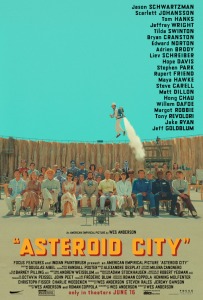 It’s not a good sign that a week after watching a movie I was racking my brain to try and remember what I had watched, and it’s even worse when it’s a movie by Wes Anderson, a filmmaker with such a distinct sense of intricate style it’s now become a go-to A.I. test for untalented people. Asteroid City has the makings of an appealing comic escapade set in a Southwest small town known for its tiny asteroid, and once aliens make their presence known, the entire town and its tourists and wanderers and scientists are quarantined. The problem comes almost immediately, as the movie is presented through several added layers of obfuscating framing devices. The story itself is a play, and we’re watching a movie version, but then also the play of the movie, and the behind the scenes of its now-deceased playwright toiling with his authorial messages and stubborn actors, and it feels like two different movies at odds with one another. The Asteroid City sequence is the more engaging, with some sweet storylines like Jason Schwartzman as a widower processing loss with his family, including his father-in-law (Tom Hanks) who never liked him, while beginning to find a possible romantic kinship with a struggling actress and single mom (Scarlett Johansson). I enjoyed weird little asides about the history of this little town, like a vending machine for land ownership, and s science fair with brainy whiz kids finding their own comradery. There’s even a nice moment in the meta-textual framing where the Schwartzman actor recites an exorcised dialogue scene with the actress who played his deceased wife in the play. It’s elegantly heartfelt. However, the added layers don’t really add extra insight or intrigue but serve as muddy trappings, making meaning less likely rather than more. It feels like Anderson didn’t have enough material with the central story so he added on the meta to make up the difference. There are too many moving pieces and too many characters, and versions of characters, here to settle into something grander. The whimsy and visual style of Anderson is still evident throughout every highly-crafted and pristine arrangement in the movie, so if you’re an Anderson diehard, he still has his charms. This is two Anderson movies in a row that felt disorganized, distracted, and chiefly under-developed, and I’m starting to worry that the form has taken over the function as storyteller.
Nate’s Grade: C+
Share this:

Jerry & Marge Go Large (2022)
 It’s the lowest of low stakes movie but a simple story with agreeable actors and a sweet enough core can be enough to fulfill 90 minutes of entertainment. Jerry & Marge Go Large is inspired on a true story of a retired couple who figured out a flaw in their local lottery and brought in the whole town to make an eventual windfall of over $27 million large. The draw of the movie is its cast, including Bryan Cranston and Annette Benning as our titular couple, and watching them generally make one another smile. This would not be out of place on a Hallmark Channel rotation. It’s simple, it’s sweet, and the town is full of aw-shucks nice people who all band together without anything in the way of larger conflict or rivalry or disagreement. However, the movie is also so slight to the point that it feels like an extended news magazine piece. There’s no real tension until a smug Harvard math whiz discovers the same lottery flaw tries to apply pressure to good old Jerry to get out, a storyline that feels like a fictional inclusion to add some degree of opposition to what is otherwise a story about a smart guy discovering a loophole and winning big for his whole town. It’s an interesting story but the real emphasis could have been as a character study for Jerry, a man who studies numbers for hidden insights but has difficulty connecting with people including his own adult son. We get glimpses of this as Cranston monologues or looks askance, but all these personality conflicts are resolved so tidy to the point that it feels offhand. The details of the true story are interesting enough, and everyone is coasting on such a mild and mellow vibe, that it’s easy to just relax and find comfort with the film’s small comforts.
Nate’s Grade: B-
Share this:

The One and Only Ivan (2020)
 Disney’s latest talking animal movie is based on a real story. Not the talking animals part, more a gorilla (voiced by Sam Rockwell) who lived in a strip mall as a circus performer and then became a painter and the notoriety of his art built a movement to free him. The One and Only Ivan is a good-natured family film with affirming lessons and a conservationist advocacy. Kids may laugh at some of the silly animals, or they might cry as the maternal elephant (Angelina Jolie) entrusts onto Ivan the promise to break the newest baby elephant free of bondage. Ivan was raised by Mack (Bryan Cranston) who runs the strip mall circus, though times are tough and he may have lost sight of his priorities with his animals. Enter cute kid, cute baby elephant, cute and scrappy dog, and Ivan’s passion for the arts. The one element that makes this movie different, Ivan’s ability to paint his emotions and reflections, is barely included and that’s a real shame. Ivan becomes like the spider from Charlotte’s Web and uses his position to advocate for another animal, using the subsequent attention to spare this small creature. He paints once and the movie zips to its resolution. The thrust of the story is Ivan addressing his own personal tragedy and letting others in, risking his own safety and ego to protect those vulnerable. The CGI special effects are suitable if unremarkable, landing in that middle zone of meeting expectations of semi-reality but not exceeding them. I would have preferred a documentary going into the actual events of the real Ivan, getting interviews from the people who were there and mattered, their own insights and experiences, and really dwelling more on what the idea of artistic expression means for an ape and what it might mean concerning our connections to these creatures. I think there’s a compelling, enlightening, and heartfelt documentary to be had with the subject matter. The live-action talking-animal movie, however, is just more of the same inoffensive family film treacle and clearly not the one and only.
Nate’s Grade: C+
Share this:

Isle of Dogs (2018)
 The quirky imagination of Wes Anderson and his stylized, symmetrical, painterly approach to filmmaking has always seemed like a natural fit for the world of animation. Stop-motion has a wonderfully tactile and woebegone appreciation that furthermore seems like a natural fit, and 2009’s Fantastic Mr. Fox is one of Anderson’s best and most enjoyable films. If it were not for the considerable time it takes to make animated films, I’d be happy if Anderson stayed in this realm. Isle of Dogs is about a future where dogs are blamed for an infectious disease and as a result are banned and quarantined to a garbage island off the coast of Japan. One little boy dares to venture to this island to find his beloved missing dog. From there, he’s escorted by a pack of dogs, led by Chief (voiced by Bryan Cranston), across dangerous tracks of the island while avoiding the boy’s adopted family, the mayor of Nagasaki. This is a whimsical, beguiling, detail-rich world to absorb, but it also has splashes of unexpected darkness and violence to jolt (though the dark turns are consistently nullified). It’s a highly entertaining movie although the characters and story are rather thin. The different dogs are kept as stock roles, and the main boy, Atari, is pretty much a cipher for dog owners. However, the film can tap into an elemental emotional response when discussing the relationship between man and dog. If you’re a dog person, it’s hard not to feel a twinge of emotions when a dog is given a loving owner and sense of family. There is one element of the movie that feels notably off, and that’s the fact that the dogs speak English and the local Japanese characters speak their native tongue but without the aid of subtitles. it doesn’t exactly feel like Anderson is doing this as a source of humor, but I can’t figure out a good alternative reason for it. I’m sure Cranston’s distinctive growl would have sounded just as good speaking Japanese. Regardless, Isle of Dogs is a mid-pack Wes Anderson fantasia of inventive imagination and well worth getting lost within.
Nate’s Grade: B
Share this:

The Disaster Artist (2017)
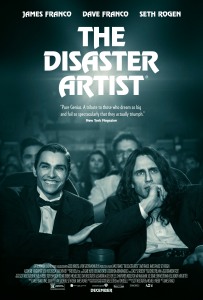 As an avid devotee of The Room, and a connoisseur of crappy cinema, I have been looking forward to this movie for literal years. I’ve been fascinated by Tommy Wiseau’s movie ever since I first saw it in 2009, and I’ve since watched it over 40 times. In my review for the movie, I said if I had to pick only five DVDs to take with me on a desert island, I might just select five copies of The Room. It’s that rare form of bad movie that is a thousand brushstrokes of bad, where you can discover something new with every viewing, and you desperately want to have your friends discover this miracle of filmmaking. It’s become a modern-day cult classic and theaters have been playing rowdy spoon-tossing midnight screenings of Wiseau’s film since its initial 2003 release (humble brag: I’m responsible for it playing on a monthly basis in Columbus, Ohio since 2009, the only regular public screening in all of Ohio). From its successful re-branding as a “quirky new black comedy,” fans had burning questions that needed answering, and that’s where Room actor Greg Sestero co-wrote a behind-the-scenes book, The Disaster Artist. One fan was multi-hyphenate James Franco, who purchased the adaptation rights, attached himself as director and star, transforming into Wiseau and tapping his younger brother to play Sestero. Who would have guessed all those years ago that these beleaguered actors would soon have Hollywood celebrities portraying their astonishment? The Disaster Artist might be one of the best films of the year by chronicling one of the worst films ever made.
Greg Sestero (Dave Franco) is a struggling actor in San Francisco when he meets the Teutonic acting force that is Tommy Wiseau (James Franco). Tommy doesn’t behave like anyone else, for good or ill, and it inspires Greg to become friends with him. Tommy says he’s the same age as Greg, though is clearly double, and that he’s from New Orleans, though he definitely sounds more vaguely Eastern European. Tommy also has a lot of money and elects to move to L.A. to make it in the film industry, and he wants his best friend Greg to join him. Greg finds some beginning levels of success but Tommy is rejected at every turn, determined as too weird and off-putting by casting directors. He doesn’t want to play a villain; he sees himself as the hero. Tommy won’t wait for Hollywood and decides to make his own movie. He’ll write it, direct it, and be the star, and Greg can be his onscreen best friend. The Room, Wiseau’s magnum opus, was a stunning document of filmmaking ineptitude that had to be seen to be believed, and many of the people involved were certain it would never be seen at all.
 I was worried that the film version would simply be many painstaking recreations of scenes from The Room and watching characters snicker. Thankfully, the recreations are kept to a minimum and The Disaster Artist personalizes the story in the friendship between Tommy and Greg. If anyone has read the book, you’ll know there is a wealth of juicy anecdotes about the bizarre onset antics and about the human enigma himself, Wiseau. The film could have been three hours long and just thoroughly focused on all of the crazier aspects of the behind-the-scenes and I would have been satisfied. However, the ace screenwriters, Scott Neustadter and Michael H. Weber (The Fault in Our Stars), have elided all of those crazy details into a story about a personal relationship. The most memorable tidbits are still there, like the 60 plus takes needed for Tommy to say one line, but the sharper focus allows the film to resonate as something where you can genuinely feel invested in these people as characters rather than easily mocked send-ups. Greg feels greatly put upon by Tommy but he admires his fearlessness, and deeper down he feels indebted to Tommy for getting him onto the road to his dream. Thanks to Tommy, Greg was able to move to L.A., find a place, become an actor with representation, and book commercial spots. Tommy is also an anchor weighing him down. Greg will routinely have to place his rising career opportunities at the mercy of Tommy’s capricious sense of loyalty. It’s a movie that explores the value of friendship and the lengths people will go.
This is also an extremely funny movie. Part of the allure of The Room is how it feels like a movie made by space aliens who didn’t quite understand human interactions. The head-scratching choices and dropped subplots and redundant, nonsensical plotting are all given examination, allowing the audience to be in on the joke even if they have never seen Wiseau’s actual movie. This is a film completely accessible to people who have never seen The Room; however, if you have seen The Room, this movie is going to be 100 times more fascinating and enjoyable. The sheer bafflement of what transpired is enough to keep you chuckling from start to finish. The Disaster Artist is wonderful fun, and the actors involved are here because they love Wiseau’s movie. The celebrity cameos are another aspect that helps to add to the film’s sense of frivolity, spotting familiar faces in roles such as Casting Agent #2 (Casey Wilson), Actor Friend (Jerrod Carmichael) and Hollywood Producer (Judd Apatow). Watching everyone have a good time can be rather infectious, but The Disaster Artist succeeds beyond the good vibes of its cast.
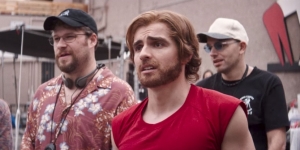 Rather than lap up the easy, mean-spirited yuks, The Disaster Artist goes further, following a similar point of view with 1994’s terrific Ed Wood by portraying these men as deeply incompetent filmmakers but also as sincere dreamers. Wiseau is clearly overwhelmed by the demands of being, let’s be generous, a traditional filmmaker, but he is also a person who set off to achieve a dream of his own. He was denied other avenues so he took it upon himself, and a mysterious influx of money he doesn’t like to discuss, and this self-made-movie star built a vehicle to shine brightest. Sure, ego is definitely a factor, though one could argue it plays some degree in all creative expression needing an audience. Wiseau didn’t let a little thing like ignorance of storytelling, film production, or how to handle cast and crew as human beings with needs stop him from plowing ahead to prove his doubters wrong. The filmmakers definitely find a certain nobility in this artistic tenacity, as did Tim Burton with Ed Wood. It’s natural to pull for the underdog, even an underdog that is so naïve it might be worrisome. You can laugh freely at Wiseau, and you will, but you may also start to admire his gumption. As the opening barrage of celebrity interviews posits, you could not make something like The Room even if you were the greatest filmmaker on the planet. It is nothing short of an accidental masterpiece. It is a movie that has entertained millions of people and one they feel compelled to share with friends and family, compelled to bring others into this strange, beguiling cult of fandom. While Wiseau may not have made a “good movie,” he has made one for the ages.
James Franco (11.23.63) deserves an Oscar nomination for playing Tommy Wiseau. I’m serious. He is channeling some Val-Kilmer-as-Jim-Morrison lightning when it comes to simply inhabiting the spirit of another person onscreen. It’s crazy that a movie so bad could inspire another movie that might legitimately compete for legitimate awards. James Franco is entrancing with his performance as he fully channels Wiseau, an almost mythic figure that we have never seen the likes of before. The accent is pitch perfect and impossible not to imitate after leaving the theater. Wiseau can be manipulative and cruel but he can also be generous and selfless. He takes great ownership over his friendship with Greg, so he believes all of his actions are to help their unique bond, even when he’s pushing that same person away. He so desperately wants acceptance but seems incapable of achieving it on anybody’s terms but his own. Wiseau is a fascinating film figure, and the movie does a fine job of neither overly romanticizing him nor vilifying him. Even despite his missteps, you may find yourself feeling sympathy for Wiseau, and that’s a major credit to the screenwriters and James Franco’s magnetic performance.
 The other actors, a.k.a. everyone in Franco’s sphere of friends, are committed, enjoyable, and plugged into why exactly audiences have grown to love The Room for years. Dave Franco (Now You See Me 2) is effectively the perspective of the audience, deliberating how much of Tommy to put up with and when to walk away. Seth Rogen (Sausage Party) gets the most sustained comedic run as a script supervisor who is bewildered by Wsieau’s methods. Alison Brie (Netflix’s GLOW) is our chief source of confused expressions as Greg’s girlfriend. Ari Graynor (I’m Dying Up Here) wrings great laughs from her awkwardness with Wiseau as filmmaker and onscreen anatomically-challenged lover. Megan Mullally (Will & Grace) is Greg’s disapproving mother who worries about what kind of relationship her son has with a much older man. Zac Efron (Baywatch) is hilariously excitable as the inexplicable drug dealer, Chris R. Speaking of excitable, Jason Manzoukas (The House) and Hannibal Buress (Spider-Man: Homecoming) are a great team as the film equipment rental guys who can’t believe their luck with Wiseau. Even two-time Oscar nominee Jacki Weaver (Silver Linings Playbook) gets some nice moments as an older actress who justifies in a heartfelt message why exactly everybody on set would go out of their way to work on such an awful movie.
If you’re a fan of The Room, then you’ll absolutely adore The Disaster Artist, and if you’ve never seen The Room, you’ll still find plenty of entertainment in Franco’s film. Wiseau’s 2003 film has to be experienced to be fully believed. The film-about-his-film provides the added extension of a coterie of characters to share in our bemusement and bafflement, providing a chorus of commentary. However, the movie isn’t all jokes at Wiseau’s expense. It evolves into a love letter for the power of art to bring distaff people together with a shared dream. Like Ed Wood, Wiseau might be incompetent by traditional measures of filmmaking but he ignored the naysayers and followed his artistic vision. Under Franco’s direction, he’s a modern-day Don Quixote, or just a really weird guy who lucked into a miraculous alchemy that gave birth to a cult classic. At the end of the movie, Tommy thinks he’s a failure. Greg reminds him to listen to the audience reaction. They are hooting, hollering, applauding, and having the time of their lives. He’s responsible for that and he should be proud of his accomplishment. I unabashedly love The Room. I introduce the theatrical screenings in Columbus. I loved The Disaster Artist book. This movie is everything I was hoping for, and it just so happens to be one of the funniest, most genuinely pleasurable films of the year.
Nate’s Grade: A-
Share this:

Power Rangers (2017)
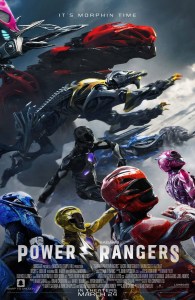 If you were a 90s kid, you know about Power Rangers. Who would have known that a TV show that combined Japanese monster fighting footage with cheesy teen drama and slapstick would become a pop phenom and nostalgic touchstone for a generation of kids? As Hollywood is want to do with anything nostalgic, it was only a matter of time before the series got its own mighty morphin’ big screen revision.
In the coastal town of Angel Grove, five teenagers meet in detention and are destined for monster-smashing greatness. Jason (Dacre Montogmery) is a star football player and natural leader. Billy (RJ Cyler) is a nerdy whiz kid on the spectrum. Kimberly (Naomi Scott) is a former cheerleader who has been abandoned by her friends. Zack (Ludi Lin) and Trini (Becky G) are barely at school, both of them tracking their loner paths. One day the fivesome come across strange glowing rocks that imbue them with powers like super strength and agility. “Are we like Spider-Man or Iron Man?” Billy asks, to help orient a superhero savvy audience. They’re neither, of course, for they are the Power Rangers, an intergalactic warrior organization meant to protect worlds from threats. Zordon (Bryan Crantson) used to be a ranger millions of years ago and is now a floating head. He assembles the teens because of the looming threat of Rita Repulsa (Elizabeth Banks), a former ranger tuned bad and bent on your standard world destruction. The angst-ridden, misunderstood teens must come together to stop Rita and save the Earth.
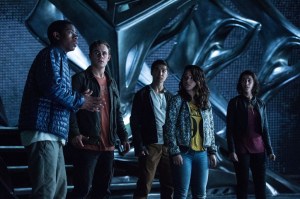 What tone does one adopt for a $100 million dollar reboot of a popular decades-spanning franchise intended for children that involves such names as Zords, Rita Repulsa, Zordon, Goldar, and the catch-phrase, “It’s morphin’ time”? Apparently the answer is a cross between Chronicle and Iron Man. For a show that even the most ardent fans would say was anything but serious, we have a fairly serious take on the material, at least serious enough when it wants to be. The filmmakers take a somewhat grounded approach to the sillier elements and that means a lot of palpable Breakfast Club-style teen angst and alienation, and it works. I was genuinely surprised that the second act’s focus on the teamwork and training of the five rangers was my favorite part of the film. It is an origin movie so expect a learning curve as the characters adjust to mastering their powers and abilities and the alien technology. You can’t just throw out a movie about space ninja cops that ride inside giant robot dinosaurs and battle monsters at the behest of a giant alien floating head without some setup. The training sessions cover a lot of ground but in fun ways that also build sequentially. The ascension of skills and confidence helps the characters open up and bond, and while some moments can be clunky (are any of their parents concerned where these kids go for seeming days on end?) it’s pleasant and satisfying to watch the outsiders finally find an understanding community of peers. The teen stars leave a positive impression, most notably Cyler (Earl of Me, Earl, and the Dying Girl) and Scott (The 33), who definitely seems poised for bigger things.
The characters have enough relatable conflicts, drama, and insecurities to produce just enough shades of characterization to make them interesting and worth rooting for. Those conflicts are also somewhat surprisingly adult and modern, often in clash with their parents’ requests, something that might lead to some weird conversations in the car if parents bring their young kids. Jason is fighting against his popular image, Billy has a hard time fitting in and making friends because of being autistic, and Zack is the caregiver to his dying mother, and these guys are in a lesser tier of adult conflicts, so think about that. Trini is stifling against her parents expectations and labels, notably implying her own sexual orientation that seems to be tearing her up on the inside, something that she cannot even fully articulate at this time. Maybe the movie is trying to have it both ways by not referencing the word “gay” but it at least felt like a more valid inclusion of conflict and diversity than the recent live-action Beauty and the Beast. Lastly, Kimberly used to be the chief mean girl and the reason why she was jettisoned by the popular set is because she was cyber bullying a would-be friend. She spread a private nude picture her friend sent her boyfriend and shared it throughout school (Jason tries to helpfully mitigate this by saying, “Thousands of pictures are sent in school,” which begs the question about Angel Grove’s underreported sexting epidemic). The team dynamic and the characters opening up to one another were enjoyable enough that I didn’t mind the relative dearth of action for 90 minutes of the two-hour running time.
 It’s a backdoor superhero movie that finds some interesting dark twists on its source material. The original TV show sought, in the most 90s way, “teenagers with attitude,” but the would-be rangers were just sort of normal teenagers. The 2017 movie at least provides that attitude and edge in a way that doesn’t feel as generic as a kid riding a skateboard and drinking a Mountain Dew eight inches away from his face. The TV show was campy and colorful and relatively trifling, and the movie version attempts to put more danger and loss into the emotional stakes. Zordon is given a new back-story; no longer is he simply a disembodied mentor, now he has a scheming reason for the rangers to succeed. It’s a small thing but it opens up the character of a floating alien head, and I cannot believe I just wrote that sentence. The friendship between our core group of characters matters so that, in the end, when it looks like they might lose, it does feel like something is going to be lost. With that being said, this isn’t a reboot that’s all gloom and doom. The reality of waking up one day and having super powers is played to the hilt of teen wish fulfillment and it makes for a fun series of self-discovery moments. These are teenagers adjusting to their new powers (heavy-handed puberty metaphor?) and enjoying the new potential unleashed for them. Their fun is contagious as is their camaraderie.
In fact, the conclusion where the rangers do morph and don their armored suits and drive their robotic dinosaur Zords may be the weakest part of the movie. The ultimate payoff feels a bit lackluster and mechanical, as if it’s simply falling back on cataclysmic citywide destructive action because that’s what is expected in these kinds of movies. Every person should anticipate a giant monster on giant robot brawl to conclude the story as it concluded every one of the 830 episodes. It’s just not that interesting especially since the big bad Goldar is simply a big personality-free heavy that looks like he’s made from runny Velveeta cheese. Rita, as portrayed with screechy, kooky camp by Banks (Pitch Perfect 2), feels like she’s been transported from a different Rangers universe. She literally gobbles gold to summon her colossal champion. She didn’t feel like an effective antagonist, and that’s even before her wicked scheme correlated with shameless product placement. Rita, Goldar, and their overall evil scheme makes for a rather perfunctory conclusion that feels like a downturn from the earlier, better events. Director Dean Israelite (Project Almanac) has a directorial style I’ll dub “Michael Bay lite” considering how much his hyperkinetic, blue-tinted, light flared universe jibes with fellow Bay production disciple, Jonathan Liebesman (Teenage Mutant Ninja Turtles). His visual compositions can get excessively busy at the worst times, making it hard to fully engage in the onscreen action especially during the climax. There isn’t that much action until the final confrontation, and I think this unexpectedly works as an asset to a franchise-starter that functions as an origin tale. Akin to the elongated tease from 2014’s Godzilla, there is a sense of relief from watching the rangers in their full suits and fighting with full powers. However, it lacks more payoffs. The movie expects that delaying the final presentation of its heroes is good enough to arouse audience satisfaction, and it’s not.
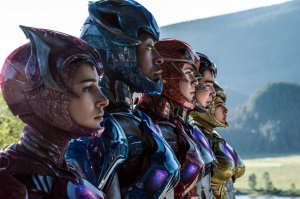 The revised, souped-up Power Rangers (nee Mighty Morphin’ Power Rangers) is a fitfully entertaining movie that works more often than it doesn’t. Fans of the TV show will probably be pleased with the big budget big screen heroics and the reverence shown, though older fans might feel a bit closed off from the teen-centric tone. The relatable angst and group camaraderie made for efficient characterization that helped make the rangers feel like people rather than suits of armor and superfluous gymnastics. I enjoyed the characters enough so that I didn’t miss the scattershot action and its slow motion stylistic indulgences. The special effects are fine and transparent its filmic influences, from Chronicle to Iron Man to even The Breakfast Club. It feels familiar but yet still different enough from the cheesy TV show, so it manages to justify itself. As far as my own history, I was just a bit too old once Power Rangers hit, so it was never my nostalgia. I found the new movie an acceptable origin tale that walks a delicate tone that allows serious moments to have weight and non-serious moments to be fun. If you’re a Power Rangers kid, I’m sure you’ll find enough to sate your demands. If you watched the trailer and thought it looked like something worthwhile, you might find enough to be suitably entertained, especially with well-calibrated expectations. If you’re anyone else, then I doubt there’s enough to necessitate your mighty morphin’ dollars.
Nate’s Grade: B-
Share this:

The Infiltrator (2016)
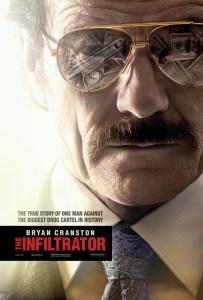 In the mid 1980s, Pablo Escobar and his cartel were responsible for billions of dollars worth of narcotics filtering into the United States. It’s the kind of work that can fill up Robert Mazur’s (Bryan Cranston) career. He works as a Florida Customs agent but his specialty is going undercover for his assignments. He’s called out of retirement with the promise of striking high in the ranks of Escobar’s ring of lieutenants. Mazur’s partner, Emir (John Leguizamo), uses an unreliable informant to start the new identity, and so Mazur poses as a money laundering expert who offers his sundry services to the Colombian cartel. After blurting out that he has a fiancé in lieu of accepting a prostitute’s services as a very 80s way of saying “thank you,” the agency must now provide him with a fake wife, played by rookie agent Kathy Ertz (Diane Kruger). The two have to rely upon one another in a world of criminals and murderers who would have no gutting them.
My main feeling once The Infiltrator had come to its natural conclusion was that everything about this movie should have been better. It’s a terrific premise as we follow the undercover travails of a man trying to stay one step ahead and keep his dual lives separated, invariably having them bleed into one another especially as danger escalates and his cover may be blown. Then you add an untrained partner and the conflict magnifies from there. Then you have Mazur work his way up the food chain to the major lieutenants of Pablo Escobar. This movie should be exploding with dramatic irony, weighty decisions, and magnificent suspense, but it’s really not. So why not?
 One reason is that the movie whiffs with its modest ambitions, namely in its shallow character study of Mazur and the lingering effects of pretending to be a very bad man. Going undercover has to be one of the most stressful jobs in law enforcement, and living two different lives has to have a noticeable psychological impact, eating away at our protagonist and affecting his relationships and sense of self. That doesn’t happen with The Infiltrator as the few glimpses we get of Mazur’s home life are mostly harmless check-ins. A red light is installed in his home to mean a secret special phone line. You would assume that some family situation has to draw out conflict from this scenario, maybe Mazur’s little girl answering the phone before he can reach it. Nothing of consequence happens with daddy’s special red light phone. The family, absent anything important to do but wait at home, becomes a drag on the narrative and doesn’t even fulfill what you would assume would be its primary service: contrast. In the world of The Infiltrator, sex, money, and drugs are rampant, but our protagonist is unaffected. He remains the same character from the beginning of the story to the end. We don’t really learn more about him other than he is skilled at going undercover. We don’t see any particular toll on him psychologically. We don’t feel the threat of what he’s going through because the movie doesn’t pretend it matters enough.
Going undercover with the Medellin Cartel should provide endless suspense scenarios. This movie should be rife with conflict, and yet it consistently finds deflating, coincidental outs to save its characters. As a good screenwriting rue of thumb, it’s acceptable to use coincidence to put your character into greater danger. It’s not a smart idea to use coincidence to save your character from danger. Example: in Donnie Brasco, a man approaches Johnny Depp’s character and clearly refers to him by his agency name, implying working together with the FBI. That’s a good use of coincidence. With The Infiltrator, Mazur’s secret recording in his briefcase is discovered by a mid-level cartel operative, for once it feels like Mazur is vulnerable. Then the movie quickly dispatches with this guy for a rash explanation and so he takes his secret to his grave. There’s another moment where Emir’s informant is about to squeal to some very bad people, with Emir in the room sweating bullets, and he too is wiped out before sharing his privileged information. The movie is filled with these frustrating solutions just when it seems like tensions is developed. The entire appeal of the undercover mob movie is the twists and turns to hide the real identity and make it out alive. I’m genuinely dumbfounded how much of this movie just skates by with little regard to drawing out effective tension.
I think I can crystallize just how poorly The Infiltrator handles its many threads of conflict with one great example. Kathy and Robert Mazur are fake getting married according o their cover stories, so what else does a fake bride-to-be do but seek out her fake husband’s tuxedo that he wore decades prior upon his real wedding to his real wife? Why does Robert need to wear the exact same tuxedo? Can his office not afford to rent a new one that likely more accurately represents his fitting size? Even if this cost-cutting measure was plausible, why must Kathy be the one to pick it up, and from Mrs. Mazur? It’s contrived and forced conflict to shove these two characters together, so that Mrs. Mazur can ask pointedly, “Are you sleeping with him?” Rather than say nothing, or dismiss the assertion, Kathy provides what has to be the most irritating and obfuscating answer: “I think you know the answer to that.” Does she? The film seems to think there is a simmering sexual tension between Kathy and Robert Mazur, but it never materializes. I guess we’re just supposed to assume a sexual tension. This scene is a pristine example of characters operating at a sub-level of intelligence because the movie wants to force contrived drama when there is already plenty of organic drama being ignored.
The last third of the movie is built around the relationship that Mazur and Kathy form with Robert Alcaino (Benjamin Bratt). With an actor of Bratt’s stature, you’d be lead to assume his character will have a significant amount of screen time; however, The Infiltrator also boasts blink-and-you’ll-miss-them performances from Amy Ryan and Jason Isaacs, so maybe not. Bratt’s character is a family man and we’re treated to several scenes with him and his wife. It’s meant to engender sympathy so that when the end comes around we can feel some conflicted emotions. Except this is another area where the screenplay cannot live up to its aims. At no point did I feel sympathy for this mobster. He’s a “family man” and we even see him with his daughter… in one scene who asks to sleep over at a friend’s. Robert preaches about the importance of trust and family in that typical way that all thinly veiled mobsters do in movies, and he even cooks, which is another personality trait I’m sure we’ve never seen in a film about mobsters. The entire last act is predicated on our undercover duo feeling guilt over setting up Robert and his family in an eventual sting, and this guilt feels entirely manufactured.
 Cranston (Trumbo) is the real draw here and it’s easy enough to see how alluring the undercover gig is for an actor of immense talents. In the opening scene we get a sense of Mazur on the job, digging deep into a seedy drug dealer lounging in a bowling alley and making passes at the waitresses. It’s a meaty introduction that whets your appetites for the different personalities that Cranston will have to draw from on his next assignment. Cranston is routinely entertaining to watch but I couldn’t help but feel underwhelmed at what the film was asking him to do and what I fully know he’s capable of delivering. It’s like hiring a world famous chef and asking him to fix your plumbing. The other actors don’t distinguish themselves in their fleeting scenes except for Kruger (Inglorious Basterds) and Joseph Gilgun (TV’s Preacher) as a convict that Mazur likes to have pose as his driver/muscle. In the case of both actors, you wish that more had been made with their dynamic to the mission.
The Infiltrator is based on a true story and I assume that what I see on screen closely echoes Mazur’s real exploits and predicaments, but somewhere along the way the filmmakers lost track on what made this story tick. The psychological aspects are barely touched upon, the family conflicts are given careless lip service, the suspense sequences are clipped, under developed, and often solved by convenient coincidence, and the characters are too shallow to grow out from their stock roles. I know these are real human beings for the most part but they don’t feel anything more than genre archetypes. The Infiltrator does enough at a serviceable level of entertainment that it might pass some viewers’ lower threshold to fill an empty two-hour window. With all of its ready-made suspense possibilities and internal and external conflicts, this real-life story should be far more compelling than the one we’re given, which settles too often. It’s a genre movie masquerading as a character study except it’s blown its cover.
Nate’s Grade: C
Share this:

Godzilla (2014)
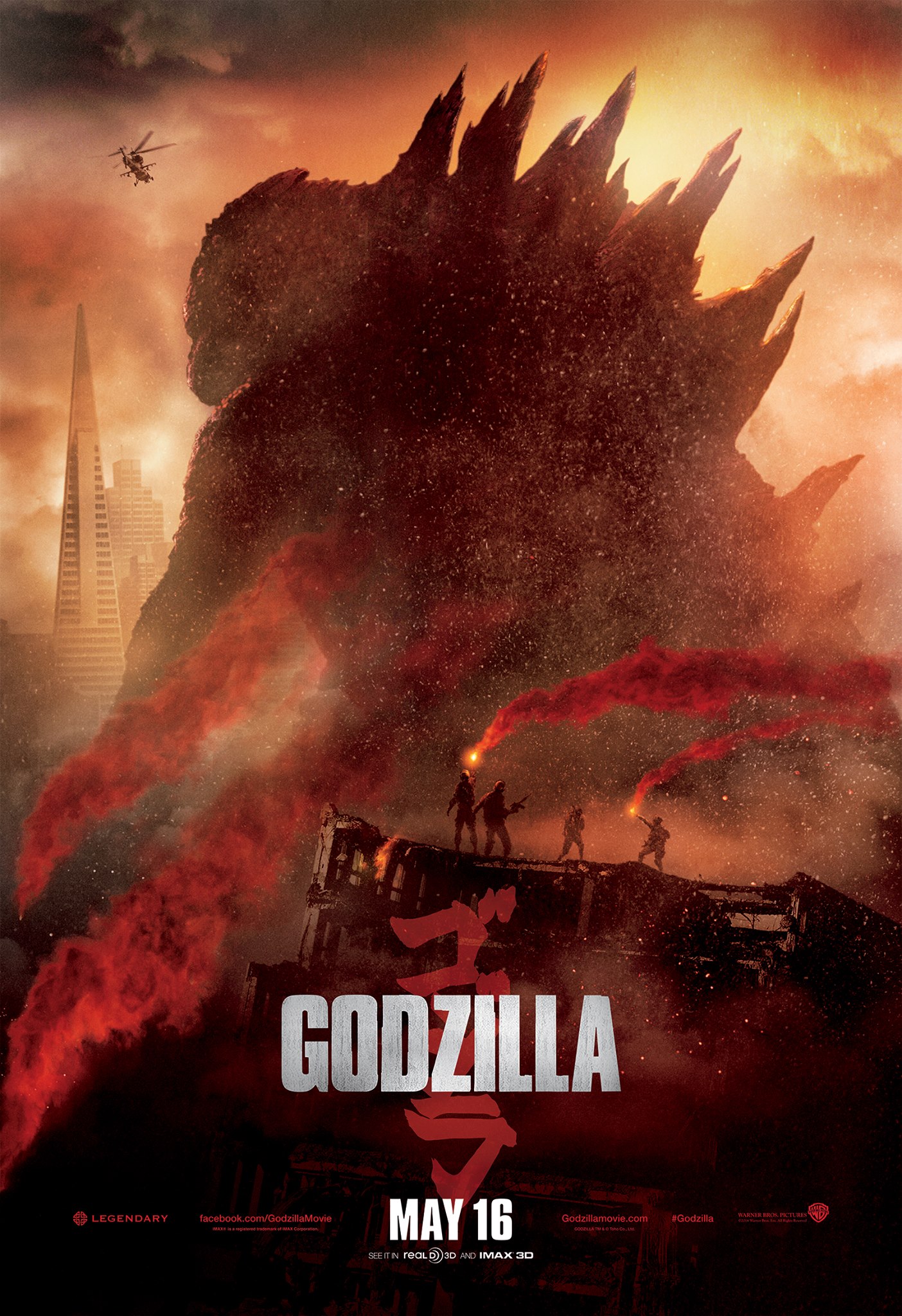 When it comes to the monsters of cinema, it’s hard to beat out Godzilla, and not just because, you know, he’s hundreds of feet high and can breath fire. The famous monster began as a cautionary tale about nuclear weapons, destroying man’s hubris and often the good people of Tokyo. The legendary beast has been hibernating as such since 1998’s not-so-spectacular big-budget return, a film that the Japanese loathed. But like all ancient being, Godzilla has been resurrected again and given a splashy new coating of CGI devastation. If only the filmmakers had decided to leave out the humans and make Godzilla the rightful star.
A scientist (Bryan Cranston) warns the Japanese government of a massive impending danger. The offspring of a giant creature, a Massive Unidentified Terrestrial Organism (MUTO), has hatched and heading straight for the United States coastline. Attracted by nuclear power, the U.S. military tries to lure it away from populated centers. Ford Brody (Aaron Taylor-Johnson) is witness to the monstrous destruction and just wants to get back home to his wife (Elizabeth Olsen) and child in San Francisco, exactly where the creature is headed. There’s also the emergence of an older creature, one that has taken to combating the MUTOs to the death. This is the legendary Godzilla.
The big guy is back in a very different approach from 1998’s Godzilla (i.e. “better” approach). Director Gareth Edwards (Monsters), an avowed Godzilla fan, has made a reverent big-budget ode to the king of all monsters; however, the resulting film is more of a disaster epic than a monster brawl. The perspective is often framed at the human-level, which grounds the film from going too overboard into disaster porn territory like, say, Man of Steel. The effect is thrilling and adds a greater sense of verisimilitude to the mass chaos and destruction. It reminded me in some ways to 2008’s Cloverfield, where a group of characters is just trying to survive the periphery of all the collateral damage of a giant monster. There are sequences that directly relate to Fukushima as well as the tsunami from 2004. It’s almost like somebody watched the stirring movie The Impossible and said, “Yeah, give us some of that in our giant monster movie.” I don’t know if these sequences are entirely necessary. Watching Ford carry around a little Japanese tyke, wondering where his parents might be amidst the confusion post-monster attack, it relates to our modern response to tragedy and worldwide disaster, but do you really want to watch Ford have to find this kid’s parents? If there is a commentary to be found in the movie, it’s the uncontrollable and destructive power of nature pushed to the brink by mankind’s own energy crises. After all, the MUTOs are attracted to and strengthened by consuming nuclear energy. Godzilla is argued to be an “alpha predator” but also a figure to bring balance back to nature. I think it means that there can be only one giant monster and Godzilla is going to eliminate the competition.
 But the real question of any giant monster movie is the degree of satisfying, smash-em-up fun it provides, and the new Godzilla is a mostly agreeable venture. The action sequences, mostly saved for the climax, are cool and well thought out, but Edwards proves to be a brilliant visual stylist than a composer of action. This is a movie where the moments stand out better than the action. Edwards’ command of cinematic visual arrangements is at Spielberg levels of being a natural showman. I can easily think back on small moments, images that pop, visual reveals that are executed with aplomb, far more so than a central example of an action piece. I loved the horror-esque reveal of the elevated train being on track to head right for the MUTO. I loved the hide-and-seek nature of Ford waiting for the MUTO to pass. I loved when Ken Watanabe’s advice was literally just, “Let them fight” (I started chanting it in my seat). My favorite part of the movie is actually what was previously shown as a teaser trailer, namely Ford and several other paratroopers diving into the destructive city scene. The eerie hum of the 2001: A Space Odyssey monolith plays over, each man has a red flare streaking from their leg, and we watch them quickly descend through the sky, nervously awaiting what is on the other side of those heavy clouds, only to discover a city on fire, glowing like a hearth, and through the goggles, a monster fight taking place. The entire sequence is a visual standout, a thrilling set piece, and a reminder that Edwards has more on his mind.
Edwards does a lot of intentional teasing of Godzilla, so much so that it can get frustrating for an audience. I understand he’s building to a payoff reminiscent of Jaws; we’ve been teased for so long that we will go nuts when we finally see Godzilla in full glory, and it works. However, it also works as a detriment. There are several points in the film where it looks like we’re about to get some exciting Godzilla/MUTO action, or even just a MUTO wrecking havoc, and then the film cuts away, often to news footage. It’s a choice that begins as artistically clever but can become maddening in time. There is a lot of visual obfuscation throughout the film, far more so than the same compliant I had with last year’s Pacific Rim. Edwards will show Godzilla’s tail just swinging behind a building, or his colossal foot coming down with authority, or the wispy shadow of giants in billowing clouds of smoke. All those near misses can add up to cinematic blue balls. And so much of the action and destruction happens at nighttime, leading to a dour color palette heavy in grey and dark blacks, making the good stuff all the harder to see. I cannot even fathom why someone would want to see this film in 3D with those darkened glasses. It’s 90 minutes of foreplay that you may start to grow restless that we’re getting a Godzilla movie that will never show the goods (shouldn’t Godzilla be in a Godzilla film?)
 The problem with a disaster movie on a human-scale is when you don’t give a damn about any of the human characters. Now, Godzilla should be the star of any Godzilla movie but I understand execs fearing that their monster movie needs some relatable human drama. The problem is that the writing doesn’t do anything with these characters, forcing them into tidy and token roles that we’ve come to expect from large-scale disaster movies. Did anyone really feel anything about whether Ford would get back to his wife and child? Did anyone feel anything for anyone in this movie, beyond a slight reservation whether they would be squished, if even that? I’m not expecting three-dimensional characters here but even Roland Emmerich films do a decent job of establishing a milieu of people at various points of the globe we know will somehow coalesce together. There is so little effort to mask the character’s grand design: exposition mouthpieces, symbols of military threats, the noble family man, the beleaguered and crying wife. Seriously, there is a great cast of actors in this movie and they are given nothing to work with. Olsen (Oldboy) gets to look realistically scared and cry but she deserves so much better. Cranston (TV’s Breaking Bad) gets all the best yell-worthy lines. But it’s really Taylor-Johnson (Kick-Ass 2) who suffers the most since he’s placed as our impassive stand-in for a human protagonist. He’s so blank throughout the film and there’s little charisma to pull you in. His character, and the performance, feels no better than an elevated extra, Grunt #13. When we have to spend 90 minutes with these lackluster characters rather than some awesome monster fights, that’s when the film flounders.
I’m conflicted about the end results of Godzilla, an entertaining, surprisingly artistic film that can nail small moments of cinematic grandeur but has trouble matching its vision. The human-scale approach grounds the action, but do we want a giant monster movie grounded from a limited vantage point? The constant teasing builds a payoff for finally seeing Godzilla, but don’t we want more actual Godzilla in a film bearing his name? The human-scale, as well as the slow dodging of showing Godzilla, mean the storytelling emphasis is on an array of human characters, but what happens when they are poorly written, poorly developed, and lacking in charisma? The movie does more right than wrong but I’m left with the unmistakable feeling that, while a step in the right direction, there is too much self-sabotage holding back the movie. It actually made me re-evaluate and appreciate Pacific Rim even more. I can’t say this movie is nearly half the fun as Rim was. The monster design of the MUTOs is rather lacking, resembling a cross between the monster from Cloverfield and more patently the arachnid aliens of Starship Troopers, down to the heads that look like staple removers. Edwards has proven himself a big screen talent with a terrific feel for grandiose visual spectacle. I just hope if there is a sequel that we can skip all the slow buildup and just get to the main event – Godzilla beating the crap out of some other lesser yet still giant monster.
Nate’s Grade: B


 nathanzoebl
You must be logged in to post a comment.