Blog Archives
Project Hail Mary (2026)
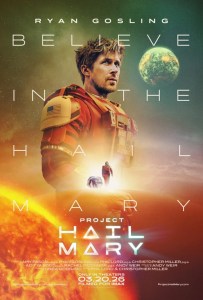
Being stranded for two hours in tight quarters with Ryan Gosling sounds like a dream come true for many. Something tells me I made this same joke except using Matt Damon’s name for the 2015 release of The Martian, another winning mixture of nuts-and-bolts scientific problem-solving and sci-fi exploration from best-selling author Andy Weir. Project Hail Mary is one of those big screen adventures that nourishes your imagination and heart. In short, it’s a rare full-package blockbuster, something to excite the senses as well as appeal to your intelligence to leave you fully satisfied. If you enjoyed the book like myself, then breathe easy, because the film has done this story a great justice. Best of all, it’s the rousing, heart-warming buddy movie you never knew you needed, and it all starts at the end of the world.
In the near future, science discovers an alien microbe that is literally eating the sun. The estimates are that our sun will dim over decades, causing widespread cooling and threatening the lives of billions. The world needs a hero. It got middle school science teacher and disgraced molecular biologist Ryland Grace (Ryan Gosling) instead, who awakens on a spaceship in a different stretch of the galaxy far, far away from Earth and its dimming sun. He has little memory of what transpired before and must piece together not just his understanding of who he is but also his world-saving mission that he now, unfortunately, is the only one who can accomplish. He’s very literally tasked with saving the world, so no pressure.

I’m going to avoid major spoilers but there is one plot development I feel needs to be discussed as it gets to the core appeal of the movie, so if you want to go into Project Hail Mary completely unspoiled, and I would advise it if you could, then end this review and come back once you’ve enjoyed the movie. For everyone else, let’s proceed ahead. Thankfully, the amnesia setup isn’t dragged out long. The film is structured to alternate between present-day problem-solving in space and flashbacks to Earth when Ryland was contacted by the top levels of the U.S. government to determine the extent of the unusual problem with water-molecule microbes somehow living and consuming the sun. The microbes are termed “astrophage” and release tremendous amounts of energy, enough so that they become the unexpected fuel for this long-shot space mission that Ryland finds himself the only survivor. He was never supposed to be mankind’s only hope (the other astronauts, the professionals, died from the induced comas for travel).
However, Ryland isn’t alone for long in the movie, and that’s where Project Hail Mary reaches a new level of entertainment and imagination. Our sun isn’t the only one affected by the astrophage, and Ryland is greeted by an alien spacecraft that has also traveled the long journey to figure out why this one sun is unaffected by the astrophage. The sense of discovery is greatly entertaining and I appreciated that there is something remarkably alien about our alien. Our intrepid alien will be nick-named “Rocky” because he best resembles a spider made out of rocks. That’s different. It’s not the old Star Trek school of slapping a forehead ridge onto somebody’s head and calling it a day. A significant and very gratifying sequence of the movie is just watching these two different lifeforms interacting and learning from one another. The language barrier has been explored before, most effectively in 2016’s grounded and somber Arrival. If Arrival was more the contemplative indie about conquering the linguistic challenges of first contact, then Project Hail Mary is the feel-good Spielbergian popcorn spectacle about saving the day and having fun. That doesn’t mean it’s a dumbed-down version; it just has different priorities, and chief among them is the winning buddy comedy of Gosling and a cuddly alien, two humble representatives of distant worlds in shared desperation for saviors. The relationship that blossoms between Ryland and our plucky, curious little space spider is naturally funny but also refreshingly serious too. Rocky is treated like an actual character, not some glorified pet or something to sell toys and Happy meals. He has a distinct perspective, learning curve, peculiarities, and determination that makes him feel more fully-developed than many human characters in terrestrial cinema. If you don’t walk away from the movie wanting your own personal huggable rock spider, then you watched a different movie than I did and, frankly, I pity you.
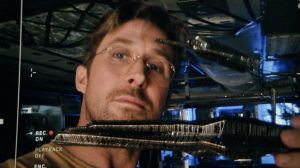
In my review for The Martian, I wrote, “There is an inherent enjoyment watching intelligent people tackle and persevere over daunting challenges, and this sets up The Martian for lots of payoffs and satisfaction. We see both sides of the problem and it provides even more opportunities for challenges and payoffs.” It’s tremendously enjoyable to watch Ryland and Rocky resolve serious scientific problems, whether it be studying the astrophage, the alien sun and its immunity to astrophage, or even just how to interact with one another when there are different systems for breathing and eating. It’s heady without being weighed down by too much scientific jargon, making the analytical discussions accessible and thus engaging. The conflict of Project Hail Mary isn’t quite as realistic as The Martian, given to more convenient cheats with “alien technology,” though the resulting resolutions still felt well-earned and satisfying thanks to the setups and payoffs that screenwriter Drew Goddard (Bad Times at the El Royale, The Martian) has layered throughout. The source material’s author, Andy Weir, has found himself a very profitable and marketable niche, dropping science whiz everymans into impossible scenarios and having them think their way out of them. At least this time the entire world is working in tandem, and spending likely trillions of dollars, to save the entire solar system instead of just retrieving one misplaced American astronaut. Weir will likely be throwing darts at what new setting someone could be stranded in next.
Now, as a film adaptation, Project Hail Mary goes the distance. This is the first live-action movie directed by Phil Lord and Christopher Miller since 2014’s 22 Jump Street (granted, they were notoriously fired from finishing 2018’s Han Solo prequel). For those worried that the movie might be more anarchic or yuk-heavy like the duo’s animated oeuvre, such as The Lego Movie and the Spider-Verse films, they have adapted their style to best suit the material. There’s plenty of humor in this movie because of the ridiculously high stakes and general odd couple nature of our buddy dynamic, but the movie never feels like it loses its focus on the bigger world-saving picture. For Ryland, he knows this mission is a one-way trip, as the capsule doesn’t have enough fuel to make the return trip to Earth. He knows this is a sacrifice, but the entirety of all living things on the planet are holding out hope that his sacrifice is successful. Lord and Miller are able to balance the comedy and dramatic elements, as well as finding appropriate spaces for the viewer, as well as Ryland, to take in the natural majesty of space in another star system. The cinematography by Greg Frasier (Dune Parts One and Two) is grand and visually sumptuous, mixing in aspect ratios and focus depth to distinguish between timelines and emotional states. The musical score by Daniel Pemberton (Spider-Man: Into the Spider-Verse) is remarkably pleasing to the ears, finding room to be rousing and immersive and awe-inspiring, perfectly aiding the gorgeous visuals. At 150 minutes long, there’s the concern about pacing, especially with a movie that has so much to explain on the go as well devoting nearly half its runtime to flashback morsels doled throughout. I never felt lag. I also never felt crushed with the exposition, as the key details are expertly elevated, then as we progress from one challenge to the next, the screenplay keeps us keyed in on what matters in that moment.

And lastly, where this movie really hinges upon is on the relationship and performances of its two leads. I’m not talking about Sandra Huller (Anatomy of a Fall) as the head of the Project Hail Mary mission, assembling cooperation among the world’s countries and experts for this longest of long-shots. Gosling (Barbie, The Fall Guy) is an immensely charming actor, self-effacing and relatably overwhelmed by the faith entrusted to him. Gosling makes us instantly connect with the protagonist, feeling the same nagging pull of his curiosity and excitement when studying something as uniquely fascinating as alien microbes, as well as the mounting trepidation of being out of your depth and having to adapt quickly or else. The film is taken to another level of entertainment thanks to Rocky, who is the clear MVP of the movie. He’s brought to vibrant life through puppeteer James Ortiz, who also provides the computer translation voice, and through the magic of empathy, we’re shedding tears for a creature without a discernible face. The dynamic between the two characters is so enjoyable, so funny, and ultimately so poignant, that it warms your heart while making you feel full by its perfect closing image.
Project Hail Mary is a crowd-pleaser to its very DNA, big yet accessible, brainy but still capable of popcorn thrills and visual fireworks, heartfelt but mordantly funny and even goofy at points, and always engaging and rewarding. It’s also a hopeful movie, something the present world could use more of. In the face of epoch-ending cataclysm, human beings are capable of working together to solve impossible problems, and heroes can emerge from the least likely places. It’s inspirational without falling into sappier, inauthentic maudlin drama, and it’s a celebration not just of teamwork but interstellar teamwork, working across enormous barriers for a common good. It’s invigorating to watch human decency and noble sacrifices prevail but also just an enviable demonstration of competency. What a wonderful world where experts are given deference and praise for their expertise and professionalism (if only this didn’t feel so tragically the stuff of “fiction” in present-day America). Project Hail Mary is a superbly made adventure movie that has a little of everything we’re looking for in mass-appeal blockbusters, and there’s a considerable skill to hold all these parts together into a movie that feels complete and enriching. Fans of heady sci-fi, buddy comedies, disaster movies, and space operas should find plenty to enjoy, but really Project Hail Mary is the kind of movie that all you need is eyes and ears to understand the appeal.
Nate’s Grade: A
Share this:

Die My Love (2025)
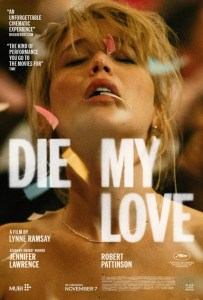 A new Lynne Ramsay (We Need to Talk About Kevin) movie should be a cause of celebration. She’s only directed three movies since 2002 and each is worth every ounce of your consideration. They’re typically genre-defying triptych character studies of people with deep reservoirs of pain and isolation, and so her latest, Die My Love, is a natural fit as it explores one woman’s headfirst descent into post-partum depression. Jennifer Lawrence plays our lead character Grace, a vaguely defined “writer” transplanted to rural Montana, living in her husband’s (Robert Pattinson) family’s old home, but in reality confined is the better term. Ever since her child’s birth, Grace has felt disconnected; from her body, from her feelings, from her husband, from her sense of self. This is a showcase for Lawrence to unravel in a stylistic manner that could feel deeply authentic to millions of women post-birth. She’s struggling to feel something as strongly as she used to, to lift her head above the stormy waters of depression that has engulfed her, and this can lead to some dangerous and impulsive outbursts, like throwing herself through a glass door just to feel something. Her husband is no help, who leaves for long stretches of time on business and tries to act like nothing’s wrong (example of reading the situation entirely wrong: thinking this woman needs a puppy – note, it will not end well for the dog). He also may or may not be having affairs with other women, it’s hard to say what exactly is literal reality here. Ramsay and her co-screenwriters have elected to make a movie more about evoking the feeling of our lead’s alienation and confusion. It’s less about plotting, which unfortunately also hampers the characterization, keeping Grace more of a symbol for accessibility. What she’s going through feels vivid and authentic but she rarely feels like a fleshed-out character rather than an archetype to examine. The same with the supporting roles, including Lakeith Stanfield as her neighbor who she may be fantasizing about or more, it’s hard to say. There’s plenty of unspoken commentary on mental illness and the unfair expectations thrust upon women, especially new mothers, but much of Die My Love feels like winding up Lawrence and setting her loose to make a scene. Make no mistake, she is very very good at being disconnected and angry and raw. There are some bold artistic choices throughout but ultimately, because I didn’t feel connected to the characters, by the end I felt more exhausted by the emotional tumult rather than gaining better awareness of her plight.
Nate’s Grade: C+
Share this:

Nuremberg (2025)
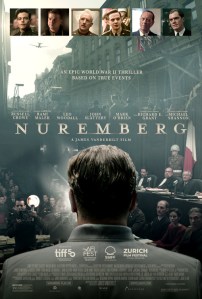 Taking an Oscar-winning courtroom classic and eliminating 40 minutes sounds like a surefire gamble, and while Nuremberg has its heart in the right place, bringing Nazis to justice, it cannot help but feel like a more shallow and rushed version of 1961’s Judgement at Nuremberg. That’s not to say different movies cannot exist from the same source material or true story, even in the shadow of famous stories. However, this version feels strangely perfunctory, condensing the worldwide judicial response to the horrors of the Holocaust into a simplified buddy movie about a psychologist (Rami Malek) who has to learn the hard way that maybe, just maybe, Hermann Goring (Russell Crowe) might not be trustworthy. It’s frustrating that the depth of this story and the plight of so many is reduced to one guy getting too close to his subject as well as having to learn the most obvious lessons about applied evil. Also, the culminating courtroom showdown, where so much hangs in the balance and Goring has been hyped as the most of challenging of cross-examination opponents, and it all resolves so easily, with a different prosecutor essentially using a cheat code to undo Goring’s pseudo-intellectual front. It’s quite a lot of buildup for a, “Wait, that’s it?” response, and much of the movie follows this same disappointing route. The acting is relatively good all around, with Crowe especially good as a chummy narcissist, and the production quality is sufficient to recreate its post-war period, but I couldn’t help but feel that I was missing out on a richer story. It’s so flattened out and self-important with its limited details to actually satisfy. The ending tries to draw a direct line to Trump today and I don’t quite know if it’s done the work. Nuremberg is one of those Important Movies that garners early Oscar buzz on paper, and then when people actually see it, falls away as an also-ran, mostly because it was missing a few too many important elements to resonate. It takes 130 minutes for Malik to learn that Nazis might not make good friends. You’ll probably know that already.
Nate’s Grade: C+
Share this:

People We Meet on Vacation (2026)
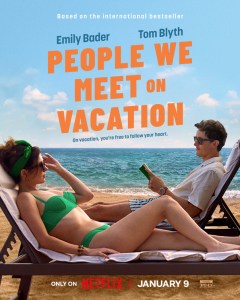 I’ll readily confess, I enjoy a good romantic comedy. I’ve even written a few rom-com Web series. Who doesn’t want to be captivated by charming characters, witty, banter,, and a yearning for a romantic coupling? The Sony-by-way-of-Netflix-acquisition People We Meet on Vacation is based on popular author Emily Henry’s 2021 breakthrough novel of the same name. I was expecting lots of fizz and frivolity, which can be had in doses, but I think the adaptation makes a few key mistakes that hampered my rom-com good time vibes. People We Meet on Vacation is not whom I was expecting, and maybe that’s me being too demanding, or maybe my travel companions made me think about switching seats.
I’ll dispense with the exact plot details further into this review, but the story in general is thus: Girl and Guy are friends but maybe also secretly like each other but also sometimes have other people, boyfriends.girlfriends, that they’re supposed to like more instead. Eventually, they grapple with these confusing feelings while also visiting global tourist destinations as “platonic vacation buddies.”
 First, I didn’t buy the main characters as close friends. We’re introduced to them as they travel home to small-town Ohio together for the holidays from their freshmen year at Boston College, and they’re immediately bickering and annoying and can’t stand one another. The film is following a friends-to-lovers path, but I guess at first it decided to become an enemies-to-friends storyline. Even as the animosity thaws, I never really bought what compelled these characters to be best friends, so much so that they make a plan to make a trip every summer across the world together (the disposable income these newly indebted college grads have access to blows my mind; he’s a teacher!). The premise is workable, and as you would expect there are feelings that begin to get messy over the years of vacation, but I never felt the core friendship, so whether or not they ruined it with a burgeoning romance never felt like a credible threat for me. What is there to ruin exactly? We’re jumping from vacation to vacation summers apart, the gaps are meant to serve as storytelling glue; we’re meant to just assume, “Oh, they became good friends,” without seeing it for ourselves. I think this misstep could have been avoided simply by making the two of them less acrimonious in their earliest introduction. Make the friendship credible, and even better, make me like them together and see that they bring out other sides in one another that others fail to elicit.
This could also be a factor of my second misstep, namely the casting. I did not feel a flicker of chemistry between Emily Bader (My Lady Jane) and Tom Blythe (young sexy Snow in 2023 Hunger Games prequel), and I think it’s mostly the guy’s fault. I was getting 2011 Oscar hosting flashbacks. Here me out, dear reader. In 2011, Anne Hathaway and James Franco were hired as hosts to have the awards show appeal to a younger demographic (begin knowing laughter). Franco’s energy was so low that critics joked he might have been stoned the whole time. As a result, Hathaway had to overcompensate for his dearth of charisma and energy and was stuck doing far too much. In People We Meet on Vacation, our female lead, Poppy, is a chatterbox extrovert, and our male lead, Alex, is a sullen introverted homebody. Naturally, opposite personality dynamics can make for engaging relationships, but the work needs to be careful. I found Alex to be a bore. The most he gets pushed out of his comfort zone is by skinny dipping and, separately, pretending to be on a honeymoon for free drinks. That’s it. That’s Mr. Wild on Vacation (more on that next). Most of the time he’s just converting oxygen to carbon dioxide on screen. As a result, Bader has to go above and beyond, talking circles around her taciturn scene partner and bowling him over with personality, so much so that her outsized personality begins to flirt from charming to dangerously annoying. The misaligned character dynamics and characterization form a ceiling of my engagement.
 Thirdly, I was expecting more of a flirty freedom from the premise. Poppy works as a travel writer and fantasizes about being someone completely new on vacation. With that concept, you would assume the story would explore that dichotomy, the woman who uses these trips to reinvent herself, try on different versions of herself that can be dramatically different, adopting new personas and exploring aspects of herself that she didn’t feel comfortable embracing as regular ole Poppy. This seems like the most obvious direction to take the story with a title like People We Meet on Vacation (the new people we meet are… ourselves). Astonishingly, the movie is not that. There is only one instance of Poppy and Alex leaning into the freedom afforded to them through their vacations to pretend to be different people. While in New Orleans, they pretend to be newlyweds and this grants them free drinks, and this new persona gets Alex to dance provocatively; he even does The Worm. Does this different version of Alex lead to anything more? No. It would make sense with all their free drinks for this to be the moment that Alex and Poppy get even closer, imitating newlyweds, and cross a line of their friendship. Does this happen? No. That’s a whole other international vacation where the characters aren’t pretending to be other people. We can break this down on an even smaller level. Maybe the characters have events in these vacations that push them out of their comfort zones and challenge them in ways that change them as people, like discovering an aspect of themselves they hadn’t given thought to before. If you’re going to Tuscany, do something that’s unique to Tuscany. Do something that matters. It never feels like the travel is actually making an impact on these two characters. Rather, the vistas change but the focus is always on their will they-won’t they, which isn’t dependent on their setting. They could have just gone down the block for the same results. At 118 minutes long, some of these various vacations might have been consolidated if they are so inconsequential.
Lastly, when the movie isn’t separating itself from the pack by embracing its unique story elements, it falls back on the familiar cliches of the genre. I’m talking stuff that even a layman to rom-coms would even know, things like the big kiss in the rain, the big Act Three dash, usually out of an airport. It’s stuff like that, and cliches by themselves are not inherently bad but they have to feel authentic to the characters and stories. It might be a cliche to simply say that you need to make the cliches your own. If I genuinely cared about the characters, and felt their chemistry, then I wouldn’t be nitpicking and noticing the cliches as much. It just so happens that a shaky adaptation can make reliance on genre cliches more noticeable.
 Now, I know the majority of this review has been critical of People We Meet on Vacation, and that’s mostly because I think this movie could have been better from some pretty obvious missteps. The version of People We Meet on Vacation is… fine. It’s consistently cute and amusing and harmless, an afternoon movie that can pass the time well enough especially for those predisposed to romantic comedies. It’s a fairly good-looking movie with an impressive war-chest for music licenses, including Ms. Taylor Swift. My middling frustrations with the movie seem to be echoed by many of Henry’s fans, that whatever made this story special seems to have been emptied, replaced with cozy genre cliches. I liked the ending, cliches and all, because it felt fitting for those characters, their different dynamic, and felt it had been sufficiently set up to serve as a payoff. I wanted more moments like this, that felt unique to this story, to these characters, and actually made use of their specific settings. No other characters in this movie matter other than our leads, so it’s a shame that I didn’t feel particularly excited for their eventual coupling. I didn’t find their characters repellent or mean-spirited, just ordinary, lacking a distinct personality. They were blandly likeable but the kind of people you’d meet and forget easily, vacation or no. People We Meet on Vacation is an agreeable movie that had the possibility for more, and that’s what lingers longest for me.
Nate’s Grade: C+
Share this:

No Other Choice (2025)
 The title of the Korean movie No Other Choice is spoken, in English actually, a few minutes into the movie. It’s the brief, unhelpful reasoning from an American exec that just bought a South Korean paper company and is reducing the local labor force. Our main character, Yoo Man-su (Lee Byung-hun), has been work-shopping his spirited speech about how important these jobs are to appeal to the American businessmen, and then when it comes time to deliver, he’s reduced to chasing them down as they quickly depart. Before he can even get into a second poorly-formed sentence, the exec cuts him off by saying, “No other choice,” and then sidles into the protective safety of a chauffeured vehicle. The implication is that this business has to reduce its labor force to stay profitable, and yet rarely is this so simple. In legendary director Park Chan-wook’s (Old Boy, Decision to Leave) latest, characters will often repeat the title of the movie as a deference to guilt, that they were forced to make hard decisions because those were the only decisions that could be had. Unfortunately, as this mordantly funny, exciting, and intelligent movie proves, people have a way of deluding themselves when it comes to finding justifications for their bad behavior and greed.
 The real plot of No Other Choice is Man-su’s readjustment. In the beginning, we see the life he’s built for his family, his wife Lee Mi-ri (Son Ye-jin), stepson Si-one, and daughter Ri-one, with their two big dogs. After a year of job searching, Man-su is bouncing from one job to another, and the family has been forced to make cutbacks to their lifestyle (“No Netflix?!” the son says in shock). Lee Mi-ri takes on a part-time job as a dental assistant to a hunky doctor. The dogs are shipped to Lee Mi-ri’s parents. Ri-one might have to stop her expensive cello lessons, which is a big deal as her teacher says the Autistic child is a prodigy, but her parents never hear her play. The paterfamilias needs to find a good job fast. That’s when Man-su gets the idea to post a fake job for a paper company manager to better scope out his competition. He takes the top applicants, the guys he acknowledges would be hired ahead of him, and creates a list. From there, Man-su pledges to track them down and eliminate them so his own odds of being rehired climb up.
The movie keeps shifting in new directions and tones with each new target, and it creates a much more fascinating and intriguing experience. I loved how each of the targeted rivals is treated differently and how each of these men come across as people who are struggling, hopeful, and quite like our beleaguered protagonist. There are good reasons why this movie has been described as Chan-wook’s Parasite, his culminating condemnation on the pitfalls of capitalism, how it pits peers against one another when they should be allies. Man-su views each man as his competition, impediments to him getting that prized position. However, each of these people is far more complicated than just their resume. At any time the movie could stop on a dime and just have two strangers, one of them intending to possibly kill the other, just have a heartfelt conversation about the difficulties of providing for your children and knowing that there are hard limitations that cannot be overcome. One man is struggling to adapt to a new marketplace after working in the paper industry for twenty years, and Man-su even echoes the complaints from the man’s wife, chiefly that he could have applied himself to other industries and jobs, that he didn’t have to be so discriminating when it came to a paycheck. Now, from her perspective, she’s arguing this point because she feels he is not casting a wider net for promising non-paper job opportunities. From Man-su’s perspective, he’s chiding the man because he doesn’t want to kill him but the guy’s intractability has put him in Man-su’s crosshairs. The unspoken comment is that Man-su is doing the same thing. At no point does he really consider getting a different job and thus being in a position where he does not feel forced to literally eliminate his best competition. He too is just as stubborn and blind to his own intractability. The system has a way of turning men against one another in order to boost a corporate balance sheet. This movie is just taking things a little further to the extreme when it comes to cutthroat competition.
 I also appreciated that the movie has a larger canvas when it comes to charting the ups and downs of its conspiracy. Man-su’s wife is not kept as some afterthought, you know the kind of movie where the husband goes on these wild journeys of the soul and his wife is just as home going, “Where have you been?” She’s an active member of her household and she is not blind to their financial shortfalls nor her husband’s increasingly worrying behavior and absences. She’s worried her husband may have begun drinking again after years of sobriety and peace. She makes attempts to reconnect with her distant husband, who is becoming more consumed with jealousy about her boss and his desirability. She’s not just the doting spouse or concerned spouse. She’s a resourceful character who recognizes problems. When another threat to their family materializes, Lee Mi-ri takes it upon herself to find a solution. Naturally, given the premise, whenever you have one member of a couple doing dastardly deeds, whether they get caught by their partner is a primary point of tension, as well as if so, how will their partner respond. I think the track that Chan-wook and co-writers Lee Kyoung-mi, Don McKeller, and Le Ja-hye decide is perfect for the story that has been established and especially for the darker satirical tone of the enterprise.
Despite the murder and gnawing guilt, No Other Choice is also a very funny dark comedy as it channels the absurdity of its premise. It’s always a plus to have amateur murderers actually come across as awkward. Just because they decide to make that moral leap shouldn’t translate into them being good at killing. There’s unexpected humor to Man-su’s amateur stalking and preparations. He’s also not immune to the aftereffects of his actions, getting queasy with having to dispose of these men and thinking of the best ways to obscure his physical presence from crime scenes (there was one moment I was literally screaming at the screen because I thought he forgot a key detail). Lee Byung-hun (Squid Games) is terrific as our lead and finds such fascinating reactions as the movie effortlessly alters its style and tone, one minute asking him to engage in silly slapstick and the next heartfelt rumination. I don’t think the film would be nearly as successful without his sturdy performance serving as our foundation. You really do feel for him and his plight, and perhaps more than a few viewers might feel the urge for Man-su to get away with it. The culmination of the first target is a masterful sequence where three characters all have a different misunderstanding of one another as they literally wrestle for a gun inside an oven mitt. It’s one of those moments in movies where you can stop and think about all the small choices that got us here and appreciate the careful plotting from the screenwriters. I found myself guffawing at various points throughout the movie and I think many others will have the same wonderfully wicked reaction.
 I could go on about the movie but hopefully I’ve done enough to convince you, dear reader, to give No Other Choice the ultimate decision for your potential entertainment. It’s a movie that covers plenty and leaves you deeply satisfied by its final minutes, feeling like you’ve just eaten a full meal. The ending is note-perfect, but then I could say just about every scene beforehand is also at that same artistic level. I won’t go so far as some of my critical brethren declaring this as Chan-wook’s best movie; I’ll always fall back on 2016’s The Handmaiden, also an adaptation of an English novel, much like No Other Choice (would you believe the source materiel is from the same author who gave us the novel for Play Dirty?). Regardless, this is exceptional filmmaking with a story that grabs you, surprises you, and glues you to the screen because you don’t know what may happen next (Patricia Highsmith would have loved this film).
Nate’s Grade: A
Share this:

Hamnet (2025)
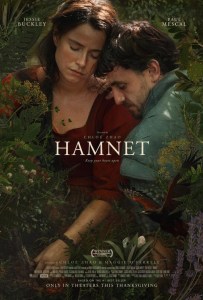 It’s the sad Shakespeare movie, and with Paul Mescal (Gladiator II) as Will, it could just as easily be dubbed the Sad Sexy Shakespeare movie. Hamnet is a fictionalized account of Will and his wife Agnes (Jessie Buckley) processing the death of their young son, Hamnet, which we’re told in opening text is a common name transference for Hamlet. Right away, even before co-writer/director Chloe Zhao (Nomadland, Eternals) brings her usual stately somberness, you know what kind of movie you’re in for. It’s pretty (and famous) people in pain. The entire time I was watching this kid Hamnet and just waiting for the worst. It doesn’t arrive until 75 minutes into the movie, and it’s thoroughly devastating, especially the circumstances surrounding the loss. This is less a Shakespeare movie and more a Mrs. Shakespeare movie, which is more illuminating since she’s typically overshadowed by her verbose husband. She’s an intriguing figure who shares some witchy aspects, communing with nature and even foretelling her future husband’s greatness and dying with only two living children, which presents a pall when she has three eventual children. Once Will finds success as a London playwright, he feels like an absentee father and husband, briefly coming in and out of his family’s life in Stratford. However, the final act is what really doesn’t seal the movie for me. I don’t think it’s really a spoiler to admit the final 15 minutes of the movie is basically watching Hamlet performed on stage, with Agnes as the worst audience member, frequently talking through the show and loudly harassing the actors before finally succumbing to the artistry of the play and finding it a fitting outlet for her grief. In short, the movie is meant to provide more personal insight and tragedy into this famous play, asking the viewer to intuit more meaning (“Oh, Hamlet is his dead son, Hamnet! I get it”), but ultimately the ending is just watching Hamlet. I don’t feel like we get any meaningful insight into William Shakespeare as a person besides his irritation at being a Latin teacher, and frustratingly, Agnes is constrained as well, held in a narrow definition of the grieving mother. This is a shame since she showed such fire and individuality in the first half. Buckley (The Lost Daughter) is terrific, ethereal, earthy, and heartbreaking and a shoo-in for an Oscar. I found her final moments, especially reaching out to her son, so to speak, especially poignant. Hamnet is a good-looking, well-acted movie about sad famous people who then rely upon the arts to help heal their gulf of sadness. There’s not much more to Hamnet than that, but with such exceptional professionals and artists at the ready, it might be more than enough for most.
Nate’s Grade: B-
Share this:

Regretting You (2025)
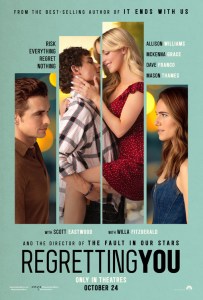 I do not care for Colleen Hoover as an author. She exploded thanks to social media and has, as of 2024, sold over 34 million books, primarily romantic dramas, primarily featuring wounded women trying to get back on their feet. She is a full-blown publishing phenomenon. Hoover has become so prolific and successful that she takes up an entire shelf. She’s already joined the ranks of your James Pattersons, Stephen Kings, Danielle Steels, the familiar names of authors that can be found in grocery checkout lanes. Her popularity is indisputable. Her quality is another matter, and that’s where I have trepidation with Hoover as a storyteller. Admittedly, I have never read any of her novels, so take all criticisms with a degree of incredulity. I’m making my judgement based entirely on the movie adaptations of her novels. Again, this might be an unfair guide considering if I did the same thing for, say, Stephen King, it would be easy to form a scathing opinion of the man’s literary work. 2024’s It Ends With Us made me deeply uncomfortable with its misplaced attempts to romanticize domestic violence. It wasn’t just misguided but it offered little insights into the mentality of abuse victims, instead slotting this disturbing story element into the awkward love triangle expected from the genre. It wasn’t good. Next, we have Regretting You, based upon Hoover’s 2019 novel of the same name. At this point, I’m wondering if I need to hold a regular spot in my annual worst of the year lists for the slew of Hoover adaptations to come.
In 2007, Morgan Grant (Allison Williams) and her friend Jonah Sullivan (Dave Franco) are clearly in love. I guess it’s too bad they’re seeing other people. Both are also dealing with pregnancies. Morgan marries Chris (Scott Eastwood) and has her baby, Clara. Jonah abandons his pregnant girlfriend, Jenny (Willa Fitzgerald) but comes back many years later to have another baby together (I guess Jenny terminated her earlier pregnancy but it’s never really dealt with). Cut to present-day, and teenage Clara (Mackenna Grace) is smitten with the charming film school aspiring Miller Adams (Mason Thames), a guy ripped out of a quirky rom-com. Then the big tragedy happens: Jenny and Chris die in a car accident, the same car, and it’s revealed the two were engaging in a longstanding affair. Morgan and Jonah must try and navigate these complex feelings of betrayal while also determining how much to tell Clara.
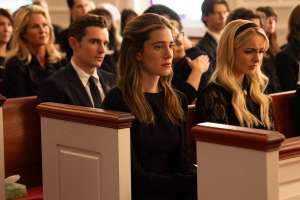 Just glancing through that brief plot synopsis, there are a LOT of elevated, dangerously soapy story elements packed into a two-hour movie, and that’s not including Clancy Brown as a cranky grandfather who Miller feels indebted to take care of as he’s scheduled to begin chemotherapy. There’s a lot going on here, and I’ll just state that there are two movies jostling for dominance that should have been split. The teen storyline does not fit next to the adult storyline. Every time it jumps from one to another, it was tonal whiplash and it became so much more dissonant. That’s because the teen storyline is awash in the burgeoning feelings of new love that we see in many YA tales and teen-centric rom-coms. It’s new and hopeful and very familiar for the teen drama genre. The adult storyline is awash in grief and betrayal, with both spouses trying to make sense of their pain and heartache and uncover what they can of what they didn’t know. One of these stories is bubbly and sunny and comedic, and one of these stories is tragic and searching and painful. They do not work in tandem, each taking away from the appeal of the other.
In particular, the adult drama deserved its own showcase to really explore the details of its complex feelings. Discovering after death that your spouse was not who you thought they were is so conflict-rich, especially that they were linked to another person experiencing that same shock and loss and confusion, it’s a recipe for real anguish and an unknown path of healing. Morgan and Jonah should never have known one another, let alone had an unrequited romance that hangs over them as adults. All this does is set up the obvious coupling, cruelly killing their spouses so these two can finally be together as destiny demands. It would have been far more intriguing for them to discover one another through this shared betrayal, but then again that might remind people of Random Hearts, but then again I doubt anyone recalls much about this 1999 movie that has an 18% rating on Rotten Tomatoes. This is where the real drama lies, but like much else of Regretting You, it’s unexplored and replaced with tropes and predictability. The exploration of grief and anger isn’t even given its proper due. Morgan primarily sits on her couch and drinks wine throughout the day. Jonah at one point rejects his new baby thinking he’s not the biological father. This conflict is, like many others, resolved so simply, merely having Morgan tell him to man up. These characters should be discovering unexpected aspects of themselves through this unique circumstance. These two characters should be striving to process their varied emotions but it’s all too easily distilled into a predictable payoff to their decades-in-the-making romantic matching. It’s reductive and boring.
 The YA-styled romance is also too familiar and underdeveloped as its adult drama. Miller (I hate that his first name is “Miller” – apologies to all first-name “Miller”s out there reading) is the kind of kid who loves movies but never seems to talk about what he loves about them or even make references to them. He wants to be a filmmaker but we don’t see his projects. That’s because Miller isn’t so much a character but being a dreamy ideal boyfriend, a sweetheart who is always concerned for Clara’s well-being and is so respectful of her boundaries and desire to wait to be intimate. He requests help moving a town limits sign a couple blocks every so many days with the intention of eventually having the ability to order from his favorite pizza place that said his home was out of their delivery zone. This is the kind of cute, whimsical activity we expect from the Manic Pixie Dream Girls of romantic comedies. If you think harder about this it actually becomes nonsensical. Why would the pizza shop change their earlier refusal because now there is a sign in front of Miller’s home that says it’s within city limits? It’s only a single sign. The house hasn’t physically moved, the distance is still the same, and the store’s GPS would still indicate as such (“But-but there’s a sign, and even though the sign is inaccurate, you should abide by it”). This is only a silly detail that I don’t mean to harp on but it’s indicative of the lackluster character writing. Because of this there’s really no genuine conflict between the two young lovers. He’s a dull dreamboat ideal.
Really, the only drama present with Clara is when she will discover the harsh truth about her father, and so you’re just waiting for this eventual Sword of Damocles to fall, to have her question why her mom would make this choice. In some regard it makes sense, to hide a painful truth from her daughter, to delay further having to process it herself, but it’s also something that cannot be contained forever. She’s going to find out eventually, and then she’s going to be additionally upset that her own mother withheld this news from her. It’s not like Morgan has complete ownership of this information. It likely would be common knowledge that they died together, in the same car, and it’s hard to believe rumors would not emerge, with classmates snickering behind her back through the school hallways or taunting her directly. It’s a shame that this looming hard truth is the only thing that Clara has going for her in this movie. Their relationship is generally conflict-free, or what conflicts there are are so easily resolvable. She’s young, in love, and her dreamy boyfriend easily ditches his girlfriend, the one obstacle to their union. This is because Clara is not her own character, not even a reflection of her mother; she is only a plot device to be plucked into tears.
 There are a few creative decisions that caused me deep confusion. Chief among them is the choice to have the same actors play their mid-to-late 30s selves as their high school selves. The opening high school graduation just establishes the four characters’ relationships, the obvious fact that Jonah and Morgan feel something for one another but oh well, and that there are unexpected pregnancies. From there the movie makes a sizable time jump but doesn’t make that clear this has happened. So we went from Morgan at a graduation party to Morgan chatting with Clara, and I thought she was a younger sister. Why would I have automatically assumed this is now the 16-year-old daughter that we had just confirmed was a zygote in the previous scene especially when Williams is made to look exactly the same over those 17 or so years? I don’t think the opening was even necessary. They could have established these character histories without a direct flashback where Jonah literally says that maybe they’re with the “wrong people” as he stares deeply into her eyes. This is also the kind of movie that has no faith in its audience, and yet we’re intended to catch the big time jump. Clara sees a movie at Miller’s theater, and he asks her why she’s crying at the conclusion of a Mission: Impossible sequel. She says it’s because her dad took her to a lot of movies. We get it. She associates the movies with her father who she dearly misses. But then the movie adds an additional line where she literally says, “That’s why I’m crying.” Thanks, movie. Ugh.
Something amusing to me that I doubt anyone else would really notice is the design of the movie theater. Miller works at an AMC movie theater so there are a few sequences, including the big rom-com rush to greet one another and have the big swooning kiss moment. Because the movie is a Paramount production, there are only posters present promoting other Paramount movies, 2025 releases like The Running Man and the latest Mission: Impossible, but then also classic movies like Sabrina and The Godfather. God forbid a movie theater advertise other titles from competing film studios. Perhaps this is just a very singularly loyal theater. Anyway, as a person who worked at a movie theater for over a decade, this little incongruous detail stuck with me. It’s the same thing with Miller’s bedroom. All of his posters are Paramount movies, which means he just loves that studio so much. Maybe that’s why he works at a movie theater that plays exclusively Paramount movies (the corporate synergy reminds me of young Christian Grey having a Chronicles of Riddick poster in his childhood bedroom brought to you by Universal). Perhaps somehow Miller doesn’t even know the existence of non-Paramount movies and is in for a world of shock when film school students talk about stuff like Godard and Cassavetes and Fincher and Tarantino, and he’ll just be so pitifully confused.
 With a title like Regretting You, it allows for so many ready-made quips, especially when the finished movie isn’t quite up to snuff. The term “soap opera” is usually referenced as a pejorative, that a movie has so much heightened incidents to be distanced from the nuance of adult reality. However, just because something is soapy in scope doesn’t mean it cannot be fascinating and engrossing in execution. The films of Pedro Almadovar (All About My Mother, Talk to Her, Parallel Mothers) are often, on paper, a random assembly of soap opera histrionics, and yet the man’s creativity and empathy finds, almost without fail, ways to really open up and explore the details of his characters and their unique emotional states. The premise of Regretting You could have done this, but the desire to be appealing to teenagers with the YA-styled teen romance, sabotages the exploration of grief and betrayal into a clipped and frustratingly tidy little package. It’s not good storytelling, folks, but it had some potential to be. There are two more Colleen Hoover film adaptations slated for 2026, and most definitely more even after, so it’s best to prepare dear reader because It Ends With Us wasn’t actually predictive with its title. It only begins.
Nate’s Grade: C-
Share this:

Train Dreams (2025)
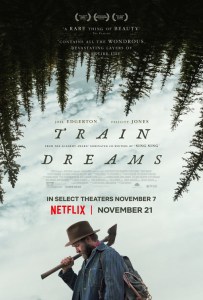 What a superb, tender, and deeply humanistic portrayal of life through the eyes of one man, Robert Granier (Joel Edgerton), a logger in Idaho in the early twentieth century. His life isn’t too different from the lives of many. He wants to spend more time with his wife (Felicity Jones) and child, less time away for months on end for logging, and he has difficulty making friends in his profession of hard work and inherent transience. He feels more connection to the natural world, of which he is felling one tree at a time. The nature of the script, adapted from the 2011 novella by author Denis Johnson, is episodic, people coming in and out of this man’s personal life. The narrative feels like a collection of memories, jumping back and forth in time, connected by ideas and imagery like we do in our minds, and providing a sum total for a life lived. There’s an inherent solemnity and awe to the movie, whether it’s about the transcendence of man’s place in the world, the march of progress, or merely the pull of tragedy and love that seeps into our core being. There is a personal tragedy that defines Robert, and it is devastating to experience and process with him. Director/co-writer Clint Bentley (one half of the same creative team behind last year’s Sing Sing, one of the best movies of 2024) uses this character to represent the totality of the human experience, making the movie feel deeply felt and empathetic even decades removed from its subject. That’s because logging isn’t the movie. It’s about the people, places, and experiences that define us. William H. Macy hasn’t been this good in years. You give me a wise, elegiac narrator in the spirit of Assassination of Jesse James by the Coward Robert Ford, with such pristine details readily supplied, and I’m already a sucker for your movie. The only thing holding back Train Dreams for me was that post-tragedy doesn’t get the attention I think it deserves. You’d expect the second half of the movie would be the process of grieving and coming to terms, and in essence it is, but the movie is far less direct about its processing, which I felt was a minor misstep for an overall great movie.
Nate’’s Grade: A-
Share this:

Frankenstein (2025)
 One of the reasons Mary Shelley’s novel Frankenstein has been so richly relevant two hundred years later is because of her thought-provoking themes and concepts, which still prove potent with each new malleable reinterpretation from the newest creative caretaker. It’s the “be careful what you wish for” adage combined with man’s hubris and our self-destructive impulses to play with things we don’t fully understand. It’s also a monster story that asks us to reconsider the perception of who the monster may truly be, and under writer/director Guillermo del Toro, the answer is always and forever man himself. This isn’t a surprise from the same filmmaker who gave us Hellboy and The Shape of Water. The man identifies with the monsters more than other people. The man turned his astounding stop-motion animated Pinocchio movie into a deft Frankenstein allegory, so the famous story has been on his mind for quite some time. It’s been an obvious influence, and now that he’s gotten his chance on his own imprint, it’s hard not to see elements of del Toro’s other movies everywhere. It creates this bizarre echo chamber of creative influence where the movie can feel derivative at times even though the source material was an influence on those other del Toro works. It’s just the nature of finally tackling the influence later in his career. It reminds me of 2012’s John Carter, based on Edgar Rice Burroughs’ highly influential sci-fi series, and yet because it took 100 years to leap to the big screen, it couldn’t help but seem derivative of the same popular movies that were inspired by it. This is a convoluted way of saying del Toro’s Frankenstein is a much better Guillermo del Toro movie than a Frankenstein adaptation.
You probably know the story well enough to recite it yourself. Victor Frankenstein (Oscar Isaac) is obsessed with conquering death after his own mother’s demise in childbirth. He gathers the parts of criminals and dead soldiers to reanimate into a new being, a Creature (Jacob Elordi) of superhuman strength and regeneration who cannot die. Victor’s cruelty punishes the Creature and disowns it, setting the stage for a showdown between dysfunctional father and son and the havoc caused by recklessly playing God.
 There are deliberate decisions that mitigate some of the more compelling characterization of the novel. With del Toro’s version, Victor is the clear-cut villain. There’s some setup given to his strict childhood where his domineering father (Charles Dance) would quiz him and physically abuse Victor if he failed to recite the correct answers to his medical questions. Dear bad dad was doing this, you see, out of a belief that good doctors need to know intuitively because any hesitation could cost lives. When we witness Victor abusing the Creature in the same manner, we’re meant to see the connection between abusive fathers confusing disappointment with defiance. In the original story, Victor abandons the Creature on the night of its birth and then it’s gone. In this version, Victor imprisons the Creature, keeps him chained, attempts to train him, grows frustrated, and then tries to destroy the evidence. That’s a little more diabolical than simple morning-after regrets. This Victor can also be viewed as a forefather of incels the way he projects his romantic feelings onto Elizabeth (Mia Goth) and then gets huffy when she doesn’t return them. There are other deaths later in the story that are directly attributed to the Creature that are now Victor’s doing, which continues to squeeze out moral ambiguity from Shelley’s novel. If the Creature is purely innocent and Victor is purely villainous, that makes the relationship between father and son, Creator and Creature, far less meaningful and layered. It’s so obvious that another character, in their literal dying words, says to Victor, “You are the real monster.” It all becomes an ongoing cycle of bad fathers and the Creature ultimately trying to reach forgiveness. Even if the Creature ultimately finds that, is this Victor even worthy of redemption?
Another significant feature of del Toro’s retelling is, how do I put this delicately, the inherent magnetism of the Creature, a.k.a. Sexy Frankenstein. Elordi (Saltburn) is a tall, lithe actor to begin with with classical Hollywood features, but there was a conscious choice to portray this figure in a certain light, a sexy light. You might find parts of you that are suddenly alive while watching the character onscreen. That’s why even though he’s a literal assembly of corpses the makeup effects are very minimal and less intentionally grotesque or monstrous. The delicate lines around his body make me think of a cross between the Engineers in Prometheus and the body paint of that Gotye music video “Somebody I Used to Know.” The gentle makeup is meant to further convey the Creature as a sensitive figure; granted, he’s also capable of ripping the jaw off a wolf. By swerving away from the Creature’s physical deformities, the movie is also inadvertently downplaying the isolation that he felt that led to such rage and resentment. Is this man that hideous that some good woman couldn’t love him as is? The movie is already presenting Elizabeth as someone who sees through to his gentle nature, and she certainly also seems more than a little attracted to what he’s got going on. This Sexy Frankenstein reconfirms del Toro’s penchant for identifying with the monster, the outcasts, the underdogs. However, Sexy Frankenstein also takes something away from the horror and cost of the creation if he’s just going to be another brooding, misunderstood Byronic hero. Still, there are definitely worse pieces of meat you could be watching, so enjoy monster sweethearts.
 With all that being said, del Toro’s Frankenstein is still a sumptuously made and entertaining Gothic spectacle. The production design is immense and immersive with del Toro’s knack for perfect details to create such a lived-in sense of mood (never enough giant stone face edifices). I loved Victor’s models of human torsos that looked almost like ballet dancers at rest; granted, ballet dancers having their skin peeled back by dozens of hooks. I just wanted to spend as much time as possible soaking up these sets and this heightened Gothic realm. It’s the kind of world where Victor’s laboratory needs to be an opulent abandoned castle complete with a pit in the middle of the floor plan that goes through several floors to a sewar/aqueduct basement level. There’s even what appears to be a water slide out of the estate, and the Creature gets to escape it in the most fun way. The movie is gorgeous with del Toro’s signature orange/green color palette bathing his universe. Even if the story isn’t quite reaching the heights it could, the visuals are always sterling and inviting. There’s also a surprising amount of gore, which maybe shouldn’t have been that surprising. I don’t know if we needed as much of the Arctic framing device, which itself was structured as a series of letters in the novel. It’s a platform for del Toro to demonstrate the Creature’s physical prowess and get some quality big-screen bloodshed flowing. I don’t know if we needed to keep cutting back throughout the whole running time like it’s a Christopher Nolan movie. Regardless, if you’re a general fan of monster movies, there’s going to be plenty here to proverbially sink your teeth into and savor on that super Netflix budget.
Mary Shelley’s Frankenstein gave birth to science fiction in 1818 and the James Whale movies from the 1930s gave birth to some of cinema’s most iconic and lasting images and influences. There’s quite a legacy for anyone who wants to put their own stamp on the material, so it helps that Guillermo del Toro has quite a legacy himself, a career built upon the dark recesses of a verdant imagination (I’ll always lament what could have been his version of The Hobbit movies, alas). His Frankenstein has all the hallmarks of a classic del Toro film experience, from the impeccable technical qualities, to the celebration of the mythic and Gothic, to the sympathetic portrayal of the outsiders condemned by a society too square to accept them, and an unironic emotional undercurrent that can approach self-parody. It’s a little long, a little ungainly in its shape, and a little too simplistic with its themes and characterization, but it can also be fittingly transporting and romantic and easy to feel that swell even if it’s all too familiar. For my money, the best Frankenstein adaptation is still the 1994 Kenneth Branagh version, flaws and all.
Nate’s Grade: B
Share this:

The Long Walk (2025)

The quality of Stephen King adaptations may be the scariest legacy for publishing’s Master of Horror. The best-selling author has given us many modern horror classics but the good King movies are more a minority to what has become a graveyard of schlocky productions. Everyone has their own top-tier but I think most would agree that for such a prolific author, you can probably count on two hands the “good to great” King movies and have a few fingers to spare. 2025 is a bountiful year for King fans, with the critically-acclaimed The Life of Chuck, the remake of The Monkey, the upcoming remake of The Running Man, which was originally set in a nightmarish future world of… 2025, and now The Long Walk. Interestingly, two of these films are adaptations from King’s Richard Bauchman books, the pseudonym he adopted to release more novels without “diluting the King brand,” or whatever his publisher believed. The Long Walk exists in an alternative America where teen boys compete to see who can last the longest in a walking contest. If they drop below three miles per hour, they die. If they step off the paved path, they die. If they stop too often, they die. There is no finish line. The game continues until only one boy is left.

The Long Walk is juiced with tension. It’s like The Hunger Games on tour. (director Francis Lawrence has directed four Hunger Games movies) I was shocked at how emotional I got so early in the movie, and that’s a testament to the stirring concept and the development that wrings the most dread and anxiety from each moment. Just watching a teary-eyed Judy Greer say a very likely final goodbye to her teenage son Ray (Cooper Hoffman), contemplating what those final words might be if he never returns to her, which is statistically unlikely since he’s one of 50 competitors. How do you comprise a lifetime of feeling, hope, and love into a scant few seconds? It’s an emotionally fraught opening that only paves the way for a consistently emotionally fraught journey. In essence, you’re going along on this ride knowing that 49 of these boys are going to be killed over the course of two hours, and yet when the first execution actually takes place, it is jarring and horrifying. The violence is painful. From there, we know the cruel fate that awaits any boy that cannot follow the limited rules of the contest. The first dozen or so executions are given brutish violent showcases, but as the film progresses and we become more attached to the ever-dwindling number of walkers, the majority of the final executions happen in the distance, out of focus, but are just as hard-hitting because of the investment. Every time someone drops, your mind soon pivots to who will be next, and if you’re like me, there’s a heartbreak that goes with each loss. From there, it becomes a series of goodbyes, and it’s much like that super-charged opening between mother and son. Each person dropping out becomes another chance to try and summarize a lifetime, to communicate their worth in a society that literally sees them as disposable marketing tools. I was genuinely moved at many points, especially as Ray takes it upon himself to let the guys know they had friends, they will be remembered, and that they too mattered. I had tears in my eyes at several points. The Long Walk is a grueling experience but it has defiant glimmers of humanity to challenge the prevailing darkness.
I appreciated that thought has been taken to deal with the natural questions that would arise from an all-day all-night walkathon. What happens when you have to poop? What happens when you have to sleep? The screenplay finds little concise examples of different walkers having to deal with these different plights (it seems especially undignified for so many to be killed as a result of uncontrollable defecation). There’s a late-night jaunt with a steep incline, which feels like a nasty trap considering how sleep-deprived many will be to keep the minimal speed requirement. That’s an organic complication related to specific geography. It’s moments like this that prove how much thought was given to making this premise as well-developed as possible, really thinking through different complications. I’m surprised more boys don’t drop dead from sheer exhaustion walking over 300 miles without rest over multiple days. I am surprised though that after they drop rules about leaving the pavement equals disqualification and death that this doesn’t really arise. I was envisioning some angry walker shoving another boy off the path to sabotage him and get him eliminated. This kind of duplicitous betrayal never actually happens.

There’s certainly room for larger social commentary on the outskirts of this alternative world. King wrote the short story as a response to what he felt was the senseless slaughter of the Vietnam War. In this quasi-1970s America, a fascist government has determined that its workforce is just too lazy, and so the Long Walk contest is meant as an inspiration to the labor to work harder. I suppose the argument is that if these young boys can go day and night while walking with the omnipresent threat of death, then I guess you can work your factory shift and stop complaining, you commie scum. The solution of more dead young men will solve what ails the country can clearly still resonate even though we’re now four decades removed from the generational mistakes of the Vietnam War. The senselessness of the brutality is the point, meant to confront a populace growing weary with The Way Things Are, and as such, it’s a malleable condemnation on any authority that looks to operate by fear and brutality to keep their people compliant. There are some passing moments of commentary, like when the occasional onlooker is sitting and watching the walkers, drawing the ire of Ray who considers these rubberneckers to a public execution. They’re here for the blood, for the sacrifices, for the thrill. It’s risible but the movie doesn’t really explore this mentality except for some glancing shots and as a tool to reveal different perspectives.
Let’s talk about those leads because that’s really the heart of the movie, the growing friendship and even love between Ray and Pete (David Jonsson). They attach themselves early to one another and form a real sense of brotherhood, even dubbing each other the brother they’ve never had before. They’re the best realized characters in the movie and each has competing reasons for wanting to win. For Ray, it’s about a sense of misplaced righteousness and vengeance. For Pete, it’s about trying to do something better with society. His whole philosophy is about finding the light in the darkness but he is very clear how hard living this out can be on a daily basis. It’s a conscious choice that requires work but a bleak universe needs its points of light. Of course, as these gents grow closer to one another, saving each other at different points, the realization sets in that only one of these guys is going to make it across the proverbial finish line. We’re going to have to say goodbye to one of them, and that adds such a potent melancholy to their growing friendship, that it’s a relationship destined to be meaningful but transitional, a mere moment but a lifetime condensed into that moment. It’s easy to make the connection between this shared camaraderie built from overwhelming danger to soldiers being willing to die for their brothers in arms. Hoffman (Licorice Pizza) and Jonsson (Alien: Romulus) are both so immediately compelling, rounding out their characters, so much so that the whole movie could have been a 90-minute Richard Linklater-style unbroken conversation between the great actors and I would’ve been content.

My one reservation concerns the ending and, naturally, in order to discuss this I’ll be dealing with significant spoilers. If you wish to remain pure, dear reader, skip to the final paragraph ahead. It should be no real surprise who our final two contestants are because the filmmakers want us to really agonize over which of these two men will die for the other. Since we begin with Ray being dropped off, we’re already assuming he’s going to be the eventual winner. He’s got the motivation to seek vengeance against the evil Major who killed his father for sedition by educating Ray about banned art. He’s also been elevated to our lead. Even Pete has a monologue criticizing his friend for ever getting involved when he still has family. Pete has no family left and he has ideals to change the system. The screenplay seems to be setting us up for Pete being a change agent that forces Ray to recognize his initial winning wish of vengeance is selfish and myopic for all the bad out there in this warped society. It seems like Pete is being set up to influence Ray to think of the big picture and perhaps enact meaningful change with his winning wish. There’s even a couple of moments in the movie Pete directly saves Ray, going so far as to purposely kneel to allow Ray the opportunity to win. There’s also the Hollywood meta-textual familiarity of the noble black character serving as guide for the white lead to undergo meaningful change. It all feels thoroughly fated.
Then in a surprise, Ray pulls the same stunt and purposely stops so his buddy can win by default. As Ray dies, he admits that he thinks Pete was the best equipped to bring about that new world they were talking about. He dies sacrificing his own vengeance for something larger and more relevant to the masses. And then Pete, as per his winning wish, asks for a rifle, shoots and kills the Major, thus fulfilling Ray’s vendetta, and walks off. The end. The theme of thinking about something beyond personal grievance to help the masses, to enact possible change, is thrown away. So what was it all about? The carnage continues? It seems like thematic malpractice to me that the movie is setting up its two main characters at philosophical odds, with one preaching the value of forgoing selfish wish-fulfillment for actual change. The character arc of Ray is about coming to terms not just with the inevitability of his death but the acceptance of it because he knows that Pete will be the best person to see a better world. The fact that Pete immediately seeks bloody retribution feels out of character. The Long Walk didn’t feel like a story about a guy learning the opposite lesson, that he should be more selfish and myopic. It mitigates the value of the sacrifice if this is all there is. Furthermore, it’s strange that the bylaws of this whole contest allow a winner to murder one of the high-ranking government officials. Even The Purge had rules against government officials and emergency medical technicians being targeted (not that people followed those rules to the letter). Still, it calls into question the reality of this deadly contest and its open-ended rewards. If a winner demanded to go to Mars, would the nation be indebted to see this through no matter the cost? Suddenly contestant wishes like “sleep with ten women” seem not just banal but a derelict of imagination.

Affecting and routinely nerve-racking, The Long Walk is an intense and intensely felt movie. I was overwhelmed by tension at different points as well as being moved to tears at other points. While its dystopian world-building might be hazy, the human drama at its center is rife with spirit and life, allowing the audience to effortlessly attach themselves to these characters and their suffering. I feel strongly that the very end is a misstep that jettisons pertinent themes the rest of the movie had been building, but it’s not enough to jettison the power and poignancy of what transpires before that climactic moment. The Long Walk has earned its rightful place in the top-tier of Stephen King adaptations.
Nate’s Grade: B+


 nathanzoebl
You must be logged in to post a comment.