Blog Archives
Ghostbusters: Frozen Empire (2024)
 I am a lifelong Ghostbusters fan, I enjoyed the 2021 reboot, and I come to the sequel, Frozen Empire, as one of those fans that grew up with the cartoon series in the 1980s. There is a contingent of Ghostbusters fans who dismiss the movie as merely a comedy about a bunch of schlubs who resort to paranormal shenanigans to make a buck, and these fans dismiss anything larger in world-building, mythology, or direct sincerity as missing the point. I disagree. There can be a vivid, flourishing world of supernatural beings and connections to the human world, if you can tell a compelling story with characters we want to follow. Frozen Empire is an okay TV episode expanded into movie form, finding little for most of the voluminous characters to do. There’s an ancient evil and tying back the legacy characters, who don’t present much meaning beyond extended cameos. The 2021 movie had me on an emotional level, saying goodbye to a character and seeing how that loss has affected multiple generations of his estranged family. The closest thing Frozen Empire features to emotion is young Phoebe Spangler (Mackenzie Grace) wanting to be treated like a responsible adult and making friends with a ghost girl. It’s kind of sweet, and it’s smart to tie this friendship into the larger threat. The movie has several side plots littering the peripheral, from Finn Wolfhard trying to catch Slimer and being trusted to drive the Ecto-One, to Paul Rudd trying to find his footing as a stepdad, to Kumail Nanjiani as a junk dealer learning to follow his family’s noble mission of protecting others. I liked learning more about Winston’s (Ernie Hudson) Men in Black-style secret agency of studying ghosts and testing out new supernatural tech, and it presents a fun new setting where we can learn more. The ultimate story about defeating an evil spirit, coming together as a team, and learning to give others room to succeed or fail all seem a little pat, a little too familiar. It’s fine that this movie has lower stakes, even with a would-be apocalyptic threat of ancient evil. Not every movie needs to avert the apocalypse. It feels like little thought has been given to extending the new characters from the 2021 movie. There are too many characters to service here, which is why everyone other than Phoebe feels like a nascent supporting character or overextended cameo at worst (did we need the return of Podcast?). It’s still a fun movie that any Ghostbusters fan will likely find enough to enjoy, but it also feels like it might be the last Ghostbusters movie, at least this iteration, and it ends with a reminder of what the franchise can be, at its best, but also a warning of what it can be without careful development and vision.
Nate’s Grade: B-
Share this:

Lost in Translation (2003) [Review Re-View]
 Originally released October 3, 2023:
Sofia Coppola probably has had one of the most infamous beginnings in showbiz. Her father, Francis Ford, is one of the most famous directors of our times. He was getting ready to film Godfather Part III when Winona Ryder dropped out weeks before filming. Sophia Coppola, just at the age of 18, stepped into the role of Michael Corleone’s daughter. The level of scathing reviews Coppolas acting received is something perhaps only Tom Green and Britney Spears can relate to. Coppola never really acted again. Instead she married Spike Jonze (Being John Malkovich) and adapted and directed the acclaimed indie flick, The Virgin Suicides. So now Coppola is back again with Lost in Translation, and if this is the kind of rewards reaped by bad reviews early in your career, then I’m circling the 2008 Oscar date for Britney.
Bob Harris (Bill Murray) is a washed up actor visiting Tokyo to film some well-paying whiskey commercials. Bob’s long marriage is fading and he feels the pains of loneliness dig its claws into his soul. Bob finds a kindred spirit in Charlotte (Scarlet Johansson), a young newlywed who has followed her photographer husband (Giovanni Ribisi) to Japan and is second-guessing herself and her marriage. The two strike up a friendship of resistance as strangers in a strange land. They run around the big city and share enough adventures to leave an indelible impression on each other’s life.
 Lost in Translation is, simply put, a marvelously beautiful film. The emphasis for Coppola is less on a rigidly structured story and more on a consistently lovely mood of melancholy. There are many scenes of potent visual power, nuance of absence, that the viewer is left aching like the moments after a long, cleansing cry. There are certain images (like Johansson or Murray staring out at the impersonal glittering Tokyo) and certain scenes (like the final, tearful hug between the leads) that I will never forget. Its one thing when a film opens on the quiet image of a woman’s derriere in pink panties and just holds onto it. It’s quite another thing to do it and not draw laughs from an audience.
Murray is outstanding and heartbreaking. Had he not finally gotten the recognition he deserved with last year’s Oscar nomination I would have raged for a recounting of hanging chads. Murray has long been one of our most gifted funnymen, but later in his career he has been turning in soulful and stirring performances playing lonely men. When Murray sings Roxy Music’s “More Than This” to Johansson during a wild night out at a karaoke bar, the words penetrate you and symbolize the leads’ evolving relationship.
Johansson (Ghost World) herself is proving to be an acting revelation. It is the understatement of her words, the presence of a mature intelligence, and the totality of her wistful staring that nail the emotion of Charlotte. Never does the character falter into a Lolita-esque vibe. Shes a lonely soul and finds a beautiful match in Murray.
 Lost in Translation is an epic exploration of connection, and the quintessential film that perfectly frames those inescapable moments of life where we come into contact with people who shape our lives by their short stays. This is a reserved love story where the most tender of actions are moments like Murray carrying a sleeping Johansson to her room, tucking her in, then locking the door behind. The comedy of disconnect is delightful, like when Murray receives incomprehensible direction at a photo shoot. The score by Jean-Benoît Dunckel, front man of the French duo Air, is ambient and wraps around you like a warm blanket. The cinematography is also an amazing experience to behold, especially the many shots of the vast glittering life of Tokyo and, equally, its emptiness.
Everything works so well in Lost in Translation, from the bravura acting, to the stirring story, to the confident direction, that the viewer will be caught up in its lovely swirl. The film ends up becoming a humanistic love letter to what brings us together and what shapes how we are as people. Coppola’s film is bursting with such sharply insightful, quietly touching moments, that the viewer is overwhelmed at seeing such a remarkably mature and honest movie. The enjoyment of Lost in Translation lies in the understanding the audience can feel with the characters and their plight for connection and human warmth.
Writer/director Sofia Coppola’s come a long way from being Winona Ryder’s last-second replacement, and if Lost in Translation, arguably the best film of 2003, is any indication, hopefully well see even more brilliance yet to come. This is not going to be a film for everyone. A common argument from detractors is that Lost in Translation is a film lost without a plot. I’ve had just as many friends call this movie “boring and pointless” as I’ve had friends call it “brilliant and touching.” The right audience to enjoy Lost in Translation would be people who have some patience and are willing to immerse themselves in the nuances of character and silence.
Nate’s Grade: A
——————————————————
WRITER REFLECTIONS 20 YEARS LATER

I have never done this before in the four years of my re-reviewing movies, but I really just want to quote my introduction into Lost in Translation because I feel like this perfectly sets the scene, as well as giving my 21-year-old self some kudos: “Sofia Coppola probably has had one of the most infamous beginnings in showbiz. Her father, Francis Ford, is one of the most famous directors of our times. He was getting ready to film Godfather Part III when Winona Ryder dropped out weeks before filming. Sophia Coppola, just at the age of 18, stepped into the role of Michael Corleone’s daughter. The level of scathing reviews Coppola’s acting received is something perhaps only Tom Green and Britney Spears can relate to. Coppola never really acted again… So now Coppola is back again with Lost in Translation, and if this is the kind of rewards reaped by bad reviews early in your career, then I’m circling the 2008 Oscar date for Britney.” Besides the unnecessary broadside against Ms. Spears, who I’ve already apologized for with my re-review of 2002’s Crossroads, I think all this holds true. Within three films, Sofia Coppola went from an unfortunate punchline (not her fault!) to Oscar winner and indie darling.
Lost in Translation was my favorite American movie of 2003, so I’m always curious how my then-favorites stack up twenty years later. I’ve softened on American Beauty and Requiem for a Dream, and still consider The Iron Giant, Magnolia, and Moulin Rouge to be excellent. My feelings toward Lost in Translation, upon re-watch, remain mostly the same, though after two decades of watching other slow-burn, character-centric indies and widening my viewing, its highs aren’t quite the rhapsodic high for me in 2023 but it’s still an effective melancholy mood piece.
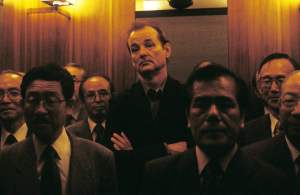 Lost in Translation taps directly into a universal feeling of yearning for connections in a time where it’s becoming easier and easier to disconnect into our own little bubbles. You don’t have to be stuck in a foreign country to feel isolated or out of sorts, and Coppola uses the external circumstances as a means of reinforcing the emotional isolation and then re-connection of her characters. This is why I brush aside some of the harsher criticisms levied against Coppola’s portrayal of Japanese culture and the locals. This is an outsider portrayal, and I don’t think there’s so much a critical judgment over Japanese culture as being inferior as just being different from what these characters are used to. They are clearly out of their element; it’s not that the culture is weird, it’s that the culture is different (that doesn’t mean there aren’t some overstayed stereotypes here as well). Trying to simply communicate with people that all speak another language is a quick and accessible dynamic to better visualize and articulate disconnect. I feel like this story could have been told from any racial or ethical perspective; it’s about two outsiders finding one another. The racial dynamics are less important. Obviously Coppola’s own personal experiences and outsider perspective in Japan are what provides the specific details with this tale, but I think what makes the movie still so effective in 2023 is because it’s so relatable on a deeper level that it eclipses any specific personal details. It’s about feeling lost and then feeling seen.
The key scene for me happens about seventy minutes into the movie, after Bob (Bill Murray) and Charlotte (Scarlett Johansson) have had an adventure with the Japanese hospital system. They’ve become one another’s insomnia buddies, teaming up to explore the city’s nightlife. As they lay side by side in bed during the wee hours, they have an intimate and poignant conversation, and it has nothing to do with sex. “I’m stuck,” she says. “Does it get any easier?” It’s about a young woman asking a middle-aged man for guidance and wisdom and him offering what he can with the caveat that he too is still struggling for his own wisdom. It’s the illusion that at some magic predetermined number of trips around the sun, the mystery of life will somehow become perfectly realized, as if now we can see the grand architectural design. There is no magic number. Everyone is trying their best and making it up as they go, and that’s what this conversation represents. She’s begging for reassurances that adult life will get easier, that she’ll find her footing, and Bob encourages her to continue pursuing her hobbies and passions even if she can’t stand her own art (which sounds like every artist I’ve ever known). Much of his actionable advice comes down to being patient including with yourself. Everybody is in their own way trying their best with what they have. He assures her that the more she gets comfortable with who she is the less things can bother her. It’s a beautiful scene and the reason it works even better is that Coppola doesn’t treat this moment with the gravity it has. It’s not even the film’s climax. Much like real life, when we look back at the exchanges that prove the most formative, we don’t have alarms ringing to better inform us that this is a moment that will have maximum import. We don’t know until it’s over.
 I have never viewed Lost in Translation as some kind of will-they-won’t-they May-December romance, and at no point was I secretly hoping that Bob and Charlotte would get together. This is because they do get together but it’s not a purely romantic connection, although once you start really analyzing romance itself, there are far more complicated and nuanced dimensions to this overly simplified concept, and one could argue this is a romance of sorts but not one about physical passion and infatuation that dominate our association. It’s about two human souls drifting along in life who find a kinship with one another when they need it the most. I never wondered at the end whether they would kiss or have some kind of affair or even run off together, because that wasn’t what was so essential to this dynamic. It wasn’t how far they would go for love, including what would they give up or who would they hurt, it was about each of them serving as a life preserver, something to hold onto during a turbulent time. I truly believe that if they had kissed and had some kind of tawdry love affair that the film would have been cheapened. When Bob carries Charlotte back into her hotel room bed, I never viewed this act as two lovers but of a father and daughter. It’s too easy to just reduce every relationship into a sexual pairing. We all have meaningful relationships with many people who occupy different spheres of our life and our experiences, and our lives could be irreversibly altered without their influence no matter how fleeting our time together may have been. To reduce everything into whether they spark something sexual or passionate is just plain boring.
This was a turning point in the careers of all three of its major figures. For Coppola, it was confirmation of her artistic voice and stepping from the long shadow of her father. She won an Oscar for Best Original Screenplay and was nominated for Best Director, only the third woman ever at that time. That’s a big deal. This was a statement film for her and she’s been making very leisurely paced, lushly photographed, somber character pieces since, very Sofia Coppola Movies (her latest promises to highlight the perspective of Priscilla Pressly). She never quite had another movie land as well as this one though 2006’s Marie Antoinette is due for a reappraisal as well. For Murray, it was confirmation that he had real dramatic acting skills that he’d shown flashes of in other movies like The Razor’s Edge and Rushmore, and it earned him his only Academy Award nomination. For Johansson, it was also the beginning of establishing her as an adult actress of serious caliber, and there was a critical stir that she had been snubbed by the Academy in 2004 not just for her role in Lost in Translation but also Girl with Pearl Earring. Johansson had been a steadily working actress since she was a child, and this was confirmation that she was ready to make the next jump. From there, she found a creative kinship with Woody Allen, and Wes Anderson, and even became an action movie star that could headline her own blockbusters. She finally got her first Oscar nominations in 2019, for both Marriage Story and Jojo Rabbit, becoming only the twelfth actor ever to be nominated twice in the same year. Murray’s star has fallen out of favor recently from his onerous onset behavior, though he did reunite with Coppola for 2020’s On the Rocks.
 One of the stranger post-scripts for this movie relates to Johansson’s singing. The karaoke scene in Lost in Translation is one of the best, and it works on a magical elemental level where the music becomes our means of expression. When Murray sings “More Than This,” it’s hard not to read more into the moment. It’s right there in the song choice. Both actors do their own singing, adding to the fun and authenticity. Johansson would later release her own album in 2008 titled Anywhere I Lay My Head. It wasn’t uncommon for young actresses to moonlight as singers for a vanity project (Paris Hilton and Lindsay Lohan did this too), but what set this album apart was that it was almost entirely comprised of Tom Waits covers. According to Yahoo, as of August 2009, it had sold only 25,000 copies, which to be fair is twenty-five thousand more than I’ve ever sold, so what do I know? She released one more music album, 2009’s Break Up.
Looking back at my original 2003 review, it’s easy to see how smitten I was discovering Lost in Translation and trying to argue its virtues in my college newspaper. I think I assumed most of my fellow collegians would rather watch raunchy comedies like Van Wilder rather than a slow-burn indie about sad people roaming a foreign city. To this day I still have an equal number of friends who deem Lost in Translation as slow navel-gazing fluff to beautiful and beguiling. As I said before, it’s a mood piece about disconnected people, and I think if you’re in the right mood, or an open mind with the patience to spare, then there’s still something appealing and rewarding about an understated movie about two lonely people finding an unexpected kinship that defies reductive romantic classification. I just experienced something on this level with 2023’s Past Lives. I’m glad that Coppola has kept the final whisper between Bob and Charlotte a secret because it doesn’t matter what he specifically says so much as the meaning of this exchange for the both of them. It’s a goodbye of sorts but also a recognition of one another’s help and compassion. It’s not for us to hear. It’s too intimate. It’s a perfect ending for a film that still proves indelible twenty years later.
Re-View Grade: A-
Share this:

Ant-Man and the Wasp in Quantumania (2023)
 Phase Four of the Marvel Cinematic Universe (MCU) has had a bumpy ride, coming after the significant climax of 2019’s Avengers Endgame and releases shifting thanks to COVID, with plenty of think pieces and pundits waiting to seize upon the possible decline of the MCU’s box-office and pop-culture dominance. This was still a phase with several enjoyable blockbusters with stars of old (Black Widow, Loki, Black Panther 2, Spider-Man No Way Home) and stars of new (Shang-Chi, Ms. Marvel), but it’s been defined by movies and series that have not engendered the same level of passion with fans and audiences, and left many questioning whether audiences are finally suffering from dreaded Marvel Fatigue. I cannot say, because even movies people were so-so on have generated tons of money, and it’s not like I even have to travel far in the past for a good-to-great Marvel movie with Wakanda Forever last November. However, after the muddled response to a third Ant-Man movie, as well as a bland Shazam sequel within weeks, then the old media narrative reignites the Marvel Fatigue question. I think the better question is aimed at the studio and whether we’re entering into Marvel Complacency.
Scott Lang (Paul Rudd) is trying to live a normal life, at least for a superhero that helped save the world. His adult daughter Cassie (recast as Kathryn Newton) is a social activist and a burgeoning scientific genius, and with the help of her grandad, Hank (Michael Douglas), they’ve developed a way to communicate into the Quantum Realm, the metaphysical world of subspace where Janet (Michelle Pfeiffer) was lost for decades. The entire family gets sucked into the Quantum Realm and separated, fighting to make their way in a strange new land. Among all the unorthodox beings is Kang (Jonathan Chambers), a banished interdimensional conqueror. He’s looking to break free of his prison and thinks Scott can be persuaded to help under the right pressure.
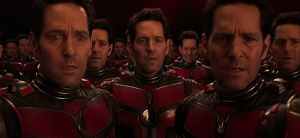 Ant-Man and the Wasp in Quantumania is blatantly weird and shapeless, which allows for some of the most silly character designs in the MCU yet, and it also adds up to so precious little. From a character standpoint, we get minimal forward progress, which is strange considering Scott was deprived of years from his daughter, missing out on her growing up into an adult. When you have a villain who can manipulate space and time, and this scenario, wouldn’t you think that the ultimate appeal would be to regain that lost time? Maybe Scott feels like this older Cassie is a version of his daughter he doesn’t recognize, and he misses the innocence of her younger self, and therefore he wishes to experience those moments he had missed. Mysteriously, this doesn’t factor in at all with Ant-Man 3. I suppose it’s referenced in vague terms, but you would think the thematic heft of this movie would revolve around lessons learned about thinking in the past, of trying to recapture what is gone, of moving onward and trying to be present for those we love, you know, something meaningful for the characters besides victory. Nope, as far as Cassie is concerned, she serves two story purposes: 1) being a plot device for how we got into this crazy world, and 2) being a damsel in distress. Kang’s threats to withhold Cassie or harm her are the motivating factor for him to collaborate with the villain. How truly underwhelming. I did enjoy a sequence where a plethora of Scotts across multiple timelines come to work together with a common goal, with every one of the many Scott’s love for Cassie being their top ambition.
As for the universe existing between space, the Quantum Verse of our title, it’s the highlight of the movie, so if the characters and their personal conflicts aren’t hitting for you, like me, then at least there’s some fun diversions to be had with every new locale and introduction. There’s an enjoyable sense of discovery like a new alien world where the possibilities seem endless. The strange quirks were my favorite. I adored the exuberant goo creature Veb (David Dastmalchian) fascinated by other creatures having orifices. There’s also a mind reader played by William Jackson Harper, who was comically brilliant on The Good Place, and just repeating the same lazy joke here about people’s minds being gross. There’s even Bill Freakin’ Murray as a lord. I enjoyed how many of the new characters, many of them strange aliens, had prior relationships with Janet, and her hand-waving it away explaining that over thirty years she had certain needs. This subplot itself could have been given more. time, with Janet having to deflect Hank’s sexual inadequacies in the face of so many virile lovers (“How can I compete with a guy with broccoli for a head?”). I think this reunited couple confronting their discomfort would be far more entertaining than yet another massive CGI face-off with thousands of soulless robots. There are interesting moments and characters in this strange new world, but they’re all so fleeting, meant to be a goofy supporting character or cameo or simply a one-off joke and not what matters.
 Like Multiverse of Madness and Love and Thunder, this feels very much like a table-setting MCU movie, meant to move the pieces along and set up other movies, chiefly the next Thanos-level big bad with Kang, first portrayed in Loki’s season one finale in 2021. I found this character version underwhelming. Part of this is that Kang’s first appearance was so memorable, spirited, anarchic, but also subversive, going against the audience expectations of what the final confrontation with the puppetmaster was going to involve. With Ant-Man 3, this version of Kang is an overly serious, well-poised castoff in a secondary Shakespeare play, which would work if the screenplay gave the guy anything interesting or memorable or even really threatening to play. He’s just another authoritarian who speaks in grand speeches of their greatness and then proves not to live up to his much-hyped billing. I worry that the next few years of the MCU will feature a rotating set of Kangs to topple with every film, which will make the villain feel less overwhelming and powerful and more like a reoccurring Scooby Doo villain (“I would have gotten away with it too, if it wasn’t for you meddlin’ heroes, and YOUR ANTS!”). This isn’t to say that Majors (Creed III) gives a poor performance. It’s just so stubbornly stern and shouty and rather boring in comparison to He Who Remains from his Loki appearance. Note to Marvel: given the serious charges that have surfaced against Majors, if you do wish to recast the role, a character who is different in many universes should be a pretty easy explanation for any change.
Is Ant-Man and the Wasp in Quantumania the beginning of the end of the country’s love affair with the MCU? Well… probably not. Just three months later, Guardians of the Galaxy vol. 3 hit it big, so maybe it’s less fatigue with big screen superhero escapades and more fatigue with mediocre movies. Maybe the public won’t be so forgiving of less-than-stellar efforts, but at this point the MCU in a moving train and some movies seem to get caught in the churning wheels of “progress.” After thirty movies and counting, some of the novelty is gone, that means just delivering the same old won’t deliver the same old results. Too much of Ant-Man 3 feels like the characters are inhabiting a large and empty sound stage. The visuals are murky and gunky and less than inspiring, and while some of the special effects are occasionally dodgy, they aren’t the travesty that others have made them out to be (though MODOK is… something, I suppose). It’s such a dank-looking movie that it feels like somebody put the light settings on power saving. There were things I enjoyed but most of Quantumania left me indifferent, and that’s the feeling I got from the cast and crew as well. I dearly missed Michael Pena’s Luis, who should have gone along for the ride just for his commentary for all the weirdness. At this point, you’re along for the MCU ride or not, and this won’t deter your 15-year investment, but coasting on its laurels will also not satisfy anyone. Not every MCU entry will be great, but they can at least try harder.
Nate’s Grade: C+
Share this:

Ghostbusters: Afterlife (2021)
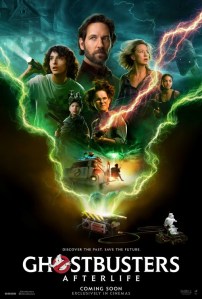
As I stated in my review for the 2016 Ghostbusters, allow me to wax nostalgic and explain my own private history with the franchise: “Growing up in the 80s, other kids had Transformers, or G.I. Joe, or He-Man, but I was a Ghostbusters kid. I fell in love with the 1984 original movie, slept below the poster for most of my childhood, and obsessively collected all of the action figures and toys, watched with glee the animated TV series, and hold the world and its characters in a special personal place.” This franchise means something to me. I think about the hours I spent playing in this world and my imagination and my own stories illustrated with marker and crayon, and it makes me extremely happy as well as reminds me how I fell in love with weird storytelling and macabre, ironic humor. I’ve been waiting for more Ghostbusters movies for my adult life. The 2016 movie was fine, I wasn’t enraged by it in the slightest, but it didn’t scratch that itch. While replicating some of the same plot beats, the 2016 movie was not reverent to its source material. Now the 2021 Ghostbusters, delayed over a year and a half from COVID, goes completely in the other direction. Ghostbusters: Afterlife is reverent to a fault, and while it has been met with mixed reviews and complaints of overdosing on slavish fan nostalgia, I found it to be a charming and fun family adventure that left me laughing, cheering, and even crying.
Egon Spangler (Harold Ramis, R.I.P.), original Ghostbuster, is dead, killed by a malevolent spirit. His estranged adult daughter, Callie (Carrie Coon), and her two teen children, Trevor (Finn Wolfhard) and Phoebe (Mackenna Grace), are shocked to learn of his death and their unexpected inheritance: a dirt farm in small-town nowheresville Oklahoma. They don’t know much about their grandfather and the kids are not exactly excited about relocating to a secluded mining town. Phoebe starts discovering weird pieces of technology hidden in the old house of her grandfather’s. A presence seems to be reaching out and trying to get the family to understand their real legacy. It appears that Gozer the Gozerian was not fully defeated on top of that New York City skyscraper in 1984, and Phoebe and her family must learn about the past in order to make sure we all have a future.
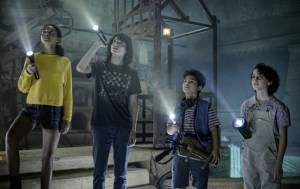
I can understand the charges of Afterlife being too nostalgic, but I don’t understand the charges of it being so enamored with its past that it poses a disservice to the movie standing on its own. This movie is intended at its very DNA to live within the shadow of the original films. The director and co-writer, Jason Reitman, is the son of the original films’ director, Ivan. It’s going to be reverent but that’s not an automatic bad thing. Whereas the 2016 reboot shrugged at past convention and went completely comedic, this edition takes the opposite approach, hugging onto the lore and past of Ghostbusters with heartfelt affection. If you’re a fan of the franchise, this adoring approach will likely be more favorable, not that the 2016 film is wrong for eschewing the established canon of the franchise and trying something new. If Afterlife had been a completely original story set in a Ghostbusters universe, I would have happily accepted that. However, just because something is outwardly nostalgic, or taps into fan service, does not mean it is destined to be an exclusive retread that only satisfies the hardcore base. I didn’t need the gratuitous Easter eggs of passing shots of a twinkie or Crunch bar, but they’re blink-and-you’ll-miss-them moments that don’t really relate to anything of consequence, so I can excuse them. Afterlife is similar to The Force Awakens in that it uses familiar plot beats to mirror events of its predecessors to ease back fans and new members to the fanclub, most especially in Act Three where Gozer’s demonic pooches are unleashed. I can understand many chaffing at this, but I feel that Afterlife does enough to justify its own creative existence even in facsimile rather than as some insular, facile, fan-stroking cash-grab.
This is, by far, the most dramatic of the Ghostbusters movies, a series that has existed in the realm of comedy. The prior movies were never spooky on adult terms, but they reached back into a primal, childlike curiosity and anxiousness over the unknown that made them creepy when they wanted to be. I don’t understand the umbrage some have expressed over Afterlife being more of a drama. First, the comedy is present throughout the movie with the characters making specific and wry observations that feel fitting for their situation. The humor is not as forced as the loping line-a-rama improv jazz riffs of Paul Feig’s 2016 film. I think this universe can sustain different kinds of stories being told, and I think that drama is perfectly acceptable as long as it’s earned, just like the comedy or horror elements. The central premise involves an estranged family coming to know the secret life of an absentee relative who abandoned them, so the more they learn about his Ghostbusting past and responsibilities, the closer they come to uncovering a clearer picture of who this man really was as well as their connections to him. Reitman and co-screenwriter Gil Kenan (Monster House) have smartly connected the investigation of the past into the development of personal relationships. We in the audience know the significance of the Ecto One and the ghost traps, but the new characters do not. We await them to understand the knowledge we already attain, but the movie doesn’t play this as characters dawdling. Each discovery unlocks new potential for the characters to shape who they choose to be, and each one gets them closer to their grandfather and reshaping their conception of the man who they wrongfully believed abandoned them for folly.
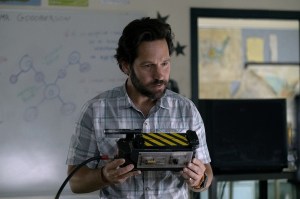
This all leads to a climax that had me genuinely in tears. I won’t exactly spoil it but Afterlife’s conclusion is less concerned with beating the Big Bad Gozer yet again and saving the universe. Reitman and company have smartly placed the real climax as an emotional catharsis; it’s more in keeping with Field of Dreams than some huge Marvel apocalyptic showdown. The ending is personal, emotional, and reaches into our universal desire for closure, for having that one last moment with a beloved who we no longer have any moments left to share, Reitman is clearly missing Ramis, a close family friend and inspiration who died in 2014, and this is his own way of processing his personal grief, offering an emotional output for the fans to share in, and allowing a grieving character/surrogate to find that needed release. It serves as a fitting conclusion and a special end note for any Ghostbusters fan who has held this franchise close to their heart for several decades, especially if shared with a paternal figure who may be gone.
The film also successfully channels a childhood perspective of awkward and awesome. It’s hard to create a story where a group of precocious adolescents discover strange things cooking in their sleepy small town without suggesting Stephen King and Stranger Things, but this isn’t necessarily a total negative. The earlier movies were always from a more cynical adult perspective. Yes, there were characters like Ray (Dan Ackroyd) and Egon who were true believers, but they were often set up for easy laughs. The tone of the series was mostly tied to the irony of the character of Peter Venkman (Bill Murray) that looked at the supernatural with droll detachment. This is the first Ghostbusters entry where the primary perspective is from children, and there’s something hopeful and heartfelt about a younger point of view with the supernatural material. These kids are excited and eager to learn more about the somethings strange in their neighborhood. It becomes endearing to ride along with them as they get to jump into the action. I loved the concept of a sidecar gunner seat for the Ecto One and how it felt like a childhood dream coming true. But it’s more than fan service because it serves as a point of progression for Phoebe’s sense of self, of embracing her scientific interests and roots, and taking charge in the face of unknown danger. It’s a coming out of sorts. When the kids are driving through (the always empty?) town and chasing a runaway ghost, wrecking storefronts from the boom of the proton pack, it’s a blast for them and us.

This is Reitman’s most commercial and mainstream film of his Oscar-nominated career. It’s interesting to me that this indie darling, who was on such a hot streak in the late 2000s, hit some speed bumps with the critical misfires of 2013’s Labor Day, 2014’s Men, Women, and Children, and 2018’s The Front Runner, so the next movie is a retreat to a big-budget franchise film. Reitman doesn’t necessarily have the best feel for large-scale spectacle, but he knows intimate character dramas and guides his actors well. Grace (Gifted, Haunting of Hill House) is wonderful as our plucky lead. Unfortunately for Wolfhard (It, Stranger Things), his dull character has nothing to do but pine for a local girl, scoff at his family, and then fix up the old ghostbustin’ mobile. Paul Rudd (Ant-Man) is as charming as ever as the school science teacher, especially as he nerds out over interacting with the Ghostbusters paraphernalia like an excitable fanboy living out his childhood dream. I wish Coon (The Leftovers) had more to do, but that’s my primary complaint in any movie where Carrie Coon is a supporting actress. Her chemistry with Rudd is strong and they could have done so much more together as adults trying to make sense of madness. They could have eliminated Wolfhard’s mopey older brother character entirely and given us more time with the goofy adults too. One feels like there is some secret contract where anything relating to 80s nostalgia requires the hiring of Wolfhard on hand.
Ghostbusters: Afterlife will not be the best movie of 2021. There are areas that could have been improved and streamlined and better developed. However, Ghostbusters: Afterlife will most assuredly be my favorite film experience of 2021. It’s a heart-warming continuation for fans with enough wit and whimsy to charm while owning its obvious and intended connections to the original. I may not be the most objective source on this particular matter, but I know what I like, and this movie had moments of pure happiness that just shot right through to my dopamine center. We’ll see if this movie can restart the dormant franchise, and strike more on its own, but even if this lone 2021 entry is all that we eventually get, I’m happy I got to experience this magic once again. I can’t wait to see it again with my dad.
Nate’s Grade: B+
Share this:

The French Dispatch (2021)
 Wes Anderson’s latest quirk-fest is his usual cavalcade of straight-laced absurdity, exquisite dollhouse-level production design, famous faces popping in for droll deadpans, and the overall air of not fully getting it. The French Dispatch is structured like you’re watching the issue of a news magazine come to visual life, meaning that the two-hour movie is comprised of mainly three lengthy vignettes and a couple of short asides. This narrative decision limits the emotional involvement and I found myself growing restless with each of the three segments. I was amused throughout but each felt like a short film that had been pushed beyond its breaking point. Perhaps that is Anderson’s wry, subtle point considering the entire journalistic voice of the movie feels like somebody made a movie in the style of one of those esoteric, supposedly “funny” New Yorker cartoons. It’s occasionally so arch and droll that it feels too removed from actual comedy. This is not the most accessible Anderson movie for a newbie; it’s very bourgeois in the kinds of people it follows, the stories it pursues, and the intellectual and political conflicts it demonstrates. The first and best segment follows Tilda Swinton discussing a heralded but imprisoned experimental artist (Benicio del Toro) who is dealing with the pressure to produce. The second segment follows Frances McDormand as she investigates a Parisian student union revolting against the ignorant powers that be. The third segment follows Jeffrey Wright recounting an assignment where he investigated a master police chef (not “chief”) and gets in the middle of a wacky hostage negotiation. Each of them has the requisite charm and random asides we’ve come to expect from Anderson, including a leotard-wearing strongman that is called upon by the police to help during the hostage crisis, but it felt more like a collection of overlong short films than a cohesive whole. If you’re already a fan, by all means, step into The French Dispatch. If you’re new to the idiosyncratic world of indie film’s most precise curator, then I’d advise starting with a more digestible and earlier Anderson entry. I enjoyed myself during stretches, was getting frustrated during other stretches, and I hope Anderson focuses more on the big picture of his next picture.
Nate’s Grade: C+
Share this:

On the Rocks (2020)
 Sofia Coppola’s examination on the relationship between fathers and daughters feels like it would have been more entertaining had it gone for a more farcical tone. On the Rocks follows a struggling writer (Rashida Jones) who is questioning whether her husband (Marlon Wayans) is having an affair. Her partner in this makeshift investigation is her bigwig father (Bill Murray), a notorious Lothario whose own penchant for cheating and flirting with every woman has shaped his daughter’s perspective on relationships. If this is a comedy, I can’t tell you where the comedy parts are. The premise sounds rife with potential for hijinks and comedic mishaps trying to remain elusive. The father-daughter history is also ready for some combustible confrontations and perhaps some shades of earned empathy by the end. The problem is that the movie just sort of happens. It unfurls before your eyes, and those elements are there for the taking, but Coppola’s story never seems to really grab at any of them to build more sustained engagement. It feels like Coppola has taken a zany sitcom premise and adopted the tone of a somber indie exploring middle-class ennui. The amusement is under the oppressive force of melancholy. The dramatic substance also feels too dithering and without greater observation and exploration. Jones has some outstanding moments and Murray is at his best when he’s onscreen with her, his outwardly performative qualities shining light on a relative unspoken history that hangs over them. Even Marlon Wayans is good as the possibly philandering spouse. Really, the movie seems to be about the gnawing questions of doubt and suspicion and how quickly one can succumb to them. By the end, I don’t really know what Coppola was going for here. It’s a nice enough film, it holds your interest, and it has a few surprises, though I don’t know if they amount to much. On the Rocks feels like an early draft of a much better or much funnier movie.
Nate’s Grade: B-
Share this:

Charlie’s Angels (2000) [Review Re-View]
 Originally released November 3, 2000:
These angels aren’t exactly what your father was enjoying when your mother was away fulfilling errands. These angels aren’t delegated as mere sex objects running around providing the jiggle entertainment that is (or was) supplied by today’s Baywatch. The 90s is a different decade after our minority movements and today’s woman is just as apt to do a flying kung-fu face plant into a baddie as any man. The angels of the film are action heroes for an armada of small girls needing some female empowerment when their only other choices consist of a barely clothed Britney or a barely covered Christina. These angels aren’t just the sex objects that the classic assortment of angelic 70s stars were; these angels are also tough-as-nails, resourceful, and not afraid to tussle or tango. Now that this exposition is out I can concentrate on the scattershot film Charlie’s Angels.
The film has been rumored to have at a minimum of 17 writers who tried shaping a story for Cameron Diaz, Drew Barrymore, and Lucy Lui. The story is pretty much shelved toward the back so the forefront is our trio of ladies kicking ass then shaking it with zig-zaggy and wild camera movements from debut filmmaker and video director McG.
Charlie’s Angels is whiz-bang dumb fun. The overall feel of the film is something more difficult to get a grasp on. At times it shows itself as tongue-in-cheek and satirical but then at other times it seems overly serious or overly dumb. The characters are non-existent and basically only discernible by hair color. The characters are very wooden and I actually found more enjoyment watching the villains and seeing more of them; call it the Austin Powers dilemma. Diaz makes the only notable attempt as her goofy and light-hearted angel connects with the audience best. Lui plays a techno-babe dominatrix but is easy to see that she was the last angel chosen and doesn’t exactly gel with the others as much as she could have.
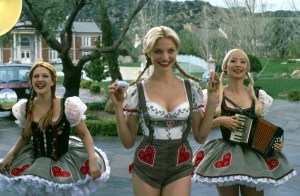 Charlie’s Angels is best when the action is pumping. The scenes are cut together in a jam-packing sequential way adding distinct flavor and style. McG is a true surprise in the effectiveness he can orchestrate his action motifs even if the Matrix effects and moves make absolutely no sense in the real world.
Crispin Glover shows himself as a silent assassin nicknamed “the thin creepy man.” Glover is so suave and slick in his role of the non-verbal Oddjob henchman role that he exhilarated me with every presence he made on screen. Goodness, he was too cool in this film and everyone gets brownie points for allowing him. He has such energy and charisma that I wanted the film to veer off into him and desert our angels. Seeing our ageless McFly perform action scenes and choreographed fights is something I will be pleased with until my grave. seeing Crispin in the excellent Nurse Betty and now huge exposure in this is a true joy. And man… he smokes a cigarette way too cool every time he’s in this film. Some people can smoke cool some of the time but Crispin does it all of the time. His mere presence almost cancels out the annoyance of Barrymore.
The line is drawn with Charlie’s Angels in that it’s sex-kitten jiggle and an acrobatic arrangement of (light) feminism and humor. These gals know they’re sex objects and they’ll use it to their advantage delighting in every second of it. Therefore, you could argue successfully that Angels is exploitation hiding as meaningful but hell… why think about this stuff? The movie rolls along at a fast pace where you don’t keep track of these issues. It’s just an easy sit down.
The gigantic success of Charlie’s Angels makes sequels and a possible franchise all but certain. I’d be happy for McG to hop back in his directorial chair but have a unique idea for Angels 2: Bigger, Longer, and Uncut… it involves Glover kicking a lot of ass really cool like.
Nate’s Grade: B-
——————————————————
WRITER REFLECTIONS 20 YEARS LATER

The 2000 Charlie’s Angels seems to understand that nobody should take this seriously. It even opens with an in-joke of T.J. Hooker: The Movie being inflight entertainment and an undercover character lamenting how bankrupt Hollywood is when it comes to recycling old TV shows. From there, our undercover angel literally exits with her target in the middle of the air and plummets to the water below, safely landing via parachute with a team meeting via helicopter aerial hook-up and a speedboat below. Why any of this? What sense does any of it make? It doesn’t matter in the slightest, and from the opening scene onward the movie lives by this credo, doing its best to be silly and have fun and just not care about the rest, and it shows. Twenty years ago, I think Charlie’s Angels benefited from low expectations as I recall mostly enjoying it. Now, having re-watched the movie for the first time in ages, I will say the fizzy appeal seems to be diluted. It’s still got energy to spare, though it feels a little too antic, a little too episodic and slipshod, and a little too proudly shallow, and that’s before you re-examine its depiction of the angels.
It took 17 writers and considering every under-30 actress in Hollywood to put together Charlie’s Angels. Drew Barrymore had bought the remake rights and wanted to make a big screen splash with a trio of kick-ass heroines that could better relate to the culture of the new century. I understand that Barrymore and her team wanted the angels to be sexy, yes, but also smart and funny and goofy and fearsome and all the things that little girls should believe possible. That’s commendable from a positive representation, but then so much emphasis is placed on their bodies and their off-the-charts sex appeal to bamboozle men that the goal becomes eclipsed. One could argue that Barrymore, Cameron Diaz, and Lucy Lui are embracing their sexuality, and that taking control of this is empowering, and if you feel empowered by Charlie’s Angels, by all right enjoy that and bless you. However, twenty years later, this feels less like the girls are in charge are more like they’re just being exploited in a manner we’re being sold as new feminism.
 There are so many examples where the angels are in skimpy clothing or objectified. There was an entire clip of Diaz dancing in her underwear that I remember Harry Knowles of the early 2000s mainstay Ain’t It Cool News devoted a gross drooling essay to his obsession (“But to sum up, Cameron Diaz’s Swirling Ass is one of the greatest images and objects in the whole of human existence.”). Barrymore’s character is constantly getting undressed and using her body to disarm men. Again, duping men through their hormones can be a key asset as a spy, but it’s happening in every scene and at her disservice as well. She tumbles down a ravine naked in a last-second escape, and the movie treats it as cheeky comedy (no pun intended). Lui adopts a series of disguises that routinely sexualize her, from a masseuse to the most overt, a domineering corporate boss that resembles a dominatrix. They’re straight fetish roles. I’m surprised a Catholic schoolgirl outfit wasn’t adopted as a disguise. The movie’s depiction of its female stars and the emphasis on their bodies feels retrograde for its ideals. I know they wanted to improve upon the portrayals from the 1970s but we still got problems. McG’s stylish direction prioritizes the angels’ sexuality. They can be smart and kick ass but also in a sexy way, the movie is telling you. Thandie Newton was supposed to be an angel but schedule overruns from Mission: Impossible II got in the way, and later she admitted she had strong misgivings because her character was going to be introduced with a closeup of her denim-clad butt. No one is arguing that women should be barred from taking ownership of their sensuality, but the lens Charlie’s Angels utilizes is strictly a male gaze, and these women are repeatedly objectified.
As a result, the movie has a new sheen of discomfort during all the silly, sudsy spy missions and wardrobe changes. Before you might think, “Oh look, they’re dressing up as Japanese geisha girls, what fun,” and now you’re like, “Oh, somebody at the studio was getting off on this.” Before you might think, “Oh look, they’re dressing up as Middle Eastern belly dancers, what fun,” and now you’re like, “Oh, somebody at the studio was getting off on this.” There are a lot of ethnic disguises that would likely get axed today as cultural appropriation. The carefree, frivolous attitude of the movie is meant to be charming and low stakes, but when it’s applied to the exploitative nature of how the women are depicted, it all becomes a bit dodgier to accept.
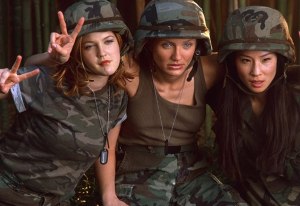 This was the first real blockbuster after The Matrix reshaped action cinema and the stylish choices can run the gamut between exciting and cool to dated and shallow. Twenty years later, it’s just not as impressive that they used wires to swing their actors around for stunt choreography, or that they replicated key Matrix touches like bullet time. The fighting sequences are often choppy in editing and some of the moves meant to demonstrate the power of the angels just feel silly, like a moment where Diaz went full Lui Kang with her flying kicking feet. It’s moments like that where the style gets away from McG. The tonal trick is finding a balance between goofy and cool, exciting and cheesy, and I don’t think the movie achieves this with its action. The set pieces feel built around “cool moments” rather than using geography, organic complications, and escalation. It means that Charlie’s Angels has its share of cool moments but then they are fleeting and ultimately meaningless because they don’t better connect to character, story, or even simply their own satisfying action compositions. It’s like immediately disintegrating cotton candy. The dozens and dozens and dozens of needle-drop music cues feel like another potent example of this charge as well as some anticipated attempt to distract from its shallow and diverting design.
I was dreading revisiting my original review as an 18-year-old because I was convinced my younger self was going to conflate the portrayal of the women as taking ownership. I just knew this would be something I had bought into in 2000, and yet it wasn’t quite so: “The line is drawn with Charlie’s Angels in that it’s sex-kitten jiggle and an acrobatic arrangement of (light) feminism and humor. These gals know they’re sex objects and they’ll use it to their advantage delighting in every second of it. Therefore, you could argue successfully that Angels is exploitation hiding as meaningful but hell… why think about this stuff? The movie rolls along at a fast pace where you don’t keep track of these issues. It’s just an easy sit down.” Hooray for my younger self seeing through this movie’s sheen of empowerment. At the time, it bothered me less because the movie was dumb fun, and now it just seems less fun and also dumber. I was so taken with Crispin Glover (Back to the Future) and his creepy cool style, much of which was Glover’s doing. His character was supposed to have dialogue except he hated the lines and asked to be silent. That’s one way out of memorizing, and it worked because he was a breakout and appeared in the 2003 sequel. Sam Rockwell (Three Billboards) was also a fun discovery though he only gets good once he’s revealed as a baddie. He would reuse those dancing moves for Iron Man 2.
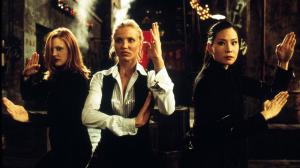 By the time 2003’s sequel Full Throttle rolled out, the appeal was gone. In my own brief review, I summarized, “It all seems so ho-hum and excessive at the same time. Quite an accomplishment. No more please.” I feel like the 2000 film also falls into this summary. It’s clearly not intending to be anything more than a goofy action movie, and I suppose the right person could still likely turn off the necessary parts of their brain to enjoy the rush of sights, sounds, and cleavage. There shouldn’t be a “wrong kind of feminism” so if this works for you, great. Many years later I felt that the male gaze was more ogling the women in the name of celebrating them. And yet Sony still felt there was material to be mined when they tried again with a failed 2019 reboot. The original Charlie’s Angels film is a cocktail of style with a creeping hangover right behind.
Re-Veiw Grade: C
Share this:

The Dead Don’t Die (2019)
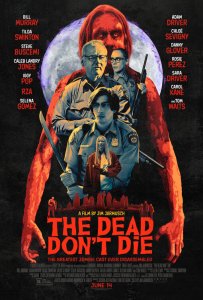 If you’re a Jim Jarmusch fan, you can probably stop reading now. I encourage you to continue but I don’t know if anything will be of help for you from here on out because, frankly, I don’t understand you. Jarmusch is a longtime staple of indie film and I’ve watched three of his films (Only Lovers Left Alive, Broken Flowers, Ghost Dog) and disliked all three to varying degrees, and that’s fine. There are plenty of hallowed names in filmmaking that are just beyond me, like Terrence Malick and Nicolas Refn, but I can at least partially understand what the fans of those auteurs value, an immersive visual, sensory experience at the sacrifice of narrative and coherency. When it comes to Jarmusch, I just don’t understand the appeal whatsoever. This is a man who found a way to make vampires crushingly boring, and now he finds a way to do the same with zombies. The Dead Don’t Die is the widest release of his career and it might be the worst movie I’ve seen in a theater all this year. It certainly feels like the longest.
In a sleepy small Ohio town, the police force consists of Chief Robertson (Bill Murray), Ronnie (Adam Driver), and Mindy (Chloe Sevigny). They’re going about their typical day, warning Hermit Bob (Tom Waits), listening to the alarmist worries of Farmer Frank (Steve Buscemi), and picking up supplies at the hardware store run by Hank (Danny Glover) and Bobby (Caleb Landry Jones). There’s a traveling group of students, lead by Zoe (Selena Gomez), as well as a group of kids in a juvenile detention center. Then the dead come back and small-town life will never be the same.
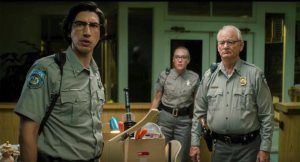 Anyone walking in expecting a zany comedy from the premise and cast, not to mention marketing materials, will be sorely disappointed, because what The Dead Don’t Die better resembles are the humorless anti-comedies of late-night Adult Swim blocs. It’s not so much that there are jokes, it’s more the absence of jokes, and somehow that might be the joke? The humor is stuck in one mode throughout the film. A character will slowly say something understated or obvious (Example: “That’s not good”) and then the reaction of others will be delayed, and then after that nobody will say anything for several painful seconds later. That’s about it, folks. It’s hard to find humor with that. The deadpan jokes are too obvious and too uniform to really strike any potent comedy targets. The consumer “satire” is brittle to the point of breaking. Various zombies will shamble around and say one-word items of whatever was important to them, ranging from “Coffee,” to, “Fashion,” to, “Chardonnay.” It’s like the one-word utterances are the entire joke (Hey, this dead guy liked fishing, isn’t that a riot?). It’s not satire and it’s not funny. How about the characters of Rosie Perez and Tilda Swinton being named Posie Juarez and Zelda Winston? Is that the kind of humor that sounds appealing? How about Tilda Swinton flexing a samurai sword to slice and dice the undead. Is that supposed to be cool? Is it supposed to be funny? Is it supposed to be funny that it’s trying to be “cool”? What is anything?
Later, the film inserts a new comedy element with meta asides where people seem to know they’re in a movie, and yet again the jokes are obvious and uniform, except now it’s even lazier, relying upon the meta recognition to simply stand in the place of a joke. If anything can happen in the small town, especially toward its crazy end, then why do these things have to happen? Or better yet why don’t better things happen? Because of the deadly pacing it makes every attempted bad joke feel that much more unbearable.
This movie is only 105 minutes but it felt so much longer. the pacing not just as a whole but scene-to-scene and even line-to-line from conversations is deadly still. Every moment feels stretched out but it doesn’t ever feel like you’re going anywhere. Characters will be introduced and given meet-cute moments and little indicators they might be significant players later, and then we’ll just find them dead. Other characters will be introduced and then never leave their locations, having no bearing on the larger story. It’s rare that I could honestly say there are entire supporting swaths of this movie that could be cut completely and not impact the story at all. It makes the many storylines we hopscotch across feel like they don’t matter and are generally wasting our valuable time.
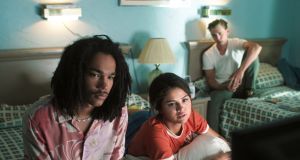 Then there’s the ending where Jarmusch just instructs Tom Waits to unleash a torrent of narration bemoaning how society deserves whatever downfall it incurs and that we’re all just zombies anyway. It’s so clumsy and overbearing and unearned after an entire movie where the cultural criticism amounted to a racist saying he doesn’t like his coffee black and then pointedly staring at the only black man in the movie. Even if we got more moments like that I might say some of the ending vitriol is justified, but the commentary gets muted in the middle until Waits has to finally tell us what the point is. There are scant political and environmental references but they feel like tossed asides themselves.
I don’t blame the cast for any of this although I can’t say what on the page must have seemed attractive. Murray is always going to be an amiable screen presence and Driver is a fun partner, slipping into a skillful deadpan and straining to find humor where there is precious little. Everyone feels wasted on screen because even if you’ve never seen these actors before you know, instantly and instinctively, that they have been far better.
The Dead Don’t Die is further proof that I am not a Jim Jarmusch fan. I can’t fathom how someone can actually be a fan of this writer/director. I was tempted to walk out at several points but I held in there. The jokes are too obvious and barely jokes, the pacing is awfully slack, and the whole movie is reprehensibly boring. Even when it has moments of weirdness it finds ways to make it boring. The structure does little to nothing with a large ensemble of very good actors. The movie and premise had potential. The idea of a zombie outbreak in a small town where everybody knows everybody is ripe for comedy and tragedy. Ultimately The Dead Don’t Die feels like one egregiously long in-joke that the audience isn’t privy to. The joke’s on us, folks.
Nate’s Grade: D
Share this:

Ghostbusters (2016)
 Growing up in the 80s, other kids had Transformers, or G.I. Joe, or He-Man, but I was a Ghostbusters kid. I fell in love with the 1984 original movie, slept below the poster for most of my childhood, and obsessively collected all of the action figures, watched with glee the animated TV series, and hold the world and its characters in a special personal place. The 1984 movie is such a perfect blend of buddy comedy, the supernatural, and action that nobody has really been able to fully replicate this special film alchemy as well since, including director Ivan Reitman (he tried in vain with Evolution). When the word broke that there was going to be a new Ghostbusters remake, some trepidation from fans could be expected. It’s sacred ground to many. Director Paul Feig (Bridesmaids) insisted that he wanted to have an all-female team of Ghostbusters, and that’s when the Internet lost its collective mind. The movie and its stars have been beset with hateful misogynistic (and, in the case of Leslie Jones, racist) harassment. The Internet didn’t want smelly girls playing with its toys. It became part of a larger war between feminists and retrograde men’s rights activist crybabies. Some people wanted it to be succeed just because of he gender of its leads, and others wanted it to fail for the very reasons. I just wanted a good Ghostbusters movie regardless of what bathroom the busters utilize.
Erin (Kristen Wiig) is an esteemed science academic trying to turn the page on her past. Her friend and fringe scientist Abby (Melissa McCarthy) has republished the book about paranormal they wrote together, which ruins Erin’s chance at tenure from her colleagues. Her ire is short-lived as Erin, Abby and her wacky nuclear scientist associate Jillian Holtzmann (Kate McKinnon) experience a real dead ghost. Their slime-filled encounter with the undead reawakens Erin’s love of the paranormal and the three of them join forces. Patti (Jones) is an MTA worker who leaves her job and joins the gals after her own experience with a ghost in the New York subway. Somebody is trying to open a portal between the living and the dead, and these Ghostbusters gotta bust some ghosts.
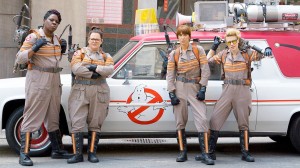 My initial apprehension melted away within the movie’s first twenty seconds when it already had me laugh out loud twice (“anti-Irish fence”). There’s a consistent genial absurdity that kept me engaged and entertained, and this is typified by the strong comic camaraderie of the four leads. I enjoyed spending time with these ladies and I enjoyed their interactions, so when scenes could creep up on overstaying their welcome from a pacing standpoint, something of a Feig staple, I gave them more leeway and felt my patience rewarded. I don’t know how to make it plainer than this: I am not a Leslie Jones fan and I liked Leslie Jones in this movie. I have found Jones to be all-too often on Saturday Night Live a one-note comic presence, always loud and brash and hitting the same joke again and again with little variation. With Ghostbusters, she actually plays a character, capable in her own right, and a straight man for the other characters. These women were goofy, gross (a queef joke within Holtzmann’s first appearance), but they also enjoyed one another’s company. There are internal conflicts, sure, but their enjoyment of working together, of displaying their know-how, of the joys of discovering the realm of the paranormal create a bond that helps seal the characters with the audience. Whatever the scenario, I was confident I would laugh from these characters, and I did.
There is a lightness to the movie that makes it all the more appealing, settling into pleasurable summer fare. This story is as much about the formation of the Ghostbusters as anything else. In the original film they just sort of have their ghost-busting gear all of a sudden. With the remake we watch the trial and error process of bringing all that tech to life. It’s a fun process to see their business from the ground floor, so to speak, and their fight for larger credibility. Murray himself even shows up as a paranormal debunker who scoffs at their claims. The ladies are the lovable underdogs in this world.
The real reason that Feig’s movies work is the interaction of his boisterous and often brilliant casts, and Ghostbusters is another example. Wiig and McCarthy have a natural chemistry together honed from Bridesmaids, and their back-and-forth banter will often find punch lines in odd places. McCarthy has always been her best under Feig’s direction (seriously go watch Spy if you haven’t). While Abby is a less outspoken character than we’re accustomed to from her, McCarthy still has a commanding presence and is the one who lassos the other funny characters back into a sustainable orbit (“You spell ‘science’ with a Y, and I don’t think you know that that’s wrong”). I’ve stated above my positive feelings on Jones. She brings a welcomed perspective to the team and often serves as the voice of the audience, like a moment where she looks inside a room filled with mannequins, calls it “nightmare stuff,” and wisely keeps walking. McKinnon is the true breakout star, going for broke in a deadpan, anarchic silliness that is Murray-esque. She also displays a funky, near pansexual sense of excitement with the world around her. She licks the radioactive barrels of her proton pack in jubilation. McKinnon is a constant source of mirth in the movie and has some of the best one-liners (“It’s 2040. Our president is a plant!”). Another breakout might be Chris Hemsworth in comedy. His dimwitted and inept receptionist is perhaps too dumb to even function. Hemsworth just commits to his character’s straight-faced stupidity and it produces big laughs.
Not everything in the movie works as well together as the ensemble. The movie’s tone takes a giant leap once the third act commences with its apocalyptic ghost showdowns. You can sense that Feig isn’t nearly as passionate about action heroics and CGI. Example: the movie sets up a large-scale dance sequence and we never see it until the scene appears during the end credits. That seems like a waste. The character arc between Abby and Erin isn’t quite as developed as the movie needs for the emotional re-connection at the very end to hit. As much as I loved McKinnon in the movie, her character is more a collection of quirks than a person. The cameos from the original cast are mostly awful and kill amusement. Watching Dan Akroyd as a cab driver say he “ain’t afraid of no ghosts” made me roll my eyes and wish I could delete this from my memory. The less obvious nods are better fan service, like a character referencing “mass hysteria” or Erin frantically pressing her body against a restaurant’s large glass window. The Stay Puft marshmallow man as a parade float is a nice touch, though. The main villain is feeble but I can see how a dude with a grievous sense of entitlement could itself be a feminist statement on the hostility that women face in today’s world. There are some logical consistency issues when the busters go from trapping ghosts to shooting them and blowing them up, but it wasn’t enough to derail my sense of fun. The worst thing about this Ghostbusters is the new theme song from Fall Out Boy and Missy Elliot.
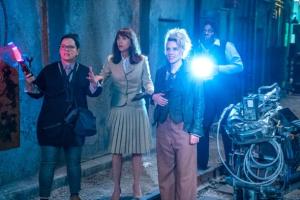 Is the new Ghostbusters a significant step in terms of feminism or is it overblown as some critics contend? The topic is unavoidable given the spirited furor over this remake; it has the most disliked trailer in YouTube history, though to be fair that was not a good trailer. First I’ll acknowledge that the world doesn’t need the opinion of a heterosexual white male on the topic of inclusion, but I’d like to say that there is something about positive representation. It’s the same reason I approve of Sulu being gay in the newest Star Trek. It’s not for me to say what is and is not empowering for a group of people who often lack positive representation in media. Nor am I arguing that every representation of a group needs to be positive; that swings in a direction where well intentioned “protection” becomes condescending. People can be good. People can be bad. People can be brilliant. People can be dumb. No one pool of DNA has ownership over these human traits. However, the reality of Hollywood is that it is often a poor representation of diversity. It is because of this that I say Ghostbusters deserves some praise for portraying a plot around four women that doesn’t involve boyfriends, weddings, marriages, pregnancies, any sort of romantic coupling, and doesn’t pit them against one another. This is an action movie with a female ensemble, three of whom are in their 40s, and all of whom don’t exactly fit with Hollywood’s standard conception of the attractive female lead. They don’t dress provocatively for the male gaze (the default setting for “strong heroine” in Hollywood is often “sexy deadly”). They don’t make fun of one another’s body types. They stand up for one another when people in power attack. They love what they do. I think there will be a swath of the public that recognizes themselves on screen, maybe for the first time, and I think there is genuine merit to this.
Somewhere amidst all the hype and hate, the new Ghostbusters emerges as a pleasant and enjoyably silly summer comedy. Feig’s movie pays homage to the original, including borrowing many of the general plot beats Force Awakens-style, but steps out onto its own territory. The 2016 Ghostbusters is not slavish to the original but recreates what made it work, a strong core group that meets the experimental and outlandish with droll irony. I think I laughed more with the 2016 Ghostbusters than the 1984 Ghostbusters. It has some flaws and some pacing issues but I was enjoying these characters so much to mind. As a lifelong Ghostbusters fan, I would gladly watch a sequel with these characters and this world once more. This won’t replace the fond feelings I have for the original, nor was it ever supposed to. This all-female Ghostbusters doesn’t take away what fans have loved. It simply adds another chapter with a new batch of entertaining characters, and if a part of the audience can better imagine themselves strapping on the proton packs and going along for the ride, then I don’t see what the harm lies with representation.
Nate’s Grade: B
Share this:

The Jungle Book (2016)
 It seemed like only a matter of time before those in the Mouse House started looking through the back catalogue of hits for inspiration. The Jungle Book is a live-action remake of the 1967 Disney animated film, but it’s only the first of many such translations to come. A live-action Beauty and the Beast is being filmed currently and plans are underway for a possible live-action Aladdin as well, though I pity the actor with the unenviable task of replacing the beloved Robin Williams. I was wary of director Jon Favreau’s (Iron Man) version just because it seemed, on the surface, like a quick attempt to fleece the public of their hard-earned money with a repackaged movie. What I got instead was a brilliantly executed adventure story with a beating heart, amazing special effects, and ultimately an improvement on the original. Imagine that.
Mowgli (Neel Sethi) is a boy raised by a pack of wolves. He tries to fit in with his pack but he grows a bit too slow and he can’t help himself with “tricks,” making tools. During a drought that signals a jungle wide peace between predator and prey, the feared tiger Shere Kahn (Idris Elba) lets the rest of the animals know his demands. The “man cub” is to leave or Kahn will hunt him down. The mother wolf, Raksha (Lupita Nyong’o), refuses to part with her child but Mowgli volunteers to leave to keep his pack safe. Kahn chases him deeper onto the outskirts of the jungle where Mowgli teams up with Baloo (Bill Murray), a lackadaisical bear who makes use of his partner’s affinity for tools and building contraptions. Mowgli’s new life is interrupted when he learns Kahn has attacked the wolf pack with the desire for Mowgli to return and face his wrath. Mowgli must team up with the friends of the jungle and use all his bravery and skills to defeat the ferocious Shere Kahn who has been lusting for vengeance for years.
 Favreau’s version of The Jungle Book is a thrilling and thrillingly immersive visual experience that opens up the big screen as an exciting canvas. The visual wizards have made an entire ecosystem look photo realistic to the point that if somebody said offhand that Jungle Book was shot on location in India, I wouldn’t think twice. The environments are entirely CGI and they are brilliantly brought to life in a seamless recreation I haven’t seen so effective since 2009’s Avatar. It’s stunning what can be accomplished with modern special effects, and then there’s Favreau’s smart decision not to radically anthropomorphize his animal cast. These are not some hybrid human-animal combination but rather flesh-and-blood wild creatures that just happen to speak English when they open their mouths (depending upon your territory). The animals don’t fall into that pesky uncanny valley where your brain is telling you what you’re watching is fake and unsettling to the senses (see: The Polar Express). The animals and behave like the real deal and further cement the exceptional level of realism of the movie. From a purely visual experience, The Jungle Book is a feast for the eyes that helps raise the bar just a little bit higher for the special effects industry and its proper application.
The movie would only succeed so far if it weren’t also for its engaging story. Let’s be honest about the 1967 Disney animated film: it’s not really a good movie. It’s fun and has some memorable songs (more on that below), but as a story it’s pretty redundant and flimsy. Mowgli bounces around one potential animal group to another trying to find a home only to move on to the next prospective foster situation. I never made the connection before but in a way the movie North is this plot, minus the talking animals and general entertainment value. There are long segments of the original Disney film that coast just on the charisma of the vocal actors and the animation. Certainly the Beatles parody characters haven’t aged well. There was plenty that could have been added to this story and screenwriter Justin Marks does just that, making the characters far more emotionally engaging. I felt a swell of sadness as Mowgli is separated from his wolf family, his mother declaring that no matter what he still is her son. Marks also personalizes the stakes between Mowgli and Shere Kahn. Each side has a grudge to settle when it comes to vengeance rather than Kahn rejecting the “man cub” out of general fear. This Mowgli is also a much more interesting protagonist; he’s plucky and uses his “man cub” other-ness as an asset when it comes to problem-solving. We have a better hero, a better villain, wonderfully brought to life through the velvety roar of Elba, and a small band of supporting characters that are more emotionally grounded. The wolf pack feels like a genuine family, a community. The relationship between Mowgli and Baloo becomes the backbone of the second half of a briskly paced movie, and the predictable narrative steps feel earned, from Baloo’s con job to caring for his lil’ buddy. The attention to the characters and their relationships provides a healthy sense of heart.
The vocal cast is expertly matched with their jungle creatures, notably Elba (Beasts of No Nation) and Murray (St Vincent). Murray has an innate way to make his lazy character endearing. Nyong’o (12 Years a Slave) gives a much better motion capture performance as a wolf than whatever the hell she was in The Force Awakens. Scarlet Johansson (The Avengers) is a nice addition as Ka the serpent, and as fans of Her can attest, her breathy voice can indeed be quite hypnotizing. Even the small comic relief animals are well done including the brilliant Gary Shandling in his last film role. Motion capture for non-primates seems like an iffy proposition considering that you’re either forcing the human actors to physically walk on all fours and pretend to be animals, which can be silly, or just copying the direct movements of animal models, which seems redundant then with the technological advances. I don’t know how they did it but it seems like The Jungle Book found a working middle ground that still showcases actor performances.

I think this picture cures infertility.
With a movie that works so well on so many levels, the few faulty areas tend to stand out, and I feel like somewhat of a cad to say that one of the biggest problems is the acting from its child star. I’ll give Sethi some leeway here considering he was never interacting with much more than a giant warehouse of blue screens, which I think we’ve shown doesn’t exactly lend itself toward the best live-acting performances (see: Star Wars prequels). When Sethi is in more action-oriented scenes, like running and jumping and generally being physically mobile, his performance improves. However, when he has to shift to portraying emotions beyond fight-or-flight that is where Sethi has trouble. When he’s playing “happy-go-lucky” early on with his wolf brethren, he’s way too animated in that way that unrestrained child actors can be without a proper anchor to moor their performance. There were moments that made me wince. I see no reason why an actor under ten should be immune to criticism when warranted. We live in an age of amazing child acting performances, notably evidenced by the incredible Jacob Tremblay in Room. We should expect better from our smaller actors. Unfortunately for Sethi, the visual spectacle is so luscious that the one human element sticks out more when he is also delivering a mediocre to poor lead performance.
The other minor detraction for Jungle Book is the inclusion of the two songs that really anyone recalls from the original Disney version, “I Want to Be Like You” and “The Bear Necessities.” I’ll even charitably give “Bear Necessities” a pass as it involves a moment of levity and bonding between Mowgli and Baloo and they’re simply singing to themselves as they relax down the river. It’s also the most famous song and if you think about it the “Hakuna Matata” of its day. “I Want to Be Like You” does not deserve the same consideration. It comes at an awkward time and undercuts the build-up of tension and does nothing short of rip you out of the world of the movie. At this point, we’ve been introduced to the hulking presence of King Louie voiced by Christopher Walken. The giant ape is portrayed like a mafia don and his sit-down with Mowgli has a real menace to it as he wants to provide “protection” for the man club at a price. It’s a moody moment and then this big orangutan starts singing and dancing. The illusion and reality of the movie is broken. At no other point does The Jungle Book come close to breaking its reality and it’s all for such an extraneous moment. There’s nothing conveyed in this song that couldn’t have simply been communicated through speech. Instead, the live-action movie makes a tortured homage to the older Disney source material, and it’s the one major misstep in its approach.
The Jungle Book is a magical movie that actually improves upon its cinematic source material. It’s a visual stunner that is completely transporting and another high-level achievement for the art of modern special effects as well as the proper usage of them in connection with fundamentally good storytelling. Favreau is able to open up a new yet familiar world and allow the viewer a renewed sense of awe. We also get characters that we care about, a strongly grounded sense of emotional stakes, and some thrilling action to go along with the CGI playhouse. I only have a few misgivings with Disney’s new Jungle book and one of those is really a function of its homage to the older Jungle Book. I’ll take the rare step and advise moviegoers to seriously consider seeing this in 3D (I did not). It’s a great visual experience, however, that would only take the movie so far if it wasn’t for Justin Marks screenplay adaptation and Favreua’s skilled direction. Now The Jungle Book can be a great visual experience, a great story, and, simply put, a great movie.
Nate’s Grade: A-


 nathanzoebl
You must be logged in to post a comment.