Blog Archives
Nightbitch (2024)
 Motherhood can be a real bitch, right? That’s the lessons for Nightbitch, a bizarre movie that juggles high-concepts and tones like a struggling new mother juggling time. Based on the novel by Rachel Yoder, Amy Adams plays Mother (yes, that’s how she’s credited), an artist who chose to become a stay-at-home mother to her two-year-old son, and her life has become an endless stream of days appeasing a small tyrant who she also unconditionally loves. Early on, Adams uncorks an imaginary monologue about demystifying the glamour of motherhood and the guilt she feels about not finding every tantrum and bowel movement a thing of bronze-worthy beauty. She’s grappling with significant changes, and that’s even before she thinks she’s turning into a dog. I can find thematic connection with motherhood and body horror, as our protagonist feels that she no longer recognizes her body, that she feels a lack of direction and agency in a life that no longer feels hers. The added body horror of transformation makes sense, but this element seems so extraneous that I wished the movie had exorcised it and simply stuck with its unsparing examination of parenthood. You would think a woman believing she is becoming a dog would dominate her life. The ultimate life lessons of the movie are rather trite: assert yourself, establish a balance to have it all, and fellas, did you know that being a stay-at-home parent is actually hard work? There are too many half-formed elements and plot turns that don’t feel better integrated, like flashbacks interwoven with Mother’s mother, not credited as “Grandmother,” as a repressed Mennonite in a closed community who disappeared for stretches. There’s also a few curious reveals relating to Mother’s perception of others that are unnecessary and obtusely mysterious for no real added value (“Why that library book died forty years ago….”). Adams is blameless and impressively throws herself into the demanding roll, going full canine with gusto as she trots on all fours and eats out of bowls. The problem is that all the dog material feels a little too silly when realized in a visual medium rather than a symbol of freedom and rebellion. Nightbitch is more bark than bite, and I’d advise viewers looking for an unflinching portrayal of motherhood to watch Tully instead and, if desired, pet your household dog at home to replicate Nightbbitch but better.
Nate’s Grade: C
Share this:

Dear Evan Hansen (2021)
 If you’re unfamiliar with Dear Evan Hansen or do not consider yourself among the fandom of the Tony-wining Broadway musical, then I would highly recommend watching a 2009 movie called World’s Greatest Dad, a film I will be referring to later in this review. It’s a smaller indie starring Robin Williams and written and directed by actor-turned-director Bobcat Goldthwait. It also has a very similar premise of a character exploiting the grief of others to try and better their own personal standing by fabricating an introspective life for a high school student who recently took their own life. The exception is that World’s Greatest Dad played its heavy content for dark comedy and stinging satire and it never excused the behavior of its lead character as he manipulated the collective sympathies of others for personal gain. As I kept watching Dear Evan Hansen, I kept feeling like someone had attempted to make World’s Greatest Dad but played straight and absent the satire, and that was a very bad decision.
Evan Hansen (Ben Platt) is a high school senior and has more anxiety disorders than friends. He starts the school year with cast on his arm, the result of “falling” from a tree. Evan writes motivational letters to himself as a therapeutic exercise for his counselor, but Conner (Colton Ryan) steals the paper at school and freaks out when Evan expresses interest in Conner’s younger sister, Zoe (Kaitlyn Dever). Conner’s only two appearances on screen both involve him shoving, yelling, and threatening Evan. Days later, Conner has taken his life and the only letter his family has found was the “Dear Evan Hansen” paper he snatched away. Conner’s parents (Amy Adams, Danny Pino) are eager to know anything about their emotionally troubled and secretive son. They didn’t know he had any friends let alone one he would compose his suicide note for. Evan doesn’t come clean and instead plays along, happy to provide a false version of their son, one who was bristling with thoughts and compassion he could never properly express. Evan spends more and more time with Zoe, trying to share his own romantic feelings, and getting deeper into his lies.
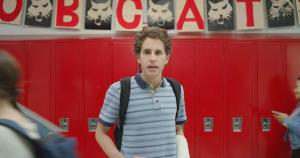 This was a deeply uncomfortable experience for me, and I don’t quite understand how fans of the theater show were so moved and uplifted and, frankly, entertained. Maybe all this drama plays better on the stage, though I think many of the same issues I would have with the story would be evidently present for the stage productions as well. The main character is presented as lonely and anxious and depressed and longing to make connections, and this is meant to serve as the emotional explanation for why he leaps at a chance to insert himself into another family and manufacture a false identity about their dead son to score with the girl he’s been crushing on from afar for an indeterminate amount of time. Evan Hansen is, quite simply, a monster of a human being. Through tortured coincidence, he is believed to be Connor’s only friend, and Evan can at any point clarify this mistake and explain the truth. But he chooses instead to supply a fictional version of Connor that he feels every member of his family needs to hear to feel better about themselves. Evan justifies his actions as kind lies, as helping those in mourning by telling them what they want to hear, what he feels like they need. It’s not his place to decide what people need to better grieve, and Evan uses his newly favored position as the rare Rosetta Stone to Conner, the keeper of his secret internal life, to manipulate everyone to like him more.
I felt increasingly uncomfortable and upset the longer Dear Evan Hansen progressed with its treacly story, especially as Evan sets his sights on Zoe. It’s not as if over the course of his mounting lies that he organically grew closer to this woman who had been a stranger; he has been crushing on her and uses fake emails written by her brother to express his unrequited feelings for her in a song that DEFINITELY does not feel like it was written from a brother to a sister unless we’re talking like Game of Thrones territory (“There’s nothing like your smile / Sort of subtle and perfect and real”). Both of those scenarios are bad, but one of them is so much worse, and that’s the route Dear Evan Hansen goes. The romance is gross, and I knew that the movie was going to let Evan off the hook by the end. Once the truth, the real truth comes out, no one should want anything to do with this person. He says he meant well but he’s also the kind of guy who literally uses the fake suicide note, which all the characters believe to be legit, as an emotional cudgel to quiet and shame his biggest doubter as she starts to pick apart his lies. When that moment happened, I wanted to strongly yell at the screen, “Dear Evan Hansen, you dearly suck.”
 There’s a worthy message buried somewhere in this movie about reaching out to people who are struggling in the shadows, that mental illness can affect anyone, and that often those who look like they live perfect lives on the surface might just be better at hiding their pain. This is best exemplified in the supporting character of Alana (Amandla Stenberg), the school president who has a raft of anxieties that she keeps to herself. Her moments of vulnerability feel the most honest in the entire movie, and she’s trying to allow Conner’s death to reach others who might also be struggling, to inspire and save lives through their fledgling organization, The Conner Project. She’s the one who is putting in the actual work, both physical and emotional labor, and she’s the one who Evan shames with the mistaken suicide note toward the end of the movie. The tone of this movie is amiss from early on, and there’s a jaunty musical number where Evan and his one friend comically write fake emails between Evan and Conner. It’s played so light and breezy that you’ll have to recall this is Evan manufacturing the evidence of his fabrications. Why is this played so flippantly and like we’re in on the goofy gag? It’s mishandled. The good intentions Evan Hansen the movie, much like the potential good intentions of Evan Hansen the character, are clouded and ultimately sabotaged by its misguided solipsistic approach to grief.
And it’s taken me this long to talk about another key hindrance and that’s the casting of Platt in the title role. Platt originated the role on Broadway in 2015, and yes he wouldn’t be the first actor in history playing a high schooler who was clearly older, but they have made a gigantic miscalculation in trying to make Platt appear as a youthful 18-year-old (for the record, he was playing a college student almost a decade ago in 2012’s Pitch Perfect). It hit me immediately that Platt does not look right for this role. Immediately. In the awkward attempts to make him more youthful, they have made him look like a shifty undercover cop at a school (“Are you a cop, dear Evan Hansen? You have to tell me if you’re a cop.”). His pasty skin is so smoothed out as to appear like a shiny mask. His hair is oily, stringy, and looks like a terrible wig, except I have read that it is unfortunately real. Evan Hansen looks like he’s wearing a bad hair piece. Platt’s performance also left me cold. His mannered, affectless delivery gave me the impression of a sterile serial killer with every fifth line. This may sound overly harsh, but the presence of Platt and his performance dooms this movie’s bid for believability. I understand wanting to reach out to the man who left his mark on the role early, but there is a reason that Lin-Manuel Miranda played an older supporting role and not the headstrong young lead for the In the Heights movie adaptation earlier this year. Let the movie be its own thing from the stage show. Then again, there’s a rubbernecking fascination with Platt in place, magnifying all the other sins. If there was going to be a bad movie for Dear Evan Hansen, and I question if a good movie was at all possible, then why not go for broke with misapplied creative decisions that make it worse?
 A lone saving grace for this movie is that the music is actually pretty solid. Justin Paul and Benj Pasek, the Oscar-winning team behind La La Land and The Greatest Showman, can craft some catchy melodies with soaring choruses. If you only listen to the music you might come away with a different opinion of this show and movie. However, the context of what these songs are meant to serve in the larger story besmirches the good feelings you may derive from them. I suggest casually listening to the soundtrack and forgetting the icky context of every tune. Julianne Moore, as Evan’s overworked, stressed-out mother, has a nice song toward the very end that feels more honest and pared down than much of the drama allows.
I was re-reading my review of World’s Greatest Dad, an underrated movie that managed to make my top ten of that year. It reads so closely to this movie but also how this story needs to be told: “The movie satirizes grief culture with sharp acuity… Suddenly their fallen peer has transformed from the kid nobody liked into the wounded soul that touched all their lives. Bullies reexamine their behavior, girls that never would have given him the time of day now immortalize Kyle, and the faculty that wanted to expel him now wishes to rename the library in his lasting memory. This warm, fuzzy gauze of grief is Goldthwait’s target. He is satirizing how people turn tragedy into hypocritical attitude shifts. He ridicules the easy revision of history under the guise of collective sympathy. Not every youth is necessarily taken before their time. Not everyone was going to grow up to contribute selflessly to society, making the world a better place to live. Not every youth is deserving of canonization. Some people are just jerks from beginning to end, and Goldthwait proposes we do a disservice when we whitewash reality in the name of kindness and good taste.” That sounds like the better version of Dear Evan Hansen to me, except that’s not exactly the kind of musical that people hug over and buy a T-shirt or hat to adorn on the drive home.
 If you’re among the fandom for Dear Evan Hansen, I’m sure you’ll find enough to enjoy with director Stephen Chbosky’s big screen adaptation. I don’t want this to sound condescending, but you’ve likely already built the excuses for the characters and the story and made peace with whatever ethical foibles persist, so whether it’s on the stage or on the screen matters little. For those unfamiliar with the popular stage show, I don’t know what your takeaway will be but I’m positive this is not the best introduction. Again, Dear Evan Hansen is not the first musical to deal with complicated ethical scenarios and with morally compromised characters trying to do their best with the hands that fate has dealt them. Empathy is a powerful tool for storytelling, and that’s what Evan Hansen weaponizes for his own personal gain. I found this movie to be uncomfortable, misguided, and emotionally exploitative just like its hero. If the movie was critical of Evan’s bad behavior, then maybe this would be a different matter. It wants you to understand that Evan is hurting and therefore complicated. Well, Evan Hansen, there’s a lot of people in this world that are struggling with mental health issues, and suicide ideation, but they don’t manipulate and exploit those they deem are most important to them. Sorry Evan, and sorry Dear Evan Hansen, but you can stay waving behind a window for all that I care.
Nate’s Grade: D+
Share this:

The Woman in the Window (2021)
 The story behind The Woman in the Window is far more fascinating than the finished movie, based upon the 2018 best-selling debut novel by Dan Mallory under the pseudonym A.J. Finn, a hasty rehash of popular thrillers, notably Rear Window, mixed with recent unreliable narrator mystery/thrillers like The Girl on the Train. It’s actually somewhat shameless how derivative it comes across, so much so that you might be able to guess one of the movie’s Big Twists in the literal opening minutes. Amy Adams plays an agoraphobic psychiatrist who believes the new neighbor (Julianne Moore) across the street has been killed by her husband (Gary Oldman), and no one believes her because of her drinking and medication and general misogyny and obvious twists. I cannot tell if screenwriter Tracy Letts (Killer Joe) and director Joe Wright (Darkest Hour) were going for camp or sincerity, as the movie veers chaotically until its final groan-worthy revelation, which is apparently taken right from the source material. There aren’t any significant moments of tension. I was more confused why and how everyone was constantly coming into this lady’s opulent New York brownstone. I was also wondering why the filmmakers made Oldman look like Jon Voight. The troubled movie was delayed twice, went through several re-shoots by Tony Gilroy (hey, it worked for Rogue One, right, Disney?) and ultimately cast off to Netflix. The most interesting aspect of this movie, by far, is the author being discovered as a fraud and fabulist of the first order, lying about everything and anything to elicit pity and use it for personal and professional manipulation, and I’m talking lies about his mother dying of cancer, his brother committing suicide, himself suffering from a recurring brain tumor, and even pretending to be his brother to write emails to colleagues while still maintaining the same distinct writing voice. Mallory’s years of pathological lies (he blames it all on being bipolar now) have actually inspired a TV series where Jake Gyllenhaal is set to play him. You should spend the time you would have used watching The Woman in the Window on Netflix and instead read the extensive New Yorker article that painstakingly paints the damning portrait of Mallory as a narcissistic con artist who would weaponize people’s sympathy.
Nate’s Grade: C-
Share this:

Alternate Opinion: Zack Snyder’s Justice League Guest Essay
My friend and writing partner Ben Bailey asked me to host an extensive essay he was compelled to write after watching the four-hour Snyder cut of Justice League. I’ve never featured anyone else’s words or opinions on this review blog before, but it’s been so long since he really devoted himself to an artistic analysis, and with such detail, that I felt compelled to publish it on my personal review platform. Behold, a guest essay on the nature of Art, Ayn Rand’s Objectivist theory, super heroes and their appeal, Zack Snyder as a filmmaker and philosopher, and capitalism.
____________________________________________________________
“Zack Snyder’s Justice League and The Virtue of Shallowness: An Essay In Search of a Point” By Ben Bailey
All Art is self-indulgent, but not all self-indulgence is Art.
Back in 2010, legendary film critic Roger Ebert famously groused that video games could never be Art. His reasoning was largely an attempt to grasp at the essential definition of what Art is, and how it can and cannot be applied to various artistic mediums in order to claim supremacy for his preferred medium, cinema, over one he pompously scorned. At the time, as a 25-year-old man-baby gamer, I objected strenuously to his argument but not in a way that I could articulate with the same thoughtful presentation with which he made his case. I just instinctively rebelled against the notion that a thing I loved in the same way Ebert loved movies could not be Art like movies clearly are because smart people like Ebert said so. I was still struggling with what Ebert struggled with in his piece, as I hadn’t yet developed a working definition of what Art actually was. Unlike Ebert, who never settles on a definition and just decides to declare himself right, I have since found one that at least works for me, and now in the cold hard light of 2021, I’m forced to conclude that Ebert was sort of correct but not for the reason he thought he was. The vast majority of video games are not Art, just like the vast majority of movies, TV shows, and books are not Art, because Art is something special and pretty hard to achieve in a capitalist society designed to stifle creativity at the altar of marketability.
For me at least, Art has a practical and a poetic definition. The practical one can best be distilled as, “Deliberate creative expression done for its own sake.” Artistic Intent is everything. It has to be something done on purpose, not something retroactively defined as Art by someone experiencing it separate from the Artist. It has to be a creative expression, which is to say something done to reflect the internal life or point of view of the Artist as opposed to something a craftsmen might build to be functional but not intellectually or emotionally inspired (All Art is craft, but not all craft is Art). And most importantly, it has to be done for its own sake, free of any creative compromise. For something to be Art, the Artist has to do it because it is something they simply must do, because it is born inside of them and must be birthed through the process of creative expression so that it isn’t left stillborn inside their soul to rot and kill its host. If it is done for any other motive, for profit or to cater to the whims of a prospective audience, it ceases to be Art and becomes Commerce, a commodity that belongs to the world and no longer to the Artist.
 The poetic definition is a bit looser as you might expect: “Art is the process of making your dreams come true.” It is how we physically manifest our imagination into literal reality, recreating what is inside of us to bare our souls to the world, not because it matters what the world might think of them or who might want to buy or sell the product of their representation, but simply because the soul of an Artist burns bright and the fire has to go somewhere. Many things are mistaken for Art because they are created with the same tools through the same mediums. A really entertaining movie you love might seem like Art to you, but chances are, just given the realities of how movies are made in the studio system, it wasn’t created by an Artist or group of Artists collaborating to bring something beautiful into the world from their own minds. It may have started out that way, or that may have been the hope at the outset, but inevitably to get the thing made, money people began to influence what it should be, and test audiences and marketing algorithms ultimately dictated its form. A spatula might be used to make pancakes or spank your lover, but that doesn’t make your breakfast foreplay.
You might have noticed by now that my conception of Art is marked by an almost Platonic ideal of the Artist as Rugged Individualist, perhaps an expansive application of Auteur Theory that would mean almost nothing could be Art if it involves any kind of collaboration. That’s not entirely untrue, as I am trying to say that Art is a very rare and exclusive thing, at least when it comes to the kind of creative works we are typically exposed to in a society built on commercial industry. But to clarify, multiple Artists working together on a shared vision like a film or video game, while always more difficult to coalesce than one person articulating a singular vision like a painting or novel, can still be Art as long as the intent remains pure, or if the idea of purity sounds a bit fishy to you, at least free of external influences from non-Artists. Still, it’s just easier to conceptualize the Auteur as Artist for the purposes of discussing artistic intent, eschewing the messiness of multiple Artists trying to figure out the workable common denominator of their unique perspectives. If Art is a person making their dreams come true, the fact that it is their dream and no one else’s would seem to be the pertinent factor in assessing whether it is true to what it is. You might call it the Virtue of Selfishness. And that is where Zack Snyder comes in.
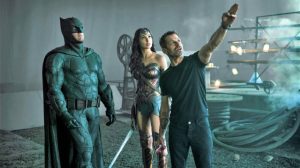
 At this point, I don’t think I need to provide too much on the history surrounding the supposed epic tragedy of behind-the-scenes studio machinations that was the 2017 Justice League film. Suffice it to say if you don’t know, the theatrically released version of the movie was a sort of Frankenstein’s monster of two competing visions, one the culmination of original director Zack Snyder’s bleak, realistic take on DC superheroes introduced in two previous films, and the other a studio-mandated effort to re-shape the project to dilute Snyder’s influence and better ape the success of the Marvel Cinematic Universe (MCU) through the inclusion of re-shoots, re-edits, and post production work provided by the MCU’s most notable director at the time, famed garbage person Joss Whedon. The result was widely regarded as mediocre at best, a mishmash of clashing ideas and tones representing diametrically opposing perspectives on what a superhero movie should be. It was assumed at the time that the relative critical and commercial failure of the film meant that it and the cinematic universe it spearheaded was, much like Snyder’s conception of the DC Universe, completely hopeless. And then some weird stuff happened.
A strange confluence of circumstances involving the changing nature of our engagement with modern media, the increasing ubiquity of streaming platforms challenging and possibly supplanting the theatrical model of film distribution, and also a freaking pandemic, led to Snyder getting an incredibly rare second bite at the apple in the form of the Snyder cut. A long fabled, often dismissed as mythical truer version of Snyder’s masterpiece, the Snyder cut had been cruelly torn from him and mutilated beyond recognition by shortsighted naysayers who just didn’t understand the deep and profound things the director of Sucker Punch was trying to say in the movie where Lex Luthor apparently pees in a jar to make a point to a senator before killing her. Or I don’t know, maybe he got his assistant to do it before sending her to die in the explosion he didn’t tell her about? Okay, that’s not the point, but Batman V. Superman is still really stupid. The point is, fans demanded it, and Warner Bros.’ long history of poor decision-making led them to provide a whopping 70 million dollars, roughly the budget of an entire year’s worth of quality Blumhouse movies, to complete a thing that was supposedly already basically done. And now it’s here.
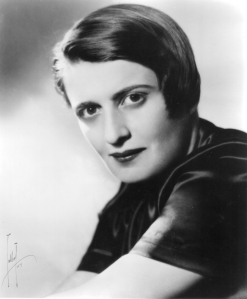
Author Ayn Rand
If you didn’t pick up on my reference earlier to the Virtue of Selfishness, consider yourself lucky to have never been exposed to any kind of deep dive into the nonsense of Objectivist “philosopher” Ayn (rhymes with “whine”) Rand. I use “philosopher” in quotes because Rand famously rejected all philosophers post-Aristotle other than herself, most likely because all of modern philosophy might as well be collected with the subtitle: “Why Ayn Rand Is An Idiot,” so her rejection of them was likely a preemptive strike done with the same degree of defensive self-awareness that led her to rail against government hand-outs her whole life only to accept Social Security and Medicare in her autumn years. The Virtue of Selfishness refers specifically to a collection of essays encapsulating Rand’s ethical vacuousness better than I could with any description, so I would say you should just read it, though you really shouldn’t. You could also check out her much more popular and well known novels, the CEO’s on strike fantasy Atlas Shrugged, or The Fountainhead, about a self-described brilliant artist who would rather see his greatest work destroyed than allow it to be altered by the people with the moral temerity to think they had the right to dictate what it should be just because they paid for it. Coincidentally, Zack Snyder has been trying to make that book into a film for years.
Snyder is, by his own admission, a devotee of Ayn Rand and a committed Objectivist, and despite my already established aversion to this worldview, I want to state clearly here that I don’t bring this up to say that Zack Snyder believes in something I find ridiculous and is therefore a ridiculous person. I might think that if I got to know him, but that isn’t the point I’m making here. I have no reason to think that Snyder isn’t a perfectly nice, intelligent person as an individual, at least by the standards that we might judge those things in the abstract. I don’t know the man personally, so I don’t know for a fact that his love of a philosopher who said we owe nothing to each other means he believes the same thing wholeheartedly, and I have no way of knowing how he might translate his conception of Objectivism into his daily interactions with other people. He may be a sweetheart or a total bastard for all I know. As a filmmaker, however, I feel like I can say with some degree of certainty that his Randian worldview is at the forefront of his creative vision. If his movies are any indication of his artistic intent (as one assumes they should be), the Artist’s fire that burns in his soul is one that seeks to burn down the liberal social order predicated on the notion that our success as a civilization requires that we care about each other.
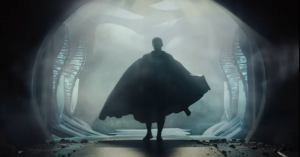 I would submit that the reason Zack Snyder’s approach to superhero movies feels so strange and off putting to so many people, whether or not they can articulate why, is because it lacks empathy. That isn’t to say that a movie or even a work of Art requires empathy, but its absence always feels wrong because art is the language of the soul, and having no interest in appealing to our shared humanity is the spiritual equivalent of gibberish. It feels especially wrong in superhero fiction because empathy is the basis for all superheroes on a fundamental conceptual level. The thing that makes them heroes is that they care about other people and, because of that, dedicate their lives to helping others. The people with similar powers who only use them for personal gain or to hurt other people, because they don’t believe we owe anything to one another, are the bad guys. So when Snyder, a filmmaker who views the world and the worlds he creates through the literal and figurative lens of Randian self-interest, tries to realize the characters of Superman, Batman, or Wonder Woman, it does not occur to him that anyone like them would ever sublimate their own selfish interests for the good of humanity. He has no frame of reference for altruism, so he can’t relate to characters designed to be the personification of it.
Snyder’s Superman spends almost the entirely of Man Of Steel rejecting the idea that he should use his amazing powers to help anyone, and only begrudgingly takes on the threat of General Zod when he is personally threatened and it is in his interest to fight, famously failing to even try to save Metropolis from the destruction wrought by his battle because civilian casualties were immaterial to him. In the sequel Batman vs Superman: Dawn Of Justice, the idea that all of this superheroic carnage has any real toll on real people that we should care about is addressed almost as a petty response to the backlash Man Of Steel faced for its callous depiction of the character, with Batman representing the side that at least cares enough to seek revenge, only to be revealed as short sighted in his zeal to defend humanity from this all-powerful alien god after a few common enemies and a coincidence involving their mothers’ names causes him to see the monster as a misunderstood hero. In between this convoluted arc, we have a montage of Superman saving lives that is one of the most morose series of images ever put to film, suggesting its the last thing he wants to spend his time doing. We see Wonder Woman coming out of hiding after decades of refusing to use her powers for the good of anyone, and we also find out that Batman, the billionaire who spent his life and vast wealth defending the innocent from evil, has since broken his oath never to kill and seemingly delights in sending criminals to prison branded with a symbol that almost assuredly marks them as targets for rape and murder.
 Back in 2019, Snyder directly addressed the criticism of his dark, “realistic” approach to superheroes, and specifically the idea that Batman would kill, by saying “It’s a cool point of view to be like, ‘My heroes are still innocent. My heroes didn’t fucking lie to America. My heroes didn’t embezzle money from their corporations. My heroes didn’t commit any atrocities.’ That’s cool. But you’re living in a fucking dream world.” And you know what, he’s absolutely right. It’s a dream world called comic books. You could say the same thing about something like Star Trek, the idea that we could all give up on greed and completely restructure society around the idea of helping each other is pretty naive and will probably never happen, but that’s not the point. The point is to imagine a world where it could happen, compare that imaginary world to our own, and think about what we might need to do to bridge the gap between them. Fantasies aren’t supposed to be realistic, they are supposed to be inspirational and aspirational. Most billionaires do probably embezzle money, and most people given the powers of a god would probably be corrupted by that power and commit atrocities. But what if they didn’t? What if those people were innocent do-gooders who helped other people instead? That would be super, and pretty heroic at that.
Of course, Snyder is in no way obligated to like or care about what superheroes are traditionally meant to represent in order to make movies about them, but it begs the question of why he would want to spend so much of his time and effort crafting an entire series of superhero movies if he doesn’t. A cynical approach to answering that question might start with the dumptruck of money Warner Bros presumably wheeled to his home, and might even posit a sort of trollish pleasure in taking down something he clearly detested through creative deconstruction a la Rian Johnson’s The Last Jedi. Or perhaps his motives were even more insidious. Perhaps he hates the very idea of altruistic superheroes and altruism in general so much that he dedicated an entire film franchise to subverting our love of superheroism so that we would lose hope in the empathetic message they are meant to inspire, and with nothing else left to cling to, fully embrace our Randian dark sides. For the record, I don’t think it’s any of those things, but any one of them would be more interesting that what I think the actually answer is, which gets me to my biggest problem with Snyder’s work overall, and especially his latest magnum opus, the Justice League Snyder cut.
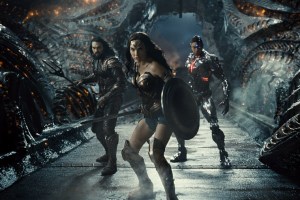 Every single movie Snyder has ever made has been at its core a parable extolling the virtue of selfishness, but none of them were intended to be that because they were never intended to be anything. If Snyder were a political or philosophical polemicist for Objectivism or any ideology, I would at least respect the intellectual exercise even if I couldn’t appreciate the end result, but that’s not what Snyder does. While his visual style is marked by hyper-realism, all slow-motion grandiosity, his storytelling is focused on reflecting the real world as he sees it, and his point of view just happens to be skewed the way it is. Remember, he doesn’t want to live in a dream world of his own making, he wants everything to be like the real world, which he just happens to see as one where nobody cares about or likes each other. Beyond that, there’s no inherent meaning in anything he does, which is insane considering how skilled he is at creating visuals meant to evoke the feeling of deeper meaning. When Aquaman stands on that pier with waves crashing over him and “There Is A King” playing in the background, it certainly feels like its saying something, but what? He’s sad? Angry? Symbolic of… anything? When Superman poses like Jesus, he’s clearly not meant to represent any form of Christ narrative I’ve ever read, but the image is iconic and memorable and just feels important somehow, and that’s all that matters.
Snyder’s shallowness is not in and of itself a problem, even if given his talents it represents a crushing waste of potential. The problem is that when your movie is four hours long and serves as a once-in-a-lifetime opportunity to rectify the injustice of studio meddling as a battle cry for every artist who ever had their work stolen from them, not having anything of importance to say and adding literally nothing of substance to the two-hour studio cut everyone hated is maybe the most disappointing thing you could have done. Obviously, the tragic circumstances surrounding his leaving the project in 2017 and the seemingly shady way Whedon was brought onto the project do not make Warner Bros look good, but if I’m supposed to believe this narrative that Snyder was betrayed and his dream project was bastardized by philistines, I shouldn’t be coming away from his original vision with so much more respect for the mediocre hatchet job. I know the prevailing critical consensus coming out of this is that whatever you may think of Snyder’s version, it’s at least better than the Joss Whedon version, but these people are just wrong.
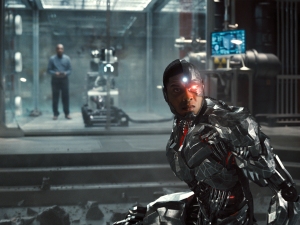 Comparing the two cuts is apples and oranges. One of them is a movie, created under the auspices of a studio director’s responsibilities to their contract, and the other is a vanity project with no such restrictions. Whedon completed a film that was palatable to a wide audience and within a reasonable running time to be shown in theaters, which is presumably what the studio thought Snyder was going to do too. If we are to believe that what we have now is Snyder’s true, uncompromised vision for it, then what was he going to do when they told him you can’t put a four-hour movie in theaters? What would he have cut to get it to two hours? If I had to guess, I’d say probably almost everything Whedon did, since the stories are so similar that its clear the content Snyder put back in was largely superfluous to the narrative. Most of what Whedon cut was unnecessary slow-mo, call backs to movies we wanted to forget, and setups for movies nobody wanted, and redundant moments already covered elsewhere. All the action scenes are present between the two cuts, except for the completely pointless Flash sequence, but in the Snyder cut they’re all twice as long. Same beats, same information conveyed to get the point across, just longer and less well paced than in the theatrical version.
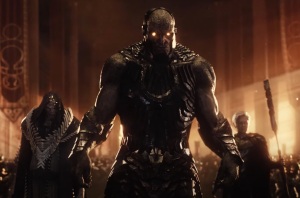
Is Steppenwolf a more interesting villain now that we know he serves Darkseid because of some past mistake we don’t know about, rather than just assuming he does it because he’s from Darkseid’s totalitarian world where everyone serves him? Does Darksied’s comical incompetence as a despot make him a more enticing prospect for a sequel, somehow forgetting that the thing he devoted his life to searching for was on the one planet he failed to conquer, which just so happens to be the one planet where they left behind all those doomsday devices waiting centuries to be easily activated? We’re told it’s such a shame that we missed out on the great character of Cyborg, and now we finally get to see what could have been, but to quote the black clad Superman at the end of the Snyder cut, I’m not impressed. What more did we learn to deepen his story? Daddy never came to his football games but he still misses him when he’s dead? Riveting! Did we need a six-minute excursion into his mind palace with a voice over explaining all of his powers like we’re children when the original just demonstrated all of them by showing them to us? And what does it all amount to? In the end, he gets to ascend to his rightful place as the least interesting mopey superhero who hates being a superhero with all the other mopey self-hating superheroes. Hooray?
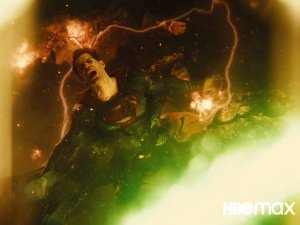 Naturally, you’re probably thinking, it wasn’t all just cuts, what about all that stuff Whedon added in? “What about brunch?” you say. Sure, I’m not going to defend everything Whedon did to make his version work. You’re mileage may vary; I would say about half of his new additions worked for me and half were cringe worthy, but the good half seems even more vital now than it did when we didn’t know the alternative. The brighter color palette alone is a welcome change from the dreary, washed out look of the Snyder cut, and for every bit where Flash wedges his face in Wonder Woman’s cleavage, we get one like Cyborg laughing about his injuries after stopping the mother box, the only moment in either version where he resembles the fun, lighthearted character from the comics and TV shows. The Flash never gets his hot dog-strewn first meeting with Iris West, but he gets a heart-to-heart with Batman about how being a real hero means saving people one at a time that speaks to the greatness of both characters in a way nothing in the Snyder cut does. When Superman smiles in Joss’ version, it’s because he’s saving lives and he’s happy when he gets to do that. When he smiles in the Snyder cut, it’s a menacing sneer because he’s about to lay the smack down on a weaker opponent to show him who’s boss. And then we get that delightful Russian family.
Yeah, I know, you hate the Russian family, and I get it. I hated the Russian family when I first saw the 2017 cut. Why would they waste time showing these characters who don’t seem to have any bearing on the story? The thing is, we only thought that because we were treating this superhero movie like a superhero movie, where we don’t necessarily need to be reminded that superheroes save lives as long as that’s a base-level assumption. But in Snyder’s world, it isn’t. In his cut, there’s no family to save because who cares about saving families? The stakes in the Whedon cut are clear and personal, real people will be hurt if they fail. We are them and they are us. It’s not subtle but neither is anything Snyder has ever done in his life. In the Snyder cut, we know that the Earth is doomed, but it’s all theoretical, our entire planet reduced to the same collateral damage that Metropolis became in Man Of Steel, where the people are there, we assume, but they don’t matter enough to be our focus. And in the end (of the Whedon cut anyway) the villain is defeated by his own fear, because the fear he represents cannot stand up against what the heroes represent in opposition to him: love, for each other and for the world they fight for. In the Snyder cut, they just savagely whale on him, stab him, and cut his head off with terrifying glee in their eyes, and then we cut to a flash-forward into a future world seemingly based on the Injustice video game series where we find out they failed to save the planet anyway.
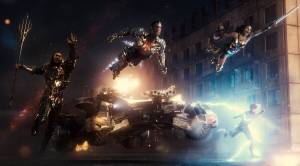 Again, I would like to stress that I am not making a one-to-one connection between filmmaking style and personal character. I’m not saying that Zack Snyder the person doesn’t care about people, and I know Joss Whedon doesn’t. I assume that before he shot those Russian family scenes, he made sure to make some of his female employees feel like dirt because making women cry is the only thing that gives Whedon an erection. But the real-life context matters. You might be asking why I keep bringing up the Ayn Rand stuff even though I don’t even think he’s intentionally injecting it into his movies. It’s because when I saw the original 2017 cut, I was disappointed but I didn’t hate it. When I saw this new cut, I was incensed, and I couldn’t quite figure out why until that side of it clicked for me. I went through something similar with Quentin Tarantino’s Once Upon a Time… In Hollywood. Everybody was loving it but I couldn’t explain quite why I didn’t until it dawned on me that it wasn’t anything about the filmmaking but the larger context, a director who made millions working with Harvey Weinstien, making a love letter to old Hollywood in the wake of the Me Too movement centered around the exploitation of an actress and making the story about two clueless men. It just felt wrong, and I’m finally to the same point with Snyder’s movies.
The 2017 cut of Justice League came out shortly after the election of our fascist, white supremacist, and eventually traitorous former president Donald Trump, a man so comically evil that he literally served as one of the inspirations for Lex Luthor when he was transformed from a mad scientist into an 80’s-style corporate tyrant. His rise to power, or rather the lie he tells people about being a self-made man and not a trustfund baby, is basically a Randian Horatio Alger story, and not just because both men were fabulists rumored to be pedophiles. You might even call him a Randian Superman, and the line from Randian Self-Interest to CEO worshiping Social Darwinism to Trumpian fascist strongman politics is undeniable. This new Justice League, where Zack Snyder tries to turn all my favorites superheroes into fascist action figures, comes out only a few months after a bunch of traitorous right-wing scumbags tried to raid our nation’s Capitol to usurp our democracy at the whims of a would-be king. One technically doesn’t have anything to do with the other, but the images are iconic and the connection just feels like there’s something meaningful there, even if it’s unintentional. I just can’t treat Snyder’s bad politics as just some interesting facet of his directing style anymore. I don’t want it in my polity, I don’t want it in my entertainment, and I sure as hell don’t want it in my superheroes.
So what was the point of any of this? Why start with that long boring excursion into the definition of Art? And what’s more, if Art is the one place where the Virtue of Selfishness makes sense, where does any audience or any would-be critic like myself have any place to question an Artist like Zack Snyder? Why write 20-plus long paragraphs, the Snyder cut of Snyder cut hot take think pieces, if an Artist should never care about what anyone thinks of what they create? That’s where I’ve been the last few days. As you might guess, I find the whole notion of Art criticism to be utterly worthless and without merit. The entitlement that audiences have surrounding the Art they consume is equally abhorrent to me, as if what they think of something should have any bearing on the form it should take. So where does that leave me? Feeling like a hypocritical piece of garbage.
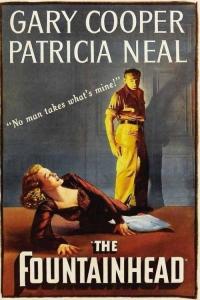 I keep coming back to The Fountainhead (as a metaphor, not the actual book, because I read it once in college and that was enough). The protagonist Roark was hired to design a building and insisted he could blow the thing up if they didn’t let him build it the way he wanted, and when he does, he goes to trial, and makes a passionate plea in defense of his own rights over his creation that wins over all the doubters who couldn’t force him to conform to tradition. I keep wanting to force this narrative where Snyder is Roark and the saga of the Snyder cut is his quest to finally build that eyesore upon the skyline the way he always wanted, but it just doesn’t work for me. Art is deliberate creative expression for its own sake. The Snyder cut is certainly deliberate, and while it was made at the behest of the studio for a profit and an audience, I’m even willing to give Snyder the benefit of the doubt that he didn’t care about either of those things and really did set out to make it for its own sake. But then there’s that middle part, creative expression, something that reflects the internal life or point of the view of the artist. What if there’s nothing interesting about the internal life to reflect, and any apparent point of view is accidental and despicable at that? Is Zack Snyder the architect Frank Gehry, building beautiful sculptures people just happen to live and work in, or is that just who he thinks he is and who we want him to be, and really he’s just a very skilled craftsmen with nothing to say? How boring and uninspired can a work of Art get before it ceases to be Art at all from the sheer weight of its pointlessness?
Roger Ebert tried to say that video games could not be Art, but really he just didn’t understand them or like them, and for years, similar charges have been leveled at comic books and comic book movies. Whatever I might feel about Snyder or his work, he has been instrumental in lending a degree of legitimacy to comic book storytelling in the minds of a lot of people who otherwise dismissed it. Maybe not as much as the MCU has, but he’s still a part of it, and as a lifelong comic book fan, I can’t ignore that. I feel like I should be right there with everyone else, if not loving the Snyder cut, then at least loving what it represents, that for once the little guy won over the big guy, even if the little guy is usually on the side of the big guy unless he’s the one getting screwed, and he didn’t really win so much as reveal his limitations and give me a reason to say “I have more respect for Joss Whedon as an artist” which is something I never wanted to say again. But I’m not there, and I don’t think that’s what this represents, and really, I just wish that someone else, or really anyone else could have gotten the opportunity that Snyder did. Maybe this release makes that more likely in the future, but I don’t have much hope for that. I don’t have much hope for anything left in me anymore because I just watched a four-hour Zack Snyder movie and I’m pretty sure our future is going to be a Randian dystopian Knightmare. Release the David Ayer cut! Release the Gareth Edwards cut! Release the Lord and Miller cut! Release the Michael Cimino cut! Release all the cuts!
Just try to keep them under two hours, please.
Share this:

Zack Snyder’s Justice League (2021)
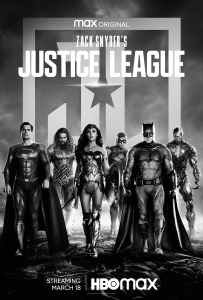
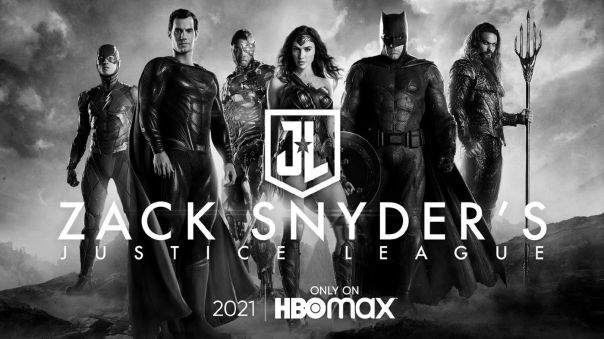
Zack Snyder had a unique situation that many filmmakers would never get close to fulfilling. He departed the 2017 Justice League movie in the wake of a family tragedy, Joss Whedon was hired to direct and rewrite extensive reshoots that totaled an estimated additional $30 million dollars, and the world was given the strange amalgamation of two different filmmakers, along with the nightmare-inducing CGI baby lip to replace actor Henry Cavill’s mustache. The 2017 theatrical release of Justice League was meant to be a significant milestone for the DCU, launching an all-star assembly of superheroes and setting up future solo adventures and franchises. It was meant to be a major kickoff and it was simply a major shrug. The general public was indifferent to the 2017 League, and it seems like the DC brass is positioning for a cinematic universe do-over, retaining the elements they liked (Jason Momoa, Gal Gadot) and jettisoning the other pieces to start anew. In the ensuing years, fans have been petitioning for the fabled “Snyder Cut,” a theoretical version of Justice League that was closer to Snyder’s original artistic vision before the studio intervention and interloping of Whedon. It became a joke on social media and then one day it became real. Warner executives, seeing opportunity with the rabid fanbase, decided to give Snyder an additional $70 million to finish his version of Justice League. It would be an exclusive to their new streaming platform, HBO MAX, and Snyder could complete his version without artistic compromise. The resulting four-hour version, titled Zack Snyder’s Justice League, is less a movie than a mini-series, and a rare chance for a director to complete the story they wanted to tell without artistic compromise. After having watched the full four hours, along with re-watching the 2017 version again for comparison, The Snyder Cut just feels like the original version only longer. I would actually advise people that if they haven’t watched either Justice League to simply catch the 2017 version. At least its mediocrity is half your time investment.
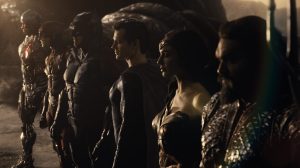
Once again, months (?) after the death of Superman (Cavill), Bruce Wayne (Ben Affleck) is traveling the world and recruiting a very specific group of job candidates. He needs serious help to combat an oncoming alien adversary, Steppenwolf (voiced by Cirian Hinds). The cosmic Big Bad is looking for three special boxes, a.k.a. mother boxes, to destroy the world and make way for his master, Darkseid. Wonder Woman (Gal Gadot) helps Batman convince the half-man/half-machine hybrid Cyborg (Ray Fisher), underwater dweller Aquaman (Jason Momoa), and hyperactive speedster Flash (Ezra Miller) to form a league of sorts to thwart Steppenwolf.
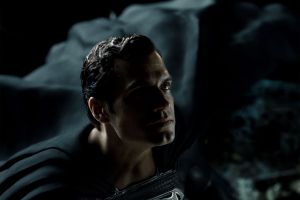
I think it’s unfair to judge the 2017 film to the Snyder Cut as a movie simply because this version never would have been released in theaters. No studio would have released a four-hour version. The two edicts that Whedon was given by the studio when coming aboard the project was that it could not be over two hours and to lighten it up. Imagine what the 2021 Snyder Cut would look like if Snyder was then tasked to cut it down to a more manageable two-hour running length. I predict many of the same scenes being eliminated or dramatically trimmed down. That’s the main takeaway from the Snyder Cut, that there is more room for everything, and quite often too much room. I swear a full hour of this movie might be ponderous slow-motion sequences. Plot-wise, Zack Snyder’s Justice League is pretty close to what was released in theaters in 2017. The action sequences are extended longer (Steppenwolf’s attack on the Amazons has increased from six minutes to a whopping twelve minutes) but I don’t know if they’re dramatically improved. Instead of two punches there’s four; instead of one chase, there’s two. It’s that kind of stuff, filling out the sequences but not really elaborating on them in an exciting fashion that reorients the moment. I liked some additions, like the inclusion of blood during the underwater Atlantis fight because it added a neat visual flair, but the added action is often obscured by visual decisions that dis-empower the experience (more on that later). I found myself growing restless with the movie. All that added time allows some sequences and plot beats to breathe better, but it also allows Snyder to meander to his greater indulgence (more on that later as well, notably on the multiple epilogues). The four hours feel like Snyder’s kitchen sink approach, and with the benefit of years of hindsight from the critical and fan reception of the 2017 version, he’s able to spend tens of millions to correct mistakes and improve a flawed film.
I hate how this movie looks for multiple reasons. The most obvious difference is that the aspect ratio has been altered to a 4:3 ratio more reminiscent of pre-widescreen television. Why is this the case? Snyder has said he cropped his movie to this boxy format so that it could be played on IMAX screens. That’s fine, but why crop your movie now months if not possible years before it will ever play on IMAX screens? When it comes time to adjust for the IMAX screen, adjust then. Why must every viewer see this limited version now on their widescreen televisions at home? It’s just so bizarre to me. It would be like if Quentin Tarantino reasoned that his movies will eventually play on airplanes, so he better get ready and cut back his widescreen into a flat, pan-and-scan mode, and he might as well include alternate takes and scenes to cover for those that would be deemed too profane or intense for the all-ages captive audience of an airplane, and then that version was the one he released to all audiences and we were stuck with it. Snyder had millions of dollars to reshoot his epic and he lopped off the edges, meaning you’re getting more movie but also less (at least the footage predating the new reshoots) in every second because of the framing. The grandeur of the superhero saga is also extremely hampered by the drab color palette. Snyder has always preferred muted colors to his movies but his Justice League drains all life and vibrancy. Everything is literal shades of grey. Color is not allowed to exist in this universe. A sunset is almost comical. Apparently, there’s going to be an official black-and-white version but we’re already practically there. Some could argue the oppressive grey is meant to evoke the grief and heaviness of the picture, and I’ll give you some leeway with that, but the drab colors also nullify the visuals. It’s simply harder to see everything that’s happening even during the daytime, and then you tack on the ugly CGI that makes everything look like a fuzzy video game. For a movie that has cost potentially over $350 million dollars combined, Justice League looks so phony. Maybe that’s part of Snyder’s overall stylized look, he’s never really been one to visually ground his operatic action spectacles, but I feel like the aspect ratio and color palate just make it worse. For those four hours, this is often a very visually unappealing movie to watch.
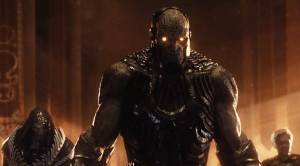
With the added time, there are definite benefits and characters that are lifted by the extra attention. Chief among them is Cyborg, a character that felt like a Swiss army knife in the original who was just there to perform whatever techno jazz the movie required at a moment’s notice. With the Snyder Cut, the character becomes more engaging and given a fuller arc relating to the relationship between father and son. The father’s placement in the story actually matters and Cyborg has more of a personal journey coming to terms with his new abilities. There is a back-story with his frayed relationship with his father, his accident that caused him to become the creature he is, and a reoccurring theme of a son blaming his father and the father trying to reconnect with the son he refused to part with. I still think Cyborg ranks low on the list of superheroes, but the additional scenes give the character more weight, more tragedy, and more intrigue. Another added benefit is that Steppenwolf’s motivation is improved as well as his look. He’s now outfitted with a herring-bone armor that twitches over his body. It’s a more intimidating look than what he had going on in 2017. I also appreciated that he now has more motivation other than “conquer the universe” because now it’s “conquer the universe to get back in the good graces of the boss.” Steppenwolf is trying to repay a debt and make amends, and that makes him slightly more interesting than his generic motivation in the original theatrical cut.
However, not all the new editions are as smooth or as helpful. The added time with the rest of the Justice League doesn’t seem to have added anything to their characters. Each one’s arc is more or less the same from the 2017 version, except now we have even more scenes of Wonder Woman wondering whether she needs to get off the sidelines and be more involved (the events of WW84 conflict with this timeline) and Aquaman rejecting his call to adventure from the Atlanians. Neither is a richer portrayal and the scenes are redundant. Take Wonder Woman finding out about Steppenwolf’s attack. In the 2017 version, her mother lights an arrow and it sails into Greek ruins, signaling her daughter, who knows what this means. In the Snyder cut, the arrow still lights the Greek ruins, but now Wonder Woman visits the ruins, she gathers a stick, she wraps a cloth around it, she dips it in kerosene, she lights it on fire, she enters a secret room because of the arrow, she jumps down a cliff, she finds a hidden temple with hieroglyphics warning about Steppenwolf and the mother boxes and Darkseid. Even if you really wanted the end where she sees those hieroglyphic warnings, why did we need these many steps to get there? The opening hostage/bank heist scene is given far more attention, with multiple scenes of hostages being terrorized, and then Wonder Woman literally vaporizes the chief terrorist. A little girl looks at her, likely traumatized for life by the whole experience, and says wistfully, “I want to be like you when I grow up.” She wants to be a murderer? In Snyder’s universe, Superman kills people, Batman kills people, so why not Wonder Woman too?
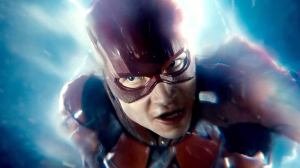
The revised introduction of Barry Allen is also regrettable. He’s applying for a dog walking job and a car accident occurs and he saves the day, but not before slowing down time in a frustrating manner. This is because he seems to be dawdling while the rest of the world is frozen, which makes the event seem less special. His movements seem less urgent than Quicksilver in the X-Men films when he would perform the same memorable slow-mo set pieces. I disliked that the Flash’s big involvement in the final showdown was literally running around in a circle, a repeat of what he had done prior. Also making the slow-mo save introduction less special is the fact that the Flash picks up a hotdog floating in midair for silly reasons. It’s drawn out with interminable slow-motion and the song choice is baffling, a common theme throughout Snyder’s movies. I think he’s been smarting ever since he painfully paired Leonard Cohen’s “Hallelujah” with a sex scene in 2009’s Watchmen, and now we must al endure similar awkward auditory pairings. Every song inclusion just feels wrong here. As Aquaman is drinking and walking along a pier, in slow motion, we hear “There is a Kingdom” by Nick Cave, and it just doesn’t pair right, especially in contrast with the hard-rocking guitar riffs from The White Stripes in the 2017 version. For good measure, Snyder even includes another “Hallelujah” cover by the end for good measure, as if he’s still fighting this same battle over musical taste.
And then there’s the barrage of epilogues, each the start of a story never to be continued, and it approaches the realm of self-parody (spoilers to follow). We get three endings, the first an extension of the post-credit scene from the 2017 version where Lex Luthor (Jessie Eisenberg) suggests the formation of a Legion of Doom for villains. He even shares with Deathstroke (Joe Manganiello) that Bruce Wayne is Batman. Well, that could be an interesting next step, but we know it’s not to be so it becomes just a teasing preview. The next ending cuts forward in time to the dusty, apocalyptic vision that Batman had in Batman vs. Superman, and he’s got a crew including an older Flash, Meera (Amber Heard, why does she have a British accent now?), and even Jared Leto’s Joker. They’re facing off against a villainous Superman who has been driven mad by the death of Lois Lane (Amy Adams), which is pretty much the plot of the Injustice games. The Joker is antagonizing Batman with some references to killing someone close to the Dark Knight, and this whole sequence amounts to Snyder basically saying, “Hey, here’s where I wanted to go with things but you’ll never see it.” Then there’s a third ending, because the second is revealed to be another dream/vision for Batman, where he meets Martian Manhunter, a character that, other than diehard comic aficionados, no one cares about and has been given any reason to care about. The guy just introduces himself and Batman is like, “Oh, cool,” and that’s the ending Snyder decides to close his four hours with. There is a literal half-hour of epilogues and false endings to finish with and I was exhausted. I owe Peter Jackson an apology.
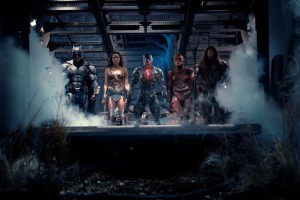
In my original review of the 2017 Justice League, I wrote, “I think I might have actually preferred Joss Whedon not being involved and simply releasing the full Zack Snyder cut. It would have been stylistically more coherent. Much of the Whedon reshoots do not feel like they are for the better. To be fair, he came in late and this franchise behemoth had already gone too far to fully alter its fate. There are small moments that work but the big moments are what fail. This movie is missing setups, payoffs, and character arcs. It’s missing pathos and emotion. It’s missing memorable action sequences that are exciting and varied. It’s missing basic internal logic. It’s missing a greater relevance.” Some of those issues are resolved with the four-hour Snyder cut and too many others still remain. At the end of the day, this is still just a longer, bloodier version of a mediocre superhero movie, except now we get stuff like Batman saying the F-word, so I guess that’s cool. I have more of an artistic appreciation for what Whedon had to pull off to even wrangle this beast into two hours. I’m happy Snyder was able to fulfill his complete vision and that HBO MAX offered a platform that would provide such a rare opportunity of expensive art unencumbered by studio meddling. I can’t say it’s worth your four hours, nor can I say it’s dramatically better than the 2017 version because whatever benefits it offers are weighed down by the extraneous, the redundancies, and the length. As it stands, I feel I have no choice but to grade Zack Snyder’s Justice League the same as the 2017 Justice League.
Nate’s Grade: C
Share this:

Hillbilly Elegy (2020)/ Feels Good Man (2020)
 Hillbilly Elegy is based upon the memoir by JD Vance and in 2016 it became a hot commodity in the wake of Trump’s surprising electoral ascent, with liberals seeing it as a Rosetta Stone to understanding just how so many working-class white people could vote for a billionaire with a gold toilet. The movie, directed by Ron Howard (Apollo 13) and currently available on Netflix, follows an adult JD (Gabriel Basso). He’s a Yale law candidate forced to go back home to Middletown, Ohio after his mother Bev (Amy Adams) lands in the hospital for a heroin overdose. It’s 2011, and Bev has been fighting a losing battle with opioids for over a decade, costing her a string of boyfriends and jobs. JD’s homecoming isn’t quite so rosy. While he can take comfort in fried bologna sandwiches and his sister (Haley Bennett), the town is not what it once was. The factory has closed, poverty is generational, and his mother is one of many struggling to stay clean. In flashback, we watch MeeMaw (Glenn Close) take in the young JD (Owen Asztalos) and raise him on the right path. JD must decide how far the bonds of family go and how much he may be willing to forgive his mother even if she can never ask for help.
The subtitle of Vance’s novel was “A Memoir of a Family and a Culture in Crisis,” and it’s that latter part that got the most attention for the book and critical examination. Many a think piece was born from Vance’s best-selling expose on the hardscrabble beginnings of his personal story along the hills of Kentucky and the Ohio River Valley and his recipe for success. Given his libertarian political leanings, it’s not a surprise that his solutions don’t involve a more interventionist government and social safety nets. According to Vance’s book, he saw poverty as self-perpetuating and conquerable. It was the “learned helplessness” of his fellow Rust Belt inhabitants that Vance saw as their downfall. For me, this seems quite lacking in basic empathy. You see these people aren’t poor because they’ve been betrayed by greedy corporations, indifferent politicians, a gutted infrastructure and educational system in rural America, pill mills flooding Appalachia with cheap opioids, and a prison system that incentivizes incarceration over rehabilitation. For Vance and his like-minded fellows, upward mobility is a matter of mind over matter, and these working-class folks have just given up or won’t work as hard as before.
 Now, as should be evident, I strongly disagree with this cultural diagnosis, but at least Vance is trying to use his own story as a launching point to address larger points about a portion of America that feels forgotten. The movie strips all of this away. Screenwriter Vanessa Taylor (The Shape of Water) juggles multiple timelines and flashbacks within flashbacks as Vance follows the formula of prodigal son returning back to his home. The entire draw of the book, its purported insights into a culture too removed from the coastal elites, is replaced with a standard formula about a boy rediscovering his roots and assessing his dysfunctional family. At this rate, I’m surprised they didn’t even time it so that Vance was returning home for Thanksgiving.
Removed of relevant social commentary, Hillbilly Elegy becomes little more than a gauzy, awards-bait entry meant to uplift but instead can’t help itself from being overwrought poverty porn. If we’re not looking at the bigger picture of how Appalachia got to be this way, then Vance becomes less our entry point into a world and more just an escaped prisoner. Except the movie doesn’t raise Vance up as exceptional and instead just a regular guy who pulled himself up by his bootstraps through will and family support. I’m not saying he is exceptional, I don’t know the man, but this approach then ignores the reality of why so many others just aren’t following his footsteps of simply trying harder. Without granting a more empathetic and careful understanding of the circumstances of poverty, Howard has made his movie the equivalent of a higher-caliber Running with Scissors, a memoir about a young man persevering through his “quirky, messed up family” to make something of himself on the outside. This reductive approach is meant to avoid the trappings of social commentary, and yet in trying to make his film studiously apolitical to be safer and more appealing, Howard has stumbled into making Hillbilly Elegy more insulting to its Appalachia roots. Systemic poverty is seen as a choice, as people that just aren’t trying as hard, that have given up and accepted their diminished fates. Never mind mitigating economic, psychotropic, and educational circumstances. I imagine Howard wanted to deliver something along the lines of Winter’s Bone, unsparing but deeply aware of its culture, but instead the movie is far more akin to a sloppy compilation of Hallmark movies and catchy self-deprecating bumper sticker slogans. Seriously, about every other line of dialogue feels like it was meant to be on a T-shirt, from “Where we come from is who we are, but we choose every day who we become,” to, “There are three types of people in this world: good Terminators, bad Terminators, and neutral.” Well, maybe not that last one. The insights are fleeting and surface-level, with vague patronizing along the fringes.
The personal story of J.D. Vance takes the center stage and yet he’s the biggest blank of characters, and what we do get isn’t exactly that encouraging. I think we’re meant to engage with his triumph over adversity, but he has such disdain for his background while clinging to it as an identity, and this intriguing dichotomy is never explored. Vance as a character is merely there. His awkward experiences relating to the rich elites are just silly. He calls his girlfriend (Freida Pinto) in a panic over what fork to use at a fancy dinner table, as if this perceived social faux pau would be the difference between getting a law firm gig. He’s supposed to feel like an outsider, both at home and away, unable to escape his past that defines him, but the movie doesn’t even make Vance feel alive in the present. Most of the movie he is just there while big acting takes place around him. He listens to the life lessons bestowed upon him, good and bad, and it makes him the kind of man that when he grows up will join Peter Thiel’s venture capital firm, so hooray? I sighed when the movie established the stakes as he needs to get back in time for his big lawyer job interview, a literal family vs. future crossroads. The movie treats its frustrating main character as a witness to history rather than an active participant, and his personal growth is what? Coming to terms with the limitations of his mother? Accepting himself? Leaving them all behind to survive? I don’t know. There is literally a montage where he gets his life back on track, starts getting better grades, ditches his no-good friends, and heads out into the world. This could have been a better articulated character study but instead Vance comes across as much a tourist to this downtrodden world and eager to return to safer confines as any morbidly curious viewer at home.
 I simply felt bad for the actors. This is the kind of movie where subtlety isn’t exactly on the agenda, so I expected big showcases of big acting with all capitals and exclamation marks, and even that didn’t prepare me. I watched as Amy Adams (Vice) worked her mouth around an accent that always seemed elusive, with a character that veered wildly depending upon the timing of a scene. Almost every moment with Bev ends in some alarming escalation or outburst, like when a new puppy ends with Bev declaring she will “kill that dog in front of you,” or a ride back home descends into a high-speed promise of killing herself and child out of spite. This woman is troubled, to say the least, and her addictions and mental illness are what defines the character. With that guiding her, Adams is left unrestrained and usually screaming. There’s just so much screaming and wailing and crying and shouting. It’s an off-the-mark performance that reminded me of Julianne Moore in 2006’s Freedomland, where a usually bulletproof actress is left on her own in the deep end, and the resulting struggle leans upon histrionics. Was I supposed to feel sympathy for Bev at some point? Does the movie ever feel sympathy for this woman who terrorizes and beats her child? The broad portrayal lacks humanizing nuance, so Bev feels less like a symbolic victim of a larger rot of a society abandoned and betrayed and more a TV movie villain.
Close (The Wife) disappears into the heavy prosthetics and baggy T-shirts of MeeMaw, but you could have convinced me the character was a pile of coats come to life. Truthfully, MeeMaw is, by far, the most interesting character and the story would have greatly benefited from being re-calibrated from her painful perspective. She’s the one who bears witness to just how far Middletown has fallen since her and PawPaw ventured as young adults with the promise of a secure new life thanks to the thriving factory. She’s the one symbolizing the past and its grip as the present withers. She’s the one who has a history of abuse only to watch her daughter fall into similar patterns. Think of the guilt and torment and desire to rescue her grandson for a better life and save her family. That’s an inherently interesting perspective, but with JD Vance as our mundane lead, MeeMaw is more a slow-walking curmudgeon taken to doling out profane one-liners and grumpy life lessons. Close is easily the best part of Hillbilly Elegy and deserved more attention and consideration. A moment where she clings to JD’s high-scoring math test like a life raft is heartfelt and earned, more so than anything with JD.
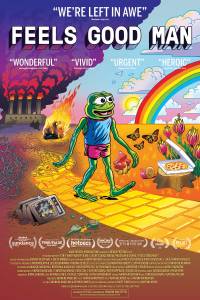 Another slice of America that feels forgotten and angry is on display with the documentary Feels Good Man, a.k.a. the Pepe the Frog documentary. Who is Pepe? He’s a cartoon frog created by Matt Furie as part of a comic series of post-college ennui between four friends. The character was adopted by the commenters on the message board 4Chan as their own symbol, and as their memes spread and became more popular with mainstream suers, and that’s when the 4Chan warriors had to do something drastic to save their favorite frog. They began transforming Pepe into a symbol of hate in order to make him toxic for outside use, and then the irony of their attempts at reclamation faded away and Pepe became a real symbol for Neo-Nazis and white supremacists. The character is currently listed on the Anti-Defamation League’s list of symbols of hate. The movie explores this evolution and de-evolution of Matt Furie’s creation and serves as a cautionary tale about the scary shadows of Internet culture and the nature of reclaiming meaning and intent with art.
Firstly, is there enough material here for a full-fledged documentary? We’re talking about a cartoon frog filling up the memes of Internet trolls. Is that enough? I think so, though I wish the movie shed even more critical scrutiny upon the 4Chan fringes of the Internet that have become a toxic cesspool of alienation and recrimination. These are people that self-identify and celebrate their social isolationism. The acronym N.E.E.T. stands for NOT Employed, Educated, or Trained and is adopted by many as an odd badge of honor. We even see home video footage of people sharing their personal lives in cluttered, trash-strewn basements. These are people electing not to engage with a larger functioning society and yet also feeling hostile to those that choose otherwise. Maybe it’s all a big joke to them, so why even bother; maybe it’s a defeatist mentality that plays upon social anxiety and learned helplessness. Maybe it’s just a noisy, nihilistic club that doesn’t want anything for themselves other than to disrupt others. The interview subjects from the 4Chan community are few but offer chilling peeks into this subculture. They see the world in terms of a very high school-level of social hierarchy, and the people who are pretty, successful, and having sexual relationships are the “popular kids” keeping them down. I think in terms of a Venn diagram, that incels and these NEET freaks are a flat circle. It almost feels like Vance’s cultural critiques of his poor Appalachia roots syncs up with the disenchanted 4Chan kids. This self-imposed isolation and self-persecution stews into a hateful mess of resentment. It’s not a surprise that several mass shooters have partaken in 4Chan and 8Chan communities.
 This scary subsection of Internet culture has been left to fester and it went next level for the 2016 presidential election. The trolls recognized their own sensibilities in Donald Trump, a candidate whose entire presidency seemed on the precipice of being a bad joke. The alt-right celebrated the man and used Pepe as a symbol for Trump’s trolling of norms and decorum, and the 4Chan message boards became an army of meme makers to steer Internet chatter. It’s hard to say what exactly the cumulative effect of these memes and trolling efforts achieved, in addition to the successful efforts of Russian hackers and a media environment that gave Trump billions of dollars in free airtime, but the 4Chan crowd celebrated their victory. “We memed him to the White House,” they declared. From there, Pepe became a synonymous symbol of a newly emboldened white supremacist coalition and any pretenses of ironic detachment dissolved away.
The rise and mutation of Pepe makes up most of the movie, and it’s certainly the most fascinating and scary part of Feels Good Man. However, there is a larger question about the ownership of art and interpretation that the movie presents without conclusive answers. Symbols are a tricky thing. They’re not permanent. The swastika wasn’t always associated with Hitler and Nazis. A pentagram has significantly different meanings depending upon a Wiccan and conservative Christian audience. Feels Good Man examines Furie as a humble albeit slightly naïve creator. He’s a nice guy who just can’t get his head around what has happened to his creation. How far does the artist’s intent go when it comes to credible meaning? At one point, Furie tried stemming the negativity by killing off Pepe in a limited comic, but it didn’t matter. The 4Chan followers simply remade him as they desired because at that point Pepe was their own. He has been built and rebuilt over and over again, that no one person can claim interpretative supremacy. Furie’s version of Pepe might be gone but there are millions of others alive and well. This gets into the nature of art and how every creator in some regard must make amends with letting go of their creation. Once it enters the larger world for consumption, they can steer conversations but art can take on its own life. The last third of the movie follows Furie taking action to enforce his copyright law to push back against the more outlandish uses of Pepe the frog, including from InfoWars’ Alex Jones, the same man who told us the government was making frogs gay for some unexplained conspiracy. Jones makes for a pretty easy villain to enjoy seeing defeated, and the conclusion of the movie involves dueling taped depositions between Furie and Jones over intellectual trademarks and free speech. It makes for an easy to navigate victory for Furie to end the movie upon, but is this larger war winnable? I have my doubts and I don’t think the trolls of the darker reaches of the Internet are going away.
I also want to single out the beautiful animation that appears throughout Feels Good Man, giving a visual representation to Pepe in a manner that’s like trying to give him a say in his own intent.
 So, dear reader, why did I pair both of these movies for a joint review? I found both of them as investigations into a sliver of America that feels forgotten, left behind, stuck in ruts outside their control, and resentful of a changing culture they see as exclusive to their hard-hit communities. I thought both Hillbilly Elegy and Feels Good Man could provide me, and others, greater insight into these subcultures and perhaps solutions that can make them feel more seen and heard. The problem is that Elegy doesn’t provide solutions other than “pull up your bootstraps” and Feels Good Man involves a destructive coalition that I don’t want better seen and heard. Both movies in their own ways deal with the nature of how very human it can be to retreat to their safe confines of people who too feel ostracized, hurt, and overwhelmed. I have pity for the people of the Rust Belt, the hillbillies experiencing generational poverty and hardships, though “economic anxiety” is not simply a regional or whites-only worry. I have less pity for the basement trolls of 4Chan trying to celebrate school shooters because it’s somehow funny. I’m amazed that so many talented people were part of Hillbilly Elegy and had such high hopes. For all of its full-tilt screaming, the movie is thoroughly boring and formulaic. Given the nature of an elegy, I was expecting Howard’s movie would be more considerate of its people, but their humanity is lost in this pared-down characterization, and the tragedy of society failing its own becomes an inauthentic Horatio Alger story of the plucky kid who went to Yale and became a real somebody. Feels Good Man might not be the best documentary but it feels more authentic and owns up to its inability to answer larger questions about human behavior, art, and interpretation. Both of these movies will prove horrifying to watch but only one is intentionally so.
Nate’s Grades:
Hillbilly Elegy: C-
Feels Good Man: B
Share this:

Vice (2018)
 If Oscar-winning funnyman Adam McKay can take the arcane, convoluted world of finance and spin it into one of the most entertaining, accessible, and enraging films of that year, then just imagine what he could do with the life of Dick Cheney?
We follow Dick Cheney (Christian Bale) from his early days as a college washout, to Washington intern to Donald Rumsfeld (Steve Carell), to youngest chief of staff in a White House administration, to Wyoming Congressman, and eventually Vice President to George W. Bush (Sam Rockwell) where Cheney redefined the VP role as a defacto second president. This is the story of his 60 years shaping the annuls of political power.
 If you have one reason to watch Vice, it’s the staggering performance by Bale (Hostiles). As is custom, the man completely transforms himself into his subject, gaining weight, building muscle in his neck to simulate the Cheney shoulder hunch, and going unrecognizable in startling older age makeup. He doesn’t just look the spitting image of Dick Cheney but he sounds like him too, exhibiting his cadences and mannerisms, and fully inhabiting the man every second he’s onscreen. It’s a compelling, captivating turn that ranks up there with Bale’s best. He’s beyond great but strangely nobody else is. Amy Adams (Arrival) plays Lynne Cheney, Dick’s wife and shrewd political partner, and her worst acting moment is her introductory scene where she lays into the young Cheney. It’s like an audition where the actor is hitting the wrong notes too strongly. Adams regains herself as the film carries on but never has a standout scene. Nobody else other than Bale is given the material to stand out. Rockwell (Three Billboards) and Carell (Beautiful Boy) are enjoyable and aided by impressive makeup, especially old Rumsfeld, but they’re given one note to play. Their roles become more impression than performance and both men drop out of the movie for long periods of time. The next best actor might by Tyler Perry (Gone Girl) as Colin Powell, and maybe that’s because Perry is used to brokering nonsense with his own array of nonsensical characters. He’s already the weary adult.
The meta interludes and fourth wall breaks that helped The Big Short succeed conversely are part of the problem with Vice. Most Americans know a decent amount about the Iraq War and its documented fallout, so there’s less need to have celebrities interject and explain complex scenarios and institutions (the absence of Margot Robbie in a bubble bath will always be felt). The narration by Jesse Plemons (Game Night) doesn’t feel necessary, and his ordinary identity becomes a guessing game for most of the film, trying to link him with Cheney. I was thinking he would be an Iraq War soldier and get killed later on, that way establishing a stand-in for the thousands of men and women who are no longer walking this Earth as a direct result of Cheney’s misguided action. Nope. When his identity is finally revealed you’ll go, “Oh,” and that’s it. Because he wasn’t really a character, he was a narrative device and one that didn’t stand for anything larger. The visual metaphors can also be very, very obvious. There are consistent cuts to Cheney fly-fishing in a river, meant to evoke him luring others into his desired machinations. Even the end credits feature fly-fishing imagery, in case you had forgotten about this enduring metaphor. The conclusion literally involves a heart being removed and the sequence cut along a more figurative betrayal, and you can feel McKay vigorously pointing at the screen and yelling, “See, it’s because he’s heartless, get it? Do you get it?” We get it. The documentary-style and comedic techniques that allowed The Big Short to be as entertaining and accessible, and one of the best films of 2015, are paradoxically the things that seem at odds with Vice.
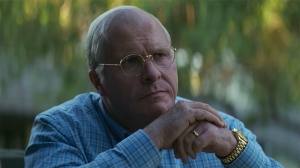 The meta breaks are meant to provide a degree of comedy to the picture, which is generally absent comedy otherwise, unless you count the rise of Cheney’s reign as the darkest of comedies. I suppose Cheney’s nonchalant recognition of his heart attacks (he’s had five) could be a potential comedic lifeline if you’re being generous. One second we’re told people don’t speak in Shakespearean soliloquies in real life, and the next second the Cheneys are talking in Shakespearean verse. When it looks like the Cheneys will drop out of public office to spare their gay daughter Mary (Alison Pill) the inevitable storm of harassment, the movie has a fake-out end credit sequence to sum up their hypothetical lives. To demonstrate Cheney’s knack for making the most ridiculous statement sound statesmen, he recommends that the Oval Office team put miniature beards on a part of their anatomy and perform an adult puppet show, which draws solemn nods of approval from the others. It’s a joke that feels too glib, like the intended point is being lost by the lewd nature of the comedic aside. The only meta aspect that feels earned is the final one, where Cheney turns to the camera and directly addresses the audience, acknowledging he can feel their contempt but refuses to apologize for his actions in order to keep people safe. Because he’s having the final say, because he’s offering a rebuff to his movie, it feels more earned and fitting, and it would have had even more power if it were the only break in the movie rather than the last. It’s hard to call this a comedy; it’s more an incredulous indictment looking for its mob.
I honestly think a straightforward biopic might have been the better route for Cheney. The first half of the film is more interesting and successful because it is the more illuminating half. I never knew that Lynne Cheney’s father likely killed her mother. That’s a pretty bold charge on behalf of the filmmakers. The early Cheney years are the moments the majority of Americans don’t know about, whereas the later years have been well documented by a slew of hard-hitting documentaries, books, and journalistic exposes. There are whole movies about topics like the Valerie Plame leaking (Fair Game), the mounting mistakes after the invasion of Iraq (No End in Sight), the administration’s policy on torture (Taxi to the Dark Side, Standard Operating Procedure), the drumbeat to the war and snuffing out of critical journalism (Shock and Awe, Lions for Lambs), the missing WMDs (Green Zone, Body of Lies), the Bush deferment memos (Truth), the long-term consequences for those servicemen who survive (The Hurt Locker, The Messenger, Stop-Loss, Last Flag Flying, In the Valley of Elah, American Sniper, Thank You For Your Service) and anything that Michael Moore sets his sights on. This list is not exhaustive by any means. Because of that the film seems to become a rudimentary montage once the Iraq War kicks off, sprinting through the rest as an intended tableau of hubris as Cheney’s star and influence falls. I would rather have learned more about Cheney’s early years in the Nixon, Ford, and H.W. Bush administrations and gleaned more personal insights into the man before he becomes this shadowy, mythic figure that seems downright Machiavellian in his control of government. It’s interesting to watch Cheney and his cohorts plot their unchecked executive power behind the back of President Bush, but then what?
 It’s the “then what?” question I keep revisiting with McKay’s film, trying to figure out the larger intended message, themes, and dire warnings. I feel like because of the expanse of time covered, and the meta quirks applied, that the film too often feels like it’s just scratching the surface of Cheney, providing a slight gloss to a political caricature. The biggest takeaway is the slippery slope of the “unitary executive theory,” a term you’ll hear often, that basically follows Nixon’s own words: “If the president does it, it’s not illegal.” This questionable interpretation of Article II of the Constitution gives the president powers that approach a monarch, which seems antithetical the Founders’ intents. McKay warns that any president could take advantage of this theory to do whatever he or she (sad trombone noise… sigh) desires. This is clearly meant to draw a line right to President Trump, but it’s not like the 45th president needs sketchy legal cover to do his misdeeds. The idea that the Justice Department memos would be a lurking danger is quaint. A bad man with power is not going to look for the rules to allow him or her to break them. The idea that a president could be above the law is also a legally specious argument and one I don’t believe our courts would readily back, even with the “unitary executive theory” (at least I hope so). With that in mind, Vice becomes a cautionary tale about the expenditure of power but lacks the adequate follow-through.
Vice is a tricky biopic for a tricky subject and I wonder if it would have worked better being stripped of its prankster, meta interjections and tricks. It’s a condemnation of Dick Cheney but it doesn’t feel like it goes far enough if McKay’s eventual thesis is that the current world problems began, or were grossly exacerbated, by the actions of Cheney. Climate change warnings going unheeded, ISIS formations going ignored, the generational consequences for unsettling the Middle East, and laying the foundation for an authoritarian strongman to be an acceptable political position for millions of Americans. These charges are clearly intended to be a denunciation of Cheney’s legacy, but the end results play out somewhat differently, like a slap on the wrist. I think Dick Cheney could even watch this movie and nod in appreciation. That seems like a mistake. McKay is still a talented writer and filmmaker that knows how to keep his movie flowing and entertaining, buoyed by an outstanding performance from Bale. It’s a movie with great components but seems to clumsily get in its own way with its presentation. If you’re going to expose Dick Cheney as a heinous manipulator of power that has wrecked havoc for billions, then maybe you don’t want to dilute your message.
Nate’s Grade: B-
Share this:

Justice League (2017)
 The story behind the Justice League movie is one of turmoil and turnover. Zack Snyder has been the cinematic voice for the DC film universe (DCU) and, if you listen to enough critics and fans, the weight holding down the franchise. Justice League began filming in the spring of 2016, which means they had a considerable lead time before release. Either they went into production with a script they were unhappy with or they learned it. A year later, in the spring of 2017, Snyder bowed out of his directorial duties to spend more time with his family in the aftermath of his daughter’s suicide. Enter Joss Whedon, the wunderkind behind Marvel’s record-breaking Avengers. The studio was unhappy with Snyder’s rough-cut, deeming the footage “useable,” and tapped Whedon to make drastic reshoots. He rewrote the film enough to earn a writing credit from the WGA. Complicating the already pricey reshoots was star Henry Cavill’s mustache, a holdover from the filming of Mission: Impossible 6. He wasn’t permitted to shave his ‘stach, and so Warner Bros. was forced to pay likely millions… to digitally erase Cavill’s facial hair (DCU is 0-2 when it comes to mustaches this year). The final product is being met with great fanfare, hope, and curiosity. If anybody could save this project it’s Whedon, right? Well Justice League could have been renamed Super Hero Fatigue: The Movie.
Months (?) after the death of Superman (Cavill), Bruce Wayne (Ben Affleck) is traveling the world and recruiting a very specific group of job candidates. He needs serious help to combat an oncoming alien adversary, Steppenwolf (voiced by Cirian Hinds). The cosmic Big Bad is looking for three special boxes, a.k.a. mother boxes, to destroy the world. Wonder Woman (Gal Gadot) helps Batman convince the half-man/half-machine hybrid Cyborg (Ray Fisher), underwater dweller Aquaman (Jason Momoa), and hyperactive speedster Flash (Ezra Miller) to form a league of sorts to thwart Steppenwolf.
 Aggressively bland, lazy, and unmemorable, I was genuinely left questioning whether Justice League was somehow worse because it wasn’t worse. It’s not the aggravating stew that was Batman vs. Superman or Suicide Squad, but those weren’t exactly difficult hurdles to clear. To put it in another colorful analogy: while it may not be a flaming dumpster fire, it’s just a dumpster, something you wouldn’t give any mind to because, hey, it’s just a normal dumpster, and why would you even want to spend time looking at that anyway? That’s Justice League for you, a DCU super hero film that’s better by default and still disappointing to the point that you wish it would be mercy killed to spare us a prolonged death rattle. This movie is ground down to the raw pulp of a super hero movie. It lacks personality. Stop me if you’ve heard this one before from a modern super hero film. An ensemble of poorly developed characters must band together to stop a dumb villain from world annihilation with a giant energy portal in the sky. There have been now five DCU films in this sputtering cinematic universe and three movies fit that formulaic description. Even the 2015 Fantastic Four remake followed this. The draw of this film is its mythical heroes, yet they are so lazily developed that we rarely feel any sense of awe or reverence with them. The cast chemistry is relatively strong and the actors have been well chosen, but let’s go person-by-person in this league to determine just how poorly the story serves them.
Batman has become the Nick Fury of this new post-Superman world, taking charge assembling a team to combat a more dire, powerful alien threat. He’s the least super in many regards and has fleeting moments contemplating his mortality, but just when you think they might give the older Batman some depth, they pull back. His biggest relationship is with Wonder Woman and their central conflict feels contrived. He’s angry at her for not getting more involved (hey, Wonder Woman, you got out there for WWI but sat out the Holocaust?). It feels like a strange managerial tiff. Affleck (Live by Night) seems to have gotten more growly and smug. Gadot (Keeping Up with the Joneses) scowls and scoffs. Considering they’ve each lead a DCU movie, we should be more attached to them in this story. He’s not fun to be around and neither is she. The new members have some degree of promise.
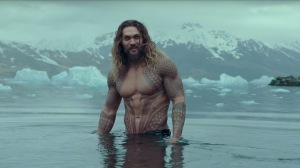 Aquaman is a gruff, shaggy, tattooed loner embodied by Jason Momoa, and his performance works better than the character does. Momoa (Game of Thrones) is charismatic as a wild man but he comes across as a fraternity jock. His cocky, carefree persona and aesthetic are trying too hard to re-imagine Aquaman as a sexy superhero for today. The underwater action scene in Atlantis is so cumbersomely filmed and staged that I think I realized, in that moment, how visually dreary underwater fight scenes are. There goes any last shred of interest in the solo Aquaman film coming in 2018. Cyborg is basically a modern Frankenstein story and should have had affecting characterization about the battle over reclaiming his humanity. Instead he becomes the plot equivalent of a Swiss army knife, able to open any locked device or technological obstacle.
The Flash/Barry Allen is the best part of the film by default (a familiar term in this review). Miller’s (Perks of Being a Wallflower) extra jubilant performance feels like a course correction from the criticism of how unflinchingly gloomy BvS was. He’s the stars-in-his-eyes rookie who is also a fanboy first, geeking out about getting to work with legends. It’s not just that the fanboy-as-hero angle was already tackled better by Marvel in Tom Holland’s newest edition of Spider-Man, it’s also that the film doesn’t know when to stop. Barry Allen has to quip for every occasion. While some belie his insecurity and nervousness about being promoted to the front lines of hero work, several are forced. The coolest thing he can do is run so fast time slows down, yet we’ve already seen this displayed better and with more witty panache in the recent X-Men films with Quicksilver. Flash is the only character with anything resembling an arc, and this amounts to little more than not being as terrible at fighting and getting a job. He makes his dad proud… by getting a job, and this is sadly the best example of a character arc in Justice League.
Another course correction was ditching overly complicated plotting for simplification, which can be a virtue. With Justice League, simplicity gives way to a dispirited lack of ambition and effort. The plot is thusly: Batman has to recruit a team to stop a Big Bad from getting three boxes buried around the world. Perhaps some will characterize this as a facetious oversimplification, but that’s really all that’s going on for two hours. The only other significant plot turn is the resurrection of Superman. The concluding image of BvS was the dirt hovering over Clark Kent’s casket, heavily implying he was coming back, so this really shouldn’t be a spoiler. The heroes suddenly decide the mother boxes can bring Superman back, and they know how to do it, and then just do it, without any setup. If it had been Cyborg who came up with this plan since he shares the alien technology that could have made some degree of sense. No, it’s Bruce Wayne who comes up with this idea, a man with no experience with alien technology. The heroes use one of the magic mother boxes to bring Superman back from the dead and then, inexplicably, leave it behind for our villain to capture. Literally the characters look over their shoulders and, whoops, a giant energy vortex has sucked up the final item needed to destroy the world. Maybe one of you should have had somebody watching that important thing.
 There are other moments that speak to the troubles of simplicity leading to laziness. The opening sequence with Wonder Woman involves a group of criminals taking hostages in a bank. Oh, these are sophisticated bank robbers you might guess. No, these are, in their own outlandish words, “reactionary terrorists,” and they’re here to set off a bomb. Why did you have to enter the bank, let alone take hostages, and call attention to yourselves then? Would a bevy of car bombs not get the job done? These guys are on screen just to be dispatched by Wonder Woman, but at least put some effort into them. Here’s another example of the effects of oversimplification. Steppenwolf’s base of operations is an Eastern European/Russian bloc city in the wake of an abandoned nuclear facility. We see one desperate family fret over the flying Steppenwolf hench-demons and barricade themselves in their home. We then keep cutting back to them again and again. Will they have a greater importance? Is the final mother box to be found underneath their home? No, they are merely an on-the-ground a perspective and offer no insights, complications, or interest. We just keep checking in with them as if they are the most irrelevant war correspondent. When the climactic battle ensues, they’re the sole lives we see in danger from the epic fighting.
The villain is also a severe liability, as Steppenwolf feels plucked from a mid 2000s video game. He feels like a mini-boss from a God of War game. Not a boss battle, a mini-boss. His entire character design is ugly and resembls a goat. He may be twelve feet tall or whatever he is but he is completely unremarkable and nonthreatening. He wants to bring about the end of the world by collecting his three world-destroying MacGuffins and making them cross the streams. His back-story happens midway through the film and is shockingly a rip-off of the Cate Blanchett-narrated prologue from The Lord of the Rings. All the races of the world and beyond teamed up against this dumb dude and then they took possession of his source of power, the three boxes to rule them all, and divided them up among the different races for safety. They’re even dressed like Middle Earth fantasy characters. They foolishly split up the boxes in a way that the bad guy would know exactly where they are if he ever came back. This lame villain is also hampered with a lame back-story. I don’t understand what about this character makes him invincible in the first half and what changes to make him beatable in the second half. His powers and potential weaknesses are ill defined and you too will struggle to work up any interest for what may be one of the most boring and useless villains in super hero film history. According to my pal Ben Bailey, Steppenwolf makes Malakeith (Christopher Eccleston) of Thor 2 look like Loki (Tom Hiddelston) in Thor 2.
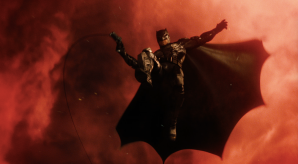 Justice League feels like two movies indelicately grafted together, and if you have a trained eye for cinematography you’ll easily be able to spot the difference between the Snyder parts and the Whedon parts (final product looks 70 percent Snyder, 30 percent Whedon). Snyder is much more the visual stylist so his camera arrangements are far more dynamic, and his cinematography also makes more use of space within the frame, especially from the foreground and background. His scenes also have a more crisp, filmic look. By contrast, the Whedon scenes feel overly clumsy and with too much strained humor. The Whedon humor holds on a beat longer, as if it’s waiting for a canned laughter response to clear. Lois Lane (Amy Adams) remarks about how Superman smells, Martha Kent (Diane Lane) drops a malapropism about her son calling Lois the “thirstiest reporter,” Barry Allen’s inability to grasp what is brunch, which is the only thing shoehorned into the middle of Snyder footage. Then the brunch joke is brought up again in the first post-credit scene, which had me convinced that Whedon was going to produce some sort of meta moment with the Justice League final post-credit scene mirroring The Avengers, with the team out enjoying a casual meal together. Not only do I think I enjoyed the Snyder parts better but I think I also enjoyed the humor of the Snyder parts better.
The color correction is also completely different. Check out the Justice League trailers and you’ll see two different climaxes, one before Whedon that takes place in Snyder’s typical landscape of diluted grays and blues, and another after Whedon that looks to be set on Mars. An unintended consequence of altering the color correction so decisively is that the costumes suffer. These outfits were clearly designed for the landscape of colors for Snyder’s darker vision. Whedon’s brightening up makes the costumes look like discount cosplay. It’s not that the Snyder parts are that much better, it’s that the Whedon parts aren’t that great.
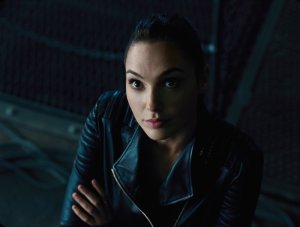 The action sequences are just as unmemorable as the rest of the movie. Action sequences need variation, they need mini-goals, and they need multiple points of action. There’s a reason many film climaxes involve different pairs or groups fighting different villains. It keeps the action fresh, involves all of the characters in meaningful ways, and provides more payoffs. The action becomes more dynamic and complex and simply entertaining. The action in Justice League is thoroughly underwhelming. With the exception of Cyborg being a hacker plot device, none of the characters use their powers in integral ways. All they do is punch and jump. When that happens the heroes are too interchangeable. They also don’t seem to do anything different in the third act nor does the climax require them to do anything different, so their victory as a team feels perfunctory and arbitrary. The special effects feel unfinished and unpolished for a $300 million movie. A sequence set on Wonder Woman’s home island looks like it was taken from a cheesy Dynasty Warriors video game. A montage during the conclusion has shockingly bad CGI of the Flash running in a goofy, gangly, leg-failing way that made me doubt Whedon’s eyesight. The most hilarious special effect, possibly of all time, is the fake Superman upper lip. It kept me analyzing every Cavill mouth I saw. His upper lip looked too waxy with shine and indented too widely. We are not there yet my friends for realistic mustache removal technology. We’ll just have to go back to old-fashioned razors and rue this primitive existence of ours.
Batman vs. Superman and Suicide Squad have already conditioned audiences to expect the worst, and the fact that Justice League is better may make some mistakenly believe this is a good super hero adventure. It’s not. While not the spectacular failure of its predecessors, this is extraordinarily forgettable and thoroughly underwhelming from top to bottom. I think I might have actually preferred Joss Whedon not being involved and simply releasing the full Zack Snyder cut. It would have been stylistically more coherent. Much of the Whedon reshoots do not feel like they are for the better. To be fair, he came in late and this franchise behemoth had already gone too far to fully alter its fate. There are small moments that work but the big moments are what fail. This movie is missing setups, payoffs, and character arcs. It’s missing pathos and emotion. It’s missing memorable action sequences that are exciting and varied. It’s missing basic internal logic. It’s missing a greater relevance. The villain is just an obstacle to be overcome without any larger thematic relevance. I struggled to care about what was happening. Ultimately, the finished product feels like Zack Snyder’s garage sale (“Here’s all the stuff you’re used to and maybe you’re tired of but I’m not gonna put that much effort into this so maybe we can haggle”). And then Joss Whedon bought it all, repackaged it, and sold it back to you, America. As dreadful as the previous movies were they at least had moments that stood out, many of them for the wrong reasons, admittedly. Justice League isn’t as bad and yet is paradoxically less watchable.
Nate’s Grade: C
Share this:

Nocturnal Animals (2016)
 Fashion designer Tom Ford made a big splash with his debut film, 2009’s A Single Man. It was a gentle and introspective character study of a middle-aged gay professor determined to end his own life. It was lush, full of feeling, and anchored by a deeply humane performance from Colin Firth. In short, it is everything that his follow-up Nocturnal Animals is not. This is a movie overflowing with vacant artifice that is mistaken for profundity.
Susan (Amy Adams) is an art gallery owner and living a posh life with her second husband, Hutton Morrow (Armie Hammer). She gets an unexpected present in the mail from her ex-husband Edward Sheffield (Jake Gyllenhaal). He’s sent her his newest manuscript, a departure from his usual works. It’s dedicated to Susan. With Hutton away on business, and philandering with a mistress, she dives into the story. It tells the story of Tony Hastings (also Gyllenhaal) and his wife (Isla Fisher) and teen daughter (Ellie Bamber) traveling through west Texas. They run afoul of some contemptuous locals lead by the sadistic Ray (Aaron Taylor-Johnson), who kidnaps Tony’s wife and daughter. Left for dead, Tony teams up with a terminally ill police officer, Bobby Andes (Michael Shannon), to hunt down Ray and make him suffer for his crimes. As Susan continues reading, she goes through a mixture of emotions trying to determine what her ex-husband is trying to communicate to her within the subtext and metaphor of his sordid story.
 I grew increasingly restless with Nocturnal Animals because it failed to justify its excessive dawdling and vapid artistic pretensions. This is a movie that doesn’t really know what it wants to be so it dabbles in many different genres, none of them fully convincing or worth the effort. It’s a high-gloss erotic thriller, it’s a gritty exploitation film, it’s a morally compromised revenge thriller, and it’s a subtle relationship drama amidst the upper crust of the L.A. art scene. It’s none of these. It’s two primary stories, neither of which justifies the amount of time spent on what amounts to so little. The worst offender is the frame story with Susan, which amounts to watching Amy Adams read for two hours. She takes a lot of baths and showers in response (symbolism!) but most of the cutaways and time spent with Adams is to merely watch her react. It’s like she’s a nascent studio audience handcuffed to tell us how to feel with her reactions. Would you have known that you should feel bad during onscreen death if we didn’t cut back to Susan also feeling bad and concerned? It amounts to emotional handholding and it’s grating, also because Susan is an terrible character. She’s conceited and thinks she is owed better, which is why her mother successfully pressured her to dump Edward, a man well below her self-styled station in life. Her second marriage is crumbling apart and part of her sees Edward’s out-of-the-blue note as a potential romantic rekindling. That’s right, this is a person who reads a revenge opus that may be all about seeking cosmic vengeance against her, and she thinks to herself, “Ooo, I think he like likes me after all.” Her self-involvement is rewarded in the end but the ambiguous ending is more just missing in action. Ford’s film just peters out and leaves you hanging, just like its heroine.
Edward’s manuscript is easily the best story and even that is only by default. It’s an easier story to get involved with because of the simple story elements that naturally draw an audience in, namely a revenge fable. The initial altercation with the family and Ray’s crew lasts almost a half hour. Specifically the roadside confrontation itself is a solid ten minutes and it just goes round and round, repeating its overdone sense of menace. I wasn’t dreading the horror to come but more so getting impatient for it to be over. Without depth to the characters or escalating stakes and complications, it all just amounts to a Texas hillbilly repeatedly threatening a cowering family for ten solid minutes. The vengeance in the second half of the movie is just as predictable and too drawn out. Edward schemes with Bobby Andes to take justice into his own hands, but the movie takes far too long to reach its predictable conclusion, which still manages to be so drawn out that I was screaming at the screen for the inevitable to finally happen. When the movie ended I felt a rush of relief to go along with my general sense of perplexity.
Nocturnal Animals has the illusion of highbrow art mixing with lowbrow thrillers but it lacks the substance of the former and the courage of its convictions for the latter. Ford’s mercurial taste in costuming and set design shows in every moment with Susan, as the sets feel exquisitely designed and the cinematography designed to encapsulate this. It’s a good-looking movie but there’s not enough under the surface. It’s all empty window dressing to disguise the vapid whole at its center. Let’s tackle the opening credits, which will most certainly capture your undivided attention. It’s a foursome of overweight women dancing naked and in slow motion, their large bodies bouncing and jiggling to the self-serious musical score. Eventually it’s revealed that these women are part of an installation exhibit in Susan’s art gallery, and that’s when you get a tip-off just how hollow and attention seeking the movie will be. The gallery consists of overweight women lying face down on raised platforms. That’s it. No wonder her gallery isn’t doing that well (note: not a fat-shaming comment but more a comment on the lazy application of its sense of “art”). You get a sense that Ford comes most alive in the scenes where he can arrange figures and images, not so much the demands of storytelling.
 I can already hear supporters saying I just don’t get it; no, I got it because there’s very little to understand with Nocturnal Animals. It’s a story-within-a-story so we’re already training our brains to look for parallels but they aren’t obvious so they’ll be more metaphorical. I kept waiting for it all to tie together in a substantial way by film’s end, and sorry but it just doesn’t (spoilers ahead). Edward has a whammy of a day when he discovers 1) his wife is pregnant, 2) she’s aborted his child, and 3) she’s in the arms of her new boyfriend, and he discovers all of this standing in the rain for further symbolism. He has a grievance against Susan, though we’ve been suspecting it for some time. His manuscript is a revenge thriller about a family murdered and how a weak man finds the strength to seek justice and retribution. The parallels are fairly obvious there, and the fact that there are only so many characters in the story-within-a-story means there are few options to play the analogue guessing game. I’ll just claim that Ray is meant to represent Susan since he/she is the murderer of Tony/Edward’s family. There’s a reason that Tony’s family all share Susan’s red hair. He dedicated the book to her, after all, and said she was who made it all possible. From there you could argue whether Tony represents Edward’s real past, weak and remorseful, whereas Bobby Andes is meant to represent how he wishes he could be, decisive and strong (end spoilers). That’s about all the parallels you’re going to find because the story-within-a-story only involves a very tiny number of characters. There just isn’t much to go on here and yet Ford’s movie stretches and drags and just keeps going until it reaches its predictable destination. There isn’t any more depth here than straightforward avatars and even those are lean.
I was debating a question with my friend Ben Bailey while we watched this movie, and that’s whether the stakes are removed somewhat when you know that a storyline within a movie is fictitious. Knowing that Tony is a pretend person, does that eliminate some of the tension and investment in his storyline? I recognize this is a distinctly meta question considering that a majority of film characters are fictitious by nature, but I do think there’s a different set of standards for the people of the story-within-a-story. I don’t remember feeling less for the characters in A Princess Bride, The NeverEnding Story, or Adaptation. My only conclusion is that I just did not care a lick for any of the characters in Nocturnal Animals, whether they were fictional or twice fictional. They didn’t deserve my attention just because pretty people were playing them. They didn’t deserve my attention because Big Bad Things caused them to experience Big Emotions. Combined with the ponderous plot and the emaciated substance, the dull characters and the overwrought acting they inspire are a recipe for audience detachment. I can’t help but shake my head as other critics trip over themselves to shower this film with overly enthusiastic plaudits. Nocturnal Animals is a tiresome exercise in lazy symbolism, patience-demolishing pretension, and emptiness masquerading as contemplation.
Nate’s Grade: C-
Share this:

Arrival (2016)
 For the new sci-fi film Arrival, I felt that an unconventional review might be suitable considering that the movie is about communication. Therefore I sought out my pal Eric Muller to converse over the many qualities of this intelligent movie. Enjoy, dear reader.
General plot synopsis: a dozen mysterious alien ships hover above the ground across the globe. The government seeks out the assistance of Dr. Louise Banks (Amy Adams), an expert linguist, to try and establish a communication line with the aliens and determine whether they are friend or foe.
————————–
Nate Zoebl: So Eric, my good friend, let’s talk about our first impressions of director Denis Villenueve’s Arrival. I was really taken with just how cerebral it all was. Given the director’s pedigree (I absolutely loved Sicario), I was expecting an intelligent movie that wouldn’t follow the same blueprint as, say, Independence Day: Re-Something or Other Go Boom, but in many ways this movie feels like you’re studying for the SATs. I don’t mean that as an insult. It’s a rather highbrow movie that follows a team of smart people doing something incredibly hard with a level of precision that brings an intense sense of realism to the scenario. It made me think of Arthur C. Clarke science fiction where if first contact were to happen it might go very much like this. It’s a linguistics puzzle box and I found that to be fascinating. The movie delivers on that front. I’m sure the casual moviegoer will be bored by the lack of intensity for two acts of movie but I was delighted. You?
Eric Muller: My first thoughts were, “Wow, Hollywood made a first contact movie that looks like how the real first contact would go.” Unlike other Hollywood blockbusters, this movie is patient. The focus of the movie is not the actors or special effects like other contact movies, the focus of Arrival is the script. The movie is a love letter to language and communication. The director did an amazing job of telling the story and also flipping conventional storytelling.
 Nate Zoebl: We’ll get into more of the flipping the script, so to speak, in our spoiler section but I heartily agree. I’ll also admit that I feel much like Amy Adams as I await your next reply in this discussion (not to make any general comparisons to you and heptapod aliens). I think patience, as you cited, is one of the movie’s greatest virtues. It takes its time, it naturally develops, and this is definitely evident in the first act. The step-by-step process of Adams and Jeremy Renner and the other scientists being escorted to the alien ship, suiting up, being told the hazards and unknowns, and going inside, experiencing the different gravity, and coming up close to the giant white wall that promised so much on the other side, it’s teased out in a fashion that allows for anticipation to rack your nerves. The fear of what they’re stepping into really settles in.
Eric Muller: I’m okay with being compared to a heptapod. I appreciated the movie taking its time, allowing the audience to learn and discover at the same time as Amy Adams and Jeremy Renner. In other movies, learning the new language is usually done in a 15-minute montage. This movie is a Sci Fi movie dedicated to discovery, which is what science is.
Nate Zoebl: It’s definitely a movie of discovery and I appreciated that it doesn’t gloss over the challenges and details of that. It’s also a discovery of our heroine, but again we’ll save that discussion for a little bit. At its core, it’s a movie about language and communication. How are we able to connect and interpret others? If 12 giant alien ships, which kind of looked like Pringles chips, were to one day appear randomly across the globe, how do we interpret intent? That’s the movie’s ticking clock, uncovering the intent of the seven-legged squid-like aliens before the more alarmist elements of our society give in to paranoia and destruction. How would an alien species even begin to try and have another understand its language? That’s a fascinating starting point. I appreciated that the alien language was, indeed, alien. It’s made up primarily of inky pictographs, circles with slight variations. This movie must have been nirvana for a calligrapher.
Eric Muller: There are going to be a lot of tattoos based on heptapod language. But you said it; the language barrier would be the first and hardest barrier to overcome in this situation. And there is one scene that really illustrates that point. When Forrest Whittaker asks Amy Adams why she is showing the aliens just simple words. Adams breaks down why the question “What is your purpose here on Earth?” is such a complicated question. Especially to anyone who doesn’t understand English.
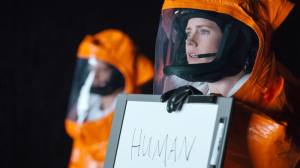 Nate Zoebl: I think that’s such a smart scene because it opens up for us dumb-dumbs in the audience just how complicated language can be. He asks why teach them words and she says so that they have a vocabulary that they can answer back with. Arrival is kind of like the most intriguing ESL class you never took at the Learning Annex. What technical elements really stood out for you in the film?
Eric Muller: My favorite thing was them getting inside the spaceship. I know it was a simple camera trick with some CGI but it looked so good.
Nate Zoebl: Villenueve films are downright impeccable when it comes to their technical merits. Sicario was, top to bottom, a beautiful movie from looks to sounds to editing. The cinematography for Arrival was tremendous and really accentuated the overall eeriness. Also, the sound design deserves an Oscar. The sounds of the aliens as well as the disconcerting musical score kept me on the edge of my seat. The special effects were best used sparingly. The aliens themselves worked best when they were somewhat shadowed, allowing our imaginations to go into overdrive to fill in the rest.
Eric Muller: Was it just me or did the aliens looks like the final form of the Elcor species from Mass Effect? For a budget of only 47 million, Arrival looks better than a lot of movies made with three times that budget.
Nate Zoebl: My question for you: was this central mystery enough for you before the pieces fell into place in the third act and the movie’s larger end design was revealed? I think we’re getting close to talking about all that good spoiler stuff, but before we do I wanted to know if the central drive was enough for you and in particular if the characters worked well enough. We’re treated to a tragic series of flashbacks to provide some back-story to Adams, but I don’t know if I’d say the movie presents much in the way of characterization until the third act (promise, we’re getting there…). Hear me out, old friend: I almost think Renner’s character is the typical “girl” part that Hollywood fills in these kind of larger movies, the co-lead which is really meant to support the main character and, typically his, journey of self-actualization or healing or whatever. I think there might be some subtle gender politics being subverted there or maybe I’m reading too much into an underwritten character.
Eric Muller: The central mystery was more than enough to keep me interested. As I noted earlier, we were discovering the events just like Any Adams. And you are right that this movie feels like if it had been made 10-15 years ago the genders for the two main leads would have been swapped. Probably have had Keanu Reeves and Sandra Bullock.
Nate Zoebl: The natural sequel to The Bus That Couldn’t Slow Down. I suppose it’s here we should start getting into spoilers, so if anyone would like to remain pure, please come back later to read the rest of our conversation.
[WARNING: SPOILERS FROM HERE]
Nate Zoebl: It’s a movie about language and our interpretation of language and I think, very cleverly, Villenueve and the screenwriter play with the language of film storytelling. We’ve been assuming from the start that these snippets of sense memories from Adams were of her tragic past. Au contraire my friend, they are revealed to be not flashbacks but flash-forwards to a future she has yet to live. Rust Cohle was right; time is a flat circle.
Eric Muller: This movie is a classic twist on a golden age Sci Fi story. Amy Adams’ character arc could have been an episode of the Twilight Zone and been just as good.
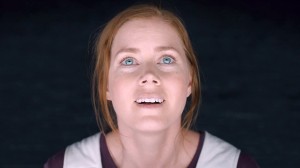 Nate Zoebl: I think the filmmakers make something we’ve seen before, and frankly have become somewhat trite, and subvert it while making the movie and the central protagonist far more interesting. We’ve seen the tragic character that has to overcome the grief over the death of a child before, even recently in 2013’s Gravity. We’re primed for that kind of familiar Hollywood back-story to provide a dollop of depth to the main character. And then when the reveal comes, it makes the scenes have even more emotional power. Adams knew that she would have a daughter who would ultimately die as a teenager of some sort of awful disease, and Adams chooses to go ahead with this future fully knowing the unbearable pain that waits. This revelation instantly makes her character so much more interesting and puts the audience in her place to ask whether we would do the same.
Eric Muller: It is a great twist on a story we have seen before. Also it puts her in the position of whether she tells her husband about their daughter’s future.
Nate Zoebl: And that philosophical divide is ultimately what dooms her marriage. Here’s my choice, and I’ll be interested if yours varies: I would have gone along with it too. Yes, knowing what is to come means that a child was brought into existence to die sadly as a teenager and will suffer, but she will also live and love and laugh for many days beforehand, and knowing the end provides a lens that incentivizes every moment spent together. Yes she will die eventually but any one of us could be snatched from the world at any moment. At least she got to know love and life for so many years before it was taken away from her. How would you choose in this scenario?
Eric Muller: I would let my wife know so we could enjoy every minute with our child.
Nate Zoebl: Let’s step away from the emotional aspects. The end reveal also provides a jolt of energy to the climax because now it becomes a race against time, but time is also forward and backwards. Amy Adams has to stop the Chinese military from striking the alien ships and she has to use information from events that have not happened to save the day in the past. It’s a heady moment of criss-crossing plot streams that really works.
Eric Muller: That reveal, that scene with Amy Adams with the Chinese general, was my favorite scene in the movie. The writing, the way it was shot, and the timing. The timing of that scene gave the audience a chance to breathe and fully take in the reveal.
 Nate Zoebl: The scene reminded me of Christopher Nolan’s Interstellar, a film I wasn’t that fond of beyond its second act planet-to-planet investigations. The screenwriter in me wants to criticize the use of the future to bail out the past because it feels a tad too easy. However, while it really irritated me in Interstellar (couldn’t you be a bit more helpfully specific, Future People?!) I didn’t have a problem with its use in Arrival. Maybe I’m a hypocrite but I feel like the execution is much more impactful here and it doesn’t undo the plotting from before. It doesn’t feel like a cheap trick. The heptapod aliens experience time as a circle rather than linearly, much like Dr. Manhattan crushing through the past, present, and future simultaneously. If we could see our future selves and the actions we make, and inform our current decision-making, I think that would probably bring about a rare world peace. Also, I really liked that the aliens weren’t just these benevolent gifters but had an agenda as well because they know humans will save them thousands of years in the future. It’s like they intervened so we could save ourselves.
Eric Muller: I also liked that the aliens said they will need us in 3,000 years. We never discover what the aliens need from us then. I think we went over this earlier, but Arrival is not a new story but just a great take and twist on that story.
Nate Zoebl: I liked that open-ended nature of the story. What if the aliens had come to Earth and spoke in nothing but emojis? Lots of pictures of eggplants and “A-ok” fingers and strangely anthropomorphic poop.
Eric Muller: Then we would use Amy Adams’ soon-to-be-dead daughter to solve the mystery.
Nate Zoebl: The aliens would essentially be modern teenagers (I’ll shake my old man fist at The Kids Today). The daughter would be all like, “Whatever mom.” And then we’d all be dead. Though the ending reveal raises the question of fate versus free will. Can these future events and memories be prevented? I don’t have an answer.
[END OF SPOILERS DISCUSSION]
Nate Zoebl: So Eric, what would you rate this movie?
Eric Muller: I have to go 5 out of 5 stars. One of the best movies I have seen this year. It was a better version of Contact. When you look at it versus Independence Day: Resurgence, it did everything right that ID4 2 failed at, like how you view Civil War versus BvS.
Nate Zoebl: Fair enough, though please don’t ever bring up BvS in polite conversation without first giving me plenty of advance warning. I’m still working through that one. I think I’d rate it an “A-” myself, and I might change that in time. I think the only thing that held me back from a full “A” is that it saves the emotional investment a bit too late to have the full wallop I think it intended.
 Eric Muller: I think saving the emotional investment was the wise choice. Cause we get it to start with the investment and then the ending flipflops it.
Nate Zoebl: Now, on a scale of eggplant emojis, how many eggplants are you giving this movie?
Eric Muller: Is this where I admit I’m too old to understand emojis?
Nate Zoebl: I’ll also admit that I don’t understand the appeal, especially conversations that are nothing but emojis. Fittingly, I’ll end this discussion with pictographs:
[Smiley face emoji + cat dancing emoji + little green alien with “we’re number one” foam finger emoji + movie theater emoji + eggplant emoji + “A-ok” fingers emoji]
Nate’s Grade: A-


 nathanzoebl
You must be logged in to post a comment.