Blog Archives
Jupiter Ascending (2015)
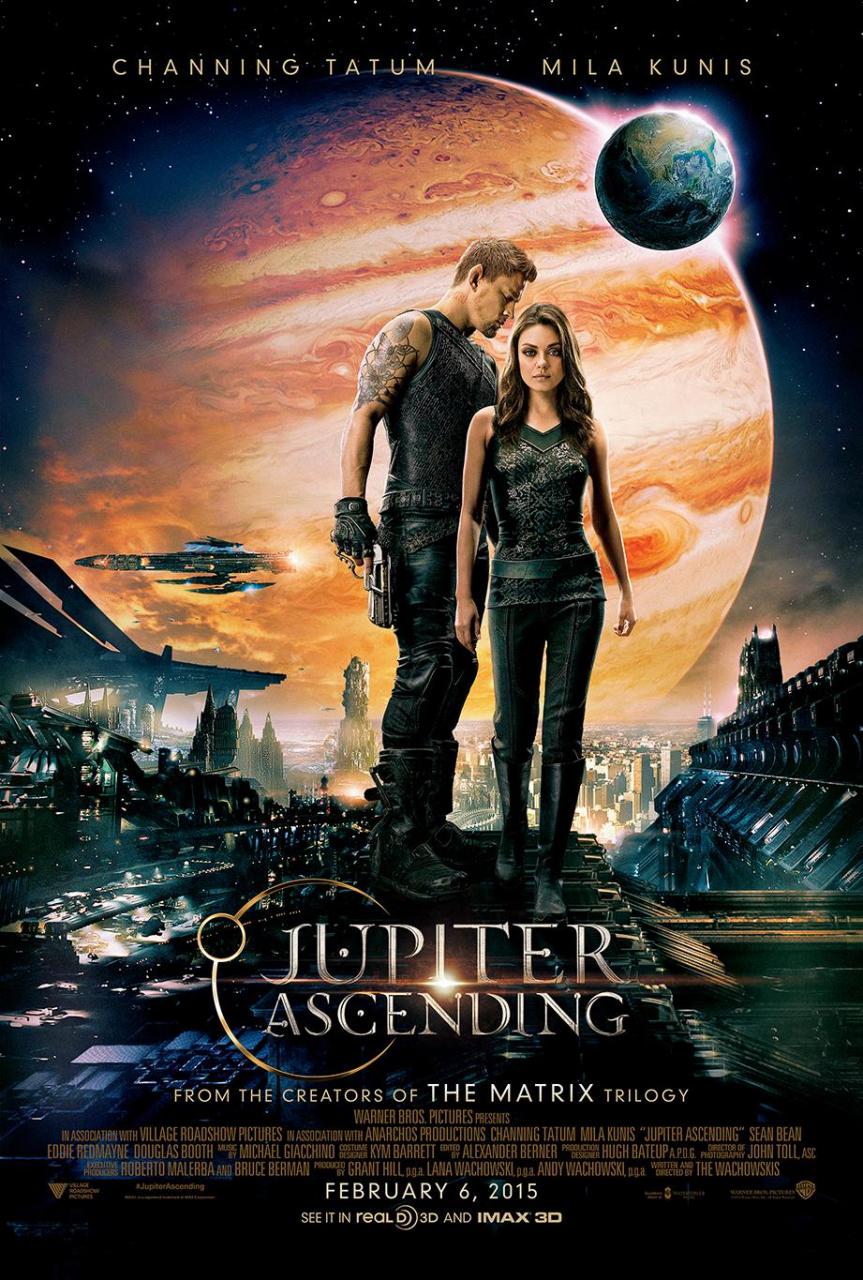 Few would dispute the imaginative powers of Andy and Lana Wachowski. They probably got a free pass from Warner Brothers after creating The Matrix, one of those culture-changing movies that come along so rarely. I was leery of Jupiter Ascending, their newest original science-fiction opus, when Warner Brothers delayed its summer release by nine months. The trailers and commercials were also doing a dandy job of hiding what exactly the movie was about besides cool visuals. I was holding out hope, thinking that maybe Jupiter would be silly but fun in a Fifth Element way, but instead ladies and gentlemen, we have an heir to 1980’s campy Flash Gordon.
Jupiter Jones (Mila Kunis) is an unhappy maid who cleans toilets for a living. Then one day she becomes the most important person in the universe. She discovers she is the reincarnation of the matriarch of House Abrasax, whose three children, Titus (Douglas Booth), Kalique (Tuppance Middleto), and Balem (Eddie Redmayne), are fighting over their inheritance. The biggest prize of them all is Earth, and now the appearance of Jupiter complicates ownership. Various alien species are sent to kill her, but Jupiter has a savior in disgraced galactic solider Caine Wise (Channing Tatum). He’s a “splice,” a result of gene splicing people with animals. He rescues Jupiter and they head off world to explore the much larger, much stranger universe.

Oh look, she’s falling again.
Right away, mere moments after leaving the theater, I knew the first step to make Jupiter Ascending a significantly better movie: completely remove the title character. First off, her name is awful and makes me think she’d be a character in the Jetsons universe. Mostly, she’s a terrible protagonist because she is merely a fairy tale wish fulfillment masquerading as a person. Her normal life is miserable but secretly she’s a space princess who is the reincarnation of a space queen. Allow me to momentarily pause and question this line of monarchy and inheritance law. Apparently Jupiter shares some genes with the deceased Lady Abrasax, but she has no direct bloodline. Does that automatically thrust her into another family’s inheritance squabbles? Why should they even consider her claim valid? Why does that place her at the top of the pecking order? When did we start recognizing reincarnation with inheritance law?
Back to the matter at hand, Jupiter is an annoyingly weak character that’s supposed to follow the arc of weak to strong, inactive to active. Except she doesn’t. Beyond accepting her incredible new position, there’s really not much that changes for her. She remains, from start to finish, weak-willed, gullible, always in need of saving, and so wretchedly annoying and without merit. Her cousin arranges her with a doctor for Jupiter to donate her eggs, but he expects a majority of the money. Why does she need this middleman in this arrangement? It’s another reminder how dim the character is and devoid of agency. And then all of a sudden a romance materializes between her and Caine because of course it does. I use “materializes” because there is no actual setup of any kind beyond the fact that Kunis and Tatum are attractive specimens. Their romantic dialogue will produce dangerously violent eye rolls.
The Wachoswkis are certainly imaginative filmmakers but their ambitious world-building impulses get the better of them and their story. The imagination is on full display when it comes to the visuals, the production design, costumes, and alien designs. There’s a grand mixture of creatures big and small, and even an elephant pilot because why not? However, the storytelling meant to house these cool things is notably deficient. Jupiter Ascending feels less like a story that naturally develops and whose complications arise in a semi-logistical fashion. It feels like somebody guiding you on a tour of Weird Stuff. It’s not so much a story as a collection of Weird Stuff, Weird Incidents, Weird Places, and Weird Creatures. You feel like you’re being skipped off from one exhibit to another, especially when Jupiter is kidnapped and threatened by each of the three Abrasax children in a row. Seriously, the entire scenario is on repeat, so when Jupiter continues making naïve choices, you can slap yourself extra hard having been through this purgatory just moments before. It’s only a matter of time before she gives in to whatever Abrasax demands again. There’s a general sense of repetition to the plot compounded by Jupiter’s incessant need to be saved (she seems to be falling a lot, out of spaceships, buildings, vehicles, etc., which also gets tiresome). The scheming Abrasax children seem to just slide in and out as the plot requires, with little in the way of resolution.
 It’s impossible to discuss the film without acknowledging how damn goofy the whole enterprise comes across. Caine is part wolf, part albino, part human, and apparently part angel since he got his wings removed as a punishment. Does that seem like a good combination of elements or like the aftermath of a drunken writing session? Let’s just run down some of these names: Jupiter Jones, Balem, Kalique, Stinger, Gemma Chatterjee, Phylo Percadium, Chicanery Night (!). To be fair, it’s not like Luke Skywalker or Darth Vader are less preposterous names. Caine has a pair of anti-gravity boots but they’re really just hovering rollerblades. There’s just something silly about watching a guy rollerblade, even if you attach a futuristic spin to it. There’s a hidden factory beneath the stormy Eye of Jupiter, and yet this same important factory seems ready made to fall apart if the slightest projectile pierces its exterior (it’s the Death Star all over again). There are weird small aliens, weird alien bounty hunters who can turn invisible but don’t, weird space police that are really bad at their jobs, weird robots with human faces, and there’s also weird stereotypical Russian immigrants for Jupiter’s obnoxious family. Perhaps all the goofy camp will enchant you but I never got onboard mostly because the story and central characters left me so thoroughly unengaged.
Another ongoing problem is that the Wachowskis are constantly telling you things rather than showing you and allowing the story to organically develop. There are no less than three times when Character A looks at Character B and literally verbalizes what they are thinking or feeling in this moment. It’s lazy screenwriting, beholden to constantly having to explain everything to an audience because either you think they are dumb or your plot is far too convoluted; either way, a problem. Such sample pieces of dialogue include these informational asides: “Bees are genetically programmed to recognize royalty,” and, mere seconds later, “Bees don’t lie.” There you have it; bees don’t lie. Now you know.
The most frustrating part of Jupiter Ascending is that there is a genuinely interesting movie buried under so much of this silly nonsense and ear-clanging noise. The starting premise that Earth is nothing more than a stock portfolio for an alien species, that’s good. The idea that a trio of siblings is squabbling over who gets their galactic inheritance, which includes the deed to Earth, that’s good. The idea that human life is seeded on planets merely to be harvested into an eternal youth elixir for the rich and powerful, that’s even better. It’s not exactly a nuanced critique of capitalism but it’ll do. I’m disappointed that we don’t find out more about a larger market for this rejuvenation technique. There has to be more customers for such a miracle product than one rich family. If this were an intergalactic King Lear or even a space version of Margin Call, it would be far more exciting and creative. Instead, the bigger ideas are grounded into pulp so that we can have more CGI-drenched action sequences. There’s one segment that tonally breaks away from the film, diving headlong into Douglas Adams-style satire on bureaucracy. Like most of the film, it has its moments of entertainment, but it comes from nowhere and has trouble fitting with everything else. I’ll give credit where it’s due and praise the special effects, as well as the overall production design. It’s too bad that the action too often feels like a bunch of pixels exploding, failing to provide a sense of immersion. It’s hard to get a feel for most of the action and its use of space, save for portions of the finale. There is one very fun and well-choreographed fight between Caine and a… dragon… sentry guy (I don’t really know what to call these winged henchmen). That fight is exciting. It’s a shame there aren’t more of them. Bring on more dragon sentry guys.
Kunis is certainly miscast on the part, though I doubt any actress could pull off such a lackluster heroine who is always needing to be rescued. Kunis is more adept in the realm of comedy (Ted) or seduction (Black Swan), neither of which is featured with Jupiter. Let me say one more reason this Jupiter Jones character is awful; part of her struggle concerns whether or not to marry a playboy space prince. I don’t know if the Wachowskis believed that Jupiter was supposed to be a “strong” figure, but reducing feminine value to her being married feels rather reductive for sci-fi (not that there isn’t a storied history of women being treated as objects of fantasy in the genre). Tatum’s (22 Jump Street) remarkable charms are dulled by his silly albino beard and general guard dog characterization. He’s less a character than a protector who inexplicably instantly falls in love with his charge. Both actors will no doubt rebound in short order.
 Reserve some pity for poor Eddie Redmayne, a man who will be experiencing the highs and lows of acting this month. He’s the frontrunner to win Best Actor for his stirring work as Stephen Hawking in The Theory of Everything, which is what makes his performance here even more astonishingly awful. He speaks in this effete whisper for the entire movie, one that is hardly audible at all, except for the occasional line where he screams and spasms, making the contrast all the more funny. He constantly holds his head back like he’s in danger of nosebleeds. This is a performance of such startling misdirection that I physically felt bad for Redmayne. He seemed to be reaching out to me, pleading through his glassy eyes, communicating, “Help me, help me.” Even if his character’s vocal range wasn’t so nonthreatening, Balem makes for a terrible main villain. As a rich lord with power at his disposal, he works, but late in the movie all of that is removed, and he has to be a physical threat. After 90 minutes of watching him on screen, you will never be able to see him as a credible physical threat, and even the movie doesn’t fully treat him this way, and yet the plot still places him in this role. He’s not a heavy. Balem is laughable but he’s another component of a generally laughable movie.
Jupiter Ascending is a rarity in Hollywood, a big-budget epic that overpowers you with a singular sense of style and imagination; it just so happens that so much of the creative fireworks are laughably terrible. The Wachowskis don’t do anything in half-measure, and the film is put in overdrive. There’s a mess of characters and peculiar details to make this world feel larger than life and tethered to the idea of fun. Then why oh why did we have to be saddled with such boring, one-dimensional characters and a secret princess storyline lifted from countless sources? In the past, the Wachoswkis have found ways to turn pop philosophy and pop-culture into an entertaining alchemy that separated them from the sci-fi pack of imitators, which were legion. I still have great fondness for the original Matrix (you can keep the sequels), V for Vendetta, and especially Cloud Atlas of late. The Wachowskis are ambitious filmmakers and they have the imagination and narrative sensibilities to achieve great things. It’s just that with Jupiter Ascending it feels like their real passion was in all the background artifacts, the minutia of the worlds, the alien costumes and makeup, the histories of worlds. It certainly wasn’t on a story or characters or a credible romance. And yet even after all of these words, I have to admit that Jupiter Ascending is entertaining, just not in the way its creators may have intended. It reminds me of 2014’s disastrous Winter’s Tale, a passion project that was so baffling and bafflingly terrible. If you’re curious and willing to part with some money, gather some friends and check out Jupiter Ascending. Just make sure you’ll have suitable time planned afterwards to discuss its particular brand of big screen lunacy.
Nate’s Grade: C
Share this:

The Interview (2014)
 Well, so maybe you’ve heard something about this little movie, The Interview? Seth Rogen and his writing partner Evan Goldberg (This is the End) weren’t intending to spark an international incident with their comedy about a pair of idiots trying to assassinate North Korea’s glorious leader, but after a few crazy turn of events, this little movie became a quixotic symbol of American patriotism. How dare North Korea get to dictate what Americans can and cannot see! Well, now The Interview is widely available in digital markets and we can agree that the fervor was for naught. The film is most shaky in the beginning, setting up Rogen as a TV producer and James Franco as the obnoxious talk show host. Once the boys get tangled up with the CIA, and especially once Kim Jong-Un comes into the picture (played by a much better looking actor, might I add, North Korean readers) the movie starts to even out and find its comic rhythms. While the ending is a little ho-hum, there are nice payoffs for several jokes and a poison strip has a wild and very funny comic development. I also enjoyed the emerging bromance between Franco and Kim Jong-Un that danced around with being subversive. However, there are two problems with the film. It doesn’t get risky enough (too many penis jokes) and James Franco. He’s been a capable comic actor but always in supporting or as a foil. Franco is not a comic lead, and his performance is much too amped and broad, needing to be dialed down to feel less desperate in overexcitement. It’ll be more a footnote in history than comedy, but The Interview is a fairly innocuous comedy that does get better as it chugs along, though clearly hits a ceiling. It’s certainly not anything worth going to war over.
Nate’s Grade: B-
Share this:

John Wick (2014)
 John Wick hits you like a breath of fresh air. The plot isn’t anything new. Once again a semi-retired hitman (Keanu Reeves) is pulled back into the fray. Once again Russian mobsters are the primary villains, a popular adversarial force in the fall of 2014. What makes Wick an enjoyable throwback is its dedication to action staging that is crisp, balletic, but most importantly, clear and engrossing action. Reeves may not be as agile as he once was when he first learned kung-fu, but the man still has some serious moves, and the action choreography and stuntwork of Wick allows him to display them in long takes with lots of decisive movement. It’s no Raid 2, but it’s well ahead of most American action films of late. There’s a nice variety of action along with lots of casual headshots, which seems only natural for a trained hitman. Then there are the small touches that add intrigue and help it stand from the pack, notably a hotel with an exclusive clientele of hitmen and women who must abide by a set of rules while on “safe ground.” It’s just enough to make a well-worn genre start to feel different again. The problem with John Wick, however, is that it runs out of steam too quickly, peaking right at the beginning of Act Three. There’s a whole other twenty minutes where the film has to establish a new antagonist to get us to the finish line. It just feels like John Wick accomplishes his goal too quickly and the movie doesn’t know exactly what to do after. The conclusion of several storylines feel clumsy, drawn out, and anticlimactic. But when it’s working, John Wick is a stylish and bloody action thriller that is fun and with the right sense of macabre humor to halt it from ever getting too laboriously serious.
Nate’s Grade: B
Share this:

Transformers: Age of Extinction (2014)
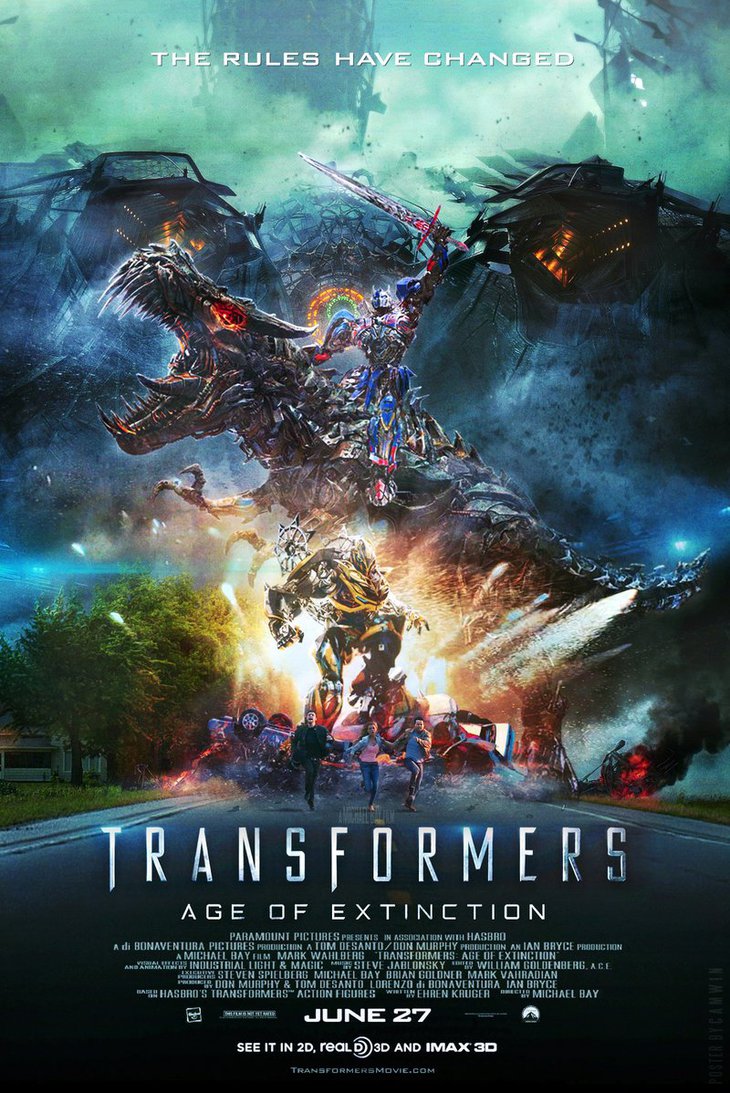 Four movies in, at this point you can either fall back on the old criticisms of Michael Bay as a filmmaker or simply let down your guard and look for any simple pleasures offered by the Transformers franchise, a series mostly known for chaotic plotting and action. Age of Extinction is probably the best Transformers film since the first one (take that for what you will) but it still has all the hallmarks of the obtuse and convoluted plotting, absurd and obnoxious characters, juvenile humor, intense product placement, and often incoherent action. Gone are the characters from the first three films and in their stead is Mark Wahlberg (upgrade) as a Texan inventor named, get this, Cade Yeager. He and his teen daughter come into contact with Optimus Prime and are on the run from multiple forces. Apparently a bounty hunter is looking to target Prime. The U.S. has a black ops team tracking down Transformers in hiding. And Stanley Tucci plays a business tycoon who wants to make his own Transformers via their magic substance “Transformium.” Reading all of that, you realize the pieces still don’t really make sense, and that’s before the robot dinosaurs come into play. And yet Bay and his team have fine-tuned the entertaining aspects of the franchise and better consolidated them in the fourth film. A badass alien bounty hunter/collector is a great addition, adding the government as an adversary, Titus Welliver (TV’s Lost) as a cocksure special agent, Tucci as a corporate blowhard, and robot dinosaurs, it all sort of works on its own terms. Again, if you try and logically connect the pieces, it won’t happen. By this point, if you’re not a fan of the series, there’s no real reason to continue watching, but if you’ve found any semblance of enjoyment then there should be enough to keep your attention with the fourth film, robot dinosaurs and all.
Nate’s Grade: C+
Share this:

American Sniper (2014)
 When killing is a man’s gift, what effect does that have on the man? American Sniper follows the real-life heroics of the most prolific sniper in United States history. With director Clint Eastwood attached and awards buzz building, you’d expect that the film would get at the heart of a complex man who placed himself back into danger by choice. For a biopic on Chris Kyle, the man seems to get lost in the fog of war (movies).
Chris Kyle (Bradley Cooper) enlisted in the military right before 9/11 and served four tours of duty in Iraq. He served as cover for many missions, protecting thousands of soldiers. The troops just felt better knowing that Kyle had their back. Kyle got married and had several kids with his wife (Sienna Miller) but he kept leaping back into the fight, the place he felt he belonged.
 From the opening sequence on, American Sniper is often a gripping suspense piece. The opening moral dilemma sucks you right in. Should Chris shoot the mother and child? Are they a threat or is there just a misunderstanding? Will they change their minds and turn away? Is there time to debate all this with advancing U.S. troops? Eastwood does a great job of drawing out the tension with shot selections and the precise editing. The bulk of the movie hews closer to a conventional action movie, with Chris and his team clearing out Iraqi insurgents. We get to know a bit about the mechanics of sniper warfare. But Kyle gets restless being the guardian angel of death for the ground troops, and he goes down to their level and clears neighborhoods. This causes some conflict with his superiors because Kyle is far more valuable as a sniper. His reputation for killing is also getting him notoriety with his enemies. There is a price on Kyle’s head and skilled snipers are seeking him out for the prize. This is a natural way to build suspense as Kyle keeps returning back into Iraq with multiple tours, every tour increasing his personal danger. It allows for real consequences for the increasing prowess of our super sniper. There’s a sense of collateral damage to every kill, as every dead body creates more enemies and those enemies grow more incensed to take him out. Even if you know how exactly Kyle met his untimely end, there’s still plenty of suspense and well-orchestrated action sequences to please casual fans of the genre and true-life military thrillers.
It does feel like the complex story of Kyle, as well as the Iraq War, are being simplified into action movie fodder. There’s a steady supply of interchangeable supporting players, soldiers and spotters and the like, all of them without much to distinguish them as characters. They’re here to be sacrificed, to watch the splatter of red, and to increase the sense of loss because we know that Chris Kyle will not be taken down so we need other expendables. As expected, Miller gets rather short shrift as Kyle’s wife who gets to alternate between worry and unease. The screenplay by Jason Hall sets up some excellently harrowing suspense sequences but seems better engineered like its establishing video game stages of combat than complex people. As a result, when we lose characters it doesn’t feel like we’ve lost people we care about. It doesn’t have an impact beyond sudden shock, and even that is tempered in time with the sniper angle. You start expecting characters to get popped in mid-sentence.
 Where the film leaves you lacking is at its center with the man who is supposed to be the focal point of American Sniper. At the start we’re told that Kyle is the deadliest sniper in U.S. history and by the end that’s about all we know about the guy. He’s an ace killer. The movie has some top-notch suspense sequences with Kyle killing people. The early scenes with Kyle’s family do the bare minimum to establish a sense of pride in not backing down from a fight. There’s a scene where his girlfriend explains to him and the audience exactly why he’s difficult. It’s pretty transparent exposition but it’s also the last bout of clear characterization you’ll get until the end. There’s a slight nod to the mounting PTSD that is transforming Kyle into a man who feels whole only on the battlefield, but these are notes of characterization that are only cursory. It’s only at the very end does the movie remember to flesh out Kyle as a person rather than as an action hero, and by then there’s only enough time to hint at elements we’ve seen explored better in other war movies, particularly The Hurt Locker. As an action film, the movie works and works quite ably, but as a biopic on Chris Kyle it forgets what makes him human, instead focusing on his superhuman killing ability.
Cooper (American Hustle) bulked up a considerable amount of muscle to portray Kyle. He fits the part well and has the acting ability to communicate the troubled psychology of a man making sense of his old world after the trauma of war. It’s then a shame that he’s not given more opportunities to use those acting muscles. There is one phone call where Cooper wordlessly finally breaks down, allowing all the scar tissue to finally be seen on his haunted character, but it’s a moment rather than a culmination.
If you go into American Sniper hoping for an elevated thriller with some well-wrought suspense, then you’ll mostly be pleased with the film as a slice of entertainment. As a war commentary or a psychological study of the horrors of war, it comes up lacking, falling back on the action tropes of its genre and neglecting to properly build around its characters. The action is often biting, and a late sequence involving an oncoming sandstorm is an intense climax. However, it’s also emblematic of the shortfalls of the film. While it’s a sequence of action entertainment, it also reduces war into a video game and reminds you that the characters onscreen are not so much portrayed as people but holders of weapons. Kyle was a complex man who was more than his uncanny ability to kill, but you won’t get more in American Sniper. The nature of his death demands a more insightful exploration of the lasting effects of PTSD and what kind of treatment, or failure of treatment, many servicemen receive once they come home.
Nate’s Grade: C+
Share this:

Big Hero 6 (2014)
 Disney’s first adaptation of a Marvel property, it’s essentially a superhero origin tale mixed in with the “boy and his robot” formula borrowed from The Iron Giant. The story is fairly predictable but charming and unafraid to deal with loss and grief. The real star, though, is the inflatable robot Betamax (voiced by Scott Adsit), whose unfailingly optimistic and helpful nature is a loveable addition to a genre plagued with doom and brooding. The action sequences are colorful and well developed and paced. It’s an agreeable pilot film for a new animated franchise, and the characters are likeable and fun while still having enough emotional resonance to make the hard choices of sacrifice hit you in the gut. It’s a welcome change of pace to have a character interested, first and foremost, in the mental health of others. You just want to hug Betamax (parents, your children will be begging for the toys). The plot does follow many similar plot beats of the superior Iron Giant but this film is still enjoyable enough on its own terms.
Nate’s Grade: B
Share this:

Exodus: Gods and Kings (2014)
 Director Ridley Scott (Prometheus) is back to work some of his Gladiator magic on another sword-and-sandals epic, the classic story of Moses, this time played by an ever-bedraggled and bearded Christian Bale. It’s been a banner year for Christianity at the movies, though most of those films have been uninspiring save for Darren Arofonsoky’s radical and ambitious Noah. That movie did not go over well with many conservative ticket-buyers. That’s the danger of adapting the biblical epics; pleasing the core audience means not straying too far from the accepted renditions of the oft-told tales, no matter if those popular renditions are themselves inerrant. Exodus: Gods and Kings is an underwhelming translation that slogs through the miraculous. It’s empty CGI wonder in place of authentic storytelling and emotional resonance.
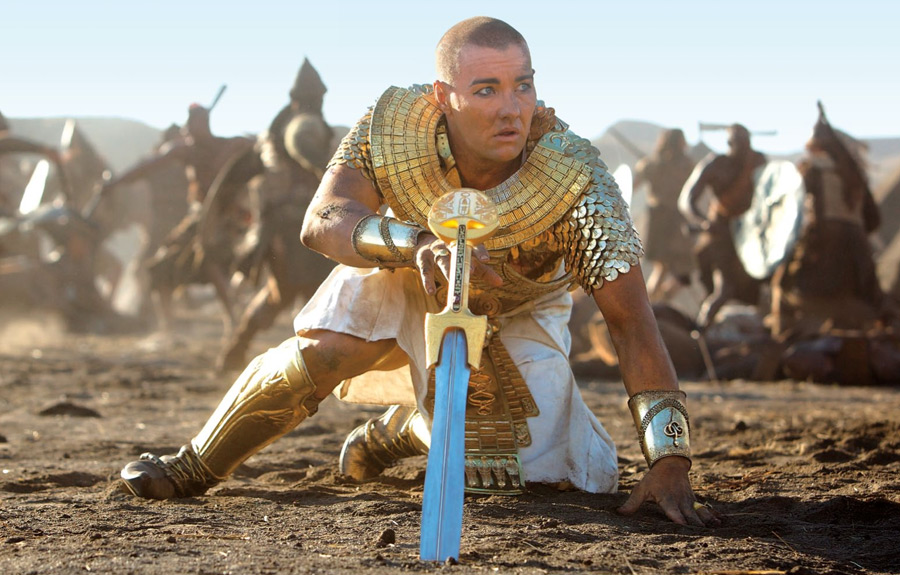
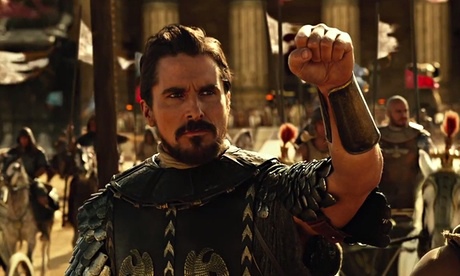 Exodus: Gods and Kings is a big-budget biblical epic that is startling in what it lacks, namely any amount of surprise or character development. The Moses story is oft told so I’m glad that Scott’s film skips ahead to when he’s already an adult. No basket in the reeds necessary. The brotherly conflict has little impact because, besides Moses, no other character is even given proper attention. Ramses (Joel Edgerton) is pretty much a thoughtless killer from the start, someone who ignores his advisers when it comes to political unrest and just slaughters his own starving people. He is by no means a dynamic villain in any shape, which is disappointing because the role has such dramatic potential. The 1998 animated film The Prince of Egypt did a better job exploring the relationship between Moses and Ramses, the pharaoh. In fact, that movie did just about everything better, and it had some pretty songs too. Stuck with a one-note villain, Exodus tries to round out Moses by making him a figure of doubt, providing an arc where he finds his voice when he finds his faith in Judaism. The film even sets it up so Moses has to go on his quest so he can just return home to his family. It’s a pretty strict hero’s journey storyline. Bale is plenty good. His character just isn’t that interesting nor is anyone else. Being stuck with this crew for 150 minutes can get to be rather tedious. That’s because the real emphasis has been put on the special effects and digital landscapes. The action is acceptable but little sticks in your memory. I’m starting to become numb to CGI spectacle. I’m starting to think back to the epics from the 1950s and 60s, when there was no such thing as computer effects. Every person assembled for those epic shots of huddled masses was a real human being, and that’s becoming more impressive with each and every CGI spectacle with copy-and-paste digital figurines.
Given the predictable nature of the plot, you try and find little moments or directions that stand out, something, anything to mark this newest Moses story as different from the numerous retellings of cinema’s past. Beyond the modern-day special effects and the strength of Scott as a visual artist, here is a short list of what you have to look forward to with Exodus: Gods and Kings.
1) An attempt to ground a biblical epic with realism. If conservative audiences were upset with Aronofsky’s portrayal of the Almighty in Noah, just wait till they see what Exodus does. It’s not that God has been removed from the tale, it’s just that God has been mitigated in a way as to provide a rational throughline to follow the supernatural events of the ten plagues and so on. There’s even the possibility that Moses is just seeing things in his head. Two different characters advise Moses that being hit on the head could be the real source for his visions of God. Joshua (Aaron Paul) spies on Moses at several points arguing with God but sees no one else. The plagues are presented in a cause and effect series of misfortunes, with the Nile being turned red due to a surge of crocodiles munching on all the fish. The polluted water then causes the frogs to leave en mass, which then causes them to die and bring about waves of flies, which bring disease to sicken the livestock as well as boils for the Egyptians. Some thought went into this, however, it’s all inconsequential with the Angel of Death killing the first-born sons. There’s no real skeptical or scientific method to explain away this one, as the biblical story relates, and so the grounded approach seems misplaced. It takes away the miraculous from the miracles. And yet, even the parting of the Red Sea is given this same approach, with it resembling low tides brought about by perhaps a meteor strike. The fantastical nature of the Moses story feels handicapped by going a more realistic route. This is not the biblical epic for realism.
 2) God is literally represented as a petulant child. When God does make Himself present for Moses, it’s in the form of a young child who is often mocking his servant. This is an angry often-bloodthirsty God who doesn’t appreciate being challenged. He complains how long Moses is taking with his war of attrition, and Moses says right back, “Impatient? You waited 400 years with ‘your people’ in slavery.” A fair complaint, and one that God does not answer.
3) Bad overall casting. Whitewashing isn’t exactly a new trend in Hollywood. It’s not like Charlton Heston looked particularly Middle Eastern. However, it’s rather distracting to watch a movie starring Egyptians and Middle Eastern Jews portrayed by a Welshman, an Australian, John Turturro, Sigoruney Weaver and Aaron Paul. I am a fan of each of these actors but they are just wrong for these parts. There are very little people of any color in the film despite the fact of its geographic location. Moses marries Zipporah, who several biblical scholars believe to be Ethiopian, which seems like a natural opportunity for some much-needed diversity in the cast. Just because you give Paul a bushy beard does not mean he suddenly resembles a Middle Eastern Jew. Same thing with adding eyeliner and bronzer to Edgerton. Then there’s the bizarre appearance of Scottish actor Ewen Bremner (The Rundown) as an adviser for the king. Taken as a whole, the whitewashing is a nagging distraction from a supposedly more grounded approach. To be fair, having relatively unknown (as far as the public is concerned) actors of appropriate ethnic background speaking in subtitled Hebrew and Egyptian sounds like a hard sell for a studio footing a $140 million dollar bill.
4) Lots of dead horses. This is not a friendly movie for our equine friends.
5) Moses sex. Well, sort of, because showing a husband and wife being physically intimate will still offend some of the more conservative ticket-buyers. So after Moses goes through his somewhat romantic question and answer ritual with his wife, the camera pans away from the disrobing couple and fades out. Classy. Now on to more CGI spectacle and carnage thank you very much.
I admire Noah more and more and think he successfully found a way to make a biblical epic accessible, challenging, and complex morally and psychologically without sparing the dark details. In essence he found a way to make a popular story new and interesting again. Scott’s Exodus just leaves me shrugging my shoulders. It’s by no means an appalling film. Beyond the big-budget modern-day spectacle, there isn’t enough going on in this movie to even justify all the expenses. The characters are too sketchy and given little to do, especially Ramses who pretty much just sneers and barks for 90 minutes. The costumes are fancy, the production design is lush, and all the technical elements are impeccable. It just falls woefully short on what should make you care. It feels like a product more than a film and a resonating story, and as such it’s delivered just in time for the Christmas shopping season for the masses. The film takes too long to get started and too long to conclude. It has some moments in the middle, especially when Moses is plotting his political insurrection, but as a whole Exodus is disappointingly lackluster. It ends up becoming empty and noisy CGI spectacle, with lots of yelling to compensate. It’s hard to find inspiration from the film when you’re checking your watch.
Nate’s Grade: C
Share this:

Interstellar (2014)
 While arguably the industry’s most ambitious blockbuster filmmaker, Christopher Nolan hasn’t released a film to his name that I would call a misstep; even the weaker but still altogether thrilling Dark Knight Rises. Until now.
In the twenty-first century, food shortages and climate change will render Earth inhabitable. The planet is dying and the only hope is to find a new home in the stars. Conveniently, a wormhole near Saturn has opened and a secret NASA mission sent 12 brave astronauts through to send back information on the 12 potential worlds. Cooper (Matthew McConaughey) is the best pilot in the world, a former NASA employee, and trusted by the project’s leader (Michael Caine) to lead a team (Anne Hathaway, Wes Bentley, David Gyasi) to the other side of the universe. Cooper is hesitant to leave his children behind, particularly his ten-year-old daughter Murph (Mackenzie Foy), who says a peculiar ghost is haunting her in her room. The greater good wins out, and Cooper reluctantly blasts off into space to save his children and all Earth’s children.
Interstellar is clearly a personal film for Nolan. It’s about nobility, exploration, sacrifice, but really it’s about a father trying to get home to his daughter (the son doesn’t really seem to matter as much in the story). Nolan’s catalogue of films has been able to straddle the line between blockbuster and art, providing mass appeal with uncommon intelligence and nuance. However, I don’t think Interstellar is going to work for most audiences.
 Maybe I’m just too savvy for my own good having seen plenty of movies, but I could accurately predict every single plot turn and Nolan and his co-screenwriter brother Jonathan made it easy. When we’re told about a ghost within minutes and it’s a movie about space travel, you shouldn’t need any help. And then the ghost ends up speaking in Morse code and communicating, “stay,” that’s Nolan hitting you over the head with what to expect by the end (a conversation how parents are ghosts for their children is too much). You should also be able to figure out who Ellen Burstyn is going to be, and it’s not going to be Talking Head #3 in a television interview. Likewise, the illustrious astronaut Dr. Mann is referred to but purposely never shown, so you can assume it’s going to be a familiar face, which it is. Then once that A-list actor is onscreen you know there has to be more to this character because why would a movie star agree to play a part that amounts to merely, “Yeah, this planet is good. We’re done here”? Because of the slow nature of the film it makes the easily telegraphed plot turns more frustrating. The supporting characters are presented so incidentally, as if they didn’t merit extra time. Amelia (Hathaway) has one mushy monologue about the power of love, tipping the film’s philosophy, but that’s all there is to her character. The rest of the cast amounts to stuff like Black Guy on Ship and Bearded Wes Bentley. Nolan’s past work has been very generous to the characterization of his supporting players, especially with the Dark Knight trilogy. These people mattered. With Interstellar, their impact is purely in the name of plot and serving the father/daughter relationship.
And yet, the movie also precariously dips into the danger zone of boredom. Quantum physics isn’t going to be a popular conversation topic for your average moviegoer. There’s a reason that Back to the Future has a wider audience than Primer. By no means am I advocating for a lobotomized science-fiction experience, but Nolan seems to only have two modes when it comes to his characters and their dialogue here: treacle or science jargon exposition. I paid attention but it’s easy to zone out or just have your eyes glaze over as characters talk about the ins and outs of time travel, black holes, relativity, and gravity. The equally frustrating part is that all of the emphasis on science is thrown out the window for the film’s protracted resolution, offering a climax that intends to close a time loop but really only opens further questions when you know the identity of the “they” in question making all the plot mechanics happen. It all just ends up as a simple message to spend more time with your kids. The plot is dense without being particularly complex. The pre-space sequences take up far too much time and in general the Earth plots just don’t compare with the alien planet space exploration. When Cooper is venturing into a rocky alien world, I don’t want the film cutting back and forth between that struggle and his daughter on a dusty Earth. I wish all of the Earth sequences post-liftoff were jettisoned from the screenplay.
For a solid chunk in the middle, Interstellar becomes the exact film I wanted it to be. The crew has traveled through the wormhole to another galaxy and now has to deliberate. Which planets will be visited? What are the risks? Is data more important than human messages? Is returning home more important than fully exploring the worlds? What happened to the explorers? I could have dealt with the entire movie playing out this intriguing and conflict-driven scenario. You feel the immense magnitude of every one of their decisions. The future of humanity depends on them. Every planet provides a new mystery; what’s it like and what happened to the explorer? When you’re dealing with a finite supply of fuel and time dilation, there are debatable options as to what is best for the numbers. There’s always Operation Repopulate as well. If you have to start somewhere, McConaughey and Hathaway are not bad genetic pools. For this stretch, Interstellar is fabulous. It’s a shame then that the film then engineers a plot conflict that dominates the direction of the third act.
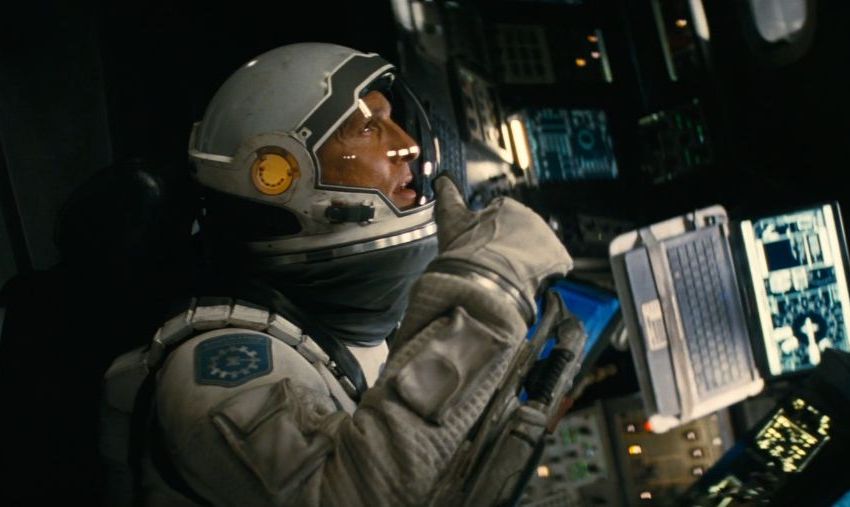 Nolan hasn’t lost his gift for crafting eye-popping visuals and bringing a rousing sense of scale to his movies. Interstellar is blessed with spectacular images of our universe, alien worlds, and mankind’s place in the whole realm of the cosmos. Nolan’s usual DP, Wally Phister, was unavailable, taking time to direct his own debut, Transcendence (probably the last film he directs as well, like Janusz Kaminski’s little-seen, little-remembered Lost Souls). The change of DP does Nolan good, giving the film a different, Earthier feel under Hoyte Van Hoytema (Her, Let the Right One In). Nolan isn’t the greatest stager of action but he is remarkable about putting together memorable set-pieces, and Interstellar has some standouts from the hostile alien environments to a thrilling space-station docking that is not for those susceptible to motion sickness. The special effects are terrific and the retro cubist robots are a fun addition. The only technical element I found lacking is the score by Nolan’s usual accompanist, Hans Zimmer. It’s bleating organ music intended to add a spiritual sense to the cosmic awe but it mostly becomes annoying. It sounds like a church organist died atop their instrument.
There is one great moment of acting in the film. Not to say there is an overabundance of bad acting, more like over emoting with a script and dialogue that do not deserve the waterworks. It involves Cooper after a mission, catching up on video messages sent from his children on Earth. In this very efficient scene, the magnitude of the consequences of Cooper’s decision is emotionally raw and he is overpowered with regret. McConaughey has been on a record-breaking tear of supreme acting performances, especially if you count his mesmerizing turn in HBO’s True Detective. Nolan allows the moment to play out, to sink in, without overdoing it, and it succeeds wildly. The other times Interstellar tries to wring out emotion feel too facile and maudlin to be effective.
This is my first real Nolan disappointment, a bloated film struggling to be important and say Important Things about the Human Condition but coming up short. It has its moments of excitement and awe but more so those moments are surrounded by too much dead space. The story is dense while still being undercooked, with too many listless supporting characters that amount to nothing, and easily telegraphed plot turns that are frustrating. Interstellar snuffs out all the intriguing possibilities it has to come back to its sappy father/daughter relationship that never truly feels earned. By no means is Interstellar, Nolan’s space travel opus/ode to Stanley Kubrick, a bad film. Unless you’re a sucker for easy sentiment, it will likely be a disappointment in some way, whether it’s too long, too boring with its science, too cloying with its emotional tugging, or just underdeveloped and overcooked at the same time. Interstellar is ambitious with its vision but seriously flawed and ultimately an obtusely personal sci-fi snoozer.
Nate’s Grade: C+
Share this:

Fury (2014)
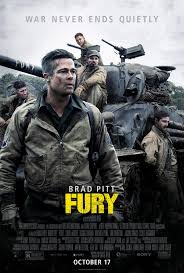 Why haven’t there been more tank movies? We have a slew of war films in all shapes and sizes and yet there are hardly any movies from the unique point of view of the battle-tested tank crew. Perhaps it’s the claustrophobic shooting conditions and limited breathing room, but then both of those are usually assets to the submarine sub-genre, and we got plenty of movies set primarily in less-than-spacious submarine quarters. Maybe it’s the sheer cost, since a submarine can be replicated with a model and a tank requires its own onset crew just to get exterior shots. Then there’s the issue of just watching close-ups of people looking through telescopes, squinting, and pulling triggers. I don’t really have a working hypothesis to explain the paucity of tank movies from Hollywood but now there’s at least one mainstream effort on the big board.
Fury follows the brave men of the titular tank that’s traveled from Northern Africa to France and now Germany in the dwindling days of World War II. Norman (Logan Lerman) is the new guy, replacing a fallen comrade on Don “Wardaddy” Collier’s (Brad Pitt) crew. The average life expectancy on a tank was only a handful of missions, but under Collier’s leadership his squad has defied the odds. Now the presence of a rookie puts all their lives in danger especially so close to the end of the war.
Writer/director David Ayer (End of Watch, Sabotage) delivers a meat-and-potatoes kind of war film, a movie that knows what it’s doing and how to satisfy its audience but rarely steps outside of this mission to resonate further. There’s a requisite pathos and air of contemplation to the proceedings, especially with the conflict of Norman’s innate goodness getting in the way of killing soldiers, armed and unarmed, in the line of duty. What does it take to be a soldier? Can you still recover as a man or does one have to shut off those elements of concern, the quibbles over moral actions that would otherwise haunt. In one sense, it’s a little contrived that the new recruit has to be so green to the battlefield that everything needs to be taught to him including the us vs. them mentality of war. On the other hand, it provides an ongoing source of conflict that leads to some striking moments, like when Collier literally forces Norman’s hand to get him his first kill. Much like Saving Private Ryan once it settles down, the movie progresses as a series of vignettes that showcase a variety of consequences and realities of the war. Naturally some are more engaging than others, but for the majority Fury holds your attention nicely. Ayer’s direction of action is astute and a tank-on-tank battle is wondrously taut thanks to the stubborn and fascinating tactics of tank warfare. I just don’t know how all these guys can make out whose order is for whom with all the other noise going on.
 It’s during the concluding act where the movie abandons most of its sense of realism to completely double down on exaggerated action movie heroics, and it’s unnecessary. Beforehand, we’ve been treated to this crew and their town-by-town escapades, watching them come together but also watching them deal with the vagaries and lasting traumas of war. And then it suddenly shifts gears and becomes a last stand movie where our small crew in one immobile tank has to take on, literally, 300 Nazi soldiers. Ayer makes a specific point of clarifying them as Nazi S.S. men and not your casual German soldier. Pitt and company all decide to stay and fight valiantly rather than hide, and so we’re treated to their preparations for what is sure to be an Alamo in a tank. It then just becomes a rote action movie where they fire into the smoke, more Germans keep coming, and we just patiently watch them run through their last remaining desperate options for defense. Ayer doesn’t falter with his depiction of the action or the logical nature of his plot beats, though I don’t know why they didn’t keep more of the gun ammo in the tank. There’s a repetition and expectation of casualties with this section, perhaps intended to magnify their sacrifice and heroism but it feels too forced. The movie was working perfectly fine prior to this new shift in tone. Now we have Germans that are plainly idiotic, with poor marksmanship, and who can’t just wait out the tank. They have rocket-propelled weapons and the tank only shoots in one direction. The ending action assault still works as an entertaining barrage of blood and violence, but if you were liking Fury for what it was then be prepared to be a little disappointed.
What really hooked me with the film was an extended sequence that doesn’t even involve the tank at all. Stopping to regroup with their company in a small, bombed-out German town, Collier and Norman enter the home of two women, Irma and Emma. Initially the scene plays out like they’re scouting for any hiding soldiers, so there’s an initial carryover of tension. Then the gentlemen stay and the scene transforms organically into something more interesting. The scene is allowed to linger, and we see a different side of Pitt’s tank captain. The women set up a dinner and there’s a moment of reserved calm. Norman and the youngest German woman get some privacy, much to the knowing approval of the other two older adults in the room. Then just as their little scene has reached serving time, the other members of the tank storm the room, drunk and confused. They came seeking to deflower Norman with an ugly prostitute they each had a turn with. Their eyes settle on the young, much prettier women, the food about to be served, and you can feel the resentment starting to build, the old conflicts and tensions sneaking back into the scene, particularly a sneering Jon Bernthal (Wolf of Wall Street), who relishes being hostile. You don’t know where this is going to go. Are they going to make a fuss? Will they mistreat the German civilians, maybe even assault them, and if so how will Collier and Norman respond? What will they say about the appearance of preference with these civilians than with their tank company? How far will this go? I am not kidding when I say that for a movie with plenty of war violence, this was the tensest scene in all of Fury. It plays out so naturally, leisurely, but every moment pushing forward and building in tension. It’s a shame then how Ayer decides to conclude this entire episode, glibly turning these women from characters into a cheap plot device. Until then, though, it’s a 12-minute oasis from the genre machinery of war movies.
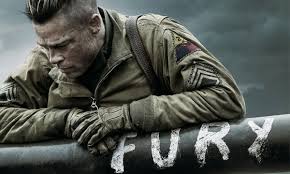 The other aspect where Fury falters is when it comes to fleshing out the characters in that dangerous tin can. With war movies the characterization can often get lost in the shuffle of violence and messages, so there’s something of a sliding scale; if you can get one good sequence, perhaps one solid insight into a character that opens them up as more than “Hispanic Gunner” or “Vaguely Southern Religious Marksman” then you call yourself fortunate. The characters don’t stray far from their archetypical orbits: the rookie, the hotheaded one, the Bible-quoting philosopher, the commander who hides his fear and… the Hispanic Gunner (sorry Michael Pena). The assembled actors do fine work with what they’re given, but so much of the part is reactionary to off-screen, out-of-the-tank action. Pitt (World War Z) has a stolid clam that commands leadership but boy does his character lack a personality. He’s just settled into that authority figure role. Shia LaBeouf (Nymphomaniac) gives a performance with enough edge, the emotions just peaking through during key moments, to leave you wanting more, both from the character and the actor. Lerman (Perks of Being a Wallflower) is suitably wide-eyed and out of his element early, finding his requisite spine and becoming a “man” over the course of the film. It works as a point of view entry into this world though his character can come across as naive and then later also unjustly criticized. After two hours with this crew, you won’t be fighting back too many emotions as they make their last stand and their numbers dwindle.
Fury is a fairly gritty, bloody, and sturdily entertaining World War II action thriller that is unwaveringly serious for a solid two acts until an all-out assault into over-the-top action movie land for its final, admittedly enjoyable, conclusion. It decides to just skimp out on the characterization so as to spend more time pumping up the virtues of tone and action. The film never bored me, and during stretches it was riveting with suspense and a gritty realism, all before retreating back to archetypes and Hollywood standoffs. For long stretches it’s a series of vignettes but there are moments that rise above, which cut through the carnage and stay with you. Ayer’s direction of action is rather impressive and this is easily the finest work behind the camera for the famous screenwriter. In many ways, Fury is a no-nonsense throwback to World War II war movies, with a similar no-nonsense pack of characters. An older audience will definitely find the movie appealing. It does more than enough well to recommend but just don’t expect the next Saving Private Ryan in terms of lasting impact. Still, give me more tank movies, Hollywood.
Nate’s Grade: B
Share this:

The Equalizer (2014)
 If your idea of a fine time at the movies is watching Denzel Washington be a badass and murder people in grisly fashion for two hours, then The Equalizer is right up your alley. There’s not much to the plot of this loose remake of the 1980s TV show of the same name; Denzel plays a man with a mysterious past who works at a large Home Depot-esque hardware store. He sees injustice transpiring against his pals, and he fixes it in a violent fashion. The movie is two storylines that don’t converge until the final act, namely the Russian crime syndicate trying to ascertain who this vengeful badass just might be, and Denzel doing his episodic vigilante good deeds. The climactic act is a drawn out showdown where Denzel uses every part of the hardware store to deadly results. There’s definitely a pleasure in watching Denzel dispatch tough-talking baddies, and that’s what the film delivers, no more, no less. The confrontations are generally well written and ratchet tension nicely, especially when Denzel has some chilly conversations with his soon-to-be-victims before they inevitably make their bad decisions. The tense sit-downs were more entertaining for me than the bloody violence. Director Antoine Fuqua (Training Day, Olympus Has Fallen) goes about his business in a more than competent manner; the technical qualities are above average, though the film has moments where it seems too infatuated with its slick sense of style (slow-mo rain gun battles?). With a stream of bad guys to be toppled at a steady interval, The Equalizer can start to feel like an assembly line of cocksure carnage, a ready-made vehicle for audience blood lust. Still, watching Denzel be a badass and kill a whole lot of bad people is enough for a movie. Just don’t expect much more than that scenario and you may be satisfied if you’re not too squeamish when it comes to bloodshed.
Nate’s Grade: B


 nathanzoebl
You must be logged in to post a comment.