Blog Archives
Fantastic Beasts: The Secrets of Dumbledore (2022)
 If ever a film franchise looked to be in decline, I submit to you, the Fantastic Beasts movies. Begun in 2016 as a presumed five-part series, Harry Potter author J.K. Rowling was the one writing the screenplays this time and going back to 1920s America. Fantastic Beasts and Where to Find Them, chronicling bashful magical animal caretaker Newt Scamander (Eddie Redmayne), made $800 million worldwide. In the years since, Rowling has burned through much of her good will with transphobic comments, Johnny Depp has been replaced as series villain Grindelwald by Mads Mikkelsen, and 2018’s Crimes of Grindelwald made $150 million less than its predecessor. Now with COVID transforming the box-office, the question remains whether the Wizarding World franchise (as Warner Brothers has been calling the Harry Potter universe) can survive without its Boy Who Lived. The third film, Fantastic Beasts: The Secrets of Dumbledore, finds young(er) Dumbledore (Jude Law) confronting his old foe –- franchise fatigue.
It’s hard for me to fathom anyone, even the most ardent of Harry Potter fans, watching this movie and exclaiming, “I can’t wait for two more of these!” The Secrets of Dumbledore feels more like a regular episode of an ongoing TV series than a story that demanded to be told as a big screen adventure, something that meaningfully reassembles the key characters and moves the larger wizarding world story forward. By the end of the movie, Wizard Hitler still looks like Wizard Hitler. The end. The last movie set the stage for a looming wizard-vs-wizard civil war that would push the magic world to choose its sides. That’s why it’s so bizarre to then go right into a weird election conspiracy with a weird magic deer creature. This is a fantasy world with crazy characters and weird rules and I can’t adequately explain why this whole plot point with a magic deer wrings so silly and ridiculous for me. It’s like if we replaced our electoral system with letting the groundhog choose the president on Groundhog Day. Why bother with democratic elections when we can just have a pure magical creature provide its endorsement? The big scheme for Grindelwald to rig the election at any costs, which has a bizarre 2020 Donald Trump political parallel that also makes me dislike the plot more. The entire movie is hinging on this little creature making its opinion known, so why not guard it better if it’s so integral to their foundation of wizarding governance (warning: animal cruelty early)? This plot line does not work for me, and it feels clumsy both in contemporary political parallels as well as an effort to find reason to continue inserting Newt Scamander into these movies. The franchise began as a light distraction with a goofy zookeeper for magical creatures. Now it’s become a political thriller about the fate of the world against Wizard Hitler. It’s a bit different tonally, and perhaps it’s time to let Newt tend to his animals off-screen, much like what has happened to Tina Goldstein (Katherine Waterston), the co-lead of the other movies, casually “staying home.”
 This is also the first Fantastic Beasts movie where Rowling is sharing screenplay credit, with Steve Kloves, the man who adapted all but one of the Harry Potter movies. It feels like another act of trying to salvage this franchise. I’ve read plenty of critics claiming that this movie corrects the screenwriting miscues of the past films, and to this I do not agree. Reaching out for help from an industry veteran used to adapting Rowling’s imagination is a smart move, but the movie still suffers like the previous Fantastic Beast movie from a plot overburdened with incident and less on substance, willfully obtuse and convoluted in its plotting. Since Grindelwald gains the power to see into the future, a power that is woefully underutilized, the only way to disguise Dumbledore’s plot to uncover election fraud is through sheer confusion. They have to make things purposely confusing and hard to follow on purpose, dear reader. A purposely convoluted and confusing movie is the only way they can beat the bad guy. It’s like Kloves is speaking directly to the audience and admitting defeat at keeping anything clear. I went to brush up by reading the Wikipedia summary for this review and even that made me tired. A wizard heist is a great setup, but Secrets of Dumbledore cannot live up to that potential. The set pieces don’t lean into what a wizard heist could bestow. There’s one memorable sequence where Newt and his brother must escape from a crustacean prison by literal crab-walking. It’s the only light in an otherwise dismal, overwhelmingly grey movie. It all feels less transporting and more plodding.
What even are the “secrets of Dumbledore”? If it’s that he’s gay, well at least the movie finally has the temerity to finally say that Dumbledore and Grindelwald were more than just really special friends who decided to wear vials of each other’s blood as necklaces. The movie unequivocally confirms that they were lovers, had a relationship, and yet it’s all also contained in a prologue flashback that can easily be cut for foreign markets that would object. So congrats, Warner Brothers, for going far enough to at least say Dumbledore and Grindelwald were boyfriends at one point. However, this secret has been publicly known since Rowling outed Dumbledore in the late 2000s, so that’s not it. I guess we’re carrying over the revelation at the end of 2018 that Credence (Ezra Miller) is a Dumbledore, except that it’s revealed he’s the son of Dumbledore’s brother, meaning the big reveal in 2018 was… Dumbledore had a nephew? This character has even less screen time than the other two movies and it feels like the filmmakers are actively trying to work him back to the sidelines (perhaps Miller’s penchant for legal trouble accelerating matters). This all seems pretty minor, and I suspect the filmmakers are ret-conning a direction they thought would be pivotal and have since changed their minds. That’s all I can gather as what might constitute a “secret of Dumbledore,” although allow me to posit a different theory why the third movie has this subtitle. This is a franchise that has been leaking cultural cache and fan interest, and so the producers say, “Nobody knows a Newt or a Grindelwald. They know Dumbledore. They care about Dumbledore. That’s the title.” It’s about rescuing a flagging franchise with the only character that reaches forward to Harry Potter.
 It’s also a little strange that the movie doesn’t even comment that Grindelwald’s appearance has changed. This is made more confusing because of that prologue flashback where Grindelwald had the face of Mikkelsen, so I guess he just chose to hang as Depp for a while. Even a passing reference to this being his “preferred form” would have sufficed. It was established that the big bad wizard could alter his visage, but we shouldn’t just go movie-by-movie with a brand-new actor (really the third actor in three films) as the main antagonist without even the barest of references for the audience. I guess it’s just all assumed.
I think this franchise also needs a break from David Yates as its visual steward, the same director of the last two Beasts films and the last four Potter movies. This is the dankest, most greyed out blockbuster movie I can recall. Yates’ muted color palate and somber handling of the material has begun to drain the fun and magic from this universe for me. I said 2020’s Ammonite was “all grey skies, grey pebbles, grey shores, grey bonnets, grey leggings, grey carts, grey houses, grey this, grey that, irrepressible grey.” This movie is the Ammonite of studio blockbusters (it’s not quite Zack Snyder’s Justice League, where color is not allowed to exist by force of law). The last time someone else directed a Wizarding World picture was 2005’s Goblet of Fire. Yates has served his time, although considering he’s only helmed one non-Potter movie in the same ensuing years (2016’s The Legend of Tarzan), maybe he’s just as reluctant to walk away from this universe.
My personal interest in this franchise has been decreasing with each additional movie, and at this point I’d be content if the planned fourth and fifth movies stayed purely theoretical. Fantastic Beasts: The Secrets of Dumbledore feels, front to back, like a filler movie, a story that is rambling and haphazard (but on purpose!) and a franchise that has outgrown its initial parameters and is struggling to explain why these adventures are persisting and what the overall appeal would be. If you’re happy to just step back into this special world one last time, then you’ll at least walk away satisfied. I still enjoy Dan Fogler as Jacob Kowalksi, the Muggle pulled into the crazy world, the character that should have been the protagonist of the series. Mikkelsen is an upgrade for any franchise. I liked Jessica Williams (Booksmart) and her posh British accent. The special effects are solid if a bit twitchy. I just don’t see the driving force to continue this series, and Warner Brothers as of this writing has not greenlit either of the two proposed sequels to close Fantastic Beasts out, so we may end as a trilogy after all. If that’s the case, what will the legacy be for Fantastic Beasts? It feels like a franchise that started in one direction and was quickly course corrected to another, leeching the initial charm and light-hearted energy. Just like The Matrix universe, I think there are more creative stories that can be told here, but maybe it’s time to allow some fresh voices into the creative process. Maybe it’s time for Rowling to gracefully open her storytelling sandbox for others to dabble within. In many ways, it feels like the fan community and even the movies themselves have simply grown beyond Rowling.
Nate’s Grade: C+
Share this:

Star Wars: Attack of the Clones (2002) [Review Re-View]

Originally released May 16, 2002:
Yes, it’s easy to say that Attack of the Clones is better than Phantom Menace, but hey, most anything was better than watching that movie about trade and taxes. The truth of the matter is that for a long while Clones is just as boring as Menace, especially anything involving Anakin onscreen. It’s slow moving, dull, and remarkably poorly written. Lucas cannot write dialogue and someone needs to take away his yellow writing notebooks before he strikes again. The movie only shows life during the last 45 minutes when it finally cooks with a non-stop rush of action. Before then though I would recommend resting up for this period.
Can anyone ever say “no” to the Jedi master in plaid? What Lucas needs desperately is collaboration, writing and directing. Lucas needs to loosen up the reign of his empire before the three Star Wars prequels undermine the original set. He may have the technology to create any manner of CGI creature but he has no power to get his actors to show any of the realistic and animated life. It seems all Lucas cares about is directing blue screens and leaving his actors out to dry.

And that much ballyhooed romance between Anakin and Amidala? Oh ye God, what romance? You could find something more alive in a monastery. Portman and Christensen have as absolutely no chemistry (unlike the romantic pairs in another, huge Hollywood movie out now). Portman has perfected the staring ahead method. I don’t know if that’s supposed to be romantic. Now I like Natalie Portman, I really do. Her performance in The Professional gets me every time, but her acting is stiff and overly serious here.
I thought Anakin could not get any more annoying than Jake Lloyd’s awful “yippee”-filled run in Menace, but I’m starting to reconsider this begrudgingly. It’s easy to see why Christensen was chosen, he looks like the lost N’SYNC member. His acting on the other hand is not with the force. The Clones Anakin mopes around and when he gets upset he whines in a falsetto voice. It’s actually quite funny to see the future Darth Vader, evil master of the Dark Side and much feared, whining like a six year old throwing a tantrum. This Anakin needs a time out and a lolly.
When Anakin returns to become a protector for the senator, upon their first meet in ten years he shoots her the puppy eyes and says, “I see you have grown as well — grown more beautiful.” Subtlety, thy name is not Anakin Skywalker. The very next scene where they’re alone he’s trying to put the moves on her, though he does not try and use the force to undo her bra. Then somewhere along the line his dogged persistence just wears Amidala down and she relents. She says, “I’ve been dying a little bit day by day, ever since you re-entered my life.” Ugh. You’re likely to find more romantic passages in a Harlequin bodice ripper at 7-11.

The romance in Clones is like spontaneous romance. There is no beginning, the nurturing of it is not shown, we don’t see the eventual progress. All that happens is he shows up and then instant romance. It just happens. I don’t think so. It’s like a kid went to a girl’s third grade birthday party, then they meet in high school for the first time since that day and are instantly in love. Do you buy that? Well I certainly don’t.
The scenes revolving around Obi-Wan are the only ones worth opening your eyes for. Ewan McGregor has got the Alec Guiness voice down and proves to be a capable leading hero. His voyage to see the clone army and Jango Fett is the subplot that we want, but the movie keeps skipping back and forth between this and the inept romance. By this time everyone knows that Yoda shows off his fighting mettle with a light saber. This is a great idea and the audience I saw it with was having the time of their life during this moment. It’s the only part of the movie that taps into the feeling of whimsical fun of the original trilogy.
Lucas curtailed the criticism of Menace saying it was the setup for all five other movies. I imagine he’ll say the same thing with this one, except that it was setup for four movies. Yes it’ll make a huge amount of bank. Yes it’s a technical achievement but what good are all the bells and whistles if we as an audience are bored? You’ve got one more Star Wars left George, please do it right.
Nate’s Grade: C+
——————————————————
WRITER REFLECTIONS 20 YEARS LATER

Something unexpected has happened in the ensuring twenty years since the Star Wars prequels were first released to a generally muted response from the rabid fandom. A generation has grown up with these movies as “their Star Wars.” In my own anecdotal experiences, many teenagers do not just view Episodes I-III as entertaining movies, they even view them as their preferable Star Wars trilogy. After the latest Star Wars movies, Episodes VII-IX, some fans have even been looking back on George Lucas’ much maligned prequels with revised appreciation. “At least there was a cohesive vision,” they’ll say, in comparison to the wild pendulum swings between directors J.J. Abrams (Force Awakens, Rise of Skywalker) and Rian Johnson (Last Jedi). Have we all been too harsh on Lucas and his moribund attempts to inject life into his three-movie arc charting the fall from grace from legendary villain, Darth Vader a.k.a. Anakin Skywalker? The short answer is… no. While I agree that children who grew up with the likes of Jar Jar Binks and CGI overkill will consider Episodes I-III more their style, the flaws of these films are undeniable when compared to the superior storytelling and characterization of the others. Even in comparison to the new Star Wars, these movies still suffer. So please remove your rose-colored glasses, fandom, and accept that even with time, Attack of the Clones is still a lousy adventure.
I think a majority of Star Wars fans experienced the five stages of grief upon the 1999 release of The Phantom Menace, the first new Star Wars movie in 16 years. I remember a classmate who wore Star Wars T-shirts every day for weeks in fevered anticipation of the new movie, including T-shirts relating to the new characters and merchandizing opportunities (what the “new characters” were, even Darth Maul). After the movie came out, I remember charting over the last weeks of school his response, going from claiming that, “Of course it was great,” to a more measured, “Well, it wasn’t what the originals were, but it’s still good,” to, “It has its problems but…” and finally the acceptance that it just wasn’t a very good Star Wars movie or even a good movie. He stopped wearing T-shirts emblazoned with Phantom Menace characters.

This was the backdrop for the production of 2002’s Attack of the Clones, a realization that must have spurred Lucas to do better. During the many years of pre-production for Phantom Menace, Lucas was cloistered by yes men agreeing that every new addition was going to be sensational. Lucas was astonished to learn about the volume of hatred against Jar Jar Binks, a character he thought would transcend and become the most popular character in all of Star Wars. The intense negative feedback threw the old Jedi Master in plaid for a loop. Maybe residing in a creative bubble that only reinforces everything you say isn’t the best environment. We were told that Lucas had learned from his mistakes from Phantom Menace. He even brought on another screenwriter to help him, Jonathan Hale (The Young Indiana Jones TV series), something he didn’t do for the concluding Episode III: Revenge of the Sith. At the time, I was among the throng of fandom that wanted to cling to hope, that maybe The Phantom Menace was an aberration, that maybe that same feeling of elation could return of the Star Wars of old. And then I watched Attack of the Clones and it confirmed what I and many feared: Phantom Menace was no fluke; it was merely the way things were going to be from here onward.
The prequels had two major storytelling goals: 1) to explain the transformation of Anakin Skyler into the mighty Darth Vader, and 2) to explain the rise of the evil Empire and its Emperor. To offer some compliments before the onslaught of criticisms is unleashed, I think Lucas does an agreeable job with developing the latter goal. This movie came out around the time of Bush’s War on Terror where the threat of attack was enough to call pre-emptive strikes and where the president was given special war powers that, to this day, and the formal conclusion of the wars in Iraq and Afghanistan, haven’t been fully relinquished. There are several obvious and eerie parallels to the political instability of its initial release but also for today in 2022. We are witnessing one political party lurching toward rampant authoritarianism, a repudiation of democratic norms and ideals, and celebrating personality over principles and winning at any cost. Watching the different alien races of the Republic champion the need for a strong, decisive ruler to cut through the bureaucratic red tape of representative democracy, someone who seems above politics, someone who will protect the people, and someone who sees opponents as enemies of the state, well it’s not hard to make the connections. This is the path of fascism, the rise of dictators, and it was the same brew of nationalism, grievance, fear-mongering, bigotry, scape-goating, and information distortion during the 1930s as it is during the 2020s. For those angry Star Wars fans upset by the diversity of the newer movies, screaming, “Keep politics out of my Star Wars,” you do understand the entire thing has been a metaphor for fighting fascism, right? It’s not even subtle.

However, where the movie pitifully fails is by linking Anakin’s downfall with his romantic relationship with Padme (Natalie Portman). There was potential here with a forbidden romance where Anakin fights against the oath of chastity to the Jedi and both must try their best to subsume their out-of-control feelings. I’m sure that’s what Lucas thought he was making. It didn’t quite work out that way. The romance in Attack of the Clones is laughably bad. The dialogue is cringe-worthy and deeply inauthentic. Every character speaks like a robot. When Anakin starts to finally court Padme, he shares his infamous “I don’t like sand” observation, but he directly pivots toward liking his current location because it’s “soft and smooth,” and it is WITHIN SECONDS of saying this that he stares weirdly at Padme and they share their first kiss. That line worked! Upon meeting Anakin, almost every character remarks how much he’s grown up, as if Lucas is trying to say, “He’s no longer a kid, so it’s okay for him to try and get some.” Padme repeats this observation at several points, and I started to question what exactly was the age difference between these two. Nothing about this romance feels genuine. At one point, they literally roll down a hill like two children rough housing. The romance is so hilarious juvenile and poorly developed. In my original review in 2002, I referred to it as a “spontaneous romance,” and that’s exactly what it feels like. Anakin’s yearning looks more like a child having a temper tantrum. Also, Padme ignores a host of red flags including when Anakin confesses to killing “men, women, and children” in a blind rage upon his mother dying. She also tells him to stop looking at her because it makes her uncomfortable, and does he stop? No.
The other problem is that the actors are clearly bored with one another. Natalie Portman has since become of my favorite actors, but she’s always been an actress that has trouble hiding her boredom with a role she doesn’t connect with. You can feel her eagerness to be done with the franchise in every green screen scene (just keep chanting, “Only one more movie, Natalie”). Her destiny is to be a mother and to be the catalyst for Darth Vader becoming Darth Vader, and she’s never been looked as anything more. Sure, you can argue she’s headstrong and resourceful in a general sense, but then she has to be scraped by an arena monster so she can bare her midriff during the climactic action scuffle. I don’t think any actress can make this clunky dialogue work, like, “I’ve been dying a little every day since you came back into my life.” Is that supposed to be complimentary? Another quick dialogue criticism: EVERYONE is always addressing everyone all the time with titles. “My old friend,” and, “Master,” and, “My Padewan,” and, “Master Jedi,” in case anyone forgets for a moment what the character relationships are.
This was Hayden Christenson’s first movie as Anakin and it’s worth noting that for a time being he was regarded as a hot up and coming actor. He was nominated for a Screen Actor’s Guild Award for 2001’s My Life as a House, and he’s genuinely fantastic in 2003’s genuinely fantastic Shattered Glass, a film role that takes full advantage of the actor’s whiny, pubescent acting tendencies. Christenson was widely lambasted for his performances in Episodes II and III. His performance is definitely weak, especially compared to the heft of James Earl Jones’ voice. He’s not good as Anakin Skywalker but nobody would have survived this role. It was one thing to find out big bad Darth Vader used to be an annoying little twerp of a kid, and it’s not that much better to also discover that annoying kid matured into an annoying, moody teenager. It’s demystifying one of cinema’s greatest villains and providing so very little in return. Patton Oswalt had a comedy bit about not caring where the stuff you love actually comes from. There was a rash of villain back-stories in 2000s cinema, with Vader and Hannibal Lector and Michael Myers, and none of these stories lived up to providing a satisfying explanation. Christensen has been unable to exit the shadow of the Star Wars series. He has a brief stint as a leading man, most notably in 2008’s Jumper, but has receded into the world of direct-to-DVD offerings, appearing in five movies since 2010. He’ll be reprising Darth Vader in Disney’s upcoming Star Wars TV series, so it will be interesting to see if the brunt of fandom that once rejected him now accepts him.

The other sad aspect of the prequel trilogy is just how meaningless so much of the action feels. I was watching the extended climax on Genosis, which feels clearly inspired by 2000’s Gladiator, and just shrugging at all the onscreen CGI carnage. I just didn’t care. While the prequels have more action and special effects wizardry, and the lightsaber battles are more intense and acrobatic, the emotional stakes are still so absent. Watching a dozen CGI characters kill a different dozen CGI characters is no more exciting than watching dominoes fall unless there is an emotional connection to what is happening. Any emotional connection with the prequels is strictly imported from the prior movies. I find it hard to believe that people can watch Episodes I-III and genuinely care about the conflicts of these characters. The prequels also reveal that Lucas was at his best not just with collaboration but also with restraints. With all the money in the world, the man doubles down on his worst directing and writing impulses, and everything onscreen feels weightless and vapid and intended to sell a new line of toys. The movie takes so long to get going because it divides its time between a romance that does not work and an investigation into a clone army that can only go so far. It’s memorable and a little fun to watch Yoda (voiced by Frank Oz) as a mighty Jedi lightsaber warrior, but that’s about all that I found Attack of the Clones had for me as far as intentional entertainment value.
I also want to note that the movie really clears any doubt about the aura and competency of the Jedi. These guys suck at everything. They get killed pretty easily. They are terrible at sensing the encroaching Sith and Dark Side. They are terrible at upholding rules, order, galactic safety. They just suck at everything they do. They carry a cool laser sword and can play mind tricks and that’s about it. Maybe Lucas was intentionally laying a critique at the guardrails of democracy, saying we cannot trust the guardians to stand alone to protect against the rise of fascism, but I think I’m projecting too much thematic clarity onto a man that thought Jar Jar Binks was destined for greatness. Another side note: it’s hilarious to me that Lucas has Jar Jar as the Senator that proposes giving Palpatine the emergency war powers. It’s like Lucas said, “Oh, you don’t like my silly Jamaican rabbit alien? Well, what if I made him an essential footnote to the end of the Republic? You can’t erase him now, unless you’re me, and I’ll tinker however I want!”
My 2002 movie review was right on, which has been something of a rarity for the early part of this re-review. I enjoyed the line about this Anakin needing a “timeout and a lolly.” I would probably lower my rating down to a C. I’d rather watch this or any of the prequels before 2019’s Rise of Skywalker, but that’s because I was more invested in those characters and their stories and thus far more disappointed in how Abrams handled his finale. Maybe that’s to its benefit, that the characters are so poorly written, and poorly acted, and the CGI action is so blandly imagined, that I’d rather watch Attack of the Clones and let my eyes glaze over.
Re-View Grade: C
Share this:

The Northman (2022)
 Consider writer/director Robert Eggers’ bloody Viking revenge movie as a companion piece to 2021’s The Green Knight. Both movies take mythical, supernatural-aided tales of heroics and medieval masculinity and feed into the spectacle while also cleaving the legend to make way for a sense of humanity. We follow Amleth (Alexander Skatsgard) who is a displaced prince who has sworn to kill his treacherous uncle and rescue his mother (Nicole Kidman). It’s a tale so old that it inspired Shakespeare’s Hamlet, though that play could have benefited from a climax involving two hulking naked men dueling to the death atop an exploding volcano. The Northman reminds me a lot of Mel Gibson’s Apocalypto, a movie I described back in the day as “an art film for jocks.” It’s immersive and impressive down to the exact detail, and it doesn’t shirk on the blood and combat. It’s also unmistakably the work of Eggers, a very precise and idiosyncratic indie director whose prior movies felt like stylistic dares. The camerawork is often long with single takes, making all the visual arrangements and coordination that much more impressive. It’s staggering that a studio provided Eggers with $90 million to go make his version of Conan the Barbarian. At a lugubrious 140 minutes, there’s enough sticky carnage to satiate fans of brutish medieval action movies, but I appreciated how Eggers keeps his story purposely streamlined and simplistic until a few keen reveals force the audience and protagonist to re-examine the assumptions and fleeting honor of vengeance in this harsh, unfair environment of men out-killing one another. It’s a movie that provides the red meat and then makes you question whether you might want to go vegan. There’s more that can be unpacked but I wish Eggers had cut back at points. This is a slow movie, which does contribute to its mood and atmosphere, but I also wish Eggers had gotten to some of his plot points with a bit more haste and vigor. The Northman is transporting and bold and also more than a bit bloated. You could laugh at some of its over-the-top machismo but I feel like Eggers is inviting criticism of that very machismo, so enjoy the movie on one level where it indulges all the Old World violence, and then enjoy it on another level where it subverts and castigates the same Old World violence. Or you could just watch for the glistening muscles, famous faces, bad accents, bad wigs, guttural score, and weird imagery.
Nate’s Grade: B
Share this:

Morbius (2022)
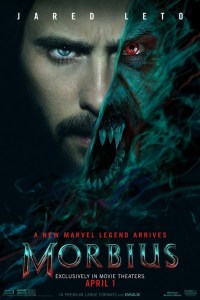 Not the train wreck the advertising made it seem, Morbius is merely a bland superhero retread that reminded me of the early 2000s superhero output like Daredevil and the Tim Story Fantastic Four. Having been delayed almost two years thanks to COVID-19, the film was released on April 1 for full unintended irony, and it’s a silly mess but also nothing worth getting too worked up over. Method actor extraordinaire Jared Leto (Suicide Squad) plays Dr. Michael Morbius who is suffering from a rare disease and finds a solution via a serum mixing vampire bat DNA but it has some consequences. He has super powers but needs to feast on blood every six hours and is dreading the point where he may not be able to resist the allure of feeding on humans. It’s a very Jekyll/Hyde concept, man trying to control his inner demons made literal, and once again we have a villain that essentially has the same powers as the hero. Matt Smith (Doctor Who) play’s Morbius’ childhood friend who also suffers from the same rare blood disease, but Dr. Morbius refused to share the cure because he explains it’s a “curse,” although maybe let the man suffering make that personal health choice. Bless you, Matt Smith, because you’re the only one having any fun with this movie, and that includes in the audience. Leto is actually fine though not much about the Morbius character is really imparted. The action sequences are erratic and the stylistic flourishes, like the “look at me” slow-mo ramps and the inexplicable wispy colorful smoke clouds trailing Morbius in action, hamper the ability to even discern what is happening onscreen. Maybe that’s on purpose after two years delay. The movie establishes a basic structure, series of goals, antagonist, and problems efficiently enough to make it to the end credits after 90 minutes. It’s just that we’ve come to expect better from our super hero cinema by now. As a disposable monster B-movie, Morbius is okay. It’s not recognizably campy, it’s not so-bad-it’s-good, it’s just a generic origin story/Dr. Jekyll and Mr. Hyde territory with a lot of dropped subplots and subpar CGI. I have my serious doubts about Sony’s plan to hatch solo movies for all these different Spider-Man villains, and the creakiness of this plan is even more evident with their contrived post-credit scenes trying to awkwardly establish their retinue of villains to confront Spider-Man. Does Morbius know who Spider-Man even is? Morbius the movie and character just feels too half-hearted for anyone to care.
Nate’s Grade: C
Share this:

Doctor Strange in the Multiverse of Madness (2022)
 The first Doctor Strange is one of my favorite movies in the ever-expanding and incredibly popular Marvel Cinematic Universe (MCU). It was a visually audacious and imaginative sci-fi action movie that just had one standout set piece after another. The original director, Scott Derickson, departed over creative differences with the MCU brass, and having now seen Doctor Strange in the Multiverse of Madness, I might have the same stark differences of opinion.
Dr. Stephen Strange (Benedict Cumberbatch) is still nursing his regret over his former flame, Dr. Christine Palmer (Rachel McAdams), who is now getting married to another man. During their wedding reception, Strange helps a young woman being chased by a giant one-eyed monster. America Chavez (Xochitil Gomez) is from another universe and has the power to open portals to other dimensions. Unfortunately, she doesn’t know how to control these powers and they only seem to activate when she’s reached a level of fear. Strange protects America Chavez from a malevolent force that wants to gain her unique power and open the multiverse for conquest.

It’s been almost ten years since Sam Raimi directed a movie and Multiverse of Madness is at its best when it feels most like a Raimi picture. The man’s beginnings in low-budget horror comedy are still evident, and it’s that campy combination that entertained me the most in Multiverse of Madness. There are some creepy, goofy moments that definitely reminded me of Evil Dead 2 and Army of Darkness. If you’re not a fan of these heightened levels of horror that incorporate slapstick and camp, then you might roll your eyes and find these moments to be too goofy for the MCU. As much attention as this movie has gotten for being darker, which is a tad overblown, it’s also one of the goofier Marvel movies. The MCU has a relatively breezy, wiseacre sense of humor that can occasionally undercut some of its more serious or sentimental moments of drama, but with Multiverse of Madness, Raimi is inviting the audience to laugh and cringe in equal measure. A horror sequence where reflections are a vulnerable point has both laughs and creeps. It’s a different kind of tone for a Marvel movie, which propelled my entertainment level when it occurred. Raimi getting to play once again in the superhero sandbox and still retain his signature style and impulses, which is exactly what I would want from this man as a blockbuster filmmaker. I loved the match cuts of Wanda experiencing two different universes in one smooth camera move. I cackled when Doctor Strange took his final form for the finale, and how ridiculous it looked, and that screenwriter Michael Waldron (creator of Loki) set it up with Chekov’s corpse.
For a movie with “multiverse” in its title, we don’t really get much of an exploration of the alternate universes. The concept of a multiverse is mostly kept at a thematic level and as a delivery system for wishes. The villain views the prospect of a multiverse as their means of fulfilling a vision of their life that is unrealized in their present reality. Strange thinks of an alternate version of himself where he got the girl. Beyond these reflections, that’s really about it. We jump to about two alternate realms and the only real exploration we have is that, hey, in this version of the universe people walk on red lights. It’s a bit trifling considering that there are endless imaginative possibilities, some of which are showcased during some stylish visual transition sequences crashing through different realms. It feels far too small for a concept with boundless possibility. Strange was already in another multiverse movie six months earlier with 2021’s Spider-Man: No Way Home. That movie also explored the idea of second chances, redemption, and sacrifice but far better. For a better multiverse movie that really lets loose on the wild possibilities of alternate realities, as well as grounding the feats of imagination in relatable human drama enriched by its theme, see the amazing Everything Everywhere All At Once.

I’m not just disappointed because the movie doesn’t take full advantage of its plot possibility, it’s because what it settles for is so much more predictable and disposable as fan service. This current phase of the MCU is setting up a dilemma of multiverse proportions, so things are getting very expansive and their slate of Disney Plus TV series are becoming more incorporated into the direction they’re heading. The danger starts to become whether the entire process is becoming more and more specialized, insular, and directed for the most hardcore of hardcore fans, and whether or not such a heavy undertaking, across platforms and franchises, can be done well. Marvel has earned some faith from me with how they’ve handled their interconnected franchises and film universe, but my main complaint with 2010’s Iron Man 2 and 2015’s Age of Ultron was that they were spread too thin trying to set up other movies and offshoot franchises, so this still remains a danger. As the MCU gets more and more successful, and integrates more characters, this is always a risk, the balancing of the spinning plates, making the movies their own but fitting into a larger whole. With Multiverse of Madness, it feels like the mighty gears of the Marvel machine are a little too forceful and crushing for this endeavor. This doesn’t feel like an essential next chapter in Doctor Strange’s ongoing cinematic journey. The first film was already about him regretting what his life could have been, an expert surgeon, and learning to accept his new role as a sorcerer and ultimately sacrificing his ego and old sense of self. We’re running through the same motions this time but instead of lamenting he could have been a great surgeon he’s lamenting he could have gotten the girl. It’s again coming to terms with his personal regrets.
The other notable aspect of the multiverse is the inclusion of fun but diverting cameos that don’t so much as serve this story as provide winks and nods of what is down the line. I won’t spoil who shows up in the middle portion of the movie but there are a few alternate version characters and a few characters that have yet to be fully integrated in the MCU, meaning these early appearances also serve as confirmation of the intention to bring these characters, stories, and worlds into the ever-expanding reach of their storytelling. This sequence is best as throwaway fun and has some neat visual moments including a disturbing death played for effective gallows humor. Ultimately though, it’s meaningless because it’s one other universe of characters who only serve as reflections of the past and coming attractions for the future. Even the mid-credits sequence is just more of this (and it’s becoming a trend). It’s disposable fan service and no more meaningful than serving as a tacit promise of what’s to come.
But the biggest problem I have with Multiverse of Madness is also its biggest storyline, which concerns a certain character making a big villainous turn and becoming the primary antagonist. I was getting a lot of Game of Thrones season 8 vibes from this plotting insofar as the end result is not out of the question but it sure feels like we skipped a lot of necessary stops along the way. I won’t be able to go into greater detail without delving into spoilers, so dear reader now is the time to skip to the last paragraph if you wish to remain pure. I like the concept of a friend becoming a foe because we already have an investment in that relationship and therefore there’s more at stake with the fights and possible consequences. That’s the kind of drama that lends itself to heartache and tragedy. When it feels forced, that’s a tragedy of characterization.

I have to imagine that fans of Wanda Maximoff (Elizabeth Olsen) a.k.a. The Scarlet Witch are going to be let down from this movie’s calamitous turn of events. I wasn’t the biggest fan of the character prior to the WandaVision TV series, which I also found to be pastiche that wore thin before finally settling on what the show’s core would examine, the messy process of one woman dealing with her powerful grief. I liked that they didn’t excuse Wanda’s misdeeds, namely holding an entire town of people hostage to her reality-bending whims. However, by the end, the show had her come to terms with letting go of Vision and her fake life with him she had manifested. To then have her next film appearance revolve around her universe-destroying mission to get her fake kids back doesn’t just feel like backtracking, it feels like we’ve erased the character journey and growth from her TV series. If you hadn’t watched the series, then this villainous turn would feel especially jarring. The whole “You’re a monster’/”No, I’m a mother” hysterical villain lady is tiresome. This is why I was making the Game of Thrones season 8 comparisons. It’s cool to see Wanda fully unleashed and how formidable she can be, but it’s at the expense of wiping out her character’s growth for a single-minded crazy momma. It’s reductive. If she can assume the life of her multiverse self, why not just do that? Also, what’s the great urgency? Wanda wants to kill America Chavez and absorb her power so she can jump through multiverses. Why can’t she just wait a matter of months to allow America to learn how best to control her powers? The movie never explains why the villain can’t just work with her magic MacGuffin rather than kill her. And then it all comes to Wanda realizing, “Oh no, what have I become?” and allowing herself to die as penance for the hundreds if not thousands she has killed over the multiverses. It’s all just a rather dispiriting development and questionable end for a character that I feel deserved better.
Walking away from Doctor Strange in the Multiverse of Madness, I feel like there’s a better movie buried under everything (everywhere all at once). This movie was originally supposed to come out before Spider-Man: No Way Home, and America Chavez was the original reason for Spider-Man’s multiverse dilemma, but it was delayed because of COVID. Raimi has gone on record that they figured out the plot of the movie while filming and conceived of the ending halfway through the film shoot. That’s not a great place to be for creativity, but then again, neither is being the twenty-eighth film in an ongoing interconnected chain of franchises. I won’t harp on that too much because plenty other MCU movies have excelled under such conditions and requirements, but every now and then one of Marvel’s movies just feels like a sacrificial offering to the greater altar of the MCU’s need to keep progressing with its multiple projects. Doctor Strange in the Multiverse of Madness isn’t a good Doctor Strange sequel, it isn’t a good multiverse movie, and it could have even used a little more madness, as those were my favorite moments, excluding the sharp villainous turn. I’d consider this film in the bottom tier of the MCU, among the likes of Iron Man 2 and Age of Ultron, other similar altar offerings.
Nate’s Grade: C+
Share this:

Spider-Man (2002) [Review Re-View]
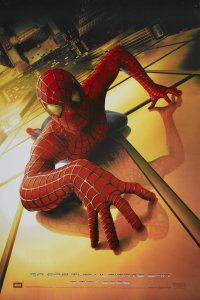 Originally released May 3, 2002:
Hollywood take note, Spider-Man is the prototype for a summer popcorn movie. It has all the necessary elements. It has exciting action, great effects used effectively, characters an audience can care for, a well toned story that gives shades of humanity to those onscreen, fine acting and proper and expert direction. I recommend movie execs take several note pads and go see Spider-Man (if they can get in one of the many sold out shows). What summer needs are more movies in the same vein as Spider-Man, and less Tomb Raider’s and Planet of the Apes.
Peter Parker (Tobey Maguire) is a dweebish photographer for his school yearbook clinging to the lowest rung of the popularity ladder. He lives with his loving Aunt and Uncle who treat him like a son. Peter has been smitten with girl-next-door Mary Jane Watson (Kirsten Dunst) ever since he can remember, but he’s been too timid to say anything.
At a field trip to the genetically altered spider place (there’s one in every town) Peter is snapping pictures when he is bitten by one of the eight-legged creatures. He thinks nothing of it and awakes the next day to a startling change. He has no need for his rimmed glasses anymore and has a physique that diet ads would kill for. He also discovers he can cling to surfaces, jump tall building in a single bound and shoot a sticky rope-like substance from his wrists. Hairs on his palms and shooting a sticky substance from his body? Hello puberty allusion! Peter tries to use his new abilities to win the girl and when that doesn’t work out he turns to profiting from them. He enters a wrestling contest in a homemade costume and proceeds to whup Randy Savage. Following the fight Peter’s Uncle Ben is dying after being involved in a car jacking Peter inadvertently let happen. Haunted by grief Peter becomes Spider-Man and swings from building to building as an amazing arachnid crime stopper.
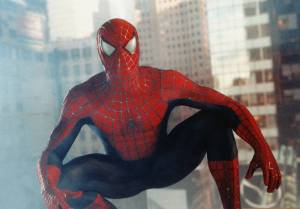 But every hero needs a villain, and that is personified in the Norman Osborn (Willem Dafoe), scientist and businessman. Osborn is experimenting with an aerial rocket glider and a dangerous growth serum. When the military threatens to cut his funding and shop elsewhere Osborn haphazardly undergoes the serum himself. What it creates is a duality of personalities; one is Norman, the other is a sinister and pragmatic one. The evil alter ego dons the glider and an exoskeleton suit and calls himself the Green Goblin. The Goblin destroys all that are in his way, and has his yellow eyes set on the pesky Spider-Man.
The casting of mopey-eyed indie actor Tobey Maguire over more commercial names like a DiCaprio or a Prinze Jr. (I shudder to think of a Freddie Prinze Jr. Spider-Man) left some people scratching their heads. Of course the casting of Mr. Mom to portray the Dark Knight likely got the same reaction in the 80s. Maguire plays the nerdish and nervous Peter Parker to a perfected awkwardness with his sensitive passivity. When he explores his new powers with exuberant abandon then begins crime fighting, we as an audience are with him every step of the way pulling for Peter.
Kirsten Dunst was also a surprising casting choice but works out very well. She allows the audience to fall for her along with Peter. Her chemistry with Maguire is great and could be a major reason why rumors have surfaced about the two leads taking the onscreen romance off screen.
Willem Dafoe is one of the creepiest actors in the business (though he made an effective creepy-free Jesus) and delves deliciously headfirst into the cackling menace of Spider-Man’s nemesis. Dafoe, with a face that looks like hardened silly putty and jutting rows of teeth, relishes every maniacal glare and endless evil grin. But instead of being one-note he adds certain amounts of sympathy and understanding as Norman Obsorn. No one could have done this role better than Dafoe.
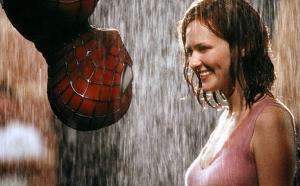 Director Sam Raimi was most known for his cult splatter house Evil Dead series, but he’s got a new resume topper now. Raimi was chosen over a field of directors because of his passion for the character and story. Raimi brings along integrity but with a joyous gluttony of spectacular action sequences. He expertly handles the action and daring-do all the while smoothly transitioning to the sweet love story. He has created the movie Spidey fans have been dreaming of for 40 years.
Spider-Man swings because of the respect the source material has been given, much like 2000’s X-Men. The story follows the exploits of the comic fairly well but has some stable legs of its own. The multitudes of characters are filled with life and roundness to them, as well as definite elements of humanity. You can feel the sweet romance budding between the two young stars, the tension and affection between Osborn and son, but also the struggle with Norman and his new sinister alter ego.We all know villains are the coolest part anyway. Isn’t that the only reason the last two Batman films were made?
There’s the occasional cheesy dialogue piece but there is that one standard groaner line. In X-Men it was Halle Berry’s query about what happens when lightening hits a toad. In Spider-Manit was the response to the Green Goblin’s offer to join him, to which he asked “Are you in or are you out?” (Obviously channeling George Clooney). The dreaded response: “You’re the one who’s out Goblin. Out of his mind!” Sigh. Maybe a well placed “freaking” before “mind” would have made the line better.
Spider-Man is the best kind of popcorn film: one that leaves me anxiously anticipating the sequel (which will come out two years to the day the first one was released).
Nate’s Grade: A-
——————————————————
WRITER REFLECTIONS 20 YEARS LATER
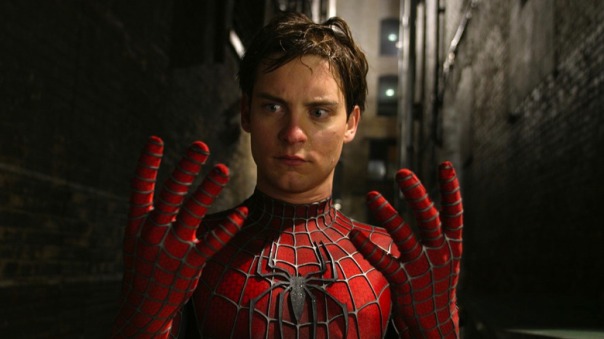
Twenty years ago, 2002’s Spider-Man changed the landscape of studio blockbusters. Since swinging into theaters twenty years ago, we’ve gone through three different actors playing three different Spider-Men in three different franchises, plus an Oscar-winning animated movie, and oodles of toys. If X-Men’s success in 2000 made Spider-Man possible, then Spider-Man’s record-breaking success, the first film to earn more than $100 million in a weekend, made the Marvel Cinematic Universe, the defining chain of blockbusters for our age, possible. X-Men provided a template and Spider-Man was the confirmation for those curious bean counters in studio offices. From there, it was a gold rush to secure their own superhero franchise. Universal launched Hulk. Fox launched Daredevil and the Fantastic Four. Warner Brothers started trying to reboot Batman and Superman again. It was an IP scramble and not every property proved worthy (see: 2004’s Catwoman, or better yet don’t see it). For better or worse, 2002’s Spider-Man ushered in the modern era of superhero mega blockbusters. Now with twenty years of hindsight and influence, it’s interesting to go back to the OG Spider-Man, especially after the nostalgic revisit with 2021’s Spider-Man: No Way Home, and see why this movie was so successful.
Created in 1962 by Steve Ditko and Stan Lee, the friendly neighborhood Spider-Man took a circuitous path toward big screen stardom. He had a popular cartoon in the 1970s, a cheesy U.S. tv show, and Lee even licensed the character into a 1978 television series in Japan that is well and truly insane. The main character is a racer injected with alien blood, from planet Spider no less, who leaps into a giant robot to fight giant monsters (it’s basically Power Rangers before Power Rangers). Legendary genre house Cannon Films bought the film rights and then sold them to Carolco, the studio killed by Cutthroat Island’s bombing in 1995. Carolco reached out to reported king of the (blockbuster) world James Cameron to rewrite an existing draft with Peter in college. He envisioned Edward Furlong as Perter Parker and Arnold Schwarzenegger as Doctor Octopus. Later, his new Spider-Man script was reset in high school, brought back in a previously absent Mary Jane, and involved Electro and Sandman as the primary villains, and apparently was going for an R-rating with language and an intended sex scene between Peter and Mary Jane on the Brooklyn Bridge, which brings into further question his organic web-shooting inclusion.
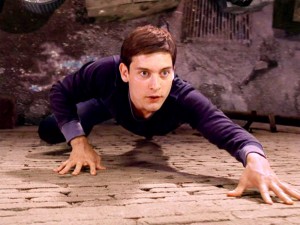 It all fell apart when it was revealed Carolco didn’t actually own the full rights to Spider-Man. After Carolco’s bankruptcy and the ensuing legal wrangling, Sony eventually ended up with the rights for a deal that is absolutely brutal in retrospect: a mere $7 million plus five percent of film grosses and half of merchandising. That’s it. For a character that earns over a literal billion dollars a year in merchandise even when there are no movies being released. As of this writing, No Way Home has made almost two billion dollars world-wide at the box-office.
Sam Raimi was picked as director because he was so passionate for the project, owning over 20,000 comic books and knowing the character and his universe inside and out. It’s not like Raimi was some schlub that Sony just drafted from the street in a contest either. The man was a genre visionary from the beginning with the chaotically kinetic Evil Dead movies. When the studios were unsure about tapping him for comic book movies, Raimi decided to make his own with 1991’s Darkman, a gloriously fun, weird, and gory Phantom of the Opera-esque action movie with Liam Neeson and Frances McDormand. After that, Raimi expanded his style by directing four very different movies in different genres (The Quick and the Dead, A Simple Plan, For Love of the Game, The Gift), and by that time the studios had come around to embracing Raimi as their trusted shepherd of coveted comic book IP. Director Chris Columbus also turned down the job first, instead opting for the Harry Potter cinematic universe. I don’t know if Spider-Man would have been as successful with anyone else at the helm. Let’s not pretend that the movie would have been a commercial failure with some other director attached (I’m sure, prior to Cutthroat Island, there was a very real chance of “Renny Harlan’s Spider-Man” – that’s right, the hits just keep on coming, Cutthroat Island). But Sam Raimi perfectly encapsulates the combination that has worked so well for other later superhero directors: passion and peculiarity.
Raimi is a first-rate visual stylist with the comedy of The Three Stooges, and I don’t mean this as a negative. He has a rare, instinctive sense, much like Cameron and Steven Spielberg, about what will play best on the big screen with a packed crowd, those kinds of blockbuster moments. The one thing you can say about any Raimi feature is that they are exploding with verve and energy. The man nailed a camera to a plank of wood and chased after Bruce Campbell in 1980, and he’s been running wild ever since. That gleeful, childlike sense of entertainment exists in a Raimi picture. His horror instincts and influences are readily apparent in his editing, tone, and setup, across all pictures and genres. Horror is such a precise genre, and Raimi knows the ins and outs of developing scares, tension, and payoffs, and he also knows that editing can make everything sing. A Raimi film might be more self-conscious with its antic camera angles, movements, and editing, but this man is a natural conductor of the chaos of moviemaking. He is a natural for big stages and has only made one movie for less than a hundred million in the last twenty years (2009’s throwback, Drag Me to Hell). It’s also a little disappointing that Raimi has only directed one movie in the last 13 years (2013’s failed franchise-starter, Oz: The Great and Powerful).
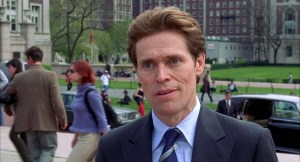 Raimi’s movies also have a deep sense of humor, twisted and loony, not afraid to get gross or goofy. When I watched Drag Me to Hell, his first film after leaving Peter Parker’s orbit, I was busting a gut as often as my stomach was churning. Raimi’s Spider-Man 2 sequence where Doctor Octopus (Alfred Molina) awakens and his cybernetic arms slaughter the doctors has been repeatedly re-evaluated in social media circles as a nigh perfect sequence. Raimi isn’t afraid to veer to the edges of what is considered conventional; he’s not afraid to be goofy just as he’s not afraid to be sincere. This is a director who embraces his peculiarities but also has a reverence for visual storytelling and blockbusters. With the exception of Oz, I cannot recall a Raimi film that just felt like a slapdash work-for-hire job. The man has a signature style. It was what Marvel insisted they wanted when they hired him to direct the Doctor Strange sequel (now in theaters!). Finding auteurs with peculiar sensibilities, zany humor, and new ideas for studio projects is what has allowed directors such as Joss Whedon (Avengers), James Gunn (Guardians of the Galaxy), Taika Waititi (Thor: Ragnarok), and Jon Watts (the Tom Holland Spidey films) to flourish.
Revisiting OG Spider-Man, we have two more versions of this universe to compare with, three if you count the animated escapades of 2018’s Into the Spider-Verse, so some things just seem a little more quaint, like an old story from your childhood. Part of this is because the character and his lore have become as familiar in popular culture as Batman or Superman. That’s why the Holland version skipped the origin part of how Peter Parker got his super powers and lost his dear old dead Uncle Ben (just like we don’t need to ever see Batman’s parents die onscreen again). The first two Spider-Man films still hold up; I re-watched Spider-Man 2 shortly after 2017’s Homecoming to see which was the overall best Spider-Man film, and it was still very good. They’re earnest and cheesy but easily transporting and you feel the passion for those involved. Raimi clearly loves this character and wants you to love him as well, and we do. There are a few moments that just speak to the dated nature of culture from twenty years hence, like Peter Parker cracking an unfortunate homophobic joke about his wrestling opponent. The special effects are still strong throughout and benefit from Spider-Man’s costume lacking exposed skin. The action sequences are a bit tame and especially lacking compared to even later Spider-Man films.
Maguire might even be regarded as the least favorite Spider-Man actor at this time after the successful revamping of Andrew Garfield’s version from No Way Home. He stands out from Garfield and forever boyish Holland. He was 26 when he began playing Peter the high schooler. His prior indie film roles would make him seem more likely to be cast as a moody school shooter than as a clean-cut superhero (I guess it worked for Ezra Miller), and the fact that he pulled it off is a credit to both Maguire and Raimi. Maguire hasn’t been able to escape the long shadow of Spider-Man and he seems to be fine with that, having only appeared in one movie since 2014. The conniving celebrity poker player that Michael Cera played in Molly’s Game is believed to be Maguire in real life. Dunst was maligned throughout the original trilogy and you can clearly see her disinterest in the character. To her credit, this iteration of Mary Jane is fairly one-dimensional. She’s little more than the object of Peter’s desires and a damsel to be saved. Dunst has become a much more interesting actress after shedding the Spider-Man universe with Melancholia, season 2 of Fargo, and The Power of the Dog, earning her first Oscar nomination.
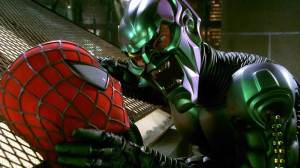 Dafoe had to beat out many actors for the role that seems perfected by him. Raimi intended for Billy Crudup (Almost Famous) to be his Norman Osbourn but the producers worried Crudup was too young to portray a middle-aged scientist. Dafoe’s normal face already resembles the Goblin mask. He demanded to do as many of his stunts as possible, and apparently he was a natural learner with the Green Goblin’s winged glider. Dafoe loved the part so much he begged Raimi to find ways to include him again even after his character died. I grew to love him even more after No Way Home reminded everyone of the mental anguish of Norman, a man torn apart by his demons. Dafoe is so maniacal and vulnerable and indispensable in this role. It’s no wonder they even bent space and time to have him generously visit us once more.
I was worried that my older review from 2002 was going to be overly flattering, gushing about what the filmmakers had gotten right and a little too pleased with results that haven’t aged as well with so many others running with what Raimi and company established. It’s still a solidly enjoyable movie that moves along at a steady pace and still finds time to have important character moments so that the quiet still matters paired with the spectacle. We’ve had a generation grow up with the Maguire Spider-Man trilogy and for many of us these early superhero films have a special place in our hearts. There’s a nostalgic factor. The first Spider-Man was more successful in creating an exciting kickoff than X-Men, though that film had bigger hurdles in adaptation, and it still has a lasting appeal at its core because of the skill and passion of the filmmakers involved. I’m very curious about revisiting 2007’s Spider-Man 3, where it all fell apart and seeing if it’s due some begrudging respect, though I doubt it (I know what I’ll be watching in 2027). Spider-Man is a little dated but still swings mighty high.
Re-View Grade: B+
Share this:

Sonic the Hedgehog 2 (2022)
 While not as enjoyable as the first outing, Sonic 2 mostly fulfills what you would be looking for with a sequel. This is the kind of kids movie that is aimed primarily for the little ones, and that’s okay, not every movie intended for children has to work on multiple levels of maturity. We follow our signature alien speedster as he meets two of the other famous faces from the video game franchise, Tails (voiced by the game’s original actress) and Knuckles (Idris Elba), except Knuckles is working with a returned Doctor Robotnik (Jim Carrey) to find a hidden gem of ultimate power. The plot is just a disposable excuse to set up some big screen adventure-seeking, and everything is kept at a very low-stakes realm of entertainment, breezy and quippy and pleading with you to just accept it on its own minor terms. At points, the Sonic sequel can feel like a direct continuation of its predecessor and Carrey is once again the MVP. I enjoyed the Knuckles character because the screenwriters have made this new alien warrior very much like the literal-minded himbo, Drax (Guardians of the Galaxy). Plus I just enjoy Elba’s natural British voice. The length of the movie is a bit padded at over two hours, a full twenty minutes longer than the 2020 original, and the attempts at heart feel strictly boilerplate and perfunctory. The subplot about a destination wedding in Hawaii feels included just to give the humans something to do away from the action, and while I enjoyed Natasha Rothwell (Insecure) getting to go full avenging bridezilla ham, this stuff could have easily been cut as much as it matters to the bigger picture of world-saving and robot-smashing. If you were a fan of the first Sonic movie, which I found to be a pleasant surprise, then you’ll likely relive those same feelings but just a little less potent. It’s still a fun, agreeable kids movie and one that can be enjoyed on that level even by adults, though the fun just might not be the same size as before.
Nate’s Grade: B-
Share this:

Everything Everywhere All At Once (2022)
 Even after only two movies, I would trust the directing duo Daniels (Daniel Kwan and Daniel Scheinert) with any movie. They have earned a lifetime pass from me. If these men can make the farting corpse of Harry Potter not just one of the weirdest movies of 2016, not just one of the best films of that year, but also one of the most insightful toward the human condition, then these men can do anything. It’s been six long years for a follow-up but it sure has been worth it. Everything Everywhere All At Once is, to be pithy, a whole lot of movie. Everything Everywhere (my preferred shorthand from here) is a miracle of a movie. It’s a wonder that something this bizarre, this wild, this juvenile, this ambitious, and this specific in vision could find its way through the dream-killing factory that is Hollywood moviemaking. This is the kind of movie you celebrate for simply existing, something so marvelously different but so assured, complex but accessible, and deliriously, amazingly creative. I’m throwing out a lot of adjectives and adverbs to describe the experience of this movie and that’s because it filled me with such sheer wonder and divine happiness. I am thankful that the Danirels are making their movies on their terms, and two movies into what I hope is a long and uncompromising career, I can tell that both of these gentlemen deserve all the accolades and plaudits they have coming. I’ll try my best not to sound like a simpering moron while I try to explain why this movie is so thoroughly outstanding.
Evelyn (Michelle Yeaoh) is a middle-aged Chinese immigrant who is taking stock of her disappointing life. She and her husband, Waymond (Ke Huy Quan), own a floundering coin-operated laundromat. They’re under audit by a dogged IRS agent (Jamie Lee Curtis). Evelyn’s disapproving father, Gong Gong (James Hong, still so great even into his 90s), has moved from China to live with the family, and he was never a fan of Waymond, looking down on his daughter for marrying the man. Then there’s Joy (Stephanie Hsu), Evelyn and Waymond’s twenty-something daughter, who wants to bring her girlfriend to dinner but mom still doesn’t accept her daughter’s queerness and uses the excuse of Gong Gong’s generational disapproval. Then, at the IRS agency, Waymond’s body is taken over by another Waymond, Alpha Waymond, who informs Evelyn that she is the key to saving a universe of universes, and she’ll have to tap into her alternate selves and their abilities to battle the evil destroyer, Jobu Tupaki, who wants to destroy all existence, and who also happens to be an alternate universe version of Joy.
 Multiverses are definitely all the rage right now as they present nostalgic cash-grabs and cameos galore, but Everything Everywhere is a multiverse that is personal and specific. It’s based on all the paths the protagonist never took, and each allows her confirmation of what her life could have been, often more glamorous or exciting or initially appealing. A movie star. A famous singer. A ballerina. A skilled chef. Evelyn is a character paralyzed by the disappointment of her life’s choices, the malaise that has settled in, and the nagging feeling that things could have and should have been better. In one of the best jokes early on, Evelyn is told she’s the Chosen One not because she is special but because she is, literally, living the worst of all possible lives of the multiverse of Evelyns (then again the pinata Evelyn didn’t look like an upgrade). She has taken all the many bad paths and dead ends, but this positions her as the only one who has the power to tap into every other power and ability from her multiverse duplicates. It’s one thing to be feeling like you should have made a different choice in the past, and it’s another to get confirmation. This backhanded revelation could just serve as its own joke but it actually transforms into a philosophy that coalesces in the final act, that of all the universes and possibilities we could have had, the best one is the one we are actually present for. In another universe, one very much styled like In the Mood for Love, where a Waymond who was rejected by Evelyn long ago reconnects with her, mournful of what could have been, and says, “In another life, I would have really liked doing laundry and taxes with you,” in reference to Evelyn’s dismissive summation of what his unrequited romantic “what if” would have lead to. It’s such a poignant moment. By the end of the movie, it’s become a journey of self-actualization but tied to self-acceptance, where kindness and empathy are the real super weapons and the answer to the tumult of postmodern nihilism.
Smartly, the Daniels have made sure that a universe-hopping threat is actually connected to our hero in a meaningful manner. By making the villain an alternate version of Joy, it raises the stakes and forces Evelyn to have to confront her own parenting miscues and frayed relationship with her daughter. It’s the kind of decision-making that reinforces the emotional and thematic core of a movie that is spinning so fast that it feels like you might fall off and vomit new colors. Joy is an avatar of generational disconnect, inherited disappointment and resentment, but what really makes her relatable is the growing feeling of being over it all. Given the power to see everything in every universe, Joy concludes that life is overwhelming and without meaning. It’s the same sort of nihilism we might feel today as we doom scroll through our phones, eyes glazed over from the barrage of bad news, outraged click bait, and feeling of abject helplessness while the world spins on in an uncertain direction. It’s not hard to feel, as Joy, that it’s all too much to bear, and if she can experience everything then does it present value to anything? If she can always just sidestep to another universe, what does that do to the value of life? That’s the ethical conundrum with Rick and Morty, a show where they can swap characters from other dimensions to fix more costly mistakes. What Daniels attempts with Everything Everywhere is to tackle the same question but approaching a different answer: that despite everything, life matters, our relationships matter, and kindness and empathy matter most. Watching Evelyn and Joy, and their many different versions of mother and daughter, try to reach an understanding, it’s easy to feel that struggle and relate to wanting to feel seen. As Evelyn encouragingly says to one character at their lowest point, “It is too much to handle, yes. But nobody is ever alone.”
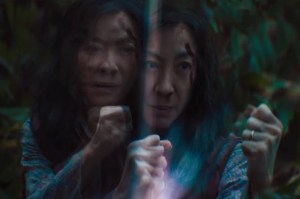 This is a dozen different kinds of movies, all smashed together, and each of them is utterly delightful and skillfully realized and executed. If you like martial arts action, there are some excellent fight sequences including a showstopper where Waymond wrecks a team of security guards with a fanny pack. The action is exciting and the martial arts choreography is impressive and filmed in a pleasing style that allows us to really appreciate the moves and countermoves. If you like wild comedies, there are many outlandish moments that combine low-humor and highbrow references. I’ll simply refer to one as finding payoffs for IRS auditor trophies shaped like butt plugs. This is one of the funniest American comedies in years. If you like family dramas, there is plenty of conflict across the board between Evelyn and Waymond and Joy, plus the specter of Gong Gong, and each person trying to communicate their dissatisfaction and desires for a better life. If you removed all of the crazy sci-fi elements, googly eyes, people’s heads turning to confetti, and what have you, this would still be a compelling human drama. When the movie isn’t working through ridiculous tangents, or eye-popping action, or a staggering combination of kitsch and intelligence, it’s building out its emotional core, the heart of the movie, the thing that makes all the gee-whiz fun matter, the family in flux. Likewise, this is a powerfully optimistic movie, life-affirming in all the best ways without being pandering, and one that is without any flash of ironic condescension. Sincerity is powerful and all over.
The movie is elevated even higher by the strength of the performances. Yeoh (Crazy Rich Asians) has spent decades as a martial arts master, and of late she’s been branching out in more demanding dramas, but this is easily the finest performance of her career for nothing less than playing a dozen different characters. She is sensational. The early Evelyn is full of despair and regret, and as she gets to explore each new version of herself, there’s an excitement that’s bristling, as she gets to see the successes she could have been and celebrate. Yeaoh is hilarious and deeply affecting in the central role and still very much a badass. She showcases starting range, it makes you weep that she has never gotten to play so many different kinds of roles because she’s so good at all of them. Hsu (The Marvelous Mrs. Maisel) is the wounded soul, and her sneers and seen-it-all attitude are killer without losing track of the pain at the core of the character. Her emotional confrontations with her mother still hit hard. But the secret weapon of this movie is Quan, the former child actor best remembered as playing Data in The Goonies and Short Round in Temple of Doom. Yes, that same actor. He too gets to play such a wide, wild variety of Waymonds, from the doting and meek husband, to the confidant warriors, to the smoldering former flame, but with each new Waymond, Quan makes you fall in love with the original more. The character of Waymond and his central philosophy of kindness is so moving and needed, that we almost get to fall in love and re-evaluate this man the same way Evelyn does. Also of note, Curtis (Knives Out) is having an absolute blast as her menacing IRS agent.
 It’s truly amazing to me that a movie can have some of the silliest, craziest, dumbest humor imaginable, and then find ways to tie it back thematically and make it yet another important thread that intricately ties into the overall impact of the movie. The genius of Daniels is marrying the most insane ideas with genuine pathos. Take for instance that one of the many multiverses involves people with hot dogs instead of fingers. It’s a goofy visual, and it could simply have been that, a passing moment to make you smile, but the Daniels don’t stop there. They continue developing their ideas, all of their ideas, and find additional jokes and purposes few could. Okay, so this is a big divergence from history, so how could humans evolve to have hot dogs for fingers? Well the movie actually showcases this moment in a hilarious 2001: A Space Odyssey reference. And then the film says, “Well, if this was the way of life, what other practices would evolve from here when it comes to communication and intimacy?” It’s that level of development and commitment that blows me away. The same with what starts as Evelyn’s misunderstanding of the Pixar movie Ratatouille. It works just as a joke in the moment, but then it comes back as its own reality, and even that reality has a thematic resonance by the end. This level of imagination, to take the weirdest jokes and make them meaningful, is special. In one second, I can cry laughing from a raccoon and in the next second a rock can make me want to cry. In essence, even though Everything Everywhere is beyond stuffed, nothing is merely disposable.
That doesn’t mean that the film doesn’t also fall victim to repetition at points. My only criticism, and it might even be eliminated entirely after a second viewing, is that Daniels can over indulge when it comes to their narrative points. Some things can get stretched out, so that they hit points with five beats when three could have been sufficient. It’s this kind of mentality that pushes the running time to almost two hours and twenty minutes, which feels a bit extended. However, the messiness and overstuffed nature of the movie is also one of its hallmarks, so I don’t know if this criticism will even register for many, especially if you’re fully on board their wacky wavelength.
If you can, please go into Everything Everywhere All At Once knowing as little as possible. The carousel of surprise and amazement is constant, but the fact that there is a strong emotional core, that all the many stray elements become perfectly braided together, no matter how ridiculous, is all the more impressive. This is stylized filmmaking that is very personal while also being accessible and universal in its existential pains and longing. It’s style and substance and exhilarating and genius and emotionally cathartic and moving and everything we want with movies. It’s the kind of movie that reignites your passion for cinema, the kind that delivers something new from the studio system, and the kind that deserves parades in celebration. Simply put, as I said before, this is a miracle of a movie, and you owe it to yourself to feel this blessing.
Nate’s Grade: A
Share this:

The Bubble (2022)/ Moonfall (2022)
 What to do with a comedy that just isn’t that funny? I come to co-writer/director Judd Apatow’s The Bubble with a rhetorical surgeon’s scalpel ready to figure out this conundrum. There are plenty of funny people involved with this Netflix project. Apatow has been an industry unto himself in developing comedic talent going back to his Freaks and Geeks TV days and with such heralded twenty-first century comedies to his credit like The 40-Year-Old Virgin and Knocked Up. The cast assembled for The Bubble has great comic potential. Even the premise is fun, a group of spoiled actors trying to film a bad sci-fi action movie under the challenges of the COVID-19 quarantine. So what went wrong here and why is The Bubble Apatow’s least engaging and least funny movie to date?
We follow the Hollywood production of Cliff Beasts 6, filming in rural England under the supervision of studio execs trying to keep the secluded production as problem-free as possible under the 2020 COVID outbreak. Karen Gillan (Avengers Endgame) plays Carol Cobb, an actress returning to the franchisee she had once left behind to star in a misguided Oscar bait movie where she, a white woman, was the solution to solving the Israeli-Palestinian conflict. She’s hoping to save her career, while her coworkers are just hoping not to go insane with the forced isolation and new safety protocols during their film shoot.
 So let’s circle back to the central question of why The Bubble isn’t funny, and I think I have some theories. First, we can acknowledge comedy is subjective but at the same time also acknowledge that the construction of good comedy can be academically identified and appreciated, that there are tenets that hold and maintain, like setups and payoffs, rules of threes, etc. I think one of the big problems is that nothing is really that surprising throughout the protracted and unfocused duration of The Bubble.
The characters are intended to be shallow but are too shallow to even register as distinct comedy types played against one another. There are levels of general buffoonery, but so many of these characters are missing out on a more definite angle or perspective. Take for instance the smug movie star (David Duchovny) who takes it upon himself to rewrite the script. This should be an obvious route where the story comes undone or character actions are inconsistent or that other characters, especially those who had larger roles, become subservient to the star and his ballooning ego. There needs to be distinct differences for the comedy to land and be an indication of his ideas about what he thinks would be an improvement. This doesn’t really happen. Take the recent Oscar winner (Pedro Pascal). He’s not haughty and pompous, thinking himself beneath this kind of genre filmmaking. He’s simply a dumb hedonist who is seeking out pleasure he is denying himself. That’s fine, as at least one character is set up to be more of a wild card to stir trouble. This character spends the entire movie whining and having unfunny fantasies when they should be the one causing havoc and unexpected consequences from their behaviors. What a waste. Every character falls into this nebulous underwritten area without being distinct enough to be considered stock and ultimately useful for comparisons and generating comedic conflicts.
Another lack of surprise is how every character is exactly how they are presented, so with no points of change it all gets very redundant. If this was going to be the case, Apatow needed to be far more exacting with his satirical barbs. If he wants to really send up the industry and self-absorbed actors, we need something akin to 2008’s Tropic Thunder, which, by the way, had very distinct character differences it used for maximum comedy. This movie feels more like an extension of the privileged world populated by the bourgeoisie characters from 2012’s This is 40, a marked misstep for Apatow and his idea of recognizable midlife struggles (“Oh no, we’ll have to move from our ridiculously large house to… just a very large house!”). It’s the same pitiable rich people whining about their lives while they quarantine in luxury. Watching montage after montage of them being bored in their private hotel suites is not funny. It doesn’t even work as a criticism of the characters on display. They aren’t doing anything out there or particularly telling, they’re just being bored, and just watching bored people is boring.
 The moviemaking process and the film-within-a-film itself is also shockingly unfunny. Apatow has worked in Hollywood for decades, so I was expecting harder-hitting satire of the moviemaking industry and the way that films are continuously compromised. As another example of shallow character writing, take the director (Fred Armison), a Sundance award-winning indie artist tackling their first studio project. The expected route would be to start with this character having big ideas about a grand artistic vision, taking real chances, and trying to do something different and compelling within the realm of giant dinosaur action movies, and then little by little, they have to compromise and delete this grand vision, taking studio notes, limitations from the actors, and bad luck. This would provide a foil for every bad item complicating the production, the artist struggling to watch their dream die piece-by-piece. This doesn’t happen and the director’s indie background is never utilized as a contrast for comedy.
Apatow plays the same trick over and over with the film-within-a-film. It will be a dramatic sequence and then cut to the actors running on a treadmill or swinging behind a green screen, the same undercutting gag on repeat. It’s not funny and, frankly, gets tiresome. The ridiculous nature of blockbuster filmmaking should be ripe for satire (again, Tropic Thunder did it) but Apatow never pushes too hard, settling on the same soft-pedaled jokes on simple characters. Pascal is left to practice funny accents, but none of what they say within the movies is funny-bad; it’s just tin-eared dialogue that is merely bad only. The only segment that genuinely had me laughing was when the young actress (Iris Apatow) teaches a raptor how to do the latest TikTok dance. This is the only moment that feels biting on the out-of-touch desperation of modern moviemaking to chase and incorporate vaporous youth trends to remain hip. The Hollywood film gone awry should feel like a mess, it should be getting progressively worse or more out of control or at least something so outlandish it separates itself from its targets. I suppose shooting the CGI genitals off dinosaurs is something you don’t see every day but it too gets old fast.
 Fortunately, these actors can still be charming even with lesser material, but you’ll simply walk away feeling enormous sympathy for them. Everyone is trying to do so much with so very little, and it can get painful at points, like Pascal’s character clinging to an amorphous evolution of an accent. There are very funny people here. Keegan Michael-Key is very funny, but he gets nothing here, especially with a ripe subplot where he might be starting a self-help cult. Maria Bakalova is very funny, and was even nominated for an Oscar, a rarity for a comedian, but she gets nothing here, being a horny hotel worker. Gillan is very funny, but she too gets nothing here as a slumming actress desperate to rehabilitate her career. It’s remarkable considering she’s the main character but really just an insecure straight man role. The main character needed to be Gavin (Peter Serafinowicz), the producer on location doing his best to herd all these spoiled and irresponsible people into getting this movie made and on time. You want to focus on the character with the most chaos to try and control, and that’s him. It just feels criminal that a cast this good, with fun supporting players like Samson Kayo (Our Flag Means Death) and Harry Trevaldwyn (Ten Percent) to round out the more famous faces.
This also made me think to reflect on the recent release of Moonfall, which looks like the big, schlocky sci-fi disaster movie that Judd Apatow would be satirizing with The Bubble. It’s a Roland Emmerich disaster movie where he does exactly what Roland Emmerich does best: expansive scenes of cataclysmic destruction on the biggest scale possible. It was believed by industry watchers that Moonfall would be the kind of epic that people would go back to the movies to experience, watching the scale of destruction on the biggest screen and cheering along. It didn’t work out that way and Moonfall reportedly will lose over a hundred million dollars for its investors. It seemed like a smart bet as disaster movies have performed well for Emmerich, like 2012 and The Day After Tomorrow. In times of struggle, human beings enjoy fantasies about surviving fantastic odds, or at least that was the established way of thinking. After two years of life during COVID-19, maybe our idea of sci-fi escapism isn’t quite what it used to be.
I watched Moonfall with general indifference. It felt like a mediocre hodgepodge of other Emmerich disaster movies and veered into campy nonsense at many points. It’s the kind of movie that demands you shut off your brain and just go along with the scientific gobbledygook, especially once the moon begins making Earth’s gravity go all haywire. At that point the movie becomes an inconsistent video game with its liberal use of physics. It doesn’t seem like it matters, but watching characters do Super Mario Brother-level jumps has a fun appeal as well as being impossibly goofy. One character says, “The moon can’t do these things,” and another character waves away that pertinent thought and says, almost directly to the audience, “Yeah, but this isn’t a normal moon, so forget everything.” The special effects are also quite hit or miss. Plenty of the larger effects are quite awe-inspiring and suitably terrifying in depicting an awesome reality, and then others look like they didn’t quite have enough money when it came time to render. Some of the CGI reminded me of moments from 2008’s Torque, where the high-speed backgrounds resembled badly composited video game texture blurs. If your movie is going to exist primarily in a junk food realm, then you need to either have as minimal distractions as possible to rip you from the believability of this world, or you simply need to veer into it and accept that the instability and chaos will be part of the general appeal. Provide the goods, and Moonfall just doesn’t.
 The movie also takes an inordinate amount of time to get back to space after a prologue, almost halfway through its two hours. This first half stalls with setting up so many characters to follow that you simply won’t care about. I didn’t care what happened to anyone back on Earth. When the rednecks found our party (again!) in a petty car chase, I literally laughed out loud. The alien/moon mythology is also convoluted and vague enough to simply apply a good versus evil designation for technology, and the big sacrifice doesn’t feel so big when you find that character to be annoying for the duration of their grating screen time. It’s another movie tipping you off about a possible linked sequel and one that appears more appetizing than the film we just witnessed (just like Emmerich’s 2016 Independence Day sequel). In short, Moonfall is a bit of a mess, a mess I can imagine others enjoying and laughing with, but definitely one of the lower outputs in Emmerich’s long career of destroying global landmarks and formerly pristine vistas.
I found Moonfall and The Bubble to both be poor examples of what Hollywood thinks audiences will desire as escapism in the wake of COVID-19 disrupting routines and lives. Each of the movies is disappointing because it doesn’t fulfill what it promises. The Bubble has a bunch of combustible characters in a combustible scenario and squanders its time with weak satirical gags and lazy characterization. Moonfall wants to be the big, fun epic of Emmerich’s past, but it takes its sweet indulgent time with uninteresting characters, convoluted and underwritten lore, and a plot that would have been more entertaining had it better embraced the absurdity of its implications. You may likely have an enjoyable time watching either movie, and they’re almost the same length too, but I found both to be middling examples of Hollywood’s attempt to try and give the people what they think they want and missing the entertainment mark.
Nate’s Grades:
The Bubble: C
Moonfall: C+
Share this:

The Lost City (2022)
 It’s a new spin on Romancing the Stone and as long as the leads are charming and the movie is fun, I have no problem with rehashing this formula. The Lost City mostly succeeds thanks to the winning chemistry between Sandra Bullock and Channing Tatum. She plays a self-loathing romance author and he’s her hunky and clueless cover model, and they both get into a treasure-hunting escapade and chased by scary men with guns thanks to a crazed rich kid (Daniel Radcliffe) looking for a titular lost city of yore to bolster his own rep. The movie stays on a consistently light wavelength even when death and sudden violence occurs. That jokey mentality assures the audience that the movie will not take things too seriously, and that relaxed-yet-antic attitude translates into fairly amusing banter with our leads. The movie does a good job of spacing out its comic set pieces and keeping things moving for its short 90 minutes. Not everything works as well as the leads though. Some storylines feel underplayed or forgotten until called upon for moments that don’t feel earned. Radcliffe feels wasted as a petulant baddie without any fun or memorable angle. One of the best aspects is what happens to the movie’s surprise cameo (spoiled via the movie’s own trailer) but the ending resolution of this feels entirely pointless and undercuts its nerve. It’s a movie that delivers exactly the kind of experience it advertises, and it’s nice to still be able to see a comedy in theaters lifted by the appeal of two stars having a ball together. The Lost City is a formula rom-com with enough good-natured screwball comedy and enjoyable zaniness to coasts on charm and star power.
Nate’s Grade: B


 nathanzoebl
You must be logged in to post a comment.