Category Archives: 2010 Movies
She’s Out of My League (2010)
 This is a fairly lackluster, flaccid, infantile comedy that aims to follow the same Judd Apatow formula of equal parts heart and raunch. Where this movie utterly fails is its choice of lead. Jay Baruchel (Tropic Thunder) is not a good leading man (his voice is very nasally and hard to listen to at times), but worse, his character, Kirk, is a callow, simpering, snot-nosed dolt. He has a dearth of a personality; he’s constantly berating himself or groveling for support by his oblivious family and mean ex-girlfriend. You simply don’t care. Kirk is not a guy worth watching. There’s empathy and then there’s pity. The movie wants to be a “nice guy gets the girl” story, but instead She’s Out of My League is a “guy with zero self-esteem and charisma gets the magazine cover model” story. At least in Apatow productions, the schlubby leads had personalities and redeeming qualities. I started enjoying the respites away from Kirk, time spent with his callous family members or his annoyingly juvenile friends. Anything to escape. The jokes have a pretty low ratio of hits to misses (an early ejaculation actually almost becomes an act break that keeps the couple apart), becoming subservient to a clichéd romantic comedy that wants to teach us that looks don’t matter. It’s what’s on the inside that counts. Have you heard that one before this week? If what’s on the inside is what matters, then She’s Out of My League has little to offer.
Nate’s Grade: C
Share this:

The Girl Who Played with Fire (2010)
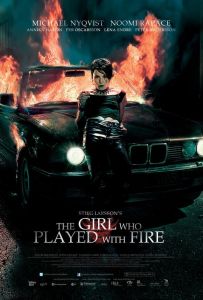 So in the few short months since The Girl with the Dragon Tattoo opened in the spring, the book series has catapulted to even new reaches of fame. It even appeared on the cover of Entertainment Weekly under the headline, “The hottest books on the planet.” I’ll take their word on that one. The Girl Who Kicked the Hornet’s Nest, the third book in late Swedish author Stieg Larsson’s series was finally released stateside, and depending upon when you read this, is probably still on the best-seller list. Larsson’s trilogy of novels is a global publishing phenomenon. The first film in the series made over $10 million dollars in the United States and was the top-grossing film in Europe last year. That says something about a 150-minute Swedish thriller with no-names attached. The Girl Who Played with Fire is the second film in the series and naturally couldn’t live up to expectations after the first smash movie. The second film is good, not great, but really whets the appetite for the concluding movie to come.
It’s been one year since the events of Girl with the Dragon Tattoo. The titular tattooed-girl, Lisbeth Salander (Noomi Rapace), has been living abroad. Her ally and one-time lover, Mikael Blomkvist (Michael Nyqvist), has been trying to get in contact with her but to no avail. Blomvist is about to publish a damning report about sex trafficking with some pretty high-profile names attached as members. The authors of the article are then executed and Lisbeth’s fingerprints are found on the gun left at the crime scene. Salander’s court-appointed guardian, the one who viciously raped her in the previous film, is also found murdered. Blomkvist is certain his companion is innocent and goes about investigating who is truly responsible. Salander comes out of hiding and back to Sweden where she tries to clear her name the best way she knows how. All roads seem to lead to a figure known as “Zala,” a Soviet spy who defected to Sweden ages ago but who has been carrying on in the shadows ever since.
 The focus with Fire in on Lisbeth Salander, which is exactly the character the audience wants to spend the most time with. Salander split duty with Blomkvist in the first film. They were equals, but a crusading journalist just isn’t as interesting as a five-foot Gothic ass-kicking computer hacker. As I wrote: “Mikael isn’t a blah character by any means but he seems to serve as an expository device, the guy who uncovers the secrets and gets to be the helpless foil to Lisbeth. I suppose for maximum narrative effect a straight man would be required to be paired with Lisbeth.” She is the star of the series so it’s a great pleasure to watch her receive oodles of screen time. The second film is significantly devoted to the history of Salander, her back-story, her father, what she did to get locked away in a mental ward (which was hinted at before). The sex trafficking murders are merely a narrative smokescreen. Being framed for the murders puts Lisbeth on defense, but the sex trafficking stuff and the high-profile johns quickly dissolve in the wake of a standard investigation into the mysterious “Zala.” The mystery of this film is really the mystery of Salander’s back-story and family tree. However, being focused primarily on Lisbeth Salander also means that everybody else gets sidelined. She’s on the run and trying to clear her name, but that doesn’t give much room for other people to contribute to the narrative. Blomkvist gets to pensively look at his computer screen a lot and always show up one step behind our heroine. The two are kept apart for nearly the entire movie.
Rapace is still the best reason to see the series. She inhabits the character with tremendous intensity and skill. If you stripped away all the aesthetics, the Goth trinkets, you would still have a vital character. As I wrote before: “There’s much more to this girl than a dragon tattoo and a spiked collar. Rapace doesn’t let the outfits overwhelm her. There’s a certain joyful recklessness to her character hidden beneath a veneer of steely coolness.” Because of her mysterious nature and painful past, Rapace must play all emotions through a prism of emotional reserve. Even though we get a lot more of Salander’s past explained, I felt like we got to know her as a character better in the first flick where she could breathe and behave “normally.” Thanks to being on the run for murder, it’s hard to argue that Lisbeth ever gets a chance to simply be her complicated self, which robs the audience of an appealing character. We project the interest we felt for her from the first film to the Salander stand-in represented in the second film. She’s still a resourceful, loyal, and cavalier presence, but the plot corners her into being a creature of action. She becomes the fantasy bisexual ass-kicking protagonist that was merely hinted at previously. That sounds like a good thing, but trust me, it does the audience a disservice to box in such a fascinating character.
 Girl Who Played with Fire is nowhere near the complete film experience that the first film offered. This movie feels like one half and the continuing half, The Girl Who Kicked the Hornet’s Nest, won’t be out until later in the fall. As such, it’s hard to fully analyze certain storylines at play. I imagine that the sex trafficking storyline will carry on with the third film because of the tease that high-profile figures in government and police offices were involved. It already establishes a conflict and a set of antagonists ready for the third film. Then again, I may be too hopeful and the storylines of interest in Part Two may be completely dropped or mishandled by Part Three (see: Matrix sequels, Pirates of the Caribbean sequels). Girl Who Played with Fire does a decent job of setting up a narrative base and establishing a one-shot villain, somebody to be dispatched by episode’s end. But the movie feels far from complete, and sadly I won’t know until later whether that incomplete feeling is from breaking up a continuing storyline or from deficits of filmmaking. There are too many loose ends with Girl Who Played with Fire for it to feel complete, and thus it cannot help but suffer in comparison to its predecessor.
Where the movie goes haywire is in its adoption of action tropes. The Girl with the Dragon Tattoo was more of a slow-burning thriller with some nasty flashes of violence. The second in the trilogy seems to take place more in the realm of action cinema, which means that things get a little preposterous. There are a lot more car chases, henchmen, fistfights, shootouts, and it almost unravels at the end. Slanader seems to transform into the Bride, sharing two key abilities from Uma Thurman?s character in the Kill Bill series (that’s about as spoilery as I want to get). Salander just becomes like a pint-sized Terminator; she’s indestructible and capable of amazing feats. It’s like the Swedes took the Hollywood edict that every sequel had to be bigger and better than the original. There’s even a lesbian love scene before the 20-minute mark, in case the audience was already getting bored (presented like something out of Cinemax late-night TV). I appreciated that the original film respected the intelligence of the audience, giving a deluge of information and characters to sort and trusting that in time we could follow along. The Girl Who Played with Fire is far less complicated in scope. In fact, it’s a fairly rote detective story that only dishes out clues when the characters need to progress. The first film actually utilized good detective work; the second film just has everything fall into people’s laps at predetermined points of need. The tension doesn’t manifest as ferociously as it did in Dragon Tattoo. For goodness sake, the chief antagonist has a hired goon that is actually a rip-off of a James Bond villain from The World is Not Enough, which was an awful Bond movie! The end focuses too much on the bloody confrontation between Lisbeth and a chief antagonist and an axe that apparently fails to mortally wound people when swung at their craniums.
 I think the switch in directors, from Niels Arden Oplev to Daniel Alfredson, has something to do with the slip in quality. To American audiences, this might not ever register, but the films have completely different tones. The turnover feels less abrupt thanks to the cast reappearing. The direction feels less focused, more casual and pedestrian, relying on that grimy green/orange cinematography that Dominic Sena (Gone in 60 Seconds) always favored so much. Here’s another thing I learned. When it’s not a snowy winter, Sweden looks pretty much like Canada. Seriously, the landscapes do nothing in this movie to distinguish it.
Now that sounds like a lot of quibbles, like I’m quibbling Girl Who Played with Fire to death. In short, it’s not as good as the first one, and the final 20 minutes proves it, but it is still a finely entertaining movie. Even with a less complicated plot, the movie manages to be smarter than most of its Hollywood brethren. It’s more an action movie than a dark, lurid thriller like its predecessor, which means there will be certain limitations on the use of your brain. But the movie plays off our residual good will from the last one, it’s interesting enough, and Lisbeth Salander is rightly the star, so it’s enough to forgive. We’ll see in the fall whether The Girl Who Kicked the Hornet’s Nest can provide a satisfying close to the popular series. As proven, never count Salander out.
Nate’s Grade: B
Share this:

Knight & Day (2010)
 Imagine a James Bond movie from the point of view of the Bond girl. That’s the premise for the curiously titled Knight and Day, a mostly breezy action movie that really resembles a romantic comedy with guns. It works thanks to the chemistry between Cameron Diaz (Bond girl) and Tom Cruise (super agent). She’s engulfed in a sketchy international spy caper that is replete with typical stock characters (sleazy agents, kooky scientists, angry authority figures). The movie, under the direction of James Mangold (3:10 to Yuma), tried too hard to be lighthearted and can veer from confidant to indifferent. The film is told from Diaz’s point of view, which means there are chunks of the movie where the action occurs off screen, which will naturally disappoint people. There’s one montage where Diaz has been drugged and she keeps going in and out, waking up to a different dangerous situation. It’s meant to be satiric but it might also frustrate. The action sequences, on whole, are well paced and make use of their exotic locales. Knight and Day doesn’t fully work due to its leaps in tone from satire to sincere romance, the on/off switch for the law of physics, and introducing a secondary antagonist far too late in the film. Cruise lays out a full-on charm offensive. You’re reminded that this man is a movie star, and Cruise has fun tweaking that image as well as the public perception over his mental state. His character may be crazy after all, but Cruise is having serious fun and you might too watching the man with the million-dollar smile.
Nate’s Grade: B
Share this:

When in Rome (2010)
 When in Rome, do not do as this banal movie does. Know what kind of movie you’re in for? There’s an audio record scratch/slowdown effect twice in the first ten minutes. Kirsten Bell (Forgetting Sarah Marshall) is an unlucky in love workaholic who, when in Rome, pilfers coins from the Fountain of Love. This makes the subjects who tossed the coins (Jon Heder, Dax Shepard, Danny DeVito, Will Arnett) magically fall in love with Bell. They chase her back to New York and act like obsessive stalkers. Essentially, this is a rip-off of Love Potion Number Nine, except this rom-com is neither romantic nor comedic. The comedy is mostly brain-dead slapstick and the payoffs never materialize. In one scene, Bell and a date go out for a “night dinner” where they eat completely in the dark. There’s plenty of potential there but it’s like a minute until her posse of stalkers interrupt and the date’s over. There’s stuff like people running into trees, people squeezing into a tiny Italian car, a vase that’s supposed to break as a wedding celebration and refuses to break, and Bell and her lead, Josh Duhamel, have zero chemistry and like a three feet height differential. The movie is so joyless and bereft of energy. The scripts seems to be missing many scenes that fill in details about the various characters, or at least help give setup and context. The movie exists squarely in the absurd realm of romantic comedies and it’s thoroughly mediocre. I would expect nothing less from the writers of Old Dogs. I enjoy Bell but it’s not hard to resist the spell of this junk.
Nate’s Grade: C-
Share this:

Micmacs (2010)
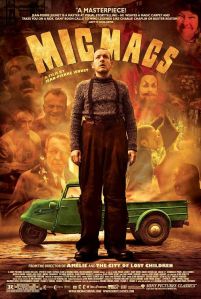 So what exactly does Micmacs even mean? A cursory search online brings me a few definitions: 1) a Native American Algonquian group living in Canada and upper New England, 2) the Algonquian language of the Micmac. That doesn’t exactly clear things up, especially considering that Mimacs is a French movie by the famed filmmaker Jean-Pierre Jeunet. An interview with the director has him explaining that the title is French slang for a mixture. That seems appropriate since the film is a mélange of the director’s other works, high on inventiveness and visual whimsy. Except the one thing Jeunet strangely left out this time was a reason to care amidst the high-powered shenanigans.
Bazil (Danny Boon) is a bit down on his luck. A landmine killed his father when Bazil was a child. He drifted through life, got a job at a video store, and then got a bullet in his brain thanks to a drive-by shootout. The doctors decided to leave the stray bullet inside or else Bazil will become catatonic. Bazil eventually is adopted by a batch of homeless misfits living in a junkyard. They accept Bazil and encourage him to seek vengeance against the warring arms dealers responsible for the land mind and stray bullet. Bazil and his colorful new family plot to antagonize the arms company CEOs. They come up with crazy schemes to then frame on the rival CEOs to escalate tensions. Bazil and crew intend to expose these men and their corporate crimes to the world.
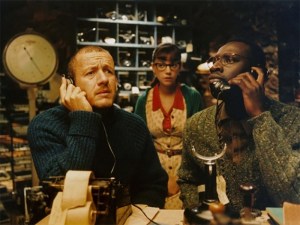 Micmacs succeeds where Rian Johnson’s Brother’s Bloom dangerously came close, and by that I mean that Micmacs overdoses on whimsy and I pronounced it clinically dead about an hour in. It’s too much; it’s just too much. Jeunet has always created movies that existed in rich, idiosyncratic worlds but those worlds always felt lush and lively and bursting with wonder. What saves a movie from whimsy is an emotional connection to the proceedings. 2001’s Amelie is a perfect example of cinematic “magic realism” but it’s also a moving and emotionally rewarding love story that transcends the plucky heroine. 2004’s A Very Long Engagement was a rapturous, old-fashioned love story with flights of fancy. Now, after a long six-year absence, Jeunet seems to have lost touch with the heart. There is no real emotional entry point for Micmacs. The protagonist is pretty much a blank. Yeah, you want him to get justice and you pull for the underdogs, but at no point did I care whatsoever for any character. Most of the junkyard characters are just ideas, walking-talking heist components (the human cannonball, the girl whose brain is good at math, the toy maker). Several characters barely exist except for their specific roles in Bazil’s schemes. There’s a romantic angle with the female contortionist (Julie Ferrier) and Bazil, but that comes off as less a function of the narrative and more of a desperate “Well, who else is gonna get together?” necessity. Jeunet has put together a movie that is all surface and no polish. Sure, the movie is intermittently entertaining and has plenty of imagination, but Micmacs is without a doubt the least involving and least accomplished film from a man responsible for a fantastic output.
The tone of the film seems to hew to something like a silent movie, which might explain why all the older members in my audience were constantly giggling while I just occasionally snickered under my breath. The comedy never rises above the chuckle level. There’s plenty of controlled wackiness, nothing gets too out of hand or edgy despite the fact that the plot revolves around getting vengeance on arms dealers. I was expecting something a little darker than the cutesy oddballs that I got. The best and darkest moment in the film is when we see that one of the arms dealers collects body parts of dead celebrities (Marilyn Monroe’s molar, Mussolini’s eyeball). It’s an interesting quirk that actually reveals something about the dark heart of the antagonist. There should be more moments like this. The bullet in Bazil’s brain is barely referenced. I have no issues with whimsy when it doesn’t overwhelm the narrative, and that’s the problem with Micmacs. The story is merely the vehicle for the inventive hijinks. The story is suffocated by whimsy and visual energy, therefore there’s no room for character development. All that inventiveness takes center stage. If playfulness is all you seek in a movie, then Micmacs will likely satisfy. Jeunet still makes movies that nobody else does, but he’s fallen fall short of his own lofty standards.
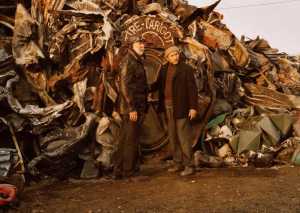 The movie moves along so quickly that it seems like every character just naturally intuits what must be done next, like they all have the screenplay in hand just off camera. Bazil is so quickly adopted by the junkyard gang. He so quickly discovers who is responsible for his life’s troubles. The schemes are so quickly thrown together. They aren’t even that complicated, mostly distracting and framing. The movie just feels like a spinning plate that has to keep moving or else everything will just break. I suppose Jeunet and his longtime co-writing collaborator Guillaume Laurant are trying to keep things busy so people won’t notice that they don’t genuinely care what happens.
This being a Jeunet film, of course it’s spectacular from a technical standpoint. Every frame of a Jeunet film can be used as a mural. His compositions delight the eye and the colorful cinematography by Tetsuo Negata (Splice) makes Paris seem like a dream city. The production design looks like it was taken directly from the Steampunk Architectural Digest magazine. You’ll never have to worry about the visual aesthetics or ingenuity of a Jeunet film. But there are plenty of artists that can master technical craft (you can find them in the world of commercials) but it takes something much more to marry technical precision in the service story and character. Micmacs is a strange film not because of plot, character, tone, or energy, but because Jeunet spent six years in absence and returned with a film that’s got plenty of style but no heart inside all that artifice.
Nate’s Grade: B-
Share this:

Eclipse (2010)
 This may be an obvious statement but I will never be a teenage girl. Shocking news to anybody who never knew of the existence of my Y chromosome. Regardless, it’s hard for me to empathize with the madness that surrounds the cultural juggernaut that is the Twilight series. I cannot work myself into a frenzy. I cannot get madly passionate about the merits of Team Jacob vs. Team Edward (though full disclosure: I lean more toward Jacob). I cannot even understand the appeal of the main character and why she’s worth every human, vampire, and werewolf fighting over her. I just can’t walk in the same shoes of the Twilight faithful and their devotion to author Stephenie Meyer’s series. I get the appeal because its adolescent wish fulfillment with the flashes of danger muted by the overall security of traditional values (the vampire wants to wait until marriage before they have sex). I fully acknowledge my divorce from this conjured reality of the Twilight series. But that doesn’t mean I can’t judge the films on their merits. The first film worked for what it was, the second one was resoundingly bad, and now the third film, Eclipse, manages to reheat the same love triangle squabbles and call it something fresh.
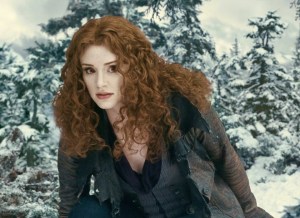
Bella Swan (Kristen Stewart) is about to graduate high school and, presumably, graduate from the human race. Her vampire boyfriend, Edward Cullen (Robert Pattinson), has pledged to grant her wish and make her a vampire so they can truly be together forever. Bella’s friend/werewolf/ab model Jacob (Taylor Lautner) is vehemently against this plan. He wants Bella to be with him instead. He’s the safer choice and she doesn’t have to become dead for a happily ever after. Bella is torn between her two romantic options, again. However, Victoria (Bryce Dallas Howard) is out their plotting vengeance against Bella and the Cullen clan of “vegetarian” vampires. She’s creating an army of newborn vampires in Seattle. The army is so powerful that the Cullens reach out to the werewolves for an alliance. Mortal enemies comes together, including feuding paramours Edward and Jacob, to protect Bella and vanquish Victoria once and for all.
 For starters, stuff actually happens in the third Twilight movie. I know that’s a fairly damning comment in itself that one must wait until the third movie for action. But here’s the thing: the plot fails to advance more than an inch. At the end of New Moon, Bella pretty much made her choice when she decided to whisk to the other side of the earth at the very utterance of Edward’s name, leaving poor Jacob high and dry. In Eclipse, she solidifies her choice. In New Moon, Bella implores Edward to turn her into a vampire, which he agrees to do after she graduates from high school (what a bizarre academic motivation strategy). In Eclipse, Bella further implores Edward to turn her into a vampire, which he is reluctant to do, but eventually he agrees. In New Moon, the werewolves and vampires don’t like each other. In Eclipse, that’s about the same, but they form an uneasy alliance to protect Bella, the most important girl in the whole wide world. The third film feels like a student’s paper revision; characters now add supporting evidence to explain their decision-making. Bella now gets to expound in further detail why she should be turned into a vampire (hint: she doesn’t feel like she fits in), Jacob adds to a budding Master’s thesis on why he is the better romantic option for Bella, and Edward gets plenty of opportunity to be the wet blanket, whether he’s turning down a horny Bella (no action there) or warning her about the dire lifestyle of today’s modern vampiric American. Much of Eclipse is people sitting around and chatting about their decision-making, verbalizing stuff that Meyer has no ability to place as subtext. By the end of the movie, at least you feel satisfied that everybody has weighed their options, even if they keep making the same dumb mistakes.
Speaking of action, Eclipse greatly benefits from having an external threat throughout the movie. The first two films felt prosaic and self-involved partially due to the fact that an antagonist was never introduced until the final act of each movie. The first two movies were two hours of brooding and making cow-eyes at each other, followed by a requisite climactic fight that felt anything but climactic.
 With Eclipse, we have Victoria building her army of newborn vampires, and we see that army form, wreck havoc on the streets of Seattle, and for once the Twilight series feels like it has a real threat. That’s because Victoria has never ever felt like a threat. I don’t know how she’s represented in Meyer’s books, but in three movies, this curly-haired vampire has always come across as woefully unintimidating. She feels like a Kate Hudson romantic comedy character with fangs. It just doesn’t work no matter how fast the filmmakers show she can run through forests. The Cullen clan will occasionally chase after her, that is, when they’re not lining up like they’re making superhero posse poses. Victoria has never cut it as a villain, so it’s a good move for her to amass an army of super vampires that will do her bidding. The audience is repeatedly told, rather than shown, how serious the newborn vampires are because, you see, newborns still have some human blood in them. Never mind that the Twilight movies have never made mention of this power before. What’s puzzling is that Victoria has been building up her base of bloodsuckers for over a year, so why aren’t there like a ton more? The army of newborns consists of like twelve vampires. I understand the logistics of having to feed and house multiple vampires, but if I was planning for a brutal assault I’d want as many of these super vampires as I could sire.
Let me rephrase some of what I just said. New Moon did have an antagonist and her name was Bella Swan. She was sullen, whiny, self-involved, casually hurtful, and she led around Jacob on a leash. The dude is obviously in love with her, and even tells her face-to-face in Eclipse. Bella toyed around with her self-described “best friend” for whatever she needed and then she screwed him over for her sparkly vampire. In Eclipse, she starts to repeat this same pattern of behavior. Every movie makes it emphatically clear that Bella and Edward are destined to be together, and yet every movie has Bella engage in this annoying, wishy-washy “Maybe I’ll be with you, maybe I won’t” dance to make the boys fight over her one more time and thus validate her existence. I’ve seen this type of behavior before; it’s loathsome. She’s less unlikable and callous in Eclipse. Bella is absent any defining characteristic so that the millions of Twilight readers can insert themselves into the story as the girl everybody wants to fight over. Edward practically hounds her at every turn to marry him, which also seems like another case of wish fulfillment. Bella seems defined by whatever man she has at the current time. I’m surprised more of Meyer’s readers don’t find this fact insulting. Well, in Eclipse Bella doesn’t magically sprout a personality so you’re stuck yet again with the Bella bores.
 Director David Slade (Hard Candy, 30 Days of Night) was an interesting choice to handle all this teenage melodrama. The visual aesthetic is much more refined and accomplished, and the pacing is infinitely better. New Moon was 130 minutes but felt eight times that long because of all the repetitious plotting and brooding, not to mention the gratuitous beefcake shots. Eclipse is only six minutes shorter than its predecessor and yet it moves along at a steady jaunt thanks to the immediate external threat. It still has to fit in all those beefcake shots to make the soccer moms swoon, but at least the movie maintains that pulpy teenage synergy from the first Twilight movie. The special effects have greatly improved as well, which makes the wolves vs. vampire fight scenes more entertaining to witness for the right reasons.
The screenplay for Eclipse includes all sorts of extras to round out the Twilight universe, though they are tangential to the plot at best. Jasper (Jackson Rathbone) and Rosalie (Nikki Reed) get their back-stories revealed, which means flashbacks with costumes! While each is momentarily diverting, why am I getting time taken out from the movie to flesh out the lives of what are, essentially, background characters? At least Slade doesn’t just let the actors jaw away with exposition; he shows the audience their pre-vampire lives. Screenwriter Melissa Rosenberg has adapted every movie so far and she seems well aware of what her audience expects. Eclipse has the exasperating habit of not leaving anything implied. When Rosalie warns Bella about choosing to become a vampire, Bella promises she’ll never want anything more than Edward. “There’s one thing more you’ll want,” Rosalie says. And then, because the audience is perhaps too thick to pick up that subtlety, she adds, “Blood.”
Our threesome of young actors all seem to have their parts well memorized at this point. One part pouting, one part glowering, and two parts yearning. This is the meatiest film yet for the actors as they all get to assemble heir cases. Jacob argues that he’s best for Bella and tries to convince Edward that if he truly loves her, he won’t let her become a vampire. Edward knows the heartache that comes with transforming into a monster and watching as everybody you love dies while you seem to be standing still. Oh, and there’s that whole insatiable desire to drink blood thing, which is just gross. Bella realizes she’s in love with two guys at the same time. She also realizes that in order for her relationship with Edward to last, she will inevitable have to be turned into a vampire. It’s the fork in the road every “girl who dates vampire” story must ultimately lead.
 Stewart and Pattinson give serviceable performances, though Stewart seems like she’s doing you the favor of acting, like she’d rather be elsewhere. Once again, Lautner, who seems to have the most fun with his role, upstages them. There’s a sequence where the threesome share a tent in the mountains, and Bella is freezing and the ice-cold Edward cannot warm her. A plan is hatched: Jacob will crawl into the sleeping bag with Bella and warm her with his body heat. The ridiculousness of the scene is pierced by Lautner deadpanning, “Well, I am hotter than you” (which left my packed theater screaming in approval). Even though he’s saddled with quasi-stalker dialogue like “You love me, you just don’t know it yet,” Lautner makes the most of his wolf-boy licking his wounds.
Here’s another revelation thanks to Eclipse: vampires are apparently made of porcelain. When a vampire is destroyed in the Twilight world, they literally can have limbs snapped off like it’s nothing. They look like dolls getting ripped apart. Occasionally someone will have their head beaten and the vampire cranium will just shatter into thick pieces, much like a porcelain doll. Weirdest of all, whenever a vampire gets hit they are accompanied by this rattling sound effect, like inside the vampires are filled with rolls of nickels and dimes. It’s bizarre and distracting. I don’t ever remember this happening to vampires in the previous two installments. Why not go the Buffy route and just have dead vampires turn into ash? It doesn’t have to be as violent and nauseating as vampires getting staked on HBO’s superior True Blood, but I expect more than vampires just breaking. These are the creatures of the night. They should not be fragile little porcelain dolls. I know Slade and the producers went this route so that they could ramp up their bloodless action and get away with more onscreen.
The fact that something other than two-hours of lovey-dovey romantic declarations and intense, self-indulgent brooding happens means this is by far the most action-packed film in the Twilight series yet. It’s still not that good but it is a vast improvement over the dour suckfest that was New Moon. In fact, since Eclipse repeats many of the same plot points there really is no reason to ever watch New Moon. Skip it altogether. Once again, little of consequence happens in the film but at least Bella isn’t insufferable and we get some nice supernatural fight scenes out of it. The appeal of the series has failed to be translated on the big screen. It’s all about the swoon, and Eclipse will keep the Twi-hards swooning as they take in their male sex objects brought to visual life. Once again, I will state that the Twilight series comes across like a tedious teenage soap opera scrubbed clean of teenage hormones. Eclipse is probably the most guy-friendly of all the films so far, but even that isn’t enough to keep old material interesting the third time it’s reheated.
Nate’s Grade: C+
Share this:

The A-Team (2010)
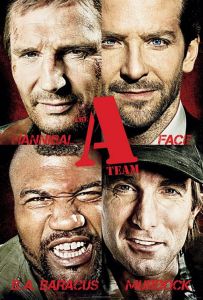 “Overkill is underrated,” quips Col. Hannibal Smith (Liam Neeson) in this big-screen adaptation of the 1980s hit TV show of the same name. And appropriately enough, like its source material, The A-Team is the very definition of mindless action. It’s completely shallow, goofy, yet over plotted and occasionally too serious for its own good, but like the A-team, the movie delivers when it counts. There is an undeniable pleasure in watching professionals work together, hatch a plan, and then watch that plan come to fruition. The A-Team is like an ADD-child because it can rarely sit still; five minutes won’t pass before something blows up. Writer/director Joe Carnahan (Smokin’ Aces) makes sure to keep things flying on screen so that the audience won’t stop and think about the multitude of plot holes and absurdities. The signature sequence that sums up the movie best is when the A-Team boys have escaped a downed aircraft by hiding inside a tank with parachutes attached. As they tumble back to earth they must try to “fly that tank” to land properly. It’s ridiculous on its face but rather entertaining. But the movie has its tongue firmly planted in cheek, even when it comes time to incorporate the show’s signature catch phrases (you could make an effective drinking game for the amount of utterances of “fool,” and, “I love it when a plan comes together”). The A-Team is overblown, silly, high-octane B-movie that obliterates your senses and thinking abilities, which means it successfully captures the spirit of the TV show.
Nate’s Grade: B-
Share this:

Get Him to the Greek (2010)
 How many scene-stealers get spin-offs? That sounds like something you’d more likely find in the realm of TV, but it does happen occasionally in cinema. In 2008’s Forgetting Sarah Marshall, comedian Russell Brand played British rock star Aldous Snow. He stole Sarah Marshall and he also stole the movie. Now the stringy Brit with the crazy hair gets is own movie, Get Him to the Greek, a semi-sequel to Sarah Marshall.
Aldous Snow (Brand) has had his career hit a bit of a snag. His latest album, and lead single, “African Child” has been met with a tidal wave of bad press. Critics are calling it the worst thing to strike Africa after famine, war, and apartheid. His longtime girlfriend and fellow recording artist, Jackie Q (Rose Byrne), has dumped him and gotten full custody of their son. His life, and he, has gone off the wagon. Music exec Sergio (Sean “Puff Daddy” Combs) is desperate for ideas to help make money for his company. Aaron Green (Jonah Hill) suggests to the boss man that it will be the 10-year anniversary of Snow rocking out at the Greek Theater in Los Angeles, a seminal concert event. The boss tasks Hill with traveling to London, retrieving Snow, getting him to a Today Show performance in New York and then to the Greek in L.A. for an anniversary concert. Of course babysitting a drug-addled rock star and getting him places on time is easier said than done.
 Get Him to the Greek is ultimately a buddy movie. Brand and Hill play off each other so well. In fact, I might say that Hill’s character is a tad too dull when he’s not around the hyperactive and impulsive Snow. You sort of feel for the guy and you’d like life to turn out well for him and his girlfriend, but you’re not completely committed to the character. However, when he’s bouncing off Brand, the movie transforms into a wild comedy with many funny moments and a few that miss the mark. Green has been entrusted to handle his high-maintenance rock star and this presents a few stellar comic setups. Green has to make sure that his star is not impaired when he performs on the Today Show, so he steals Snow’s flask of booze and joint and downs them both to protect his star. The resulting appearance on the Today Show then flips the script, having the flaky star be the straight man to the highly impaired handler. The funniest sequence for my taste involves a drawn-out drug trip in a Vegas hotel. Things spiral out of control and involve furry wall groping, mass amounts of property destruction, and Snow stabbing Green in the chest with an adrenaline needle, then being chased by an incensed Sergio who will not be stopped even after being hit by a car. It’s an exhilarating, madcap sequence that picks up comedy momentum and plows ahead. You may not be able to relate to either character, but when you put them together the movie comes alive with comic mischief and misfortune.
Being a Judd Apatow (Knocked Up, Superbad) production, Get Him to the Greek has got to bring the heart with the raunch. Even though we spend the majority of the running time with two characters, the film is less character-based than other Apatow-produced products. The sentiment slips in at the end. Obviously, given the setup, you expect Green to become more aggressive motivated, Snow to become more mellow and conscientious, and we’re all better for it in the end. The two characters do begin to bond in their unusual way, which elicits much of the film’s enjoyment. I enjoyed spending time with these two guys, especially when they were together. That likeability factor got the film through some of its rough patches. As far as supporting casts, a hallmark of an Apatow-produced film, Sean “P. Diddy” Combs is the movie’s scene-stealer, mostly through sheer force of will. He’s not the funniest guy but man does he chew scenery with gusto. He’s so loud and crazed that he practically scares you into laughing as a defensive impulse.
 Brand is a terrific comedy discovery. He has such an electric energy and his wild-eyed hijinks and deadpan delivery had me in stitches. I was worried that a full movie for Aldous Snow would wear thin, but Stoller and Brand have deepened the character. It would be extremely easy, and almost understandable, for Snow to just be this caricature of the rock and roll lifestyle, an easy send-up for easy jokes. But just like with Sarah Marshall, the more time you spend with Snow the more you start to like him. He’s genuinely charming. His onstage persona evokes memories of Mick Jagger, Led Zeppelin, and Freddie Mercury. He’s self-destructive and egotistical but he’s not as shallow as he may appear to be (his vocabulary is a notch above, too). He’s unpredictable but he’s not stupid. He’s fairly vulnerable with some real feelings, lamenting his failed relationship with Jackie Q and yearning to be the father for a son that may not even be his. His life is filled with hangers-on and leeches, including his own parents. Brand can be good at being ridiculous but he can also be very good at being miserable. His vulnerability and attempts to be something more than the sum of his lifestyle allows for some tender moments between the babes and booze.
Hill has graduated from supporting player to “regular dude” lead in the Apatow Academy. He’s presented almost as a brazenly average everyman, albeit one who appears to be dangerously overweight (seriously, Hill has ballooned like a blowfish and I worry for the guy). This role allows Hill to showcase the most range he ever has yet. He believes in the power of music and has a personal stake in what goes down at the Greek. He sells his dramatic parts better than expected. He and his girlfriend, Daphne (Elizabeth Moss from TV’s Mad Men), make for an unconventional couple via Hollywood’s superficial standards. It’s an interesting match and somewhat refreshing that Hill isn’t dating some knock-out (Moss is quite fetching, don’t get me wrong).
Greek doesn’t measure up to Sarah Marshall and part of that is because the story is a bit too shaggy, housing gags but lacking a stronger driving plot. Many of the scenes don’t connect so much as independently exist. Also, writer/director Nicholas Stoller (who also directed Sarah Marshall) sometimes doesn’t know when to leave well enough alone. The drug-addled sequences tend to get a little tedious after the third or fourth time. Granted, drugs and alcohol are all apart of the modern rock and roll experience, but watching people act weird on drugs can get tiresome unless given a different context to work with. Some of the comic setups are a tad lazy but are saved by the efforts of Brand and Hill. When Aldous orders his lackey to smuggle heroin in his rectum, it feels strained even by the standards of wacky comedies. It feels like one episode that doesn’t lead to anything other than a quick, almost absurd, comedy dead-end. And for a movie with a ticking clock constantly running down the hours before Snow needs to be at the Today Show and then the Greek Theater, there sure is a strong lack of urgency. When they run late or miss planes, you don’t really care because you know it’s a matter that will be easily solved.
 A fact I really enjoyed with Sarah Marshall was that the girls were given something to do — they were allowed to be more than the joke, they could be in on the joke. Mila Kunis and Kristen Bell’s characters were allowed to be nuanced, mature yet able to make mistakes, and both were funny while being central to the story. With Greek, the female characters are mostly one-note and then given a little polish. Jackie Q is all brash sexuality and Daphne is prim and constantly exhausted. They’re extremes made for easy laughs. When Jackie Q tries to get serious, we don’t really buy it because she seemed rather pleased to soak up the unhealthy riches of fame. Her behavior is inconsistent. With Daphne, her wet blanket personality is supposed to be the joke, and then when she cuts loose toward the end, requesting a three-way between her, Green, and rock star Aldous Snow, it feels wrong for her character and weirdly reminiscent of Chasing Amy. I know Get Him to the Greek is primarily a boys movie, but it lacks the same generosity of character that aided Forgetting Sarah Marshall.
Get Him to the Greek is a solid comedy helped by two strong lead performances. It’s a nice addition to Apatow’s family of character-based comedies even if it doesn’t live up to its ambitions. The movie is consistently funny throughout, which is integral to being a comedy. The character dynamics lead to some entertaining comic set-ups and sometimes some lazy ones, but the troupe of actors makes it all work. Brand and Hill are a fine team and the movie has plenty of surprises and cameos to keep things fresh when a gag misfires. I wouldn’t mind seeing the further exploits of Aldous Snow, or even listening to some of his recordings (his Sarah Marshall tune “Inside You” was criminally left off the Oscar nominees in 2008). But this movie just made me realize how much more I appreciate Sarah Marshall, and how that movie has grown on me over time. I suppose like Hill’s character, it took an extended detour with Aldous Snow to make me realize what I truly appreciate in life.
Nate’s Grade: B
Share this:

Toy Story 3 (2010)
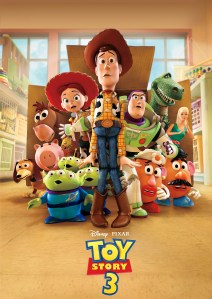 I was completely unprepared for how emotionally involving Toy Story 3 would be. Sure, Pixar has managed to break and melt your heart through ten previous movies, but I suppose I foolishly felt that I was beyond caring for toys. But even in the opening minutes, a tremendous make-believe fantasy, I felt punches of emotion as each character was reintroduced. It felt like I was reconnecting with old friends and it was such a pleasant reunion. It’s okay, guys, to cry over toys.
Cowboy sheriff Woody (voiced by Tom Hanks), the leader of Andy’s toys, is trying to keep hope alive. Andy is now 17 years old and on the verge of leaving for college. His favorite childhood toys have long since been relegated to a chest as Andy has matured. Joining Woody are spaceman Buzz Lightyear (Tim Allen), Jessie the cowgirl (Joan Cusack), Mr. and Mrs. Potato Head (Don Rickles and Estelle Harris), Slinky Dog (Blake Clark), the timid Rex (Wallace Shawn), and the piggy bank, Hamm (John Ratzenberger). They are all the toys in their gang that remain. As Andy leaves their main goal seems to have been accomplished. They were there for their owner and now he no longer needs them like he once did. The toys have a few options left: stuffed into the attic, sort of like a retirement home, until perhaps Andy digs them out for his own kids, or being thrown out with the trash. Woody assures them that Andy would never just throw them all out, though even he has his doubts about their current purpose. They all feel the loss.
 After a mix-up, the toys decide to take matters into heir own adjustable hands. They will sneak away inside a donation box for Sunnyside Day Care. The center seems too good to be true. The courtly Lotso Hugs Bear (Ned Beatty), who seems to lead the center, promises that all toys will never be forgotten again. When the children grow too old then a new batch moves in to play. It’s a toy’s dream, that is, until Buzz and the gang discover that they’re canon fodder for hyperactive, maniacally destructive toddlers. They can’t keep up with the daily abuse. Sunnyside Day Care is less a haven than a prison. New toys have to pay their dues and earn a place in the vaulted Butterfly Room, where young children lovingly interact with their toys. It’s a toy class system. Lotso refuses to cotton to rule-breakers, and toys are locked away nightly so they cannot escape. Woody must try to save his friends by breaking them out and getting back to Andy before he departs for college.
Given that the movie tackles major issues like moving on, growing up, and mortality, I knew I was in for some heavy moments, but absolutely nothing prepared for some of the emotions that clobbered me. You do realize through the course of this third film as the toys try and find a suitable place to retire, if you will, how attached you are to these characters. Late in the movie the toys are in some dire circumstances. There’s a horrifying junkyard sequence that even manages to evoke Holocaust imagery, which means parents are going to have to calm some spooked tykes come bedtime. There’s a silent moment, where the toys all seem to accept their fate, and all they want to do is join hands and face it together, as a united family one last time … and my God, I could not control myself. My face was dripping with tears (even thinking back right now is causing my eyes to well up a bit). Toy Story 3 isn’t the strongest of the trilogy in terms of character or plot (in some respects, the plot is a reworking of The Brave Little Toaster), but you better believe that it delivers emotional resonance in spades. Major credit goes to screenwriter Michael Arndt who won an Oscar for Little Miss Sunshine.
 But fear not, Toy Story 3 is not all sturm und drang, it also provides plenty of laughs and plenty of visual wonder and excitement. The toy’s point of view has always allowed for plenty of amusing insights and satirical riffs. The personality clashes makes for the most jokes, and the new characters pull their own weight, particularly Ken (Michael Keaton), an effeminate clothing-conscious doll who finds his true love with the arrival of Barbie. The use of Big Baby as a malevolent goon is also refreshing and quite creepy. The Spanish Buzz reboot personality seems superfluous but cute. The jokes come by at a steady pace and while they all may not work as well (Ken in a trying-on-clothing montage set to “Le Freak”?) there are still moments of great creative ingenuity. The detailed escape from Sunnyside feels like a terrific parody of prison movies, and they way it utilizes all the different characters as key components is satisfying and fun. But the best moment of the break-out, by far, is when Mr. Potato Head is trapped, hurls his pieces out of an opening, and reassembles thanks to a tortilla body. It’s a weird visual, like something out of Salvador Dali, and yet I could not stop giggling from watching his floppy movements. It’s comedic while at the same time a genius move in drawing out an action sequence — it makes keen use of the players and their skills. From an action standpoint, G-rated Toy Story 3 manages to have more thrills and spills than any other 2010 movie so far.
Director Lee Unkrich (co-director for three previous Pixar flicks) makes quite a debut for himself. The complexity of the action, while still maintaining an internal logic, is hugely rewarding. The Pixar wizards truly know how to craft inventive action sequences and stay true to character. Unkrich’s command of visuals is impressive. The action is well paced, but it’s the man’s use of composition, camera movement, and editing make Toy Story 3 a visual treat. Unkrich fully knows how to best utilize and fill up the screen. The world of Toy Story is popping with color and visual whimsy, as well as plenty of sight gags and subtle movie references for adults. Ten years of advancements in computer effects has also allowed the toys to get a bit of a facelift. The 3-D process enhances the overall experience without calling attention to itself. There aren’t any standard 3-D moments where big and pointy things keep flying out at the audience. The 3-D provides a greater field of depth without distracting you from the pivotal moments of story.
The voice acting is just about perfect from top to bottom. Allen and Hanks are a welcomed pair, Cusack provides plenty of spunk, Rickles brings his usual dish of joyful disdain, and new characters like Timothy Dalton as a stuck-up thespian porcupine and Kristen Schaal (TV’s Flight of the Conchords) as a bubbly triceratops toy are fun additions that don’t overstay their welcome. Blake Clark takes over the voice of Slinky Dog from the late Jim Varney who died in 2000, and he does a fine job without sounding like a direct imitation. I was really delighted by Beatty. He has such a Southern gentlemanly demeanor that underscores the hardened heart of his villainous character. And yet, Lotso gets his own rich back-story of abandonment and bitterness similar to Jesse the cowgirl. Even when he’s dastardly we can see where the big purple Teddy bear who smells like strawberries is coming from. Ned Beatty has finally appeared in another breakthrough cultural film to redefine his identity. Perhaps now he won’t be best remembered as the guy who gets raped in Deliverance. He probably still will be.
A lot has changed in the 15 years since Pixar revolutionized the world of animation and family films with their first feature, Toy Story. Kids at the time are now teenagers; some embarking on college this summer themselves much like Andy. They too have to put away former childish things and move forward. Toy Story 3 is magic confluence of heart, wit, visual whimsy, cleverness, and drama. Not quite as sharp as the first two installments, or as artful as Pixar’s high-water mark, WALL-E, the third Toy Story is still a mighty entertaining piece of work. The last 30 minutes of this movie is harrowing and then deeply satisfying and moving, finding a fitting sendoff for characters that we’ve come to love. It’s all about moving forward, saying goodbye, and reflecting about times shared. I wouldn’t be surprised if Toy Story 3 inspires kids, and adults alike, to go home and play with their old toys, giving them renewed life and purpose.
Nate’s Grade: A
Share this:

Prince of Persia: The Sands of Times (2010)
 This video game adaptation has the curious distinction of being both too simplistic and too complicated, sometimes in the very same breath. The harried screenplay could have used a lot more clarity concerning back-story, exposition, character roles, setting, rules of this Middle Eastern time period, supernatural rules, etc. At the same time, Prince of Persia is saddled with a pretty dopey story with weak characters. The plot is far too repetitious; somebody has the magic dagger that can turn back time, they lose it, they regain it, they lose it, repeat for over an hour. It feels like the story is never getting anywhere despite the fact that new, and still weak, characters are being introduced. The tone and look of the movie feels too beholden to its video game roots; the action is momentarily rousing but then seems overly coordinated to squeeze in all the game’s special signature moves. You’ll grow tired of all the wall flipping, wondering if a controller is stuck somewhere. For a movie dealing with a time-traveling dagger, give me more time travel. This fantastic plot device is used too sparingly in a ho-hum plot about an adopted son (Jake Gyllenhall, buff and with a sporting accent) of the king being accused of killing the king. Despite the Disney name, this feels less like a Pirates of the Caribbean knockoff and more cut from the same cloth that gave us the Mummy sequels. It’s loud, stuffed with empty special effects, and feels like junk food for your brain but it’s not even good junk food. Weirdest of all, the movie is one big metaphor for the U.S. invasion of Iraq (acting on false intelligence about some country aiding an enemy by manufacturing weapons). Seems Prince of Persia is Hollywood’s second attempt to rewrite our past political blunders in the Gulf and come up with a dubious happy ending.
Nate’s Grade: C


 nathanzoebl
You must be logged in to post a comment.