Blog Archives
The Hobbit: The Desolation of Smaug (2013)
 Back to another three-hour trip to Middle Earth. While the second Hobbit film is an improvement in just about every way, it’s still a clear example of a franchise stretching to the breaking point. Peter Jackson gets the second installment moving a lot quicker, and there are several standout action sequences that are glorious on the big screen. Unfortunately it still takes almost two full hours to get to the dragon of the title, but when it does, oh does the movie become that much grander. Benedict Cumberbatch gives frightful life to Smaug (pronounced, for whatever reason, as “Smaa-oog”), and the special effects are top-notch. The last forty minutes of the movie are solid gold, as Bilbo and the dwarves work together to battle Smaug in a virtuoso development of imaginative action; it’s wonderful how many moving parts are involved in this action set piece. However, Hobbit 2 still feels needlessly padded to meet out a trilogy. Does Gandalf (Ian McKellen) need to just disappear on his own mission that accomplishes what? Do I care at all about the people of Lake Town let alone their populist revolts? Do I need a parallel storyline about an injured dwarf? And for that matter, do I need a budding lady elf-dwarf romance? J.R.R. Tolkien fans will be in heaven (though maybe just purgatory with all the changes) to gawk at the realm of Middle Earth, but I always feel antsy (“Get on with it already”). Still, The Desolation of Smaug is an entertaining and at times majestic fantasy epic, I just wish Jackson and company didn’t take so many pit stops. Well at least we won’t have to wait so long for the dragon in Hobbit 3.
Nate’s Grade: B
Share this:

Anchorman 2: The Legend Continues (2013)
 A lot has changed in the nine years since the raucous, instantly quotable, and deeply silly hit comedy, Anchorman. Steve Carell, Will Ferrell, and Paul Rudd have all become big stars (sorry Dave Koechner), producer Judd Apatow has become a comedy empire unto himself, and director Adam McKay has gone on to helm several other hit Ferrell collaborations. As much as I loved Anchorman, and I unabashedly do, I was nervous about a sequel capturing the same magic. While Anchorman 2: The Legend Continues cannot be as good as its predecessor; my worries were mainly unfounded because this is still the funniest movie of the year. Simply put, if you’re a fan of the original, you’ll find enough to enjoy, possibly even love, with this latest chapter. The laughs-to-minute ratio is pretty high, as long as you don’t mind some scenic detours. The plot is much looser this time with several competing storylines that come in and out of focus. There are segments that could have been cut completely, like Ron’s bout with blindness, but I laughed enough that I never minded. But that ending 15 minutes is where the filmmakers drop any pretension of reality and double down on absurdity. It’s no surprise that those last crazy 15 minutes were my favorite. The cast is universally strong together, working off one another’s comedic styles so effortlessly, but the plot is very much a kitchen sink approach. I’m happy that Ferrell and McKay, co-writers again (though it’s hard to credit a collaborative improv), didn’t feel the need to recycle many jokes from the first film, reliving their old hits for fans hungry for instant nostalgia. Anchorman 2 is the same brilliantly broad comedy and absurdist dada experiment every loyal fan was hoping for. Give the gift of Ron Burgandy this holiday season and stay classy, America.
Nate’s Grade: B+
Share this:

The Hunger Games: Catching Fire (2013)
 It’s been a year and a half since The Hunger Games broke box-office expectations, gifting Lionsgate studio with a formidable franchise. Based upon Suzanne Collins’ series of young adult novels, the first film was an agreeable adaptation that was occasionally hobbled by poor direction, rushed plotting, and budget limitations. Catching Fire, the second film, improves upon the established groundwork in almost everyway with the chief drawback being a terminal sense of dystopian déjà vu.
In the months after the events of the 74th Hunger Games, the two victors from District 12, Katniss Everdeen (Jennifer Lawrence) and Peeta Mellark (Josh Hutcherson), are traveling across the other districts of Panem as part of their victory tour. What better way to endear yourself than visiting other districts to remind people that their children are dead and you survived? On the tour, there is growing unrest throughout, and the people have turned Katniss as their symbol of defiance against the tyrannical Capitol. President Snow (Donald Sutherland) threatens Katniss to control her media image, to convince the people that she’s madly in love with Peeta and not a fledgling revolutionary. In order to check the power of the victors, Snow introduces a rule change for the 75th games, the Quarter Quell. This year the participants will be culled entirely from previous past victors, meaning that Katniss and Peeta will be plunged back into the deadly games and this time their competition aren’t children.
 What a difference a director with a sense of cinematic visual command can make. Early into pre-production, the original director Gary Ross (Seabiscuit, Pleasantville) decided to bow out for sequels, and so Francis Lawrence (Constantine, I Am Legend) was hired, and goodness does the movie benefit from this change at the helm. Lawrence has a much stronger visual authority, having cut his teeth in commercials and music videos (remember those, kids?) before feature films. The man couldn’t frame a lousy shot if he tried. With a stronger visual lens, the world of the Hunger Games is able to stretch, given a proper budget, and the visual grandeur unfolds around you, especially the largess of the Capitol. The movie doesn’t feel like they had to cut corners with their budget or special effects, and part of that is credited to the skill of Lawrence. And with this new visual stylist comes the demise of shaky cam. Dance and celebrate that Ross’ misapplied docu-drama approach has been abandoned; this time, when there is onscreen action, you can comprehend what is happening. I read the book years ago but even I was feeling twists of tension, notably the start of the Quarter Quell. The action isn’t terribly developed but it’s sufficient, though again the kill-or-be-killed extremity kept to PG-13 safety is starting to chafe. My only visual complaint is that much of the action within the games takes place at dawn/dusk and thus low-light environments. It feels like someone threw on a muddy filter, though perhaps this was just my theater’s light bulb-saving projection setting.
Now that the world of Panem is established, Catching Fire does a nice job of showing the various social conflicts coming to a head, bubbling into uprising. The pre-games victory tour opens up the world, allowing us into other districts and viewing the different strife befalling them. It’s jolting to watch the public defiance met with summary executions and yet the people will not be stopped. Now the class conflicts of the haves and have-nots get pushed to their breaking point. There’s a great contrast provided with a Capitol party so lavish, with food so sumptuous and plenty that the Capitol denizens have cocktails on hand to induce vomiting. That way you can continue eating (historical fact: vomitorium is actually not what you think but instead a passage below a tier of seats for easy exit, like in modern stadiums). The themes and the points aren’t subtle, that’s for sure, but they are effective and intriguing. Katniss, who only wanted to survive, has been thrust as the face of revolt, and now she has to walk a delicate line to again save her loved ones. The fascist politics and media manipulation hinted at in the first film are given more examination, providing a richer narrative. What works in the first Hunger Games is generally expanded upon and what faults the first film had have been, generally, nipped and tucked. There’s nothing as eye-rollingly awful as Peeta’s human rock sculpture camouflage. The burgeoning love story elements again are abbreviated the harshest, but when the world is coming apart, you have to spend more time on revolution than love triangles.
The film also benefits from a slew of new characters that have strong personalities. We’re introduced to other formers winners of Hunger Games past, and they make the most with their limited exposure. Joanna Mason (Jena Malone) is an axe-wielding woman given to speaking her mind with devil-may-care attitude. Her first scene in the film involves her stripping naked in an elevator with Peeta and Katniss. Malone (Sucker Punch) really has fun with the blithe approach of the character and manages to come across as comical while still being a credible badass. She’s a terrific character and you’ll be seeing more of her in the sequels to come. The other famous victor is Finnick (Sam Claflin) who bathes in the celebrity limelight, luxuriating in his media image as a suave playboy. Except there’s more under the surface and you’ll be given peaks throughout the film. I’m not as sold on Claflin (Snow White and the Huntsman) as I am on Malone; he’s got the requisite chiseled physique, but I don’t feel the charismatic pull the character demands. Also, when I close my eyes and listen to him speak I hear James Franco, and I don’t know what to make of that. Then there’s the new head game maker, Plutarch Heavensbee (Philip Seymour Hoffman), who is presented as an enigma. He leans on President Snow to spare Katniss rather than turning her into a martyr for the cause. However his alternatives are sinister and media savvy. Hoffman is one of our best working actors today but he seems to sleepwalk through the role, perhaps because he’s meant to be vague. However it’s played, it’s hard to get a read on Plutarch until the very end.
Strong as ever, Lawrence (Silver Linings Playbook) is the rock of this franchise. The Oscar-winning actress has been on a tear as of late and her acting and overall presence elevates the material. They struck gold when they hired her. There’s more fire to her and more devastation, as she’s going through the PTSD, plagued by nightmares. She’s haunted by the horror she’s escaped but also by the continuation of the threat from Snow, the ongoing charade that she will have to keep up for the rest of her life. There is no time out of the spotlight as a victor let alone a national celebrity like Katniss. Lawrence can convey so much wordlessly and she can convincingly play the different dimensions of her wounded warrior.
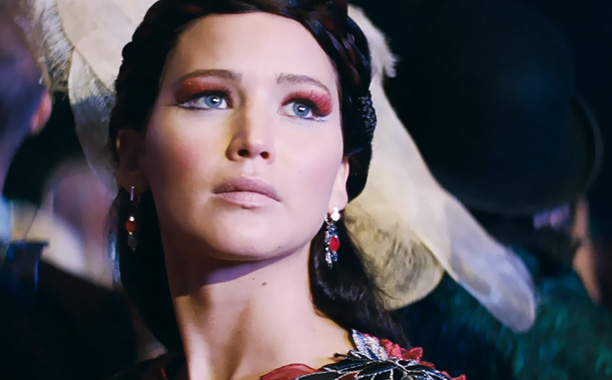 Many of the criticisms one can hurl at Catching Fire are the same from Collins’ book. There is a repetitive plot structure, where the games themselves feel like too much of a retread. It feels forced to serve up what worked the first time. The problem with throwing Katniss and crew back into the Hunger Games is that all the real consequential action is taking place outside of them. We’ve been watching the stirrings of revolt all movie, watching the cracks take shape, and then the movie returns to its deadly TV competition when the audience just wants to leave to see if the revolution will be televised. Breaking free of Katniss’ first-person perspective from the book allows the filmmakers to add scenes fleshing out the world and the characters, with some nicely malevolent conversations between Snow and Plutarch. But that also means we don’t have to be locked into watching Katniss’ every move (I know this sounds like sacrilege). It’s not like the creatively torturous games are boring, but it’s hard to ignore an increasing sense of been-there-done-that. When there are so many larger, wider-reaching consequences happening outside throughout the various districts, you can’t help but feel a bit antsy. Another reason the film doesn’t break free from the games repeat is that it purposely keeps Katniss, and in turn the audience, in the dark about the larger outside machinations. The collective ignorance has a purpose but it also makes the plot frustrating.
Really, Catching Fire is more a setup for the series greater conflict rather than a complete film/story. Things are unraveling in the country of Panem, but if you want resolution you’ll have to wait until 2014 for the next movie, or more likely 2015 for its concluding half. What Catching Fire does is tease out the plot change and then transition to it, but only in the final minute. As my pal and colleague Ben Bailey notes, it ends in similar fashion to 2003’s Matrix Reloaded, and you’re left on a cliffhanger that doesn’t seem like a natural resting point for the story. Again, these critiques can be waged at the book as well as the film is a fairly close adaptation that will satisfy the die-hard fans.
From here on out, the Hunger Games movies are going to get more interesting. With two remaining films to cover the ground in one book, it should allow for greater development of characters, conflicts, dramatic themes, social commentary, or just larger kickass action sequences now that we’re in a larger arena, so to speak. Under the screenwriting expertise of Danny Strong (HBO’s Recount and Game Change) I’m anticipating a more politically astute and intellectual dystopian drama. Francis Lawrence has brought visual dynamism and stability to the franchise, just in time for when things are poised to get really interesting. As a film, Catching Fire is a step above the previous entry, ironing out some of the shortcomings and presenting more subtext when it comes to its social unrest. It introduces a bevy of intriguing new characters, escalates tensions throughout the realm, and promises greater suffering and strife ahead. However, the repetitive plot structure of throwing Katniss back into the games for an hour eats away at time that could be better spent watching the revolution ferment. It’s still a reliably entertaining film with a sharper visual gloss, so fans should go home happy and audiences should be suitably thrilled. The alterations from Collins’ book are all for the better. Catching Fire will slay the box-office with little trouble but I’m most thankful that we’ll be leaving the games behind for good.
Nate’s Grade: B
Share this:

Thor: The Dark World (2013)
 Loosely based off the Norse mythology, Marvel’s hammer-wielding hero isn’t exactly the easiest character to relate to even as a superhero. Thor is a god after all. Not to be outdone, the man is also royalty, next in line to be king, so he’s in a special class of privilege. And yet 2011’s Thor was a pleasant surprise, a superhero movie that didn’t take itself too seriously, had modest aims, and embraced its sci-fi fantasy mélange. It was a movie where the sillier it got the better it worked. Now Thor: The Dark World, a.k.a. Thor 2, is ready to dominate the fall box-office and prove that Joe and Jane Popcorn can cheer for a pagan god.
Following the events of The Avengers, Loki (Tom Hiddleston) is taken back to his home world of Asgard and put in prison. Loki’s brother, Thor (Chris Hemsworth), is trying to get back to Earth to reunite with his love, scientist Jane Foster (Natalie Portman). Thor is being groomed for the throne of Asgard by his father, Odin (Anthony Hopkins). Meanwhile, the nine worlds are nearing a convergence and dimensional gateways are opening, including one that infects Jane with an ancient biological weapon, the aether. The aether was used as a weapon by the dark elves, a race of creatures that was long ago defeated but its general, Malekith (Christopher Eccleston), has been dormant and in hiding. Alterted, he assembles his surviving army to attack Asgard, kidnap Jane Foster, retrieve the aether, and destroy all life in the universe.
 Thor is still a second tier character when it comes to Marvel superheroes (the guy just isn’t that interesting) but his franchise has, in only two starring films, become the most interesting. The scope of the Thor movies seems infinite. Whereas the other Marvel heroes are Earthbound and straightforward, Thor transports an audience to all sorts of alien worlds/cultures/conflicts, all of which open up more tantalizing storytelling avenues. Nothing seems out of place in a setting such as this, and so the surprises are more satisfying. I thought the best parts of 2011’s Thor were the Asgard moments, less the strained fish-out-of-water comedy of Thor assimilating on Earth. Thankfully, almost all of Thor 2 takes place off Earth save for a rousing, creative, inter-dimensional hopscotch of a climax. The realm of Asgard is given suitable scope thanks to the screenwriters and first-time feature film director Alan Taylor, who worked in TV for years. Taylor’s notable work on HBO’s Game of Thrones is probably what got him this gig, and his vision with fantasy is given significant breadth here. The Thor universe is an interesting mix of fantasy and sci-fi, reminiscent of Star Wars, and Taylor provides the necessary sweeping visuals, exciting action, and glorious shirtless close-ups we come to expect from our fantasy vistas. I was consistently impressed with Taylor’s command of visuals and shot selection, particularly how the man was able to juggle the various tones and needs of the script while still keeping an exposition-heavy film fun and light.
With rainbow bridges, dark elves, and enchanted hammers, thank goodness that Thor 2 keeps a steady and welcome sense of humor, never getting too serious even with the end of existence on the line. This jovial tone is refreshing when properly executed and contributes to the overall fun of the picture. We’ve had such sturm und drang when it comes to our superhero movies, particularly last summer’s Man of Steel misfire. I appreciate a dark and gloomy superhero tale like Nolan’s Batman films, or a satirical swipe like the original Kick-Ass, but we need stories that fit with their tone. When it comes to Thor, he’s still saving the world, rescuing his damsel, but the attitude, while on its face regal and serious, is anything but. The Thor movies accept the absurdities of its setting and just shrugs, plowing along. And now with Jane on Asgard, the fish-out-of-water comedy gets a different perspective. She gets to meet Thor’s parents (awkward) and an Asgardian who has a thing for the hunky Norseman (double awkward… I’ll stop the 90s catch phrases now). Thor 2 also gives Jane Foster much more to do, placing her front and center as a person integral to the stability of the universe. During the snazzy climax, she gets to run around and contribute in a meaningful manner. The there’s the plucky Kat Dennings (TV’s 2 Broke Girls) who gets to rattle off one-liners like a pro, many of them grounding the elevated levels of silliness. Much of the humor comes from the cocksure characters and their quips, particularly Loki.
And that’s as good as any place to interject my notion that Thor isn’t truly the main character in this film, despite what the title preceding the colon may lead you to believe. That honor goes to Loki, the greatest villain in any modern Marvel movie by far. He’s got the clearest arc in the movie, going through arguably the most personal pain, coming to a crossroads, and his conclusion certainly sets up sizable ramifications down the road for the presumptive Thor 3. Played by Hiddleston (War Horse), the character draws you in, even when he’s throwing his self-aggrandized temper tantrums you want to spend more time with him. He’s far and away the most developed and interesting character onscreen, and Hiddleston has such a gleeful malevolence to him that makes the character all the more electric and unpredictable. Thor 2 is really the story of Loki coming to terms with his life’s choices, the choices his adopted parents made, his sense of self and birthright, and moving forward, becoming his own man again. This is why Thor 2 ascends another entertainment rung by tying Loki into the main story, forcing him and Thor to work together against a common enemy.
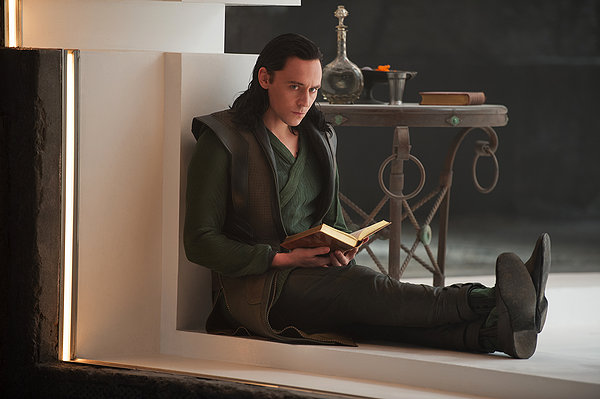 In a film dominated by a charismatic Loki, it’s no wonder that Thor 2’s real bad guy falls woefully short. Malekith is a confusing and altogether lackluster antagonist in every conceivable way. He has no personality to him; he’s simple-minded with the goal of eradicating the universe. I don’t know about you, but my bad guys better have a pretty good reason for destroying the universe since they kinda live there too. This is one of the lazier villain plot devices because it has no nuance, no shading. Apparently before there was a universe there were dark elves. I don’t want to get caught in a chicken-egg paradox here, but was there a universe before the universe, cause I look at the universe like existence’s garage. The cars inside may change but the garage was standing before it all. Anyway, Malekith wants to destroy all life because he wants to, because certainly you’d think there would be enough space in space. He’s not even that threatening or given any particular advantage beyond some firepower. It’s no wonder that Loki runs circles around this chump in the villain department. Eccleston (Unfinished Song) is not at fault. The heavy makeup he’s under smothers the actor’s ability to polish this terrible character.
The rest of the acting fares better. At this point, we know what we’re getting with Hemsworth (Snow White and the Huntsman) as the title character. He’s a sturdy leading man with just enough appeal to satisfy, though part of it is that Thor is just dull as a hero. He was more entertaining when he was cocky and irresponsible. Portman (Black Swan) holds her own though the romance between her and Thor feels more forced. Hopkins (Red 2) strikes the right mix between regal and camp. While their roles aren’t exactly integral, it’s nice having a superhero movie stuffed with great actors like Idris Elba, Ray Stevenson, Adewale Akinnuoye-Agbaje, Clive Russell, and there’s even an amusing appearance by Chris O’Dowd, who effortlessly oozes charm (take note, Thor).
This a superhero movie that separates itself by its sheer sense of fun. Thor: The Dark World takes what worked in the previous movie and provides more of it. The campy, silly Asgard stuff is given even more time, the mischievous sense of humor is renewed, the fantasy worlds given more depth and better action/effects, and fan favorite Loki gets a big starring role this time with extra brotherly bickering. It’s not the best superhero movie, nor is it the best Marvel film of recent years, but Thor 2 knows what kind of movie it wishes to be and how to best achieve this. It’s a loopy, droll, and rather imaginative big-budget superhero film, while still finding ways to be somewhat generic with its overall plotting and character turns. While the action is suitably epic, it’s the character interactions that are the most enjoyable aspect. It seems excessively lazy to say that if you enjoyed the first Thor, you’ll probably enjoy the second one as well, but there it is. Perhaps next time the storyline won’t be as convoluted and we can get even more Loki. Barring that, I’ll accept additional Chris O’Dowd screen time.
Nate’s Grade: B
Share this:

G.I. Joe: Retaliation (2013)
 Originally intended to be released in the summer of 2012, G.I. Joe: Retaliation was pulled back because, presumably, they wanted to convert it to 3D, but many suspected it was to add more time for star Channing Tatum after his box-office domination that year. Well, wrong on both accounts, because maybe it was merely kicked back because, get this, it’s not terribly good. I had the lowest possible expectations for the 2009 G.I. Joe movie but came away having a fun time; it was the right kind of enjoyably stupid. Well now it’s just stupid. Cobra has kidnapped the president, inserted a doppelganger, and now wants to rule the world that to an evil satellite that drops giant metal rods into space as weapons. Why are these rods not part of the Earth’s orbit after release? There are all sorts of gadgets here that make no sense but somebody thought might sell some toys. The central storyline is almost a knockoff of Mission: Impossible: Ghost Protocol, a small group of Joes having to clear their names. Then because that isn’t enough material to work with, there’s a mini-movie about ninja warriors avenging their fallen master in the mountains, and of all people, the RZA is supplying lengthy exposition. The action sequences are absurd without having enough style to excuse the absurdity. Everyone is a superhuman but also incompetent when the plot demands it (ninjas can shoot flying knives but not a big person jumping off a wall?). Adding The Rock is always a bonus in my book; the man is charisma personified. But the storyline of Retaliation is so sloppy, the villains so lame, and the movie lacks the high-spirited imagination to keep the stupid at bay. I was never a G.I. Joe kid so maybe those with nostalgia will be more charitable than I am, but G.I. Joe: Retaliation is a poorly executed next step for a once-budding franchise.
Nate’s Grade: C
Share this:

Kick-Ass 2 (2013)
 It’s hard for me to discuss Kick-Ass 2 without sounding like a hypocrite. I enjoyed the first film’s visceral thrills, style, and satire of superhero tropes. The sequel gives me more of the same except not nearly as well polished, and in typical sequel mentality, it goes bigger, expanding the world and the height of the sick puppy violence. Kick-Ass (Aaron Taylor-Johnson) and Hit Girl (Chloe Grace-Moritz) are trying to live ordinary lives but keep feeling the need to don their suits and fight crime. Kick-Ass joins a ragtag team of other costumed vigilantes to battle a super villain team, lead by the former Red Mist (Christopher Mintz-Plasse). For long stretches, the movie seems like an unwanted Heathers knockoff as Hit Girl attempts to fit in at high school. She has some particularly nasty vengeance against a popular bully, and if there is a line, it may have been crossed here. I don’t know what it says about me, but I guess I’m fine with a pint-sized kid slicing up bad guys and cursing like a sailor, but making a woman simultaneously vomit and defecate herself, watching both projectile streams spray out her ends, is too much for me. This is a darker, cruel, and mean-spirited feel with the material, and writer/director Jeff Wadlow fails to compensate for the lack of creativity this go-round (I miss you Matthew Vaughn). The humor is still lively, but the plot is predictable at every step, the characters behave in ways that don’t make sense, and the action sequences are poorly filmed, leading to an anticlimactic ending that simply peters out. Kick-Ass 2 won’t be knocking anyone out.
Nate’s Grade: C+
Share this:

The Wolverine (2013)
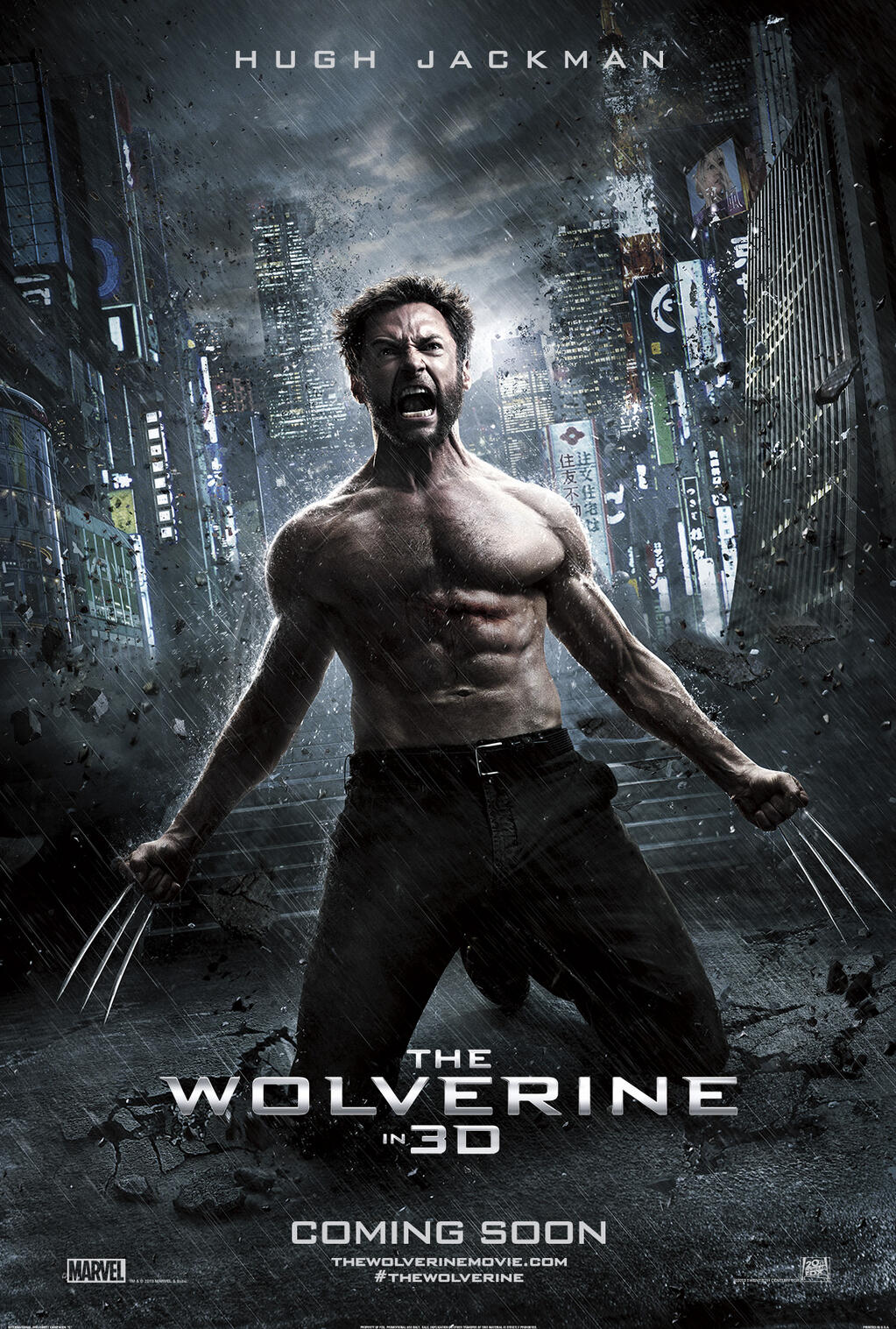 For a character universally beloved by comic and movie fans, Wolverine has fallen on some hard times. It’s hard to find too many supporters for either 2006’s X-Men 3: the Last Stand or 2009’s X-Men Origins: Wolverine. He had a fun cameo in 2011’s retro X-Men First Class, but other than that we’ve gone almost a decade without a respectably good movie starring Wolverine. It looked like Darren Aronofsky was going to be the answer to that drought of quality. The Black Swan director, who worked previously with Jackman on the intensely personal The Fountain, spent six months developing a Wolverine film set in Japan. Then Aronofsky dropped out, making this the second superhero franchise he missed out on (he was tapped to reboot Batman before Christopher Nolan landed the job). James Mangold (Knight and Day, Walk the Line) stepped into the director’s chair and now we have the directly titled semi-sequel, The Wolverine. It’s a step up quality-wise but even that comes with qualifiers.
Many years after the events of X-Men 3, Logan (Hugh Jackman) is living a solitary life amid the Canadian wilderness. He’s looking to lay low and he’s haunted by visions of his lost love, Jean Grey (Famke Janssen), the woman he was forced to kill to save the world. Yukio (Rila Fukushima), a mutant with the ability to foresee people’s deaths, finds him for her employer. He’s invited to Tokyo at the request of a wealthy and dying businessman, Yashida (Hal Yamanouchi). Back during World War II, Logan saved Yashida’s life, shielding him from the atomic blast that wiped out Nagasaki. Yashida has an offer for Logan. He can make him mortal again and take away his advanced healing ability. Thanks to a sketchy mutant, Wolverine loses that ability and goes on the run to protect Yashida’s granddaughter, Mariko (Tao Okamoto), from gangs and rival businessmen.
 Benefiting from low expectations, The Wolverine is a solid summer superhero tale that’s more interesting in its divergences from… summer superhero movies than it is when it follows that basic script. I appreciated that here is a superhero movie that actually doesn’t have to be wall-to-wall action. It allows a story to take place. Now, that story has its problems most certainly, but at least it has room to breathe. Also, there are barely any mutants in this movie at all. Excluding the title character, we get two super-powered mutants though neither really has a power that lends itself well to combat. I appreciated that there was hardly any gunplay at all in the movie. Mangold allows the hook of Wolverine, the hand-to-hand combat, to flourish amidst teams of adversaries following the ways of the samurai. I also appreciated the lack of familiar faces. While Jackman and Janssen will be recognizable to fans, I doubt too many others have a deep familiarity with a wide selection of Japanese actors. Then there’s an excellent post-credits scene that sets up the forthcoming X-Men universe crossover, Days of Future Past, arriving summer 2014. For all of these reasons, and some decent action, I’d say The Wolverine is worth seeing especially by fans burned by the character’s last two starring ventures.
With that said, this is a movie that still feels like it has problems that stop it from reaching its potential. The crux of the plot hinges on Wolverine losing his healing ability, thus becoming mortal. I understand that it’s hard to make an indestructible man vulnerable, but his friends and loved ones aren’t. The loss of powers doesn’t seem to raise the stakes because there isn’t a noticeable difference in the dude’s actions. He still acts the same except he recoils a bit longer from punches. The guy gets shot a bunch of times and stabbed and even clings to dear life atop a bullet train (more on this later), but he never really seems fazed. There’s also the nitpicky comic book nerd criticism that, if removed of his healing ability, there’s no way his body could sustain an entire skeleton made of metal. I’ll overlook it. This storyline seems even weaker when Wolverine (spoilers) gets his powers back for the third act (is that really a spoiler?) so he can fight the giant bad guys. The movie needs him back at full strength. It doesn’t feel like much was accomplished narratively or with the character to rob him of his invulnerability. That storyline could work, as it has in the comics before, but it just doesn’t seem like the ramifications are really explored beyond the surface.
Then there’s also to the issue with how cluttered the plot is with characters. There are far more characters in this than necessary, many of whom contribute very meagerly or could have been combined. The entire Yashida corporate storyline is just overburdened. There’s Mariko’s gruff father, there’s her mysterious boyfriend, there’s her would-be fiancé who works as a justice officer, there’s a snake-like mutant who really doesn’t add anything but poison samples. And you don’t really care about any of them. Whenever the story takes too many steps from its core (Wolverine protecting Mariko, getting his power back) is when the movie loses your interest. The final showdown and the participant involved should also be obvious, especially since Yukio point blank tells the audience about a red herring. Speaking of Yukio, I think she was easily the best addition to the movie. She forms a buddy relationship with Wolverine, a notorious loner, and watching them spar is just fun. Plus she’s a badass with a soul. Her mutant power also curses her with knowing how every loved one, every dear friend, every family member will die. She must see it, live it, all the while knowing what is to come. And that’s all you ever see – people’s deaths. That is some heavy stuff, and the movie treats it with sincerity, showing how haunted Yukio can be with these unsolicited peaks into the future. I would have greatly preferred more screen time for Yukio, who ducks out for far too long for my tastes. Plus the actress has a very striking, unique look to her. I don’t know if there are plans to continue her character into Days of Future Past, but I hope they do.
 Then there are moments that strain credibility even for a summer superhero movie. It’s funny, because if you’re being entertained, your brain will ignore these moments. Well there’s one action sequence that stands out that seems to break every law of physics. I know we’re dealing with mutants, I know we’re dealing with superheroes, and I know it’s a summer action movie, but my God this bullet train sequence just does too much. There is a fight scene between Wolverine and a standard Yakuza thug atop the speeding top of a bullet train zipping by at 300 miles per hour. It’s actually the most memorable action piece in the film, but it’s also memorable for wrong reasons. Wolverine is using his claws to pin himself to the top. The Yakuza thug is using a standard knife. Are the tops of the bullet train this easily penetrable? I’d worry, Japanese commuters. Then they hop over signs and ledges, still landing atop the train. This isn’t a Western with a locomotive that one could feasibly keep their footing atop. This is a train going 300 miles per hour. You think you can jump onto something going that speed and keep your balance? Think you can hold onto something while you speed at 300 miles per hour? How can a human arm maintain that sort of physical exertion? It’s too ridiculous to enjoy. If the rest of the movie had a similar over-the-top tone, then this sequence would be acceptable. However, The Wolverine plays itself so seriously that moments like this truly negatively stand out.
Jackman (Les Miserables) is a perfect fit for this character. I agree with my friend and colleague Ben Bailey; while the X-Men movies have faltered in quality, Jackman never has. He’s played this role six times now and it’s still a pleasure to watch. There is a question of how much longer the man can keep this up, though. Even at 45, the man can still get jacked with the muscles; just look at Stallone, or don’t. The real problem is presented in the mythology of the character developed in the first Wolverine solo outing, namely that the man is close to immortal. He doesn’t stop aging; he just ages very slowly. This is the same problem with twenty-somethings playing vampires, or Arnold as a timeless robot (why would they make slightly older looking models?). Age catches up to all of us, though Jackman’s own constricts the use of the character in the future. Regardless, this man can play this part until he’s in a nursing home and I’ll be happy.
There are elements that work, particularly Wolverine’s thematic relevance to the samurai of old and the feudal system of honor, and I enjoyed his buddy relationship with badass-in-training Yukio. The action is serviceable, there are some sweeping visuals with referential touches to Kurosawa, and Jackman is still a strong and capable hero. There’s just so much more this film could have been. The setting could have been fleshed out, the characters pared down to essential storylines, and the plot of Wolverine losing his powers could have actually mattered rather than just play out like a momentary setback. There’s just as many things I enjoyed as I didn’t, so this is a tough call for me. The Wolverine is clearly a step above the previous two movies, but those were both fairly bad films, the solo one poisoning the well for future X-Men solo bids. If you enjoy the character and want something slightly different but recognizable, then The Wolverine will pass the time acceptably. It’s hard for me to work up much passion for this film, and I’ll be surprised if any hardcore fans feel otherwise. Here is a superhero movie that lands right dead center between bad and good. I suppose most would call that mediocrity, but given how poor X-Men 3 was and Origins, I think I’ll call it progress.
Nate’s Grade: B-
Share this:

RED 2 (2013)
 Pretty much more of the same, RED 2 feels too safe, too breezy and light-hearted, and while still fun in spots, you garner the impression that what was once sufficiently silly has gone overboard. The jokes feel flat and the characters aren’t properly integrated, especially Helen Mirren and a vengeful hired killer (Byung-hun Lee). The villains are a tad bland, but we’re here for the wacky retired special agents, so it’s forgivable. However, the good guys feel like they’d rather be elsewhere. Too much of the story is taken up by the frustrating Bad Girlfriend Plot wherein our hero Frank (Bruce Willis) is harangued by his girlfriend, Sarah (Mary-Louise Parker). I’m not even saying that her character is nagging or shrewish or anything like that, but the movie treats her like she’s dragging him down. We’re also treated to many comedic setups of Sarah trying her hand as a spy to mixed results. Parker is actually the best part of the movie, and maybe because she’s the only character that gets to do something different. RED 2 lacks the visual style of the first film and, inevitably, the freshness of its cavalier old fogies. The action is passable but is that really the adjective you want for a movie? I don’t know what more I was expecting since the first RED felt like a well-executed lark, but at least it had enough style and an impish attitude to leave me entertained. Its sequel is likeable but mostly trying to get by on your good feelings for the last movie.
Nate’s Grade: C+
Share this:

V/H/S/2 (2013)
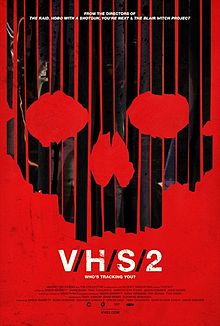 The second entry in the found footage horror anthology (and less than a year after the first to boot) is not as clever as V/H/S but more polished, better paced, and full of enough ingenuity to recommend, especially for horror fans. In my review of the first film I championed a shorter format, giving an audience the thrills they crave faster rather than slogging through an hour of slow buildup. The results are still fairly hit or miss, though none of the four segments is a misfire per se. The weakest is probably the last, “”Slumber Party Alien Abduction,” where the poor camera quality makes it hard to tell what is actually going on. The best, by far, is The Raid director Gareth Evans’ “Safe Haven” about a team of journalists picking perhaps the worst day to tour a creepy cult’s compound, notably during the apocalypse the cult predicted. This one takes a bit to wind up but when all hell breaks loose it goes nuts with glory. The wraparound segment tying everything together is more palatable and points to a promising mythology around the collection of these haunted VHS tapes that people keep watching and then dying over. All together, this is a concept that just works for horror and I’ll welcome presumed sequels as they come off the assembly line. This is found footage done right, with faster payoffs, more variety, and greater focus and ingenuity. If you enjoyed the first film, or are a fan of horror anthologies in general, then pop in V/H/S/2.
Nate’s Grade: B
Share this:

Before Midnight (2013)
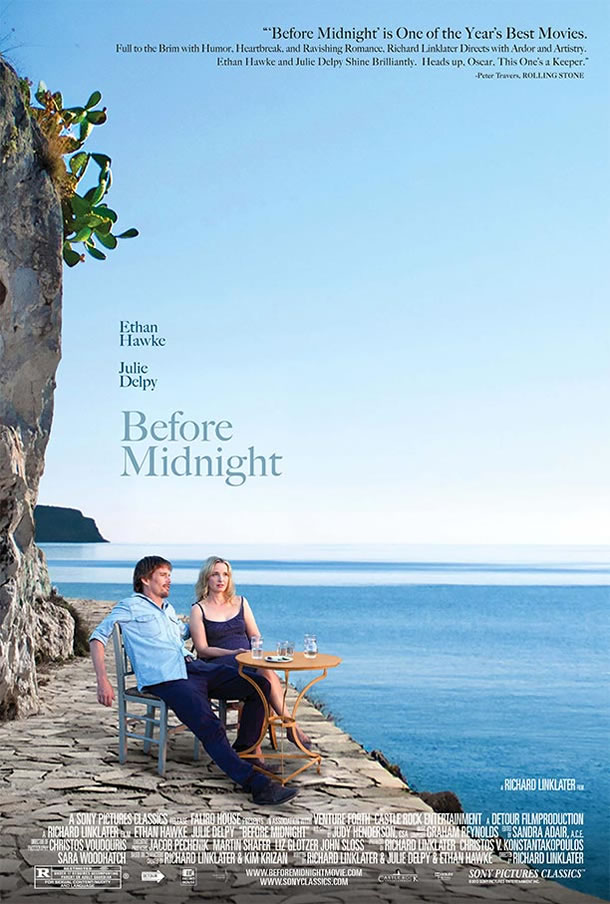 If you’re a fan of writer/director Richard Linklater’s previous movies (Before Sunrise and Before Sunset), as I am, then a new Before movie is a cause of celebration. It feels like we’re checking in with old friends. It’s fascinating to take stock of these characters and their new points in their lives, now approaching middle age. This series is becoming the dramatic equivalent to the 7 Up documentary series that periodically checks up on its subjects every seven years in their lives (56 Up came out this year). Individually, the films are wonderful, but when taken as a whole, the series becomes something truly special, something indelible and sweeping and transporting. Before Midnight is a wonderful movie, brimming with heart as well as ache. It’s also one of the best movies you’ll see this year and another touchstone to the impressive legacy of the series.
In 1995, 23-year-olds Jessie (Ethan Hawke) and Celine (Julie Delpy) met on a train and spent a magical day strolling through Vienna and essentially falling in love. In 2004, Jessie was touring Paris on his book tour, having turned the events of that Vienna night into a successful novel. Celine meets him and the two pal around, reconnecting, with Celine revealing how much that night meant to her as well. Now, in 2013, Jessie and Celine are together, though unmarried, and have twin seven-year-old daughters, Ella and Nina. They’ve been vacationing in Greece for a month while Jessie works on a new novel. Over the course of one long day, the couple will try and stir old passions and question whether they still share the same commitments.
 We’re watching the evolution of two human beings, and your response will vary depending upon your own life’s stopping point at the time of viewing. I must say, as a man now in his early thirties, that I enjoyed Sunrise and Sunset even more, finding greater thematic resonance to the characters, their anxieties, and the concern about faking your way through the “adult world.” I imagine I will find these movies even more emotionally engaging as I continue to age and cross similar hurdles as the characters do. For fans of the series, we’ve already invested 20 years and four hours of screen time with these characters. There’s more at stake when they fight. Watching the other movies beforehand, which I heartily recommend for multiple reasons, also provides stirring points of contrast, the romanticism of youth, the exuberance of promise. What Before Midnight does, and does so exceptionally, is take the romance of the earlier films and put it to the test. There’s a lovely dinner scene with several couples, and you realize that each one is an analogue for Jessie and Celine: the teenagers, the middle-aged couple starting out, the older couple discussing the demise of their previous spouses. It’s hard not to contrast the different stops and the different realities of love by the age.
Fair warning, Before Midnight is the least romantic of all three movies (I want a new movie every 9 years or so until the last one is essentially Amour). The first movie was them connecting. The second movie was about them reconnecting. The third movie establishes that they’ve been together for nine years and have a pair of twin daughters. The focus of Midnight is the struggle of maintaining a long-term relationship, something rarely given such thoughtful, perceptive, and compassionate depth on screen. We’d all rather watch lovebirds make goo-goo eyes at one another while we swoon appropriately, but Midnight’s many battles, small and large, new and ongoing, explore a relationship reality that many should find alarmingly relatable. While the particulars may be different, you may be surprised at how similar these conflicts can be. Exclude stuff like vacationing in Greece, the cushy jobs, and look to the mounting difficulty to retain that spark, a reminder of why you fell in love long ago, with the responsibilities of parenting and work stretching you in different directions. Routine can quickly transform into malaise. Jessie has a teenage son from a previous relationship, and this pushes him into great remorse when the kid departs, making him feel inadequate as a parent, which leads him to suggest unlikely relocation scenarios. Celine, being something of a worst-case scenario creature, notes the moment, saying this is when couples start falling apart. She’s worried he’ll resent her for choosing against a cross-country move. However, as the movie progresses, you realize there are already enough long-simmering resentments between the couple. This is a hard movie to watch at times because Jessie and Celine both go for broke when they argue, and it can get ugly (he dismisses her feelings as “crazy”; she vents about his lack of virility). Ending on a moment of ambiguity, like the other films, it’s perfectly reasonable to assume you just watched a two-hour breakup movie. Their problems don’t really seem resolved but I guess we’ll see in nine years, won’t we? Hopefully the next one isn’t called Before Divorce.
 The hallmark of the series, its sparkling conversation, is alive and well, with added maturity and reflection. When you get dialogue this good, this fluidly natural, this engaging, I could listen to them talk for days. In my mini-review for Before Sunset I compared it to listening to birds sing. The shots can last upwards of ten minutes as the camera just slowly walks ahead of Hawke and Delpy as they converse. In the first film we got a foot-tour of Vienna, the second Paris, and now Greece. The sights, while nice, are incidental because I was consumed with the dialogue, which spills so effortlessly from Hawke and Delpy, relishing playing these characters once more. Their give-and-take is often breathless, with nary a pause between them, and it can become overpowering for the uninitiated (lots of old ladies, I have found, dislike this movie, though when asked, none have seen the previous two). But there’s such added dramatic subtext now that we’ve jumped ahead in time. Rather than yearn for the characters to get together, now we’re assembling what we can of their history together and the durable conflicts. The exposition never feels forced, and each new bit provides another prism to view the character actions. You’re studying the characters, parsing their words, sizing up their honesty, and analyzing the various tests and dodges they dole out to one another. It’s a more active experience than you might expect for watching people talk a lot.
Hawke (The Purge) and Delpy (2 Days in New York) are so exquisitely natural with these characters and together and never better. They know these people inside out, and they should because both are credited yet again as co-screenwriters with Linklater. I’d expect another Oscar nomination in their future, much like Before Sunset. Delpy has a wonderful faux youthful voice she uses for hilarious disdain to narrate Jessie’s female fans. Both actors go a long way to flesh out their characters, provide degrees of new wisdom and worry while making us care about their problems. One character does not have the moral high ground, which makes their arguments all the more challenging to process. I don’t want to make it sound like Before Midnight is some twenty-first century Whose Afraid of Virginia Woolfe? There are innumerous moments of humor and grace and compassion, but the louder ringing of the raging conflicts can swallow them up. I also found it intriguing that this is the first movie in the series with nudity from our couple. Granted, it would seem somewhat forward if it happened in Sunrise and Sunset considering the narrow timeframes. As presented in Midnight, it loses erotic context and becomes another indicator of the struggles of maintaining passion.
I want to reiterate that I really hope that Linklater and his stars continue to bless us with a new film every decade, checking back on the lives of Jessie and Celine. The next one, if we continue the nine-year tradition, will deal with them turning fifty, which seems like a grand opportunity for some existential ennui. Also, Jessie son from a previous marriage will be roughly the same age Jessie was in 1995’s Before Sunrise. That could provide another interesting perspective for dad. I’m just not ready to say goodbye to these characters yet. Much like the 7 Up documentary series, the movies provide a point to reflect on our own lives, how we’ve changed and grown, the setbacks and triumphs, surprises and sadness. Catching up with the series, I viewed the movies very differently than I did when I first watched them. The art remains the same but the frame changes; we change. The glorious aspect of Linklater’s series is that we get to chart that change, checking back with old friends we’ve grown with. The movie’s attention to character and the relatable problems of middle age and long-term relationships is rich, nuanced, and just about everything This is 40 should have been and wasn’t. Before Midnight may lack the idealistic romanticism of previous entries but it substitutes a soulfulness to a series that has always been mature beyond its years. Approaching half a life lived, the characters still have plenty of life in them, plenty of dreams worth pursuing, and plenty more hurdles to go. It has been an ongoing privilege to get to spend time with these two. I pray this is not the end but just another stop on what ends up being one of cinema’s definitive statements on love through the ages.
Nate’s Grade: A


 nathanzoebl
You must be logged in to post a comment.