Blog Archives

The Rundown (2003) [Review Re-View]

Originally released September 26, 2003:

In the beginning of the new action comedy The Rundown, Beck (The Rock), a bounty hunter, is entering a club on a job. On his way in Arnold Schwarzenegger passes him by and says, “”Have fun.”” Consider it a proverbial torch passing, because while Schwarzenegger is going to be busting the campaign trail, The Rundown establishes The Rock as the fresh and capable marquee name for all future action films. This man is a star.

Beck is offered a chance to square off all debts to mobster Billy Walker by agreeing to journey into the Brazilian jungle. His mission is to retrieve Travis (Seann William Scott), a hyperactive screw-up who happens to be Walker’’s son. One Beck travels to the Amazon he runs into Hatcher (Christopher Walken) who claims to own the jungle and whatever contents dwell within. He asserts that Travis has stumbled upon a wealthy artifact in his jungle and therefore refuses Beck to leave with Travis. It’’s at this point that the chase is on.

I don’’t care what your little sister told you, Vin Diesel is not the next face of action, no, it’’s The Rock. Despite only appearing in three movies (and he was only in The Mummy Returns for like three minutes), The Rock displays a razor-sharp sense of comedy. He’’s also huge, likeable, and he can even emote well during smaller moments, not that The Rundown will stretch you as an actor. He’’s also honed in excessive eyebrow arching.

Walken exists in a plane of brilliant weirdness that we simple human will never be able to co-exist upon. His Hatcher is one mean villain who exploits indigenous workers, wears his pants up to his armpits, and says he put the “heart” in the darkness. Walken’’s hysterical tooth fairy monologue is worth the price of admission alone.

Director Peter Berg (Very Bad Things) adds a delectable cartoonish flavor to the film. His action sequences pop with exaggerated energy and zestful humor, like when Travis and Beck roll down a hill for a near minute. This is everything an action film should be: lively, funny, with keen action sequences that are low on CGI but filled with characters we care about. The Rundown is the best summer film not released during the summer.

The Rundown is an adrenalized punch of fabulous action and hilarious banter. When you’’re not laughing and spilling your popcorn you’’ll be sitting straight up to catch every lovely eyeful of spectacular action. It’’s a terrifically entertaining and fun flick. The Rock has arrived.

Nate’s Grade: A

——————————————————

WRITER REFLECTIONS 20 YEARS LATER

Looking back, The Rundown really was a sea change for action cinema, and it also helps that I called it all the way back in 2003, because even a little 21-year-old me could recognize what seems almost blindingly obvious over two decades of hindsight: The Rock was a born star.

The Arnold Schwarzenegger cameo in the opening scene of the movie feels even more like a passing of the baton, as Arnie was stepping out to join the world of politics and Dwayne “The Rock” Johnson was only beginning to get started building a movie career. “Have fun,” Schwarzenegger says in passing. The wrestling phenom had built a powerful following and had begun making the leap into mainstream features with 2002’s one-two-punch of The Mummy Returns and his spinoff, The Scorpion King (did you know there are five Scorpion King movies and the 2012 edition co-starred fellow wrestler-turned-movie star Dave Bautista? Well now you do!). His appearance in the Mummy sequel was minimal, and marred by some of the worst CGI of the new century, but his solo Scorpion King adventure wasn’t quite the launching pad Johnson’s team had hoped. It wasn’t really until his fortuitous inclusion with the re-surging Fast and Furious franchise in 2010 that Johnson finally hit superstardom. However, the same magnetic appeal that would come to define Johnson as one of the biggest and more consistent movie stars in the world can be seen so evidently in 2003’s The Rundown, an action-comedy vehicle that plays to all the man’s many strengths. He’s got an immediate presence, a trained comedian’s command of timing and inflection, a gift for slapstick and lack of vanity about being goofy, and the man is just an agile and impressive physical specimen who throws himself into the rough and tumble stunt work. In short, Johnson knows how to look cool, knows how to look tough, knows how to look silly, and knows when to change gears. He’s a generational talent. My friend Ben Bailey says Johnson should play Superman because he really is Superman hiding among us pitiably frail mortals.

The Rundown, formerly known as Helldorardo, is also an excellent launching pad for director Peter Berg, who until this time had only one other movie on his resume as a director, 1998’s relentlessly dark comedy, Very Bad Things (a film I remember “enjoying,” if that could even qualify as the correct word). This was Berg’s coming out party for the realm of bigger studio fare, and while it didn’t launch his career much like his leading man, it led to Berg’s breakout, helming 2004’s Friday Night Lights. From there, Berg has directed blockbusters (Hancock), blockbuster misfires (the unjustly maligned Battleship), and five reportedly different Mark Wahlberg action dramas from 2013-2020, though you’d be forgiven if you inadvertently confused a Spenser Confidential with a Mile 22. Berg’s docu-drama style became entrenched in 2004, though it didn’t always suit every movie equally. That’s why the movies that stand out from this default cinema verite visual style are even more remarkable for me, especially when Berg showed he can do over-the-top flashy fun violence just as good as any other big screen movie maker. His zest for the outlandish makes the movie feel like a living cartoon, but in the best way. The screen is coursing with energy but within a dedicated vision of spectacle, unlike say the mass chaos and indifference to coherency that dominates a Micheal Bay extravaganza.

Chiefly, The Rundown is just such an overwhelmingly fun experience. The actors have an infectious and combustible chemistry, bringing to mind the likes of Midnight Run and Romancing the Stone. The plot holds up well and allows for momentous action and a pleasing revolt against an exploitative villain played with panache by none other than a cranky Christopher Walken. Even while being irreverent and ridiculous, the movie still works as a story and a buddy movie, and the ending feels fulfilling and satisfying on its own terms. As I said in my 2003 review, this is everything an action movie should be. It’s exciting with engaging set pieces and outlandish stunt work but it never loses sight of its characters and their fractious screwball relationship. I love movies where the two lead characters are working against odds and constantly one-upping each other, flipping who has the upper hand. It makes for a far more unpredictable experience and ensures neither character is ever too confidently in control.

This is an excellent movie to just put on and dash away your cares for two hours. I’ve watched The Rundown probably a dozen times, introduced friends and students to it, and everyone walks away a believer. It’s got style and banter and enjoyable characters and surprises and is just one of those movies that nobody really ever talks about but deserves to be on everyone’s DVD shelf.

Re-View Grade: A

Clerks III (2022)

I’m at a crossroads with writer/director Kevin Smith. Well, I might actually have already switched sides but don’t want to fully admit it yet even if it’s self-evident. I’ve written about this before but Smith was one of those major cinematic voices that helped shape my sense of indie film and even comedy during my formative teenage years. I became a diehard fan, watched every movie several times and had all their interconnected Easter eggs memorized, and I’ve seen the man in person three times, one time recorded for a college Q&A DVD release. In short, I was most definitely a Kevin Smith super fan. Then over the last five years or so, things began to change, or more accurately my perception of Smith’s movies began to change. The attempts at humor were strained, obvious, and gassed, and it felt like his biting wit and raunch had transformed into mawkish nostalgia. The man in his twenties who made comedies I identified with and loved became a man in his forties with different priorities and a different perspective. He evolved. However, I am no static creature, and I too was evolving, and my fanfare for Smith’s comedy sensibility has transformed into more of a pained grimace. I re-watched Dogma in 2019 and Jay and Silent Bob Strike Back in 2021, as well as its second-banana imitation Jay and Silent Bob Reboot in 2019, and my assessment was only reaffirmed with each movie: I’ve outgrown my old influence. As a big screen storyteller, Smith has become more and more insular, inaccessible, and beholden to eroding fan-service, almost like he too is trying to bid goodbye to his own universe of characters. Maybe that will be the big reveal, Smith putting all his toys back away while he still can.

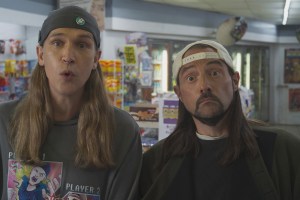
Clerks III is a return to the old QuickStop convenience store in Red Bank, New Jersey, last seen in 2006 with friends and malcontents Dante Hicks (Brian O’Halloran) and Randall (Jeff Anderson) as the new owners. Clerks II seemingly ended on a moment of triumph, of the guys returning to their roots but also stepping up, assuming ownership responsibilities. However, many can also view the ending as a darker indictment on what the future held for these men. Sixteen years later, what have these men accomplished? That’s the thrust of this third film, following Randal’s brush with death from a heart attack (based upon Smith’s own life-threatening experience). He re-evaluates his life at 50 and yearns to make a movie about his life and his personal experiences, which just happens to be life in service at the QuickStop. He bands together with Dante as producer and they put together a ragtag crew, including old buddies now selling their own state-approved brand of bud, Jay (Jason Mewes) and Silent Bob (Smith), to make their movie.

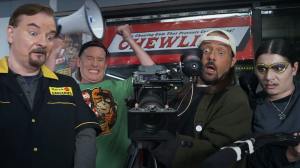
In many ways, Clerks III is like a remake of Clerks with the characters of Clerks making their own version of Clerks only thirty years removed from the actual scenes of Clerks. There’s a bit of a snake eating its own tail feeling; many scenes are re-creations of moments from the original Clerks and with the same actors. It’s slightly fun to see even the smaller non-actors come back to recreate these moments, but it also makes the movie feel like an extended high school reunion (“Oh look, that guy lost his hair.”). If you were not a fan of Clerks, well you shouldn’t really be watching the third film in the series, but if you didn’t have an attachment to these characters and this odd world, seeing older versions of former fleeting characters, from the Chewlie’s Gum rep to the angry ruse-baiting video store customer or the woman who manually masturbates caged animals, would feel like flipping through someone else’s photo album, devoid of whatever nostalgic or emotion was intended.

As a lifelong fan of Smith’s filmography, or at least a former lifelong fan now transitioning to accepting a parting of ways, it’s neat to see this reunion of sorts, but it’s also ultimately pointless from a narrative standpoint. Smith is treading the same ground now with irony and distance. Actually, the irony gives way more to sentimentality. It’s not an insult to say that Smith has gotten increasingly softer as he’s gotten older, blunting much of his comedy edge. He comes across as a sincere man who really cares for the people in his life, including these very people that contributed their time and efforts in 1992 to help make a young man’s dream come true. I understand his desire to pay back all the little people, to check back with them one more time, and to have Clerks III serve as a love letter to those who were there from the very beginning. If you’re plugged into this universe, you might smile and you might also feel some of the love.

There are famous cameos to balance out the lesser known faces from the original Clerks. You’ll see Ben Affleck hamming it up, Justin Long doing a funny voice, Fred Armisen grasping for something to do, and Sarah Michelle Gellar’s first film role since 2012 and first live-action film role since 2009’s Possession (Gellar was a voice on Smith’s Masters of the Universe animated series on Netflix). The two big additions from Clerks II also return. Trevor Fehrman, returning as the socially awkward coworker Elias, is the funniest part of the movie as his character goes through a spiritual crisis. He feels let down by Jesus and commits himself to Satan, and his runway show’s worth of crazy outfits and cosplays throughout the movie is the funniest joke that never even bears mentioning, which only makes it funnier (he too has his own Silent Bob-esque quiet sidekick played with good spirits by Austin Zajur). Elias was the voice of a younger generation of Internet fandom in Clerks II, allowing Smith his opportunity to criticize modern geek pop-culture, like the Star Wars prequels and Lord of the Rings. That doesn’t really happen in Clerks III despite 16 years of Dante and Randal’s cinematic absence. Smith doesn’t even nibble or good-naturedly rib any pop-culture landscape. Even the jokes about NFTs feel hesitant and wishy-washy and lazy. Smith was defined by his ribald wit and hyper-literate dialogue, and now his comedy has become inane slapstick and pandering nods meant to serve as a replacement for an absent punchline. It’s disappointing how little the comedy registers now.

The biggest addition to the Clerks trilogy was Rosario Dawson, now even more popular as she’s firmly solidified in the Star Wars TV empire. I figured she would have been written out of the franchise as her availability was going to be far more limited. It’s not a spoiler considering it’s revealed within the first minute or so, but Dawson’s character, Becky, who was pregnant with Dante’s child and this presented a new route for his future, is dead. Not only is Becky gone but she died in 2006 from a drunk driver, which means that her unborn child with Dante also died, though this is never touched upon and that seems truly bizarre because much of Dante’s characterization in this movie will be his prison of grief he’s been unable to break from. It’s been 16 years and Dante has not moved on, and I wish more of this was explored thoughtfully. He views himself as a man stuck, now in his 50s, and having missed his off-ramp to another and better life. Without more careful attention, it can come across like a schlub holding onto his grief as a mistaken form of identity. Even that description could be interesting, but you’re not going to get that level of drama in something like Clerks III. Dawson does have a few appearances as a ghostly memory trying to help Dante move on, though if this is the case, I feel like she should be reaching some kind of breaking point after 16 years of effort.

By the end of Clerks III, it’s clear that Smith intends for this to be the concluding chapter, sending off these characters as reflections of his own film history. The focus of the final act is far more dramatic, as the act of retelling one’s life story as a movie becomes its own way of sharing the love and admiration of a decades-long friendship. I don’t quite think Smith gets to the dramatic heights he’s reaching for, even when some pretty significant and surprising events play out. Too much of the movie is like watching a low-budget remake of Clerks thirty years late, and while I’m a sucker for movies about the making of movies, and those fun found families of creatives banding together, the structural vehicle and conceit for Clerks III left much to be desired. If you remember the scenes of 1994’s Clerks, watching Clerks III is like reliving them as a strange Lynchian dream where the edges are smudged and everything isn’t quite as it should be. At this point, a new Kevin Smith movie is made strictly for the most diehard of fans. I can see that ever-shrinking pool of fans warmly smiling and chuckling from the movie but more in nostalgic recognition of time gone by. It’s nice to revisit these characters, as I’ve been eager to see what life has dealt them since Clerks II. You can feel Smith’s affection for these people, the ones who catapulted him into fame, but the movie is too backward-looking and uninterested in its own comedy as Smith winds down.

Nate’s Grade: C

Down to You (2000) [Review Re-View]

Originally released January 8, 2000:

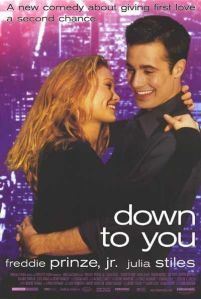
The latest sacrifice to almighty gods that are the teenage market with wide pockets arrives and proves not only is the teen comedy dying, it is having its grave danced upon. And with eight inch heels worn by the fiend known as Down To You.

Want an old-fashioned love story? Boy gets girl, boy loses girl, boy tries to get girl again, and boy gets girl. Pretty old and pretty much nothing more to Down to You, minus the addition of two porn stars and a nymphomaniac. The story is the same well-beaten path where they keep the leads as far away from each other and just let ’em loose at the end. Everyone hugs and we can all go home. Geez, I’ve seen more substance in a bag of fat-free potato chips.

The movie is very uninteresting and rather pointless as it drones on. Freddie Prinze Jr. can smile all he wants to but I’ll still never believe he’s a down on his luck college coed. At least he’s out of high school in this one. Everything in this movie has a recycled feel to it, so much so that some environmentalist group should confiscate this entire movie. People, it’s that bad. Imagine every cliché, expanded character stereotype, redundant joke, and you still have no idea how bad this script is. What the writer/director believes is quirky and cute falls closer to annoying and irresponsible.

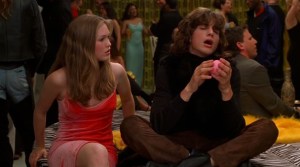
The rest of the actors are faceless unknowns that you might as well search for on the back of a milk carton. Julia Stiles and Freddie Prinze Jr. have zero chemistry between them and are either bickering or blushing in embarrassment. Doesn’t sound like a good relationship worth a dozen flashbacks to me. Stiles at least puts forth an effort but Prinze just runs through the motions of another teen flick for his resume and comes off as nothing more than a mannequin with a goofy grin.

I stand and make a plea; please for the love of God end this Hollywood fascination with high school romantic comedies. It might have been cute to start out with but this trend has run its course. The only way the madness of teen romantic comedies will end is if the teens themselves stop supporting them. Wise up America. Take action! If this comedy is supposed to be about the school of life I’d say it overslept its class.

Nate’s Grade: C-

——————————————————

WRITER REFLECTIONS 20 YEARS LATER

I’ve been wondering for years if maybe, just maybe, I was too hard on the forgettable rom-com, Down to You. Not that it was a great movie but maybe the 17-year-old version of myself at that time in my senior year of high school had an axe to grind against blandly popular art. I can recall vividly how incensed I felt as a teenager growing up in the 90s with the rise of pop music like Britney Spears and Hanson and boy bands, the idea that these fleeting confections were somehow squeezing out the spaces for the bands and artists that I felt were more deserving of attention, alternative rock bands that were formidable for me, like Smashing Pumpkins and Radiohead. I can feel that intensity in my derogatory use of the term “teenybopper” to describe art that was made for mass appeal. Now, decades hence, I look back at my younger self and wonder why I got so upset about people liking art that didn’t appeal to me and why I felt such a passionate intensity to take down the art I personally disliked. Who cares? You don’t like Taylor Swift’s music? Fine, but what does it matter if others happen to like it? I can appreciate the pop stylings of Ms. Spears and the boy bands of yore. I’ve learned through time not to take offense that people just have different tastes (unless people enjoy the Friedberg-Seltzer “comedies,” because that is all the judgement I need).

That’s why I was wondering whether Down to You was a victim of my teenage animus and might, upon retrospect, perhaps be a better movie than I gave it fair credit for back in 2000, the dawn of a new century. Dear reader, I am here to inform you that, having recently re-watched this Freddie Prince Jr.-Julia Stiles romance, that Down to You is even worse than my teenage-self had warned.

For starters, this movie rings astoundingly inauthentic with every moment. It was written and directed by Kris Isacsson (Husband for Hire) who was close to thirty years old when Down to You was released but it feels like a 50-year-old was trying to replicate the speaking patterns of hip young twenty-somethings and flailing badly. Every word of dialogue just has that unshakable feeling of being off, or bring cringe-worthy, or failing to articulate the rhythms of youth. It’s not even in the Kevin Williamson-Dawson’s Creek style of hyper-verbal, overly clever youth that never existed except in television writers’ rooms. It’s not even entertaining in-authenticity.

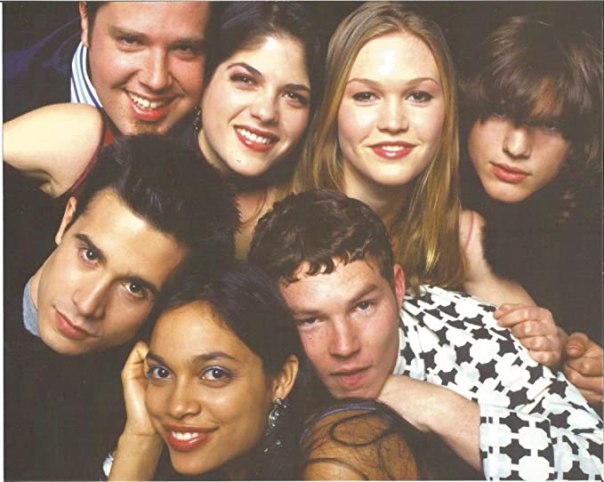
These college students sound interchangeable from their older parents; one pompous thespian friend (Zak Orth, channeling Orson Welles) feels completely transported from another movie. He has a test where he challenges Al to drink out of two cups, one representing true love and the other representing illusion. I did not understand the point of this game. I assume it was like Three Card Monty and he had to pick the right one after watching it be shuffled, but that’s just proving Al can follow a cup. This moment is played like some grave insight and it makes no sense. Even more than that, the behavior of the “kids being kids” can be downright cringe-inducing. Imogen will turn on music and walk around lip synching to the adoration of any crowd, but it just feels so awkward to watch, and it happens multiple times. Rosario Dawson (Men in Black II) is a one-note “hippie” friend who makes lame drug jokes. Selma Blair (Hellboy) is an active porn star and an active student at the school but is just a vampy attempt to tempt our male lead. He even keeps naughty pictures of Blair under his bed even after he’s dating Imogen. There’s also Ashton Kutcher (The Butterfly Effect) as an obtuse artist. Every character feels phony and bereft of charm and wit.

Romantic comedies live and die on two things: 1) your level of amusement in the characters, and 2) the chemistry of the lead characters. Down to You regrettably whiffs on both accounts. These are very boring characters and even by the end of the movie we know very little about them. Al says he wants to be a chef but we never see him do any cooking on his own, which seems like quite an oversight for a budding relationship. She’s an aspiring artist and we at least see her paint and describe why she likes art. Isacsson employs a Woody Allen-esque device where both participants break the fourth wall from the future to talk about their relationship ups and downs. You would think this framing device would allow for better insights and you’d be wrong. At one point, Imogen leaves for France for three or more months for an internship. You would think this would provide a difficult period for boyfriend and girlfriend to adjust and maintain intimacy, perhaps throwing some question over whether they’re fully invested. One minute later, she’s back and this entire excursion has meant nothing to their relationship. Why even include it?

Their coupledom feels as inorganic as everything else, and this is magnified by the powerful lack of chemistry between Prinze Jr. (She’s All That) and Stiles (The Bourne Identity). You don’t feel any urge compelling Al and Imogen to get together because they seem like chummy friends at best. When they have sex for the first time, three months into their collegiate relationship, the camera slowly lingers over their faces and uncomfortably frames their dispassionate and awkward kissing far too long. I defy anyone to watch that scene and argue that these two people have a spark of chemistry. I even hate their names. “Imogen” feels like it’s trying too hard and “Al” not hard enough. With the poor character writing, bad plotting and development, and no palpable chemistry, it makes Down to You feel like a painfully confounding experience lacking romance and comedy.

I was amazed at Isacsson’s sense of scene building and how wrong many of the endings come across. A scene, when well written, should serve as its own mini-movie with a beginning, middle, and end, and hopefully some conflict to explore. In a comedy, the conclusions of scenes would end on an upturn or a downturn but it’s also a good idea for there to be a discernible punchline the previous moment was leading up to. There’s one scene where Al’s roommate (Shawn Hatosy), a peculiar presence throughout that never knows what to do in any given moment, is drunk at a party and talking to an inflatable gorilla wearing a brassier. Al grabs the gorilla away and his inebriated roommate whimpers. That’s it. The generally off nature to all the writing is compounded in the comedy writing, which is compounded in its lazy or non-existent punchlines.

The worst example is when Al literally drinks a bottle of Imogen’s shampoo in a misguided suicide attempt. This is the thing I’ll always remember this absurd movie for. Al has his stomach pumped and undergoes a psychological review in the hospital, where he argues he was testing himself to see if he “needed the shampoo” and turns out he still did. This reckless act of self-destruction should provide more insights and changes to our male lead and those around him; he did, after all, attempt to end his life over being distraught from an ex-girlfriend. Al shrugs and it’s forgotten. What was the purpose of doing something this weird and harmful if it wasn’t going to matter in the bigger picture? Don’t transform a suicide attempt into a quirky anecdote for a non-dark comedy. This is what Down to You feels like as a whole, a series of contrived anecdotes crashing against one another.

There is one lone saving grace for this entire enterprise and that’s Henry Winkler (so brilliant on HBO’s Barry) as Al’s father, a famous TV chef who has an exciting idea for a reality TV show. He’s modeling it after Cops, that stalwart of 90s television, but it would be called Chefs. It would feature a traveling truck of chefs that would come to a stranger’s home, prepare a delicious meal, and teach the family how to do it themselves. Not only does that sound like a great idea for a TV show in 2000, I’m positive some show has run with this concept and had great success since. I would have rather watched the movie from Winkler’s point of view trying to get this show on the air and dealing with a son who drinks shampoo as a cry for help.

Looking back on my original review in 2000, I was wincing at how many joke-slams I was attempting at the film’s expense. Look, Down to You is still a bad movie but I didn’t need to add lines like, “I’ve seen more substance in a bag of fat-free potato chips,” and, “if this comedy is about the school of life I’d say it overslept its class.” This was still less than a year into my pursuit of critically reviewing movies, so I think I was forcing ready-made blurb-tendencies. My critical charges were on par but failed to go into more detail and seemed too general, which is why I wondered if my charges were colored by my teenage biases at the time. Given the time and distance, Down to You feels even more phony and confusing to watch as an adult. I was muttering to myself and my girlfriend while re-watching it and trying to understand the distaff storytelling choices. It’s flabbergasting and dated and even worse than I remembered. Down to You might be the nadir of the teen comedy movement from the early 2000s. I will never have to see this again. So, future me reading these words, heed this warning – stay away. Stay far away.

Re-Review Grade: D

Jay and Silent Bob Reboot (2019)

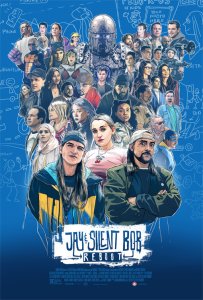
Jay and Silent Bob Reboot is strictly made for writer/director Kevin Smith’s fanbase, so does trying to play outside this cultivated audience even matter? Honestly, there’s no way this is going to be anyone’s first Smith movie, so it’s already running on an assumed sense of familiarity with the characters and stories of old, which is often a perquisite to enjoying many of the jokes (more on this later). It’s been 25 years since Clerks originally debuted and showcased Smith’s ribald and shrewd sense of dialogue-driven, pop-culture-drenched humor. He’s created his own little sphere with a fervent fanbase, so does he need to strive for a larger audience with any forthcoming movies or does he simply exclusively serve the existing crowd?

Jay (Jason Mewes) and his hetero life-mate Silent Bob (Smith) are out for vengeance once again. Hollywood is rebooting the old Bluntman and Chronic superhero movie from 2001, this time in a dark and edgy direction, and since Jay and Silent Bob are the inspirations for those characters, even their likenesses and names now belong to the studio. The stoner duo, older and not so much wiser, chart a cross-country trip to California to attend ChronicCon and thwart the filming of the new movie, directed by none other than Kevin Smith (himself). Along the way, Jay and Bob discover that Jay’s old flame, Justice (Shannon Elizabeth), had a daughter, Millennium “Milly” Falcon (Harley Quinn Smith) and Jay is the father. Milly forces Jay and Bob to escort her and her group of friends to ChronicCon and Jay struggles with holding back his real connection to her.

One of my major complaints with 2016’s Yoga Hosers (still the worst film of his career) was that it felt like it was made for his daughter, her friends, and there was no point of access for anyone else. It felt like a higher-budget home movie that just happened to get a theatrical release. Jay and Silent Bob Reboot feels somewhat similar, reaching back to the 2001 comedy that itself was reaching back on a half-decade of inter-connected Smithian characters. There is a certain degree of frantic self-cannibalism here but if the fans are happy then does Smith need to branch out? This is a question that every fan will have to answer personally. At this point, do they want new stories in the same style of the old or do they just want new moments with the aging characters of old to provide an ever-extending coda to their fictional lives?

I certainly enjoyed myself but I could not escape the fact at how eager and stale much of the comedy felt. Smith has never been one to hinge on set pieces and more on character interactions, usually profane conversations with the occasional slapstick element. This is one reason why the original Jay and Silent Bob Strikes Back suffers in comparison to his more character-driven comedies. Alas, the intended comedy set pieces in Reboot come across very flat. A lustful fantasy sequence never seems to take off into outrageousness. A drug trip sequence begins in a promising and specific angle and then stalls. The final act has a surprise villain that comes from nowhere, feels incredibly dated, and delivers few jokes beyond a badly over-the-top accent and its sheer bizarre randomness. There’s a scene where the characters stumble across a KKK rally. The escape is too juvenile and arbitrary. A courtroom scene has promise when Justin Long appears as a litigation attorney for both sides but the joke doesn’t go further, capping out merely at the revelation of the idea. This is indicative of much of Reboot where the jokes appear but are routinely easy to digest and surface-level, seldom deepening or expanding. There’s a character played by Fred Armison who makes a second appearance, leading you to believe he will become a running gag that will get even more desperate and unhinged with each new appearance as he seeks vengeance. He’s never seen again after that second time. There are other moments that feel like setups for larger comedic payoffs but they never arrive. The actual clip of the Bluntman and Chronic film, modeled after Zack Snyder’s Batman v. Superman, is almost absent any jokes or satire. There are fourth-wall breaks that are too obvious to be funny as they rest on recognition alone. There’s a running joke where Silent Bob furiously taps away at a smart phone to then turn around and showcase a single emoji. It’s cute the first time, but then this happens like six more times. Strangely it feels like Smith’s sense of humor has been turned off for painfully long durations on this trip down memory lane. The structure is so heavily reminiscent of Jay and Silent Bob Strike Back that there are moments that repeat step-for-step joke patterns but without new context, meaning the joke is practically the repetition itself.

The problem with comedy is that familiarity can breed boredom, and during the funny stretches, I found myself growing restless with Reboot as we transitioned from stop to stop among the familiar faces. I enjoyed seeing the different characters again but many of them had no reason to be involved except in a general “we’re bringing the band back together” camaraderie. It’s nice to see Jason Lee again but if he doesn’t have any strong jokes, why use him in this way? Let me dig further with Lee to illustrate the problem at heart with Reboot. Jay and Silent Bob visit Brodie (Lee) at his comic book shop, which happens to be at the mall now. He complains that nobody comes to the mall any longer and he has to worry about the “mallrats,” and then he clarifies, he’s talking about actual rodents invading the space, and he throws a shoe off screen. I challenge anyone to find that joke amusing beyond a so-bad-it’s-fun dad joke reclamation. I kept waiting for Smith to rip open some satirical jabs on pop culture since 2006’s Clerks II. In the ensuing years, Star Wars and Marvel have taken over and geek culture and comic books rule the roost. Surely a man who made his name on these topics would have something to say about this moment of over saturation, let alone Hollywood’s narrow insistence on cash-grab remakes. I kept waiting for the Smith of old to have some biting remarks or trenchant commentary. Milly’s diverse group of friends (including a Muslim woman named “Jihad”) is referred to like it’s a satirical swipe at reboots, but there isn’t a joke there unless the joke is, “Ha ha, everyone has to be woke these days,” which is clunky and doesn’t feel like Smith’s point of view. There are several moments where I felt like the humor was trying too hard or not hard enough. As a result, I chuckled with a sense of familiarity but the new material failed to gain much traction.

I do want to single out one new addition that I found to be hysterical, and that is Chris Hemsworth as a hologram version of himself at a convention. The Thor actor has opened up an exciting career path in comedy as highlighted by 2017’s Ragnarok, but just watching his natural self-effacing charm as he riffs about the dos and don’ts of acceptable behavior with his hologram is yet another reminder that this man is so skilled at hitting all the jokes given to him.

Where the movie succeeds best is as an unexpected and heartfelt father/daughter vehicle, with Jay getting a long-delayed chance to mature. It’s weird to say that a movie with Jay and Silent Bob in starring roles would succeed on its dramatic elements, but that’s because it feels like this is the territory that Smith genuinely has the most interest in exploring. The concept of Jay circling fatherhood and its responsibilities is a momentous turn for a character that has previously been regarded as a cartoon. His growing relationship with Milly is the source of the movie’s best scenes and the two actors have an enjoyable and combative chemistry, surely aided by the fact that Mewes has known Harley Quinn Smith her entire existence. This change agent leads to some unexpected bursts of paternal guidance from Jay, which presents an amusing contrast. There’s a clever through line of the difference between a reboot and a remake, and Smith takes this concept and brilliantly repackages it into a poignant metaphor about parenthood in a concluding monologue. Smith’s position as a father has softened him up a bit but it’s also informed his worldview and he’s become very unabashedly sentimental, and when he puts in the right amount of attention, it works. There’s an end credit clip with the late Stan Lee where Smith is playing a potential Reboot scene with Stan the Man, and it’s so sweet to watch the genuine affection both men have for one another. I’m raising the entire grade for this movie simply for a wonderful extended return of Ben Affleck’s Holden McNeil character, the creator of Bluntman and Chronic. We get a new ending for 1997’s Chasing Amy that touches upon all the major characters and allows them to be wise and compassionate. It’s a well-written epilogue that allows the characters to open up on weightier topics beyond the standard “dick and fart” jokes that are expected from a Smith comedy vehicle. It’s during this sequence where the movie is allowed to settle and say something, and it hits big time.

The highly verbose filmmaker has been a favorite of mine since I discovered a VHS copy of Clerks in the late 90s. I will always have a special place reserved for the man and see any of his movies, even if I’m discovering that maybe some of the appeal is starting to fade. I don’t know if we’re ever going to get a Kevin Smith movie that is intended for wide appeal again. Up next is Clerks 3, which the released plot synopsis reveals is essentially the characters of Clerks making Clerks in the convenience store, which just sounds overpoweringly meta-textual. He’s working within the confines of a narrow band and he seems content with that reality. I had the great fortune to attend the traveling road show for this film and saw Smith and Mewes in person where they introduced Reboot and answered several questions afterwards. Even though it was after midnight (on a school night!) I was happy I stayed because it was easy to once again get caught up in just how effortlessly Smith can be as a storyteller, as he spins his engaging personal yarns that you don’t want to end. As a storyteller, I’ll always be front and center for this gregarious and generous man. As a filmmaker, I’ll always be thankful for his impact he had on my fledgling ideas of indie cinema and comedy, even if that means an inevitable parting of ways as he charts a well-trod familiar path. Jay and Silent Bob Reboot is made strictly for the fans, and if you count yourself among that throng, you’ll likely find enough to justify a viewing, though it may also be one of diminished returns.

Nate’s Grade: C+

The Lego Batman Movie (2017)

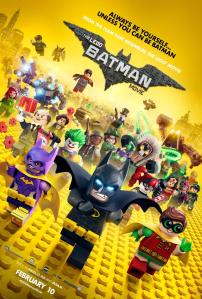
The Lego Batman Movie intends to expand the world of a movie that was designed to sell toys and was far better than anyone ever imagined. It’s frenetic, silly, and paced at spoof level speed with genial gags flying fast every ten seconds or so. It’s also flat, and while intermittently amusing I only chuckled, at best, a handful of times. Will Arnett’s self-involved Batman was a fun side character in the original Lego Movie but there’s not exactly enough there for his own starring vehicle (Jack Sparrow Syndrome). He’s saddled with a weak plot about letting others get closer and not having to be a loner. Besides a brief comedy bit about a cataclysm, the movie could have just been a broad Batman movie. It doesn’t really utilize the landscape of a Lego universe in any way. While many of the jokes didn’t work for me, I knew another one was mere seconds later, so I shrugged off the misfires. The final act of the movie involves a separate league of villains, all conveniently connected to other Warner Brothers properties. Lego Batman wore me down after the opening sequence where Batman battles his entire rogues gallery. It was high-energy but its aim was just too low for my tastes, and the results made me appreciate even more the cleverness and plain comedic accomplishments of the original Lego movie. There aren’t any memorable moments or jokes and there’s far too much Batman rapping. It’s colorful, it’s wacky, it’s filled with fine vocal actors with very little to do other than Arnett and an amusingly awed Michael Cera as The Boy Wonder himself, adopted sidekick Robin. It’s an acceptable albeit numbing experience that I wanted to enjoy more. I don’t know if this is the start of Lego spin-off movies but if it is I hope others do better with their own building blocks.

Nate’s Grade: C+

Trance (2013)

1957Danny Boyle is a director that can make anything watchable. The man made an entire movie about a dude trapped under a rock and it was spellbinding. With that in mind, he does his very best to turn the trippy, Inception-like crime thriller Trance into a workable, watchable experience for the audience. The main issue is that the movie is so busy that once it slows down you realize there really isn’t anything going on. James McAvoy plays an art auctioneer who stashed a valuable painting during a heist. He undergoes hypnotherapy by Rosario Dawson so the crooks can determine where the loot resides. The premise allows for plenty of fake-outs, and you’ll be conditioned to doubt just about everything you see on screen. The film does a nice job of applying that doubt to the characters as well; the good guys may not be so good and the bad guys may not be so bad. With Boyle’s hyperkinetic visuals and some fast-paced editing, Trance is serviceable in the moment, but when the characters literally spell out everything you realize how shallow the movie is as well as these characters. The lone truly memorable moment is a scene where Dawson jets off to a bathroom, we hear an electronic buzzing, and she comes out fully nude, presenting herself as a shaven offering. The fact that this relates to an actual plot point is practically incidental. The movie isn’t as smart or as fun or as entertaining as it thinks it is, and I wish Boyle had taken advantage of dream/mind mechanics and gone crazier with his visuals. Still, if you’ve got a couple hours, some low expectations, it’s worth at least one watch.

Nate’s Grade: B-

The Zookeeper (2011)

A lamebrain comedy with a horrible, repulsive romance where we watch a sweet, hapless zookeeper (Kevin James) romance a shallow woman (Leslie Bibb) who dumped him years ago and wants him to change, despite the fact that he’s great at his job, loves what he does, an the animals love the big lug as well, so much so that the animals all take turns giving the guy mating advice. That doesn’t sound like a bad premise for a comedy, though James takes the admission that animals could always talk a little too in stride. Their advice typically amounts to stuff like “puff out your chest” and “pee on this tree.” The potential of the premise is dashed when the comedy usually takes one of two routes: 1) James being clumsy, or, 2) James being fat. Rarely will The Zookeeper stray from these two troughs of canned laughs. There’s a bizarre montage of product placement for T.G.I. Friday’s where James takes a gorilla out to the restaurant. There’s Rosario Dawson looking splendid as the Obvious Love Interest Who Will Not Materialize Until James Has to Chase Her Down to Stop Her From Leaving. And there are poop jokes. Oh, the poop jokes. At one point there was a studio bidding war over this screenplay, which has five names attached to the finished product. I can’t imagine the end result was worth fighting over when it’s so predictable, flat-footed, and unfunny. And why have animals singing over the end credits? Surely that little dash of CGI was an extra few million dollars that could have been spent wiser, like purchasing a different script.

Nate’s Grade: C-

Percy Jackson & the Olympians: The Lightning Thief (2010)

If you’re looking for a pristine example of mediocrity, then let Percy Jackson serve as the new definition. From the acting to the special effects to the story, this movie barely registers anything other than a disinterested shrug. Based on a series of young adult books, clearly the producers were eyeing a potential lucrative franchise, which may explain why they hire Chris Columbus as director. The modern-day scions of ancient Greek gods is an intriguing starting point, until you realize that the film is just going to become one big, dumb retread through Greek mythology without a hint of wit. It’s Greek mythology turned into a kid’s book report who never read deeply into the source material. The film’s best asset is its collection of adult actors (Pierce Brosnan, Uma Thurman, Steve Coogan, Catherine Keener, Rosario Dawson), which take your mind off the fairly bland teen actors in the lead. Percy Jackson would be a more forgivable drag if it presented any moments of wonder that didn’t feel trite. The plot has the maddening habit of making characters stupid for plot reasons (hey Lightning Thief who wants to start a God-on-God war, when you have Zeus’s lightning bolt, thus sealing an impending war, don’t stop and monologue!). Yet the film has enough going on that you can follow it with ease and a minimal commitment. Consider putting on Percy Jackson when you need to do some household chores; it deserves that kind of attention.

Nate’s Grade: C

Seven Pounds (2008)

“Do not touch the jellyfish.” Wise words to live by. Will Smith stars in this heavy-handed drama about a man trying to make amends for his role in a fatal traffic accident. Smith is an IRS man on a mysterious personal mission. He’s interviewing several glum people waiting on organ transplant lists. If you cannot connect the pieces already, don’t worry because Seven Pounds will hammer every last point with forceful melodrama. The story structure is needlessly fractured, hoping to add more style to a fairly banal redemption tale. Naturally, Smith falls for a woman (Rosario Dawson) in desperate need of a heart transplant, complicating his scheme. And yet the movie sort of works on its own syrupy terms until those final moments involving that jellyfish. It is a jaw-dropping misguided move, one that rips you right out of the film. Just as Seven Pounds reaches its climactic emotional crescendo, you’re left scratching your head and laughing at the utter absurdity. It’s like tripping face-first right before the finish line. The jellyfish-infused ending is simply astonishing. Seriously, when was the last time an invertebrate sea creature played so prominently in a high-profile movie? In what would otherwise be an overwrought and unmemorable drama, the jellyfish gives Seven Pounds a certain bizarre immortality.

Nate’s Grade: C

Grindhouse (2007)

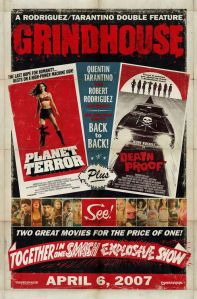
The movie going experience isn’t what it used to be, and Quentin Tarantino and Robert Rodriguez want to do something about it. There?s no denying that the joy of seeing a movie has been watered down a bit; there’s soaring ticket prices, floundering product, and let’s not forget the influx of teenagers with cell phones. Rodriguez and Tarantino grew up gorging upon the exploitation films at their neighborhood grindhouse, where they could see kung-fu, blaxploitation, gory Italian zombie movies, and nearly anything that promised to be titillating and shocking. These movies dealt in copious amounts of sex and violence on a shoestring budget and teenagers lapped it up. Grindhouse was designed to be a double feature with Rodriguez and Tarantino each writing and directing an 80-minute movie. This three-hour plus movie is stuffed to the gills with 70s reverence, right down to cheesy retro clips telling us the film rating via an animated cat. If Rodriguez and Tarantino could, they probably would make the floors stickier just to round out the experience. But that’s the marvelous thing about Grindhouse — it turns the filmgoing experience into an event once again.

First on the bill is Rodriguez’s Planet Terror. An outbreak is about to sweep across a small Texas town. A toxic green gas is causing people to break out in festering wounds that are spreading rapidly. Cherry Darling (Rose McGowan) is a go go dancer who runs into an old flame, Wray (Freddy Rodriguez), a badass drifter with a dark past. They get attacked by a group of “sickos” who take Cherry’s leg as a chew toy. At the hospital we’re introduced in rapid succession to Dr. Block (Mary Shelton) and her creepy husband (Josh Brolin) she plans on leaving for the lovingly massive cleavage of Fergie from the Black Eyed Peas (she gets eaten and can, one assumes, be described as being Fergilicious). The sheriff (Michael Biehn) has an unsettled score with Wray and refuses to trust him, even though the town is slowly being overrun by what appear to be zombies. The survivors take refuge at a Bar-B-Q joint, run by the sheriff’s brother J.T. (Jeff Fahey), located only two miles away from the military outpost that released the gas.

Planet Terror is a great blast of fun, a perfect ode to schlocky B-movies. Rodriguez creates action movies closer to cartoons, and the more over-the-top and crazy things get the more joyous his films generally turn out. This is a gonzo world cranked up to a wonderfully weird wavelength, where Cherry can have a machine gun leg without any nagging question on how she even gets it to fire let alone why it would be more accurate. It doesn’t matter because this movie is all about 80-minutes of awesome, twisted, gloriously gory fun. Planet Terror isn’t the first zombie comedy, and its inspirations are quite plain, but the film establishes a wide-range of colorful characters effectively and then ramps up the chaos. Rodriguez amuses with even small touches, like a woman trying to operate a car with a anesthetized hands, a pair of skimpy babysitters who clobber a car with baseball bats, and a bio-chemical scientist (Naveen Andrews) that has a penchant for collecting and bottling the testicles of the men who fail him (hey, we all need hobbies). Even amongst an exaggerated canvas there’s still plenty of humor and adoration for the grindhouse experience, like when the beginning of a sex scene is interrupted with a “reel missing” sign. Rodriguez also intentionally downgrades the look of his film, adding hairs and scratches and pops in the film to look like it had been dragged across the floor. Planet Terror even has a dreadfully dated synth score to compliment the full-tilt celebration of splattery schlock.

Tarantino’s Death Proof is going to sharply divide audiences. The action in Planet Terror is relentlessly paced, which makes the adjustment to Tarantino?s half all the more hard. Rodriguez is all about genre relevance and making a film that would excel in the grindhouse era; Tarantino, on the other hand, is all about taking the genre and catapulting it into something ambitious and different and greater.

Death Proof is Tarantino’s take on the slasher horror genre, with the unique twist being that Tarantino?s roving killer takes out his prey with his car. Stuntman Mike (Kurt Russell) is a stuntman of the old guard. The youth of the day have no idea of the TV shows he worked on or the celebrities he rubbed elbows with. The only lasting visages he has from those removed days are a long scar decorating the side of his face and his stunt car. The vehicle has been outfitted to be death proof, meaning that Stuntman Mike can get into any wreck and come out alive. A group of women are visiting Tennessee for a film shoot. Abernathy (Rosario Dawson) is a makeup artist, Lee (Mary Elizabeth Winstead) is an actress, and Zoe Bell (herself) and Kim (Tracie Thoms) are professional stunt women. The stunt ladies are interested in test-driving a Dodge Charger, the same iconic car used in Vanishing Point. Zoe wants to play a dangerous game known as “Ship’s Mast,” which entails strapping herself to the hood of the car as it speeds along. This is when Stuntman Mike comes roaring with his death proof material and plays an extreme game of chicken.

The narrative structure of Death Proof is deliberately slow. The focus is on a group of Texas girls (including Sydney Poitier’s daughter named, rather unoriginally, Sydney Poitier). They dance to jukebox jams and drink. And they talk, and talk, and talk, and talk. The dialogue is clever but you worry Tarantino has been hypnotized by his own pithy writing. The movie drags a bit but mostly because it follows a film that had the pace of a runaway train. The slow buildup is an intentional correlation to slasher films, which would spend their first half hour setting up characters for the eventual slaughter. I liked how Stuntman Mike was seen playing with his prey and interacting with them. The wait is worth it, though, but then Tarantino turns around and repeats this same setup with a new batch of girls. Many will grow impatient going through the same process all over again and become irritated that they have to endure another round of talky pop culture diatribes in order to get to some more vehicular manslaughter. And at this point, the only character the audience has any affinity for is Stuntman Mike, so it’s a little tough to wait so long for his reappearance. When he does appear, the movie takes some unexpected turns and transforms into a female revenge thriller that left my audience cheering by its conclusion. My wife loved it. I married the right woman.

The makeup work is outstanding. Most of the effect work gets its spotlight during Rodriguez’s half, and Greg Nicotero and KNB have created the most gut churning, sickeningly inventive makeup work since John Carpenter’s The Thing. Rodriguez’s Planet Terror is dripping in blood, and the gore is heightened to such an unrealistic, comical degree that it becomes more tolerable and, in the end, another element in the overall outrageous vibe of the film. Some memorable gore work includes makeup pioneer Tom Savini being ripped apart like a child’s jigsaw puzzle, soldiers whose faces undulate and bubble until they look like close relatives of the Elephant Man, and a truck smashing against bodies like they were made of paper and filled to the brim with Kool-Aid. This is the kind of movie where entire hoses of blood explode from single gun shot wounds. It is a gory, gruesome, sticky icky movie but that?s part of the fun.

Whereas the makeup work shines in Planet Terror, the stunt work in Death Proof is stupendous. Bell was Uma Thurman’s stunt double in the Kill Bill tandem, so by writing a part specifically for her Tarantino knew he could get up close and personal during the scary moments. Seeing Bell struggling to stay atop the hood of a car zooming at 80 miles per hour is nerve-racking and exhilarating, and you know there isn’t any computer trickery given how Tarantino’s own characters bemoan how computers have blunted action cinema output. That really is Bell and even though it’s all a movie a part of you does think, “Oh my God, this woman is going to die for real.” This killer bumper-car sequence in Death Proof will have you holding your breath. It takes much longer for Tarantino to rev up his action, but when he does he puts the pedal to the mettle.

But don’t get up for pee breaks once Planet Terror is over, because you may miss some of the best parts of Grindhouse. In between the feature films are three fake trailers directed by friends of Tarantino and Rodriguez, who made a fake trailer himself for Machete, about a Federale (Danny Trejo) out for revenge. The Machete trailer gave me the everlasting gift of a line, “They f***ed with the wrong Mexican.”

The best trailer, hands down, is Shaun of the Dead director Edgar Wright?s trailer for Don’t, a Dario Argento style horror film where a narrator instructs the audience lots of items not to do (“If you are thinking about turning this door… DON’T! If you think about going into the basement… DON’T!”). What makes Don’t so wonderful is that the trailer builds a thick head of steam, to the point where all wee see are bizarre rapid-fire images and the announcing repeating the message, “DON’T!” The momentum builds to a great comic high that left me giggling.

Eli Roth, who gave us Hostel and Cabin Fever, one of my all-time favorite filmgoing experiences, runs a close second with his slasher trailer for Thanksgiving. The concept is rather straightforward, a person dressed as a Pilgrim picks off residents around Turkey Day, and a great showcase for Roth’s sense of tongue-in-cheek homage and his warped sense of humor. This trailer has some gasp-inducing moments, chiefly among them a topless cheerleader who performs the splits right onto a knife blade. Wow. Then there’s a guy humping a stuffed turkey with a human head attached. I’ve said it before and I’ll say it again, Roth is one sick bastard but he’s my kind of bastard.

Rob Zombie’s trailer for Werewolf Women of the S.S. sounds better on paper than how it turns out. There’s a subgenre of Naziploitation films (did you know you could add “-sploitation” to damn near any word?), most famously popularized by Ilsa, She-Wolf of the S.S. Zombie’s trailer has got hairy wolf boobs, Nazis, shiny fetish outfits and S&M, but it feels too new and doesn’t work on the same vibe of Grindhouse. It feels too polished and too happy with itself; it spends more time telling you who’s in this fake movie than delivering anything juicy. The trailer is saved by a brilliant cameo by an actor whom I will not spoil, but suffice to say that I was left in stitches.

Honestly, I cannot say another movie released this year that provides more bang for your buck than Grindhouse. Tarantino and Rodriguez’s double bill will leave you giddy. This is the fastest 3 hours and 10 minutes of your life, folks. Unfortunately, the film hasn’t been doing as well at the box-office and this has caused the Weinsteins to contemplate splitting the films into two to make the most of their investment. I suppose Grindhouse was never going to have a 300-sized audience, since the idea of making a sloppy three-hour love letter to trashy cinema seems destined for a limited appeal. This is a high-art tribute to high camp, and you really do feel you get more than your money’s worth even if you pay, like I do, 10 bucks a pop for a show. I can’t imagine having a better time at the movies this year than the one I had during Grindhouse.

Nate’s Grade: A