Blog Archives
Wake Up Dead Man (2025)
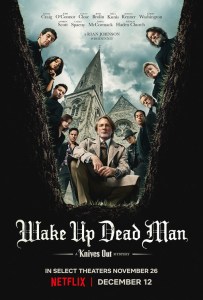 Being the third in its franchise, we now have a familiar idea of what to expect from a Knives Out murder mystery. Writer/director Rian Johnson has a clear love for the whodunit mystery genre but he loves even more turning the genre on its head, finding something new in a staid and traditional style of storytelling. The original 2019 hit movie let us in on the “murderer” early, and it became more of a game of out-thinking the world-class detective, Benoit Blanc (Daniel Craig). With the 2022 sequel Glass Onion, the first of Netflix’s two commissioned sequels for a whopping $400 million, Johnson reinvented the unexpected twin trope and let us investigate a den of tech bro vipers with added juicy dramatic irony. With his latest, Wake Up Dead Man, Johnson is trying something thematically different. Rather than adding a meta twist to ages-old detective tropes, Johnson is putting his film’s emphasis on building out the themes of faith. This is a movie more interested in the questions and value of faith in our modern world. It still has its canny charms and surprises, including some wonderfully daffy physical humor, but Wake Up Dead Man is the most serious and soul-searching of the trilogy thus far, and a movie that hit me where it counts.
In upstate New York, Pastor Jud (Josh O’Connor) has been assigned to a church to help the domineering Jefferson Wicks (Josh Brolin). The congregation is dwindling with the exception of a few diehards holding onto Wicks’ message of exclusion and division. The two pastors are ideologically in opposition, with Pastor Jud favoring a more nurturing and welcoming approach for the Christian church. Then after one fiery sermon, Wicks retires to an antechamber and winds up dead, with the primary suspect with the most motivation being Pastor Jud. Enter famous detective extraordinaire Benoit Blanc to solve the riddle.
 I appreciated how the movie is also an examination on the different voices fighting for control of the direction of the larger Christian church. Wicks is your traditional fire-and-brimstone preacher, a man who sees the world as a nightmarish carnival of temptations waiting to drag down souls. He sees faith as a cudgel against the horrors of the world, and for him the church is about banding together and fighting against those outside forces no matter how few of you remain to uphold the crusade. Pastor Jud rejects this worldview, arguing that if you think of the church as a pugilist in a battle then you’ll start seeing enemies and fights to come to all places. He’s a man desperate to escape his violent past and to see the church as a resource of peace and resolution but Wicks lusts for the fight and the sense of superiority granted by his position. He relishes imposing his wrath onto others, and his small posse of his most true believers consider themselves hallowed because they’re on the inside of a special club. For Pastor Jud, he’s rejecting hatred in his heart and looks at the teachings of Jesus as an act of love and empathy. It’s not meant to draw lines and exclude but to make connections. These two philosophical differences are in direct conflict for the first half of the movie, one viewing the church as an open hand and the other as a fist. It’s not hard to see where Johnson casts his lot since Pastor Jud is our main character, after all. I also appreciated the satirical tweaks of the church’s connections to dubious conservative political dogma, like Wicks’ disciples trying to convince themselves the church needs a bully of its own to settle scores (“What is truth anyway?” one incredulously asks after some upsetting news about their patriarch). It’s not hard to make a small leap to the self-serving rationalizations of supporting a brazenly ungodly figure like Trump. At its core, this movie is about people wrestling with big ideas, and Johnson has the interest to provide space for these ideas and themes while also keeping his whodunit running along pace-for-pace.
There is a moment of clarification that is so sudden, so unexpectedly beautiful that it literally had me welling up in tears and dumbstruck at Johnson’s capabilities as a precise storyteller. It’s late into Act Two, and Blanc and Pastor Jud are in the thick of trying to gather all the evidence they can and chase down those leads to come to a conclusive answer as to how Pastor Jud is innocent. The scene begins with Pastor Jud talking on the phone trying to ascertain when a forklift order was placed. The woman on the other side of the line, Louise (Bridget Everett, Somebody Somewhere), is a chatty woman who is talking in circles rather than getting to the point, delaying the retrieval of desired information and causing nervous agitation for Pastor Jud. It’s a familiar comedy scenario of a person being denied what they want and getting frustrated from the oblivious individual causing that annoying delay. Then, all of a sudden, as the frustration is reaching a breaking point, she quietly asks if she can ask Pastor Jud a personal question. This takes him off guard but he accepts, and from there she becomes so much more of a real person, not just an annoyance over the phone. She mentions her parent has cancer and is in a bad way and she’s unsure how to repair their relationship while they still have such precious time left. The movie goes still and lingers, giving this woman and her heartfelt vulnerability the floor, and Pastor Jud reverts back to those instincts to serve. He goes into another room to provide her privacy and counsels her, leading her in a prayer.
 The entire scene is magnificent and serves two purposes. This refocuses Pastor Jud on what is most important, not chasing this shaggy investigation with his new buddy Blanc but being a shepherd to others. It re-calibrates the character’s priorities and perspective. It also, subtlety, does the same for the audience. The wacky whodunit nature of the locked-door mystery is intended as the draw, the game of determining who and when are responsible for this latest murder. It’s the appeal of these kinds of movies, and yet, Johnson is also re-calibrating our priorities to better align with Pastor Jud. Because ultimately the circumstances of the case will be uncovered, as well as the who or whom’s responsible, and you’ll get your answers, but will they be just as important once you have them? Or will the themes under-girding this whole movie be the real takeaway, the real emotionally potent memory of the film? As a mystery, Wake Up Dead Man is probably dead-last, no pun intended, in the Knives Out franchise, but each movie is trying to do something radical. With this third film, it’s less focused on the twists and turns of its mystery and its secrets. It’s more focused on the challenging nature of faith as well as the empathetic power that it can afford others when they choose to be vulnerable and open.
Blanc doesn’t even show up for the first forty or so minutes, giving the narration duties to Pastor Jud setting the scene of his own. Craig (Queer) is a bit more subdued in this movie, both given the thematic nature of it as well as ceding the spotlight to his co-star. Blanc is meant to be the more stubborn realist of the picture, an atheist who views organized religion as exploitative claptrap (he seems the kind of guy who says “malarkey” regularly). His character’s journey isn’t about becoming a true believer by the end. It’s about recognizing and accepting how faith can affect others for good, specifically the need for redemption. Minor spoilers ahead. His final grand moment, the sermonizing we expect from our Great Detectives when they finally line up all the suspects and clues and knock them down in a rousing monologue, is cast aside, as Blanc recognizes his own ego could be willfully harmful and in direct opposition to Pastor Jud’s mission. It’s a performance that asks more of Craig than to mug for the camera and escape the molasses pit of his cartoonish Southern drawl. He’s still effortlessly enjoyable in the role, and may he continue this series forever, but Wake Up Dead Man proves he’s also just as enjoyable as the second banana in a story.
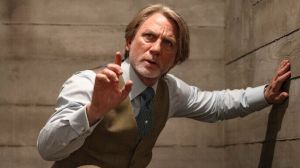 O’Connor (Challengers, The Crown) is our lead and what a terrific performance he delivers. The character is exactly who you would want a pastor to be: humble, empathetic, honest, and striving to do better. It’s perhaps a little too cute to call O’Connor’s performance “soulful” but I kept coming back to that word because this character is such a vital beating heart for others, so hopeful to make an impact. It’s wrapped up in his own hopes of turning his life around, turning his personal tragedy into meaning, devoting himself to others as a means of repentance. He’s a man in over his head but he’s also an easy underdog to root for, just like Ana de Armas’ character was in the original Knives Out. You want this man to persevere because he has a good moral center and because our world could use more characters like this. O’Connor has such a brimming sense of earnestness throughout that doesn’t grow maudlin thanks to Johnson’s deft touch and mature exploration of his themes. O’Connor is such a winning presence, and when he’s teamed with Blanc, the two form an enjoyable buddy comedy, each getting caught up in the other’s enthusiasm.
Johnson has assembled yet another all-star collection of actors eager to have fun in his genre retooling. Some of these roles are a little more thankless than others (Sorry Mila Kunis and Thomas Haden Church, but it was nice of you to come down and play dress-up with the rest of the cast). The clear standout is Glenn Close (Hillbilly Elegy) as Martha, the real glue behind Wicks’ church as well as an ardent supporter of his worldview of the damned and the righteous. She has a poignant character arc coming to terms with how poisonous that divisive, holier-than-thou perspective can be. Close is fantastic and really funny at certain parts, giving Martha an otherworldly presence as a woman always within earshot. Brolin (Weapons) is equally fun as the pugnacious Wicks, a man given to hypocrisy but also resentful of others who would reduce his position of influence. The issue with Wake Up Dead Man is that elevating Pastor Jud to co-star level only leaves so much room for others, and so the suspect list is under-served, arguably wasted, especially Andrew Scott (All of Us Strangers) as a red-pilled sci-fi writer looking for a comeback. The best of the bunch is Daryl McCormack (Good Luck to You, Leo Grande) as a conniving wannabe in Republican politics trying to position himself for a pricey media platform and Cailee Spaeny (Alien: Romulus) as a cellist who suffers from deliberating pain and was desperate for a miracle delivered by Wicks. He’s the least genuine person, she’s hoping for miraculous acts, and both will be disappointed from what they seek.
Wake Up Dead Man (no comma in that title, so no direct command intended) is an equally fun movie with silly jokes and a reverent exploration of the power of faith and its positive impact, not even from a formal religious standpoint but in the simple act of connecting to another human being in need. This is the richest thematically of the three Knives Out movies but it also might be the weakest of the mysteries. The particulars of the case just aren’t as clever or as engaging as the others, but then again not every Agatha Christie mystery novel could be an absolute all-time ripper. That’s why the movie’s subtle shifts toward its themes and character arcs as being more important is the right track, and it makes for a more emotionally resonant and reflective experience, one that has replay value even after you know the exact particulars of the case. If you’re a fan of the Knives Out series, there should be enough here to keep you enraptured for more. Because of that added thematic richness, Wake Up Dead Man has an argument as the best sequel (yet).
Nate’s Grade: A-
Share this:

Heretic (2024)/ Conclave (2024)
Recently, two religious-based, single-location thrillers have emerged from the confines of indie cinema, and this combination is so rare that I felt a unique opportunity to review them both.
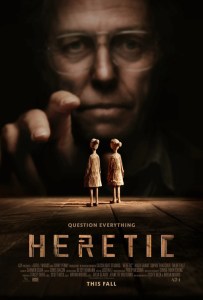 Heretic is a chamber movie about two teen Mormons (Sophie Thatcher, Chloe East) proselytizing to a middle-aged man (Hugh Grant) one dark and stormy night. He invites them in and seems kind and welcoming, but looks can be very deceiving. He has some very strong opinions when it comes to the nature of belief, and he will test both of these young Mormons on the faith of their convictions as he puts them through a series of trials and lectures. That last part might stun people, but Heretic is actually at its best during its lengthy lecture sequences. It might remind people of a nattering Reddit atheist being unleashed, but the movie really comes alive when Grant is challenging the roots of their belief systems as well as the historical contexts of religions. The Mormon ladies push back as well, countering some of the arguments so it’s not so one-sided. There’s a clear point of view to the movie but I wouldn’t say it’s didactic. The thrills ratchet as the two women start to fret about what this man has in store for them, how they might escape from his labyrinthine house, and how to signal for help. Unfortunately, the revelations can never quite match the fun of the mystery of motivations, and once it gets into a really convoluted place of switcheroos, then I think it loses momentum. The performances are all outstanding, led by Grant’s magnetic about-face turn as a snide villain. The same self-effacing charms he worked so well in the realm of rom-coms have a new eerie manipulative quality, luring his prey into his fiendish trap. The end attempts to go a bloodier and more ambiguous route that I don’t know it earns, but by that time, even after stalling out for the last act, Heretic won me over by virtue of its creepy convictions.
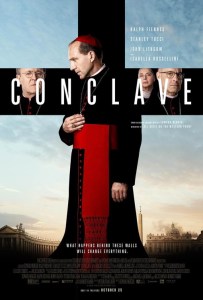 Conclave is an electioneering movie that places the viewer in the middle of the fraught voting process to determine the next pope of the Catholic Church. Ralph Fiennes plays a cardinal tasked with leading the conclave, the gathering of Catholic cardinals who will stay until a nominee has won a majority of their secret votes. Except it’s all not so secret as multiple candidates are openly campaigning for votes, trying to persuade different factions to support their candidacy. Each round of voting without a winner resets the field of play and leaves sides scrambling to reclaim footing. The movie is surprisingly very easy to get into, a crackling political thriller about the behind-the-scenes machinations and politicking for the highest office in the Catholic Church. There is a bevy of twists and turns and plenty of juicy revelations and betrayals, as these holy men start acting a little less holy to eliminate their competition or sully their chances. The constant churning is enough to keep things unsettled and intriguing, but there’s also a larger question for our protagonist, a man of faith who told the prior pope that he wished to leave his faith only to be denied by the pontiff for reasons we aren’t quite sure. Why did this pope specifically pick him for this position? The movie also asks deeper questions about the nature of power and leadership, namely are the people actively seeking it the right candidates for the right reasons? The very end of the movie knocked me out with a twist that I dare say nobody will rightly see coming, but it made me want to applaud. Conclave is an intelligently crafted thriller with weighty ideas and engaging performances.
Nate’s Grades:
Heretic: B
Conclave: B+
Share this:

Dune: Part Two (2024)
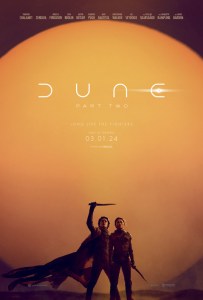 I wasn’t fully taken with the first Dune movie when it arrived in 2021. It was visually sweeping, with dense world building and careful development of characters and themes, but then it just hit the pause button without any certainty there would be a conclusion. Thankfully, director Denis Villanueuve was able to complete his vision, and what a spectacular science fiction landscape this man has fashioned, visually resplendent but also with a story that deepens and improves on all the promise and setup from 2021. The triumphant of Paul (Timothee Chalamet) becoming a hero and avenging his father from their betrayers is tempered by the tragedy of Paul, becoming the false messiah that will bring about mass genocide. The movie doesn’t hold back in its criticisms of its hero while also providing complexity that makes us root for him but uneasily dread what might become. The narrative structure is easy to follow with Paul ingratiating himself with the native culture, rising to power and influence, and organizing a resistance against the well-funded imperial overlords of Arakis. This is the kind of sumptuous, big screen spectacle with intelligence that is so rare in the Hollywood system, and Villaneuve once again shows his ability to perform artful blockbusters that put him in a rarefied class with hew others. After the first Dune, I was hopeful but a little wary. After the second Dune, I feel like all of my concerns were wiped away.
Nate’s Grade: A-
Share this:

Are You There God? It’s Me, Margret (2023)
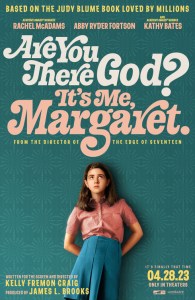 When is it not weird for a 41-year-old man to cry about a young woman getting her first period? When you’re watching the film adaptation of Judy Blume’s long-celebrated coming-of-age novel, Are You There God? It’s Me, Margaret. Blume waited almost fifty years before signing over the rights to writer/director Kelly Fremon Craig, whose 2016 movie Edge of Seventeen showed a downright Blume-esque combination of authenticity, good humor, and grace. That trusted vision is evident with how natural and deeply felt the movie comes across. We’ve had numerous coming-of-age tales since Blume’s influence, so I worried that maybe it would feel outdated or surpassed, but the movie taps into a great reservoir of empathy, bringing to relatable light the uncertainty of puberty, of fitting in, and trying to navigate the ever-approaching adult world. Usually these kinds of movies invite the viewer to reflect back upon their own young adult experiences, which I did even though I was never a teenage girl, but I had my own awkward and vulnerable moments too. I really enjoyed that Craig’s movie makes ample time for the adults too, which is where my relatability was prioritized. Watching Rachel McAdams try and explain why her parents disowned her for marrying a Jewish man is a powerfully affecting moment of an adult trying to explain a very hard truth to their child. The movie is affectionate and uplifting and earnest without being too cloying. It’s a pleasant and wholesome movie that showcases Craig as an agile filmmaker who deserves more opportunities and that even fifty years later, being an adolescent girl is still the same old awkward agony.
Nate’s Grade: B+
Share this:

Women Talking (2022)
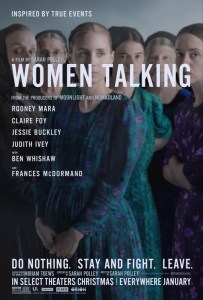 The hard-hitting Oscar-worthy drama Women Talking could have been titled Twelve Angry Women, but with the necessary subtitle: But They’re Very Justified in Their Rage. It is, as the title suggests, a movie almost entirely about women talking in one central location, enough so to feel like a stage play captured for the screen. However, the reason these women are assembled is heartbreaking, infuriating, and eminently engrossing. Women Talking demands to be heard.
The dozen women have gathered to debate the future of their participation in their community, a closed-off Mennonite coalition. They are victims of heinous sex crimes and general repression, debating between staying and fighting and abandoning their way of life. These women are talking about their own agency and what their collective response will be to the great wrongs that have prevailed upon them. It’s not just that the women of this community have been preyed upon by predators in their midst, their trauma has been dismissed as ghosts and devils until literal men were literally caught and apprehended. The next part is even more galling, as the guilty men will be returning back to the community and the women are expected to forgive the predators and go back to life as it has been. Except how exactly has life been for the women of this small community? The assaults have been going on for decades, enough that many of the children are the byproducts of their abusers. One grandmother is brought to tears that she should have done more to protect her adult daughter, herself married to an abusive man. The systematic nature of this abuse is the core of their deliberation. Can they stay and reform a broken society from inside, or is the best hope radically breaking away and starting anew without the men?
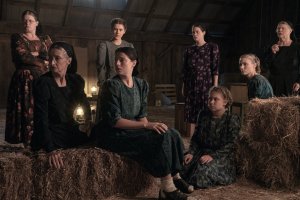 The movie also serves as a debate over the capacity for grace and forgiveness, reminding me in subject as well as the approach of last year’s equally hard-hitting and equally spellbinding indie, Mass. I found it especially insulting that these women are expected, by the male leaders, to simply forgive and forget, to shuffle back to subservience. It’s a larger philosophical discussion over the nature of grace and accountability. It would be showing grace to these men to forgive them when they do not deserve it, and surely the male leaders would underline this point in a comparison with their religious text, akin to Jesus forgiving those who crucified him. However, if forgiveness is not the catalyst for reform and reclamation, then it’s just another empty gesture that maintains the status quo of abuse going unpunished and the abusers being protected. It’s easy to make larger connections to larger societies protecting predators through conditioned silence. The entertainment industry has been rife with bad men, and yes it’s typically men, behaving criminally and being protected by their position, and it might be easy to make connections with Women Talking and She Said, the fact-based take-down of Harvey Weinstein. Are these people worthy of forgiveness or is the patriarchal system of power (women aren’t even allowed to learn to read and write in this community) beyond salvaging? Within minutes of watching, I was already shaking my head and saying they should burn it all to the ground.
Women Talking is powerful and somber without being overly grave to the detriment of the material. It’s never taken anything less than serious, but the subject matter is handled very sensitively and even rated PG-13. Under the careful guidance of writer/director Sarah Polley (Away From Her, Stories We Tell), the film doesn’t soft-pedal the abuse these women have suffered but it doesn’t wallow in it either, getting overloaded with sordid details. The screenplay unfolds key pieces of information over time, allowing the audience to piece together a fuller picture (I didn’t even realize the family connection of the dozen women until an hour in). It would be easy if the only response explored was one of unfathomable rage, best exemplified by a stirring monologue where Claire Foy (The Crown, First Man) rattles off what she will do to protect her young daughter including murder, including vying with the Almighty, and even including spending eternity in hell. It’s easy to be all teeth-gnashing vengeance and fury, and entirely deserved considering these women are already looked upon as second-class citizens. However, Polley aligns her movie as a debate between anguish and hope and the difference between false and real hope. Is it real to hope that these men will change? Is it real to hope that August (Ben Whishaw), a college-educated child of a former outcast, can break the cycle? By the end, the main feeling I had was catharsis, that these women can chart a new, better path.
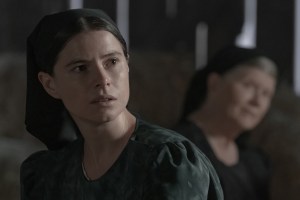 Given the heavy subject matter and the ensemble nature of the production, you would be right to assume that this is an actors’ showcase. The three biggest roles belong to Foy’s Salome, Rooney Mara’s Ona, and Jessie Buckley’s Mariche, each presenting a different perspective. Salome wants to stay but mostly as a means of collecting vengeance for her and her daughter. Mariche wants to forgive the men because, if they do exile themselves, they are told their immortal souls will be denied the kingdom of heaven. It also happens that Mariche’s alcoholic husband is one of the accused men returning. Ona is pregnant with her attacker’s child and questioning which setting would be best for her, staying with what she knows or risking a new life, for better or worse. Foy and Buckely (The Lost Daughter, Men) each have a signature monologue opening up their character perspective and each of them cinches it (call it their “Oscar clip moments”). Mara (Nightmare Alley) has the more contemplative and subdued role, which makes it less showy. Her character is the one who questions the most the value of forgiveness, and of course whether it counts when forgiveness is forced with the threat of eternal damnation. If Salome is the movie’s fury, then Ona is a reflection of begrudging hope, and Mara succeeds with a noble sense of grace.
There are two minor quibbles I have with Women Talking that hold it slightly back for me, and it’s not the locked-in setting making the proceedings feel like a staged play. Polley uses visual inserts and cutaways to devastating effect to highlight the women’s trauma, from awakening to the aftermath of assault to miscarriages, notions to heighten the visual storytelling potential of the medium without digging into exploitation and losing the tasteful tone. The directing even takes a few cues from Sydeny Lumet’s work from 12 Angry Men. One critical aspect that holds back the movie, again only slightly, is that the characters tend to feel a little more like various points of view rather than finely developed characters. Given the nature of the debate, there’s a lot of ground to cover, and it’s a smart storytelling move to coalesce. It just slightly limits some emotional engagement; it’s still there because of the skill of the actors and every drop of empathy they rightly earn, but the characters aren’t as well realized as they could have been. This can also be simply because we’re dealing with a dozen characters to try and supply enough material for. Even in 12 Angry Men, not every juror is going to be given equal importance (nobody cares about you, juror #7, so sit down). I reflect back to Mass, an excellent 2021 movie that you should seek out, and how personable and in-depth those characters came across over their feature-length sit-down. It also helps that it only had four characters to balance. The other minor criticism I have is the overemphasis the movie places on a long-in-the-works romance between Ona and August, who maybe has more screen time than maybe any woman. For a movie dealing with the sexual and emotional trauma of women and them taking account, I’m left uncertain about the amount of time we spend on an unrequited romance. It’s not like Polley is elbowing in wacky rom-com material, as it all likewise carries the same subdued tone. I just don’t know if this movie needs a romance elevated during its otherwise 100 plaintive minutes.
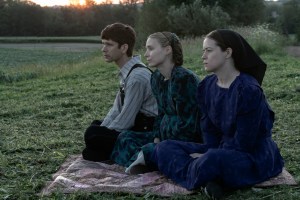 Women Talking is an urgent movie that every person should watch. The central dynamic is radiating with dramatic potential, and the actors are uniformly excellent, even the youngest actors handling some very touchy material. Polley’s direction is stately and subdued without removing any of the surging emotional power inherent in her drama. I’m overjoyed that Polley has returned back to filmmaking as she hasn’t made a movie in ten years. It’s a triumphant return for Polley, one that will likely have her vying on the biggest stages come awards season. Women Talking is timely and, unfortunately, also timeless. By the end, you’ll feel slightly exhausted but better for it, like the euphoria that comes after a good cry and you feel like, having pushed through, you’ll be better for it.
Nate’s Grade: B+
Share this:

Nine Days (2021)
 Oddly enough, over the course of less than a year, we now have two movies about young souls competing to find their sense of self before being born. Will (Winston Duke) lives in a small cottage in the middle of the desert. Or so it would appear. He’s a former human who now serves as a spirit who watches over the lives of a select group of others on Earth through P.O.V. monitors. After a car accident, one of his people is killed, leaving a new opening. It’s Will’s job to interview a group of candidates and determine who is best equipped to handle being born. Will takes the process very seriously but he is also more emotionally affected by the loss of life under his guidance than he admits. Where did he go wrong, or is right and wrong even the right markers for assessment? Will must choose wisely over nine days of deliberation and insight into what it means to be human and what it means to live.
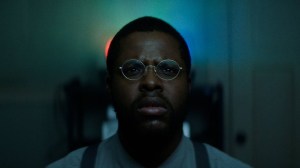 Nine Days is a tender and thoughtful movie that has much under the surface given its metaphysical context and probing questions about spirituality, identity, and existence, but it doesn’t simply rely upon the artistic weight of ambiguity. There’s a genuinely involving emotional drama here that’s accessible while offering greater depth to be unpacked by the viewer who enjoys metaphor and implication and debate. At its essence, the movie is about a series of job interviews but for a position that we don’t fully understand what the requirements are and if even meeting the requirements is enough for the hire. It’s a primarily dialogue-driven procedure but it’s also character-focused as the entire process examines what animates Will, what haunts him, and why he does what he does. Early on, the surreal nature of what should be an ordinary event, job candidates interviewing with a boss, gives the movie an air of mystery and offbeat humor. The candidates are showing up, going through a series of questions and role play scenarios, and with each session, the candidates evolve into the personas that will define them. There’s something mildly profound about watching the development of an identity before it’s even been born. As the movie progresses, Will turns down candidates and the news is truly devastating. Not only will these spirits/souls miss out on being born on Earth, they will cease to ever exist and fade away. That is some heavy stuff. Watching each one come to terms with that sort of death can be heartrending. Just imagining having to accept the end before life ever even began.
Rather than simply fade away into the blank of nothingness, Will chooses to help these souls get one last moment of peace before their ultimate end. He becomes a celestial one-man Make-A-Wish spiritual service. It’s unknown whether these “positive memories” are from the souls’ own development or their observation of the souls that have been placed on Earth. Regardless, each rejected candidate gets a moment that Will studiously recreates as an act of kindness. This section can be rather moving as each soul gets a personal sendoff and, in those final moments to savor, we watch them become affected with the generosity and the fleeting moment of life that will be tragically denied to them. One candidate climbs aboard a stationary bicycle, and Will positions one screen after another, each with projection from that angle of the street. When taken together, it creates the illusion of a nice bicycle ride through a town square. The homemade production, even sprinkling cherry blossoms and a swinging light to illustrate a traveling through a tunnel, provide small moments of affectionate conviction. I found each of these moments to be emotionally rich and beautifully rendered on screen. The care and craft Will puts into these acts is wonderful and a tremendous insight into who he is as a character and what he values in others.
 Will is haunted by the idea that he may have been oblivious to the pain of one of his pupils, and this indecision is coloring his interview process for a replacement soul. It’s unclear what exactly Will is, or his boss, or his duties, but he vaguely amounts to a guardian angel. He has a bank of old TVs that he monitors and obsessively documents the lives of a few. He takes particular pride in one soul on Earth and listens to her virtuoso violin playing as a means of personal relaxation. Her sudden death rocks him, and when it’s revealed that she was depressed, he tries to make sense of being able to see and hear everything these souls do but not fully knowing them. Did he get something wrong in his clerical assessment? Did his understanding of her have its limits? Could she have been hiding something so all-consuming without his suspicion? It all upends Will and fosters self-doubt. He’s trying to make sense of something that may not ever make sense. That is how inscrutable human beings can be and how tragically fleeting life can become in an instant.
The other change agent for Will is the presence of Emma (Zazie Beetz), a candidate who shows up late, questions the nature of the questions she is given, and is empathetic to a fault. The other candidates are playing within the rules of Will’s questions but she’s pushing back, and it only makes Will think more and more about her and her aims. I don’t consider it too much of a spoiler that Emma will be one of two final candidates for the open spot for life. Her character causes Will to reassess his own biases, his own way of doing things as they have, and his own conception of himself and what life can be about including his own time spent on Earth, which he likes to remind the others like it’s bragging rights. I suppose one could argue that, yet again, we have a quirky female character in service of teaching the male hero about the importance of embracing life to the fullest, but I think the general makeup of the characters is superfluous to the impact of the story. We’re dealing with spirits taking a physical form here. Their appearance is immaterial to their identity at this point, at least in an otherworldly realm that (hopefully) knows no sexism and racism.
 Nine Days is the film debut from commercial director Edson Oda and the movie is utterly gorgeous from a technical standpoint. The photography favors gleaming sunsets and pristine vistas to communicate the exquisiteness and otherworldly plane of existence. The desert landscape is beautifully filmed, and the interiors are also pleasing with their visual arrangements and the mingling of natural and artificial light. Oda won a screenwriting award at the 2020 Sundance Film Festival and for good measure. This isn’t just a good-looking indie, which it assuredly is, but there is deep melancholy and beauty and transcendence to be had with the very humane and compassionate storytelling trying to get at larger truths about our limited time. The storytelling has plenty of ambiguity and nuance and metaphor, but there’s an accessible core that I believe most viewers can align with and then, if they choose, can discover further meaning. There is a slightly basic “stop and smell the roses” moral, but I found there to be more lyrical beauty at different points that affected me deeper than any condensed message. The conclusion hinges on a recitation of Walt Whitman’s “Song of Myself” and it conveys not just Whitman’s celebratory humanism but also taps into Will’s own character arc. The poetic performance itself is an expression with multiple levels, celebrating life in multiple ways, and serving as a heartfelt and personal goodbye. It’s a lovely ending for a lovely little movie.
Nine Days is packed with recognizable acting faces (Tony Hale, Bill Skarsgaard), several of whom have graced Marvel superhero movies (Duke, Beetz, Benedict Wong), and there must have been something compelling for them to all accept this low-budget, contemplative indie about the human condition. It’s a little movie with a lot on its mind but it doesn’t feel the need to explain everything. There’s a sturdy foundation to begin with but enough ambiguous room for discussion and debate. It reminds me of 2003’s beguiling, divisive, and highly metaphorical indie Northfork. Both movies are poetic, understated, and deeply involved in human connection and spiritual meaning while providing room for interpretation. There’s plenty here to unpack but even on a literal level the movie works as an emotional experience. I found myself under the gentle sway of Nine Days and its mighty beating heart of humanism that extends even beyond the realm of flesh and blood.
Nate’s Grade: A-
Share this:

Cuties (2020)
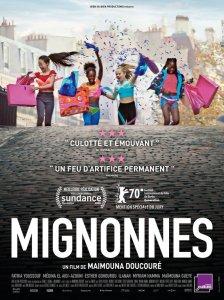 A new Netflix movie is tearing through the Internet, igniting accusations of glorifying child porn, accusing Netflix employees of pedophilia, and triggering some to even cancel their subscriptions. Even if you’ve never watched Cuties you have probably heard something about it through the controversy that has inflamed innumerable conversations and condemnation. Cuties is a French drama that follows a young 11-year-old Amy (Falthia Toussouf) as she embarks on a new school. Her religious Muslim family has set her up for one way of life, but the popular girls at her school look so much more free, fun, and wild. The “Cuties” dance team dreams of stardom, envies the older teen dance team, and emulates salacious dance moves from videos. It’s easy to see why the movie has generated its controversy and it’s understandable why many people would ever refuse to watch it based on subject matter alone. No matter the artistic merit, watching kids behaving this way, and the natural discomfort it produces, can be too much to endure. However, for those willing to give Cuties a chance, I do think it has some artistic merit as it tells, what is essentially, a familiar story of a youth going down a wayward path of temptation and rebellion.
There are three standout moments to me in Cuties that exemplify what writer/director Maïmouna Doucouré was going for as well as the commentary attached to the controversy. I’ll be going into spoilers to discuss these scenes and why I think it adds up to a whole that has more thoughtful intentions than exploiting children for cheap buzz and leering perversion.
 1) Early on, like around the ten-minute mark, Amy is dancing and hides under her mother’s bed to not get in trouble. Her mother walks around with the Great Aunt and she overhears their conversation and learns some upsetting news. Her father, who is away and yet to move back with the family, will be marrying a second wife and bringing her home. The mother is trying to put on a brave face and play her part, calling relatives to dutifully inform them about the development, but she is clearly devastated and wracked with emotion. She feels replaced and inadequate and harmed by the man she loves, and Amy registers the pain and degradation her mother is going through on a deeply personal level, and this is what serves as motivation for her later actions. When she’s making new friends and wearing crop tops and pushing her boundaries, it’s not just a young Muslim girl who wants to escape the conservative trappings of her culture; it’s a young girl who is looking to rebel and stick it to her father. Her sense of a woman’s place in this family is to be subservient to the man and his authority, and she’s angry with him, angry at causing her mother pain, angry at viewing her as a collectible, and angry at what she views is a culture that restricts her to a life she does not want for herself but worries may not have a choice. Again, this isn’t a judgment on all Muslim families but merely the relationships within this one. This overheard phone call is such an immediately powerful scene with such an emotional wallop that I was tearing up. Amy’s motivation is more complex than simply wanting to dress provocatively. She’s rejecting a fate that could as easily befall her, and in doing so, a viewpoint on women.
2) There is a moment where the girl gang is just hanging out in the woods and laughing. One girl, Coumba (Esther Gohourou), finds a deflated condom on the ground. Not thinking anything of it, she blows it up like a balloon and the other girls freak out. They declare that their friend is now tainted, gross, and possibly exposed to AIDS. Coumba, who was the loudest and most outspoken joker among the group, is frozen in embarrassment. She didn’t know what it really was because she’s simply a child. She had no real conception, and now that reminder and the embarrassment and the hysteria from her friends is making her feel so small and humiliated. She’s desperate for her friends to excuse this misstep, to be accepted by her peer circle once again, and she meekly defends her ignorance. A single tear rolls down her cheek and this scene was a fitting reminder for me that the filmmakers have never forgotten that these girls, no matter how they dress and how they act, are still very much children. They talk about sex and porn but through an uninformed understanding of the larger meaning and context let alone sense of anatomical accuracy. It’s because they’re still children! This moment was further confirmation for me that the filmmakers had not forgotten that their subjects were to be presented thoughtfully. These 11-year-olds aren’t to be sexualized, just like teenagers shouldn’t be either, no matter how eager these young people are to jump ahead in maturity and be seen as desirous and incendiary.
 3) The last scene of the movie involves the father’s wedding, a moment that mother and daughter have been dreading. Amy has run away from her dance team’s big show and made her choice, choosing to return to her family and as a support for her mother. She reminds Amy that she does not have to attend the wedding but Amy is determined to be there, knowing fully what it means for her mother and the larger implications for her family. Amy must decide what to wear for the festivity and stares down the traditional dress her Great Aunt had brought. Amy looks at her skimpy dance outfit, a guaranteed attention-seeking statement if she were to wear it to her father’s wedding ceremony. Instead, she chooses a middle path and simply wears a comfortable sweatshirt and some blue jeans. She rejects the restrictions of her family’s conservative culture, she rejects the extremes of the dance troupe, and she starts to form her own sense of self. She sidles into a game of jump rope and the camera pans up, and as the camera moves so too does Amy, locked into the camera shot, rising above the world, and she’s smiling so broad that her face seems to glow with happiness, a relief and joy she hasn’t felt in some time. By the end of this tale, our heroine has rebelled, overstepped, learned something about herself, and now seems a little surer of who she wants to be as a young woman charting her life in France. For me, this conclusion reaffirms the intentions of the filmmakers and commentary that those feelings of discomfort were on purpose.
With that being said, there were of course scenes that made me feel deeply uncomfortable, and I would question anyone who didn’t feel the same. The Cuties’ final dance is shockingly adult. Children should not be behaving in this manner but, and I again I stress this, that is the point of the movie. The audience at the dance competition does not approve of the tween twerking; they boo, they make disgusted faces, and one mother attempts to cover her baby’s eyes. “THIS IS TOTALLY NOT A GOOD THING,” Doucouré’s film is vociferously pronouncing. When the girls are simply dancing, her camera favors wide angles or framing that doesn’t ogle their bodies. Often dances will be seen as a whole or with shoulders-and-up framing. Whenever the girls film their dances, the camera adopts the intended lascivious emulation they seek, lingering more on butts in shorts and their attempt at sensual gazes they’ve adopted from Instagram influencers and aspiring models. It’s icky but it’s only a sampling compared to the in-your-face final dance performance. What I’m trying to articulate is that the portrayal of these young girls letting loose is more tasteful than the detractors have given Cuties credit for. I’ve seen scuzzy teen-centric movies (notably by Larry Clark) where the camera was continuously fetishizing its teenage subjects as a default setting. Cuties isn’t that until it really wants to grind its cautionary message into your horrified face as you try to shield your eyes.
 I had a student ask why did it have to be 11-year-olds, why couldn’t the same message have been told through slightly older figures, maybe 15 or 16-year-olds, and I didn’t have an answer. Maybe because we’ve already seen “teens go bad” movies with 16 years-olds (Kids), or even presumably 13-year-olds (Thirteen), and maybe Doucouré felt she needed to go younger to be different, or push the envelope, or to grab attention from an increasingly blasé public. Maybe the filmmaker felt we needed to go to an age before puberty so it’s less a “becoming a woman” transition and more a constant of being acknowledged as a child. I cannot say. At its core, Cuties doesn’t have to be a story that is told from a particular age because it’s a formula that we’re familiar with and it embodies universal themes of acceptance, isolation, rebellion, and belonging. It’s a better movie than the alarmist defenders of childhood virtue claim (funny how these same defenders seem so quiet in supporting a president who literally bragged about spying on tween girls while they changed clothes, but that’s another discussion). I would also advise these same critics to look up how many season Toddlers and Tiaras ran for on TV. This is not the best movie. If you’ve seen enough teen movies you’ve likely seen this story already, but Cuties is a perfectly fine movie with enough artistic merit and social commentary to potentially make it worth sitting through the obvious discomfort. I can completely understand if any person would choose to pass on this movie but it would be better if more people actually gave it a chance before sharpening those pitchforks.
Nate’s Grade: B
Share this:

The Lodge (2020)
 The Lodge is a patient, methodical, and unsettling horror movie that establishes an eerie atmosphere, pushes the viewer to question what is going on, and then, upon finally revealing its last secret, sits back and lets the real horror play out to sickening effect. This is from the same writing/directing team behind 2014’s Goodnight Mommy, and you’ll start to wonder whether or not Severin Fiala and Veronika Franz really dislike children. The movie had me on edge early with a sudden jolt of violence, and I felt uneasy from there to the bleak ending. It’s about a father (Richard Armitage) taking his two children for a holiday retreat with his new girlfriend, Grace (Riley Keough), the person the kids blame for breaking up their parents’ marriage. She wants to get to know them and bond but the kids are having none of that. To make matters worse, the kids discover that Grace is the lone survivor of a religious suicide cult. Once at the family lodge in the snowy woods, strange events and messages torment Grace and the kids until they question where they are, what may have happened to them, and if there is an escape. The first act is the family in the wake of trauma and the children viewing Grace as the interloper worthy of their scorn. The second act becomes an existential horror movie that questions whether there has been a shift into the supernatural or divine. The last act reveals what’s really been going on and it’s the consequences of bad choices. The ending trajectory feels fated from the earlier setups, so when everything is falling apart, the danger feels incredibly real. I was so anxious during the ending sequences that I was holding my breath and covering my face. I didn’t know how far this movie would go, and while it pulls back at the very end, the implications are clear even if they aren’t explicit onscreen. Keough (Logan Lucky) plays a character with real depth as a woman trying to reclaim her life from deep-seated trauma, and when events spin out of control, that trauma resurfaces and starts to take over her thinking, placing her on autopilot, which then pushes the film into the realm of tragedy. She’s fabulous and impressively restrained as her character mines layers of self-doubt, bone-deep teachings, and shock. The atmosphere of the film is very fitting for the setting, chilly and isolated and dread-filled. The camera movements are often very deliberate to draw out tension and uncertainty. It all comes together for a very creepy little movie that gets under your skin. The Lodge is not going to be an audience-friendly outing due to its pacing and ending, but consider it an A24 horror film that somehow got away under a different studio.
Nate’s Grade: B+
Share this:

First Reformed (2018)/ You Were Never Really Here (2018)
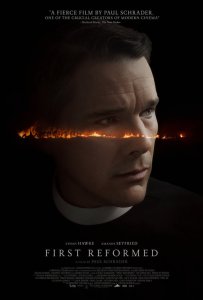 Both First Reformed and You Were Never Really Here use sly genre subversion to act as commentary on what kinds of movies the audience associates with these kind of haunted men, their arcs, and the nature of violence. Subverting audience expectations is in and of itself not necessarily a better option. You can have unexpected things happen but the narrative that happens after needs to be compelling, and if possible, unavoidable in hindsight (Game of Thrones is good at this). By the same notion, the finale of Breaking Bad was pretty easy to anticipate but that’s because of how well written the storytelling trajectory was pointing to its natural end. I can tell a tense father-son reconciliation story and then if I end it with a meteor wiping out the Earth all of a sudden, well that’s unexpected but that doesn’t make it better storytelling. What helps elevate both movies is that the subversions are thematically related to the relationship between violence and vengeance, absolution and atonement, and the audience and our desires with these films.
In First Reformed, Reverend Toller (Ethan Hawke, enthralling) is the caretaker of a small upstate New York church where the weekly attendance can be counted on one hand. The church, First Reformed, is nearing the commemoration of its two hundred-fiftieth anniversary that will be celebrated by local dignitaries and the governor. Reverend Jeffers (Cedric the Entertainer, surprisingly adept in drama) is the pastor for the mega church that seems to have everything that First Reformed lacks. Jeffers wants to help out Toller but the humble man of the cloth refuses. Rev. Toller is pushed out of his comfort zone by the husband of a pregnant woman (Amanda Seyfried) who challenges him on man’s stewardship of the environment. The husband worries about bringing a child into this world and contributing the larger problem of climate change. This interaction gets Rev. Toller to think about his own culpability and sets him on a path of righteous justice.
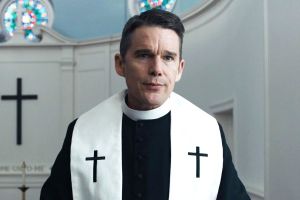 Writer/director Paul Schrader is famous for his stories about violent men confronting the wickedness of the world around them. From Taxi Driver to Raging Bull to Hardcore, Schrader has a penchant for documenting the self-destructive recourse of flawed men who feel removed or constrained by a society they feel is out of step with morality. What better canvas then for Schrader than a middle-aged pastor at a small, reclusive church? Rev. Toller is so humble he doesn’t own more than a few sticks of furniture in his home, the adjoining parsonage to the church. He’s friendly but often choosing to keep to himself, forgoing comforts and perceived handouts from the people around him. A woman his own age keeps trying to connect with him, their romantic coupling in the past a platform for her to continue hoping he’ll come around to her. She’s a perfectly nice woman, a choir headmistress for the mega church down the road, but she reminds Toller of his weakness and maybe even something worse. The aforementioned mega church basically keeps Toller’s small parish afloat as a charity (First Reformed is nicknamed the “gift shop church” for its historical notoriety). Rev. Jeffers is concerned about his fellow man of the cloth and the toll his solitude and seclusion is taking on him. It’s like he’s trying to atone for something, taking on a very Christ-like path of penitence. It’s around here that the character is activated into a higher calling in conflict with the church.
I’ll explain what I was expecting given the premise and presence of Schrader. I was expecting a movie much in keeping with A History of Violence, where a small-town man is thrust back into a past life of violence by outside forces and he has to confront how far this “new him” has come from the sins of “old him.” I was expecting Toller to become more violent and radicalized, pitting others in his cross-hairs for retribution. That’s not really First Reformed at all. First off, it’s the slowest of slow burns. You better be prepared to luxuriate in the day-to-day details of Rev. Toller’s simple life, from unclogging toilets to visiting with parishioners in their homes and having long philosophical conversations with them about faith and man’s role in the ecosystem. That conversation specifically teeters toward ten minutes and serves as the end of Act One, and I think if you’re still invested by then, you’ll be along for the rest of the film. However, it’s not going to be an easily accessible movie. This conversation stirs something deeper inside Toller, dissatisfaction with the church and how it coddles with big business, the chief polluters of God’s kingdom. Toller becomes a late-in-life environmental activist who questions the stewardship of the church body. This sets him on a path that seems destined for bloody violence. He’s going to go out in a fury of righteousness. We’re expecting a big bang by the end, especially given Schrader’s history of these kinds of stories with these kinds of men. But that doesn’t happen.
 I’ll try and avoid spoilers but discussion over the thematic relevance of the end of First Reformed will unavoidably suggest to the reader some significant plot developments, so please feel free to read this paragraph or skip to the next one. The second half of the movie is setting you up for a very specific ending, one where Toller strikes back against forces he feels are detrimental to the well being of the church. It’s setting you up for a climactic showdown with powerful forces that feel unaccountable for their actions. I was ready for a final rush of violence to serve as the crescendo to Schrader’s slow burn. This is where the movie swerves away from audience expectations. We’re prepared for a meaningful death but instead Schrader’s ending, in retrospect, makes us question why we should have desired such a violent and vengeful finale. Why should this character be a martyr for our bloodlust against the powerful? Ultimately, Schrader’s movie ends on a romantic, optimistic note of personal salvation after setting you up for a dark story with a predetermined, self-destructive end. The abruptness of the ending may inspire some titters, but when you look back at the film, it makes complete sense and calls into question why we would wish for blood and violence over human connection and forgiveness. Schrader is saying that you wanted the wrong kind of movie.
First Reformed takes the modest aims of its protagonist to heart when it comes to the presentation of its story. Schrader films the entire movie in the old-fashioned 4:3 aspect ratio, the square box of old pre-high definition televisions. It’s an aspect ratio that keeps everything centered for the audience and on display. I think there was exactly four camera movements in the entire movie; almost the entirely of the 113 minutes is from a stationary, documentary-styled camera. It’s a very specific visual style that limits the visual information and dynamism but manages to personalize the main character even more. It’s his movie and his journey of self, so the visual representation is also restrained. There’s really one flash of upsetting violence in the whole movie, as if to remind the audience how a violent death is not something to be celebrated. For an R-rated Paul Schrader movie, it’s far more reserved, subtle, and thoughtful. It left me thinking about Rev. Toller and his messianic mission and our desire for a big bloody finish. The idea of a selfless death directed toward violent retribution is inherently self-involved. It’s not death that provides meaning but life, it’s not how we end but what we do with the days beforehand.
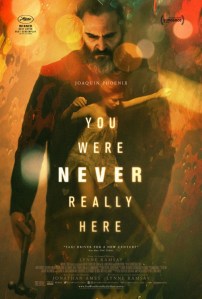 You Were Never Really Here is built as a hitman thriller based on Jonathan Ames’ novel. Joe (Joaquin Phoenix) is a hired gun who specializes in rescuing young women. He’s hired to find the missing adolescent daughter of a senatorial candidate. He investigates the underbelly of sex trafficking to save this little girl, but larger forces are at play and will make Joe suffer gravely for interfering with their wanton exploitation.
The average audience for You Were Never Really Here has been steadily fed a diet of these kinds of movies, from the artful (Luc Besson’s The Professional), to the pulpy (The Long Kiss Goodnight), to any number of hollow, nihilistic video game-styled murder fantasies (Hitman, a thousand straight-to-DVD movies). We’re expecting men of action who are ruthlessly efficient and clever when it comes to their killing. We’re expecting stylish merchants of death who leave behind a heavy body count with swagger. That’s not what brilliant Scottish writer/director Lynne Ramsay (We Need to Talk About Kevin) has in mind at all. She takes the iconography of the hitman thriller and turns it into an expectation-smashing existential character study, but not just of its disturbed main character but also for the audience and our relationship to these movies. We expect remorseless killing machines that turn death into splashy and cool tableaus. These movies aren’t so much key on mediation and reflection, beyond the standard “reap what you sow” adage.
Much of the violence is kept off screen or purposely denied to the audience. I’m trying to remember if we even see Joe kill anyone on screen. The infiltration of the sex trafficking organization hops between fixed security angles, edited together in a dissonant manner, where the last shot doesn’t fully line up for a smooth edit, leaving a half second. The effect is one that’s knowingly alienating and challenging. When Joe does unleash his violent skills, it’s rarely given a showcase for entertainment. This is a movie that doesn’t celebrate its violence. There’s a moment where Joe lies on the ground beside a mortally wounded bad guy. They exchange a few cordial words, he procures some vital information, but then Joe stays with the man and the two sing a song together. It sounds bizarre when written out but it’s a moment that really stuck with me. After everything, these two men can find a small sliver of humanity between them to share. Even the final confrontation, the big climactic set piece of any other movie, ends with a shoulder shrug, as if Ramsay is saying to the audience, “Why would seeing all that be cathartic?”
 For Ramsay, the focus of the movie is on the man committing the acts of violence rather than how stylish and cool and cinematic those acts of violence can be. This is the one area where I feel a longer running time could have better helped her goal. I think Ramsay might be the best filmmaker we have for triptych narratives. 2011’s We Need to Talk About Kevin is a startling and insightful movie that opens up the guilt of a woman whose son grew up very badly, jumping around time periods, using a repetition of images to provide visual stings and associations. You Were Never Really Here does similar labor, establishing our strong silent protagonist through glimpses of a troubled past, from a childhood with an abusive father and a mother he would have to save, to incidents during military service and police investigations that reminded Joe about the depravity of others, in particular the ability to exploit and dehumanize women as disposable property. Ramsay offers discorded images and brief flashes and asks the audience to put together the pieces to better understand Joe as a man propelled and haunted by his bloody past. However, at a slim 89 minutes, the audience could have used more time and opportunity to better develop and analyze this central character. The pieces are tantalizing but I wanted more, and as a result I found Joe to be an interesting start to a character that was in need of more time and attention to transcend the boundaries of his archetype. I needed a little more from him and his world.
There are several moments that quickly come to my memory, sticking with me because of the level of artistic arrangement or implication. Because Ramsay wants to take the Hollywood hitman revenge thriller and deconstruct it and provoke her audience and its desires for violence, there isn’t much of a plot to this movie. I could literally spoil the whole thing with the following sentence: a man of violence is hired to find a missing girl, finds her, loses her, and finds her again at great personal expense. The movie is more of a poignant and intriguing exercise in our relationship to these kinds of stories. There are moments of beauty in the movie that took my breath away, like when Joe lowers a wrapped body into the depths of a lake, and with the shafts of light, the curls of hair, the small visual details, it felt like watching a living baroque painting. There are also several bizarre moments that stand out, like when Joe fantasizes about blowing his brains out at a diner while the patrons, and the blood-soaked waitress, go about their day. It’s these little flourishes that make the movie stand above other hitman movie deconstruction exercises like George Clooney’s overly solemn The American. It’s not all tragedy and inescapable dread. Amidst Joe’s tortured past and troubled future, there’s a necessary sense of hope. You don’t know what will happen next but you’re not resigned to retrograde nihilism.
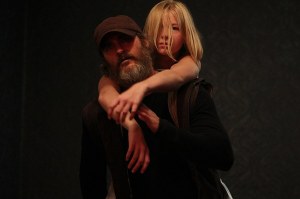 Both First Reformed and You Were Never Really Here are slow burn indie character studies that ask their audience to question the movies they’ve been set up for. Schrader and Ramsay are deft storytellers who pair their visual gifts to the psyches of their damaged, haunted, and self-destructive middle-aged men. Hawke is phenomenal as Rev. Toller and Phoenix is suitably unsettled from a life of confronting predatory violence. Both movies have also stayed with me, though First Reformed I find to be the better developed, better executed, better acted of the two films. It’s enough of a comeback for Schrader, whose last film I remember seeing was the laughably bad Lindsay Lohan “erotic thriller” The Canyons. These are two movies that aren’t exactly the most accessible. Both challenge the audience to analyze the personal relationships with genre storytelling. If you have patience and an open mind, both First Reformed and You Were Never Really Here provide thoughtful and methodical examinations on genre, violence, and the visceral appeal of empty bloodshed.
Nate’s Grades:
First Reformed: A-
You Were Never Really Here: B
Share this:

The Shack (2017)
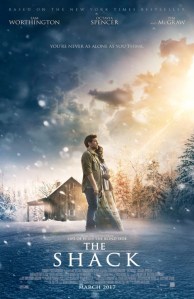 When it comes to faith-based movies, especially those based on best-selling books, you know that they’re going to be preaching to the choir and more determined to give its intended audience the message it wants first; everything else is secondary. With The Shack, I got the start of an interesting film scenario and then it became the most boring, laborious, and theologically trite Ted Talk ever. I was fighting to stay awake and it was a battle that I was losing. The opening twenty minutes presents a story with dramatic possibility: Mack (Sam Worthington) is a family man who is grieving the loss of his youngest daughter. On a camping trip, she was abducted by a pedophilic murderer and killed in a shack in the woods. Mack is a shell of himself and his family doesn’t know how to reach him. He gets a mysterious invitation from “Papa,” his wife’s nickname for God, inviting him to the murder shack. So far so good. There’s even a fairly interesting back-story for Mack about his alcoholic and abusive father. Young Mack eventually poisoned his bad dad’s drinks with hazardous chemicals to protect he and his mother. However, all remote sense of entertainment is snuffed out once Mack enters the confines of the titular shack. Inside are human avatars for the Holy Trinity of Christianity, with Oscar-winner Octavia Spencer serving as a homespun “Papa.” The next 100 minutes is a series of talk show interview segments with each person to engage in full on flimsy spiritual psycho-babble to explain why God lets bad things happen and forgiveness is key. The movie stops being a dialogue and becomes a lecture series, and each one just kept going on and on. The characters stop being characters and become different mouthpieces for the spiritual cliches. It’s like the filmmakers threw up their hands and gave up. This is not a movie. It’s a inspirational exam told by the most cloying professors. The lessons learned feel trite (who are you to judge, God is with you through good times and bad) and the movie curiously leaves a lot of dramatic implications unresolved. Did Mack kill his father with the poisoned drink? Did this killer pedophile ever get caught, and if not doesn’t that mean other children are at risk? It’s like once Mack enters that mystical murder cabin, the movie loses any sense of structure, pacing, stakes, and dramatic propulsion, and that’s before the silly race across the water with Jesus. I would also say Worthington (Avatar) is not the best choice as the lead actor due to his limited dramatic range and growl-pitched voice. Other movies have dealt with heavy loss but rarely has one felt so detached from making that loss personable and empathetic. The Shack is a maudlin fable that wants to make people feel good even during the dark times. That’s admirable but it doesn’t make this 135-minute sermon any more of a worthwhile movie to watch.
Nate’s Grade: C-


 nathanzoebl
You must be logged in to post a comment.