Blog Archives
Mulholland Drive (2001)
 Mulholland Dr. has had a long and winding path to get to the state it is presented today. In the beginning it was 120 minutes of a pilot for ABC, though it was skimmed to 90 for the insertion of commercials. But ABC just didn’t seem to get it and declined to pick up David Lynch’s bizarre pilot. Contacted by the French producers of Lynch’s last film, The Straight Story, it was then financed to be a feature film. Lynch went about regathering his cast and filming an additional twenty minutes of material to be added to the 120-minute pilot. And now Mulholland Dr. has gone on to win the Best Director award at Cannes and Best Picture by the New York Film Critics Association.
Laura Harring plays a woman who survives a car crash one night. It appears just before a speeding car full of reckless teens collided into her limo she was intended to be bumped off. She stumbles across the dark streets of Hollywood and finds shelter in an empty apartment where she rests. Betty Elms (Naomi Watts) is a young girl that just got off the bus to sunny California with aspirations of being a big time movie star. She enters her aunt’s apartment to find a nude woman (Harring) in the shower. She tells Betty her name is Rita after glancing at a hanging poster of Rita Hayworth. Rita is suffering from amnesia and has no idea who she is, or for that fact, why her purse is full of thousands of dollars. Betty eagerly wants to help Rita discover who she is and they set off trying to unravel this mystery.
 Across town, young hotshot director Adam Kesher (Justin Theroux) is getting ready to go into production for his new film. He angers his mob producers by refusing to cast their chosen girl for his movie. After some harassment, threats, and a visit by an eyebrow-less cowboy assassin (God bless you David Lynch), he relents.
In the meanwhile, people are tracking the streets looking for Rita. Betty and Rita do some detective work and begin amassing clues to her true identify. As they plunge further into their investigation the two also plunge into the roles of lovers. Rita discovers a mysterious blue box and key in her possession. After a night out with Betty she decides to open it, and just when she does and the audience thinks it has a hold on the film, the camera zooms into the abyss of the box and our whole world is turned upside down.
David Lynch has made a meditation on dreams, for that is at the heart of Mulholland Dr. His direction is swift and careful and his writing is just as precise. The noir archetypes are doing battle with noir expectations. The lesbian love scenes could have been handled to look like late night Cinemax fluff, but instead Lynch’s finesse pays off in creating some truly erotic moments. Despite the population of espresso despising mobsters, wheelchair bound dwarfs, and role-reversal lesbians, the audience knows that it is in hands that they can trust. It’s Lynch back to his glorious incomprehensible roots.
Watts is the true breakthrough of Lynch’s casting and she will surely be seen in more films. Watts has to play many facets of possibly the same character, from starry-eyed perky Nancy Drew to a forceful and embittered lesbian lover.
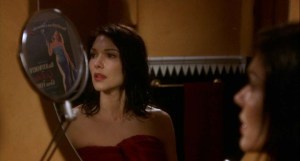 One scene stands out as a perfect example of the talent Watts possesses. Betty has just been shuffled off to an audition for a film and rehearsing with Rita all morning. She’s introduced to her leathery co-star and the directors await her to play out the audition scene of two kids and their forbidden love. As soon as the scene begins Betty vanishes and is totally inhabited by the spirit of her character. She speaks her lines in a breathy, yet whisper-like, voice running over with sensuality but also elements of power. In this moment the characters know, as the audience does, that Betty and Naomi Watts are born movie stars.
It’s not too difficult for a viewer to figure out what portions of the film are from the pilot and what were shot afterwards. I truly doubt if ABC’s standards and practices allows for lesbian sex. The pilot parts seem to have more sheen to them and simpler camera moves, nothing too fancy. The additional footage seems completely opposite and to great effect. Mulholland Dr. has many plot threads that go nowhere or are never touched upon again, most likely parts that were going to be reincorporated with the series.
The truly weirdest part of Mulholland Drive is that the film seems to be working best when it actually is still the pilot. The story is intriguing and one that earns its suspense, mystery, and humor that oozes from this noir heavy dreamscape. The additional twenty minutes of story could be successfully argued one of two ways. It could be said it’s there just to confound an audience and self-indulgent to the good story it abandons. It could also be argued that the ending is meticulously thought out and accentuates the 120 minutes before it with more thought and understanding.
Mulholland Dr. is a tale that would have made an intriguing ongoing television series complete with ripe characters and drama. However, as a movie it still exceeds in entertainment but seems more promising in a different venue.
Nate’s Grade: B
Reviewed 20 years later as part of the “Reviews Re-View: 2001” article.
Share this:

Freddy Got Fingered (2001)
 The beauty of Tom Green (if you’ll cal it such) works in the realm of television. His bizarre humor and meddling nuisance on the streets worked in a “Can’t believe he’s doing this” way. He thrives in this environment where he can wreck havoc amongst the unknowing. Take him out of this environment into a scripted venture where people are acting against him, and the reality is killed along with why it was funny in the first place. It’s not so much funny that Tom Green can hump dead animals on camera, it’s so much funny that he’ll do it in front of bystanders.
As it stands, Freddy Got Fingered is plot-less. It is basically Green doing one weird and bizarre antic after another with little relation to anything. It’s basically a meandering mess, almost like an abstract artist’s work if that artist were insane. Freddy Got Fingered is Green’s attempt at cinematic gross-out stardom. Sure, he does things that would be considered in poor taste but they are scripted and lose their appeal. Green guts an animal and wears its skin like a poncho, he bites the umbilical cord of a birth, he even eroticises a horse and aids in its… release. But all the charm is gone when it’s Green just doing zany things in a closed environment. What is the fun of seeing people do scripted reactions to Green’s antics? He needs to be in the real world, he needs to piss people off, he NEEDS reality. A movie will do no justice to Tom Green and this one surely does not.
Nate’s Grade: F
Reviewed 20 years later as part of the “Reviews Re-View: 2001” article.
Share this:

Panic (2000)
 The story behind Panic goes something like this. The film was dropped by Artisan because they got test screening results back and apparently it wasn’t what they wanted. After this set-back it was going to be dumped to the wasteland of direct-to-cable like so many other troublesome pictures studios feel would not earn a buck if they were bleeding on the side of the road. After some fighting, particularly from critic Roger Ebert, a production house decided to distribute Panic in a very limited release. So what does this cinematic game of musical chairs mean? It means if you have a chance see this film.
Panic is a story about characters first and foremost. William H. Macy plays the son end of a father-son team of hitmen, with Donald Sutherland as the oppressive patriarch. Macy is a man who is never truly happy, almost like it is an impossibility for him at this point in his life. His wife (Tracey Ullman) is flaky and gives into her paranoia of her hubby having an affair with a younger chickadee. Macy meets an attractive and mysterious ingenue (Neve Campbell) while waiting for therapy. He begins on an obsession he can’t explain and fantasizes about her as the escape and ticket to happiness that is outside his reach.
 The acting is as rich as the characters. Macy plays low-key but suits the subservient ghost that his character has become. Sutherland is haunting as the controlling father figure and the flashbacks between him and young Macy are disturbing as he plants his seed of control. Even at age six Macy’s character is referring to his father with “sir” tagged to the end of every sentence.
Neve’s character is the most in depth she’s ever been dealt, though her runner-up is a girl constantly chased by men in black robes with knives. Ullman is a nice presence and the audience really can sympathize with her. The child who plays the son of Macy and Ullman is one of the most adorable child actors I have ever seen. He lights up the screen every time he is present.
The story is brisk at a mere hour and a half. It is written and directed by a former writer of ‘Northern Exposure’ and ‘Homicide’ and the attention to characters shows. The film moves not through plot occurrences but through characters acting. When Macy discovers that the final hit he has to do is on his own therapist (John Ritter) his journey is one involving everyone around him in his life. The strains and pulls on this man are encompassing to watch.
Panic is a glimpse at a quiet movie told about the life of a man caught in his father’s grasp. Macy is a man conditioned to saying “he’s sorry” even if it is not deserved. His character is rich and Panic is a strongly acted gem if you can locate it.
Nate’s Grade: B+
Share this:

Snatch (2001)
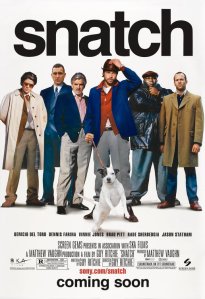 Snatch is really more of the same for writer/director Guy Richie as he retreats back to his magical land of London gangsters with Dick Tracy-esque names and thick cockney accents intermixing in comically violent and ironic ways. He’s like a more stylized version of Tarantino, if Tarantino ever got to have sex with Madonna. So if you like the niche Richie has trapped himself in for the moment (like myself) then you’ll like Snatch. The film is coursing with energy to spare and never loses its sense of fun, which carries over into audience smiles (at least for me and my gal it did). Brad Pitt is a riot as the hardly intelligible Irish gypsy and part time boxer.
Nate’s Grade: B+
Share this:

The Emperor’s New Groove (2000)
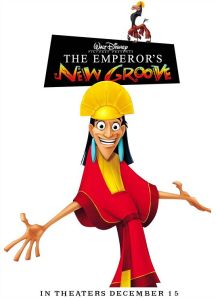 Originally The Emperor’s New Groove was a grand Disney formula flick known as The People of the Sun concerning the Aztecs and included six Sting songs. We would have had this “same old same old” if it weren’t for someone who courageously raised their hand and said “Isn’t this stupid?” God bless that person. The original theme was scrapped as well as all the songs excluding one. The patented Disney formula was ditched for a fast pace and zany antics that haven’t been seen from Disney hands since Aladdin.
The central message of Emp’s Groove is still a moral lesson – this one over vanity and self-centeredness. David Spade voices a young prince named Kuzco with no regard for any of his followers. He plans on building a special waterslide by destroying the village of Pancha (John Goodman). Spade’s scheming high priestess Yzma (Eartha Kitt) concocts a potion to kill the Emperor with the aid of her dim-witted but loyal assistant Kronk (Patrick Warbutton). Through a mix-up the potion doesn’t end up killing Kuzco but turning him into a llama. So now alive and trying to regain his throne Kuzco can only find help with Pancha, the one he had wronged earlier.
The vocal talents of the four leads are particularly inspired with Warbutton on a different plane of comedy. Warbutton provides the film’s biggest laughs and is a genuine master of timing and vocal inflections. When Disney sequelizes this straight to video (as they do everything now) I hope it centers on Warbutton’s Kronk character. Kitt is fun in an over-the-top parody and Spade provides delicious sarcasm so simply.
What’s being advertised as hilarity is more or less spotty. Some jokes work but others are full of tedium. There are stretches of tedium that shouldn’t be there for something with “zany antics.” Yet, the 15 minute ending is the best piece of the film with multiple comic payoffs.
The anti-Disney Disney movie is anti enough. the jokes need to come more often and it takes a while to truly get into. It has its moments but The Emperor’s New Groove is not new enough. Although, I’m thankful that we got what we did instead of what we could have.
Nate’s Grade: B-
Share this:

The Road to El Dorado (2000)
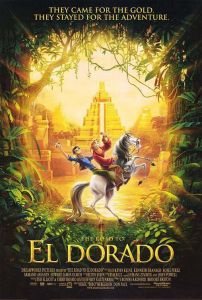 Tulio (Kevin Kline) and Miguel (Kenneth Branaugh) are two 16th Century Spanish con men who somehow speak in English accents and appear to have a secret gay relationship. I calls ’em as I see ’em people. Through a strange comedy of errors the boys end up marooned on a far off land with a horse in their possession as well as a mysterious map. The map leads to the unfold treasures of the mysterious fable of the city of El Dorado. They partner with a saucy native (Rosie Perez) with hips bigger than shoulders and a pining to be taken away.
Dreamworks has scored big with previous strong ink and paint outings, but El Dorado seems to be a disappointment. At times the banter between Kline and Branaugh is lively and humorous but the energy is never sustained for long. El Dorado lulls unexpectedly quite often. Katzenberg created the very successful Disney animated formula, and still sticks by it regrettably. The Iron Giant showed originality can work, so why is no one listening?!
The animation is surprisingly shoddy at times. The contrast between 3-D and 2-D animation is easily noticeable, unlike the work in Prince of Egypt. Perez seems miscast, what with her Puerto Rican accent, and close to all the characters are poorly underwritten, even the damn horse.
Elton John and Tim Rice buddy up after their successful pairing with the Diz blockbuster The Lion King to unleash wave after wave of senseless drivel. None of the monotonous songs are memorable, or even downright humable. After seeing these pop regurgitation it’s easy to see that everyone makes a bad step. Consider this one.
El Dorado is an animated attempt toward the bumbling road pictures of Hope and Crosby, but this tank is too low on gas for the entire trip.
Nate’s Grade: C+
Share this:

Being John Malkovich (1999)
 I think I’ll simply surmise the emphasis of this review in one opening sentence: The most refreshingly and exhilarating original movie in years. MTV music video chief royale Spike Jonze directs a modern day fable that is a hallucinatory trip through the looking glass and into man’s thirst for celebrity. While Malkovich is stuffed with enough brilliant gags to kill the Austin Powers franchise, it is also a deeply articulate and insightful piece about the longing for love and fame. The movie is often thought-provoking while side-splitingly hilarious.
I will not spill one lick of Charlie Kaufman’s plot to ensure the viewing audience the pleasure of astute surprise, and there is plenty. Malkovich is the first film in a long time to have just as many unexpected twists and turns in the final 30 minutes as it does in the first 30 minutes. The acting is wonderful consisting of John Cusack’s greasy puppeteer loser, to Cameron Diaz’s frumpy animal loving wife, to Catherine Keener’s man-eating ice queen, to even a wonderful inspired parody of John Malkovich as himself playing himself.
Being John Malkovich isn’t afraid to tackle weighty subjects such as gender identity or the hunger to be somebody, but it never looks down upon the characters or the audience but instead treats each with nurturing respect. The movie is a breeze of fresh air in a field cluttered with too many formulaic fluff appealing to mass audiences and consumer goods. Malkovich is destined to become a cult classic and deservedly so. The flick is a spurt of creative madness bordering on genius that one wonders how it ever made it into release with today’s society and studio heads. God bless you Spike Jonze and you too Charlie Kaufman. Fare thee well.
Nate’s Grade: A
Share this:

Fight Club (1999)
 Fight Club is a movie that will kick you in your teeth. It’s the adaptation of a sort of anarchist handbook by David Fincher, the man who gave us the grisly masterpiece Se7en. Fincher’s latest re-teaming with Brad Pitt is a disturbingly gritty tale of politics and violence.
Ed Norton plays our un-billed narrator through the harrowing tale of fascist propaganda and anti-social behavior. Norton dwells in a world of cubicles and consumerism. He meets Brad Pitt’s Tyler Durden on a flight and the two instantly connect. Norton moves in with Pitt into something resembling the Munster’s house once his own apartment has exploded. Pitt and Norton find the therapeutic realization through fighting. These fights grow larger and build up into clubs where all the guys are fighting to get in to get their head slammed on concrete. These clubs start turning into neo-fascist soldiers of fortune as they try to ambitiously grow and destroy the reality of consumerism. It kind of spins out from there and never returns back.
David Fincher’s direction is ultra slick and highly stylized. He is one of the most lavish and intriguing visual artists of this decade. He really knows how to pump out excitement and vivid hypnotism from striking images and tones strewn apart every inch of letter-boxed form. Norton has the same commanding presence and magnetic performance that he flashed so brilliantly in last year’s American History X. Norton is the one that runs the emotional gambit and shows just how it should be done. Brad Pitt takes on a role none have seen (Does anyone remember Pitt splicing porn images into children’s films with Legends of the Fall?) and once again proves there’s a calculating and superb actor behind the pretty face. Helena Bonham Carter goes leaping against type to play the bumbling Goth love interest with such charm and humor. And Meat Loaf will really surprise as a pathetic breast enhanced friend to Norton.
Fight Club speaks to a world where men feel they have been robbed of what has historically defined them; a world with Oprah, The English Patient, and self-help groups telling them to cry, be kind, rewind. All of the social consciousness has made some men feel less like their upright ancestors. So Fight Club‘s proposition is that to freely express your emotions you need to either be pummeled into ground round or be the one doing the pummeling. The notion is a tad laughable. Fight Club is a flick with so much on its mind to say that it brisks from topic to topic sometimes not dwelling as much as it could. The twist ending is unnecessary and is something that truly comes out from left field.
Fight Club has been criticized for its promotion of violence, but if anyone actually sees the film the violence is gruesomely repellent. No kid is going to walk out of this and think it would be cool to start a Fight Club in their local suburb. The movie is an interesting mirror to our always-on-the brink commercial society, and its push toward a kinder gentler civilization and its effects on the male psyche. Despite some oddities at the end and some fascistic rhetoric, Fight Club is an exciting blend of suspense, action, and dark humor. Go ahead and break the first rule of Fight Club – tell your friends about the adrenaline kick this movie is.
Nate’s Grade: A
Share this:

Go (1999)
 The sophomore outing of director Doug Liman, the man who put the swinger in Swingers baby, is far from any slump – no it’s more like an achievement. Liman is a man that knows what he wants and an excellent visual artist. Go is a spinning tour-de-force joyride of energetic fun. The movie is down right infectious. It stays in your system for many days, no weeks, after viewing. Consult your physician for proper treatment.
Born in the shadow of Pulp Fiction with the disjointed narrative structure, interlocking plots, retelling of events through different perspectives, and out-of-place editing, Go is the first movie to deserve having the comparisons to Tarantino’s masterpiece of blood and violence. It’s like a child of Fiction, with teens as the main stars and doing some awfully idiotic things mainly because… they’re teenagers. The story of Go is bursting to the seams with clever and embraceable characters, witty and hilarious dialogue, and enough plot twists to keep any viewer frothing at the mouth for more. Again, consult your physician.
The movie reminds me in a way as a American Graffitti or Fast Times at Ridgemont High for the fresh stable load of young talent displayed. Everyone fits nicely and performs excellently, like Timothy Olyphant’s devilishly charming and dangerous turn as a drug dealer, and Taye Diggs who helped get Stella’s groove back and is now the too cool for words friend of a grocery clerk on their trip to Vegas which turns into a comedy of errors. But the standout amongst all the talent is that little delectable Canadian bundle of joy known as Sarah Polley. Playing one of the chief protagonists, she is fascinating and compelling. She takes the role and shines the brightest in a movie filled with equally bright stars. I look forward to seeing what she does in the future.
Set against the L.A. rave scene Go tells the story circling around a 24-hour period of tantric sex, drug deals, a police sting, a lap dance, gay soap stars, and good ole’ chew-able aspirin. The movie is driven by an awesome soundtrack of techno and rock that seems to act like the narrator of our little tale. Go is brisk, breathless, rigorously hip and smart. Finally an INTELLIGENT teen movie. Too bad not too many teens went to see it at the theaters judging from box office scores. I guess they all wanted to see Ryan Phillipe’s ass one more time in Cruel Intentions. But Go is a fascinating trip you’ll want to take over and over and wish the sun would never come back up. Do not pass Go.
Nate’s Grade: A
Share this:

Run Lola Run (1999)
 There is a certain vibe some movies resonate while watching. With some it’s the mood of pure nausea, some the feel of being derivative and meandering, but there are those few that seem to leap from the screen, slap you in the face, and scream cool. It happened with Pulp Fiction, it was there with Trainspotting and The Matrix, and you better believe every precious frame of Run Lola Run drips with a feeling of absolute cool.
Since the movie is foreign, German, and subtitled, I’m sure most out there don’t know about it. It’s the tale of Lola’s desperate quest to save her boyfriend Manni. See Manni runs money for a very shady character and has accidentally lost a bag of money earlier. Lola has twenty minutes to retrieve 100,000 Deutschmarks somehow or else he will in an act of desperation rob a corner grocery store which inevitably means his doom. So Lola dashes out the door and she runs. And does she ever!
 Born in an age of avant garde MTV videos and a declining attention span nationwide, Lola is a dizzyingly kinetic concoction of energy ]and excitement.The movie is a colorful fireworks display of multiple outcomes and the varying degree minute choices and details can have on our lives. The movie is a living video game telling Lola’s trek three different ways and showing the possibilities of chance and fate.
With each run the audience’s heart beats to the thumping presence of the blistering electronica soundtrack pulsing along Lola’ runs. It simulates her racing heart and that of the audience watching. Within an hour of seeing the flick I had to run out and get the soundtrack, and after a brief listen it made me want to run myself.
The movie has more energy than the Energizer bunny, and our carrot-topped heroine could run circles around his fluffy ass. The narrative structure poses the question to audiences how our lives could be different with any of the small choices that occur day-to-day in our lives. The idea was seen in last year’s Sliding Doors but is much better played out here. All I can say is that Run Lola Run will go down as one of the coolest movies of the millennium and ushers in a new time and genre for the world of cinema. I want my Lola running shoes.
Author’s note: I was so enamored with this film I went as Lola for two Halloweens in a row.
Nate’s Grade: A


 nathanzoebl
You must be logged in to post a comment.