Blog Archives
A House of Dynamite (2025)
 Director Kathryn Bigelow’s first movie in eight years plays to her strengths with a dynamite ensemble cast trying to process a ticking clock of doom and their dwindling options. It’s an incredibly taut and thrilling movie elevated by Bigelow’s penchant for later-career verisimilitude. A nuclear missile is launched from an Asian country (North Korea? Russia? It’s never clarified) and heading for the American Midwest. The movie replays the chain of events three times and in real-time, first with the initial discovery of the missile and those in charge of launching counter defenses to take it out (a character describes the difficulty as “shooting a bullet with a bullet”). Then with the higher military brass debating whether to launch pre-emptive strikes against foreign countries making moves. Finally, with the president who hasn’t been seen up until this point, keeping the identity of the actor a surprise. He has to make the final decision of what to do as the missile looms and loss of life seems inevitable. I was fairly enthralled by the immediate pacing and the fraught conversations over doomsday planning. It felt like a modern-day and terrifying version of Fail Safe. There’s even room for some human stories here as people contemplate what might be the end, like trying to reach a loved one by phone and summarize a lifetime of feelings for closure, or debating whether or not to stay or leave the incoming danger. Because of the repeated structure of the screenplay, it holds out the missile striking or not striking until the very end. What will the president do? Is it as another character dubs a choice between suicide and surrender? And then…
Spoiler…
the movie just ends. I’m spoiling to protect you, dear reader. It’s not an ambiguous ending. There is no ending. There is no conclusion. I was flabbergasted. It’s like they lopped off the last twenty minutes. How could they do this? It completely ruins the movie for me and the whole experience becomes one of those distaff “we just want you to think” experiments that don’t function as a fully-developed movie. A House of Dynamite (coined from a podcast the president listened to) is a thriller that goes up in smoke.
Nate’s Grade: B-
Share this:

G20 (2025)
 G20 is a curious movie. There are plenty of these kinds of movies to be found dotting the landscape of straight-to-DVD action vehicles starring the likes of, say, Casper Van Dien or Dolph Lungren. Junky action movies can be their own pleasure, guilty or otherwise. What I wouldn’t expect was watching one of these kinds of movies with an actress the caliber of Viola Davis, four-time Academy Award nominee. The movie portrays Davis as America’s president (if only …sigh…) attending the annual G20 global convention of world leaders when it’s taken over by terrorists. The lead terrorist (Antony Starr, The Boys) has a master plan to appeal to the citizens of the world to divest their money from banks and invest entirely in crypto currency. That’s right, dear reader, the bad guy has a crypto scheme. I suppose the movie is meant to emulate a Die Hard-in-a formula, or more accurately an Air Force One-in-a formula since that movie also followed a cornered president acting as an avenging lone wolf. The setup is fine, it’s the execution that is shoddy and poorly developed, with the limitations of the budget that was still obviously so much bigger than almost any other direct-to-DVD action thriller. The hide-and-seek setup where we watch a character outfox and pick off the bad guys is a winning scenario, but G20 doesn’t bother to derive engaging and surprising set pieces. Each scene of characters running, fighting, or exchanging gunfire is much like the last. The president even has a pair of tech-savvy kids, and a useless husband (sorry Anthony Anderson), who are lackluster additions, serving as tools to be threatened. If you had cut out Davis and replaced her with, say, Antony Starr, this movie wouldn’t be much different from the tide of mediocre action-thrillers meant to pass the time. Davis is a credited producer on this movie, which means she is the star because she wanted to be an action hero. That’s an admirable goal but an actress of her ability shouldn’t have settled for interchangeable genre dreck.
Nate’s Grade: C
Share this:

Reagan (2024)

My seventy-five-year-old father doesn’t get out to see as many movies as he used to, but one he was dead-set on seeing in theaters was Reagan. My sister took him and he came back singing the movie’s praises, celebrating Dennis Quaid’s portrayal of the 40th president of the U.S. of A. and extolling the virtues of this trip down Boomer memory lane. I’m glad my father enjoyed the movie. I’m glad the filmmakers could provide him two hours of uplift and entertainment, especially during times like these where my whole family can use the escape from present-day worries. I’m also retroactively relieved that I didn’t see the movie with him, though as a dutiful son and his movie buddy for decades, I would have. I’m glad because our opinions on the overall artistic merits would have been significantly different, and I wouldn’t want to rain on my father’s personal enjoyment (that’s what the written word is for).
For the benefit of analyzing Reagan as a movie first and foremost, I’ll reserve my reservations about his political legacy for the end of the review, but even as a standard presidential biography, Reagan the movie is a disappointing and reductive trip through one man’s Wikipedia summation of a career. I’ve become much more a fan of the biographies that choose a seminal moment from a public figure’s life to use as a framing device for the larger legacy (think 2012’s Lincoln focusing on the passage of the thirteenth amendment). I’d prefer that approach to the more familiar cradle-to-grave structure that often feels like a zoom through their greatest hits where none of the events are granted the consideration or nuance deserved. With Reagan the movie, we’re sprinting through history, although Reagan doesn’t even become president until an hour in. Instead, the focus is unilaterally on Reagan’s opposition to communism and the Soviets. Obviously distilling eight years of a presidency into a couple hours is a daunting and improbable task, the same difficulty for distilling any person’s complicated life into an accessible two hours of narrative. Still, you should have expected more.

For those coming into the movie looking for a critical eye, or an even-handed approach to this man’s faults and accomplishments, the movie condenses itself into a narrow examination on communism and the Cold War, a story we already know proves triumphant. The cumulative problem with Reagan the movie is that it doesn’t really add to a deeper understanding of the man. With its streamlined narrative and pacing, the movie sticks to its Greatest Hits of Reagan, especially his speeches. There are several famous Reagan speeches littered throughout the last act of the movie, and it doesn’t do much for a better understanding of the man delivering those remarks as just hitting upon people’s memories of the man in public venues. It would be more insightful to watch the team behind the scenes debating their choices. The movie portrays Reagan the man more like Saint Regan, arguing if there are any presentable faults they should be readily forgiven because it was all in pursuit of morally impregnable goals (he remarks that the vicious right-wing contras remind him of George Washington and the early colonial army…. yeah, sure). The filmmakers are too afraid to say anything too critical but also to reveal anything truly revelatory about their subject. So the movie becomes a glossy nostalgic-heavy drama without much in the way of drama because Reagan will always persevere through whatever hardships thanks to the power of his convictions, which will always be proven right no matter the context and repercussions. The movie seems to imply all his decisions led to the fall of the Berlin Wall, so it all must have worked out, right? Well, not for everybody, movie, but we’ll get to that in due time.
The filmmakers elect to frame the movie through a curious narrator – a retired KGB officer (Jon Voight) that has followed the life and times of Ronald Reagan going back to his early days. Apparently, this Soviet spy saw true greatness in Reagan way back and thought he might become a threat to the continuation of communism. It’s a strange perspective to be locked into, the enemy complimenting Reagan from afar and ultimately crediting the man’s faith in God as the reason that America triumphed over the Soviets. It means then that every scene has to be linked to our KGB narrator, and sometimes that can get questionable, like when he’s talking about Reagan’s time as a teenage lifeguard, or the time Reagan was being bullied by local kids, or Regan’s intimate conversations with his first wife, Jane Wyman (Mena Suvari). The scenes in Hollywood are so clunky, especially a dinner where the movie wants us to look down on Dalton Trumbo, blacklisted Hollywood Ten writer. This man stood for his principles and suffered a real backlash, and you want me to think of him as misguided and part of some liberal communist cabal (the movie also includes a picture of Oppenheimer as part of its Soviet influence targets)? By insisting upon a narrator that’s not Reagan, that means this KGB spy it also means that we’re seeing the world of Ronald Reagan through an interpreter’s prism, which makes the scenes even more curious for being such an unexpected cheerleader over Reagan’s amazing instincts and abilities. It would be like having Stalin narrate a biopic about FDR and showering the president with gushing praise.
Limiting the movie’s focus to Reagan’s lifelong battle against communist forces makes for a much cleaner and more triumphant narrative, and also leads to an ending we all know is coming, not that surprise or nuance is what the primary audience is looking for. The movie posits that Reagan pursued becoming the country’s chief executive for the selfless mission of standing up to the nefarious forces of communism. Then again, in the opening moments, the movie also tacitly implies that maybe it was the Russians who shot him back in 1981 when it was really an incel who thought he might impress Jodie Foster. Those opening moments also present a cliffhanger to come back to, as if there’s a gullible portion of the audience that is hanging on pins and needles in anticipation whether or not Reagan really was killed back in 1981 (“But… but if Ronnie dies, then who was left to beat the commies?”). It’s a very selective narrative framing that makes the movie easy to celebrate because Reagan is presented as America’s steadfast defender who stood up for our apple-pie American values and brought down the Soviets. Reagan certainly played his part in helping to facilitate the collapse of the Soviet Union, but he was one man coming in at the end of a chain of events spanning decades. I liken it to having a group project in school where you and your cohorts work steadily all week, and then the day it’s due, a kid who’s been absent all week except for that day comes onto the project, adds some contributions, and then takes credit for everything accomplished. Reagan gets his due but so do the other U.S, presidents, secretaries of state, and lots and lots of ambassadors that also helped reach this monumental conclusion. However, the biggest contributor to the collapse of the Soviet Union belongs to the Soviets themselves and their rejection of living in a reality in conflict with the dogma of their political leaders (sound familiar to anyone?).
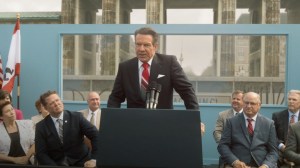
The screenwriters also position the Great Communicator as being so powerfully persuasive that all it took was one speech and everyone was left helplessly in thrall of this man’s honeyed words. It takes on such a grandiose scale that makes Reagan look like a superhuman. The movie sets up its climax over whether or not Reagan will say “tear down this wall” in a speech at the Brandenburg Gate in 1987, which heightens the drama to a level of self-parody. Is there any spectator wondering if Reagan will eventually say the words that became famous? Beyond the false drama of whether or not Reagan will utter this phrase, the movie tries to fashion some unconvincing behind-the-scenes hand-wringing over what it will mean if Reagan says these words while in Germany. As if the man has ever been shy about denouncing communism and the Soviet state beforehand. The movie also exists in a world where every world leader and responsible adult is glued to a TV set watching Reagan speechify at any key moment. Hilariously, after Reagan does indeed say “tear down this wall,” the film cuts to Margaret Thatcher watching and solemnly saying, “Well done, cowboy.” The rousing music reaches a crescendo, the Reagan team celebrates like they just landed a man on the moon, and the implication is that now that Reagan has put these four words together in sequence, well that Gorbachev fella has no choice now. The movie is set up like this speech is the final blow that pushes the Soviet Union into the dustbin of history. And yet, the next scene of the Berlin Wall coming down has a helpful on-screen designation of time: “two years later.” So Ronnie gave his amazing speech and it immediately led to the end of East Germany… two years later. Does George H. W. Bush get all the credit for being president when the Soviet Union actually collapsed in 1991? I’m sure we can find a speech somewhere where he said something bad about them, and if Reagan the movie is an indication about political persuasion, all he had to do was say the words out loud. Then the wicked communist curse is broken, but few people knew that, only those who worked for Ronnie.

The movie goes to this magical solution time and again, as Reagan is able to solve any crisis with just the right combination of words. Whether it’s Vietnam protestors he cows into retreat by shushing them, or even a debate where all he has to do is throw out a joke and the opposition must crumble because nobody can recover in the face of a joke; the movie presents time and again a silly and reductive version of politics where all it takes is for people to hear the cherished words of Saint Reagan and be converted. Look, Reagan was an influential figure and inspired a generation of Republican leaders to follow in his wake, and yes his telegenic skills were an asset to his understanding of how to handle issue framing. But to reduce everything down to his overwhelming oratory powers of persuasion makes it seem like everyone in the world is falling prey to a linguistic cheat code they are unaware of. It’s the kind of deification that we might see in a North Korean movie extolling the powers of Kim Jong-Un (“He golfed a hole-in-one with every hole”). This is what a hagiography does rather than an honest biography, and that is why Reagan becomes a relatively useless dramatic enterprise except for those already predisposed to wanting to have their nostalgia tickled and their worldviews safely confirmed.
I wasn’t exactly expecting, say, an even-handed review over Reagan’s legacy, but there’s something rather incendiary about how it distills all of the opposition to Reagan and his policies. Our KGB narrator intones that not everybody was a fan of good ole Ronnie, and then in an abbreviated montage we get real news footage of protestors with placards condemning the Reagan administration for ignoring the AIDS epidemic, for tax cuts for the rich, for supporting the apartheid government of South Africa, for gutting social safety net programs, etc. The handling of the Iran-Contra scandal is hilariously sidestepped by the same Reagan who is shown on screen being so dogmatic about sticking to law that he fired all the striking air traffic control workers. It’s not enough that the movie reduces all relevant critical opposition to Reagan to a brief music montage, it’s that the movie then quickly transitions directly to a map of the 1984 electorate with Reagan winning in a landslide, as if to say, “Well, these cranky dead-enders sure were upset by these issues, but they must be wrong because the American people overwhelmingly re-elected him.”
I never found Quaid’s performance to be enlightening or endearing, more mimicry that settles into an unsettling cracked-mirror version. It always felt like an imitation for me, like something I’d see on Saturday Night Live in the 1980s with Phil Hartman. He holds the grin and nasally voice but delivers little pathos. It’s not exactly the actor’s fault when the screenplay gives him such little to do. There was a real opportunity to better humanize him toward the end as his mental decline was becoming more of a force. Instead, it’s relegated to the very end, as a gauzy way to usher the man off the stage with our sympathies. Voight (Ray Donovan) gets the most lines in the whole movie and really seems to savor his Ruskie accent. Curiously, his character is talking to a promising KGB pupil trying to learn where they went wrong and it’s not set up to be Vladamir Putin, himself a former KGB agent. The only other significant supporting role that lasts is Nancy Reagan played by Penelope Ann Miller (The Shadow, Carlito’s Way) and she’s relegated to the suffering spouse on the sidelines that always has the steel spine and the word of encouragement. Her best moment of acting was her embarrassment as a captive witness to Ronnie, before his step into politics, awkwardly dancing on stage with the PBR players as a shill for the beer company.

Let’s be honest about who Reagan is aimed at, an older, mostly conservative audience looking back at the time of Reagan’s reign and thinking, “Those were the good old days.” It’s not made for people like me, a progressive who legitimately believes that many of our modern-day problems can trace their source from the eight years of the Reagan administration. I’m talking about the trickle-down-economic fallacy that girds so much Republican magical thinking when it comes to taxes. I’m talking union busting, I’m talking his “welfare queen” projection, I’m talking the selling of arms for hostages (bonus fact: the Reagan campaign was secretly negotiating with Iran not to release the hostages until after the election to better doom Jimmy Carter’s chances of re-election), I’m talking about making college education far more expensive by massive cuts to state funding, I’m talking the rise of the disingenuous “textualist” judicial philosophy that only seems to mean something when its proponents want it to, I’m talking about training and arming Osama bin Laden to fight the Soviets in Afghanistan (wonder why the movie chose not to include this since it is Reagan fighting communism), and so on and so on. Naturally none of these are held to scrutiny by Reagan the movie because it’s from the writer of God’s Not Dead and the director of Bratz.
Suffice to say, Reagan has many notable shortcomings depicting a president who, with every passing year, only seems to add to his own shortcomings in legacy (the Party of Reagan has willfully given up all its purported principles to become the Party of Trump). If you’re looking for an overly gauzy, sentimental, and simplistic retelling of what people already know about Ronald Reagan, then this movie is for you. If you’re looking for anything more, then this is the New Coke of presidential biopics.
Nate’s Grade: C-
Share this:

My Son Hunter (2022)
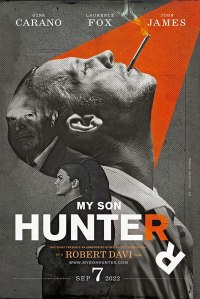 I’ll never understand the pathological obsession people have with Hunter Biden and what may or may not be on his laptop. This fixation on President Biden’s son seems so unshakably quixotic, hoping that with each new murky examination somehow, magically, there will be impropriety and criminality if you only look right. This dogged obsession with, at best, a tertiary figure to the true target of conservative ire reminds me of the crackpot theories concerning Vince Foster, a deputy White House counsel who took his own life in 1993. It was ruled a suicide by five investigations, and yet there are still enough people that are unsatisfied with this provable reality and want to see something more nefarious, more suspect, and simply more. Surely Vince Foster must have been assassinated by the Clintons, and especially Hilary, because he knew too much. It’s nonsense but to some it’s the only thing that makes sense. Such is the same with the Hunter Biden laptop, which some have deluded themselves into thinking could have been the difference maker between a President Biden winning by eight million more votes and a second-term for Trump. It’s difficult for the rational mind to fathom how many ordinary voters would truly care about a presidential candidate’s son’s liaisons, especially when that person is a private citizen and not employed in government.
I figured it was only a matter of time before a rapacious conservative media bankrolled a Hunter Biden Laptop Movie, and it seems only natural as Breitbart’s first foray into narrative filmmaking. The movie takes a lot of style and attitude notes from the latter films of Adam McKay, borrowing liberally from the mixture of documentary and cheeky fourth-wall breaking motifs from The Big Short and Vice. I’ll admit it makes for a slightly more entertaining movie, and My Son Hunter wasn’t the complete disaster that I had dreaded. It’s still not a good movie, by far, and its points are leaden and misleading at best and downright false and speculative at worst, but I’d rather watch a conservative movie that attempts to ape better filmmakers. Trying and failing is at least better to watch for 80 minutes than simply preaching to the converted and not even trying.
 Hunter Biden (Laurence Fox) is drifting through life, parties, and may be the biggest hindrance to a would-be President Joe Biden (John James). Hunter left his laptop at a repair shop but thankfully the media refuses to cover the story, instead downplaying it as a possible Russian disinformation campaign in the last weeks before the 2020 presidential election. Joe can’t have anything go wrong so close to his possible big victory, but Hunter, at least in this not-at-all biased interpretation, seems like a walking catastrophe waiting for his next landmine.
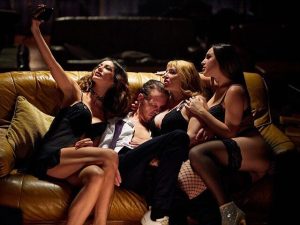
Before even discussing the filmmaking merits, let’s tackle the chief purpose of this movie, which is to defame Hunter Biden and by association Joe Biden. It’s not exactly breaking news that Hunter Biden has lived a troubled life. The man has been upfront about his own struggles with addiction; he wrote about it openly in his own 2021 memoir. Watching Hunter snort anything within reach, party with hookers, and hang out with lowlifes just feels gratuitous because it’s the same characterization over and over. That’s all the movie covers for its first 30 minutes, Hunter partying with strangers and strippers (but still in a demure way where nobody, even before passing out on the floor, removes their clothes). It feels like we’re wallowing in a man’s degradation and it’s unseemly because the intention is not meant to be empathetic. The target audience watching this won’t likely care about Hunter genuinely getting better as a person. That’s not what this expose is for, trying to better understand his humanity and vulnerability. This is merely a roundabout way to taint Joe Biden, a figure too boring by himself, so the critics have to settle for Hunter and his salacious escapades and work on grimy guilt by association.
I can hear some griping that the movie presents Hunter in a more sympathetic light, at least early, with him recognizing his own screw-up nature but feeling powerless to rise above. He also talks about the grief of losing his mother and sister at such a young age, as well as his older brother in 2015. However, any pretense of humanizing goes out the window once big daddy Joe arrives, and Hunter becomes a sniveling sycophant who shrugs his way through life, not just aware of his nepotistic privilege but fully comfortable with his participation in corruption and graft. Any introspection is abandoned and it makes any prior introspection appear phony. It’s hard to square the Hunter in the beginning who talks about the wounds of losing his mother with the Hunter who complains that his dad never supports his art, complete with cutaway to his finger painting. There’s an entire six-minute stretch where Hunter is lectured to, by his stripper named Kitty (Emma Gojkovic) who just happens to be the estranged child of Christian missionaries, about China’s concentration camps for its Uyghur population, and he stares slack-jawed, as if he hasn’t kept up with the news in years (the reprehensible concentration camps for Muslims have been well-documented by the mainstream media). This Hunter is merely a stand-in for vague political corruption, an irredeemable naif that is only meant to make his father appear worse, and that’s also why now that Republicans have won the House, you’ll see a lot more of Hunter Biden’s name in 2023 because, obviously, investigating his previous business handling as a private citizen is the cure for inflation and higher gas prices.
 So what does the movie profess to expose, especially so that had this evil laptop of incriminating evidence been properly adjudicated, then Donald Trump, the most unpopular president in the modern era, would have easily won re-election? It’s a rehashing of what led to Trump’s first impeachment in 2019. Hunter Biden was on the board of a Ukrainian energy company, Burisma, and he most definitely got that position because of his name, and of course this is the only instance in the history of the world where that has happened before to the scions of the rich and famous. When Jared Kushner, who actually worked in Trump’s White House, was offered over two billion dollars by the Saudi royal family upon leaving his taxpayer-paid position, I’m sure it was completely for his unparalleled expertise on Mid-East diplomacy. Anyway, this Burisma position was already investigated internally by the State Department for conflicts of interest, and the Ukrainian prosecutor that Joe Biden pressured to be removed as VP was not threatening to investigate Hunter. This prosecutor was corrupt and refused to investigate Russian-backed assets; he even refused to investigate Burisma. There was no inappropriate arm-twisting to protect Hunter or Joe Biden, as thoroughly debunked during the 2019 impeachment trial. It’s all pretty established, but that doesn’t matter to its target audience, the same group who keeps desperately re-shaking a disparate collection of incorrect election anecdotes to produce a bigger picture like one of those pesky Magic Eye pictures that only “true American patriots” can properly see.
That’s really the majority of the specific accusations against Hunter. It impugns his associates, like Devon Archer who was sentenced for defrauding a Native American tribe in 2022, but too many of the accusations are broad and reaching, much like the Burisma condemnation. Biden did invest in shares of a Chinese technology company, Face++, as part of a larger portfolio, and China has reportedly used this technology to surveil citizens it’s looking to persecute. This is not great, but I wonder how many other venture capitalists have holdings with connections to other similarly sundry applications, especially with technology. I’m not excusing this, I’m just saying this “a ha!” accusation isn’t quite the deathblow the movies seems to assume. If it was, it wouldn’t need a character to literally explain the context of why this is so damning. The larger accusations of bribery and funneling ill-gotten monies back to daddy Joe are weak too, no matter how many times the movie adds titles to tell us, “This really happened” (but it didn’t). So many of these accusations are like Burisma, where it’s a purposely misconstruing of events and a deliberate ignoring of context or corroborating information that would deter their argument.
Hunter Biden isn’t the world’s greatest businessman by any measure. He’s also not the world’s most infamous criminal who fails to be held accountable because of his cushy connections. Hunter Biden hasn’t even been banned from operating a non-profit in New York state because he used a kids-with-cancer charity like a personal piggy bank (sorry, that was Trump’s children). Let it be known by this self-professed progressive, if Hunter Biden is guilty of a crime then prosecute him. Put him in jail. I don’t care. He doesn’t deserve special treatment. But at the same time, if he’s just a guy with problems, he doesn’t deserve this crazy level of unbridled antipathy.
 Following the McKay model, characters will stare directly into the camera for comedic effect, to add additional commentary, like when the movie flatly states, “This is not a true story… except for all the facts.” Of course, the screenwriters have a harder grasp of those stubborn facts. These are the same writers of The Obamagate Movie, which proposes to expose the “Deep State conspiracy to undermine the Trump administration and the fake Russian collusion narrative.” Again, facts are stubborn things, especially when the end of the movie laments when, oh when, will truth matter over lies and the powerful be held responsible for their corrupt actions (were these people just willfully hibernating during the scandal-a-week Donald Trump presidency?). The attempts at humor are often juvenile and stupid, like an opening scene where Hunter has a psychic conversation with a tiny dog while he’s high on drugs, and this is after a cartoon graphic of Hunter’s heart pops onscreen. The jabs against Joe Biden are mostly of the creepy hair-smelling and loony grandpa variety with groan-inducing malapropisms (“Nothing can threaten my erection;” see instead of “election” the dumb man said “erection”). The movie also squeezes in other conservative grievances, like opening with a Black Lives Matter protest and admonishing the media for its portrayal. I think having one of the protesters working as a stripper (to pay off her college loans, she tells us) is meant to be some insult to liberal protestors or even higher education. The same with having a stripper announce her pronouns. Is this the nightmare world the liberals all demand when even the people sleazy men pay to get naked would inform us of their preferred pronouns? I’m surprised they went the entire movie without a trans joke.
I don’t know why Fox (Inspector Lewis, White Lines) would agree to portray Hunter Biden. He doesn’t exactly resemble the man. He looks like a more gaunt version of Ebon Moss-Bachrach (Girls, The Bear). Fox provides the best reason to watch the movie because he’s not acting like he’s in lazy agitprop. Give credit where it’s due, the man gives a dark journey-of-the-soul kind of desperate sheen to this man, that is, until the script just turns him into a shrugging and sulking man-baby. Gina Carano (The Mandalorian) makes a brief appearance as a Secret Service detail to the Bidens, who never missed an opportunity to snidely confide to the camera about how much she loathes these men. John James (Dynasty) doesn’t work as Joe Biden at all, but he seems like he could have been a Sopranos-style goombah goon character reference for Paulie Walnuts. Many of the Eastern European actors who the production utilized from its Serbia filming site seems to have been dubbed over, so I don’t know how much criticism to offer Golkovic as Kitty, the stripper who also happens to be a former lawyer too. She’s a Swiss army knife of uses, including the intended moral uprising the filmmakers would like to believe they can engender.
 I’d like to conclude as a reminder why journalists believed that the Hunter Biden laptop story, which broke in the final weeks of the 2020 election, and was teased by none other than Rudy “Hand down my pants” Giuliani, would be met with skepticism. For an election about competency, a national COVID response, and basic human empathy, it seemed awfully strange that Hunter Biden’s name was coming up again so late, and once more from Giuliani, the man who was caught meddling in American diplomacy so that he could strong-arm Ukraine into pushing a sham investigation to slander Joe Biden. It was all just a bit too convenient, and especially when there wasn’t any corroborating evidence at the time, just one business shop’s word that, no for real, this must be Hunter Biden’s legit laptop. In the end, I doubt any voters could have been persuaded by the laptop, and those that were would have voted for Trump already. Nobody cares about Hunter Biden. And nobody should care about this silly and slimy movie trying to make him into the new conservative obsession. Go after Joe Biden for policy reasons, go after him for his age, but his son? In Joe terms, that’s baloney, man.
Nate’s Grade: D
Share this:

Hamilton (2020)

Multi-hyphenate sensation Lin-Manuel Miranda’s Hamilton sounds like a bizarre misfire, a hip-hop-infused musical about one of the lesser known Founding Fathers, and yet not only does it succeed so magnificently, so transcendentally, it’s one of those rare artistic pinnacles that lives up to its own momentous hype. This is one of the crowning artistic achievements of the twenty-first century. I’m exceedingly grateful for a filmed version of the vaulted stage experience, with the original cast, that allows me that front-row view my bank account never would afford. This is going to be a film review of what is, essentially, a live theatrical performance, but really this written review is going to be a celebration of Hamilton and what I consider to be so phenomenal.
In 1776, Alexander Hamilton (Miranda) is an immigrant looking to make his name in the American colonies and the looming war with Britain for independence from King George III (Jonathan Groff). He meets and befriends Aaron Burr (Leslie Odom Jr.), an ambitious upstart who seems fatefully linked with Hamilton through the decades. Hamilton falls in love and marries Eliza Schuyler (Phillipa Soo) but also has a close relationship with her older sister, Angelica (Renee Elise Goldsberry), who keeps her real feelings at bay to protect her sister. Eager to get into the action, Hamilton accepts a position as George Washington’s (Chris Jackson) right-hand man as the battle comes to New York and the colonists do the unthinkable and defeat England as we conclude the musical’s first act. “You’ll be back,” King George retorts.
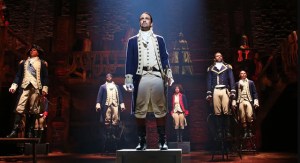
Next comes the tricky part of building a functioning country in the aftermath. Hamilton is appointed to be Secretary of the Treasury by newly elected President Washington, but his federalist principles are fought against by some pretty big names in the cabinet, like James Madison (Okieriete Onaodowan) and Secretary of State, Thomas Jefferson (Daveed Diggs). Both are wary of a centralized government and prefer more power to be held by the states. The Founding Fathers jostle for ideological supremacy and Hamilton gifts his opponents with the burgeoning nation’s first political sex scandal with Maria Reynolds (Jasmine Cephas Jones). Aaron Burr rises in local and national politics but sees Hamilton as a constant thorn in his side. With the presidential election so close in 1800, Hamilton’s endorsement of Jefferson over Burr is the final straw, and Burr demands satisfaction in a duel against Hamilton that will prove tragic.
For fans of musical theater, Hamilton is a two-hour-and-forty-minute joyously exuberant celebration of a bold artistic vision, the electricity of live theater, and broadening American history in a manner that makes it far more accessible, relevant, and humane for a modern audience. The very nature of having minority actors portraying the Founding Fathers and their famous wives is part of Miranda’s appeal that he wanted to tell the story of America with the America of today. Ordinarily, African-Americans would never get an opportunity to play Washington or Jefferson, or a Chinese-American woman playing the role of Eliza Hamilton, and there is definite power in representation, in seeing these different faces playing these historical figures. The deliberate color-blind casting makes America’s history feel more inclusive. It’s such a simple act, opening the ethnicity of historical roles, but it produces a beautiful result and provides even more cross-textual commentary, like slave-owning presidents played by black thespians.

Another miraculous effort by Miranda is his ability to generously humanize many of the characters, including the man who eventually murders Hamilton himself. Very often when we talk about the Founding Fathers and other Great Figures of History from oh so long ago, they take on a mythic quality and seem less human, less flawed, and less relatable. They seem practically superhuman, absent our doubts and desires. Miranda’s portrayal of the men and women of America’s founding does the opposite and makes these people feel relatable, flawed, and human yet again.
This includes Hamilton as well. He’s obsessed with his sense of legacy, has a pretty healthy ego that gets him into trouble, and might have been having an emotional affair with his sister-in-law, never mind an actual affair with Maria Reynolds. He’s so concerned about his “good name” and rumor of impropriety (he was accused of embezzling government money to pay for Ms. Reynolds’ husband’s extortion) that he literally confessed to his marital misdeeds and published it. Hamilton is consumed with writing his ideas (“Why do you write like you’re running out of time?”) and an impending early death, something he amazingly escaped during a hurricane in the Caribbean that destroyed his village as well as his mother’s fatal illness. He was so eager to get into the heat of war that Washington had to sit him down to persuade him that dying as a martyr isn’t as glamorous as living and seeing through your ideals. Hamilton’s death at the hands of Burr is likely the most widely known fact about both duelists, but the musical brings each to glorious and troubled life with unerring compassion without excusing their real failings.
Burr serves as the narrator of our near three hours, setting the stage for Hamilton’s story with his own regrets and jealousies framing his recounting. He’s a complex character worthy of his own biopic, an orphan who finished college in two years, had an affair with the wife or a British officer, lost her at sea, and championed retail politics centuries before it was the norm. His personal philosophy was one of caution, diametrically opposed to Hamilton jumping after whatever he wanted no matter the consequences. Burr longs for being near the real center of power, and his showstopping number “The Room Where It Happens” is an ode to his desire. He begins as a friend and ally of Hamilton, then political rival, and finally as a mortal enemy. He’s too calculated with his personal beliefs, never wanting to be too challenging and at risk, which is an embodiment of his social-climbing ambition as well as his callow decision-making. To Burr, avoiding risk and not accruing enemies is simply smart business. The musical does an excellent job of humanizing Burr (“Now I’m the villain in your history book”) and offering a perspective in opposition to Hamilton but not without its own measurable merits.
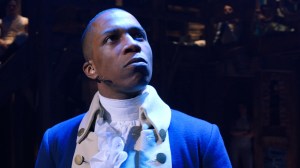
The domestic side of Hamilton could be its own movie to itself. The relationship between Alexander, Eliza, and Angelica is complicated to say the least. Angelica was the elder sister and in her stellar song “Satisfied” she details the social pressures of being in that position, being expected to marry into a desirable match that will see the family name and fortune to prosper. Feeling initially unsure about Hamilton’s intentions, she introduces him to her sister Eliza instead, and it’s a choice that she feels conflicted about ever since. Angelica dearly loves her sister (“I love my sister more than anything in this life/ I will choose her happiness over mine every time”) but cannot help but still feel a yearning for her brother-in-law. However, when the Reynolds scandal comes to light, she will defend her sister to her dying breath. That sisterly deference makes Angelica such a fascinating figure, and it certainly makes the Hamilton marriage more intriguing and roiling with pent-up desires. Eliza sings about removing herself from the narrative in “Burn” and how her husband has “forfeited the rights to my heart.” She’s been trying to impress upon her husband to be happy in the moment (“Look around, look around/ How lucky we are to be alive right now”) and enjoy his accomplishments rather than looking ahead. Her eventual forgiveness of Hamilton is one of the most emotional moments of the show that causes me to tear up. And she serves as a final testament to Hamilton’s legacy during the final number, after his death, and fills in the gaps of history by asserting her own agency back into the observed “narrative.”
I’ve gone over 1300 words, dear reader, and I haven’t even talked in depth about the music, so allow me to say that Hamilton as a musical is just about music perfection. Hip-hop is such a densely wordy platform that allows so much information to be imparted at lightning speed, which means that lyrically these songs are jam-packed with clever asides, allusions, and rhyming recitations of history. The songs are instantly quotable and filled with deep consideration from witticisms to also important dramatic themes and perspectives. I was amazed at Miranda’s composition skills in particular how he’s able to weave and build off character leitmotifs. It’s brilliant how something like Hamilton’s declarative early song “Not throwing away my shot” about his ambitions can come back during his duel with Burr where he raises his pistol in the air, away from Burr, and literally throws away his shot. Or how the beat of a song can imitate a failing heartbeat in a fractious moment of tragedy. Or how King George’s self-involved songs are fashioned to be like 1960s British invasion pop ditties. Or how cabinet arguments become riotous battle raps between Jefferson and Hamilton. Or how the same actors who played Hamilton’s wartime buddies in Act 1 are playing his political rivals in Act 2 (“Have you forgotten Lafayette?” he asks of Jefferson, the same man who portrayed Lafayette). There are layers and layers to the compositions here and the music is remarkably assured; almost every song is a certified earworm, and it’s an entirely sung musical. Every person will have their favorites, and for me they include “Satisfied,” “The Room Where It Happens,” “History Has Its Eyes on You,” “Dear Theodosia,” “One Last Time,” and the moving finisher, “Who Lives, Who Dies, Who Tells Your Story.” Even if you don’t like rap music, Miranda’s offerings are so catchy, so accomplished, and so bursting with excitement, that it’s near impossible to resist.

This movie was filmed in 2016 from the original Broadway cast, many of whom earned Tony awards for their sensational work (Diggs, Goldsberry, and Odom Jr.). Everyone is truly excellent but my favorite performer, by far, is Diggs (Blindspotting). He gets to spit lightning-fast rhymes in a French accent as Lafayette, and his portrayal of Jefferson as a dandy in the style of Andre 3000 from Outkast is enormously entertaining. His “What Did I Miss?” introductory number is a perfect impression for Jefferson’s arrival onto the stage. Diggs’ is so charming even when he’s being a scoundrel trying to plot the doom of Hamilton. His battle raps with Miranda are a highlight and Diggs also seems to get the most tricky lyrical arrangements because of his peerless skills at maintaining flow and diction (“I’m in the cabinet, I am complicit in/ Watching him grabbin’ at power and kiss it/ If Washington isn’t gon’ listen/ To disciplined dissidents, this is the difference./ This kid is out!”). There’s a reason Diggs has become the other breakout star of the show.
Soo (The Code) breaks my heart with her Act 2 solo numbers and then mends it back as she reasserts herself on “Who Live, Who Dies, Who Tells Your Story.” Goldsberry (Altered Carbon) has such a fire to her. Groff (Mindhunter) is hilarious as King George, though his singing involves a lot of literal spitting. Miranda (Mary Poppins Returns) is exceptional as the titular character who comes from nothing and through the power of his ideas creates America’s financial institutions that are still standing to this day. But it’s his personal relationships that better define him in the play. The fatherly relationship he has with Washington is affectionate (“One Last Time” has an extra poignancy knowing Washington died shortly after leaving office) and his hopes for his newborn son (“You’ll Blow Us All Away”) speak to a larger truth about parenting that also links up with the foundation of a nation in infancy. There’s also his complicated love divided between Eliza and her sister. Miranda has such a natural charm and swagger and earnestness that seeps into his performance and every performer.
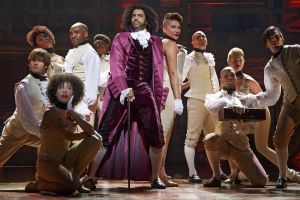
So is there anything about this movie-wise to separate it from a bootleg of the show? Director Thomas Kail (also the director of the musical) does make smart use of when to go tighter on his actors, to zero in on the emotions and expressiveness, and when to go wider for best impact. The stage is designed like a bullseye with a rotating circle, which can play up the dramatic confrontations between foes, especially the duels. I was impressed at points where the movement of the stage would be perfectly timed with camera focus and edits, allowing other characters to loom over the shoulder, or pop into focus, giving the production a greater sense of filmed visuals. However, this is really a filmed version of the stage show, so as a movie, it’s only going to do so much with those trappings. The unreality of theater has to be accepted but the movie version does a great job of maintaining the intimacy of the shared theatrical experience. It’s even nice to hear the applause after the musical numbers or some of the laugh lines hit home.
By this time, you’ve likely heard about the Broadway-smashing Hamilton success story of Miranda and his crew but do yourself a real favor and watch the movie with the OG cast. Yes, there are historical shortcuts taken for dramatic license and not everything you see on stage will be one hundred percent accurate with the long record of history, but it all clicks for the greater storytelling aims. Some might be uncomfortable with the re-visioning of the Founding Fathers, either by the open-ethnicity casting or glossing over their slave-owning faults, but Miranda’s larger goal of making history reflective of the people who currently live today is admirable. In short, unless you have the kind of money to blow on a front-row ticket, enjoy the Hamilton movie experience until Miranda eventually wrangles his artistic milestone into a more movie-movie version.
Movie Grade: A
Show Grade: A+
Share this:

Vice (2018)
 If Oscar-winning funnyman Adam McKay can take the arcane, convoluted world of finance and spin it into one of the most entertaining, accessible, and enraging films of that year, then just imagine what he could do with the life of Dick Cheney?
We follow Dick Cheney (Christian Bale) from his early days as a college washout, to Washington intern to Donald Rumsfeld (Steve Carell), to youngest chief of staff in a White House administration, to Wyoming Congressman, and eventually Vice President to George W. Bush (Sam Rockwell) where Cheney redefined the VP role as a defacto second president. This is the story of his 60 years shaping the annuls of political power.
 If you have one reason to watch Vice, it’s the staggering performance by Bale (Hostiles). As is custom, the man completely transforms himself into his subject, gaining weight, building muscle in his neck to simulate the Cheney shoulder hunch, and going unrecognizable in startling older age makeup. He doesn’t just look the spitting image of Dick Cheney but he sounds like him too, exhibiting his cadences and mannerisms, and fully inhabiting the man every second he’s onscreen. It’s a compelling, captivating turn that ranks up there with Bale’s best. He’s beyond great but strangely nobody else is. Amy Adams (Arrival) plays Lynne Cheney, Dick’s wife and shrewd political partner, and her worst acting moment is her introductory scene where she lays into the young Cheney. It’s like an audition where the actor is hitting the wrong notes too strongly. Adams regains herself as the film carries on but never has a standout scene. Nobody else other than Bale is given the material to stand out. Rockwell (Three Billboards) and Carell (Beautiful Boy) are enjoyable and aided by impressive makeup, especially old Rumsfeld, but they’re given one note to play. Their roles become more impression than performance and both men drop out of the movie for long periods of time. The next best actor might by Tyler Perry (Gone Girl) as Colin Powell, and maybe that’s because Perry is used to brokering nonsense with his own array of nonsensical characters. He’s already the weary adult.
The meta interludes and fourth wall breaks that helped The Big Short succeed conversely are part of the problem with Vice. Most Americans know a decent amount about the Iraq War and its documented fallout, so there’s less need to have celebrities interject and explain complex scenarios and institutions (the absence of Margot Robbie in a bubble bath will always be felt). The narration by Jesse Plemons (Game Night) doesn’t feel necessary, and his ordinary identity becomes a guessing game for most of the film, trying to link him with Cheney. I was thinking he would be an Iraq War soldier and get killed later on, that way establishing a stand-in for the thousands of men and women who are no longer walking this Earth as a direct result of Cheney’s misguided action. Nope. When his identity is finally revealed you’ll go, “Oh,” and that’s it. Because he wasn’t really a character, he was a narrative device and one that didn’t stand for anything larger. The visual metaphors can also be very, very obvious. There are consistent cuts to Cheney fly-fishing in a river, meant to evoke him luring others into his desired machinations. Even the end credits feature fly-fishing imagery, in case you had forgotten about this enduring metaphor. The conclusion literally involves a heart being removed and the sequence cut along a more figurative betrayal, and you can feel McKay vigorously pointing at the screen and yelling, “See, it’s because he’s heartless, get it? Do you get it?” We get it. The documentary-style and comedic techniques that allowed The Big Short to be as entertaining and accessible, and one of the best films of 2015, are paradoxically the things that seem at odds with Vice.
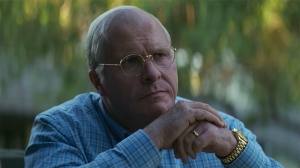 The meta breaks are meant to provide a degree of comedy to the picture, which is generally absent comedy otherwise, unless you count the rise of Cheney’s reign as the darkest of comedies. I suppose Cheney’s nonchalant recognition of his heart attacks (he’s had five) could be a potential comedic lifeline if you’re being generous. One second we’re told people don’t speak in Shakespearean soliloquies in real life, and the next second the Cheneys are talking in Shakespearean verse. When it looks like the Cheneys will drop out of public office to spare their gay daughter Mary (Alison Pill) the inevitable storm of harassment, the movie has a fake-out end credit sequence to sum up their hypothetical lives. To demonstrate Cheney’s knack for making the most ridiculous statement sound statesmen, he recommends that the Oval Office team put miniature beards on a part of their anatomy and perform an adult puppet show, which draws solemn nods of approval from the others. It’s a joke that feels too glib, like the intended point is being lost by the lewd nature of the comedic aside. The only meta aspect that feels earned is the final one, where Cheney turns to the camera and directly addresses the audience, acknowledging he can feel their contempt but refuses to apologize for his actions in order to keep people safe. Because he’s having the final say, because he’s offering a rebuff to his movie, it feels more earned and fitting, and it would have had even more power if it were the only break in the movie rather than the last. It’s hard to call this a comedy; it’s more an incredulous indictment looking for its mob.
I honestly think a straightforward biopic might have been the better route for Cheney. The first half of the film is more interesting and successful because it is the more illuminating half. I never knew that Lynne Cheney’s father likely killed her mother. That’s a pretty bold charge on behalf of the filmmakers. The early Cheney years are the moments the majority of Americans don’t know about, whereas the later years have been well documented by a slew of hard-hitting documentaries, books, and journalistic exposes. There are whole movies about topics like the Valerie Plame leaking (Fair Game), the mounting mistakes after the invasion of Iraq (No End in Sight), the administration’s policy on torture (Taxi to the Dark Side, Standard Operating Procedure), the drumbeat to the war and snuffing out of critical journalism (Shock and Awe, Lions for Lambs), the missing WMDs (Green Zone, Body of Lies), the Bush deferment memos (Truth), the long-term consequences for those servicemen who survive (The Hurt Locker, The Messenger, Stop-Loss, Last Flag Flying, In the Valley of Elah, American Sniper, Thank You For Your Service) and anything that Michael Moore sets his sights on. This list is not exhaustive by any means. Because of that the film seems to become a rudimentary montage once the Iraq War kicks off, sprinting through the rest as an intended tableau of hubris as Cheney’s star and influence falls. I would rather have learned more about Cheney’s early years in the Nixon, Ford, and H.W. Bush administrations and gleaned more personal insights into the man before he becomes this shadowy, mythic figure that seems downright Machiavellian in his control of government. It’s interesting to watch Cheney and his cohorts plot their unchecked executive power behind the back of President Bush, but then what?
 It’s the “then what?” question I keep revisiting with McKay’s film, trying to figure out the larger intended message, themes, and dire warnings. I feel like because of the expanse of time covered, and the meta quirks applied, that the film too often feels like it’s just scratching the surface of Cheney, providing a slight gloss to a political caricature. The biggest takeaway is the slippery slope of the “unitary executive theory,” a term you’ll hear often, that basically follows Nixon’s own words: “If the president does it, it’s not illegal.” This questionable interpretation of Article II of the Constitution gives the president powers that approach a monarch, which seems antithetical the Founders’ intents. McKay warns that any president could take advantage of this theory to do whatever he or she (sad trombone noise… sigh) desires. This is clearly meant to draw a line right to President Trump, but it’s not like the 45th president needs sketchy legal cover to do his misdeeds. The idea that the Justice Department memos would be a lurking danger is quaint. A bad man with power is not going to look for the rules to allow him or her to break them. The idea that a president could be above the law is also a legally specious argument and one I don’t believe our courts would readily back, even with the “unitary executive theory” (at least I hope so). With that in mind, Vice becomes a cautionary tale about the expenditure of power but lacks the adequate follow-through.
Vice is a tricky biopic for a tricky subject and I wonder if it would have worked better being stripped of its prankster, meta interjections and tricks. It’s a condemnation of Dick Cheney but it doesn’t feel like it goes far enough if McKay’s eventual thesis is that the current world problems began, or were grossly exacerbated, by the actions of Cheney. Climate change warnings going unheeded, ISIS formations going ignored, the generational consequences for unsettling the Middle East, and laying the foundation for an authoritarian strongman to be an acceptable political position for millions of Americans. These charges are clearly intended to be a denunciation of Cheney’s legacy, but the end results play out somewhat differently, like a slap on the wrist. I think Dick Cheney could even watch this movie and nod in appreciation. That seems like a mistake. McKay is still a talented writer and filmmaker that knows how to keep his movie flowing and entertaining, buoyed by an outstanding performance from Bale. It’s a movie with great components but seems to clumsily get in its own way with its presentation. If you’re going to expose Dick Cheney as a heinous manipulator of power that has wrecked havoc for billions, then maybe you don’t want to dilute your message.
Nate’s Grade: B-
Share this:

The Post (2017)
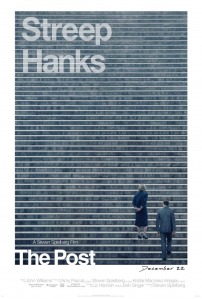 Even with the added timely benefit of championing a free press in the era of Trump, Steven Spielberg’s The Post is a movie held together by big speeches and Meryl Streep. It’s the story of the Pentagon Papers but it’s told from the wrong perspective. It’s told through the reference of whether the owner of the Washington Post (Streep) will or will not publish and how this endangers her family’s financial control over the newspaper. Plenty of dismissive men doubt her because she’s a woman. It’s simply one of the least interesting versions of an important story. Streep is her standard excellent self and has a few standout moments where you can actively see her character thinking. I just don’t understand why all these talented people put so much effort into telling this version of this story. I missed the active investigation of Spotlight, how one piece lead to another and the bigger picture emerged. There was an urgency there that is strangely lacking with The Post. The question of whether she will publish is already answered. It feels like the screenplay is designed for Big Important Speeches from Important People. Tom Hanks plays the gruff editor of the newspaper and Streep’s chief scene partner. They’re enjoyable to watch, as is the large collection of great supporting actors (Bradley Whitford, Carrie Coon, Sarah Paulson, Tracy Letts, Matthew Rhys, Jesse Plemons, Bruce Greenwood, and a Mr. Show reunion with David Cross and Bob Odenkirk). This is a movie that is easier to admire than like, but I don’t even know if I admire it that much. The film has to call attention to Streep’s big decision and the stakes involved by underlining just what she has to lose and reminding you how brave she’s being. When Streep leaves the U.S. Supreme Court, there’s a bevy of supportive women lined up to bask in her accomplishment. It’s a bit much and another reminder that The Post doesn’t think you’ll understand its major themes. It’s a perfectly acceptable Oscar-bait drama but it sells its subject short and its audience.
Nate’s Grade: B
Share this:

Mark Felt: The Man Who Brought Down the White House (2017)
 We’ve seen this story before, the efforts to uncover the Watergate scandal and its sloppy cover-up from the perspective of Washington Post reporters Woodward and Bernstein who tirelessly collected clues, followed leads, and investigated the facts. That movie was All The President’s Men and was terrific. This movie is all about Mark Felt, the man who was the “Deep Throat” confidential informant, and it’s a bit less than terrific. It’s hardly even a movie because Felt’s story just isn’t that interesting. The film offers little new insights into Felt as a character or his personal struggles working against his own government. The FBI director is portrayed like a glowering Bond villain. The other characters come in and out, leaving little impact except to remind you that they’re famous. Felt’s personal life is also a bore, including Diane Lane in a thankless role as his alcoholic wife distraught over Felt being passed over as the new FBI director. He also has a missing daughter who ran off to a commune. There’s one moment where Felt feels paranoid and tears apart his office, but then we simply move on. There’s not enough here to justify a full-fledged movie. Whatever writer/director Peter Landesman (Concussion) does it’s not enough to make this story interesting, and that’s because Felt’s involvement in Watergate is minimal at best. All the President’s Men was about journalists uncovering the evidence and putting together the pieces. This movie is just about a guy who knows everything and has to get it out there. It’s inherently less interesting. Even the subtitle of The Man Who Brought Down the White House seems misinformed; I’m fairly certain that was Nixon. The Mark Felt story was told better when he was merely a minimal figure in someone else’s Watergate story. Just watch All the President’s Men instead.
Nate’s Grade: C
Share this:

Jackie (2016)
 Jackie (Natalie Portman) is still reeling from the loss of her husband, President Kennedy (Caspar Phillipson). In the weeks that followed the assassination in 1963, her life was a whirlwind of change. She was leaving the White House while another administration took control of her husband’s office and agenda. She was leaving a life of glamour and privilege and it all came to a halt. Bobby Kennedy (Peter Sarsgaard) is worried about the Kennedy policies getting lost as well as his own potential presidential prospects. Lyndon Johnson (John Carrol Lynch) is worried about asserting his own control. While trying to work through her grief, Jackie must protect her husband’s legacy among all the well-wishers, political vultures, and craven opportunists.
We’re left with an immersive, impressionistic look at America’s most famous first lady since it’s hard to distinguish the layers of performance from the woman herself. She was used to adopting the façade of what the public expected of her, how her husband’s friends looks at her with desire and dismissiveness, and the differences between her private life and her public persona. It’s a fascinating glimpse into the interior space of a famous woman that so many people think they know well because of her glamour and television appearances, but do they really? Her identity is in free fall. She gave up everything for this man and now he is gone and her cherished position is gone. It’s said each first lady leaves her stamp on the office, and now Ladybird Johnson is already itching to undo that stamp, erasing Jackie’s presence and supplanting it. Will these last few days define her and will they define her husband? While dealing with raw grief, Jackie also takes the position of being the first to protect her husband’s legacy. While planning the particulars of the funeral march and exact burial site, she’s really framing his place in the greater annuls of history, tragically cut short and questionably memorable. His life has been taken from her and now the only thing she can do is protect his place in history. The funeral details and conflicts they consign the new Johnson administration to are interesting, as is Jackie’s simmering disdain for the Johnsons, but it’s more than just placation; Jackie has an underrated knack for theatrical optics. The country is in mourning, just like its (former) first lady, and she offers a spectacle as an outlet. Some term it vanity and even Jackie admits that many aspects were for her, for her grief, for her rage at the world and her doubters, for her wounded soul searching for meaning. She wanted the American public to see her in mourning but she wanted just as much to see them in mourning too.
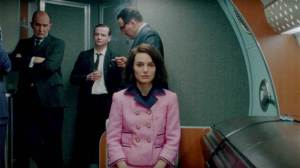 Eschewing the standard cradle-to-grave biopic, as well the noveau approach of using one clarifying moment to better examine and sum up the person (see: Selma, Steve Jobs), Noah Oppenheim’s script is a triptych, a hypnotic exploration that zips along non-linear but thematically-tethered memories. It’s a more interesting approach because we’re not locked into a linear progression of plot events, though the immediate aftermath and her interview with the Newsweek reporter (Billy Crudup) serve as the directional compass. It also provides a clever conceit for meta-textual levels. We have scenes that lay as direct conflict with the public Jackie and the private Jackie, and we have scenes that lay into the different levels of performance, from her show model tour of the White House furnishings and fixings to putting on the brave face to speak to her children. Director Pablo Larraine (No, Neruda) shoots the movie in a style reminiscent of its 1960s time period, with a film stock that blends the difference between documentary and recreation, further adding another stylistic level to the proceedings. The various threads of connectivity are so much more interesting to dissect with this storytelling approach and it makes the movie a much deeper and more contemplative experience to unpack.
There’s a scene in the middle of Jackie that stood out to me. During a night of drinking, Jackie puts on the record for the Broadway production of Camelot and wanders the large empty spaces of the people’s house. For my younger readers, the Kennedy administration was dubbed by many as “Camelot,” first coined by Jackie, out of a sense of its idealism, youth, and inspirational promise to change the world into a nobler place. It’s practically a mythical time and the real people get lost amidst the romantic spectacle. Nowadays, our presidents can often be the same mythical figures as the kings of old, figureheads whose humanity and details we iron out and soften as we eulogize and entomb them. The music echoes through the different chambers but there’s no one to hear it, no one to enjoy it, the vast emptiness communicating much of Jackie’s anguish. “There will be great presidents again but there will never be another Camelot,” she says. That moment is left as a passing memory, a picture of nostalgia that will only have its realism dampen in time as it becomes enshrined in American myth making. Amidst all her privilege and esteem, there is an existential sense of loss for Jackie and the nation as a whole into the turbulent 60s.
The other rich aspect is that we are watching a woman process her grief in real-time and it can often put a lump in your throat. I challenge anyone not to feel an outpouring of empathy when Jackie has to explain to her two very young children why daddy isn’t coming back from Dallas, having to explain something horrendous to those so innocent. In some scenes it feels like Jackie is numb to the world around her, focused on the little things as an escape from her horrible reality and its trauma. We do get a recreation of that fateful day in Dallas twice. The first is the immediate aftermath with Jackie bloodied and protected by the Secret Service, keeping her at a distance from us too in the audience. The next is a closer view inside the car as we’re with Jackie when the awful event happens, and the sudden shock of gore is still a disturbing gut-punch no matter how much you anticipate the moment. We watch her crazed instincts trying to collect the pieces of her beautiful and broken husband, stressing she was trying to keep everything together, figuratively and literally. The scene plays out longer and it serves as an emotional climax to the film, a frank reminder that for everything people believe they know about this woman, at heart, for all her riches and fame and privilege, she is simply a human being trying to make sense of death. It’s this final moment in the car that reminds us.
 This is an acting showcase and Portman (Black Swan) excels, delivering the best female performance I’ve seen this year at the movies. It’s an Oscar bait dream role and she nails it. She goes beyond mere imitation though Portman does an excellent job of that. Thanks to critic/blogger Jeffrey Wells for this great quote about the imitable real-life Jackie from author Tom Wolfe’s novel, The Right Stuff: “She had a certain Southern smile, which she had perhaps picked up at Foxcroft School, in Virginia, and her quiet voice, which came through her teeth, as revealed by the smile. She barely moved her lower jaw when she talked. The words seemed to slip between her teeth like exceedingly small slippery pearls.” Portman stunned me early with her exquisite recreation of Jackie and then she stunned me moments later with the depth of emotion she was able to convey in the scene where she stares into the Air Force One mirror, dabbing her husband’s blood from her face as her eyes are swollen with tears. Lorraine favors plenty of exacting close-ups to watch the array of emotions play across her face. She has moments of strength, moments of pettiness, moments of heart-tugging lows and weakness, and Portman is always fascinating, holding your attention rapt as you study her study. It’s a mesmerizing performance and one that deserves to earn Portman her second gold statue.
Jackie is a movie that has stayed with me for days after I’ve seen it. The exceptional and empathetic work by Portman is the first thing I recall, and then the thematic and symbolic relevance of the storylines as they fold on top of one another, providing a hypnotic and immersive portrait of a very famous woman who sought and spurned the spotlight. As far as I’m concerned this is the definitive film presentation of Jackie and Portman’s searing performance is the dazzling standard that won’t be beat. You walk away having additional appreciation for this woman but also further curiosity. The movie doesn’t expressly state who she is as a human being, providing a range of personas, some that conflict with one another, and allows you to put it all together for your interpretation. It’s a bold gambit and a fitting gesture for a woman defined by others’ perceptions.
Nate’s Grade: A-
Share this:

Lee Daniels’ The Butler (2013)
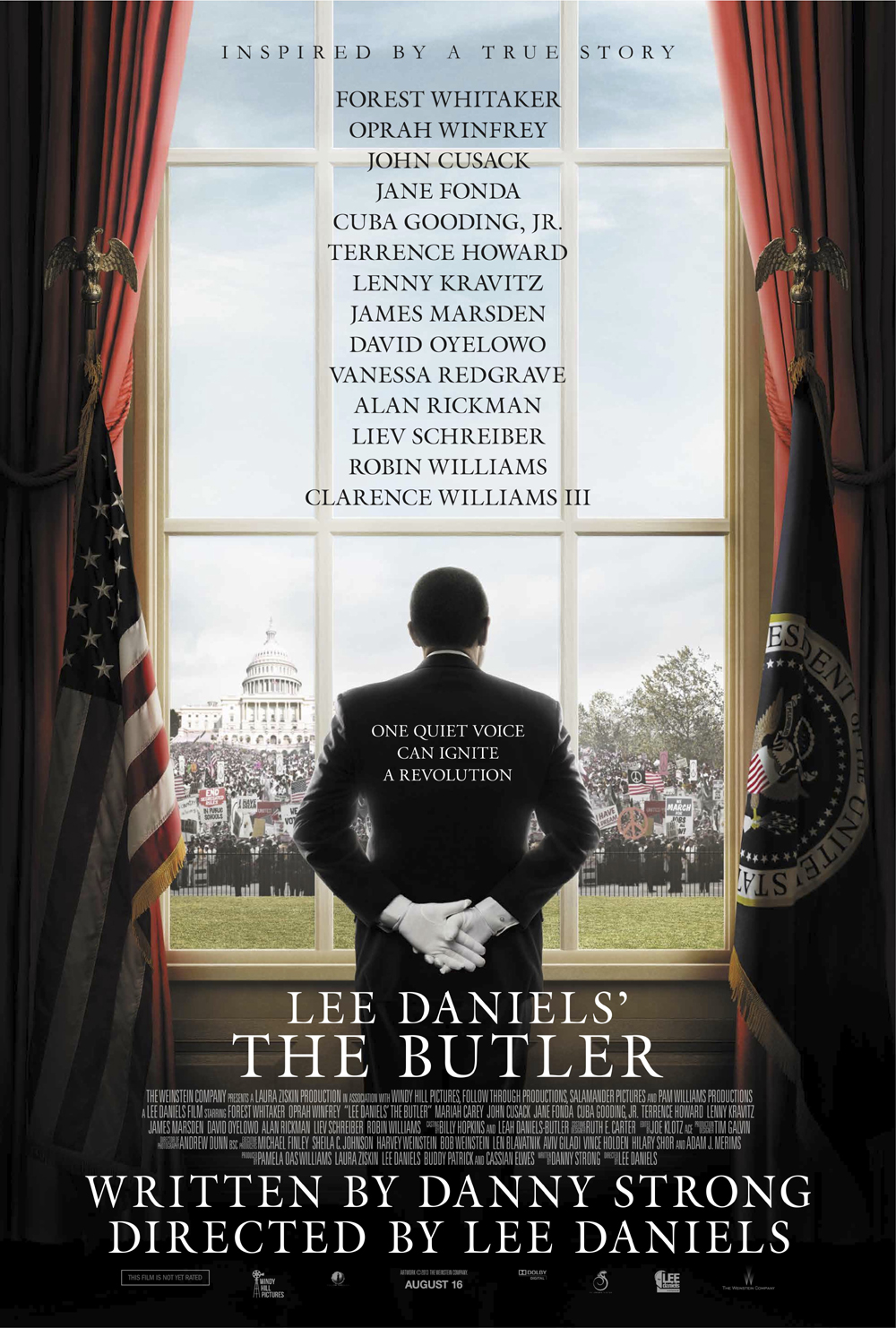 Before I begin my review, I feel the need to come to the defense of Oscar-nominated director Lee Daniels (Precious). Despite what Internet message boards and detractors may have you believe, it was never the man’s intention to insert his name into the title of his latest film, Lee Daniels’ The Butler. Warner Brothers claimed copyright ownership over the title of The Butler. The MPAA mediates title discrepancies in cases where one movie could clearly be confused for another. However, Warner Brothers’ claims a 1915 silent short film in their vault by the same name. Is anyone in the year 2013 really going to pay a ticket for the Butler and reasonably expect a silent short that’s almost 100 years old? Rather than pay a financial settlement, The Weinstein Company decided to alter the original title, adding the director’s name. This isn’t The Butler. Now it’s Lee Daniels’ The Butler. So before I get into the thick of my review, I’d like to absolve Daniels of Tyler Perry-levels of hubris. You’ll excuse me for just referring to it as The Butler throughout the duration of this review, not to be confused with a 1915 short film.
From Harry Truman to Ronald Reagan, one man served them all and his name is Cecil Gaines (Forrest Whitaker). He was a White House butler for over 30 years, even attending a state dinner at the behest of Nancy Reagan. Cecil grew up on a Georgia cotton plantation and moved up the ranks in high-class service. His wife, Gloria (Oprah Winfrey), wishes her husband would worry more about his own home than the White House. Cecil’s two sons, Louis (David Oyelowo) and Charlie (Elijah Kelley), have very different views of their father. Louis feels like dear old dad is too close to the men of power, and Louis is going to do what he can on the frontlines of change.
 I’m sure everyone had good intentions with this movie, but I walked away with the overwhelming impression that The Butler was too heavy-handed, too corny, and too mishandled with its plot construction for it to be the effective drama all desired. I also know that my opinion is of a minority, but that has never bothered me as a critic. Let’s start with the biggest handicap the film has going, and that’s the fact that its central character, the titular butler, is too opaque for a biopic. Early on, Cecil rises through the ranks of black service workers because of his skill, and that skill is none other than “having a room feel empty with [him] inside it.” I’m not downplaying the man’s dedication, or the culture he grew up in that preferred their black workers to be silent, but here is a movie where the man’s claim to fame is that he served eight presidents but he was in the background for all that history. I wasn’t expecting Cecil to lean over and go, “Mr. President, that Voting Rights Act might be a good idea, and I’ll help ya with it.” He is just sort of there. I was expecting him to have some larger significance, especially in his own life, but here’s the kicker: by the end of the movie, you’re left with the impression that all of his years of service were for naught. Cecil comes to the realization that his son, who he has sparred with for decades, was right and he was wrong. Is this the intended point? My colleague Ben Bailey will argue this is Daniels’ subversive intent, to undermine the tenets of typical biopics, to fashion an anti-biopic. I am not as convinced.
The problem is that Cecil is a passive character, which makes him the least interesting character in his own story. He served eight presidents, yes, but what else can you say about him as presented? What greater insights into life, himself, or politics does he have during those years with seven different presidential administrations? I cannot tell. I was thoroughly astounded that Cecil, as a character, was boring. I suspect this is why screenwriter Danny Strong (Recount, Game Change) chose to split Cecil’s story with his son, Louis. Here is a character on the front lines of the Civil Rights movement, getting chased by mobs, beaten, sprayed with firehouses. Here is an active character that wants to make a difference. He also happens to be mostly fictional.
While the film opens with the phrase “inspired by a true story” you should be wary. Upon further inspection, very little is as it happened. I think all true stories, when adapted to the confines of a two-hour film narrative, are going to have to be modified, and pure fidelity to the truth should not get in the way of telling a good story, within reason. I don’t have an issue with Louis being fictional, but it points to the larger problem with the biopic of such an opaque man. The real-life Cecil, Eugene Allen, had one son who went to Vietnam and married a former Black Panther. Strong splits the difference, supplying two sons with different paths. Because of his invention, this means Louis has the benefit of being present at a plethora of famous Civil Rights events, like the Woolworth counter sit-in, the Freedom Rider bus burning, and the assassination of both Malcolm X and Martin Luther King Jr. Seriously, he’s in the same motel room with MLK in Memphis. With the exception of the Woolworth sit-in, the Civil Rights events feel like minor pit stops, barely spending any time to develop. It ends up feeling like a facile Forrest Gump-like trip through the greatest hits of the Civil Rights movement.
This narrative expediency also translates to the supporting characters in The Butler. Beyond Cecil, Louis, and Gloria, there aren’t any characters that last more than one or two scenes. Cecil’s White House co-workers, played by Cuba Gooding Jr. (Red Tails) and Lenny Kravitz (The Hunger Games), provide amiable comic relief but little else to the narrative. Terrence Howard (Dead Man Down) has an affair with Gloria and then is never seen again. That affair, by the way, is also never referenced again nor does it have any further ramifications with the relationship between Cecil and Gloria. So then what was the point? There is a litany of famous faces playing real people, but they’re all in and out before you know it. The actors portraying the presidents are more an entertaining diversion than anything of real substance. Alan Rickman (Harry Potter) as Reagan gets the closest in the physical resemblance game, though I strongly doubt Reagan, as presented in the film, sat down and openly admitted he was wrong to his African-American service workers. John Cusack (The Raven) as Nixon is a hoot. The movie speeds right through the Ford and Carter administrations, so I’ll play my own game of casting (Ford: Dan Akroyd; Carter: Billy Bob Thornton). The presidents, like the clear majority of supporting players, don’t stick around long enough to leave an impression. It’s as if our prior knowledge of these famous faces is meant to serve as characterization. Beyond the immediate Gaines family, you don’t feel like you’re getting to know anyone.
 Then you bring in Daniels as director and the man has not shown much of a penchant for, let’s call, subtlety. This is, after all, the same man who directed Nicole Kidman in the ways of urinating upon Zac Efron. A coherent tone has often been elusive in Daniels’ films, which veer into wild, loud, sometimes clashing melodrama. The most clashing thing in The Butler are the matching 1970s and 80s fashion that will burn your eyes. He tones down his wilder sensibilities but The Butler is an especially earnest movie; but overly earnest without earned drama usually begets a corny movie, and that’s what much of The Butler unfortunately feels like. The significance of the Civil Rights movement and the bravery of the ordinary men and women, and children, fighting for equality cannot be overstated. These were serious heroes combating serious hate. I expect a serious movie, yes, but one that isn’t so transparent about its Staid Seriousness. The Butler is very respectful to history (fictional additions aside) but too often relies on the historical context to do the heavy lifting. It also hurts when the film is so predictable. At one point, I thought to myself, “I bet Cecil’s other son gets shipped to Vietnam and probably dies.” Mere seconds after this thought, young Charlie Gaines says he’s going to Vietnam. I’ll leave it to you to discover his eventual fate.
Daniels’ true power as a director is his skill with actors. The man nurtured Mo’Nique into an Academy Award-winning actress. From top to bottom, no actor in this film delivers a bad performance, which is a real accomplishment considering its stable of speaking roles. Whitaker (Repo Men) is the anchor of the movie and he puts his all into a character that gives him little to work with. He brings a quiet strength and dignity to Cecil, able to draw you in even as he’s presented so passively and ultimately perhaps in the wrong. Winfrey hasn’t been acting onscreen since 1998’s Beloved. Gloria is an underwritten part but she does the most with it and I’d like to see more of Oprah the actress more often. Another highlight is Oyelowo (Jack Reacher) as the defiant son fighting for what he believes is right. I want to also single out former America’s Next Top Model contestant Yaya Alafia as Louis’ girlfriend and eventual Black Power participant, Carol. She’s got real potential as an actress and if she gets the right role she could breakout and surprise people.
Lee Daniels’ The Butler (just one last time for feeling) is an earnest, emotional, but ultimately unsatisfying picture and it’s mostly because of its title figure. The figure of Cecil Gaines is not the kind of man that the entire perspective of the Civil Rights movement can be hung onto as an allegory. He’s treated as background of his own story. If the filmmakers wanted to highlight the life of a man who grew up on a cotton plantation, worked in the White House, and who lived long enough to see an African-American be president, well then tell me that story. But they don’t. I think Daniels and Strong knew the limitations of their central figure, which is why the son’s role was invented to provide a more active perspective outside the hallowed walls of 1600 Pennsylvania Avenue. In the end, I really don’t know what the message is, because the one I’m left with is that Cecil Gaines realizes late in life how wrong he was, not just with his son, but his faith in the office of the presidency. I doubt the majority of filmgoers are going to walk away with this message. While well acted and with a sharp eye for period details, The Butler is earnest without having earned your emotions.
Nate’s Grade: C


 nathanzoebl
You must be logged in to post a comment.