Blog Archives
Guardians of the Galaxy (2014)
 Who would have guessed that a movie that featured a talking tree and an anthropomorphic raccoon would be one of the best films of the year and one of the top grossing films of the summer? At this point for audiences, the Marvel name can do no wrong, but really it’s the degree of latitude given to Guardians of the Galaxy, an admittedly weird movie with strange characters, that allows this unique film to shine. Attaching offbeat director James Gunn (Super, Slither) to be writer and director was a risk that paid off tremendously, as Guardians is the Marvel film most entrenched with the particular personality of its creative director. This is a gleefully imaginative film that enjoys wading deep into weirdness, dancing to its adventurous Star Wars throwback beat, always with its focus set on comedy but not at the expense of quality drama or character development. Really, the characters are the focus of this entry into the franchise, and Gunn and his actors do a bang-up job of gathering the team and getting you to care about each and every one of them. Each one of these characters has a goal, several payoffs, and each is given their proper attention. In an ordinary superhero film, the archetypes would be ironclad. With Guardians, the tough guy made of muscle can also be a source of unexpected comedy with his literal-minded speech patterns. With Guardians, the talking raccoon can also be an emotionally disturbed victim of genetic experimentation who doesn’t know how to play well with others. These are damaged characters and their formation of an unconventional family unit is deeply satisfying and rather touching. I have seen the film twice and gotten teary-eyed both times. The real star of the film is Chris Pratt (TV’s Parks and Recreation), and what a breakout role he is afforded; he’s like Han Solo’s more juvenile nephew. But like the others, the part is surprising in its depth, with a well of sadness and displacement he still hasn’t processed while he scavenges the galaxy. The plot can be a bit unwieldy at times but pays off better for repeat viewings. This is a world I want to spend far more time exploring and with these characters as my merry prankster guides. With a movie this action-packed, thoroughly entertaining, and gratifying, why come back to Earth?
Nate’s Grade: A
Share this:

Labor Day (2013)
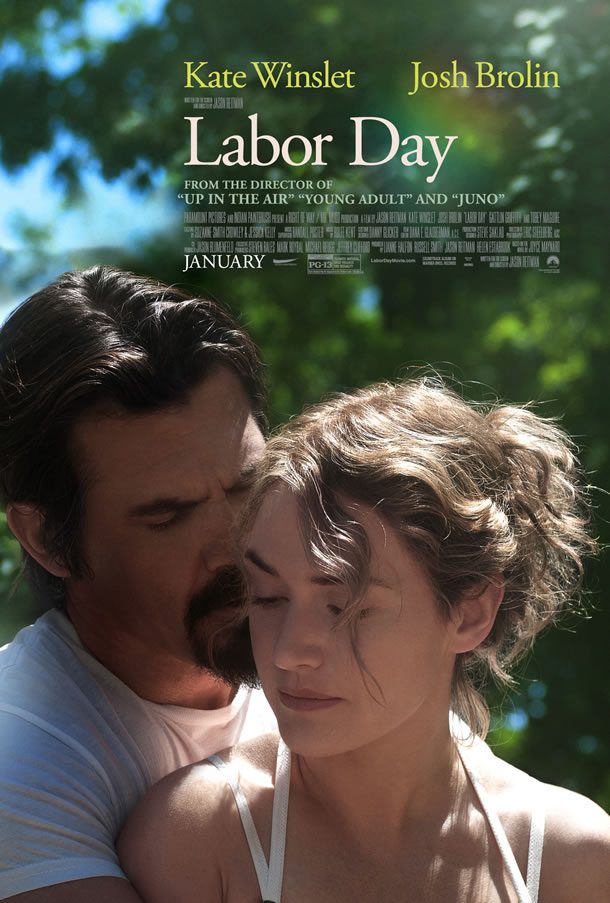 Labor Day, based upon the novel by Joyce Maynard, is the kind of sappy material that you never would have expected director Jason Reitman to attach his name to. Reitman has been accumulating an enviable career of top-shelf dark comedies (Thank You for Smoking, Up in the Air, Young Adult), yet his touch with characters and actors, as well as his delicacy with tone, reminded several of a young Billy Wilder. The stuff of Labor Day felt more like a Lifetime channel original movie. This is just one artistic miscalculation from the start and it doesn’t get better as it goes.
Back over Labor Day weekend in 1987, young Henry (Gattlin Griffith) is living with his grieving mother Adele (Kate Winslet) and performing many of the duties of a husband (don’t get gross). It’s been some time since Henry’s parents divorced but Adele has become a shell-shocked recluse who can barely talk or look others in the eye. While visiting a grocery store, Henry runs into a dangerous man named Frank (Josh Brolin). He’s bleeding from the abdomen and intimidates Adele to give him a ride. Frank is an escaped prisoner and he takes to hiding at Adele’s home. After the initial hostage period, Frank allows Henry and Adele to walk around freely, as long as they don’t tell anyone where he is. As the days pass, Frank helps out around the house, helps Adele get out of her funk, and becomes a surrogate father figure for Henry. The unconventional family must evade the police and skeptical townsfolk to make a run for it.
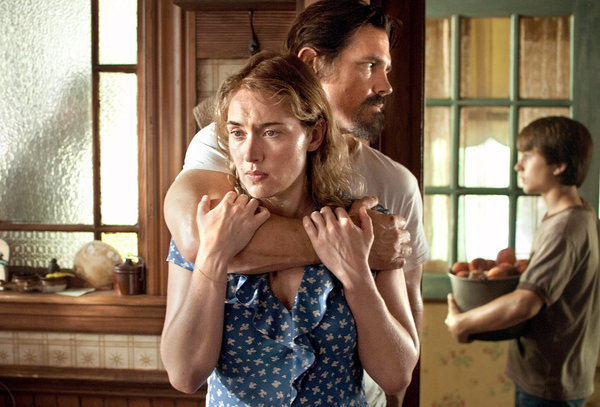 The very premise and its tone are just not a good fit for Reitman. First off, the movie plays out far more like a hostage thriller than any sort of romance. If you were to look deep inside, the romance can be explained as one very emotionally needy woman and her child going through Stockholm syndrome. The entire movie takes place over the titular Labor Day holiday, which means that all these changing feelings have to morph over the time period of three days. I don’t know if I’d call that love, even in Movie Land. Hey, Frank didn’t kill everyone and he helps around the house, isn’t he great? These people should be far more afraid for far longer. It is almost comical how saintly Frank becomes and how many surrogate father activities he squeezes into the abbreviated window of time. He performs handyman jobs all around the house, teaches young Henry how to change a tire, tosses a baseball with the kid, teaches everyone the finer points on pie making, and other such helpful activities. I understand that these two lonely people finally see a replacement man; for Henry a father, for Adele a lover. Again, the three-day time window makes everything appear like the manifestation of Stockholm syndrome. How many of those abducted have uttered, “He’s not that bad. You just don’t know him like I do”? Frank’s back-story is tragic but he is a wanted felon and he has no problem threatening both of these people’s lives in the beginning. Yeah he doesn’t resort to violence or yell in their faces, but why would he against an adolescent boy and his easily cajoled mother? No matter how long Reitman spends showing us the softer side of Frank, especially while preparing delectable dishes of food, he’s no more developed than the common Misunderstood Bad Boy.
Then there are the dawdling coming-of-age moments clinging to young Henry, a boy growing up quickly in a tumultuous holiday weekend. It strikes me as tonally odd to already take a tricky balancing act with the film’s plot and then tossing on a coming-of-age addition. The story is told from Henry’s perspective, and that’s a major problem as well. He’s the least interesting person in this dramatic setup. Being confined to his viewpoint often keeps us distant from the deeper drama going on. I’d rather spend time with Adele and Frank bonding so that the romance can find some traction, but no. Al we hear are the thumps from the other side of the wall and the gentle whisperings between them in stolen glances. It’s a frustrating perspective because quite frankly nobody really cares about this kid’s sexual awakening and his daydreams about the cute girl’s bra. His dad (Clark Gregg) wants to talk to him about the birds and the bees. His mom talks about the same. It’s a somewhat uncomfortable position for the audience with both parents wanting to cover the sex talk. There’s a wanted man hiding in his home! Henry’s personal growing up drama has no equivalency to this. Of the three main characters, doesn’t Henry seem like the worst participant to tell the story? It doesn’t help that Tobey Maguire narrates as older Henry. Have we not learned from The Great Gatsby: Maguire’s voice does not suit narration.
It’s the film’s more tense moments where you get glimpses of the real movie here, the thriller that’s been gussied up and disguised as some strange romance. Whenever someone gets close to discovering what’s really going on in that house, the movie picks up and grabs your interest once more, albeit fleeting. The fear of getting caught is potent but it should have been more omnipresent. The film, through Henry’s perspective, is treated like this nostalgic chestnut of that one summer a convicted killer held us hostage. The police are canvassing for an escaped prisoner but the neighborhood doesn’t seem to be that alarmed, still going about their business bringing desserts and fresh produce to one another’s doorstep. Too much of the film implies the threat, like with a short glimpse of a police checkpoint, but places it on the back-burner so that the romance can take shape. Again, this is a byproduct of being stuck in Henry’s perspective whereas the kid might not have the best understanding of how serious everything is (he’s worried his mom will abandon him and run off with Frank). But in those brief moments of dread and tension, this is where Labor Day works, and Reitman does a great job of turning the screws and building that suspense. It makes you wish the whole thing were a thriller.
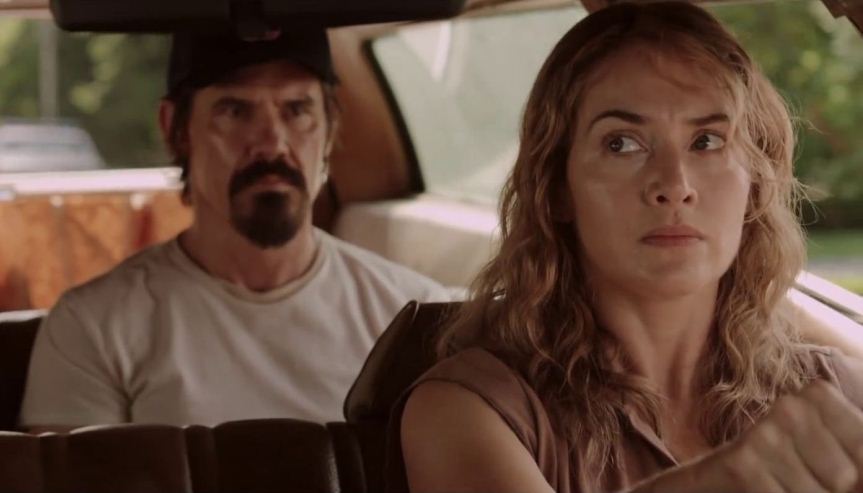 No one is going to question that Winslet (Divergent) and Brolin (Gangster Squad) are great actors, but boy do these characters underachieve. There is one very effective and moving monologue Winslet has about her pregnancy problems that have turned her away from the world, but it’s not enough. For much of the movie, she plays such an anxious and internalized character, so it’s hard to really follow her emotional development. That monologue does the most heavy lifting but it’s pretty wan before and after. Winslet is too good an actress to play essentially a catatonic woman that’s fairly mute. Brolin can play a soulful brute in his sleep. There’s so little to challenge him and so he seems on autopilot. It also hurts that both Frank and Adele have very limited conversations. It’s a romance told in gestures and handclasps (and the rhythmic thumping of walls at night). It’s not their fault that their characters are underwritten and unsatisfying. Griffith (Green Lantern) is a nice young actor but he too is forced to communicate much with little and comes up short. James Van Der Beek (TV’s Dawson’s Creek) is a local cop who appears for one scene, and afterwards you wish he would stick around longer. Look for Reitman good luck charm J.K. Simmons (Dark Skies) as a helpful neighbor.
Reitman is such a talented director that he can almost pull off sequences in Labor Day despite all of its inherent structural, tonal, and perspective flaws. From a technical standpoint, the movie is a gauzy, amber-accented tale with plenty of strong alluring visuals to set you at ease. There are these trembling moments where you almost see what attracted Reitman to the film, but the finished product is just a mushy misfire. It’s earnest without having earned our emotions, and the thriller elements and the romance elements are in constant conflict. We all remember our grandparents telling us that magical moment they knew they had met the one when he tied her up and held her hostage. Much of the drama that comes from the premise is handicapped from the mistake of having Henry as the chief storyteller and point of view. His limited involvement means we’re kept at the peripheral for too many important moments. I have no doubt Reitman will rebound and quickly (he’s already filming his next movie and has optioned a book for his next next movie). Get ready to have Labor Day play every subsequent Labor Day weekend on the Lifetime channel, its true home.
Nate’s Grade: C
Share this:

Gangster Squad (2013)
 It’s hard to mention the action thriller Gangster Squad without a passing reference to the Aurora, Colorado movie theater shooting in the summer of 2012, the reason for the film’s five-month delay and reshot action sequence. Gone is a shootout at the movies and now we have a confrontation in the streets of Chinatown. I wish they hadn’t stopped there. If given the opportunity, and remember they did have an additional five months, I would have scrapped Gangster Squad almost completely and started fresh.
In 1949, former boxer Mickey Cohen (Sean Penn) has seized control of Los Angeles organized crime. His influence extends even into a police, which forces Chief Parker (Nick Nolte) to go to desperate measures. He asks Sgt. John O’Mara (Josh Brolin) to assemble a team of enforcers to fight back. They won’t have badges but they will be pushed to use whatever means necessary to carry out their mission, which means blurring the line between what is considered lawful. O’Mara assembles a super group of former officers and one of them, Sgt. Jerry Wooters (Ryan Gosling) gets into even deeper danger when he starts seeing Mickey Cohen’s main squeeze, Grace Faraday (Emma Stone).
This movie is like if The Untouchables and L.A. Confidential had an illegitimate child and then abandoned it in a sewer where degenerate hobos raised it. Gangster Squad rips off other gangster movies with liberal abandon that I can’t even begin to list the lifts. I’d be less offended if I felt that the movie had more on its mind than just replicating the tone and look of noir cinema. Actually, it feels more like what they want to replicate is the tone or style of the video game L.A. Noir.
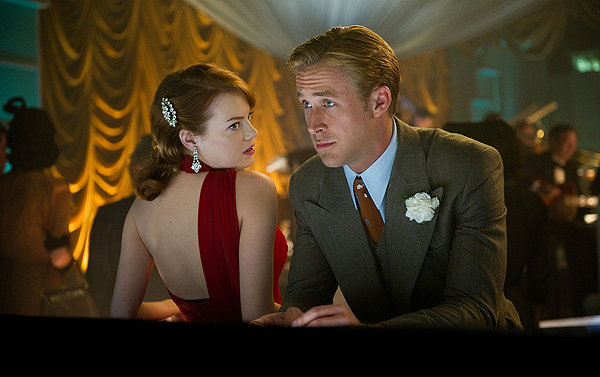 The main problem is that Gangster Squad really only has the skeletal outline of a plot. It’s missing any essential character and plot development. Here, I’ll summarize the barebones plot for you: Mickey Cohen is a bad guy. O’Mara forms a team. They have a montage taking out bad guys. Mickey takes out one of them. They have a showdown. That, ladies and gents, is it. There really aren’t any scenes that diverge from those scant descriptions. It felt like only five minutes passed from one of O’Mara’s guys getting killed (and just like The Untouchables, it’s the nerdy one) to them descending on Cohen’s headquarters and duking it out. Why does the film introduce the conflict of Wooters seeing Cohen’s girl if he never finds out? There isn’t even one scene presented to take advantage of this conflict. It just ends up being another half-baked plotline. It feels like the only development we get with Gangster Squad is through montages. What is also apparent is that O’Mara and his team really don’t have anything resembling the faintest notion of a plan. We watch them take out some bad guys via fights and shootouts but there’s no higher plotting to it. You get a sense that these former cops are just playing it by ear, looking for a fight every night. It’s hard to imagine that these people, even with their law enforcement and war experience, could be effective in the long term. Without any formative organization or greater planning, these guys just seem like dull bruisers bouncing from fight to fight with no sense of direction.
Then there’s the paucity of character work, relying solely on genre archetypes to do its work for the movie. O’Mara is the determined family man but his team can best be described by one-word classifications: The Black Guy (Anthony Mackie), The Nerdy Guy (Giovanni Ribisi), The Mexican Guy (Michael Pena), The Young Guy (Gosling), The Old Guy (Robert Patrick). That’s about it, though I suppose they do have different weapon preferences meant to supply all that missing characterization. Oh look, Officer Harris (Mackie) brings a knife to gunfights. That’s pretty much the beginning and end of his character. Wooters is so lackadaisical he feels like he’s on drugs, and Gosling’s soft-spoken, mealy-mouthed line delivery only adds to the effect. It feels like Gosling, in a stretch to find something interesting out of the mundane, said to himself, “I wonder if I could give a whole performance where I only speak under a certain vocal register.” Then there’s the woefully miscast Stone (The Amazing Spider-Man) as the femme fatale/mol to Mickey. I love Stone as an actress, but man-eater she is not and sultry seductress doesn’t fit her well either. Perhaps with the aid of a sharper script and a greater depth of character she could rise to the challenge. At no point does Gangster Squad really even attempt to make these people multi-dimensional. They never reflect on the moral turpitude of their own vigilante justice or the ramifications of their actions. There’s no room for ambiguity here.
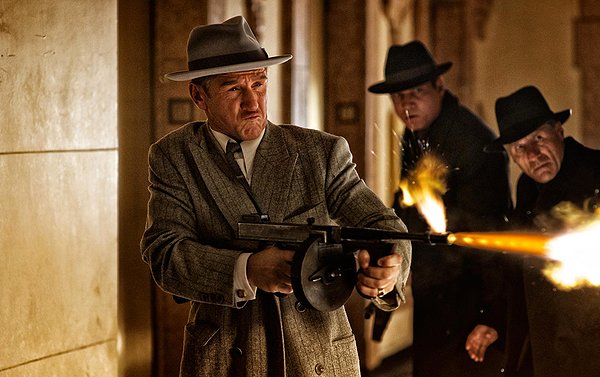 Finally, we must speak of Mr. Sean Penn (Milk). The man’s actorly gumbo goes into campy overdrive. In these rare circumstances, you aren’t watching Sean Penn Esteemed Actor so much as Sean Penn Human Vortex of Overacting. Normally I would criticize Penn for going over the top but over the course of 110 minutes, he single-handedly becomes the only entertaining thing in the movie. He’s chewing scenery up a storm, yes, but at least he’s channeling the pulpy silliness of the whole movie. I came to enjoy his antics and outbursts and thus became more empathetic of Mickey Cohen and his efforts than I did with O’Mara. Such is the danger screenwriters run when they spend more time crafting an interesting villain than a hero.
Gangster Squad is what happens when a movie is sold on title and genre elements. To be fair, it’s a bang-up title. The plot is half-baked at best, really only serving as a thin outline of a gangster movie, but instead of adding complexity and intrigue and characterization, they just ran with it. The actors are either camping it up or out of their element, the action and shootouts are pretty mundane, and the story is just uninvolving, even for fans of film noir like myself. It’s a good-looking film from a technical standpoint, but that’s as far as I’ll go in my recommendation (it could be an odd pairing with Milk considering the two shared actors). It feels like it just wants the setting elements of film noir, the atmosphere, and then figures just having good guys and bad guys shoot it out will suffice. That glossy, high-sheen period look just seems like a cool façade, and a cool façade seems like the only ambition of Gangster Squad. I can’t really recall any signature action sequence, snappy quote, plot development, or peculiarity worthy of remembering. It may be one of the most forgettable gangster movies Hollywood has produced.
Nate’s Grade: C
Share this:

Men in Black III (2012)
 It wouldn’t be a Men in Black film without script problems. The first film languished for some time, originally taking place in Kansas of all places, before director Barry Sonnenfeld became attached and insisted upon a New York City location. The 1997 sci-fi buddy cop comedy was a hit, and rightfully so, and Will Smith became a megastar. Then the 2002 sequel’s climactic action sequence had to be rewritten due to the fact that it was originally going to take place in the World Trade Center. If only that lackluster sequel had gone through more extensive creative revisions. However, these past hiccups don’t seem to come close to Men in Black III, which to Sonnenfeld’s admission, started shooting in late 2010 without a finished script. It had a beginning, an ending, but nothing definite to tie together. So the whole production took eight months off to work on the meat of that movie sandwich. Hollywood movies, especially modern films of huge-scale budgets and set release dates, have routinely started production without completed scripts, including Gladiator, Jaws, Apocalypse Now, and Lawrence of Arabia. Naturally, those are the exceptions to the rule.
Boris the Animal (Jermaine Clement) has escaped from pison and out to seek revenge on the man who put him away and took his arm – Agent K (Tommy Lee Jones). Boris travels back to July 1969, when a young Agent K (Josh Brolin) thwarted the big bad Boris. Boris kills Agent K and alters the future. The Earth is now vulnerable to an alien invasion from Boris’ species. Agent J (Smith) has to travel back in time to save his old partner and the planet.
It’s been ten years since the spotty Men in Black II and almost four years since Smith has been seen in a movie. Where did the time go? Fortunately, this third movie hews closer to the droll brilliance of the first film. Part of that is a sharper story with a more clearly defined goal and a return of the playful exuberance that belies the franchise. Also, I must say that absence has made the heart grow stronger, because I’ve missed Smith’s effortless charisma onscreen. Agent K is such a natural fit for the guy and it’s just fun to watch him stumble through strange alien encounters (this time we learn all super models are aliens; listen good, young women of America who punish themselves to fit this image of beauty). Time travel is usually employed when a franchise seems like it’s all out of gas; it’s usually more focused on the comic fish-out-of-water possibilities, which there are a few in Men in Black III. As one characters notes, 1969 wasn’t exactly a great time for black people in America, and J combats casual racism, black panic, and ignorance with a defiant attitude that is amusing to watch. I’m glad the whole race-relations reality was addressed, though it’s also for the best that the movie doesn’t get bogged down with scenes of Agent J conflicting with bigoted authority. Men in Black III remembers that we’re here to have fun, and the screenplay by Etan Coen (Tropic Thunder) has a light-handed touch. I enjoyed the opening jailbreak sequence with Boris, though I would have thought a lunar prison would have better security. Bill Hader (Superbad) has a fun cameo as a self-hating Andy Warhol, really an undercover MIB agent, though the idea that Warhol’s Factory artists as aliens seem a tad simple. The glaring cameo omission was Jon Hamm (TV’s Mad Men) as a scotch-drinking MIB ladies man of legend.
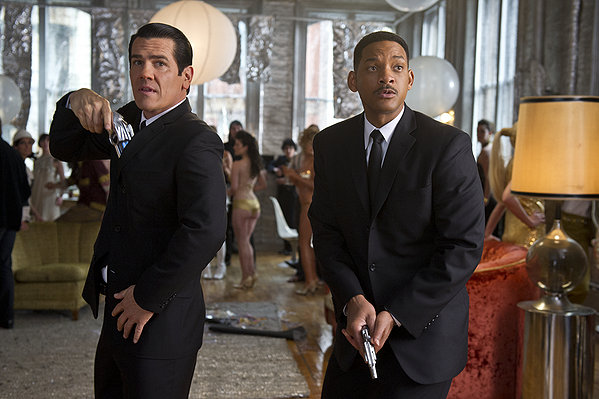 As evidenced from the trailers and marketing, Men in Black III is really Brolin’s movie. The guy establishes an uncanny Tommy Lee Jones impersonation. The eerie brick-faced stoicism, the melodic lilt of his voice, the syncopation of his speech patterns; Brolin nails it all. Watching his interaction with K are the film’s most enjoyable segments. At this point in the series, Agent J and K have gone beyond the rookie/mentor phase and now have something of a friendship, though their arguments at year fifteen of their partnership sound more like the arguments they would have in year two (you need to “open up” and be less grumpy, sounds elementary). Still, there is a personal connection to this case that eluded the last movie, and it gives the film a sense of urgency even when the comic shenanigans seem to hog the spotlight. The personal reveal in the last act didn’t have as much emotional power for me, mostly because I did the math and realized whom a certain unseen character of significance was before we got their true identity. The end does give the film series a circuitous sense of finality.
For a franchise that seems like it can go anywhere at any time with limitless possibilities, the worst thing you can do is be shut off to better avenues of storytelling. Take for instance the climax at Cape Canaveral, which itself is a rather anticlimactic sequence involving the launch of Apollo 11 (don’t they know that alternative 1960s history was sooo summer of 2011?). J has his time travel doohickey that lets him travel back. He gets to use this device once during the climactic fight, allowing him to travel back one minute in time so he knows how to properly duck. That is it. What a fantastic waste. If you’ve got a device that essentially allows for unlimited do-overs, then I want this device to be an integral part of the climax. I want J to have to regularly use it to fix past mistakes and learn more and more from each time jump. Just memorizing how to duck is lame. The entire subplot with Agent O (Emma Thompson in the present, Alice Eve in the past) and her dalliance with K is so carelessly thrown away that I wonder why the filmmakers even bothered to include it. Then there’s our villain, Boris, whose name itself is even lazy. He’s just a bad dude with some sort of insect that lives in his hand and shoots spikes. That is it. He’s a guy who can fire projectiles. So what? What about that makes him interesting? An unrecognizable Clement (Flight of the Conchords) does his best but the character just doesn’t have anything about him that deserves special attention; he could have been any villain (I think Vincent D’Onofrio was undervalued in his go-for-broke physical performance as the first film’s villain). I did like the idea of Present Boris arguing with Past Boris, but like most promising ideas in Men in Black III, this space-time sparring is never fully realized. While enjoyable, there’s little you’ll be able to think back on with Men in Black III and say, “That was well developed.”
Paradoxically, I think Men in Black III has a character that might simultaneously be the best and worst thing about the film. Allow me to explain. About halfway in, we’re introduced to the alien Griffin, played by the great Michael Stuhlberg from A Serious Man and TV’s Boardwalk Empire. He’s a creature who can see nigh unlimited timelines, all the variations of choice and possibility play out before his eyes, one after another. He never knows which timeline he’s in until the moment occurs, thus he’s constantly worried about every moment to come in his life. This foreknowledge sounds like a wretched curse, and with Stuhlberg gives a forlorn edge to his character’s eccentricity. So when J and K meet the guy, there are some clever moments, like when Griffin details every peculiar aspect of chance that lead to the 1969 Mets World Series victory. The moment, and by extension the character, is a nicely reflective idea that every moment is a miracle of causation. Griffin is just an interesting character. Here’s where the worst part comes in. Rarely is he treated as a character because, you see, Griffin is really a magic plot device. He can tell the Men in Black agents whatever they need to do at any point, instantly providing a narrative cheat. When in doubt, just ask the guy who sees the future and he’ll steer you without fail to the next necessary plot point.
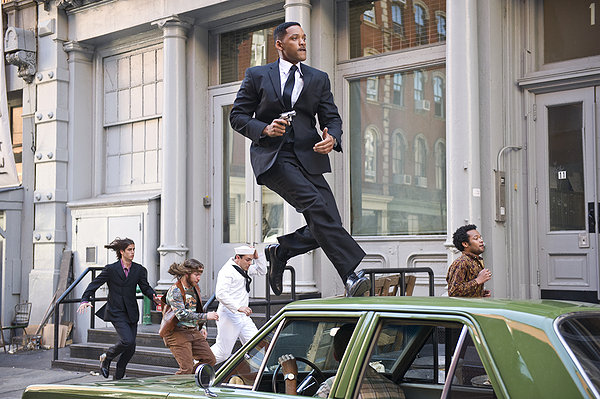 I saw this movie in 3D, not by choice mind you, and for the first half hour it felt like one of the better 3D conversions out there. Sonnenfeld’s camera plays a lot with depth of field and primarily forward-backwards movement, which made for a slightly elevated viewing experience. But somewhere around the halfway mark, I swear the movie forgot it was supposed to be 3D and the dimensional differences became negligent. It never really recovers, and so I advise all potential ticket-buyers to skip the 3D screenings.
With most time travel escapades, there’s going to be some plot holes. Working with a flurry of alien technology, it would have been exceptionally easy for the filmmakers to just explain away the plot holes with some magic device, much like the Paradox Machine in Dr. Who. Hey, there’s a machine that makes sure we don’t have paradoxes? Good enough for me. It’s like in Thank You for Smoking when Rob Lowe’s character explains why actors would be able to smoke in an all-oxygen space environment: “It’s an easy fix. One line of dialogue. ‘Thank God we invented the… you know, whatever device.’” The fact that Men in Black III doesn’t even address its biggest plot hole astounds me. If Agent K is killed in 1969, then he was never alive to recruit Agent J into the service. Let’s even assume that J’s credentials would still get him noticed and staffed with the MIB; if Boris killed Agent K in the past, then there was no reason for Boris in the future to travel back in time to kill Agent K. Again, these aren’t nit-picky gripes, these are major, easily understood plot holes, and I’m dumbfounded why no characters even address them. I could nit-pick over why Boris decides to go to 1969 when he just as readily could have gone to a time when K was a child and thus more vulnerable. Surely a child is easier to dispatch than a 29-year-old man.
Men in Black III is a far improvement over its stilted predecessor, but it still ends up falling well short of the potential it flashes. It’s intermittently amusing with some fun cameos and some visual panache, but this movie should have been stronger, stranger, and more playful with its central time travel conceit. It’s hard to work up that much distaste for the movie, especially since it has such a lively, jocular feel. Not all of the jokes work, but enough do, and the movie maintains an overall pleasant sensibility, zigzagging in imaginative directions that most Hollywood movies never beckon. It’s the stuff that works that illuminates the potential left behind as it goes into summer blockbuster territory. Men in Black III is an example of diminished returns, yes, but some franchises start so high that even latter, lesser sequels will have more entertainment value than their competitors. While it won’t set the world on fire, Men in Black III exceeds expectations and provides enough entertainment that it’s worth a look and little else.
Nate’s Grade: B
Share this:

True Grit (2010)
 It may sound like sacrilege to some to remake True Grit. What can the Coen brothers add? Can Jeff Bridges fill in the boots of John Wayne? Those familiar with the 1969 original will recognize many of the same elements and a solid 70% of the dialogue is the same owing to the fact that both films come from the same source, Charles Portis’ novel. Where the Coens step out is placing the story’s focus on Mattie Ross (Hailee Steinfeld), the 14-year-old seeking vengeance for her dead father. Marshall Rooster Cogburn is a rascally often drunken cynic, so it’s easy to get swept up in the amusing character, initially played by the Duke and now played with great gruffness by Bridges. But the Coens know this is Mattie’s story, and apologies to Kim Darby, but Steinfeld looks like a 14-year-old. Every second onscreen reminds you how truly vulnerable she is, that is, until she opens her mouth. Steinfeld is remarkable and so self-assured. She holds her own with the stars. This is a young actress that has a bright future in Hollywood.
The Coens have put together such richly drawn characters, so it’s a tremendous pleasure just to watch the people interact, luxuriating in that old West speaking style that actors chew over like gumbo. It takes a while for the film to assemble its pieces, but once the gang is underway you just want to spend. As anyone who has ever seen a Coen brothers’ picture, the movie is technically flawless. Whether it be the sumptuous old west cinematography by the best man in the industry, Roger Deakens, the stirring score by Carter Burwell, impeccable sound design, or the overall languid yet authentic pacing of the whole film. There are moments of offbeat humor, moments of quiet tension, explosions of brutish violence, but I had to ask what it all added up to. It’s a good time spent with some nice characters, but it’s hard to shake the idea that the movie falls short of greatness. The Coens can’t be expected to make a masterpiece every time they step behind a camera. But the films that fall short of the M-word generally can be slotted in the “mostly very good” category (O Brother, Burn After Reading). You’re left with a somewhat sour resolution and it starts you thinking whether or not the film had anything substantial to say about vengeance, friendship, community, or a legion of topics. It turns out, True Grit is a solid two hours of great actors working through an entertaining story. For any other filmmaker, that would be all you could ask for. For the Coens, it means the film only can be classified as “very good.”
Nate’s Grade: B+
Share this:

Jonah Hex (2010)
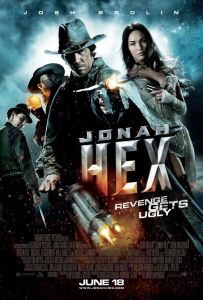 Clocking in at barely 73 fraught minutes, Jonah Hex is a bizarre Western sci-fi hybrid that never really stops to fully explain the rules of this universe. Josh Brolin, who does what he can with the disfigured badass, plays the Hex of title. Hex has a facial deformity along his mouth, which means it’s hard to understand whatever the man is saying as he slurs and mumbles the majority of his tough guy talk. It’s not smart to have your main character unintelligible. Watching Jonah Hex gives you the impression that nobody, cast and crew, knew what was happening. One minute Hex rides a horse with a, I kid you not, double gattling gun, and the next he’s fighting against a crazy John Malkovich who wants to build Eli Whitney’s doomsday machine. Did I also mention that Hex can bring people back to life for short periods of time via his magic touch? The look of the film is overly aggressive, with a rock guitar jackhammer score and plenty of souped-up special effects shots that try and ignite some flailing sense of excitement. It’s hard to get excited about a movie that feels so soulless. Jonah Hex feels like some studio shill thought they could buy a comic property and fill it with sure-fire elements that would please a teenage male base. Megan Fox (Transformers) in a bodice can only distract from the gaping void of a cohesive screenplay for so long. Then you stop and remember how much this movie sucks.
Nate’s Grade: D
Share this:

Milk (2008)
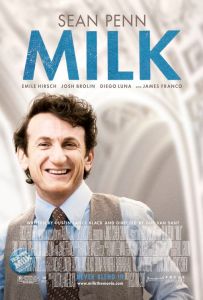 The biopic of America’s first openly gay elected official is stirring, thoughtful, and occasionally limited. Sean Penn gives a wonderful performance as the captivating and tragic Harvey Milk, assassinated in 1978 by fellow San Francisco councilman Dan White (Josh Brolin). He changes his look, his voice, how he carries his shoulders and moves his arms; it’s a terrific and transformative performance that only sometimes hits a few fey stereotypes. The movie mostly follows Milk’s path as a community organizer who successfully mobilized the gay rights movement. You’ll witness local politics in depth, and that’s my one reservation with this fine film – it focuses too heavily on the political formation of a movement and less on the man that kick-started it. You get little glimpses of Milk the man, and most of those glimpses happen to be his romantic relationships with annoying men. That said, director Gus Van Sant orchestrates real archival footage from the time including protestors and homophobic spokespeople, and it gives the movie an authentic relevancy. The deadly confrontation between Milk and White is played in a painful, very un-Hollywood approach that made me wince hard. It’s amazing to watch Milk and realize how far the American public has come since the 1970s and how much further we, as a nation, have to go.
Nate’s Grade: A-
Share this:

W. (2008)
 Director Oliver Stone’s first draft at history is never boring but it’s rarely insightful. The film portrays George W. Bush (Josh Brolin) as a stubborn and simple man trying to live outside his abilities and the long shadow of his successful and emotionally distant father. George W. was not the favored son, as he is routinely reminded, and Ma and Pa Bush express their frustration. And yet the son who did not have his family’s support and acumen accomplished what no one else in the family had. He won reelection. He toppled Saddam Hussein. And then it all came crashing down. Ultimately, who was this movie made for? The detractors of Bush will view the film being too light, providing a psychological context that humanizes the man amongst his mistakes. You may even feel some sympathy as George W. repeatedly tries to earn his father’s approval. The movie is not a partisan or mean-spirited skewering. The fans of Bush will consider the film to be a cheap shot that restrings famous blunders and transplants Bush malapropisms into new settings. People may take offense at the idea of the current Iraq War being a result of unresolved daddy issues. Seriously, for a two-hour movie spanning the life and career of the most reviled modern day president, did Stone need to include the moment where Bush almost choked to death on a pretzel? Over the 2000 election debacle? Over the Air National Guard? Over 9/11?
W. lacks a strong point of view and the film’s timeline closes too soon, only going so far as January 2004, not even the halfway point for a two-term president who has only sunk lower in national approval from that moment. A miniseries would be a better medium to explore the failures and calamities and personalities of the Bush Administration. Brolin is terrific in the title role and he never dips into parody. The rest of the actors are hit-or-miss and the movie becomes somewhat of a game of identifying famous historical figures in their one-scene appearances. My biggest surprise was how much I felt emotionally connected to the first President Bush, played by James Cromwell in a performance that doesn’t even attempt to imitate the real-life figure. Stone and screenwriter Stanley Weiser (Wall Street) certainly don’t hide the characters they connect with (Colin Powell, often the voice of reason, is given a stirring speech calling for caution). Certain creative license is taken to provide dream sequences that can point toward the inner turmoil of Bush, like when his father admonishes him for destroying 200 years of the family’s name over the Iraq War. Overall, W. is an empathetic and sometimes dithering portrayal of the 43rd United States’ president that could have succeeded if it had more to say.
Nate’s Grade: B-
Share this:

No Country for Old Men (2007)
 Joel and Ethan Coen are two of cinema’s most talented oddballs. Together, they’ve created some of the most intricate, eclectic, and best movies of the last 25 years. Their last two efforts, 2003’s Intolerable Cruelty and 2004’s remake of The Ladykillers, didn’t feel like Coen movies; they felt like they were compromised and missed the artistically deft touch. As a result, both movies were mild failures for filmmakers that have a series of genre-spanning masterpieces to their name. No Country for Old Men is the first time the brothers have adapted someone else’s work, in this instance Pulitzer Prize-winning author Cormac McCarthy’s 2005 novel. Not too shabby if I say so. Fortunately for all lovers of film, the Coens have embraced McCarthy’s blood-soaked tale and crafted an exciting, honest, and intensely provocative modern Western that stands out as one of the greatest films of the year.
In dusty West Texas, Llewellyn Moss (Josh Brolin) is out hunting the lonely plains when he discovers a blood trail. It leads him to four empty cars riddled with bullet holes, dead bodies collecting flies, and a sack containing two million dollars in cash. The signs are all there that this was a drug deal gone badly, and two million will never go unnoticed, but Moss sees this as an opportunity of a lifetime and takes the money. The men in power have hired Anton Chigurh (Javier Bardem) to find their drugs and money and exact retribution. Chigurh’s preferred method of killing involves a high-pressured air canister that can blow out doorknobs and human brains. Chigurh chases after Moss all the while Sheriff Ed Tom Bell (Tommy Lee Jones) is following the trail of death to try and save Moss or any future innocent victims.
 What a fine-tuned, nerve-wracking, and engrossing cat-and-mouse thriller this film is. The action is brief but the buildup can be nearly unbearable to endure. The tension is magnificent. Chigurh chases Moss from hideout to hideout and some of the tensest moments are just waiting. There’s a moment where Moss is calling the front desk of his newest motel and we hear the phone ringing unanswered again and again from the hall, all the while Chigurh’s footsteps inch closer. But it’s the moments of silence that cause the most dread. When Moss is trying to recover his loot, all the while Chigurh is in the opposite motel room, it becomes a balancing act of sound and silence. No Country for Old Men is expertly orchestrated to involve the use of sound as a tool for high suspense. None of our main three characters inhabit a scene together. Sure Moss and Chigurh shoot at one another but even then it’s short and focused on waiting for response and counter response. Moss is no dummy and he sets up some traps for his would-be dispatcher. No Country for Old Men is unnerving, intelligent, near flawless entertainment.
Chigurh, as masterfully played by Bardem, is the stuff of nightmares. I was literally afraid to go home after seeing this movie and it is because No Country for Old Men fashions a villain so methodical, so cold-blooded, and so downright deadly and cunning that I felt as if he could very well be residing under my bed at night waiting. Bardem is hypnotically horrifying and the Coen brothers establish early on how ruthless their cinematic boogeyman is. The very first moment we’re introduced to Chigurh he escapes from police custody and strangles the inattentive officer on duty. He drags him to the floor and chokes the life out of him, but the Coens position the camera not on the last desperate kicks of the officer but on the face of Anton Chigurh, and it is nasty. His eyes are bugged out and his intensity comes across as sadistically jubilant. He seems like a caged animal finally let loose. It’s a scary yet fascinating introduction to a deadly character.
Chigurh is a humorless and determined man, and every scene he steps into instantly changes. A gas attendant casually asks Chigurh about the weather and gets on his bad side and the stone-faced killer in the Dutch boy haircut proceeds to press the poor man with increasing agitation, yet Chigurh always speaks in such a placid tone that makes him far creepier. He’s a maniac that never raises his voice. Chigurh then corrals the man into one of his signatures, having a victim decide their fate by the flip of a coin. Before the man can say anything the coin is flipped, Chigurh intones to “call it,” and the man nervously repeats that he needs to know what he’s at stake to win. “Everything,” Chigurh responds. This scene starts off so innocuous but becomes monumentally unsettling thanks to the rising dread and Bardem’s deeply committed portrayal. Bardem is alarming, ferocious, grimly efficient, mesmerizing, and deserves an Oscar win, not just a mere nomination, for what is his finest performance to date.
 There are many ways to describe Chigurh, but it seems most appropriate to speak of him as nothing short but the full-tilt vengeance of God. He’s a hired killer, yes, but that doesn’t stop him from killing indiscriminately. He murders several innocent victims, he murders his competition sent out to nab Moss just because it insults him, and even after the money no longer becomes a concern, Chigurh still plans to continue his wrath out of sheer moral principle. He made a promise of swooping vengeance and he will stick to it. This means that anyone could die at any moment while onscreen with Chigurh, and No Country for Old Men has plenty of surprises as it toys around with our baited anticipation. When Chigurh gets the drop on his competition he doesn’t shoot the man immediately; instead the scene plays out for an agonizing length even after we listen to the room phone ring several times, and then blam! Chigurh answers the phone and casually raises his boots so the pooling blood doesn’t touch his feet. This is the most memorable incarnation of soulless evil I have seen in the movies since Hannibal Lector came to iconic form in 1991’s Silence of the Lambs.
Brolin is having quite a career year for himself after compelling turns in American Gangster (where he also shoots a dog), In the Valley of Elah, and Robert Rodriguez’s Planet Terror half of Grindhouse. Brolin gives the audience a figure to root for even though he never actually displays true heroism, just survival instincts. Jones serves as a wise and guiding father figure that feels out of place in a world that is becoming increasingly, shockingly violent. It’s a role that Jones has performed before but it’s a role that fits the actor exceptionally well. Woody Harrelson pops up as a charming and laid back handler trying to convince Moss to give up before things get worse. Kelly Macdonald, as Moss’ wife, cuts through the darkness in a refreshing performance.
The technical craftsmanship is on par with previous Coen excellence. Roger Deakins’ cinematography is exquisite, Carter Burwell’s score barely makes its presence felt, and the editing is tight and focused. The sound design, which I’ve already discussed in detail, deserves an Oscar. This being a Coen brothers’ film, it wouldn’t be complete without some dark humor to punctuate the bleakness. They have a perfect ear for local vernacular and Texas shorthand, so the dialogue feels sharp but realistically twangy without being condescending as some had accused Fargo (I do not agree with this accusation).
 What works in the favor of No Country for Old Men may perhaps be its undoing for a mainstream audience. The film works against conventions and this provides for some stellar surprises and upheavals, none of which is bigger than killing a certain character off-screen. No Country for Old Men definitely seems like it’s laying stage for a climactic showdown and then one key figure has been bumped off by a group of ancillary characters that have little overall bearing over the plot (I have read that the same gap happens in McCarthy’s novel). If this doesn’t perturb audiences then the final 10 minutes ought to do it. There’s no sense of closure for the movie and this will frustrate many, but it all fits rather nicely with the movie’s highly nihilistic tone. Like Chigurh’s coin, the film focuses much on the randomness and cruelty of fate. By sticking to this ethic, the Coen bothers are eschewing the traditional Hollywood rulebook and playing around with our expectations for characters and plot. The outlook isn’t too sunny for many involved. It works and demands an audience remain on edge for fear that anything could happen at any moment. However, don’t say I didn’t warn you if you walk out of No Country for Old Men and say, “What was that all about?”
No Country for Old Men is exactly the kind of material the Coen brothers needed to return to form. This is a lean and stirring thriller that plays to their strengths and echoes some of their most riveting and twisty work, like Blood Simple and Fargo. In many ways the film feels like a Western, a high-stakes drama, and a tragedy that takes its time to unravel. It may have taken some time but the Coen brothers are back, baby, and No Country for Old Men is fit to stand beside their hallowed pedigree of cinematic classics.
Nate’s Grade: A
Share this:

Grindhouse (2007)
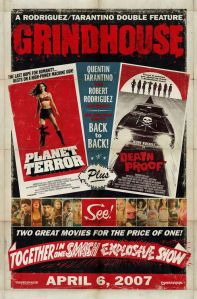 The movie going experience isn’t what it used to be, and Quentin Tarantino and Robert Rodriguez want to do something about it. There?s no denying that the joy of seeing a movie has been watered down a bit; there’s soaring ticket prices, floundering product, and let’s not forget the influx of teenagers with cell phones. Rodriguez and Tarantino grew up gorging upon the exploitation films at their neighborhood grindhouse, where they could see kung-fu, blaxploitation, gory Italian zombie movies, and nearly anything that promised to be titillating and shocking. These movies dealt in copious amounts of sex and violence on a shoestring budget and teenagers lapped it up. Grindhouse was designed to be a double feature with Rodriguez and Tarantino each writing and directing an 80-minute movie. This three-hour plus movie is stuffed to the gills with 70s reverence, right down to cheesy retro clips telling us the film rating via an animated cat. If Rodriguez and Tarantino could, they probably would make the floors stickier just to round out the experience. But that’s the marvelous thing about Grindhouse — it turns the filmgoing experience into an event once again.
First on the bill is Rodriguez’s Planet Terror. An outbreak is about to sweep across a small Texas town. A toxic green gas is causing people to break out in festering wounds that are spreading rapidly. Cherry Darling (Rose McGowan) is a go go dancer who runs into an old flame, Wray (Freddy Rodriguez), a badass drifter with a dark past. They get attacked by a group of “sickos” who take Cherry’s leg as a chew toy. At the hospital we’re introduced in rapid succession to Dr. Block (Mary Shelton) and her creepy husband (Josh Brolin) she plans on leaving for the lovingly massive cleavage of Fergie from the Black Eyed Peas (she gets eaten and can, one assumes, be described as being Fergilicious). The sheriff (Michael Biehn) has an unsettled score with Wray and refuses to trust him, even though the town is slowly being overrun by what appear to be zombies. The survivors take refuge at a Bar-B-Q joint, run by the sheriff’s brother J.T. (Jeff Fahey), located only two miles away from the military outpost that released the gas.
 Planet Terror is a great blast of fun, a perfect ode to schlocky B-movies. Rodriguez creates action movies closer to cartoons, and the more over-the-top and crazy things get the more joyous his films generally turn out. This is a gonzo world cranked up to a wonderfully weird wavelength, where Cherry can have a machine gun leg without any nagging question on how she even gets it to fire let alone why it would be more accurate. It doesn’t matter because this movie is all about 80-minutes of awesome, twisted, gloriously gory fun. Planet Terror isn’t the first zombie comedy, and its inspirations are quite plain, but the film establishes a wide-range of colorful characters effectively and then ramps up the chaos. Rodriguez amuses with even small touches, like a woman trying to operate a car with a anesthetized hands, a pair of skimpy babysitters who clobber a car with baseball bats, and a bio-chemical scientist (Naveen Andrews) that has a penchant for collecting and bottling the testicles of the men who fail him (hey, we all need hobbies). Even amongst an exaggerated canvas there’s still plenty of humor and adoration for the grindhouse experience, like when the beginning of a sex scene is interrupted with a “reel missing” sign. Rodriguez also intentionally downgrades the look of his film, adding hairs and scratches and pops in the film to look like it had been dragged across the floor. Planet Terror even has a dreadfully dated synth score to compliment the full-tilt celebration of splattery schlock.
Tarantino’s Death Proof is going to sharply divide audiences. The action in Planet Terror is relentlessly paced, which makes the adjustment to Tarantino?s half all the more hard. Rodriguez is all about genre relevance and making a film that would excel in the grindhouse era; Tarantino, on the other hand, is all about taking the genre and catapulting it into something ambitious and different and greater.
 Death Proof is Tarantino’s take on the slasher horror genre, with the unique twist being that Tarantino?s roving killer takes out his prey with his car. Stuntman Mike (Kurt Russell) is a stuntman of the old guard. The youth of the day have no idea of the TV shows he worked on or the celebrities he rubbed elbows with. The only lasting visages he has from those removed days are a long scar decorating the side of his face and his stunt car. The vehicle has been outfitted to be death proof, meaning that Stuntman Mike can get into any wreck and come out alive. A group of women are visiting Tennessee for a film shoot. Abernathy (Rosario Dawson) is a makeup artist, Lee (Mary Elizabeth Winstead) is an actress, and Zoe Bell (herself) and Kim (Tracie Thoms) are professional stunt women. The stunt ladies are interested in test-driving a Dodge Charger, the same iconic car used in Vanishing Point. Zoe wants to play a dangerous game known as “Ship’s Mast,” which entails strapping herself to the hood of the car as it speeds along. This is when Stuntman Mike comes roaring with his death proof material and plays an extreme game of chicken.
The narrative structure of Death Proof is deliberately slow. The focus is on a group of Texas girls (including Sydney Poitier’s daughter named, rather unoriginally, Sydney Poitier). They dance to jukebox jams and drink. And they talk, and talk, and talk, and talk. The dialogue is clever but you worry Tarantino has been hypnotized by his own pithy writing. The movie drags a bit but mostly because it follows a film that had the pace of a runaway train. The slow buildup is an intentional correlation to slasher films, which would spend their first half hour setting up characters for the eventual slaughter. I liked how Stuntman Mike was seen playing with his prey and interacting with them. The wait is worth it, though, but then Tarantino turns around and repeats this same setup with a new batch of girls. Many will grow impatient going through the same process all over again and become irritated that they have to endure another round of talky pop culture diatribes in order to get to some more vehicular manslaughter. And at this point, the only character the audience has any affinity for is Stuntman Mike, so it’s a little tough to wait so long for his reappearance. When he does appear, the movie takes some unexpected turns and transforms into a female revenge thriller that left my audience cheering by its conclusion. My wife loved it. I married the right woman.
The makeup work is outstanding. Most of the effect work gets its spotlight during Rodriguez’s half, and Greg Nicotero and KNB have created the most gut churning, sickeningly inventive makeup work since John Carpenter’s The Thing. Rodriguez’s Planet Terror is dripping in blood, and the gore is heightened to such an unrealistic, comical degree that it becomes more tolerable and, in the end, another element in the overall outrageous vibe of the film. Some memorable gore work includes makeup pioneer Tom Savini being ripped apart like a child’s jigsaw puzzle, soldiers whose faces undulate and bubble until they look like close relatives of the Elephant Man, and a truck smashing against bodies like they were made of paper and filled to the brim with Kool-Aid. This is the kind of movie where entire hoses of blood explode from single gun shot wounds. It is a gory, gruesome, sticky icky movie but that?s part of the fun.
 Whereas the makeup work shines in Planet Terror, the stunt work in Death Proof is stupendous. Bell was Uma Thurman’s stunt double in the Kill Bill tandem, so by writing a part specifically for her Tarantino knew he could get up close and personal during the scary moments. Seeing Bell struggling to stay atop the hood of a car zooming at 80 miles per hour is nerve-racking and exhilarating, and you know there isn’t any computer trickery given how Tarantino’s own characters bemoan how computers have blunted action cinema output. That really is Bell and even though it’s all a movie a part of you does think, “Oh my God, this woman is going to die for real.” This killer bumper-car sequence in Death Proof will have you holding your breath. It takes much longer for Tarantino to rev up his action, but when he does he puts the pedal to the mettle.
But don’t get up for pee breaks once Planet Terror is over, because you may miss some of the best parts of Grindhouse. In between the feature films are three fake trailers directed by friends of Tarantino and Rodriguez, who made a fake trailer himself for Machete, about a Federale (Danny Trejo) out for revenge. The Machete trailer gave me the everlasting gift of a line, “They f***ed with the wrong Mexican.”
The best trailer, hands down, is Shaun of the Dead director Edgar Wright?s trailer for Don’t, a Dario Argento style horror film where a narrator instructs the audience lots of items not to do (“If you are thinking about turning this door… DON’T! If you think about going into the basement… DON’T!”). What makes Don’t so wonderful is that the trailer builds a thick head of steam, to the point where all wee see are bizarre rapid-fire images and the announcing repeating the message, “DON’T!” The momentum builds to a great comic high that left me giggling.
Eli Roth, who gave us Hostel and Cabin Fever, one of my all-time favorite filmgoing experiences, runs a close second with his slasher trailer for Thanksgiving. The concept is rather straightforward, a person dressed as a Pilgrim picks off residents around Turkey Day, and a great showcase for Roth’s sense of tongue-in-cheek homage and his warped sense of humor. This trailer has some gasp-inducing moments, chiefly among them a topless cheerleader who performs the splits right onto a knife blade. Wow. Then there’s a guy humping a stuffed turkey with a human head attached. I’ve said it before and I’ll say it again, Roth is one sick bastard but he’s my kind of bastard.
 Rob Zombie’s trailer for Werewolf Women of the S.S. sounds better on paper than how it turns out. There’s a subgenre of Naziploitation films (did you know you could add “-sploitation” to damn near any word?), most famously popularized by Ilsa, She-Wolf of the S.S. Zombie’s trailer has got hairy wolf boobs, Nazis, shiny fetish outfits and S&M, but it feels too new and doesn’t work on the same vibe of Grindhouse. It feels too polished and too happy with itself; it spends more time telling you who’s in this fake movie than delivering anything juicy. The trailer is saved by a brilliant cameo by an actor whom I will not spoil, but suffice to say that I was left in stitches.
Honestly, I cannot say another movie released this year that provides more bang for your buck than Grindhouse. Tarantino and Rodriguez’s double bill will leave you giddy. This is the fastest 3 hours and 10 minutes of your life, folks. Unfortunately, the film hasn’t been doing as well at the box-office and this has caused the Weinsteins to contemplate splitting the films into two to make the most of their investment. I suppose Grindhouse was never going to have a 300-sized audience, since the idea of making a sloppy three-hour love letter to trashy cinema seems destined for a limited appeal. This is a high-art tribute to high camp, and you really do feel you get more than your money’s worth even if you pay, like I do, 10 bucks a pop for a show. I can’t imagine having a better time at the movies this year than the one I had during Grindhouse.
Nate’s Grade: A


 nathanzoebl
You must be logged in to post a comment.