Blog Archives
Megalopolis (2024)

Trying to make sense of Megalopolis is something of a fool’s errand. It clearly means something significant to its creator, legendary director Francis Ford Coppola. He’s been wanting to make this movie for decades and finally the urge just became too strong to ignore, so he sold his successful Zoetrope winery and put over $100 million of his own fortune into this movie to ensure his vision would be unclouded by meddling studio execs and moneymen. It’s the kind of bracing act of artistic hubris and ambition that is worth celebrating. It’s a big swing from a legendary filmmaker who has quite often gone overboard only to return from the brink with cinematic classics, like Apocalypse Now and Bram Stoker’s Dracula. Given his filmography, you would think that Coppola has more than earned the benefit of the doubt. Except… the Coppola of today isn’t exactly in his prime. He hasn’t had a great movie since 1992’s Dracula, and in those ensuing 30 years, he’s made inexplicable movies like Jack, where Robin Williams plays a kid who ages rapidly, and Twixt, a bizarre misfire with Edgar Allan Poe and vampires that was reportedly inspired by a dream he had. I would expect any new Coppola project to lean more towards these kinds of artistic follies than his generation-defining classics. The man is 85 years old and put all his remaining artistic cache and wealth into guaranteeing that we live in a world with Megalopolis. After seeing his long-gestating opus, I cannot say we are better for the trouble.
It’s hard to condense the plot of Megalopolis because so much is happening while nothing seems that important. For example, brilliant architect Caesar Catilina (Adam Driver) wants to build a new wondrous city he calls Megalopolis, a utopia for the masses. The power brokers of New Rome, including Mayor Cicero (Giancarlo Esposito) and CEO of the largest bank Hamilton Crassu III (Jon Voight), are against such radical changes and see Caesar as an upstart. It also so happens that Caesar can stop time at will, until he cannot. He also has discovered a miracle material to build his futuristic city, but nobody seems to care. The masses of New Rome are more interested in whether or not a pop star is still really a virgin. Julia (Nathalie Emmanuel), the mayor’s party girl daughter, witnesses Caesar stopping time, which is a big deal, or maybe it’s not, but she’s intrigued by the mercurial artist seeking to bring to life his unique vision. But Caesar only likes people interested in art and philosophy and books. Could he fall for her, and will it possibly cost his artistic vision from becoming a shimmering reality of hope?

This is a $100-million-dollar movie created entirely for one person, and if you happen to be Francis Ford Corolla, then congratulations, you will understand and properly appreciate the artistic messages and bravado of Megalopolis. For the rest of us poor souls, we’ll be struggling for meaning and insight. The movie almost exists on a purely allegorical level, or at least it must considering that so much of the scene-to-scene plotting is haphazard and underdeveloped.
Let’s start with the central conflict: why are these forces so immovably against one another? If you were the mayor of a city with a raft of problems, it would sure seem like a great move for a utopian addition. I suppose he and the other men in power are afraid of ceding some of their influence and status to this newcomer, and that is something that could have been explored stronger through generational conflict, the old having a stranglehold on power and losing sight of relevance but still clinging to their storied perches. Caesar should be a threat, an appeal to the people that they no longer truly serve. However, in this story, Caesar is so brilliant and any person standing in his way is meant to look foolish or evil. It reminded me a lot of Ayn Rand’s terrible book Atlas Shrugged that was turned into a terrible trilogy of ideologically rotten movies where the brilliant billionaires are tired of their genius being wasted by government regulation. Obviously Caesar is meant to represent The Artist who is being doubted or interfered with, which is how Coppola views himself, or at least filmmakers in general. Therefore this character can have no flaws and must always be right because the message is to give the great artists their space to be great, to challenge our preconceptions of what art can be. He must be vindicated, so it makes him a rather boring and simplistic character who wants a glorious future for the people.
But what exactly is Megalopolis as a utopia? All we know is that it has moving sidewalks and gyroscope orbs for traveling and it’s very glowy. Visually it reminds me of another Adam Driver movie, 2016’s Midnight Special, when the alien world began co-existing with our world. This magic future city is made of a magic future element that also has the magic ability to heal Caesar after he gets critically injured. All of those details beg for more clarity or development, along with Caesar’s ability to stop time, which I guess is hereditary. These elements should be more impactful, but like the utopian city of Megalopolis, they’re just convenient devices, to simply provide the protagonist with a means of solution whatever his dilemma may be. There’s another conflict in the middle where Caesar is framed with an altered video of him having sex with that virginal pop star, but this too is resolved ludicrously fast. Even this scandal cannot last longer than a few minutes before once again dear Caesar is proven virtuous and unassailable. When he has a magic solution for every problem, including reconstructing a hole in his face, and he can never be wrong, and he has no complexity except for his supposed genius, but his genius is also vaguely defined as far as the actual outcome of his supposed utopia, it makes for an extremely uninteresting main character that gets tiresome as we never flesh out his important attributes.

Likewise, the satire of Megalopolis is fleeting and broad and hard to really engage with. There’s the rich and powerful living in excess and with a sense of depraved callousness toward those they feel are lesser. This is best epitomized by Aubrey Plaza’s tabloid journalist character with the exceptionally bad name of Wow Platinum. She’s a gold digger and flippantly shallow as well as super horny, starting as a fling with Caesar before moving onto Clodio (Shia LeBeouf), the grandson to the CEO of the big bank. This woman has no guile to her and is transparently voracious for all she covets, whether it be sexual or material. With Plaza giving a delightfully campy performance, really digging into the scenery-chewing villainy of her character, it makes her the most entertaining person on screen, and a welcomed respite from all the other actors being so self-serious and stodgy and haughty. This tempers the satiric effect because now I’m looking at Wow Platinum as a godsend. Obviously New Rome is meant to represent the United States, so all of its foreboding narration about the death of empires is meant to make the audience compare the end of Rome to the internal fissures of America. Like everything else in the movie, the comparison is only skin deep, and it’s merely asking you to juxtapose rather than critically compare modern-day to the collapse of Rome. By the end, there’s some definite unsubtle swipes at topical political culture, like when Clodio adopts himself as a humble man of the people to “Make New Rome Great Again” and foments an army of red-hatted rabble. But what exactly is Coppola saying with this? That the people in power will pose as populists to manipulate the lower classes into action that benefits them? Not exactly breaking news, nor is it explored on a deeper or more complex or at least more interesting development. Much like the plotting of Megalopolis, the satirical elements are a cacophonous mess of dispirit ideas and directions.
It’s staggering to believe that the man who wrote Patton and The Godfather is the same man who wrote such lines like, “You’re anal as hell whereas I am oral as hell,” as Plaza looks face-first at Driver’s crotch. The dialogue in this movie is tortured and feels like it was written by A.I., or by aliens who were trying to recreate human social interactions but whose only archive of study was the amazing catalogue of movies by Neil Breen and Tommy Wiseau. The “Entitles me?” conversation that repeats itself four times, the “riches of my Emersonian mind,” to “when we ask questions, that’s basically a utopia,” to what might be the most eye-rolling line of 2024, where a vindictive Voight hides a tiny bow and arrow under a sheet by his waist and literally says, “What do you think of this boner I’ve got here?” Yes, the man who gave us The Godfather has also now given us, “What do you think of this boner I’ve got here?” The movie is so preoccupied with the fall of empires and yet a line of dialogue like that is a sign of the decline of an empire.

Ultimately, Megalopolis reminded me of Richard Kelly’s 2007 flop, Southland Tales, a connection I also felt while watching 2023’s Beau is Afraid as well. I wrote, “It’s because both movies are stuffed to the brim with their director’s assorted odd ideas and concepts, as if either man was afraid they were never going to make another movie again and had to awkwardly squeeze in everything they ever wanted into one overburdened project.” It’s an ungainly mess, a protracted and self-indulgent litany of Coppola’s foibles and follies, and it’s practically impenetrable for an audience. I challenge anyone to seriously engage with this movie beyond rubbernecking. I cannot believe this movie cost $100 million dollars and for a passion project there’s so little that makes me wonder how someone would be so passionate about this. It’s not a good movie but it has its own ongoing fascination for cinephiles morbidly curious what Coppola had to make. These are the kinds of bold artistic swings we should cherish, where filmmakers with storied careers are willing to burn it all down for one more project that must be just so, like Kevin Costner’s four-part Horizon Western that we’ll probably never see completed. I wanted artists to test the waters, to chase their visions, to be ambitious. But that doesn’t mean the art is always worth it.
Nate’s Grade: D
Share this:

Reagan (2024)

My seventy-five-year-old father doesn’t get out to see as many movies as he used to, but one he was dead-set on seeing in theaters was Reagan. My sister took him and he came back singing the movie’s praises, celebrating Dennis Quaid’s portrayal of the 40th president of the U.S. of A. and extolling the virtues of this trip down Boomer memory lane. I’m glad my father enjoyed the movie. I’m glad the filmmakers could provide him two hours of uplift and entertainment, especially during times like these where my whole family can use the escape from present-day worries. I’m also retroactively relieved that I didn’t see the movie with him, though as a dutiful son and his movie buddy for decades, I would have. I’m glad because our opinions on the overall artistic merits would have been significantly different, and I wouldn’t want to rain on my father’s personal enjoyment (that’s what the written word is for).
For the benefit of analyzing Reagan as a movie first and foremost, I’ll reserve my reservations about his political legacy for the end of the review, but even as a standard presidential biography, Reagan the movie is a disappointing and reductive trip through one man’s Wikipedia summation of a career. I’ve become much more a fan of the biographies that choose a seminal moment from a public figure’s life to use as a framing device for the larger legacy (think 2012’s Lincoln focusing on the passage of the thirteenth amendment). I’d prefer that approach to the more familiar cradle-to-grave structure that often feels like a zoom through their greatest hits where none of the events are granted the consideration or nuance deserved. With Reagan the movie, we’re sprinting through history, although Reagan doesn’t even become president until an hour in. Instead, the focus is unilaterally on Reagan’s opposition to communism and the Soviets. Obviously distilling eight years of a presidency into a couple hours is a daunting and improbable task, the same difficulty for distilling any person’s complicated life into an accessible two hours of narrative. Still, you should have expected more.

For those coming into the movie looking for a critical eye, or an even-handed approach to this man’s faults and accomplishments, the movie condenses itself into a narrow examination on communism and the Cold War, a story we already know proves triumphant. The cumulative problem with Reagan the movie is that it doesn’t really add to a deeper understanding of the man. With its streamlined narrative and pacing, the movie sticks to its Greatest Hits of Reagan, especially his speeches. There are several famous Reagan speeches littered throughout the last act of the movie, and it doesn’t do much for a better understanding of the man delivering those remarks as just hitting upon people’s memories of the man in public venues. It would be more insightful to watch the team behind the scenes debating their choices. The movie portrays Reagan the man more like Saint Regan, arguing if there are any presentable faults they should be readily forgiven because it was all in pursuit of morally impregnable goals (he remarks that the vicious right-wing contras remind him of George Washington and the early colonial army…. yeah, sure). The filmmakers are too afraid to say anything too critical but also to reveal anything truly revelatory about their subject. So the movie becomes a glossy nostalgic-heavy drama without much in the way of drama because Reagan will always persevere through whatever hardships thanks to the power of his convictions, which will always be proven right no matter the context and repercussions. The movie seems to imply all his decisions led to the fall of the Berlin Wall, so it all must have worked out, right? Well, not for everybody, movie, but we’ll get to that in due time.
The filmmakers elect to frame the movie through a curious narrator – a retired KGB officer (Jon Voight) that has followed the life and times of Ronald Reagan going back to his early days. Apparently, this Soviet spy saw true greatness in Reagan way back and thought he might become a threat to the continuation of communism. It’s a strange perspective to be locked into, the enemy complimenting Reagan from afar and ultimately crediting the man’s faith in God as the reason that America triumphed over the Soviets. It means then that every scene has to be linked to our KGB narrator, and sometimes that can get questionable, like when he’s talking about Reagan’s time as a teenage lifeguard, or the time Reagan was being bullied by local kids, or Regan’s intimate conversations with his first wife, Jane Wyman (Mena Suvari). The scenes in Hollywood are so clunky, especially a dinner where the movie wants us to look down on Dalton Trumbo, blacklisted Hollywood Ten writer. This man stood for his principles and suffered a real backlash, and you want me to think of him as misguided and part of some liberal communist cabal (the movie also includes a picture of Oppenheimer as part of its Soviet influence targets)? By insisting upon a narrator that’s not Reagan, that means this KGB spy it also means that we’re seeing the world of Ronald Reagan through an interpreter’s prism, which makes the scenes even more curious for being such an unexpected cheerleader over Reagan’s amazing instincts and abilities. It would be like having Stalin narrate a biopic about FDR and showering the president with gushing praise.
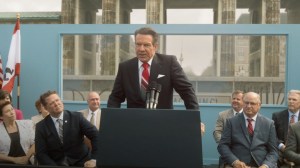
Limiting the movie’s focus to Reagan’s lifelong battle against communist forces makes for a much cleaner and more triumphant narrative, and also leads to an ending we all know is coming, not that surprise or nuance is what the primary audience is looking for. The movie posits that Reagan pursued becoming the country’s chief executive for the selfless mission of standing up to the nefarious forces of communism. Then again, in the opening moments, the movie also tacitly implies that maybe it was the Russians who shot him back in 1981 when it was really an incel who thought he might impress Jodie Foster. Those opening moments also present a cliffhanger to come back to, as if there’s a gullible portion of the audience that is hanging on pins and needles in anticipation whether or not Reagan really was killed back in 1981 (“But… but if Ronnie dies, then who was left to beat the commies?”). It’s a very selective narrative framing that makes the movie easy to celebrate because Reagan is presented as America’s steadfast defender who stood up for our apple-pie American values and brought down the Soviets. Reagan certainly played his part in helping to facilitate the collapse of the Soviet Union, but he was one man coming in at the end of a chain of events spanning decades. I liken it to having a group project in school where you and your cohorts work steadily all week, and then the day it’s due, a kid who’s been absent all week except for that day comes onto the project, adds some contributions, and then takes credit for everything accomplished. Reagan gets his due but so do the other U.S, presidents, secretaries of state, and lots and lots of ambassadors that also helped reach this monumental conclusion. However, the biggest contributor to the collapse of the Soviet Union belongs to the Soviets themselves and their rejection of living in a reality in conflict with the dogma of their political leaders (sound familiar to anyone?).
The screenwriters also position the Great Communicator as being so powerfully persuasive that all it took was one speech and everyone was left helplessly in thrall of this man’s honeyed words. It takes on such a grandiose scale that makes Reagan look like a superhuman. The movie sets up its climax over whether or not Reagan will say “tear down this wall” in a speech at the Brandenburg Gate in 1987, which heightens the drama to a level of self-parody. Is there any spectator wondering if Reagan will eventually say the words that became famous? Beyond the false drama of whether or not Reagan will utter this phrase, the movie tries to fashion some unconvincing behind-the-scenes hand-wringing over what it will mean if Reagan says these words while in Germany. As if the man has ever been shy about denouncing communism and the Soviet state beforehand. The movie also exists in a world where every world leader and responsible adult is glued to a TV set watching Reagan speechify at any key moment. Hilariously, after Reagan does indeed say “tear down this wall,” the film cuts to Margaret Thatcher watching and solemnly saying, “Well done, cowboy.” The rousing music reaches a crescendo, the Reagan team celebrates like they just landed a man on the moon, and the implication is that now that Reagan has put these four words together in sequence, well that Gorbachev fella has no choice now. The movie is set up like this speech is the final blow that pushes the Soviet Union into the dustbin of history. And yet, the next scene of the Berlin Wall coming down has a helpful on-screen designation of time: “two years later.” So Ronnie gave his amazing speech and it immediately led to the end of East Germany… two years later. Does George H. W. Bush get all the credit for being president when the Soviet Union actually collapsed in 1991? I’m sure we can find a speech somewhere where he said something bad about them, and if Reagan the movie is an indication about political persuasion, all he had to do was say the words out loud. Then the wicked communist curse is broken, but few people knew that, only those who worked for Ronnie.

The movie goes to this magical solution time and again, as Reagan is able to solve any crisis with just the right combination of words. Whether it’s Vietnam protestors he cows into retreat by shushing them, or even a debate where all he has to do is throw out a joke and the opposition must crumble because nobody can recover in the face of a joke; the movie presents time and again a silly and reductive version of politics where all it takes is for people to hear the cherished words of Saint Reagan and be converted. Look, Reagan was an influential figure and inspired a generation of Republican leaders to follow in his wake, and yes his telegenic skills were an asset to his understanding of how to handle issue framing. But to reduce everything down to his overwhelming oratory powers of persuasion makes it seem like everyone in the world is falling prey to a linguistic cheat code they are unaware of. It’s the kind of deification that we might see in a North Korean movie extolling the powers of Kim Jong-Un (“He golfed a hole-in-one with every hole”). This is what a hagiography does rather than an honest biography, and that is why Reagan becomes a relatively useless dramatic enterprise except for those already predisposed to wanting to have their nostalgia tickled and their worldviews safely confirmed.
I wasn’t exactly expecting, say, an even-handed review over Reagan’s legacy, but there’s something rather incendiary about how it distills all of the opposition to Reagan and his policies. Our KGB narrator intones that not everybody was a fan of good ole Ronnie, and then in an abbreviated montage we get real news footage of protestors with placards condemning the Reagan administration for ignoring the AIDS epidemic, for tax cuts for the rich, for supporting the apartheid government of South Africa, for gutting social safety net programs, etc. The handling of the Iran-Contra scandal is hilariously sidestepped by the same Reagan who is shown on screen being so dogmatic about sticking to law that he fired all the striking air traffic control workers. It’s not enough that the movie reduces all relevant critical opposition to Reagan to a brief music montage, it’s that the movie then quickly transitions directly to a map of the 1984 electorate with Reagan winning in a landslide, as if to say, “Well, these cranky dead-enders sure were upset by these issues, but they must be wrong because the American people overwhelmingly re-elected him.”
I never found Quaid’s performance to be enlightening or endearing, more mimicry that settles into an unsettling cracked-mirror version. It always felt like an imitation for me, like something I’d see on Saturday Night Live in the 1980s with Phil Hartman. He holds the grin and nasally voice but delivers little pathos. It’s not exactly the actor’s fault when the screenplay gives him such little to do. There was a real opportunity to better humanize him toward the end as his mental decline was becoming more of a force. Instead, it’s relegated to the very end, as a gauzy way to usher the man off the stage with our sympathies. Voight (Ray Donovan) gets the most lines in the whole movie and really seems to savor his Ruskie accent. Curiously, his character is talking to a promising KGB pupil trying to learn where they went wrong and it’s not set up to be Vladamir Putin, himself a former KGB agent. The only other significant supporting role that lasts is Nancy Reagan played by Penelope Ann Miller (The Shadow, Carlito’s Way) and she’s relegated to the suffering spouse on the sidelines that always has the steel spine and the word of encouragement. Her best moment of acting was her embarrassment as a captive witness to Ronnie, before his step into politics, awkwardly dancing on stage with the PBR players as a shill for the beer company.

Let’s be honest about who Reagan is aimed at, an older, mostly conservative audience looking back at the time of Reagan’s reign and thinking, “Those were the good old days.” It’s not made for people like me, a progressive who legitimately believes that many of our modern-day problems can trace their source from the eight years of the Reagan administration. I’m talking about the trickle-down-economic fallacy that girds so much Republican magical thinking when it comes to taxes. I’m talking union busting, I’m talking his “welfare queen” projection, I’m talking the selling of arms for hostages (bonus fact: the Reagan campaign was secretly negotiating with Iran not to release the hostages until after the election to better doom Jimmy Carter’s chances of re-election), I’m talking about making college education far more expensive by massive cuts to state funding, I’m talking the rise of the disingenuous “textualist” judicial philosophy that only seems to mean something when its proponents want it to, I’m talking about training and arming Osama bin Laden to fight the Soviets in Afghanistan (wonder why the movie chose not to include this since it is Reagan fighting communism), and so on and so on. Naturally none of these are held to scrutiny by Reagan the movie because it’s from the writer of God’s Not Dead and the director of Bratz.
Suffice to say, Reagan has many notable shortcomings depicting a president who, with every passing year, only seems to add to his own shortcomings in legacy (the Party of Reagan has willfully given up all its purported principles to become the Party of Trump). If you’re looking for an overly gauzy, sentimental, and simplistic retelling of what people already know about Ronald Reagan, then this movie is for you. If you’re looking for anything more, then this is the New Coke of presidential biopics.
Nate’s Grade: C-
Share this:

Pearl Harbor (2001) [Review Re-View]
 Originally released May 25, 2001:
It turns out we went to war in 1941 not because of Japanese aggression, Hitler’s dominance in Europe, or the protection of freedom and democracy. Sorry kids. The real reason we went to war was to complicate and then clear up Kate Beckinsale’s love life. At least that’s what director Michael Bay and screenwriter Randall Wallace would tell you with their indulgent epic Pearl Harbor.
We open in Tennessee in the 20s with two boys who dream of being pilots. Rafe (Ben Affleck) and Danny (Josh Hartnett) grow into strapping young lads who flash their hot dog flyin’ skills at basic training, which brings them chagrin from superiors but admiration from peers. Rafe falls in love with a young nurse named Evelyn (Kate Beckinsale), who goes against ARMY rule and passes Rafe in his eye exam portion when he has a slight case of dyslexia. But he’s just so cuuuute. The romance builds but Rafe feels like he’s grounded when all he wants to do is fly, and volunteers to fight in the RAF over in Europe. He promises he’ll be back to see his lovely Evelyn. Of course he gets into an accident and everyone assumes that poor dyslexic Rafe is fertilizing a lawn somewhere with his remains. Hence Danny slowly but surely develops something for Evelyn in their periods of mourning, and the two consummate their puppy love with a tango in parachute sheets.
All seems well until Rafe returns back from the dead throwing a wrench into Evelyn’s second date parachute plans. Thus the Hollywood favorite of the love triangle endures until the end when the two fly boys enlist in the Doolittle attack against Japan, months after the ferocious attack on Pearl Harbor. The real purpose of the Doolittle attack was not militarily but merely for morale. The real purpose it serves in the movie is to shave off an end on our love triangle.
 Pearl Harbor allows us to follow a group of youthful and innocent starry-eyed kids from training to combat. Each seems pretty much exactly the same to each other. It’s near impossible to distinguish which character is which. It’s like the screenwriter didn’t even have the gall to resort to cliche supporting character roles, and he just made one character and duplicated it. The only one who was noticeable for me was the character of Red (Ewen Bremner, julien donkey boy himself), but that was simply because the man had a speech impediment. We also have our handful of young nurses alongside Beckinsale, and I had an easier time distinguishing between them; everyone had different hair colors.
If you look in the pic, or the credits, you’ll see that two of the nurses would turn out to be Jennifer Garner (Alias) and Sara Rue (Less than Perfect), both stars of ABC shows, and ABC is owned by, yep, Disney. Coincidence? Probably. When they ran this on TV they actually advertised Jennifer Garner above Kate Beckinsale. That reminded me of when Seven ran on TV shortly after Kevin Spacey had won his well-deserved 1999 Best Actor Oscar for American Beauty, and they gave him second-billing in the advertisement over Morgan Freeman, the movie’s true main character.
Affleck has a hayseed Southern twang, but seems to mysteriously disappear for long stretches. Hartnett seems to talk with a deep creak, like a door desperately trying to be pushed open. Beckinsale manages to do okay with her material, but more magnificently manages to never smear a drop of that lipstick of hers during the entire war. We could learn a lot from her smear-defying efforts. Gooding Jr. is pretty much given nothing to work with. I’m just eternally grateful he didn’t go into a usual Cuba frenzy when he shot down a Zero.
Michael Bay has brought us the ADD screenings that are the past, loud hits of The Rock and Armageddon. Teamed up with his overactive man-child producer Jerry Bruckheimer once more, Pearl Harbor is less Bay restrained to work on narrative film as it is Bay free-wheeling. His camera is loose and zig-zagging once more to a thousand edits and explosions. Bay is a child at heart that just loves to see things explode. When he should show patience and restraint he decides to just go for the gusto and make everything as pretty or explosive as possible. This is not a mature filmmaker.
Despite the sledge hammer of bad reviews, Pearl Harbor is not as bad as it has been made out to be. The love story is inept and the acting is sleep-inducing, unless when it’s just funny. It doesn’t start off too badly, but twenty minutes in the movie begins sinking. The centerpiece of the film is the actual Pearl Harbor bombing that clocks in after ninety minutes of the movie. The forty-minute attack sequence is something to behold. The pacing is good and the action is exciting with some fantastic special effects. The movie is bloated with a running time a small bit over three hours total. Maybe, if they left the first twenty minutes in, then gave us the forty minute attack sequence, followed by a subsequent five minute ending to clear up our love triangle’s loose ends… why we’d have an 80 minute blockbuster!
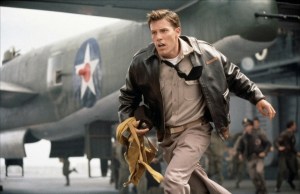 Pearl Harbor doesn’t demonize the Japanese, but it feels rather false with their open-minded attempts to show both sides as fair minded. It gets to the point where they keep pushing the Japanese further into less of a bad light that it feels incredibly manipulative and just insulting. It seems like the producers really didn’t want to offend any potential Pacific ticket buyers so the picture bends backwards to not be insulting. The only people who could be offended by Pearl Harbor are those who enjoy good stories. Oh yeah, and war veterans too.
The cast of Pearl Harbor almost reads like another Hollywood 40s war movie where all the big stars had small roles throughout, kind of like The Longest Day for the Pepsi generation. Alec Baldwin plays General Doolittle and is given the worst lines in the film to say. Tom Sizemore shows up as a sergeant ready to train the men entering Pearl Harbor. He has five minutes of screen time but does manage to kill people in that short window. Dan Akroyd is in this for some reason or other, likely because Blues Brothers 3000 has yet to be green lighted. John Voight is easily the most entertaining actor to watch in the entire film. He gives a very authentic portrayal of President Roosevelt. I still find trouble believing it was Voight under the makeup.
The blueprint for Pearl Harbor is so transparent. They took the Titanic formula of setting a fictional romance against a disaster, with the first half establishing characters and our love story, and then relegating the second half to dealing with the aftermath of the disaster. It worked in Titanic (yes, I liked the film for the most part), but it doesn’t work here. Pearl Harbor is a passable film, but the mediocre acting, inept romance, square writing, and slack pacing stop it from being anything more. Fans of war epics might find more to enjoy, especially if they don’t regularly have quibbles over things like “characters” and “plot.” To paraphrase that know-it-all Shakespeare: “Pearl Harbor is a tale told by an idiot. It is full of sound and fury, signifying nothing.”
Nate’s Grade: C
——————————————————
WRITER REFLECTIONS 20 YEARS LATER

Believe it or not, there was a point in time where people actually considered the possibility of Michael Bay making an Oscar contender. It seems mostly absurd now but at the time there was a benign sense of hope with the production of Pearl Harbor, the most expensive movie greenlit at the time ($140 million) and whose ultimate costs would exceed $200 million. The blueprint for the movie is easy to spot, borrowed heavily from the success of another risky and very expensive movie about sinking ships, James Cameron’s Oscar-winning blockbuster Titanic. If you’re looking for a movie to follow, you could certainly do worse than the highest grossing movie ever (at the time). There was great speculation and buzz about the movie, for its immense production scope, for the reported ambitions, for the prospect of Bay trying to make a serious movie, albeit a serious movie that still included a healthy helping of his usual explosions. There were similar rumors of disaster courting Titanic, then the first production to go over $200 million, and that turned out fine. Well, as should be obvious especially twenty years after its initial release, Michael Bay is no James Cameron in the realm of filmmaking and action storytelling.
Upon its release Memorial Day weekend in 2001, Pearl Harbor opened to a critical drubbing and general audience indifference. It failed to live up to whatever hype or hope had been attached, though it did snag a Guinness World record for most explosions if you value that honor. Bay has never since attempted a “prestige picture” again, resorting to the comfort of doing what he knows he can do well, showcasing large robots punching each other in between pretty explosions. I don’t know what the real legacy of the Pearl Harbor movie should be but I think, twenty years later, it’s a mediocre attempt to recapture something of a past, whether that was the movies of the 1940s or a very very specific movie from 1997 that rhymes with Smitanic. It’s too bad Pearl Harbor is still a three-hour shrug of a movie.
 A full 90 minutes is devoted to setting up the nascent characters and history before that fateful attack on the Pearl Harbor naval base in Hawaii on December 7, 1941, and that’s the first major misstep for the film. Much of the emotional involvement is built upon a romance that simply does not work in any capacity. Ben Affleck plays Rafe, a dyslexic pilot who charms Evelyn (Kate Beckinsale), a nurse who decides to help him cheat his medical exams. The first 45 minutes demonstrates their abbreviated courtship and romance through a series of cute moments that fail to coalesce into something more meaningful. And if you think that was rushed and abbreviated, after Rafe is believed to be dead, it’s about ten minutes before his best friend and fellow fighter pilot Danny (Josh Hartnett) is starting to fall in love with her and impregnating Evelyn in no time at all. Then Rafe returns, shocker, and everyone is upset with each other and confused, which is exactly what the Japanese military was waiting for, now knowing this is the ultimate time to strike its big assault.
I read that Bay rebuffed some of the more persistent criticism about the fetid romance, saying he and screenwriter Randall Wallace (Braveheart, We Were Soldiers) were aiming to replicate the romances of 1940s movies. To me this sounds like an inartful dodge. The romance in Pearl Harbor is not a throwback to a decade of movies that brought us Casablanca and The Shop Around the Corner and The Lady Eve, classic romances that knew how to pull your heartstrings and still register emotions to this day regardless of being over 70 years old. I think when Bay says he intended the romance to be older, nostalgic, he means simpler, and that’s just an insult to modern audiences as well as film audiences from the 1940s. This romance is just poorly written, not simple. Part of it relates to the chemistry between the three actors, which seems waterlogged, but most of the failure falls upon the shoddy character interactions. This is a movie devoted to having characters exclaim and explain things on screen rather than show you. Instead of watching characters fall in love over time, loosening and relaxing, flirting and deliberating, we just have characters declare feelings over the course of a few months of time. We’re supposed to feel conflicted when Evelyn finds comfort with Danny, but why should anyone care? Was anyone deeply invested in the relationship she had with Rafe? The other problem is that Danny is never even given a chance. His courtship is ridiculously short on time, and in fact his character drops out of the movie for what feels like twenty minutes before coming back to mourn Rafe’s loss. One of the guys says about Evelyn, “She’s got to be with someone, so it might as well be you.” Not exactly a ringing endorsement there, and also that’s pretty misogynistic thinking, my man.
 So much hinges on the romance and yet so little of it seems to carry as soon as the explosions kick in. Once the Japanese aerial assault begins, it’s all chaos until it’s over, and then it becomes about getting some measure of retaliation with the Doolittle raid for Act Three. The romance is, for all intents and purposes, put on hold for over half of the movie. It’s like the movie cannot make up its mind so it leaves it to the Japanese to clarify who Evelyn should end up with. When the entire emotional investment of the movie is predicated on a romantic triangle, and you don’t feel any semblance of human emotions for any combination, you might as well scorch the whole thing and have every participant make the ultimate sacrifice for God and country. This is why Pearl Harbor staggers because its love story does not put in the necessary work. I felt no more tension for Rafe or Evelyn in the bombing than any other nameless extra running for their lives.
As far as spectacle, Pearl Harbor can keep you entertained. Bay still knows intimately well how to stage scenes of multitudinous violence and chaos (his real lifelong romantic partner). The Pearl Harbor bombing is the absolute highlight of the movie and impressive in its scale. The shot of the bombing of the six American warships took six months of coordination to merely rig the 700 sticks of dynamite and cord for a shot that lasts all of 12 seconds. The production built the world’s largest gimble to simulate the top of the U.S.S. Oklahoma capsizing. The scale and scope of the attack is impressively massive and gives a real sense of how overwhelming this surprise attack was on the isolationist American military. The chaos that normally follows a Michael Bay action scene, where geography and mini-goals are lost, can actually be a virtue when communicating the surprise attack. You can get lost in all the noise and smoke. There are some moments that are just strictly movie silly, like a squadron of Zeroes chasing after individual people to shoot, or Tom Sizemore firing a shotgun while fighter planes zoom overhead. It’s little reminders that you’re watching a big screen entertainment of war rather than a realistic and jarring portrayal of the horror of combat. Bay only has one viewpoint when it comes to the military, to sacrifice, and to masculinity, so the tragedy of lives lost is only ever served upon the altar of a jingoistic reverence for military power. I would have preferred an entire half of the movie following the plight of the nurses trying to triage all the wounded and save who they could with dwindling supplies and even less time. That movie doesn’t get made by Bay. There aren’t enough explosions in that kind of movie and too much emphasis on realistic human suffering.
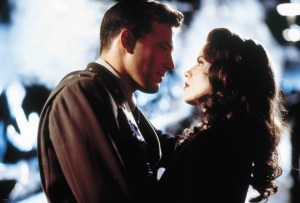 I’m also confused about the movie’s political apprehension. It bends over backwards to portray the Japanese generals as honorable and morally conflicted, which is better than mustache-twirling stereotypes, but this is still the aggressor country that had already invaded and occupied China. All of the good intentions of being more even-handed with the Japanese, perhaps to fight against anti-Asian demagoguery or even solely from money reasons, get supremely muddled when Bay decides to make the Pearl Harbor bombing even worse than it was in reality. The Japanese took great offense that in the movie their planes are seen attacking hospitals and civilian targets, something that never happened according to history and witnesses on both sides. Bay reportedly included the extra attacks because he wanted the attack to seem more “barbaric.” What is the point of better trying to represent a group of people and make up extra barbarism?
Looking back at my original review from 2001, I believe this was a watershed review for me. I wrote over 1200 words and it’s more in keeping with my current reviews than my early reviews. I find the analysis to be more critical than my early reviews where I was more likely to settle for puns and scant broadsides. This review has a few of those, but I also found myself nodding along with much of it even twenty years later. There are some marvelous turns of phrases, like “A Longest Day for the Pepsi generation” and Harnett’s voice sounding like a stubborn door refusing to stay open. There’s a punchiness to the writing that I recognize and admire, and it’s like I can see myself developing and finding my critical voice at this early juncture, which was almost two years into my beginnings as a fledgling film critic in Ohio. This one feels like a step above. I couldn’t end this analysis better than I did back in 2001, so I’ll quote my then 19-year-old self to close out both reviews: “To paraphrase that know-it-all Shakespeare: ‘Pearl Harbor is a tale told by an idiot. It is full of sound and fury, signifying nothing.’”
Re-View Grade: C
Share this:

An American Carol (2008)
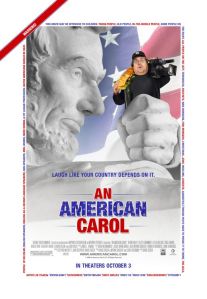 Being a conservative in Hollywood is like being a gay Republican – tough business. Director David Zucker has a notable history with comedy, having helmed Airplane!, the Naked Gun series, and the back half of the Scary Movies. He says that he converted to conservatism in the wake of 9/11, and Zucker actually wrote and directed a short for the 2004 Republican National Convention that was deemed too edgy for the Grand Old Party. Conservatives have also garnered the reputation for not having the best sense of humor, and Zucker’s An American Carol will do little to change this belief.
Michael Malone (Kevin Farley) is an egotistical, fat, liberal documentary filmmaker whose latest work is titled, “Die You American Pigs.” Catchy, ain’t it? Malone wants to abolish the Fourth of July (would we just skip to July 5th?) and plans to protest a Trace Adkins concert for the troops. A batch of inept Islamic terrorists want to bomb the concert and decide into tricking Malone into assisting their goal. He will score them media passes to get onstage at the concert venue. Following the Charles Dickens’ playbook, Malone is first visited by the spirit of his idol, John F. Kennedy (Chriss Anglin), who horrifies Malone by saying war is sometimes necessary (really, conservatives are trying to reclaim Kennedy?). Three spirits will visit him although he spends almost all of his time with the ghost of General Patton (Kelsey Grammer). The ghostly general takes Malone on a trip to see what the alternative versions of U.S. history had the country avoided war at all costs. Malone stays defiant until he meets up with the Angel of Death (also Trace Adkins, because?) and sees the error of his “America-hating” ways. I don’t want to spoil things too much but the movie ends with an expanded Trace Adkins concert saluting the brave men and women in the armed forces.
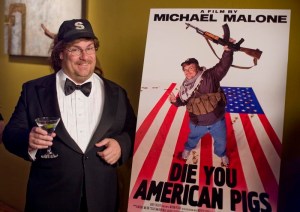 Some from the opposing political viewpoints will find An American Carol to be infuriating. To those angry few I say get over it, because this movie is simply too lazy to get angry over. It barely reaches 77 minutes before the credits roll. Zucker and company tend to stretch their canvas too broadly, to the point that they aren’t exaggerating to lampoon but setting up cheap jokes. Michael Malone is fat. Michael Malone smells. Michael Malone falls down. Liberals hate America and want the terrorists to win. It’s so easy to write this material because there’s nothing topical or nuanced or even socially relevant. The movie beats reliable figures of conservative agita. When the movie tries to slam college professors as being dippy hippies brainwashing teens about the insurmountable ills of America, it just gets dumb (those people spend 10-15 years studying in a specialized academic field). There is no teeth to any of this satire because it’s all just recycled caricatures with the wit ground down. There isn’t anything of true satirical substance here. I don’t even get some of the satire, like the ACLU is depicted as a cluster of zombies with briefcases. What does that mean? Needless to say, the skewering of Arabs is mostly cartoonish and offensive. The flick constantly makes fun of the documentary art form, saying they are inferior to “real movies.” Because Michael Moore has an Oscar does that mean that the history of documentary film has to be slandered as being nothing more than transparent propaganda (at an awards ceremony, the top documentary is honored with the “Leni Riefenstahl Award”)? Marginalizing an entire art form seems rash, especially considering that Moore’s Fahrenheit 9/11 grossed over $220 million worldwide. As of this writing, An American Carol, a “real movie,” has grossed seven million and counting.
The film deals in distasteful absolutes. Every idea is presented crudely in black and white. By the film’s standards, being anti-war and anti-troops are inseparably linked. In my mind, and this might be crazy, but it seems to me that the most pro-troops one could be would be hoping for them all to return home alive and healthy. An American Carol attempts to justify the ongoing War in Iraq, though it conveniently only ever flashes to combat in Afghanistan, the war that a majority of the public agrees with. It makes a case that war is sometimes necessary, though it has to flash back to Hitler and World War II to find a morally justified military engagement that everyone can feel god about. I agree that war is sometimes a reasonable option, but the movie paints all pacifists as wimpy appeasers. George Washington (Jon Voight) even steps in at one point to argue for the necessity of war in reference to the War on Terror. Did the filmmakers forget that Washington spent great expense to keep the nation out of foreign wars in his two terms? Isn’t it also condescending and objectionable to have Washington say freedom of speech is misused when it goes against the government? I think the Founding Fathers would realize the importance of freedom of speech, including offensive speech. Isn’t it also somewhat ironic to use slave-owners as mouthpieces for the merits of freedom? An American Carol says that disagreement is the same as dissent; so refusing to support one’s government blindly during a time of war is traitorous. Criticism is not anti-American. It’s insulting to all rationale human beings. Zucker and crew make their case look just as myopic and dismissive as those they choose to ridicule.
The acting neither hinders nor helps the material. Farley is a game comedian but he cannot do much with such lightweight material. There are several celebrity cameos including James Woods, Dennis Hopper, Bill O’Reilly, Mary Hart, David Alan Grier, Gary Coleman, Leslie Nielsen, Zachary Levi, Kevin Sorbo, and Paris Hilton. When Zucker is calling favors into the likes of Paris Hilton, you know things cannot be solid.
 Here’s the problem. It’s harder to satirize from a conservative point of view. Conservatism believes that the status quo is best or that things were better back in the day. Liberalism believes that society can always improve, so a liberal point of view would tweak the present situation in order to call attention to remaining improvements. A conservative point of view would make fun of that possible change. This is the same reason why documentaries, like it or not, typically have a more progressive bent, and it’s because the filmmakers are presenting a case for change or outrage. Why would anyone devote himself or herself for years to create a film that says the world is peachy? Now I’m not saying that conservatism and humor are conflicting concepts, but it just makes it harder to be smarter. Making fun of Good Night, and Good Luck is not trying hard enough. How dare George Clooney make a film about the media cowering and failing to question our elected leaders and have it be applicable to today’s world.
The Zucker gag-a-minute spoof style doesn’t necessarily translate well to political satire. I wasn’t expecting much with An American Carol. When they exploit 9/11, taking Malone to the wreckage of the World Trade Center to make its case, well the movie stops being a satire and just implodes. It hits its tired targets with a sledgehammer. The satire is extremely lazy, the slapstick is dumb, and the movie specializes in being obnoxious, coloring the world in two extremes. This isn’t satire. This is just cheap and petty. Seriously, making fun of Michael Moore is like four years too late. Moore is a figure worthy of satire but the best that the movie can come up with is he’s fat and hates America? That he’s angry because he couldn’t get girls when he was younger and all those studly military recruits did? That’s not satire, that’s just excessive name-calling. An American Carol presents a new low for Zucker and I think even he knows it. On the DVD commentary track, Zucker, co-writer Lewis Friedman (BASEketball), and actor Kevin Farley basically lambaste the final product, often criticizing their own movie. The derisive commentary track is more enjoyable than the film itself.
Nate’s Grade: C-
Share this:

National Treasure: Book of Secrets (2007)
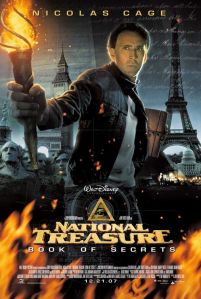 National Treasure: Book of Secrets is like a big dumb puppy that just wants love. It does a trick and thinks it deserves some form of recognition, and me with my cold heart just wants to shrug and move on with my day. How can I be so unmoved when there’s even a cartoon before the movie? For any prospective moviegoers, if you enjoyed the 2004 National Treasure, where I remind all that the U.S. Declaration of Independence had a secret treasure map on its other side, then chances are good you’ll enjoy Book of Secrets. That’s because they’re pretty much the same movie.
Ben Gates (Nicolas Cage) and his father (Jon Voight) are basking in their newfound respect from proving that their crackpot treasure schemes were in fact real. Their respectability is turned upside down, however, when Mitch Wilkinson (Ed Harris, with a dollop of a Southern drawl) has evidence that great-great-grandaddy Gates was responsible for planning President Lincoln’s assassination. He has a piece of John Wilkes Booth’s diary and a list of conspirators is jotted down, with great-great granddaddy Gates listed right there. The diary is authenticated and the Gates are devastated but ultimately unconvinced. They know their Civil War era ancestor would never betray his country and was unknowingly decoding a secret that could lead the Confederacy to an ancient golden temple, something that could help turn the tide of the war. This ancestor ripped pages out of the diary and threw them in a fire to protect the welfare of his country and was then shot by a secret Confederate soldier. In order to clear his ancestor’s good name, Ben Gates will have to find this hidden treasure, which is precisely what Mitch has wanted from the start.
 Gates re-teams with his pals from their first successful adventure, computer whiz Riley (Justin Bartha) and Abigail (Diane Kruger), who has thrown Gates out of their home due to his single-minded focus. Dating a treasure hunter is a certain path to a rocky relationship, ladies. Riley, who even wrote a book about his treasure exploits but still can’t get recognized, is game but Abigail has to be tricked into help. The group finally figures out that the only way to verify the temple’s hidden location is by getting their eyes on the mysterious President’s Book of Secrets, which only presidents can read. This means that Ben has no choice but to get the president (Bruce Greenwood) alone and beg to see a book not meant for outside eyes.
Book of Secrets is a little less dopey than the first preposterous National Treasure adventure, but that doesn’t mean it isn’t chock full of stupidity. According to these movies, apparently damn near everything in this country is built over an Indian burial ground or a giant cavern of treasure. I advise all readers to try digging in their backyards because it appears that the odds are in their favor (also: beware of your real estate company moving the tombstones but not the bodies). The clues are a little less mind-boggling, so instead of a single brick that’s been undisturbed for 200 years we get matching furniture for the Queen of England and the President of the United States. One doozey of stupidity is that one clue requires people to douse a large rock formation with water in hopes that they hit exactly the right spot and have an invisible eagle make its appearance. The plot is still structured on the clue-leads-to-other-clue template, which can be exhausting after a while because there’s never any indication of progress until the end arrives.
The subplot about kidnapping the president is ridiculous in the fact that, while already being dumb, it adds needless conflict. When Gates “”kidnaps” Mr. President he does so through a secret tunnel under George Washington’s Mt. Vernon estate. The passage closes behind them and cuts off the frantic Secret Servicemen. It is here where Gates makes his plea for the titular Book of Secrets, which the president confirms but cannot confirm publicly (well, it is a secret book of secrets). Instead of sensibly saying to his men, “Sorry guys, you know how old these places are, we got trapped, but Mr. Gates here helped get me out,” the movie tries to claim that the next course of action is that Gates will be on the run for kidnapping the leader of the free world. Huh? What makes this sequence stand out is how easily explainable it could all pass, and yet Book of Secrets figures the movie is better served by a contrived complication to add more outside pressure on Gates and his treasure hunting crew.
Of course all of the silliness and off-the-wall shenanigans would be acceptable if the film delivered some exciting action sequences that pinned you to your chair, but just like the first National Treasure, this movie is pretty much devoid of a well-thought out action sequence. Returning director Jon Turtletaub has no real visual flair and lets the material simply lay there on screen without much effort to jazz it up. Many action sequences are brief and never really flirt with complications. Usually, the script will propose a simple sequence of events like, say, “Good Guys on Run from Bad Guys” and then Turtletaub will show us exactly that, no better no worse. There’s nary a scene that actually utilizes its globetrotting destination to its advantage; most of the action is not geographic based, which means that it could happen anywhere because it doesn’t take advantage of the specifics of exotic locales. That is inexcusable to me, a big fan of good action sequences. A lengthy trip to an underground golden temple tries the patience as it rambles on and unabashedly apes the Indiana Jones series. Book of Secrets has a halfway decent car chase through the streets of London and that ends up being the highlight of the film. The trouble is that there’s more than an hour left at that point.
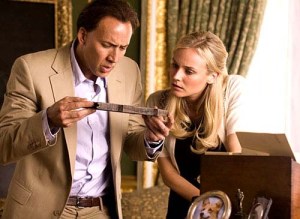 Book of Secrets is a slightly better film than the original. It jumps around in time through the lineage of the Gates clan and gives a better sense of the personal stakes for Ben and his father. Having their long-dead heroic family members linked to a dastardly assassination is good motivation for action, even if that action is ultimately finding an underground temple of gold (how A+B = C I will never know). The production design is skillful and the various European locations bring some sense of grander excitement that, sadly, will never be fully capitalized upon. The characters are still pretty shallow and one-note, but it seems like it’s less annoying this time because there’s less setup on who these characters are, which is, in short, shallow and one-note.
Cage is on autopilot and plays up his goofy mannerisms and William Shatner-esque line readings. This is a paycheck job for Cage and nothing more. Just because the first flick made tons of money is a lark to him and not an indication that he should try something different. He’s giving the people what they seemingly want, which is a wacky Nicolas Cage hamming it up with his patented version of kooky acting. Kruger is the exact copy of her character from the previous National Treasure, meaning she’s the bickering blonde counterweight to the conspiracy theorists on the journey. I suppose she plays a damsel in distress adequately. Voight gets more screen time this go-around thanks to a plump subplot involving the team seeking out the assistance of his ex-wife, played by Oscar-winning actress Helen Mirren. Yes, that Helen Mirren. Harris is given a do-nothing part as the villain and then the movie can’t even follow through on that. Everyone seems to have fun with all the nuttiness and goofy stunts, so I can’t fault them too much for faking it in a big Hollywood blockbuster.
I understand the appeal of these movies, which have found a sizeable audience willing to lap up a Cliff Notes of History along with their popcorn thrills. I imagine the fans of the original will show up in droves and make sure that National Treasure 3: The Mystery of Franklin’s Syphilis is fast-tracked for a future holiday release. I don’t mean to be a killjoy (my mother really enjoys these films) but I cannot get behind the National Treasure movement when the movies are riddled with rampant stupidity, contrived situations, convoluted conspiracies, one-note characters, and inept action sequences that never amount to much of anything beyond teetering homage to better adventure films. Book of Secrets is essentially the exact same movie reheated to take the chill off. Replace Sean Bean for Ed Harris as rival treasure hunter, add another female character, and there you have it, a mostly undisturbed formula that proved profitable in 2004.
Nate’s Grade: C
Share this:

Transformers (2007)
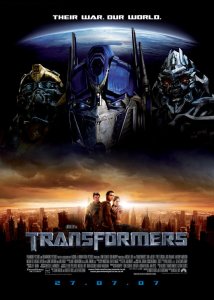 Once again Hollywood is quick to prove that if any television show emits some level of nostalgia, or merchandising potential, it is only a matter of time before it finds itself reconfigured as a big screen blockbuster movie. In all honesty, I was never a huge Transformers fan; I was more into Ghostbusters and then transitioned into Teenage Mutant Ninja Turtles. It may be sacrilegious, but I thought the knockoff cartoon/action figures, The Go Bots, were just as good. Steven Spielberg and critically derided director Michael Bay (Bad Boys II, Armageddon) have teamed up to bring the world a lengthy and noisy Transformers feature film. I can’t wait for the Go Bots to get their own equally pricey close-up.
Sam Witwicky (Shia LaBeouf) is your typical teenager obsessed with getting his own car. He can only afford an old Camaro at a used car lot, and his dreams of impressing the hot girl in school (Megan Fox). But Sam’s car isn’t just any old busted jalopy, no sir, it is really a robot in disguise from another planet. Sam’s car, codenamed Bumblebee, is apart of a robotic race known as the Autobots, led by their leader Optimus Prime (Peter Cullen returning to voice with gravitas). They can transform into vehicles that they scan with their optical sights. The Autobots are trying to save the planet from their evil counterparts, the Decepticons, who have already infiltrated our world in search of their fallen leader, Megatron. It seems Sam holds the key to the survival of Earth. His great grandfather was an Arctic explorer and happened upon the frozen sight of Megatron. He left behind an artifact that reveals the location of the chilled robot as well as a source of unparalleled power known as the Allspark. Needless to say, the military and the Secretary of Defense (John Voight) are a little aghast at how their weapons stack up to big bad robots.
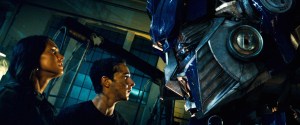 Michael Bay was born to direct a live-action, ultra expensive Transformers movie. The testosterone is through the roof and the film worships everything shiny, fast, and automotive. This is the kind of movie that fits exactly into the artistic parameters of Bay. The film is one gorgeous product placement orgy that is all about the eye candy; the cars are hot and desirable, the car chases are cool, the explosions are a lovely shade of orange, and Megan Fox is quite hot and desirable too (engaged to a 90210 actor? Why oh why, Megan?). The special effects are downright flawless and the action sequences are enormous. The scale of destruction is, like most aspects of Transformers, cranked to such a high degree that summer satisfaction can only ensue. Everything is bigger in Michael Bay world. Transformers is Bay’s best movie so far and it delivers the goods when it comes to hyper-kinetic action and plenty of thrills.
While the movie runs on silliness it also keeps its wits about it and delivers solid and exciting action with a breathless pace. What really surprised me about Transformers is how much humor they squeezed into 143 minutes of loud and hyper bombast. Screenwriters Alex Kurtzman and Roberto Orci (The Island, Mission: Impossible 3) have a great economy to their storytelling. They also have created a wacky teen comedy that just so happens to also be inhabited by giant robots. Much of the first hour is spent with Sam and his attempts to look cool with his new ride and impress the pretty girl. Sam is hocking his family wares on eBay and the Decepticons are on the hunt for… LadiesMan217. There’s a lengthy sequence where five Autobots have to duck and hide outside Sam’s house so he doesn’t get in trouble with his parents. Ma and Pa Witwicky look out the windows, and the robots dodge getting caught, and it’s like a classic bumbling slapstick comedy. A good action movie can become a great one when aided by well-timed humor, and Transformers has so many quips, sight gags, and goofy sidesteps (“Mountain Dew machine must destroy all humans!”) that is could be considered the most expensive comedy of all time (take a seat, Evan Almighty).
 There is, however, a price to be paid for all this comedy and that is that no one acts with any true sense of awe. They are witness to large walking and talking monsters of metal that are out to enslave the planet – there has got to be some wonder there, but the film doesn’t treat anything seriously. Its jokey nature keeps the film from being anything more than disposable, throwaway entertainment. I mean, I find it difficult to take any movie seriously that features a robot “relieve” itself on John Turturro.
Shia LaBeouf (Disturbia) carries the film on his sturdy shoulders. The shape of Transformers has more to do with his horny, smart allecky character than the robots that fight. Normally the only thing required in an effects-heavy action flick are some fast legs and a healthy set of lungs, but LeBeouf has charisma to spare. He has a young Tom Hanks everyman feel to him. The greatest compliment I can give him is that he is the most memorable figure in a movie with big brawling robots. Fox is pretty easy on the eyes. Voight is adept at playing government figures in times of national peril. If you need a guy to stare at something massive, or formative, or formatively massive, and utter, “My God,” then Voight is your man. Kevin Dunn and Julie White provide nice comic additions as Sam’s mother and father.
Transformers may be a perfect slice of summer thrills, but unlike its titular gigantic robots, it’s little more than meets the eye. The movie loses steam whenever it deters from its main story involving Sam. I understand that the filmmakers were trying to widen their story scope, but nothing is gained by the inclusion of such useless characters like the overweight super computer hacker who lives at home with his mom. There’s an elite team of national security analysts and they all happen to be scruffy multi-cultural hippies. We have a blond Aussie (with a nose ring, oh so rebellious) who discovers the Decepticon signal and then, well, she sits in a room for a long while and then mostly sits on her hands during the climax. The opening follows a band of soldiers in the Middle East (which the film reminds us is where Qatar is, because apparently it does not feel that your core Transformers fan has a basic grip on geography) who also must reach the bigwigs in Washington with important info on these killer robots. These dangling storylines could be lost and little momentum would be lost. None of these extra characters are given a lot of attention. Most of them will vanish for long stretches so that when they do reappear you’re reminded how much you did not miss their absence. You’re going to need stock roles, like military men and tech geeks, but Transformers has cast its lot with the simple story of a boy’s first car and his unyielding teenage hormones. Transformers could use a good pruning for balance.
 The robust action sequences are somewhat hampered by the typical Michael Bay ADD edits, but what really hurts the action sequences are the robots themselves. The original Transformers were designed smoothly, because in all reality they were animated toys and needed to function for kids. These 21st century Transformers have parts all over the place. There are gears and wheels and who knows what sticking out everywhere. They look far too cluttered, like a little kid’s art project where he keeps slathering on more junk. As a result of this robo design, when it comes to action you may not have a clue what’s actually happening. When the big robots wrestle you’ll be left trying to piece together in your mind which part is the robot mouth, the robot head, the robot fists/claws/drill/whatever. I suppose in a way this kind of demanding user activity is similar to watching scrambled porn; both involve trying to dissect the image into something workable and, thusly, satisfying to the senses. That’s right, I compared Transformers to scrambled porn, which is also quite more than meets the eye.
Obviously, with a film about powerful robots from space, there is going to be a stopgap of logic. If you can accept interstellar robots that arrived from a robotic planet, oh and by the way, they learned English from the Internet (it’s a wonder they speak in full sentences), then you should be able to shrug off any other shortfalls in logic. Transformers was never too deep a subject to being with; every episode of the cartoon revolved around the Autobots and the Decepticons battling over new energon cubes, and that was all the plot needed for a show about robots that fight.
There could be 20 minutes sliced out. Lots of ancillary characters are just dropped. There may be too much humor. The climax is way too long. The dialogue is corny. And yet with all its flaws considered, Transformers is an exhilarating entry into the world of summer smashups and blown eardrums. Michael Bay may never stretch his creative wings with a Victorian costume drama, but the man does what he does well. Transformers is a perfect match for Bay’s noisy and boisterous sense of action and his love of things fast and expensive. There isn’t much below the surface when it comes to Transformers, but it’s such a fun and exciting popcorn movie that it’s hard to argue with the results.
Nate’s Grade: B
Share this:

National Treasure (2004)
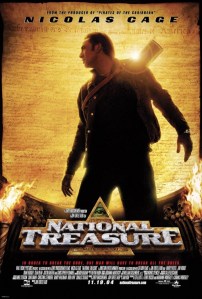 The premise for National Treasure, the newest Jerry Bruckheimer action film, is something of a mess. According to the film, during the Crusades a magnificent treasure was found. The Knights Templar swore to protect it, and the Masonic order carried the vow through the ages. The founding fathers of the Unites States were among this Masonic order, and they went about hiding the fabulous riches and set up a series of elaborate clues to discover its whereabouts. These clues include symbols on the back of our currency and, get this, a secret invisible message on… the back of the Declaration of Independence. Yes, the Declaration of Independence is a treasure map. The silly premise for National Treasure equates the Declaration of Independence with a Denny’s place mat. Can something this outlandish make for a good movie? Well, it depends on your working definition of “good.”
Benjamin Franklin Gates (Nicolas Cage) is somewhat of a laughing stock amongst his peers. His family name is cursed with the crazy belief in some long lost treasure hidden by the founding fathers. His father (Jon Voight) rues the family name being attached to such foolish theories. Of course such foolish theories in Hollywood are always right, no matter how stupid (did I mention the Declaration of Independence is a treasure map?). Ben and his treasure hunting partner Ian Howe (Sean Bean) find a definitive clue, but then Ian double-crosses on Ben and, gasp, wants the treasure for himself. This turns into a race to see who can steal the Declaration of Independence, though Ben wishes to steal it to protect the document and the treasure. Along the way, Ben teams up with a techno-nerd (Justin Bartha) and a hot government official (Diane Kruger) to crisscross historical monuments and sites to unravel the clues before Ian can.
 National Treasure is dumb. Little to absolutely nothing makes sense in this film. This is an obvious, embarrassing attempt to ride the popular coattails of The Da Vinci Code and Americanize the quest. Except that National Treasure really comes across as some half-baked movie version of a kid’s educational game show.
There are so many holes, so where do I begin? First off, why would the founding fathers make it so pointlessly, hopelessly elaborate to find this stockpile of treasure? I’m talking crazy complicated, like having one clue involve finding a ship buried in the Arctic Circle. Yes, the Arctic Circle. Supposedly, the founding fathers decided to hide the treasure because they didn’t want the British to get their grubby, nice-fitting gloves all over it. Something tells me that the founding fathers had more important things going on, like, oh I don’t know, a war! It’s purely absurd to have Washington, Franklin, Jefferson, Adams, and all the rest more interested in hiding some treasure than breaking from England and building an independent nation based on their ideals.
There are some other head-smackers, like the fact that an assembly of clues has been left entirely undisturbed in 200 plus years, like a single special brick. And, for that matter, how does Cage cut through mortar so easily with just a pocket knife? If there’s a gigantic catacomb under D.C., then what’s holding up the city? How come 200 year old oil still burns as well? Wouldn’t that have dried out by now?
 Cage reverts back to his manic show-offy character behavior. In Bruckheimer movies, Cage seems to have theoretic spurts here and there, like he keeps sticking some extremity in an off-screen light socket. He’s generally likeable but his character comes across more like some social studies teacher’s daydream. Bartha and Kruger add less-than-snappy one-liners, but their presence never becomes grating. Bean seems to be playing the stock bad guy role he always is, whether it be GoldenEye, Don’t Say a Word, or Patriot Games.
Sure, even the Indiana Jones films had plot holes (how does closing your eyes guard you from the wrath of God?) but their thrilling adventures overcame any quibbles. National Treasure, on the other hand, is an adventure lacking anything thrilling. This is the first action film to put me to sleep. I can forgive an action/adventure flick being dumb but being boring is a capital offense.
The action sequences in National Treasure are never fully thought out; they usually involve Cage and his cronies outrunning Sean Bean’s group of thugs (repeat). The film’s best moment is the actual theft of the Declaration of Independence. This is the lone sequence in the film that feels like thought was put into drawing out suspense, thinking of natural and interesting complications, and, surprisingly, having the sequence not be overcome by idiocy. After this scene, National Treasure descends into ill-conceived chase scenes strung between crazy elaborate clue hunting. By the time the film reaches its anticlimactic ending, you may have rustled through your change, eyeing the backs of quarters and dimes to ensure there’s no hidden message about a sequel.
National Treasure is a ridiculously stupid, inexcusably boring, ineptly plotted historical adventure for people who get their history solely from movies. Bruckheimer and Cage have an up-and-down partnership, but National Treasure starts with the worst film premise of the year and can?t go much further. Fans of clue-hunting adventure tales may excuse the gaping plot holes, and National Treasure has found a sizeable audience willing to go along for the ride, but the movie doesn’t contain much thrills, entertainment, or anything historically resonant. National Treasure should have stayed buried.
Nate’s Grade: C
Share this:

Tomb Raider (2001)
 Lara Croft is an adventurer with a taste for action along the lines of the Raiders of the Lost Ark kind. It seems that time is drawing close to a planetary alignment that occurs once every 5,000 years as they always do in movies. This alignment supposedly unleashes an ancient object that has the ability to alter time itself. Croft is drawn in by a secret society that wants a mysterious artifact she discovers in her property that can lead to the locations for the time altering device. Now Croft must step out and try and beat the big bad guy (Ian Glenn) to the chase and get to the device before he and his society get their grubby hands all over it.
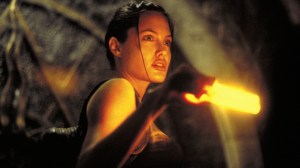 This is a movie that is light on characters yet at the same time has so many extraneous ones. The bad men are being led by fellow tomb raider Alex Cross (Daniel Craig), who also happens to be a former flame of Croft’s. Lara is saddled with a geeky computer whiz who just happens to be British, because he keeps spouting phrases like “blimey” and “bugger” all the freakin’ time. Croft also employs a butler, because, someone has to take care of that huge house. If this wasn’t enough the big bad employs an assortment of typical evil henchmen that are distinguishable by tattoos alone. Add on top of this heap the flashbacks Croft has of her long missing father Lord Croft (played by Jolie’s real father, Jon Voight). All of these dueling personalities clog the action and the pacing.
Front and center, Angelina Jolie is the living embodiment of Lara Croft. She fills out the attitude and the look to a perfected T. Jolie gives Croft the muscle but the screenwriters fail her in giving her the flesh and blood. Tomb Raider falls into the “rule of five”: if there are five or more people credited with the script (including in this instance the director himself) then there was no script at all.
The action of Tomb Raider is loud and explosive but rather lifeless and dull. West has managed to create bombastically mundane action sequences. Never once did anything from the screen arouse my interest, except for the female lead of course. The story has its characters travel to exotic locales and impressive sets of ancient caves and temples, but it’s all window dressing. The pretty scenery and locations only mask how ineffective and boring the action is. And for an action picture, when the audience begins to notice how pretty the scenery is compared with the action – you’re not doing your job.
 Simon West is not exactly a director to be trusted with any sort of project. West brought audiences Con Air and The General’s Daughter, a film that tried to decry rape but then took sadistic pleasure in recreating it again and again. So what better man to helm the project of the buxom video game heroine than a man who has brought us cartoonish violence and horrific rape? The camera framing of Tomb Raider takes a few notes from the Jennifer Love Hewitt experiment that was I Still Know What You Did Last Summer. Jolie’s breasts are always in frame, and at certain times it seems like the camera is lowering just to get them in there for the sake of exposure.
Despite the attempt this video game turned into a movie feels exactly like a video game turned into a movie. It’s complete with some laughably atrocious dialogue (“You know what today is?” “The 15th.” “And that is never a good day.”), and despite the running time of an hour and a half, it feels like an eternity longer. Tomb Raider never gets off the ground even with the added push of some pretty good special effects. Jolie may have an action vehicle at her helm and that’s fine with me. Keep her. Just make sure to get rid of everyone else.
Nate’s Grade: D
Share this:

Pearl Harbor (2001)
It turns out we went to war in 1941 not because of Japanese aggression, Hitler’s dominance in Europe, or the protection of freedom and democracy. Sorry kids. The real reason we went to war was to complicate and then clear up Kate Beckinsale’s love life. At least that’s what director Michael Bay and screenwriter Randall Wallace would tell you with their indulgent epic Pearl Harbor.
We open in Tennessee in the 20s with two boys who dream of being pilots. Rafe (Ben Affleck) and Danny (Josh Hartnett) grow into strapping young lads who flash their hot dog flyin’ skills at basic training, which brings them chagrin from superiors but admiration from peers. Rafe falls in love with a young nurse named Evelyn (Kate Beckinsale), who goes against ARMY rule and passes Rafe in his eye exam portion when he has a slight case of dyslexia. But he’s just so cuuuute. The romance builds but Rafe feels like he’s grounded when all he wants to do is fly, and volunteers to fight in the RAF over in Europe. He promises he’ll be back to see his lovely Evelyn. Of course he gets into an accident and everyone assumes that poor dyslexic Rafe is fertilizing a lawn somewhere with his remains. Hence Danny slowly but surely develops something for Evelyn in their periods of mourning, and the two consummate their puppy love with a tango in parachute sheets.
All seems well until Rafe returns back from the dead throwing a wrench into Evelyn’s second date parachute plans. Thus the Hollywood favorite of the love triangle endures until the end when the two fly boys enlist in the Doolittle attack against Japan, months after the ferocious attack on Pearl Harbor. The real purpose of the Doolittle attack was not militarily, but merely for morale. The real purpose it serves in the movie is to shave off an end on our love triangle.
Pearl Harbor allows us to follow a group of youthful and innocent starry-eyed kids from training to combat. Each seems pretty much exactly the same to each other. It’s near impossible to distinguish which character is which. It’s like the screenwriter didn’t even have the gall to resort to cliche supporting character roles, and he just made one character and duplicated it. The only one who was noticeable for me was the character of Red (Ewen Bremner, julien donkey boy himself), but that was simply because the man had a speech impediment. We also have our handful of young nurses alongside Beckinsale, and I had an easier time distinguishing between them; everyone had different hair colors.
]If you look in the pic, or the credits, you’ll see that two of the nurses would turn out to be Jennifer Garner (Alias) and Sara Rue (Less than Perfect), both stars of ABC shows, and ABC is owned by, yep, Disney. Coincidence? Probably. When they ran this on TV they actually advertised Jennifer Garner above Kate Beckinsale. That reminded me of when Seven ran on TV shortly after Kevin Spacey had won his well-deserved 1999 Best Actor Oscar for American Beauty, and they gave him second-billing in the advertisement over Morgan Freeman, the movie’s true main character.
Affleck has a hayseed Southern twang, but seems to mysteriously disappear for long stretches. Hartnett seems to talk with a deep creak, like a door desperately trying to be pushed open. Beckinsale manages to do okay with her material, but more magnificently manages to never smear a drop of that lipstick of hers during the entire war. We could learn a lot from her smear-defying efforts. Gooding Jr. is pretty much given nothing to work with. I’m just eternally grateful he didn’t go into a usual Cuba frenzy when he shot down a Zero.
Michael Bay has brought us the ADD screenings that are the past, loud hits of The Rock and Armageddon. Teamed up with his overactive man-child producer Jerry Bruckheimer once more, Pearl Harbor is less Bay restrained to work on narrative film as it is Bay free-wheeling. His camera is loose and zig-zagging once more to a thousand edits and explosions. Bay is a child at heart that just loves to see things explode. When he should show patience and restraint he decides to just go for the gusto and make everything as pretty or explosive as possible. This is not a mature filmmaker.
Despite the sledge hammer of bad reviews, Pearl Harbor is not as bad as it has been made out to be. The love story is inept and the acting is sleep-inducing, unless when it’s just funny. It doesn’t start off too badly, but twenty minutes in the movie begins sinking. The centerpiece of the film is the actual Pearl Harbor bombing that clocks in after ninety minutes of the movie. The forty-minute attack sequence is something to behold. The pacing is good and the action is exciting with some fantastic special effects. The movie is bloated with a running time a small bit over three hours total. Maybe, if they left the first twenty minutes in, then gave us the forty minute attack sequence, followed by a subsequent five minute ending to clear up our love triangle’s loose ends… why we’d have an 80 minute blockbuster!
Pearl Harbor doesn’t demonize the Japanese, but it feels rather false with their open-minded attempts to show both sides as fair minded. It gets to the point where they keep pushing the Japanese further into less of a bad light that it feels incredibly manipulative and just insulting. It seems like the producers really didn’t want to offend any potential Pacific ticket buyers so the picture bends backwards to not be insulting. The only people who could be offended by Pearl Harbor are those who enjoy good stories. Oh yeah, and war veterans too.
The cast of Pearl Harbor almost reads like another Hollywood 40s war movie where all the big stars had small roles throughout, kind of like The Longest Day for the Pepsi generation. Alec Baldwin plays General Doolittle and is given the worst lines in the film to say. Tom Sizemore shows up as a sergeant ready to train the men entering Pearl Harbor. He has five minutes of screen time but does manage to kill people in that short window. Dan Akroyd is in this for some reason or other, likely because Blues Brothers 3000 has yet to be green lighted. John Voight is easily the most entertaining actor to watch in the entire film. He gives a very authentic portrayal of President Roosevelt. I still find trouble believing it was Voight under the makeup.
The blueprint for Pearl Harbor is so transparent. They took the Titanic formula of setting a fictional romance against a disaster, with the first half establishing characters and our love story, and then relegating the second half to dealing with the aftermath of the disaster. It worked in Titanic (yes, I liked the film for the most part), but it doesn’t work here. Pearl Harbor is a passable film, but the mediocre acting, inept romance, square writing, and slack pacing stop it from being anything more. Fans of war epics might find more to enjoy, especially if they don’t regularly have quibbles over things like “characters” and “plot.” To paraphrase that know-it-all Shakespeare: “Pearl Harbor is a tale told by an idiot. It is full of sound and fury, signifying nothing.
Nate’s Grade: C
Reviewed 20 years later as part of the “Reviews Re-View: 2001” article.


 nathanzoebl
You must be logged in to post a comment.