Blog Archives
Tag (2018)
 Tag is based on the true story of a group of grown men who continue to play a highly competitive game of tag for 30 years. There are even real clips of the real men before the end credits, raising the hope for a potential documentary on the subject. The Hollywood version is a sprightly ensemble comedy that’s not afraid to go silly or dark in its pursuit of laughs. Given the nature of its premise, there is a lot of slapstick to behold, but it was cleverly staged, routinely netting some big laughs from me. This is a definitely adults-only R-rated venture and the movie proudly wears this identity on its sleeve, finding strange and exciting comic detours that can walk a fine tonal line, like an ongoing bit about miscarriages that had me wincing as much as I was laughing. The main characters are all relatively familiar types; Ed Helms is the high-strung dweeb, Jake Johnson is a sarcastic stoner, Jon Hamm is a smarmy exec, Hannibal Buress is as laconic as his standup persona. There are a string of supporting characters (often female) that add very little, including a rekindled love triangle with Rashida Jones, a journalist who tags along on the game and adds nothing, and Isla Fisher as the grating, always-yelling, intense wife to Helms. Surprisingly, the funniest member of the movie is Jeremy Renner, an actor who heretofore had never shown much comic ability in movies. He’s a formidable opponent, and every time he went into his Sherlock Holmes-styled voice over detailing the steps and mistakes of his friends, I loved it. Also, strangely, Renner’s arms are actually CGI arms since he broke them days into filming. You would never be able to tell. I appreciated that Tag is directed as a comedy even during its action set pieces. It looks at action through the lens of comedy and taps into the absurdity. Overall, Tag is a fun, rambunctious comedy with some dark impulses yet it still finds room for sentiment that doesn’t feel entirely out of place. 2018 is shaping up to be the year of the hearty, enjoyable R-rated comedy with Tag joining the ranks of Blockers and Game Night. Catch it while you can if the prospect of men behaving like overgrown children appeals.
Nate’s Grade: B
Share this:

Nocturnal Animals (2016)
 Fashion designer Tom Ford made a big splash with his debut film, 2009’s A Single Man. It was a gentle and introspective character study of a middle-aged gay professor determined to end his own life. It was lush, full of feeling, and anchored by a deeply humane performance from Colin Firth. In short, it is everything that his follow-up Nocturnal Animals is not. This is a movie overflowing with vacant artifice that is mistaken for profundity.
Susan (Amy Adams) is an art gallery owner and living a posh life with her second husband, Hutton Morrow (Armie Hammer). She gets an unexpected present in the mail from her ex-husband Edward Sheffield (Jake Gyllenhaal). He’s sent her his newest manuscript, a departure from his usual works. It’s dedicated to Susan. With Hutton away on business, and philandering with a mistress, she dives into the story. It tells the story of Tony Hastings (also Gyllenhaal) and his wife (Isla Fisher) and teen daughter (Ellie Bamber) traveling through west Texas. They run afoul of some contemptuous locals lead by the sadistic Ray (Aaron Taylor-Johnson), who kidnaps Tony’s wife and daughter. Left for dead, Tony teams up with a terminally ill police officer, Bobby Andes (Michael Shannon), to hunt down Ray and make him suffer for his crimes. As Susan continues reading, she goes through a mixture of emotions trying to determine what her ex-husband is trying to communicate to her within the subtext and metaphor of his sordid story.
 I grew increasingly restless with Nocturnal Animals because it failed to justify its excessive dawdling and vapid artistic pretensions. This is a movie that doesn’t really know what it wants to be so it dabbles in many different genres, none of them fully convincing or worth the effort. It’s a high-gloss erotic thriller, it’s a gritty exploitation film, it’s a morally compromised revenge thriller, and it’s a subtle relationship drama amidst the upper crust of the L.A. art scene. It’s none of these. It’s two primary stories, neither of which justifies the amount of time spent on what amounts to so little. The worst offender is the frame story with Susan, which amounts to watching Amy Adams read for two hours. She takes a lot of baths and showers in response (symbolism!) but most of the cutaways and time spent with Adams is to merely watch her react. It’s like she’s a nascent studio audience handcuffed to tell us how to feel with her reactions. Would you have known that you should feel bad during onscreen death if we didn’t cut back to Susan also feeling bad and concerned? It amounts to emotional handholding and it’s grating, also because Susan is an terrible character. She’s conceited and thinks she is owed better, which is why her mother successfully pressured her to dump Edward, a man well below her self-styled station in life. Her second marriage is crumbling apart and part of her sees Edward’s out-of-the-blue note as a potential romantic rekindling. That’s right, this is a person who reads a revenge opus that may be all about seeking cosmic vengeance against her, and she thinks to herself, “Ooo, I think he like likes me after all.” Her self-involvement is rewarded in the end but the ambiguous ending is more just missing in action. Ford’s film just peters out and leaves you hanging, just like its heroine.
Edward’s manuscript is easily the best story and even that is only by default. It’s an easier story to get involved with because of the simple story elements that naturally draw an audience in, namely a revenge fable. The initial altercation with the family and Ray’s crew lasts almost a half hour. Specifically the roadside confrontation itself is a solid ten minutes and it just goes round and round, repeating its overdone sense of menace. I wasn’t dreading the horror to come but more so getting impatient for it to be over. Without depth to the characters or escalating stakes and complications, it all just amounts to a Texas hillbilly repeatedly threatening a cowering family for ten solid minutes. The vengeance in the second half of the movie is just as predictable and too drawn out. Edward schemes with Bobby Andes to take justice into his own hands, but the movie takes far too long to reach its predictable conclusion, which still manages to be so drawn out that I was screaming at the screen for the inevitable to finally happen. When the movie ended I felt a rush of relief to go along with my general sense of perplexity.
Nocturnal Animals has the illusion of highbrow art mixing with lowbrow thrillers but it lacks the substance of the former and the courage of its convictions for the latter. Ford’s mercurial taste in costuming and set design shows in every moment with Susan, as the sets feel exquisitely designed and the cinematography designed to encapsulate this. It’s a good-looking movie but there’s not enough under the surface. It’s all empty window dressing to disguise the vapid whole at its center. Let’s tackle the opening credits, which will most certainly capture your undivided attention. It’s a foursome of overweight women dancing naked and in slow motion, their large bodies bouncing and jiggling to the self-serious musical score. Eventually it’s revealed that these women are part of an installation exhibit in Susan’s art gallery, and that’s when you get a tip-off just how hollow and attention seeking the movie will be. The gallery consists of overweight women lying face down on raised platforms. That’s it. No wonder her gallery isn’t doing that well (note: not a fat-shaming comment but more a comment on the lazy application of its sense of “art”). You get a sense that Ford comes most alive in the scenes where he can arrange figures and images, not so much the demands of storytelling.
 I can already hear supporters saying I just don’t get it; no, I got it because there’s very little to understand with Nocturnal Animals. It’s a story-within-a-story so we’re already training our brains to look for parallels but they aren’t obvious so they’ll be more metaphorical. I kept waiting for it all to tie together in a substantial way by film’s end, and sorry but it just doesn’t (spoilers ahead). Edward has a whammy of a day when he discovers 1) his wife is pregnant, 2) she’s aborted his child, and 3) she’s in the arms of her new boyfriend, and he discovers all of this standing in the rain for further symbolism. He has a grievance against Susan, though we’ve been suspecting it for some time. His manuscript is a revenge thriller about a family murdered and how a weak man finds the strength to seek justice and retribution. The parallels are fairly obvious there, and the fact that there are only so many characters in the story-within-a-story means there are few options to play the analogue guessing game. I’ll just claim that Ray is meant to represent Susan since he/she is the murderer of Tony/Edward’s family. There’s a reason that Tony’s family all share Susan’s red hair. He dedicated the book to her, after all, and said she was who made it all possible. From there you could argue whether Tony represents Edward’s real past, weak and remorseful, whereas Bobby Andes is meant to represent how he wishes he could be, decisive and strong (end spoilers). That’s about all the parallels you’re going to find because the story-within-a-story only involves a very tiny number of characters. There just isn’t much to go on here and yet Ford’s movie stretches and drags and just keeps going until it reaches its predictable destination. There isn’t any more depth here than straightforward avatars and even those are lean.
I was debating a question with my friend Ben Bailey while we watched this movie, and that’s whether the stakes are removed somewhat when you know that a storyline within a movie is fictitious. Knowing that Tony is a pretend person, does that eliminate some of the tension and investment in his storyline? I recognize this is a distinctly meta question considering that a majority of film characters are fictitious by nature, but I do think there’s a different set of standards for the people of the story-within-a-story. I don’t remember feeling less for the characters in A Princess Bride, The NeverEnding Story, or Adaptation. My only conclusion is that I just did not care a lick for any of the characters in Nocturnal Animals, whether they were fictional or twice fictional. They didn’t deserve my attention just because pretty people were playing them. They didn’t deserve my attention because Big Bad Things caused them to experience Big Emotions. Combined with the ponderous plot and the emaciated substance, the dull characters and the overwrought acting they inspire are a recipe for audience detachment. I can’t help but shake my head as other critics trip over themselves to shower this film with overly enthusiastic plaudits. Nocturnal Animals is a tiresome exercise in lazy symbolism, patience-demolishing pretension, and emptiness masquerading as contemplation.
Nate’s Grade: C-
Share this:

Now You See Me (2013)
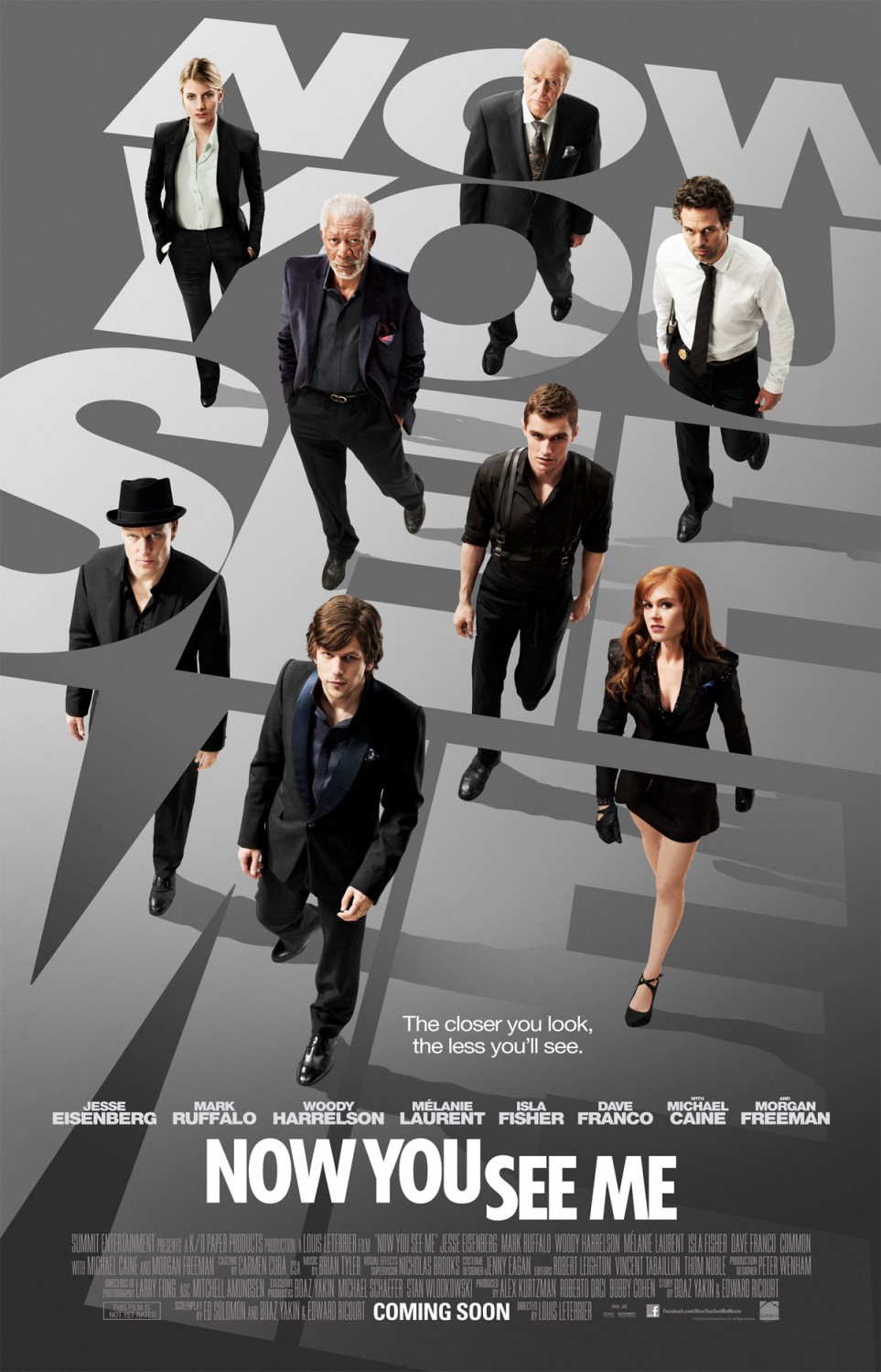 Everybody loves magic, right? At least the prospect of being surprised and delighted. Now You See Me takes something everybody loves (magic) and mixes it with a genre everybody loves (heist movie) and has already profited from the results at the box-office. Mix an ensemble of actors, though all of them white, and look over in this direction for a diverting, entertaining, and ultimately frustrating film that is too breezy to hate.
Four different magicians (Jesse Eisenberg, Woody Harrelson, Isla Fisher, Dave Franco) have teamed up to form a super team, The Horsemen, and they’ve taken Vegas by storm. A year into their reign, the insurance magnet and casino owner, Arthur Tressler (Michael Caine), is sitting pretty with his investment until the Horsemen turn their targets on him. With each new fantastic trick, the quartet fleeces the shady businessman of his money, returning it to wronged parties and the public at large. FBI Agent Dylan Rhodes (Mark Ruffalo) and Interpol Agent Alma Dray (Melanie Laurent) are tasked with finding the magical fugitives and figuring out their greater scheme. Just as one of the magicians notes, every time they think they’re one step ahead, they’re actually three behind.
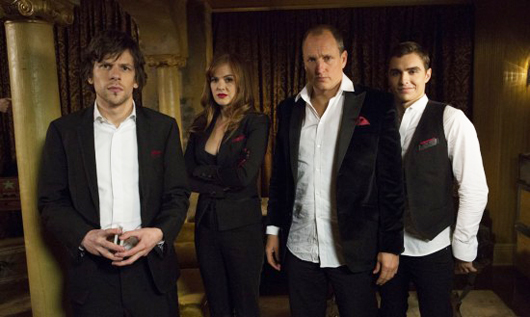 Let’s begin by admitting that the premise of a group of magicians performing heists is excellent. Seriously, on that alone I’d be hooked. Wouldn’t an Ocean’s 11-style movie about a group of magicians working a big score just be awesome? There’s so much fun to be had with such a breezy premise and for the most part Now You See Me lives up to its breezy potential. It works in segments, presenting a magical set piece, watching it unfold, and then unpacking it, sort of like a reverse heist sequence. It provides a bite-size moment of satisfaction, and then the movie goes off and repeats the process. The Horsemen elude the police and we start to get a broader sense of their aims, namely a slice of class warfare vigilante justice. There’s a genuine thrill to watching smart, talented types outfox their antagonists, and Now You See Me is no different. Under Louis Leterrier’s (Clash of the Titans) direction, the results are fast-paced, constantly shifting and surprising, and so cheery in tone that it’s hard to fault the movie for its lack of substance. Here is an example of a summer movie that’s just fun to watch. It taps into the desire we all have to be fooled, the same willful disbelief we process when watching magic or movies themselves, the modern artistic equivalent of magic. For a solid hour-plus, Now You See Me is a diverting and entertaining action thriller.
There are only a handful of traditional action sequences in the movie as most of the thrills are comprised of the illusions and some foot chases. I do want to single out a great moment, namely a magic fight where Jack Wilder (Franco) runs al over an apartment subduing police officers with magic. At first he relies on stealth to get the drop on them, but then the guy resorts to what is practically magic kung fu, using his sleight-of-hand to disarm his attackers. He then uses playing cards and flash paper at his disposal. I only wish that Rhodes, Wilder’s main adversary in the scene, tried to fight fire with fire, so to speak, and make use of the magical accessories in comical matters. The scene’s imagination reminded me of the final confrontation in Who Framed Roger Rabbit? where a selection of toon-specific tools were brought back for a unique showdown.
But with most magic acts, the good times start to fade once you find out how the trick is done. What hampers Now You See Me from being a stronger movie is a convoluted third act that goes to great preposterous lengths to explain the source behind the Horsemen. It’s pretty much who you’d assume it would be but I’ll still refrain from spoilers. Suffice to say, it’s an ending that doesn’t really work especially since it’s one of those reveals that makes you think back and question ordinary scenes. The movie muffs the landing, relying on twists to satisfy what was really just a high-concept heist movie. Another issue I had with the film is how quickly it marginalizes our would-be Robin Hoods of magic. After about the 45-minute mark, the Horsemen get sidelined as supporting characters and the movie is almost entirely told from the perspective of Rhodes. I understand there’s got to be some narrative discipline so that we don’t know the protagonists’ tricks before they perform them, but if I’m going to stuck with the dogged cop then make it his movie from the start. Compounding this problem is that the Horsemen, through no fault of the actors, barely register as characters. The actors are given one-note, and in the case of Fisher (The Great Gatsby) it was Woman, and that’s it. We see them as they perform their tricks and their daring escapes, but that doesn’t count as character development. In this regard, it’s less bothersome that these poorly conceived people get sidelined but then you stop and think that the only character you actually feel some interest in is Laurent’s Interpol agent.
 My suggestion for any possible future installments (Now You See Me Again? Now You Don’t?) is to focus more on our core team of magicians rather than their mysterious benefactor. I would also stress less time spent talking about The Eye of Horus or whatever through-the-centuries secret club of magicians the film was hinting at. I liked that, while completely elaborate and with endless fortune in preparation, that the illusions still had some tenuous foot in reality, that the magic tricks could be done in a somewhat recognizable world of ours (ignore the hologram junk). I strongly feel that even hinting about secret magical orders is just a step too far, breaking the film’s credulity, and taking what was fun and making it silly. I was worried before seeing the movie that the magic, as advertised, was going to be too supernatural. I was relieved that there wasn’t going to be a late reveal where some character rolls their eyes, probably Eisenberg, sand says, “Well, yeah, magic is real. Stupid.” When you’re playing around with larger-than-life figures that deal in theatricality and misdirection, I think it’s paramount not to get too carried away, failing to ground your movie for the audience.
If you’re looking for a fun time out at the movies, Now You See Me will serve its purpose well enough until it begins to fall apart by the end. You may find yourself looking back and the earlier mystery and thrill of the unknown will dissipate upon reflection, leaving you with little. It’s fun while it lasts but when it’s all over you’re left with substandard characters and an overly convoluted plot that doesn’t satisfy in the clinch. Magicians-plan-heist is such a juicy premise that I hope someone else makes better use of it. I would still love to see that movie, only well developed and giving me characters to actually care about. Now You See Me is as substantial as a magic trick itself but it’s an inoffensive, carefree, and mostly fun ride at the movies, though I think so much more could have been done with this concept and this budget. For a $75 million dollar magic trick, I want a better result.
Nate’s Grade: B-
Share this:

The Great Gatsby (2013)
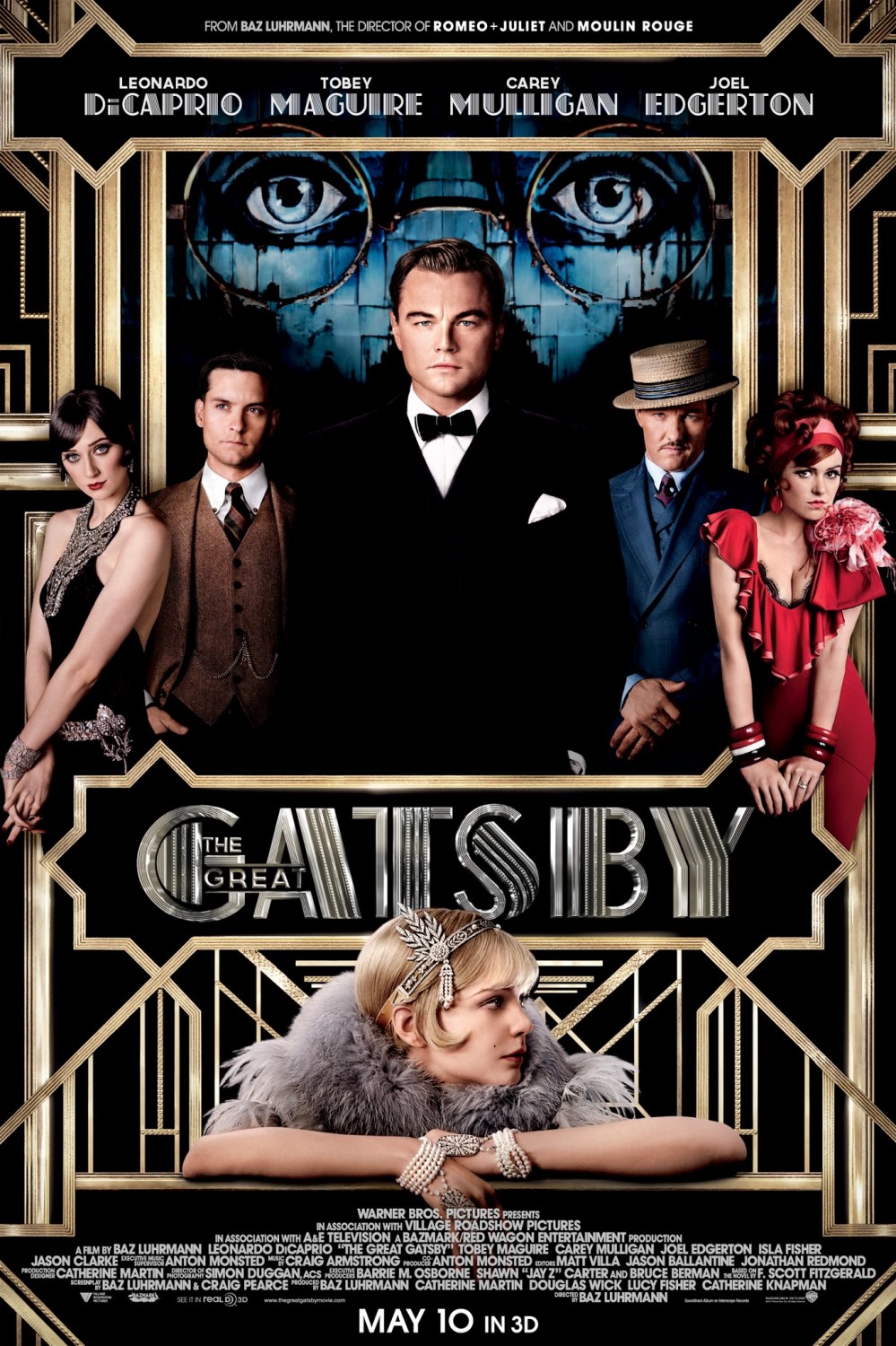 It seemed like some sort of educational mandate that every child in the United States was forced to read F. Scott Fitzgerald’s novel, The Great Gatsby, when they were in high school. In my highly unscientific number crunching, it appears that those who actually enjoyed the book are in the minority. I recall loathing it, but then again, when you’re fifteen, you sort of loath everything. Enter Australian director Baz Luhrmann, the showman who exploded the screen in razzle-dazzle run amok with Romeo and Juliet and Moulin Rouge!. Not exactly the kind of filmmaker one would fathom helming an adaptation of a classic of American literature, but the man’s style of excess seems like a suitable match for Fitzgerald’s tale of high-class overindulgence.
In 1922, young Nick Carraway (Tobey Maguire) moves to the hustle and bustle of New York City, living close to his cousin Daisy (Carey Mulligan) and her rich husband Tom Buchanan (Joel Edgerton). He’s also the neighbor to the mysterious and newly rich Jay Gatsby (Leonardo DiCaprio), a reclusive man who opens his mansion up to prolific bacchanals. Rumors persist in who he is and how he accrued his enormous fortune. He’s an old flame of Daisy’s and is secretly hoping she’ll attend one of his raucous soirees. He enlists Nick to help arrange a reunion for them, and soon enough Gatsby is already planning their happy future together again. Trouble is, Tom isn’t willing to lose his wife without a fight.
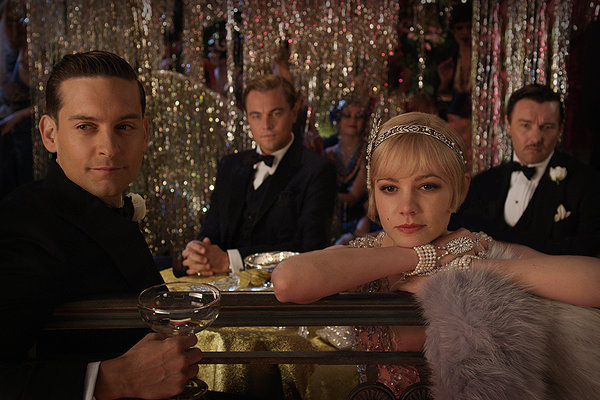 Luhrmann’s helming of The Great Gatsby gave me exactly what I desired and expected. The movie is convulsing with energy and the first hour just moves; be it the camerawork or people onscreen, for long stretches there always seems to be some degree of onscreen movement. Luhrmann’s signature theatrical visual atmosphere is vibrant, joyous, and a perfect translator of the lavish lifestyles of the noveau rich in the Roaring ‘20s. The man brings to startling life the sensations of being young, privileged, and carefree, and the use of anachronistic music, while not nearly as textured and thematically relevant as Moulin Rouge!, adds to the fun. I quite enjoyed a low-key, jazzy rendition of Beyonce’s “Crazy in Love.” Luhrmann’s style treks in excess but it’s a much more pleasant, dreamy, and altogether beguiling form of artistic indulgence than, say, Michael Bay or Tony Scott and their respective macho visual fetishes. Luhrmann’s campy sense of style doesn’t come across as overly suffocating or distracting, at least to my eyes, and instead the man injects his movies with tremendous energy, immersing you into a new world of old and modern. This is what Luhrmann was meant for. While other canonical classics of American literature may not survive a glitzy Lurhmann treatment, it’s a good match for the extravagant excess of Fitzgerald’s setting. Lurhmann’s visuals are glorious, and the 1920s era is brought to glamorous life. You get the sense it was one giant party without any lasting consequences (if you were rich enough).
The second half of the movie slows down considerably after the amped-up introduction. We’re caught up in the characters at this point, as we should be, and the Gatsby/Daisy reunion dominates the plot. I suppose there are only so many Busby Berkeley numbers and confetti explosions one can encounter before the plot has to set in. Lurhmann and company stick pretty faithfully to Fitzgerald’s plot (rest easy, lazy high school students of today and tomorrow). Interestingly, they are far more explicit about Gatsby’s securities fraud, knowingly making a fortune off junk bonds, all in the name to impress Daisy. There’s a genuine sense of respect for the source material even with Luhrmann’s visual flourishes; at several points, Fitzgerald’s text floats onscreen. The problem is that Luhrmann’s Gatsby is almost entirely focused on the romantic coupling of its title figure and Daisy. Gone is the class criticism, the indictment of the follies of the rich, the examination of the dark side of the American Dream, and the subtext. You’ll get plenty of shots of that famous green light, 20th century literature’s most famous and unsophisticated symbol (pay attention kids: green means go), but there’s little time for complexity. It’s not a screen romance worth this much attention, which is kind of the point, but when the movie clocks at over 2 hours and 20 minutes, drawing out a lackluster romance can become rather grating.
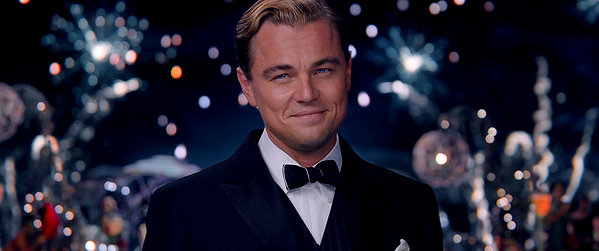 If I were top cite one major fault in Luhrmann’s incarnation, it’s that it adopts Nick’s fawning perspective and treats Gatsby as this tragic romantic figure. I acknowledge with every adaption there is a degree of interpretation, and romantic hero is certainly one facet of Gatsby, certainly how he sees himself, but by the end of Fitzgerald’s novel, Gatsby is really more a naïve man who really only sees Daisy as trophy, a prize for his reinvention and jumping up to the storied moneyed class. Daisy herself is certainly weak-willed but her emptiness (she says there’s nothing better than for a girl to be a “beautiful, young fool”) is part of the appeal to Gatsby because he can remake her however he wants. He’s not interested insomuch as her as a person. I don’t think that the Gatsby/Daisy escapades fall into the ranks of Great Tragic Couples of Literature, but that’s how Luhrmann interprets the novel, transforming Gatsby into a revered, honorable, and heartbreaking romantic we’re meant to shed a tear for. I suppose since we’re reliving the story through Nick’s perspective that events could be colored differently. Beyond just a simplistic analysis, it also misses the greater and more futile tragedy of a man trying to escape his past by obsessively recreating it.
The acting is fairly good all around, though the standout is certainly not whom you’d expect. DiCaprio (Django Unchained) is a good fit for the handsome social-climber, but the movie only asks him to play a limited range of emotions, rarely breaking free to show glimpses of the darker, less polished side of Gatsby’s carefully crafted image. He doesn’t exactly exude the charisma you would think necessary for the man, plus his use of “old sport” is so overly abundant it approaches farce. Maguire (Brothers) is a bit too earnest even for his role. It becomes readily clear within minutes that Maguire does not possess a voice for narration. The man is also a bit too old, at 37, to play the naïve, stars-in-his-eyes Nick Carraway. Mulligan (Shame) is given the least to work with since Daisy is meant to be rather opaque but she brings an extra amount of sympathy for a character trapped by her indecision and the demands of men. Easily the best actor in the bunch is Edgerton (Warrior). It would be easy for the guy to simply be the brutish heavy, the angry husband and easy to hate antagonist. Edgerton showcases a surprising depth, and you may find yourself feeling some smidge of sympathy for the lout.
Much like Luhrmann’s Moulin Rouge!, it’s an easy prediction that his Great Gatsby will be equally divisive. There will probably be as many critics decrying Luhrmann’s blitzkrieg of confetti and style as a campy cannibalization of an American classic as there will be celebrating the mad energy and obsequious reverence exhibited in a handsomely mounted, big-budget adaptation. The movie is even being presented in 3D, and did you ever think you’d hear the phrase “The Great Gatsby in 3D” in your life? I enjoyed Luhrmann’s gaudiness and indulgences, painting the screen with his vivid imagination. The impressive production design, costumes, visual effects, and overall visual aesthetic of the movie are a feast for the eyes. Now there are plenty of indulgences and excesses in the movie, particularly the emphasis on grand romance, but Gatsby entertains with few lags. Having read the book once and disliked it heartily in my youth, I can readily say that here is an example of where the movie is better than the book. Now if someone could go about making an improved version of The Lord of the Flies and A Tale of Two Cities, whatever you have to do, my teenage self will thank you kindly.
Nate’s Grade: B
Share this:

Rise of the Guardians (2012)
 Dreamworks animation has long existed in the mighty shadow of Pixar, but as of late the studios might be at a creative crossroads. After the excellent Kung Fu Panda films and How to Train Your Dragon, suddenly Dreamworks animated movies matured beyond feverish, pop-culture explosions and into character-driven, colorful, and genuinely heartfelt family films. I don’t think we’ll be getting something as dismal as Shark Tale again with the current path the studio is blazing. Rise of the Guardians looks like the pilot for a new lucrative Dreamworks family franchise. It’s easy to see the appeal for a superhero assembly of fantasy figures, though is every region going to have working knowledge of the Tooth Fairy? The movie just looked too silly to function for me, but I was optimistic after raves from a few trusted friends. Perhaps my own childlike sense of wonder is permanently replaced with a heart of stone, but I found Rise of the Guardians to be a somewhat entertaining but mostly stilted, intellectually and emotionally, journey.
The guardians are an ancient group of holiday-themed characters entrusted with keeping the sense of wonder alive in children. There’s Santa Claus, a.k.a. North (voiced by Alec Baldwin), and his army of yetti workers, the tooth Fairy (Isla Fisher), and her own collection agency of tooth-gathering fairies, the Sandman, in charge of the sweet dreams of children, and the Easter Bunny (Hugh Jackman), an Australian jack rabbit with a bit of a chip on his bunny shoulder. The world is threatened by Pitch (Jude Law), a bogeyman who desperately desires children to fear him again, because belief is what powers the Guardians. To stop Pitch and his array of nightmare creatures, the Guardians must add another member to their outlet, Jack Frost (Chris Pine). Except Jack has no interest in joining this fuddy-duddy group and would rather do his own thing, which usually involves wrecking havoc. Jack’s desperate to find out his past and figure out why he was chosen for his immortal role and what it will take to make kids believe in him.
 Ultimately, I just couldn’t really get into this movie. It’s set up like an Avengers team of children’s fantasy figures, but I felt like the movie failed to make me emotionally connect with their plights. The Jack Frost protagonist was another tired variation on the selfish, plays-by-his-own-rules cowboy character that needs to learn a dash of personal responsibility and putting others first. But his goal is essentially to be… seen. He’s worried kids will never see him because they won’t ever believe in him. That’s a fairly abstract existential crisis for your main character to have, and one that I found too odd to care about. The entire core of the movie revolves around children’s sense of belief, and unless you’re twisting this into some general statement about the purpose of faith (the Man in the Moon = God?), then I find it all to be silly considering we’re talking about the Tooth Fairy and Easter Bunny. I mean, the main kid (Dakota Goyo) has to be eight or nine years old and still fervently believes in these mythical creatures, to the point that he is literally the only person on the planet who believes at one dour point (sheesh, talk about how easily disillusioned kids can get these days). We’re celebrating a kid going into adolescence believing in these things. That just smacks me as a little weird if you stop and think about the film’s implications. This kid is going to grow up socially warped. Then again his beliefs are proven right, so maybe it’s just the rest of us cynical bastards out there who need to adapt. I guess I’m going to go accept my fate and be a crotchety old man now.
The plot feels too airy for my liking, too frenetic to get to the next set piece or chase sequence. It doesn’t feel like it ever takes the time to settle down and develop its characters or story. As a result, we’re left with a fairly middling backstory for Jack Frost that should be easy to figure out, but we’re also stuck in a world that doesn’t feel like the rules have been sufficiently explained. Case in point: the Tooth Fairy keeps all those baby teeth in one huge archive because, you see, the teeth hold memories. I guess. But then Jack’s after his own teeth to retrieve his forgotten past (yes folks, we have an amnesiac protagonist). I’m okay with this so far though it’s a tad forced, but when Jack does get those teeth, he’s presented with memories at the age of 18. I know people suffered through poor dental hygiene hundreds of years ago, but you cannot expect me to believe that Jack is still losing baby teeth. This is just one example where the movie didn’t come across as fully formed. The Guardians all seem to possess different super powers involving space-time travel, but then they don’t seem to do anything with these abilities that matters by the final battle. Pitch has the ability to craft nightmare creatures and all he does is end up making wispy evil-looking horses. That seems like a waste. There are not enough payoffs here with all the imaginative possibilities.
Rise of the Guardians has some enjoyable moments but it practically relies upon you to supply all the work as far as character empathy. We’re familiar with these magical figures, and so the movie gets by because we put in the emotional connection to Santa and the Easter Bunny, but the characters just don’t register on the page, at least with this story. I don’t know if David Lindsay-Abaire (Rabbithole, Inkheart) was the best candidate for the job, but he doesn’t give me enough reasons to engage with the movie. The characters are lackluster, their conflicts feel too abstract, the conclusion feels superfluous, and the world feels poorly defined, developed, and unsatisfying.
 I like Chris Pine (Unstoppable) as an actor, but the man brings absolutely nothing to the table when it comes to voice acting. Baldwin (Rock of Ages) and Jackman’s (Real Steel) performances are defined by their respective accents. I feel like Hollywood needs some sort of seminal moment to go back to genuine voice artists rather than hiring whatever celebrity. Yes we all enjoyed Robin Williams as the Genie in Aladdin, but are you going to tell me that Pine’s vocal work was so exceptional he had to be cast? It’s like having celebrities provide the voices for the helium-sounding Chipmunks. The best voice actor in the film is clearly Law (Sherlock Holmes) who does such a good job I felt more sympathy for him than I did Jack Frost. I know it’s commonplace in movies for the hero and the villain to have some duality, but I wasn’t probably supposed to jump ship as far as loyalty. Maybe I just found the actual kids in the movie to be annoying so I didn’t mind a magical creature preying upon their collective childhood fear. It reminded me of the space cloud villain from 2011’s Green Lantern flop, where I wondered if this fear-sucking cloud sought out the delicacy of children’s fears first.
To top it all off, I found myself left rather cold by the visual aesthetics of the movie. It has this overly androgynous, big-eyed anime feel, and I kept getting the sense that the whole movie looked like an extended video game cut scene. This movie even had Guillermo del Toro (Hellboy) and the brilliant cinematographer Roger Deakens (Skyfall) as producers or visual consultants, so I’m even more baffled at how visually poor I found the movie. The colors are so muddy and the visuals felt so limited for me, especially considering the imaginative parameters of the characters and their respective worlds. I thought Pitch seemed oddly similar in visual approach to Hades in Disney’s underrated Hercules. The action sequences had some nice visual panache to them as far as choreography, but I couldn’t stop thinking how cruddy and dreary everything looked.
Rise of the Guardians is based upon a series of yet-to-be published books by famed author William Joyce, who won an Oscar himself the previous year for the animated short, The Fantastic Flying Books of Mr. Morris Lessmore. I feel like that short was a better representation of magic and imagination than this film. The humor, the life lessons, the character development, it all felt so stilted to me. I thought the conflicts were too abstract and hard to care about (oh no, people have stopped believing in the Tooth Fairy!) and the world and rules felt too amorphous, poorly explained and creatively handicapped. If you’re going for a fantasy setting with larger-than-life figures, each with certain gifts and powers, hen I want the promise of that setup to be fulfilled. Rise of the Guardians isn’t a bad movie by any means but it left me cold and indifferent. It’s meant to strike at my childish sense of wonder, but I felt too often like a cynical adult, picking apart the frailties of its storytelling and muddy visual designs. It felt like it was missing the best magic of all: gifted storytelling. You’ll probably have more fun than I did, but that’s just because I probably have no soul.
Nate’s Grade: B-
Share this:

Rango (2011)
 It’s Chinatown remade with anthropomorphic desert creatures. It’s a Western by way of Hunter S. Thompson. It’s a loving parody of cinema’s wide canvas. It’s one of the most wild, anarchic, oddball animated films to ever be released by a major studio, and it is stupendous. Steeped in weirdness and bravado, Rango has a playful and occasionally macabre sense of humor that kept me in stitches. Director Gore Verbinski (the Pirates of the Caribbean flicks) translates his visual verve into a animated movie that dazzles the eyes with its magnificently drawn features as well as the pointed personality in every stroke. This is a movie with character, not to mention some pretty entertaining characters (including talking road kill). Johnny Depp delivers an idiosyncratic vocal performance for a household lizard that finds himself pretending to play sheriff for a town in need of a hero. When you think Rango will fade into familiar territory, or easy moral messages, the film keeps surprising, forging its own unique path. This is a lively, peculiar, and overall enchanting animated film that’s suitable for families but may well play better for adults with eccentric tastes. I’m still scratching my head, and celebrating, how something like this slipped through the system.
Nate’s Grade: A
Share this:

Confessions of a Shopaholic (2009)
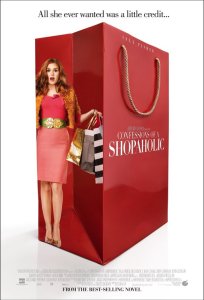 Releasing a romantic comedy about a woman plagued by credit woes in the middle of a global financial meltdown? Doesn’t sound like the best example of escapist entertainment, but Confessions of a Shopaholic is infectious fun, and it’s all thanks to the delightfully funny lead performance by Isla Fisher. She seems like she stepped out of one of the old Hollywood screwball comedies from the 1930s. There’s a terrific hunger in her eyes and the woman knows how to punctuate a joke. The movie itself isn’t too shabby either. As far as formulaic romantic comedies go, this is one of the better ones in recent years. It has a little dash of everything, from slapstick to farcical thriller to romance to even some mildly potent drama. Director P.J. Hogan (Muriel’s Wedding) keeps the movie light and fun and even spruces up the flick with some interesting visuals, like animated CGI mannequins that come alive to tempt Fisher. Even though the movie holds onto a sitcom level plot for too long (mistaken identity), Confessions of a Shopaholic is a far worthier piece of entertainment than typically found in the rom-com genre, and Fisher is a comedian to rival the best.
Nate’s Grade: B+
Share this:

Definitely, Maybe (2008)
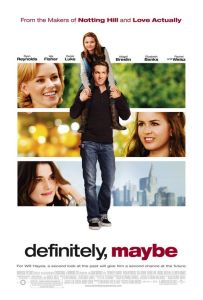 Adam Brooks has spent his whole career in the romantic comedy gutter. His screenwriting credits include French Kiss, Practical Magic, Wimbledon, and the second Bridget Jones flick. Not a whole lot of quality there. Definitely, Maybe is Brooks fourth writing and directing effort but the first to get a major push from the Hollywood studios. Maybe the same purveyors of formula fluff realize that Brooks finally has something good on his hands.
Will Hayes (Ryan Reynolds) picks up his ten-year-old daughter Maya (Abigail Breslin) from school on perhaps the worst day of the school year: sex education day. Kids are crying, parents are stammering to explain, and Maya casually exits her classroom, walks up to dad, and says point blank, “We need to talk.” She wants to know all about the story of how her father and mother, now divorced, met. Finally Will agrees but decides to play a game. He will changes names and identifying characteristics and Maya will have to guess which of his three loves became her mother. Emily (Elizabeth Banks) is Will’s college sweetheart from Wisconsin. Summer (Rachel Weisz) is an ambitious journalist with a taste for older men. April (Isla Fischer) is a Bohemian free spirit that Will meets working on the 1992 Bill Clinton presidential campaign. Maya sits in her bed and pays rapt attention to what she calls a “mystery romance.”
Miraculously, Brooks has written a romantic comedy where the characters are, dare I say it, well developed human beings. These folks are more than stock roles for the genre; in fact, each woman is smart, genuine, charming, fun, and desirable, and yet each woman also has her own set of realistic flaws. Brooks makes sure that we, the audience, admire each woman and recognize that any of the three would make a fine selection. These characters feel real, which is almost unheard of for a genre about ticking biological clocks, cloying and precocious tykes, irrationally sexist and self-absorbed characters, forced misunderstandings that lead to contrived reconciliations that involve some form of chase. Having recently seen 27 Dresses, which plays close to the typical rom-com formula, I appreciate Definitely, Maybe even more.
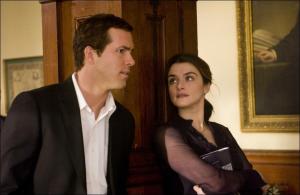
This is a romantic comedy that respects its characters and respects its audience. The people might make bad or impulsive decisions but Brooks doesn’t pass judgment, and, my God, it’s refreshing for the genre. I rolled my eyes when I read blurbs about Definitely, Maybe being “the best romantic comedy since [1976’s] Annie Hall.” While I wouldn’t necessarily go that far, Definitely, Maybe is definitely the best and most enjoyable conventional Hollywood romantic comedies in years (For those wondering what non-conventional romances got me jazzed, here is a small list: Eternal Sunshine of the Spotless Mind, Amelie, Secretary, Once, Sweet Land, A Very Long Engagement, Brokeback Mountain, Aimee and Jaguar, and Before Sunset).
Brooks chronicles Will’s romantic escapades along the timeline of Bill Clinton’s rise in national politics, which is an interesting way to look backwards in time and still be relevant to modern audiences thanks to Mrs. Clinton’s race to reoccupy the White House. I found it interesting that Will’s emotional journey seems to be charted along the same ups and downs as Bill Clinton’s time in office, so when Clinton is mired in the Monica Lewinsky scandal and questioning the definition of the word “is,” Will has lost his idealism and grown into a cynic. He even openly criticizes with great frustration and ire the man he helped put into office. Will’s enthusiasm and disenchantment for Clinton mirrors his budding relationships with women.
Definitely, Maybe has a handful of memorable moments and some amusing dialogue, but Brooks has crafted one hell of a meet-cute scene between Will and April. After an initial first meeting at the campaign headquarters, Will is purchasing a pack of cigarettes when he spots April purchasing a pack of organic cigarettes. He playfully mocks her more expensive purchase. She counter punches and says that her brand is made from better stock and will actually smoke slower, thus being the better purchase. He challenges her to a smoke-off and the two step outside, light up, and for the sake of scientific research they take equally long drags, and sure enough Will’s cigarette cannot last as long. They laugh and eventually Will visits April’s apartment and learns about her poignant search for her lost copy of Jane Eyre out there that has her father’s inscription. It’s a great scene that allows both actors to size each other up.
Thanks to each woman being presented fairly the movie doesn’t make it obvious which woman will eventually become Maya’s mother. The ladies fade in and out through the plot. The guessing game gimmick grabs our intrigue early and Brooks doesn’t tip his hand until the film’s end. What I find interesting is that Will changes with each woman and could feasibly be happy with any of the three, a desirable predicament if ever there was one. The movie even tackles divorce sincerely and without any doom and gloom overly dramatic pronouncements. Definitely, Maybe doesn’t go out on a limb and certainly isn’t remotely edgy, but the flick has a soothing, amiable adult spirit. It may not be revolutionary but simply telling a good story with mildly relatable characters seems like a great step in the right direction for this oft-sneered at genre.
Reynolds knows how to work his suave charisma to a fault. He’s certainly a capable leading man for romantic comedies and he can deadpan with the best of them. He seems like he could use a bit more direction, because there are moments where he seems to be falling back on his standard sly, indignant persona that has characterized his comedy work from 2002’s Van Wilder and on. His interaction with all three women produces varying spikes on the chemistry chart, and for my money he scores the best sparks with the subdued seduction of Weisz.
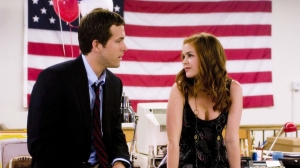 The women of Definitely, Maybe are the real winners here even if only one will eventually take home Will. Fisher becomes the heart of the movie and, given the most emotional material, shines the greatest. Banks is wholesome and easy to get cozy with. Weisz is the most enigmatic of the three and offers a beguiling yet very knowing charm. She has a very seasoned sensibility. Her on-again off-again affair with an aging literature professor (a fabulous Kevin Kline playing a fabulous blowhard) adds an intriguing dynamic to her character. The only irritant for me was Breslin’s acting, which was just off enough to annoy me.
Definitely, Maybe is a romantic comedy that proudly treats its characters with respect and develops them into relatable, authentically human characters in a typically inauthentic universe. Brooks mines a gimmick for all its worth, but even after the signs become clear the film is still pleasurable in its predictability thanks to the great characters. It’s rare to see a romantic comedy that bestows a moderate amount of characterization; usually these roles just fall under archetypes. Brooks has shied away from the trappings of the genre (there isn’t a single sing-a-long!) and crafted a genuine romantic comedy that doesn’t rely on sentiment and easy answers even as it heads toward happy ending material. The movie even tackles divorce from a non-judgmental yet honest approach. As far as I’m concerned, Brooks has made amends for his previous screenwriting duds and made a movie that men can truly enjoy as they’re dragged into the theater by their significant other. I would definitely recommend Definitely, Maybe to fans of the genre. This is one worth seeing, folks.
Nate’s Grade: B+
Share this:

Wedding Crashers (2005)
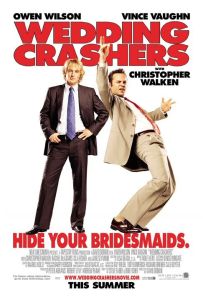 My friend Amanda Evans is quite possibly the biggest Vince Vaughn fan in the United States, nay, the planet Earth. She used to watch Dodgeball every day. Her brother-in-law even went so far as to stage an intervention for her Vaughn addiction. She has been talking about Wedding Crashers for months and months and counting down the days like a kid waiting for Christmas. It’s safe to say that Amanda loved the movie but how would your otherwise non-obsessed moviegoer feel?
Jeremy (Vaughn) and John (Owen Wilson) are divorce attorneys by day and ladies men come nightfall. Both men crash weddings they were not invited to with the strict purpose of getting laid by horny bridesmaids. They have got their honey hunting down to a science, from what relative they’re related to, to when to cry, to whom to slow dance with to convince those bridesmaids that they’re sweet gentlemen. Jeremy says that one day when they?re old men they’ll both look back on these days and smile. John retorts, “We’re not that young.”
The Super Bowl of all weddings is the daughter of the Secretary of the Treasury (Christopher Walken). John has his eye on his other daughter Claire (Rachel McAdams) while Jeremy sets his sights on the Secretary’s other daughter, the wild and vivacious Gloria (Isla Fisher). The only problem for John is that he’s actually falling in love with Claire, oh and she’s engaged to a real jackass (Alias‘ Bradley Cooper). Jeremy and John are such big hits at the wedding that the Secretary invites them both to vacation with his family at their summer home. Jeremy is hesitant and wants to stick to the love-em-and-leave-em lifestyle he and his buddy are so accustomed to, but John drags him along convinced he can win Claire over.
 Vaughn kills in every single scene. He hits punchline after punchline like some king of comedic prizefighter. His mile-a-minute delivery gels ever so nicely with Wilson’s homesy charm and drawl. These two have never been matched before as leading men but now their marriage seems like a match made in heaven. Their chemistry is off the chart. Wilson is essentially the straight man to Vaughn. In most comedies, “straight man” is just another term for boring. However, Wilson gets his shots in as well especially with his give and take with Vaughn, who is in a comedic zone all his own.
Not to be out done by the men, both McAdams and Fisher give great performances. McAdams (Mean Girls) is a rising star and it’s easy to see why. She’s a beautiful woman but also has some good teeth for comedy. In comedy terms, she’s the romantic interest, which means she’s an even straighter (read: boring) man than Wilson’s straight man. And handed with all this, McAdams still shines as a leading lady you can fall in love with. The true scene-stealer of Wedding Crashers is Fisher (Scooby-Doo), who goes hilariously tit-for-tat with Vaughn. You might walk away believing she’s truly out of her mind. Fisher has a physical gift for comedy that hasn’t been showcased before, but with Wedding Crashers she gets unleashed and we?re the better for it.
After the brilliant work of McAdams and Fisher, most of the supporting cast’s performances comes off as being too forced. Cooper is a wide-eyed grinning jackass that?s obvious from the get-go. He plays the role so big that his eyebrows seem permanently pressed to the top of his head. There’s also the weird introverted son who Typical Crazy Grandma berates as being “a homo.” But not only is he gay hes also a freak. The role seems quizzically garish and even a bit homophobic. Jane Seymore jumps at her role as mom in heat, but the film forgets about her fast after an awkward encounter with Wilson. Walken can make me laugh just by watching him stare (and he did), but even he isn’t given much more to work with besides the supportive dad role. It seems odd for a comedy with such huge belly laughs to have several supporting players grind the film’s funny down. All of this is excusable though because the far majority of the film’s attention and laughs are derived from our central quartet.
Wedding Crashers is a raunchy delight. You know you’re in good hands when, in one scene, Wilson and Vaughn are dipping bridesmaids on the dance floor and it cuts to these same bridesmaids now falling topless onto hotel beds. This is one R-rated comedy that proudly wears its rating on its sleeve. And for a sex comedy, there’s a surprising amount of laughs mined just out of an adult discussion on sex, which cannot be curtailed or couched with euphemisms and soft language. I don’t know whether to credit the screenwriters or the off-the-cuff improving of Wilson and Vaughn, but Wedding Crashers proves there’s still more under the sun to talk about and giggle.
Usually with movies revolving around hedonistic characters, they meet one of two ends: 1) they find that One True Girl that makes them want to go straight, or 2) they meet their hedonistic match and rethink their ways now that the shoe is on the other foot. Wedding Crashers doesn’t give you one of these options, oh no, it gives you both. Sure things gets awfully predictable after a great rush out of the gate, but the interplay between Wilson and Vaughn and some genuinely funny gags should keep most laughing until the surprise cameo at the end by the founder/guru of the wedding crashing rule book (it should be no surprise if you’ve seen any movie with Wilson and Vaughn the last three years). The climax is a bit drawn out and Wedding Crashers is still another comedy built around deception whose climax involves apologizing for said deception. It’d be tiresome if the movie weren’t so damn funny.

Despite the sleazy premise, Wedding Crashers has a sweet and gooey center. These are two men who know exactly what women want and they’re eager to give it to them. They just don’t know what they really want, but when they find it both Jeremy and John set their minds to romantic conquests outside of the bedroom. It’s this gooey center that makes the characters likeable despite any misgivings an audience may hold over their wedding crashing plot.
Two hours is a near eternity for most comedies and Wedding Crashers seems to lose its sprint in the last 20-30 minutes. The film starts getting repetitious and overly predictable with few laughs to cover up. Wilson and Vaughn still make it work but the setup seems to have been taken as far as it will go and then some.
Wedding Crashers is a loud, jovial, ribs-in-the-elbows funny return to the crass classics of the 1970s R-rated comedy. Vaughn and Wilson are perfectly matched and McAdams and Fisher shine like stars. Wedding Crashers is a bawdy good time that will leave you aching from laughing so hard. This movie is profane, simple, crude, and joyously so. It does run out of gas toward its protracted climax and some of the supporting performances feel forced, but Wedding Crashers is easily the funniest film of the year. Amanda was foiled in seeing the film three times the weekend it opened. She had to settle for only seeing it twice. I don’t think she has slept since (UPDATE: Amanda has since seen the movie five more times).
Nate’s Grade: B+


 nathanzoebl
You must be logged in to post a comment.