Blog Archives
Splice (2010)

Splice is a slice of freaky-deaky sci-fi horror done with enough style and weirdness to keep your eyes glued to the screen. Director Vincenzo Natali (Cube) takes a few notes from David Cronenberg in staging his creature feature. A scientific couple (Adrien Brody, Sarah Polley) are about to have their gene-splicing lab shut down, so they make a radical decision to start an experimental personal project. Utilizing human genes, they combine other DNA to create a new species. The moral ambiguity and scientific danger is thoughtfully addressed, with the couple quickly finding how easy it is to make moral compromises. Soon they become attached to the creature they name “Dren” and view her as a daughter. Things get even crazier when Dren starts exhibiting some Oedipal desires (I believe the reverse is more fitting, an Elektra complex). Slick cinematography and seamless practical and digital effects help ensure that Splice is never dull. The movie seems two steps away from achieving true greatness. In the end, after all the intrigue and surprising amount of emotional subtlety given the premise, Splice devolves into a by-the-numbers slasher film. The final act is all about character poking around in the dark for the big scary monster. It’s not nearly as intellectually stimulating. In this regard, Splice reminds me of 2007’s Sunshine, another sci-fi film that started strong, had some style and brains, and then blew it by devolving into a clichéd horror movie where characters outrun a super-powerful slasher villain. As a fan of intelligent sci-fi, it’s frustrating to get teased with greatness and have to settle with pretty good, but I’ll gladly take the gonzo pleasures of Splice over any rote action thriller.
Nate’s Grade: B
Share this:

Birdemic: Shock and Terror (2010)
 Ever since the organic, years-in-the-making cult ascent of The Room, every blogger and journalist has been trying to scour the world of inept cinema to crown the next great worst movie of all time. We all want to be kingmakers of camp. In the summer of 2009, After Last Season mystified audiences and seemed like it could be an excellent camp candidate, until people actually saw the film and discovered that it was more painful awful than pleasurable awful. Then a few months ago a new contender emerged — Birdemic: Shock and Terror. The extremely low-budget ($10,000) film, curiously dubbed a “romantic thriller,” is the THIRD film from writer/director/former software engineer James Nguyen. The Sundance Film Festival rejected his aviary masterpiece in 2009 but that didn’t stop Nguyen. He took a van, decorated it with (fake) dead birds, drove around promoting the film with the aid of screeching eagle cries, enticing people to come inside and watch the movie (sounds like the first reel of a serial killer film to me). The magic mixture of romance and eco terror has captured the interest of major media outlets like The New York Times, Entertainment Weekly, The Guardian, USA Today, BBC News, The Wall Street Journal, CBS News and ABC News, and the collective sugar-high rush to judgment says that Birdemic is “the worst film of all time.” Naturally, I had to see anything that vies for that hallowed honor.
For a movie citing the shock and terror of birds, it may be something of a shock that, short of a poorly rendered CGI dead bird on the beach, the first 40 minutes of this movie are absent the titular winged creatures. The first half of this movie is a mostly boring yet hugely personally eventful week for Rod (Alan Bagh) and Nathalie (Whitney Moore), our witless leads. Rod scores million dollar sales at his software company, which leads to Oracle buying the company for a billion dollars. He also successfully finds a venture capitalist to invest $10 million in his own solar panel startup. Nathalie, Rod’s high school classmate, is an underwear model. She goes from a photo shoot –in a one hour photo store in a strip mall!– to the cover of the Victoria’s Secret catalogue. They meet at a diner and then go on a series of dull dates, culminating in Rod responding to a goodnight kiss on the cheek with the request of going upstairs in her apartment (total misread of the signs). Regardless, Nathalie tells her mother that Rod is a special guy who’s not just interested in one thing, conveniently ignoring the end of the date. He meets mom and then after a night of hilariously, uncoordinated Caucasian dancing at a vacant bar, the two decide to consummate the relationship in the most romantic fashion possible — a seedy motel bedroom. And yes, they both have homes. It was at this point that I checked my watch and yelled, “Where the hell are the birds already?!”
It is after the off-screen lovemaking that the birdemic finally strikes. The next morning, for no discernable reason, birds turn into kamikaze agents and dive-bomb gas stations, cars, homes, and whatever else, causing explosions citywide. Rod and Nathalie team up with another motel pair, Ramsey (Adam Sessa) and Becky (Catherine Batcha), who conveniently have a stash of high-powered automatic weapons in their van. The gang fights their way to the van and then the rest of the movie turns into a series of mini-adventures finding victims and survivors of the birdemic.
 I will give Mr. Nguyen his due. His clueless naiveté is endearing, which makes the movie much easier to appreciate. Plus, unlike the filmmakers behind After Last Season, Nguyen has at least a competent idea of how movies are supposed to work. He doesn’t have any visual talent but he at least knows how camera compositions are supposed to be established, how editing orients the audience, and how to construct a story that people can at minimum follow. This is not intended as backhanded compliments, just another reminder at how monstrously appalling After Last Season was. It’s gotten to the point that basic competency is considered a virtue. Nguyen knows basic cinematic rules and the visual vocabulary that goes with cameras. He doesn’t have the skill to do anything else. The film was shot on DV and yet it constantly has focus issues. Characters will be stationed at distances that render them blurry. If Nguyen had a focus limit, why have the actors routinely wander outside that safe zone and into the blurry reaches of nothingness? Then there will be moments where it is painfully obvious that the background is a green screen, but why was that necessary? Nguyen will have two characters sit down at a restaurant, and then the rest of the table conversation will be green screen. That has to be the weakest excuse for a green screen ever (“We couldn’t afford to shoot people sitting at a table for an extended period of time”).
The editing is frequently choppy, jumping around to disorient the viewer, breaking visual rules of geography, but the editing seems on a timed delay. Every new shot/scene seems to start three seconds later than it should. The worst offense in the whole movie is the sound quality. Clearly using only the built-in microphone from his camera, Nguyen allows great portions of his movie to be un-listenable. A day at the beach turns into listening to the wild howl while it obscures all dialogue.
Birdemic has all the requisite components that make up a delightfully bad movie: bad acting, bad dialogue, plot holes, bizarre directorial and script decisions, and extreme awkwardness. For an outbreak of killer birds, everybody seems so resolutely casual about this aviary apocalypse. There is no sense of urgency or danger; characters will stroll in their walks and frequently make outdoor pit stops. One female character is killed after she wanders needlessly far from the safety of the van to pee. They didn’t decide that an indoor bathroom would be safer? The gang also decides to wander through a crowded forest, a habitat that might, you know, attract birds. Then there’s the careless frolic on the beach, again needlessly far from the refuge of the van. Rod is held up by one motorist for gas (yes, society has broken down that far in hours, and yet you can watch hundreds of cars pass along the other half of the road, foolishly driving toward the birdemic and their doom). But then Rod leaves behind the full gas container and hops back into the van, escaping a not so imminent bird attack. They keep venturing to outdoor areas to escape an enemy that utilizes the sky. They even have a picnic! In short, these people are dumb.
 But, to be fair, maybe they’re reacting with such relaxation because the birds are more laughable than intimidating. Nguyen recycles the same low-rent special effects of birds mysteriously levitating. They flap their wings but don’t ever seem to be moving. These CGI creatures look like early computer effects from the 1990s. These birds seem to explode on impact. I wouldn’t be too alarmed, either. When the gang leaves the motel, the bids hover and squawk, and some characters use coat hangers to swing away their non-moving antagonists. Ramsey doesn’t even try to fight them off after a few seconds. He just stand there while the birds fail to do anything. They keep appearing in swarms, though they seem to purposely be following our band of dumb characters. The second half of this movie mostly follows characters shooting and driving. You start to anticipate that the Duck Hunter dog is going to appear at some point and pick up the fallen carcasses and snicker. Avatar, this ain’t.
To call any of this acting would be a generous use of the term. Moore, as Nathalie, might actually be a plausible actress. She handles the material the best. Her onscreen love interest, on the other hand, is astoundingly bad. Bagh has mastered the aloof, dead-eyed stare, which he uses as his specialty. When Rod first meets Nathalie he gazes in one long unbroken stare, which communicates more “Did I leave the gas on?” then, “Is that the girl I sat behind in an English class and never talked to?” Bagh seems to have learned his lines phonetically because his line delivery is steeped in a singsong rhythm. The dialogue is mostly short exclamations that give no indication of character or plot. It’s hard to gauge the acting ability of clear non-actors in a trashy movie. It’s all a sliding scale.
Nguyen has been working on the story of Birdemic for five years. This labor of love was also Nguyen’s platform to make mankind think about its effect on the environment. Yes, the movie has all sorts of environmental messages squeezed in, where characters debate the ecological motivations of the bird attacks. A Tree Hugger (that’s his literal screen credit) theorizes that the birds are fighting back to protect Mother Nature, that’s why they seem to go after cars and gas stations. A doctor in Canada (we’re informed that the van leaves the country by watching it drive past an arrow pointing to the U.S. border written in sidewalk chalk) theorizes that the birds from Canada were infected with the notorious bird flu, and then it spread south. The doctor also gets the opportunity to declare man the most deadliest threat of them all, thus fulfilling a sci-fi disaster movie requirement. The TV news alerts about the peril of global warming, and even though the film is set in 2008, the characters see An Inconvenient Truth at the theaters (“An important movie!”). The environmental message doesn’t begin to approach cohesive commentary.
 As I was watching, I got the weird impression that Nguyen had been commissioned to film a tourist video for the city of Half Moon Bay, California. Then somewhere along the line the promotional project was scuttled and Nguyen looked at his assembled footage and said, “Well, why not make the most of it?” Ladies and gentlemen, Birdemic: Shock and Terror is “the most of it.” There are numerous scenes that serve no purpose other than highlighting some of the offerings of Half Moon Bay, from the quaint local shops, to the lighthouse, to its beaches and natural beauty, truly Half Moon Bay is where you want to spend your next vacation. There are pointless scenes of extended driving. The first three minutes of this movie is watching Rod drive to the office from the scenic view of his dashboard. The opening sequence mirrors Manos: The Hands of Fate, which began with over 10 minutes of uninterrupted driving shots. The opening is even more mind numbing because Nguyen plays the same 55-second piece of music over and over. So the next time you’re driving through California, think about stopping in Half Moon Bay, home of the world-famous birdemic.
Now comes the inevitable, and somewhat subjective part, where the critic must place Birdemic upon the scale of Absolute Awful ranging worst of the worst (Manos: The Hands of Fate) to the best of the worst (The Room). The people behind Birdemic are trying to streamline the cult phenom process. It premiered in New York City in early 2010 and is already being funneled to many markets. It all feels a little too manufactured for my tastes, like the media is so eager to be ahead of the hipster curve. Birdemic is a perfectly enjoyable laugh-out-loud experience best had with a bunch of your friends and perhaps some adult beverages. It’s a fine piece of derisive entertainment thanks to the sincerity of Nguyen. But in the world of bad, The Room still reigns supreme. Whereas Birdemic has plenty of bad housed in 90 minutes, it’s pretty much the same bad decisions and limitations. I look forward to Nguyen’s next film, Peephole: The Perverted. You just can’t go wrong when a movie has a subtitle, “The Perverted.” He may not be Tommy Wiseau, but this man knows how to make some tasty trash.
Nate’s (Derisive Enjoyment) Grade: B+
Share this:

Buried (2010)
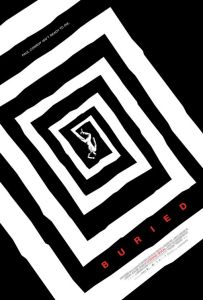 Spending 90 minutes trapped in a cramped space with a sweaty Ryan Reynolds? Doesn’t sound like a bad start for large swaths of the population. Buried is a small indie experiment that places Reynolds in exceedingly tight quarters. Paul is an American contractor driving trucks over in Iraq. Insurgents ambushed his convoy. He awakens to find himself trapped in a coffin and buried under the earth. Packed away inside with him are a lighter, a pen, and most importantly, a cell phone. Can your carrier get you coverage buried under the Iraqi desert? Time to switch, my friends.
For those left curious, yes, it really does take place entirely within a coffin. The entire 95 minutes are spent inside the small space. There is nary a flashback or even a visual insert to be had. You are trapped in that box just like Paul. The film is effectively claustrophobic. Director Rodrigo Cortes (The Contestant) gets terrific mileage out of his ultra confined space. The creative combination of angles, lighting, and nimble camerawork ensure that audiences do not grow tired of seeing the same 6 x 3″ of set. You can practically taste the sweat and dank air on screen. Buried has the most inspired camerawork I’ve seen in a film since 2006’s Children of Men. Cortes has only so much space to room to work and yet he does a magnificent job of manipulating the space to accentuate Paul’s fears and isolation. There are a few shots where the camera seems to keep zooming out, further and further, much further than the ceiling of that box would allow, like Paul is sinking below the sand.
 The script by Chris Sparling is agile and resourceful and keeps finding news ways to keep your eyes glued to the screen. The movie is consumed by that nerve-wracking sense of urgency. The first minute and a half of the film is in darkness, and we awaken to the terror of the situation just as Paul does. Including a cell phone seems like a necessary screenwriting plot device. If Paul awoke by his lonesome, the movie would turn into 90 minutes of watching a guy screaming himself hoarse and clawing away at the wooden walls. A cell phone opens up the narrative. Now Paul has something of a fighting chance to survive. It gives him the motivation to survive and adapt to his surroundings during his limited last moments. The cell phone also allows the bad guys to terrorize Paul over and over. They can make increasingly hostile demands even with their hostage lodged six feet under ground. The demands for money get more and more aggressive, leading to one-sided negotiations, like Paul filming a plea for help that terrorists can exploit and upload to the Internet. The people that Paul does get through to offer little in assistance. To them, it’s just another day going through the same motions, taking down the same messages. Cries for help may not rise above the fray.
The political commentary is, in a word, indelicate. The Iraq War commentary can feel a tad ham-fisted at times in how it wants to boil down and extrapolate Paul as a symbol of the war’s untold hidden human costs. Paul is a contractor paid to ferry supply along the dangerous roads of Iraq. He’s supposed to be seen as “just any guy,” that is, any American Joe. He symbolizes the lost lives that don’t manage to make the news because they don’t have stars and stripes on their uniforms. The Iraq War made use of hundreds of thousands of privet industry contractors, supposedly easing the burden of the U.S. military. Paul is intended to represent the forgotten casualties of war, the people who were merely punching a clock in a foreign land to help their families. The officials that Paul does get through seem more concerned with personal agendas then retrieving an entombed man. The military is concerned, sure, but more interested in locating and killing the terrorists/insurgents that ambushed Paul’s convoy. The State Department is more concerned about containing Paul’s story and ensuring media outlets don’t find out. They’re really worried that any ransom video Paul records will become an Internet sensation, particularly in the dry, dusty part of the world, and become a recruitment tool. Paul’s company is more worried about weaseling out of paying his insurance policy. The movie aims to ask what is the price of one life. Is it just a numbers game? Is losing an American contractor every few weeks worth the price of freedom? What is the definition of an acceptable loss?
 The movie is really a one-man show, so it’s fortunate to have an actor of Reynolds capabilities. He’s used to playing charming, self-effacing, fast-talking rascals; he has an innate ability to command your attention and interest. Reynolds gives a deeply empathetic performance. He goes through different stages of emotions, from shock and horror to anger and frustration, to impotence and self-pity, and all the way back again. You will think step-by-step with him as he tries to assess his situation. It’s a performance rooted in manufactured seclusion, something akin to the one-man show that Tom Hanks shared with a scene-stealing volleyball. Except Reynolds’ commitment seems even greater than what Hanks endured; Reynolds face is in every frame of this film. It would have been very easy for an actor to use the situation as an excuse to bounce off the walls, chewing scenery as an effective means of escape. But Reynolds dials down the histrionics. His character feels awkwardly real under the extreme circumstances.
I really enjoyed the concept, execution (the ending is note perfect), but I also found many of Buried‘s smaller moments to be more than worthwhile. When Paul begins to doubt he’ll ever be found in time, he mentally prepares himself for the inevitable. He films a last will and testament to be found with his corpse, whenever he is eventually unearthed. He leaves messages trying to reach out to love ones one last time. And perhaps most heartbreaking of all, Paul tries to reach his elderly mother, an Alzheimer’s patient in a rest home. He desperately wants to hear one last “I love you” from his mother’s voice, but the woman’s brain is a mental carousel and she is unable to comply. I thought about my own acceptance process if I was in Paul’s exact situation, and I know how much significance I would place on achieving some form of saying goodbye. In order to let go I would need to speak to the people closest to me and tell them how important they were, how much they meant to me. To be denied something so vital to acceptance is cruel. And Paul is denied his one last meaningful goodbye, and I found it to be aching and emotionally terrifying.
If you have any minute fear of tiny spaces or being trapped and helpless, then Buried will get under your skin big time. Add the general race-against-time nature of the script and the flick hums with nervous tension. This film is taut like a drum. It’s ridiculously tense. You may start to feel your feet moving, as if you’re trying to push away the space and dig your way out. It’s hard to believe but a movie that takes place entirely inside a box is one of the most inventive, visually appealing, and enjoyable films of the year.
Nate’s Grade: A
Share this:

Catfish (2010)
 Catfish is a slippery pseudo-documentary that seeks to explore the idea of human connection in the digital age. What does it mean when people’s friends originate from a glowing box?
The film chronicles the online relationship of Yaniv “Nev” Schulman. He’s a twenty-something New York City photographer who gets a painting in the mail one day. It’s a painting based upon one of his pictures published in a New York magazine. A 12-year-old girl saw the photo and was inspired to paint. She keeps sending more and more paintings to Nev in New York. He researches the 12-year-old, her family, and eyes pictures of Megan, her older sister. Megan is a strikingly good-looking model who also dances, plays the cello, writes songs, and raises horses. Nev and Megan have several conversations via phone, texting, online chatting, e-mail, and Facebook postings. It’s a relationship completely dependent on thumbs. Then Nev, along with his filmmaking friends Henry Joost and Nev’s brother, Ariel Schulman, start noticing peculiarities. Why does Megan pass off other people’s songs as her own? Why does she never seem to be around when other family members are? Is Megan really Megan? The guys start investigating and deconstructing this online romantic fable. Nev’s friends prod him into making an unexpected road trip to Megan’s family home in Ishpeming, Michigan. They’re excited and morbidly curious about what awaits them.
 I suppose your ultimate feelings about this movie will depend upon whether you view Catfish as a work of fiction or non-fiction. In either case, there’s a lot of manipulation and exploitation. Even if you do some half-hearted Internet research, you can find real-life events mentioned in the film that actually happened. A real-life special needs child died in the town of Ishpeming, as described in the closing text of the film. That means that a character we see late in the film is either the genuine special needs child or was a stand-in for one and the filmmakers took advantage of a community’s loss for “authenticity.” Which is more manipulative? Nev and his pals want to expose this scheming family, broadcasting private messages and intruding upon their lives with cameras to document their foibles. From my assessment, the film felt staged from start to finish. What luck they had cameras rolling for all these important moments of inquiry. But does that mean that the film is any less believable? The movie examines how easy it is not just to create a different persona, or new friends via the Internet; it showcases how the Internet allows people to create their own world. People lose themselves in alternate online realities, not just social-networking sites like Facebook but The Sims, Second Life, World of Warcraft, and all sorts of other avatar-based sites. The Internet allows us to fashion our own worlds, our own escape door from reality. Our grasp on reality has become subjective, which is further evidence that the truthfulness of the film is a moot point (a fictional non-fiction film about people posing as fictional versions of who they want to be online?). What does identity mean in an age of ever-increasing fiction?
As a film, Catfish is a mess of digital images. We see Facebook posts and text messages, scrutinize images posted Online, scroll through Google and YouTube for damming evidence of a con, and the guys make extensive use of Google Earth to showcase their cross-country travels. The visual do-it-yourself aesthetic contributes to the stab at authenticity as well as amateur journalism. The framing of the shots, however, is another point that tips Catfish into being a likely work of fiction. Whatever the case may be, the filmmakers and the subjects aren’t speaking one way or another.
 Those snookered by Catfish’s sensational trailer (there will be many) are likely in for a crushing disappointment. Catfish begins as a slightly intriguing mystery as Nev and his buddies uncover the irregularities and discrepancies of Megan. Then when the trio actually arrives in Ishpeming in the dead of night, there’s about a ten-minute stretch of “don’t go in there!” cinema. Nev’s filmmaking pals egg it on with self-aware comments about how scared they are or how creepy the situation is becoming. Then again, who exactly peaks into an abandoned horse farm in the dead of night? At this point, goaded by the trailer, you’re expecting Catfish to go down the grisly horror path. You expect they will discover some terrifying secret like that Megan is apart of a family of grifters that lure unsuspecting men from the Internet to be butchered and have their organs sold. Catfish does not go down that path. It actually pretty much goes the way you’d expect in real life. It actually turns out to be a fairly normal, mundane story, something that would have made an interesting one-hour TV special (“To Catch an Internet Poser”? It would run for decades). Catfish begins as a warning about how well we can truly know someone in the digital age, but then it concludes as a thoughtful character-piece about the steps people take to alleviate the disappointments and hardships of life.
Catfish has some moments of intrigue and tension, but at most the film is a mildly interesting experiment. It straddles many creative lines. It’s both fiction and non-fiction, humane and exploitative, probing and lethargic, a fitting contradistinction about a world that full of them. It’s a mostly well-crafted movie but what do you do with it after you know all its secrets? Nev and his crew are on a crusade for the truth, but whose truth? If you’re looking for a true stimulating experience exploring life in the Internet age, check out The Social Network again. Talking and analyzing Catfish is more intriguing than actually viewing the film.
Nate’s Grade: B-
Share this:

Get Low (2010)
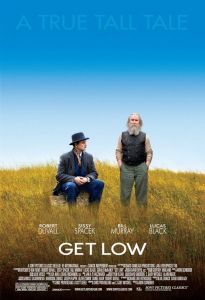 This slice-of-life Depression era tale examines a hermit named Felix (Robert Duvall) coming to terms with his life. He’s the scary old man that everyone has a story about, and now he’s come to town to make his funeral arrangements with a sleazy funeral director (Bill Murray). Except Felix wants to have his funeral while he’s alive, invite everybody in town, and have them share their collected stories, and he?s got his own story to share that’s been haunting him for decades. This is a very slow burn of a drama, to a fault. It works itself into a corner, and when Felix reveals his haunting secret you sort of shrug and think, “Is that all?” The pacing is languid; the movie feels lived-in and authentic down to its terse sense of humor and local color. You can feel the fingerprints of the Coen brothers on the film even though they had no involvement. This is a mildly touching, occasionally inert drama that benefits tremendously from the talents of Duvall and Murray, both relishing their folksy characters. This is a movie where the actors have time and space to dig in and explore their characters. Duvall and company keeps the movie from drifting off into melodrama. Get Low follows a cue from its lead actor. It’s understated, low key, and will likely go unappreciated because of its emphasis on subtlety, sometimes too much subtlety.
Nate’s Grade: B
Share this:

Bad Lieutenant: Port of Call New Orleans (2009)
 This is a crazy movie. It is not weird, it is not bizarre; it is not silly. Werner Herzog’s whacked-out movie is a remake of a 1992 movie that wasn’t that good to begin with. This certifiably crazy movie mostly involves Nicolas Cage as a corrupt cop playing all sides and snorting everything that isn’t bolted down in the Big Easy up his nose. For a stretch during the middle, he starts to sound like Jimmy Stewart with lockjaw. The central murder investigation plot is pretty much an afterthought in an environment like this. You want the crazy, and with Cage and Herzog, it is in no short supply. There’s Cage threatening an elderly woman at gunpoint, crawling reptile POV shots, a man’s “soul” break-dancing after the man lies dead, and neon iguanas that may exist only in Cage’s drugged-out mind. The film has been described as a trippy parody of standard cops-and-robbers fare, or as a seriously demented anti-drug message, but I think the best description is just “crazy-ass movie.” It has moments that make you do nothing but shake your head and laugh, like when Cage is about to hit rock bottom and EVERY case/storyline gets solved in a matter of seconds to his bemused disbelief. The comedy is straight-faced but it is definitely there. Cage harnesses his eccentricities and delivers an insanely entertaining performance that reconfirms that there is indeed an actor underneath his Hollywood veneer. He is compulsively enjoyable and the movie is compulsively watchable, every crazy freaking second of it. Iguanas!
Nate’s Grade: B
Share this:

Antichrist (2009)
 Just in time for Easter, I watched notoriously sadistic filmmaker Lars von Trier’s (Dancer in the Dark, Dogville) controversial psycho-horror film, Antichrist, and wow, is this a loathsome, powerfully unpleasant experience. There’s about five minutes of worth in this whole film. In a beautifully shot black and white prologue, we watch a couple (Charlotte Gainsbourg, Willem Dafoe) have sex and, unbeknownst to them, their baby falls out a window and dies. It’s all downhill from there and at rapid speed. The remaining movie explores Gainsbourg’s trauma and grief and her husband’s therapeutic attempts to cure his wife. There’s a somewhat intriguing premise buried underneath the mounds of psychobabble — a husband blurring the lines of professionalism to become his partner’s therapist. There are some complex ethical and emotional areas to explore there, but alas, von Trier takes his characters to a spooky cabin in the woods (named “Eden” for maximum metaphorical pretension) and the move becomes one long, incomprehensible, pompous trek into weirdness and pseudo-intellectualism. von Trier wants his movie to be disturbing, so he packs it will strange images like a dead talking fox (“Chaos reigns”) and a stillborn baby dear handing from the back of its mother, intending to convey the ruthless brutality of the natural world that his characters must navigate. Except I never cared about these characters at all. We never get to know them, so we can’t really feel for them, so when they start becoming unhinged it has no dramatic weight. Their lengthy conversations are a drag, and one psychology exercise after another doesn’t make much sense. The von Trier narrative model (woman is relentlessly tortured) is alive and well and leads to some shocking scenes of over-the-top sexual violence. von Tier’s attitude toward women, and female sexuality, has always been somewhat sketchy; is he an exploitative misogynist or a cloaked feminist arguing that the male-dominated world cannot handle feminine sexuality and independence? I feel like von Trier is an artist that could be diagnosed with Munchausen’s by proxy syndrome.
Nate’s Grade: D+
Share this:

In the Loop (2009)
 This is one of those movies that are so sharp, so bristling with intelligence, that you practically need to have a remote control glued to your mitt so that you can rewind and catch all the jokes. I turned the subtitles on myself just to make sure I could get everything. This British comedy is a wicked satire of the miscommunication and blunders that lead the U.S. and Britain into declaring war on a Middle Eastern country. There are some topical jabs but so much of the humor comes from the fractious character interaction; there is a real joy to watching these larger-than-life personalities clash over the course of two nations. It’s fascinating and biting and plays out like a more profane version of The West Wing. The cast is fantastic from top to bottom, with special notice going to My Girl‘s Anna Chlumsky all grown up and perfect with comic timing, and Peter Capaldi as the fearsome, fire-breathing British Director of Communications who can split an epithet like nobody’s business. You might expect his head to burst with how apoplectic he can get. This may be the most quotable comedy in years; every line of this screenplay is gold. There are Hollywood comedies that would kill for just one or two of the choice lines here, but In the Loop is chock full of the funny. It’s a machine gun spray of comedy. Something this scathing and this brilliant doesn’t come along every day.
Nate’s Grade: A
Share this:

An Education (2009)
 In 1961 Britain, Jenny (Carey Mulligan) is a 16-year-old schoolgirl plowing away at her education. She?s on track to enroll at Oxford “reading English” and her parents (Alfred Molina, Cara Seymour) have overscheduled the girl with hobbies and clubs to help build her academic portfolio. Then one rainy night she meets David (Peter Sarsgaard), a thirty something man who offers to give her and her cello a ride. This enchanting man keeps coming back around to see Jenny, sweeping her off her feet. He invites her to go to concert recitals with his older friends Danny (Dominic Cooper) and Helen (Rosamund Pike), trips to the country, and even a fabulous getaway to Paris. “You have no idea how boring my life was before you,” she confesses to David. But David is coy about how he can pay for such extravagances. Jenny’s grades begin to suffer and it looks like she may miss out on being able to enroll at Oxford. She has to make a decision whether to continue seeing David or going back to her primary school education.
An Education is a handsomely recreated period drama that manages to be very funny, very engaging, and very well acted. It’s also rather insightful and does an exquisite job of conveying that strange wonderful heartsick of love, maybe better than any movie since My Summer of Love. You can practically just drink in all of Jenny’s excitement. Jenny isn’t a silly girl prone to naivety. She’s a smart and clever girl, and not just because other characters say so or we see her stellar test grades destined for prime placement on the fridge. You witness her intelligence in how she interacts through different social circles. Since the movie is entirely Jenny?s story, we need to be convinced that she’s smart in order to believe her willingness to be duped. She has reservations about David’s habits but doesn’t want to risk going back to a dull life of books and family dinners. She has to be a smart, vibrant girl anxious to keep a good thing going, willing to ignore certain warning signs that otherwise might cause her pause. Even Jenny’s parents get caught up in the seduction, swooning over David and his upper class connections and comforts.
 The teen-girl-with-older-male aspect might make us squirm, but in the realm of 1961 Britain, it’s acceptable. Jenny and David don?t need to hide their affair in dank hotel rooms and avoid any suspicious eyes. We don’t get any agonizing inner turmoil over dating a teenage girl, mostly because it’s from Jenny’s perspective and that everybody else seems okay with it all. This acceptance means that the drama for An Education can focus on something less seamy. That doesn’t mean that everybody approves. While Jenny’s friends think she hit the jackpot, and hang from her every word about her amazing sophisticated boyfriend, her literature teacher (Olivia Williams) sees through David?s whirlwind of charms. This isn’t the tale of some girl being drawn into the dark side, turning into an unsavory, rebellious teenager flouting the law and good manners. Jenny is not that kind of gal.
Mulligan is fantastic and delivers such a sumptuous performance that you feel like a human being is coming alive before your eyes. She lights up with the dawning realization that a charming and worldly man is courting her, and you feel every moments of her swirling delight and awe. Mulligan even goes so far as to get even the small details right, like the way Jenny opens her eyes to peak during a kiss to make sure it’s all not just some passing dream, or the way she has to look away at times and break eye-contact because she’s just so happy, with those twinkling eyes and a mouth curling like a cherry stem. She’s bashfully coquettish in her physical attraction to David, though in my praise it also sounds like I, too, have fallen for the girl. Much ink has been spilled declaring Mulligan as a rising Audrey Hepburn figure, mostly because she sports that famous short bob of a haircut that many girls had in 1961. To me, Mulligan gives a stronger impression as being the luminescent little sister to Emily Mortimer (Lovely & Amazing, Match Point). Mulligan is a fresh young actress that delivers a performance of stirring vulnerability. It’s a breakout performance that will likely mean that Hollywood will come calling when they need the worrisome girlfriend role for the next factory-produced mass-market entertainment (she’s finished filming the Wall Street sequel, so perhaps we’re already there).
 Adapted by Nick Hornby (About a Boy) from a memoir by Lynn Barber, An Education follows the coming-of-age track well with enough swipes at class-consciousness. But man, I was really surprised how funny this movie is. An Education is routinely crackling with a fine comic wit, and Jenny and her father have the best repartee. Molina is an unsung actor and he dutifully carries out the role of “uptight neurotic father” with more than a stiff upper lip; the man puts his all in the role. While he can come across as hysterical at times, Molina is paternal with a capital P. It’s refreshing just to listen to smart people banter at an intelligent level.
The movie’s theme ponders the significance of education. There’s the broader view of education, learning throughout one’s life from new and enriching experiences. She gets to learn a bit more of the way of the world, and Jenny feels that she can learn more and have fun with David than sitting through lectures and slogging through homework. She values what David has to teach her above what she can find in a textbook. Jenny’s father stresses the virtues of learning and thinking but once Jenny has a chance to marry an upper class, cultured male then education no longer matters. She is now set for life through David. All that learning to become a dutiful housewife in a lovely, gilded cage. Is that the real desired end to personal growth: to snag a husband? The school’s headmistress (Emma Thompson in practically a cameo) doesn’t serve as a great ambassador to higher learning: she stresses the lonely hardships, internal dedication, and she herself is openly anti-Semitic, proving that an intelligent mind is not the same as being open-minded. To her, Jenny is jeopardizing her lone chance at a respectable life.
 Jenny rejects the traditional route of education and chooses to pursue a life with David, that is, until the third act complications beckon. Jenny finds out about David’s secret rather too easily, I’m afraid (secret letters should never be hidden the glove compartment). While the end revelations are somewhat expected, what is unexpected is that every character pretty much escapes consequences by the end of the film. No one is really held accountable for his or her decisions. Pretty much everyone is exactly where he or she left off just with a tad more street smarts. It’s the equivalent of learning not to trust every person after getting ripped off.
Despite all the hesitation, and the age difference, An Education is an actual romantic movie. It’s a coming-of-age charmer with all the preen and gloss of an awards caliber film. You feel the delight in the sheer possibility of life for Jenny. The story unfolds at a deliberate pace and allows the audience to feel every point of anxiety and bubbling excitement for Jenny. Mulligan gives a star-making performance and practically glows with happiness during the movie’s key moments, making us love her even more. The plot may be conventional but the movie manages to be charming without much in the way of surprises. Still, An Education is a breezy, elegant, and clever movie that flies by, even if its biggest point of learning is that age-old chestnut that something too good to be true must be.
Nate’s Grade: A-
Share this:

A Single Man (2009)
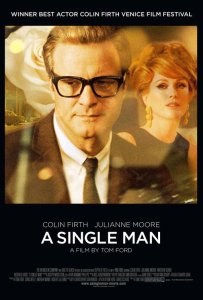 Tom Ford is a rare human being. He seems to be good at everything. The prominent fashion designer has never been averse to risk. He left work in America to toil for Gucci, a faltering European luxury brand. He became the creative director from 1994-2004, eventually leaving to form his own company. And after decades of success in the world of fashion, Ford decided to make the jump into movies. From fashion mogul to film director, nobody else has done it, let alone done it with such acclaim right out of the gate. A Single Man has been met with rich praise and Ford has been touted as a natural filmmaker. Perhaps Ford’s odyssey into moving pictures will inspire others to drop their needle and thread and pick up a camera instead. Who wants to see a Project Runway/Project Greenlight crossover?
In the early 1960s, George Falconer (Colin Firth) is a 50-year-old English professor still recovering from the loss of his love. Jim (Matthew Goode) and George had been together for over 16 years, that is, until Jim died in a car accident one rainy night. George has never fully recovered since that awful night. He doesn’t intend to waste any more time waiting for a reunion; at the end of the day, he will kill himself. He lays out his suit, empties his safety deposit box, and writes letters to his remaining friends and family. This will be George Falconer’s last day in Los Angeles, but perhaps in the meantime he’ll discover more reasons to give life another chance.
 Ford comes from the world of high fashion and here he proves that he should be taken seriously as a filmmaker. He has a sumptuous eye for visuals. A Single Man looks great in every scene. The costumes and period details are impeccable and may even give the historical consultants from Mad Men some due pause. The cinematography by Eduard Grau can become irritating because the colors go from drab to vibrant, reflecting the main character’s changing moods (lifted spirits = brighter colors!). At first it’s a neat visual gimmick but as it persists it becomes a crude blinking light, inelegantly summing up what the movie feels it cannot communicate. At times it just feels like piling on. I don’t need the color to drain from the screen to understand that George is sad.
Ford’s adaptation skills, on the other hand, could use some more polish. He and David Scearce spent years adapting the 1964 novel by Christopher Isherwood. They even added the whole suicide angle, which becomes their narrative crutch. There is a refreshingly funny sequence where George tries to act out his suicide position and goes from the shower to his bed, finally deciding upon shooting himself inside a zipped sleeping bag to cover the ensuing mess. This little five-minute stretch is like an oasis of humor in the super serious desert that is the rest of the film. The second half of the film is dominated by a will-he-or-won’t-he flirtation with a good-looking lithe college student (Nicholas Hoult, the boy all grown up from About a Boy). The kid shows definite interest. The romantic angle syncs up with George’s lost love and proves to be a welcomed distraction to George’s dejection. However, their connection is extremely thin, with Hoult making flirty eyes and inquisitively tilting his head for an hour. The romantic story exists as a means of making sure the narrative can mend George’s broken heart.
The story meanders for too long with a few revealing flashbacks, but honestly how hard is it to wring pathos from a suicidal man? How hard is it to write a middle-aged man taking stock of his life, getting his affairs in order, and saying his fuzzy goodbyes to people who don?t realize the significance. Everything gains magnitude under that prism; every pause, every inhalation, every wistful glance becomes riddled with deeper subtextual meaning, or so we are lead to believe. Every moment can unlock a new memory or secret, like when he sniffs a stranger’s dog and recalls his former beloved pet he shared with Jim. Under this guide, it is hard to tell whether the movie is doing any actual dramatic lifting. So much is supposed to be interpreted in the blankness, which the audience is entrusted to craft meaning to the character’s nostalgic pit stops. “Oh, he must be taking in the scent of the ocean one last time,” or, “Oh, he must be thinking about… something. But he’s gotta definitely be thinking about something. Something deep.” Can you see how this might get tedious after a while?
 A Single Man could have afforded more peaks into George’s background and less of Julianne Moore. She plays an old boozy Brit friend of his from back in the day. Her moments onscreen, while limited, are a chore to get through because Moore just consumes her characters sadness. She gets drunk on the one emotion she’s been hired to play. She’s certainly not embarrassing herself like in 2006’s Freedomland, but this isn’t a performance for her illustrious highlight reel. I don’t care if she does get nominated for a supporting actress Oscar, as seems all but certain; I expect more from Moore.
Firth is the whole movie so it’s a relief that he turns in the performance of his career. He gives a complex portrayal that doesn’t nicely fit into the typical Firth cinematic creature: priggish, clever, dry, ultimately a good guy. Here you can practically see the gears in his head processing the last moments of life. The extent he can convey with his eyes or simply the corners of his mouth are exquisite. He provides so much of what the narrative does not. He’s a sad creature mired in one long day of existential grief, but I need more from this character than what Ford affords.
George Falconer gives a dandy speech about the fear of the minority, almost outing himself to his college class, but for a flick about an older gay male passing through life to be an invisible member of society, Ford adopts a “don’t ask, don’t tell” approach to narrative. He buttons up his characters emotions. Understatement is lovely when there’s enough to work with. That’s the issue with A Single Man. Ford hasn’t given himself enough to work with, instead forcing the audience to make up the work by inserting meaning into every furtive brow and pained expression. This is a meditation on a life in passing, told through a series of small vignettes. I need more than a melancholy man listening to the clock strike seconds off his soon-to-be-ended life. If I wanted to watch that movie I’d check out the latest Gus van Sant art house masturbations.
Nate’s Grade: B-


 nathanzoebl
You must be logged in to post a comment.