Blog Archives
Snowpiercer (2014)
 I have seen Snowpiercer twice and it’s still a hard movie to describe. It’s the English-language debut of Korean filmmaker Joon-hoo Bong, notable for The Host (the good one) and Mother. It’s based upon a French graphic novel only printed in France and South Korea. It’s an international production, filmed in the Czech Republic, and populated with recognizable actors like Octavia Spencer, Tilda Swinton, John Hurt, Ed Harris, and Captain America himself, Chris Evans. It’s a dark dystopian allegory about class warfare, it’s a stunning sci-fi action movie, it’s a parable about humanity, it’s a stylish thriller that puts most of Hollywood to shame; it’s many things, chief among them, an incredible movie that demands to be seen on the big screen when able.
To combat global warming, world leaders disperse a chemical to lower temperatures, and oh boy does it work, inadvertently causing a new Ice Age that kills almost all life on the planet. Almost, because a few hundred got aboard the train owned and operated by Wilford (Harris), a rich and secretive industrialist. He built a train that can circle the globe, running on a perpetual motion motor. The last of humanity is housed on Wilfrod’s train. After seventeen years aboard, the class system has become rather rigid. The important and wealthy are at the front of the train, and the poor are crammed in the back, given gelatinous protein blocks to eat, and kept in line by armed guards. Curtis (Evans) is plotting a revolt, biding his time, consulting with the wise Gilliam (Hurt), an aging leader missing several limbs. Together, they storm ahead, capturing effete Wilford spokesman Mason (Swinton) as a hostage, rescuing an engineer (Kang-ho Song) with a drug addiction who will help them open the train cars, fighting car by car to take control of the train. Naturally, those in power fight back in force to maintain the uneven status quo.
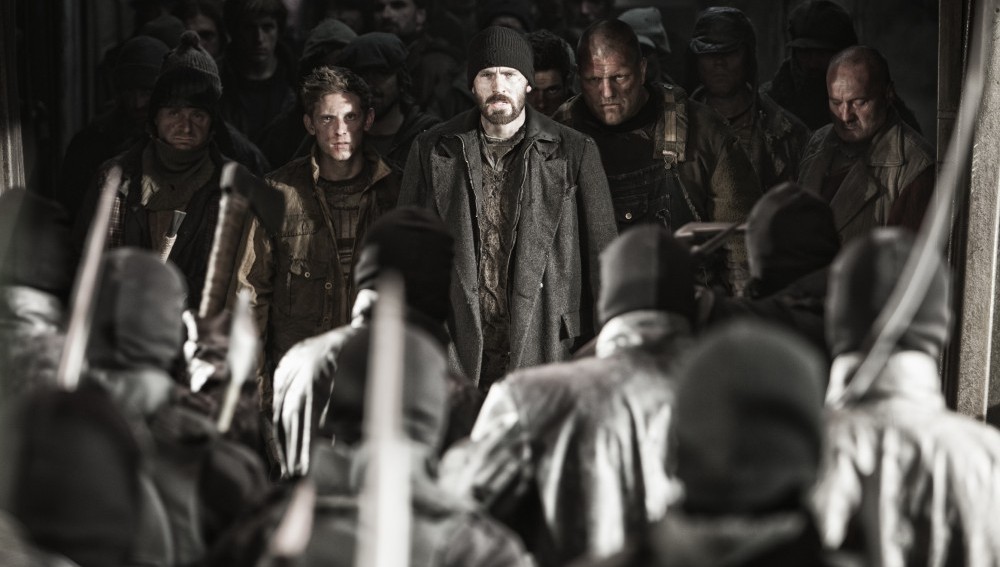 Short of the adrenaline-soaked Raid 2, there hasn’t been a better action movie this year than Snowpiercer. It starts slow, drawing the audience in, setting up its initial burst as a prison break of sorts where the tail section passengers have to figure out a way past the guards and several security doors open for only a few seconds. When the break does happen, in a clever fashion, you feel the full rush of the new opportunity thanks to the movie properly setting up the stakes and obstacles. Each new car presents a new world and a new obstacle. There’s one car where Curtis and his revolutionaries are met with fifty ski-mask wearing grunts with axes. This is the standout action sequence because of how it keeps changing. At first its brawn versus brawn, complete with swinging axes. Then the fighting stops briefly and all the grunts put on night vision goggles. The train enters a long tunnel, condemning Curtis and company to the dark. The grunts then go to town, spearing and slashing the hapless passengers blindly swinging in the dark. I won’t spoil the solution to this scenario but it too is properly set up and leads to some extremely satisfying action imagery, the kind of stuff that pops in a trailer. There’s an entirely different sequence later that also stands out. As the train goes into a long curve in the track, certain train cars are visible from others. Our chief heavy, listed as Franco the Elder (Vlad Ivanov), sees Curtis in the car ahead and starts firing. Eventually Curtis and Franco blast small holes in the protective glass and wait, wait for their moment, for their shot. It’s a tense neo-Western standoff moment, and another delightful addition. The accumulative action has a surprising degree of variety and development.
Snowpiercer is a stirring action movie that keeps your eyes glued to the screen, but it does an equally impressive job of building its world and adding dimension to its storytelling. Reportedly, Harvey Weinstein wanted to cut twenty minutes out of the 126-minute film, but I’m puzzled as to where those edits would come. Every scene in this movie drives the film forward or imparts crucial pieces of information or metaphor that will play out later. Even something as comical as stopping for sushi in the aquarium car (balancing the ecosystem) has greater meaning and subtext when you look back at the film as a whole. Joon-hoo Bong and his co-screenwriter Kelly Masterson (Before the Devil Knows You’re Dead) have given serious consideration to how this world operates and what life would be like when all of humanity is confined to one long train. The past is revealed incrementally, gingerly allowing the audience to become consumed with this odd dystopian landscape, our fascination brewing with each new puzzle piece being added. I was enthralled with the rich details, the cruel methods of keeping those in the tail section in line, the regular head counts, the protein block bars and what they truly are made of, the annual celebration of passing a certain bridge marking their own New Year, and especially the deification of Wilford. The characters worship the engine, and why not since it is the source of life for them, or as the chirpy schoolteacher (Alison Pill) sings: “What happens if the engine fails? We all freeze and die!” The later reveals are the best, giving full explanation why tail section children are important and, particularly, why Curtis is so ashamed at having two good arms. That monologue by Evans, looking back on the earliest and most cruelly chaotic days on the train, is a whopper. I truly hope that aspiring actors will use it during future auditions. It will make an impression.
 Its dark sense of humor and political and philosophical subtext provide an even richer texture to this strange, bleak world. The political commentary isn’t exactly subtle, I’ll admit, but it’s exceedingly better executed and integrated into its plot than, say, last year’s Elysium. The class-consciousness provides a greater depth to the proceedings, providing a new spin on the have/have nots that’s just as relevant today. It’s not just tacked on, either. The political commentary is intertwined with the mechanics of the plot, as we’re witnessing class warfare against inequality, how barbarous acts can be co-opted for personal gain. When Curtis and his small company finally reach Wilford and the engine, it’s a moment akin to visiting the Wizard in Oz, the man behind the curtain they’ve heard so much about. There’s a great degree of incredulous humor from Wilford’s vaulted perspective, but the longer you listen, the more you start to follow his twisted logic and why exactly the status quo must be upheld despite the bloody consequences. Then there’s the macabre humor, which can be bracing at points, none more so than the school car sequence with Alison Pill (TV’s The Newsroom). Also doing plenty of comedic heavy lifting is Swinton (Only Lovers Left Alive, We Need to Talk About Kevin) with such an odd authority figure character. With a mouthful of fake teeth, some owlish glasses, and a peculiar speech pattern, it feels like she stepped out of a Terry Gilliam movie, and we’re all the better for it. Often she’s the only source of humor in what is otherwise a dreary story about the strong preying upon the weak.
Stylish, intelligent, rewarding in surprising ways while still being thoroughly entertaining, with tremendous technical attributes such as production design, Snowpiercer is a sci-fi flick that borrows from many but creates its own unique and enthralling landscape. Rare is the movie going experience where you sit at the edge of your seat, completely taken in by the creativity of the artists at work, transported to somewhere new and exciting, and you dread the approaching end credits. Snowpiercer is an experience that’s hard to describe beyond an unrelenting checklist of positive, glowing adjectives. Simply put, it’s movies like this that make going to the movies special.
Nate’s Grade: A
Share this:

The Raid 2 (2014)
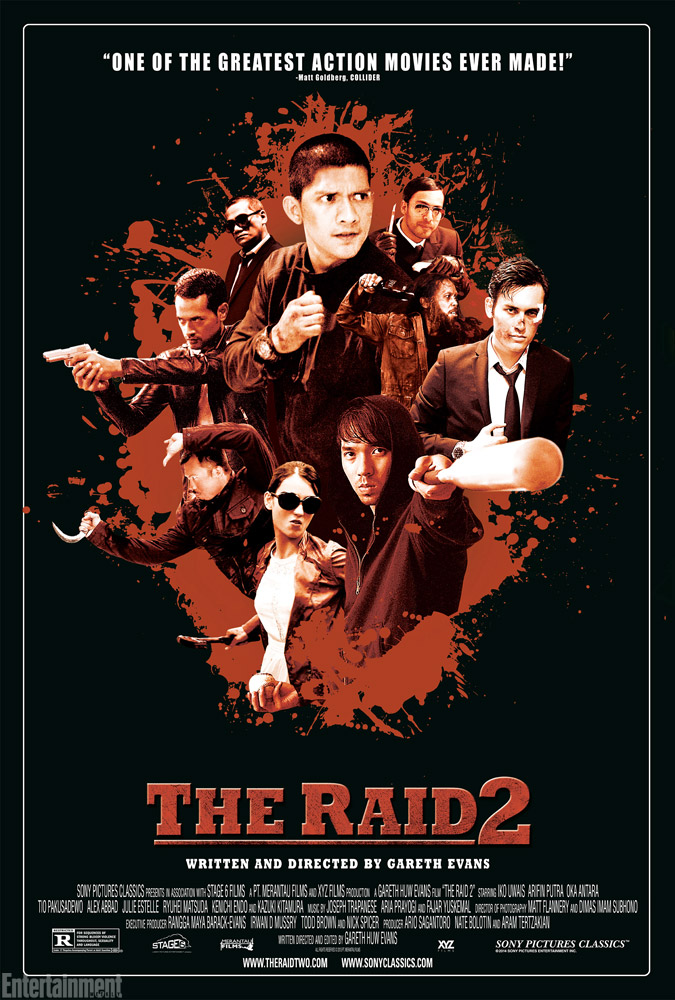 Rare is the movie that I feel I don’t even need to go into great detail rather than just scream, in a fashion suiting madness, “See this! See it!” Such is the case for The Raid 2, the sequel to the 2012 Indonesian action film that melted faces with its inventive and brutal action. The original movie had a confined location, a gang-run tenement building, and a simple premise of reaching the top and nabbing the bad guy. When people weren’t punching or shooting each other, the original Raid lagged, but director/writer Gareth Evans has solved the problem with his action-packed sequel. The world expands greatly, establishing the uneasy peace kept by powerful and warring criminal organizations. The plot ends up becoming something akin to The Departed meets A Prophet, following our hero cop from the first movie now placed undercover to gain the trust of the criminal overlords and work his way up the food chain. When the action isn’t cooking, you’re still engaged with the story and the suspense simmers in clever ways. But getting back to the film’s calling card, the action sequences are impeccably choreographed and edited, have a wide variety of locations for fun, and are bloody intoxicating. This is a movie soaked in adrenaline, and the action sequences will be hard to beat for the rest of the year. Evans finds ways to provide flair for his supporting characters, including a family duo that involves a deaf woman whose weapon of choice is hammers and a guy who prefers a baseball and a bat. The Raid 2 fires on all cylinders so well, so brilliantly filmed, that it puts just about every American action thriller to shame. It doesn’t need to be as long as it is (pushing two and a half hours), and it takes a little while to set up the players, but this is even more of an entertaining rush than the original, because now we get a sense of what Evans and his team can do with fewer restrictions. When Evans gets to Hollywood, and he will, just make sure you give him all the money to do whatever he wants.
Nate’s Grade: A-
Share this:

The Great Beauty (2013)
 In the Eternal City, a.k.a. Rome, Jep Gambardella (Toni Servillo) has served as its unofficial emcee for years. The literary magazine writer has been coasting for years, living off the prestige and fame from an international hit novel he wrote in his twenties. Now at the age of 65, Jep has come to the conclusion that his life has been lacking the beauty he has sought. All the parties, the late nights, and the fast living have caught up with him. Jep explores the city and its peculiar inhabitants to examine his own life.
It’s impossible to watch The Great Beauty without conjuring images of the great director Fellini. It certainly brings to mind a modern La Dolce Vita. There’s a heightened sense of reality mingling with the surreal, the lives of the rich socialites stepping into the reaches of irony-free satire. At a small party, one rich lady compliments the jazz playing, and another lady says, “The only jazz scene worth listening to today is Ethiopian jazz.” I burst out laughing harder than I have all year. These are people living privileged lives that have lost their tenuous grasp on reality, unaware that they have become caricatures. Their silly ennui has consumed their perspectives. Like Fellini, the movie explores a cloistered world of the Roman elite and their tragicomic absurdities with a touch of the surreal and meditative. I can’t so much pinpoint a clear plot or structure that guides the film, but there are numerous moments, images, scenes that standout in my memory. A private Botox party is played as a zany spiritual gathering where applicants take waiting numbers and a doctor whisper about the great journey they are on together, and then injects botulism into your face. Nuns are everywhere, which shouldn’t be a surprise, but the sight of nuns just randomly populating scenes lends to the surreal nature. Then there’s the 104-year-old nun positioned to be a saint. She looks like a mummy, prefers to sleep on a floor of cardboard, and her mind is still capable of great insight. The ancient nun manages to thematically sum up the film’s interests in beauty, culture, religion, remembrance, and death.
 The relaxed nature of the film and the abstract plot, with little sense of linear trajectory, will certainly test the patience of several moviegoers. At my theater, after twenty minutes several middle-aged couples walked out, muttering, “This is one of the worst movies I’ve ever seen.” I don’t know what these people were expecting when they walked into a 140-minute Italian film, but there declaration is flat-out wrong. I mean, these people probably haven’t even seen InAPPropriate Comedy (cheap shot, achieved). The opening involves the death of a Japanese tourist, and then it switches over to a raucous rooftop party that rivals what we saw in last summer’s Great Gatsby. This is a slow movie but it is slow with purpose, if that makes sense. Jep’s life for so long has been about the party scene, the dulling of the senses, the rush of adrenaline and alcohol. After his sixty-fifth birthday, he’s decided he has no more time to chase after momentary thrills. The journey that follows is mostly a collection of anecdotes and ideas, but many of them have strong staying power. The most notable story is a budding romance he forms with Ramona (Sabrina Ferilli), a 40-year-old stripper with no illusions about who she is. Their relationship is sweet and it ends abruptly, far too soon than a viewer would wish. I know if Hollywood ever remade an English version of this film, they’d structure the whole movie around this relationship. I suppose another benefit of a free-floating, stream of consciousness style plot is that few storylines overstay their welcome.
Jep has come to a turning point, a stark realization that his life is empty. A nice reminder of this notion, as well as a haunting “what could have been” review, is when the husband to an old girlfriend seeks him out. She has recently died and inside her diary, she writes passionately about Jep from their romance way back when they were teenagers. She only has a passing remark for her husband of 30-some years, and it rips the poor man apart. She was always hung up on Jep, always thinking about what might have been, the path not taken, and this defined her intimately. For the first time since he was young, Jep is looking at the world with different eyes and a hunger that exceeds Earthly pleasures. His friends all suffer from the doubt that they’ve wasted their time, that they were never good enough, and they accept their defeat and leave Rome one by one. One man, so humbled, doesn’t even want to bring any furniture with him, so he leaves it all behind. The only thing he’s taking with him is the years of regret, apparently. There’s a nice moment when he’s reiterating the story of his first kiss to Ramona, which also involves this now deceased woman. He can’t remember what she said to draw him, and the look of disappointment at his failing memory, at being unable to relive a moment that meant so much to him so long ago, it crushes him. Who knows how long Jep had held onto that memory as a source of respite. Jep is examining his life’s disappointments and misanthropy but it may already be too late.
There are plenty of messages and points of contemplation throughout the film, but the major theme seems to be as simple as, “Stop and smell the roses,” And yet, that doesn’t make the film less engaging and responsive. Jep is asked why he never wrote another book after his great success. There look to be a number of reasons, but he confesses he was waiting to be inspired again by the titular Great Beauty. Naturally, by this point, we and Jep have come to realize that waiting for beauty is foolish when it is all around us at any moment (especially in Rome). Most of Jep’s adult life has been consumed with social frivolities and passing pleasures, but only now does he seem to stop and fully appreciate his surroundings and his company, naturally, when his friends are departing. It’s a universal theme and one that hasn’t gotten old and the film’s handling is anything but sop-headed sentimentalism. It even ties back to the opening, where the Japanese tourist keels over dead. The man is so busy trying to document his vacation rather than experience it, and in the end, it’s all for what?
 Like Jep, we too will fall in love with Rome as he strolls around it. Gloriously photographed, it’s a treat to experience the major works of art in Rome, so much so that it may stir your passions to see them in person. Even as the plot becomes lugubrious, you don’t mind because of how lovely Rome and its facilities look. Characters doing little and ruminating in Kansas may get boring, but characters doing little and ruminating in Rome, well at least that’s scenery worth watching.
I’ve read many differing interpretations of the film and its messages, the impact of different scenes and which hit hardest, and it reminds me what good art is meant to do; it’s meant to inspire us, entreat us, but also stir us to engage with it, and The Great Beauty does just that. It’s a bawdy, beautiful, and entertaining film but one that also takes its time, luxuriates in atmosphere, and asks the audience to ponder as Jep does about regret, lost opportunities, and the contradictions of happiness. The surreal touches can provide plenty of laughs, but it’s the smaller appreciation of side characters, ideas, and the contrasts that provide more intellectual payoffs. The film is far more free-floating and meditative than American audiences are used to, but unlike, say the works of Terrence Malick, I felt like I could celebrate the absurdities and joys of life along with the people onscreen. It’s existential without being laboriously pretentious, and the comedy and stylish flourishes help anchor the entertainment. The Great Beauty is a beguiling movie that admittedly could have been chopped down from its 140-minute running time. If you’re a fan of Fellini, or art history, then this is a must-see. For others, I’d advise giving this a try, though don’t be surprised if it takes a while to grow on you with its ponderous nature.
Nate’s Grade: A-
Share this:

Blue is the Warmest Color (2013)
 The French drama Blue is the Warmest Color has been bathed in publicity and controversy ever since its debut at the prestigious Cannes Film Festival. It’s a three-hour lesbian romance about sexual awakening and finding a deep human connection, but all anyone wanted to talk about was the graphic sex. The drama split audiences down the middle, with people like Steven Spielberg praising its unflinching examination on the craving and heartache of young love, and others like New York Times film critic Manohla Dargis called the director/writer Abdellatif Kechiche “oblivious to real women.” It’s an impressive film, a rapturous love story for the twenty-first century that defies swift categorization. This isn’t just a gay film. This isn’t just a romance. This is a highly relatable, appealing, and heartbreaking movie of the first-order; however, both the defenders and detractors of Blue have substantial merits to their claims.
Adele (Adele Exarchopoulos) is a normal 17-year old girl trying to gather a sense of her self. Her peers are pressuring her to lose her virginity with a popular guy, but it’s another person, a mysterious blue-haired lass, that Adele can’t stop thinking about. This woman, the somewhat older Emma (Lea Seydoux) is an art student and an out lesbian. One night, Adele follows her into a lesbian bar and they strike up a friendship, one that quickly translates into something more romantic. Over the rest of the movie, we cover several years of Adele and Emma’s lives together and learn that each has left an indelible mark on the other, for good and bad.
 Let’s tackle the portion that’s gotten the most coverage in the media, the graphic sex sequences that earned the film the rare stateside NC-17 rating. You may have thought 2011’s sex addict drama, Shame, earned its NC-17 rating, but Blue trounces it. Short of unsimulated sex scenes in movies like Shortbus and 9 Songs, I doubt many audience members have experienced sex sequences this explicit and this lengthy (you may start checking your watch at some point). At its Cannes premier, the critical response breathlessly hyped a sexual encounter that went on for 18 minutes. That number may be the total onscreen copulation time; the longest sex scene is seven minutes or so, but you do feel the vigorous extension. Is there a particular reason the steamy sex scenes needed to be this long or this graphic? Kechiche likely wanted to communicate an explosion of immeasurable passion unlike anything Emma or Adele will experience in their lives. But did this need to be communicated with seven minutes of orgasmic fingers, lips, and tongues exploring every crevice of their bodies? Would six minutes of enthusiastic sex prove insufficient? I’d be a hypocrite if I said I found little entertainment in watching. I just don’t think the film demanded as much drawn out sex when the drama is this strong.
And that’s the mass appeal blurb when it comes to Blue is the Warmest Color: come for the intensity of the sex, stay for the intensity of the feelings. You will swiftly feel the nervousness and sexual tension that comes from the exploration of attraction. All those high school butterflies come fluttering back. The depth of feeling is easily relatable. The characters are searching for unparalleled human connection but also discovering more about who they are. This is a moving, absorbing, and crushing love story, but it’s just as much about two people falling out of love. That was a major surprise for me. What’s more is that the forces behind their breakup are completely understandable and you can see them coming; at heart, they are two different people that operate in different worlds, and they do change over time. That’s excellent storytelling when one can feel for both sides of a breakup, comprehend how this moment arrived, and looking back, see how inevitable a conflict like this would be. Emma’s sphere of friends is one that Adele does not feel a comfortable place within. Emma worries that Adele needs to find a sense of identity outside their relationship. Adele is still too timid to admit the truth about her relationship with a woman to her colleagues and family. These are major conflicts and they simmer and gestate in ways that feel like real life. Beyond some of the specifics in the bedroom (more on that later), there isn’t a moment that feels unbelievable in the entire three hours. This is a naturalistic love story that unfolds in small waves, allowing us to get to know the characters and their lives.
 The two actresses are outstanding and bare much more than their flesh for this film. Exarchopoulos and Seydoux disappear into their characters. These are richly developed characters, and each actress does her best to bring them to startling life. Exachopoulos (who looks like a Parisian Maggie Grace) has so much of the film riding on her 19-year-old shoulders since her character is the film’s major point of view; we often see the world through her perspective. She’s excellent as the curious, anxious, bashful young woman, and her encounters with Emma open her world up, allowing Adele to broaden as a person. She’s still not confidant, given to doubts that Emma seems to lack, but Exarchopoulos convinces you of the difference. Every step along her journey is credible, acted with poise, even the uncontrolled weeping. In a just world, this French newcomer would be up for serious acting award consideration. Seydoux is the more assured character, the one who sizes up her interest, but when hurt, the ferocity of Emma’s fury is staggering. This is not a woman to scorn, and Adele will learn this the hard way. Later in the film, as the history hangs in the air between Emma and Adele, we get a powerful sense of how conflicted both women are, having never turned off their feelings but trapped by circumstance and consequences. You feel each member cycle through the myriad of emotions, fumbling between desire and desperation. The actresses work together beautifully, raising one another’s performance, and giving one another the environment to get truly intimate, emotionally and physically.
The film is more a representation of a man’s fantasy of lesbian sex. The male gaze, a term referred to often in feminist film criticism, is trenchant in this film. Kechiche’s camera doesn’t just love his two young stars; it fawns over them, lusts over them. The camera is always within inches of Adele’s face, glued to tight shots lingering over Exarchopoulos’s pouty lips. Seriously, the actress has her mouth open the entire movie, her lips forever pillowy, forever pouting. It’s a sensual movie, yes, but does every shot of young Adele need to be so tawny and voyeuristic, her hair always slightly askew in her face, her body positioned just so that her assets are featured? Critics like Dargis are correct about Kechiche’s fawning camera pushing over into the boundary of erotic fetishism. This is where my questioning of sexual positioning comes back; going ass backwards when it comes to cunnilingus (and yes, I will intend that pun) is aesthetically pleasing in a sensuous manner, and that feels like the dictum of Kechiche’s intimate camerawork. It’s heterosexual male pleasure represented on screen, at least in its depiction. Otherwise, with the camera always tethered inches away from Adele’s face, why don’t we remain focused on her face during all this physical pleasure? It can be just as erotic. However, with all that out there, why can’t lesbian sex be given the same ridiculous fantasy depictions of heterosexual sex in the movies? I can almost guarantee that pool tables are not a prime location for indulging one’s urges. And just showcasing lesbian sex onscreen between a committed couple (not just girl-on-girl flings like in Black Swan) and normalizing it, whatever intention, is a virtue.
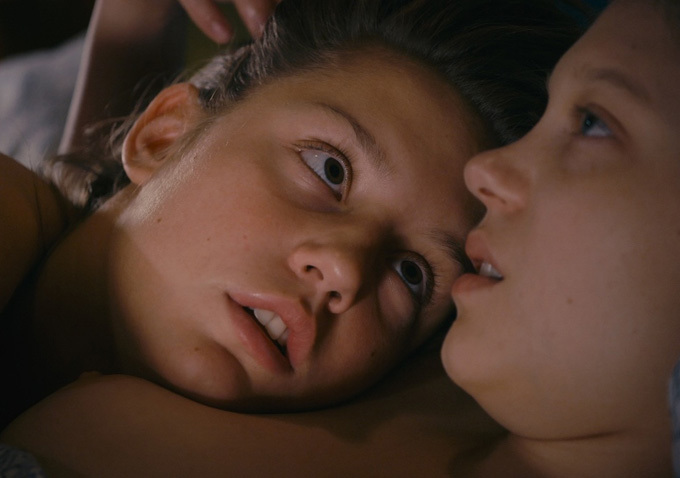 But it’s not just the sex scenes that could use some judicious snipping; the entire three-hour enterprise could be easily consolidated. The film is replete with loping scenes that sort of drift along, recreating the ordinary rhythms of life rather than the plot beat connect-the-dots we associate with most film narratives. That’s fine, you need time to establish characters and setting, but do we need people interpreting poetry at length and indulging in gender philosophy for minutes on end? Perhaps if I watched Blue is the Warmest Color a second time I’d be more tolerable of the narrative bloat, finding added subtext and metaphor to all those ponderous philosophical discussions over the nature of the self and gender identity. Of course seeing a three-hour movie, again, is going to take a significant time commitment.
Sensual throughout, beautifully developed, richly observed, and brought to life with bristling and audacious acting, Blue is the Warmest Color is a love story that hits hard with emotional force. By nicely realizing the characters, providing them depth and fallibility, we can empathize with them along the different stops of their romantic journey, seeing where each is coming from and understanding the yearning, frustration, and passion. When things are good, there’s a frisson on screen, a palpable sense of desire accentuated by Kechiche’s loving (and occasionally obsessive/fetishized) camerawork. The acting by Exarchopoulos and Seydoux is as raw and fevered as their onscreen lovemaking. I doubt it needed to be a full three hours long, and I doubt the notorious NC-17-earning sex scenes needed to be as graphic to communicate delight, but I’m most pleased that Blue is offering a full movegoing experience, watching the formation of two characters over time and how they change. It’s easily watchable even during its more ponderous, dare I say French-y, sidesteps. The ending is a slight misstep, calling out for greater certainty, but the French title for the film was, Adele: Chapters 1 & 2, the implication being there may be future cinematic adventures that await these people. I don’t know if this will ever come to fruition considering the original graphic novel by Julie Maroh is a mere 160 pages, rather shrift considering the medium, but I can hope. Romances this involving, observant, and intense don’t come around too often and deserve to be cherished. Just consider the sex a bonus.
Nate’s Grade: A
Share this:

Fist of the Reich (2012)
 It’s been too long since I’ve last had the pleasure of viewing a Uwe Boll movie. The man is downright prolific when it comes to spitting out multitudes of projects every year sometimes three or four. And yet there’s no guarantee I’ll have a speedy and easily accessible avenue to watch the man’s finished products. Take for instance his biopic on Max Schmeling, finished almost three years ago, and undergone a title change for American audiences to Fist of the Reich. Americans might not know who Max Schmeling was but by God do we know ourselves some Nazis. I can understand why this one was put on the shelf for as long as it was. There’s the fact that it’s entirely in German, Boll’s first completely foreign-language film since 1997. There’s also the fact that it’s still a pretty dull and uninvolving movie, and given the figure and subject matter, that may be enough to make Fist of the Reich the most disappointing film of Boll’s career.
 From 1930-1948, Max Schmeling (Henry Maske) was Germany’s most prolific athlete. He boxed overseas in America quite often, earning the world title in a controversial bout where his opponent was disqualified after a below the belt punch. Schmeling romances a movie star, Anny Ondra (Susanne Wuest), and proposes to her the day their courtship hits the gossip pages. Schmeling also has to fight the growing nationalistic influence of Hitler’s Nazi party, which looks at him as a powerful propaganda opportunity. After a high-profile loss to Joe Louis, in a rematch no less, Schmeling loses value to the Nazi machine and he’s drafted into the oncoming war.
When I say “most disappointing” I know that’s going to strike a chord given Boll’s oeuvre of craptacularcinema, but I really mean it. The biggest failing of the two-plus hours of Fist of the Reich is that it does not provide adequate evidence why Schmeling is a compelling figure of history. It’s a biopic that doesn’t have enough juice to justify why its central hero should even earn a biopic. I don’t think I’ve seen too many movies based upon real people where I left thinking, “Well that person didn’t deserve a movie.” And the ridiculous thing is that Schmeling of course deserves his own movie. The man was an international superstar, the pride of a nation during a tumultuous time, one of only three men to beat Joe Louis in his career, and then became a propaganda pawn for the Nazis. The man was even forced into service in the war and was one of only two survivors during a hellish battle. His manager was Jewish, his wife a Czech movie star, and they had to flee their country home to escape from the advancing Russians. That is some compelling stuff even before you get into the psychological depth at play with a man being pushed as a tool of Nazi propaganda and how that constrictive, humiliating, and infuriating chapter would have taken its toll on Schmeling’s soul. There is a wealth of material there to stage a rousing and engrossing biopic, and the fact that Boll and screenwriter Timo Berndt cannot is just inexcusable.
There’s very little depth given to Schmeling as a character; all the edges are sanded off and we’re left with a rather bland do-gooder that really just wants to box. He’s sort of this nondescript, milquetoast nice guy who trudges from scene to scene, doing bland but nice things. You won’t dislike the lug but you’ll find it hard to explain why he’s interesting. This shallowness just compounds as the movie continues, going further into the war as well as the downturns in Schmeling’s boxing career. His relationship with Anny is also pretty bland. They’re nice together and loving in appearance but also mundane. It’s like the movie is progressing scene-by-scene establishing facts and plot points rather than exploring the relationships of characters. Max gets married. Max gets a big bout. Max wants to give Joe Louis a rematch. The film seems so devoid of passion, bled dry by going through the checklist of what audiences desire in their biopics. The movie even attaches a weak framing device where Schmeling and a war prisoner are walking to a border and Schmeling recounts his life. Except this framing device ends with thirty minutes left to go. Can it be termed a framing device if it doesn’t frame a quarter of the movie? It’s not even necessary except to throw in a bit of war violence at the opening to hook an audience. It feels like nobody knows what to do with Schmeling so they’ll just breeze through his life’s big events, make him seem like a charitable fella, and then pray the audience understands the man’s historical significance.
Another reason for the stilted drama is quite possibly the noticeable acting limitations of our lead, Maske. The man is a former champion boxer in Germany who reportedly underwent eight months of acting training to prepare for this movie. Well, apparently eight was not enough (did I just backend into a pun?). He may be a great boxer but he is a very poor actor. His monotone, caveman-like warble reminds me of the speaking tones of early Arnold Schwarzenegger. I don’t think the guy has more than two sentences at a time. Again, I’d rather have my actors learn how to do something rather than teach a non-actor how to act. Actors can fake singing or boxing, plus there’s editing. Was it really substantial to have an actual boxer in the role? I know Schmeling himself actually wanted Maske to play him in a would-be movie, so there’s some passing approval, but there’s a reason that Maske hasn’t acted in a movie since this one. Maske’s pained acting, limited emotional range, and overall stiffness, combined with the thin characterization, makes for a void at the center of the movie.
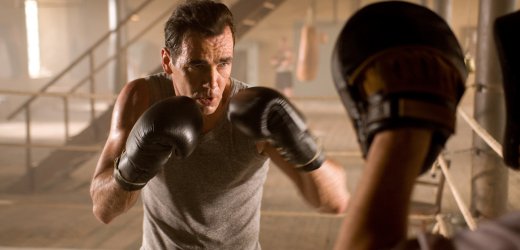 I also assumed given Boll’s own background in boxing (he famously boxed a group of critics several years ago in a publicity stunt) that the onscreen bouts would be thrilling to watch. The excitable German ringside announcer seems to be watching different fights than I am. The fighters just don’t have any fight in them, carefully going through the motions, but when they hit they do so like they’re timid, afraid to put any force behind it. The camerawork and editing also fail to mask this feeling. Boxing is such a ferocious sport and we need to feel the danger and ferocity within the ring, but all too often it just feels like another ho-hum occasion for Schmeling, one where he’s rarely put to the test. Even the boxing matches that go to 15 rounds show us two fighters without any blood on them or bruises or any sign, beyond a glistening coat of faux sweat, that these two men have spent over an hour beating the crap out of each other. This limited sense of realism handicaps the movie as well as drawing out the accomplishments of Schmeling.
Boll’s direction also seems rather remote on this movie, curiously so. He relies almost entirely on bobbling handheld camerawork that can get a bit tiresome when it feels like the camera rarely settles. The movie is almost entirely comprised of a series of medium shots, which further adds to the overall blandness of the movie. The cinematography by longtime collaborator Mathias Neumann is entirely lackluster and downright incompetent. The visual compositions are supremely lacking; I don’t think Boll and Neumann even stumble into one engaging visual shot. And we’re talking about a boxer’s career here. The colors of the movie feel so drab and restrained but not in any sort of elegant artistic manner. It just looks like a drab movie, which suits a drab script with a drab lead actor. I’m also fairly certain that Boll’s longtime musical collaborator Jessica de Rooij borrows liberally, if not outright lifts, the musical themes of John Williams’ score for Saving Private Ryan. Has anyone else caught this?
It may seem foolish of me to admit, especially after twenty movies reviewed, but I actually had some semblance of hope that Fist of the Reich was going to be Boll’s first actual good movie. As it stands, Tunnel Rats is still the best Boll film, relatively speaking. I really thought that Boll’s background and boxing experience would carry over and we’d get a handsomely made, reverent, and absorbing look into the life of Max Schmeling, but time after time, the movie settles for bland. There’s a lot of meat to this guy but it feels about as in depth as a child’s book report, skimming over the drama to cover the significant signposts of the man’s life. As a result, we get an overview of the guy’s life but lack the evidence why we even took the journey. Saying a guy’s a great boxer, or a great humanitarian is one thing, but we need to see this, we need to feel it, and that’s the saddest failure of Fist of the Reich, that it takes an important historical figure and squeezes out all the lingering resonance.
Nate’s Grade: C
Share this:

Amour (2012)
 No other foreign film in 2012 racked up as many awards as Amour, a.k.a. Love, by Austrian writer/director Michael Haneke. It’s a love story but it shows the end of that love story, the part where the happily ever after meets the uncomfortable reality we must all eventually face. So, essentially, Haneke has crafted a horror film about getting old (this can happen to you, youngsters!). It’s a hard film to watch, though for me not just because of the subject matter but also because of the maddening ways that Haneke chooses to tell his art-house tales of woe.
Anne (Emannuelle Riva) and Georges (Jean-Louis Trintignant) are an 80-year-old married couple living in Paris. They are both retired musical teachers, they go about their days together, enjoying one another’s companionship. Then Anne suffers a stroke and starts slipping into senility. Her condition worsens and Georges tries to care for her increasing needs himself, buoyed by her fleeting moments where it seems like her normal self returns. But there’s only one way this story can end, and George must come to terms with letting go of his life’s love.
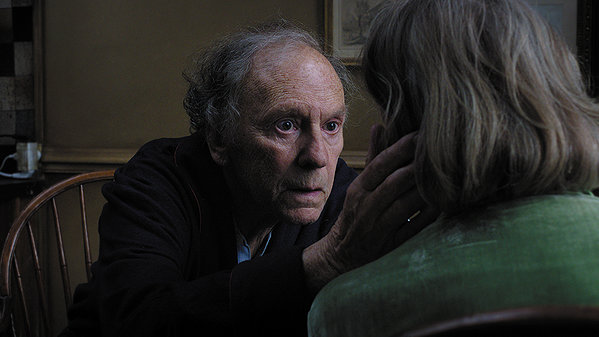 I will probably come across like a heartless bastard but that is the risk I’m willing to take; I found this movie to be rather boring and was, after an hour, just waiting for Anne to die so that the movie would likewise be at a merciful end. I’m just not a Haneke fan. I didn’t like Cache, I didn’t like (both) Funny Games, and I didn’t like The White Ribbon. In fact, while watching Amour I was reminded of all the reasons I dislike Haneke’s style. There was a sequence where a character leaves a room, but rather than follow that character or cut, the camera holds on the scene for an extended period of time, like 40 seconds, until the actor returns. I said, “Oh, I just remember he did the same thing in The White Ribbon, and I hated it then and I hate it now.” Want to watch an old man chase after a pigeon for five minutes? Oh, I get it, the pigeon is a metaphor, but did I need five minutes of it? I find Haneke’s sense of storytelling to be so glacial and, mostly, a spiral of kamikaze nihilism that’s usually distasteful. He’s such a cold filmmaker and the idea of him handling a “love story” seems dubious. It’s hard to watch a Haneke film and feel good about it. And that’s fine, the world needs downer filmmakers who will tackle serious subjects, but this guy is just not for me. With that said, take everything I recount in my review and analysis with a measure of consideration.
I know my power of empathy is alive and well, so I have to stop and run a diagnostic examination as to why I found it hard to really engage with this movie. I’m sure part of it is my relative youth in comparison to the onscreen couple. Death is still a mostly abstract concept I choose to be blissfully ignorant over. But that can’t be fully it. I went through a similar experience helping to care for my 91-year-old grandmother when she died (she lived with my parents for years before her eventual passing). It’s not the same as losing a spouse, naturally, but I do have a relatable entry point. Maybe it was the acting, which was free of any sort of showy actorly tricks we may expect from people reaching the big end. Death scenes have long been a staple of overacting, but underplaying it can also rob the movie of worthy emotional opportunities, and with an artist like Haneke, you may not get many more opportunities to soak up. While I had heard raves about Riva, and make no mistake she is quite good, I cannot help but think, “Yeah… but….” She’s quite convincing at showing the frailty of aging but she’s also practically comatose for half of the movie (I know I’m a Jennifer Lawrence homer, but glad she won the Oscar). And then Haneke tries to get clever with his ending, especially since he had been so straightforward for the previous two hours. The ending, a possible point of confusion, doesn’t feel like it fits the exacting, grounded reality I just barely stayed awake for.
 Amour is really less about Anne, the one slowly dying, as it is Georges coming to terms with his own selfishness, prolonging his love’s life after the point of dignity and mercy. It’s about how he comes to terms with the reality that he cannot care for his beloved, that she is too much of a burden, and that she ultimately wants to die and will fight her husband to achieve this wish. Again, this is an extremely dramatic storyline that could have developed some monstrously powerful examinations about end-of-life care. Sadly, I just didn’t, well, care too much. The relationship between Anne and Georges is very thinly realized onscreen. I’m sorry but I hate it when a character is afflicted so early in a story and that affliction becomes the stand-in for what should be proper characterization. All I know about Anne is her deteriorating condition. I don’t know about her life, her personality, her relationship with her husband before senility sets in. I’m just supposed to automatically feel for her because she’s old and suffered a stroke and her husband really cares a lot. Haneke’s storytelling has not done an adequate job to involve me. The actors, both quite good, can only do so much. There’s a reason that Hollywood has its heroines start the Cough That Symbolizes Terminal Illness when we hit the third act because by that time we’ve gotten to know them and care about their ultimate plight.
Now, Amour goes about its death business in a very sensitive but unsentimental way, which has and will likely emotionally devastate many a viewer. There are serious and hard discussions the movie gives adequate attention to, like how far can one spouse cope with care, when does holding on serve as a detriment, breaking the news to heartsick family members that your loved one isn’t getting any better, coming to terms with the inevitable, the tricky debate about what comes next as far as inheritances, and whether the person who is suffering should have a say in their care or lack thereof. It’s refreshing that serious decisions are given serious consideration, but like everything else, Haneke drags these out to great lengths that I stopped caring.
I find Haneke to be an outrageously overrated filmmaker of clinical coldness and occasional contempt. Just watch Funny Games to see what the man’s opinion is for most movie audiences lapping up your rote thrillers. Better yet, if you’re like me, don’t see Funny Games, and don’t see The White Ribbon, and don’t see Amour. I fully acknowledge I’m out on a critical limb here, cherishing my minority status, but I found this Oscar-winning film to be painfully ponderous and emotionally closed off. I’m happy people can watch Amour and see a great, tragic, affecting love story, because I don’t see it. The actors do fine jobs but the characterization is weak, relying upon circumstance and affliction in place of characterization. Maybe, and this is just a harebrained theory, but maybe Haneke dragged his movie out so long to symbolize Georges’ journey, so that we too, the audience, felt like when the end came it was a relief. I know for me, it did. Whatever Haneke does next, you can count me out. I’m done with the guy. After all, life’s too short to endure more plodding Haneke films.
Nate’s Grade: C+
Share this:

Rust and Bone (2012)
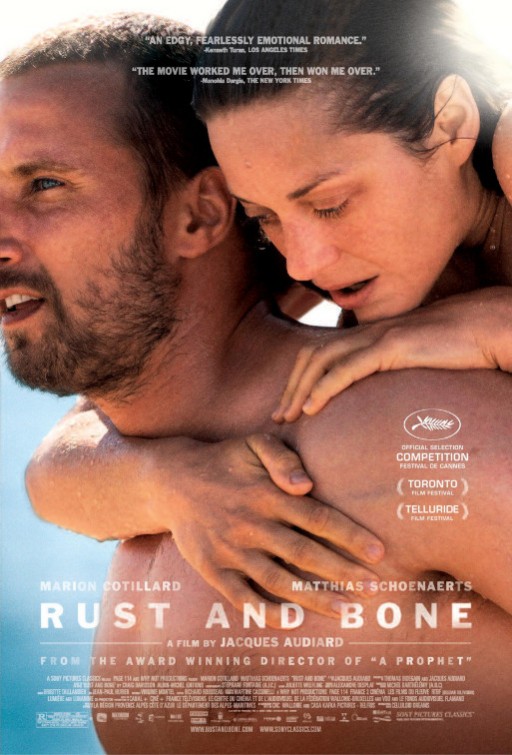 The French film Rust and Bone’s U.S. release seemed to hinge entirely on whether star Marion Cotillard would garner a coveted Oscar nomination. When that didn’t happen, it seemed like the studio just threw up its hands and said, “Well, that’s it.” Rust and Bone, co-written and directed by A Prophet’s Jaques Audiard, has been given a very ignoble release, an afterthought for an awards season that didn’t go Cotillard’s way. While I would have nominated Cotillard for her powerful performance, I certainly wouldn’t think much else about Rust and Bone, a frustrating film that doesn’t know whose story it’s telling or what movie it wishes to be.
Alain van Versch (Matthias Schoenaerts) is struggling to take care of him self and his young son, Sam. Alain’s ex-wife, and Sam’s mother, used the boy as part of her drug trades. Alain moves in with his sister and gets a job as a nightclub bouncer. It’s at the club where he meets Stephanie (Cotillard), a marine trainer. She’s also feisty and getting kicked out for starting a fight. Stephanie works at a Sea World-esque water park, and one horrific day one of the whales makes a wrong turn. It runs into the stage, knocking Stephanie unconscious into the water where, we learn, a whale has eaten her legs below her knee. She contacts Alain and the two form an unlikely friendship, one that turns physical as Stephanie worries what her sexual performance will be like under her new circumstances. Alain dreams of becoming a professional kick boxer/MMA fighter, and he performs in underground fights as another means of income. Stephanie tags along and helps motivate him win his fights. The two grow closer, but Alain struggles with what real feelings might mean.
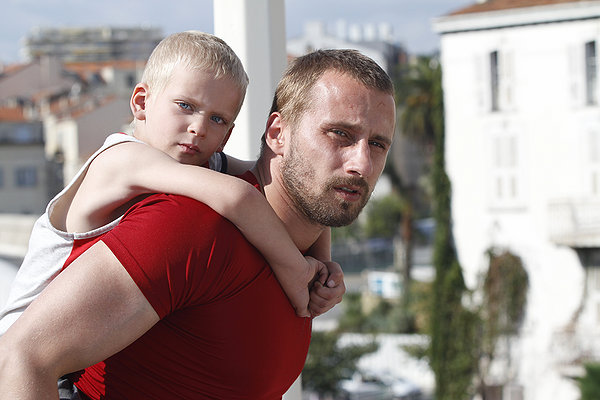 Rust and Bone has a serious case of multiple personality disorder. It looks like it’s going to be one movie, then all of a sudden it changes into another, and then when you think you’ve got a handle on that, it suddenly transforms into another. I’m perfectly fine with a movie switching gears suddenly, however, with Rust and Bone, I felt like I was getting three different half-hearted drafts rather than an actual movie. I went into the film knowing little other than the selling point, that Cotillard was playing a woman readjusting to life after a freak accident took her legs. For the first twenty minutes of the movie, I didn’t get a shred of this. I got a single father trying to scrape together what he could for himself and his son, often resorting to sneaky and illegal measures. Then shortly after Stephanie is introduced, the movie becomes all about her. We’re dealing with her recovery and her anger and her loss. Just when I think I’ve settled onto the narrative direction of the movie, it becomes Alain’s movie again. Now we’re following his budding career as an amateur kick boxer, with Stephanie as his cheerleader. Then she dissolves into the background of the movie yet again, and it’s all about him. I don’t think the movie knew which character it wanted to be its focal point, so we get a sloppy interspersing of storylines vying for dominance. Personally, I was much more invested and intrigued by Stephanie’s recovery than anything having to do with Alain trying to be a better father and failing. Then there’s other muddled storylines like hidden cameras in the workplace that only further distract. It’s just all too much and at the same time not enough.
Then there’s the matter of the romance between Stephanie and Alain. I suppose you could say they are both wounded people trying to gain a greater sense of independence, battling new concepts of self-identity, but I think I’m doing the film too many favors. The sad part is that these two people are extremely shallow and limited form a characterization standpoint. The only defining quality about Stephanie is her injury. Sure she’s feisty and can get into bar fights, and that fact that she’s attracted to Alain says something about her, but really, her only characterization is her new physical limitations and her adjustment to them. Her physical needs are given much more attention by the screenplay than her emotional resonance. It makes me sound like a hardhearted bastard but I’ve said it before, I need characters that have more depth to them other than that they suffer. Alain, on the other hand, is even worse. He’s a pretty flat character who’s actually a really terrible father. He loses his temper easily, chooses quick sex over picking up his kid at school, plus there’s the whole abandonment thing. It’s hard for me to believe that anything really sinks in with this lunkhead. His relationship with Stephanie, meant to open him up, instead reconfirms what a jerk he is. He uses women as sexual playthings, and treats Stephanie with this same careless abandon. He clearly doesn’t see her as anything but a comfortable fling, which he shows through his actions. If Alain’s romantic views have changed, the film doesn’t show any of this progression. I didn’t care about him and I certainly didn’t care about the two of them together.
Acting-wise, Cotillard (The Dark Knight Rises) is quite moving throughout as she tries to come to grips with everything that has been taken from her. Her more traditionally dramatic crying scenes are powerful, sure, but it’s the quiet moments that Cotillard nails. There’s a moment where she goes through her former routines hand motions, and in that moment, set to Katy Perry’s “Firework,” it becomes clear she is moving beyond her accident, accepting and getting stronger. It’s a subtle celebration of the human spirit’s ability to rebound, and Cotillard makes sure the moment is moving rather than cheesy. Also, there’s a very tender moment when she returns to the water park and reunites with the whale that took her legs. Through the glass, she goes through her training motions and the whale still resounds accordingly to her commands. It’s a wordless, touching moment that communicates so much, the nature of forgiveness, the culpability of an animal, but really about the connection between man and nature. Also, the fact that these two scenes are available on YouTube means somebody else must have seen them as standouts as well. She’s also naked frequently, if that matters to you.
 Schoenhaerts (Bullhead) is too opaque for his own good. He seems to settle for his brute physicality, and as such the movie does little to flesh him out further. He has a couple nice moments, especially at the film’s climax, but it’s too little to overturn the prevailing notion that his character is unworthy of co-lead status.
Probably the most impressive thing from Audiard’s film is the special effects to remove Cotillard’s legs. While the technology doesn’t seem like it has changed since Lt. Dan’s days in 1994, it’s still a striking image to process. I’m still wondering why exactly Stepheanie gets tattoos on her (remaining) thighs, reading “Right” and “Left.” Is she worried about going under the knife and the doctors taking more away from the wrong limb? That seems past the point of return. With the special effects technology, and the film’s quotient for sweaty sex scenes, this is the art house equivalent of erotica for those discerning few with amputation fetishes.
When it came time to determine which film would compete at the Academy Awards, France chose the feel-good buddy comedy The Intouchables over Rust and Bone. It’s easy to see why. Except for Cotillard’s fierce performance, and some spiffy special effects, there is nothing remarkable about this ultimately frustrating and shallow movie. The mismatched love story between Stephanie and Alain feels implausible and too focused on surface-level desires; not enough to justify some statement of personal growth on both their parts. There needed to be a complete restructuring of the screenplay. Too often it keeps switching focus, changing gears, mixing in other subplots until it all feels like one big mess lacking firm direction. I might have loved a movie that focused on Stephanie and her recovery, perhaps even one about Alain, though I doubt it. What Rust and Bone offers is a movie that’s persistently in doubt of its own identity, trying its hand at everything, forging necessary care to its lead characters. It’s a fine film that could have been a great one, if only it really knew what it wanted to be in the first place.
Nate’s Grade: C+
Share this:

Holy Motors (2012)
 I like movies that are different. I like movies that can be hard to understand. Holy Motors, a surreal French film, is both very different and very hard to understand. The movie follows a man as he goes about transforming into nine different characters, each with their own bizarre mission. Is he performing? For whom? Who is behind all this? Does he ever stop assuming false roles? Questions such as these hardly matter in movies such as this. You’re either transported by the lyrical weirdness and unpredictability, or you find it tiresome and much ado about nothing. After a while, I just gave up with this movie. I’m not a fan of weird for weird’s sake and I felt like that was all I got with Holy Motors. I’m sure you could write a doctoral-level thesis decoding this movie, but why waste valuable hours of your life? This movie is nothing but strange imagery that adds up to precious little. I thought the concept of playing roles/manufactured realities was better explored in Charlie Kaufman’s Synecdoche, New York. When a Kaufman movie is more accessible than your film, your name better be David Lynch or you’re in trouble. I’m sure several fans of the obscure and outrageous will find amusement at the sheer randomness with Holy Motors. It’s got martial arts acrobats, Kylie Minogue breaking out into song, magical resurrection, spontaneous band performances, talking cars, and for good measure chimpanzees. I hope you get more out of it than I did. I found the enterprise to be more tedious than titillating, more frustrating than fascinating, and not worth the trouble of fashioning meaning from the discarded puzzle pieces.
Nate’s Grade: C
Share this:

The Intouchables (2012)
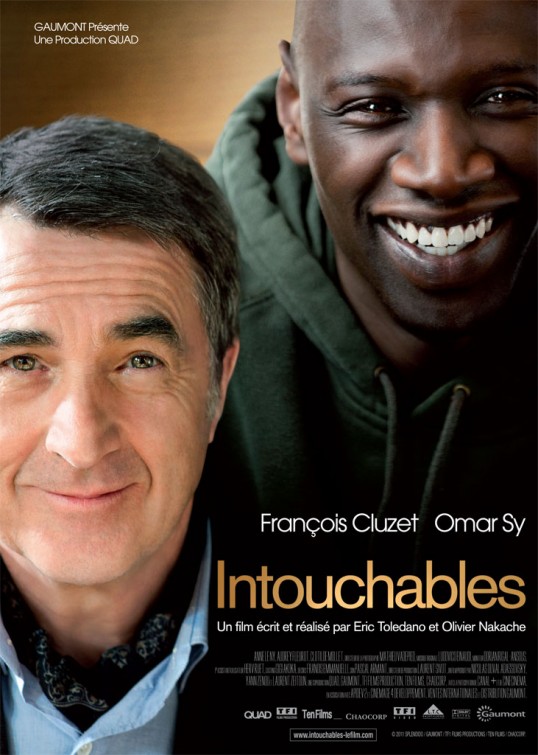 You’d never know it, but the highest-grossing film in Europe last year had nothing to do with super heroes, or sequels, or Hollywood itself. A small French film with the strange title of The Intouchablesmanages to break down just about every European box-office record last fall, sweeping across the continent and winning over hearts of numerous nationalities. The Weinstein Company bought the English-language adaptation rights, but before that gets underway they’re also releasing the original French movie to American audiences. Will subtitle-averse American audiences warm up to the little movie that has proven so hard to resist worldwide?
Philippe (Francois Cluzet) is rich quadriplegic and looking for a new caregiver to his many needs. In walks Driss (Omar Sy), a brash and headstrong man from a very different world: lower class, urban, and black. Philippe responds to the man’s irreverence and gumption and hires Driss on a trial basis. The upper-class lifestyle is like a fantasy to Driss, but the many responsibilities of caring for a man with no feeling below the neck are harder than anticipated. He objects at the very idea of having to manually evacuate the man’s… insides. The two opposites attract and the men become close friends and open one another up to new experiences.
 At its core, The Intouchables is the story of two men and their unlikely friendship. It’s told with enough weight, conviction, and character development that it’s easy to get wrapped up in the movie’s sweeping emotional tide. It’s a familiar tale, essentially that of the coming together of two people from distinctly different walks of life. You’ve seen this type of story before, where the upper class learns to cut loose and embrace life more fully, where the lower-class individual finds a path of dignity and responsibility. It’s been done before but rarely has it been done with such aplomb. Any storyline that involves a quadriplegic man and an inner city youth coming together sounds rife for after-school moralizing and sappy life-lessons. Thankfully, The Intouchables finds an angle that hits the emotional highpoints without tipping over into overt maudlin territory. Phillippe doesn’t want anyone’s pity. What is meant as good intentions can become another handicap; public perception of the individual’s limitations. Like The Diving Bell and the Butterfly, the 2007 inspirational French film about a significantly paralyzed man who could only move his left eye (what is it about French films and paralysis?), The Intouchables brings you into a world few glimpse and shows us what the perseverance of the human spirit can reap. Even a conversation that steers to sexuality can be illuminating and, for concerned male viewers, comforting that even if you can’t feel anything below the neck, the human body can adapt. In this regard, the film is a fascinating look into the life and care of a quadriplegic man (albeit an insanely wealthy one), and the fact that it’s also a moving and winning buddy comedy is yet another virtue. It’s like France’s version of a bromance.
It’s easy to see why The Intouchables has had runaway success in Europe, totaling over $300 million before ever opening in the States. This thing is a born crowd-pleaser. The characters are given room to roam, flesh out, and the interaction between two different men and their growing affection is a natural emotional foundation. We care about these characters, we smile and laugh with their interactions, the way that both men realize they need the other. It’s touching without being cloying and rich with emotional rewards by film’s end. Then there’s the fact that it’s also consistently funny without overplaying the class conflicts. There is an amusing subplot about the nebulous nature of modern art and what qualifies as “art”: the work or the knowledge that it’s from an “artist.” There’s a nice payoff with that one, but most of the humor is character-based, with the jovial Driss bouncing off the staid sarcasm of Philippe. There’s one comic subplot that seems to be hitting the same note time and again — Driss’ dogged romantic pursuit of Philippe’s assistant (Audrey Fleurot). It’s almost forgivable given the immense charms of Sy, but her character gets reduced to little more than a potential love match for Driss’ energetic libido. The humor, buoyant but also sensible, gives the film a defter touch when it comes to the more dramatic moments of loss and isolation and mourning. It’s easy to see why audiences have been falling in love with The Intouchables around the globe; they’re programmed to cry and laugh in equal measure.
And it’s that vague sense of programming that lingers. This is a film that knows exactly what chords to strike and how often. It can be accused of pandering and you’ll be able to guess every point of the plot. You think Driss will get Philippe to finally meet the woman he’s corresponding to for months? You think the upper crust will break from their immaculate stuffy prisons and learn to cut loose, spurned from Driss’ involvement? Do you think Philippe’s bratty teen daughter will learnt to shape up and fly right? Will Driss take a stand and stop his younger sibling from falling under the sway of criminal influences? Will the two men realize they truly need one another’s companionship? The answers are obvious; as are the plot turns and the happy ending, but The Intouchables goes about its business with such mass-appeal precision that you don’t really mind being manipulated. When someone can pull strings this skillfully, and quite transparently, almost daring the audience to resist, I almost admire the manipulation. Unlike Extremely Loud & Incredibly Close, another blatantly manipulative teary adult drama, at least this movie succeeds because we care about the characters rather than just bad things happening to people onscreen. The Intouchables isn’t subtle about its aims, but it is hard to resist a film this beguiling and tender and involving.
 Sy (Micmacs) is the breakout star of the movie. His gregarious, jubilant charisma instantly engenders the character of Driss to the audience. He’s constantly smiling, laughing, and cracking wise, and pushing others to be better. Sy brings such life to the movie that you instantly miss him when he’s gone. Cluzet (Tell No One), a dead ringer for Dustin Hoffman, has the more restrained role, no pun intended. His performance has to be very controlled yet believable, and Cluzet does an admirable job of building a character from the neck up. He’s a wounded man still recovering from the loss of his wife as well as his own crippling fears of loneliness. When these two are together onscreen, that’s when all the movie’s potential problems become a distant memory. The conviction in their big-hearted performances makes all the sentiment easy to swallow.
Several critics have accused the film of being borderline racist. I think the charge of racism is overdone. Just because Driss’ family lives in low-income housing doesn’t mean it’s making some blanket statement about the black experience in France. I suppose some chafe at the energetic, outspoken, and general virility of Driss. But I think critics looking for racist depictions of black males are overlooking the point that Driss had to be outspoken and energetic because Philippe is immobile and reticent. It’s in service of character contrast, not just recapitulating the figure of Loud Outspoken Black Male (a.k.a. the modern-equivalent of the age-old Noble Savage treatment). The significant part of Driss is that he has a sketchy past and comes from a low-income family struggling to get by. His race certainly plays up the contrast between the world of white privilege in France, but it’s not the central difference between these two men. Critics have also brought up the fact that the facts of the true-life story are different than what we see onscreen. Philippe’s caregiver, Abdell Sellou, was a Muslim man from Algeria, not a black man from Senegal. Does this truly bother anybody? Does the man’s heritage and ethnic background drastically alter the relationships formed or the earnest connections made? The movie doesn’t seem to think so and closes with the real-life figures onscreen, showing to each audience member the adaptation differences. Unlike something as racially questionable as The Blind Side, Driss is not rescued by saintly white people; he is an active member in his own self-actualization and not a passive receptor of the benefits of rich white people. With that said, there are still a few moments of ethnic depictions that might make you cringe, like Driss’ reaction to a night out at the hoity-toity opera.
During my viewing, I was reminded most of Scent of a Woman, another down-the-middle buddy comedy about a disabled man and his caregiver learning from one another and pushing beyond their comfort levels. It’s emotional without being too squishy and funny without going overboard, but make no mistake: The Intouchables is just as formulaic as a Hollywood production. The story and conflicts are familiar, the afflictions and backgrounds only differ. It’s feel-good, mass appeal comfort food, and when done this skillfully it’s hard to resist its call (I had a similar reaction to last year’s The Help). Its story of friendship, personal triumph, and all those happy things, but it’s also emotionally manipulative, littered with undeveloped subplots and a few uncomfortable moments of ethnic depictions. Fortunately the shining, vibrant performances from Sy and Cluzet, and their chemistry together, elevate the film’s softer and quasi-pandering sensibilities. It’s the story of two men, and by the end we greatly care for these two men, and their deep friendship and appreciation of one another. The Intouchables is a sly crowd-pleaser that dares you to defy its mass charms. And with actors this good, resistance is futile.
Nate’s Grade: B
Share this:

The Raid: Redemption (2012)
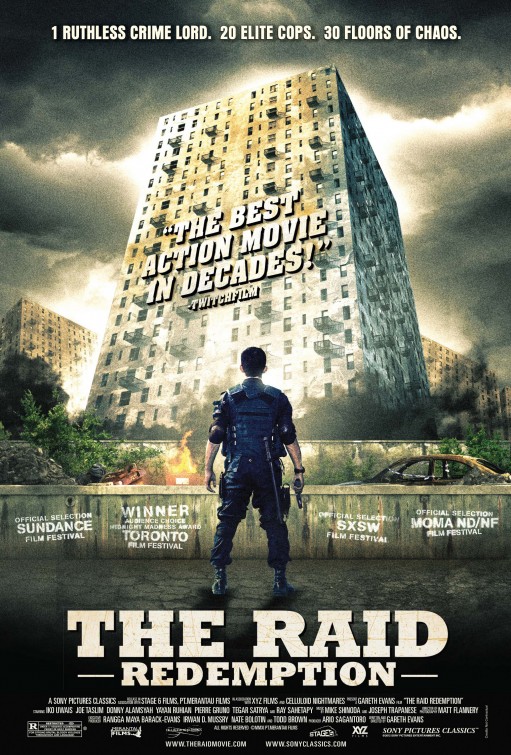 If you’ve been let down by flaccid Hollywood blockbusters in the action department, then give Indonesia’s The Raid: Redemption (part one of a planned trilogy) a try. The movie is like 90 minutes of getting kicked in the face, but in the best possible way. The flimsy premise almost seems like that of a video game. An elite forces police team storms the tenement building of a crime lord. He traps them inside and alerts the unruly residents there will be a reward for whomever takes out the cops. Each floor presents a new level of danger, from machete-wielding gangs to thugs that could show Bruce Lee a thing or two when it comes to wizardly martial arts. When the action is pumping, you feel every electric second of it. Writer/director Gareth Evans uses every part of the buffalo when it comes to action cinema. He kills guys in ways you didn’t know existed. The action is brutal and often relentless, but Evans draws out scenes organically, making fine use of geography. Guys will break through walls, jump down floors, blow up gas tanks, and use everything from filing cabinets to broken doorframes to and florescent light tubes as weapons. It’s a thrill to be able to take in the beautifully balletic choreographed fight sequences; there one that goes on for seven minutes and should already be considered an all-time Top 5 contender in movie history. There’s a fairly pedestrian plot about police corruptions and some family connections, but that’s just gristle. The real meat is the action. It’s so exhilarating and gratifying that the rest is meaningless. The Raid is the best video-game-turned-movie ever, and I don’t even care that it was never a video game. Have you seen these special movies?
Nate’s Grade: B+


 nathanzoebl
You must be logged in to post a comment.