Blog Archives
Sunshine Cleaning (2009)
 This mordant family drama has an intriguing premise, sisters who start a business cleaning up after messy crime scenes, but the film suffers from a crippling passivity. It’s nicely acted all around, especially Emily Blunt as the more troubled, wild child sister. The dysfunctional characters are established with momentary glimpses to back-stories, mostly tragic, but the narrative just sort of nudges them along. Sunshine Cleaning is a little too removed and clinical for its own good. The working-class characters are rundown but that doesn’t mean the movie has to feel the same way. Subplots and characters will be abandoned or left with no resolution. Alan Arkin’s scheming grandfather character never seems related to the plot, and he feels like he was lifted from another movie with a wackier veneer. It also makes time for cute sentimental elements that don’t jibe with the film’s tone, like using a CB radio to talk to loved ones in heaven. Sunshine Cleaning is sweet and sincere drama with some dark humor mixed in and it comes across as affable entertainment. Still, this movie had much more promise, if only it was less reserved and afraid to get its hands dirty.
Nate’s Grade: B-
Share this:

Observe & Report (2009)
 During the middle of a mean prank, a police officer walks out of hiding and says, “I thought this would be funny but it?s really just sad.” That’s my feelings with Observe and Report, the second mall cop comedy of 2009. Writer/director Jody Hill specializes in pained, awkward, tasteless humor, but with this it’s like he made a comedy and forgot to put jokes in it. The ongoing joke is how crazy a bipolar mall security guard named Ronnie (Seth Rogen) is, but it’s hard to laugh when he just keeps coming across as scary. Hill’s movie has more in common with Taxi Driver than other comedies. We follow one dangerous man with delusions of grandeur who has violent tendencies. The humor can be daring, off-putting, and extremely risqué, like a date rape joke where Anna Farris wakes up in the middle of the act and encourages Ronnie to continue. What is the point of all the provocative envelope pushing, in the end? Is Hill trying to lock his movie into a ready-made cult status? I enjoyed Hill’s TV show Eastbound & Down starring Danny McBride (who makes a cameo here as a crack dealer). That show succeeds with a blustery, unhinged, delusional lead character because we know the character is a vulnerable loser lashing out because he realizes he is a loser, we can empathize and eventually root for the brute. Rogen, often a chubby teddy bear in comedies like Knocked Up and Zack and Miri Make a Porno, is lashing out because he won’t stay on his meds. He’s too dim to even realize his lowly place in the universe, so his bluster and rude behavior is ultimately just repellent because it provides no insight to his character. And yet, after having said all that, the movie is consistently interesting, if you want to call it that, and goes in unforeseen directions. This is a challenging movie and the biggest challenge is to try liking it. Good luck.
Nate’s Grade: C
Share this:

Burn After Reading (2008)
 The Coen brothers tend to follow serious works with silly, and now that they have a heap of Oscars from 2007’s No Country for Old Men audiences can expect extreme silliness. Burn After Reading is a farce in the best sense of the word; it’s a send-up of the spy thriller where morons inhabit every role. The incompetent characters repeatedly act impulsive and the whole movie’s tone is cranked to outlandish heights. The score by Carter Burwell is like a continuous thundercloud that underscores the ridiculous and faux ominous atmosphere. The Coens have been accused of ridiculing their characters and being too detached and clinical as screenwriters. I do not believe this for a moment. Anyone who watches Burn After Reading can tell that the Coens love their characters, especially Brad Pitt’s ebullient personal trainer. Pitt is a comic joy and brings fresh life to his fun character, a highly cheerful doofus who can’t stay still. Even the funky way Pitt walks is worth a giggle. Burn After Reading takes some surprising twists and turns and could have been much longer than 96 total minutes. The Coens go to such terrific lengths establishing great oddball characters and great comedic scenarios, and then the whole movie just comes to a close when it feels like it’s hitting another gear. Still, Burn After Reading may be no masterpiece but its yet another unconventional and mostly entertaining comedy from the reliably quirky Coen brothers.
Nate’s Grade: B+
Share this:

Pineapple Express (2008)
 There’s something to be said about a comedy that requires an audience to puff illegal substances in order to fully be entertained. Somewhere along the line the Judd Apatow comedy unit went down a wayward track with the stoner comedy, Pineapple Express, an amiable goof of a comedy at best. The premise is solid, two stoners (Seth Rogen and James Franco) witnessing a murder and on the run. Rogen and Franco have a great rapport with one another that translates to plenty of good vibes and humor (Danny McBride steals the show as a seemingly indestructible low-rent drug dealer). But the movie veers off into action territory with bloody violence that really harshes your mellow, man. Pineapple Express never really settles on a consistent tone, so when the movie fully transforms into a strained guns-a-blazin’ action caper, the comedy has totally vanished. The realistic violence is intended to get the laughs. When people get shot, it’s ugly, and when ear lobes get blown off it’s just plain gross. There’s no room for humor in the third act and the action is lazy and uninspired. If Rogen and his writing partner Evan Goldberg (who scripted the much funnier Superbad) were aiming to create an action parody, then they didn’t push nearly hard enough. After the movie ended, I thought back to last year’s superior action parody, Hot Fuzz, which had a consistent tone and packed jokes as hard as punches. As a sober moviegoer who has never inhaled any such wacky tobaccy, Pineapple Express just kept eluding me. The movie is too slipshod, too misshapen, and it completely goes up in smoke by the end.
Nate’s Grade: C+
Share this:

Postal (2008)
 I feel very strange at this moment. I may need to consult a physician. I’m undergoing an altogether new and confusing sensation. You see, I’m hesitant, almost embarrassed to admit this, but I finally found a Uwe Boll movie that I, well, don’t hate. In fact, I was laughing with Postal and not derisively at it. I would never have guessed that a social satire co-written and directed by Boll, which begins with hijackers flying a plane into a large skyscraper, is actually intentionally funny. That’s not to say that the outrageous, violent, and messy film is verifiably good, but for the first time I feel like Boll is genuinely progressing as a filmmaker and may prove that he can craft a competently entertaining movie in the future. And if you know anything about Boll, that statement is akin to going from crawling to flying an F-14 fighter jet blindfolded while constructing a birdhouse out of Popsicle sticks.
The slapdash plot takes place in the small town of Paradise, Arizona. Postal Dude (Zack Ward, TV’s Titus, Bloodrayne II) is a guy who gets pushed around by life. His fat wife is cheating on him constantly, he’s bullied by rednecks that live in the neighborhood trailer park, and he can’t find a job to escape. He’s looking for any way out. His uncle Dave (Dave Foley) has started a doomsday religious cult of disenfranchised hippies. The IRS is currently targeting him and needs a quick money fix. Uncle Dave and Postal Dude scheme to steal the lone shipment of “Krotchy” dolls, a doll that resembles male testicles that is highly in demand (the Chinese shipment capsized and the crew all died, but luckily the dolls were saved). Also looking to snatch the dolls is a terrorist cell that includes Osama bin Laden (played by Jewish actor Larry Thomas, best known as the Soup Nazi on Seinfeld). The plot isn’t important per se, but you will find yourself openly questioning why respected actors like J.K. Simmons and Seymour Cassel are doing in this mess.
 I think Boll has finally found a genre best suited for his cinematic interests. Setting Postal in the wacky comedy world has a freeing effect for Boll: he doesn’t have to adhere to any form of logic. His other movies usually suffered through continual lapses in thought and deed. With Postal, Boll can be as silly as he wants and not have to worry about disrupting his narrative. It should be no surprise then that Postal contains the best acting ever seen in a Boll movie. The good German has always had a seemingly inability to control his actors or provide any helpful direction, but finally he has found a genre that will work with actors giving unrestrained performances that are figuratively all over the thespian map. Shockingly, Ward and Foley both give quite good straight-laced comedic performances (nothing can prepare you for Foley’s generous dose of full-frontal nudity).
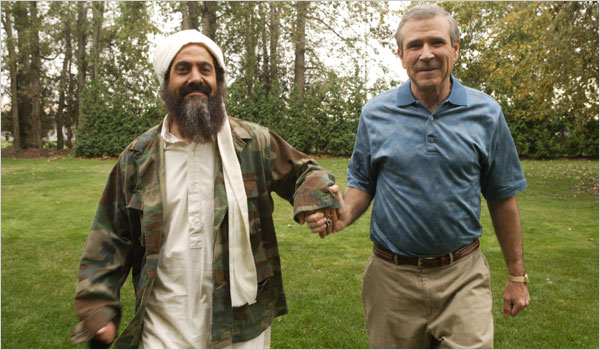
Boll stuffs a lot of extreme elements into his movie, including Islamic terrorists, Osama bin Laden frolicking hand-in-hand with President Bush, inbred rednecks with garish teeth, sex scenes with the morbidly obese, crass racial stereotypes, sexual abuse gags, the media’s opportunism in response to tragedy, an ending that takes a page from Dr. Strangelove, a mentally handicapped martyr, and much more. The movie’s aim is to offend and it has many targets. Boll is no insightful political satirist but even he finds humor in the absurd. The movie is blunt and belittles everyone. Postal skewers religious fundamentalism/apocalyptic yearnings on all sides. There is one sequence where Ward is pinned down by rednecks, Islamic terrorists, and crazy cult followers. He tries appealing to their hearts and establishing common ground. “Well,” one of the terrorists says, “We all hate the Jews,” and then everyone nods solemnly. That’s funny. It’s not deep or biting but it is funny in setup and delivery. I give credit where it’s due. Postal takes some seriously demented detours that take advantage of the wacky, anything-goes atmosphere.
The movie’s jokes hit high and low but some of them definitely stick. The concept of our main character caught in a shootout at the welfare office is given a wicked twist when he crawls along the incapacitated victims looking to trade up a better waiting number. There are comedic riffs hat actually work. Postal isn’t clever or scathing, and is hardly subtle or nuanced, but I could honestly see Postal developing a small cult following, one removed from the cult following already built around bashing Boll.
 Here is a list of moments that made me actually laugh: using a man in a vegetative state bound in wheelchair as a stepping stone to help climb a chain-link fence, Foley and Ward arguing decimal placements, watching Mini-Me actor Verne Troyer pushing a suitcase bigger than himself across a long shot, the fact that Osama bin Laden casually walks around in broad daylight to underscore the nagging fact that the man is still at large, the concept of using a cat as a silencer for a gun (fear not animal lovers, the cat lives), a “God shelter” in case of rapture, Osama attending a workshop on leadership styles and having his credit card declined, a character’s dying attempt to discover if he’s gay or merely bisexual, and the insane religious prophecy involving Troyer and 1000 horny monkeys. That last one is almost inspired in its sheer lunacy. The best part for many will be when Uwe Boll appears onscreen as himself. He admits he finances his crummy movies via Nazi gold and then, no kidding, the actual creator of the Postal video game appears and shoots Boll in the groin. For many, this is a vicarious moment to be savored.
Postal could have worked even better had Boll had a more consistent tone. Simply put, being offensive and shocking and wallowing in bad taste does not guarantee being funny. Watching a truck run over a baby carriage isn’t funny because it’s shocking. Without greater context or setup, it’s the equivalent of a tired and morose “dead baby” joke: tasteless but lacking any humor. And yet here are more missed comedic opportunities that Boll fails to capitalize upon. The missed comedic opportunities mount (Islamic terrorists eventually descend upon a redneck trailer park and … nothing?). Some jokes teeter but then hit a wrong note and become uncomfortable. Watching a black police officer (Chris Spencer, Bloodrayne II) brutally murder an Asian driver is not funny. Seeing a montage of children being massacred by stray gunfire is not funny and has no hope of being funny. When the movie utilizes realistic violence, it must walk a very delicate tone to spring laughs from darker territory. Realistic violence by itself is not funny because brutality is hard to milk for laughs.
Boll will drift and lose his comedy momentum. The highly publicized opening sequence is actually kind of funny. Two terrorists have hijacked a plane but then have second thoughts after they realize there are discrepancies about the number of post-martyrdom virgins. They begin to then analyze the gaps in theology and decide to turn the plane around and head to the Bahamas instead. With this segment Boll has taken a politically sensitive subject and given it a twist. Where the segment goes wrong is not when the passengers storm the cockpit and cause the plane to crash, this serves as irony. Where the segment goes wrong is when it cuts to a window washer atop a skyscraper and we watch the plane come closer and crash into a fiery blaze. The view doesn’t serve as any comedic punchline and places the viewer in an uncomfortable position of not only reliving 9/11 but also reliving it from a hapless victim’s perspective. It’s one example of a misstep that ruins the joke. By the film’s end it has turned into an incoherent bloodbath.
 Not to kill Uwe Boll with praise, but Postal is also his best looking movie to date. The shot compositions are framed well, there is actual camerawork that gives off a slight Coen brothers’ vibe, and the cinematography by Boll staple Mathias Nuemann is crisp and clean. This is a good-looking movie that works within its limited budget and locations.
Postal wasn’t given much of a chance out of the gate. It has been sitting on a shelf for over a year, it was dumped into a small number of theaters opening the same weekend opposite the slightly higher profile Indiana Jones sequel. Boll arranged a free screening of the film and a majority walked out after the opening segment involving the hijackers. Postal is a bizarre and distasteful movie that relies too heavily on shock tactics and the idea that offensive equates humor. There are holes, inconsistencies, shallow satire, and many missed comedic opportunities, and yet, in spite of everything, I laughed at several points. This is Boll’s most intentionally entertaining movie to date. While it may sound like heresy, I would rather watch Postal again than the much more commercial and critically lauded Pineapple Express.
It feels like Boll is actually progressing as a filmmaker, however, I make this statement under the caveat that the confines of the wacky comedy genre forgive lapses in content. But I may not be alone. Boll submitted his flick to the Hoboken International Film Festival and actually won. Boll was named Best Director and the film was awarded Best of the Festival, which is a category based upon audience votes. Perhaps it’s just my lowered expectations with any Boll production, but Postal almost works; not quite but almost. And that’s a tremendous leap forward for a man whose movies have made me retire synonyms for “stupid.”
Nate’s Grade: C
Share this:

Grindhouse (2007)
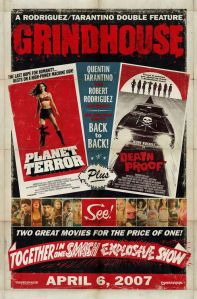 The movie going experience isn’t what it used to be, and Quentin Tarantino and Robert Rodriguez want to do something about it. There?s no denying that the joy of seeing a movie has been watered down a bit; there’s soaring ticket prices, floundering product, and let’s not forget the influx of teenagers with cell phones. Rodriguez and Tarantino grew up gorging upon the exploitation films at their neighborhood grindhouse, where they could see kung-fu, blaxploitation, gory Italian zombie movies, and nearly anything that promised to be titillating and shocking. These movies dealt in copious amounts of sex and violence on a shoestring budget and teenagers lapped it up. Grindhouse was designed to be a double feature with Rodriguez and Tarantino each writing and directing an 80-minute movie. This three-hour plus movie is stuffed to the gills with 70s reverence, right down to cheesy retro clips telling us the film rating via an animated cat. If Rodriguez and Tarantino could, they probably would make the floors stickier just to round out the experience. But that’s the marvelous thing about Grindhouse — it turns the filmgoing experience into an event once again.
First on the bill is Rodriguez’s Planet Terror. An outbreak is about to sweep across a small Texas town. A toxic green gas is causing people to break out in festering wounds that are spreading rapidly. Cherry Darling (Rose McGowan) is a go go dancer who runs into an old flame, Wray (Freddy Rodriguez), a badass drifter with a dark past. They get attacked by a group of “sickos” who take Cherry’s leg as a chew toy. At the hospital we’re introduced in rapid succession to Dr. Block (Mary Shelton) and her creepy husband (Josh Brolin) she plans on leaving for the lovingly massive cleavage of Fergie from the Black Eyed Peas (she gets eaten and can, one assumes, be described as being Fergilicious). The sheriff (Michael Biehn) has an unsettled score with Wray and refuses to trust him, even though the town is slowly being overrun by what appear to be zombies. The survivors take refuge at a Bar-B-Q joint, run by the sheriff’s brother J.T. (Jeff Fahey), located only two miles away from the military outpost that released the gas.
 Planet Terror is a great blast of fun, a perfect ode to schlocky B-movies. Rodriguez creates action movies closer to cartoons, and the more over-the-top and crazy things get the more joyous his films generally turn out. This is a gonzo world cranked up to a wonderfully weird wavelength, where Cherry can have a machine gun leg without any nagging question on how she even gets it to fire let alone why it would be more accurate. It doesn’t matter because this movie is all about 80-minutes of awesome, twisted, gloriously gory fun. Planet Terror isn’t the first zombie comedy, and its inspirations are quite plain, but the film establishes a wide-range of colorful characters effectively and then ramps up the chaos. Rodriguez amuses with even small touches, like a woman trying to operate a car with a anesthetized hands, a pair of skimpy babysitters who clobber a car with baseball bats, and a bio-chemical scientist (Naveen Andrews) that has a penchant for collecting and bottling the testicles of the men who fail him (hey, we all need hobbies). Even amongst an exaggerated canvas there’s still plenty of humor and adoration for the grindhouse experience, like when the beginning of a sex scene is interrupted with a “reel missing” sign. Rodriguez also intentionally downgrades the look of his film, adding hairs and scratches and pops in the film to look like it had been dragged across the floor. Planet Terror even has a dreadfully dated synth score to compliment the full-tilt celebration of splattery schlock.
Tarantino’s Death Proof is going to sharply divide audiences. The action in Planet Terror is relentlessly paced, which makes the adjustment to Tarantino?s half all the more hard. Rodriguez is all about genre relevance and making a film that would excel in the grindhouse era; Tarantino, on the other hand, is all about taking the genre and catapulting it into something ambitious and different and greater.
 Death Proof is Tarantino’s take on the slasher horror genre, with the unique twist being that Tarantino?s roving killer takes out his prey with his car. Stuntman Mike (Kurt Russell) is a stuntman of the old guard. The youth of the day have no idea of the TV shows he worked on or the celebrities he rubbed elbows with. The only lasting visages he has from those removed days are a long scar decorating the side of his face and his stunt car. The vehicle has been outfitted to be death proof, meaning that Stuntman Mike can get into any wreck and come out alive. A group of women are visiting Tennessee for a film shoot. Abernathy (Rosario Dawson) is a makeup artist, Lee (Mary Elizabeth Winstead) is an actress, and Zoe Bell (herself) and Kim (Tracie Thoms) are professional stunt women. The stunt ladies are interested in test-driving a Dodge Charger, the same iconic car used in Vanishing Point. Zoe wants to play a dangerous game known as “Ship’s Mast,” which entails strapping herself to the hood of the car as it speeds along. This is when Stuntman Mike comes roaring with his death proof material and plays an extreme game of chicken.
The narrative structure of Death Proof is deliberately slow. The focus is on a group of Texas girls (including Sydney Poitier’s daughter named, rather unoriginally, Sydney Poitier). They dance to jukebox jams and drink. And they talk, and talk, and talk, and talk. The dialogue is clever but you worry Tarantino has been hypnotized by his own pithy writing. The movie drags a bit but mostly because it follows a film that had the pace of a runaway train. The slow buildup is an intentional correlation to slasher films, which would spend their first half hour setting up characters for the eventual slaughter. I liked how Stuntman Mike was seen playing with his prey and interacting with them. The wait is worth it, though, but then Tarantino turns around and repeats this same setup with a new batch of girls. Many will grow impatient going through the same process all over again and become irritated that they have to endure another round of talky pop culture diatribes in order to get to some more vehicular manslaughter. And at this point, the only character the audience has any affinity for is Stuntman Mike, so it’s a little tough to wait so long for his reappearance. When he does appear, the movie takes some unexpected turns and transforms into a female revenge thriller that left my audience cheering by its conclusion. My wife loved it. I married the right woman.
The makeup work is outstanding. Most of the effect work gets its spotlight during Rodriguez’s half, and Greg Nicotero and KNB have created the most gut churning, sickeningly inventive makeup work since John Carpenter’s The Thing. Rodriguez’s Planet Terror is dripping in blood, and the gore is heightened to such an unrealistic, comical degree that it becomes more tolerable and, in the end, another element in the overall outrageous vibe of the film. Some memorable gore work includes makeup pioneer Tom Savini being ripped apart like a child’s jigsaw puzzle, soldiers whose faces undulate and bubble until they look like close relatives of the Elephant Man, and a truck smashing against bodies like they were made of paper and filled to the brim with Kool-Aid. This is the kind of movie where entire hoses of blood explode from single gun shot wounds. It is a gory, gruesome, sticky icky movie but that?s part of the fun.
 Whereas the makeup work shines in Planet Terror, the stunt work in Death Proof is stupendous. Bell was Uma Thurman’s stunt double in the Kill Bill tandem, so by writing a part specifically for her Tarantino knew he could get up close and personal during the scary moments. Seeing Bell struggling to stay atop the hood of a car zooming at 80 miles per hour is nerve-racking and exhilarating, and you know there isn’t any computer trickery given how Tarantino’s own characters bemoan how computers have blunted action cinema output. That really is Bell and even though it’s all a movie a part of you does think, “Oh my God, this woman is going to die for real.” This killer bumper-car sequence in Death Proof will have you holding your breath. It takes much longer for Tarantino to rev up his action, but when he does he puts the pedal to the mettle.
But don’t get up for pee breaks once Planet Terror is over, because you may miss some of the best parts of Grindhouse. In between the feature films are three fake trailers directed by friends of Tarantino and Rodriguez, who made a fake trailer himself for Machete, about a Federale (Danny Trejo) out for revenge. The Machete trailer gave me the everlasting gift of a line, “They f***ed with the wrong Mexican.”
The best trailer, hands down, is Shaun of the Dead director Edgar Wright?s trailer for Don’t, a Dario Argento style horror film where a narrator instructs the audience lots of items not to do (“If you are thinking about turning this door… DON’T! If you think about going into the basement… DON’T!”). What makes Don’t so wonderful is that the trailer builds a thick head of steam, to the point where all wee see are bizarre rapid-fire images and the announcing repeating the message, “DON’T!” The momentum builds to a great comic high that left me giggling.
Eli Roth, who gave us Hostel and Cabin Fever, one of my all-time favorite filmgoing experiences, runs a close second with his slasher trailer for Thanksgiving. The concept is rather straightforward, a person dressed as a Pilgrim picks off residents around Turkey Day, and a great showcase for Roth’s sense of tongue-in-cheek homage and his warped sense of humor. This trailer has some gasp-inducing moments, chiefly among them a topless cheerleader who performs the splits right onto a knife blade. Wow. Then there’s a guy humping a stuffed turkey with a human head attached. I’ve said it before and I’ll say it again, Roth is one sick bastard but he’s my kind of bastard.
 Rob Zombie’s trailer for Werewolf Women of the S.S. sounds better on paper than how it turns out. There’s a subgenre of Naziploitation films (did you know you could add “-sploitation” to damn near any word?), most famously popularized by Ilsa, She-Wolf of the S.S. Zombie’s trailer has got hairy wolf boobs, Nazis, shiny fetish outfits and S&M, but it feels too new and doesn’t work on the same vibe of Grindhouse. It feels too polished and too happy with itself; it spends more time telling you who’s in this fake movie than delivering anything juicy. The trailer is saved by a brilliant cameo by an actor whom I will not spoil, but suffice to say that I was left in stitches.
Honestly, I cannot say another movie released this year that provides more bang for your buck than Grindhouse. Tarantino and Rodriguez’s double bill will leave you giddy. This is the fastest 3 hours and 10 minutes of your life, folks. Unfortunately, the film hasn’t been doing as well at the box-office and this has caused the Weinsteins to contemplate splitting the films into two to make the most of their investment. I suppose Grindhouse was never going to have a 300-sized audience, since the idea of making a sloppy three-hour love letter to trashy cinema seems destined for a limited appeal. This is a high-art tribute to high camp, and you really do feel you get more than your money’s worth even if you pay, like I do, 10 bucks a pop for a show. I can’t imagine having a better time at the movies this year than the one I had during Grindhouse.
Nate’s Grade: A
Share this:

Lucky Number Slevin (2006)
 Probably too clever by half, this Tarantino knockoff is gloriously twisty and far more twisted than you may have thought from the surface. It’s a puzzle piece that winds up being vastly entertaining. Josh Hartnett does the best work of his career in an effervescent comedic performance, playing Slevin, a nobody mistaken for a somebody who owes different mobsters large sums of money. There are a lot of balls to keep juggling, but Lucky Number Slevin finds a way to keep the headstrong momentum constantly going. The neo-noir art direction is fabulous and eye-catching. Things get really dark in the last act, perhaps too dark for some, but for me, this was a crime caper that left me captivated by clever storytelling and flashy camerawork. Definitely for fans of the noir genre and for those with hard stomachs for violence.
Nate’s Grade: B
Share this:

Running Scared (2006)
 Running Scared is ridiculous, perverse, puerile, so over the top you forget where the top was, and yet it works within its own uncompromising universe. Writer/director Wayne Kramer (The Cooler) has a singular point of view so that while the out-there theatrics pile up, you feel like nothing is exactly out of bounds. The crux of the movie centers around a low-level mobster Joey (Paul Walker) trying to retrieve a gun that his kid neighbor stole and used. This gun was last used in a shootout involving dirty cops led by Chazz Palminteri. Joey needs to find it before the mob gets him, the dirty cops put the pieces together, and then Kramer even introduces more threats, like pimps, the Russian mafia, and in the movie?s most bizarre subplot, killer pederasts that look like normal people (one of the more disturbing elements is the fact they have star ratings on their home-made child porn).
The missing gun is really a McGuffin for a wild night with wild characters and extreme antics. Running Scared succeeds both as gaudy, trashy, dirty boy’s-night-out fun, as well as a wink-wink parody of the Tarantino-esque crime capers (stylized gun fights, pop culture soliloquies, quirky characters, anti-heroes, brutal violence, gratuitous nudity, weird coincidences, outlandish irony). You’ll know whether or not you’re along the film’s relentless, highly graphic wavelength early on. Running Scared opens with an incredibly bloody shootout and then quickly transitions into some surprisingly near graphic sex, as Joey wishes to service his wife (Vera Farmiga) right on top of their washer. Running Scared‘s unpredictability is its greatest asset, though a late character revelation meant to make an audience view Joey as a good guy seems forced and negates the chase for the stolen gun. I also swear … this had to be the most times I have ever heard the F-word in a film (current champ is Nil by Mouth at 470 at 3.9 a minute).
This is one movie that has to be seen to be believed. It’s so over-the-top in near everything it does, it’s nearly awe-inspiring. I knew I was in good hands when Kramer included the gratuitous sit down at a strip club … and had his strippers be bottomless as well. That’s someone who knows what movie they’re aiming for, and with Running Scared, it looks like Kramer is having his own fun playing with the bombast.
Nate’s Grade: B
Share this:

The Matador (2005)
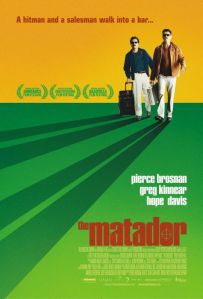 This is an adequate movie that doesn’t really resonate because at its heart it feels like a lot of interesting ideas and characters that are languished with a sitcom plot. I never thought Pierce Brosnan’s performance as the aging hit man was as funny as the film thought it was. The Matador is actually a more interesting movie than funny or amusing. The movie doesn’t go deep enough; the story isn’t as refined as it could be, and there are so few set pieces that this flick could have worked as a play. The end feels a bit too tidy and asks Greg Kinnear’s ordinary husband character to act out of character. There?s an extended talk in The Matador between Kinnear and his wife and Brosnan upon his unexpected visit, and it feels like a sitcom like the wacky neighbor next door has come over and hatched a hilarious scheme. I enjoyed the characters but they really just sit and stew in a really weak story. The characters are richly drawn but have nowhere to go.
Nate’s Grade: B-
Share this:

Hostel (2006)
 Eli Roth is a name that excites me. After watching his 2003 debut Cabin Fever, it was love at first sight. My friends were skeptical but one by one I convinced them that Cabin Fever was a campy, jaunty, unapologetically hilarious good time. I’ve made Roth disciples out of my fellow human beings. Naturally, I was looking forward to Roth’s follow-up, Hostel. I had heard the rumors that the flick was based on a true story of a South East Asian website, though said site can no longer be confirmed. Whatever the muse may have been, Hostel‘s got the added cache of Quentin Tarantino’s name slapped aboard as a “presenter” thus ensuring to the young male demographic that Hostel should be, “frickin’ sweet.” While not reaching the rapturous entertainment heights of his debut, with the grisly Hostel, Roth proves that he’s no flash in the pan.
Over in Amsterdam, Paxton (Jay Hernandez, Friday Night Lights) and his best friend Josh (Derek Richardson, Dumb and Dumberer) are living it up. They’re on the hunt for pot, poontang, and an endless array of good times and cheap thrills. They’ve got big wallets and big appetites. They’ve befriended Oli (Eythor Gudjonsson), an Icelandic horn dog willing to be their guide throughout their most excellent European adventure. While locked outside their stay, the trio learns of a mythical youth hostel all the way in Slovakia. The girls are buxom, beautiful, and go absolutely wild for boys with foreign accents, particularly Americans. This is an opportunity worth salivating over for our trio. They book a train for Slovakia and it looks like this hostel could be the Playboy Mansion of the former Soviet bloc. The women are frequently naked, open to most any suggestion, and eager to please the American visitors.
 Ah, but things are not what they seem. The young Americans check in but they don’t check out, at least in one cohesive piece. Our Slovakian sirens are leading their horny backpackers to their doom. Tied with the hostel is a large, empty warehouse that a lot of high-pitched, ear-splitting screams seem to waft out of. Inside is a dungeon where those willing to pay the right price can torture, mutilate, eviscerate, and kill a person. Can Paxton, Josh, and Oli even hope of surviving such a place?
Even for a horror movie, Hostel has a lot of nudity. Normally this wouldn’t bother me but the film does seem to be topped with an incredible amount of sex scenes and nudity during its sloshy build-up to the horrors that await. Many will cry “exploitation!” or “gratuitous!” and, though I’d agree with both, I must remind all fans of the genre that the bedrocks of horror are exploitation and voyeurism. Let me theorize why Hostel‘s first half is as it is. Sex and violence in horror movies are always linked, particularly the violence as retribution for wayward sexual indulgences. So then, if the second half of Hostel is a sickeningly display of cruelty, torture, and mankind at its most heartlessly gruesome, wouldn’t it make sense, in retrospect, to up the ante on the debauchery in the first half to even out the tone?
One of the most interesting elements of Hostel is how it makes you root for the ugly Americans. The first half of the film shows Paxton, Oli, and to a far lesser degree Josh, as booze hound backpackers interested in tasting the wares, be it through illicit drugs or illicit encounters with the local ladies. They?re stomping through Europe in an arrogant, obnoxious, near-reprehensible fashion trying to score some cheap thrills. Eli Roth doesn’t intend for an audience to align themselves with these tail-chasing characters, except for the more sympathetic Josh. And then once the boys enter Slovakia and become the cheap thrills themselves, Hostel turns on the surprise factor. After profoundly disliking these misogynistic party animals, we root for them to survive. This goes against most modern horror, particularly slasher flicks, where the audience is rooting for the grisly demise of its empty-headed horny teenage cast. The audience hungers for death and titillation. In Hostel, we’re presented with boorish backpackers and, despite everything prior, we really want them to succeed and get rescued from their dungeon of horrors. The last act only confirms this further. I don’t know about your theater, but mine was rollicking and roaring as they rooted for the home team to pull it out.
 Truth be told, the set-up is a bit overly long, though nowhere near as boring and comatose as Wolf Creek (maybe Roth was smart to put in the nudity). In Wolf Creek, we watched a group of uninteresting “characters” drive around and get lost for a whole friggin’ hour. That movie went from boring to “oh, is something happening?” to over. At least Hostel had movement and relevance to its set-up, including characters and situations that will be repeated later. Some of it is a bit heavy-handed, especially with the sex/violence link and a blowtorch torturer repeating, “Get your own room,” but Hostel finishes with a grand flourish. Roth weaves back different storylines and characters in clever ways and serves the audience vengeance on a platter, and we just gobble it up. I was jumping in my seat, pumping my fist, and, forgive me, shouting at the screen during Hostel‘s final act. It’s somewhat paradoxical for me to be disgusted by violent retribution so recently with Spielberg’s Munich and then a week later to be relishing it. I credit the tones of the films. While Munich is contemplative and realistic, Roth’s Hostel is a squirmy, over-the-top, dark comedy with some moments of cringe-worthy horror. Hostel‘s fabulous finish may erase any lingering doubts you had over the very Euro Trip opening.
Roth has a great sense of visual flavor with his shot arrangements but he also knows when to draw upon our dread. Hostel is really more of a survivalist thriller than a horror movie. Sure, torture and gore is prevalent but a lot of the violence and gruesome makeup is unexpectedly played down in limited appearances. This isn’t the shocking sadistic movie that outcries have made it to be. Without a doubt, I think Eli Roth is the most promising name in horror. Cabin Fever is one of my all-time favorite good-time flicks, and now with Hostel, Roth has proven that he can work miracles with a small budget and a giant, depraved imagination. Hostel is more disturbing than horrific but Roth knows exactly what chord to strike, what scenes to hit, and what sounds to echo to make you want to cover your eyes.
Roth’s best attribute, besides a pleasing visual sensibility, is his twisted sense of humor. Cabin Fever was more humor than horror, and also took an extended set-up before the gore was unleashed, but Hostel makes the flip and is more horror than humor. That’s not to say Hostel is without its dark, jovial jollies. Roth seems to approach his gore, outside of the torture sequences, with a macabre absurdity, like a character slipping on dismembered fingers only to chainsaw their leg off, or a character pretending to be dead and gets a severed hand placed on his face. Somewhere, Peter Jackson and Sam Raimi are nodding their heads in approval. Surely Tarantino is amused. Granted, Cabin Fever was more of a tongue-in-cheek fever dream homage to 70s horror, but Hostel has its share of twisted humor which elevates it far above most recent horror, either the boring and meandering (see: Wolf Creek) or the single-mindedly shocking (see: High Tension). This is what excites me about an Eli Roth horror movie: his lively, warped, depraved sense of humor. If people claim that Roth is one sick bastard, then I must also be one sick bastard for finding his movie funny and highly amusing in spurts.
 There are so many moments that I loved, from the opening cleaning-up, to seeing the Slovakian sirens on their day off sans make-up and totally trashed, to the Bubblegum kid gang, to the Takashi Miike (Audition) cameo, to knowing that killing an American is the most expensive option, to seeing the ins and outs of a facility dealing in murder for money, to seeing the equivalent of the Dunkin’ Donuts guy (“Time to chop up the bodies…”), to the madcap, fist-pumping race to the finish. There?s so much Hostel does right, not just as a horror movie but simply as a movie itself. I wouldn’t mind taking another trip to Hostel with a big group of my less-than-squeamish friends. Oh who am I kidding, horror movies are more fun when you see them with the squeamish.
Eli Roth has crafted a dirty, depraved, but highly amusing horror film. Hostel is full of surprises, from an overly long set-up that couldn’t have more female nudity if it tried, and actually making an audience root for the survival of the ugly Americans when things get dicey. The premise may be sickeningly realistic but the rest of the movie is on an overdrive of macabre fun. Roth’s twisted yet gleeful sense of humor is what makes him unique, and his attention to atmosphere and compounding dread is what will make him successful. There’s no faster rising horror name, in my mind, than Eli Roth. Hostel may not fully be the down-and-dirty horror film its ads have made it out to be; it’s certainly more of a thriller with a heaping helping of gore. This is one experience well-worth booking, especially if you have a strong stomach and a dark sense of humor. I can only imagine that the tourism industry for Slovakia is about to drop precipitously.
Nate’s Grade: B


 nathanzoebl
You must be logged in to post a comment.