Blog Archives
Locked Down (2021)
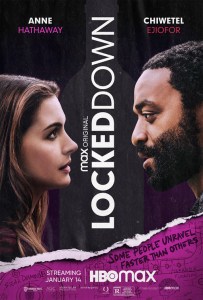 I’m already starting to dread the inevitable onslaught of movies and fictional narratives tackling the COVID crisis, and I don’t know if that’s ever going to be truly inviting for me. After the near year of pandemic fatigue, I can’t see myself wanting to relive the experience through my media. Naturally, this is partially because of how fresh everything is. Years down the road I may hold a different opinion and find COVID-19 stories more engaging. I’m sure there will be worthy ones to explore with the best storytellers that movies and television can afford. Right now, I’m not looking forward to the rom-coms about couples being forced together, or forced apart, and I’m not looking forward to the zombie movies that seem all too obvious in commentary. It is with this context that I watched the new 2021 movie Locked Down with wary curiosity. It was filmed during the quarantine in London over 18 days. It stars big actors, has a director and writer who have worked on highly esteemed projects, and it’s the first big project to feature the pandemic while we’re still in the middle of a worldwide pandemic. It has temporary notoriety but is it any good?
Linda (Anne Hathaway) and her husband Paxton (Chiwetel Ejiofor) are stuck at home like everyone else in London thanks to COVID-19. He’s struggling for work and she’s struggling with the mental weight of her job and the impending knowledge her friends and co-workers will soon be laid off by Linda herself. The couple is also heading for a divorce, though they’re keeping that quiet from concerned family members checking in. Paxton’s sense of self is falling apart, and the rebellious biker who got into one unfortunate bar fight long ago seems to be fading. Now he doesn’t know what he’ll be and he’s forced to sell his prized motorcycle. Linda gets the idea to pull off a jewelry heist that she and Paxton have an unique opportunity for. Could it be the thing that makes them feel excited again? Could it bring them back together?
 Locked Down has some significant tonal shifts but more so in ambition than execution, because at its core its really a talky, mumblecore relationship drama, but one that I found a little too lax and shapeless and ponderous to jibe with. Screenwriter Steven Knight can be a tremendous writer. He’s written Eastern Promises, Locke, Dirty Pretty Things, and created Peaky Blinders. He knows plot, he knows character, he knows structure. This, though, doesn’t feel so much like it was a script needing to be told as it was an experiment in could they make a movie about the pandemic and film it during the pandemic. The heist elements are rather haphazard and ultimately mean little to the overall storyline, merely serving as an instrument to reconcile our couple and force them to rely upon one another for a shared triumph (this shouldn’t be a spoiler). I think your overall view of Locked Down will depend upon your opinion of how the heist elements are handled. If it seemed like the start of something more exciting, more engaging, then you’ll be disappointed. If you didn’t care about the particulars of a heist during COVID times, and you didn’t want a more purely genre plot device to take over from the character-driven relationship drama,then you might be more charitable. For me, I love heist movies and the formula is ready-made for payoffs and entertainment. However, I also enjoy character-driven relationship dramas but I just wasn’t connecting with this one.
The characters of Paxton and Linda felt too overly written for me and lacking the more intriguing nuances that I find in the best of observational mumblecore cinema. To be fair, being overly written is not an indictment in itself. Quentin Tarantino characters are overly written and we love them. Viewers love big characters that demand your attention and equipped with monologues that we wish we could recite when life’s challenges afforded us the opportunity to wax poetic. The central agreement we have with characters, whether they’re realistically drawn or idiosyncratic or cartoonish, is that they need to at least be interesting. You need to want to spend time with the characters.
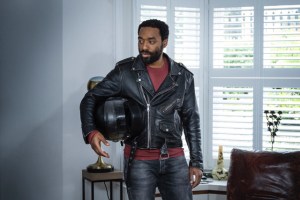 With Locked Down, I was getting as restless as the onscreen couple. I didn’t find them interesting because the same character notes were being hit over and over with little variation. The monologues, while having moments of life and personality, didn’t provide me greater insight at minute 80 than they did at minute 40. The experience felt like watching actors workshop characters and looking for extra meanings that seemed to be elusive. Listening to these characters talk more should make them more interesting, make them more personable, and make them more complex, right? While they uncork some well written asides, they’re each just rubbing the same nub of an identity crisis. The pacing also made the repetitive portions feel even longer. The metaphor of what Paxton’s motorcycle represents is so overblown and simplified. After spending so much time listening to these two bicker and argue in the same rooms, I was hoping for the heist as a needed escape, something that could finally serve to motivate the characters out of their pity parties and force them into a new conflict. I needed something, anything more to hold my waning attention. Alas, I finished Locked Down in the same patient, pursed-lip stupor as it began. These characters did not deserve this much extra breathing room.
I like Hathaway (Colossal) and Ejiofar (12 Years a Slave). Watching them leap into what is essentially a two-hander filmed play sounds like a good bet for entertainment, especially with a writer with the credentials of Knight (we’ll ignore the outlandishly bonkers 2019 Serenity). Hathaway and Ejiofor are good together too. They have a spark that works, her anxiousness melding well with his dismissive pessimism. Again, the characters they’re portraying aren’t poorly written. There just isn’t enough polished material for them. That’s why each feels like they’re grasping to discover the character like it’s being formed in the moment. The entire movie feels like an overextended improv workshop everyone involved is developing in the moment. Good mumblecore movies can make you feel like a fly-on-the-wall with real people, but these characters are so overly written that an improv feeling doesn’t so much replicate the recognizable rhythms of life as it does an ungainly acting class in search of more direction and discretion. There are some other celebrity appearances in the form of Zoom cameos, and that’s something I’m not looking forward to with the incoming COVID movies, the ugly selfie aesthetic prevalence.
 Locked Down feels more like an experiment to see if the filmmakers could make a movie under such unique and trying circumstances. It feels more like an acting exercise in need of more development and a little more vitality. There are fleeting moments that seem to tap into a universal despair and uncertainty many of us have wrestled with during our COVID isolation, but then the movie will just as likely throw in a hidden patch of poppies in a garden and a joke about nobody seeming to recognize the name Edgar Allen Poe. I watched Locked Down over the course of two nights, and mt girlfriend and I literally had forgotten we watched the first hour until coming across it again and going, “Oh yeah, we need to finish that after all.” I feel like that sums up the movie well. Within a day, I had already forgotten it, and that was before I even finished the full movie. They made a movie during COVID. Now make better ones in the future.
Nate’s Grade: C
Share this:

The Secret Life of Walter Mitty (2013)
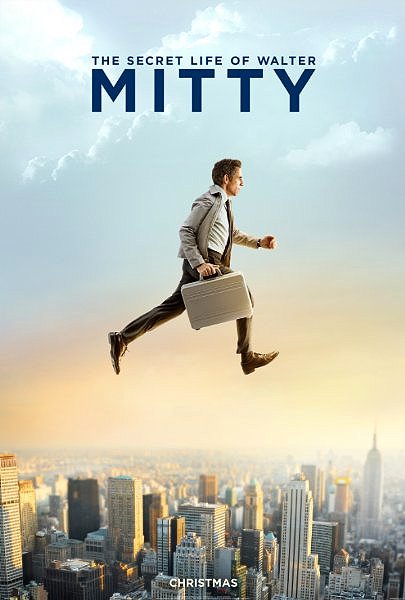 The Secret Life of Walter Mitty, based on James Thurber’s short story, is a property that has long beguiled Hollywood. The idea of escaping one’s ordinary life with fantasy, where we’re the hero. It was turned into a 1947 film starring Danny Kaye, which is rather entertaining, but has yet to be remade in all that time. It’s the kind of attractive project that has attached big name talent at different stages of development, including Steven Spielberg and Jim Carrey. It was never able to get off the ground, that is, until Ben Stiller stepped in, not just as director but also as the lead actor. Given Stiller’s directorial track record, there was suitable reason to anticipate what he could accomplish with Mitty, but the film too often feels like Stiller hamstrung, ably trying to marry a sincere indie sensibility to a mainstream sentimental holiday-released excursion for families. Stiller’s Walter Mitty never quite takes off.
Walter Mitty (Ben Stiller) is a man who has trouble filling out an online profile. He doesn’t have too many experiences or places traveled. It may be why he frequently “zones out,” as his family terms it, escaping into fantastical daydreams. In real life he works as a photography assistant for LIFE magazine, a publication that is transitioning to a digital-only existence. The enigmatic photographer Sean (Sean Penn) has sent a collection of film negatives to Walter, making special note of how Negative #25 is his life’s masterpiece. However, Walter cannot find it and is having trouble getting in contact with Sean, who is overseas on assignment. Without that much-hyped negative/picture, Walter will surely be fired, and then he’ll never have a chance to ask out his co-worker, Cheryl (Kristen Wiig). Walter sets out to Iceland and beyond to find the negative, stop daydreaming and finally live his life.
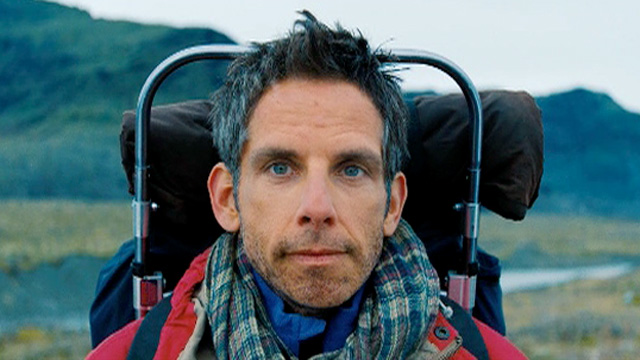 The very tone of the movie feels like a miscalculation. It’s the story of a daydreamer, a man who retreats into his head and lives out preferable fantasies that are whimsical and far-fetched. We all knew this going into the film. It’s the same as Thurber’s story. The problem is that when Walter gets the courage to embrace life, his life is full of whimsical and far-fetched moments. He jumps out of a helicopter in shark-infested waters, where the sharks are ravenously active. He also hops into a car and has to outrun an oncoming ash cloud from an exploding volcano. And then in the third act, he travels across a mountain range all by himself and manages to miraculously find one guy. I don’t think this approach works if his real-life adventures are on par with his whimsical fantasies. I suppose one could argue that this serves a point to make real life seem just as appealing as his mental retreats, but I think it harms the very execution of the movie. First, if there’s a parallel, it means that his fantasy sequences aren’t going to be too fantastic, squashing the potential of Walter’s imagination. The only fantasy I enjoyed was a Man of Steel-esque brawl with a bearded Adam Scott (TV’s Parks and Recreation). Secondly, it means that the serious “go get ‘em” message of the movie is occurring within a medium that ordinary citizens have little connection with. Make no mistake, Walter Mitty is clearly meant as a mainstream feature meant to inspire the masses with its sentimental stripes, but is the story of a superhero doing super deeds any more relatable to the common man?
Another problem plaguing Mitty is the illusion of depth. Beyond the simplistic platitude of “get out and live your life,” there really isn’t much more of an idea explored here. It’s not like this idea hasn’t been explored in, oh, hundreds of other stories. Regardless, the film often just becomes a two-step process of Old Walter feeling timid, and then, what’s this, the hip soundtrack with the likes of Arcade Fire and Of Monsters and Men starts pulsating, and Mitty boldly shifts into New Walter, the go-getter, the guy who’s going to take charge of his own life. It’s a strong soundtrack in all senses. This process is repeated throughout the second act of the script where most of Mitty’s overseas journeys take place. Also, it may sound petty, but let’s focus for a moment on the applicability of the movie’s message compared to the practicality of what is onscreen. Live your life, but how many of us can afford to go globetrotting on a whim? I understand the larger canvas meant to evoke Mitty’s growing sense of discovery, so I’ll let it slide. The theme of Walter Mitty isn’t so much developed as it is repeated. There’s not enough substance here. In the end, the movie feels like 100 minutes of a soundtrack and a message in search of a better movie.
Allow me illustrate one of those “go out and live, Walt” moments in the film. Walter is in Greenland (though filmed in Iceland) and needs to get to a fishing vessel. The man next to him is a helicopter pilot. Great. But he’s also drunk, so Walter understandably refuses to fly with the man. This seems like a very rationale decision, but then he fantasizes Cheryl coming through, urging him on through song (through song!), and the soundtrack starts pumping, and Walter runs out and literally jumps inside the ascending helicopter. It’s meant to be portrayed as a triumphant moment of embracing the uncertainty of life’s adventure, but in reality the movie just pressured its title character into getting into a flying vehicle with a drunken pilot. What? That’s irresponsible.
And then there’s just the lackluster characters and plotting. Walter Mitty is a nice enough guy but too milquetoast to be that appealing, relying upon the comic graces of Stiller to provide the filling. The character of Walter is basically a hodgepodge of other Stiller characters in previous movies, but the character feels too restrained for an actor of Stiller’s talent. I understand that the arc has to travel from passive to active, but it feels like the funny Stiller we’re all accustomed to is being held in check thanks to the film’s broad appeal feel-good sentimentality. There’s one brief moment of the anarchic, silly Stiller that we loved so much in Tropic Thunder, and it involves a weird fantasy where Walter suffers the reverse-aging Benjamin Button disorder. It doesn’t fit at all with the tone of the film, and that’s why it stands out. Walter is a nice guy but rather boring. He pins his journey of self-discovery on getting the girl, and then when presented with one minor obstacle at the start of Act Three, rather than speak with her, he assumes the worst and just gives up. The narrative requires one of those eleventh-hour misunderstandings to keep the guy and girl apart, but it’s a frustrating decision that makes me like Walter less.
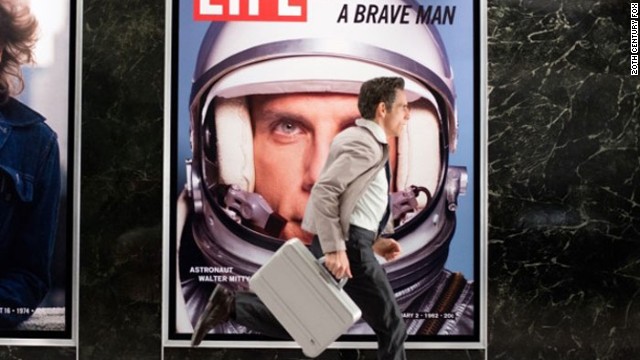 The Secret Life of Walter Mitty is also filled with blunt product placement and some strange plot elements that don’t blend together. I’m not generally offended by product placement in movies when they make it oblivious; hey, a character has to drink something so why not a (insert product here)? But the fact that the Walter Mitty team actually makes Water’s teenage stint at Papa John’s a reveal about his character, and that the very store is meant to stand in as a reminder of his own deceased father, is just wrong. Then there’s the fact that Walter works as a negative corrector (analog job) at a magazine (troubled industry), and that magazine happens to be LIFE (which shuttered in 2000). Why all the analog contexts? Is it meant to convey Walter’s reluctance to change or adapt? The whole notion of the magazine downsizing gives the film a real-life aspect that just doesn’t feel appropriate for the movie. The fact that Walter’s journey is propelled by a quest for a single missing negative feels a tad too facile for the man’s transformation, but it’s made worse when the answer to the location of the negative is so transparently obvious from the get-go. It was so obvious I almost talked myself out of it. Most of the supporting characters in the film serve little effect on any of the events. They’re there just to provide minor details about Walter and that’s it.
The movie is so earnest and you can tell Stiller is trying hard, but The Secret Life of Walter Mitty ends up being a disappointing feel-good message lacking substance and much entertainment. The filmmakers have conviction, I’ll give them that, but it’s misplaced, and the film’s tone has too many distracting elements. The fact that real life mirrors Walter’s fantasy visions seems like a miscalculation from the start. Thurber’s short story didn’t have that much to it to begin with but we need more than this, an office schlub learning to live his life through improbable adventures meant to inspire the rest of us common folk. As a slice of escapist entertainment, it’s not fanciful enough, not creative enough, and not funny enough. As a motivational, heart-tugging ode to living one’s life, it falls into too many traps to feel applicable, insightful, or engaging. It looks beautiful and the people behind the film obviously mean well, but good intentions and nice camerawork are not the same as an effective movie built from the ground up, namely the lackluster story and characters. The Secret Life of Walter Mitty feels like it has as much depth as a glossy, idealistic commercial, and perhaps for some this will suffice, but I found this Walter Mitty’s secret life not worth investigating.
Nate’s Grade: C+
Share this:

The Watch (2012)
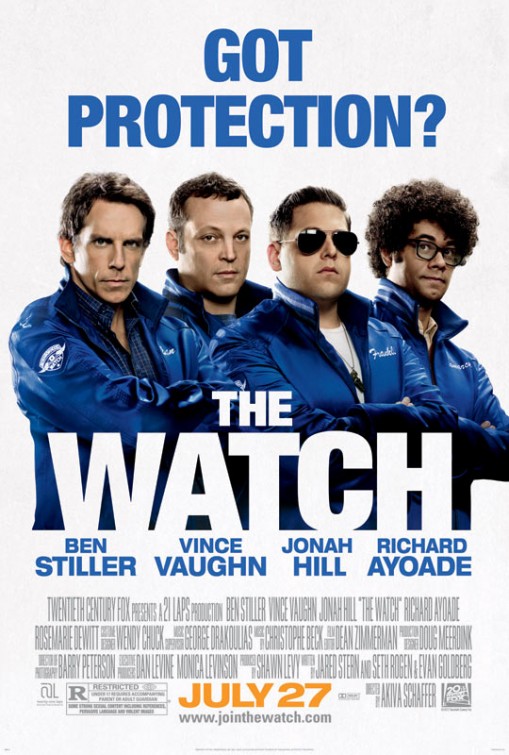 If scientists could take time away from, you know, curing diseases, and craft the perfect blend of “meh” in a lab, it would be The Watch. It’s not particularly offensive or terrible but it’s certainly not good. The humor of boys misbehaving and talking tough doesn’t ever seem to get further than the initial concept. The movie ends up becoming a more crass version of Ghostbusters, with a special fascination for the male member. This is a very penis-obsessive movie. Usually guy-centric sex raunchy comedies will definitely feature strong discussion/comedy revolving around male genitalia, but this is one of the few movies where complete storylines hinge upon penises (weird imagery, I’ll admit). Ben Stiller, Vince Vaughn, and Jonah Hill are more annoying than anything else. Poor Rosemarie DeWitt as the underwritten wife role in what is essentially a boys-behaving-badly movie (also her second 2012 movie where she’s trying to get pregnant). When the movie goes full-force into action mode, it loses just about any semblance of comedy. I laughed about three times, and that was thanks to Richard Ayoade (TV’s The IT Crowd) and, believe it or not, Will Forte (MacGruber). Sitting through 105 minutes with little laughs, irritating characters, and poorly conceived action in place of genuine comedic payoffs, well it’s not exactly a recipe for a successful summer comedy. And yet, with all its obvious faults, I couldn’t hate the movie as others have. It’s certainly not likeable but it does go about its business with a certain swagger, albeit misguided. Cocky loudmouths failing at entertainment are still marginally better than artists who don’t even try. It sounds like I’m reaching, and I am, but The Watch, certainly a bad comedy, may eventually be worth a watch when, you know, it’s on TV and you can half-heartedly pay attention to it while you go about your day.
Nate’s Grade: C-
Share this:

Tropic Thunder (2008)
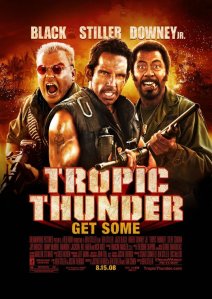 Ben Stiller has been kicking around the idea for Tropic Thunder for nearly 20 years. It took a lot of time to get the script in fighting shape, but the time was well worth it. Tropic Thunder is tasteless and occasionally appalling but it is also wickedly, deliriously funny.
Set inside modern-day Vietnam, Hollywood is filming another epic war movie but this one’s in trouble. It’s over budget, behind schedule, and the first-time director (Steve Coogan) can’t control his actors. Tugg Speedman (Stiller) is a fading action star looking for another hit. Jeff Portnoy (Jack Black) is a crass comedian who’s after some real acting credibility. He’s also addicted to heroin and worries that people will only ever see him as a funny man who farts. Kirk Lazarus (Robert Downey Jr.) is a five-time Oscar-winning actor who, thanks to makeup and a lot of hubris, is playing the film’s African-American sergeant. Alpa Chino (Brandon T. Jackson) is a rapper breaking into acting and is steamed that the Hollywood producers gave the sizeable black role to a white guy.
The director is at his wit’s end and being bullied by producers back in America. He is advised by “Four Leaf” Tayback (Nick Nolte), the Vietnam vet whose story the film is based upon. Tayback says to get real emotion and real fear that the actors should be stranded in the jungle without their precious handlers and demands. So the director takes Speedman, Portnoy, Lazarus, Alpa, and newcomer Kevin Sandusky (Jay Baruchel) in a helicopter and out into the wild. Trouble is, the actors have been left in the middle of an actual drug war, except they think it’s all apart of the script.
 Tropic Thunder is all things to all comedies. It could be tagged as being a bit incoherent but that’s because the movie has so much going on. It’s a sharp satire of Hollywood moviemaking and the raging egos of actors, it’s a send-up of Vietnam war movies and their bloody clichés, it’s a fairly worthwhile action film, and it’s a stupendously politically incorrect comedy with plenty of crude humor mixed side-by-side with genuine wit. It’s a comedy that has the potential to leave you aching from slapstick humor one second and biting satire the next. This feels like a complete comedy and not merely a series of sketches. Every character has an arc, some great moments, and each actor brings something different and something wonderful to the fray. This is clearly Stiller’s greatest achievement as a director.
The focus of Tropic Thunder is all over the place, and no one is safe from Stiller and his co-writers Etan Cohen and actor Justin Theroux. This is a brutal insider satire that plays it broad and loud. There are great jokes that ridicule the pomposity of the entire movie industry and the pitfalls of celebrity as a whole. I loved the jabs at celebrities going overseas and adopting children like they’re souvenirs. The movie has caught flak from disability groups that are mad about the movie’s liberal use of the term “retard.” I don’t want to say these people are missing the point of satire, or the fact that an R-rated comedy should offend on some level, but the joke is clearly on Hollywood and how movies exploit those with mental handicaps under the guise of telling their harrowing and inspiring stories. Movies have long been chronicling the adventurous lives of those with disabilities, which also has the side effect of making these people seem less like, well, just people. In the film, Speedman stared in a movie called “Simple Jack” about a mentally challenged boy who thinks he can talk with animals. Then the character has to pop up later in the film, complete with hysterical dialogue that blows apart just how exploitative these movies are (“I’ll see you in my head movies, but this is one head movie that makes my eyes rain”). It’s performed in just the right tone to make you laugh at the industry and the individual and not because of any disability.
The way the film establishes character back-story is genius. Tropic Thunder introduces all four major characters through fake commercials and trailers, like Grindhouse. The trailers are hilarious and a great way to kick off the movie. Stiller stars in a sinking action franchise where the world keeps being overtaken by fire (“Now, the one man who saved the world five straight times — will have to do it again”). The action franchise’s idea is to just reverse the scenario and, as sequels do, make everything bigger. Black’s trailer revolves around an obese family of super flatulent idiots all played by Black. The sequence is constant farting but it’s so over-the-top and pumped with contempt for lame-brained Hollywood comedies. The best trailer is the one that gives us Downey Jr.’s character, the esteemed Kirk Lazarus. Set in an Augustine monastery around the Middle Ages, Downey plays a monk who finds that he must conceal his inflamed passions for another man of the cloth (a figure I won’t spoil). Think of it as a 12th century Brokeback Mountain, and Stiller and company know exactly where to hammer Hollywood: the go-go eye stares, the hesitant naughtiness, and the ridiculous marketing angles – the title is inexplicably Satan’s Alley. The opening collection of fake trailers serves as perfect comedy bon mots for the feast that is to follow. They whet your appetite and may be the greatest opening 10 minutes of any comedy in memory.
 Downey Jr. gives an unforgettable performance comprised of sheer brilliant comedic bliss. I loved every second he was onscreen and I fully expect the man to get an Oscar nomination for his work here. Now, the role of a Method actor playing a black actor naturally presents a tightrope that needs to be walked just the right manner to maintain a satiric tone that doesn’t turn ugly. Let me state clearly that blackface is never funny. It is repugnant and Hollywood has a rather depressing history with the unsavory practice (Gene Kelly and even Bing Crosby sadly did it). Tropic Thunder is not a Stepin Fetchit-style minstrel show where Downey makes eye-rolling racist stereotypes. The joke is not that Downey is playing a black man, the joke is that he is such an arrogant and egotistical actor that he thinks he can play anyone. Besides, Jackson chides him throughout the film for his unorthodox portrayal, which tells you where the filmmakers stand. Downey elevates every scene he steps into and gives a performance, like the film, that is densely layered with comedy. He never breaks character even when the cameras aren’t filming and even when he’s alone. He’s two steps removed; channeling a performance as a heralded Australian actor playing his idea of a 1970s black male. When Alpa derogatorily drops the N-word, Lazarus slaps him and then begins a speech with, “For over 400 years they have been using that word to keep us down,” and ends it reciting the lyrics to the theme song from The Jefferson’s. In that span of time, Downey takes you along on every stop in the dense, hilarious mind of Lazarus.
While the rest of the actors don’t ascend to Downey’s heights (years ago this would have doubled as a drug reference), the ensemble of Tropic Thunder works together smoothly and they help make the film so much more enjoyable. Black is great when he’s trying to be seen as a “serious” actor when they are filming. I love his rushed and hushed line deliveries. But he’s even funnier after going through the wringer of heroin withdrawal. A sight gag involving Black digging through his speedo had me in stitches. Stiller is playing his usual dimwitted blowhard but propels the plot forward. He knows exactly how to oversell for laughs, like when he’s being riddled with bullets in dramatic slow-mo or when he’s playing Simple Jack. Baruchel is a nice counter foil to the uncheck bravado and craziness of the other actors. Jackson has fun voicing his mounting vexation with Lazarus. Coogan and Nolte provide good small moments, and Danny McBride steals his scenes as a pyrotechnic special effects expert that wants to “make Mother Nature piss her pants.”
 By now you’ve likely heard all about Tom Cruise’s small role in the movie as an irate, bald, fat, extremely hairy studio executive. It’s nice and amusing but I could have done with something different. Downey is unrecognizable in both physical appearance and through his speech; he fully inhabits a character that fully inhabits characters. Cruise, on the other hand, is instantly recognizable even with glasses, a paunch, and a shiny dome. It’s Tom Cruise playing a profane asshole but the joke wears thin. Cruise either needed to do something different or just be seen less, including his hip hop dance moves. And yet, Tropic Thunder has a running joke about Hollywood taking its beautiful A-listers and thinking that, through the power of makeup and superficial physicality, they can play any role. We’ve had a streak of Best Actress Oscar winners that have won accolades by stripping away their beauty and packing on the pounds (check out Charlize Theron in Monster). It seems like even the pretty girls are getting the ugly girl roles now; what’s a homely actress to do nowadays? So, in a way, Tropic Thunder is making fun of this line of thinking, that fat suits and some makeup are the great equalizer, but then it has Tom Cruise more or less falling into the same trap. He puts on a fat suit, a bald cap, but it’s still him and you hear Tom Cruise in every utterance. Maybe it would have been funnier if Cruise were playing a parody of himself since he is a studio executive at United Artists.
Tropic Thunder is a wildly funny movie that takes no prisoners when it comes to its sprawling satire. Stiller and company cut down the self-absorbed lifestyle and mentality inside the film industry and insecure actors. The film really shares the spotlight and each actor provides something different and welcome, and there isn’t a weak link in the bunch. Downey Jr. gives a brilliant comedic performance that will be long remembered. The movie is rude, crude, stupid, smart, and all over the place thanks to such a broad comic canvass. It took many years for Stiller to finally get Tropic Thunder off the ground but the wait was worth it. This is a rare comedy that eels loose, hits hard, and may warrant multiple viewings just to catch all the jokes-within-jokes. This is a movie with plenty on its mind, perhaps too much, but I wish more comedies were as well executed and skillful in their gags about gas passing.
Nate’s Grade: A
Share this:

Night at the Museum (2006)
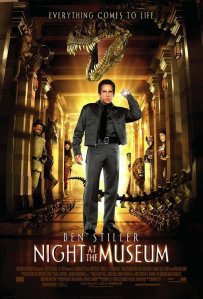 Night at the Museum works because of the possibilities of its fun premise whereupon all the dusty items at New York’s Museum of Natural History come magically to life when the sun sets. I think every wide-eyed kid at some point had the same dream. Whether the movie taps into that childlike wish or panders to it is up for speculation. No doubt, this is a special-effects heavy family film that doesn’t aim its sights very high. Some storylines misfire like Ben Stiller’s tour guide love interest, Teddy Roosevelt (a very game and well cast Robin Williams) and his unrequited love for Sacagawea, and, in fact, a lot of it comes across as amusing but not very funny. The emotive bits feel awfully clumsy. But Night at the Museum has just enough to stay lively and remain unexpected enough to delight. Stiller works his usual shtick but remains the best comedic meltdown actor we have. The biggest surprise was seeing 86-year-old Mickey Rooney serve up some beat downs. I could easily see this becoming a franchise and I’m sure the studio has the same thing on their mind. Night at the Museum is a fun diversion for the holidays and will surely increase museum attendance nationwide. There are worse things than a film inspiring renewed interest in history.
Nate’s Grade: B
Share this:

Starsky & Hutch (2004)
 The big screen adaptation of yet another 1970s television show has about one joke in it that the 70s were funny. So after scene after scene of people with funny hair, in funny clothes, and talking funny, Starsky and Hutch doesn’t so much coast as it skids to a flat, lifeless halt. Ben Stiller and Owen Wilson are an amiable duo and Vince Vaughn makes a credible cocaine creep, but director Todd Phillips (Road Trip) is left to unsuccessfully hammer his film with sight gags. Scenes and jokes will stretch on much longer than their recommended shelf life. Will Ferrell makes a welcomed cameo to give the film its only moment of juice. Snoop is wasted. You may laugh at all this but the Beastie Boys did it better with their “Sabotage” video and that was ten friggin’ years ago.
Nate’s Grade: C
Share this:

Meet the Parents (2000)
 Ben Stiller is adept at playing everyman nice guys the audience yearns for to succeed. Something in his look, a twinkle in his eye – I don’t know. What I do know is put skilled comic Stiller, add a dash of stodgy Robert DeNiro as a foil counterpart, mix with ongoing catastrophe of errors, bake for twenty minutes at 450 and you have hilarity. Or at least, Meet the Parents. The premise is nothing new (in-laws from hell), but ‘Parents’ manages to find new laughs with an old concept. The chemistry between Stiller and the gruff DeNiro is fantastic and proves to produce numerous humorous situations. The laughs are genuine and keep stacking as the film continues on with more and more calamities happening for Stiller. Supporting characters all add something to the mix. Meet the Parents is likely the funniest film you’ll see all year without a man being stabbed in the head with a penis. What? I’m sentimental.
Nate’s Grade: B


 nathanzoebl
You must be logged in to post a comment.