Blog Archives
The Gorge (2025)
 While watching the action-thriller The Gorge, I kept thinking, “Wow, I’m surprised this didn’t get a theatrical release at all.” The Apple Plus original is the kind of movie you’d want to watch on the big screen, with large-scale action, atmospheric imagery, and a creepy sound design meant to elicit shudders. It has a dynamite premise that grabbed me right away: two elite snipers from the East and West, Levi (Miles Teller) and Drasa (Anya-Taylor Joy), are tasked with manning watchtowers overlooking a cavernous and mysterious gorge. They have heavy-duty Gatling guns to make sure whatever is in the gorge stays in the gorge. It’s a year-long tour of duty and both snipers are forbidden to communicate with one another. Naturally, out of boredom and necessity, they break the no-contact rule, first through white board messages, then through shared experiences and competitions, and finally coming face-to-face. For the first 45 minutes or so, The Gorge is actually a pretty lean and effective long distance romance of sorts. There’s ingenuity in the process of getting to know someone from across a large hole in the ground, and both actors have solid chemistry that will help make you silently yearn for a little global collaboration. The movie also has an intriguing scenario with tantalizing details that point to its secret history, until everything is literally spelled out in Act Three. The monsters, who look like a combination of Groot and zombies, are an unsettling character design, though I wanted more variety in their appearance. When the characters finally delve into the gorge for the majority of our climax, we got some new and nasty creepy crawlies, like a tree with rib bones like insect mandibles that ensnare like a Venus flytrap. Alas, I found the stuff inside the gorge to be fun and creepy with a great atmosphere to play upon what we can and cannot see, but it was the stuff above and outside the gorge that made the movie for me. That’s The Gorge for ya: come for spooky monsters, stay for the surprisingly involving romance between monster killers.
Nate’s Grade: B
Share this:

The Super Mario Bros. Movie (2023)
 Colorful and eminently pleasant, The Super Mario Bros. Movie is about everything you would expect from an Illumination project. To begin with, there’s not a lot of story in the 30-plus years of Mario video games, so it’s not surprising that the story is kept relatively familiar with characters each inhabiting simple motivation (Mario wants to impress his dad, Luigi wants to be brave, Peach wants to protect her people, Bowser wants to be accepted by his unrequited love). Much of the movie is establishing a new location and giving some moment of fan service before moving on, like an extensive Mario Kart Rainbow Road sequence or Mario meeting Donkey Kong. It feels like the risk-averse creative process started with a list of characters, levels, and references and then how to squeeze them in. This is a movie kept at a kiddie level, which is fine even for adults to enjoy, but it means there is a lowered ceiling of ambition (so… many…. needle-drop song selections…). Much of the movie is fleeting and fine, with highlights including Jack Black’s performance as the love-struck Bowser, the training sequences making use of the bizarre physics and accoutrements of the Mushroom Kingdom, and a delightfully nihilistic little blue star with a cheery child’s voice. The movie is earnest to the point of being a little corny, which might be refreshing for parents and children used to a recent slate of overly glib kid’s movies trying to act smarter than they are. This movie is cute and harmless and a sugar rush to be forgotten after it wears off. Now re-watch the 1993 version that attempted to take the same source material and make a parallel world Blade Runner with Dennis Hopper as King Koopa. There’s also one hundred percent less Chris Pratt.
Nate’s Grade: B-
Share this:

Amsterdam (2022)

It’s been seven long years since writer/director David O. Russell made a movie. He was prolific from 2010-2015, making four movies, which were nominated for a slew of Oscars, especially in multiple acting categories. Three were also nominated for Best Picture and Russell was nominated for Best Director three times as well. It was quite a vaunted run of mainstream and critical success, with devoted actors like Christian Bale and Jennifer Lawrence eager to sign up for Russell’s quirky ensembles (it helps when both won Oscars playing Russell roles).
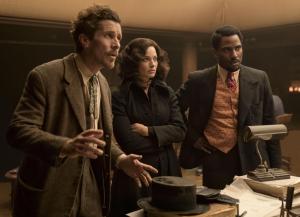
It’s natural to want to take some time off after such a busy creative period, but as the years stretched on, and after the Me Too accountability movement, Russell’s on and off-set behavior gathered more scrutiny and rebuke. His volatility had been known, like his screaming fit he had on the 2004 I Heart Huckabees set with Lily Tomlin. Even George Clooney recounts stepping up to Russell’s bully behavior on the set of 1999’s Three Kings (rumor has it Clooney was the one who released the Huckabees footage). On 2013’s American Hustle, Amy Adams said she cried repeatedly from Russell’s bullying and felt intimidated and isolated. Then there were the renewed revelations from Russell’s own niece who had been transitioning and accused Russell of inappropriate touching when it came to her changing body. Russell even admits to this, though he defends his actions by saying he was given tacit permission, or so he says. With all of this controversy and harassment swirling around Russell, it’s a wonder who would want to continue working with this kind of person. I guess as long as he was producing at his peak level, studio execs would excuse his bad behavior and keep funding his ballooning budgets. Well Amsterdam might just be the end of Russell’s star-studded big studio ride.
In 1933 New York, Burt Berendsen (Bale) is a WW1 veteran making ends meet as a doctor who specializes in veteran care. He and his best friend Harold Woodman (John David Washington) are framed for a murder and on the run, and the only way to clear their good names is to uncover a conspiracy that leads to a possible government coup. Helping the fellas out is Valerie Voze (Margot Robbie), a nurse who makes art from the shrapnel she recovers from inside war vets, and a wealthy socialite who also happens to be in love with Harold. Together, the three friends bumble their way through danger and mystery and crazy mishaps.
This is a mess of a movie, a waste of its top talent, and an excess of Russell’s excesses. The director has established a certain style since 2012’s Silver Linings Playbook, a movie I still to this day genuinely love (it was my top movie for that year). It’s a style that communicates mania, a nervous energy, and it made sense for Silver Linings Playbook as the movie was following a bipolar protagonist given to uncompromising bouts of mania. It makes less sense with each additional movie, but this improv-heavy, experimental, loose sensibility has become the default style for the director, and it feels misapplied. It leads to Russell bombarding his actors with questions or different requests in the moment, keeping them guessing, and actors have gone forward saying they never knew what they were shooting on the day and the shooting never stopped. This indulgence leads to stories that feel like a lot of elements are sloppily thrown together with the undying hope that somehow it will all come together in the end. With Amsterdam, it doesn’t.
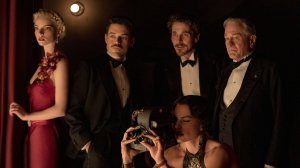
It’s not a great sign when I can say that the entire first hour could be jettisoned. There’s little sense of urgency for far too long, and what is presented feels almost comically unrelated, like even Russell can’t believe his silly characters are in real danger. The uneven pacing creates many dead spaces that feel like an awkward improv detour that you wish could have been avoided. We’re introduced to Bert as a drug addict, and then as a World War One veteran helping other veterans with facial scars and wounds, Bert’s relationship with his pal Harold, then their history in France during the war, then their introduction to Valerie and their kinship, then we have a mysterious death that also leads to a secondary love interest, which requires more setting up of the first love interest and her disapproving family, and then we get police investigating and warning about the first death and then a second murder, this time blamed on our characters, and they’re off to clear their names by… reuniting with Valerie and then bumbling through more characters before, finally the movie presents what it’s actually about well after a full hour-to-80 minutes of movie. It is exhausting and feels like a meandering alternative story that was clumsily grafted onto the Business Plot of 1933. The first half of the movie feels like a slipshod screwball comedy, and then once the particulars of a fascist conspiracy to overthrow the president are introduced, it’s like watching Looney Tunes characters try and foil Adolf Hitler. It just does not tonally work.
The Business Plot is a lesser known event in history, glossed over by the fact that the chief perpetrators more or less got away with their insurrectionist planning. They never did succeed in overthrowing FDR and installing their puppet, but they also did not get prosecuted in the end and most of the media dismissed the scheme as hogwash. It’s undetermined how advanced this plot eventually got but a coup was discussed by a consortium of business leaders. It feels like Russell is applying what he learned from 2013’s American Hustle, which introduced a crazy group of fictional criminals and then, in its last hour, explored the real Abscam criminal sting of the 1980s. I can see themes that Russell thinks are still prescient today, like a dark element desiring to overthrow the U.S. government because it didn’t get its way, as well as the collusion of big business in political king-making, seeking shells that will do what their benefactors demand. The problem is the themes behind this scheme are too serious for Russell’s trifling antics. Think about retelling the insurrection on January 6th but for the first hour it’s two bumbling bank robbers who keep finding themselves in the worst possible situations, ending at the U.S. Capitol. If you’re going to treat the rise of fascism, assisted by corporate overlords, as a serious threat, and something relevant for today, then maybe don’t have most of the movie be wacky nonsense.
Russell’s past films have often glided on energy and in-character authenticity, but this one feels so grasping and desperate. When the master plan to reveal the conspiracy and its shadowy participants is throwing together a big veteran’s show, I was reminded of the movies of young Mickey Rooney and Judy Garland where the solution to any dilemma was to put on a show. Then at one point the literal Nazis are singing loudly in German and are being confronted by our characters and the good patriotic Americans counter by singing “America (My Country ‘Tis of Thee)” and I had to stop the movie and just let out a deep sigh. I think Russell was going for the famous reference in Casablanca, also against Nazis, but it just flounders into unintentional comedy, accentuated by the antsy energy that treats it like camp. There are a couple of spots that I laughed out loud, though I doubt that was the intended response, like watching Taylor Swift abruptly run over by a car. The attempts at actual humor are winding and often lead to little, and the characters feel like more of a collection of quirks than firmly established personalities and perspectives to anchor a movie. What does Bert having a false eye add besides something for Bale to fidget with? What does Chris Rock have to do here? What does Anya Taylor-Joy have to do here? Most egregiously, what does John David Washington have to do here? It feels like Russell just wanted a character for Bert to talk to. The screenplay is overstuffed and polluted with all these minor and underwritten characters that could have been better consolidated.

I suppose you can still have fun with Amsterdam and engage with it on a light-hearted level, smiling as you watch the many big stars having a good time messing around with accents, props, and wacky character traits and tics, like a bunch of kids with a dresser of costumes (maybe it is a throwback to those corny Rooney/Garland kids pictures after all). With other Russell movies, I’ve felt invigorated by the energy and artistry, encouraged to sit a little closer and be more attentive of the character turns, and dig into the actors making three-course meals of their roles. With Amsterdam, I felt the desperation to recreate the success of old patterns but the creeping realization that it wasn’t going to materialize. It’s just a big mess of a movie, not without interesting ideas or moments or good acting, but too much feels resoundingly and frustratingly frivolous. You could ditch entire characters, entire subplots, even entire hours of this movie. Amsterdam cost Disney/Fox $80 million dollars, the biggest of Russell’s career, and only earned a pittance, so I think there is a retraction in due order. Begin with not watching Amsterdam yourself.
Nate’s Grade: C
Share this:

The Menu (2022)
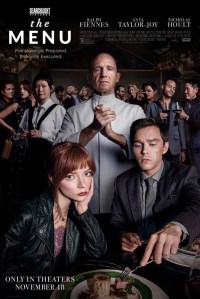 The first thing I thought about with the horror black comedy The Menu is what famous film critic and pun enthusiast Gene Shalit would do with this title and setup. He’d say, “Don’t send this one back to the chef,” or, “I’ll have seconds,” or, “Book your reservation now,” or any number of bad jokes (fun fact: Shalit is STILL alive and 96). Regardless, The Menu is an excellent main course for fans of dark comedies and biting satire. It’s not really scary or thrilling, even if it borrows liberally from the structure of contained thrillers. A dozen wealthy guests are selected for a once-in-a-lifetime dining experience from a legendary chef (Ralph Fiennes). The story is a balancing act of mysteries, with what is happening on this secluded island, each new course on the menu and what it reveals about its chef and his intentions, why each of the couples is present and what troubles they have, and why our head chef is so fixated on Margot (Anya Taylor-Joy), a last-second replacement date for arrogant would-be foodie, Tyler (Nicholas Hoult), and who she really is and whether she belongs here or not. Part of the wicked fun is watching things escalate and the characters freak out, or try and rationalize or bargain through the experience. I was chuckling throughout the movie, tickled by its sardonic humor and the excellent heightened performances from its ensemble cast. Fiennes (The King’s Man) is locked-in as his enigmatic yet intensely dedicated chef, so much so you might admire him while also being creeped out. His annoyance and cold disdain for the guests is a constant source of entertainment, especially a scene where he insists that the know-it-all foodie put on a chef’s robe and try his hapless hand at actual cooking. Hong Chau (Downsizing) is terrific as a no-nonsense sous chef simmering with barely concealed contempt. Her pronunciation of “tortilla” is one of the movie’s biggest laughs. With The Great and now this, Hoult is finding a great stride in playing outsized egotistical buffoons. By the end, I was left wanting a little more in the way of answers or catharsis or even its class conscious commentary, but The Menu still packs plenty in its 105 minutes to be an appetizing experience.
Nate’s Grade: B+
Share this:

The Northman (2022)
 Consider writer/director Robert Eggers’ bloody Viking revenge movie as a companion piece to 2021’s The Green Knight. Both movies take mythical, supernatural-aided tales of heroics and medieval masculinity and feed into the spectacle while also cleaving the legend to make way for a sense of humanity. We follow Amleth (Alexander Skatsgard) who is a displaced prince who has sworn to kill his treacherous uncle and rescue his mother (Nicole Kidman). It’s a tale so old that it inspired Shakespeare’s Hamlet, though that play could have benefited from a climax involving two hulking naked men dueling to the death atop an exploding volcano. The Northman reminds me a lot of Mel Gibson’s Apocalypto, a movie I described back in the day as “an art film for jocks.” It’s immersive and impressive down to the exact detail, and it doesn’t shirk on the blood and combat. It’s also unmistakably the work of Eggers, a very precise and idiosyncratic indie director whose prior movies felt like stylistic dares. The camerawork is often long with single takes, making all the visual arrangements and coordination that much more impressive. It’s staggering that a studio provided Eggers with $90 million to go make his version of Conan the Barbarian. At a lugubrious 140 minutes, there’s enough sticky carnage to satiate fans of brutish medieval action movies, but I appreciated how Eggers keeps his story purposely streamlined and simplistic until a few keen reveals force the audience and protagonist to re-examine the assumptions and fleeting honor of vengeance in this harsh, unfair environment of men out-killing one another. It’s a movie that provides the red meat and then makes you question whether you might want to go vegan. There’s more that can be unpacked but I wish Eggers had cut back at points. This is a slow movie, which does contribute to its mood and atmosphere, but I also wish Eggers had gotten to some of his plot points with a bit more haste and vigor. The Northman is transporting and bold and also more than a bit bloated. You could laugh at some of its over-the-top machismo but I feel like Eggers is inviting criticism of that very machismo, so enjoy the movie on one level where it indulges all the Old World violence, and then enjoy it on another level where it subverts and castigates the same Old World violence. Or you could just watch for the glistening muscles, famous faces, bad accents, bad wigs, guttural score, and weird imagery.
Nate’s Grade: B
Share this:

Last Night in Soho (2021)
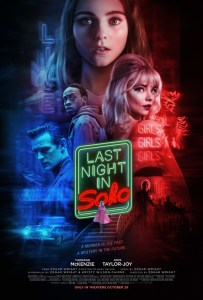
Edgar Wright’s Last Night in Soho is the writer/director’s first work of genuine horror and it’s in many ways unlike his previous movies, both in good ways and not as good. We follow an aspiring fashion student, Eloise (Thomasin McKenzie), as she leaves her small town for the bright lights of London. She has difficulty fitting in with the snobby city girls at school and her new apartment might be haunted. When she goes to sleep, under the alternating neon light filtering through her window, she wakes up back in the 1960s and takes the form of another woman, Sandie (Ana Taylor-Joy). Eloise investigates what happened to Sandie and grows increasingly consumed with solving the crimes of the past and possibly getting lost in it as well.
This is the least Wright-ian movie when it comes to his signature sense of frenetic visual decadence and creative, intuitive editing. This is a more modulated and patient movie, one that doesn’t ape the style of other flashy genre movies for post-modern, meta-textual in-joke commentary. If you had told me that Last Night in Soho was directed by another filmmaker, I would have believed you. It’s a different kind of story and movie, co-written by Krysty Wilson-Cairns (1917, Penny Dreadful), and while mysteries have factored into other Wright films, this one is built upon one. The technical recreation of the swinging ‘60s in London is impressive on every level. The film has an acute sense of style that doesn’t overshadow the unsettling mood of its horror. There’s a period of discovery that keeps your attention into the first half. When Eloise travels back in time, she’s attached as the reflection of Sandie, and this creates very beguiling and imaginative images, like watching Eloise keep pace with Sandie down a mirrored staircase. It made me start to mentally dissect the filming ingenuity, even though it was likely filming the scene in separate pieces, but part of me wondered if they just got the two actresses precise at timing one another’s movements. There are some knockout disturbing images to crank up the horror, like hands reaching out from all manner of spaces, and the grey faces of male phantoms blurring together. There is one visual shot that is so striking on multiple levels, watching the panic of eyes in the reflection of a knife and it plunges in and out of the frame, only increasingly bloodier. Even though I’d consider Soho to be perhaps less visually audacious as Wright’s past works, it’s still a cut above even the better giallo genre homages.

Last Night in Soho is a clear homage but the spooky story ultimately gets caught up in its own machinations and narrative off-ramps. Once the central premise is established by the end of Act One, I was ready for the movie to develop its plot by establishing further rules as we explore the mystery. Is it time travel? I thought if this was established the movie could go several different enticing routes. Perhaps Eloise is going to solve the 1960s tragedy by collecting evidence and investigating witnesses through two different time periods, including people and leads that are lost in present-day. Perhaps Eloise was going to steal the fashions of the 1960s she found as inspirations for her class assignments, becoming more and more dependent on taking the ideas of others rather than trusting her own creative instincts. Is it physical or psychic possession? Perhaps Eloise is finding a freedom in pretending to be someone else and gets addicted to that power and possibility. Perhaps it’s a partnership where both women interact to resolve an unresolved murder case and avenge a past wrong. Perhaps it’s Sandie who discovers the new freedom of being able to be alive in modern-day and it becomes a battle over who will have dominance over Eloise’s body and soul. What about Eloise seeing her dead mother? Does this mean she herself has a special connection to the dead? Will her mother follow her to aid in her safety? Or could Eloise use her trips to the past to find her grandmother? Could this be a manner of learning more about her grandmother while they were similar ages? There are many routes that Wright could have gone, and I would have been interested by any of them with careful plotting and natural development to layer the intrigue and complications. To my surprise, Last Night in Soho doesn’t really clarify or develop its out-of-body setup with more rules.
Without additional rules or development from the plot, it comes down to watching the personal impact this has on Eloise, and at least there the film provides enough of its attention. She’s becoming haunted by the tragic story of Sandie. The movie is very much about the horror of rape culture and how it can traumatize for decades after. It may have been postponed a year due to COVID but it feels very much in response to the Me Too movement that raised awareness of sexual harassment and assault. For Wright’s position, his last movie, 2017’s Baby Driver, starred two actors that have since had their careers affected by reports of predatory behavior, Kevin Spacey and Ansel Elgort, and it almost feels like Soho is a reflective response, in a manner of speaking. It’s Wright’s latent acknowledging how ensnared one can find themselves in an industry or system that profits from the exploitation, humiliation, and silencing of women. Naturally, Hollywood has been an exploitation factory from its very troubled start, with many young women arriving with stars in their eyes only to be taken advantage of by hungry men looking for their next fix. This acknowledgement is nothing new, but Soho feels like repackaging the woman-terrorized-by-unknown giallo films into something more socially relevant and reflective.

The story of Sandie is meant to be an intentional stand-in for thousands of other women who have suffered similar fates at the hands of predatory men promising fame and fortune. It has an undeniable horror, but it’s also somewhat limited with its impact or intrigue because Sandie is kept chiefly as symbol. I didn’t find the extended excursions with her in the past to be as interesting as I’d hoped because Sandie herself isn’t presented as a multi-dimensional figure. That doesn’t mean she’s undeserving of sympathy, it just means I found her to be rather boring. We don’t really learn more about her, until a third act twist that creates some very uncomfortable and potentially troublesome questions. There was a moment where I thought, “Is Wright really trying to make me root for…?” and it did not work. The ending twist feels more like the kind of thing you’d find in the hacky direct-to-DVD version of this kind of genre homage, not from the likes of Wright, a master study on genre recreation. The story of Sandie serves as an industry cautionary tale but by the end I don’t know if Eloise or the audience have learned anything more meaningful other than bad things happen to women.
This is Dame Diana Rigg’s last performance. She died on September 10, 2020 at the age of 82 (the movie opens with a dedication, “For Diana”). The woman who came to fame from the BBC’s Avengers spy series in the 1960s and renewed resurgence from playing the tart-tongued Queen of Thorns on Game of Thrones has a final role that lets her go out in grand style. By the end, it might not fully make as much sense, and invites all sort of questions that tear away the logic of staying in her living conditions for 50 years, but it’s fun to watch this octogenarian go all-in on the messy horror. She’s also the best actor in the movie. Too many other characters are meant as symbols, stand-ins, or conflations, and in fact I wish other characters had been conflated but that’s going into potential spoiler territory to detail. McKenzie (Jojo Rabbit) is a solid lead but not as much is asked of her that could have been. I was expecting her character to become more mentally and emotionally undone, though she sells her fear with effective wide-eyed terror. Matt Smith looks alarmingly identical in 2021 as he did in 2011 with Doctor Who.

I mean no great offense to say that Last Night in Soho is the least of Wright’s impressive and exciting filmography. It’s a solid genre movie with style and intrigue, and while it doesn’t live up to the tantalizing possibilities of its premise, as a horror movie, as a character study, and as a genre homage, it’s still plenty entertaining and with a relevant message about how often women in our society have been the sacrificial victims, not just in the movies.
Nate’s Grade: B
Share this:

The New Mutants (2020)
 The story behind The New Mutants is decidedly more interesting than the movie itself, the last of the twenty-year span of Fox X-Men movies. There was a three-year gap in between trailers for this movie, an adaptation of a Marvel comics series and fronted by co-writer and director Josh Boone (The Fault in Our Stars). It was originally supposed to come out in 2017, and then it was delayed with the rumors that Fox wanted to push for a more prevalent horror angle. There were rumors of extensive re-shoots, possibly half the movie, and then the Disney merger effectively froze the post-production process, and then the rumors were that the film was removing all the elements to tie it into the X-Men universe, to stand on its own. Apparently, all of this speculation and the talk of re-shoots was a lot of hot air and the finished film is what was originally back in 2017, before the X-Universe imploded with the great Disney takeover. Because of the many years of delays and gestating rumors, The New Mutants became a strange artifact of another time and fans began anticipating how bad it might be and whether they might ever really see it. Finally released at long last, The New Mutants is only aggressively mediocre and thoroughly boring.
Danielle Moonstar (Blu Hunt) wakes up in a strange asylum. She’s the only survivor from her reservation where something powerful and supernatural attacked. The medical facility is run by Dr. Reyes (Alice Braga) and secluded in the country. It’s also kept under a force field until the mutant patients make breakthroughs on their paths to processing their trauma and controlling their volatile powers. Rahne Sinclair (Maisie Williams) is from Scotland and was hunted as a demon by religious extremists. Illyana Rasputin (Ana Taylor-Joy) was terrorized by Slenderman-like intruders as a young girl. Roberto de Costa (Henry Zaga) accidentally burned his girlfriend alive. Sam Guthrie (Charlie Heaton) lost control in his town’s coal mine and is responsible for several deaths, including his hard-working father. Together, they uncover the sinister forces keeping them trapped and confront a powerful menace from the past to gain their freedom.
 Even with years of curiosity and anticipation, once it got started, I found myself nodding off during The New Mutants. This is because the script by Boone and Knate Lee (Kidnap) is predicated on predictability. Of course, you know exactly what will be revealed about this so-called helpful medical facility. Of course, you know who will be revealed to be part of that conspiracy. So then we wait for the obvious plot turns and bide our time for close to an hour with each mutant experiencing their own It-style scary encounter with a trauma of their past. Since we have four additional supporting players, each contributes a PG-13 studio spooky set piece until we reach our most obvious reveal about who is responsible for their worst nightmares coming to violent fruition. Seriously, just having read the above, I guarantee that the majority of you can figure out all the spoilers I’m dancing around. This is the kind of movie that quotes the “two wolves” metaphor (“Inside every person are two wolves…”) though the internal animal is changed into bears to align more with Danielle’s native culture. Makes me wonder if every person has two of different animals fighting for dominance within them (“Inside every person are two really irritable ducks…”). This metaphor is hammered home multiple times so you better believe it’s going to relate to our final climax. Normally, I would cite this as smart screenwriting, layering in setups and connecting theme to a personal confrontation. The showdown though is so goofy and the final villain free of personality, because ultimately the final villain is a symbol, an idea, and that is too vague and prone to basic platitudes on fear and responsibility.
The characters are also a major flaw for The New Mutants. It feels like somebody was trying to follow a formula of popular teen movies and sticks with the stereotypical stock roles but gave it a slightly modern twist. Our lead character is indigenous. There’s a chaste lesbian romance. There’s a level of diversity here even if fans of the comics also have expressed insult at possible white-washing of a Brazilian comic character’s ethnicity. At its core, the characters are still the same high school cliche roles: the Mean Girl (Illyana), the Outcast (Rahne), the Tomboy (Danielle), the Jock (Roberto), the Poor White Trash (Sam). It’s not too difficult to imagine The Breakfast Club faces being reapplied into these familiar roles onscreen. They even have a cheesy “cutting loose” montage when their authority figure is away that might remind you of that John Hughes classic. Worse, the characters just aren’t that interesting, each defined by their past that figuratively and then quite literally haunts them. This leads to some intriguing moments of them reliving horror but no sequence makes any character more interesting. The fears don’t provide further insight. Illyana might be the most annoying character of the group. She’s immediately pushy, malicious, racist, and her combination of powers just doesn’t make any sort of sense (teleportation and a disappearing arm sword, huh?). The boys are boring but Danielle is just as boring as our lead. The only character with a spark of possibility is Rahne and her push against religious harassment. If you’re going to be trapped in a contained thriller with a group of super-powered teens, could they not be more interesting than this sullen lot of underdeveloped high school cliches?
 For a movie that was supposed to be something different, it’s the flashes of horror that made me wish the extensive Fox re-shoots had been real. As a mystery or an action movie, The New Mutants isn’t going to be able to compare to the highlights of its fabled franchise. The action at the end feels rushed and sloppy. However, it could have found a tidy place for itself as a more adult horror movie within the broader X-Men fold. The spooky set pieces don’t have much to them because they’re meant as passing torment, reminders of negative feelings rather than extended sequences. They can be eerie and made me wish we could dwell further with this. A horror movie in a confined space with teenagers with powers they didn’t fully understand or couldn’t control, I can see the possibilities there aplenty. That’s what makes it all the more disappointing how predictable Boone and the filmmakers go with their one-off genre riff. The creepy Slenderman creature design is actually good, though I don’t really know if they are real in this world or a figment of Illyana’s childhood imagination. I don’t really know much about the rules of The New Mutants, so when it takes its turns, I was mostly shrugging and saying to myself, “Well, okay then.” Why do these super powered and angst-ridden teenagers never attempt to overthrow the one woman who patrols this otherwise empty facility? I watched Roberto repeatedly wash a giant soup vat in the empty kitchen when he could have been plotting escape. Who is consuming that much soup on a regular basis between the six of these people?
In short, The New Mutants was not worth its unceremonious three-year wait. It’s a middling super hero movie with flashes of potential, especially when it could have been something so different and new than any of the previous X-Men flicks. The movie is so easily predictable that I’m shocked more effort wasn’t put into its scary set pieces to better compensate. There are more twisted accents in the movie than genuine twists and genuine scares (your ears may bleed). It’s barely 85 minutes long and you feel like it’s gasping for breath by even that modest run. It never quite feels like the concept of a horror movie set with super heroes was ever really well imagined. If this is the actual preferred version Josh Boone always had in mind, it still manages to feel incomplete and underwhelming in execution. It’s not exactly a good comic book movie, or a good horror movie, or even a good movie. Thus ends The X-Men. Rest in peace.
Nate’s Grade: C
Share this:

Emma. (2020)
 If you’re going to see a Jane Austen movie, chances are you already know what you’re signing up for. This new edition of Emma. (with extra punctuation at no charge) feels like a slightly more arch version, given a dose of the stilted whimsy of Wes Anderson. It’s only a dash but it’s definitely enough to set the movie apart from its more austere brethren, which will either make it a fresh and reinvigorating take on the material for an audience or a quirky misfire not playing to the strengths of its source material. I fall somewhere in the middle, as I’m not the biggest fan of Austen’s comedic voice but appreciate her point of view and the way she can drop you into these very specific, very rarefied world of class, privilege, and ignorance. The movie’s pacing is quite slack and the scene-to-scene urgency can seem a bit in doubt, which works with the more arch portrayal but also makes the movie feel very long and borderline tedious at parts. The technical asides of Emma. are impressive, with the glorious costuming and art direction transporting an audience back to that early pastoral 19th century time period. Ana Taylor-Joy (Glass) is a sprightly choice as the titular matchmaker and her best moments are when she embraces the extremes, whether it’s being haughty, awkward, contentious, or the occasional dose of slapstick. She navigates the complicated minefield of others affections, trying to stay above it, while finding herself drawn to the free-spirited Mr. Knightly (Johnny Flynn), who is the only reason this movie is rated PG thanks to a brief flash of rear nudity. Mia Goth (Suspiria) is winning as a demure women feeling the highs and lows of love thanks to Emma’s friendly intervention. It is such an amusing change of pace for Goth, often performing as a sexpot. The real standout are the comic actors doing the most with their supporting turns. Bill Nighy (Detective Pikachu) is highly amusing as the fussy hypochondriac father and Miranda Hart (Spy) is a welcomed presence as the oblivious, constantly nattering Miss Bates. It’s Emma’s show, though, and Taylor-Joy is an enjoyable lead surrounded by an exquisitely manufactured world of old. If you’re an Austen fan, Emma. is worth a watch. If you’re not, this won’t exactly be the movie that brings you over into the fanbase.
Nate’s Grade: B
Share this:

Glass (2019)
 M. Night Shyamalan has had a wildly fluctuating career, but after 2017’s killer hit Split he’s officially back on the upswing and the Shyamalan bandwagon is ready for more transplants. At the very end of Split it was revealed it had secretly existed in the same universe as Unbreakable, Shyamalan’s so-so 2000 movie about real-life superheroes. Fans of the original got excited and Shyamalan stated his next film was a direct sequel. Glass is the long-anticipated follow-up and many critics have met it with a chilly response. Shyamalan’s comeback is still cruising, and while Glass might not be as audacious and creepy clever as Split it’s still entertaining throughout its two-hour-plus run time.
It’s been 18 years since David Dunn (Bruce Willis) discovered his special abilities thanks to the brilliant but criminally insane Elijah Price (Samuel L. Jackson), a.k.a. “Mr. Glass.” David has been going on “walks” from his security day job to right wrongs as “The Overseer,” the rain slicker-wearing man who is incapable of being harmed (exception: water). He looks to stop David Wendell Crumb (James McAvoy), a.k.a. The Horde, a disturbed man inhabited by over dozens of personalities. David Dunn and Kevin are captured and placed in the same mental health facility as Elijah. The three are under the care of Dr. Ellie Staple (Sarah Paulson) who specializes in a specific form of mental illness with those who believe to be superheroes. She has only so many days to break through to these dangerous men or else more extreme and irrevocable measures might be taken.
 Shyamalan has a lot on his mind and spends much of the second half exploring the classical ideas of superheroes via Dr. Staple and her unorthodox therapy treatments. She’s trying to convince each man they are simply wounded individuals and not superior beings blessed with superior powers. Because the audience already knows the fantastic truth, I’m glad Shyamalan doesn’t belabor this angle and make the crux of the movie about her convincing them otherwise. The second act is something of a sleeping predator, much like the wheelchair-bound, brittle-bone Elijah Price. You’re waiting for the larger scheme to take shape and the snap of the surprise, and Shyamalan throws out plenty of red herrings to keep you guessing (I’ve never been more glad that convenient news footage of a new skyscraper opening meant absolutely nothing for the final act setting). Part of the enjoyment is watching the characters interact together and play off one another. The conversations are engaging and the actors are uniformly good, so even these “slow parts” are interesting to watch.
It’s fun to watch both Willis and Jackson to slip right into these old characters and conflicts, but it’s really McAvoy’s movie once more, to our immense benefit. Between a ho-hum character who has accepted his ho-hum city guardian role, and an intellectual elite playing possum, the narrative needs Kevin Wendell Crumb/The Horde to do its heavy lifting. McAvoy is phenomenal again and seamlessly transitions from one personality to another, aided by Dr. Staple’s magic personality-switching light machine. The command that McAvoy has and range he establishes for each character is impressive. He reserves different postures, different expressions, and different muscles for the different personas. I was genuinely surprised how significant Ana Taylor-Joy (Thoroughbreds) was as the returning character Casey, the heroine that escaped Kevin’s imprisonment in Split. She’s concerned for the well being of Kevin, the original personality who splintered into many as a means of protection from his mother’s horrifying abuse. I was worried the movie was setting her up to be a disciple of Kevin’s, looking to break him out having fallen under an extreme Stockholm syndrome. This is not the case. She actually has a character arc about healing that is important and the thing to save Kevin’s soul. There are in-Kevin personalities here with more character arcs than the other famous leads.
Shyamalan has been improving in his craft as a director with each movie, and stripping down to the basics for a contained thriller gave him a better feel for atmospherics and visual spacing with his frame. With Glass, the cinematography by Mike Gioulakis (It Follows, Us) smartly and elegantly uses color to help code the characters and the development of their psychological processes. The direction by Shyamalan feels a bit like he’s looking back for a sense of visual continuity from his long takes and pans from Unbreakable, which places greater importance on the performances and precise framing.
 I think the disappointment expressed in many of the mixed-to-negative critical reviews comes down to a departure in tone as well as the capitalization of being an Unbreakable sequel. Both of the previous movies in this trilogy were less action vehicles than psychological thrillers that emphasized darker human emotions and personal struggle. Shyamalan purposely grounded them, as much as one can, in a sense of vulnerable realism, which only made both of their endings stick out a little more. The movies weren’t about existing in a superhero universe but more so about unknown heroes and villains of comic-sized scale living amongst us every day. It was about the real world populated with super beings. Because of that tonal approach, Unbreakable was the epic tale of a security guard taking down one murderous home invader and surviving drowning. It was more the acceptance of the call, and part of that was getting an audience that had not been fed as much superhero mythos as today to also accept that secret reality hiding in plain sight. 18 years later, movie audiences have become highly accustomed to superheroes, their origins, and the tropes of the industry, so I was looking forward to Shyamalan’s stamp. I think our new cultural environment gave Shyamalan the room to expand, and Glass moves into a less realistic depiction of these elements. It’s not the gritty, understated, and more psychologically drawn dramas of his past. It’s more comfortable with larger, possibly sillier elements and shrugging along with them. There are moments where characters will just flat-out name the tropes happening on screen, with straight-laced exposition. It can lead to some chuckles. I think fans of the original might find a disconnect in tone between the three films, especially with this capper. They might ask themselves, “I waited 18 years for these characters to just become like other supers?”
And that refrain might be common as well, namely, “I waited 18 years for this?” While it’s inherently true that a filmmaker doesn’t owe fans anything beyond honest effort, an extended time between sequels does create the buildup of anticipation and the question of whether the final product was worth that excited expectation. Fans of Unbreakable might be somewhat disappointed by the fact that Glass feels like more of a sequel to Split. McAvoy is top-billed for a reason. Perhaps Shyamalan had more of a desire to foster the continuation from a recent hit than an 18-year-old movie. Whatever the rationale, David Dunn gets short shrift. After the opening segment, he’s being institutionalized but he’s not actively trying to escape. As a result, the attention focuses far more onto our two villains, and one of them doesn’t says a word until an hour into the movie. This further exacerbates the disproportionate emphasis on Kevin Wendell Crumb (and The Horde). As stated above, I think that’s where the emphasis should be because he has the most storytelling potential, and McAvoy is amazing. However, if you’ve been waiting 18 years for another face-off between Mr. Glass and the Unbreakable Man, then this might not seem like the special event you dreamt about. Shyamalan still has difficulty staging action sequences. The fights with David and The Beast are pretty lackluster and involve the same non-responsive choke hold moves. There are like half a dozen characters involved with the climactic showdown but half of them are bystanders waiting to be tapped in when the narrative needs them to console their fighter.
 I think the ending will also turn some people off for what it does and what it doesn’t do (I’ll avoid spoilers but will be speaking in vague terms this paragraph, so be warned, dear reader). The ending opens up a larger world that leaves you wanting more, even if it was only a passing scene acknowledging the resolution to the final actions. This holds true with an organization that you get only the smallest exposure to that adds to the deluge of questions seeking answers. It sets up a bigger picture with bigger possibilities that will ultimately be left unattended, especially if Shyamalan’s recent interviews are to be taken at face value. What Glass does not do is play with the implications of its ending and explore the newer developments. The ending we do get is indeed ballsy. I gasped. Shyamalan takes some big chances with the direction he chooses to take his story, and I can admire his vision and sense of closure. On the other end, I know that these same decisions will likely inflame the same contingent of disgruntled and disappointed fans.
Shyamalan’s third (and final?) film in his Unbreakable universe places the wider emphasis on the three main characters and their interactions. While McAvoy and Kevin get the light of the spotlight, there are strong moments with Elijah and David Dunn. There are some nifty twists and turns that do not feel cheap or easily telegraphed, which was also a Shyamalan staple of his past. It’s not nearly as good or unnerving as Split, the apex of the Shyamalanaissance, but it entertains by different means. If you were a fan of Unbreakable, you may like Glass, but if you were a fan of Split, I think you’ll be more likely to enjoy Glass. It might not have been worth 18 years but it’s worth two hours.
Nate’s Grade: B
Share this:

Thoroughbreds (2018)
 Thoroughbreds is a dishy, tart little treat that kept me squirming, laughing, and gleefully entertained. Olivia Cooke (Me, Earl, and the Dying Girl) and Ana Taylor-Joy (Split) are outstanding as privileged teenagers trying to resuscitate their former friendship through collaborative murder. Cooke plays Amanda, a sociopath who cannot feel anything, who is incurably honest, and has stopped caring what others think. Taylor-Joy plays Lily, a self-involved young lady that feels overwhelmed by life and is skilled at dissembling. Together, the girls scheme to kill Lily’s boorish stepfather and enlist the aid of a hapless small-time dealer with big plans (Anton Yelchin, in his final performance) through blackmail. The story from writer/director Cory Finley is immediately engaging with how it naturally reveals the complicated histories between Amanda and Lily as well as what makes each questionable. These are two very interesting people and just watching their probing push-and-pull was entertaining enough, especially with such strong performances. The characterization of a sociopath without a heavy moral condemnation was refreshing. We assume Amanda will be the bad influence but it really becomes the other way around, with Lily faking for her own purposes. Thoroughbreds is more dread-filled and unsettling than conventional thriller, and while there are some gallows humor to be had from the abnormal characters, this is less a dark comedy. There are drawn out tracking shots and methodical push-in camera movements meant to build audience anticipation, and they’re mostly effective. The first half is a bit more engaging than what it ultimately delivers as a climax. It’s still satisfying and well handled, but Finley throws in some misdirects that don’t add a rising sense of stakes. The stakes are really more personal, which works since the crux is on the relationship between the girls and whether they are being honest or manipulative with one another. By the end, I thought I could argue either way who was manipulative and when. Small irony: the last scene you see of Yelchin is him as a valet parking other people’s cars.
Nate’s Grade: B+


 nathanzoebl
You must be logged in to post a comment.