Turning Red (2022)
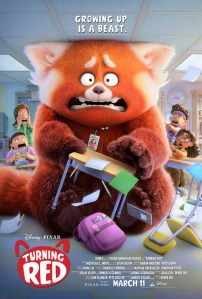 It’s fair to start to wonder whether Disney has some kind of grudge against Pixar at this time. The last three Pixar movies have been pulled from theatrical release and made exclusively available as part of their streaming war chest with Disney Plus. You can blame COVID for Soul being pulled, and the theatrical market was still recovering by the time Luca was scheduled to be released during the middle of summer 2021, but this didn’t stop Disney from releasing both of its own in-house animated efforts to theaters. Both Raya and the Last Dragon and Encanto played in theaters in 2021 and both under-performed at the box-office, which is clearly not close to where it was pre-pandemic. No animated movie has earned over $100 million at the U.S. box-office since COVID, and maybe that’s the reason that Turning Red has become the third Pixar movie to go directly to streaming. There are rumors that this trend has been demoralizing for Pixar employees, and explanations by Disney brass that these movies move valuable subscribers to their service, but I guess we’ll see when the Buzz Lightyear movie comes out summer 2022. Regardless, Turning Red is a high quality movie that made me feel warm and fuzzy all over.
 Meilin Lee (voiced by Rosalie Chiang) is a 12-year-old student trying to live her best life in Toronto circa 2002. That means she’s one way with her friends and one way with her domineering mother, Ming (Sandra Oh). Mei is an overachieving student, devoted daughter to her family’s business caring for a Chinese temple honoring their ancestors and red pandas, and a fangirl in the extreme for the popular boy band, 4-Town (even though there are five members). Mei’s mother does not approve of her devotion to this band, or the influence of her friends, and doesn’t understand the new person her daughter is turning into. However, Mei also happens to turn into a giant red panda whenever she feels any strong emotion. She has to keep herself in check, which is hard to do with mean students, an embarrassing mother, and the prospect of scrounging up enough money so she and her three besties can see their favorite boy band live.
I had to consider what about Turning Red worked for me and what about Luca did not. They’re both relatively smaller scale movies about characters who transform into fantastical creatures, who have to hide their secret, deal with parental disapproval, and come of age while pushing their personal boundaries and re-examining who they are and what they felt was important. There are several points of comparison but I found Luca to be broadly lackluster and low in stakes. With Turning Red, I found the movie to be much more engaging and poignant. So what’s the difference where one feels shallow and the other feels personal and resonant? I think the difference is that Turning Red’s relationships feel more realized and complex. The mother-daughter dynamic is fraught with tension, as trying to live up to the standards of the prior generation is often a surefire way to disappointment. That stuff is relatable, and the drama is potent, but the movie doesn’t lose sight of the generational love underneath all the headaches. Both movies are in essence about growing up and finding your identity, relishing different parts of you that stand out as unique, and coming to terms with differences in perception, but I felt with Turning Red that the film embraced these themes, integrated them better, and also built a sturdier foundation of enriched character relationships.
 The animation is irrepressibly gorgeous but I really enjoyed the added style of Turning Red. It had a more tactile physical presence that reminded me of the Aardman models (Wallace and Gromit, Chicken Run). The color balance also emphasized bright colors that popped with subdued hues as a background. I especially enjoyed playful little touches from anime that emphasized the overly dramatic nature of the personal stakes, like when Mei is sweating over whether her mom will find her notebook filled with pictures of a crush that she felt compelled to draw. There’s a definite energy to this movie that’s missing from plenty of other Pixar movies. It follows the perspective of its heroine, so it’s joyfully excitable and goofy at points and definitely over-the-top, like when she’s calling out her besties and we flash to a rotating mountain they’re all triumphantly scaling. It’s adopted her perspective in a way that makes the movie feel more personable, and I appreciated Mei’s character even more. Special credit should go to whoever was in charge of designing the fur textures for the red panda. When she fully panda’s out, Mei resembles a wonderfully realized version of a Totoro-styled demigod.
It was the third act where Turning Red went from amusing to surprisingly poignant for me. The central conflict is between Mei trying to be herself and the version her mother thinks she should be, which is naturally more deferential and devoted to the family at the expense of independence. This isn’t the first story to explore the difference between traditional families and their children becoming more influenced by Western pop-culture. It’s also not the first story about finding your voice and making a stand, or about parents coming to terms with the realization that their little kid isn’t so little any more. That’s fine. The supernatural elements are also pretty straightforward to follow and in service of the central relationships and metaphors. It’s the personal details that make this movie feel specific to its voice while still being accessible and relatable. It’s easy to cringe when Mei’s mother shares Mei’s private drawings with her fleeting crush. While many of us might not have been diehard fans of a boy band, we all had some phase where we felt more mature, more grown up, and dramatically different because of what this interest meant for us. I found myself battling genuine tears by the end. The end comes down to a conflict between mother and daughter, itself an echo of past conflicts, of overbearing generations being less flexible. It’s also ultimately about acceptance, but the idea that the aspects about yourself that you feel embarrassed or insecure about do not need to be expunged from your identity I think is a worthwhile message about growing up. It’s not about shedding parts of yourself, killing off things you dislike. It’s more about transformation and acceptance of self.
 Turning Red is a briskly paced comedy with a precise, charismatic lead character letting us in on the pressures of her world and of being a teenage girl in the early twentieth century. It’s colorful and frenetic at points but feels completely in keeping with the personality of our plucky protagonist. The combination of puberty and monster transformation has been a ripe area for films especially in the realm of horror. This also might be the horniest Pixar movie to date, and a climactic confrontation involves shaking one’s butt, as they kids are wont to do in leisure. It’s got the substance I felt was missing with Luca and the simplified and streamlined world building that I felt could have improved Soul. In short, Turning Red isn’t top-tier Pixar but it’s an irresistible urban fantasy that has plenty of heart and whimsy to enchant audiences no matter the age.
Nate’s Grade: B+
Share this:

The Adam Project (2022)
 Watching the trailer for Netflix’s The Adam Project, I wasn’t too impressed. It felt like a combination of familiar and popular movies like Back to the Future, E.T., and Looper. It seemed like another assembly of popular sci-fi movie tropes and I wasn’t expecting much else. Then as I watched the movie, I realized how enjoyable and engaging this original story by writer T.S. Nowlin was and what must have attracted Tom Cruise to want to star and produce this project in 2012. It met a long developmental hell, as is common in the industry, before being given a second life at Netflix with Ryan Reynolds as star and director Shawn Levy (Free Guy). It kind of muffs the action and sci-fi spectacle, but The Adam Project is a movie that’s big where it counts.
Adam (Reynolds) is a pilot in 2050 who is fighting against a corporate evil that uses time travel to enshrine its power. Adam’s own wife (Zoe Saldana) crash landed in 2018. In desperation, he travels back in time to find her and team up against their future foes, except he lands not in 2018 but in 2022, and he meets his younger, twelve-year-old self (Walker Scobell). It so happens that Adam’s ship is marked to respond only to his DNA, so he needs his younger self to help while he recovers from his injuries. Unfortunately, the future is antsy to eliminate Adam and sends killer super soldiers and missile-launching spaceships. Both Adams come to the conclusion the only way to prevail is to stop the initial first steps of the invention of time travel, meaning going back further to see their departed father, Louis Reed (Mark Ruffalo), the inadvertent creator of time travel.
 Where The Adam Project really shines is with its core ideas and relationships, which is the emotional heart of a movie. It’s peculiar because we’re so used to seeing the other half, the sci-fi action spectacle, prioritized at the expense of story and characterization. Usually a studio puts much more emphasis on a movie looking good, or at least passably entertaining, and less on the substance that would make it meaningfully so. Credit to the filmmakers that they understood what the core appeal of this movie was and that is the idea of characters out of time getting a chance to interact, learn, and reconcile. Who among us wouldn’t want another opportunity to talk with a loved one before they are gone? Who among us would not be hesitant to eliminate the special confluence of events that lead a special someone into our life? The idea of two different aged versions of one character butting heads is inherently fun but also meaningful, because every one of their squabbles or disagreements is telling from a character standpoint. We’re learning about the differences between these two versions and two different timelines. The older Adam is resentful of his younger self, of his naivety, and looking to toughen him up or settle some scores he thinks will be cathartic. The younger version resents his older self for being so domineering, for being so cynical, and for pushing him into uncomfortable situations to relieve long-standing grudges that he hasn’t dwelled over yet. It also allows older Adam to remember things that he has forgotten from the perspective of his younger self. The buddy banter is capable and spry but it’s also revelatory about the characters, which makes every interaction more important.
Adam’s father doesn’t come back until the second half of the film, and then the movie transforms into a real family affair and takes on extra pathos. Dear old dad is the square pushing back against the ethical implications of knowingly participating with time travel. Here we have three different characters, all related, but each has a different perspective and competing goals: Younger Adam wants to beat the bad guys but also is freshest in his grief over his dad and wants to save him; Older Adam wants to rescue his wife but also has a score to settle with his departed father; and Dad gets a chance to see his grown son, something he will never otherwise witness, but is adamant about refusing to help and prosper from time travel foreknowledge shenanigans. That’s a good combination of conflicts and personality differences, and through the relatable lens of broken relationships repairing between two sons and their father, it elevates each routine action moment later.
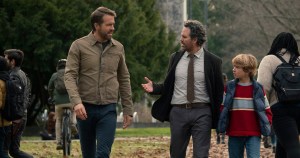 My other surprise was how mundane the action plays in The Adam Project. I started to notice how the action was usually pretty small-scale with only a handful of future soldiers fighting in relatively open and empty spaces. The big future addition is an electrified baton that older Adam utilizes, as younger Adam gushes, much like a lightsaber. It has the power to propel enemies in a force blast that launches out in a circumference, but I kept questioning why Adam wasn’t knocked over by this force as well? It’s a cool device but little else is utilized to separate the past and future. When the characters murder people, they vanish in fiery clouds, free of blood, and we’re told this is what happens when a person is killed outside their timeline. I think it was meant to make the audience forget the mechanics or downplay that all these vanishing soldiers are actually being murdered from existence. The younger versions of these characters are still present but it’s not like there’s another version that will take their place. Their lives ended in this moment as they traveled back in time to this final fate. No do-overs for them. The finale of The Adam Project is a mess of bad CGI and a world-destroying machine; both it and the plot are on apocalyptic autopilot at this point. The preceding movie was much better to simply fall victim to such a dumb climax. It’s not enough to dent the positives that came before it, but the movie succumbs to the pressures of big blockbuster silliness it had avoided.
Here is a vehicle that makes perfect use of the charms of its leading man. Reynolds (Free Guy) has always been a charismatic performer, a fast-talking rogue you can’t help but fall for, but not every movie role allows him to play to his strengths, Sometimes he’s just on quip overload and can come across like the overly ironic, insincere, vacuous version of his motormouth persona. His glib demeanor has a way of eating him whole. Here, the actor gets to essentially be playing off himself, and it works so much better. Reynolds is also a natural with kids (see 2008’s Definitely, Maybe) and there’s an inherent big brother/little brother vibe to the Adam interactions that makes them heartwarming while also amusing. Newcomer Scobell is able to hold his own with Reynolds, no small feat. He has a vibrant, excitable energy that feels youthful without getting into annoying Anakin “yippee” Skywalker territory. Reynolds may be the star but you’ll enjoy spending time with young Adam too, and this is also a credit to Scobell and his performance. Ruffalo and Jennifer Garner (a welcomed 13 Going on 30 reunion) are enjoyable if extremely under utilized; each could have had a whole movie from their vantage point.
 The Adam Project is an action movie that looks like typical pandering studio junk at first glance but gets the hard stuff right, namely the reasons why you should care about any of the flying bodies, explosions, and world-ending CGI. It’s about the characters, and here we have a dynamic that keeps things interesting and fun while also making the dilemma personable and emotional. The same stakes given to saving the world are also given to having one more conversation with a departed father or with trying to get things right in your past while time is still ahead of you. The Adam Project might be overlooked or discounted because of how its parts appear to be generic and stale, but it’s the care with which they are assembled that won me over. I’m just amazed that, for once, a Hollywood big-budget tentpole release emphasized the right stuff.
Nate’s Grade: B
Share this:

Drive My Car (2021)
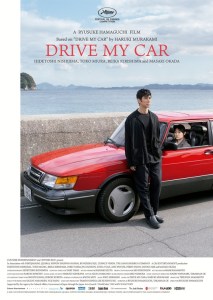 Here comes my shocking cinematic admission that lowers my standing with my critical brethren: I don’t see what the big fuss is with Drive My Car. The three-hour Japanese movie has bewitched most critics, won several Best Film of the Year designations, and was nominated for four Oscars including Best Picture, something only ten or so films have achieved in the Academy’s history. It’s a guaranteed winner for Best International Film, something only one other Japanese film has earned, and no, not anything from legendary Akira Kurosawa. All this is a protracted way of saying this is a very well regarded movie across the globe… and I just couldn’t get into it. Part of this is that the length is overly indulgent and meandering. The three hours feel far too leisurely, and structurally, the entire opening 45 minutes could have been cut and begun with our grieving actor/theater professional restarting his life two years after the sudden death of his wife. Everything you would need to know in that pre-credit beginning is covered later in the movie, which made me wonder why not leave some of the elements as mysteries to be filled in later such as the character’s complicated relationship to his unfaithful wife, what he knew or didn’t know, who is the voice on the tape he’s listening to running lines for the Chekov play Uncle Vanya in his car, and his personal connection to the leading man in the play he’s directing. A whole hour of this movie might be listening to actors say lines from Uncle Vanya, or just hear lines from Uncle Vanya, and then applying the 1898 Russian play to these modern characters and their lives. It’s clever but this kind of stuff works better as subtext. With Drive My Car, it’s the text, the literal text of the story for long portions, and that comes across as frustrating because it’s setting up characters, having them read a famous play, and then telling the audience, “Well, you find the connections.” Again, this works as layered subtext and metaphor in addition to a compelling story, but so much of Drive My Car is at this level of artistic interpretation. Did we need a dozen subdued scenes of them practicing the play in order for the ending to have its impact? That’s the power of art, a tool we can use to relate our fears, hopes, and identities with, sympathizing with the struggles and triumphs of people from other times and places. The core of this movie, for me, was the relationship between the main character and his younger driver assigned to him by the university. This character unfortunately doesn’t get her due until much later. Drive My Car has some beautiful moments, like a graceful family dinner, like the trip to the garbage site in Hiroshima, like a backseat monologue about, what else, decoding a story for meaning as it applies to character insight. This isn’t a bad movie. I can certainly appreciate the big swings at big ideas about grief, the human condition, and the reflective power of art. It’s just structured in a way that doesn’t allow those core elements to shine. Eliminate many scenes of play rehearsals, eliminate many scenes of driving, and even eliminate the opening 45 minutes, and you have a better paced, better emphasized human drama, at least to my mind. There are plenty of people who have fallen in love with all three hours, but I found myself more listless than lovelorn. I really wanted to like Drive My Car better but I found too much of it to be meandering, redundant, and frustratingly cold and opaque. In the end, after three dragging hours, I could at least say, yes, that woman certainly did drive that man’s car.
Nate’s Grade: B-
Share this:

Straitjacket (2021)
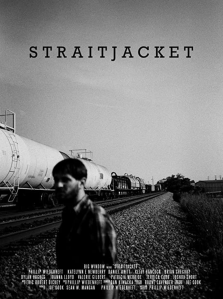 I genuinely forgot that I had supported Straitjacket, a new Ohio-made indie thriller filmed in the Dayton area several years hence. I know some people involved in the production and remember seeing a teaser trailer years ago asking for further editing donations. I could not remember if I had actually donated to its post-production costs and sure enough, in the end credits, there is my name under the thanks section for financial assistance. We’ll see if writer/director/co-star/editor Phillip Wiedenheft feels like listing my name was a mistake after this review. Straitjacket is a moderately successful thriller that entertains as long as it keeps things unbalanced.
The first thing we know about Wolf (Wiedenheft) is that he’s getting wasted in the woods. He awakens the next morning and loads a rifle and shoots at glass bottles. Except his shot goes beyond the bottle. He hears screaming and discovers his shot hit an old man walking through the woods. The man’s granddaughter, Lola (KateLynn Newberry), chases after Wolf, who hops into his car and drives away. Wolf is desperate to escape but he doesn’t have enough money for a plane ticket. He also might have left behind more than a few incriminating items in the woods after he quickly ran off. Wolf tries to take refuge with his dealer, the few family and friends who may still speak to him, while Lola languishes in despair and wonders if she can find the killer.
 Straitjacket owes a creative debt to the films of writer/director Jeremy Saulnier (Green Room, Hold the Dark), the man who worked nervy tension to a breaking point in his elegantly constructed indie thrillers (I immediately re-watched Green Room following this movie too). The tone and visual palate of this movie reminds me plenty of 2013’s Blue Ruin, a superb movie that follows a bearded vagrant on the run after an act of vengeance places a target on his head. It’s a revenge story stripped to the bone and free from the bombastic spectacle of bigger movies exploiting the same territory. The hero in that film, a drifter, wasn’t particularly skilled at killing, or defending himself, and was clumsy and all-too human as he brought a maelstrom of pain onto his life. It’s easy to make these same connections with Straitjacket, where it almost literally begins with a literal bang, a very easy to follow starting point stripped of exposition. Before the five-minute mark, our main character has killed someone in an accident and is now on the run. There’s a pleasingly frantic nature to the plotting, going from one desperate gamble to another, trying to figure out a possible escape as well as covering up his culpability. Wolf, just like the protagonist of Blue Ruin, is not particularly excelled when it comes to crime. He screws up. He has to correct his mistakes. He gets into debt to people who hold leverage over him. He has to scrounge up money in order to secure the things he needs to flee. The screenplay connects the dots in a way that doesn’t feel overly contrived even when the final act involves the ironic crossing of paths of all the necessary characters. That is a common occurrence in tragedy, the nature of inescapable fate and so we allow it, and Straitjacket is a tragedy disguised as a runaway thriller. If anything, it’s about people trying to escape from their mental and physical pain.
At the half-hour mark, the narrative switches perspectives, and we now see things from the victim’s point of view. In the hours before the fatal accident, we see Lola and her grandfather going about their day before he is taken permanently from this Earth. They discuss her process of recovering from addiction and share a small but heartfelt moment planting a tree mingled with the ashes of loved ones, Lola’s mother and grandmother (I think?). The old man says Lola is the only family he has left and he doesn’t want to come out here and plant another tree. Just with that line, with that moment, the filmmakers have managed to say everything they need to say in a meaningful and character-centric fashion. From there, much of the next half hour is Lola trying to make sense of her sudden loss. I thought perhaps the narrative had flipped and we were going to follow Lola as she tracked down Wolf and enact her own vengeance, but the movie doesn’t really do that either. She stumbles upon him again just because he returns to the scene of the crime and she recognizes his car, but her agency stops at calling for help from an ex. That’s disappointing because she could have been the right participant for the audience to root for.
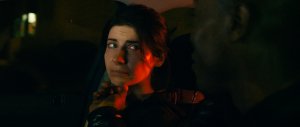 And therein lies one of the issues holding back Straitjacket from real gut-churning dramatic greatness, the fact that you don’t really root for any character to achieve his or her goal. While streamlining the narrative has made the plot relatively tight and quick to start, we also don’t really get much in the way of fleshing out Wolf as a person. We know he’s self-destructive, we know he’s struggling, and a caravan of interactions with minor supporting players fill us in on the myriad ways he is disappointing others (he has a son he never sees, he’s stolen from family before, he’s gotten into trouble with his dealer, etc.). He’s just sort of a screw-up but we aren’t given redeeming qualities, we aren’t given moments that allow a personality to shine through, where we can see his hopes, maybe a glimmer of his time and who he was before his addictions. He’s less a character and more a walking Tragic Symbol with antsy legs. The same with Lola. She’s suffering, she’s hurting, she wants to find her grandfather’s killer and bring them to justice. But does she do anything to actively achieve this? Not really. She lucks into attending the same drug house that Wolf does, and this sets up a finale that tries to have it both ways, ultimately ending on redemption and closure but not quite managing the catharsis of either. That’s because the limited characterization made the later emotional investment limited as well.
Take a look at Blue Ruin for comparison on how it could have been done effectively. It’s established why the main character’s life has been in shambles, he finds the person responsible for murdering his parents, takes his clumsy vengeance, and the rest of the movie is him outrunning the mounting and bloody repercussions. That movie works because the act of violence that kicks off the scramble is eventually revealed to be justifiable from the character’s perspective (his own sister, whom he initially hides with, congratulates him). He’s also the underdog as the forces coming after him are armed, dangerous, and larger, so then the movie becomes how this one man can use his few resources and lead time to outsmart his eventual attackers. It becomes naturally engaging because the odds are stacked against him and every time he surprises or beats them back is another victory and satisfying to watch. Straitjacket doesn’t afford similar satisfaction for a viewer. That’s the difference between a thriller and a tragedy, not that Blue Ruin was absent its own stark sense of tragedy as revenge was deemed ultimately as self-harm. There isn’t that push with Straitjacket. Lola isn’t actively looking for her culprit, and her path toward vengeance isn’t taking a toll. Sure, you could argue it’s what causes her to consider relapsing back to addictions but even that struggle is kept very generalized.
 When the movie attempts to connect to larger social and political issues, it feels more grasping than edifying. Both of the main characters are struggling with drug addictions, and there’s even passing reference to the opioid crisis happening nationwide, but the drug problems are more scant characterization than anything thematic. I suppose one could be generous and talk about people being haunted by their past mistakes, enthralled to addiction, and working to become better people in control of their own lives, but that’s a generic plot foundation that any nominal drug addiction movie traffics within. Likewise, the Army vet who is coping with his PTSD through drug addiction seems like it has the potential to make larger statements, but even this aspect of the movie is curiously underplayed. I thought the filmmakers would tie more trauma together with the past and present for Wolf, even indulging in certain triggering sounds or images. I suppose Straitjacket’s title is meant to reference the bind that these characters find themselves in due to drugs and other socioeconomic circumstances (no one literally wears a straitjacket). I just thought the movie would have more to say than drug addiction is rough.
I also think it was a mistake for Wiedenheft to have played Wolf. I don’t know if this decision was born out of necessity of keeping the crew small and moving, not having to contort around another actor’s schedule when the writer/director could just step in, or if this was a part that Wiedenheft really wanted to portray. I assume it’s more the former than the latter. In that case, this might be why Wiedenheft the writer kept things minimal on Wiedenheft the actor. There are a few challenging scenes to play, like drug highs and the lows of desperation, but the performance is much more reactive and kept at a distance. Maybe he’s meant to be more a cypher, a stand-in for countless others struggling with the cost of addiction, but if this was the case I figure more attention and specifics would have been placed thematically.
The acting shortcomings of Wiedenheft are more noticeable when compared to his co-lead. Newberry is a familiar face in the realm of Ohio-made indies (The Curse of Lilith Ratchet, Dark Iris, The Wager) and gets the big emotional moments. Newberry sells the grief and shock with ease. A notable standout is JoAnna Lloyd (Brimstone Saint) as a park ranger. She’s only in the movie for two brief scenes but she leaves a favorable impression as a woman struggling to even compute the tragic events that she is now meant to serve as an authority for. Her loss of words, awkward articulation, and sense of bewilderment trying to comfort another is deftly played.
 From a technical standpoint, Straitjacket is marvelous and impressive, and the level of its professional presentation in no way betrays the fact that the movie’s budget was only $15,000. The cinematography is extremely polished and moody, again reminding me of how Sauliner uses his sleek images and compositions to make even unnerving anxiety appear oddly beautiful. There’s a clear and clean visual talent here. I can see how a thriller would be appealing for this artist. When things are on edge and in movement, that’s when Wiedenheft is at his best as a director. It’s when things slow down that we start to see faults with the limited characterization and themes. Still, this is one Ohio-made indie that doesn’t feel like it’s stretching to a breaking point simply to get to a feature-length running time. There feels like even more could have been explored, maybe a third character perspective to open things up even more and examine the long ripples one devastating mistake can have on many lives. It’s tragedy served up as chase movie, but when things slow down that’s when you’ll notice how Straitjacket could have used more knots to tie itself into an even more tantalizing and emotionally grueling film experience.
Nate’s Grade: B-
Share this:

The Batman (2022)
 Matt Reeves is a director who has found a way to inject soul into blockbuster movie-making, notably shepherding the last two films of the revived Planet of the Apes series. Who would have guessed at the turn of the twenty-first century that the two co-creators of Felicity would go on to helm such monumental properties like Star Wars and Batman? Reeves has reliably proven himself on increasingly bigger stages, and that’s why I held out hope that yet another Batman reboot would be worth the effort under his care. Let’s face it, dear reader, we’re probably never going to be more than three or four years removed from some kind of Batman movie, whether a continuation or another reboot. If we are going back to the Bat basics, I trust giving the franchise over to exciting artists like Reeves. I was hoping for a Ben Affleck-directed Batman after he slipped into the cowl in 2014, but it was not to be even though he was the best part of the Zack Snyder run. After multiple production delays, we now have The Batman, and it’s the next big box-office hope for desperate movie theaters until the oasis of summer releases (some are even charging a heftier ticket price, so consider it a blockbuster tax). As a slick comic book spectacle, The Batman is a three-course meal that could have sensibly pushed away earlier. You’ll feel satisfied, full, a little addled, but if dank serial killer thrillers are your thing, you’ll definitely be hungry for more even after nearly three hours of Reeves’ deep danky dive.
Gotham City is on the verge of a new mayoral election, and it’s also on the verge of a killing spree. A masked man identifying himself as the Riddler (Paul Dano) is targeting the elites of the city with cryptic notes addressed specifically toward “The Batman” (Robert Pattinson), the newfound vigilante trying to instill fear in the hearts of would-be criminals. The key ends up being Selena Kyle (Zoe Kravtiz), a waitress at Gotham’s grungy club that also happens to be a popular market for the big crime bosses. Batman enlists the help of Selena to put together the clues to predict the Riddler’s next target and to uncover decades of corruption infesting the city.
 The Batman exists in a specific cinematic universe far more in common with the rain-soaked, gritty serial killer thrillers of David Fincher than anything from the previous DC movie universe. This is a pulpy, stylized movie that feels akin to Seven or Zodiac, and not just in its protracted length. It’s a methodical movie that takes its sweet time dwelling in the decrepit details. The plot is very similar to the serial killer formula of finding that first alarming murder and clue, leading to the next, learning more from each additional target to try and discern a pattern of connectivity, and finally learning that the grand scheme goes deeper than imagined, and is usually personal. It’s more based as a detective procedural than any previous Batman incarnation, including missions where the Dark Knight goes undercover or enlists others to gather intel for his investigation. If you’re the kind of person that’s been dreaming of the quote-unquote world’s greatest detective to do more sleuthing and less typing at magic computers, then your time has come. This is a very dark and very serious movie, though it doesn’t feel too suffocating. Fun can still be had but on its own terms, satisfaction from building momentum, seeing how this world incorporates familiar faces and Batman elements, and deepening the lore of this city’s complicated history. Nobody is going to be making any “I gotta get me one of these” quips. It’s hard to even remember a time Batman had nipples on his chest plate and a Bat credit card.
This is also the first Batman where I can vividly feel the anger resonating from its title character. In this new timeline, we’ve thankfully skipped the origin period (and even more thankfully skipped watching Bruce’s parents die on screen for the sixteenth time or so), and we’re now two years into Batman being Batman. He’s still figuring things out but his effect is evident. Reeves has a terrific introduction of various acts of crime across the city and cross-cutting the criminals staring at the Bat signal in the sky and then nervously looking at a corridor of shadow, fearful that the caped crusader could emerge at any moment. When he does finally arrive, this Batman walks with such heavy plodding steps for dramatic effect (and reminiscent of some Goth club kid). This version of Batman relishes delivering pain. He wallops his opponents with abandon, and the intensity of the physical performance from Pattinson really impresses. This is Batman as a rampaging bull, leaning into fights, and also carelessly blase about enduring damage. You will watch Batman get shot dozens of times and he just keeps fighting, so overcome in the moment with the drive of his own violent vigor. Bruce Wayne hasn’t exactly been portrayed as a stable and well-adjusted man in the other movies, but this is the first Batman that made me a little scared about what he might do to others and how cavalier he was taking all this damage.
 On that note, Pattinson proves himself more than capable of shouldering the weight of the franchise. Upon news of the former Twilight star’s casting, fan reaction across the Internet was apoplectic and rotten, ignoring the fact that Pattinson has gone the 90s Johnny Depp route and purposely leveraged his good looks to work with an eclectic group of filmmakers and odd roles (see Good Time, The Lighthouse, and The Rover). Pattinson has become a very interesting young actor, and it’s funny to me that ten years after the release of the final Twilight, we have one half of the undead couple playing Batman and the other half nominated for Best Actress for portraying Princess Diana. I would say they’ve proven themselves as legit thespians. Anyway, the Batman franchise has a long history of negative fan reaction to casting, from Affleck to Heath Ledger to even Michael Keaton, that is then rescinded upon seeing the movie, and I expect the same to occur for Pattinson. He actually plays Bruce Wayne something like an atrophied vampire, barely keeping the visage because the costume is the real him. Although, if this is a Batman who prioritizes the night, I think if I was a criminal, I would just start planning on committing all my many crimes during daylight hours (strictly keeping to banking hours).
The supporting cast is as deep and as talented as the Nolan films. Several villainous characters are in their early stages of our conceptions. Kravitz (Kimi) is the real breakout star. While she cannot supplant Michelle Pfeiffer as the top Catwoman, Kravitz makes the role her own. Selena is more a socially conscious antihero trying to fight back against bad men in power abusing that power. Her own goal aligns with Batman’s, and the two become intertwined allies with a clear romantic frisson emerging. This is a Catwoman I would like to see again. Dano (Swiss Army Man) is effortlessly creepy as the morally righteous and unhinged Riddler, more akin to Zodiac or Jigsaw than Jim Carrey’s wacky version. He’s menacing and the tricks he does with his voice are unnerving, except, however, when his voice hits higher pitches and then he sounds like a whiny child needing to go to his room. Colin Farrel (The Gentlemen) is nearly unrecognizable under pounds of makeup that make him resemble a disfigured Richard Kind (one wonders why the movie didn’t just hire Richard Kind himself) and he’s having a ball. Jeffrey Wright (Westworld) has a weary gravitas as a younger Jim Gordon, the only ally on the police force for Batman. Andy Serkis is a welcome presence as the dutiful Alfred, the last familial bond Bruce has, though he spends most of the time off-screen probably due to Serkis directing 2021’s Venom 2.
 Reeves might not have the signature Gothic opulence of a Burton, the visual flair of a Snyder, or the zeitgeist-tapping instincts of a Nolan, but he is a supremely talented big screen stylist. There is a deeply felt tactile nature to this movie, from the streets to the alleys to the homes. It feels wonderfully alive and especially dirty. The entire movie feels like it has a visual pal over it, favoring burnt orange, and the cinematography by Greig Fraser (Dune) is ornate and often mesmerizing, begging you to just immerse yourself in the details and compositions. The influence of Fincher is all over this movie, but there are far worse auteurs to model after than the man who elevated serial killer thrillers to high art. I appreciate how Reeves stages many of his bouts of action, including one sequence of Batman taking out a group of gunmen glimpsed only from the staccato flashes of muzzle fire. Reeves is a first-class showman when it comes to introductions. I mentioned Batman’s introduction, but Reeves also delivers splashy entrances for Catwoman, the Riddler, and even the Batmobile, which comes to monstrous life like a kaiju being awakened. The explosive car chase with that marauding muscle car is the action high-point. The movie is further elevated by Michael Giacchino’s pounding musical score. It’s not an instantly iconic Danny Elfman theme but it is stirring in how thunderous it announces itself.
I wasn’t feeling the length of the movie until its third hour, and that’s where my friend Eric Muller cites that The Batman is suffering from a Return of the King-level of false endings. Just when you think it’s wrapping up, there’s something else, and just when you think it’s now finally coming to a close, it’s got another sequence and attached resolution. It’s during this final third hour that I feel like the movie could have been trimmed back. While it ends on a high note and brings characters to the end of their arcs in a clear fashion, part of me really feels like a bleaker ending would have been appropriate for the rest of the movie we had. I won’t specify for the sake of spoilers but you’ll know it when it happens, and it could have ended on a note of the villain more or less winning the larger war on their own terms. It has such a power to it, tying elements together that had been carefully kept as background for so long as to be forgotten only to bring them back to assert the full power of an insidious virus. I think the movie would have been a more fitting ending on this dreary note, with our heroes having lost, but of course the studio wouldn’t want its $200 tentpole to end with its main star bested by pessimism. Again, this is merely my own personal preference, but after two-plus hours of rainy gloom and doom, it feels more fitting to end on a dour note (also akin to Seven or Zodiac) than on inspiring triumph.
 This is also perhaps one of the most disturbing PG-13 movies. I might caution parents about taking younger children to watch. The mood of this movie is very dark and somber and the details of the Riddler’s acts of terror can be very horrific to contemplate. There are also intense moments like listening to a woman being strangled to death, twice. It all started making me think maybe Reeves and company could have pulled back and left more to the imagination. I’m not saying the movie’s tone is inappropriate for the material, it just occasionally luxuriates in the grimy details and pitched terror and trauma of its victims that can be unsettling and unnecessary.
Even with the heaviest expectations from the hardest of fans, The Batman is an unqualified success. It’s not in the same category of Nolan’s best but the ambition and execution place Reeves only just outside that hallowed sphere of blockbuster showmanship. It also hurts that The Batman lacks an exciting anchor that can break through the pop-culture clutter, like a dynamic and ultimately Oscar-winning performance from Heath Ledger or Joaquin Phoenix. It almost feels like a Batman miniseries that you might want to continue tuning into (Reeves is developing a few Batman-related projects for HBO Max). Overall, The Batman is an exciting and intelligent blockbuster with style, mood, and a clear sense of purpose. Reeves remains an excellent caretaker of any pop-culture property and proves big movies can still have souls.
Nate’s Grade: B+
Share this:

The Texas Chainsaw Massacre (2022)
 What are we doing here? This new Netflix Texas Chainsaw Massacre is part reboot and part distant sequel to the 1974 original, even bringing back sole survivor Sally Hardesty to get her very grizzled Jamie Lee Curtis-in-Halloween 2018 vengeance. There are a lot of bad sequels and remakes in this franchise’s history, blinked out of existence here with this ret-con, so keep your expectations pretty low. This is a 75-minute movie with a wisp of a plot, so much so that it doesn’t even wait until the twenty-minute mark for the conveyor belt of carnage to begin. I suppose that can be a virtue for genre audiences. This is a decidedly gory and crunchy horror movie, gleefully splashing in entrails and jump scares rather than taking the time to develop something more. If we’re upholding the original’s timeline, then this Leatherface is in his mid-seventies. We need fun slasher movies too (I enjoyed the fifth Scream), but this one just feels spiteful and creatively hollow. I don’t really even understand the premise, that a group of political activists are literally buying or auctioning a ghost town to turn it into a gentrified, liberal mecca in the Texas desert. Young liberals are removing racist Texans from their homes and Fyre Fest-chasing Zoomers are invading? What? Then there’s our Final Girl who herself is the survivor of a school shooting and working through her trauma, and flashbacks, to regain her control by literally learning to arm herself. Oh no. Elise Fisher (Eighth Grade), you deserve so much better. It’s fast-paced. It’s exceedingly bloody. It’s over quickly. I guess there are ways this new Texas Chainsaw Massacre could have been worse but there’s even more ways it could have been better.
Nate’s Grade: C
Share this:

Crossroads (2002) [Review Re-View]
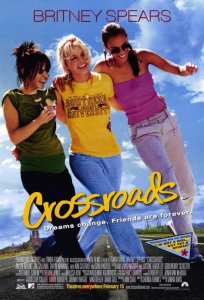 Originally released February 15, 2002:
When informed that her feature film debut was receiving shrieks of laughter during advanced screenings for critics, Britney Spears said she was glad because she never likes the same films the critics do. Well Ms. Not That Innocent, the truth hurts; you’re not a girl, not yet an actress. Crossroads is really the filmic adventures of Britney Spears and her ever-present navel. The navel should get second billing, but alas, we do not live in a society of equality for navels.
The film opens up with three 10-year-old best friends burying a box of wishes and dreams and promising to be bestest friends forever and ever. They make a pact to come back and dig up the box on the night of their high school graduation. Flash to the present and the word “bestest” isn’t what it used to be. Lucy (Britney Spears) has become the virginal nerd preparing to give her speech as valedictorian. Kit (Zoe Saldana) has become the haughty popular snob, obsessed over getting married ever since she got her first Bridal Barbie. Mimi (Taryn Manning) is pregnant and become the trailer trash girl that everyone sees fit to remind her of. Despite their growth apart they all do come together to reopen their box of dreams. Mimi informs the others that she plans to head to California to audition for a record deal in an open contest. Kit decides to use this opportunity to check up on her boyfriend at UCLA who has been strangely evasive. Lucy complains that by having her nose in a book her entire high school experience she never got to go to a football game or even “hang out.” Somewhere a small violin is playing. She decides to jump at this chance and possibly see her mother in Arizona, who ran out on Lucy and her father (Dan Akroyd) when she was only three. The wheels of their adventure are provided by guitar-playing mystery Ben (Anson Mount). He pilots them on their travels to the Pacific coast, though the girls think he might have killed someone, but oh well.
 Crossroads is filled to the brim with every imaginable road trip cliché. The girls “open up” after getting drunk, have a scuffle in a bar, reap in the sights of nature, and perhaps create some sparks of romance with their hunky heartthrob of a driver. The car also inevitably breaks down and the girls have to find a way to scrape some quick cash together. They enter in a karaoke contest and Britney proceeds to sing Joan Jett’s “I Love Rock and Roll” with her two gal pals providing backup. But no, this isn’t the last time you’ll hear Ms. Brit sing. In an effort to pad as well as become a showcase for its star, Crossroads gives us many scenes of the girls just singing to the radio. Besides Jett, Shania Twain’s “Man I Feel Like a Woman” and Sheryl Crow’s “If It Makes You Happy” are also on the chopping block. You’ll also be accosted by the movie’s single “Not a Girl, Not Yet a Woman” several times, including one scene where Poet Britney is asked to share her poem and it ends up being the song’s lyrics.
Saldana (Center Stage) is not given much, as the attention is always centered on Britney, so she merely comes off like a token conceited character. Only Taryn Manning (crazy/beautiful) comes away with a little dignity. She gives Mimi a lot more heart than should be there and shows some honest reflections for her character. She also, coincidentally enough, looks like a dead ringer for Joan Jett with her black bangs.
Crossroads is nothing but a star vanity project for Spears, with some not-so-subliminal Pepsi product placement here and there. This was not a script looking for a lead; this was something Britney’s management team suited for her, and Crossroads is perfectly suited for Britney. It allows for many ogling periods of booty shaking. The majority of the film’s drama doesn’t even concern her, and when she does have to act, her scenes are cut short to help her when the real drama unfolds. The movie’s true intentions are revealed when Britney is shown in her pink underwear twice in the first 15 minutes.
 Crossroads moves along on gratuitous skin shots of Spears half-naked body every 20 minutes until it reaches its torture chamber of a final act. In this very melodramatic period we get abandonment, date rape, infidelity, and even a miscarriage in one of the film’s most shameless plot devices. Of course none of these horrors matter, especially a psychologically damaging miscarriage, because Britney has to get to her BIG audition in order to perform, yep you guessed it, “I’m Not a Girl, Not Yet a Woman.” She also has to wear what looks like kitchen drapes while she sings.
You’ll walk out of the theater wondering many things. Why does Britney wear pink in EVERY single scene she’s in? There’s even one scene where she changes from a pink top to another pink top and is FOLDING a third pink top into a suitcase. Are we to believe that Akroyd and Spears share some kind of genetics? In what high school would Britney be considered a nerd?
Hopefully Crossroads will be the pop princess’ last foray into film, but I strongly doubt this is the last we’ve seen of Britney Spears. Crossroads is a terrible girl-power trip. Only Spears’ target demographic will enjoy this melodramatic mess. Truly, the two largest groups that will see this film are adolescent girls and creepy older men who fawn after adolescent girls. Crossroads is exactly everything you’d expect.
Nate’s Grade: F
——————————————————
WRITER REFLECTIONS 20 YEARS LATER

I’ve been waiting for this mea culpa for twenty years. In 2002, I saw Britney Spears’ movie debut, Crossroads, opening weekend with some friends with the chief purpose of seeing how bad it would be and tearing it to shreds for my collegiate newspaper. I graded it an F and sharpened my knives to eviscerate the star vanity project and everything it supposedly represented, eventually declaring it the worst film of 2002. Many years later, I have to wonder just exactly what was I so upset about with a middling road trip drama? What made this movie more deserving of a critical take-down than any other movie of that year? Had Spears not been its star, I doubt I would have expelled as much vitriol. So then the big question becomes, what did Britney Spears do to deserve so much ire from the 19-year-old version of myself? After some further reflection, I think I have some answers, and I’m glad I’ve had some significant growing up since then. I think it comes down to a personal animus blinding me as a critic, and this is something I’ve tried to push through and shed as I’ve gotten older and hopefully more experienced at evaluating art.
Flashback to the mid-to-late 1990s, and it was a golden time for fans of alternative rock, such as myself, bands that were cutting edge, audacious, and reaping the commercial rewards as well. MTV was filled with bizarre and exciting music videos from eclectic artists that were given an elevated platform. I grew my sense of self through my burgeoning musical taste, enveloping myself in the sounds of the Smashing Pumpkins, Radiohead, Tori Amos, and many more. And then the pop infusion began in 1997 with Hanson and really exploded with the emergence of the boy band craze and young pop stars like Spears and Christina Aguilera and others. Suddenly the music I was accustomed to, the music that to me was built on artistic integrity and depth, was being pushed aside for music that felt shallow and inferior, driven by exploiting the clean-cut physical beauty of the performers as compensation for substance. My younger self felt irritated that the music I considered to be genuine and revelatory was supplanted by bubblegum pop ditties. In my sophomore year of high school, for a Canterbury Tales group assignment, I co-wrote an epic quest for a strange band of characters to go to a Hanson concert and kill the three mop-headed brothers (I also had the collective pre-teen audience rise up and retaliate, killing our band of heroes). Looking back, there’s nothing new about any of this. Music has gone through many spells where pretty pop stars have coasted because of their looks and sex appeal. For whatever reasons, it felt personable, like an attack, and that is such a misplaced assessment on the winds of popularity.
 I’ve tried to eliminate anything that feels like a personal attack from my film criticism, because at the end of the day it’s just a movie, and whether or not it works for me, and it may work for others, it’s still only a movie. It’s not like the filmmakers personally robbed me of anything other than my time, and as my friends will often chide me, I chose to watch these movies I knew would be almost certainly dubious entertainment options. I’ve re-read several past film reviews and winced as I found myself resorting to low blows or critiques about body appearance. My review of 2008’s The Hottie and the Nottie (for the record: not a good movie) was a glorified take-down of Paris Hilton and everything she supposedly represented, a prized vapidity. I deleted heavy portions of it, especially those shaming Hilton for her promiscuity. It made me ashamed. As I’ve grown, I’ve tried to focus solely on the art and story of each movie. If the performance was weak, it’s just a reflection of a bad performance and not a bad person deserving of some sort of misplaced score-settling by yet another angry random guy on the Internet.
That brings me back to the star of Crossroads, Britney Spears, who in the ensuing decades had the culture rally to her back as well as re-evaluate the treatment of the paparazzi-heavy targets of the 2000s. She was celebrated for her sexuality and demonized for it as well, again not exactly new in the realm of media. After so many years under the harsh scrutiny of the public spotlight, in 2007, Spears shaved her head, attacked a paparazzi car, and checked in for much-needed mental help, and in doing so essentially signed her life away for the next 14 years to her father, who had the final say over her finances and tour commitments and even whether or not Spears could have an IUD removed. She was finally released from her conservatorship after a groundswell of public support in 2021. She’s released many more albums, had a long-standing residency in Las Vegas, and has even talked about turning her struggle for agency into a big screen movie.
 Crossroads is an odd concoction because of how many people went on to have robust careers. Chief among them is the credited screenwriter Shonda Rhimes who would become one of the preeminent TV power producers of the twenty-first century with Grey’s Anatomy, Scandal, and Bridgerton. Fans of Rhimes’ adult soaps might find recognizable traces of her plotting with the overly melodramatic third act of Crossroads. This was also one of the earliest movies for Zoe Saldana, an integral part of THREE high-profile, highly successful sci-fi series, Avatar (where she has blue skin), Guardians of the Galaxy (where she has green skin), and the J.J. Abrams’ Star Trek (natural skin). She was also in the first Pirates of the Caribbean just a year after Crossroads. Then there’s Taryn Manning who found memorable parts in 8 Mile, Hustle and Flow, before redefining her career as the memorable, and dental-deficient, Pensatucky on Orange is the New Black. Anson Mount would later go on to prominence in TV series like Hell on Wheels and Star Trek Discovery (less so Marvel’s Inhumans). Apparently many of the other actors in Crossroads agreed to sign on just to meet Spears, like Dan Akroyd, Kim Catrall, and Justin Long. Even Mount was hesitant until the urging of none other than Robert DeNiro, who read lines with Mount from the Crossroads script during their downtime on 2002’s City by the Sea (DeNiro reed Britney’s lines, which makes me wonder what he could have done in the lead).
Reading back over my original 2002 review, I actually think most if not all the criticisms of the movie still land. The movie is rife with road trip cliches. The third act is indeed a torture chamber that really tilts the drama into overdrive, though smartly places the workload on the abilities of Saldana and Manning. There is definitely an unsettling preoccupation with Spears’ sexuality with the film. I wrote, “The movie’s true intentions are revealed when Britney is shown in her pink underwear twice in the first 15 minutes,” and I can’t disagree. It’s an uncomfortable watch at points, not because anything on screen is so salacious or ribald (Spears in fact insisted on her character’s use of profanity to be stricken to maintain her image) but because of what it thinks its audience wants. I suppose there were thousands of teenage girls looking to someone famous like Britney Spears for inspiration, and the lesson of waiting until you feel comfortable with a partner, and it’s your choice, is worthy, but the primacy emphasis on Spears’ body feels wrong.
My concluding line in my review was meant to summarize my stance, indicating that Crossroads is “exactly what you expect it to be,” and in 2002 I guess that meant the worst of the worst. In 2022, that just means a familiar, formulaic road trip movie with lots of melodrama. Yes, it’s a star vehicle for Spears’ acting career and there are many opportunities for singing, but that doesn’t make it any worse than any other mediocre drama aimed at a teenage demographic. And in 2022, I can say that I appreciate the pop music of the 90s. There were some real top-notch ear worms there and they still stand up to this day, easily hum-able when they reappear on radio. Spears and her ilk did not get the full credit they deserve during their reign. Crossroads is, to excuse a forced metaphor, a sort of crossroads for myself as a critic, something I’ve tried to improve upon as I got older. Movies are good and bad. Their intentions might even be noble or prurient or purely driven by money, but they’re still only movies and not personal attacks. I’m sorry Ms. Spears for unfairly maligning you, your acting ability, and your movie. Crossroads is easily not the worst movie of 2002. It’s merely mediocre at best and undeserving of antipathy.
Re-View Grade: C
Share this:

Entropy (2022)
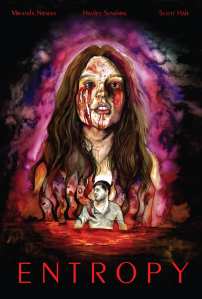
I was unaware of the horror movie Entropy until the production sought me out to review their movie. It was filmed in Ohio for a minimal budget over the course of six days and nights during the 2020 COVID-19 outbreak. I think it’s admirable that, as things were shutting down and lives were thrown out of balance, that this small group of filmmakers banded together and made something creative with that unexpected down time. The final ten minutes of credits includes behind the scenes video of the special effects process and it looks like everyone was enjoying themselves with this project to keep their minds off the pandemic. As a finished film, however, Entropy leaves a lot to be desired even as a low-budget, lowered expectations chiller thriller.
Abby (Miranda Nieman) hates her girlfriend Miranda’s (Hayley Sunshine, and what a fabulous name) friends. She used to be part of a self-improvement group that some have labeled a cult. Miranda pressures Abby to come to dinner and meet these people and understand they’re not so bad. Also at this friendly dinner is Scott (Scott Hale), their former leader, who has come back from his time overseas with stories of horror. Is he to be believed? Is he dangerous? And how far out of the pull of this group is Miranda and should Abby begin planning her escape?

While the movie is labeled as that feature-film-qualifying metric of 80 minutes, in reality it’s 70 minutes, and even within that minimal running time there is plenty of padding and dead air. I have found this fault with many of the Ohio indies I’ve seen, and it’s essentially a case of not having enough material to fulfill the demands of a feature length running time. Director/co-writer Kameron Hale and his fellow co-writer, producer, and brother Scott Hale, have made several horror short films, and it’s easy to see how Entropy likely started as a short script that the brothers thought could expand into a larger story. There just isn’t enough material here as presented although it had the potential for further exploration. The idea of finding out your lover is formerly in a cult has some nice juicy character reverberations, which would make anyone second-guess things. The premise of a cult leader returning from his mystical and mysterious sojourn is also rife with potential for a horror movie. From a strict psychological thriller level, over the course of one very disconcerting dinner, he could be re-consolidating power, and Abby could slowly understand the dawning threat that her girlfriend is succumbing to, like an addict plunging once more into the self-destructive behaviors of their past. From a body horror standpoint, you can use the returned guru as the bringer of otherworldly terror. Something supernatural could have hitched a ride and taken over him, and now it wants more flesh. There are ideas that, with careful plotting and characterization, could sustain a feature film. Entropy doesn’t quite do that, so that’s why we get situations like three minutes of sustained driving or three minutes walking through the woods that’s meant to be moody but is really just padding.
The movie’s small budget becomes a handicap at parts but what really harms the movie is the sloppy, clunky manner in how the story establishes its needed points. Characters will often speak in a “Hey, you remember when…?”-style of artificial conversation for the benefit of informing the audience of things they would naturally likely already know. Every movie needs exposition to better orient an audience, but the trick of the writer is to mask it as much as possible. It’s stuff like, “Don’t you guys hate Scott? Wasn’t he in a cult?” and, “I thought you were wrapped up in the medical scene like the rest of them. Cody said he’s seen you at the hospital a lot.” With each of those lines, you can tell where the screenplay wants to go for info, but it’s so clunky and lacking the opportunity to shed light about the character doing the speaking. Writing for characters is not something that automatically improves with a higher budget, so one way a low-budget indie can make its mark is through its writing of people, making them intriguing, memorable, and drawing us in. With a cult of people in pain, there should be potential there. Unfortunately, the characters are kept as walking-talking expository devices. I didn’t even realize Abby had cancer and I think the movie was expecting me to know upfront (the cancer diagnosis is in the plot description supplied by the production). Early on she’s in her bathroom crying, and she refers to “whatever’s growing inside me,” and I thought she was pregnant, which brings its own follow-up questions for a lesbian relationship. It is not until 26 minutes into the movie when the word “cancer” is actually spoken via text: “I have ovarian cancer. I need to go home.” She then texts, “My vagina is literally killing me” twice, and I chuckled (also, a possible misuse of “literally”). Other lines of dialogue I found to be tin-eared yet memorable include, “I’ll go to the party but I won’t go to a pity party,” and, in reference to Abby’s ovarian cancer, “If anyone’s gonna understand what’s going on inside you, it’s gonna be them, and me, if you’d let me,” and, “I was drugging the drinks but not like you think. The drinks were already drugged, and I was drugging them to counteract the drugs,” and my favorite toward the very end, “I don’t know where the fuck this basement came from but I guess it’s part of the house now.”

You can see the better version of this movie, one that strips away much of the exposition-heavy and dawdling first half hour. Rather than being told upfront that Abby is sick, or at least being told with a lack of clarity, let’s let this be a much later revelation. The same with Miranda’s relationship to being in a cult. It would have been more interesting and creepier for Miranda to have withheld this vital background and for Abby to realize over the course of one long awkward dinner. Likewise, the dinner setting could have been a great showcase for Scott to demonstrate his manipulative Svengali tendencies. The dinner could be a reunion of friends Miranda hadn’t seen since college rather than her best friends; best friends, I might add, that have not been told anything about the girl she has been dating for over three months. The fear of thinking you really know someone but they’ve been hiding key parts of themselves, and who they may actually be under the surface, is a universal plight. That way the truth comes out piece by piece and we are placed in Abby’s shoes, the outsider to this gathering and trying to understand. It’s a dynamic that would have played to a low-budget production and put emphasis on the character writing and performances as the night descends into Rosemary’s Baby “who are these people?” territory.
When Entropy does go all-in on its Lovecraftian body horror in the final twenty minutes, it’s certainly a leap ahead in entertainment. The lighting favors lots of indigo and purple, which reminded me of 2020’s Color Out of Space, a surefire artistic influence here. The body horror is gross and slimy and the practical effects, while limited, are designed to be more impressionable and shape-defining, triggering our innate sense that something is very wrong. It’s during this wild stretch that the movie tries to do too much with its remaining time (while still padding things out, of course) and by then it’s too late. The lack of clarity in the writing with the characters at the beginning resurfaces and now we have a lack of clarity about what is happening. While Lovecraftian horror often features imperceptible qualities of terror, the story feels more purposely vague out of convenience than a grand design of the unknowable.
At only 70 minutes of movie length, I can’t say that Entropy is an easy watch. My patience was grinding down with all the tedium and padding. Fans of micro-budget horror movies and especially with a taste for the lurid and wild machinations of body horror could be entertained, though it’s a long wait to get to the gory goods. That protracted setup should establish the characters, their dilemma, and most importantly, our interest in what is happening so that when everything goes crazy that we care about what happens next. The characterization, plotting, and dialogue are disappointing and stilted. The acting is pretty limited all around, and that may be another reason why the script didn’t become a tense chamber piece. I found Hale as the cult leader to be the best actor of the bunch. I credit the filmmakers with striving to make something, working together during such fraught times, and succeeding in getting a level of distribution through the prolific Gravitas Ventures. However, next time, and I hope for the Hale brothers there is a next time, that they work just as hard on creating the core elements that will make people care about what dastardly thing happens next to the people in their story, and maybe get an outside set of eyes to read their script for clarity.
Nate’s Grade: D+
Share this:

Marry Me (2022)
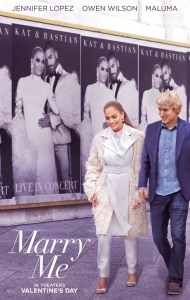 Marry Me has a premise that is so silly that it feels like it would be the setup of a fake movie within some other movie universe, something depicting the creative lunacy of Hollywood for easy satirical laughter. But no it’s real. Based upon a graphic novel by Bobby Crosby of the same name, Jennifer Lopez plays music superstar Kat. She’s a best-selling and provocative performer and her latest single, “Marry Me,” is ruling the charts. She co-wrote the track with her fiance, and the two plan to marry live during one of her stage shows. Then news leaks that her fiance has been cheating on her with her assistant. Kat is stunned and as she’s still processing her hurt feelings onstage she spots a “Marry Me” sign in the audience, held up by Charlie (Owen Wilson), an ordinary math teacher and single father. She agrees to marry him on the spot, and Charlie is rushed onstage and the two tie the knot. Now, what to do and can they make this actually work?
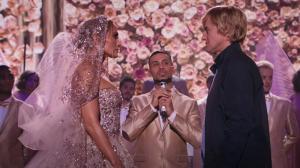 Think of Marry Me as Notting Hill but where it starts at the level of international fame for romantic coupling. I found the premise to this movie, at first glance, to be absolutely preposterous. I was hoping that the movie wasn’t going to spend so much time worrying how to legitimize this silly impulsive marriage between two complete strangers. Fortunately, from their first “I do” onward the pair doesn’t really view their subsequent “relationship” as more than a publicity stunt. He’ll get more attention for his school and causes that are important to him. She’ll get a run of media attention and allow her to rebrand herself in the wake of her history of cheating louses. I was happy that the movie, at least early, doesn’t try to make this spontaneous union credible. Kat wonders, “Hey, maybe something so crazy just might work,” and of course we know it magically will, but at least they’re not panicking about how they just got married and how they are going to make this relationship work when they could as easily get annulled and got about their separate lives again. So from there, Marry Me follows the path of having these two fake lovebirds become real lovebirds over the course of their shared time.
We know it’s all going to work out, their romantic fate is sealed, but the process needs to still feel organic and earned, and that’s where I found Marry Me to be unsatisfying. Rom-coms will live and breathe depending upon their quotient of cute moments to swoon moments, ultimately winning you over and desiring the coupling. This movie already starts with the couple together, at least in a legal sense, but they don’t know one another and have no immediate feelings for one another, so the movie is like any other rom-com. They have to fall in love for real now, almost like an arranged marriage. However, I found the interactions between Kat and Charlie to be far chummier than passionate or romantic. Lopez and Wilson have zero chemistry together. There is no heat between these two. He’s too laconic and she’s too pressing. As the movie progressed, I could believe they were becoming friends. He got her to be more self-reliant, and she pushed him outside his moderate comfort zones with social media and self-promotion. They’re better friends but I felt nothing romantic between them and that’s a pretty big problem. In fact, that’s the biggest problem in a romantic comedy. If I walk away feeling like the leads would be better friends than lovers, then you haven’t put in the work, and that’s the case here.
 We associate fun and cute moments from rom-coms, amusing scenarios that force our couple to work together or wacky situations where they learn more about the other in a new setting, and Marry Me feels too unimaginative here as well. This is another vital area for the development of the relationship to feel genuine, and simply just for audience enjoyment. The three screenwriters are unable to take the Notting Hill-dynamic of an ordinary person thrust into an unwanted, elevated level of fame and scrutiny and do anything with it. Charlie’s life never feels too disrupted from before; his casual public walks with Kat do not have dozens of paparazzi hounding them, annoying fans inserting themselves into his personal life, envious family members and exes coming back into the picture for attention, or even Charlie’s past being litigated by the media. His new life feels strangely absent the surreal touches we would expect and want from this plucked-from-obscurity setup.
The script assembles the standard rom-com tropes without anything more personable to make it feel meaningful to this story and these characters and their conflicts. Charlie asks Kat to come to the school dance, and this sounds like it has potential to be fun, but it never goes further than the mere idea. She’s there, the kids are flummoxed and naturally starstruck, and she sings a song to them. That’s it. When the third act comes calling, we’re left impatiently for the resolutions to hit their predictable end points. We know that the bad ex will still be the bad ex, we know that the big decision about whether to go to the fancy music industry gig or the humble Mathlete championship is no struggle, and we know the valiant efforts to travel back in time will be crossed at the exact moment desired. Marry Me disappoints because it squanders its unique or alluring plot elements and too often settles for resuscitating stale genre tropes.
 Marry Me feels almost out of time, like an early 2000s rom-com star vehicle for Wilson (Loki) and Lopez (Hustlers). Both actors are in their 50s now, and ostensibly playing characters in their 40s, but the movie treats them like they might as well be in their late 20s. He’s divorced with a pre-teen daughter and she’s had multiple high-profile marriages, but so much more could have been articulated, especially about a 40-something woman trying to keep her perch in an industry always looking to replace aging superstars with the next young pretty thing available. This perspective gets the occasional mention, but that conflict feels mysteriously ignored, like even approaching the idea would be insulting rather than establishing an intriguing new level of self-reflection and potential connection for these two middle-aged characters. A big screen rom-com with characters in their 40s, or beyond, is such a rare find, let alone having one of those characters in the shallow field of entertainment. Ignoring this opportunity is confusing.
While the writing and chemistry is lacking in Marry Me, the two stars are still enjoyable to watch. I didn’t believe their romantic union but I believed that they genuinely enjoyed hanging around one another. So while Marry Me doesn’t work as the story of two people miraculously falling in love under contrived circumstances, it can work as the story of a burgeoning friendship of unlikely friends. If you think of it from that angle, the movie is a lot more agreeable and entertaining to watch over the course of its 110 minutes. Lopez and Wilson are still charming leads, and the movie never gets too serious or overwhelming to actively dislike. It’s ultimately a middle-of-the-road rom-com, low-key enough to coast on the appeal of its stars but absent anything to make the characters and their romance feel personable and meaningful. It’s no different than something you might see on cable in the middle of an afternoon. You can do worse than Marry Me as far as formulaic rom-coms go, but you could certainly do better, and I advise you dear reader, in your rom-coms as well as your relationships, not to settle for less.
Nate’s Grade: C
Share this:

Kimi (2022)
 Part COVID character study, part Blow Out murder conspiracy, and part corporate thriller, Kimi is a lean 90-minute thriller that doesn’t overstay its welcome even as it’s constantly morphing. Kimi is the Siri./Alexa-esque personal A.I. assistant device found in millions of consumer homes. Angela (Zoe Kravitz) is an agoraphobic Seattle tech worker who clears the Kimi user problems, and one day she overhears a recording of a woman being murdered, the same woman who accuses the Kimi CEO of assault. The first half of the movie is establishing the crippling anxiety and welcomed routines for Angela as well as the geography of her home, a point that will be more important in the final act. Kravitz is good but too much time is spent analyzing the captured audio and getting her ready to leave. From there, she ventures outside to report the crime, and that’s when powerful people try and abduct or kill her. The movie is brisk and has a constant nervous energy to it, never better than when Angela meets with her shady corporate HR rep (Rita Wilson). However, these killer corporate goons committing don’t seem as scary efficient like in Michael Clayton, so mundanely proficient at ending lives. These guys are more bumbling goons, which takes some of the threat away, though I still relished Angela getting the better of her attackers. For so much buildup about Angela’s terror of the outside world, I was expecting more obstacles relating to her personal agoraphobic fears, but these concerns are dropped too easily once she’s running away from scary bad guys. It’s a thriller that doesn’t exactly transcend its influences and inspirations, but there should still be room for well-made, derivative B-movie thrillers that still know how to entertain. Director Steven Soderbergh and writer David Koepp are genre veterans so even a lesser effort will be effortlessly better than most. Kimi is a narrow but enjoyable thriller that had some room for improvement but still satisfies.
Nate’s Grade: B


 nathanzoebl
You must be logged in to post a comment.