Creed III (2023)
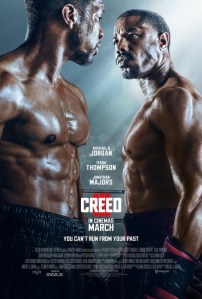 Now three films into its own rebirth, and nine films into the Rocky cinematic universe Sylvester Stallone begat in 1976, the story of Adonis Creed (Michael B. Jordan) fees confidant enough to leave behind Stallone. It’s still a formula-laden yet rousing sports movie, one where every turn will likely be predicted, but because of the conviction of the production, you can still cheer along with the familiar. This time Adonis is at the end of his career when an old face resurfaces with Damian “Dame” Anderson (Jonathan Majors), a childhood friend young Adonis looked up to who took the rap for Adonis’ fighting. He landed in prison and watched the journey of Adonis to being a world-championship boxer, which was Dame’s dream that was deferred. Adonis feels immense guilt and questions whether he’s earned his lot, and this trial of confidence and personal reckoning naturally comes down to an extensive pugilist battle, as all personal conflicts must. I laughed that Bianca (Tessa Thompson) was trying to make a point that not all conflict has to be decided by getting punched in the face, and ultimately that’s exactly where we’re headed. The requisite buildup, betrayal, training montage, and reclamation will be expected, but where the Creed franchise has separated itself was with its non-punching-in-the-face moments. I appreciate the added dimension of the characters and the allowances that make them more complex than simply cartoonish villains of the latter Rocky movies. Creed II humanized Ivan Drago Jr. to the point that I didn’t want either fighter to lose. I liked all the breather moments, from Adonis trying to raise a daughter with hearing impairments, to him reflecting and reminiscing with his forgotten friend like it was old times again, to the looming tragedy of saying goodbye to an ailing loved one (that deathbed scene was tremendously moving), and two men warring over hurt feelings of a friendship that meant so much and is trying to get beyond the pain of abandonment and guilt. When you devote that kind of attention to ensure that the drama matters, the boxing takes on added excitement. This is Jordan’s directorial debut and he does a fine job of helping his actors and providing them the space they need. He also finds some visually dynamic ways to film the boxing scenes and give them extra oomph (reportedly he based his approach off of anime and it honestly shows). Creed III may be more of the same but when the franchise devotes due attention to the small things as well as the big things, it’s still an elevated entertainment experience.
Nate’s Grade: B
Share this:

The Little Mermaid (2023)

With every new Disney live-action remake, and we’re not slowing down any time soon folks, I feel like I need to stipulate two reservations I have, so, dear reader, here is my boilerplate. First, I believe that simply because a film is animated does not mean it is missing something or somehow inferior to a live-action movie. Animation is a showcase of imagination and ingenuity and visual decadence, and often the live-action interpretations of this only serve to dilute and downgrade the quality of those presentations. I can’t believe the recently announced live-action Moana will add anything more magical or visually beautiful than the 2016 animated original. Second, the closer these original animated movies are to the present, the less likely that Disney will be to change things up. The core audience will be demanding fidelity to the source material, and thus we usually just get an inferior version of the same story with minimal alterations. Occasionally, Disney can really surprise with some of these live-action remakes; I adored Pete’s Dragon, was charmed by Cinderella, and will defend Tim Burton’s unfairly maligned Dumbo.
Now we reach The Little Mermaid, whose 1989 release began the much-heralded resurgence of Disney animation through the 1990s. I re-watched the original a couple years ago and found it still quite ebullient and compelling, but I was shocked at how short it was (only 80 minutes long) and how brisk much of its third act felt. With a few more old-fashioned wrinkles to iron out like gender roles and the prominence of securing a man, I felt there was actual room where a modern remake could actually improve upon the original. Having seen the live-action Little Mermaid, I can say that it falls into a middle zone where it can’t quite escape the shadow of its predecessor but it exhibits plenty of its own winning qualities to cheer audiences and fans of the original.

Ariel (Halle Bailey, not to be confused with Halle Berry) is a teenage mermaid and the youngest daughter of King Triton (Javier Bardem), the ruler of the seas. She longs to be part of the surface world, the world of man, and she’s willing to sacrifice her voice to her malevolent Aunt Ursula (Melissa McCarthy) for a pair of legs. She has three days to secure true love’s kiss, likely from Prince Eric (Jonah Hauer-King), but she can’t recall what she needs to do as part of Ursula’s spell. Her friends Sebastian (Daveed Diggs) the crab, Scuttle (Awkwafina) the gannet, and Flounder (Jacob Temblay) the fish must help protect and guide the new Ariel-with-legs.
Let’s start with the positive attributes that separate this Little Mermaid, and chief among them is the fantastic lead performance from Bailey (one half of the singing sisters Chloe x Halle). This is a star-making turn from this young woman who completely makes the role her own. She has a natural grace, curiosity, and charm to her Ariel, and when she gets her chance to belt the big musical numbers, she delivers a stirring rendition. I got tingles during different parts of “Part of Your World.” A good half of the movie takes place after her Faustian bargain, so Bailey is acting without her voice and she still is able to communicate so much through her physical performance as well as her facial expressions. The filmmakers decide to give Ariel several new songs through the guise of internal monologues where she can express all that she is feeling and thinking during her fish-out-of-water adjustments. I think it’s a smart move and while none of these new songs are particularly memorable, giving Bailey more opportunity to flex her own voice, both literally and thematically to express her character’s perspective, is a good creative choice.

I also was pleased that much of the added time, which amounts to almost a full hour of material, is devoted to fleshing out Eric and the development of the romance with Ariel. Rather than simply being a handsome himbo, this Eric is an adopted son of his island nation, and he feels more at home aboard a ship than in any royal ceremony. There’s a direct parallel with Ariel and Eric rejecting their predetermined roles under the pressure of royal expectations. This Eric even gets his own version of a “Part of Your World” ditty about dreaming for something more, especially after his chance encounter with a mermaid set his world afire. It’s not a particularly great song, as none of the new additions are on par with the Oscar-winning originals, and some of the lyrics made my wife physically cringe next to me in the theater (“Strange as a dream/ Real as the sea/ If you can hear me now/ Come set me free”). There is added time where the romance feels much more organic as we witness Ariel and Eric get to know one another and watch one another come alive and share their interests. The added curse of Ariel forgetting her end goal of true love’s kiss is an intelligent way to make the romantic feelings between them feel more believable and less the byproduct of her urgency and the manipulation of her friends. The added rom-com moments give more credence to their romance and it better reflects on both members.
McCarthy (Thunder Force) acquits herself very well as the villainous sea witch. She puts her own spin on Pat Carrol’s famous vocal performance from the original, making her Ursula the seething also-ran waiting on the sidelines and nursing old grudges. The added back-story makes Ursula Ariel’s aunt now, which adds an extra degree of menace to their transactional bargain. I was also reminded how little Ursula is in this movie until it counts, so to justify her continuing presence, we have a few check-ins where she basically monologues her thoughts on the action. It feels like padding but I didn’t mind because I got to spend more time with McCarthy.
And now, dear reader, let’s go through some of the adaptation changes that aren’t quite as charming or beneficial. The colorful realm of the sea feels rather limited in this rendition. The vastness of the ocean and its mermaid kingdom feels strangely contained, and that’s a result of the reality of filming on a large empty set as well as the cost of extensive special effects. This is another case where the beauty and imagination of animation proves incomparable. The differing versions of “Under the Sea” really magnify this. Along those lines, making Ariel’s aquatic friends photo realistic robs them of the personality and expression they exuded in the animated movie, and it also drags them into an uncomfortable uncanny valley. Stop robbing characters of expression for the sake of added biological “realism.” It’s a bad trade. Stop it, Disney. Watching a photo realistic Flounder flop around on dry land while he tries to cheer Ariel on with his expressionless might-as-well-be-dead fish eye is not as whimsical as it should be. The original voice of Sebastian, Samuel E. Wright, has a small cameo as a fisherman, and it’s nice to hear his familiar voice again, especially knowing the actor sadly passed away in May 2021.

I’ve already discussed the new songs by Lin-Manuel Miranda being mostly agreeable but unremarkable, but there is one new track that stands out for all the wrong reasons. Being a Miranda musical, it’s not unexpected for the inclusion of a new hip-hop-infused song, especially with his Tony-winning Hamilton co-star in the movie. What is surprising is that Daveed Diggs doesn’t get the bulk of the new rap song but instead it’s Awkwafina, and her voice at these levels of gravely intensity feels like an aural assault. I was wincing throughout the song “Scuttlebutt” and kept wondering why Diggs wasn’t the star considering he handled the most linguistically complex flows in Hamilton. I even enjoy Awkwafina as a vocal artist but this song is painful to endure.
The 2023 live-action Little Mermaid has enough positive additions that fans of the 1989 original will likely enjoy while still checking the boxes of their own nostalgia requirements. Bailey is sensational and the added time for the romance to be more organic and believable, with some extra fleshing out supporting characters like the Queen and Grimsby also allowing the world to feel more textured and less archetypal. The visuals aren’t as murky as I feared but the magical world of this hidden undersea realm definitely feels lacking. The pacing is a bit sluggish too, as we don’t even get our deal with Ursula until an hour into the movie, and the added songs fail to compete with the classics even with the artistic prowess of Miranda. I don’t know if it needed to be this long, and I certainly don’t care for the photo realism approach, but I was smiling throughout the movie and found it charming. Consider this mid-tier Disney live-action scale, a remake with enough of its own to swim with the weight of expectations.
Nate’s Grade: B
Share this:

The Super Mario Bros. Movie (2023)
 Colorful and eminently pleasant, The Super Mario Bros. Movie is about everything you would expect from an Illumination project. To begin with, there’s not a lot of story in the 30-plus years of Mario video games, so it’s not surprising that the story is kept relatively familiar with characters each inhabiting simple motivation (Mario wants to impress his dad, Luigi wants to be brave, Peach wants to protect her people, Bowser wants to be accepted by his unrequited love). Much of the movie is establishing a new location and giving some moment of fan service before moving on, like an extensive Mario Kart Rainbow Road sequence or Mario meeting Donkey Kong. It feels like the risk-averse creative process started with a list of characters, levels, and references and then how to squeeze them in. This is a movie kept at a kiddie level, which is fine even for adults to enjoy, but it means there is a lowered ceiling of ambition (so… many…. needle-drop song selections…). Much of the movie is fleeting and fine, with highlights including Jack Black’s performance as the love-struck Bowser, the training sequences making use of the bizarre physics and accoutrements of the Mushroom Kingdom, and a delightfully nihilistic little blue star with a cheery child’s voice. The movie is earnest to the point of being a little corny, which might be refreshing for parents and children used to a recent slate of overly glib kid’s movies trying to act smarter than they are. This movie is cute and harmless and a sugar rush to be forgotten after it wears off. Now re-watch the 1993 version that attempted to take the same source material and make a parallel world Blade Runner with Dennis Hopper as King Koopa. There’s also one hundred percent less Chris Pratt.
Nate’s Grade: B-
Share this:

The Matrix Reloaded (2003) [Review Re-View]
 Originally released May 15, 2003:
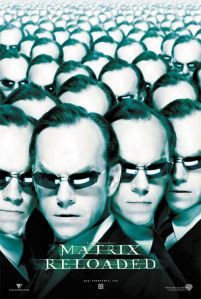
Imagine my disappointment as I viewed the highly anticipated sequel to 1999’s sci-fi smash The Matrix and learned that the writing and directing team of the Wachowski brothers had taken a page from good ole’ George Lucas on how to make sequels: the “bigger is better and more is more” approach. Like the first two Star Wars prequels, the second Matrix movie is overstuffed and unfocused. Unlike the Star Wars prequels, it’’s also extremely talky when it comes to psychobabble that would only impress the bong-carrying peanut gallery.
Reloaded picks up some time after the first. Morpheus (Lawrence Fishburne), Neo (Keanu Reeves), and Trinity (Carrie-Anne Moss) are late for a pow-wow with other leaders including Morpheus’ former flame, Niobe (Jada Pinkett Smith). In this meeting, which is within the Matrix, we learn that the humans have discovered that the machines are drilling at an incredible speed and will reach Zion, the last human city far beneath the Earth, in a matter of days. Add this to the bad dreams Neo keeps having where Trinity falls out of a building and gets shot by an Agent, and things are not looking good for our heroes from the first film.
At Zion, Morpheus stokes up the crowd who already believe that Neo is The One in the prophecy of the Oracle (Gloria Foster). They believe he is the one who will lead them to topple the machines. Morpheus informs the many citizens of Zion (okay, the last battalion of the human race lives in caves under the surface and people are STILL wearing sunglasses all the time? Watch your heads.) that the machines are digging to a town near you, and they have 250,000 Sentinels to wipe out what remains of humanity.
 So what do people do next; what would your standard response be? Apparently, in Zion, it involves a massive spontaneous, sex-charged rave. The multitudes of Zion start grinding and sweatily dancing to electronic beats. And curiously, as you’ll notice with the slow camera movement in the scene, NO ONE in the future wears a bra. Perhaps the machines got those too. So after a tremendously long span of raving with nipples, inter cut with Neo and Trinity knockin’’ boots (though could you imagine zero-gravity sex in the Matrix?), the heroes set off to find the Oracle once more. Zion is preparing to mount a counterstrike against the burrowing machines and is hopeful that it will buy them some time. They plan on sending the entire fleet out, save Morpheus’ ship and one or two to aid him in his quest.
Neo finally regroups with the Oracle along a park bench inside the Matrix. She puts forth more psychological babble about choice and how choices are already made before you make them. You may start zoning out and wondering when people are gonna’ start punching people again, because it takes a good 45-50 minutes to get into this movie. The Oracle does have an interesting tidbit of information however. She reveals that the Matrix if just chock full of rogue programs living out their days in the confines of this virtual reality. Included in this group are werewolves, vampires, ghosts, angels which are all programming errors that walk among the Matrix. So, wouldn’’t it be kind of neat to see Neo fight the monsters from Universal Studios (“Hey Frankenstein monster … I know kung-fu” “Fire baaaaaaaaaad!”)?
The supreme drawback of Reloaded is that it introduces us to a plethora of new characters, all with minimal screen time and even more minimal plot impact, and then fails to advance the story. Niobe is pointless except for the old action picture adage of being at the right place at the right time to rescue our seemingly doomed heroes. A rogue program that calls himself The Merovingian (Lambert Wilson), who decides on being a European playboy with an accent that renders all speech useless, snoots and huffs his way around. Monica Bellucci plays his wife. This Italian actress can be enthralling, and not just on the eyes, but she also serves minimal purpose other than some heaving chest shots. Then there’’s the Keymaker, who will somehow lead Neo to his destiny or whatever. There’’s about fifteen or so new characters and hardly any of them matter. The coolest additions are the twins, a pair of pasty dreadlocked fighters who can go through walls and parry any enemy assault. More time is needed for these two before they turn into another wasted villain, like Star Wars‘ Darth Maul.
 All of this criticism is moot, of course, because the center of The Matrix is on inventive and pulse-pounding action, right? Well I’’d say that is so with the 1999 film but its sequel suffers when its action sequences drone on and become repetitious and dull. Neo fighting twenty or so replicates of Agent Smith (Hugo Weaving) is interesting and fun, but when ninety more show up and it’s painfully and slightly embarrassing when the people fighting are CGI, then the fun level drops with the film. Neo ends the big brawl by flying away. My friend next to me whispered in my ear once this scene concluded, “If he could fly, why didn’’t he fly away at the beginning?” My response: “That would be using your brain.” Seriously, this action sequence is nifty and all but it serves no purpose, just like much of the first half of the film.
The freeway chase scene seems to already be famous and with due cause. Trinity and Morpheus zooming through traffic, fighting Agents and the twins, is a fantastic set piece that is reminiscent of the inventive action the first Matrix gave us. When Trinity zooms through oncoming traffic on her motorcycle the film comes alive and my attention was certainly front and center. The scene does fizzle a bit as it segues into Morpheus fighting an Agent atop a speeding semi. Again, the CGI rotoscoping of the landscape and the people is painfully obvious and detracts from the enjoyment.
What ultimately kills The Matrix sequel is that no one had the heart to question if maybe more wasn’’t better. Sure the Wachowski brothers had all the riches unto Caesar to make this movie, but what perplexes me is that once we do get much more it only feels like more of the same, and disappointment sets in. Agent Smith is shoved to the side of the film and pops up here and there to glare. He’s more or less just repackaged with nothing new and no personality, like much of the film. The purposely perplexing psycho-babble does not help. I’’m sure hundreds of websites will dissect the exact philosophical links the movie presents, but man, all this talking about stuff that’s shutting down my brain is getting in the way of ass-kicking. I felt bloodlust the more I heard people, usually some old bat, endlessly blab about causality and choice. When it comes to action-packed sequels from 2003, I’ll take X2 any day over Reloaded.
 This is not to say that Reloaded is a bad film because it does have some nice special effects, cinematography, and some cool action sequences. These points of interest do not, however, justify its bloated running time. Some things were better left to the imagination, like the city of Zion, which looks about as dreary and dull as you might expect the last bastion of human civilization to look like in a ruined world, but this is science-fiction. Where’s the fun in dreary and dull? Again, whereas the first Matrix took place mainly in the false virtual reality where we could watch fantastic feats defying the laws of physics, Reloaded spends half its time running around the dank real world.
Some moments did have me giggling, like the Merovingian’s joyous creation — an orgasm cake. A woman has a piece of cake and her temperature rises. Finally the camera literally zooms into her vagina (it’s in computer-code so it’s all columns of spicy green numbers) and we see an explosion of light. Very interesting indeed. Essentially, this is a key metaphor for the film itself: an attempt to have its cake and eat it too.
The Matrix: Reloaded is an occasionally entertaining and often mind-numbingly talky summer entry. You’ll get some thrills, maybe the philosophy will connect more for some (even though to me, at the heart, they say very little very eloquently), but because The Matrix is a colossal franchise that will make a gazillion dollars and then some, the power of editing has been kicked to the curb. If that power had been present perhaps someone could have trimmed a few of the many peripheral characters, kicked the pace up a few notches, reworked the fight scenes to advance the plot and stopped events from being so repetitive, and while they were at it maybe they could have done away with all the philosophy and stilted love dialogue. As it stands, The Matrix sequel has lost a lot of edge and this is because of the initial success of the first film. Sure, you might have an intermittently good time, but you should have had a great time. The Wachowski brothers had every tool at their fingertips but they became so enamored with fame and fortune that their work of creativity and genius has morphed into a self-indulgent, adolescent (with its hormone-driven sexual events and its stoner philosophy) cash cow.
Nate’s Grade: C+
——————————————————
WRITER REFLECTIONS 20 YEARS LATER

It’s taken me close to twenty years but I’ve come around on the notorious 2003 Matrix sequels. Before the release of The Matrix Resurrections in 2021, I sat and re-watched the two prior sequels, both of which I was dismissive and disappointed with when they were originally released, as it seemed was the general public. I had an ongoing joke about lambasting The Matrix sequels whenever I could in other film reviews, and my takeaway was that the Wachowskis had turned their masterpiece of a single film into a mediocre franchise. There are still criticisms to be had with Reloaded, released in May of 2003, and Revolutions, concluded in November of 2003, but I feel confident to say that the much-maligned sequels have gotten an unfair rep. Yes, part of this reappraisal was a result of just how staggeringly stilted and self-loathing the 2021 sequel/reboot was, so I guess we can just shift the sequel ire to the newest member of the club. I only selected one Matrix movie for my twenty-year re-watch and I chose the more controversial of the pair, the talkier and more esoteric one, and I’m here to say that The Matrix Reloaded, while not soaring to the same sci-fi heights as the first, is actually a worthy sequel that is ultimately sabotaged by unrealistic audience expectations as well as a pedestrian concluding movie.
 The charge against Reloaded, and one that I was making with the rest of the keyboard mob, was that it was pretentious and filled with too much bloated speechifying and not enough fun action. This is untrue on both counts. Much of the charges of pretension related to two specific characters within the virtual reality Matrix, the Merovingian (Lambert Wislon) and the man behind the curtain, The Architect (Helmut Bakaitis), and both of the characters are meant to be pompous. The Merovingian enjoys the sound of his own voice, though the language he most prefers is swearing in French (“Like wiping your ass with satin”). He’s the virtual equivalent of a self-satisfied mobster, experimenting and collecting old code that was meant to be eliminated over time, such as literal werewolves and specters. He’s full of himself because of his position and definitely condescends as a means of appearing even more the elite information broker. He cites choice as an illusion because he’s the collector and creator of code, controlling his reality. He’s annoying on purpose, so his verbal excursions are only meant to land in a broad sense. Choice versus fate will be the biggest and most obvious theme of Reloaded, so the Wachowskis don’t care about one more character nattering on a philosophical tangent of his own flattery.
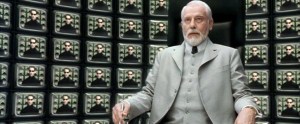
The Architect was such a letdown for me in 2003 but I now appreciate the choice more for its subversive slap. You’re expecting our hero Neo (Keanu Reeves) to confront the machine version of himself, and instead it’s this fussy old man and his above-average vocabulary is part of his disdain and boredom. The revelation that Neo is not the Chosen One but the sixth Chosen One in an ongoing cycle of destruction and renovation is a startling revelation. It’s the necessary step to push Neo out of his boring overpowered Superman role. Now he has a real choice, to follow the script in order to save the masses, or to risk everything for the human equation of love. If everything in the two movies was following a predestined path, this is when the franchise and Neo chart their own path, choosing to be reckless in the face of redundant and never-ending conflict. The knowledge that what happens next will be a significant change is a far better ending than simply watching a CGI Neo pummel more CGI Agents. It’s the ending audiences weren’t prepared for but it redefined the conflict between the machines, the nature of Neo, and the relationship between Neo and Trinity (Carrie Anne-Moss). It was more interesting by rejecting the same old. It deepens the conflict and the personal sacrifices, and it set up the humans versus machines war to have even more meaning, a promise that Revolutions could not fulfill satisfactorily. There wasn’t even anything as weird as the slow-mo cave rave or the orgasm cake.
 As far as action, there are some clunky fight sequences that feel perfunctory, like the Wachowskis are closely monitoring the 140 minutes and making sure they have some fisticuffs at precise moments to sate their mass audience. However, the massive highway sequence is legitimately one of the greatest action set pieces of the twenty-first century. The movie takes a while to get going but once it hits the Merovingian part everything that follows is good-to-great. The fight with the Merovingian’s henchmen eschews guns for bludgeoning tools and allows a more interesting array of fight choreography. Then we’re introduced to the ghostly twins who can phase in and out of physical being, which adds a fun new complication to fight choreography. Then we’re onto the highway, the place that Morpheus (Lauerence Fishburne) always warned others to avoid at dire cost. We see why because it becomes a bumper-car collision course with Agents jumping in and out of drivers and creating even more havoc (Ford donated over 300 cars to the production and by the end each one was totaled). This entire sequence is exhilarating, morphing from new complication to another, and the Wachowskis make it clear at every point what is essential, what the geography is, and how the organic challenges emerge. It’s a big, splashy sequence and it’s no coincidence that Neo isn’t involved until the very end, serving as a convenient deus ex machina to snatch our characters from imminent danger. The problem with Neo is that he’s too powerful that it removes stakes. He can stop bullets, take on a hundred Mr. Smiths (Hugo Weaving, the devious highlight of the 2003 sequels), and even restart human hearts. Watching Neo flex his muscles in various fights is fine (though the CGI people drain the momentum of many of these brawls) but it’s far more exciting to watch “normal characters” against daunting challenges. Even the final mission involves an alignment of many people working together so it creates some sense of risk. The action might not be as innovative as it was in 1999 but it still packs its own explosive entertainment with a clear vision and sense of style.
I think my own previous sour feelings were a result of The Matrix Revolutions flubbing the hand-off, dropping many of the more interesting additions from Reloaded and spending far too much time in the dingy underground real world. It’s confusing to introduce a reality-defying world of the Matrix where characters can act like superheroes, and then the movie spends more of its time on people in mech suits firing endless bullets at a shapeless cloud of robot tentacles. The clever redefining of Neo as but one of many Chosen Ones is downplayed when it turns out he might be the most Chosen One-d of chosen ones, having mystical powers inexplicably outside the world of the Matrix. And the romance between Trinity and Neo was yet another aspect that felt swept up in an overly familiar messianic mission, which might be why Lana Wachowski chose to re-emphasize this relationship as a romance for the ages in Resurrections. It’s not Reloaded’s fault that the next two Matrix sequels failed to live up to its promising ideas, new characters, and dynamic action. I think the jilted reaction to Reloaded lowered the expectation bar for Revolutions, which might be why I, at the time, preferred the third movie to the talkier and more esoteric second entry.
 Re-reading my original 2003 review, I was clearly charged with my disappointment. There is a healthy level of snark throughout the review, as per a 21-year-old smart aleck. There’s more than a couple iffy references to stoner philosophy. I still agree with several of my old criticisms, such as spending far too much time in the “dank real world,” but I believe my hostility was misplaced. I was expecting a very different movie than the Wachowskis were interested in exploring, and it took me twenty years (technically 18 since I watched them all again in December 2021) to reassess my feelings and appreciate them on their own artistic terms. If you’re like me and only remember The Matrix sequels in a rather negative fashion, I recommend visiting them again with an open mind. That’s not to say they’re bulletproof, but after twenty years of rampant superhero movie escapades, I appreciate the thoughtful and subversive attempt to re-insert stakes and meaning into their original Chosen One franchise. Now, if Resurrections is any sign, please pass the creative reins to a worthy successor and let someone else dabble in this virtual reality sandbox for any possible future tales.
Re-View Grade: B
Share this:

Still: A Michael J. Fox Movie (2023)
 Reminiscent of the Val Kilmer documentary from 2021, with archival footage taken from the star himself, Still is a documentary that opens up an actor’s biography but also makes you reconsider your own feelings as you process them in a diminished state. Fox was a natural actor, and his trajectory from Canadian student to international stardom was fast, but things took a dramatic turn when Fox first exhibited symptoms of Parkinson’s, a neurological disorder that causes involuntary movements. The present-day interviews with Fox are startlingly candid, showing the effect the disease has had on his body as well as his spirit, as he fights to get his quick wit out from a body that is betraying him. Fox himself doubts he’ll even make it to 80 under his current condition, which we see the rigors of his physical therapy as well as the challenges of everyday life. The Hollywood stardom tale is familiar but still intriguing with Fox’s insights and recollections, and director Davis Guggenheim (An Inconvenient Truth) makes clever use of the many clips from movies and TV to reflect the emotional state of Fox’s story as needed. It’s also interesting to learn about the tricks he would use to better hide his Parkinson’s symptoms in TV and film, as now we have a better understanding and can see the moments in a new light. You will likely feel different levels of sympathy as you reflect on what effect the disease has had on this spry, commanding performer, but Fox wouldn’t want your pity. Fox is irascible and self-deprecating but still so easily charming, and spending 90 minutes with him as he opens up his life, his family, and his physical and mental struggles feels like a rare and privileged peak into this man’s rich life before it’s gone.
Nate’s Grade: B
Share this:

Hypnotic (2023)
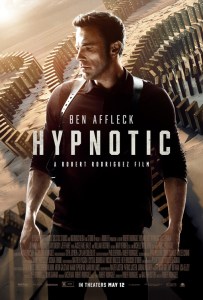
Powerfully forgettable except for its time-wasting twists and erasure of stakes, Hypnotic is an action thriller that feels out of time from the 1990s. In this movie’s universe there are a clandestine group of “hypnotics,” people with genetic powers that can manipulate others to do whatever they want. Ben Affleck plays a detective who is also searching for his abducted daughter and the case is mixed up with uncovering the secrets behind hypnotics and a mysterious and devious man (William Fichtner) who commands people to kill themselves. This should be a fun movie from its premise, Affleck chasing after killer physics like Scanners. It’s written and directed by Robert Rodriguez based on a script he’s been dying to make since the early 2000s. The problem with Hypnotic is that it wastes so much of its structure on playing into the expected, and once that happens it more or less invalidates the first hour of the movie. Once they introduce the concept of hypnotics erasing their own memories and placing triggers to remember key things, it’s not so hard to determine where the ultimate twist is heading. It leads to some serious wheel spinning from its plot, and then the end relies upon a standoff where one side is so all-powerful that there is no real danger. Therefore the emphasis of this movie hinges on the “wow” factor of its twist with little else to keep your waning attention. I suppose the appeal for Rodriguez from a directing standpoint were the sequences where the hypnotics are altering perception, watching the world bend onto itself in trippy Inception-style visuals. I wish there was more of this. The problem with Hypnotic is how unremarkable it is and how inevitable it will be forgotten (with or without your own psychic powers).
Nate’s Grade: C
Share this:

Air (2023)
 Who exactly could get that excited about a movie about selling a shoe? Apparently, plenty of critics and audiences judging by the success of Air, the dramatization of the eventual formation and presentation for the first Air Jordan sneaker. It’s Amazon’s first original movie that they’ve given a theatrical release since 2019’s Late Night, and it proved a moderate success for a mid-range adult drama before debuting on its streaming service. I was intrigued by the creative pedigree, as I’ve been an ardent fan of Ben Affleck as a director, and the uniformly strong critical reviews, but I kept thinking, “It’s just a shoe.” It was hard for me to imagine getting that drawn into a drama about a bunch of guys trying to get Michael Jordan’s endorsement. I just couldn’t see the movie in this scenario. Now that I’ve actually watched Air, I can credit it as a well-written and well-acted movie about passionate people putting forward a presentation. That’s the movie, and while entertaining, it’s still hard for me to understand all the fuss.
It’s 1984 and Nike isn’t the market-leading trend-setting company that we think of today. They dominated the running world but few if any saw them as hip. They were struggling behind Adidas and Converse in popularity and cultural cache, and CEO Phil Knight (Affleck) had tasked his basketball head of operations Sonny Vaccaro (Matt Damon) with snagging endorsements from the new NBA rookies. Sonny wants to go all-in on just one athlete, a special case that Sonny thinks can revolutionize the game, and one that could propel Nike to the next level. But first he’ll have to convince Jordan’s mother, Deloris (Viola Davis), that this smaller company with its smaller reach is going to be the best fit for her son’s potential future earnings.
 This is still a movie about a shoe, but it’s really a movie about people who are good at their jobs and trying to change a paradigm of thinking and the Way Things Are Done. I’ve seen it said that Air is “Moneyball for sneakerheads,” and that’s an apt comparison. It’s about a bunch of smart guys fighting for clout, a group of underdogs going up against the entrenched winners, but it’s really about passionate people trying to get others to recognize their passion. So it’s scene after scene of Sonny trying to break through and get others to understand why his way of thinking is going to be the best. It’s also structured entirely around the big presentation with the Jordans, with each stop at a competing shoe company as its own act break. It makes the movie feel very streamlined and focused. It allows moments for minor characters to get their own moment, to make it seem like there’s a larger world behind every scene. It makes the team feel more filled out, and as each person and artist comes together, it’s reminiscent of movies in general, about various talents coming together to put on a big show. With our hindsight already locked in before the opening credits, it’s got to be the journey that matters here, because we know the eventual coupling, so Air has to justify why the before time could be captivating. It’s engaging because it’s a story built upon underdogs and smart people getting to flex their smarts.
Of course, it’s also not too difficult to make someone look smart with the power of hindsight. This was one of the more maddening features of Aaron Sorkin’s frustrating HBO series, The Newsroom. The focus was on a TV show on a cable news network but it existed in our universe, covering the big stories from the recent past. Rather than providing insight into the struggles of journalists trying to break big stories and follow their leads, Sorkin’s show was his turn to rewrite the news, showing how the foolish journalists should have covered these major events. It was his condescending attempt to tell professionals how they should have done their jobs. However, he had the extreme benefit of 18 months or so of hindsight and seeing what was important and what was less so, which just made his critiques all the more condescending (“Why don’t you know all the things that I know from the future, stupid present people?”). I could do this myself, writing a story about a guy in the 1930s talking down to these people hoarding their gold and how they should, instead, invest in a burgeoning computer industry. It’s not hard to look smart when you have history already in your pocket. This is also the case with Sonny in Air, who says over and over how special Michael Jordan is, and we know this too with our personal hindsight, so it makes him look transcendent. However, there could be any number of guys in history that had a similar hunch about Sam Bowie, the player picked one spot ahead of Jordan in the 1984 NBA Draft and whose career was cut short by rampant leg injuries. That could have happened to Jordan too. Sometimes the greatest athletes are the recipients of just horrible luck (look at Bo Jackson, a modern-day Greek God who could have been an all-timer in two sports).
 Where Air glides is with its snappy dialogue and attention to its supporting cast, thanks to debut screenwriter Alex Convery. Despite my reservations on the subject matter, this is proof that a good writer can make any story compelling as long as they channel into the right universal elements. A movie about selling a shoe to a future billionaire becomes an underdog story and one about a group of middle-aged guys trying to live out their dreams by picking the right player to become their vicarious capitalistic dream. The side characters played by Chris Messina as a foul-mouthed agent, and Jason Batemen as an exec who mostly just wants to spend more time with his kids following a divorce, and Matthew Maher (Our Flag Means Death) as a lonely shoe designer, are welcomed and I enjoyed spending time with them all before the big decision. It’s pleasurable just to sit and listen to the conversational banter. If you can find a way to make characters debating the particulars of their industry and make it interesting regardless of industry, then that’s the sign of a good writer. There’s plenty of conflict thrumming throughout, like Sonny pushing to spend his entire department’s budget on one player rather than spreading the risk around, and the climax involves whether or not a billion-dollar company is willing to split some of its earnings with the athlete they’re making mega-million from. It was a first-of-its-kind deal that changed the industry, giving athletes more leverage and direct money for the use of their likenesses, and considering how integral Jordan was to the explosion of the NBA’s popularity, it was money well spent.
There’s no distinct directing flair from Affleck, as I think he recognizes the strengths of this script and how best to utilize them, which is to support his actors and give them space. The most noticeable directing feature is the repeated use of period-appropriate songs and archival footage, which might explain the movie’s staggering reported $90 million budget (for a shoe movie?). Affleck keeps things moving at a light-hearted tone but knows when to slow things down too.
 Air is an amusing drama with good performances and good writing and direction that understands how best to hone both of those selling points. It’s very streamlined while still feeling developed, and it manages to make a decades-old shoe deal feel interesting in 2023. I enjoyed it but I would have enjoyed this cast in just about anything, and I feel like the screenwriter and Affleck as a director have better stories on their docket waiting. It’s an enjoyable and intelligent drama with crackling good dialogue. It’s a solid movie but I guess I won’t ever understand the adoration it received, and that’s fine. Air proves you can indeed tell a compelling movie about a shoe deal. There you have it. Now back to that chicken/egg dilemma.
Nate’s Grade: B
Share this:

Ant-Man and the Wasp in Quantumania (2023)
 Phase Four of the Marvel Cinematic Universe (MCU) has had a bumpy ride, coming after the significant climax of 2019’s Avengers Endgame and releases shifting thanks to COVID, with plenty of think pieces and pundits waiting to seize upon the possible decline of the MCU’s box-office and pop-culture dominance. This was still a phase with several enjoyable blockbusters with stars of old (Black Widow, Loki, Black Panther 2, Spider-Man No Way Home) and stars of new (Shang-Chi, Ms. Marvel), but it’s been defined by movies and series that have not engendered the same level of passion with fans and audiences, and left many questioning whether audiences are finally suffering from dreaded Marvel Fatigue. I cannot say, because even movies people were so-so on have generated tons of money, and it’s not like I even have to travel far in the past for a good-to-great Marvel movie with Wakanda Forever last November. However, after the muddled response to a third Ant-Man movie, as well as a bland Shazam sequel within weeks, then the old media narrative reignites the Marvel Fatigue question. I think the better question is aimed at the studio and whether we’re entering into Marvel Complacency.
Scott Lang (Paul Rudd) is trying to live a normal life, at least for a superhero that helped save the world. His adult daughter Cassie (recast as Kathryn Newton) is a social activist and a burgeoning scientific genius, and with the help of her grandad, Hank (Michael Douglas), they’ve developed a way to communicate into the Quantum Realm, the metaphysical world of subspace where Janet (Michelle Pfeiffer) was lost for decades. The entire family gets sucked into the Quantum Realm and separated, fighting to make their way in a strange new land. Among all the unorthodox beings is Kang (Jonathan Chambers), a banished interdimensional conqueror. He’s looking to break free of his prison and thinks Scott can be persuaded to help under the right pressure.
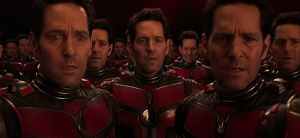 Ant-Man and the Wasp in Quantumania is blatantly weird and shapeless, which allows for some of the most silly character designs in the MCU yet, and it also adds up to so precious little. From a character standpoint, we get minimal forward progress, which is strange considering Scott was deprived of years from his daughter, missing out on her growing up into an adult. When you have a villain who can manipulate space and time, and this scenario, wouldn’t you think that the ultimate appeal would be to regain that lost time? Maybe Scott feels like this older Cassie is a version of his daughter he doesn’t recognize, and he misses the innocence of her younger self, and therefore he wishes to experience those moments he had missed. Mysteriously, this doesn’t factor in at all with Ant-Man 3. I suppose it’s referenced in vague terms, but you would think the thematic heft of this movie would revolve around lessons learned about thinking in the past, of trying to recapture what is gone, of moving onward and trying to be present for those we love, you know, something meaningful for the characters besides victory. Nope, as far as Cassie is concerned, she serves two story purposes: 1) being a plot device for how we got into this crazy world, and 2) being a damsel in distress. Kang’s threats to withhold Cassie or harm her are the motivating factor for him to collaborate with the villain. How truly underwhelming. I did enjoy a sequence where a plethora of Scotts across multiple timelines come to work together with a common goal, with every one of the many Scott’s love for Cassie being their top ambition.
As for the universe existing between space, the Quantum Verse of our title, it’s the highlight of the movie, so if the characters and their personal conflicts aren’t hitting for you, like me, then at least there’s some fun diversions to be had with every new locale and introduction. There’s an enjoyable sense of discovery like a new alien world where the possibilities seem endless. The strange quirks were my favorite. I adored the exuberant goo creature Veb (David Dastmalchian) fascinated by other creatures having orifices. There’s also a mind reader played by William Jackson Harper, who was comically brilliant on The Good Place, and just repeating the same lazy joke here about people’s minds being gross. There’s even Bill Freakin’ Murray as a lord. I enjoyed how many of the new characters, many of them strange aliens, had prior relationships with Janet, and her hand-waving it away explaining that over thirty years she had certain needs. This subplot itself could have been given more. time, with Janet having to deflect Hank’s sexual inadequacies in the face of so many virile lovers (“How can I compete with a guy with broccoli for a head?”). I think this reunited couple confronting their discomfort would be far more entertaining than yet another massive CGI face-off with thousands of soulless robots. There are interesting moments and characters in this strange new world, but they’re all so fleeting, meant to be a goofy supporting character or cameo or simply a one-off joke and not what matters.
 Like Multiverse of Madness and Love and Thunder, this feels very much like a table-setting MCU movie, meant to move the pieces along and set up other movies, chiefly the next Thanos-level big bad with Kang, first portrayed in Loki’s season one finale in 2021. I found this character version underwhelming. Part of this is that Kang’s first appearance was so memorable, spirited, anarchic, but also subversive, going against the audience expectations of what the final confrontation with the puppetmaster was going to involve. With Ant-Man 3, this version of Kang is an overly serious, well-poised castoff in a secondary Shakespeare play, which would work if the screenplay gave the guy anything interesting or memorable or even really threatening to play. He’s just another authoritarian who speaks in grand speeches of their greatness and then proves not to live up to his much-hyped billing. I worry that the next few years of the MCU will feature a rotating set of Kangs to topple with every film, which will make the villain feel less overwhelming and powerful and more like a reoccurring Scooby Doo villain (“I would have gotten away with it too, if it wasn’t for you meddlin’ heroes, and YOUR ANTS!”). This isn’t to say that Majors (Creed III) gives a poor performance. It’s just so stubbornly stern and shouty and rather boring in comparison to He Who Remains from his Loki appearance. Note to Marvel: given the serious charges that have surfaced against Majors, if you do wish to recast the role, a character who is different in many universes should be a pretty easy explanation for any change.
Is Ant-Man and the Wasp in Quantumania the beginning of the end of the country’s love affair with the MCU? Well… probably not. Just three months later, Guardians of the Galaxy vol. 3 hit it big, so maybe it’s less fatigue with big screen superhero escapades and more fatigue with mediocre movies. Maybe the public won’t be so forgiving of less-than-stellar efforts, but at this point the MCU in a moving train and some movies seem to get caught in the churning wheels of “progress.” After thirty movies and counting, some of the novelty is gone, that means just delivering the same old won’t deliver the same old results. Too much of Ant-Man 3 feels like the characters are inhabiting a large and empty sound stage. The visuals are murky and gunky and less than inspiring, and while some of the special effects are occasionally dodgy, they aren’t the travesty that others have made them out to be (though MODOK is… something, I suppose). It’s such a dank-looking movie that it feels like somebody put the light settings on power saving. There were things I enjoyed but most of Quantumania left me indifferent, and that’s the feeling I got from the cast and crew as well. I dearly missed Michael Pena’s Luis, who should have gone along for the ride just for his commentary for all the weirdness. At this point, you’re along for the MCU ride or not, and this won’t deter your 15-year investment, but coasting on its laurels will also not satisfy anyone. Not every MCU entry will be great, but they can at least try harder.
Nate’s Grade: C+
Share this:

Peter Pan & Wendy (2023)
 I’m not a big fan of the Peter Pan story. I think it has some meaty themes but the world of Neverland was never that interesting and I always found the characters to be more annoying and flimsy than enchanting and diverting. It also doesn’t help that there have been dozens and dozens of Pan adaptations; by existing in the public domain, one is guaranteed every few years, like 2015’s disastrous Pan by director Joe Wright (Cyrano) and 2020’s Wendy, the long-awaited follow-up from director Benh Zeitlin (Beasts of the Southern Wild). The only aspect that had me even remotely intrigued in Disney’s new live-action version was the creative team behind it. Director/co-writer David Lowery is better known for sumptuous and deeply humanist indies like The Green Knight and Ain’t Them Body Saints, plus having Rooney Mara eat an entire pie for ten minutes of A Ghost Story (thus fulfilling my requirement to mention this baffling moment whenever the opportunity arises). He also happened to make the 2016 live-action remake for Pete’s Dragon, which was soulful and heartwarming and excellent. It’s in fact my favorite of all the recent Disney remakes and proof of what great artists can do when given enough creative latitude, from the parent studio as well as general audiences and their expectations. I think the overriding Disney demands won out, as Peter Pan & Wendy is a rather bland update that every so often gives a glimpse of a more introspective, thoughtful, and possibly better Pan.
You probably know the story already, as we follow the Darling children from their home in London all the way to the magical fantasy island of Neverland thanks to immortal child and would-be lovable scamp, Peter Pan (Alexander Molony). The kids can forever be kids on adventures with the fellow Lost Boys, battling against pirates led by Captain Hook (Jude Law). Except Wendy (Ever Anderson) starts to wonder whether growing up might be a necessity.
 Considering the original Disney animated movie was released in the 1950s, there have been more than a few updates to modernize this tale, which have predictably riled the easily triggered culture warriors always looking for their next outrage. The offensive minority representation has obviously been altered, with actual indigenous actors portraying indigenous roles (no Rooney Mara as Tiger Lily in this go-round), and we have a brown-skinned Peter and Tinkerbell (Yara Shahidi), and the Lost Boys includes girls too in a throwaway explanation that’s entirely credible. Wendy also gets more empowered and has much more influence in the end events. I cannot understand the mentality of anyone that gets this upset over the skin color of fictional characters when it doesn’t alter the story. Who cares what the race of the actress playing Tinkerbell is, she’s a fairy. Why can’t there be darker-skinned fairies, hobbits, and mermaids? There are some exceptions; if Superman was played by a black actor, the world would view this overpowered alien in a completely different light, and that demands to be explored. However, most stories in a fantasy or sci-fi setting are not dependent on specific ethnicity, so why care? Of course, when the Tinkerbell character is such a waste, used solely for wordless reaction shots, it doesn’t matter what the race of the actress is when the character is this inconsequential.
One change I did like was bringing more of a personal fidelity between Peter and Captain Hook, beginning as close friends before falling out. The role of Hook has usually been modeled as an analogue for the Darling’s disapproving father and played by the same actor for the obvious parallels (in this iteration, Alan Tudyk). With Lowery’s version, Hook began as simply James, a Lost Boy who was Peter’s BFF until James started to miss his mother. This cherishing of the past rather than out-rightly rejecting it caused a wedge between the two friends, and James returned home only to eventually return back to Neverland as a grown man. I don’t know if the adult James was seeking out the comfort of his old friend and the familiar or if he was seeking out Peter for the sake of vengeance, blaming him for the years of time he lost and missing the death of his mother. Perhaps Peter’s harsh rejection of his grieving friend sent him into a tailspin. This painful past, when it starts to break through the cracks of family spectacle, can be captivating. Characters who are unable to articulate their loss but they feel it, as if there’s something just below the surface that they know isn’t right in all these redundant clashes. Can these characters even die? There are several that come back from certain demise. There are exchanges where Peter and Hook feel like they’re on auto-pilot, mechanically giving into the demands of a universe keeping its players in tidy and conforming roles. There’s a slight danger when the movie hits these little bumps, like characters becoming aware of more than what they’re used to. It’s like they’re breaking free of the Matrix to briefly realize how they’re being manipulated by fate before succumbing back to it.
 These occasional philosophical glimpses are what kept me going, hoping that somehow the movie would rise above its familiarity into something different and more exciting. I don’t mean adult or darker, though there are clear horror routes one could take with the story of Peter Pan. Pete’s Dragon wasn’t a particularly complex story by any means but it channeled a clear and heartfelt tone and vision, and was executed at a high level to be appealing to all ages. I was hoping for something the same here, but the muck of the Peter Pan expectations ultimately gets the best of Lowery and his team. I liked the idea that Wendy may not be the first Wendy to be lured to Neverland to be the house mother for these wayward children. I liked the idea that Peter Pan could be the real villain of this realm, holding children hostage more or less through their rejection of growing up, and how resentful and remorseful that can make someone when they are cut out of their former life. I liked the idea of James/Hook possibly maybe even being a distant relative of the Darlings and what that could do for their relationship and perspectives meeting. I liked the idea of characters falling into patterns but not able to comprehend why they’re being manipulated. There’s a more penetrating movie here just on the peripheral and it pokes through but only occasionally. It’s frustrating to watch because it feels like uncovering artifacts of an older, more arresting screenplay that has, over the course of numerous rewrites and studio intervention, been diluted. The Peter Pan movie we get in 2023 is fine with some diverting visuals, but it’s a shadow of what could have been had Lowery been allowed to explore more of his creative impulses.
The movie is not without its charms and beauty, and for 106 minutes you can watch it without investing too much of your emotions. Law (Fantastic Beasts) is easily the best part of the movie, really enjoying the snarl of his over-the-top villain but finding opportunities for nuance to showcase his lingering vulnerabilities. Hook comes across like a bigger kid hurt and lashing out, and there’s tragedy to that that Law is able to tap while also playing into the foppish and slapstick comedy. I adored Jim Gaffigan (Linoleum) as Smee and was amused that he becomes the moral center for the pirates, speaking out when he fears they’re crossing a line. The natural scenery has a luscious storybook quality to it, and the mossy ruins made me think of Lowery’s Green Knight and its many visual pleasures. I enjoyed the presentation and physics of a below deck sword fight while the ship is rotating in the air. It made me think of Inception’s famous gravity-defying hallway fight, in a good way. I enjoyed how active the cinematography was, swooping and swirling with the energy of a child radically at play, and the montages of characters feeling the full power of happy memories had a downright ethereal quality of demonstrating a fuller life.
 If you’re hungry for a live-action Peter Pan movie, then try the 2003 version with a deliciously maniacal Jason Isaacs (Mass) as Captain Hook. If you’re looking for a Peter Pan that goes beyond the bounds of the same old story, try Steven Spielberg’s Hook, a touchstone of many Millennial childhoods. Or check out the 1922 silent era Peter Pan. There is no shortage of Pan adaptations to choose from, so there’s a Pan for every occasion, and I’m sure there will be fans of this new live-action update as well. I found it a little too bland. It’s certainly better than the recent Pinocchio, but that itself is not reason enough to watch this. Peter Pan & Wendy offers too little to distinguish it from its predecessors, so it becomes yet another Pan adaptation that fails to fully take flight.
Nate’s Grade: C+
Share this:

Avatar: The Way of Water (2022)
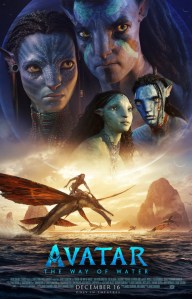 In the 13 ensuing years since James Cameron’s smash hit Avatar, we’ve debated whether or not the collective consciousness has simply moved on and forgotten what was, at one point, the highest-grossing movie of all time. What cultural dent had it made? Are there really still fans? Was it a fad of the new 3-D, itself already dissipated? Does anyone really want three or four sequels? Then Avatar: The Way of Water was released in late 2022 and it didn’t do as well as its mighty predecessor. Instead of being the highest-grossing movie ever, it’s only the third highest-grossing movie ever with a paltry $2.3 billion worldwide (how can the man even sleep at night?). It’s a lot of the same, both in its big feelings, awe-inducing visuals, and its resurrection of characters, scenarios, and conflicts of before, so you’ll likely find yourself reliving your own 2009 Avatar reaction.
Cameron’s long-awaited follow-up returns to the alien word of Pandora where our Marine-turned-Na’vi Jake Sully (Sam Worthington) has raised a large blended family with his Na’vi partner, Neytiri (Zoe Saldana, given little to do but cry this time). The first hour of this three-hour blockbuster is establishing the family dynamic with the different kids, including adopted daughter who is… somehow… the daughter of the deceased scientist Grace (both Sigourney Weaver) as well as the human child nicknamed Spider who is the biological son of Quaritch (Stephen Lang), our deceased villain. Nobody seems to stay dead in this series as Quaritch concocted his own backup plan in case of his untimely demise. He transferred his consciousness into a tank-born avatar, and this new Na’vi Quaritch has his own team of Marines in blue-skinned Na’vi bodies. They’re heading back to Pandora for some out-of-body vengeance, and thanks to their genetics, they seem to get a pass from the natural environment of Pandora mistaking them as native.
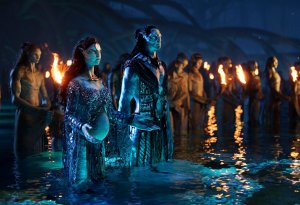 There’s a lot of set up here, and the second hour introduces us to the coastal community, and it becomes another formula of the outsiders learning the rules and culture of the new setting and integrating, turning enemies into friends, gaining honor, etc. It’s within this second hour that the big environmental message coalesces around whaling, with one Sully son bonding with an alien whale Free Willy-style. There’s a whole hunt sequence that poaches a mother and her calf that’s quite upsetting. The parallels are obvious but subtlety is not exactly one of the storytelling options in the Avatar universe. This is a broad canvas in the biggest sense, so every message will be spelled out very finely and underlined, with character voicing obvious themes and villains practically twirling space mustaches. And that’s okay. The final hour is an action-packed showdown bringing all the characters to account and forcing Jake to face off once again with his old commander.
The visual immersion is outstanding and the real reason to sit still during all three hours of Way of Water. The Oscar-winning visual effects are transcendent, and the extended sequences underwater really captivate and achieve the sense of natural awe Cameron aspires for. It is an exceedingly pretty movie to watch, and the level of high-definition detail is astounding. There’s a tangible realism here even when it’s entirely gangly CGI characters. At no point does it feel like an empty green screen stage or an over-exposed cartoon. The world of Pandora is still interesting and worth exploring, and the coastal aliens with their evolutionary differences makes me excited to explore other corners and communities of this alien world. The story works, and the payoffs work, and each of the Sully kids has a moment to shine, though I kept confusing the two older brothers (where did one of these kids learn to say “bro” every other word?). It’s a bit strange to see and hear Weaver in a preteen alien’s body, but that disconnect is part of the point, as the character feels like a foreigner searching for meaning. Considering the decade-plus delay, the huge scope, and setting up potentially three other movies, I’m impressed that Way of Water even works as well as it does as a sequel. I was able to re-acclimate pretty easily in that first hour.
 It’s not revolutionary storytelling but not every movie need be. It follows a familiar formula but puts in the work to make the action meaningful and connected to character and for the emotional beats to resonate. I thought the upside-down sinking military vessel had some striking, terrifying Poseidon Adventure-esque visuals, and the sequence was rooted in the family trying to save one another. With so many moving pieces and characters, the plot can be overburdened and redundant at times (the Sully kids get kidnapped so often they might as well save time and tie themselves up early) but even at three hours it doesn’t feel slow or wasteful. There is a sense of repetition in bringing back so many of the same faces, like literally rehashing the same villains. I wish more consideration was given to the new Quaritch and his own existential journey of the self. Just because you have the brain of this dead evil guy, do you have to follow in his doomed path? That could have been a really intriguing and profound character journey, the cloned Marines bred to be weapons who decide their own identities. That could have sufficed as the entire movie for me. The messages are heavy-handed but effective, though Pandora already had a natural resource that Earth wanted to exploit so I didn’t think we needed a second natural resource that essentially functions as immortality juice. At this point, will the third movie introduce ANOTHER magical resource that cures cancer? Likewise, I hope the next movie doesn’t find us yet another Quaritch (a twin brother!) looking for further score-settling. The ending sets up a larger confrontation with Earth’s corporate elite that will come about with the ensuing sequels, though I would have thought since Way of Water makes a big leap forward in time that Earth’s powerful forces would have already marshaled their unhappy response to being kicked out in the original movie.
Cameron has an innate blockbuster sensibility and storytelling structure; the man just knows how to tell rousing big screen adventures like few others. I didn’t see Way of Water in theaters but I won’t make the same mistake with the many Avatar sequels that will dominates the 2020s. It’s a bit hokey though deeply sincere, and Cameron proves yet again that he should not be doubted on big stages of his own creation. It might take the domestic gross of a small country to make these sci-fi epics of his, but the man delivers like few in the rarefied field of dependable blockbuster artists. There’s going to be an Avatar sequel every two years, so this universe won’t go extinct anytime soon, and I’ll be there waiting too.
Nate’s Grade: B


 nathanzoebl
You must be logged in to post a comment.