X-Men: Days of Future Past (2014)
 Ever since Marvel’s Avengers destroyed the box-office in 2012, every studio with super hero franchises has been looking to follow suit. It’s not just about comic book franchises; it’s about building a comic book universe. It’s been a long dark period for the X-Men ever since the regrettable 2006 debacle The Last Stand, which callously killed characters, butchered others, and botched the most famous storyline in the history of the comic. In 2011, Matthew Vaughn proved there was still life to be found in the franchise with his terrific 60s-era prequel, X-Men: First Class. Now, post-Avengers, Fox is salivating at combining the past X-Men and the present X-Men into one colossal movie with a colossal budget. Back on board is director Bryan Singer, the director of the first two X-Men films and the man who helped kickstart the modern superhero era. If that wasn’t enough riding on the film, X-Men: Days of Future Past also follows the second most famous storyline in the history of the comic.
In the horrible future, killer robots known as Sentinels hunt down mutants. These are the invention of Dr. Boliver Trask (Peter Dinklage), a military scientist who was killed back in 1973 by the vengeful shape-shifting mutant, Mystique (Jennifer Lawrence). The murder convinced humans to subsidize Trask’s killer robot plan of defense. Thanks to experiments replicating Mystique’s mutant ability, the Sentinels have the ability to adapt to any power, turning them practically indestructible. In the future, the Sentinels are eradicating all mutants, mutant sympathizers, and eventually human beings. Magneto (Ian McKellen) and Professor Xavier (Patrick Stewart) have teamed up with a small band of surviving mutants, including Wolverine (Hugh Jackman). Thanks to the phasing powers of Kitty Pryde (Ellen Page), they can send Wolverine’s consciousness back to 1973 so that he can prevent the Trask assassination. The only ones who can help Wolverine is the younger Xavier (James McAvoy) and Magneto (Michael Fassbender), former mentors to Mystique. Except Xavier is a recluse and strung-out on drugs to dull his powers and Magneto is locked away underneath the Pentagon.
 The X-Men films have always had a topical advantage to them that provided a weightier sense of drama than your typical story about a reluctant soul blessed with amazing powers. The mutant allegory automatically applies to any sub-group facing oppression mostly through fear and ignorance. What other superhero franchise has two opening scenes in a German concentration camp? The stakes are even larger with this movie because of the Horrible Nightmare Future that must be prevented. Now we all assume said Nightmare Future will be avoided by film’s end, so the movie provides a proverbial reset button that the filmmakers can have fun with, and they do (look out future mutants). Excluding the Nightmare Future framing device that becomes an unnecessary parallel storyline, the majority of the film takes place in 1973. If X-Men: First Class tapped into the groovy optimism and “take me for what I am” sense of social justice of the time, then this film certainly taps into the disillusionment of the 1970s, where the promise of reform and hope morphed into anger and cynicism (hey, that’s like us today!). This loss of innocence is typified in Mystique, who becomes the central figure of the movie in many ways. Her seething desire for vengeance is what animates her, as well as the pain of betrayal from the men closest in her life, as well as the world who once held such promise. Also, Jennifer Lawrence (The Hunger Games) has become one of the biggest female stars on the planet, so it makes sense to bolster her role. The central conflict is stopping an assassination, one domino that leads to many others, but it’s emotionally about Mystique having to confront her feelings of hate. It’s another platform for the ongoing conflict of perspectives between Xavier (restraint, tolerance) and Magneto (strong defense, eye for an eye). But as I found in First Class, it’s hard not to agree with Magneto as human overreaction leads to rash and thoughtless actions, like Horrible Nightmare Future.
That’s not to say that X-Men: Days of Future Past fails to deliver when it comes to the popcorn thrills and action highs we crave in our finest summer blockbusters. The action set pieces are large without dwarfing the characters, playful and imaginative without losing a sense of edge and danger. I loved how the character Blink (Bingbing Fan) would utilize her mutant power of opening portals as a fighting strategy. It makes action sequences so much more inventive and visually exciting to throw a series of portals. The pacing is swift short of the second half of Act Two, gearing up for the climactic showdown in D.C. that dominates Act Three. The time travel story starts with a lot of exposition but it gets smoothed out as it goes, the rules of the story fall into place. Every action sequence hits, some admittedly better than others, but it’s the small touches that Singer injects that made me smile most. I enjoyed Magneto pointing a gun, being toppled, but still using his power to have the gun fire in midair. I enjoyed the animalistic nature of the Beast/Wolverine brawl. Jackman is looking even veinier than usual in his bulked out form. Thankfully the fish-out of-water timeline jokes are kept to a minimum. Wolverine is the perfect glue to hold both timelines together. And then there’s that standout Pentagon prison break sequence (more on that later). Singer might not have the most natural instincts developing and staging action, but the man is a surefire talent when it comes to staging eye-catching visuals (I would say the same about Christopher Nolan). Even his unfairly maligned Superman Returns is proof of the man’s cinematic gifts. As far as entertainment value, this is right up there with X-Men 2. I still view Vaughn’s savvy First Class as the best X-film of the bunch, which has only gotten better the more I’ve watched it.
 And if that wasn’t enough, Singer’s new film does what every fan has been hoping for: (spoilers) it erases all the crummy X-Men movies, namely 2006’s Last Stand and the first Wolverine solo effort, from the official timeline. It’s time to start anew, toss out the old stuff nobody liked, and forge ahead with a new unified timeline. There can be two parallel X-Men franchises, one present/future and one with the prequel casts, and they can go on forever as desired, or until the prequel cast prices itself out. In one fell swoop, Singer and company have reset the mother franchise and given fans new hope about the possibilities. Make sure to stick around to the very end of the credits for a scene that indicates directly who the next major villain will be in the 2016 sequel.
Let me take time to single out just how expertly Evan Peters (TV’s American Horror Story) steals the entire mutant-heavy movie. First, he’s the most comically attuned character, which is a nice break from how serious, and rightly so, every character is so often. Quicksilver provides a whole new jolt of entertainment, and when he checks out after the prison break sequence you’ll dearly miss him. The character is a rapscallion (as my late grandmother might have termed) that enjoys using his super speed powers to mess with people, to test his limits, to see what he can get away with, and a Pentagon jailbreak is right up his alley. Ignore the silly yet period appropriate outfit and ignore what initially seems like Peters’ smirking self-involvement from trailers and ads. When this character is onscreen the movie has a joyful sense of irreverence. He is instrumental to freeing Magneto and the onscreen depiction of his super speed is the best illustration of the power ever conceived in film and TV. There is a segment sent to Jim Croce’s “Time in a Bottle,” and some wonderful special effects, which is just so playful, so giddy, and so cool that it very well might be my favorite moment in any superhero movie… ever. It is definitely an applause-worthy moment and my audience responded in kind. Quicksilver is a perfectly utilized supporting player in a movie stuffed to the gills with characters.
The time travel geek in me has a few quibbles with the parallel lines of action from past and present. Wolverine’s consciousness is sent back in time but he film plays out like it’s happening simultaneously to the events of the future. So if Wolverine is pulled out in the middle of the movie, he’ll have failed his mission to change the future, even though by going back in time he’s already, blah blah blah butterfly effect. Anyway, I understand how they want to make the future story have a sense of urgency but it’s not like waking Wolverine from a dream; the times are not happening concurrently. He’s in the past, meaning that the moment he goes back there, the future will already be altered due to the consequences of his actions, for better or worse. There is no race against time to keep his consciousness back in time until he complete his mission. I can see why they went this route for a summer blockbuster, but that doesn’t quell the quibbles.
 X-Men: Days of Future Past is a time-hopping, unabashedly fun time at the movies; well as fun as preventing nightmarish futures built from the consequences of oppression and prejudice can be. With Singer back in the saddle and the bridging of the two X-Men universes, the series is back on track and once again the promising font of stories and characters. The newest X-film is one of the most entertaining, funny while still being dramatic, and while burdened with the largest cast of any super franchise, finds notable moments for its characters big and small to remind us that these people matter. While less philosophical and funky than First Class, this is one of the best films in the franchise, on par with X2. The action sequences and visual eye-candy are great fun with some inventive and memorable touches. It’s also nerdy fun getting to watch the past and present interact, and for many this is their first return since 2006’s crappy Last Stand. It’s not a perfect movie; I wish there was more early Sentinel action, I wish Dinklage had much more to do, and I wish that the plot didn’t so transparently hinge on Xavier not having his powers. The slate is clean and all X-Men fans can breathe a sigh of relief. The future is once again rosy. The X-Men, and not just Wolverine, are relevant once again.
Nate’s Grade: B+
Share this:

Labor Day (2013)
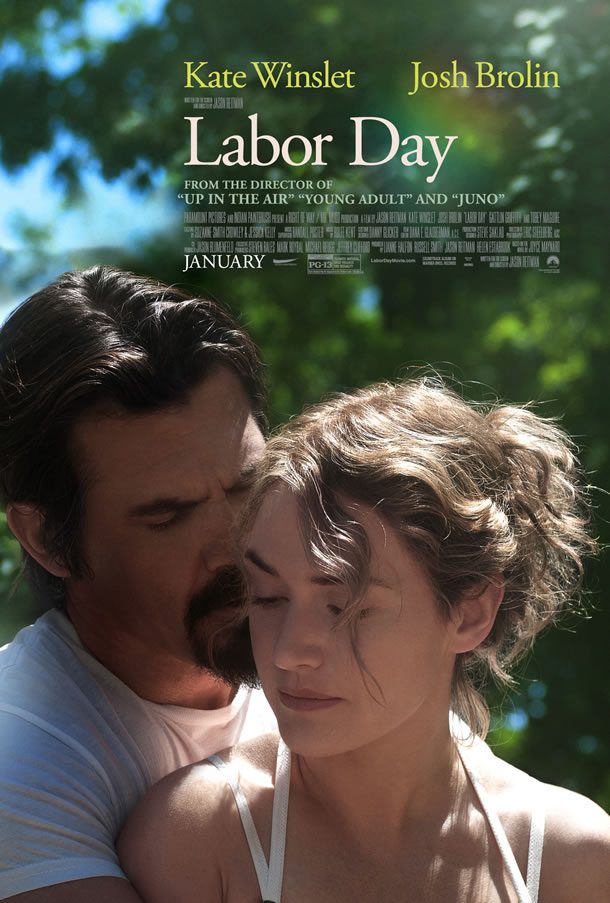 Labor Day, based upon the novel by Joyce Maynard, is the kind of sappy material that you never would have expected director Jason Reitman to attach his name to. Reitman has been accumulating an enviable career of top-shelf dark comedies (Thank You for Smoking, Up in the Air, Young Adult), yet his touch with characters and actors, as well as his delicacy with tone, reminded several of a young Billy Wilder. The stuff of Labor Day felt more like a Lifetime channel original movie. This is just one artistic miscalculation from the start and it doesn’t get better as it goes.
Back over Labor Day weekend in 1987, young Henry (Gattlin Griffith) is living with his grieving mother Adele (Kate Winslet) and performing many of the duties of a husband (don’t get gross). It’s been some time since Henry’s parents divorced but Adele has become a shell-shocked recluse who can barely talk or look others in the eye. While visiting a grocery store, Henry runs into a dangerous man named Frank (Josh Brolin). He’s bleeding from the abdomen and intimidates Adele to give him a ride. Frank is an escaped prisoner and he takes to hiding at Adele’s home. After the initial hostage period, Frank allows Henry and Adele to walk around freely, as long as they don’t tell anyone where he is. As the days pass, Frank helps out around the house, helps Adele get out of her funk, and becomes a surrogate father figure for Henry. The unconventional family must evade the police and skeptical townsfolk to make a run for it.
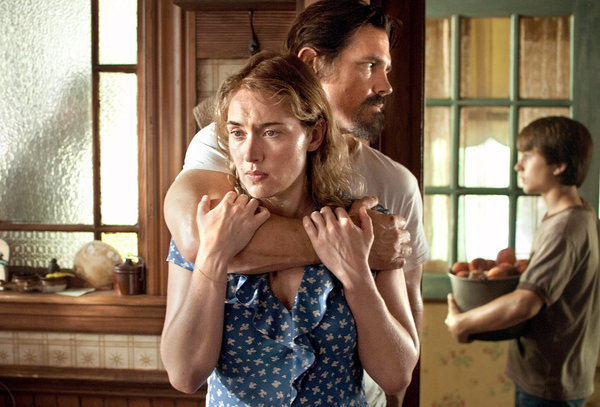 The very premise and its tone are just not a good fit for Reitman. First off, the movie plays out far more like a hostage thriller than any sort of romance. If you were to look deep inside, the romance can be explained as one very emotionally needy woman and her child going through Stockholm syndrome. The entire movie takes place over the titular Labor Day holiday, which means that all these changing feelings have to morph over the time period of three days. I don’t know if I’d call that love, even in Movie Land. Hey, Frank didn’t kill everyone and he helps around the house, isn’t he great? These people should be far more afraid for far longer. It is almost comical how saintly Frank becomes and how many surrogate father activities he squeezes into the abbreviated window of time. He performs handyman jobs all around the house, teaches young Henry how to change a tire, tosses a baseball with the kid, teaches everyone the finer points on pie making, and other such helpful activities. I understand that these two lonely people finally see a replacement man; for Henry a father, for Adele a lover. Again, the three-day time window makes everything appear like the manifestation of Stockholm syndrome. How many of those abducted have uttered, “He’s not that bad. You just don’t know him like I do”? Frank’s back-story is tragic but he is a wanted felon and he has no problem threatening both of these people’s lives in the beginning. Yeah he doesn’t resort to violence or yell in their faces, but why would he against an adolescent boy and his easily cajoled mother? No matter how long Reitman spends showing us the softer side of Frank, especially while preparing delectable dishes of food, he’s no more developed than the common Misunderstood Bad Boy.
Then there are the dawdling coming-of-age moments clinging to young Henry, a boy growing up quickly in a tumultuous holiday weekend. It strikes me as tonally odd to already take a tricky balancing act with the film’s plot and then tossing on a coming-of-age addition. The story is told from Henry’s perspective, and that’s a major problem as well. He’s the least interesting person in this dramatic setup. Being confined to his viewpoint often keeps us distant from the deeper drama going on. I’d rather spend time with Adele and Frank bonding so that the romance can find some traction, but no. Al we hear are the thumps from the other side of the wall and the gentle whisperings between them in stolen glances. It’s a frustrating perspective because quite frankly nobody really cares about this kid’s sexual awakening and his daydreams about the cute girl’s bra. His dad (Clark Gregg) wants to talk to him about the birds and the bees. His mom talks about the same. It’s a somewhat uncomfortable position for the audience with both parents wanting to cover the sex talk. There’s a wanted man hiding in his home! Henry’s personal growing up drama has no equivalency to this. Of the three main characters, doesn’t Henry seem like the worst participant to tell the story? It doesn’t help that Tobey Maguire narrates as older Henry. Have we not learned from The Great Gatsby: Maguire’s voice does not suit narration.
It’s the film’s more tense moments where you get glimpses of the real movie here, the thriller that’s been gussied up and disguised as some strange romance. Whenever someone gets close to discovering what’s really going on in that house, the movie picks up and grabs your interest once more, albeit fleeting. The fear of getting caught is potent but it should have been more omnipresent. The film, through Henry’s perspective, is treated like this nostalgic chestnut of that one summer a convicted killer held us hostage. The police are canvassing for an escaped prisoner but the neighborhood doesn’t seem to be that alarmed, still going about their business bringing desserts and fresh produce to one another’s doorstep. Too much of the film implies the threat, like with a short glimpse of a police checkpoint, but places it on the back-burner so that the romance can take shape. Again, this is a byproduct of being stuck in Henry’s perspective whereas the kid might not have the best understanding of how serious everything is (he’s worried his mom will abandon him and run off with Frank). But in those brief moments of dread and tension, this is where Labor Day works, and Reitman does a great job of turning the screws and building that suspense. It makes you wish the whole thing were a thriller.
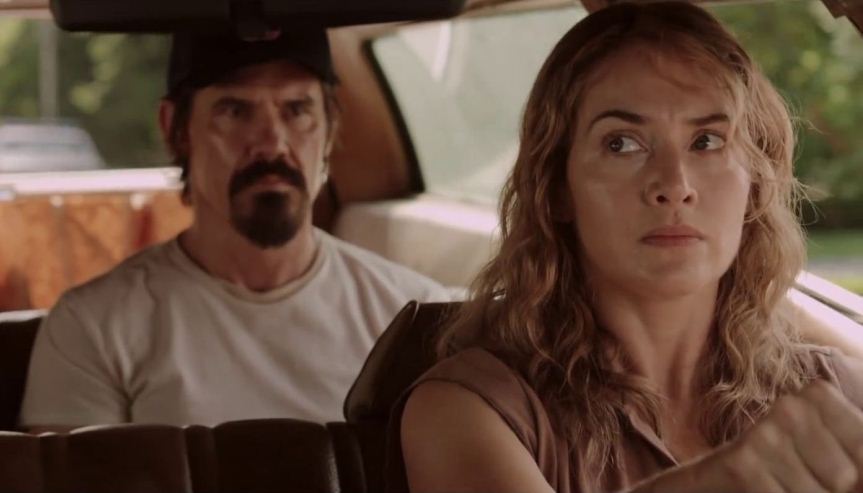 No one is going to question that Winslet (Divergent) and Brolin (Gangster Squad) are great actors, but boy do these characters underachieve. There is one very effective and moving monologue Winslet has about her pregnancy problems that have turned her away from the world, but it’s not enough. For much of the movie, she plays such an anxious and internalized character, so it’s hard to really follow her emotional development. That monologue does the most heavy lifting but it’s pretty wan before and after. Winslet is too good an actress to play essentially a catatonic woman that’s fairly mute. Brolin can play a soulful brute in his sleep. There’s so little to challenge him and so he seems on autopilot. It also hurts that both Frank and Adele have very limited conversations. It’s a romance told in gestures and handclasps (and the rhythmic thumping of walls at night). It’s not their fault that their characters are underwritten and unsatisfying. Griffith (Green Lantern) is a nice young actor but he too is forced to communicate much with little and comes up short. James Van Der Beek (TV’s Dawson’s Creek) is a local cop who appears for one scene, and afterwards you wish he would stick around longer. Look for Reitman good luck charm J.K. Simmons (Dark Skies) as a helpful neighbor.
Reitman is such a talented director that he can almost pull off sequences in Labor Day despite all of its inherent structural, tonal, and perspective flaws. From a technical standpoint, the movie is a gauzy, amber-accented tale with plenty of strong alluring visuals to set you at ease. There are these trembling moments where you almost see what attracted Reitman to the film, but the finished product is just a mushy misfire. It’s earnest without having earned our emotions, and the thriller elements and the romance elements are in constant conflict. We all remember our grandparents telling us that magical moment they knew they had met the one when he tied her up and held her hostage. Much of the drama that comes from the premise is handicapped from the mistake of having Henry as the chief storyteller and point of view. His limited involvement means we’re kept at the peripheral for too many important moments. I have no doubt Reitman will rebound and quickly (he’s already filming his next movie and has optioned a book for his next next movie). Get ready to have Labor Day play every subsequent Labor Day weekend on the Lifetime channel, its true home.
Nate’s Grade: C
Share this:

Godzilla (2014)
 When it comes to the monsters of cinema, it’s hard to beat out Godzilla, and not just because, you know, he’s hundreds of feet high and can breath fire. The famous monster began as a cautionary tale about nuclear weapons, destroying man’s hubris and often the good people of Tokyo. The legendary beast has been hibernating as such since 1998’s not-so-spectacular big-budget return, a film that the Japanese loathed. But like all ancient being, Godzilla has been resurrected again and given a splashy new coating of CGI devastation. If only the filmmakers had decided to leave out the humans and make Godzilla the rightful star.
A scientist (Bryan Cranston) warns the Japanese government of a massive impending danger. The offspring of a giant creature, a Massive Unidentified Terrestrial Organism (MUTO), has hatched and heading straight for the United States coastline. Attracted by nuclear power, the U.S. military tries to lure it away from populated centers. Ford Brody (Aaron Taylor-Johnson) is witness to the monstrous destruction and just wants to get back home to his wife (Elizabeth Olsen) and child in San Francisco, exactly where the creature is headed. There’s also the emergence of an older creature, one that has taken to combating the MUTOs to the death. This is the legendary Godzilla.
The big guy is back in a very different approach from 1998’s Godzilla (i.e. “better” approach). Director Gareth Edwards (Monsters), an avowed Godzilla fan, has made a reverent big-budget ode to the king of all monsters; however, the resulting film is more of a disaster epic than a monster brawl. The perspective is often framed at the human-level, which grounds the film from going too overboard into disaster porn territory like, say, Man of Steel. The effect is thrilling and adds a greater sense of verisimilitude to the mass chaos and destruction. It reminded me in some ways to 2008’s Cloverfield, where a group of characters is just trying to survive the periphery of all the collateral damage of a giant monster. There are sequences that directly relate to Fukushima as well as the tsunami from 2004. It’s almost like somebody watched the stirring movie The Impossible and said, “Yeah, give us some of that in our giant monster movie.” I don’t know if these sequences are entirely necessary. Watching Ford carry around a little Japanese tyke, wondering where his parents might be amidst the confusion post-monster attack, it relates to our modern response to tragedy and worldwide disaster, but do you really want to watch Ford have to find this kid’s parents? If there is a commentary to be found in the movie, it’s the uncontrollable and destructive power of nature pushed to the brink by mankind’s own energy crises. After all, the MUTOs are attracted to and strengthened by consuming nuclear energy. Godzilla is argued to be an “alpha predator” but also a figure to bring balance back to nature. I think it means that there can be only one giant monster and Godzilla is going to eliminate the competition.
 But the real question of any giant monster movie is the degree of satisfying, smash-em-up fun it provides, and the new Godzilla is a mostly agreeable venture. The action sequences, mostly saved for the climax, are cool and well thought out, but Edwards proves to be a brilliant visual stylist than a composer of action. This is a movie where the moments stand out better than the action. Edwards’ command of cinematic visual arrangements is at Spielberg levels of being a natural showman. I can easily think back on small moments, images that pop, visual reveals that are executed with aplomb, far more so than a central example of an action piece. I loved the horror-esque reveal of the elevated train being on track to head right for the MUTO. I loved the hide-and-seek nature of Ford waiting for the MUTO to pass. I loved when Ken Watanabe’s advice was literally just, “Let them fight” (I started chanting it in my seat). My favorite part of the movie is actually what was previously shown as a teaser trailer, namely Ford and several other paratroopers diving into the destructive city scene. The eerie hum of the 2001: A Space Odyssey monolith plays over, each man has a red flare streaking from their leg, and we watch them quickly descend through the sky, nervously awaiting what is on the other side of those heavy clouds, only to discover a city on fire, glowing like a hearth, and through the goggles, a monster fight taking place. The entire sequence is a visual standout, a thrilling set piece, and a reminder that Edwards has more on his mind.
Edwards does a lot of intentional teasing of Godzilla, so much so that it can get frustrating for an audience. I understand he’s building to a payoff reminiscent of Jaws; we’ve been teased for so long that we will go nuts when we finally see Godzilla in full glory, and it works. However, it also works as a detriment. There are several points in the film where it looks like we’re about to get some exciting Godzilla/MUTO action, or even just a MUTO wrecking havoc, and then the film cuts away, often to news footage. It’s a choice that begins as artistically clever but can become maddening in time. There is a lot of visual obfuscation throughout the film, far more so than the same compliant I had with last year’s Pacific Rim. Edwards will show Godzilla’s tail just swinging behind a building, or his colossal foot coming down with authority, or the wispy shadow of giants in billowing clouds of smoke. All those near misses can add up to cinematic blue balls. And so much of the action and destruction happens at nighttime, leading to a dour color palette heavy in grey and dark blacks, making the good stuff all the harder to see. I cannot even fathom why someone would want to see this film in 3D with those darkened glasses. It’s 90 minutes of foreplay that you may start to grow restless that we’re getting a Godzilla movie that will never show the goods (shouldn’t Godzilla be in a Godzilla film?)
 The problem with a disaster movie on a human-scale is when you don’t give a damn about any of the human characters. Now, Godzilla should be the star of any Godzilla movie but I understand execs fearing that their monster movie needs some relatable human drama. The problem is that the writing doesn’t do anything with these characters, forcing them into tidy and token roles that we’ve come to expect from large-scale disaster movies. Did anyone really feel anything about whether Ford would get back to his wife and child? Did anyone feel anything for anyone in this movie, beyond a slight reservation whether they would be squished, if even that? I’m not expecting three-dimensional characters here but even Roland Emmerich films do a decent job of establishing a milieu of people at various points of the globe we know will somehow coalesce together. There is so little effort to mask the character’s grand design: exposition mouthpieces, symbols of military threats, the noble family man, the beleaguered and crying wife. Seriously, there is a great cast of actors in this movie and they are given nothing to work with. Olsen (Oldboy) gets to look realistically scared and cry but she deserves so much better. Cranston (TV’s Breaking Bad) gets all the best yell-worthy lines. But it’s really Taylor-Johnson (Kick-Ass 2) who suffers the most since he’s placed as our impassive stand-in for a human protagonist. He’s so blank throughout the film and there’s little charisma to pull you in. His character, and the performance, feels no better than an elevated extra, Grunt #13. When we have to spend 90 minutes with these lackluster characters rather than some awesome monster fights, that’s when the film flounders.
I’m conflicted about the end results of Godzilla, an entertaining, surprisingly artistic film that can nail small moments of cinematic grandeur but has trouble matching its vision. The human-scale approach grounds the action, but do we want a giant monster movie grounded from a limited vantage point? The constant teasing builds a payoff for finally seeing Godzilla, but don’t we want more actual Godzilla in a film bearing his name? The human-scale, as well as the slow dodging of showing Godzilla, mean the storytelling emphasis is on an array of human characters, but what happens when they are poorly written, poorly developed, and lacking in charisma? The movie does more right than wrong but I’m left with the unmistakable feeling that, while a step in the right direction, there is too much self-sabotage holding back the movie. It actually made me re-evaluate and appreciate Pacific Rim even more. I can’t say this movie is nearly half the fun as Rim was. The monster design of the MUTOs is rather lacking, resembling a cross between the monster from Cloverfield and more patently the arachnid aliens of Starship Troopers, down to the heads that look like staple removers. Edwards has proven himself a big screen talent with a terrific feel for grandiose visual spectacle. I just hope if there is a sequel that we can skip all the slow buildup and just get to the main event – Godzilla beating the crap out of some other lesser yet still giant monster.
Nate’s Grade: B
Share this:

Neighbors (2014)
 The first side-splitter of the summer, Neighbors is a bawdy comedy that has enough big laughs that you may miss how well it draws its characters, punctuating preconceptions. The premise is boiled down to family versus frat, as a pair of new parents (Seth Rogen, Rose Byrne) has a college fraternity, lead by Zac Efron, move next door. You expect the raucous humor, and there are plenty of well-conceived visual gags and payoffs. I did not expect to like the characters as much or see different shades of them. Rogen and Byrne are not yet ready to be official grown-ups, and their attempts to hang with the frat parties are hilarious as well as cringe-inducing. I especially appreciated that Byrne is given the chance to be just as careless and selfish as the men; there’s even a fight between husband and wife who is the Kevin James in their relationship. Byrne is terrific and deserves even more work that lets her cut loose and be in on the joke. Then there are the frat brothers who could easily come across as brainless hedonists, and many do, but Efron and his co-bro Dave Franco have an engaging relationship where they fear what happens next after school. The movie’s theme isn’t subtle (fear of growing up) but provides enough extra substance to make the film more than the sum of its jokes. And it’s quite funny. Rogen and Byrne have great chemistry, their angry riffs are often amusing, and the escalating tit-for-tat prank war is memorable and entertaining. Neighbors works on a cross-generational level; as a man in my 30s, I related to Rogen and Byrne’s plight but also their shifting concepts of what they consider fun that they once may have mocked in their younger years (“I love brunch”). Neighbors builds to a nice climax, the cast is uniformly funny, and with enough surprising shades with the characters, it satisfies the R-rated funny bone.
Nate’s Grade: B
Share this:

Devil’s Knot (2014)
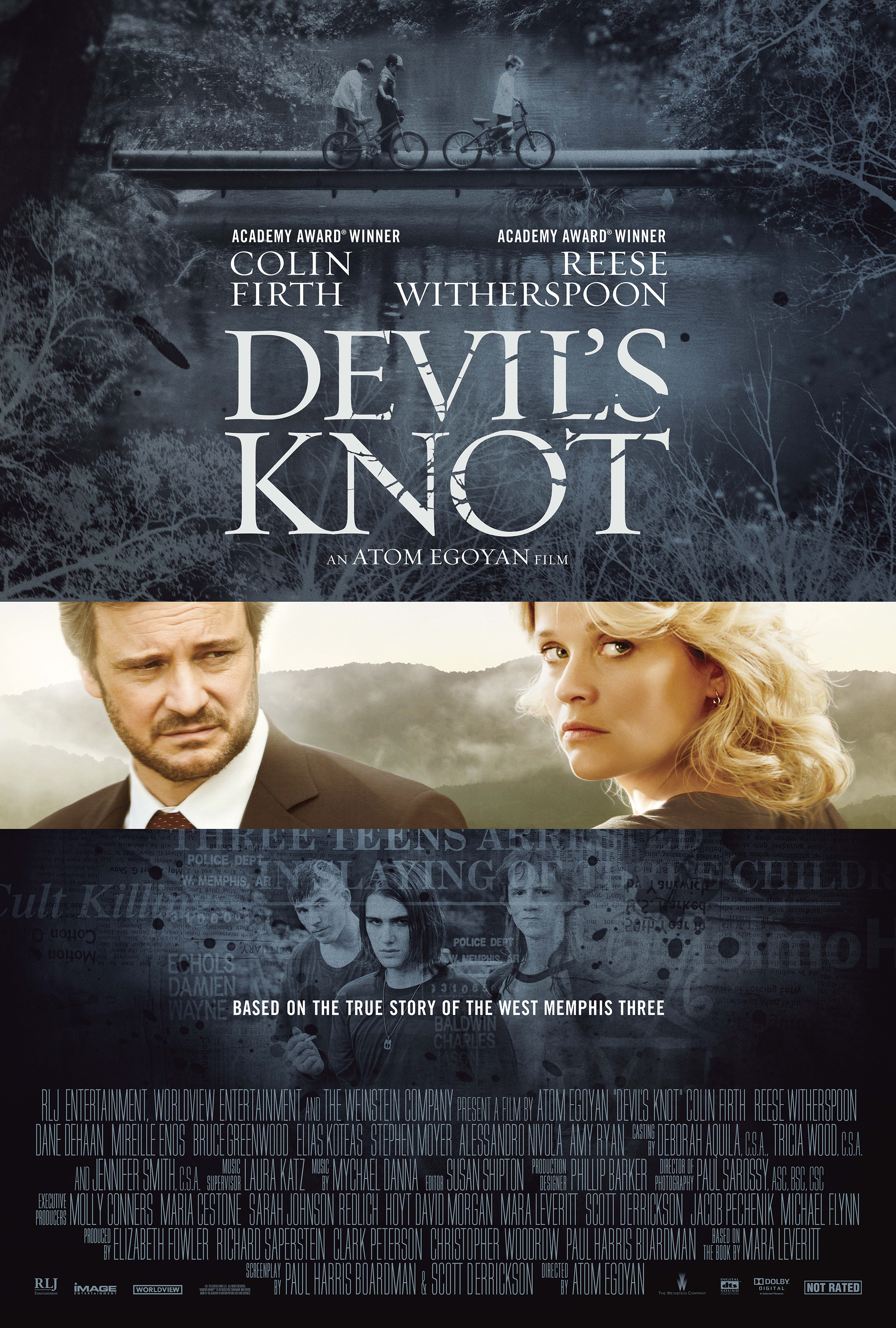 In 1993 in West Memphis, Arkansas, three eight-year-old boys went out late one night to ride their bikes. They were never seen alive again. The ensuing media circus that erupted lead to the conviction of three teenagers (The West Memphis Three) who many believed were innocent of these heinous crimes. Stop me if you’ve heard this story before. It was the basis of three stirring, powerful, galvanizing documentaries by Joe Berlinger and Bruce Sinofsky, two men credited with saving the West Memphis Three. Now after their release from prison, here comes Devil’s Knot, the first fictional film about the notorious case, Hollywood’s first crack at well-tread material. Is there anything new to be found?
Director Atom Egoyan (The Sweet Hereafter, Chloe) and his screenwriters do a credible job of distilling the complicated case against the West Memphis Three to its basics, relying on a modulated tone that shies away from the sensationalism that dominated the case back in 1993. With the benefit of time and hindsight, it’s easy for the movie to point out the erroneous thinking of the prosecution, the jump to conclusions, and the Satanic panic engulfing the community of Arkansas. We’re told by a police officer that they knew this “Satanic cult stuff” would hit town; they’ve just been waiting for the day. To its credit, the movie does a fine job of calmly and objectively pointing out the deficiencies in the police and prosecution’s case against the West Memphis Three. We’re told that from the twelve hours of interrogation with Jessie Misskelley, only 40-some minutes was recorded. The obvious mistakes in his confession, as well as the police coaching and coaxing him to their desired response, is made readily apparent. There’s “witness” Vicki Hutchernson (Mireille Enos of the oft-canceled The Killing) who says she say chief suspect Damien in a Satanic ritual, but the film cuts back from the imaginary to Vicki watching a movie on TV, the real source of her descriptive flourishes. Egoyan’s direction has a calm, objective overview that is reverent and respectful of the dead and the bereaved. It’s rarely boring and the facts of this case are such that any retelling would be somewhat compelling.
 So that brings me to the ultimate question: why even make a fictional movie about this subject? Four lengthy documentaries have covered the intricacies of the legal story, the breakdown in justice, and the personal toll on all sides of the crime. The only thing a fictional movie provides is: 1) the fun/distracting game of seeing relatively famous actors play the real-life people we’ve previously seen, and, 2) as an option for people who hate documentaries. If you’re one of those people who dislikes documentaries and doesn’t view them as “real movies,” then Devil’s Knot is for you, you dismissive filmgoer. Otherwise, literally everything was handled better in the Paradise Lost films. With the West Memphis Three thankfully out of prison, the omnipresent sense of urgency from the documentaries is now absent, replaced with a Monday morning quarterback sensibility pointing out all the obvious bias, judicial hypocrisy, and flaws of the case. And as anyone who has plowed through the powerful and addicting documentaries knows, there are plenty of flaws to point out for harsh scrutiny and incredulity. Movies have a long history of showing us an example of judicial injustice, and this is a prime example. However, Egoyan has put the emphasis of his movie on two outsiders rather than people in the center of this case. The West Memphis Three themselves are barely supporting actors in their own movie. I suppose the filmmakers may have wanted to present a different angle to the case since the Paradise Lost films showed the accused up close and personal. The construction of this plot just doesn’t work under the perspectives of Pam (Reese Witherspoon) and Ron (Colin Firth).
Ron serves as a pro-bono adviser to the defense, but that doesn’t mean he has the same access inside and outside the court. He can gather evidence on his own but really this guy is meant to be a fly-on-the-wall for the planning and frustration of all the legal roadblocks thrown at the defense. Is an added body in the room necessary? Could not one of the defense attorneys have provided the same purpose? Instead, he gets to grumble in the court and out about all the legal shenanigans going on to railroad innocent boys. He is essentially spelling it out to an audience. Pam has even less narrative purpose in the film. Her perspective makes sense early on as the mother of one of the murdered young children. Her panic, her worst nightmare come to life, it all makes for the stuff of major drama, which is why you’d imagine Witherspoon was drawn to the part. But once the case against the West Memphis Three gets going, Pam transforms into our Chief Reaction Shot Provider. Whenever a curious moment happens in court, we cut back to Pam and Witherspoon cocking her head in dawning curiosity and uncertainty. It’s as if she is meant to symbolically represent the entire community that was so fervent in their beliefs that these boys were guilty… until they heard the shaky case and the questionable experts put on the stand. So Pam and Ron end up becoming signals to the audience on how to feel and what to think. The movie doesn’t have enough faith in its audience to keep up with the minutia of the trail, or even the lawyers’ arguments, reducing a complex legal trial down to two nonessential characters nodding or shaking their heads.
 I’ll admit that I had some interest watching the actors inhabit the roles, and there are scads of people involved in this story. Bruce Greenwood (Star Trek) does a valiant job showcasing the head-scratching decisions of the trail judge, David Burnett, and his slimy dismissive nature. Stephen Moyer (TV’s True Blood) is particularly infuriating as John Fogleman, chief prosecuting attorney. Seth Meriwether (Trouble with the Curve) looks eerily like his character, the young and accused Jason Baldwin, and he nails his moral convictions and gentle nature. Dane DeHaan (The Amazing Spider-Man 2) gets to do his troubled youth thing he does so well. Kevin Durand is an actor I normally enjoy but even he can’t do justice to John Mark Byers, step-father to one of the slain boys, and easily the most memorable figure in the Paradise Lost films; the man is so theatrical and larger-than-life, and yet Devil’s Knot treats him like a featured extra, with many of his speaking scenes off camera. There isn’t a bad actor in the extremely large cast, though Firth’s Southern accent isn’t the most refined. If the movie lacks much reason for existing, at least the bevy of good actors respectfully bringing new life to these people, good, bad, and many somewhere in between, is the one credible quality to this movie.
What to make of Devil’s Knot, an example of a decent, modulated, and well acted movie that ultimately has no reason to exist in the wake of three excellent documentaries (Paradise Lost) and one other pretty good one (West of Memphis). The ground has been covered. However, that doesn’t mean that a well-told story can’t be told again, with a different angle, with a different approach, but Devil’s Knot hinges on two characters serving as metaphorical barometers to teach the audience what to think and how to feel. Then there’s the matter that the trail covers the entire 114-minute running time. There’s so much more that happens after the initial trial, so much that the last two minutes of this movie are almost a nonstop barrage of text updating the audience on many of the post-trial developments, including the West Memphis Three being released from prison in 2011. The movie feels too limited; there is so much more depth here, to the details of the case, to the personalities and human drama, to the story after the trial. Egoyan and his cast and crew have made a respectful fictional version of these sensational events, but the problem is that they don’t do enough to justify their own film’s existence. Unless you have an irrational hatred for documentaries, just watch those instead.
Nate’s Grade: C+
Share this:

Heaven is For Real (2014)
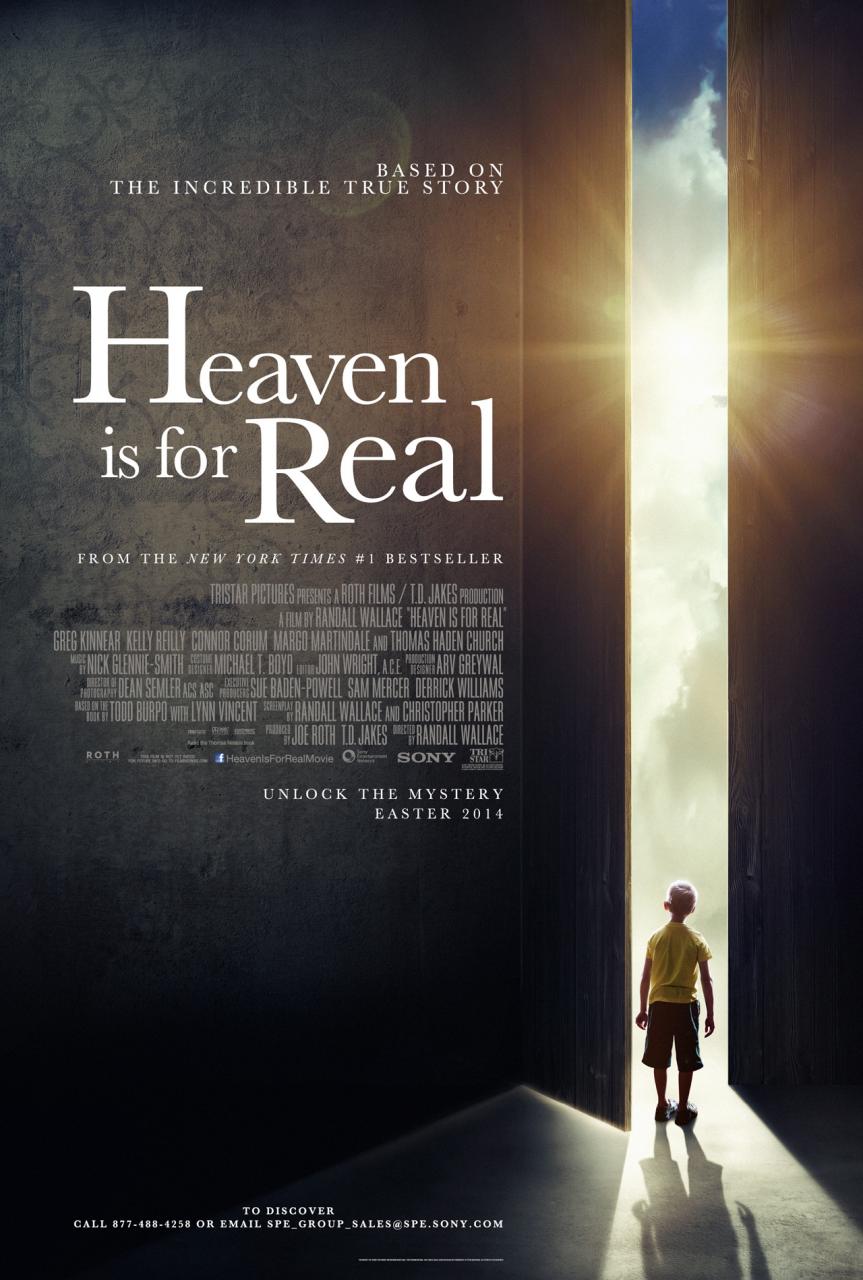 Christian movies have been lighting up the U.S. box-office this year. First there was Son of God, which opened at over $30 million dollars for what is essentially a retread of what people could see for free on TV. Then there was Noah, the Biblical epic given a new life with modern special effects magic. Then the little indie that could, God’s Not Dead, which continues to hang around the box-office, collecting astonishing sums. Now in time for Easter is Heaven is For Real based upon the best-selling book of the same name. Adapted and directed by Randall Wallace (Secretariat, Braveheart), the film manages to be emotional, earnest, and efficient, even despite not really having the elements needed to be called a film.
Todd Burpo (Greg Kinnear) is the pastor for a small town in rural Nebraska. He and his wife Sonja (Kelly Reilly) are struggling to pay the bills and care for their two children, Cassie (Lane Styles) and Colton (Connor Corum). One fateful day, Colton is rushed to the hospital with a burst appendix. He makes it through the operation. Afterwards, he tells his family the amazing news that while unconscious he visited heaven. The Burpos are ready to dismiss their son’s experience as a response common to those who went through near-death experiences, except little Colton never died on the operating table. Todd is unsure what to do with his son’s information, including key knowledge that he has no Earthly way of knowing. The members of Todd’s church worry about trusting the child’s account, and are wary of the media circus, and may just hire a new pastor for all the trouble caused by Colton’s confession.
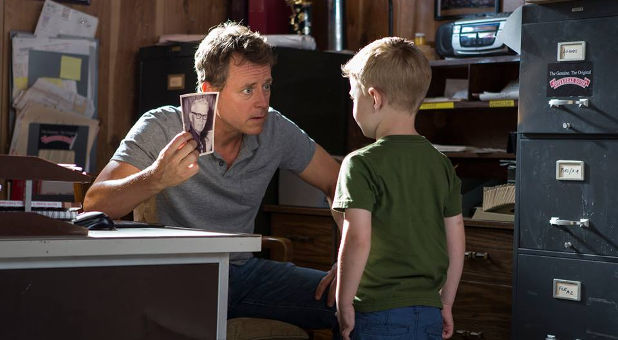 Kinder and gentler, here is a movie that has an inclusive, positive message executed with earnest conviction. The drama isn’t subtle but it can be effective. The music rises, the actors crinkle their faces and get tears in their eyes, and you’re left feeling like there’s something in your own eye. It may be manipulative in some sense but it’s so well executed, and without any hint of pretension or agenda, that I really didn’t mind. It’s a heartfelt movie that could fervently inspire the masses that pack the theater. I’d much rather have any Christian consumers, or the curious, check out this well-meaning movie than the mean-spirited and spurious God’s Not Dead. This movie actually allows its characters to feel like regular people who exist in our world. Todd and Sonja have a sex life, and the Burpo family doesn’t just sing famous Christian tunes in the car, they’ll shout Queen at the top of their lungs. In other words, they’re a fairly normal Midwestern family, and I appreciated that the movie didn’t feel the need to sanctify them. The supporting characters also have dollops of depth to them, at least in the hands of actors like Thomas Haden Church (so wonderfully deadpan) and Margo Martindale (her sorrow fermenting into bitterness). Heaven is for Real is anchored by two strong performances by Kinnear (The Last Song) and Reilly (Flight) as the parents. Both of these actors get a wealth of emotions to play, a few crying scenes, one angry outburst, and they sell it all, never overplaying the emotions of the scene, gently grounding the film with compassion.
I suppose in some capacity this film could be the more religious version of The Sixth Sense. It’s about a gifted child who sees things others cannot and who battles with being taken seriously by the scolding adults. We know that he’s going to say something he should not know, the adults would gasp and say, “How did you know that? There’s no possible way,” and then we’ll repeat this process. It reminded me of when young Haley Joel Osment finally gets through to his mother when he tells her that grandma saw her dance and is proud of her. Just add a dash of non-denominational Christianity.
The problem is that there really isn’t a movie here. Heaven is For Real is comforting and earnest, but there just isn’t a story here that translates into the structure and form of a film, and it shows. First off, there really isn’t much in the way of authentic conflict here. After Colton is saved, the only real conflict is whether to believe what he experienced. This setup could work in the scheme of a movie if his parents were not believers; thus their arc is one that goes from disbelief to belief. However, the movie already begins with the Burpos as good Christian folk. Todd is the town’s pastor for crying out loud, so you’d think he wouldn’t be troubled with his own set of doubts. These are also rather good people. In the opening scenes, despite being behind on bills, Todd refuses to charge someone for his garage-repair services and accepts free carpet instead. In the end, when Todd is preaching and talking about his own journey and how prideful he was back at the start, I’m left wondering what he’s talking about. I suppose he didn’t have to try and run to third base in that church softball game, but is that really all we have to go on? Would staying on second symbolize his lack of faith? What I’m saying is that the Burpos don’t really travel on a character arc, so their squabbles over their son feel forced. More so, the struggles with Todd’s church feel the most inauthentic. I just don’t get it. The pastor’s kid says he went to heaven, and the congregation has members that are mad, but mad at what? Should the pastor, who preaches about heaven for a living, dispute his son, especially when the boy possesses extraordinary knowledge? I don’t understand what the conflict is here and neither does the movie, which doesn’t really adhere to a three-act structure, and just sort of ends without much preparation. People just believe. End. Why did it take this long? It’s not like these people are stone-cold atheists.
 It’s that lacking sense of urgency, let alone goals or a central through line, which makes me question how Heaven is For Real spends its time. Why does the movie choose to spend as much time on scenes that don’t seem to matter? The first act is spent with such dramatic moments as… Todd playing softball and breaking his leg (the one thing that pushes the film into PG material). And from that… a completely unrelated kidney stone infection. Then from there… the family takes a trip to the Denver zoo. I was getting restless myself that this kid was never going to get to heaven. I kept waiting for these moments to have consequence, like how the Burpo kids fall ill after visiting the zoo. Aha, it must be connected to the zoo (monkey pox!). Nope, it’s his appendix rupturing. Very little of the pre-heavenly visit looks to have any bearing on the overall plot, instead providing texture to the family life. I suppose Todd passing the kidney stones was meant to be a comedic excursion (Church says the average is passing 15 stones – that is too insane for me to believe at face value). Why kind of hours does Todd have for his family when he’s a minister, a full-time job, repairs garage doors as a second job, then volunteers as a firefighter AND coaches a high school wrestling team? He’s got way too much on his plate but objects to the idea of his wife getting a job. What purpose does Todd seeing a psychiatrist on short notice serve other than allowing an externalization of his internal doubts? I’ll let that one slide, but they never come back to the psychiatrist. Too much of the movie feels like padding and stalling until the non-conflict reaches its end.
Wallace also shows a lack of faith in his own audience. By choosing to visualize the heavenly sequences, though brief they are, the movie risks being goofy, as whatever man can derive will never be comparable. If the whole movie is about whether or not to accept Colton’s story on faith, why do we have to have dramatizations of his story? Isn’t that cheating? The heavenly sequences don’t really add much oomph to the story any way. Colton goes to church, watches vaguely humanoid angels bathed in light hover and sing. He asks them to play “We Will Rock You.” The angels laugh but they don’t play the classic Queen rock song/universal sports anthem. Is it a matter of taste, angels? Who doesn’t like Queen? Then Jesus shows up and walks Colton outside. Other than a visual glimpse of Colton hugging his dead sister, that’s it. The other issue with depicting heaven onscreen, or something close to it, is that we can start picking it apart. Just ask Peter Jackson and his miscalculated Lovely Bones. If everyone is young in heaven, as Colton observes, then do we get a say in what our prime age is? I personally think George Clooney is a more handsome man as he ages than back in his E.R. days. And why does Jesus have to dress in the standard robes and sandals of 2000 years ago? Couldn’t he wear something more casual? Just imagine: Jesus relaxing in the pajama jeans. Then there’s Colton coming across his departed sister, who died at eight months, but is represented by a 6-8-year-old girl. Does this mean she’s going to be like that for eternity? Does she not get to choose to be an adult? See what I mean about picking it apart?
Its heart is in the right place, its message is inclusive and positive, and ultimately Heaven is For Real preaches about making life on Earth just as significant as the one after, and so I can say that the film is a relatively inoffensive and effective drama. It isn’t enough to say heaven is for real; the movie challenges the audience to do more. It doesn’t go overboard into maudlin territory, though it comes close enough with some of the wistful child acting. There really isn’t much of a movie here, and some of the choices seem to backfire, but it’s saved by its sense of earnestness, compassion, and some above average acting. Amidst the glut of evangelical movies this spring, I’d recommend Heaven is For Real above the rest (I’m excluding Noah from this list). It’s a thoroughly nice movie, and a film that should inspire its core audience, but in a good way, unlike God’s Not Dead. I can’t exactly say that this is a movie that needed to be made, especially from the cut-and-dry source material, but there’s a level of skepticism and reality imposed on what could easily be transformed into a blunt outreach piece. Even though the outcome is never in doubt, there’s an intelligence to the craft here that is much appreciated. Heaven is For Real may not be a great movie, but it works well enough as a movie when it shouldn’t, and that’s enough of a success in my book.
Nate’s Grade: B-
Share this:

The Raid 2 (2014)
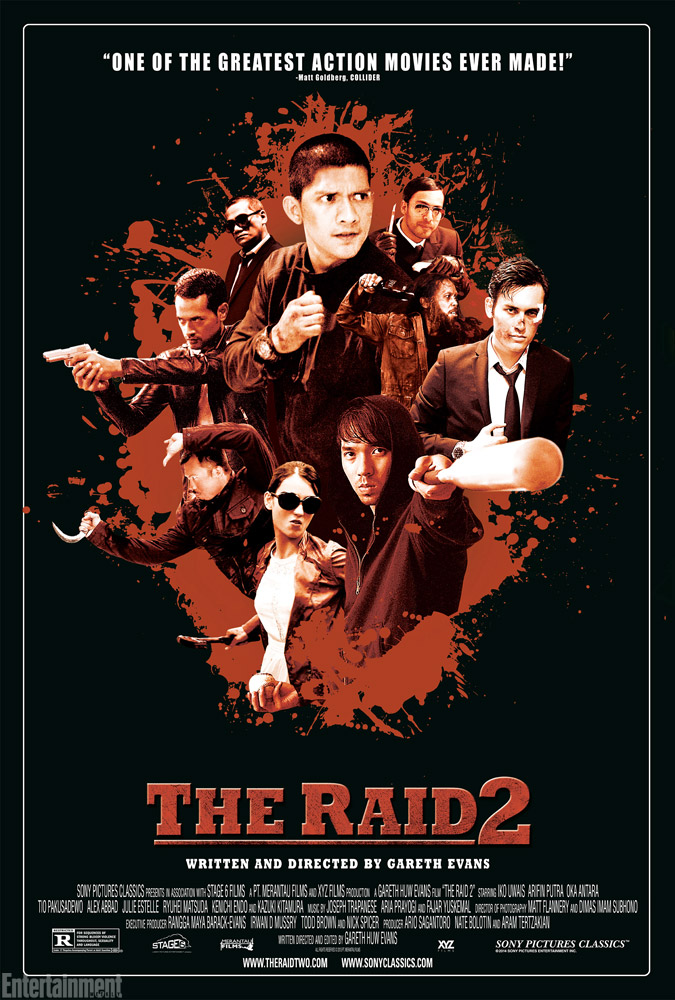 Rare is the movie that I feel I don’t even need to go into great detail rather than just scream, in a fashion suiting madness, “See this! See it!” Such is the case for The Raid 2, the sequel to the 2012 Indonesian action film that melted faces with its inventive and brutal action. The original movie had a confined location, a gang-run tenement building, and a simple premise of reaching the top and nabbing the bad guy. When people weren’t punching or shooting each other, the original Raid lagged, but director/writer Gareth Evans has solved the problem with his action-packed sequel. The world expands greatly, establishing the uneasy peace kept by powerful and warring criminal organizations. The plot ends up becoming something akin to The Departed meets A Prophet, following our hero cop from the first movie now placed undercover to gain the trust of the criminal overlords and work his way up the food chain. When the action isn’t cooking, you’re still engaged with the story and the suspense simmers in clever ways. But getting back to the film’s calling card, the action sequences are impeccably choreographed and edited, have a wide variety of locations for fun, and are bloody intoxicating. This is a movie soaked in adrenaline, and the action sequences will be hard to beat for the rest of the year. Evans finds ways to provide flair for his supporting characters, including a family duo that involves a deaf woman whose weapon of choice is hammers and a guy who prefers a baseball and a bat. The Raid 2 fires on all cylinders so well, so brilliantly filmed, that it puts just about every American action thriller to shame. It doesn’t need to be as long as it is (pushing two and a half hours), and it takes a little while to set up the players, but this is even more of an entertaining rush than the original, because now we get a sense of what Evans and his team can do with fewer restrictions. When Evans gets to Hollywood, and he will, just make sure you give him all the money to do whatever he wants.
Nate’s Grade: A-
Share this:

Nymphomaniac volumes I & II (2014)
 When Danish film director Lars von Trier said he wanted his next movie to be “porn” he wasn’t kidding. The controversial filmmaker wanted to explore the world of a woman addicted to sex, following her history of varied experiences over the course of two movies/volumes. Actors lined up for the notoriously demanding filmmaker. During the sex scenes, computer effects magic married the actors’ faces and upper bodies with the lower parts of porn stars. Upper half, Charlotte Gainsbourg, lower half, some pornographic double, all spliced together into one onscreen human being. Think about that little special effects ground-breaker, putting Hollywood faces into hardcore sex scenes. Knowing von Trier’s pessimistic tendencies, and his penchant for heaping abuse upon his female leads to the point of uncomfortable exploitation, you may rightly cringe about the prospect of a von Trier “erotic” movie. That’s the funny thing about Nymphomaniac; it’s all about sex, sometimes graphically so, but it’s never erotic. It’s an intriguing, sometimes maddening look at human sexuality and our inhibitions and frailties, until a horrible ending spoils it. In the end, von Trier just couldn’t help himself.
The story boils down to this: Joe (Gainsbourg as an adult, Stacy Martin as the younger version) is found beaten and unconscious in an alley. The kindly, monk-like Seligman (Stellan Skarsgard) finds her, brings her back to his home, and tends to her wounds. Joe says she brought all of her pain upon herself. Seligman finds this hard to believe. She uncorks a lengthy series of tales about her sexual awakening and desires.
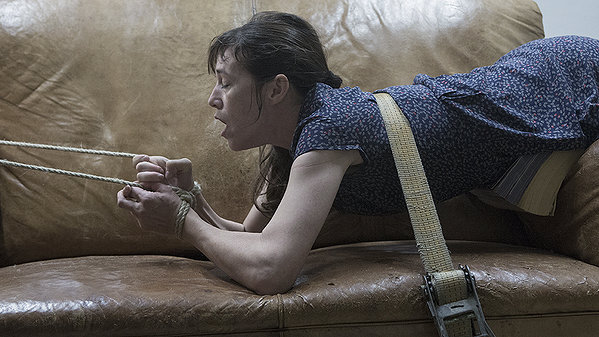 In many ways, Lars von Trier is the best and worst candidate to present a four-hour opus on the life and times of an avowed nymphomaniac. The man approaches the idea of sex addiction in practically the most clinical way possible while still being cinematic. You can practically envision Seligman as a stand-in for von Trier, countering Joe’s sense of shame with a broader, scientific perspective. Really, this is the tale of a woman spilling her guts about all her dirty little secrets and a man nodding along, asking questions, and dismissing her self-loathing with his reason and empathy. It’s sort of like being inside a therapist’s office. I can’t say whether or not I find all the analogous asides to be interesting or simply insufferable pretension. While Joe is detailing her behavior, Seligman will stop her and provide further context, often bringing in such subjects as fly fishing, the mating habits of fish, the Fibonacci sequence, Eastern Orthodoxy, and classical music. It’s almost absurd how encouraging Seligman is, dismissing every action of Joe’s sordid past through an example. After a while, it almost becomes a humorous game all its own, as we know Seligman will use every story as a stepping off point to some weird outside connection. Every item in Seligman’s bare bedroom inspires a story from Joe, which leads to a suspicion that she is something of a salacious Keyser Soze, piecing together her story on the spot; some of the coincidences with Jerome (Shia LaBeouf) seems just a bit too much. Seligman’s enlightened and intellectual asides force the audience to consider deeper meaning with Joe’s actions. Is she irredeemable, does she have control over what she’s doing, is she doing anything even bad? Over the four hours of psychological examination, the doctor is out. Nymphomaniac, especially in Volume Two, is the best film yet on sex addiction. It doesn’t demonize the behavior, it doesn’t treat it as sensationalistic, and it doesn’t overtly judge its lead characters and the choices they make, nor does it spare them the devastating consequences.
The graphic nature of the film is getting all the headlines but Nymphomaniac treats its heroine as an addict trying to get a hold of herself. We begin with young Joe innocently discovering her sexuality, especially discovering the pull she can have over an almost endless parade of weak-willed men who will follow her every whim. If that was the only plot, then there would be little separating von Trier’s film from any late-night cable erotic series (“Oh, let me tell you the time I met this man and we did this…” –Repeat). Over the two movies, we get a stronger sense of how utterly trapped she is by her urges, by her addiction. When she’s dealing with the undignified death of her father, Joe finds whatever solace she can with a willing bedmate. She places herself in precarious situations chasing after that orgiastic high, which disappears at the conclusion of Volume One. The cliffhanger separating the two volumes is that Joe loses her ability to feel sexual pleasure, which is rather problematic for a nymphomaniac. And so in Volume Two, Joe desperately searches for a means to get her groove back, at one point abandoning her own child so that she can pursue her kink. Joe goes to counseling, joins a sex addict group (she bristles at the term and prefers “nymphomaniac”), and tries to detox, at one point removing everything vaguely sexual from her apartment, including anything knob-shaped.
 The film is structured as a series of vignettes and anecdotes, broken up with von Trier’s tried-and-true onscreen chapter system. As expected for a film based around anecdotes, some stories are more interesting or revealing or simply entertaining than others. The stories are a little more whimsical in Volume One but by the time we get to Volume Two, they become more punishing and sad. It’s one thing to bet your promiscuous gal pal who will have sex with the most people on one train ride home, or on a prank to stick a restaurants dining utensil up your vagina, but it’s another when an adult woman, night after night, leaves her toddler at home so she MAY have the opportunity to have her behind whipped. The young Joe stories are easier to shake off as youthful experimentation and thrill seeking, which Seligman rationalizes as well. However, they set up just exactly the path that the adult Joe was destined for. The tales in Volume Two have to ratchet up the stakes, given Joe’s absent mojo, so what was once titillating can become downright disturbing. von Trier’s four hours offer plenty of feel-bad feel-good opportunities along the human sexuality sphere. Adult Joe thinks introducing a language barrier could be enticing, so she asks an African immigrant if he’ll have sex with her. He agrees, but brings his brother along. The two men bicker in a different language, while Joe sits there, head slumped against her hand, comically waiting for these two naked men, their penises wagging in the foreground of the camera, to get to business. It’s quite a funny and ludicrous turn of events.
One story in Volume One stands out for its raw emotional power. Joe has a whole schedule of lovers visiting her door. Well one such older man wanted to have Joe all to himself but her price was high: he had to leave his wife, “Mrs. H.” Surprise, he does, and Joe is already uncertain if this new arrangement is what she wanted; her offer was better in the theoretical sense that he would never cross that line. Well the misses (played with chomping disgust by Uma Thurman) comes for a visit and she brings her kids along. She wants her children to see what their daddy traded them away for. At first, the wife acts civil with some stinging passive-aggression, but the uncomfortable incident is dragged out, and the emotions reach a fever pitch, with crying all around. It’s so uncomfortable, so potent, and so memorable, forcing Joe, and the audience, to think of the ripples of consequences from simple sexual dalliances. While Joe is having her fun, unbeknownst to her, there are far-ranging consequences that she, and by extension the audience, choose to ignore because all those pesky details would get in the way of our fun.
The most troublesome storyline is also one of the longest, with Joe having her backside swatted by a no-nonsense sadist played by Jamie Bell (Man on a Ledge). This guy insists there will be no penetration and his rules are to be followed strictly. It starts out intriguing to get a sense of who this guy is and what his practices will be. Joe has to sit with other women between the hours of 2-4 AM, and maybe she’ll get picked. Night after night, she goes through this setup, so desperate to feel the spark of desire again. This situation feels like it goes on forever. There is no easy climax. Rather it sets up the darker turn for Joe’s character, as she gives up being a mother and a wife. To make ends meet she becomes a debt collector, using her knowledge of men, particularly heir weaknesses, to coax them back into paying. There’s one disarming moment when she takes great pity on a pedophile that will surprise you, and it’s the only incident that causes Seligman to disapprove. Her boss (Willem Dafoe) advises her to think of an eventual replacement she can groom, and his method is singling out a young girl with no support, becoming her world, and slowly manipulating her to do your every wish. In a von Trier film, that is what a retirement 401k package looks like. This whole storyline, including her young mark (Mia Goth) romantically falling for her would-be maternal figure, just feels misplaced, like von Trier doesn’t know how to bring his four-hour opus to a close.
 That’s because he doesn’t! This paragraph is going to delve into the conclusion of Nymphomaniac, so be warned that there will be major spoilers being discussed. If you wish to remain pure, skip to the next paragraph. During Volume One, I had the unmistakable feeling that all of this had to be leading somewhere. It wasn’t just going to be one woman distilling her life stories over the course of one night. I also figured there had to be a reason for why Seligman would rationalize every one of Joe’s actions, shifting blame away from herself. And there’s truth to what he says, namely that the world judges Joe far more harshly for her actions because she happens to be a woman committing them. If a man was performing the same stunts, or left his family, he would not be seen as damningly. Then early on in Volume Two, Seligman reveals himself as asexual, a man born without any sexual desire. He argues he’s the perfect person to hear out Joe’s tales of woe, as he can objectively analyze them free from lust and desire and titillation. Then, by the end of volume Two, Joe as decided to change her ways. She wants to be someone different, someone better. She’s turned the corner. What, a glimmer of well earned hope emerging at the end of a von Trier film? That’s impossible. This natural ending is destroyed thanks to von Trier’s nihilistic perspective; he just can’t help himself. And so, though it makes no narrative sense and seems completely out of character, Seligman comes back to Joe, tries to rape her, and is then shot dead. That’s the end. Every man is a deviant. It just completely undoes Seligman’s entire perspective, as von Trier abandons whatever gains he’s made over four hours for what amounts to a groan-worthy joke. It is without question one of the worst, most misguided endings I’ve seen in a film. It makes the previous four hours feel like a lousy setup for a lousier joke.
It’s a shame because Gainsbourg gives a terrific performance as the older Joe. The actress is no stranger to von Trier and his sadomasochist ways, having also starred in Antichrist and Melancholia. You get a sense of her character’s desperation, the thrills of her youth now gone. She’s also grappling with her own fallibility, the anger that comes from that, her antipathy with others, and the regrets and jealousy that penetrate her hard exterior (no pun intended). She’s trying to act above society, an operator who plays by a different set of rules, but it’s fascinating when the emotions reveal themselves from the sensations. And Gainsbourg puts all of herself into this role, submitting to her character’s many mental and physical tortures. Even if she has a body double pasted in, it’s still representational of her and Joe. Gainsbourg manages to draw us in, not wanting our sympathy but eventually earning it. Martin, as young Joe, gets just as much screen time as Gainsbourg, but there’s a vacancy there to her acting, a certain passivity that makes young Joe feel more like a spectator than a participant in her life. Skarsgard (Thor: the Dark World) is an appealing foil for Joe, almost comical in how accepting he is and how excited he can get with his digressive connections. The only other actor of note in the large ensemble is LaBeouf (Transformers) who affects a strange accent but sticks with it. We’ll see if his self-imposed exile from Hollywood and acting sticks as well.
 I’ve spent this entire review talking about everything else rather than detailing the nature of the graphic sex, the point that earned Nymphomaniac much of its curiosity with the general public. That’s because the explicit nature of the sex is inconsequential. I understand that that may sound odd for a movie literally called Nymphomaniac, but that’s because von Trier’s movie is less interested in the salacious and tawdry acts and more about deconstructing a life lived and the increasingly fraught rationale for her choices. Much like Blue is the Warmest Color, the graphic sex is the headliner, and it is occasionally graphic and unsimulated, with more than a few vaginal close-ups. The sex is incidental, a symptom of the human condition, and von Trier’s less-than-sensational look at such a sensational topic grounds the movie intellectually. With Nymphomaniac, von Trier is posing questions, pushing his audience to question our own views on sexuality and concepts of normalcy and what is and isn’t in good taste. We’re prurient creatures lapping up all the dirty details and copious amounts of nudity, but the introspection is what sticks, and it’s an incisive character study that opens up in many beguiling, illuminating, and surprisingly relatable ways…. Until the end. There’s no way to account for Nymphomaniac and just forget the ending. Four hours and for what? I cannot fathom what von Trier was going for rather than a return to his M.O. of humanity resorting to casual cruelty. If you can bear it, Nymphomaniac is a fitfully entertaining film, provocative to the end, and then it all slips away thanks to cinema’s worst practical joker.
Volume 1: B-
Volume 2: C+
The Ending: F
Nate’s Grade Overall: B
Share this:

Bad Words (2014)
 Given the premise, you’d be right to assume that there are many easy laughs when it comes to Bad Words. A grown man (Jason Bateman, making his directing debut) is competing alongside children in a spelling bee, intimidating them, psyching them out, and otherwise being a rude and vulgar human being. Now, besides the fact that being older doesn’t automatically give anyone an edge over in spelling, I worried that too much of the movie would fall upon the patterned setup of Bateman just saying something inappropriate to children. Some of these jokes are funny, most somewhat expected, but the real enjoyment of Bad Words is the buddy relationship formed between Bateman and a young Indian speller (Rohan Chand). The story follows some similar beats from the more scabrously funny Bad Santa. The heart it develops in the second half isn’t quite enough to tie up everything. I applaud the film for finding a happy ending that feels at least in keeping with its tone. As a director, Bateman has a smooth handling with his actors and a sharp overall sense of comic timing, as one would hope. My issue with Bad Words is that it isn’t outrageous enough, relying on the setup or Bateman’s mean insults for oodles of easy laughs. I was entertained with Bad Words but I wish it followed the convictions of its insolent lead character and cared less about making an audience care. It’s a dirty movie that goes soft.
Nate’s Grade: B-
Share this:

Best Night Ever (2014)
 There are no more reviled names in the world of comedy than the duo of Jason Friedberg and Aaron Seltzer. Together, these writer/directors have unleashed such loathsome films as Epic Movie, Meet the Spartans, and their most recent spoof, The Starving Games. Each film was further evidence that Friedberg and Seltzer had no grasp on the basic tenets of comedy. But, free of the shackles of a spoof formula, what could these two accomplish? That’s a question no one on the planet was seriously pondering but here comes Best Night Ever, a found footage comedy where four thirty-something female friends (Desiree Hall, Samantha Colburn, Eddie Ritchard, Crista Flanagan) travel to Las Vegas and get into oh so scandalous trouble. How original, right?
Being Friedberg and Setlzer’s first straight comedy, it’s fascinating how it fails in a completely different yet similar manner than their normal spoof monstrosities. The problem, among others, with their spoofs is that they are not structured for comedy but merely lame pop-culture references, with the reference standing in the place of what should be a joke. It’s a notable absence of comedy. With their first original work, Friedberg and Seltzer lose the references but forget to replace them with, you know, comedy. Take for instance a scenario where our four heroines hide in a dumpster. The police are outside and they don’t want to be caught. All right, this setup could afford some nice squeamish comedy. Instead, we hold onto the same painfully long night vision shot (4 minutes and 45 seconds – thanks Ignatiy Vishnevetsky at AV Club) with the ladies breathing heavily. It takes several minutes until this situation changes, when the girls start singing “What’s Up?” by 4 Non Blondes as a patented means of soothing a panicked friend, which itself isn’t any funnier. Let’s unpack this scene. They’re in an uncomfortable place and forced to be quiet lest they alert the police. Why set this up and do nothing with it? And the supposed payoff for the scene is more a jump scare than a joke, and it’s not worth the wait. There’s also a lengthy dialogue-free montage where the girls do a scavenger hunt of activities around Vegas, most of which are fairly innocuous for a sex comedy (rub a bald man’s head?). There’s no wilder escalation. When the girls put a blacklight to their seedy motel room, it goes as expected. Oh no, semen stains are everywhere, but you keep waiting for a capper. It’s got to be more than this, something different, something a little more bizarre, like perhaps someone spelling out their name in semen. Nope. And that’s Best Night Ever in a nutshell (no pun intended): a tediously long wait without payoff or jokes.
 Best Night Ever wants to pretend it’s intended for a female audience but the writing makes it seems like Friedberg and Setlzer don’t know women. It’s a girls’ night out, and from a male perspective, which means a lot of shouting, “woo,” dancing, drinking, and all sorts of tame activities. None of these people feel like human beings, let alone friends that we should care about. Being Friedberg and Seltzer’s first R-rated comedy, the guys should be embracing the tasteless possibilities, getting their ladies into crazy scenarios that spiral out of control. Instead, the whole sad affair has such a timid feel, as if Friedberg and Seltzer decided a largely female audience would be put off by too much crass content. There’s a sequence where the ladies take pills they found in am ambulance. All right, you’re thinking, this should lead somewhere. Oh how wrong you’d always be expecting something from these two filmmakers. We’re treated to an extended sequence of the girls just dancing for several minutes, in slow-mo no less, mouthing, “Best night ever.” That’s it. Why does the movie repeatedly pull its punches when it comes to the bridesmaids behaving badly? I think it’s the misplaced idea of not wanting to rankle its target audience, that women have a lower quotient for bad taste.
Let’s explore what happens in the lone sequences where Friedberg and Seltzer decide to indulge their R-rated crassness. The ladies kidnap the valet driver who they believe mugged them. Disguised in ski masks that can’t help but trigger associations with Spring Breakers, they break into his home, strap him to his bed, and then one of the ladies eventually urinates on his face. And if that wasn’t enough, she craps on him as well accidentally. Of all the directions this setup could have gone, a woman pooping on a man’s face just seems lame, having to settle for cheap shock value over jokes. The end gives us our first glimpse of nudity, as the ladies stumble into the wrong hotel room on an amorous interracial couple. Incensed, the naked couple couple chases after them. The chief threat is an overweight black woman and, apparently, her overweight nude body is meant to be the outlandish joke. Oh look, a fat woman chasing after our characters! And so, her nudity is allowed because it’s meant to be comical (visions of Borat dancing in my head). Like other sequences, this part is drawn out and exhausts whatever brittle comic potential it may have had. Then there’s the lingering thought that the only minority characters in the movie are presented in states of undress, their nudity meant to serve as discomfort.
I understand the sexy marketing hook of making a found footage movie, but does the entire film have to be stuck in this limited narrative constraint? Can a movie not just incorporate found footage elements but be free to break away on its own, like The Purge? Alas, Friedberg and Seltzer embark on found footage and can’t even adequately maintain that guise, often failing to produce reasons for why their characters are still filming. First off, why would anyone just film themselves introducing who they are on a bachelorette voyage when, presumably, the only people watching it will be close friends? Then there’s the pesky habit where people keep holding the camera out, framing all four ladies so carefully. Then there’s the fact that the footage is seen rewinding and fast-forwarding, presenting sequences out of sequence, some with intertitles added for dates because having a date stamp for a recording wouldn’t be good enough. So, the age old question, who did all this? Who added music to the sequences? Then there’s the fact that later on the camera cuts to reaction shots and different angles in single scenes, completely destroying the illusion of being found footage. Why blur nudity in an R-rated movie in general, but even more so, if this is found footage, what hypocritical hypothetical editor is blurring certain nudity and letting other nudity pass? Nothing of substance or humor is added to this film by forcing the prism of found footage. Instead it only makes the characters dumber and less realistic than the one-note placeholders they already are.
 Let’s talk about those characters. Comedies have a long history of putting together archetypes; take for instance The Hangover, a surefire inspiration for Friedberg and Seltzer. We’ve got the smarmy asshole, the uptight straight guy, and the goofy nutball, all classic comic archetypes that can bounce off one another. With Best Night Ever we have… the… mother… the slutty one… the… actually it doesn’t matter because the characters are so poorly written that they are indistinguishable. Not one of them has a personality or anything memorable to them. They’re all one type: bland. The only way I was keeping track of who’s who was by hair color, and even that is something of a challenge at times (two redheads?). Friedberg and Seltzer hastily throw in some “character details” for some, like one one just had her husband leave her for a man and another is a mother and has a breast pump. Okay, 1): why pump milk on a Vegas trip? Is that going to keep on the multi-hour car ride home? And 2): you’d expect with a detail like that there would be a later payoff…. Nope. Like most things in the movie, the details are just hastily thrown into the mix and readily discounted.
I was morbidly curious what Friedberg and Seltzer would set their sights on when not cannibalizing pop-culture in their spoof movies, and now I know. Best Night Ever is just as inept a comedy as their previous spoof atrocities. It irritates me even more that Friedberg and Seltzer could have done any comedy they want, and this is what they delivered, a tacky and too often timid sex comedy that has far too many drawn out sequences in place of actual humor. I don’t think found footage works in the context of comedies. It provides a sense of realism, and the long takes naturally build tension, but these aspects benefit the horror genre, not so much comedy. With comedy you still need to develop setups, complicate them, provide payoffs, and make sure to provide detours from the expected. There is nothing truly unexpected from this girls’ night out, and the cheap jokes rarely build or alter, so the pained setup at the beginning of the scene remains the same by the end. The simple premise of a bachelorette party gone wrong is ripe with potential, a potential that will never see any flicker of life under the guise of Friedberg and Seltzer. I never thought I’d write this but these two can just go back to their spoofs. Of course my first request would be never to make another movie again.
Nate’s Grade: D-


 nathanzoebl
You must be logged in to post a comment.