Category Archives: 2014 Movies
Transformers: Age of Extinction (2014)
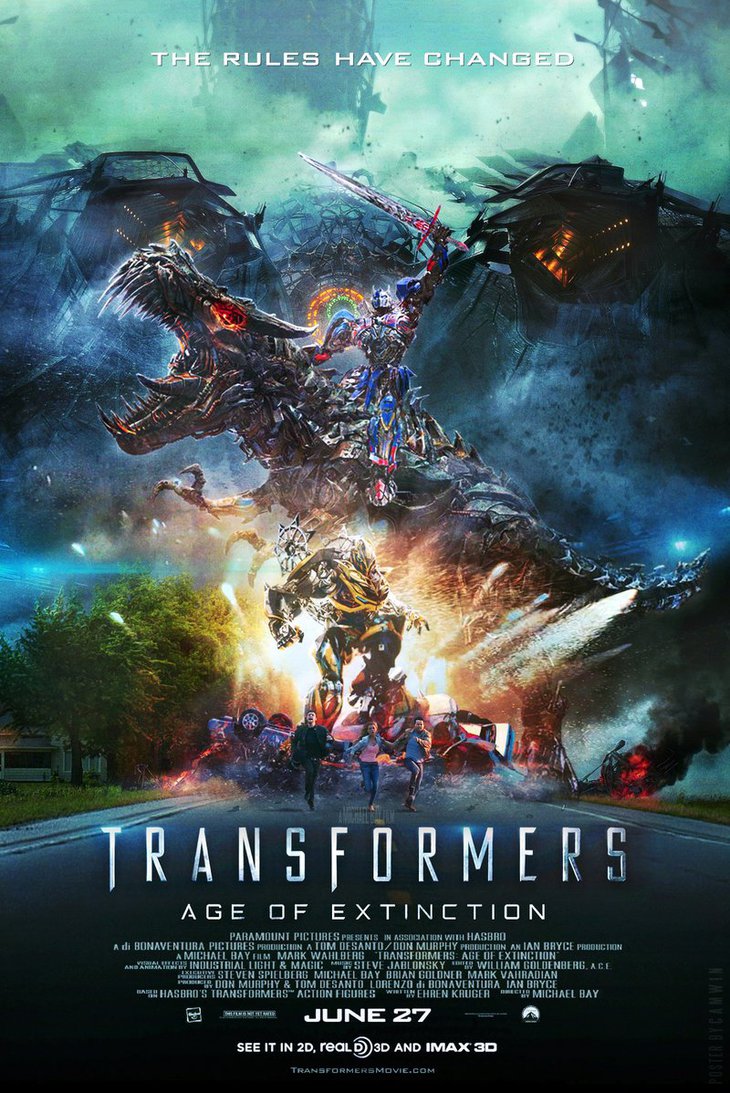 Four movies in, at this point you can either fall back on the old criticisms of Michael Bay as a filmmaker or simply let down your guard and look for any simple pleasures offered by the Transformers franchise, a series mostly known for chaotic plotting and action. Age of Extinction is probably the best Transformers film since the first one (take that for what you will) but it still has all the hallmarks of the obtuse and convoluted plotting, absurd and obnoxious characters, juvenile humor, intense product placement, and often incoherent action. Gone are the characters from the first three films and in their stead is Mark Wahlberg (upgrade) as a Texan inventor named, get this, Cade Yeager. He and his teen daughter come into contact with Optimus Prime and are on the run from multiple forces. Apparently a bounty hunter is looking to target Prime. The U.S. has a black ops team tracking down Transformers in hiding. And Stanley Tucci plays a business tycoon who wants to make his own Transformers via their magic substance “Transformium.” Reading all of that, you realize the pieces still don’t really make sense, and that’s before the robot dinosaurs come into play. And yet Bay and his team have fine-tuned the entertaining aspects of the franchise and better consolidated them in the fourth film. A badass alien bounty hunter/collector is a great addition, adding the government as an adversary, Titus Welliver (TV’s Lost) as a cocksure special agent, Tucci as a corporate blowhard, and robot dinosaurs, it all sort of works on its own terms. Again, if you try and logically connect the pieces, it won’t happen. By this point, if you’re not a fan of the series, there’s no real reason to continue watching, but if you’ve found any semblance of enjoyment then there should be enough to keep your attention with the fourth film, robot dinosaurs and all.
Nate’s Grade: C+
Share this:

The Boxtrolls (2014)
 Another delightful film from the creators of ParaNorman, the whimsical Boxtrolls is another stop-motion treasure that plays just as well for children as it does adults. The fanciful world follows the industrious title creatures that have wrongly been demonized as villains. Snatcher (a tremendous Ben Kingsley) has much to gain by stirring up boxtroll fears, and if he captures them all he’ll finally be allowed to join the town’s inner circle of muckity mucks. We follow “Eggs” a boy who has been raised by the boxtrolls since he was a baby and his re-emergence with the world above ground, notably with the help of a morbid little girl, Winnie (Elle Fanning). The world building is confident and well developed, the storyline finds nuanced ways to be touching and deliver serious messages about peer pressure, assimilation, and the ways which we judge ourselves and whether those are even of merit. But the main draw is the glorious animation, so fluid, so lively, and a landscape that makes full use of color and light and shadow. It’s an immersive experience that your eyes don’t want to blink for fear of missing something. The plot is droll and expertly sequenced with its variety of character and comic asides. The vocal cast does a terrific job, notably Kingsley and a hilarious Tracy Morgan. The film can get a little spooky for young children but should still be comfortable viewing. The Boxtrolls is further proof that the animation house Laika is operating at near-Pixar peak levels of brilliance and deserve the benefit of the doubt with any future films.
Nate’s Grade: A
Share this:

Foxcatcher (2014)
 Haunting and engaging with great performances, Foxcatcher is a dark drama based upon real events that lead to tragedy with the United Stated Olympic wrestling team. Steve Carell immerses himself in the role of eccentric wealthy scion John du Pont, a man eager to carve out validation for himself. He bankrolls the U.S. team to train at his onsite facilities, notably assisting Mark Schultz (Channing Tatum) who is eager to get out of the shadow of his older brother (Mark Rufallo). This is a bleak drama that goes to some dark avenues but it’s not as applicable as the Cannes raves would have you believe. I was never bored but I did find the movie to be somewhat limited in scope. It’s really the life and times of a rich weirdo with a manufactured world around him thanks to his privilege. Du Pont sees himself as a mentor and a teacher, but really he’s just the guy writing the checks, and when his constructed view of reality is challenged, that’s when things get dangerous. He’s not as psychologically complex as advertised. Director Bennet Miller (Moneyball, Capote) ensures the film is overrun in dread so you anticipate that something very bad will happen, and as a result it can be something of a murky slow burn that isn’t necessarily worth the 130 minutes of wait. Foxcatcher is another example in the 2014 trend of the performances being better than the film itself. It’s an intriguing film with great performances, just don’t expect exceptional commentary.
Nate’s Grade: B
Share this:

American Sniper (2014)
 When killing is a man’s gift, what effect does that have on the man? American Sniper follows the real-life heroics of the most prolific sniper in United States history. With director Clint Eastwood attached and awards buzz building, you’d expect that the film would get at the heart of a complex man who placed himself back into danger by choice. For a biopic on Chris Kyle, the man seems to get lost in the fog of war (movies).
Chris Kyle (Bradley Cooper) enlisted in the military right before 9/11 and served four tours of duty in Iraq. He served as cover for many missions, protecting thousands of soldiers. The troops just felt better knowing that Kyle had their back. Kyle got married and had several kids with his wife (Sienna Miller) but he kept leaping back into the fight, the place he felt he belonged.
 From the opening sequence on, American Sniper is often a gripping suspense piece. The opening moral dilemma sucks you right in. Should Chris shoot the mother and child? Are they a threat or is there just a misunderstanding? Will they change their minds and turn away? Is there time to debate all this with advancing U.S. troops? Eastwood does a great job of drawing out the tension with shot selections and the precise editing. The bulk of the movie hews closer to a conventional action movie, with Chris and his team clearing out Iraqi insurgents. We get to know a bit about the mechanics of sniper warfare. But Kyle gets restless being the guardian angel of death for the ground troops, and he goes down to their level and clears neighborhoods. This causes some conflict with his superiors because Kyle is far more valuable as a sniper. His reputation for killing is also getting him notoriety with his enemies. There is a price on Kyle’s head and skilled snipers are seeking him out for the prize. This is a natural way to build suspense as Kyle keeps returning back into Iraq with multiple tours, every tour increasing his personal danger. It allows for real consequences for the increasing prowess of our super sniper. There’s a sense of collateral damage to every kill, as every dead body creates more enemies and those enemies grow more incensed to take him out. Even if you know how exactly Kyle met his untimely end, there’s still plenty of suspense and well-orchestrated action sequences to please casual fans of the genre and true-life military thrillers.
It does feel like the complex story of Kyle, as well as the Iraq War, are being simplified into action movie fodder. There’s a steady supply of interchangeable supporting players, soldiers and spotters and the like, all of them without much to distinguish them as characters. They’re here to be sacrificed, to watch the splatter of red, and to increase the sense of loss because we know that Chris Kyle will not be taken down so we need other expendables. As expected, Miller gets rather short shrift as Kyle’s wife who gets to alternate between worry and unease. The screenplay by Jason Hall sets up some excellently harrowing suspense sequences but seems better engineered like its establishing video game stages of combat than complex people. As a result, when we lose characters it doesn’t feel like we’ve lost people we care about. It doesn’t have an impact beyond sudden shock, and even that is tempered in time with the sniper angle. You start expecting characters to get popped in mid-sentence.
 Where the film leaves you lacking is at its center with the man who is supposed to be the focal point of American Sniper. At the start we’re told that Kyle is the deadliest sniper in U.S. history and by the end that’s about all we know about the guy. He’s an ace killer. The movie has some top-notch suspense sequences with Kyle killing people. The early scenes with Kyle’s family do the bare minimum to establish a sense of pride in not backing down from a fight. There’s a scene where his girlfriend explains to him and the audience exactly why he’s difficult. It’s pretty transparent exposition but it’s also the last bout of clear characterization you’ll get until the end. There’s a slight nod to the mounting PTSD that is transforming Kyle into a man who feels whole only on the battlefield, but these are notes of characterization that are only cursory. It’s only at the very end does the movie remember to flesh out Kyle as a person rather than as an action hero, and by then there’s only enough time to hint at elements we’ve seen explored better in other war movies, particularly The Hurt Locker. As an action film, the movie works and works quite ably, but as a biopic on Chris Kyle it forgets what makes him human, instead focusing on his superhuman killing ability.
Cooper (American Hustle) bulked up a considerable amount of muscle to portray Kyle. He fits the part well and has the acting ability to communicate the troubled psychology of a man making sense of his old world after the trauma of war. It’s then a shame that he’s not given more opportunities to use those acting muscles. There is one phone call where Cooper wordlessly finally breaks down, allowing all the scar tissue to finally be seen on his haunted character, but it’s a moment rather than a culmination.
If you go into American Sniper hoping for an elevated thriller with some well-wrought suspense, then you’ll mostly be pleased with the film as a slice of entertainment. As a war commentary or a psychological study of the horrors of war, it comes up lacking, falling back on the action tropes of its genre and neglecting to properly build around its characters. The action is often biting, and a late sequence involving an oncoming sandstorm is an intense climax. However, it’s also emblematic of the shortfalls of the film. While it’s a sequence of action entertainment, it also reduces war into a video game and reminds you that the characters onscreen are not so much portrayed as people but holders of weapons. Kyle was a complex man who was more than his uncanny ability to kill, but you won’t get more in American Sniper. The nature of his death demands a more insightful exploration of the lasting effects of PTSD and what kind of treatment, or failure of treatment, many servicemen receive once they come home.
Nate’s Grade: C+
Share this:

Unbroken (2014)
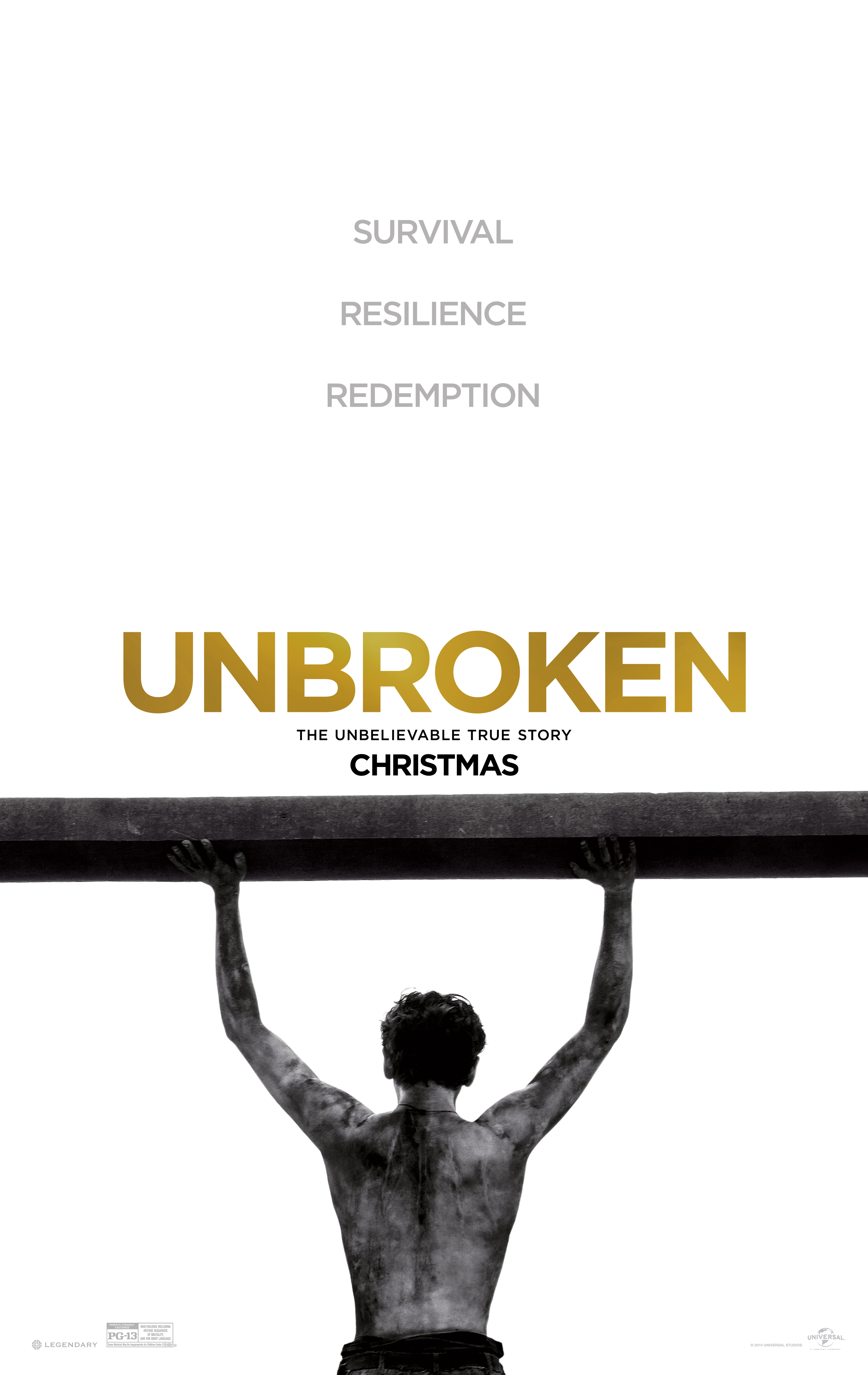 Angelina Jolie is one of the biggest stars on the planet but as a director she’s still a mystery. Jolie was so enamored with Lauren Hillenbrand’s best-selling novel Unbroken that she felt like she was the only person who could translate this story to the big screen. Somehow that passion got lost in translation.
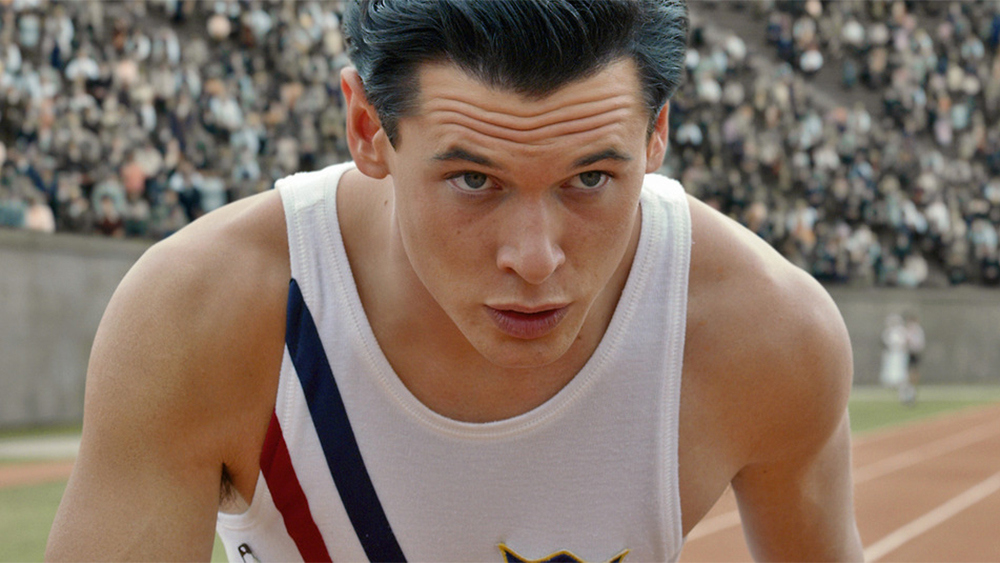
Louis Zamperini (Jack O’Connell) is a man who ran for his country in the Olympics. He fought on a bomber plane over the Pacific. He was shot down and survived in a raft for over 40 days at sea. He was taken to a Japanese P.O.W. camp and endured harsh and cruel treatment, and he still persevered and returned home a hero.
It’s hard not to feel a general calculation about the entire film. I’m not trying to say that Jolie or her crew had any sort of nefarious ulterior motives, but the entire product seems like it was made in an Oscar Bait factory. This is the kind of movie that the Academy typically salivates for, and it’s based on a true story, and it’s set during World War II! There’s a reason that, sight unseen, Unbroken was often at the top of the prediction lists for Oscar pundits. It is those same Oscar-friendly elements, though, that act as a detriment to the story, because the thematic elements stand in for the story and sense of commentary. The movie is so caught up with Louis’ dilemma that it forgets that it needs to make you care about him as a person rather than a martyr. The biggest hindrance for Unbroken is just how little it develops its protagonist. The only emotion he seems to exhibit in the two-plus hours is suffering. The guy ends up being a human punching bag with the movie clobbering the audience with the same message again and again as well, the will to survive. Unlike other war stories or concentration camp survival tales, Louis doesn’t survive through any great networking of allies, skill, scheming, or prescient decision-making. We do not see him adapt and outsmart his adversaries. He merely outlasts them as he wastes away. Like what I wrote in my review of last year’s Best Picture winner 12 Years a Slave, I need more characterization than suffering. It’s a frustrating experience because you know there has to be more to this character.
 The danger with any film that purports to tell a true story of a hero is making sure the audience doesn’t lose sense of the person beneath the hero. We glorify their positive qualities and what we admire but when placed upon a pedestal, our heroes can start to become otherworldly, separate from the rest of us mortals. A biography that idealizes its subject is called a hagiography, and that is where Unbroken falls. Louis Zamperini is lost in this story, instead replaced with Louis the Survivor or, occasionally, Louis the Runner. Amidst the swelling music, the pretty cinematography, and the supporting characters channeling the audience with their encouraging mutterings of, “Come on,” and the like, Louis is painted more saint than man, which is a shame. Considering all of the peril he survived, it would make sense for him to struggle with his own doubts and fears. The most we get a sense of him and his internal struggle is when he prays aloud to God during a thunderstorm at sea and Louis promises to serve Him somehow if he survives. The movie forgets about this moment until the end credits text. If Louis Zamperini is going to be the focal point for a true story of heroism, then the movie needs to do better to make him human rather than resorting to having him only bleed.
The entire first act flashbacks could likely have been jettisoned. Watching Louis as a young man learn to run and then eventually compete in Berlin’s Olympics (way to take all of his luster away, Jesse Owens), we expect these moments to have relevance again, pointing toward some kind of grit or training regiment or lesson learned that will become useful or comforting solace during his internment. It all boils down to one skill, endurance, and that’s all we keep coming back to. We don’t need to see the Olympics or his younger life to establish as back-story in the P.O.W. camp, just as we didn’t get back-story for the prisoner who was revealed in the moment to be a concert musician. The flashbacks do little to flesh out Louis as a character. He was a troubled son of immigrants and found popularity and purpose with running, which he did to the Olympics, and then… the war. Too bad running doesn’t really come into play during his torment in Japan. I understand that we’re working with a true story but what has been added by including 20-30 minutes of flashbacks, particularly when they fail to illuminate our main character? Skipping right to the war, with perhaps a smattering of brief memories during physically and mentally fraught times, would have been preferable and more useful.
The other aspect that makes Unbroken frustrating is the potential it does flash in sparse moments. For the majority of its running time, the film is a perfectly decent war drama with an extra glossy sheen to it provided by expert cinematographer Roger Deakens (Skyfall). When adrift at sea, there’s an inherently interesting survival story there. Louis and his comrades are still in an active war zone. In one scene, a plane approaches and the guys realize late it’s no rescue but a Japanese fighter plane. They leap into the ocean as the plane fires bullets after them. This scene is made all the worse by the fact that sharks are swimming below. There’s an extra kick of dread worrying what will happen next if anyone gets wounded or killed by that gunfire. It’s a great sequence, but then it’s over and the film goes back to autopilot glorifying the resolute nature of Louis. Likewise the opening with Louis crawling along and having to manually close the bomber plane’s doors during a dogfight is great. Unbroken does get a lift when it introduces its main antagonist, Watanabe (played by rock star Takamasa Ishihara), nicknamed “The Bird.” The film now has a sense of direction and a renewed sense of danger with “The Bird” eager to break down his Olympic prize runner. The story feels more personal and interesting and it feels like this fresh antagonism will allow us to develop Louis more as a character. Sadly, he remains the same film martyr.
 This is Jolie’s second film as a director and she’s revealing some pretty old-fashioned tastes and instincts. Actors are judged at a somewhat harsher standard when they turn to directing, but the audience must simply ask if this person elevated the performances of their actors and whether they found an incisive and insightful way of telling a story. The jury’s still out on Jolie as a directing talent. The direction is more than adequate and quite fine, especially aided by having a team of gifted technicians. If you had taken Jolie’s name off the film I wouldn’t be any more or less effusive. Perhaps a more experienced director would have insisted on fixing the screenplay’s development, but then again, perhaps that director wasn’t going to get the gig of a major Oscar bait film for a studio.
I’ve spent the majority of this review criticizing Unbroken and may have given the impression that it’s a bad movie. It isn’t. It is a perfectly fine film by all accounts and a movie that will likely find a welcoming audience this holiday season. It’s got emotions and survival and danger and all set to a rousing score. It looks the part of an Oscar contender and that will be enough for many ticket-buyers. Unbroken is a perfectly good-looking tale of survival that unravels upon reflection. The necessary work of building up strong, complex, interesting characters takes a backseat to setting up a series of punishing obstacles for our protagonist. It’s like the filmmakers wanted to make an inspirational tale but didn’t want to complicate that with ambiguity and nuance and doubts. Louis is canonized in the movie’s flattering glow, and his suffering is shrugged off as “character-building.” Cogent or potent commentary on war, man’s capability for evil and good, or the nature of forgiveness, are absent, which means the film can only go as far as the immediate impact of its plot beats. Supposedly the whole movie was about forgiveness but I got no sense of that until the end credits. Unbroken is a by-the-book rendition on how to make a movie that looks good and about Important Things. It just lacks the deft storytelling, characterization, and subtext to make it important on its own.
Nate’s Grade: B-
Share this:

Into the Woods (2014)
 Theater fans, take this review with a Broadway-sized grain of salt because I’m going to admit I’ve never seen Into the Woods prior to its film release. I consider myself a Stephen Sondheim fan, especially with Sweeney Todd. Now with all that established, I found Into the Woods to be a thoroughly uninvolving and middling musical without any memorable tunes and a series of annoying characters that just kept running in comic redundancies. Perhaps it’s my own ignorance to the original 1987 theater production, considering subversive and edgy and not the most natural fit for the Disney brand. Perhaps I’m just not hip enough to Sondheim’s academic use of melody. Or perhaps others out there will share my opinion that Into the Woods is a tuneless bore.
In a fantasy kingdom, a Baker (James Corden) and his wife (Emily Blunt) are trying to conceive a child but having difficulty. A witch (Meryl Streep) reveals that the only way to undo the infertility curse is to gather a series of magical items. The baker ventures into the aforementioned woods, desperate to find these items, often running into the likes of other fairy tale icons like Red Riding Hood (Lilla Crawford), Cinderella (Anna Kendrick), Prince Charming (Chris Pine), the Big Bad Wolf (Johnny Depp), Jack (Daniel Huttlestone) and his beanstalk, and the entrapped Rapunzel (Mackenzie Mauzy).
 It must have been more relevant back in 1987, but today we are awash in the darker side of fairy tales. Analyzing the implications of “happily ever after” in a more adult and pessimistic way is nothing new. We’re saturated with TV shows and movies that have explored these issues before, revealing the darker truths to some of our favorite fairy tale characters, so it’s hard for a Woods novice to approach the show without a sense of ”been there, done that.” It’s unfair for Sondheim but that’s the reality that greets an adaptation of a musical that’s almost thirty years old. Because of this context, the insights and subversions with the fairy tale characters never feel somewhat pat. The fact that Little Red Riding Hood might be featuring a sexual awakening related to the dangerous Big Bad Wolf is the only striking one that adds dimension to her character. Other “twists” given to the characters are either predictable or just underwhelming. Oh, Prince Charming isn’t so nice and marrying into royalty isn’t the fantasy it’s made out to be? Then there are character betrayals that come out of nowhere, without any proper setup, that feel like the musical is just flailing around in transparent shock value. Just because someone suddenly does something out of character does not mean it was a good plot choice. The guilty party even sings, “I’m in the wrong story,” admitting the identity crises. I wouldn’t have a problem with these wrinkles if they felt better setup or there was more commentary attached. Instead, as delivered in the film, it feels rushed and unearned.
Music is inherently subjective (then again so is film, I mean…), so I’m sure others will vociferously disagree with my stance that Into the Woods is mediocre. True to Sondheim’s works, he establishes character-based melodies that fold and cascade atop one another, weaving in and out. The problem is when none of those melodies captures your attention. These are not humable tunes. To my ears, the songs just collided into one another forming one long string of tonal mélange. The singing is more than adequate by the performers (though Pine’s crooning is a bit subpar) but the songs just flatline. I just took a break from writing and listened through Amazon.com’s soundtrack for the show, sampling every song one again, and they all just blend together. There isn’t one song that burrows its way inside your brain, taking residence beyond the immediate. Then again, if you’re one of the fans of the show who loves these songs then having a fresh coat of Hollywood production will make them sound even better for you, especially with Corden and Blunt and Streep as the top performers.
Another hindrance for me was that I found many of these characters to be insufferably annoying. I found Red Riding Hood and Jack to be irksome and thieves, and so I didn’t feel much sympathy when Jack’s breaking and entering and giant manslaughter lead to dire consequences in the last act. Does not the lady giant deserve her vengeance? Her home was broken into, pilfered for its valuables, a small portion of which would have been sufficient but Jack cannot help his felonious ways, and then the boy killed her husband in a hasty escape attempt. If anything, I would have preferred the lady giant picking her teeth with the plucky lad. I also wanted Little Red to remain in the belly of the wolf (spoiler alert?). Cinderella lost my interest with her wishy-washy behavior. I believe it’s meant to be funny that she keeps returning and running off for three days in a row of princely balls. Another way of looking at that behavior is frustration. The only characters I actively cared about were the Baker and his wife, and the calamitous plotting of the musical’s second half tested even those allegiances.
 The story gets to be rather redundant as well once the main characters are established and their plight is set in motion. I suppose I can now understand why Into the Woods is one of the most popular stage productions to perform at high schools and colleges: the scarcity of scene changes. Much like other aspects of the film, the setting just blends together and becomes tiresome. My pal Eric Muller remarked, “It’s called Into the Woods and not Into Multiple Sets.” I got sick of the woods. The plotting requires the various characters to keep running into one another again and again. It’s amusing at first but once it keeps going, and going, and going, the repetition loses its charm. You start to feel like the show is as lost as the characters and just going in circles to bide its time.
Acting-wise, I cannot fault the big-screen version. Blunt (Edge of Tomorrow) has a great singing voice and has shown great range as an actress in 2014. Streep improves upon her shaky start to musical theater from Mamma Mia. She’s still the great Meryl and seems to be one of the few people having fun. She enlivens every scene she’s in. Pine (Star Trek Into Darkness) is enjoyably self-involved as his caddish prince. Depp (Transcendence) is suitably lascivious though he only has about five minutes on screen. Corden (soon to be the new host of CBS’ Late Late Show in 2015) is the real standout. The man has a self-effacing likeability to him that serves as an anchor for the show. He’s funny and tender but he’s the heart of the story, and the film is at its best with Corden as its center.
If you’re a fan of the original Into the Woods, chances are you’ll likely find enough in this adaptation to enjoy. Director Rob Marshall (Chicago) and his crew re definitely fans and you can feel their appreciation for the source material. However, if this is your first exposure to the Broadway show, then you may too find the characters annoying, the commentary underdeveloped and dated, the songs tuneless and unmemorable, and the plotting to be redundant and tedious. The actors do what they can but it was ultimately a losing cause to my ears. I found the film more exhausting than transporting. I’m at a loss how people can work up such passions for a show that feels so thoroughly blah. I await the Sondheim crowd to tar and feather me as an ignorant heathen, but there you have it. Into the Woods is an underwhelming musical that made me want to turn on the radio.
Nate’s Grade: C
Share this:

The One I Love (2014)
 A simple yet high-concept sci-fi hook that’s nicely examined and developed for its duration, The One I Love is a relationship drama with a twist, one I won’t feel bad about spoiling considering it happens in the first 15 minutes. Mark Duplass and Elizabeth Moss play a married couple going through counseling to work out their trust issues. They head out to a resort home to spend a weekend getaway; however, whenever one of them enters the guesthouse, their spouse is magically there. Not just them but an idealized version of them, the best representation. The two explore what this means, establishing a series of rules of intimacy that of course will start to be ignored. The mystery of why this doppelganger honeymoon suite is happening is inconsequential. What matters is how our couple responds to it and the film thankfully allows this conflict to stew, maximizing its potential to explore the jealousies and insecurities of relationships. Duplass and Moss are terrific and have fun with their many iterations. The One I Love finds ways to continually surprise while still feeling grounded by its real-world application of its science fiction premise. The ending is a tad predictable but still satisfying, likely inspiring many conversations afterwards with would-be couples who watch the film. At its core, it’s an intriguing story that’s very well developed while never losing sight of its characters and their relatable nature. It’s smart, funny, and always interesting, and well worth exploring on your own when given the chance.
Nate’s Grade: B+
Share this:

Big Hero 6 (2014)
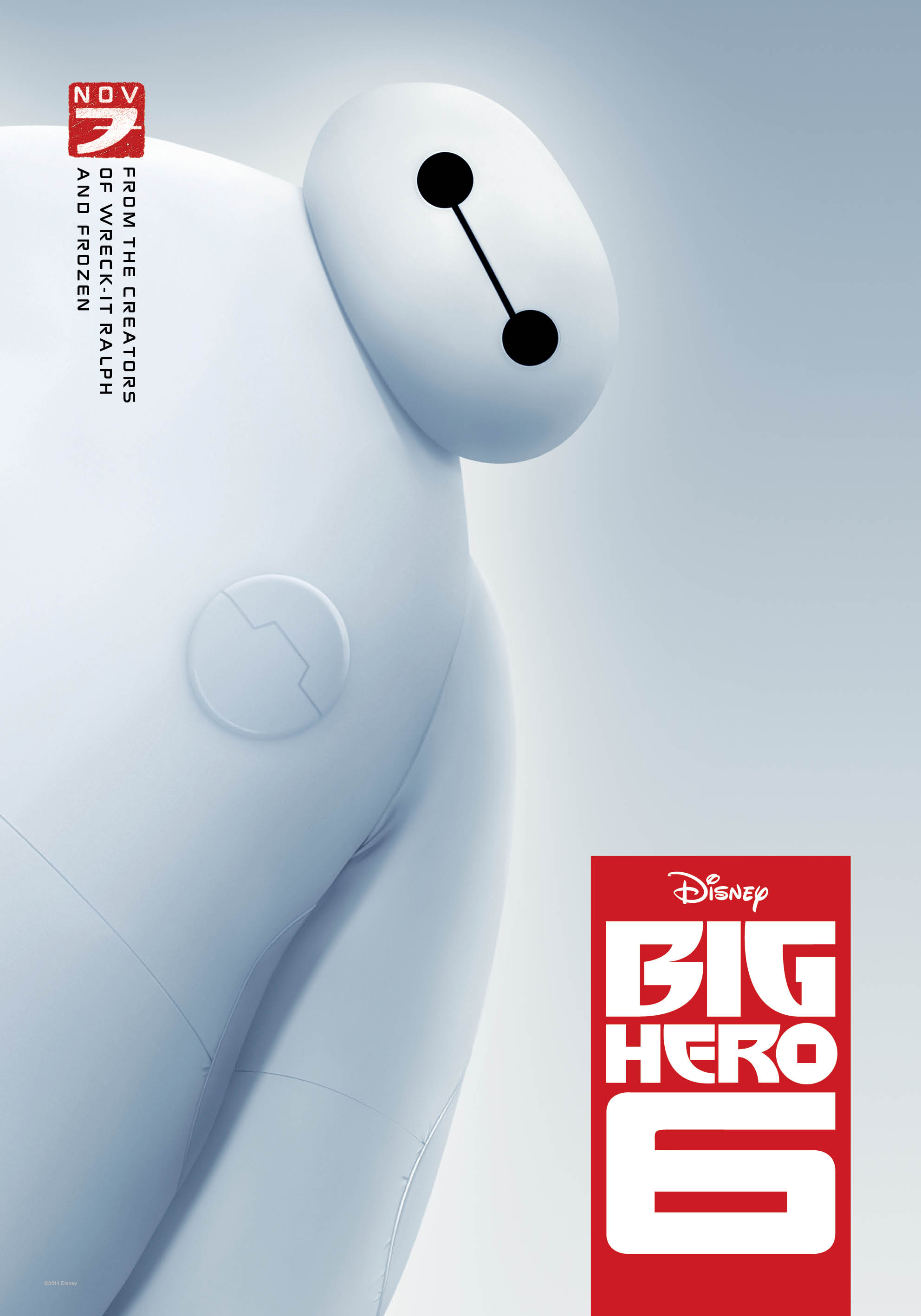 Disney’s first adaptation of a Marvel property, it’s essentially a superhero origin tale mixed in with the “boy and his robot” formula borrowed from The Iron Giant. The story is fairly predictable but charming and unafraid to deal with loss and grief. The real star, though, is the inflatable robot Betamax (voiced by Scott Adsit), whose unfailingly optimistic and helpful nature is a loveable addition to a genre plagued with doom and brooding. The action sequences are colorful and well developed and paced. It’s an agreeable pilot film for a new animated franchise, and the characters are likeable and fun while still having enough emotional resonance to make the hard choices of sacrifice hit you in the gut. It’s a welcome change of pace to have a character interested, first and foremost, in the mental health of others. You just want to hug Betamax (parents, your children will be begging for the toys). The plot does follow many similar plot beats of the superior Iron Giant but this film is still enjoyable enough on its own terms.
Nate’s Grade: B
Share this:

Locke (2014)
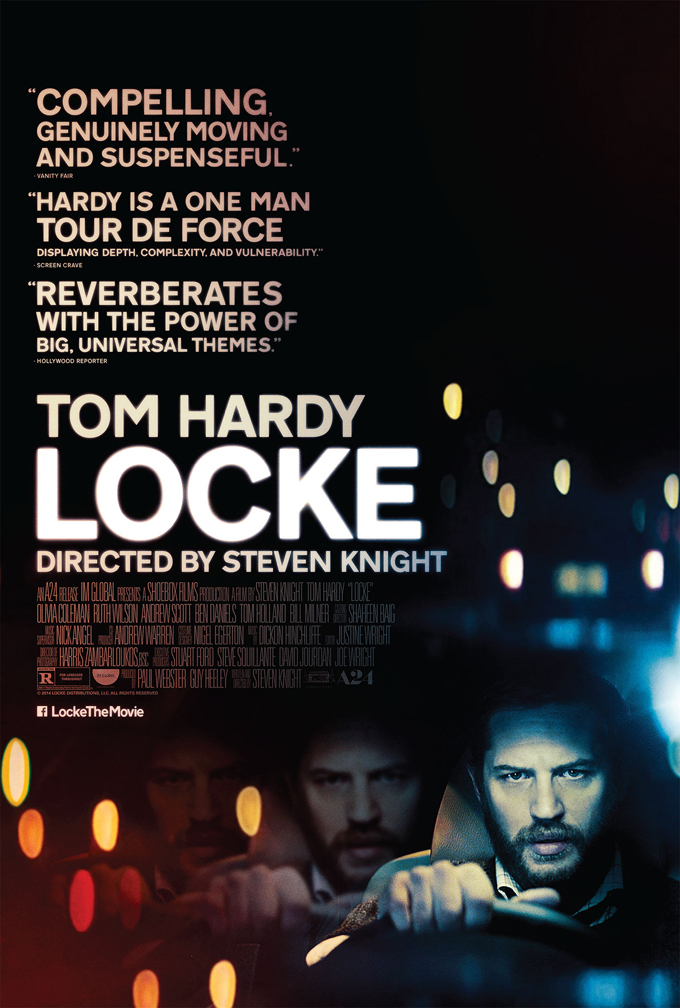 Essentially a one-man show, write/director Steven Knight’s film spends every one of its minutes inside a car with its titular star played by Tom Hardy. Over the course of one real-time late-night drive to London, our driver confronts a series of moral crossroads both personal and professional. It takes a while to get going but once the main conflicts are established, it’s a pleasure watching Hardy try and orchestrate all of them into complacency in the comfort of his car. I kept imagining how someone would translate this into an intimate stage show. The tension builds nicely as Locke has to come to terms with accepting he cannot fix his mistakes. The biggest drawback is that the film abruptly ends without much in the way of a payoff. The whole time Locke is on a mission, berating his invisible absentee father he envisions in his backseat, determined not to make the same mistakes, but then the movie just limps to a finish. It could have used another 10-15 minutes of resolution to feel more complete. Hardy is strong and keeps your attention, often offering glimpses of the complex emotions he’s trying to hide. An intriguing film experiment in minimalism, there are worse ways to spend 85 minutes than inside a car with Tom Hardy. However, there are also better ways.
Nate’s Grade: B
Share this:

The Legend of Hercules (2014)
 It’s as if director Renny Harlin watched Gladiator and said, “Yeah, I can do that, but much worse.” The plot is almost exactly a ripoff of the 2000-Best Picture winner, having the godly Hercules besmirched and thrown into the arena, where he must build a name for himself in gladiatorial combat and work the support of the crowd in order to gain his vengeance against a jealous tyrant with daddy issues. If that wasn’t enough, the visual aesthetic is very much a CGI-heavy melange of 300, with the super stylized slow-mo action standing in the way for plot. A sword-and-sandals epic should not be on the verge of putting you to sleep, but Hercules goes there. Kellan Lutz (Twilight) might have the right build to fill out the character but he’s too limited as an actor to do much beyond the fight choreography. The only reason to see this movie is if you’re trapped on an airplane and it happens to be on. Who would have thought that the flawed Brett Ratner-directed Hercules movie would look even better?
Nate’s Grade: D


 nathanzoebl
You must be logged in to post a comment.