Category Archives: 2004 Movies
Before Sunset (2004)
 Richard Linklater knows a thing or two about the poetry of language. Few can write conversations better than him, and with Before Sunset, the sequel to 1995’s Before Sunrise, we witness an entire film built around one couple’s conversation. Julie Delpy and Ethan Hawke return as older, wiser versions of their Sunrise characters. They stroll around the avenues of Paris chatting away so casually, so beautifully that it’s like birds chirping. Linklater and his actors have forged a romance through a romance of language, and an audience can’t help but be smitten. Before Sunset will not be for everyone because it is as advertised: 80 minutes of people talking uninterrupted (it put a friend of mine to sleep when we watched it), but for those people that enjoy sumptuous conversation, Before Sunset will cast a spell on you.
Nate’s Grade: A
Share this:

I, Robot (2004)
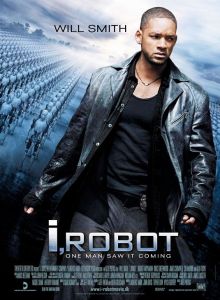 No doubt about it, Will Smith is the best hope our planet has in the face of adversity. He’s taken down aliens three times, foiled one conspiracy, stopped the South from rising again, and the man still finds the time to help Matt Damon with his golf swing. I fear we almost may be taking Smith’s world-saving exploits for granted. Smith’s newest chance to save the world arrives in I, Robot. Can Big Willie save the world yet again, or has he punched his time card one too many times?
In 2035, man has a new class of immigrants to do all the menial tasks no one wants to do – robots that look like crash test dummies. U.S. Robotics (USR) wants to push their new fall line of robots and make sure every happy home has a happy robot. Del Spooner (Will Smith) is a detective wary of our robotic friends. His colleagues laugh at his paranoia, remarking that no robot has ever committed a crime. This is thanks to the three laws hard-wired into every robot: 1) A robot cannot harm a human being, 2) A robot must obey a human beings order as long as it does not conflict with Law #1, and 3) A robot can do whatever to survive as long as this does not conflict with the other laws.
 This sounds great, except the robot creator (James Cromwell, always there if you need an old guy role) has apparently plummeted to his death from his USR office and the circumstances involving his demise are dubious at best. Spooner works alongside a robot technician/shrink (Bridget Moynahan) to find out more about what exactly is going on within USR and its suspicious CEO (the always shady Bruce Greenwood). Spooner discovers that a robot, who wishes to go by the name of Sonny, may have sent his creator to his death and may also be the first step toward uncovering the truth behind a grim conspiracy.
Smith has never really been a great actor but he is likable and charming enough, so that gets him through the day. The problem is that when hes saving the world in summer blockbusters he has a tendency to go into Will Smith Mode, which plays out like hes on auto-pilot. His stares, awkward mannerisms and aw shucks humor seem to be the same in every film. This isn’t to say that Smith cannot be a capable actor, but it seems that when a movies budget goes over a certain amount he resorts to playing Will Smith: World Saver and not so much a character of real value.
The other actors are more so playing vague archetypes than they are anything else. Greenwood is the sneaky, oily executive; Moynahan is the cold scientist learning how to be human once more; the invaluable Chi McBride is the no-nonsense police chief who rolls his eyes at Spooner’s crazy theories; and Shia LeBeof actually shows up for all of three minutes playing some kind of juvenile delinquent that is wholly unnecessary to the film.
The movie’s greatest accomplishment is the character of Sonny, modeled after a physical performance by actor Alan Tudyk. Sonny’s calm line readings, bursts of emotion, and questions on humanity make him a character the audience connects with, especially with the detached nature of Smith and Moynahan’s acting. Bet you never would have guessed this is from the same guy who played Steve the Pirate in Dodgeball.
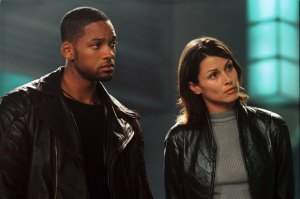 I, Robot isn’t exactly going to establish new ground in the world of science fiction. Its mostly a detective story with some twinges of sci-fi philosophy. As a detective story it adheres to the laws of detective movies, like how NO ONE ever believes the hero on his hypothetical assumptions and paranoia, which will of course always be right, and how the hero can only solve the case after he is thrown off it and gives up his badge. For two thirds of I, Robot we get an amiable, if average, detective story set in the future. Then we get a slightly incoherent final act where robots go all-out crazy.
Director Alex Proyas takes a step back from the grim, noir-ish worlds he worked with so effectively in The Crow and Dark City, and presents a cleaner and more sterilized world. His technical elements, like cinematography and musical score, are still well above par for the summer blockbuster. Proyas is a gifted visual tactician that knows how to wow an audience.
The sleek production design, fancy special effects, and strong visionary directing help lift an average story. Some of the story elements may not all work -like Spooner’s flimsy reason he hates all robots, and Moynahan’s character being very cold because she works around robots (get it? get it?)- but the professionalism of the people behind the scenes help make a rather exciting and occasionally thoughtful movie. Sonny’s questions about life and death as hes near termination are a nice addition to add something more to a summer blockbuster than explosions and car chases. Of course I, Robot also has some exciting car chases and action sequences. Certainly other, better sci-fi movies have dealt with these issues much deeper, and I, Robot seems to only skim the surface of intellectual debate, but at least it’s something (though this sounds really defeatist).
Bearing little resemblance to Asimovs collection of short stories, I, Robot is more a stream-lined sci-fi action flick, but its still a satisfying and stylishly entertaining diversion. Sci-fi fans may grumble at the notion of transforming a complex novel into a watered down action film, but I, Robot is a crowd pleaser that delivers the thrills when it needs to. If Will Smith keeps up this world saving pace he may get a little haggard and start turning into Danny Glover’s Lethal Weapon character: I’m getting too old for this aliens/robots/other aliens/more aliens/giant mechanical spiders shit. Well, at least Smith’s good at it.
Nate’s Grade: B
Share this:

Torque (2004)
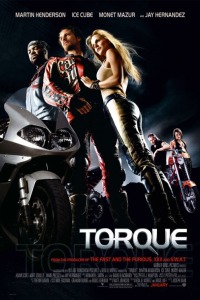 You want to know how bad Torque was? Until I began typing this article, I had completely forgotten I had even seen it. I suppose the film was an attempt to grab the attention and dollars of young, car-obsessed males who made The Fast and the Furious a hit. Somebody should have told that to director Joseph Kahn. A veteran of music videos, Kahn was more interested in making a collage of visually alluring shots than telling a story; not that Torque’s story would have excelled in other hands. This was a fast-forwarded video game populated with bland actors, bright colors and shiny bikes, which mean it’s only suited for moviegoers post-lobotomy.
Nate’s Grade: D+
Share this:

Napoleon Dynamite (2004)
 Napoleon Dynamite was an audience smash at the 2004 Sundance film festival. Fox Searchlight jumped at the chance to distribute a film written and directed by Mormons, starring a Mormon, and set in film-friendly Idaho. MTV Films, the people behind alternating good movies (Better Luck Tomorrow, Election) and atrocious movies (Crossroads, Joe’s Apartment, an upcoming film actually based on Avril Lavigne’s “Sk8r Boi” song), came aboard and basically said, Look, we really like the movie, and we want to help bring it to a wider, MTV-influenced audience. And thus, Napoleon Dynamite seems to have become the summer biggest must-see film for sk8r bois and sk8r grrrls nationwide.
Napoleon Dynamite (John Heder) is an Idaho teen that marches to the beat of his own drum. He lives with his Dune Buggy riding grandmother and 31-year-old brother Kip (Aaron Ruell), who surfs the Web talking to women. When their grandma gets injured, Uncle Rico (John Gries), stuck in the 80s in fashion and mind, takes up shop in the Dynamite home and coerces Kip to hustle money from neighbors. Meanwhile, Napoleon befriends Deb (Tina Majorino), an otherwise normal girl with a sideways ponytail, and Pedro (Efren Ramirez, who was actually in Kazaam!), the new kid at school. Together, they try and get Pedro elected to class president, but standing in their way is the mighty shadow of Summer (Haylie Duff), the most popular girl in school. Oh yeah, there’s also a llama.
 First time director, Jared Hess, and first time cinematographer, Munn Powell, orchestrate shots very statically, with little, simple camera movements and many centered angles. The style is reminiscent of the films of Todd Solondz (Welcome to the Dollhouse), or, more precisely, Wes Anderson. This shooting technique makes the characters stand out even more, almost popping out at you behind flat backgrounds like some Magic Eye picture. Hess easily communicates the tedium of Idaho with his direction. Can anyone name any other film that takes place entirely in Idaho? (Please note that My Own Private Idaho takes place in Portland and Seattle, mostly).
The star of the show is, of course, Heder. His wickedly funny deadpan delivery helps to create a truly memorable character. He achieves a geek Zen and, judging from the incredible amount of kids under-14 that appeared both times I saw this film, is most likely the greatest film realization of a dork. Its grand dork cinema, a genre long ignored after the collapse of the mighty Revenge of the Nerds franchise. So while Napoleon isn’t exactly relatable (llamas, Dune Buggy grannies and all), the right audience will see reflections of themselves. You’ll be quoting from Napoleon all summer.
Napoleon Dynamite is going to be an acquired taste. Its filled to the brim with stone-faced absurdities and doesn’t let up. If you’re not pulled in with the bizarre antics of bizarre characters in the first 10 minutes, then you may as well leave because otherwise it will feel like the film is wearing you down with its indie weirdness. Napoleon Dynamite seems to skirt the sublimely skewed world of Wes Anderson, but Napoleon lacks the deep humanity of Andersons films. What the audience is left with is a sugary, sticky icing but little substance beneath, and, depending on your sweet tooth, it’ll either be overpowering and a colossal disappointment or it’ll taste just right for the occasion. Alright, I’m done with baking analogies for the year.
 Some will find a certain condescension against the characters. Napoleon Dynamite doesn’t outright look down upon its characters, but it does give them enough room to paint themselves fools. Uncle Rico is really the films antagonist, yet hes too buffoonish to be threatening. It’s a fine line for a film to have condescension toward its characters, but Napoleon Dynamite ultimately leaves with a bemused appreciation for its characters. The film presents the good characters as unusual but lovable and ready for growth (Kip, Pedro, and of course Napoleon), but the bad characters (Summer, Uncle Rico) aren’t demonized. In essence, Napoleon Dynamite is the best example of a film that makes an audience laugh at and with its characters simultaneously.
Napoleon Dynamite is assuredly an odd duck. Some will cheer; others will want to head out the door after a few minutes. It’s hard to say which reaction an individual will have. If you have a geek-enriched history populated with unicorns, Dungeons and Dragons, and/or social ostracism, then you may be more inclined to admire Napoleon Dynamite. I laughed out loud throughout the film and found it to be an enjoyable diversion, and I went the whole review without one Jimmy Walker reference.
Nate’s Grade: B
Share this:

Harry Potter and the Prisoner of Azkaban (2004)
 The first two film adaptations were huge hits, but were derided by some as being too loyal to the books that it stifled the creativity. Now, Harry Potter and the Prisoner of Azkaban is out and its the first film to deviate from the books. How will Potter nation take the news?
Harry Potter (Daniel Radcliffe) is entering his third year at Hogwart’s School of Witchcraft and Wizardry. Harry is also getting older, getting angrier, and learning more and more about his parents. Hes on alert that the murderer, Sirius Black (played the fabulous Gary Oldman), has escaped from Azkaban prison and is out to get Harry. Black had a hand in the deaths of Harrys parents, and now it seems hes looking to finish what he started as a follower of Lord Voldemort. Harry relies on his friends, Ron (Rupert Grint), Hermione (Emma Watson), and a kindly new Defense Against the Dark Arts teacher named Lupin (David Thewlis) to conquer his fears, his burgeoning hormones, and to face Black when the time comes.
The best decision the Harry Potter producers made for this chapter of the series was in getting a new director. Alfonso Cuaron finally infuses the Potter series with a sense of visual life. Instead of Chris Columbus’ stubborn admiration of his fake opulent world, Cuaron keeps things fluid with a constantly roving camera and long takes. For the first time in the series, you can argue that this Harry Potter film looks and feels like its own actual movie. Gone is Columbus annoying penchant for displaying everything in close-ups. The film also benefits from some new realistic exteriors and dressed-down attire, ditching the school uniforms. Theres also a new cinematographer, so instead of Columbus dull amber glow, the series takes a gratifying turn toward the menacing, with an emphasis on dreary blacks and silvers.
 The best improvement of all, however, was in getting away from the apparent slavish loyalty to the books. The third book is the longest of the three but the third film is the shortest; 15 minutes shorter than Sorcerer’s Stone, and 25 minutes shorter than Chamber of Secrets. Thank God. At the rate they were going I thought the next book, Goblet of Fire (700-some pages), was going to be like 9 hours.
So, under Cuaron’s guidance, Prisoner of Azkaban eschews the unnecessary plot elements and details fans will grumble over but moviegoers couldnt care less over (Quidditch?). Cuaron’s film may be heavy with exposition, but it never talks down to its audience. The result is a movie trying to be a movie and not trying to cram in as many details of the world as possible so fans wont have their feathers ruffled.
The young actors of Hogwarts have definitely been struck by puberty, and it has done their acting a world of good. Radcliffe will never be an exceptional actor but here he presents new and interesting dimensions to Harry demonstrating his arrogance and tempestuous anger. Tom Felton, who plays the snarky blonde-haired Draco Malfoy, appears to be maturing into a ganglier Macaulay Culkin. The one actor that truly seems to have a bright future, though, is Emma Watson. You cannot help but love her whenever she’s on screen and she seems to be developing into a fine actress.
The most notable addition to the adult staff in the film is Michael Gambon, replacing the late Richard Harris as Hogwarts headmaster, Dumbledore. Gambon turns the character from a kind-hearted grandfather type to more of an aging hippie but it works. Emma Thomson also appears as some sort of psychic professor, teaching students to read tea leaves; however, her entire role seems superfluous unless it impacts future installments (I have not read a single book). Once again, Alan Rickman rules all and needs to get more time in these movies. I don’t know how, but it needs to happen. Thewlis is the most welcomed addition in his pivotal role as Professor Lupin and delivers some of the more dramatic scenes of the film with radiance and ease. He creates a lovely father-son relationship with Harry that supplies Azkaban with a nice sense of compassion. Oldman is similarly great but unfortunately he shows up so late into the film that he seems terribly underused. There is a scene late into the film, where Thewlis, Oldman, Rickman, and the great character actor Timothy Spall share a scene. I never thought it would be a children’s fantasy series that would finally unite all these talented British stage actors but I’m thankful for it nonetheless.
 Prisoner of Azkaban is the darkest tale yet, and Harry Potter works best when things get scary. The nightmarish element design creates a wonderful sense of dread, and Cuaron deftly handles his young characters dealing with rage and death and, scariest of all, budding hormones. Theres even a sly nod to Cuaron’s steamy coming-of-age film, Y Tu Mama Tambien (it involves a three-way hug between our trio of kids).
he effects of the film are beautiful and greatly add to the entertainment value of the film. The Dementors, cloaked flying guards of Azkaban prison, are terrifying to look at, and their leitmotif of chilling the air when they are near makes for some great visuals and ominous moments. I got actual goosebumps the first time they arrived on-screen, and then when I saw this film a second time, fully knowing the story, my skin still crawled when they arrived. Perhaps the greatest addition to Harry Potter‘s special effects bestiary is the Hippogriff, which resembles a combination between an eagle and a horse. It is a gorgeous creation and worlds better looking than the three-headed dog from the original film. It also provides one of the more breath-taking moments of the film, when Harry goes soaring across a lake on the back of the Hippogriff.
Having said all this, yes Prisoner of Azkaban is the most exciting and visually alluring film of the series, also its darkest, but I couldn’t help feeling disappointed with the central storyline. Most people will love it, especially fans of the books, but after walking out of the theater I could not help but wonder if the film had a climax at all? It really kind of didn’t. There was no sense of real story momentum and the middle had some definite moments of drag. The last act of Prisoner of Azkaban is exactly like Back to the Future Part 2: time-travel, correcting the future, not running into your past selves. This is not a good comparison. So while the characters are getting more interesting as they get older, this plot doesn’t really hold up very well. It almost feels like a preface of whatever events will come in the fourth film.
Prisoner of Azkaban is an interesting watch. I am told it deviates the most from the book and it manages to generate a considerably darker and scarier atmosphere than its predecessors. For my money, any changes are good, as films are about ADAPTATION and not copying, so dispensing with subplots and details is A-Ok with me. But how will the die-hards react? Im sure youll hear plenty of grumbling all over, but Cuaron has injected needed life into this series and presented an idea of what it can grow to be. So, while I think Prisoner of Azkaban has a superior visual sense, pacing, and adaptation; I also feel the story may be the weakest we have been told. I can only imagine what the outcry will be among the fan base when Goblet of Fire is released November 2005 as one film.
Nate’s Grade: B+
Share this:

The Day After Tomorrow (2004)
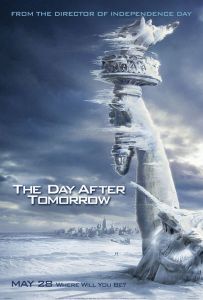 I must confess a giant moment of geekery: for a month or so I waited patiently until the Wednesday before the new disaster opus The Day After Tomorrow opened so I could finally say, The Day After Tomorrow opens … the day after tomorrow. Im surprised the marketing department didn’t beat me to that punch.
Jack Hall (Dennis Quaid) is an environmental scientist concerned about global warming trends and the chaos they could cause. He tries to alert government officials to these dangers but is met with a cold shoulder. Jacks son, Sam (Jake Gyllenhaal), is traveling to New York for a school quiz tournament on the slightly less grave mission of earning the affections of one of his classmates. Somewhere between the establishment of these two stories, all hell breaks loose. Jack and another researcher (Ian Holm) share data and discover that the world is headed toward a gigantic climate shift, a new Ice Age. While the world is crumbling, Jack is determined to reunite with his son, trapped in New York.
The special effects of The Day After Tomorrow are indeed awe-inspiring, but once they finish the viewer is left with a story that is, shall we say, overcast. Unlike director Roland Emmerichs other disaster films with aliens or giant lizards, a cataclysmic climate shift is not a beatable foe, so the story is left without resolution. It’s kind of hard to vilify the weather.
 What do you do once the world starts another Ice Age? Not much besides keeping your butt from freezing off. So this means that the crux of the after scenes revolve around Jack trying to reunite with his son. Jack tells his son to hole up where he is and, cue heroic music, he will come find him. Sure. Does anyone stop and question, Why? I know why Jack treks, on foot no less, from Philadelphia to New York, but it isn’t even necessary. His son and their friends are fine where they are and the only severe threat they face is when the giant frosty eye of the storm looms overhead. Quaid’s character has no opportunity to assist them during even that scene. Im sure someone thought it would be a touching display of a fathers love for his son, but its really just winds up looking foolish. He tells his son not to move, then disobeys his own advice to venture out. Nothing of significance happens because of Jack’s journey. He might as well have stayed home and read a book.
The acting of any disaster flick is really confined to yelling and … panting, I suppose (which could also accurately describe the acting prowess of the late night programming of Showtime). Quaid is a sturdy hero but seems to look ten years older than normal. Gyllenhaal is one of my favorite young actors (I adore Donnie Darko) and, to his credit, he does a suitable job of running around and yelling.
Perhaps the funniest thing in The Day After Tomorrow is a Vice President who refuses to listen to environmental concerns that looks a heck of a lot like our current VP, Dick Cheney. The timeliness also extends to a somewhat witless president who, when faced with a crucial decision, turns to his VP and asks, What do you think?
The necessary scenes of planetary and civilization destruction are first-rate in the film. Emmerich is our premiere master of laying waste to the world, particularly New York City. Emmerich keeps our view of the carnage mostly restrained to long shots where we can witness the full magnitude of devastation he is trying to put forth.
 The weather effects are top notch, especially a series of tornadoes that devastates downtown Los Angeles. There are some beautiful visual moments, like seeing thousands of birds migrating from impending doom, or a final image from above of the iced Statue of Liberty. Tomorrow also has a clever moment late in the film when the frost storm hovers over New York and forces characters to outrun advancing … frost. Its not as stupid as it sounds. And, as per usual in disaster flicks, Mother Nature always knows where to strike – landmarks. How else does one explain the precision of taking out the Hollywood sign?
For a good hour, The Day After Tomorrow is great escapist entertainment. The scenes of destruction are riveting, and the moments leading up to them have great suspenseful pacing. The film’s climax is its half-way point, which is never a good sign. After all the floods, rain, snow, twisters, and everything Mother Nature has in her arsenal, we are left with characters scrambling around running from … wolves. Going from tidal waves to wolves is not exactly an increase in suspense.
There is a hilariously awful moment in the film involving Sam’s wife, played by Sela Ward. Sela is a nurse at a hospital watching over a child with cancer. She refuses to leave him alone and waits for an ambulance to arrive, because, for some reason, the cancer kid can only be transported by ambulance. It’s just distasteful and dumb that this storyline even exists: brave woman determined to stay by the side of cancer child.
The Day After Tomorrow is an exciting diversion that doesn’t know what to do with itself after all the big money shots are spent. Its like a balloon once the air is all out. Perhaps the creators should have consulted any prior warning about stranding an audience in a story that no one cares much about. It’s worth seeing, but it’s also worth leaving after Mother Nature unloads her goods.
Nate’s Grade: C+
Share this:

Van Helsing (2004)
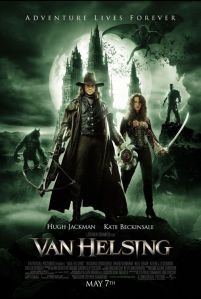 Crossover movies have a distasteful history in the world of cinema. Some movie exec gets the notion, “Hey, why can’t two great tastes taste great together?” But what we’re left with is usually uninspired (The Flintstones Meet the Jetsons notwithstanding). Crossovers for horror movies are the worst of the lot. For every Freddy vs. Jason there’s a dud, like 1966’s Jesse James meets Frankenstein’s Daughter. That year went down in the annals of cinematic history, however, as it also gave us Billy the Kid versus Dracula, marking two entries in the expanding genre of cowboys battling famous monsters (as far as I know, this genre still stands at two movies). So what can one expect from Van Helsing, a big-budget creature feature that includes Dracula, Frankenstein and the Wolfman?
Van Helsing (Hugh Jackman and a really big hat) is a secret soldier for a covert order of the Vatican. This covert order dispatches monsters and creepy-crawlies the world over. He’s been ordered to assist Anna Valerious (Kate Beckinsale), the last in a Romanian family line that has sought to kill the infamous Dracula (Richard Roxburgh). It seems that their family line is dwindling. And Anna’s brother being turned into a werewolf doesn’t help the situation. If her family line dies before Dracula then they cannot enter heaven. Van Helsing comes to town to help out the locals who are terrorized by Dracula’s flying brides. Van Helsing effectively kills one of the vamp ladies and is celebrated as a hero by the village. As he gets closer to Anna he also learns more about his own mysterious past and his connection to a certain figure with big teeth.
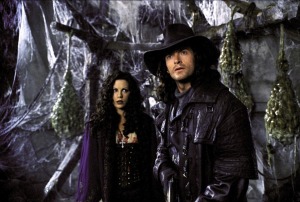 The Big D has a dastardly plan. He wants to find Frankenstein’s monster (Shuler Hensley) to channel enough power through him to awaken zillions of goo-sacks harboring the vamp’s undead brood. Of course, Frankenstein’s monster isn’t too keen on this. Together, he and Van Helsing, with the help of Anna as well as a comic relief monk, battle to stop Dracula from unleashing his children of the night.
Van Helsing is stupid, stupid, stupid. Director Stephen Sommers exists in his own indulgent world where bigger is better and some CGI spackle will fix any plot holes. He makes check-your-brain-at-the-door popcorn movies, but a “popcorn movie” is no excuse to forgive a rambling, incoherent, loud, stupid mess. I liked the first Mummy flick and even found some good with the second, but Van Helsing is Sommers at his rock-bottom worst, gorging on a trough of special effects and vomiting the results onto the big screen. Sommers’ idea of character development is knocking people through walls like they were in a Looney Tunes cartoon.
Van Helsing raises some interesting questions, like why do Dracula’s brides morph into flying demons that are conveniently genitalia-free? Why does a werewolf rolling over the top of a carriage somehow cause it to catch on fire? Why does Dracula keep his magic lycanthropy cure in the open? It doesn’t matter. Van Helsing is so straight-laced about its absurdities that questioning them will just get tiresome.
Not that you would expect much, but the acting in Van Helsing is bad. Beckinsale’s accent couldn’t be less convincing if her role were played by Charo. The trio of Dracula’s brides are played by swimsuit models and let me just say their performance is on par with what you would expect from swimsuit models. Roxburgh is quite possibly the worst vampire in the modern history of vampires, and that includes Blacula, Count Chocula and Tom Cruise. He couldn’t look any less sinister if he was in a diaper and bonnet. What’s up with those strands of hair that dangle in his face? Why do the Van Helsing creators want their Prince of Evil and son of Satan to look like he was the keyboardist for some 80s pop synth band?
 This overly long film feels like a seven-year-old’s book report that he hasn’t read: it’s like a child is making this up as they go. “And then … a werewolf pops up … and then Dracula’s flying brides … and then they all need Frankenstein’s monster ….” Seriously, were the penning this script on the fly? It’s a $150 million improv film. The reels of the film could be switched around and no one would be able to tell the difference. Van Helsing is one long, exasperated action sequence that drags its heels instead of wowing. It beats the audience into submission with its stupidity and redundancy.
The entertainment level of Van Helsing is exceedingly weak. It runs an eternity, which wouldn’t be a problem if one were intrigued by the story, the characters, or the action sequences. The action could have been suitable but Sommers has gotten less reliant on the physical and more superfluous with his CGI. Watching a CGI monstrosity smash into a CGI monstrosity before a CGI background where no semblance of reality is present grows tiresome after 130 minutes. The effects are passable, but they overload the viewer and numb whatever slight interest may have existed for the classic monsters.
What should have been a clever homage turns instead into a hollow marketing ploy that’s so frenetic and tireless with its manic pacing and bad special effects. Even the many attempts at humor are flat. It has to be some kind of apocalyptic sign that Hellboy and now Van Helsing have been unleashed unto the innocents of this world. Some will find Van Helsing decent popcorn entertainment, but most will grow weary of its sloppy design and wafer-thin substance. For me, this is one to avoid, period. There isn’t an ounce of fun to be had while sitting through the painful pair of hours that is Van Helsing. This is one monster mash that’s a real monster mess.
Nate’s Grade: D
Share this:

Super Size Me (2004)
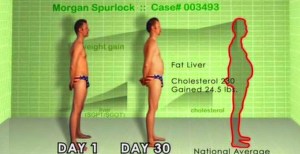
 Morgan Spurlock was just sitting on the couch one Thanksgiving. He saw two overweight girls on TV who were suing McDonalds because they blamed the fast food giant for making them obese. Spurlock got off the couch and was inspired. He set off to see what would happen to a healthy adult body if he ate nothing but [i]McDonalds[/i] food for a 30 day period. The results are Spurlock’s award winning documentary, Super Size Me. Spurlock monitors his progress with a team of doctors. He follows certain guidelines as he begins his fast food binge: 1) He must order everything off the menu at least once; 2) He must eat McDonalds three times a day; 3) If someone asks him if he wishes to Super Size his order, he must comply.
The results are staggering, if a tad expected. Spurlock gains 30 pounds, loses his sex drive, experiences what he fears are chest palpitations, and develops symptoms of depression when hes not stuffing his face with French fries and the like. Spurlock starts out wide-eyed and giddy at the prospect of living every kids dream at first he is awed by the food but by the halfway point hes noticing a discernible change for the worse. Hes starting to develop an actual dependency on his subject. Along the way Spurlock interviews an assortment of dieticians, a man who’s eaten 20,000 Big Macs, doctors, health trainers, lobbyists for food corporations, Jared from Subway, and tries ever so hard to garner an interview with a McDonalds spokesperson (he calls about 17 times). The result is a sprawling look at what makes our fat nation tick, and the weird, wonderful, and scary people within.
 Spurlock puts a lot of gut-churning effort into stating the obvious. You mean eating nothing but McDonalds is bad for you? Stop the presses! Perhaps for his follow-up, Spurlock will unleash a searing expose telling us not to look directly into the sun, stick our tongues to icy poles, or place our hands on a hot stove. The world waits. Even though Spurlock’s McDonalds diet gimmick grows somewhat boring (watching someone eat is about as exciting as watching someone brush their teeth), Super Size Me’s true strength lies in the tangents it takes on its otherwise high-fattening journey to artery corrosion.
Spurlock examines what it is in our culture that makes us more prone to obesity, and the results are equal parts startling and fascinating. The films best moments occur when Spurlock looks at the national school lunch programs and how kids are already being molded to live unhealthy lifestyles. At the same time in our nations history, food programs are getting less healthy (pizza, fries, soda) and mandatory gym programs are on a steep decline. The effects of this segment are far scarier than watching a grown man balloon in weight.
The film follows the Michael Moore (Fahrenheit 9/11) style of documentary, minus the distasteful half-truths. Spurlock knows that humor is the best way to get a point across, so with the use of clever animation he throws every statistic you can imagine out there, hoping that some will stick. Some are obvious, some are amusing, and some of the information is startling when visually represented, like the amounts of sugar and fat Spurlock consumed on his 30-day diet. Super Size Mes results retain Moores signature underdog-fighting-the-Big-Boys method that creates a rapport with the audience, but it also refrains from any sort of bullying. Spurlock doesn’t have the broad charm of a Moore, but hes likeable enough and keeps his information as the heart of his documentary and not the fairly silly gimmick.
 With this new genre of Gimmick Documentaries, there is a greater sense of voyeurism than in the genres usual outpourings. The central concept is watching a man essentially destroy himself, and there is a perverse pleasure in viewing medical changes that scare the crap out of Spurlock’s teams of dumbfounded doctors. So while Spurlock’s odyssey may not always be stupefying, it usually is genuinely entertaining in some form or another.
Spurlock’s excess is our revelry. Hes crafted an intelligent, entertaining, and sometimes grotesquely disturbing portrayal of our Fast Food Nation (I live in the sixth fattest U.S. city, Columbus Ohio, by the way). Fans of muckraking documentaries should be delighted, but Super Size Me has the appeal to reach out to a wider, more divergent audience. Spurlock’s film, despite some inherent flaws, is a strong wake-up call. Super Size Me is a lucid debate about personal responsibility, the boundaries of corporations, and the possible future health of the fattest nation on earth (eat your heart out Norway).
In the end though, it looks like Spurlock is having the last laugh. His film was a hit at the 2004 Sundance film festival, and shortly after McDonalds announced they were officially phasing out Super Size portions from their menu. They denied Spurlock’s film was the cause of their Super Size Slashing, but it doesnt take a genius to see through the corporate rhetoric.
I confess that Super Size Me really got to me and motivated me to live healthier. I was determined to exercise more regularly and eat less junk food. I was empowered. And then I saw a McDonalds on the way back from the theater and, well, the #1 plan, Exercise More Thoroughly, was scratched in favor of a #2 Value Meal (the double cheeseburger one). Carry on Spurlock; carry on my Fu Manchu-ed son. Your documentary is entertaining and, at points, fascinating, but I’ll get on that treadmill next week.
Nate’s Grade: B+
Share this:

Spider-Man 2 (2004)
 No other movie had higher expectations than Spider-Man 2 and no other movie met and trounced those expectations than director Sam Raimi’s high-flying webslinging sequel. Spider-Man 2 was that rare sequel that excelled in near every way. The action sequences were lively and highly exciting, but what made Spider-Man 2 so thrilling was its success in building strong emotional characters. After all, how many superhero films are written by the writer of Ordinary People? (One wonders what he would have done with Catwoman) Alfred Molina, as Doc Ock, made for a great formidable foe and brought surprising humanity to the dastardly part. Spider-Man 2 was a momentous crowd-pleaser that also dazzled the hardest critics. It reaffirmed exactly what a summer popcorn film can make us feel.
Nate’s Grade: A
Share this:

The Punisher (2004)
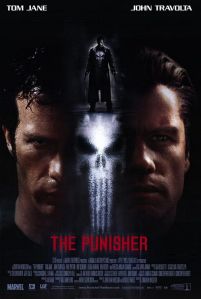 It’s probably a bad omen when the co-writer of Armageddon makes his directorial debut (J.J. Abrams is a fluke). The Punisher is one of the ugliest movies I have ever seen. The action isn’t exciting; it’s pat, poorly shot and grotesque. The story isn’t interesting. It’s not enough that The Punisher has his family killed; he has to have his ENTIRE family killed during a reunion. When he does exact his vengeance, the film stops an audience from engaging with the characters and pushes them away by callous misstep after callous misstep. This is just sadistic, ugly, and over-the-top while simultaneously being entirely, sadly predictable. By the time John Travolta gets dragged by a slow-moving car through a field of explosions, you may have thrown up in your mouth, swallowed it, and thrown up again.
Nate’s Grade: D


 nathanzoebl
You must be logged in to post a comment.