Daily Archives: July 17, 2025
Batman Begins (2005) [Review Re-View]
 Originally released June 15, 2005:
I have been a Batman fan since I was old enough to wear footy pajamas. I watched the campy Adam West TV show all the time, getting sucked into the lead balloon adventures. Tim Burton’s 1989 Batman was the first PG-13 film I ever saw, and I watched it so many times on video that I have practically worn out my copy. Batman Returns was my then most eagerly anticipated movie of my life, and even though it went overboard with the dark vision, I still loved it. Then things got dicey when Warner Brothers decided Batman needed to lighten up. I was only a teenager at the time, but I distinctly remember thinking, “You’re telling the Dark Knight to lighten up?” Director Joel Schumacher’s high-gloss, highly stupid turn with Batman Forever pushed the franchise in a different direction, and then effectively killed it with 1997’s abomination, Batman and Robin. I mean these films were more worried about one-liners and nipples on the Bat suits. Nipples on the Bat suits, people! Is Batman really going, “Man, you know, I’d really like to fight crime today but, whoooo, my nipples are so chaffed. I’m gonna sit this one out”?
For years Batman languished in development hell. Warner Bothers licked their wounds and tried restarting their franchise again and again, only to put it back down. Then around 2003 things got exciting. Writer/director Christopher Nolan was announced to direct. Nolan would also have creative control. Surely, Warner Brothers was looking at what happened when Columbia hired Sam Raimi (most known for low-budget splatterhouse horror) for Spider-Man and got out of his way. After Memento (My #1 movie of 2001) and Insomnia (My #5 movie of 2002), Nolan tackles the Dark Night and creates a Batman film that’s so brilliant that I’ve seen it three times and am itching to go again.
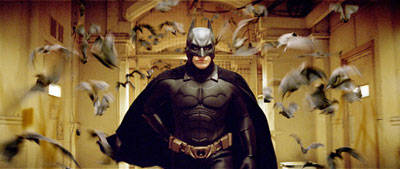 The film opens with a youthful Bruce Wayne (Christian Bale) in a Tibetan prison. He’s living amongst the criminal element searching for something within himself. Henri Ducard (Liam Neeson) offers Bruce the chance to be taught under the guidance of the mysterious Ra’s Al Ghul (Ken Watanabe), the leader of the equally mysterious warrior clan, The League of Shadows. Under Ducard’s direction, Bruce confronts his feelings of guilt and anger over his parents’ murder and his subsequent flee from his hometown, Gotham City. He masters his training and learns how to confront fear and turn it to his advantage. However, Bruce learns that the League of Shadows has its judicial eyes set on a crime ridden Gotham, with intentions to destroy the city for the betterment of the world. Bruce rebels and escapes the Tibetan camp and returns to Gotham with his own plans of saving his city.
With the help of his trusted butler Alfred (Michael Caine), Bruce sets out to regain his footing with his family’s company, Wayne Enterprises. The company is now under the lead of an ethically shady man (Rutger Hauer) with the intentions of turning the company public. Bruce befriends Lucius Fox (Morgan Freeman), the company’s gadget guru banished to the lower levels of the basement for raising his voice. Bruce gradually refines his crime fighting efforts and becomes the hero he’s been planning on since arriving home.
Gotham is in bad shape too. Rachel Dawes (Katie Holmes), a childhood friend to Bruce, is a prosecutor who can’t get anywhere when crime lords like Falcone (Tom Wilkinson) are controlling behind the scenes. Most of the police have been bought off, but Detective Gordon (Gary Oldman) is the possibly the city’s last honest cop, and he sees that Batman is a figure trying to help. Dr. Crane (Cillian Murphy) is a clinical psychologist in cahoots with Falcone. Together they’re bringing in drug shipments for a nefarious plot by The Scarecrow, a villain that uses a hallucinogen to paralyze his victims with vivid accounts of their own worst fears. Bruce is the only one who can unravel the pieces of this plot and save the people of Gotham City.
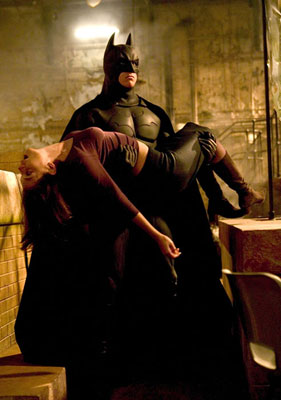 Nolan has done nothing short of resurrecting a franchise. Previous films never treated Batman as an extraordinary character; he was normal in an extraordinary world. Batman Begins places the character in a relatively normal environment. This is a brooding, intelligent approach that all but erases the atrocities of previous Batman incarnations. Nolan presents Bruce Wayne’s story in his typical nonlinear fashion, but really gets to the meat and bone of the character, opening up the hero to new insights and emotions, like his suffocating guilt over his parents murder.
Nolan and co-writer David S. Goyer (the Blade trilogy) really strip away the decadence of the character and present him as a troubled being riddled with guilt and anger. Batman Begins is a character piece first and an action movie second. The film is unique amongst comic book flicks for the amount of detail and attention it pays to characterization, even among the whole sprawling cast. Nolan has assembled an incredible cast and his direction is swimming in confidence. He’s a man that definitely knows what he’s doing, and boy oh boy, is he doing it right. Batman Begins is like a franchise colonic.
This is truly one of the finest casts ever assembled. Bale makes an excellent gloomy hero and really transforms into something almost monstrous when he’s taking out the bad guys. He’s got great presence but also a succinct intensity to nail the quieter moments where Bruce Wayne battles his inner demons. Caine (The Cider House Rules, The Quiet American) is incomparable and a joy to watch, and his scenes with the young Bruce actually had me close to tears. This is by far the first time a comic book movie even had me feeling something so raw and anything close to emotional. Neeson excels in another tough but fair mentor role, which he seems to be playing quite a lot of lately (Kingdom of Heaven, Star Wars Episode One). Freeman steals every scene he’s in as the affable trouble causer at Wayne Enterprises, and he also gets many of the film’s best lines. Oldman (The Fifth Element, Harry Potter and the Prisoner of Azkaban) disappears into his role as Gotham’s last good cop. If ever there was a chameleon (and their name wasn’t Benicio del Toro), it is Oldman. Holmes works to the best of her abilities, which means she’s “okay.”
The cast of villains are uniformly excellent, with Wilkinson’s (In the Bedroom) sardonic Chicagah accented mob boss, to Murphy’s (28 Days Later…) chilling scientific approach to villainy, to Watanabe’s (The Last Samurai) cold silent stares. Even Rutger Hauer (a man experiencing a career renaissance of his own) gives a great performance. Seriously, for a comic book movie this is one of the better acted films of the year. And that’s saying a lot.
Batman Begins is such a serious film that it almost seems a disservice to call it a “comic book movie.” There are no floating sound effects cards and no nipples on the Bat suits. Nolan really goes about answering the tricky question, “What kind of man would become a crime-fightin’ super hero?” Batman Begins answers all kinds of questions about the minutia of the Dark Knight in fascinating ways, yet the film remains grounded in reality. The Schumacher Batmans (and God save us from them) were one large, glitzy, empty-headed Las Vegas entertainment show. No explanation was given to characters or their abilities. Likewise, the Gothic and opulent Burton Batmans had their regrettable leaps of logic as well. It’s hard not to laugh at the end of Batman Returns when Oswald Cobblepot (a.k.a. The Penguin) gets a funeral march from actors in emperor penguin suits. March of the Penguins it ain’t. Nolan’s Batman is the dead-serious affair comic book lovers have been holding their breath for.
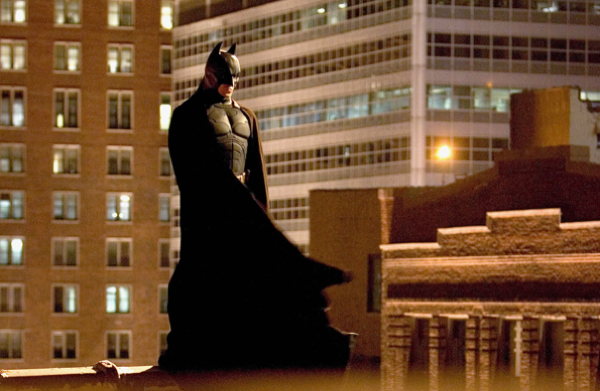 The action is secondary to the story, but Batman Begins still has some great action sequences. Most memorable is a chase sequence between Gotham police and the Batmobile which goes from rooftop to rooftop at one point. Nolan even punctuates the sequence with some fun humor from the police (“It’s a black … tank.”). The climactic action sequence between good guy and bad guy is dutifully thrilling and grandiose in scope. Nolan even squeezes in some horror elements into the film. Batman’s first emergence is played like a horror film, with the caped crusader always around another turn. The Scarecrow’s hallucinogen produces some creepy images, like a face covered in maggots or a demonic bat person.
There are only a handful of flaws that make Batman Begins short of being the best comic book movie ever. The action is too overly edited to see what’s happening. Whenever Batman gets into a fight all you can see are quick cuts of limbs flailing. My cousin Jennifer got so frustrated with the oblique action sequences that she just waited until they were over to see who won (“Oh, Batman won again. There you go.”). Nolan’s editing is usually one of his strong suits; much of Memento’s success was built around its airtight edits. He needs to pull the camera back and let the audience see what’s going on when Batman gets physical.
Another issue is how much plot Batman Begins has to establish. This is the first Batman film to focus solely on Batman and not some colorful villain. Batman doesn’t even show up well into an hour into the movie. As a result, Batman Begins perfects the tortured psychology of Bruce Wayne but leaves little time for villains. The film plays a shell game with its multiple villains, which is fun for awhile. The Scarecrow is really an intriguing character and played to gruesome effect by the brilliant Cillian Murphy. It’s a shame Batman Begins doesn’t have much time to develop and then play with such an intriguing bad guy.
Batman Begins is a reboot for the film franchise. Nolan digs deep at the tortured psyche of Bruce Wayne and come up with a treasure trove of fascinating, exciting, and genuinely engrossing characters. Nolan’s film has a handful of flaws, most notably its oblique editing and limited handling of villains, but Batman Begins excels in storytelling and crafts a superbly intelligent, satisfying, riveting comic book movie. The best bit of praise I can give Batman Begins is that I want everyone responsible to return immediately and start making a host of sequels. This is a franchise reborn and I cannot wait for more of it.
Nate’s Grade: A
——————————————————
WRITER REFLECTIONS 20 YEARS LATER
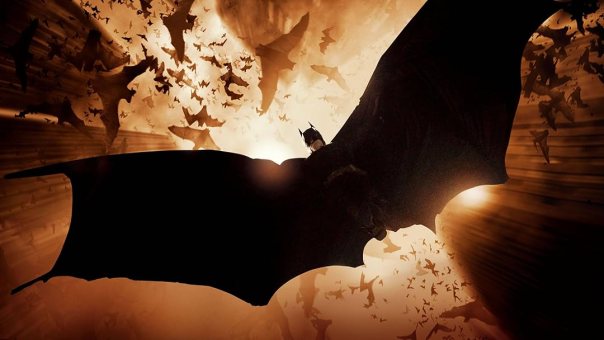
Batman Begins could have also been subtitled, Christopher Nolan Begins. The eponymous writer/director, who has defined the twenty-first century in the realm of artful blockbusters perhaps more than anyone, had made three movies prior to this big moment. He began with 1998’s Following, but it was 2001’s Memento that got everyone’s attention. His immediate follow-up, 2002’s Insomnia, is a very good movie, and actually a better version than the Nordic original, but it was really proof for Warner Brothers that this clever indie guy could handle a larger studio project. In the early 2000s, Warner Brothers was desperate to relaunch Batman after the demise of the franchise with 1997’s ultra campy Batman & Robin, and many filmmakers were courted to relaunch the Dark Knight. It was literally a month after rejecting Joss Whedon’s reboot pitch that in January 2003, the studio announced Nolan was attached and writing the screenplay with David S. Goyer, who was hot off the Blade movies and seemed to have cracked the code for making more mature comic book movie adaptations. What followed was a dramatic reworking of Batman, grounding him and his world in realism and opening Bruce Wayne up for a closer psychological examination, giving the man behind the mask an opportunity to be the actual focus for once. The results reinvigorated the dormant franchise, provided a path for superhero reboots in a post-9/11 landscape, and launched Nolan on his ascendant trajectory to being the biggest blockbuster voice of the modern era.
 Batman was a popular character in DC comics (note: DC stands for “Detective Comics,” so saying, “DC comics” is like saying, “Detective Comics comics,” much like the way the “Sahara” means “desert”) from his inception in in 1939, but he was always well behind Superman, the golden boy. The campy Adam West TV series was popular, and actually saved the comic from being discontinued, but it wasn’t until 1989 that Batman became the most popular superhero. The darkness and edge of Batman was more appealing for the modern masses, and paired with Tim Burton, it proved the new levels of studio blockbusters after the steep decline from the Christopher Reeve Superman movies. Ever since, we’ve had over ten live-action headlining Batman movies and only four Superman live-action movies, now five thanks to James Gunn’s recent high-flying addition. Much as the Burton 1989 Batman brought the character to an even bigger height of modern stardom, it was Nolan who likewise took the character and made it an even bigger spectacle that also steered the zeitgeist of what superhero movies could be.
While 2008’s The Dark Knight is widely regarded as Nolan’s best movie in his trilogy, I actually consider Batman Begins his best. That is no insult to The Dark Knight, a wildly entertaining movie that is something truly special every second Heath Ledger is onscreen with his magnetic portrayal of the Joker, a modern-day anarchist seeking validation from the costumed crusader who “changed all the rules.” It’s a good movie with some wonky plotting you don’t think of as long as Ledger is lighting it up, but that first movie was a proof of concept that Batman can carry his own movie. It humanizes the character and strips him down before gradually putting him back together, explaining how this character assembles the tools of his trade and the allies that help support his mission. It’s a satisfying series of trial and error that proves entertaining as we watch the myth of Batman take shape. This first movie is about the formation of Batman, whereas the second is about the escalating consequences of introducing a well-armed vigilante into the bloodstream of organized crime. The first film is the most complete movie, and while it has some flights of fancy like a secret ninja conspiracy, it still works on a relatively grounded level. For the first time in perhaps the character’s film history, you will find yourself caring about the character. That is an accomplishment, and you can feel it when Bruce Wayne (Christian Bale) merely standing amidst a swarm of bats is played as a turning point of self-actualization. And it works. This is Nolan’s best Batman.
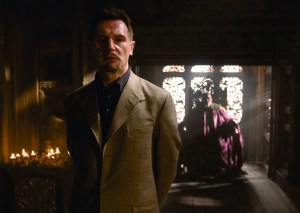 We don’t even get our first glimpse of Batman as we know him until halfway through the movie. That’s a lot of waiting for a movie with “Batman” as the first word of its title. Even twenty years later, I find the build-up satisfying, watching Bruce Wayne put together the pieces that we associate with Batman, from his cowl to his cape to his suit to the Batmobile, which is practically an all-terrain tank. Finding interesting ways to generate these familiar parts, iconography, and allies makes an invigorating drama that is better than the more action-heavy second half of the movie. It’s still fun and enjoyable how Nolan is able to bring together so many elements with payoffs. This is Nolan’s first blockbuster and he proves that he has an innate feel for popcorn entertainment, knowing how to structure and pace the action and intrigue and laying in those setups and payoffs along with winning character beats and themes. He shows how he can make the moments matter to form an even greater whole. That’s the lasting impact of Batman Begins, where every moment helps to build the mystique of the superhero but also the psychology of Wayne and what motivates a man to dress up and punch dudes for a living.
It also helps that this movie is perfectly cast from top to bottom. Bale was as sturdy a center as you could get. He only went on to be nominated for four Oscars, winning once for 2010’s The Fighter (and should have won in 2018 as Dick Cheney in Vice). He’s long been known for transforming himself completely with his roles. Between 2004’s The Machinist and Batman Begins, there’s a 100-pound difference in Bale’s physique. His performances can get too easily overlooked because of the gimmicky body transformations, but Bale has been one of our most consistent and interesting actors for these last twenty years. Getting Michael Caine (Oscar winner), Morgan Freeman (Oscar winner), Gary Oldman (future Oscar winner), Cillian Murphy (future Oscar winner), Tom Wilkinson (future Oscar nominee), Neeson, Wantanabe, and even Rutger Hauer to be in your movie is obviously a setup for greatness. Nolan and company even get the smallest roles right, like hiring Rade Serbedzija (Snatch, Eyes Wide Shut) just as a homeless man Bruce gives his coat to. He’s only in two scenes for maybe thirty seconds but you got this actor for that part. The odd one out is Katie Holmes as Bruce’s childhood friend who becomes a crusading prosecutor. It’s not a knock on Holmes but simply her character’s role in the story. There’s also the knowledge that this role was recast with Maggie Gyllenhaal in the 2008 sequel, so one wonders what Gyllenhaal would have been like here. I like Holmes as an actress but Maggie Gyllenhaal is a definite upgrade.
 Allow me to question the mission of the League of Shadows and good ole Ra’s al Ghul (Ken Wantanabe, but really Liam Neeson). They are a secret order of ninjas trained to fight injustice through extreme measures. They’ve been in existence for hundreds of years, maybe thousands, and claim to have contributed to the destruction of such empires as Rome and Constantinople when they became breeding grounds of injustice. Their next target is Gotham and they become our returning antagonists for the climax, Batman having to take down his mentor. This philosophy purports to link criminality with borders, alleging that criminals are only encouraged by the corrupt institutions of the city. If Rome can no longer support a thriving criminal network, the assumption is that crime goes away. You take away the platform and, voila, injustice and criminality are gone. That’s quite an oversimplification. You could make the argument that destroying a corrupt city makes it harder for criminals to find footing, but does it eliminate crime or just force it to migrate elsewhere? This also assumes that only cities are cesspools for criminality and corruption; look into the Sackler-lead network of pill mills dotting rural America. I guess drug and sex trafficking only exist in urban America, right? The League of Shadows have a bad idea forming a bad philosophy that is being applied badly, and I just wanted to point this out.
The legacy of the Nolan Batman trilogy carries on twenty years later. They are considered some of the biggest blockbusters of the twenty-first century, but it’s also the beginning of the meteoric ascent of Nolan. 2006’s The Prestige, likely his most underrated film, is the last of the Before Movies. Ever since, every Nolan movie has been an event, even ones that step back into more personal and cerebral spaces, like 2023’s runaway Oscar juggernaut, the billion-dollar three-hour biopic, Oppenheimer. He’s become one of a very select few filmmakers whose very name is a selling point to the general public regardless of whatever the project might be (joining Spielberg, Tarantino, James Cameron, and maybe Jordan Peele at this point). I agree with my 2005 criticisms that Nolan is not an expert handler of action. He’s tremendous at atmosphere, with judicious editing and eye-popping visuals, but action construction is not his forte, even after several more action movies to his name. I was much more entertained by the horror sequences from the Scarecrow fear toxin than I was by the straight action. I do wish the villains had more time, especially the Scarecrow, but it’s a result of having so much more plot to do, and centering around Bruce Wayne and his personal journey to superhero-dom means everything serves this streamlined goal.
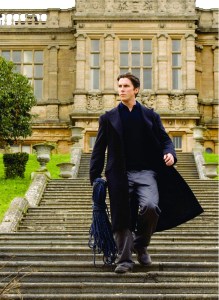 I saw Batman Begins three times in the theater back in 2005. As a longtime Batman fan, a kid whose first VHS tape was the 89 Batman, who obsessed over every detail for the Batman Returns release, who religiously watched the excellent 90s animated series, I felt a sense of elation that this was a movie that got it. Nolan and his team got Batman and did him justice that had been denied for years. We now likely live in a universe where we’ll never be more than four years away from another live-action Batman movie or appearance. I enjoy the Matt Reeves’ Batman era we’re currently living through, another gritty take favoring realism and depth of character to comic book pulp heroics. The Nolan movies walked so that the Reeves films could fly. If you’re a fan of Batman in the real world, then these last twenty years have been resplendent (Ben Affleck was the highlight of Batman vs. Superman – no joke). It’s interesting to see that convergent point in 2005, where Nolan re-imagined the character for today, and also where Christopher Nolan became the signature blockbuster filmmaker we now freely associate him to be. Batman Begins is a comic book movie that feels so well-suited for the times as well as all time. It’s still smashing.
Re-Review Grade: A


 nathanzoebl
You must be logged in to post a comment.