Blog Archives
Jersey Girl (2004) [Review Re-View]

Originally released March 25, 2004:
Writer/director Kevin Smith (Dogma) takes a stab at family friendly territory with the story of Ollie Trinke (Ben Affleck), a music publicist who must give up the glamour of the big city to realize the realities of single fatherhood. Despite brief J. Lo involvement, Jersey Girl is by no means Gigli 2: Electric Boogaloo. Alternating between edgy humor and sweet family melodrama, Smith shows a growing sense of maturity. Liv Tyler stars as Maya, a liberated video store clerk and Ollie’’s real love interest. Tyler and Affleck have terrific chemistry and their scenes together are a playful highlight. The real star of Jersey Girl is nine-year-old Raquel Castro, who plays Ollie’’s daughter. Castro is delightful and her cherubic smile can light up the screen. Smith deals heavily with familiar clichés (how many films recently end with some parent rushing to their child’’s theatrical production?), but at least they seem to be clichés and elements that Smith feels are worth something. Much cute kiddie stuff can be expected, but the strength of Jersey Girl is the earnest appeal of the characters. Some sequences are laugh-out-loud funny (like Affleck discovering his daughter and a neighbor boy engaging in “the time-honored game of “doctor””), but there are just as many small character beats that could have you feeling some emotion. A late exchange between Ollie and his father (George Carlin) is heartwarming, as is the final image of the movie, a father and daughter embracing and swaying to music. Jersey Girl proves to be a sweetly enjoyable date movie from one of the most unlikely sources.
Nate’s Grade: B
——————————————————
WRITER REFLECTIONS 20 YEARS LATER

When I started putting together my list of 2004 movies to re-watch for this year’s slate, my wife was not pregnant. We had been trying for a year and experienced some heartbreaking setbacks, but now, as I write my review of Jersey Girl, my reality is that my wife is indeed pregnant, and we’re expecting a baby this October and very excited. As you can expect, I’m also nervous. Now this movie about the changes of fatherhood has significantly more meaning for me personally.
In 2004, I was but a 22-year-old soon-to-be college graduate but also a devotee of writer/director Kevin Smith since my teenage years of discovering movies in the oh-so-exciting go-go decade of 1990s independent film. This was supposed to be Smith’s career pivot, as he’d reportedly closed the book on his View Askew universe of crude comedies and stoner hi-jinks with 2001’s Jay and Silent Bob Strikes Back. Smith had become a parent in 1999 and, naturally, this altered the kinds of stories he wanted to tell. Although this didn’t last too long. In 2004, America was sick of Bennifer 1.0 and Jersey Girl was the second movie in less than a year pairing real-life couple Ben Affleck and Jennifer Lopez. The stink from 2003’s Gigli, and the tabloid overexposure, had tamped down the country’s demand for more Bennifer, so Miramax removed all publicity of Lopez from the movie, pushed the release date back half a year, and even publicly revealed that Lopez’s character dies in childbirth in the first ten minutes. Even with its relatively modest budget for a studio film, Jersey Girl under-performed, critics lambasted it, and Smith returned to his vulgar adult comedy playground with 2006’s Clerks II, the sequel to where it all began. With the occasional stop into horror, Smith has stayed in his own insular world and only gotten more insular with sequels to his early comedies for his ever-shrinking fandom.
 More so than any other movie, Jersey Girl is the outlier, the oddity, the path not taken. Watching it again in 2024, I’m more forgiving of this outlier even if it proves harder to love. Much of this is likely my own relatability with the main character’s plight, a New York City workaholic publicist Ollie Trinkie (Affleck) who loses everything in a short window of time, namely his high-profile city job and his wife Gertrude (Lopez). Now he’s back living with his father Bart (George Carlin) in New Jersey and raising a little girl Gertie (Raquel Castro) on his own. It’s not a revolutionary film concept, a selfish adult takes on the responsibility of another and changes their perception of themself and the world. In a way, it likely happens to every new parent, or I would hope, a paradigm shift of perspective. The insights that Jersey Girl offers about parenthood and priorities are nothing new but that doesn’t mean they are bad or not worthwhile. Without the context of Smith’s tonal pivot, Jersey Girl would likely be forgotten, more than it already has been to history. It’s Smith’s spin on the family movie cliches we’ve seen before, and that means there’s a limit to how much further he can take the overly familiar.
It’s a little deflating to watch an artist known for his imagination and vocabulary utilizing the building blocks of maudlin family movies for his new story. Even with a different storyteller, they are still the same recognizable pieces seen before in hundreds of other feel-good movies about parents learning that children are more important than that big meeting or promotion. Of course reducing everything down in life is reductive, and maybe that big meeting could allow the parent to be more present for their kid, provide a better life being neglected, but whenever you set up the climactic choice between family and career, family always wins. Maybe David Wain (They Came Together) is the kind of subversive genre artist who could send up these age-old cliches and end with the workaholic parent choosing their selfish career. Regardless, the movie’s strengths are its sincerity rather than ironic detachment. It would be hard to make this kind of movie from a cynical smart-alecky approach, and Jersey Girl reveals what any View Askew fan has long known, that deep down at heart Smith is a big softie. It’s more apparent nowadays with Smith’s recent output of increasingly sentimental movies about relationships, as well as Smith’s copious social media posts showcasing his torrent of tears in response to a movie or TV show (as a man who frequently cries from movies and TV, this is no affront to me). Smith wanted to tell a personal story of his own life changes through the familiar family movie vehicle, and while it doesn’t entirely stretch beyond its copious influences, it’s still singing true to Smith’s sincerity.
 This is far from the disaster many have made it out to be in the past twenty years. Lopez is really good in her brief opening appearance with a natural radiant charm that makes you mourn her absence just like Ollie. Liv Tyler (Armageddon reunion) shows up midway through as Maya, a sexually progressive video store clerk who becomes the next love interest for our widower. When she discovers, to Ollie’s embarrassment, that he hasn’t had sex for seven years, the entire time after his wife’s passing, she takes it upon herself to help the guy out with some charitable casual sex. The scene is funny and finally makes use of a setup Smith has taken time with prior, Gertie not flushing the toilet after use (something I can already regrettably relate to raising children). When his daughter comes home early, Ollie and Maya hide in the shower, and it appears they have gotten away with it, except Gertie finally remembers to flush the toilet, sending a burst of hot water that causes Maya to screech and reveal their half-naked tryst. From there, little Gertie sits them both down, reminiscent of what Ollie did with her and a friend when he caught them playing “doctor,” and she squares her gaze and intones, very maturely: “What are your intentions with my father?” Even the big climactic event, the children’s musical performance the parent can’t miss lest they break their child’s heart, gets a little edge when Gertie and her family perform the throat-slitting/pie-making number from Sweeney Todd. There’s a terrific exchange between Ollie and Will Smith all about the changing dynamic of fatherhood, what they do for their kids, and how rewarding it proves, and having Smith be your ace-in-the-hole is great.
It would be neglectful of me to forget the postscript that, nearly twenty years after the demise of their engagement, that Affleck and Lopez reunited and married in 2022. We’re in the current realm of Bennifer 2.0 (unless your version of Bennifer 2.0 was when he married Jennifer Garner, but I’ll let you decide if this era is 2.0 or 3.0) and Lopez has released a companion documentary to her 2024 visual album (a.k.a. collection of music videos) that features her relationship with Affleck, and it’s called The Greatest Love Story Never Told, and it’s gotten good reviews. Also of note, Castro grew up into a budding pop idol and appeared on The Voice and Empire.
 There are things that work here, enough that Jersey Girl might honestly age better than the majority of Smith’s rude and crude comedies (see: re-reviews for Dogma and Strike Back, and Reboot). It will never garner the love of Smith’s more successful movies, but it doesn’t deserve any reputation as a forgotten stepchild among Smith’s oeuvre, especially when you consider the man also has Yoga Hosiers on that resume. In 2004, I referred to Jersey Girl as a “sweetly enjoyable date movie,” and this still stands twenty years later. I’m a little softer in several ways and more forgiving as an adult cinephile, and more welcome to genuine acts of sincerity, so the winning moments of the movie still hit their mark for me. I write this as my wife is still in her first trimester, and while the due date seems so far away I know it will rush by, and then I, like Ollie, will be juggling my life as I knew it with my life as I now know it (you better believe the scene where he loses his spouse in childbirth hit me harder as a new intrusive nightmare to occupy my mind). Jersey Girl isn’t anything new or special, but it was special for Smith, and he finds ways to make you understand what that means for him, and what it might mean for you. I’ll take that.
Re-View Grade: B-
Share this:

Emancipation (2022)
 There is a question with every new movie depicting the Holocaust or slavery or some other horror of the past, why do we need this still? It’s a suitable question but one that rests upon the fleeting assumption of history being settled upon. “We all agree slavery was bad,” some opponent might say, “So why do we need another movie to convince us what we already know?” One need only look at the last couple years and the diverging controversies over teachers covering the ills of America’s past with clarity, and it’s clear that the idea of settled-upon history is an illusion. There will be people arguing slavery wasn’t as bad as history has perpetuated, that even the Irish experienced something similar as indentured servants (but they were still legally viewed as people). Some will erroneously argue that slaves were there by choice, or that their masters weren’t all cruel, and that even by having a roof over their head and the bare minimum for sustenance that they were “looked after.” There are battles happening all over the country, with one side trying to present the evils of slavery in an unvarnished manner and the other trying to obfuscate, mitigate, or distract from the facts because accepting a reality that your country has made mistakes somehow means being unpatriotic or loving your country considerably less. So to answer the question, as long as we have others denying history for political expediency, then yes, we need more media to remind us that the horrors of the past were indeed horrific. With that in mind, Emancipation is meant to be a rousing spectacle about one man’s incredible fight for freedom, but what it really comes across is a fumbling awards movie as awkward action movie.
Peter (Will Smith), or known as Gordon, is separated from his family and forced to work on the Confederate railroad in 1863 Louisiana. He hears about President Lincoln’s Emancipation Proclamation freeing the slaves and believes if he can just get to a Union camp, then he can return to his family. Peter fights back and escapes into the swamps and heads for Baton Rouge, a five-day journey. On his trail is the dangerous slave catcher Jim Fassell (Ben Foster), who will stop at nothing to secure Perter and prove his racial superiority to his fugitive.
 There are two competing impulses running through Emancipation that never seem to coalesce, always pulling the movie in opposite directions or at least undercutting its value in entertainment or substance. On the surface, Emancipation looks like an awards-ready spotlight. It’s got Will Smith playing a real-life historical figure who suffered greatly but triumphed in the end, a man whose image lives on in our history books (well, depending upon your state) and contributed to the abolitionist movement. He was a real person who made a real difference during a tumultuous time. I get a strong sense that Smith was following the 2015 template of Leonardo DiCaprio’s The Revenant for this project, and especially the Academy-friendly model of physical torment equaling Oscar gold as it did for Leo. It’s hard not to feel like the movie was formulated as an awards gamble, that sizing up all the elements, Smith saw a fast track back to the Oscars (this was in production before Smith did win his first acting Oscar for 2021’s King Richard). Naturally, Smith isn’t the first person to select Oscar-friendly roles for the purpose of earning some serious acting trophies. Nor should he be inordinately penalized for that ambition. All that matters is the end result, and it’s there where Emancipation struggles with its own identity crisis and where its transparency becomes a hindrance.
This movie wants to be a substantive drama that can enlighten us about the perseverance of the human spirit, and for the first thirty minutes Emancipation feels honed from the likes of 12 Years a Slave. Then at the Act One break, Peter and several other slaves break free, and from there the story becomes a tense chase movie for an hour, only to conclude its final half hour as a war movie akin to Glory. It’s a tonal balancing act that doesn’t quite work. I was interested in the first 30 minutes, which establishes the brutality of slavery in a way that feels empathetic but tasteful. It’s a question whether or not historical horrors should be watered down, made palpable to a wider audience, and if in doing so dilutes the power of history, but that’s another debate. When the movie becomes an elongated chase sequence is where my patience began to wane. This is where director Antoine Fuqua really seems to settle in, playing into his background of action movies (Training Day, The Equalizer, Olympus Has Fallen, The Magnificent Seven). Fuqua’s instincts are for action movies, and that’s what Emancipation becomes, but it so clearly wants to also be Something More and doesn’t quite accumulate into that. The Revenant stretch is reliant upon episodic survival and the final half hour is about a war charge. I suppose one can be generous and say that Peter’s canny survival skills are overt characterization, or that the environmental threats are representative of a larger hostile world, but the action movie parts were pretty to look at but also emotionally inert for me.
 I considered the lead character in 12 Years a Slave to be the least interesting person in his own story, but the movie found plenty of space for more immediately compelling figures. Not so with Emancipation, as once Peter goes on the run, it feels like overall characterization is put on hold. Smith is perfectly reasonable as a determined and dehumanized individual pushing back against the monstrosity of slavery, restricting much of his performance to the physical realm. The sheer intensity of his eyes can convey plenty that the script characterization lacks. Smith lowers his voice modulation, adopts an inconsistent Haitian accent, and gives a rather subdued performance given the sensational material. I think it’s because the film is geared more as an action movie rather than as an in-depth character study, so when we’re left with the characters, their limitations emerge.
This paucity also extends to the supporting characters. At first I thought that Charmaine Bingwa (The Good Fight) was going to be relegated as the suffering wife for our protagonist to get home, but then the movie keeps cutting back to her like she’s having prophetic dreams. What is happening here? The check-ins with Peter’s wife all deliver the same obvious information, namely his family misses him. This woman doesn’t even get a storyline of her own in the meantime, a conflict to overcome to keep her family out of further harm in the absence of Peter. The biggest supporting character is the villain, and even he is boring. Foster made a name for himself playing psychopaths in late 2000s cinema and has matured with more nuanced roles in The Messenger, Hell or High Water, and Leave No Trace. He’s one of our best actors, and yet he’s given so little here. His slave catcher gets a monologue that’s meant to provide insight into his admiration for the intelligence of black people. I kept waiting for something more with this guy to define him beyond a stock racist. I guess maybe the movie is saying he’s not as racist because he begrudgingly concedes that slaves aren’t stupid, but he’s still massacring them, so it feels like a minimal distinction of character. He also gets defeated in such an anticlimactic manner. If he’s only a stock villain, at least give us the thrill of defeating him.
 The cinematography by Robert Richardson (Once Upon a Time… in Hollywood) is at once gorgeous and also confounding. The emphasis is on deep focus, so you can see lots of rich details in elegantly framed compositions. There are sweeping camera movements, especially during the war-torn finale worthy of Matthew Brady, that are breath-taking, again calling attention to its handsomely mounted pedigree. However, the color palette has taken notes from Zack Snyder and drained away all color to the degree of looking monochromatic. Repeatedly throughout the movie, I would comment to myself about how beautifully filmed a scene was… and then complain about how the dour color grading sucked the life out of it.
Emancipation is a genre movie that envisions itself as a high-minded Oscar contender, and when it attempts to be something more than a crisp-looking chase movie, that’s where it exposes itself as lacking the substance it so desires. The life of Peter, or Gordon, is meaningful, the person behind the famous photo of the scarred back that made the cruelty of slavery a vivid picture. The experiences of every person who endured the hell of slavery is an indictment worthy of being told, but the personal story becomes grounded down into familiar B-movie pap. If the production was content to be a thrilling B-movie, that would be one thing, but it’s clearly engineered to be Something More, which is usually adjacent to Something Important. I think following The Revenant as a model was a mistake, and I think giving the reins to Fuqua was a mistake, and I definitely think the limited characterization and color palette was a mistake. Emancipation is a strange movie to watch. It’s about the horrors of slavery, and it’s also at the same time about a man wrestling a gator in the swamp. Emancipation is a movie that wants to pretend to be something it’s not but also won’t fully trust its deeper instincts and impulses.
Nate’s Grade: C+
Share this:

King Richard (2021)
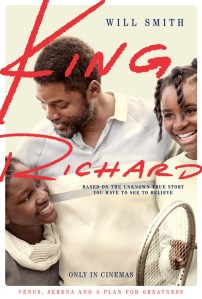 King Richard confounds me and also doesn’t. I can understand what the point was and shrug my shoulders at its choice of narrative perspective. It’s a hagiography that settles on audience foreknowledge to alleviate any tension, or sustained interest, and at its core is a contradiction of a man deserving scrutiny but served up for celebration. As my pal Michael Galusick put it, “I can’t believe there’s a movie about the rise to greatness for the Williams sisters [Venus and Serena], and it’s centered around their dad.” King Richard is an awards-season hopeful, produced by the Williams sisters, and a questionable biopic with a questionable perspective aimed at telling the hidden story behind the meteoric success of two of the greatest tennis stars of all time.
In the late 1980s, Richard Williams (Will Smith) is working all night as a security guard and spending his mornings to train his two pre-teen daughters, Venus and Serena, in tennis. Richard is convinced they will be superstars, that he and his wife Brandy (Aunjanue Ellis, Lovecraft Country) will be rich and move from their Compton, California neighborhood. Richard gets beaten by local gangs, studies tennis magazines and instructors, and tries to get his girls formal training from professionals while holding them back to his demands. He has a plan, he repeatedly tells others, for their success, and nothing will dissuade him from it.
 Firstly, we finally get a movie about the Williams sisters and their dominant rise through the world of tennis, and the movie is almost entirely centered upon their demanding father and his vigilant bordering on abusive training regimen? Richard is meant to be a contradiction and had the movie explored his contradictions in full this could have been an illuminating character study and warts-and-all biopic. However, it’s a movie that fully relies on every viewer’s implicit understanding of the great success of the Williams sisters, so the entire movie serves as a two-hour-plus “I told you so” to Richard’s doubters. Silly neighbor, questioning whether forcing his daughters to perform for hours in the pouring rain constitutes child endangerment. Silly wife, questioning why Richard has insisted his family move into the neighborhood of Compton to better raise his children through adversity and still complain about the dangers that Compton presents and that his daughters must rise above to leave and make something of themselves. Silly tennis coaches, questioning Richard, a man who has no tennis background himself, for demanding his sideline coaching be prioritized over the professionals. Silly “tennis parents,” the kinds that Richard says should be shot, even though he behaves the same way. Silly Williams children, feeling that their demands will be heard and acknowledged as far as their own personal paths and that the other Williams sisters will earn a similar level of attention and affection. Silly sports agents, for being skeptical about this man who says he had a 70-page “plan” for athletic success before his kids were even born and preaching that his unorthodox methods, including paying neighborhood kids to harass and intimidate his girls while they played, would be proven correct. Because, I suppose, it all worked out because Venus and Serena had tremendous success and were inspirations to millions of young African American kids who could finally see themselves in a sport that was privileged and exclusive for generations. He was right, so all of his unorthodox, crazy, dubious methods must have worked, so intuits the movie. It’s less because Venus and Serena have talent and skills and more that their dad worked really really hard and suffered.
With the involvement of the Williams sisters, King Richard only ever goes so far when it comes to critical analysis of its title character. He is certainly presented as a dedicated, hard-working dreamer, but his eccentricities and self-aggrandizing get sanitized as “tough father” when that toughness can cross over into obsession and abuse. It’s like watching 2014’s Whiplash but turned into a feel-good inspirational tale for the ages. At least Whiplash explored the harm of obsession and the pessimistic belief system that whatever it takes to a achieve greatness is excusable. With King Richard, the movie is not at all critical of this ethos. Oh sure, there are points where Brandy Williams speaks up with measured irritation at her husband making rash decisions, excluding the involvement and contributions of others to see his great plan through, and these moments are easily the best in the movie. Finally, someone is pressing this man on his methods and making him confront himself and his flaws. But then Brandy blends back into the background until another half hour goes by and the movie needs to tap her services again. This is the same woman, by the way, who in real life Richard hid her birth control pills in order to back her into a pregnancy and begin his master plan. That’s real. That happened. Same with intentionally keeping his children in Compton so they would learn adversity (tragic side note: one of his older daughters, Yetunde, died in 2003 near a gang house in Compton). And also the fact that Richard walked out on his previous family before Brandy, leaving behind five children all under the age of eight. When he speaks in the movie about always being there for his girls, unlike his father who ran out on him, it rings hollow with the full unflattering context.
 The movie seems to adopt Richard’s belief that if he didn’t push so hard for so long, while also withholding them from the tennis juniors circuit, denying them matches for three years, then perhaps they too would have burnt out and gone down a similar path as young superstar Jennifer Capriati. Except Venus’ first breakout success is because of her own insistence and Richard finally, at long last, acquiescing to the choices being made by his own daughters. Who knows, maybe she would have had success even earlier and not burnt out? It’s just as plausible considering that Richard’s regimen included forcing the girls to earn all As in high school on top of rigorous training. I think this detail is meant to make Richard seem like he values their education on par with their sports performances, but it reads to me as another high-pressure burden he’s beset upon his beleaguered daughters to meet his personal definition of success.
Again, if the movie portrayed this man in a more honest approach, questioning his methods and bringing light to his inherent contradictions, holding people to standards he was unable to hold to himself, taking credit solely for the success of the hard-working women in his family, then the movie would have been an intriguing and revelatory character drama. It would have justified shifting the perspective from Serena and Venus to Richard. But the script by Zach Baylin is too uninterested about those interesting details and contradictions. It knows Serena and Venus succeed so it all becomes a long journey of people doubting him only to be proven wrong. The movie feels more than enough like it reaches its emotional climax, father acceding to daughter as she approaches the big stage, and then there is twenty more minutes of tennis action. Why do we need a drawn-out tennis match at this point? The montage of real-life footage of tennis championships achieves the same emotional effect. If the decision was to finally dwell in the excellence and tenacity of Venus as an athlete cutting loose, then why does director Reinaldo Marcus Green (Joe Bell, Monsters and Men) keep favoring other people’s perspectives during the climactic debut match? We keep cutting back to Richard watching, or those in the crowd, or a squat TV screen monitor. I understand the nature of editing coverage, but if this is celebrating Venus’ moment and handing over the baton to her, then why not give her our full focus rather than repeated check-ins on Richard basking in the ascendant triumph of his hard work?
 Anyway, if you can take King Richard on its own terms, maybe it will prove fitfully entertaining and inspirational as it follows its formula to the bitter end. It’s received widespread critical praise especially for Smith’s humbled performance. I think Smith is perfectly good, but I also think his inherent charisma, and a generation of audience good will, project onto the character to more excuse Richard’s questionable actions. It would be like watching Tom Hanks portray Jeffry Dahmer; you might not condone all his actions but, come one, that’s American treasure Tom Hanks eating human flesh there. As a sports movie or a father/daughter movie, certain fans of those features might plug into the emotional beats of a feel-good universe and ignore the problematic parts. Maybe we’ll get a story of Venus or Serena from their own perspective, one that sees their father in less flattering terms. In the meantime, King Richard is a feel-good biopic that made me feel bad the more facts I uncovered, and its hero worship of a, at best, complicated man without adequate hesitation made me feel like this was a gift from the Williams sisters for their dear old dad’s ego and legacy.
Nate’s Grade: C
Share this:

Gemini Man (2019)
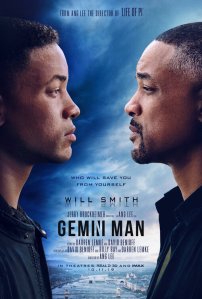 Gemini Man is one of those scripts that has been kicked around for decades in Hollywood. At one point Clint Eastwood was attached to be the old and young versions of an elite hitman, which goes to show you how long it’s been in development hell. Part of this delay was getting the technology to a point that it could effectively achieve de-aging an A-list actor, but here’s a thought I’m going to offer for free, as I usually do – why not try makeup? Surely you can find another actor who looks close to your lead and can have practical makeup applied? Or why not have that same actor’s own son play the younger version of him? Or, and here’s an even more daring idea, why not just have a different actor, period? If the premise is a younger clone, who’s to say why that younger clone would appear exactly like an exact representation of the older version. What if younger clone had an accident? Anyway, nobody listened to me and Gemini Man waited and waited, finally landing Will Smith playing two versions of himself thanks to CGI magic. Is the finished film worth the decades of toil and waiting to finally make this vision come alive?
Henry Brogan (Smith) is an elite hired assassin for the government and on the verge of retirement. His handlers (Clive Owen) have misgivings about tying up loose ends and send an assassin to take out Brogan. It just happens to be –wait for it– a clone of himself at 25! Now Brogan must team up with a pair of underwritten government agents (Mary Elizabeth Winstead, Benedict Wong) to battle his younger self once and for all.
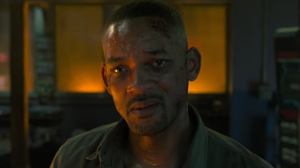 This movie feels like a dozen screenplays stitched together with every other third scene missing. You can feel the full, tortured, decades-long development process and how it has become an impenetrable force that weighs down the eventual movie and squanders whatever potential its premise could have provided. There is a movie here, that’s for sure. An older hitman confronting a clone of his younger self could make for an excellent personal reckoning as well as present a unique situation where the mature man is trying to outsmart the younger, stronger version of himself. Gemini Man doesn’t seem to know what to do with this concept at all. Why not have the clone of Henry Brogan (I hate this name) respond differently than the old man expects? Because while he’s made of the same genetic material, this younger version doesn’t have the same formative experiences and could have a very different psychology than older Henry, never mind the fact that older Henry has an additional 20-30 years of experiences to make him who he is. That alone could tackle the nature vs. nurture argument in a way that could still be entertaining and surprising. Or the movie could embrace the killing machine nature it veers to later, where our villain talks about selective editing to eliminate pesky things like morality and the ability to feel pain from his highly suggestible super soldiers. If this is even in question, why are we even dealing with clones who might rebel against their requested missions? If you can specifically select DNA abilities, then why is one man’s genetic code even that necessary? Why not make a super soldier that’s part raptor? I’ve never seen a movie before where that went wrong. I don’t even know why we need clone killers in the age of inexpensive drones.
The easiest thing the movie could have done is treat the younger clone as a metaphor for his troubled past he needs to confront. Early into the film, Henry talks about his distaste for seeing his reflection because, you see in a very subtle gesture, he doesn’t want to see the Man He Has Become. Yet, if this were the case, I feel like the movie needed to do a lot more legwork to establish how haunted he has become. He feels like a standard, charming Will Smith hero and less a man tearing up hotel rooms because of his nightmares and more the kind of guy hanging out with shady rich dudes on yachts. The movie even messes up the easiest angle to take, the bad man confronting the literal representation of his bad past and trying to come to terms with his legacy. Gemini Man pays some lip service to this notion but it’s so poorly executed. There’s an almost laughable moment where Henry unloads like a two-minute monologue explaining who his clone is, you know, on the inside, that goes uninterrupted. The movie attaches a strangely paternal father/son relationship for Henry and the clone, where he’s trying to get the young man to sit up straight and fly right in the world of hired killing. It makes for some truly awkward scenes where the two men act like they have a more potent relationship than they should. Just because the older Henry is technically his dad doesn’t mean the clone should feel any sense of fidelity to the old man. Think back on 2012’s Looper. Those weren’t even clones but the past selves murdering their older selves. If you’re being hired to kill, I don’t think an absentee “father” is going to be the one to break through to your underdeveloped moral code.
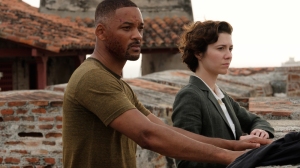 Somebody had to direct this movie but did it have to be Ang Lee? The man has given us some of the most intimate, impressive, and ground-breaking cinema of the last decade, from Crouching Tiger to Brokeback Mountain to Life of Pi. This feels like it could have been directed by anyone, except for a few quirks that seem entirely Lee’s. Much like Lee’s last movie, 2016’s gone-in-a-flash war drama Billy Lynn’s Long Halftime Walk, he filmed this movie at 120 frames per second (industry standard is 24 frames per second). When Peter Jackson released the first Hobbit films, there was a special presentation of them at 48 frames per second, and there were positives and negatives but it never caught on with the public, which is why the last Hobbit movie didn’t even come with the option of the higher frame rate shows. The extra frames take away that dreamlike fluidity we’re accustomed to but do wonders for the immersive nature of the presentation, and I found myself enjoying The Hobbit at 48 frames, even if everyone acted overly caffeinated. When Billy Lynn was coming out, there was only a small handful of theaters even capable of presenting it at the intended 120 frames, which begs the question I have with Gemini Man as well, namely what is the point? What is the point of filming a movie at a frame rate that nobody will ever see? That’s like filming a movie in sepia but it only works if people squint and a super projector plays it onto a special screen. Why bother at that rate? Is this for posterity, and Lee’s sitting back like, “Oh, when we finally get those 120-frame rate super TVs around 2030, you better believe the first movies everybody is gonna buy will be Billy Lynn and Gemini Man.” The higher frame rate feels like the gimmick Lee needed to get out of bed.
For the record, the movie does look brighter than I think it normally would but I didn’t find the visuals to be any more immersive. There is a slight smoothing to the depth of field but this can also play havoc during the action sequences with old and young Henry. Their movements can go by really quickly but in an awkward unreality, like early 2000s where CGI people would slide into action sequences to mixed results (see: The Matrix sequels with the CGI person brawls). The de-aging special effects are the highlight of the movie. The young Will Smith looks remarkably like the 90s super star we remember. Even more impressive is the level of nuance that the animators, and Smith, are able to imbue in his performance. There’s a real subtlety to the eyes that makes the figure feel startlingly real at times. The effects don’t always work well under all circumstances but it’s a worthy technological advance for an eerie process.
 Even the action feels recycled from a dozen other, better movies. I wish there was more to keep my attention in Gemini Man like some solid action set pieces, but the final product just sort of goes through the motions in every sense. There is one sequence that might prove memorable for its action but it might be for the wrong reasons. A motorcycle chase starts out partially exciting in Columbia as younger Henry zooms after older Henry. There’s even a fun shot that follows the movement of the bike from a fixed perspective, though this moment was wildly oversold to me in other film reviews (it lasts a total of 20 seconds, people). Later, older Henry is knocked off his bike and the younger clone tries to fight him… with his own motorcycle. Like he tries to sweep the leg with the bike, seemingly kick and punch him with the vehicle, and it’s so weird and specific that I started to chuckle and wonder if the clone was just very particular about his gamesmanship or was just fooling around. Other than that tiny morsel, it’s two hours of rather boring fist fights and gun battles without any real thought given to mini-goals, organic complications, geography, or other essentials that provide the lifeblood of viable action movies.
What does Gemini Man have to offer the discerning moviegoer? Not much. It’s built on the parts of other movies, Will Smith’s past and present charisma, and the idiosyncratic interests of a talented director who definitely seems to be slumming it with this generic, predictable material. I still want to emphasize that the premise could afford a really exciting, contemplative, and engaging action movie, but it needed better writing, better direction, better action, better characters, old and new, and better, well everything now that I think about it. If you’re a gigantic Will Smith fan you might get a kick out of seeing two Big Willie Styles on screen (or more?) as a novelty. The final film just feels so lifelessly inert, bled of anything interesting beyond its core premise. And yet, dear reader, the people sitting in my row clapped when it was over, and no, it was not some rebellious ironic act. Maybe you can find enough to enjoy with Gemini Man if you set your expectations extremely low, but then maybe you and I deserve better movies than this.
Nate’s Grade: D+
Share this:

Aladdin (2019)
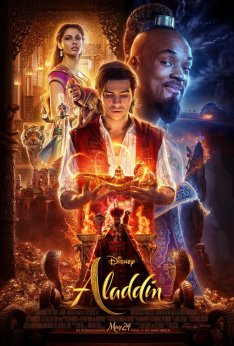 I walked away from the new live-action Aladdin feeling less agitated than I did for the 2017 Beauty and the Beast, and I’m trying to determine whether that was because this was a better interpretation or simply because my expectations have now been calibrated to know what to expect from these remakes, namely an inferior version of an animated classic. I’ve written about it before, recently with Dumbo, but the problem with the recent spate of live-action Disney releases is that they are too new, too beloved, and thus the audience is beholden to their nostalgia and resistant to dramatic changes from those original movies. The audiences demand fidelity over creative liberties. Without much attempted change, the finished versions end up feeling like big screen cover bands, going through the motions imitating the famous predecessor but ultimately reminding you how much more you’d rather be watching that original. I felt it with the 2017 Beauty and the Beast and now I’ve felt it again with the 2019 Aladdin.
The plot should be familiar to anyone who grew up with the 1992 classic. Aladdin (Mena Massoud) is an orphaned street thief (“street rat”) who runs into Princess Jasmine (Naomi Scott), a woman yearning to have a life on her own terms rather than being sold off via marriage. The evil advisor Jafar (Marwin Kenzari, a surprise highlight) is after a special hidden treasure, a long-lost lamp said to house a wish-granting genie. Aladdin is entrusted on this mission, gets trapped, and meets Genie (Will Smith), a boisterous figure trapped by the laws of the lamp. He must grant his new master’s three wishes, with some limitations. Aladdin wishes to become a prince and impress Jasmine, but he must withhold the truth, or so he feels. What rich woman could fall in love with a poor theif with nothing to offer but his heart?

So does the new Aladdin bring anything new and improved? It does sport a more feminist-friendly message and a more active Jasmine, who wishes not to simply be a free-minded princess but her people’s sultan, taking on the responsibility of leadership. It’s a nice addition that makes her more integrated into the story and developed. Unfortunately, Jasmine is also the recipient of the newest songs and they are, in a word, dreadful. They have little life to them or are crushed to death by simplified intentions, like when Jasmine storms around in a quasi-dream sequence belting how she won’t be silenced by the sexist men of her kingdom (the song is called… “Speechless”). It’s a pretty tuneless number and it doesn’t help that the entirety of it feels screamed at the audience. The portraits of Arabs aren’t terribly improved. Thirty years later and much of the story is still built around rather stereotypical depictions of heroic and villainous Arabic figures, though the movie seems to also be influenced by neighboring Bollywood. It just feels like there were some areas the filmmakers could have updated in the ensuing 27 years, but perhaps again they were too hesitant to not anger their core audience of fans.
Guy Ritchie (Snatch, King Arthur) was a strange choice when he was tapped to direct and, having seen the finished product, he shows no feel for musicals whatsoever. It’s a surprising realization considering his background in action and crime movies, genres that likewise rely upon a heavy understanding of choreography, use of screen space, editing, and furthering plot with action. It’s apparent very early, by the time we segue into “One Jump Ahead,” that this is going to be a tepid experience devoid of a sense of energy and style. Ritchie isn’t a bland director even in his bad movies, but his Aladdin feels like a for-hire gig where he has mitigated any stylistic flourishes. Aladdin is also a mystifying 38 minutes longer than the original cartoon and yet feels far more rushed. Even the song numbers feel like we’re speeding through them. The signature showstopper “A Whole New World” feels less than revelatory as we quickly traverse the city at night, muddy colors making the magic carpet ride less than magical. The entire movie feels weirdly paced and awkwardly developed, rushing to hit familiar plot points and yet paradoxically taking longer to do so. I’ll say that it doesn’t feel like a movie that runs over two hours long.

There is a middle portion of Aladdin becomes something like a fantasy version of Hitch, a romantic comedy where Smith was playing the confident wingman to an awkward foil. This is the only part of the film that feels like it’s settling down and giving the characters time to develop in a more organic fashion. The interplay between Aladdin and the Genie is entertaining and Smith puts his smooth charm to maximum effect during this sequence. The filmmakers even add a love interest for the Genie himself played by Nasim Pedrad (Saturday Night Live), and this allows him to put his own advice to the test and stumble in the game of affections as well. It’s quite reminiscent of Hitch but it made me smile and laugh more than any other part. It also felt like the one portion of the film where it was staking out its own identity and utilizing the talents of its own cast. I wish the entire movie had been retrofitted to be an Arabian Hitch of old.
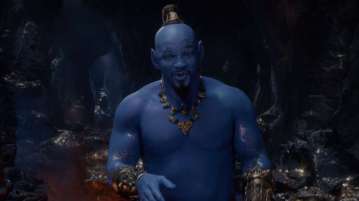
Nobody can replace Robin Williams’ iconic performance as the Genie, but Smith is a mighty fine choice for a replacement. His effervescent charm cannot be killed but it can be dulled, and too often the new Aladdin feels like it’s misusing the man’s many natural talents. Smith has a very shaky singing voice, and I was wincing in the opening minutes as he began to warble “Arabian Nights.” Oh no, I feared, what have we gotten ourselves into? Smith is no stranger to musical performances but his career is in rap, so I was expecting the Disney folk to re-imagine several of the songs with a more contemporary hip-hop angle to play to his strengths. They do not. The best performance is easily “Prince Ali” with its propulsive drive that Smith stakes full command of like the head of a drumline, slowing the tempo down and asking for participation from the sultan in order to ramp things back up. It’s a fun moment and made me wish the songs (with brief additional lyrics by the team behind The Greatest Showman) had been allowed to stray further and discover new angles that make better use of this version of this story. Also, the special effects make his blue genie look horrifying and should have been scrubbed as soon as somebody first saw him as a blue Shrek creature.
The highlight performer for me was Scott as Jasmine, an actress that first caught my attention as the Pink Power Ranger in, what else, the big-budget Rangers reboot. She demonstrates the most range and has an immediate presence; her Jasmine seems to be holding back, always wary, always assessing, and knowing more than she lets on. It feels like a more politically astute figure that can still give in to carefree moments of jubilation. Her singing is also pretty good even if she’s saddled with the worst solo songs. It’s not her fault that her onscreen lover seems to have better chemistry with Smith than her.
The new Aladdin does have some of its own virtues. The costumes are gorgeous and the sets are carefully crafted, making the world feel lavish and real and often stunning. Smith is still a charming performer and Scott feels like a great pick for a character given more agency. I enjoyed that Jafar is given a new character inferiority complex about being second best, and this is better used to fool him into his downfall. Even a less accomplished rendition of great sings reminds you that they are still great. Likewise the story is so well constructed that it’s hard to completely mitigate its delights and payoffs. The 2019 Aladdin is everything you expect from it, though possibly less, and it never truly justifies its own existence. There are moments to tantalize what a slightly different big screen revitalization could have been, like its rendition of Hitch. If you’re a super fan of Aladdin, it might be enough to get you over the rough spots. However, if that’s your starting point, I would advise staying home and just watching the superior and shorter version.
Nate’s Grade: C
Share this:

Bright (2017)
 Netflix has been fighting to get into the world of theatrical features. While its original series have met remarkable acclaim, Netflix still wants to draw filmmakers. There have been a few high-profile film buys like Brad Pitt’s War Machine, the live-action American Death Note, and it’s become Adam Sandler’s new home. Bright is a $90 million dollar fantasy film directed by David Ayer (Suicide Squad, End of Watch) and written by Max Landis (American Ultra, Dirk Gently). The big buzzy movie has been met with big derision from critics, some even referring to it as the worst film of 2017. After watching Bright, I think my friend Drew Brigner sums it up pretty well: “It’s not terrible, but it’s not great.” Slap that onto the poster, Netlfix.
In an alternate Los Angeles, humans exist side-by-side with fantasy creatures like fairies, elves, and orcs. Daryl Ward (Will Smith) is assigned a “diversity hire,” Jakoby (Joel Edgerton), the first orc on the force. Nobody wants to work with him. The humans are looking for whatever means they can of getting rid of the orc, and Ward’s superiors are looking for his assistance. Then one night on patrol, Ward and Jakoby come across a nightmarish crime scene. Bodies are burned in place. A woman is stuck in a wall. There’s one survivor, Tikka (Lucy Fry), an elf who has gotten hold of a magic wand. It so happens that magic wands are powerful weapons and only Brights can hold them. Word gets out about their discovery and every group in L.A. is after this powerful item. Ward and Jakoby have to escape gangs, orcs, corrupt cops, and an elf cult leader, Leilah (Noomi Rapace), who needs the wand to summon her Dark Lord back to dominate Earth.
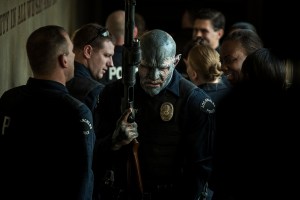 For the first 48 minutes or so of Bright I was willing to give it a welcomed chance. The world building from Landis presented enough interesting wrinkles to keep me intrigued. The banter felt believable enough to fit into its desired genre. Edgerton (It Comes at Night) is engaging and charming as a good-hearted orc whose life’s dream is to be a police officer. He is viewed as a traitor by his own kind, so that makes us like him even more for what he’s willing to sacrifice for this precarious position. There’s a personal source of conflict between Ward and Jakoby that is introduced early for them to work through. There are magic police, which is kind of cool. The world feels lived-in with clever details even though it could have used more of that sense of living. Too often it feels like the only difference in this new L.A. are scattered creatures in different locales. Elves are the rich elite. Orcs are the poor and disadvantaged. I could have used more magical creatures in the mix. What about dwarves, wizards, dragons, anything? Still, Landis’ script was providing enough breadcrumbs to carry me along, building up to the wallop of finding the magic wand. It forces Ward to make a startling personal choice that will define the rest of the film. It took a while to get going, but I was still willing to give Bright the benefit of the doubt.
However, it’s after the 48-minute mark that Bright begins its disjointed descent and never truly recovers, disassembling at an alarming rate. What follows is a series of poorly developed, poorly shot action sequences as the characters bump into one violent group after another. The interesting plot development gets put on hold and the weaker elements begin taking greater significance. It wouldn’t be a fantasy film without a great prophecy, which comes into bearing in the most contrived of ways. Speaking of contrived, there is a coincidental rescue late in the second act that made me loudly groan. Then there’s redoubling back to previous locations presumably to save money on set design. Once the movie sets things in motion for the mad scramble for the wand, it just feels like one unrelated sequence after another to keep our characters on the run. Even with the fantastical world building, you’ll be hard-pressed to muster genuine surprise. That’s because all of the later plot turns are readily telegraphed, like the coincidental save. We’re told that only a Bright can handle a magic wand and anybody else that touches it will explode. First off, why doesn’t this make the magic wand a defensive weapon if you know how rare Brights are? If you know idiots are going to have grabby hands, why not slide it toward your enemies? Regardless, knowing that dichotomy, you know one of the two main character will be revealed to be a Bright during a climactic moment, because why else have it? Anticipating payoffs isn’t necessarily a bad thing, but when you can anticipate all of them, then you’re in trouble. The most surprising aspect of Bright is how ultimately it’s still a formulaic buddy copy movie dressed up with some extra fantasy spectacle.
Another weakness that becomes more apparent as the film continues is the characters. Ward and Jokoby are pretty thinly sketched out with a few clarifying details. Ward is the lightly racist archetype who learns to accept his partner’s differences over the course of one long night. He’s pretty indistinguishable from the character Smith plays in the Bad Boys films. I suppose his prejudice and desire to better support his family is enough setup to question whether he’ll follow in the corrupt patterns of his colleagues. But after he makes his choice at that 48-minute mark, it’s like his character growth just stops. He still barks orders, he still quips one-liners, and he makes the big sacrificial gesture, but his character development is iced for a solid hour. Jakoby has more ground to cover and fairs somewhat better as the Jackie Robinson of the orc community. Except this guy seems way too inexperienced, clumsy, naïve, and simply not good at his job. In order to be the first diversity hire, I’m expecting this guy to have to go above-and-beyond to even be considered for a position. It reminds me of Shonda Rhimes quote where she says, as a black woman, “you have to be twice as good as them to get half of what they have.” I didn’t believe Jakoby was the best candidate for shattering that orc-sized glass ceiling. The harassment from the other cops can be painfully juvenile as well, like tacking on a stupid middle school-esque “kick me” sign to his back. He wants to make more of himself and because of that dream he’s shunned by his fellow orcs and distrusted by humans. That perspective should be far more interesting than what we get with Bright.
 The supporting characters fare even worse as bodies given momentary activity. Tikka is merely a plot device and not a character. She doesn’t even speak until close to 85 minutes into the movie, and it wasn’t really worth the wait. A toaster could have replaced her and the plot would remain relatively the same. She is the definition of a prop. She has no personality, no agency, and no goal beyond keep the powerful thing away from the villain. Because she’s a Bright she’s one of the few who can wield the magic wand, but even those rare occurrences are underwhelming. If this thing is as advertised, a “nuclear bomb that grants wishes,” then why doesn’t Tikka just utilize it to destroy the villains once and for all or at least help Ward and Jakoby? Poor Fry (The Darkness) just gets yanked around from scene to scene, shivering and generally looking frail. She’s got some killer eyebrows though.
Noomi Rapace (Prometheus) doesn’t have much to work with as the chief villain, Leilah. She’s an acrobatic murder machine who wants to summon the Big Evil Thing of Old, and that’s about it. Rapace does have a naturally elfin-looking face, so it’s solid casting. The other characters, especially the various antagonists, are just slight variations on heavies. No real personalities. No dimension. They’re just a video game stage of slightly different looking goons to be cleared before the next stage. Maybe there’s a larger point about the similar darker impulses all races are tempted by, but I think that’s giving the movie more credit than it deserves.
On that front, the racial commentary of this alternate L.A. is muddled, to say the least. The orcs are obviously meant to take the place of lower-class African-Americans in this newfangled City of Angels. However, what does the movie do with this? The orcs are judged to be troublemakers, prone to violence, and generally subhuman, with several people holding a thousand-year-old grudge over the mistakes of previous orcs. Under Ayer’s murky direction, the orcs easily resemble the black and Latino gangs we’ve seen in many of his police dramas. They’re meant to be an underclass. What does that make black people? There’s a tone-deaf joke in the opening where Ward yells, “fairy lives don’t matter” before swatting the winged nuisance to its death. I guess racism against orcs has replaced all other forms of intra-human racism. Landis’ script takes a hot button issue and drops the ball on making the commentary meaningful. Just think about what Zootopia did with its racial allegory on predators and prey. They took a serious topic and had something to say about it. Landis takes a serious topic and ignores the greater potential. By the end of the film, it feels oddly like Landis just took an old buddy cop story concept and grafted some incidental fantasy elements onto it and called it a full day.
 Ayer doesn’t help matters by filming in his Suicide Squad-vision of drizzly grays, cool blues, lens flares, and lots of dim shadows. The very look of the movie is so downcast and the action sequences are too poorly developed and choreographed. The combat is very often close-quartered and the jumpy edits and slippery sense of geography make the brawls practically incomprehensible. The sequences don’t develop organic complications. It’s just the same concept over and over, get to that place, shoot the bad guys before they shoot you, repeat. The action also misses opportunities to connect with the character motivations and to derive mini-goals that can help spice things up. Bright has none of that. Even with the inclusion of magic and magical creatures! The best scene is an attack in a convenience store that gets closest to involving parallel lines of action with some organic consequences related to its specific setting. Otherwise it’s a lot of shootouts in locations you’ve seen in other grimy cop movies (alleys, warehouses, strip bars, etc).
Bright is the most expensive movie in Netflix’s history and they’re already reportedly developing a potential sequel. The world Landis has created has enormous potential. It’s unfortunate that it’s not realized in this first edition. It’s not as bad as some film critics have been harping about but Bright should have been much better. The characters are lacking, the world building feels unfulfilled, the narrative is predictable, the social commentary is simplistic, and the action sequences are dreary and unexciting. I think something like Bright might in the end be intended as a loss leader for Netflix, something they initially lose money on but ultimately draws in new subscribers. It’s almost the same cost for that canceled Baz Luhrmann series, The Get Down (at least got eleven episodes from that). Bright is an underdeveloped genre mash-up that might make you reach for a magic wand of your own, your remote.
Nate’s Grade: C
Share this:

Collateral Beauty (2016)/ Manchester by the Sea (2016)
 Trauma and grief are common colors in the palette of screenwriting. Wounded men and women overcoming loss and sorrow allow us all an opportunity to learn and heal through someone else’s personal pain and suffering. It’s the movie theater as therapist’s office with art serving as catalyzing event to help those in need. When 2006’s United 93 was released many critics thought it was too soon for a dramatic recreation of the events of 9/11. First, there’s never a right estimation for how long the world of art should wait to respond to shared tragedy, but I argued that United 93 could function as a facilitator for healing for select moviegoers. It helps to be able to live vicariously through fictional characters on screen, and it makes us smile when they overcome those obstacles and give hope to the rest of us. Two new movies have taken very different paths to explore responses to trauma onscreen. Collateral Beauty is a star-studded affair built from a screenplay that sold for an estimated three million dollars. Manchester by the Sea premiered at the Sundance film Festival and blew away audiences with its understated and unsentimental portrait of loss. One of these movies goes big and miscalculates badly and the other delivers one of the better, more emotionally involving films of the year. I think once you hear the premises it’ll be clear which is which.
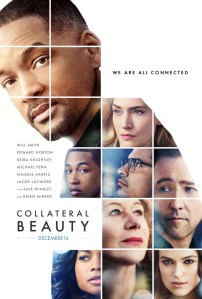
In Collateral Beauty, Howard (Will Smith) is an advertising guru still reeling two years later from the unexpected death of his six-year-old daughter. He’s become a hermit who furiously rides his bicycle into traffic to tempt fate. He shuns his old friends and minority partners, Whit (Edward Norton), Claire (Kate Winslet), and Simon (Michael Pena). He also writes angry letters to the concepts of Death, Time, and Love to note his general displeasure. Major accounts are lost because of Howard’s seclusion and now it looks like the whole company might go under unless they accept a stock buyout. Howard refuses to sign off on the purchase, which forces his trio of friends to hire struggling actors to play “Death” (Helen Mirren), “Time” (Jacob Latimore), and “Love” (Keria Knightley). These three personified concepts will converse with Howard to provide an unorthodox therapeutic breakthrough. The actors will be paid handsomely and they relish the challenge. If that doesn’t work, they will record his public feuds with the actors, digitally erase the actors, and make it seem like he’s gone crazy with grief. Along the way, Howard gets closer and closer to talking about his loss in a support group run by the saintly Madeleine (Naomie Harris), a woman also suffering the loss of her child. If the universe is all about making connections, Howard is on a collision course with the fates.
Few films have dropped in estimation so precipitously in my mind as Collateral Beauty. To its credit, while you’re watching the movie you don’t notice as many of the misguided manipulations from prolific screenwriter Allan Loeb (Things We Lost in the Fire, Just Go with It). You’re aware of their presence but they don’t remove you from the movie, that is, until you extend further thought on the full implications. Allow me to simply vocalize in print the Christmas Carol-esque premise of this “feel good” holiday movie.
“A group of wealthy advertising executives scheme to get their grieving mentor and friend declared mentally incompetent so they can sell their company. They hire duplicitous actors to pose as metaphysical concepts, engage with Howard in public, and then they will digitally erase the presence of the actors, making it look like Howard fits the lazy man’s definition of crazy. And these people are the heroes.”
The characters give plenty of rationalizations for why they’re forced to set up their supposed friend, mostly about saving the company and saving jobs. Simon especially needs the money and medical insurance with where he’s headed. Howard is spiraling and they worry that he will take down everyone with him. That’s fine, but why do they resort to the outlandish and ethically dubious practices that they do? The hiring of actors seems like a helpful therapeutic exercise on the surface, unless you stop and think about a grieving man badgered by an antagonistic universe. Howard is already exemplifying mentally unsound behavior so I don’t know why the public spats are required. The digital erasure constitutes explicit fraud and it feels so much grosser. It’s an expensive step to provide visual evidence of a man having a nervous breakdown. They could have simply recorded Howard in his office for a week while he builds elaborate domino structures just to watch them topple (symbolism!). Even the characters call-out one another for this gaslighting trick. On another note, won’t Howard eventually find out? What if some enterprising digital effects editor has a moral crisis and confesses? This is the equivalent of false documents forged to push the rich old lady into the booby hatch so her scheming relatives could abscond with her vast fortune. It’s even more egregious when Collateral Beauty presents these characters as the heroes. Yes they have different degrees of guilt but that is tamped down by their moral relativism justifications. It makes it a little harder to swallow all that outpouring of cloying sentiment later. These murky and misguided manipulations will symbolize much that is wrong with the movie.
I hope the audience is prepared for Smith to be sidelined for much of the movie because Howard is more a supporting character in someone else’s story. Howard is really more a catalyst than a fully developed character. He grieves, he suffers, but his point is how his grief and suffering affect others, which is a strange tact to take. His journey is quite similar to Casey Affleck’s in Manchester by the Sea. He must come to terms with loss, accepting the cruelty of that reality in order to move forward and let others in. Moving on doesn’t mean we forget, especially when that trauma is a loved one’s loss, and Howard holds onto that pain for so long as a means to still feel his daughter’s presence. It’s an acceptable character conceit but it flounders in the movie because EVERYONE simply talks at Howard. Smith’s asked to be teary-eyed and mute for most of the picture. Any significant breakthroughs, developments, or even passing of information occurs from others applying meaning to this sad silent man who must not remain sad.
 As a result, the movie pumps up the supporting characters and pairs them with one of the actors. “Death” relates with Simon for him to accept his declining health and to allow his family to know. “Time” relates with Claire over her worry that she’s sacrificed starting a family by prioritizing her career (this is another film world where nobody puts serious consideration into adoption). I need to stop and question this particular storyline. Doesn’t it feel a bit tacky and outdated? It’s also, by far, the storyline with the least attention; we literally see Claire glance at a sperm donor brochure and website for a scant few seconds and that’s it. Then there’s “Love” who relates with Whit to try and get him to repair his relationship with his rightfully angry young daughter after Whit cheated and broke up his marriage. “Love” literally just goads Whit to actually try being a parent and accept some responsibility for his failings. That’s it, and she has to use the incentive of a date to convince him to try and be a better father (Whit sloppily hitting on “Love” definitely lays a plausible peak into why exactly he’s divorced). “Death” and Simon play out the best mostly because Mirren is impishly amusing, and also benefits from naturally being Helen Mirren, and Pena’s character is given the most sincerity. He has the most at stake personally and setting things right for his family is taking a toll. Loeb has given each actor something to do, and the talents of the actors are enough that I was distracted from the overall machinations at least until the very end.
For most of its relatively brief running time, Collateral Beauty has kept to its own form of internal logic and avoided blatantly manipulative calculations for heightened drama. Sure Pena’s first instance of movie cough is an obvious telegraph to more astute members of the audience, but it makes some sense since this is less our real world and more the well-sculpted Movie World. Then the final ten minutes play out and the movie doesn’t just skid, it steers into this skid of counterfeit sentiment. I’ll refrain from spoiling both of the major reveals but they both serve to make you rethink everything. It’s not one of those eye-opening twists but more something my pal Eric and I were dreading in our seats, mumbling to ourselves, “Please please don’t.” These final two reveals are completely unnecessary. They disrupt the tenuous reality of the movie and the balance of tones becomes a mess. It also divulges how overly constructed the screenplay really was, designed to lead an audience to these chosen end points that don’t engender catharsis. It’s about pointing out how clever the screenplay was rather than the emotional journey, a movie in service of its twists. Neither twist serves strong narrative purpose other than to be out-of-the-blue surprises.
 Let’s get to that ungainly and clunky title. It’s a nonsense pairing of words that’s meant to sound profound but is really just confusing and remains so even though the characters repeat this clumsy phrase like eight times. There’s a conversation where it appears in every sentence, as if repetition alone can make this phrase/idea successfully stick. It doesn’t. I think I understand what it means, or at least what Loeb was going for, but I’m not sure. Madeleine talks about making sure to see all the collateral beauty in the universe, but is this merely a more obtuse way of restating Wes Bentley’s floating plastic bag declaration in American Beauty? Is it a more pretentious way of saying to stop and smell the roses? Here’s where I thought it was going with its meaning: “collateral” in this sense means accompanying and instead of accompanying damages we’re focused on the accompanying beauty, therefore a contemplation of the possible unintended helpful ramifications. This was going to make sense for Madeline since she uses her personal tragic experience to reach out and help others heal through their own tragedies. It’s the long ripples of human kindness reaching out far beyond our initial actions. And maybe, juts maybe, Howard and Madeleine would become romantically linked through coping with their similar heartache and find one another. However, the movie’s real ending torpedoes this interpretation. What we’re left with is a clunky pairing of words that still makes little sense by film’s end.
Collateral Beauty is probably the best-looking Hallmark movie you’ll see at the theaters this holiday season. It’s a gauzy and manipulative endeavor packed with movie stars doing their sad and redemptive best before hopefully cheering you up. There’s nothing that can’t be overcome with a good group of friends who only want what’s best for you while they take part in a criminal conspiracy to defraud you of your business stakes. That’s because even the most nefarious of behaviors can be forgiven with the right actor to provide a twinkle of the eye, a little swooning musical score to tell the audience how and when to feel, and the backdrop of lightly swirling snowfall. It’s a universe that refuses to allow Will Smith to stay sad and so it intervenes. Collateral Beauty has its draws, namely its core of great actors who each find some point of emotional grounding to their character’s plight. The finest actor in the movie is Harris (Moonlight) who radiates tremendous empathy and a bittersweet serenity. I’d watch the movie from her perspective. To Loeb’s credit, the movie is more grounded and less fanciful than its premise could have lead. It doesn’t sink to the depths of a Seven Pounds (“Do not touch the jellyfish”). Waterworks are shed all around, hugs are evenly distributed, and I’d be lying if I didn’t feel a lump or two in my throat by film’s end. However, its emotional journey doesn’t feel anywhere as revelatory as Manchester by the Sea.
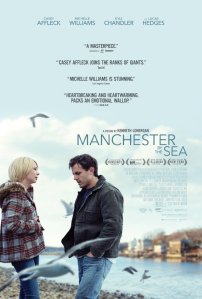 Lee Chandler (Casey Affleck) is living out an ordinary existence as a Boston apartment complex maintenance man. His routine is rudely interrupted when he receives news that his older brother Joe (Kyle Chandler) has fallen deathly ill. On the car ride north to Manchester, Joe passes away. Guardianship of Joe’s 16-year-old son Patrick (Lucas Hedges) is entrusted to Lee much to his shock. “I was just supposed to be the back-up,” he says to himself to little avail. Lee wants to move back to Boston with his new ward but Patrick refuses, pleading that he already has a life in town he enjoys. Lee is itchy to leave because of his painful associations with his hometown, tracing back several years to a fateful night of tragedy he shared with his current ex-wife, Randi (Michelle Williams). Lee takes on the mantle of parent while trying to ignore the trauma he’s doing his very best to ignore with every fiber of his working-class Bostonian being.
The first impression from writer/director Kenneth Lonergan’s movie is just how achingly authentic it feels. We drop in on the lives of these hardscrabble folks and glean important details as we progress, better forming a clear picture as to why they carry such pain with them as penance. In simplistic terms, it’s a two hour-plus journey to reach a point where the main character can openly cry. It’s also much more than that. It’s an incisive character piece on grief and tragedy, a surprisingly funny movie, and an effortlessly engaging movie that swallows you whole with its familiar rhythms of life. There is no formula here for Lonergan. Each fifteen-minute sequence opens the movie up again for further re-examination, especially a middle passage that is truly devastating. It provides compelling evidence why Lee has decided to become a recluse drifting through life. It’s not that Lee is lonely; he’s actively disengaged from all communities and connections. There are three different potential openings with women who seemed flirty and interested that Lee could have capitalized upon, or at least pursued, but he does not. A woman spills a beer on his shirt and squeezes closer to apologize, pleading to buy him a drink. He coolly looks away, ignoring her, and instead chooses to wait until closing time so he can get into a drunken fight instead. Lee would rather feel pain than momentary pleasure.
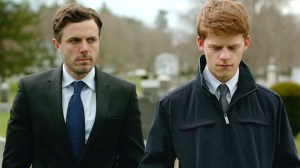 The movie is also a poignant father/son relationship told in waves, with as much humor as emotional breakdowns. Lee is trying to fix the situation the best way he can as if it was another clogged drain. He’s thrust into a parental position that he doesn’t feel fits. It’s not that he’s actively evading responsibility as he does try to accommodate his nephew, even driving him back and forth and covering for one of his two girlfriends to sleep over. Lee cannot work in his hometown because of his own lingering pain and also because nobody will give him a job thanks to the reputation he carries. For a long while it feels like Patrick isn’t even registering the death of his father except for his distress at the thought of his father’s body remaining in a freezer until the ground thaws for a burial. He’s trying to live a normal teenage life filled with activity like band practice, hockey practice, and juggling some alone time with his two girlfriends. He seems like a normal teenager with a normal teenage attitude, and that flies in the face of our expectations. Hedges (Kill the Messenger) provides a nice dose of awkward comedy to keep the movie from drowning in sadness. The burgeoning relationship between Lee and Patrick takes on new familial elements and dynamics and each is feeling out that new role. This movie is more than an elegant bummer.
Lonergan has only directed two movies prior to Manchester, both of them insightful, complex character studies with meaty parts for game actors. 2000’s You Can Count on Me cemented the wide appeal and remarkable talents of Laura Linney and Mark Ruffalo. Then his follow-up, the criminally underseen Margaret, ran afoul with producers who wanted to trim its near three-hour running time. It was kept in limbo for five long years until 2011 where it met with a degree of fervent critical fandom, including yours truly. Manchester began as a starring vehicle for producer Matt Damon, but when scheduling conflicts got in the way, the project was reworked with Affleck in the lead and Lonergan told the story his creative impulses desired without studio interference. As a big fan of his previous directorial outings, I’m not surprised by the gripping results. He lets an audience draw conclusions from the impressions and pieces he offers, notably with Patrick’s mother (Gretchen Mol) who he refers to as “not an alcoholic anymore.” There isn’t one big obvious scene but we’re given enough pointed clues about Patrick’s history with his mother and why Lee is adamant that his nephew does not live with his mother. The history of characters and their relationships follow this model, layering in further meaning as we continue at a safe distance in our seats. Things aren’t spelled out as they are allowed to breathe, the furtive connections becoming perceptible in time like a message written in the fog of a window. Lonergan has great affection for his characters and their flaws, insecurities, and struggles. This was evident in Margaret where the title character (vividly played by a pre-True Blood Anna Paquin) was a teenager exploding with emotions, opinions, and thoughts and Lonergan celebrated her for this fact. I appreciate Lonergan’s refusal to paint in broad strokes with all of his characters.
 This is Affleck’s (The Finest Hours) movie and while good the more extroverted performers around him overshadow him. Affleck can be a gifted actor as evidenced with The Assassination of Jesse James by the Coward Robert Ford. He has a quiet intensity and a habit of burrowing inside himself to discover something raw and different. His performance feels like he’s trapped in a PTSD shield that saps the life from him. He’s drifting through his life and waiting to die, simply put. Because of his taciturn nature he doesn’t garner any sizeable monologues to spill out all his feelings. He has to use little moments and the nuances of choosing his words carefully. When he tells Patrick “I can’t beat it” those words are loaded with meaning that he can only convey in subtext. When he stops to process that Randi has gotten pregnant from another man we notice the subtle registration of pain and regret, a twinge of memories he’s trying to hold back. Affleck’s performance is very subdued for most of the movie but it’s in the final act where he cannot maintain his well-manicured bubble of resistance to the outside world. When Lee does start to cry, it will earn every ounce of your sympathy.
Williams (My Week with Marilyn) is more presence than character in the movie, but when she does stay long enough she leaves an emotionally gut-wrenching impression. I understand that “gut-wrenching” is a pejorative term but it’s really one of the more uplifting moments in the movie. That’s because her character’s reunion with Lee isn’t one of enmity but reconciliation, allowing her to make amends and say plenty of things that she’s been holding back for years. It’s an unburdening and once Williams starts it’s hard not to feel the flow of tears coming from your own eyes. She is a one-scene wonder, reminiscent of Viola Daivs in 2008 for Doubt, nominated for Best Supporting Actress and well deserving a win for one brilliantly acted scene. Fitting then that Davis looks to be Williams’ chief competition for Supporting Actress this year. I invested even more in this scene because the power of Randi’s emotional honesty almost pulls Lee out. He’s shaking, his voice cracking, and trying to stick to saying the customary conversational tokens that have gotten him through to this point. He’s avoiding confronting reality but the sheer emotive force of Randi almost pushes him to that genuine breakthrough.
If there is one noticeable drawback to such an exquisitely rendered film, it’s that it follows the narrative structure of real life perhaps a bit too faithfully. Life doesn’t normally follow a three-act structure with clearly defined character arcs and a carefully orchestrated system of measured payoffs. While Manchester by the Sea isn’t exactly an automatic entry in mumblecore paint drying, it’s certainly less indebted to familiar story structure, which does affect the overall motor of the story. You don’t have a strong sense of its overall direction, an end point, and while the pacing isn’t glacial it can start to feel bogged down in those wonderful New England details of everyday mundane life (how many times do we need to see Lee driving?). There are also probably more flashbacks than necessary to flesh out the characters in an implicit manner. If the movie wasn’t 137 minutes I might accuse it of padding its running time. It doesn’t take away from the overall enjoyment of the film but you feel a certain loss of structure and payoff. In contrast, Collateral Beauty is entirely reliant upon plot machinations and a formula serving a very Hollywood-styled ending. Sometimes maybe an audience would prefer a little more of a driving force and a little more oomph for an ending. While certainly lacking in just about every factor, I’d say that Collateral Beauty does feel more climactic with its conclusion than Manchester, which sort of rolls to a close that makes you say, “Oh, I guess that’s it then.” Sometimes realism can profit from a judicious nudging. Then again with Manchester it’s more the journey and Collateral Beauty is all about the destination.
 While ostensibly being about two men overcoming the loss of someone close to them to function in everyday society once more with meaningful personal relationships, there’s quite a wide divide between Collateral Beauty and Manchester by the Sea. One represents a more calculated and morally dubious reflection of trauma as a theatrical game leading to Big Twists that are meant to leave an audience swooning from the magic of reconciliation. While fairly grounded on its own terms for a far majority of its time, Collateral Beauty can’t help itself and steers into a ditch of bad plotting, made even worse by the fact that it puts so much significance on its preposterous final destination. It manages to cheapen the movie as a whole in retrospect as an elaborate parlor trick that rivaled what the ethically challenged heroes of the tale were perpetrating. On the other side, Manchester by the Sea is a carefully observed and intimate portrait of grief and the consequences of self-destructive detachment from a larger world of compassion. The acting is terrific and lived in, authentic to its core and stuffed with meaningful details that Lonergan leaves to his audience to formulate. However, some of its indie auteur sensibilities do have a somewhat negative impact on the pacing and ultimate conclusive nature of the movie. It’s not that the film is open-ended; it’s just a “life goes on” kind of ending that doesn’t exactly inspire the strongest feelings of satisfaction. Grief will always be a topic that attracts filmmakers and especially actors because of its inescapable drama, stakes, and general relatabilty. I only implore any readers that if you’re trusting filmmakers with two hours of your emotion, make sure they earn that privilege.
Nate’s Grades:
Collateral Beauty: C
Manchester by the Sea: A-
Share this:

Suicide Squad (2016)
 After watching the debacle that was Batman vs. Superman, I said it had killed my hope for the larger DC film brand. Thanks to writer/director David Ayer, and by extension Zack Snyder’s ongoing influence, Suicide Squad reconfirms every bad step they’re down on this bad road of anti-entertainment.
Amanda Waller (Viola Davis) is worried about national security in a world where a certain Kryptonian has upended our sense of priority. She wants to assemble a team of bad guys who can do some good. Rick Flag (Joel Kinnaman) is placed as the commander of a “suicide squad,” a black ops team of super villains that are injected with devices to make their heads go kablooey if they disobey. Among the ranks is Deadshot (Will Smith), a paid assassin who never misses, Harley Quinn (Margot Robbie), the former psychiatrist and lover to The Joker (Jared Leto), an Aussie named Boomerang (Jai Courtney), Diablo (Jay Hernandez), a guy with the ability to control fire, a human-crocodile hybrid named appropriately Killer Croc (Adewale Akinnuoye-Agbaje), and the Enchantress (Carla Delevigne), a thousands-year-old spirit inhabiting the body of Dr. June Moone, who also happens to be Flag’s girlfriend. Assisting Flag is Katana (Karen Fukuhara), a masked swordfighter with a tragic and mystical past. The Squad is thrown into harms way and have to work together as a group if they plan on surviving.
The tone and structure of the movie is like an unholy marriage of Stephen Sommers’ (The Mummy) sense of careless plotting and archetypes, mish mashing tones, and Joe Carnahan’s (Smokin’ Aces) sense of wanton violence, killer cool killers, and militaristic fetishism. It’s a problematic pairing of tone that almost sort of works in the opening twenty minutes as it sets up the various bad guys with their requisite little slices of backstory. Primarily Deadshot and Harley Quinn are the spotlight characters, and it helps that the two most charismatic actors play them. The first twenty minutes doesn’t exactly push the narrative forward in a meaningful way as it involves Davis digressing with an armada of high-energy flashbacks, but it’s almost forgivable. Her pitch to the government for a black ops team of super villains seems credible enough in this anxiety-ridden world, so Ayer has at least started off not quite well but well enough. And then it all goes downhill so fast into a vortex of suck and cannot recover.
 It was at the first act break that I knew this movie wasn’t going to recover and get better. You see the advertising has been very secretive about who the true antagonist is for this movie, which is none other than the Enchantress. The introduction of this Jekyll/Hyde character and her power is initially interesting, though she certainly stands out in a world of meta-humans. The problem is that this character is obviously far more powerful than everyone else in the movie, as evidenced by Waller’s “show off” moment having the Enchantress teleport and bring back nuclear secrets from a hostile foreign nation. I think Ayer realizes this and so he quickly, and I mean quickly, positions the character as the Big Bad of the film. Dr. June Moone whispers the word “Enchantress” and she appears, and then she whispers it in her sleep and, oh no, the wicked witch lady is out and nobody seems to have any contingency for this. How has nobody thought about the risk of her accidentally saying this one word? Should she be sleeping with some sort of gag?
Enchantress steals the other ancient idol containing the spirit of her brother, which is just hanging around for some unknown reason, and the two of them are distraught that mankind, which once worshiped them, has moved on. They’re going to destroy the world by making a vague world-destroying machine, which basically comes across as a giant energy portal. The brother becomes the primary villain, a giant heavy with dumb tentacle weapons, and the two of them take human beings and turn them into a faceless army of disposable soldiers thank to the power of Enchantress kissing them. It’s at this point that the movie reminded me of Sommers’ Mummy Returns sequel where the goofy tone and careless development swallowed the movie whole, shrugging and saying, “What more did you want from us?” The villains are quasi-Egyptian gods who want to destroy the world. The last act finally positions the Enchantress as the one to topple, and our anti-heroes are attacking her with guns and baseball bats. It’s just laughable and not in the good way. The entire Enchantress as villain storyline is a swirling CGI mess and her army of faceless henchmen inspire no interest or dread.
You would rightfully think that a movie about a ragtag team of kooky anti-heroes would be darkly comic and have a whimsical sense of fun, much like what James Gunn achieved with Guardians of the Galaxy. I walked out of Suicide Squad dumbfounded and muttering to myself, “How… how do you screw this up?” I think the movie has confused snark with humor. There is precious little that comes across as funny. The characters have some one-liners but that’s about it, and they grow tiresome after a while. Suicide Squad is a classic example of trying too hard; it’s all empty posturing and posing, asking for plaudits about how edgy this cut-and-dry PG-13 movie must be with its mall Goth aesthetic and irreverent sense of good and evil. It tries so hard to be edgy that you can see the onscreen flop sweat. Case in point: the avalanche of music selections. In the first ten minutes or so it feels like there is one needle-drop music selection mere seconds after another, and Ayer chooses a mixture of artists for their on-the-nose lyrics. “You Don’t Own Me” for Harley Quinn especially, “Come Baby Come” just for a scene involving a bat with the choice lyrics, “swing batter batter batter,” a cover of Nirvana’s “Lithium” because it has “friends in my head” as a lyric, “Sympathy for the Devil” for many obvious reasons, “Spirit in the Sky” when the gang is airborne, “Seven Nation Army” when the gang is put together, and so on. If there were a handful of on-the-nose music selections, it would be passable, but it’s almost like the overzealous music director worked overtime to provide as many selections as possible to cover-up the movie’s empty sense of fun.
 No character symbolizes the film’s ethic of trying too hard more than Leto’s (Dallas Buyers Club) rendition of the Joker. Admittedly Heath Ledger’s performance was iconic and cannot be replicated, but Ayer’s script doesn’t even justify the character’s presence. There is no standout or memorable scene with the Joker to help signify just what kind of character he is, how he’s far different and more dangerous than your everyday psychopath. If you called this guy a different name you would swear it’s a different character because they fail to make his inclusion meaningful. We see Joker in flashbacks relating to Harley Quinn, and it’s in these short moments that the character plays best, in particular a high dive into a vat of chemicals all in the name of twisted love. Through Harley, we get a fleeting sense of a Sid and Nancy sort of courtship that could be interesting. However, alone, Leto’s Joker is a wash, intimidating guards with lackluster “crazy talk” and maniacal giggles. There’s a shot of him lying on the ground surrounded by a carefully constructed circle of weapons. It’s a small moment but it makes him seem more OCD than scary.
Joker’s storyline is trying to free his girl from prison, but the larger problem is that Harley Quinn is a worse character when she’s with her “puddin'” Mr. J. She loses her independence and just becomes arm candy and settles into The Girlfriend in Short Shorts. She elevates him and he drags her down. That’s a direct problem with characterization. The Joker is a distraction to the other characters and his small scenes tracking her down do not excuse the detour. Leto snarls and struts but it feels over conscious and dull. There is a better way to use the Joker: make him the target of the Squad. That pushes Harley Quinn directly into the center of the story and provides plenty of internal conflict for her to wrestle with her tortured psyche and sense of adoration for a man who had tortured her and abandoned her. That would be more interesting. In the Snyder universe, we have a Batman who has no compulsion against killing his enemies, so why the hell is the Joker still alive to terrorize? It seems bizarre that Affleck’s Batman would let this guy go unless the fan conspiracy theory that the Joker is secretly a disturbed Jason Todd, a former Robin, was accurate. That would make the character instantly more intriguing and provide some needed depth to what is a shallow character that is all exaggerated attitude. He’s the worst modern Joker but not the worst part of the movie.
The characters are just not that interesting and the far majority of the Squad teammates are meaningless background players. Killer Croc, Boomerang, Slipknot, and Katana are utterly useless in this movie. They fill out space and kill some faceless bad guys, but their plots could just as easily been attached to the other Squad members. Katana in particular is another one that feels like she’s been pulled in from a different movie entirely. She’s introduced as this killer assassin and Flag says, offhand to the point of hilarity, that her sword captures the souls of the men it kills. There’s a later moment where she’s swearing her love to the trapped soul of her husband in the glowing blade, and I just couldn’t hold back and started laughing. I’m sure this point is directly taken from the comics, but it’s thrown in without any care, any setup, and its tone is directly conflicting with the snarky nogoodniks. Diablo is given a boring and predictable arc but he at least has a dollop of characterization outside “zany” or “menacing” because he wants to not use his fire-starting powers. These characters just don’t matter to the story, and the actors aren’t given anything close to resonant character moments to make them matter to us. The Batman cameos are completely superfluous as well. There’s no reason that our criminals couldn’t have been brought in from other circumstances. Batman also has a creepy moment where it seems like he’s forcing himself on Harley Quinn to give her mouth-to-mouth resuscitation. It’s such an off-putting and curious moment I kept waiting for Bruce Wayne to wake from another dream sequence.
I think back on Captain America: Civil War again and how the filmmakers were able to deftly integrate a bevy of heroes and make them matter, giving each one a small moment to be fleshed out, providing arcs, and incorporating them in exciting and satisfying ways into combat that would let them show off their stuff. Suicide Squad is not that.
 There isn’t one good action sequence in this whole movie, and with the Enchantress army of monster goons, it starts to feel like an extended episode of the Power Rangers but with an oversight of firearms. What’s the point of bringing in a bunch of weird characters with super powers if all they get to do is one gunfight after another? Once the Squad lands in Raccoon City, er, I mean whatever city ground zero is, the movie is one long slog to eventually confront the Enchantress. It’s one abandoned street filled with goons to get shot down after another. Repetition settles in and Ayer doesn’t use the opportunity to have his characters do something fun or different. The action doesn’t excite and the characters don’t excite, and everyone trudges, head down, to their dire destination in the sky. It feels like a shadowy warzone without a clear objective, direction, or understanding of the threat. There is one interesting aspect of the action that’s never developed as it should be, and it’s the Squad’s vulnerability to losing Flag. Not only does he have the control to make their heads burst, if he is killed in action then the Squad dies too. Deadshot realizes that the team has to defend Flag and out-rightly rescue him a couple of times. It reminds me of a video game escort mission but Ayer never really does much more than having his characters recognize this dynamic. As much thought is put into the action as put into the antagonists, which is to say little. Some of the action is so poorly edited and choreographed that I just hit my head against the back of my chair and waited for it to be over.
There are a few bright spots in the film, mostly provided by the lead actors. Smith (Focus) is still one of the world’s most charismatic actors even if he’s saddled with the rote “I wanna see my daughter” storyline to humanize his remorseless assassin. Smith relishes his anti-authority figure and settles into a comfortable and appealing groove. Robbie (The Wolf of Wall Street) is delightful and her character’s zany non-sequiturs are more often funny than grating. You can tell Ayer is also a fan, as his camera lovingly oogles her body. It’s a performance that whets your appetite for more Harley Quinn that the movie doesn’t seem to be able to deliver, especially when it starts to go down a route that presents her almost sentimentally. Davis (The Help) does a fine job selling her badass tough guy moments as the leader of the program. I don’t quite buy the “government/jailers are the real bad guys” angle the movie consistently presents to elevate its Dirty Dozen. The “worst of the worst” can’t be all that bad considering we’re working under the mandate of a mainstream PG-13 rating. They’re villains with gooey centers and moral codes.
It’s not at the punishing level of disaster that Batman vs. Superman wrecked, but this is a movie that is plenty bad, and not in the good way, or the fun way, just in the bad way. Even things that should be saving graces for a comic book movie about antiheroes, the fun personalities and visuals, are lacking. Ayer doesn’t know what to do with his overabundance of characters once he gets them assembled and he doesn’t have the visual dynamism of a Snyder. Ayer has talent with writing machismo characters and can even be a fine director of action as he proved with the sturdy WWII tank movie, Fury. It certainly feels like this movie got away from him. If this is trying to be an over-the-top B movie, it fails. If it’s trying to be a flashy and stylish diversion, it fails. If it’s trying to be a subversive take on super heroes, it fails. It just doesn’t work. It wants to thumb its nose at super hero movies and dance to its own anarchic, nihilistic beat, but you never believe the movie’s own convictions. It feels like empty posturing, confusing attitude and costuming for edge. It felt like some film exec pointed at Guardians of the Galaxy and said, “Make us one of those.” The sad thing is that Batman vs. Superman wasn’t good but it was at least ambitious, having to set up multiple franchises, serve as a sequel and reintroduce Batman. Suicide Squad had to do considerably less with the easy task of making a group of crazy anti-heroes as popular entertainment, and it flounders. It’s going to be a long wait until 2017’s Wonder Woman, the next DC movie in their larger plan to compete with the Marvel big boys, and the howls from dissatisfied moviegoers will echo until then, providing a pessimistic landscape for every new scrap of footage and trailer. Remember that the Suicide Squad trailer looked mighty good too and the actual movie is well and truly awful. Sometimes the packaging is the best part and sometimes it’s the only part.
Nate’s Grade: C-
Share this:

Concussion (2015)
 Concussion wants to be a hard-hitting drama exposing the dangers of repetitive head trauma in football and the lengths of the cover-ups and collusion within the NFL, except that movie already exists and is the Frontline documentary League of Denial that was too controversial to air on ESPN. Concussion, in comparison, is an adequate but hopelessly underwhelming film on the Nigerian-born Dr. Omalu (Will Smith) who discovered chronic traumatic encephalopathy (CTE) in the brains of deceased NFL players. The resistance and denials are soft-pedaled, though the movie treats them with heightened dramatic stakes that are unearned. There’s one threatening anonymous phone call but for the most part it feels like Dr. Omalu is just being ignored, and “being ignored” is a hard thing to turn into outstanding dramatic stakes at the movies. The movie doesn’t let the NFL completely off the hook but its critiques have been softened by studio interference (as revealed through the Sony email hack). As a straightforward drama, Concussion is easy to watch and Smith gives an authentic performance that doesn’t have to go to histrionic lengths to communicate his internal struggle. There’s a nice subplot with Omalu courting his eventual wife played by Gugu Mbatha-Raw. Albert Brooks and Alec Baldwin are strong supporting players. David Morse gets a show-stopping part to show off his acting skills. By the end, it all feels just a little too nice, a little too polished, and a little too easy, both in how it presents a complicated medical discovery and its implications but also the NFL’s response. For an awards-season drama that’s meant to shock and inform, being “easy” is the wrong call.
Nate’s Grade: B-
Note: “League of Denial” is currently available on Netflix streaming and I encourage people to check it out.
Share this:

Focus (2015)
 The appeal and drawback of con artist films is that you know you’re being conned. You want to be fooled, but at the same time you’re conditioned to never take anything you see at face value, to be waiting for the turns and reveals and twists, and because of this fact it is rare for a con artist film to deserve more than one viewing. Focus fits this description. Will Smith is a smooth con artist who takes Margot Robbie (The Wolf of Wall Street) as his apprentice, but then he dumps her just as their feelings for one another get too real. It’s a shame then that the film peaks during its first act, when Smith and Robbie are first working together to shake down a gloriously irresponsible gambler played by B.D. Wong. The two lovebirds meet again in Argentina as they’re both circling the same rich mark. It’s fun to watch them mess around with one another and spar, and Robbie really shines, but the plot is just too formulaic to be anything more substantial. It’s fun and entertaining in spots, but the end is a cascade of twists that further muddle and complicate an already convoluted con caper involving secret race car fuel. The problem is you’re never engaged enough to forget you’re watching a con, and so you’re always suspecting every angle and doubting every character, which Focus eventually does confirm your suspicions. It’s nice to watch Smith transition into a less flashy role, though his effortless charisma still shines. It’s the kind of role he should be taking more often. You won’t have a bad time watching Focus but you won’t remember much in the morning.
Nate’s Grade: B-


 nathanzoebl
You must be logged in to post a comment.