Blog Archives
HIM (2025)
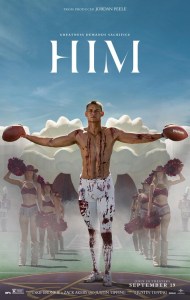 Setting a horror movie in the world of competitive sports, especially American football with its fandoms akin to dangerous cults of zealots, is a smart concept that could have so much possible commentary, from the sacrifices and exploitation of the players for the blood-lust of the fans, to the conspiracy of a cadre of white owners profiting from the labor of black athletes, to even the blinding psychopathy of extreme tribalism as an identity and dividing line. HIM does little to none of this, and being produced by Jordan Peele, I expected so much more than what I got. We follow a college phenom quarterback who wants to be the greatest, so he accepts an offer to train with a famous champion (Marlon Wayans) who puts him through a series of intense trials to prove whether he has what it takes. The horror elements are more confusing and surreal than unsettling, often crashing into unintentional comedy, like watching mascots with sledgehammers. This is one of those movies that seems to shift from scene to scene, with murky elements meant to keep the main character guessing but really just keeps the viewer guessing if this will ever come to something meaningful. The horror grew tiresome and repetitive. I was hoping for more scenes like where our young QB’s misses in practice lead to other players being physically abused, but mostly HIM hinges on tired occultly leftover furnishings, including an ending that is simultaneously underwhelming and predictable, a shrug meant as catharsis. An electrifying horror movie can certainly be made about the world of football. HIM isn’t it, let alone the possible GOAT.
Nate’s Grade: D
Share this:

Marty Supreme (2025)
 Marty Supreme is like the Oscar bait version of 2019’s Uncut Gems. Director/co-writer Josh Safdie, one half of the Safdie brothers that literally gave us Uncut Gems, has applied that same panic attack-inducing formula to a more broadly friendly combination of elements (example: this movie doesn’t open on a colonoscopy). Timothee Chalamet plays the titular Marty, a young man in 1952 New York City with a dream of being the best ping pong player on the world stage. He’s so supremely confident of his abilities that he never seems to plan beyond the immediacy. He’s a born hustler, and the majority of this 150-minute exercise is watching him work multiple schemes to gather the funds to secure a plane ticket to Japan. Reminiscent of Uncut Gems, it’s a movie of antic episodic events, with a charismatic but self-destructive lead spinning collapsing scheme upon collapsing scheme, one ending while another begins, and struggling to keep them all spinning and paying out. It makes for a frantic, propulsive experience, and even though there are some shady characters eventually and threats of violence, the stakes feel less dramatic and therefore more accessible to endure for so long. This is the kind of movie where, upon finally getting an item that will pay for that ticket, Marty’s own uncompromising hedonism has to be satiated in that moment of supposed triumph, all for it to get taken away again. In many ways, Marty is his own worst enemy when it comes to actually achieving his goals.
The whole thing is built upon the performance of Chalamet, who dominates the movie. There’s maybe five total minutes where Marty isn’t on screen. It’s a movie that needs a charismatic anchor. Chalamet digs in as the smooth-talking, impulsive, manipulative con man literally looking for his big ticket to stardom. It’s a brash performance of bravado, and it’s easy to get carried away by the actor, or at least intrigued to see how Marty is going to get out of all these crazy jams of his. The whole movie kind of takes a note from its lead to be bold. There’s digressions upon digressions. There’s key supporting roles for Tyler the Creator and Kevin O’Leary, yes, the bald guy from Shark Tank. There’s an opening credits sequence following sperm fertilizing an egg. The last 20 minutes is almost all ping pong action. There’s anachronistic music throughout. It’s remarkable how much of it works, but the frantic, anxious nature of the plotting covers up the hollowness of Marty. Perhaps he’s always yammering because a second of silence could force introspection. I don’t know if this man is capable of reflection, despite what the final image might infer. It’s a wild, whirling, consistently surprising movie that blends in so many characters and incidents to keep you entertained, but I don’t know if, much like Marty, there’s anything deeper under the surface of that desperation
Nate’s Grade: B
Share this:

Million Dollar Baby (2004) [Review Re-View]

Originally released December 15, 2004:
Million Dollar Baby, much like its fledgling female boxing character, has come out of nowhere and made a considerable deal of noise. This little homespun film directed by Clint Eastwood didn’t have the glitz and sheen of other awards friendly movies, but now it seems that Eastwood?s own baby may clean up come Oscar time. Can Million Dollar Baby tackle the enormous hype surrounding it? Yes and no.
]Frankie (Eastwood) is a hardened boxing trainer too concerned for his fighters’ welfare to allow them to fight in championship bouts. He’s the kind of cynical old man that enjoys pestering a priest and causing him to unleash an F-bomb. Frankie and his longtime friend Scrap (Morgan Freeman) run a rundown gym and talk un-sentimentally about their older days as prize fighters. Then along comes Maggie (Hilary Swank), a 32-year old waitress who’s got nothing to believe in except her possibility as a boxer. She wants Frank to train her into the champ she knows she can be. He refuses saying he doesn’t train girls. She’s so determined she won’t take no for an answer. Frank finally agrees, especially after some help from Scrap, and starts to teach Maggie everything she needs to know to be a star pugilist. The two begin to open up to each other emotionally and Maggie seems destined to become a force in the ring.

Million Dollar Baby‘s greasiest attribute is its trio of knockout performances. Swank owns every second of this movie. She’s unremittingly perky, conscientious but also dogged, stubborn, and irresistibly lovable. Swank embodies the role with a startling muscular physique and a million dollar smile. Her performance is equal parts charming and heartbreaking. Maggie’s the heart of Million Dollar Baby and Swank doesn’t let you forget it for a millisecond. Come Oscar time, I’m sure she will be walking onstage to grab her second Best Actress Oscar in five years.
No one does grizzled better than Eastwood, and maybe no other actor has made as much of an acting mark by squinting a lot. Million Dollar Baby is probably his best performance to date, though for a good while it sounds like Frank has something lodged in his throat (pride?). Frank has the greatest transformation, and Eastwood brilliantly understates each stop on the journey until landing in a vulnerable, emotionally needy place.
Freeman once again serves as a film’s gentle narrator. There isn’t a movie that can’t be made better by a Morgan Freeman performance. His give-and-take with Frank feels natural and casual to the point that it seems improvised on the spot. Freeman unloads some great monologues like he’s relishing every syllable, chief among them about how he lost his eye. It’s wonderful to watch such a great actor sink his teeth into ripe material and deliver a performance that may net him a long-awaited Oscar (I think he’s due, and likely so will the Academy).
For whatever reason, Eastwood is hitting a directing groove in his twilight years. First came Mystic River, an ordinary police whodunnit made exceptional by incredible acting. Now Eastwood follows up with Baby, an ordinary sports film made extraordinary by incredible acting. Hmmm, a pattern is forming. The cinematography is crisp and makes great use of light and shadow to convey emotion. Eastwood’s score is also appropriately delicate and somber. The boxing sequences are brief but efficient.
Million Dollar Baby is a very traditional story that is at times surprisingly ordinary. Maggie’s the scrappy underdog that just needs a chance, Frank’s the old timer that needs to find personal redemption, and Scrap’s the wise old black man. Once again, an old curmudgeon takes on a rookie and in the process has their tough facade melt away as the inevitable victories pile up. Million Dollar Baby is a very familiar story but then again most boxing tales are fairly the same in scope.
What eventually separates Million Dollar Baby from the pack is its third act twist. You think you know where Eastwood’s film is headed, especially given the well-worn terrain, but you have no clue where this story will wind up. The plot turn deepens the characters and their relationships to each other in very surprising ways. You may be flat-out shocked how much you’ve found yourself caring for the people onscreen. It almost seems like Eastwood and company have used the familiar rags-to-riches underdog drama to sucker punch an audience into Million Dollar Baby‘s final 30 minutes. We’re transported into an uncomfortable and challenging position, and Eastwood won’t let an audience turn away.

Million Dollar Baby is not the colossal masterpiece that critics have been drooling over. For one thing, the group of antagonists is not nearly as textured as our trio of leads. They’re actually more stock roles that further enforce the ordinary story of Million Dollar Baby. Maggie’s trailer trash family is lazy unsupportive batch of stereotypes. The evil female boxing champ just happens to be a German who doesn’t mind playing dirty. One of the boxers at Frank’s gym is an arrogant showboat just waiting to be nasty while the teacher’s back is turned. Million Dollar Baby excels at showing depth and humanity with its lead trio, yet it seems if you aren’t in that circle you’re doomed to wade in the shallow end.
Eastwood shows that great acting and great characters you love can elevate a common framework. The package may be similar to a lot of films before about scrappy underdogs, but Million Dollar Baby lacks comparison in its genre when it comes to its enthralling acting and characters. The father-daughter bond between Frank and Maggie is heartwarming. The final reveal of what her Gaelic boxing name means may just bring tears to your eyes. The results are a very fulfilling movie going experience, albeit one that regrettably may not live up to such hype.
Million Dollar Baby has been showered with heapings of praise and become a formidable Oscar contender. The story treads familiar waters but its outstanding acting and deep and humane characters elevate the material. The film can’t match the hyperbole of critics but Million Dollar Baby is an ordinary but greatly satisfying ride led by compelling acting. The film hums with professionalism and seems to just glide when everything comes together magnificently, particularly in that last 30 minutes. Eastwood is hitting an artistic stride and it’s actually exciting to see what Clint will do next. Million Dollar Baby may not be a first round knockout but it definitely wins by decision.
Nate’s Grade: B+
——————————————————
WRITER REFLECTIONS 20 YEARS LATER

Million Dollar Baby was its own underdog story that showed its strength when it mattered most, taking the 2004 Best Picture Oscar, as well as Best Actress for Hilary Swank and Best Supporting Actor for Morgan Freeman. It wasn’t even on many award prognosticators’ radar until the final month of the year. The odds-on favorite for most of 2004 had been Martin Scorsese’s Howard Hughes biopic The Aviator, a lavish recreation of Old Hollywood with the power of Harvey Weinstein behind it. After 2002’s Gangs of New York went 0-10 with its Oscar nominations, Weinstein vowed this would not happen again and that he would get Scorsese that first directing Academy Award, so no expense was spared with a $110 million-dollar budget, exceeding the previous highest Miramax budget from 2003’s Cold Mountain. The narrative was set, the power of Weinstein was behind it, and the context of Hollywood celebrating its own history has long been an appealing formula for an easy Oscar victory. Then came Clint Eastwood’s scrappy little boxing movie and it sucker-punched the established awards narrative, taking the top prize (Sorry Harvey, but if it was any consolation, The Aviator improved upon Gangs’ ratio, winning 5 of 11 noms).
Twenty years later it’s impossible to discuss the legacy of Million Dollar Baby without talking about the legacy of Eastwood as a director. He’s been directing movies ever since 1971’s Play Misty For Me. He initially stuck to what he knew, thrillers and Westerns, with the occasional passion project like 1988’s Charlie Parker biopic, Bird. It all changed for Eastwood with 1992’s Unforgiven, a searing deconstruction of the Western and masculinity and conveniently digested American myth-making that won Best Picture and Best Director for Eastwood. From there, the flinty-eyed, gravelly-voiced filmmaker was seen as an Oscar favorite, though he was only nominated for Best Director three other times out of the twenty-five films he directed after. Eastwood’s been regarded as some higher-minded adult director, but looking over his long list of directorial efforts, the man has always kept to his preferred milieu of thrillers and Westerns with the occasional somber biopic. The more assumed Academy-friendly projects typically gained minimal traction, usually acting nominations like with Richard Jewell, Invictus, and The Bridges of Madison County. Sometimes they’ve just been complete artistic whiffs, like J. Edgar, Jersey Boys, or Hereafter.

The movies that got the most acclaim from Eastwood as director were the elevated genre movies, be they crime thriller (Mystic River), Western (Unforgiven), or sports underdog drama (Million Dollar Baby). The man has an inherent interest in genre movies. He may make a WWII drama from the point of view of the Japanese, completely in Japanese, but then next he’ll make a movie about being a “Get off my lawn” grumpy grandfather taking on street gangs. He made a movie about sending geezers into space, a juror realizing he may actually be guilty of the crime he’s intended to judge, and a corrupt president covering up his crimes (that guy wasn’t even a convicted felon upon inauguration -ha). The man is at his best when he sticks to what he knows, and when he can collaborate with writers who can get the best out of his instincts, the results can be exceptional. He’s a man interested in telling genre stories, and I can respect that. He’s notoriously spartan in his directorial approach with actors, typically only allowing two or so takes before moving on, a.k.a. the anti-Kubrick. The photography is so stark is might be confused for being black and white. There is a stripped-down-to-its-studs quality to the best of Eastwood’s movies, which is why deconstructionist examinations over genres can be especially rewarding. It allows for a larger space for characters to expand and grow and challenge our expectations, which is where Million Dollar Baby still works so well twenty years after it unexpectedly KO’d the awards circuit.
This is a Cinderella sports story balanced by an invigorating surrogate father-daughter relationship. Maggie Fitzgerald (Swank) is so eager to prove herself as a boxer, and we’re so happy to see her gain success and dignity, helping to give her trainer Frankie Dunn (Eastwood) a new sense of purpose. Everything is going right for this pair and it feels like the Hollywood movie we would all know and love, and then it all gets violently torn away when Maggie is injured in the ring and becomes paralyzed from the neck down. From there, Million Dollar Baby transforms from its sports movie formula and becomes something so much more meaningful and interesting and emotionally affecting. We’re constantly playing a mental contrast from before and after the accident. She’s so optimistic and bouncy and full of life. To see the joyous Maggie using her body to give her confidence and identity and overcoming adversity and intimidating more professional opponents through force of will, and then to see her bedridden, wheezing through a ventilator, and so deeply lost in her slack eyes, it’s something awful. She survived the injury but her spirit has been obliterated. Now, this isn’t a commentary on how disabled people cannot live fulfilling lives and might as well be euthanized. Maggie is the one who makes the choice to be euthanized and she will not be swayed, and this decision puts it to her coach, a lifelong Catholic, to demonstrate his love for his pupil through assisted suicide. To me, all that is WAY more dramatically interesting than if she had simply won the big title fight and proven all her many doubters wrong.

Swank rightfully won her second Oscar for Best Actress with a performance of such vitality and despair. At the end, when she’s stuck in that hospital bed, and she’s trying to chew off her own tongue so she can bleed to death, it’s such a devastating change from the chipper, optimistic scrappy underdog. Eastwood is gruff and growly and nearly unintelligible at points, but his reactions and his generosity as an actor help Swank achieve even higher acting greatness. Strangely enough, while Freeman is perfectly good in his Oscar-winning role, you could have cut him completely from the movie and affected very little, besides needing a new outlet for Eastwood to unintelligibly grumble towards.
It can feel like Million Dollar Baby is two different movies smashed together, one without an ending and one without a beginning. If you felt like you were plugged into that rousing sports underdog movie, I can understand feeling cheated by the rug pull. I feel like the version of this movie, by its end, is the one it wanted to be all along, and it’s using your emotional investment in these characters to make the decisions all the more grueling and tragic. Twenty years later, I think I enjoyed the moments before the accident a little less and the moments after the accident much more, and considering the ending seems like the whole point for Million Dollar Baby, that seems like an endorsement for its staying power two decades hence. It still has enough power today from the performances and where it pushes those characters. Million Dollar Baby is still a winner because it fit so well as a vehicle that Eastwood could elevate. He’s 94 years old and not likely directing too many more movies, but if anyone can keep making movies into their triple digits, it’s this man.
Nate’s Grade: A-
Share this:

Challengers (2024)
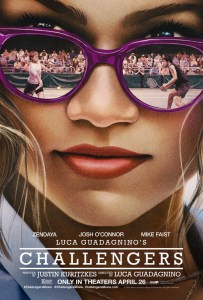 The sweaty, sexy indie hit from the spring is about a tennis throuple told over the course of one pivotal match, where our two male athletes are at very different points in their careers and the woman who came between them. Patrick (Josh O’Conner) and Art (Mike Faist) are the best of friends when they started on the tennis circuit with dreams of making the big tournaments. They both set their sights on Tashi (Zendaya), a tennis phenom since her teenage years who is starting to reach her prime. The movie bounces back and forward through time (like a tennis ball!) to chart the changing relationships between the three, as we’re left to pick up the pieces as to what happened, who fell for who, who broke up with who, and how it relates to the central battle of wills playing out in the present-day match. The best part of Challengers are its characters and ever-shifting power dynamics, which makes each scene rich to digest and examine, especially once Tashi’s career takes an unexpected turn. Director Luca Guadagnino (Bones and All, Call Me By Your Name) keeps things lively with plenty of style including exercising every POV imaginable from the floor, to a tennis balls, and the players with racket banging in hand. We might have gotten a POV from a passing bird had it only gone longer. The movie is electrified by a pulse-pounding score by Trent Reznor and Atticus Ross, a propulsive energy that reminded me of the similar service of the Run Lola Run soundtrack. What holds back the film for me is that the last act is dragged out and it culminates in an ending that is the most obvious as well as underwhelming, which makes the extended dragging even more ultimately tedious. The acting is good all around with each member getting to experience a high-point and low-point of their career and personal lives. However, it’s really Art and Tashi’s movie as Patrick serves as an elevated supporting role. And for a movie with such heat and hype, I guess I was expecting a little more action, if you will. Challengers is an intriguing, entertaining, and refreshingly adult sports drama that I wish had, forgive me, some more balls.
Nate’s Grade: B
Share this:

The Iron Claw (2023)
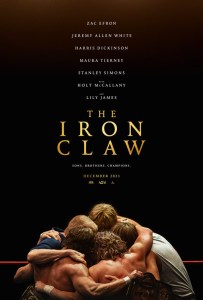 The true story of a wrestling family that was beset by so much tragedy it might as well be a lost Shakespearean drama. The Iron Claw follows the Von Erich brothers, lead by oldest brother Kevin (Zac Efron). They’re all competing for their father’s approval, the same man who gives them updated son rankings at the breakfast table. Kevin and his three brothers (Jeremy Allen White, Harris Dickinson, Stanley Simons) are living out their old man’s dream of being a professional wrestler of significant renown, and the appeal of the brothers is as a fighting family of wrestlers rather than as single entities. In essence, they don’t seem to matter unless as a collective. This leads to plenty of misguided attempts to curry favor with their toxic parent and a pile-up of tragedies that would be absurd if it wasn’t actually true. The issue for me was that I didn’t see the other brothers as fully dimensional characters, and side stories like Kevin’s romantic escapades felt lacking as illumination. It felt for much of its running time like a good movie but one going about its business with a little too much expediency. I was interested but felt like the brothers were more reflections on Kevin than their own separate characters. However, the film’s last twenty minutes are by far the best part and finally find a way to elevate the drama as well as better personalize it through Kevin’s grief and survivor’s guilt. “It’s okay dad, we’ll be your brothers,” spoken with the innocent yearning of a child, pretty much broke me and caused me to sob. If you’re a fan of 1980s professional wrestling, or meaty dramas about the suffering of strong men from strong men, I’m here to assure you that it’s okay to cry here. The Iron Claw is a fine drama that comes together by its end for an off-the-ropes wallop, and the lingering sadness is one that will be hard to shake for hours.
Nate’s Grade: B
Share this:

Lady Ballers (2023)

Conservative commentator Ben “Debate me!” Shapiro is not the first name you would think of with comedy, at least not intentional humor. His outlet The Daily Wire has begun producing and releasing its own movies, starring the likes of Gina Carano and and Some White Lady as Snow White in their Snow White movie that exists solely because Disney had the temerity to hire a diverse woman to play a fairy tale character. I reviewed 2022’s Shut In, the Daily Wire’s low-budget-friendly contained thriller, and was surprised that much of it worked as a straightforward drama. It’s not enough to get me to watch their school shooting thriller, Run Hide Fight. Next up is one of the worst movies of 2023, Lady Ballers, a sports comedy built upon the idiotic premise that a washed-up high school basketball coach (writer/director Jeremy Boreing) can gather his former male athletes and compete on a newly accepted stage. They will disguise themselves, wearing dresses and wigs though not bothering to shave their beards, and call themselves trans women and waltz to money and glory.
The central joke of Lady Ballers is a mean-spirited perspective deeming trans rights to be little more than a calculated media sideshow of accruing social woke points. To say this movie is transphobic goes without saying and from people who don’t deserve any misspent assumptions of good faith about “starting a dialogue.” In this world, trans people are a confused liberal scam, something that can be solved by kicking a guy who says he thinks he’s a girl in the balls and telling him to get over it. The movie feels like a proverbial kick to the balls for all genders.
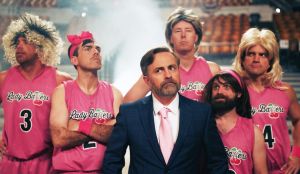
Just think about the nature of comedy being one of subversion, of zigging rather than zagging, and the failings of Lady Ballers become even more magnified and odious. The most obvious joke would be these out-of-shape former athletes thinking they could simply throw on dresses and trounce the competition only to find that these women aren’t just good, they’re far better. This would force the characters to reassess their wrong-headed beliefs and learn lessons about being humble, empathetic, and open-minded. But naturally that’s not the worldview that Lady Ballers and The Daily Wire want to reinforce (it’s sad that “empathy” is not a universal goal) because their audience isn’t coming to this movie with a desire to rethink transphobia or gender-based assumptions and general sexism levied against female athletes. They’re coming to have their “anti-woke” feelings coddled and sexist notions soothingly reconfirmed (“Turns out white male of non-exotic sexuality is the only group not being cast by Hollywood these days” – you sure about that?). Because of this starting point, the attempts at comedy don’t really work because it’s forgoing subversion and surprises of the status quo, and continuously punching down, making fun of even recognizing the humanity of trans people or that they simply even exist.
For the reported defenders of women’s sports, the entire premise of Lady Ballers is deeply sexist. The film posits that any man, no matter how out of shape, could competitively destroy a woman in sports. It’s a laughably misguided assertion, bringing to mind a 2019 survey that found 1-in-8 men thought they could win a point in tennis against Serena Williams. The idea that anyone with little experience could contend or even dominate against a female professional athlete who has devoted her life to improving her physical prowess is built on pure misogyny, the notion that men have to be superior to women no matter the context. “Soon all the best women will be men,” says the conniving and morally bankrupt journalist. The filmmakers, and numerous politicians who have become obsessed with policing the genitals of student athletes, style themselves as the defenders of women when they couldn’t care less about women’s sports, and Lady Ballers even makes this very observation as a bad joke, giving the phony advocacy game away. One character responds to the question of what makes a woman a woman with, “They’re just like men, only better. Just shave your legs, tell each other how brave you are for things that require absolutely no physical courage, and don’t be afraid to cry at work.” There’s a montage of the guys attempting all these other sports and instantly dominating all women. Are you sure you don’t actually really despise women, Lady Ballers? That’s what it looks like here. The film’s entire premise is built upon the dumb concept of male superiority regardless of circumstance. You can’t fashion yourself the protector of women while also thinking they must be inherently inferior.

There are so many scattered conservative straw man send-ups that Lady Ballers becomes an unintentionally fascinating profile of what agitates conservative media at the moment, or at least what agitates their easily agitated audience that they’re catering to, whether or not they genuinely believe in the horrors of what they’re stoking and selling. There are jokes about touchy-feely out-of-touch liberals just wanting to resolve matters with hugs. There are jokes about journalists being wholly untrustworthy and callously taking advantage of multiple abortions. There are jokes about evil school teachers indoctrinating students. There are jokes about black teens being untrustworthy criminals who will steal from you. There are jokes about space lasers followed by jokes about Jewish military. There are jokes about considering the MRNA vaccine as part of one’s regular diet, which doesn’t remotely make sense. There are several conservative cameos like Ted Cruz, Matt Walsh, Candace Owens, and even Shapiro himself that will go over most viewer’s heads, as will references to things like Dylan Mulvaney and Riley Gaines, the woman who tragically finished in fifth place in a swim meet instead of fourth because of a trans athlete. Late in the film, the coach comes to see women as being better caregivers and communicators, and while we’re meant to celebrate his widening perspective, it’s still a window into where the conservative audience easily stoked for this movie thinks that the real important values of women lie, namely putting up with men and making them better people.
And yet, despite myself, I could at least recognize a few passing jokes that kind of work on their own, if you can remove the morally repugnant context of the movie’s aims. Early in the movie, as we’re establishing the teammates as high school athletes, two players are fighting and one responds curtly with, “Your mom’s a catch!” to which the other player adds, “She’s your mom too!” In the same scene, the players plead for the coach to inspire them, and he shrugs and says, “I already threw three chairs on the sidelines, pal, I don’t know what else you want from me.” I think I actually chuckled at that line. The ongoing character definition of two players being twins from sharing fathers who shared the same mother at the same time is at least something outlandishly memorable at the expense of its dumb characters rather than a group of people. One character’s psychotic obsession against badgers based upon his high school mascot has some potential and makes for some weird asides that, at least, don’t make fun of trans people. I even kind of like the simplistic sports chant “winners are just losers who win” as a reflexive joke. When the evil yet sexually voracious journalist lady, who has been engaging in an affair with our coach, slaps him hard, she adds the helpful aside, “These are not sexy slaps.” The concluding game involves inviting little girls to take the place of our scheming men, and it’s played as a heartwarming act of valuing sportsmanship, and then the newscasters reveal the little girls lost by 400 points, not because they’re girls but because it was children versus grown adults. It’s as if someone who at least had a passing understanding of some comedy punched up some of these lines and situations, which makes the rest of Lady Ballers that much more embarrassing.

However, is finding tiny slivers of comedic merit a critical fool’s errand considering the despicable worldview and disingenuous intent of Lady Ballers? I’m reminded of all the film historians and academics that praised the technical merits and storytelling methods of Leni Riefenstahl’s anti-semitic “documentary” Triumph of the Will or D.W. Griffith’s Birth of a Nation. Maybe you can objectively analyze Griffith’s use of zooms and cross-cutting and modern storytelling techniques in his 1915 silent era blockbuster, or you could examine the deplorable racism and the fact that the movie served as a rebirth for the KKK’s membership and a new era in segregationist terrorism. It all depends on the individual viewer and their tolerance for overlooking offense, but it’s hard for me to venerate well-designed or executed pieces of a diseased whole. This is not to say Lady Ballers is on the same filmmaking wavelength as Griffith or Riefenstahl; it’s a dumb sports comedy that wishes it was a second-rate Zucker-Abrahams movie. The bar is considerably low, infinitesimally low for this movie considering its target audience and targets, and yet this movie trips over even the mildest of expectations. Lady Ballers only confirms that a comedy made by people who don’t understand comedy can only ever be limited in its funny, especially when its built upon a premise radiating seething ignorance.
Nate’s Grade: D
Share this:

Alternate Opinion: Lady Ballers Guest Essay
My friend and writing partner Ben Bailey asked me to host an extensive essay he was compelled to write after watching Ben Shapiro’s deeply disingenuous and presumably laugh-free sports comedy, Lady Ballers, a movie built upon not just transphobia but also misogyny. I plan on watching this movie as well because of course it will be one of the worst movies of the year and thus I’ll need to analyze these things for you to spare you, dear reader. In the mean time, enjoy Ben’s monumental take-down on the movie, its terms and goals, and the disingenuous nature of the toxic conservative media ecosystem.
______________________________________________
“Trigger Warning: A Woke Soy Cuck is About to Talk About Lady Ballers“
By Ben Bailey
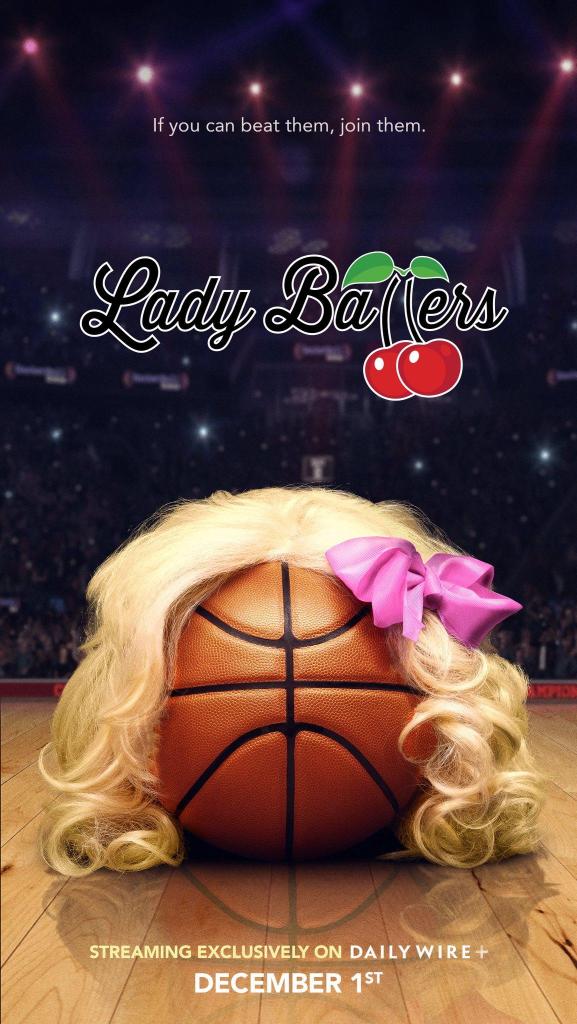
So, Lady Ballers is a thing. If you haven’t heard of it, or of Ben Shapiro’s right wing Daily Wire production company, I envy your life and your ability to avoid psychic pain. For the rest of you, maybe you’ve seen the trailer or some reaction videos on YouTube, and then you likely did what most rational people would do and casually dismissed it as something you will never have any reason to watch. At least I assume most people will never watch Lady Ballers because most people don’t have a subscription to Daily Wire+ or the wherewithal to actively seek it out through other quasi-legal means, but I watched it, and if only to justify the effort of doing so, I decided to commandeer my good friend’s blog for a bit to talk about it. You should know that I insisted he watch it, because even though I cited him as a friend just now, I secretly hate him and only want bad things for him.
Lady Ballers is the story of the whitest basketball team you’ve ever seen in your life deciding to take advantage of our modern “woke obsession” with regarding trans people as human beings with basic dignity by pretending to identify as women so that they can compete in women’s sports, where they will obviously dominate due to their manly testosterone being the natural kryptonite to weak lady estrogen. If you are as exhausted reading that synopsis as I became writing it, rest assured that the rest of this isn’t actually going to be much of a traditional review of the film on its cinematic merits, because that would be completely pointless. If you’ve seen the trailer and know anything about the people who made it, you already know it’s bad. It’s not funny, its amateurish and just generally poorly made, because it was made by unfunny amateurs who don’t know how to make anything good. I will touch on quality issues here and there, but mostly I want to focus on what the film represents in the larger cultural and political context in which it is being presented. What is the point of Lady Ballers, and what does its form and function say about the bigots behind it and the zeitgeist they so desperately wish to influence?
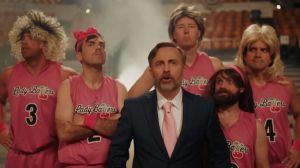 I also want to stress at the outset that the level of critical analysis I am about to apply to Lady Ballers should not be seen as any attempt to elevate it to the level of art worth engaging with or expanding any intellectual strain to deconstruct. Just by talking about this movie, or even calling this loose assortment of tired hate-filled nonsense a movie, might leave the erroneous impression that Lady Ballers is, in any way, inherently interesting. It is not. It is in fact, beyond the novelty of its miserably cynical polemic, a very boring thing that I would defy most people not already tuned into its disgusting message to even sit through (and frankly I bet most of its target audience would find it difficult as well).
Let’s start with Ben Shapiro, the public face of the Daily Wire brand, who appears briefly in a cameo as a referee at one of the games to deliver a line that unintentionally reveals more about him and this movie than anything else in it, flatly stating that he’s just getting paid to be here and doesn’t actually care about anything going on. Ben Shapiro is a grifter, and almost certainly a bad person who probably believes a lot of terrible things about people, but I say probably because you can never be sure with someone like Ben if he actually believes anything he says or is just saying what he needs to say to appeal to an audience of people as bad as he is presenting himself to be. The science is not yet in on whether he is biologically a piece of shit, but he clearly identifies as one, and just as he seems to regard trans identification according to his film, he’s only doing it for the clout and the money. Whether or not Shapiro actually believes any of his own hate-filled rhetoric is immaterial to his main goal, which is raking in money from the suckers in his audience who very much do believe it, and the reason we know this for sure, is because he just made a movie called Lady Ballers.
You see, in a recent interview about the movie on his website, Shapiro revealed that the original intention for Lady Ballers was not creating a kind of dumb, raunchy, shocking for its own sake comedy that he would almost certainly hate if he hadn’t made it himself, but rather, a hard-hitting documentary focusing on his favorite fake culture war controversy. The plan was to have cis-gendered men actually pretend to identify as women in order to infiltrate women’s sports for real and prove that all the so-called trans-women currently doing it were just liars like them trying to get a hairy leg up on the competition. The problem apparently became immediately obvious when they found that the standards for applying to women’s sports as trans-women were much higher than any of their stooges were willing to meet, as they weren’t ready to undergo the hormone treatments, surgeries, and other little details required to prove that they weren’t just a bunch of assholes trying to co-opt something they don’t care about in order to score political points with MAGA douchebags. You get it, right? It’s the one legitimately fascinating thing about Lady Ballers, that its very existence in its current form invalidates its entire thematic premise. They had to make a fictional “comedy” version of the story they wanted to tell because it was impossible to present the thing they claim to believe is actually true in any way that could qualify as a documentary even by their incredibly low standards. As Shapiro is fond of saying, facts don’t care about feelings, and in this case, that appears to be true.
 But of course, that didn’t stop them, so they went ahead and made Lady Ballers, and I could go on for quite a while listing off all the transphobia and misogyny and racism awash in it, as well as all the stuff that wasn’t deliberately objectionable but still offensively unfunny, but again, what would be the point? More interesting to me is what this movie says about the people who made it and the audience it is targeting and what the perceived existence and marketability of that audience says about us as a country and a species. I always felt that the rise of Donald Trump was less about him than it was about us, that whether he won or lost, or wins again or loses again in 2024, it would be a test of our own moral character for us to pass or fail. Do we accept that this is who we are, or do we actually try to live up to what we all want to believe are our better selves? The vitriol intrinsic to Lady Ballers and the Daily Wire and this whole movement of stoking anti-trans hatred to rile up bigots, ultimately in the hope of pushing them to the polls to support a fascist overthrow of our democracy, just seems to me to be another facet of that test, and how close we are to passing or failing it is the only question worth thinking about.
For a movie supposedly about the topic of trans-people in sports, it is a bit surprising that this movie doesn’t actually feature any depictions of real trans-people in it. Obviously, I wasn’t expecting any portrayal to be positive, but I at least expected there to be a trans-character, if only to take the role of a villain or antagonist representing the thing the movie is railing against. We have the aforementioned cis-men pretending to be trans but otherwise no one who genuinely considers themselves to be trans. Even if you dismiss the authenticity of trans identification and say they just wrongly believe something about their gender, you’d think they would show someone like that in their own movie, right? There’s a brief bit at the end where a character suggests they might be, but only as a quick throwaway ball-kicking joke. If trans people are the bad guys in real life, why are they not the bad guys in this movie that wants you to come away thinking that they are so bad?
More to the point, why are there no trans conservatives in the movie? I know there aren’t that many, but off the top of my head I can think of at least two public examples. Maybe Caitlin Jenner was too big a get for this and just saying that the vaunted star of Can’t Stop The Music, Jack and Jill, and literally no other movies is too good for this is saying something, but what about Blair White? Pretty sure she’s been on the Daily Wire a couple of times, but apparently, they couldn’t get her to show up to provide any kind of cover for the transphobic message. That’s literally what she does for a living, being the trans person willing to sell out her own people for conservative clout, and either they didn’t want her in this for some reason, or even she turned them down. Blair White agreed to appear in a Tom MacDonald music video but turned down Lady Ballers?
 That can’t be it. It’s not possible that they even asked them, or ever considered including any trans-people, even as imaginary straw-women to make fun of them, because that would require acknowledging that they are actual people who exist. As the film’s mid-credit stinger suggests, depicting one of the main characters attending Jordan Peterson’s reparative therapy to cure their trans-delusions, for this movie and the ideology behind it to make any sense, trans-people can’t exist, and anyone claiming to be trans is either mentally ill or pulling the same scam as the film’s protagonists. If Jenner had shown up, sure she may have parroted the talking points about keeping sports segregated by the gender binary, but she would have presumably done so with the confidence of a person who clearly believes that they have the right to exist as they are without being accused of being crazy or a liar, which would go against the movie’s larger message that trans-people aren’t just illegitimate as players in sport but illegitimate as people in general. The people behind Lady Ballers are grifters who don’t believe anything, so naturally they assume that everyone else is too, and that includes trans-people, who don’t actually believe what they say about themselves, and are merely grifting a gullible public, just like the Daily Wire is doing.
Designed to work in tandem with freak-outs about Drag Queen Story Hours grooming your kids and doctors prescribing hormone blockers to babies without their consent, the faux controversy about trans-people in sports has always been a thinly-veiled cover for the larger goal of trans erasure, a way to launder openly genocidal rhetoric designed to inspire the very kind of deadly violence against trans-people we’ve seen increase in the last few years as if it were just some completely legitimate concern for the integrity of women’s sports. But Lady Ballers is so blunt and bad at its own messaging that it fails to hide what it needs to hide, giving away the game, no pun intended. Obviously, these people don’t genuinely care about women’s sports; a major running gag in the movie is about how literally no one cares about women’s sports, and the central premise of the movie assumes that any man, regardless of skill, is inherently physically superior to every woman and could beat any women at any sport at any time purely by virtue of being a man.
And I know that sounds like a joke, to the point where you might question my criticizing it in the context of a movie at least intended to be a comedy, but that’s not a joke in this movie. You as the audience are not meant to take the idea that any man is better than all women at all sports as an exaggerated, farcical concept. That is the actual thing you are meant to unironically accept so that the other jokes in the movie work, the underlying rational assumption upon which the other jokes are made relatable. You aren’t meant to laugh at the idea that these men are trouncing these women at the sports the women trained for and the men didn’t, you are meant to laugh at the absurdity that any woman would ever think they could try to go up against any man. A few years ago, there was a poll that found that 1-in-8 men genuinely believed that they could beat Serena Williams in tennis, and this movie was written for them.

If you know who this person is in the picture, I’m sorry.
The virulent misogyny dripping from every corner of Lady Ballers would seem to preclude any genuine regard for the integrity of women’s sports or women in general. The most prominent female character in the film is a conniving reporter colluding with the team’s head coach to cynically milk the “stunning and brave” human interest story for viewers, who casually references her regular abortions as the annoying minor consequence of aggressive promiscuity, you know, the way all women who get abortions do? At one point, one of our “heroes” stares off into the middle distance while spitting out a creepy incel screed sarcastically defining women as just like men but better because they shave their legs, brag about bravery for things that aren’t brave, and aren’t afraid to cry at work, and the next shot is the reporter shrugging and nodding in agreement, as if it was the truest thing ever said and, despite her prior demonstration of assertive hostile feminism, she has absolutely no way to refute it.
Again, you might be saying, these are just jokes. Bad taste jokes, maybe even jokes based on faulty premises that could only be enjoyed by the terrible people who accept those premises, sure, but still, only jokes. But that’s the weird thing about a movie like Lady Ballers that is more preoccupied with its political and cultural message than its service as a functional comedy. The message is not in the service of the comedy, the comedy, such as it is, is in the service of the message. Comedy is about subverting expectations, while cultural polemics are about reaffirming expectations. For instance, if you start your movie with a bunch of characters assuming that simply being men would allow them to dominate women’s sports, one would think the next scene would be them realizing that this was not the case, in a montage of them getting taken down a peg for their sexist hubris. Or you might have an actual trans character presented as a contrast for the absurdity of their fake trans grift. But this movie can’t do any of those things, because to subvert the expectations of its audience of bigoted right-wing morons would defeat the whole point, which is to validate their bigotry and to keep the cash flow coming. The needs of a comedy and the needs of whatever this movie is are diametrically opposed to one another.
Fairly early on in Lady Ballers, before the film’s gender-bending twist, the head coach delivers one of his famously rousing motivational speeches to his team, getting them to chant a motto that will return in the third act: “Winners are just losers who win.” Credit where its due, unlike most of what passes for comedy in the movie, this line at least structurally conforms to be a recognizable joke. It’s not particularly funny or clever, just a superficial rhetorical absurdity, but it also serves as another one of those accidental confessions on the part of the producers. Because if you think about it, losers who win basically describes the Rightwing Influencer Pipeline to which the Daily Wire crew belong.

Also, Ted Cruz cameo.
To the extent that they have won anything, or rather succeeded financially as a grift or culturally as propaganda for a noxious worldview, it has always been with the distinct stench of loser-dom. C.H.U.D.s like Matt Walsh or Michael Knowles speak with all the confidence of people with an actual point, but there’s always this underlying sense that beyond the choir to which they are preaching, the cringe and bluster are obvious to anyone else. When Ben Shapiro tries to own Cardi B and Megan The Stallion’s W.A.P. by questioning whether the titular wetness is a disturbing medical condition, unintentionally revealing to the world that he’s apparently never made his own wife sexually aroused, the self-own, while hilarious, is not even a little surprising. In short, contrary to the utter gob-smacking dearth of actual jokes in their movie, these guys are themselves complete jokes.
And the more important point is that the joke isn’t landing anymore, if it ever did. One need only look to the spectacular failure of Moms For Liberty, a group that tried to ride the wave of transphobia to take local school board elections by storm, only to lose almost every seat they ran for in 2023. If there is any saving grace to Lady Ballers, it is that it decidedly does not feel like the work of people who are or even think they are winning anything. This doesn’t feel like a triumphant victory lap of the Anti-Trans Right, but rather the sad last desperate gasp of a dying movement that was never even a real movement to begin with, the fizzled fart of stale air escaping a punctured basketball, or if you prefer, a balloon used to approximate a fake boob by someone who’s never done drag and didn’t bother to research anything about how to do it right. And that’s good. Not the lack of research but the larger failure of the mission that this movie represents. You still shouldn’t watch it because it sucks.
The thing I’ve always found interesting about Shapiro is that in spite of his horrible takes on everything, he strikes me as someone at least smart and self-aware enough to feel some measure of secret disdain for how his career is dependent upon debasing himself to the kinds of people who boycott M&Ms because the green one isn’t sexy enough anymore. If you didn’t know, he got into the right-wing commentary business after a failed attempt at making it as a screenwriter, and it would seem that the Daily Wire getting into its own film production is at least on some level a way for him to live out the dreams that were robbed of him by his crippling lack of creative talent. I like to think that knowing Lady Ballers is the closest he’s come to the achievement of his lifelong aspirations, and that the actual career he did build for himself is an active impediment to those aspirations trapping him in a cage of his own bullshit from which he can never escape to a land where he is regarded as a legitimate creative person, is the funniest joke of all.
(Addendum: I didn’t have any other place for this, but I did feel I would be disingenuous if I did not mention the one actual good idea in the movie. At one point, the head coach goes to a Hooter’s-esque sports bar but one staffed entirely by men in drag. Of course, in the context of the film this is yet another joke about how men dressed as women are silly and should be dehumanized and presumably executed by the state in the next Trump administration, but out of that context, it’s just a solid concept for a restaurant and I would patronize the hell out of a place like that. Not sure if anyone has ever tried something like it in real life, but if not, they should.)
[Editor’s Note: At the film’s premier, one of the actors was arrested by the FBI and charged with four crimes relating to the January 6 insurrection because of course.]

Share this:

Creed III (2023)
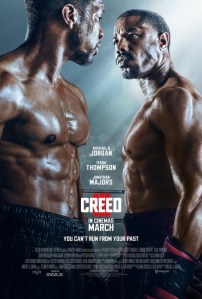 Now three films into its own rebirth, and nine films into the Rocky cinematic universe Sylvester Stallone begat in 1976, the story of Adonis Creed (Michael B. Jordan) fees confidant enough to leave behind Stallone. It’s still a formula-laden yet rousing sports movie, one where every turn will likely be predicted, but because of the conviction of the production, you can still cheer along with the familiar. This time Adonis is at the end of his career when an old face resurfaces with Damian “Dame” Anderson (Jonathan Majors), a childhood friend young Adonis looked up to who took the rap for Adonis’ fighting. He landed in prison and watched the journey of Adonis to being a world-championship boxer, which was Dame’s dream that was deferred. Adonis feels immense guilt and questions whether he’s earned his lot, and this trial of confidence and personal reckoning naturally comes down to an extensive pugilist battle, as all personal conflicts must. I laughed that Bianca (Tessa Thompson) was trying to make a point that not all conflict has to be decided by getting punched in the face, and ultimately that’s exactly where we’re headed. The requisite buildup, betrayal, training montage, and reclamation will be expected, but where the Creed franchise has separated itself was with its non-punching-in-the-face moments. I appreciate the added dimension of the characters and the allowances that make them more complex than simply cartoonish villains of the latter Rocky movies. Creed II humanized Ivan Drago Jr. to the point that I didn’t want either fighter to lose. I liked all the breather moments, from Adonis trying to raise a daughter with hearing impairments, to him reflecting and reminiscing with his forgotten friend like it was old times again, to the looming tragedy of saying goodbye to an ailing loved one (that deathbed scene was tremendously moving), and two men warring over hurt feelings of a friendship that meant so much and is trying to get beyond the pain of abandonment and guilt. When you devote that kind of attention to ensure that the drama matters, the boxing takes on added excitement. This is Jordan’s directorial debut and he does a fine job of helping his actors and providing them the space they need. He also finds some visually dynamic ways to film the boxing scenes and give them extra oomph (reportedly he based his approach off of anime and it honestly shows). Creed III may be more of the same but when the franchise devotes due attention to the small things as well as the big things, it’s still an elevated entertainment experience.
Nate’s Grade: B
Share this:

Air (2023)
 Who exactly could get that excited about a movie about selling a shoe? Apparently, plenty of critics and audiences judging by the success of Air, the dramatization of the eventual formation and presentation for the first Air Jordan sneaker. It’s Amazon’s first original movie that they’ve given a theatrical release since 2019’s Late Night, and it proved a moderate success for a mid-range adult drama before debuting on its streaming service. I was intrigued by the creative pedigree, as I’ve been an ardent fan of Ben Affleck as a director, and the uniformly strong critical reviews, but I kept thinking, “It’s just a shoe.” It was hard for me to imagine getting that drawn into a drama about a bunch of guys trying to get Michael Jordan’s endorsement. I just couldn’t see the movie in this scenario. Now that I’ve actually watched Air, I can credit it as a well-written and well-acted movie about passionate people putting forward a presentation. That’s the movie, and while entertaining, it’s still hard for me to understand all the fuss.
It’s 1984 and Nike isn’t the market-leading trend-setting company that we think of today. They dominated the running world but few if any saw them as hip. They were struggling behind Adidas and Converse in popularity and cultural cache, and CEO Phil Knight (Affleck) had tasked his basketball head of operations Sonny Vaccaro (Matt Damon) with snagging endorsements from the new NBA rookies. Sonny wants to go all-in on just one athlete, a special case that Sonny thinks can revolutionize the game, and one that could propel Nike to the next level. But first he’ll have to convince Jordan’s mother, Deloris (Viola Davis), that this smaller company with its smaller reach is going to be the best fit for her son’s potential future earnings.
 This is still a movie about a shoe, but it’s really a movie about people who are good at their jobs and trying to change a paradigm of thinking and the Way Things Are Done. I’ve seen it said that Air is “Moneyball for sneakerheads,” and that’s an apt comparison. It’s about a bunch of smart guys fighting for clout, a group of underdogs going up against the entrenched winners, but it’s really about passionate people trying to get others to recognize their passion. So it’s scene after scene of Sonny trying to break through and get others to understand why his way of thinking is going to be the best. It’s also structured entirely around the big presentation with the Jordans, with each stop at a competing shoe company as its own act break. It makes the movie feel very streamlined and focused. It allows moments for minor characters to get their own moment, to make it seem like there’s a larger world behind every scene. It makes the team feel more filled out, and as each person and artist comes together, it’s reminiscent of movies in general, about various talents coming together to put on a big show. With our hindsight already locked in before the opening credits, it’s got to be the journey that matters here, because we know the eventual coupling, so Air has to justify why the before time could be captivating. It’s engaging because it’s a story built upon underdogs and smart people getting to flex their smarts.
Of course, it’s also not too difficult to make someone look smart with the power of hindsight. This was one of the more maddening features of Aaron Sorkin’s frustrating HBO series, The Newsroom. The focus was on a TV show on a cable news network but it existed in our universe, covering the big stories from the recent past. Rather than providing insight into the struggles of journalists trying to break big stories and follow their leads, Sorkin’s show was his turn to rewrite the news, showing how the foolish journalists should have covered these major events. It was his condescending attempt to tell professionals how they should have done their jobs. However, he had the extreme benefit of 18 months or so of hindsight and seeing what was important and what was less so, which just made his critiques all the more condescending (“Why don’t you know all the things that I know from the future, stupid present people?”). I could do this myself, writing a story about a guy in the 1930s talking down to these people hoarding their gold and how they should, instead, invest in a burgeoning computer industry. It’s not hard to look smart when you have history already in your pocket. This is also the case with Sonny in Air, who says over and over how special Michael Jordan is, and we know this too with our personal hindsight, so it makes him look transcendent. However, there could be any number of guys in history that had a similar hunch about Sam Bowie, the player picked one spot ahead of Jordan in the 1984 NBA Draft and whose career was cut short by rampant leg injuries. That could have happened to Jordan too. Sometimes the greatest athletes are the recipients of just horrible luck (look at Bo Jackson, a modern-day Greek God who could have been an all-timer in two sports).
 Where Air glides is with its snappy dialogue and attention to its supporting cast, thanks to debut screenwriter Alex Convery. Despite my reservations on the subject matter, this is proof that a good writer can make any story compelling as long as they channel into the right universal elements. A movie about selling a shoe to a future billionaire becomes an underdog story and one about a group of middle-aged guys trying to live out their dreams by picking the right player to become their vicarious capitalistic dream. The side characters played by Chris Messina as a foul-mouthed agent, and Jason Batemen as an exec who mostly just wants to spend more time with his kids following a divorce, and Matthew Maher (Our Flag Means Death) as a lonely shoe designer, are welcomed and I enjoyed spending time with them all before the big decision. It’s pleasurable just to sit and listen to the conversational banter. If you can find a way to make characters debating the particulars of their industry and make it interesting regardless of industry, then that’s the sign of a good writer. There’s plenty of conflict thrumming throughout, like Sonny pushing to spend his entire department’s budget on one player rather than spreading the risk around, and the climax involves whether or not a billion-dollar company is willing to split some of its earnings with the athlete they’re making mega-million from. It was a first-of-its-kind deal that changed the industry, giving athletes more leverage and direct money for the use of their likenesses, and considering how integral Jordan was to the explosion of the NBA’s popularity, it was money well spent.
There’s no distinct directing flair from Affleck, as I think he recognizes the strengths of this script and how best to utilize them, which is to support his actors and give them space. The most noticeable directing feature is the repeated use of period-appropriate songs and archival footage, which might explain the movie’s staggering reported $90 million budget (for a shoe movie?). Affleck keeps things moving at a light-hearted tone but knows when to slow things down too.
 Air is an amusing drama with good performances and good writing and direction that understands how best to hone both of those selling points. It’s very streamlined while still feeling developed, and it manages to make a decades-old shoe deal feel interesting in 2023. I enjoyed it but I would have enjoyed this cast in just about anything, and I feel like the screenwriter and Affleck as a director have better stories on their docket waiting. It’s an enjoyable and intelligent drama with crackling good dialogue. It’s a solid movie but I guess I won’t ever understand the adoration it received, and that’s fine. Air proves you can indeed tell a compelling movie about a shoe deal. There you have it. Now back to that chicken/egg dilemma.
Nate’s Grade: B
Share this:

80 For Brady (2023)
 I did some minor research and yes, three out of the four actresses of 80 for Brady are indeed in their 80s, with Rita Moreno in her 90s, so there is some truth in advertising still. Speaking of that, this geriatric comedy is about everything you would expect from its very basic premise. Inspired by a true story, four lifelong friends (Moreno, Jane Fonda, Sally Field, Lily Tomlin) are diehard New England Patriots fans and more so fans of the team’s famous quarterback, Mr. Tom Brady (playing himself). They’re determined to make one last big trip to support their team at the 2017 Super Bowl, as Tomlin is afraid she doesn’t have much time left. What follows is standard road trip hi-jinks and celebrity cameos the likes of which from Billy Porter and Guy Fieri and Patton Oswalt. Most of the jokes are mild and easily telegraphed, and the formula hews very close to other studio entries in the “old people still got it” ensemble comedy subgenre (Last Vegas, Book Club, The Bucket List, Going in Style, Best Exotic Marigold Hotel, Calendar Girls, etc.). The target audience is looking for something nice and reassuring with familiar faces. To that end, 80 for Brady mostly succeeds, but for anyone else outside it’s older demographic, it will be a middling and hokey comedy. I laughed out loud at the assertion that the Pats comeback from a 28-3 deficit versus the Atlanta Falcons was the result of one very determined, yet also obsessive to the point of hallucinating, elderly fan giving Brady a special pep talk that motivated him to try harder at winning. The movie isn’t meant to elicit big laughs, more pleasant smiles, and to that end it’s agreeably inoffensive right down to its predictability and easy conclusions. Entirely skippable if you’re under the age of 50.
Nate’s Grade: C


 nathanzoebl
You must be logged in to post a comment.