Blog Archives
Chloe (2010)
 Director Atom Egoyan, working simply as a director, brings some serious heat to this somewhat lurid and Euro trashy art house potboiler. Egoyan gives the movie a credibility that it might otherwise lack. It starts promisingly enough with a doctor (Julianne Moore) convinced that her husband (Liam Neeson) is cheating on her with his younger students. So to prove her suspicions, she hires a sexy call girl to seduce her husband. Chloe (Amanda Seyfried) agrees to help, but nobody seems to fully understand the magnitude of the consequences as Chloe inserts herself more into the family. For a solid hour, the movie offers some tantalizing drama about infidelity, doubt, and the nature of attraction. Then the movie shifts focus after a few tawdry, but effectively steamy, sex scenes. Sadly, the movie abandons the smaller-scale drama for lame thriller shenanigans. Chloe becomes a spurned lover pushed to the edge, like a third rate Fatal Attraction. At that point, Chloe just completely unravels into an unremarkable late-night Cinemax thriller. Even the gratuitous nudity feels tacky, and as a red-blooded heterosexual male, that’s a statement that makes me depressed.
Nate’s Grade: C+
Share this:

Humpday (2009)
 There’s a definite squeamishness out there when it comes to the idea of men expressing intimacy. Brokeback Mountain proved even liberal Hollywood wasn’t ready to anoint a movie about two gay dudes secretly getting it on. There will be large portions of people that will refuse to give a movie like Humpday a chance simply because of its premise: two guys plotting to have sex. It’s not a dirty movie by any means, nor does it get graphic with details or conversations. But the movie exactingly explores the uncomfortable relationships men have with expressions of romance. Humpday is also extremely funny in that pained, awkward sensibility, and I challenge the squeamish to give this charming indie a shot at love. If it makes it any easier for people to take (SPOILER ALERT) they don’t actually go through with it.
Ben (Mark Duplass) is living a comfortable existence with his wife, Anna (Alycia Delmore). Then one day his old friend from college, Andrew (Joshua Leonard), unexpectedly visits. Andrew has lived a Kerouac-like existence on the road as an aspiring artist. The two guys catch up on old times and Andrew invites Ben over to a party. He ditches his wife, and her pork chops, for the party, which turns out to be hosted by a group of free-love artists. The alcohol-fueled conversation lands on Humpfest, the annual amateur pornography festival held in Seattle. Ben and Andrew come up with their own entry idea: two straight guys that will have sex. “That’s beyond gay,” somebody says. Both men refuse to back down. Ben books a hotel room. The only thing he has to do now is tell his wife about Andrew’s “art project.”
 Humpday explodes male sexual insecurities better than any film since 1997?s Chasing Amy. Each man refuses to back out of having gay sex because they don’t want to be seen as less masculine. It’s masculinity brinksmanship, willing to go all the way to prove superior heterosexuality through a homosexual act, and it?s nothing short of brilliant. Neither Ben nor Andrew wants to “puss out” on their big moment. But neither of them really wants to go through with it either, which leads toward tremendous amounts of awkward comedy. Writer/director Lynn Shelton has fashioned a scenario that is hilarious but also subtlety heartfelt; many films deal with the bromance of heterosexual love, but Shelton pushes it to the limit. These two guys do care about each other, and you can see their camaraderie as they recount old stories and open up to one another, and in the end they might be willing to go to the extremes for their friendship, whatever the consequences may be.
Both Ben and Andrew have deep-seated insecurities about their personal lives; Andrew wants to live a free-spirited artistic lifestyle but is really too scared to fully commit, and too “square” for abandoning all sexual inhibitions like some of his casual artsy pals; Ben has a house, a job, a wife, and feels defensive about his life choices, particularly the idea that he’s settled down and giving up. Both men are also insecure by sexually adept women, so it may be natural that they seek the company of each other for solace and mutual understanding. The final act, where the two friends meet in a hotel room for their big night, is a slice of awkward comedy heaven. They haven’t worked out any logistics, locations, warm-ups, anything, and watching them verbally hatch a game plan is hilarious and oddly touching in equal doses. They really don’t know what they’re doing and why they’re there.
The actors have a naturalistic feel because, as I’ve found, the dialogue was almost entirely improvised. They shot in chronological order so to build from conversation to conversation, and you can feel the character dynamics strengthen and deepen. Duplass (The Puffy Chair) has a great, wide fake smile that hides a lot of anger and dissatisfaction. He’s sort of a schlubby everyman that we can empathize with even as he moves forward with his participation in the “art film.” Leonard (The Blair Witch Project), and his scraggly beard, effectively conveys a man weary about where his rugged life has led him. He is also hiding behind a guise, the guise of being a nonconformist that chooses to have no earthly ties, but bit-by-bit you see that Andrew is tired of disposable human connections. Leonard and Duplass feel like life-long friends. Then there’s Delmore, who really is the wary, incredulous voice of the audience. She too comes across as realistic under the circumstances, and her reaction when she discovers the true purpose of the “art project” is volatile, yes, but also surprisingly reflective. The three leads never feel like actors; the illusion that these are real people is never broken even given the peculiar circumstances of the premise.
 What I really appreciated about Humpday is that every moment feels genuine and every scene has a point. I was amazed that Shelton and her small unit of actors had made it so that every conversation had purpose; there is so little fat to this screenplay. Each scene reveals something new about a character or pushes the narrative forward toward its uncomfortable climax, and each moment never breaks the reality of the story. Given these characters and the amiable direction they follow, Humpday is believable. I suppose it might be easy to dismiss it as another entry in the fly-on-the-wall “mumblecore” film series gaining traction in independent cinema, but Humpday is really more an observational character study that examines male relationships and the sexual politics of being a “man’s man” in today’s world of sexual liberation. There is a nuanced perspective on human sexuality here that I may be erroneously crediting to Shelton simply because she is a woman. It helps to have a more mature, open-minded perspective about the complexities of human behavior for this story to succeed, and I think a female presence behind the camera affords that luxury. There is commentary below the surface; however, Humpday can be entirely enjoyed as a surface-level comedy of an awkward heterosexual showdown.
I find it interesting that the original theatrical poster only featured the two shirtless guys eyeing each other, and with a pink background no less. The DVD cover has inserted Anna between the two guys and gone with the more boy-friendly blue background cover. I think this tiny detail is another reflection of just how uncomfortable the subject matter is for many people. Humpday is an insightful, perceptive little character study that feels real and honest, while at the same time the movie doesn’t allow sexual politics to become the headline. The movie remembers to be funny, often, and any discomfort is worth it.
Nate’s Grade: A
Share this:

The Girlfriend Experience (2009)
 This may be Stephen Soderbergh’s most accessible throwaway experimental bobble, and yet even a movie about a high class call girl played by real-life porn star Sasha Grey gets tedious. Set amidst the economic meltdown in the fall of 2008, we toggle back and forth between the professional lives of Chelsea (Grey) and her boyfriend (Chris Santos), a personal trainer. Chelsea’s services are more akin to a date than a quick romp between the sheets. Said “girlfriend experience” includes dinner, talking, a deep knowledge of her client’s interests so she can relate, and perhaps some late night cuddling and maybe, just maybe, sex. There are multiple parallels involving the idea of prostitution, Chris sells himself and his services to his gym clients much like his girlfriend; but where does any of this add up? The movie is told out of order for little benefit and there isn’t so much a climax but a dissolution of plot. The realities of a New York City call girl having a committed relationship can be intriguing; at one point Chelsea says that the clients want her to be herself, but if that were true they wouldn’t be paying her. However, when Chelsea decides to ditch her man of 16 months because her astrology book told her this Hollywood client might be “the one,” the audience loses any sympathy. Once this happened I just checked out. At a mere 77 minutes, too much of the movie is consumed by Chelsea’s life style of high rises, fancy restaurants, limos, and powerful businessmen. It can feel like a big screen episode of MTV?s The Hills, following the empty exploits of shallow twits. Grey is flat throughout, and maybe that?s the point to display how disconnected she must be to make sexual encounters just work. Let’s just say that she shows more promise in I Wanna Bang Your Sister (actual title).
Nate’s Grade: C+
Share this:

Lust, Caution (2008)
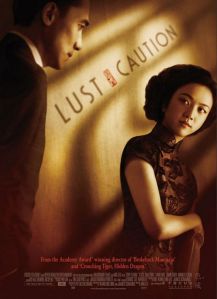 Ang Lee’s period romance is no Brokeback Mountain, though there is a heavy supply of thrusting. Lust, Caution is an NC-17 rated peak into life in China under Japanese occupation in the 1930s. Most of the film follows a school drama club that decides to become freedom fighters. They scheme to murder Chinese officials working with the Japanese government, and one gal (Wei Tang) is tapped to seduce and then kill a high-ranking official. For such a controversial movie, the sex scenes don’t even begin until 90 minutes into the flick (though our undercover heroine is deflowered by her drama club peer for the good of her mission). The movie is exquisitely shot, handsome in its details, and the lead performance by Tang is exceptional, simmering with conflicting emotions and some real sensual heat. The sex scenes doe have an erotic potency to them and they are more explicit than the kinder gentler fare found in typical Hollywood movies that consist of only seeing the slow-motion ecstasy result from a man on top. The offbeat love story gestates too late in the film’s run, leaving little time to delve deeper. Too much of the movie concerns back-story following the drama club’s road to becoming revolutionaries, and while it’s interesting it’s also rather needless on second thought. There’s a nine-minute difference between the R-rated version and the theatrical NC-17 cut; what’s in those nine minutes I do not know since I saw the edited version, but I’ve been told it’s a lot of thrusting. In lusty terms, the movie is heavy on foreplay and too short on a satisfying climax.
Nate’s Grade: B-
Share this:

Black Book (2006)
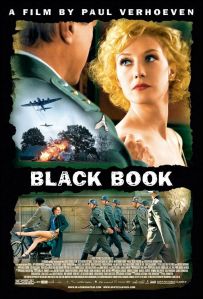 If there’s one thing you can say about Dutch filmmaker Paul Verhoeven, it’s that his films are never boring. He’s shameless when it comes to the amounts of sex and violence he squeezes into his films, and this isn’t typical bouncy violence but cold, serious violence that manage to have whiffs of dark comedy to it. The sex is sleazy and ridiculous, often outpacing the late-night flesh peddlers on Cinemax. I don’t think Verhoeven knows how to do anything subtle, and frankly I wouldn’t want him to. The man is responsible for brawny sci-fi (Total Recall, Robocop), killer lesbians (Basic Instinct), the most subversive mainstream Hollywood movie of the modern era (Starship Troopers is pro-fascism, people), and the most surreal visual effect I have seen in my life – a breast groping itself (Hollow Man). Verhoeven even shows up in person to accept his Razzie award for Worst Director for 1995’s camp classic, Showgirls. This man doesn’t have an off switch. The man makes enjoyable movies, both intentionally and unintentionally.
It’s been a long six years since Verhoeven’s last film and in that time off he’s settled back into his homeland. Black Book (Zwartboek) is a tale loosely based around true stories involving the Dutch resistance in the Nazi-occupied occupied Netherlands. And if there is anyone that can throw in some sex with our good old-fashioned WWII violence, it is Paul Verhoeven.
Rachel (Carice van Houten) is a Jew hiding out in the Netherlands. She and her family is trying to pass out of the country by river when they are ambushed by the guns of a Nazi boat. Rachel is the lone survivor and watches all of her family members get mowed down. She joins the underground resistance movement to find out who betrayed her family. She dyes her hair blonde, both above and below the waist to be thorough, and cuddles up to a stamp-collecting S.S. leader, Ludwig Muntz (Sebastian Koch). She works her way into his trust and along the way uncovers a twisty conspiracy to trick rich Jews into ambushed escapes.
 Black Book is skillfully made and pulpy enough to keep the viewer’s enjoyment level in a good place. From start to finish the movie presents enough trials and setbacks to keep an audience satisfied, and enough sex and violence to meet out the standard Verhoeven quota. Nazi occupation hasn’t been deeply explored from the Dutch point of view, and Verhoeven decides not to make everything so black and white. Muntz is a compassionate S.S. officer that wants to work negotiations with resistance fighters to stop further bloodshed. Rachel deeply falls for him, at the disgust of some of her fellow men at arms. On the other side of the coin, once the Nazis have been toppled there are several Dutch civilians and bureaucrats that can behave just as cruel. Those now with power strike out against those deemed to have sympathized and collaborated with German rule. Verhoeven is making a point that there was good and bad on both sides, which is admirable, though this point has been made better elsewhere. Black Book is filled with various twists and double-crosses, so the audience is involved until the very end. Plus, the sex and violence help too.
There’s terribly little below the surface when it comes to Black Book. It’s a thrilling, unabashedly entertaining movie but nothing beyond a sexed-up, suped-up version of a 1940s behind-enemy-lines potboiler. The characters have little to them beyond basic motivations like greed and lust and revenge, so it all can seem like an empty but high-spirited, fun-filled time at the movies. Verhoeven has never imbued his female roles with much characterization, more often showcasing them as ass-kicking vaginas on legs (whoa, now there’s a mental image for you). Another flaw is how Black Book is structured. We open on a tourist trip to Israel in 1954 and see Rachel teaching a class of schoolchildren. This colossal misstep drains the tension from whenever Rachel is in danger; we already know she has to survive to teach our little ones. [I]Black Book[/I] is a largely fictional take, a collection of various historical pieces and figures, so that means that the outcome for our heroine is not preordained. Rachel very well could die amidst her undercover infiltration, but alas the movie opening in flashback erases this threat.
Van Houten is an enticing screen beauty that brings to mind Hollywood stars of old. She has a very simple, prim, elegant look to her, and a presence that is coy and sensual but far from trashy or vulgar. This helps add traces of believability to a figure that does some incredible acts in the name of God and country. Hollywood would have cast Rachel as a tall, buxom bombshell, but it would all be wrong. If this girl turned heads she would be dead. Van Houten gets thrown through the wringer, and at one point literally shit upon, and she handles it with steely grit. The best moments are when we see how Rachel rebounds from setbacks, when she is forced to break from her resolve and think. Her first encounter with Muntz in a train car is a good example, but even better is how she reacts when Muntz accuses her of dying her hair and being a Jew. She grabs his hands and places them on her hips and finally rests them on her exposed breasts. “Are these Jewish?” she asks. She defuses the situation and lives another day, and it’s perfectly played by a nervous but nervy Van Houten. She makes two plus enjoyable hours even more enjoyable.
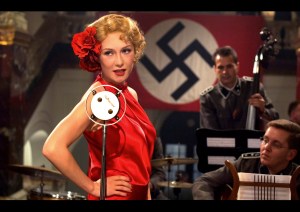 Black Book is clearly and fairly rated R, but part of its rating piqued my curiosity. One of the items that help push the film into the restricted rating is “graphic nudity.” Now, what exactly is graphic nudity? I recall last year’s Babel also getting an R-rating for what was deemed “graphic nudity.” One thing the two films have in common is that they both show quick glimpses of exposed female genitalia. I suppose that the MPAA feels that nudity becomes graphic when we see pubic hair. This confounds me. What about pubic hair turns nudity into an extra, more offensive category of nudity? At the end of the day, it’s just hair, people. I did some quick research and [I]Basic Instinct[/I], infamous for Sharon Stone’s career-making leg crossing, is rated R for mere “strong sexuality.” For the record, when Stone flashes her naughty bits they were bare. So let the record show that hair seems to be the qualifier between what is nudity and what is graphic nudity. Maybe I’ll write a dissertation on this some day.
As for another aside, how freaking cool is the name Zwartboek? It sounds like some fun term I’d come across in the pages of Douglas Adams’ The Hitchhiker’s Guide to the Galaxy. The Dutch language is a tad bizarre for my American ears; it’s sounds like a mixture of English and German, and sometimes it seems like a subtitled sentence is actually direct English. I know I can’t stop saying “zwatboek” around my home in place of gasps and curses.
Black Book is Verhoeven’s first Dutch language film in over 25 years, and it also feels like he’s enjoying movies again after his bad experiences across the Atlantic. I welcome more entertaining Dutch films from their favorite filmmaking son. He may not be he most subtle man behind a camera, but we already have plenty Terrence Mallicks and Gus van Sants to bring confounding contemplation to movies. We need more people like Vanhoeven who know how to please the sense, kick you in the balls, and make you grateful for the experience.
Nate’s Grade: B
Share this:

Shortbus (2006)
 How do we define pornography? John Cameron Mitchell (creator of Hedwig and the Angry Inch) wrote and directed an examination on human relationships that also employs hardcore sex. Yes, the actors are really having sex and we really see, among other things, a man fellate himself to climax. There’s hetero sex, homo sex, masturbation, and, in small flashes, a whole sweaty orgy of people of all shapes, sizes, colors, and tastes. This movie celebrates the sheer possibilities and enjoyment of sex. Mitchell isn’t the first serious filmmaker to show people really doing it, and the movie shows sex in a realistic fashion that is rarely seen, with all the humor, playfulness, and stumbles that can arise. It?s refreshing and a great window into the depths of human interaction. That’s the deal: everyone in this film is reaching out to feel something. The script mostly follows the pursuit of a sex therapist who has never had an orgasm. The sex will get the headlines but it’s the quiet reflections on human connection that really sneaks up on you and can hit hard. The movie doesn’t cover every facet with ease, like a stalker-esque character, and some of the acting is a bit amateurish; however, it’s a daring film that has a disarming sweetness to it and an open-hearted message that’s rather romantic after all. And no, it’s not porn.
Nate?s Grade: B
Share this:

The Notorious Bettie Page (2006)
 A somewhat shallow biopic, The Notorious Bettie Page is kept afloat by an incandescent performance from Gretchen Mol, at one time the appointed future Hollywood It Girl. Mol imbues the same transcendent mix of girl-next-door sweetness and sex-kitten-in-training vivaciousness that Page was famous for; she was, in the same moment, both angel and temptress, and yet never understood the impact. We get your standard assembly of biopic moments but some intriguing past elements barely get touched on, like the potential sexual abuse Page may have experienced from her father. There’s a ripe conflict of sex vs. sin waiting to be explored that also seems to get the most cursory of exposure. Director Mary Haron (American Psycho) cleverly stages the movie as if it was a product of Page’s own time, but it also places the film in an artistic limbo because of its strident, possibly anachronistic forward thinking. Bettie Page is such an interesting person and had such a lasting impact, not just on the debate over what constitutes pornography, but the movies fails to tell us why she should still even be relevant. It feels somewhat of a shame that such a person, simultaneously a devout Christian and bondage pin-up queen, doesn’t get a better character showcase. Still, the movie is well made and Mol is luminous, imitating Page’s cheesecake poses and faces to perfection. The Notorious Bettie Page would have worked better looking harder at what made its title heroine notorious and memorable still to this day.
Nate’s Grade: B-
Share this:

The 40-Year-Old Virgin (2005)
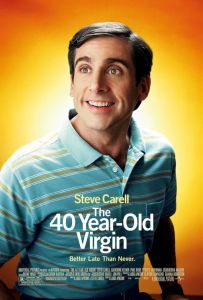 Yes it’s an uproarious sex farce, that’s a given from the ads, but this movie is also surprisingly sweet and genuinely moving. A lot of credit goes to star/co-writer Steve Carell and co-writer/director Judd Apatow, creator of some of the best, most honestly funny TV series unjustly cancelled. Apatow is a master at mining human comedy for pathos, where you get a great sense of character and really feel for those onscreen, and yet nothing feels cheap or unwarranted, all the while deriving comedy from the situations. We need more men like Apatow in the film industry. Carell can do it all whether it’s deflecting his insecurity, which we feel so bad when he comes up with outrageous things he’s overheard to make himself seem like one of the guys. The supporting cast is top-notch. They’re basically the stock roles in a sex comedy and yet they bring so much more to the table, with a true-to-life boys-will-be-boys camaraderie that you can identify with. The character relationships in The 40-Year-Old Virgin really elevate the story and the jokes and make the film something really special. It’s not merely a barrage of gross-out humor; it’s a nice story with some very tender moments. This is a movie that goes well beyond its gimmick premise, never feeling like a skit blown up into a feature film. It mixes in psychology, heartbreak, awkwardness, but also insights into loneliness and human connection. The best character-based comedy in years.
Nate’s Grade: A
Share this:

Inside Deep Throat (2005)
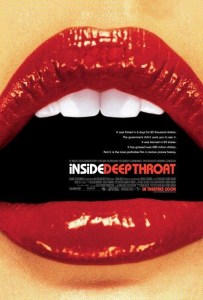 I find that there are generally two requirements that make a really great documentary: 1) have an interesting story, and 2) have an interesting way of telling it. I’ve seen documentaries on ripe topics squandered because of the dull and unimaginative ways they tell their tales. The skilled documentary team behind The Eyes of Tammy Faye and Party Monster has set their sights on a little smut film that changed the world in the early 1970s. Deep Throat was a “dirty movie” made for peanuts (25 grand) that ended up becoming the most profitable film of all time, eventually grossing more than $600 million. The story behind its meteoric rise, cultural acceptance, and damnation hits both requirements, thus making Inside Deep Throat a sensationally entertaining documentary.
It all started in 1971 when Gerard Damiano wanted to make an inexpensive pornographic film. Back in those days, many aspiring filmmakers actually got their start in porn (Wes Craven admits it). Damiano was in the planning process when he was visited by a man who wanted his girlfriend, Linda Lovelace, to appear in the eventual porno. He swore his girlfriend could do the most amazing trick. Lovelace demonstrated her trick, the full swallowing of an erect penis. Damiano was dumbstruck. He was determined not just to involve Lovelace but to base an entire film around her stunning ability. Deep Throat was written in three days, filmed in six days, but the furor it would bring would be irrevocably long lasting.
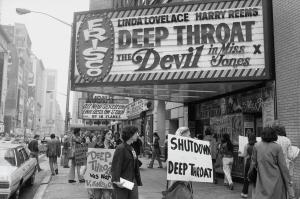 Deep Throat, as many of the crew will happily report, is not exactly a good movie. In fact, some call it the worst pornographic film of all time. Lovelace’s character found sex joyless, that is, until a doctor (Harry Reems) discovers that she has her clitoris all the way in the back of her throat. Thus to orgasm she has to swallow head-on (oh the double meaning). When the crew actually witnessed Lovelace’s cavernous abilities firsthand, they too were flabbergasted. But they wouldn’t be alone. Inside Deep Throat makes smart use of archival footage to prove how mainstream a small smut flick became. We see clips of Bob Hope and Johnny Carson cracking jokes about the film, and most amusingly of all are one or two interviews with little old ladies who “wanted to see a dirty picture.” Deep Throat crossed over and people went out in their Sunday finest to watch a hard-core porno.
Inside Deep Throat is rated NC-17 and with good reason. We do get to see Lovelace strut her stuff and the film almost playfully teases an audience with anticipation. We hear interviewees discuss their amazement; we see a close-up of Reems face as he gets pleasured. By the time the scene in question is shown uncut, we’re eager to witness this feat of fantastic fellatio ourselves. Let’s be honest, you can?’t have a documentary about Deep Throat‘s impact without showing the goods.
Filmmaking duo Fenton Bailey and Randy Barbato have a very visually satisfying way of telling their story. Images tear across the screen and animation pops, all set to what must amount to most of the soundtrack to Boogie Nights. The glossy visual flair reminds me of the swirling, near-pop-out book imagery of The Kid Stays in the Picture. The pacing of Inside Deep Throat is near break-neck, with the film clocking in at just over 90 minutes. I wish that the filmmakers had spent more time on their subject and gone more in depth into certain areas like Lovelace’s turnaround from girl next door goddess to anti-porn crusader back to fifty-something nude model (she was killed in a car accident in 2002).
 The cultural splash Deep Throat made is interesting enough, but the meat of the story is in the battles that would ensue. Damiano openly talks about how the mob controlled the early porn industry. He admits that he refused his share in the millions out of fear that he might have had his legs broken, or worse. There’s a long tangled web of mafia influence in the proliferation of Deep Throat. It was banned in over 30 states, but everywhere it went it became a hit. A Mafioso says that they were making so much money that they had to count it by the pound. Mob hits would materialize over the film’s profits and territory.
Even more fascinating, the U.S. government, to no one’s surprise, declared the film indecent. They couldn’t prosecute the director, or the distributors (unless they liked sleeping with the fishes), or anyone really making money off of the success of Deep Throat. So what’s a stubborn government to do? They prosecuted Reems for his involvement in a pornographic film. It was the first time an actor was ever prosecuted for his participation in art after the fact. Celebs like Warren Beatty and Jack Nicholson came to Reems’ aid, fearful of what might happen if a government could retroactively punish artists. Sadly, Reems was found guilty and sentenced to years in prison and was really never the same afterwards.
But instructional films on sexuality were still okay as far as government was concerned, and we see clips of them in all their medical film hilarity (apparently some positions are not meant for the obese we’re told). These were acceptable because they were meant to help and inform, whereas porn is meant to entertain.
The film’s interviews comprise some of its best and worst moments. Most of the Deep Throat crew is in their 60s or 70s now, and hearing them talk about porn and sexual acts does make you titter a bit. The crew provides funny anecdotes and some of the juiciest material. However, the film also curiously interviews people like Dick Cavett and Bill Maher. The expected talking heads are here like Dr. Ruth, Camille Paglia, John Waters, Hugh Hefner and Larry Flynt, but they regularly don’t have anything insightful to say.
 Inside Deep Throat goes back and forth with its objectivity. It’s obviously pro-freedom of speech and doesn’t mind ridiculing the government agents who tried taking Deep Throat down (oh the double meaning). Particularly telling is an FBI agent who wishes that terrorism could be tidied up so that he could finally get to the real importance, which is stopping people from seeing pornography. One of the main points of the prosecution of Deep Throat was that it “wrongly” purported the idea of a clitoral orgasm (I think many will find some error with this judgment). It’s easy in retrospect to chide government officials ruling on inaccurate information or just plain ignorance. It may be too easy for some viewers, but for me it’s fair game to lambaste any idiot trying to strip me of my Constitutional rights.
Inside Deep Throat is an engrossing if light-hearted look at a moment in time. Some of the seedier elements feel skipped over, but this is a documentary on a fascinating subject told with a pleasing visual style. Don’t be put off by the NC-17 rating or the subject matter. Inside Deep Throat is more than a behind-the-scenes featurette on a wildly successful porno. It’s a fast, funny, and greatly entertaining time capsule of an era where boundaries were still being pushed, both by artists and by censors. And in today’s FCC-fearing landscape, maybe not everything has changed since Deep Throat brought porn into the mainstream.
Nate’s Grade: B+
Share this:

Closer (2004)
 A funny thing happened to me when I sat in a theater to see Closer. It was packed, surely due to the film’s heavy star power. As the film played out I began to notice that my audience was laughing consistently, at moments that weren’t necessarily meant for humor. I don’t think they were laughing at the film, instead I think it was a defense. You see, I’m sure the majority of those couples read Closer to be a much different film than it is. They saw the pretty faces of Jude Law, Natalie Portman, and America’s sweetheart Julia Roberts. They were expecting something, let’s say, lighter than the cruel savagery of Closer. When America’s sweetheart Julia Roberts compares the taste of two men’s semen, you know this isn’t any Gary Marshall movie (forgetting Exit to Eden, and please do).
Dan (Jude Law) is an obituary writer planning to pen a novel one of these days. He locks his eyes on Alice (Natalie Portman), a stripper from the States, while walking one day. She gets hit by a car and Dan takes her to a hospital. Flash forward and Dan and Alice are dating but his eyes are already wandering. During a photography session with Anna (Julia Roberts) he kisses her but is spurned. He takes his revenge on some soul in cyberspace, pretending to be Anna and arranging a meeting. That sap turns out to be Larry (Clive Owen), and they actually do start dating. Then things get messy. Couples leave one another, get back together, swap lovers, and come crawling and begging for forgiveness or punishment. The rest of Closer is like a long game of relationship Red Rover.
 Director Mike Nichols has a definite affinity for his four actors (they are the only ones in the film with speaking parts). He shoots Closer as an actor’s showcase, with constant close-ups and no handheld camerawork. He places the emphasis on his actors. The results are more familiar to Nichols’ early films like Who’s Afraid of Virginia Woolf? and Carnal Knowledge. However, Closer isn’t as insightful as it thinks it is. It presents cruel characters doing dastardly acts, but this is stuff that wouldn’t impress Neil LaBute (In the Company of Men). There is intelligence to the film?s dialogue but it’s wasted on a ramshackle story.
The acting of Closer both helps and hurts the film. It seems that the two primarily wronged characters (Larry, Alice) give the better performances.
Owen is the standout performer of the ensemble. Playing the Dan role onstage has given him an intimate feel for the story’s characters. He’s the most decent of all four until the weight of circumstances finally pushes him to the limit. He’s the character the audience sees themselves in, so it helps that Owen gives a great performance of quiet dignity and slow self-destruction. He expresses more emotional turmoil in his eyes than most actors do with their whole body. Portman is having a breakthrough year for herself. First she showed pluck and grace in Garden State, and now with Closer she has graduated to the adult table. She radiates a fragility that makes you want to hug her. Portman will probably always look like a little doll (which works for her role as a stripper).
The beauty of Roberts and Law hurts the ugliness of their characters. I make no bones about my general dislike of Roberts as an actress. Her acting in Closer is like a soft-spoken, pouty child. She jumps from man to man, looking sullen or pensive, but comes off more petulant. Law is better, but his handsome devil is not in the details. Dan is a womanizing cad but we never get any understanding for why he acts as he does. Law can be hypnotizing, but like Roberts, his pretty facade takes away from the impact of Dan’s ugly behavior.
 Despite the title, you get no closer to getting to know or understand the characters. It’s really almost a stretch to call them characters because they’re more accurately different positions in an argument. The only characterization Closer has to offer is suffering and inflicting suffering. Closer really has one voice coming out of the mouths of different pretty actors.
The film has the annoying habit of skipping ahead in time and not telling the audience. We’re left to catch verbal asides that time has passed. After a while you’ll get the hang of it simply by assuming that the beginning of every new scene is the start of a new date in time. Closer is nothing but a string of uncollected scenes, usually involving people leaving a lover or starting a new fling. The actors come on, do their part, then they leave and we move on to a different scene. This is not staged as a movie.
The trouble with Closer is that it never really feels like it’s going anywhere. There’s no progression. Sure, couples swap, people get revenge, but the connection of sequences is lacking. The way it is, Closer could have gone on forever. It’s a series of scenes smashed together, not a story that rises and falls and builds to a climax.
Closer is an exploration into the darkness of human behavior starring some of the prettiest actors Hollywood can spare. The story goes nowhere, the ending doesn’t accomplish much, the characters lack convincing depth, but some of the acting is good and there is a ray of intelligence to the film. Fans of the above-the-title actors should enter Closer with caution. It’s a dark film with little to feel good about. Closer is brooding, moody, and probably the first and last time we?ll hear Julia Roberts talk about the taste of semen. Unless, of course, Gary Marshall starts pre-production on Exit to Eden 2: Rosie O’Donnell’s Bondage Boogaloo.
Nate’s Grade: C+


 nathanzoebl
You must be logged in to post a comment.