Blog Archives
Trap (2024)
 At this point, there is a certain expectation with any M. Night Shyamalan movie that reality will be heightened, that people will never talk like actual human beings, and that his brand of unreality can become part of the unique selling point, nestling into a campy charm when it all coalesces. Such is the case with Trap, the ludicrous thriller that plays much more pleasingly as a wacky comedy of errors and incompetence as an entire city’s police force is looking for a notorious serial killer, The Butcher a.k.a. Cooper (Josh Hartnett), at a concert for a pop star (Syamalan’s own daughter, Saleka). It’s a silly premise that essentially endangers thousands of innocent concert-goers where the plan is to, I guess, grab any middle-aged white guy in attendance and question them? It’s absurd, but it becomes a fun game of watching our trapped killer try and work out different escape options and adapt on the fly, while also being that supportive girl dad for his starstruck little tween. There’s an appealing “how is he gonna get outta this jam?” conflict resolution, though our deadly dad also acts so supremely weird, from buddying up with the merch guy, pushing ladies down stairs completely unbeknownst to observers, and trying to convince his daughter they should ditch this fancy concert to go explore what’s beneath a trap door. The hilarity is that Cooper is not really good at hiding his tracks, or his peculiarities, but everyone else in this universe is just that dim. It’s grand entertainment but definitely loses something once it leaves the central location for its final act, shifting the protagonist onto a new face that can’t quite carry the movie(reminded me of 2013’s The Call once it abandoned its premise for the final act). Given the heightened atmosphere, this is also the kind of movie that would have benefited from another twist or two, perhaps with Cooper’s family. Hartnett is playing a very specific tone and manages to make his character creepy, daffy, intense, and thoroughly watchable. If you’re in doubt what Shyamalan was going for, look no further than casting Parent Trap(!)-actress Hayley Mills as the older criminal psychologist trying to ensnare our killer with this outlandish ruse. Imagine Hitchcock by way of Peter Sellers, and you have Trap.
Nate’s Grade: B-
Share this:

Woman of the Hour (2024)
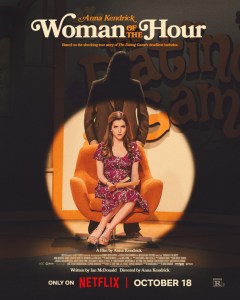 I never knew there was an actual serial killer that appeared on a 1978 episode of The Dating Game, and that he actually won. That’s a killer hook. The problem with Woman of the Hour, Anna Kendrick’s debut as a director, is that there isn’t really a movie here as presented. Because the game show segment can only last so long, we get the creepy first date, that never happened in real life, and watch Kendrick playing our lucky lady with mounting dread. A moment where the killer requests that she re-read the phone number she hastily gave him by memory, because she should know her number, is terrifically tense, as is the scene of him following her to her car. The problem is that this first date can only last so long, just as the cheesy TV game show segment can only last so long, so the movie has to provide extra back-story to fill the time. We get several past encounters with the killer’s unfortunate victims, all played quite unnervingly and seriously. The woman of the hour is less Kendrick getting her fleeting spotlight on TV, and an anecdote to impress people at parties for the rest of her life, than the survivor who eventually leads to the killer’s arrest. Amazingly, at the time of his TV appearance, he was on the FBI’s Most Wanted List but there wasn’t a searchable database, so he clumsily got to keep committing murders, including while out on bail. It’s a harrowing story, but is it one best told through the gimmick structure of the game show appearance? If you were going this route, perhaps best to treat the material like a slow-burn stage play, starting with the first date, and watch in real time as it gets awkward and our heroine begins to have her suspicions that this man does not mean her well. Instead, the game show segments are goofy and broad and the least important moments in the stretched-thin film. There might be a movie with this subject, but I’m not sure that Woman of the Hour is it.
Nate’s Grade: C+
Share this:

Monster (2003) [Review Re-View]
 Originally released December 24, 2003:
Monster follows the life of Aileen Wuornos (Charlize Theron, now nominated for a Best Actress Oscar), Americas only known female serial killer. In the late 1980s, Wueros was a roadside prostitute flexing her muscles with Florida motorists. She describes hookin’ as the only things shes ever been good at. One day Wuornos has the full intention of taking her own life, but she meets 18-year-old Selby (Christina Ricci) at a lesbian bar and finds a companion. Driven by a growing hatred of men from sexual abuse, Wuorno’s starts killing her johns to try and establish a comfortable life for her and Selby.
Let’s not mince words; Theron gives one of the best performances I have ever seen in my life. Yes, that’s right. One of. The. Best. Performances. Ever. This is no exaggeration. I’m not just throwing out niceties. Theron is completely unrecognizable under a mass of facial prosthetics, 30 extra pounds, fake teeth and a total lack of eyebrows. But this is more than a hollow ploy to attract serious attention to the acting of a pretty face. Theron does more than simple imitation; she fully inhabits the skin of Aileen Wuornos. The closest comparison I can think of is Val Kilmer playing Jim Morrison in The Doors.
Theron is commanding, brave, distressing, ferocious, terrifying, brutal, stirring, mesmerizing and always captivating. It may be a cliché, but you really cannot take your eyes off of her. Her performance is that amazing. To say that Theron in Monster is an acting revelation is perhaps the understatement of the year.
With previous acting roles in Reindeer Games and The Cider House Rules, Theron is usually delegated to pretty girlfriend roles (who occasionally shows her breasts). Who in the world thought she had this kind of acting capability? I certainly did not. If Nicole Kidman can win an Oscar for putting on a fake nose and a so-so performance, surely Theron should win an Oscar for her absolute transformation of character and giving the performance of a lifetime.
With this being said, and most likely over said, Monster is by no means a perfect film. Minus the terrific central performance, Monster is more of an everyday profile of a grotesque personality. The film weakly tries to portray Wuornos more as a victim, but by the end of the film, and six murdered men later, sympathy is eradicated as Wuornos transforms into the titular monster. Some supporting characters, like Ricci’s narrow-minded Christian up bringers, are flat characters bordering on parody. The supporting characters are generally underwritten, especially the male roles that serve as mere cameos in a film dominated by sapphic love.
Monster is proof positive that human beings will never be phased out by advancing machinery when it comes to acting. Monster boasts one of the greatest acting achievements in recent cinematic history, but it also coasts on sharp cinematography and a moody and ambient score by BT (Go). Monster is a haunting film that you won’t want to blink for fear of taking your eyes off of Theron. She gives an unforgettable tour de force performance that will become legendary.
Nate’s Grade: B
——————————————————
WRITER REFLECTIONS 20 YEARS LATER
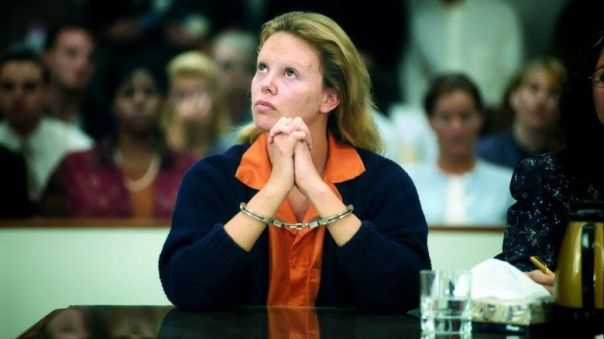
Monster was a revelation for Charlize Theron, an actress who until then had mostly been known for parts that asked that she be good looking and little else. Twenty years later, Theron is one of the best actresses working in Hollywood and it almost never happened without her breakthrough performance where she brought to startling life the horror of Aileen Wuornos’s tragic life and tragic desperation. When this movie came out originally in 2003, I doubt anyone but Theron’s closest friends suspected she was capable of a performance this raw and spellbinding, but that’s also a condemnation on all of us. How many other actresses out there could maybe rival the best of the best if they just had the right opportunity? How many actresses are stuck playing the same limited roles because that’s all they’re ever asked to do? How many actresses are wrongly assumed to be of limited talent simply because of their comely appearance? That isn’t to say there’s some hidden universal equation that the uglier you are the better at acting you have to be (though it sure has worked out for [insert your example of a conventionally unattractive actor here]), but this movie is a clear indication that too many actors are never given enough opportunities to shine.
Back in early 2004, I credited Theron’s performance as one of the best I’ve ever witnessed in my then-twenty-one years of moviegoing (although that number should be smaller considering I wasn’t keenly watching Scorsese as a baby). She is very good, but I’d like to claw back some of my rapturous words of praise now that we’ve seen twenty years of Theron acting excellence. Looking over her career, I might actually cite 2011’s Young Adult as her finest performance, and that one didn’t even nab an Oscar nomination (she’s since been nominated twice since, for 2005’s North Country and 2019’s Bombshell). The draw of the movie is the head-turning performance from Theron and she just disappears completely inside the skin of her subject. It’s hard to remember at times that this is Theron, thanks to the richness of her startling performance but also the accomplished makeup effects, which were not nominated. At every point, you feel the fire burning behind the stricken complexion of Theron, a fire that will eventually consume her and everything she loves. While highly compelling, this is not a performance of subtlety and restraint. This is a big performance, and the movie is often prone to making loud pronouncements about its subjects and pertinent themes. It’s loud, brash, and maybe for some it will seem a little too loud, a little too unsubtle, but it’s a movie that refuses to be ignored for good reason.
 In my original review I raised some reservations with the rest of the movie, and I’m here to recant one of them. I wrote back in 2004, “The film weakly tries to portray Wuornos more as a victim, but by the end of the film, and six murdered men later, sympathy is eradicated as Wuornos transforms into the titular monster.” I’m positive that many will still cling to this same idea but oh boy have I come around in twenty years. By the time the movie is over, you wonder why more women haven’t just snapped and gone on killing sprees. Wuornos is indeed a victim. She’s responsible for terrible deeds but that doesn’t change the fact that she started as a victim and continued as one until put to death by the state of Florida in 2002. She was a sexual assault survivor, groomed into prostitution, and then trapped by a society that saw her as little other than trash, something to be pitied but ultimately forgotten. She comes of age as an adult thinking her only value is the fleeting moments of pleasure she can provide for men, and in the narration, we hear her dreams that one of these men who repeatedly tell her how pretty she is would take her away to another life, like a princess. Alas. It’s impossible to separate her past as a victim of predatory men from her actions when she turns on predatory men. Being forced into prostitution out of desperation is one of the definitions for sex slavery and trafficking. The movie does try to make her last few johns more ambiguous over whether or not they are “good people” and thus “deserving” of their fates, like a scale is being introduced and we’re doing the calculation whether Wuornos will strike (#NotAllMen, eh felas?). There’s a clear dark path where the murders get considerably worse. She begins by defending herself against a rapist, but by the end, it’s just a kind family man who picked her up without even the intention of having sex. We’re meant to see her transform into the titular monster, but I kept wondering about Aileen Wuornos as the societal stand-in, accounting for thousands of other women who lived and died under similar tragic circumstances.
I also found myself growing increasingly contemptuous of the love interest character played by Christina Ricci (Yellowjackets). When we’re introduced to Selby, she’s a wide-eyed naif testing her boundaries of comfort but clearly tapping into repressed homosexual feelings. Their relationship is meant to serve as the emotional rock for Wuornos, the reason that she’s acting more rash is because she’s trying to earn enough money for the two of them to run away together and build a new life. She is her motivation, but Selby is absolutely the worst. You can excuse some of her hemming and hawing about striking out on her own and leaving her controlling parents, as she’s fighting against repression as well as trepidation for starting out independently, but this lady becomes fully aware of the dangers and dehumanization that Aileen goes through to earn her meager amounts of money, and Selby encourages her to do so. Not just encourages her, Selby pressures her to do so, to get back out there and “provide” for her, knowing fully well what that means, knowing fully well how these men have treated Wournos, repeatedly abusing her. What are you doing to help things out, huh Selby? She’s embarrassed hanging around Wuornos around some other lesbian friends she just met, so she’s already looking to upgrade and move past her lover. By the end, as she’s trying to coax a confession of guilt from her girlfriend to save her own skin, Selby becomes just another user, taking what they want from Wuornos and discarding her when they’ve had their fill.
 This was the directorial debut for Patty Jenkins, who also served as the sole credited screenwriter, and while the indie darling-to-franchise blockbuster pipeline has been alive and well in Hollywood, it was quite a surprising leap that her next movie after Monster was none other than 2017’s Wonder Woman. To go from this small character-driven true crime indie to leading the big screen solo outing for comics’ most famous female hero is quite a bizarre but impressive jump. Her only other feature credit is the much less heralded 2020 Wonder Woman sequel. She was attached to direct a Star Wars movie about fighter pilots but that seems to have gone into turnaround or just canceled. So is the way with Star Wars movies after 2019’s Rise of Skywalker. Just ask the Game of Thrones creators, Josh Trank, and Taika Watiti how that goes.
Monster is a phenomenal performance with a pretty okay movie wrapped around it in support. Twenty years later, Theron is still a monster you can’t take your eyes away from. It changed her career destiny and I think acts as an exemplar for two reasons: leaving the viewer with the question how many other wonderfully talented performers will never get the chance to showcase their true talents because of faulty assumptions, and how many other women are out there living in quiet degradation like Aileen Wuornos.
Re-Veiw Grade: B
Share this:

The Good Nurse (2022)
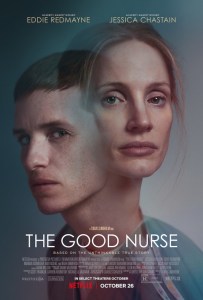 I was recently having a conversation about how there seems to be fewer high-profile serial killers today, at least compared to the ignoble heyday of the 1970s-1990s, the kind of men, and yes, it’s almost always men, who fascinated millions and inspire countless books, movies, podcasts to detail the heinous details of their twisted and ritualistic crimes. I recall reading an article that proposed the rise of serial killers during that time period might have had something to do with the prevalence of lead paint and lead poisoning in homes before it was finally phased out in 1978. It seems like it would be harder to be a serial killer in the modern era, where almost every person has a device to call the police, or document your behavior, and submit it for the public record. Of course, we also have far more mass shootings and spree killers, so it’s not like things are perfect. I thought about this while watching The Good Nurse on Netflix, based on true events following a nurse in Pennsylvania who may have ultimately taken 400 lives before he was finally apprehended. How does a serial killer operate in the modern world? With help from lawyers.
Amy (Jessica Chastain) is a nurse working the night shift and trying to raise two young girls on her own. She suffers from a heart defect and keeps her ailment hidden for fear she will be fired before she crosses the period where she can earn health insurance from her job. She’s stretched thin, overworked, exhausted, and anxious, and that’s when Charlie Cullen (Eddie Redmayne) comes into her life. He’s a new nurse for their hospital, comes highly recommended, but then… patients start coding and dying and Amy can’t explain it. Somehow insulin is getting into their systems, and she begins to suspect Charlie is the culprit, and from there she works with law enforcement to investigate Charlie’s mysterious past work history and assemble a credible legal case of guilt.
 It’s obvious from the start Charlie is guilty, and thankfully the movie doesn’t drag this reveal out, even choosing in its long take opening to demonstrate one of his dispassionate murders. This is less a story about whether this person is in fact the actual killer and more a story about how to nab the killer, and the methodical, detail-oriented case work reminded me especially of 2015’s Best Picture-winner, Spotlight. Likewise, we already knew the Catholic Church was covering up sexual crimes from its priests, so it was more a story about the people responsible for bringing them to justice and how they worked their case. It’s a similar and similarly engrossing formula for The Good Nurse. Uncovering Charlie’s past, his way of avoiding crimes is eerily and infuriatingly reminiscent of the Catholic Church just reshuffling its dangerous priests from parish to parish. The prior hospitals that employed Charlie will not talk about him because to do so will open them up to legal liability, so instead they simply fired him for specious reasons and allowed him to gain employment at another hospital, repeating his deadly patterns. To get more involved, or to investigate further, would be financially deleterious to the hospitals, so they looked the other way. A post-script tells us that none of the hospitals that employed Charlie Cullen were ever criminally charged for their role in perpetuating the death this man left behind. The Good Nurse smartly understands that pinning down one villain is easy, but indicting the system is an even bigger story, and one that rightfully earns every ounce of viewer condemnation and outrage. The lawyers representing these hospitals are just as culpable for these preventable murders.
Much of the movie follows Amy’s personal investigation, dovetailing with two detectives (Nnamdi Aomugha, Noah Emmerich) trying to put together the meager crumbs that the hospital is offering after its own six-week-late internal review that necessitated contacting the police about the “irregularity” in a patient’s death. Each has key pieces, Amy with the inner workings of the hospital system and nursing expertise, and the detectives with the shady background report on Charlie, and it’s an exciting turning point when they join forces. From there, the movie reminded me of Netflix’s sadly cancelled series Mindhunter, where two FBI agents profiled America’s most notorious serial killers to learn insights about the patterns of pathology. It was also a series about talking, about trying to draw these dark men into confession, and the subtle manipulations necessary to get the key pieces of information desired. Amy brings hard evidence that her co-worker is stealing insulin but it’s not enough, and she questions how far to put herself in the middle of this investigation, especially since her daughters have grown close to Charlie.
 The direction by Danish filmmaker Tobias Lindholm (A Hijacking, A War) is very aligned with the fact-finding tone established the screenplay by Krysty Wilson-Cairns (1917, Last Night in Soho). The camera work is never flashy, preferring longer takes from unobtrusive angles, but without fully adopting the impatient edits docu-drama verisimilitude approach many directors would follow to better capture the reality. The directing is very methodical, cerebral, and restrained in the best way to enhance all of these elements from the story. It’s also not a surprise when you recall that Lindholm directed two episodes of Mindhunter’s first season. It’s the kind of assured direction that often gets ignored in award season but it’s the kind of direction this movie needed to better succeed in tandem with its slow-building, fact-finding mission. It’s not dispassionate, it’s deliberate.
Redmayne (Fantastic Beasts) is an actor I’ve been critical of with some mumbly, tic-heavy past performances, but he’s genuinely good and unnerving for how “normal” he comes across while holding back just enough in his eyes to make you want to take a cautious step back at various points. His role is the more internal one, and the character becomes an incomplete guessing game of how much of what you see is the real Charlie Cullen. Is the kind, compassionate Charlie who helps Amy’s daughter learn her lines for a school play, while encouraging her repeatedly, the real version of this man? Is the evasive man who bursts into sudden and shocking moments of emotional outburst the real version? Is it some semblance in between, and how does one square the difference? The movie’s focus isn’t on unpacking the psychology of this bad man (the title is not a reference to Charlie but of Amy) but on the hard-nosed efforts to finally bring him to justice. Because of this there aren’t as many showcase moments for Redmayne, but he genuinely made me jump during his bigger moments. His Midwestern accent also sounded a lot like (a non-Bostonian) Mark Ruffalo to my ears, further cementing the connections to Spotlight.
The real star of The Good Nurse is its story, given careful examination and worthy condemnation to the forces that allowed a mass murderer to continue his trade for years. When finally asked why, as if there can ever be a satisfying revelation for why bad people do bad things, Charlie can only shake his head and respond, “They didn’t stop me.” He kept killing because the hospital lawyers shuffled him around, protecting their own rather than innocent victims who place their faith in the hospitals and their staff to follow the Hippocratic oath and “do no harm.” The Good Nurse is an appealing movie for fans of true-crime and investigative procedurals. It stays focused on the human cost of those preying upon others, whether they be serial killers masking their misdeeds or corporate lawyers protecting profits and liability over human suffering. It’s a good movie and a good reminder that the over-worked, underpaid nurses are legit heroes.
Nate’s Grade: B+
Share this:

The Batman (2022)
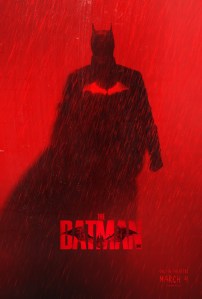 Matt Reeves is a director who has found a way to inject soul into blockbuster movie-making, notably shepherding the last two films of the revived Planet of the Apes series. Who would have guessed at the turn of the twenty-first century that the two co-creators of Felicity would go on to helm such monumental properties like Star Wars and Batman? Reeves has reliably proven himself on increasingly bigger stages, and that’s why I held out hope that yet another Batman reboot would be worth the effort under his care. Let’s face it, dear reader, we’re probably never going to be more than three or four years removed from some kind of Batman movie, whether a continuation or another reboot. If we are going back to the Bat basics, I trust giving the franchise over to exciting artists like Reeves. I was hoping for a Ben Affleck-directed Batman after he slipped into the cowl in 2014, but it was not to be even though he was the best part of the Zack Snyder run. After multiple production delays, we now have The Batman, and it’s the next big box-office hope for desperate movie theaters until the oasis of summer releases (some are even charging a heftier ticket price, so consider it a blockbuster tax). As a slick comic book spectacle, The Batman is a three-course meal that could have sensibly pushed away earlier. You’ll feel satisfied, full, a little addled, but if dank serial killer thrillers are your thing, you’ll definitely be hungry for more even after nearly three hours of Reeves’ deep danky dive.
Gotham City is on the verge of a new mayoral election, and it’s also on the verge of a killing spree. A masked man identifying himself as the Riddler (Paul Dano) is targeting the elites of the city with cryptic notes addressed specifically toward “The Batman” (Robert Pattinson), the newfound vigilante trying to instill fear in the hearts of would-be criminals. The key ends up being Selena Kyle (Zoe Kravtiz), a waitress at Gotham’s grungy club that also happens to be a popular market for the big crime bosses. Batman enlists the help of Selena to put together the clues to predict the Riddler’s next target and to uncover decades of corruption infesting the city.
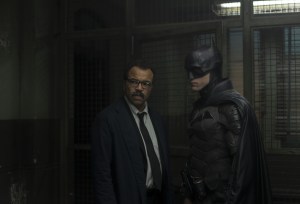 The Batman exists in a specific cinematic universe far more in common with the rain-soaked, gritty serial killer thrillers of David Fincher than anything from the previous DC movie universe. This is a pulpy, stylized movie that feels akin to Seven or Zodiac, and not just in its protracted length. It’s a methodical movie that takes its sweet time dwelling in the decrepit details. The plot is very similar to the serial killer formula of finding that first alarming murder and clue, leading to the next, learning more from each additional target to try and discern a pattern of connectivity, and finally learning that the grand scheme goes deeper than imagined, and is usually personal. It’s more based as a detective procedural than any previous Batman incarnation, including missions where the Dark Knight goes undercover or enlists others to gather intel for his investigation. If you’re the kind of person that’s been dreaming of the quote-unquote world’s greatest detective to do more sleuthing and less typing at magic computers, then your time has come. This is a very dark and very serious movie, though it doesn’t feel too suffocating. Fun can still be had but on its own terms, satisfaction from building momentum, seeing how this world incorporates familiar faces and Batman elements, and deepening the lore of this city’s complicated history. Nobody is going to be making any “I gotta get me one of these” quips. It’s hard to even remember a time Batman had nipples on his chest plate and a Bat credit card.
This is also the first Batman where I can vividly feel the anger resonating from its title character. In this new timeline, we’ve thankfully skipped the origin period (and even more thankfully skipped watching Bruce’s parents die on screen for the sixteenth time or so), and we’re now two years into Batman being Batman. He’s still figuring things out but his effect is evident. Reeves has a terrific introduction of various acts of crime across the city and cross-cutting the criminals staring at the Bat signal in the sky and then nervously looking at a corridor of shadow, fearful that the caped crusader could emerge at any moment. When he does finally arrive, this Batman walks with such heavy plodding steps for dramatic effect (and reminiscent of some Goth club kid). This version of Batman relishes delivering pain. He wallops his opponents with abandon, and the intensity of the physical performance from Pattinson really impresses. This is Batman as a rampaging bull, leaning into fights, and also carelessly blase about enduring damage. You will watch Batman get shot dozens of times and he just keeps fighting, so overcome in the moment with the drive of his own violent vigor. Bruce Wayne hasn’t exactly been portrayed as a stable and well-adjusted man in the other movies, but this is the first Batman that made me a little scared about what he might do to others and how cavalier he was taking all this damage.
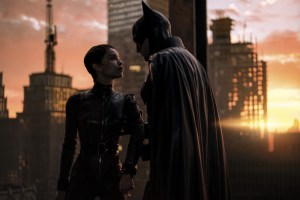 On that note, Pattinson proves himself more than capable of shouldering the weight of the franchise. Upon news of the former Twilight star’s casting, fan reaction across the Internet was apoplectic and rotten, ignoring the fact that Pattinson has gone the 90s Johnny Depp route and purposely leveraged his good looks to work with an eclectic group of filmmakers and odd roles (see Good Time, The Lighthouse, and The Rover). Pattinson has become a very interesting young actor, and it’s funny to me that ten years after the release of the final Twilight, we have one half of the undead couple playing Batman and the other half nominated for Best Actress for portraying Princess Diana. I would say they’ve proven themselves as legit thespians. Anyway, the Batman franchise has a long history of negative fan reaction to casting, from Affleck to Heath Ledger to even Michael Keaton, that is then rescinded upon seeing the movie, and I expect the same to occur for Pattinson. He actually plays Bruce Wayne something like an atrophied vampire, barely keeping the visage because the costume is the real him. Although, if this is a Batman who prioritizes the night, I think if I was a criminal, I would just start planning on committing all my many crimes during daylight hours (strictly keeping to banking hours).
The supporting cast is as deep and as talented as the Nolan films. Several villainous characters are in their early stages of our conceptions. Kravitz (Kimi) is the real breakout star. While she cannot supplant Michelle Pfeiffer as the top Catwoman, Kravitz makes the role her own. Selena is more a socially conscious antihero trying to fight back against bad men in power abusing that power. Her own goal aligns with Batman’s, and the two become intertwined allies with a clear romantic frisson emerging. This is a Catwoman I would like to see again. Dano (Swiss Army Man) is effortlessly creepy as the morally righteous and unhinged Riddler, more akin to Zodiac or Jigsaw than Jim Carrey’s wacky version. He’s menacing and the tricks he does with his voice are unnerving, except, however, when his voice hits higher pitches and then he sounds like a whiny child needing to go to his room. Colin Farrel (The Gentlemen) is nearly unrecognizable under pounds of makeup that make him resemble a disfigured Richard Kind (one wonders why the movie didn’t just hire Richard Kind himself) and he’s having a ball. Jeffrey Wright (Westworld) has a weary gravitas as a younger Jim Gordon, the only ally on the police force for Batman. Andy Serkis is a welcome presence as the dutiful Alfred, the last familial bond Bruce has, though he spends most of the time off-screen probably due to Serkis directing 2021’s Venom 2.
 Reeves might not have the signature Gothic opulence of a Burton, the visual flair of a Snyder, or the zeitgeist-tapping instincts of a Nolan, but he is a supremely talented big screen stylist. There is a deeply felt tactile nature to this movie, from the streets to the alleys to the homes. It feels wonderfully alive and especially dirty. The entire movie feels like it has a visual pal over it, favoring burnt orange, and the cinematography by Greig Fraser (Dune) is ornate and often mesmerizing, begging you to just immerse yourself in the details and compositions. The influence of Fincher is all over this movie, but there are far worse auteurs to model after than the man who elevated serial killer thrillers to high art. I appreciate how Reeves stages many of his bouts of action, including one sequence of Batman taking out a group of gunmen glimpsed only from the staccato flashes of muzzle fire. Reeves is a first-class showman when it comes to introductions. I mentioned Batman’s introduction, but Reeves also delivers splashy entrances for Catwoman, the Riddler, and even the Batmobile, which comes to monstrous life like a kaiju being awakened. The explosive car chase with that marauding muscle car is the action high-point. The movie is further elevated by Michael Giacchino’s pounding musical score. It’s not an instantly iconic Danny Elfman theme but it is stirring in how thunderous it announces itself.
I wasn’t feeling the length of the movie until its third hour, and that’s where my friend Eric Muller cites that The Batman is suffering from a Return of the King-level of false endings. Just when you think it’s wrapping up, there’s something else, and just when you think it’s now finally coming to a close, it’s got another sequence and attached resolution. It’s during this final third hour that I feel like the movie could have been trimmed back. While it ends on a high note and brings characters to the end of their arcs in a clear fashion, part of me really feels like a bleaker ending would have been appropriate for the rest of the movie we had. I won’t specify for the sake of spoilers but you’ll know it when it happens, and it could have ended on a note of the villain more or less winning the larger war on their own terms. It has such a power to it, tying elements together that had been carefully kept as background for so long as to be forgotten only to bring them back to assert the full power of an insidious virus. I think the movie would have been a more fitting ending on this dreary note, with our heroes having lost, but of course the studio wouldn’t want its $200 tentpole to end with its main star bested by pessimism. Again, this is merely my own personal preference, but after two-plus hours of rainy gloom and doom, it feels more fitting to end on a dour note (also akin to Seven or Zodiac) than on inspiring triumph.
 This is also perhaps one of the most disturbing PG-13 movies. I might caution parents about taking younger children to watch. The mood of this movie is very dark and somber and the details of the Riddler’s acts of terror can be very horrific to contemplate. There are also intense moments like listening to a woman being strangled to death, twice. It all started making me think maybe Reeves and company could have pulled back and left more to the imagination. I’m not saying the movie’s tone is inappropriate for the material, it just occasionally luxuriates in the grimy details and pitched terror and trauma of its victims that can be unsettling and unnecessary.
Even with the heaviest expectations from the hardest of fans, The Batman is an unqualified success. It’s not in the same category of Nolan’s best but the ambition and execution place Reeves only just outside that hallowed sphere of blockbuster showmanship. It also hurts that The Batman lacks an exciting anchor that can break through the pop-culture clutter, like a dynamic and ultimately Oscar-winning performance from Heath Ledger or Joaquin Phoenix. It almost feels like a Batman miniseries that you might want to continue tuning into (Reeves is developing a few Batman-related projects for HBO Max). Overall, The Batman is an exciting and intelligent blockbuster with style, mood, and a clear sense of purpose. Reeves remains an excellent caretaker of any pop-culture property and proves big movies can still have souls.
Nate’s Grade: B+
Share this:

Spiral (2021) / A Quiet Place Part II (2021)
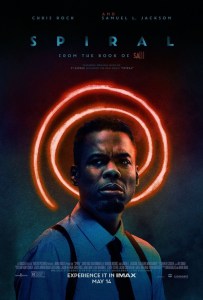 Chris Rock seems like an odd choice to spearhead a revival of the dormant Saw franchise, but the actor was a rabid fan of the grisly horror series and came to producers with an idea for a new Saw movie, and the results are Spiral: From the Book of Saw, like it’s a Biblical chapter. A Jigsaw copycat killer is targeting corrupt police officers and those who protected them, and Rock plays a detective who dared to turn in his partner after he murdered a crime scene witness. Rock’s character is seen as a traitor by his fellow brethren in blue, and as the Jigsaw copycat continues his or her bloody rampage, the history of police abuse and cover-ups comes to light. The problem with Spiral is that it feels like an entirely different independent script that somebody attached gory Saw set pieces and said, “Reboot.” The Saw set pieces get increasingly ludicrous and gross and the drama in between, where Rock tracks clues and barks at his peers, feels like boring connective tissue the movie can’t even bother to pretend is worth the effort. Both parts feel rote, the police conspiracy thriller and the gory death traps. The movie is also entirely predictable by the nature of the economy of characters. Within 15 minutes, I was able to predict the identity of the copycat killer as well as their connection and motive. This movie desperately needed more time with Rock and Samuel L. Jackson together. Another issue is that the movie ends abruptly and with a needed extra turn missing, perhaps where Rock agrees to work with the killer and justifies the executions as righteous reform. I wanted this new Saw to be more in keeping with Saw 6, the best sequel and most topical of the franchise where health care employees were put to fiendish ironic tests to punish them for denying medical coverage. It feels like targeting bad cops would produce more social commentary, but I guess that would get in the way of watching people try and sever their own spine on a single nail. Spiral doesn’t feel any more promising than the other attempted Jigsaw reboot in 2017 even with its topical elements. It might be cheap enough to earn a sequel, but it feels like a franchise eternally going in circles.
 A Quiet Place Part II is the first movie I’ve seen physically in theaters since the middle of March 2020, and I genuinely missed the experience. It’s been the longest I’ve ever gone in my adult life without seeing movies in the theater, and this was one that felt like the presentation would be elevated by the big screen and superior sound system. Taking place nearly minutes after the conclusion of the 2018 hit, the surviving Abbott family ventures off their farm to find refuge and potentially find a way to protect themselves and neighboring communities from the killer monsters attracted to noise. The opening is the only flashback we get; everything else is forward-looking. I would have enjoyed getting more Day One experiences where the monsters first attacked, especially as we become open to new characters and their own harrowing journeys. The movie, written and directed by John Krasinski, isn’t quite as novel and brilliantly executed as its predecessor, but it’s still a strong sequel that gives you more while leaving you wanting more by the end. The majority of this lean 97 minutes is split between the family, one half staying put in a warehouse basement, and the other traveling out into the open to find a radio tower. The set pieces are still taut though rely more on jump scares this go-round, granted well executed jump scares that still got me to jolt in my seat and squeeze my girlfriend’s hand a little tighter. Cillian Murphy (Batman Begins) is the most significant addition as an Abbott family friend who has lost his whole family since that opening flashback. He’s a broken-down man, a parallel for Krasinski’s father figure from the first film, and at points it feels like he’s being set up to appear sinister, or at least hiding some dark secret that never really comes to fruition. The world building is expanded and introduces a very Walking Dead-familiar trope of desperate people being just as dangerous as deadly monsters, though in a world of hearing-enhanced creatures, I would think there’s more danger in larger numbers than security. The movie earns its triumphant ending even if the staging, and cross-cutting, is a little heavy-handed. A Quiet Place Part II is a successful sequel that understands the unique appeal of its franchise and how to keep an audience squirming while also remain emotionally involved and curious for more.
Nate’s Grades:
Spiral: C
A Quiet Place Part II: B+
Share this:

Hannibal (2001) [Review Re-View]
 Released February 9, 2001:
Trying to sequelize Silence of the Lambs is surely harder than trying to sequelize The Blair Witch Project. The novel Hannibal by Thomas Harris I don’t think will be confused as a necessary burst of creative ambition and more of a chance to cash in on the love of Hannibal Lector. Though I’ve not read a line from the book from what I’m told the movie is faithful until the much hated ending. Starting a film off a so-so book isn’t a good way to begin, especially when you lose four of the components that made it shine Oscar gold.
 The element that Silence of the Lambs carried with it was stealthily gripping psychological horror. It hung with you in every closed breath you would take, surrounding you and blanketing your mind. I mean, there aren’t many serial killer movies that win a slew of Oscars. Lambs excelled at psychological horror, but with Hannibal the horror turns into a slasher film more or less. What Lambs held back and left us terrified, Hannibal joyfully bathes in excess and gore.
Julianne Moore, a competent actress, takes over from the ditching Jodie Foster to fill the shoes of FBI agent Clarice Starling. Throughout the picture you know she’s trying her damndest to get that Foster backwoods drawl she used on the original down. The problem for poor Moore though is that her character spends half of the film in the FBI basement being ogled by higher-up Ray Liotta. She doesn’t even meet Hannibal Lector until 3/4 through. Then again, the title of the film isn’t Starling.
Anthony Hopkins returns back to the devil in the flesh and seems to have a grand old time de-boweling everyone. Lector worked in Lambs because he was caged up, like a wild animal not meant for four glass walls, and you never knew what would happen. He’d get in your head and he would know what to do with your grey matter – not that he doesn’t have a culinary degree in that department in this film. Lector on the loose is no better than a man with a chainsaw and a hockey mask, though he has a better knowledge of Dante and Florentine romantic literature. Lector worked bottled up, staring at you with dead unblinking calm. He doesn’t work saying goofy “goody-goody” lines and popping out of the shadows.
Since the director, screenwriter, and female lead didn’t show up for the Lambs rehash, it feels a tad chilled with Ridley Scott’s fluid and smooth direction. The cinematography is lush and very warm. Gary Oldman steals the show as the horribly disfigured former client of Lector’s seeking out revenge. His make-up is utterly magnificent and the best part of the film; he is made to look like a human peeled grape. Oldman instills a Texan drawl into the character yet making him the Meryl Streep of villainy.
Hannibal is nowhere near the landmark in excellence that Silence of the Lambs was but it’s not too bad. It might even be good if it wasn’t the sequel to a great film. As it is, it stands as it stands.
Nate’s Grade: B-
——————————————————
WRITER REFLECTIONS 20 YEARS LATER
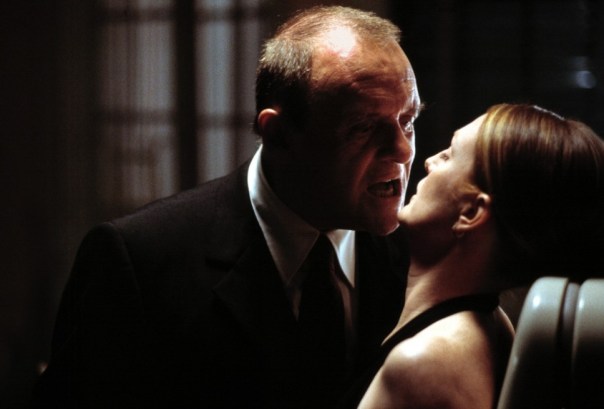
Serial killer culture dominated the 1990s and oddly enough it’s only gotten more highbrow since. Oh, that’s not to say that you won’t have any shortage of hacky, exploitative movies featuring elaborate murderers with gimmicky calling cards (The Hangman, a killer who literally stages his crime scenes like an ongoing game of hangman). However, the dark obsession with dangerous men (it’s almost always men) has given life to thousands of prestige cable documentaries, true-crime books, and high-profile podcasts like Serial and My Favorite Murder. We still very much have an unchecked fascination for these real and fictitious serial killers and what that may say about our society. In 1992, a serial killer thriller swept the Oscars, one of only three movies to win Best Picture, Actress, Actor, Director, and Screenplay (the others: It Happened One Night, One Flew Over the Cuckoo’s Nest, and American Beauty came close if it hadn’t been for Hilary Swank). That’s how good The Silence of the Lambs was as a movie to overcome the genre biases of older Academy membership (it also helped that there were other genre biases at play for the other Best Picture nominees like Beauty and the Beast, Bugsy, and JFK). It was special.
All of this is to say that Silence of the Lambs was a near impossible project to follow, and author Thomas Harris proved it with the middling-yet-best-selling sequel novel in 1999. It was obvious that it would be adapted into a major feature film, but the only returning Oscar winner from that first foray was Anthony Hopkins, which is kind of important considering his character is the title. The sequel was directed by Ridley Scott (Gladiator), adapted by none other than screenwriting titans David Mamet (The Untouchables) and Steven Zallian (Schindler’s List), and the movie made over $350 million worldwide at the box-office. By all accounts, it was a hit, but was it any good, or was it simply coasting from the acclaim and good will of its predecessor and the A-list cast and crew?
 The first thing that becomes immediately apparent while watching Hannibal is that this is not Silence of the Lambs and not in a sense of its accomplishments but more in its chosen ambitions. This is not a psychological thriller in the slightest. It’s a boogeyman monster movie. Nobody here is given to intense introspection about man’s inhumanity to man and other such Topics of Grand Weight. Scott’s sequel is more a Gothic B-movie content to spill stomachs rather than quicken pulses. The opening botched FBI raid is chaotic, action-packed, and the flimsy excuse for why Clarice Starling (Julianne Moore taking over for Jodie Foster) is shelved for most of the movie. It feels like the filmmakers know they need to delay the reunion of our favorite cannibal therapist and FBI agent as long as possible, so the 130-minute film feels like a protracted setup to tease how far audience anticipation can possibly be sustained.
In the meantime, the plot alternates between Dr. Hannibal Lector living it up in Florence, Italy and Starling slumming it in the FBI basement. Slowly, oh so slowly, she picks up the pieces to track Lector’s whereabouts, but until then we indulge a lot of narrative bloat. Do we need to follow an Italian inspector who suspects “Dr. Fell” is not who he says he is and then enact plans to prove his identity and eventually cash in? This man is literally on screen longer than Clarice Starling. We’re introduced to a rich villain, Mason Verger (Gary Oldman), but he’s more plot device than character, an all-expenses bank account to track and apprehend Lector for his bloody violence. I wish there was more to Oldman’s character given the actor and the impressive practical make-up application. He’s a symbol of rot, of vengeance, of obsession. Likewise, Ray Liotta’s lecherous FBI superior to Starling is less a character and more a plot device. He’s the stand-in for the harassment and dismissal Starling receives from her male colleagues, but a little of him goes a long way. His scenes where every other word is some creepy come-on, some sexual entreaty, or some off-color joke (he refers to Lector in homophobic slurs) are excessive. He’s an awful person but every line doesn’t have to be eye-rolling in how obviously terrible he can be. Spending extended time with all of these supporting characters is just a reminder that the movie is looking for excuses to keep its chief participants as far away for as long as possible. It’s frustrating.
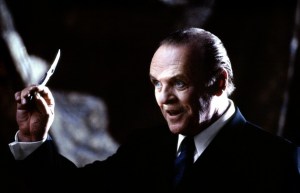 The depiction of Hannibal Lector in Silence versus Hannibal is also quite noticeably different. Like most things in this sequel, the character is baser, key characteristics heightened and broadened, and bordering on farce. He’s less a scary intellectual opponent and master manipulator and more a well-read serial killer on vacation. He is profoundly less interesting in Hannibal. That doesn’t mean there isn’t a pleasure to be had watching Hopkins slice and dice his way through Italy and elude capture. Hopkins seems to relish the amplification of the campy and grand Guignol tone of the sequel. He looks to be having a blast as an unleashed beast. His performance is fun but teeters over into self-parody at times. Hearing the erudite man spout ironic catchphrases meant for incongruous comedy de-fangs some of his mystique and intensity.
And yet there are things I still starkly remember even twenty years later. Hannibal is no Oscar-winning thriller operating at an ascendant technical level with engrossing multi-dimensional characters. It’s a boogeyman movie with a scary old man. The ambitions are just lower, but that doesn’t mean that Hannibal is subpar by those lowered goals. It’s still entertaining even when it’s getting silly or overly long. Scott’s visual presentation keeps things engaging and the lovely Italian art and locales are a definite benefit to establishing the gory, Gothic atmosphere. The makeup is outstanding and, as I said back in 2001, Verger resembles a human peeled grape. Feeding a man to wild boars is also quite memorable. The conclusion still has its squirm-worthy high-point with serving Liotta’s fresh brains to himself. It’s a gory comeuppance that feels fitting. In the original book, apparently Starling then bares her breast to Lector, and he goes down on one knee, and they run off together as fugitive lovers. Needless to say, this ending was met with controversy. The film smartly nixes this, especially since I never for one second felt a romantic coupling between these two embittered characters. The movie doesn’t kill the allure of the Hannibal character but it also positions him on the same level as Michael Myers instead of, say, John Doe (Seven). It’s like a Halloween mask version of a real serial killer, dulled and magnified in some ways, but still leaving a fair impression of its source.
 The Hannibal Lector incarnation had two more big screen ventures, the 2002 prequel Red Dragon and 2007’s even-further prequel, Hannibal Rising. Neither was terrific, neither was awful, though the answers that Rising offered as to what made Lector the man he is would inevitably prove disappointing (hello, childhood trauma). Arguably the best incarnation of the character, more so than Hopkins or Brian Cox (Succession) as the first big-screen Lector in 1986’s Manhunter, was from NBC’s television series from 2013-2015. Developed by Bryan Fuller (Pushing Daisies, American Gods), and starring Mads Mikkelsen (Casino Royale, Doctor Strange) as America’s favorite high-class cannibal, the series found a way to make a weekly crime procedural operatic and hypnotic and disgustingly beautiful. It’s like the artistic sensibilities from Silence and Hannibal were perfectly blended into a strange lovechild that deserved an even longer time to shine. Recently, just the week of this writing, CBS has begun a 2021 Clarice Starling TV series, though because of rights issues they cannot even reference Hannibal Lector. They have the rights to the senator and her daughter who was kidnapped by Buffalo Bill, as if those characters were what the fanbase was really clamoring for more time with. It looks like any other grisly CBS crime procedural just with a different name. I fully expect it to be canceled after one season.
Looking back at my review from 2001, I found myself nodding in agreement with my younger self from the past. I try not to read my earlier reviews before re-watching the films in question and perhaps might surprise myself by coming up with the same critiques independently. I also quite enjoy this line: “Lector on the loose is no better than a man with a chainsaw and a hockey mask, though he has a better knowledge of Dante and Florentine romantic literature.” I would even keep my grade the same. Twenty years later, the Hannibal Lector character still captures our intrigue and fascination even if he’s deposited in a lesser escapade not fully worth his full abilities.
Re-View Grade: B-
Share this:

The Little Things (2021)
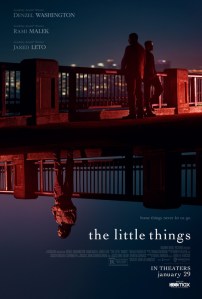 The Little Things wants to be Seven but it’s not even half of Seven (three-point-five?). It’s a meandering movie that doesn’t quite commit to being a prestige character study or a grisly, pulpy serial killer thriller, and so it operates in a middle-ground that achieves little more than prolonged boredom. It’s far too long, far too slow, and with not nearly enough excitement or intrigue or depth.
In 1990, Joe “Deke” Deacon (Denzel Washington) is a LASD deputy and living out his final days on the force in the relative anonymity of the unincorporated parts of Los Angeles. He used to be a big time L.A. cop but got far too involved in series of murders, and his obsession lead him to a heart attack, a divorce, and being removed from his office. Deacon delivers evidence to Jim Baxter (Rami Malek), the new chief detective on a series of murders that may be a continuation from Deacon’s days. The two men work together to untangle the details and target their primary suspect, Albert Sparma (Jared Leto), a bow-legged, greasy-haired creep who maybe confessed eight years ago.
 The Little Things was originally written in the 90s by writer/director John Lee Hancock (The Blind Side, Saving Mr. Banks) and it’s easy to see why. The 1990s was a heyday of serial killer thrillers; it felt like any studio would greenlight a project as long as the crazed killer had a gimmick to their murders (”This guy only kills people on Friday… because you can’t eat meat on Friday?”). While the preponderance of these kinds of movies has shifted to the ever-flowing world of direct-to-video (look for The Hangman, where Al Pacino chases a killer literally playing the game hangman with victims), there is still a perverse fascination with true crime culture and serial killers to be exploited by a canny writer. We still love these kinds of stories when done well. HBO’s True Detective has also taken the serial killer formula and transformed it into a contemplative, long-form character study that looks just as much at the flawed detectives as it does the killers. Over the course of eight elegiac episodes, True Detective can take the time to immerse you in the sordid and portentous details of these people, their cases, the lingering questions, and their demons and doubts made flesh. The depth of the tortured, flawed characters and the complexities of the cases are what sustain the multiple-episode investment (exception: season two). With a movie, you must be more judicious with your precious two hours of time for storytelling. This preamble was a long way of saying The Little Things doesn’t fit as either. Its cases and characters lack the depth to justify the time dwelt, and the thrills are decidedly dimmer, denying a serial killer audience a compelling case, compelling characters, and a unique killer.
I’m going to summarize the two-hour-plus plot for you now: two cops investigate a series of serial murders. They think they have a culprit. They tail the suspect. A slightly surprising ending that lacks the shock and contemplation I think Hancock is looking for. The end. I’ll keep it vaguer to preserve spoilers but suffice to say that is not enough plot for an investigation. I recently re-watched Seven, one of my favorite films of all time and a masterpiece in its genre, and it has a natural propulsion to it where each clue leads to the next by design from its grandly clever psychopath. You know there are seven deadly sins and each new victim is another step closer to achieving that mad goal. The story engine keeps the plot driving forward. With The Little Things, there are some bodies and a whole lot of waiting. And waiting. And waiting. Paired with the placid pacing, it sure makes The Little Things feel like it’s missing a big picture.
 There are also some moments that ripped me out of the movie, mostly involving a disconnect between what is intended on the page and what is delivered on the screen. We’re told that these characters are so obsessed, yet they don’t come across that way. Sure, they follow Sparma because he’s so obviously a guilty-looking suspect, but we don’t witness the lengths they’ll go and the people they’ll push away in order to close their case. In the end, Hancock approaches this territory, but it feels like a stab at subversion and relevance the rest of the movie has been missing. It feels like Hancock had two hours of one kind of thriller and then in the final five minutes said, “Eh, who cares?” This climax also involves a professional detective making so many bad decisions about his own personal safety that I felt my eyes rolling out of my head. It’s like Hancock is using the character’s dumb choices to declare how obsessed he is with finding the truth, and yet we didn’t witness this obsession earlier when he was making good decisions. Baxter is supposed to be a family man and a religious man, yet Malek is playing him so devoid of emotion and the script doesn’t present anything meaningful for his domestic life, that he feels more like a robot with a flimsy back-story provided as a default setting. Then there’s Deacon’s monologuing to the corpses of the dead women. He also sees ghosts of the victims. If the movie was presenting this as a sign of his tortured psyche, it should have gone all-in. Have him converse with them all the time, have them reappear and whisper in his ear, have the new crime scenes trigger the appearances of victims from the old crime scenes, take this unique angle and take ownership of it, really separate from the glut of other serial killer thrillers. Alas, it’s just an awkward personality motif that occurs from time to time to provoke an eyebrow raise.
All three central actors have won Oscars for their acting, and while nobody is outright bad, they all seem to be delivering wrongly attuned performances. Washington (Fences) dials down that natural charisma to go full quiet intensity, and there are few actors who can be as intimidating with looks and hushed words as this man. Except he’s supposed to be haunted and the wear and tear of the man’s past lacks weight because of the performance choice. The pain and struggle seem to be suffocated in that steady steely Washington glower. Malek (Bohemian Rhapsody) is too detached to convincingly play his young family man coming unglued thanks to the case. He’s playing the role like he’s secretly going to revealed as the real killer in a hasty last-second twist. Leto (Blade Runner 2049) is inherently drawn to off-putting oddballs and his appearance halfway through provides a necessary jolt for the movie. The problem is that he’s so creepy, he’s so weird, he’s so desirous of attention, that it makes the character overwhelmingly obvious. He’s not interesting so much as he’s just a neon sign flashing “Guilty,” and there are only two ways to go with this, neither exactly fulfilling given what has preceded. The best scene in the whole dirge of a movie, by far, is the interrogation with all three actors feeding off one another.
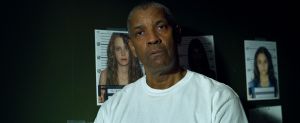 The Little Things feels like a dated copy of 1990s serial killer thrillers without anything new to offer besides the star wattage of its cast. It’s even set in the 90s for no real reason than to deny its characters access to cell phones and the Internet. The look of the movie is awash in the cool, moody style of David Fincher’s signature look, like Hancock and his technical artists were reviewing Seven and Zodiac and aiming for a fawning homage to a modern master of crime cinema. I would advise people to just watch Seven again, or even any of the many junky serial killer thrillers from the 1990s (Copycat, anyone?). The Little Things just isn’t that interesting. The main characters are threadbare, the women are either colleagues, wives, or corpses, the plot meanders for far too long, the pacing is turgid, and it lacks memorable set pieces and reveals that linger. It needed to be better, or worse, but instead it’s just imitation David Fincher visual wallpaper.
Nate’s Grade: C
Share this:

The Cell (2000) [Review Re-View]
 Released August 16, 2000:
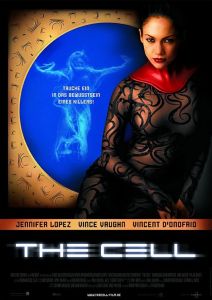
Welcome to the not too distant future where the miracle of science (i.e. red bodysuits and washcloths over people’s faces) allow you to transport your mind into that of another individual. So what happens when a serial killer snags a catch only to be dropped into a coma with no way of discovering where his victim is before time runs out? Well we send Jennifer Lopez into his head — duh! The Latina songstress transports herself to learn the secrets of Mr. Madman before his next victim becomes just a number on a sheet. Sound contrived, like the movie was in production before they had a workable script? You’re not alone. One-named director Tarsem is from the land of music videos but for the life of me I can’t think of one he’s done.
Perhaps the excruciatingly long Nine Inch Nails promo would be less frustrating if the outpourings of creepy imagery meant something. Despite the desire to explain the inside cerebrum of a crazy man, 90% of the imagery is there for the simple sake that it looks cool. Lopez plays Alice to a lumbering wonderland of dark images and a mind-numbingly clattering musical score. Would someone please explain to me why a CGI vine grew on screen for five minutes then went away?
Lopez speaks in whispers, Vaughn speaks like he’s on Ritalin, and the movie speaks that if you had abuse as a kid it’s okay to trap women in self-filling aquarium cubes and bleach them into albino Barbies. Won’t see that in your typical after school special.
The Cell may present some things you’ve never seen before, like a jack-in-the-box theme to twirling intestines, but too often it presents things you have seen much too often in film — boredom.
Nate’s Grade: D
——————————————————
WRITER REFLECTIONS 20 YEARS LATER

I really thought The Cell might be better twenty years later but no. I was fairly critical back in 2000, referring to it as one of the worst movies of that year, and twenty years later it put me to sleep. Never a great sign for your entertainment. I had to re-watch the final act of this movie twice, and then I reviewed certain scenes a few more times just for good measure to make sure I wasn’t missing anything essential. The Cell doesn’t really play like a movie. It plays more like the film adaptation of a video game. The premise is promising, a psychologist (Jennifer Lopez) that has to venture into the twisted mind of a serial killer (Vincent D’Onofrio) in order to extract key info before time runs out finding his latest victim. We got something there. However, the actual movie becomes little more than an enterprise for director Tarsem Singh (Immortals) to get drunk on his lavish visual self-indulgences. As my 18-year-old self observed, it does feel like a 90-minute Nine Inch Nails music video.
I suppose The Cell could have been a harbinger of a sub-genre of movies that has multiplied in indie horror, namely the atmospheric movie where the atmosphere is the entire point. Forget story, forget characters, forget setups and payoffs, forget basic emotional investment; the film is simply constructed to deliver strange and memorable imagery and an overwhelming feeling of discomfort and/or transcendence. This isn’t a new sub-genre. David Lynch has been dabbling in this realm for decades, and Terrence Malick fully converted around the time of The Cell’s theatrical release (granted his atmospheric dawdles are considered more high-art). Dear reader, I’ll fully admit my own filmmaking tastes and biases and confess this sub-genre rarely does much for me. That’s because, in my personal experience, the atmosphere gets repetitious and predictable and without greater investment I just grow bored. I completely acknowledge that there is an audience that feels the opposite, that celebrates the immersive quality of giving one’s self into the visual decadence of a filmmaker creating a vivid dream to tempt and confuse your senses. I get it, but it’s not for me, and so I found The Cell to be overall empty and tedious.
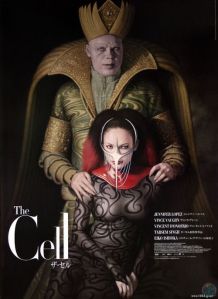 Credit where it’s rightfully due, the visuals on display are often striking and luscious, as are the amazing costumes that were shockingly not nominated for the Academy Award that year (The Cell did receive a nomination for Best Make-Up). The sequences are gorgeously composed starting with the opening of Lopez riding a black horse through the desert and then scaling the dunes, each shot so artfully composed that it could be mass produced as a postcard. Tarsem is a gifted visual artist and has been from his early days as an in-demand music video director in the 1990s (R.E.M.’s “Losing My Religion,” En Vogue’s “Hold On”). The mind of a serial killer allows the man to open up the bizarre and grotesque imagery we would expect from that slippery setting. There’s one scene where a series of glass partitions slice a horse into slimmer portions and then spread out the still-breathing remains. There are definite nods to classical baroque painting, like Caravaggio. The various incarnations of our serial killer’s demons gave me a reason to keep watching. There’s demon horn version, giant purple curtain caped version, Alice in Wonderland version, and a final incarnation that resembles a Star Trek alien crossed with Michael Keaton’s Birdman. There is a draw to exploring a brain built upon trauma and abuse and mental illness. It’s like the horror version of Inception. However, while commendable from a production and visceral standpoint, the plot diversions have the feel of visiting the most messed up museum, taking in display cases and then moving onto the next. There’s little here beyond the superficial and the imagery, while artful, is too disposable and ephemeral.
I’m slightly surprised Tarsem hasn’t had a bigger career in feature films. He delivers pretty much what you would ask a visually decadent director to do with this material. It took him many years to get his next film up and running, 2006’s The Fall, and from there it’s been a series of studio-friendly jobs, each further neutering his distinct visual style (watch 2015’s Self/less and tell me it’s the same director of The Cell). He seemed like the kind of artist who might follow Michel Gondry’s (Eternal Sunshine of the Spotless Mind) path but it didn’t seem to play out that way.
 Music videos in the 1990s became the fertile training ground for Hollywood to snatch up-and-coming talent for their projects, but looking back, very few of those directors had lasting feature film careers. Not everyone is going to be a David Fincher or a Spike Jonze or even a Francis Lawrence. Many of the most influential and prominent names, like Hype Williams (Belly), Samuel Bayer (A Nightmare on Elm Street 2009), Joseph Kahn (Torque), Mark Romanek (One Hour Photo), Floria Sigismondi (The Runaways), Jonathan Dayton and Valerie Faris (Little Miss Sunshine), Jonus Akerlund (Spun), and Dave Meyers (The Hitcher 2007) only got one or two movies to prove themselves as long-form filmmakers. You have your directors that were attached to action movies, like McG, Marc Webb, Marcus Nispel, Mark Pellington, and most successfully, Michael Bay (strange that they all start with “M”). I’m sure my general ignorance of contemporary music videos (beyond Billie Eilish it would seem) has kept me from citing more names that made the big leap. I guess this paragraph was just examining that most prominent music video directors don’t seem to last in the studio system unless they can prove themselves to be reliable purveyors of mainstream action.
The only real actor worth noting here is D’Onofrio (Men in Black). He gets to be gleefully weird, his favorite kind of acting. He looks like he’s having fun scaring Jennifer Lopez (Hustlers) and inhabiting the different demons of a very disturbed soul. Lopez is perfectly fine but almost entirely reactionary here, like she’s a video game avatar going from one dark corner to another as she clears stage after stage. Her biggest acting was simply putting on the weighty costumes. Vince Vaughn (Wedding Crashers) is completely wasted as a determined F.B.I. agent desperate to find the last victim before she drowns in one of those movie-world elaborate death traps. All of the scenes outside the killer’s psyche are a general waste and serve as monotonous running-time padding. That also includes a deleted scene, restored for the BluRay release, where the killer suspends himself from metallic piercings over a corpse and masturbates onto her body while watching another woman drown in his elaborate death trap. It’s so absurdly try-hard that it’s stunning. This scene offers no further insights into the character, only another gratuitous excuse to be transparently “edgy.”
Looking back at my original review at age 18, I’m struck by how much I agree with my younger self (good job, me). I didn’t have much to say beyond my general dissatisfaction with the boring narrative and the pretty yet vacant visuals. I would classify this review as one of my glibber entries, something I’ve noticed with bad movies and generally being a smart allecky teenager. I do think that perhaps I should raise my grade only slightly due to the level of visual flair. It’s certainly not a fun movie, or an interesting one, or even a good one, but The Cell is first-rate fetish wallpaper.
Re-View Grade: C-
Share this:

American Psycho (2000) [Review Re-View]
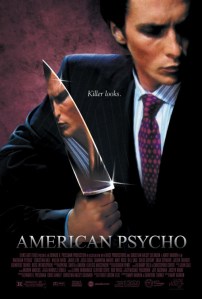 Originally released April 14, 2000:
American Psycho is based on the controversial 1991 best seller by Bret Easton Ellis though it got old fast. One can easily grasp how the lead connects with brand names on page one, but repeat it for 300 more and you’re tempted to add the book to your collection of firewood. Ellis’ novel was sadistically perverse, but director Mary Haron (I Shot Andy Warhol) has somehow managed to pull out an entertaining social satire from the pages of blood and name brands.
Christian Bale, mainly known as the boy-next-door in period piece films, plays Patrick Bateman with ferocious malevolence and vigorous life. Teen scream Leo was once considered for the part but after seeing Bale’s startling performance it should prove why he’s on screen and Leo’s swimming in The Beach. Bateman is an up-and-up Wall Street yuppie who glosses over appearance more than anything else. The only outlet it appears for our sinister shark from the soulless decade is by random acts of gruesome violence.
If Bateman blows off steam by blowing off companion’s heads than it only becomes more frustrating when no one believes his random confessions. Haron takes the grisly material of Ellis’ novel and mines it for pure 80s pulp. It only gets better the further it gets as you have so many points to discuss: Is Bateman acting out to prove his existence in a world that doesn’t humor him or others? Is he acting out deep-seeded rage from the actions of the decade on its people? Is he desensitized and so jaded that death does not even fracture him anymore? The questions are boundless.
The hit list of stars in Psycho includes Chloe Sevigny as a nailed home addition, Willem Dafoe as an investigative detective, Jared Leto as an axed co-worker, and sweet Reese Witherspoon as the apple of Bateman’s twisted eye. Everyone has fun in their tongue-in-cheek nostalgia romp through the absurd.
American Psychoshould not be confused with the successful teen sex farce American Pie. The only desserts in this film are just, and they’re usually left of the mayonnaise and behind the frozen head in the refrigerator. American Psycho is the thinking man’s slasher movie. A flick that slices, dices, and always entices. It only gets better after you’ve seen it. One of the best films of 2000 for now.
Nate’s Grade: A
——————————————————
WRITER REFLECTIONS 20 YEARS LATER
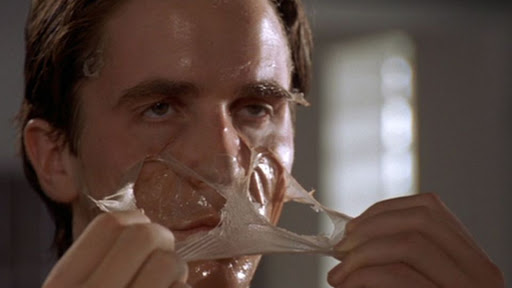
American Psycho was a literary sensation upon its initial publication in 1991 and was deemed shocking, grotesque, perverse, and all those splashy adjectives that made it guaranteed Hollywood would turn Bret Easton Ellis’ novel into a film. Every young actor in Hollywood in the 90s was rumored to play narcissistic serial killer Patrick Bateman. By the late 90s, director Mary Haron was attached with Christian Bale as the intended Bateman on the condition that other name actors could be brought on (Haron secured Willem Dafoe and Reese Witherspoon for supporting roles). The producers kept pushing for their number one target, Leonardo DiCaprio as Bateman, and Haron said she would walk if he was hired over Bale. The producers went ahead and DiCaprio was hired for several months, with the budget ballooning to over $40 million, half of which was slated just for DiCaprio’s payday. Months later, DiCaprio left to film Danny Boyle’s The Beach, and the producers went back to Haron and her top choice, Bale, who was so determined to play Bateman that he didn’t take any other acting gigs for nine months just in case (new total film budget: $7 million). Looking back again twenty years later, it’s difficult to imagine late 90s DiCaprio in the part that became the first of many star-making performances for Bale, one of the most chameleon-like actors of his generation. Haron’s tenacity and instincts proved correct and the film still stands tall as a dark comedy and a character study of a compulsive narcissist.
 The novel was set in the 1980s and intended to satirize the soulless suits of Regan’s America that made their ill-gotten gains on Wall Street, and the satire has only become more relevant after the 2008 financial meltdown and numerous white-collar scandals. The perception of Wall Street as predatory and vampiric and roiling with sociopathic greed has only become more pronounced, which makes the intended satirical targets even more worthy of their take-downs.
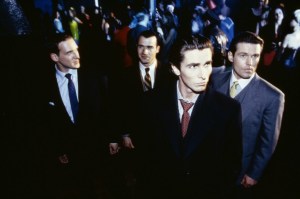
I initially wondered in my original review in 2000 whether, among other interpretations, Bateman was lashing out in a world that didn’t care about him in order to make himself feel heard, and that is exactly the opposite response. Bateman is acting out because he can and because he no longer cares about following rules. It may be a metaphorically simplistic application to make a Wall Street trader a serial killer but that doesn’t make it any less appropriate and resonating. The iconic business card scene still sends me howling, as Bateman and his colleagues (Justin Theroux, Josh Lucas, Matt Ross) compete for supremacy with who has the most accomplished little square of cardboard with their name on it. The hushed and awed voices, the detailed micro-analysis, the slow motion and beauty shots of the cards, it’s played to such wonderful heights of absurdity. When Bateman hires two call girls for a threesome, he spends more time flexing and admiring his own image in the mirror. He spends more time on his daily beauty care rituals than he does on introspection. For these hollow men, status and appearance is the only thing that matters in a world of imposters and transitory pleasures.
Bateman is meant to serve as a character study for a man who declares there isn’t anything there underneath him. It’s an expose of vanity in an era of venal excess and it’s also an indictment on privilege. As depicted on film, and later revealed why with an ambiguous conclusion, Bateman gets away with his wild and increasingly murderous antics because of his position. He’s a rich white Yuppie during 1980s New York City. He can get away with anything, which is why he can run around screaming, flailing a live chainsaw, wearing nothing but socks and blood, and nobody seems to be the wiser. It’s why he can go back to his own crime scenes to leave even more of his evidence, and DNA, around the premises. It’s why he can pose as Paul Allen (Jared Leto) even after he has hacked Allen into tiny little Yuppie pieces. It’s why he can hilariously wax on like a Rolling Stone essayist about musical artists like Phil Collins and Whitney Houston as he prepares to slice and dice his victims. As his actions become more and more blatant, the satire rises with Bateman to blanket his reckless impulses (these crooks can get away with anything, Haron seems to be whispering in your ear while elbowing you in the ribs). After two more decades of Wall Street scandal without consequence or credible jail time, as well as a president who is convinced rules do not apply to him, the satire has approached an even darker laugh-because-otherwise-you-might-cry territory than it was back in 2000 (“This confession has meant nothing.”).
 With no one able to tell him no, how far will Bateman go? Haron and her co-writer Guinevere Turner (who also appears in the film as Elizabeth, a drunk friend of Bateman’s who becomes another victim) smartly dialed into the themes they wanted to send up and dialed down the grisly gratuitous details. In the book, Bateman’s depravity is described in as much detail as he gives to his rampant consumerism. We don’t need pages upon pages of description to understand that Bateman is sick in the head, and we don’t need examples such as torturing a prostitute by trapping rats inside her vagina. The grisly overkill of the book is smartly pulled back to its essentials, and an oft-reviled work deemed misogynistic by many critics has been transformed from a deep dive into rape, dismemberment, and cruelty into a satire on the men who aspire to commit such awful acts. There’s a noticeable difference there that some will miss. One perspective focuses on the actions and the other focuses on the meaning. Bateman is a privileged, entitled, and alienated white man teeming with unprovoked rage, a figure we’ve seen more often in the news in the ensuing decades. The American Psycho movie takes aim at the fragile male egos of past and present. Haron would later go on to write and direct other indies (2006’s The Notorious Bettie Paige) but she never seemed to get that career boost after American Psycho. Ellis decried the movie adaptation and later said he felt female directors were unable to accurately translate the male gaze, which is dubious when the starting point for Hollywood filmmaking is preset at “male gaze.”
Bale is phenomenal in what proved to be his breakout role. It was only a few years later that he nabbed Batman for Christopher Nolan. According to interviews, Bale modeled his performance after what he saw during a Tom Cruise appearance on David Letterman’s talk show. Bale says he saw an “intense friendliness with nothing behind the eyes,” and he then knew how to play the part. It was also the beginning of Bale’s trademark method transformations, becoming the muscled figure of Bateman’s desire, the only thing that ever truly mattered to the man. Bale’s thinly veiled contempt for everyone and ironic detachment are constantly entertaining and provide great laughs (his go-to excuse for departing, “I have to return some video tapes,” made me laugh every time). There’s a late scene where Bateman calls his lawyer to confess to his litany of sins, feeling cornered, and it’s a spellbinding performance all in one take where he approaches mania as he finally unburdens himself (“Tonight I, uh, I just had to kill a LOT of people. And I’m not sure I’m gonna get away with it this time.”). It’s a tremendous moment in a tremendous performance. The movie is filled with familiar faces (Chloe Sevigny! Samantha Mathis! Reg E. Cathy!) that it becomes fun to realize just how many great actors and future stars contributed to the movie. For trivia buffs, it also features Batman (Bale) killing the Joker (Leto).
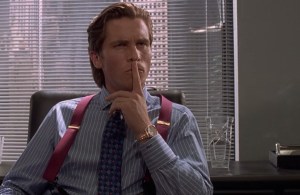 My original review attempts many turns of phrase, like “blowing off steam by blowing off others’ heads,” but the core points are still viable: the satire improves from the book, Bale delivers an amazing performance, and there are many ways to interpret the film. The ending isn’t quite as ambiguous as perceived but it makes sense with the outlandish escalation of events, a point where even Bateman looks at his own power with befuddled curiosity. Back in 2000, I called American Psycho the “thinking man’s slasher movie” and I think that title still applies. It’s a vicious movie but the satire is just as vicious. Weirdly, there was a direct-to-DVD sequel that just went the “non-thinking man’s slasher” route by featuring Mila Kunis (Black Swan) as a criminal justice coed who embarks on her own bloodbath, including killing William Shatner as a professor. It’s like unintended satire on Hollywood itself; follow a cerebral and daring artistic work with run-of-the-mill slop under the same name, co-opting the appeal of a “brand” to make a buck. Much like Wall Street, Hollywood doesn’t know when to stop.
Re-View Grade: A


 nathanzoebl
You must be logged in to post a comment.