Blog Archives
Hitchcock (2012)
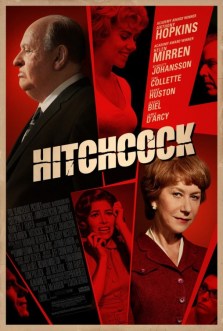 I think Alfred Hitchcock would be amused at his continued notoriety, not just from the quality of his films but also from the magnitude of his own presence. 2012 offers not one but two different movies about the master of suspense, both of which are oddly close in time period. HBO’s The Girl explored Tippi Hedren’s account of what it was like to film The Birds, with Hitchcock being a provocateur. The more straight-forwardly named Hitchcock looks at Alfred’s trials to make one of his seminal films, 1960’s Psycho. I only wish that the movie spent more time on Psycho and less time on the Hitchcock marriage.
Alfred Hitchcock (Anthony Hopkins) is starting to feel like he’s being left behind in Hollywood. He’s looking for his new project, something to rekindle his creative fervor, get those juices flowing once more. Then he comes across the book Psycho, based upon the murders of Ed Gein, a man who thought his dead mother was telling him to kill and make skin suits of his victims (Gein is also the inspiration for The Texas Chainsaw Massacre and Buffalo Bill in Silence of the Lambs; truly the gift that keeps on giving for horror). Murder, cross-dressing, incest. You can understand the hesitation from studio heads to bankroll the picture, even with the great Hitchcock name attached. With the sturdy support of his unflappable wife, Alma (Helen Mirren), Hitchcock puts his own money and clout on the line to see Psycho through. As the pressure mounts, Alfred is worried that his wife is spending a bit too much of her time with a certain screenwriter who wishes to woo her efforts away.
 Sir Alfred was a blunt individual so I will follow suit and mince no words – this movie is terrible. How could it possibly be? It has tremendous acting talent and the rich angle of looking at the making of one of Hollywood’s most controversial and famous movies of all time the groundbreaking Psycho. Alas, it’s when the movie takes its many sidesteps away from the behind-the-scenes action of Psycho is where it goes astray. First off, I find the narrative framing around the marriage of the Hitchcocks to be superficial and hamstrung. We’re telling this vastly interesting story and grounding it in a very slight manner, gauging every creative struggle through the prism of whether or not Alfred and Alma will stick together. I assume it’s supposed to provide an emotional entry point for the movie, but I just didn’t care. I didn’t care about the jealous spasms Alfred felt as his wife spent more and more time with a caddish screenwriter, and boy did that storyline get tiresome. I want to know more about Psycho and not this dumb portrayal of martial woes told with such graceless handling. The whole portrayal seems so minute and clumsy and such a poor framing device when the making of Psycho is a juicy enough story. I didn’t need the focus to be on whether the Hitchcock marriage will persevere. Oh, and the resolution for this feels completely pulled from thin air, without any groundwork laid to explain the about-face into compassion in those final minutes.
Then there’s the portrayal of Alfred Hitchcock himself, which is so dubiously shallow when it comes to psychology. Oh, he’s obsessed with blonde leading ladies? Oh he’s a bit of a control freak? Oh he can be overbearing and demanding and standoffish? Wow, what powerful insights into arguably the most famous director in movie history. The movie, adapted by John J. McLaughlin (Black Swan), feels like it was made by someone who did the bare minimum of research on the man. There are no new insights or even mildly interesting ones to be found. It’s the standard boilerplate repeated with different actors. And then there are the nails-on-a-chalkboard scenes where Hitchcock imagines himself talking confessionally to none other than Ed Gein (Michael Wincott). Excuse me? Oh my goodness do these tacky sequences just grate. I don’t even understand their inclusion. Is this a manifestation of Hitchcock’s own sense of madness when it comes to moviemaking? Does he feel some connection to the horrible disturbed man who inspired his newest film? Does Hitchcock only feel like he can communicate to a figment of his own imagination? Whatever the reason, I wanted to smack myself in the head every time Hitch and Gein had a heart-to-heart. I should have known I’d be in for a bumpy ride when, in the movie’s opening minutes, a news reporter asks Hitchcock, after the premier of 1959’s North by Northwest, why he doesn’t just hang it up? Did this idiot even see North by Northwest? Would you ask Spielberg if he should retire after viewing Saving Private Ryan or Kubrick after A Clockwork Orange?
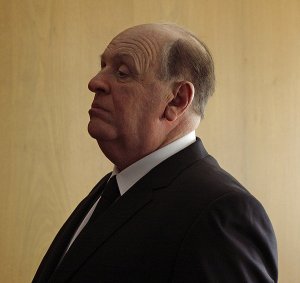
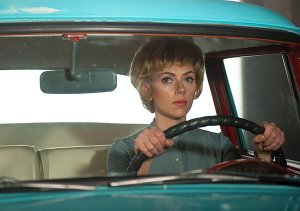
Then there’s the matter of Hopkins as Hitchcock. It never feels like the right fit. Turkey jowls aside, the man doesn’t look too similar to Hitchcock nor does he adopt a demeanor that proves convincing. Sure he goes for that highly imitable voice and cadence that Hitch is well remembered for, particularly his openings on his own TV show. You never feel like Hopkins has a real strong bead on the character, and surely the fault lies with the weak characterization relying on the collective knowledge of Hitchcock’s outsized public persona. Likewise, Mirren (The Debt) is fine but gets to play another of her steely strong-willed matriarchs. Mirren won’t let you done when it comes to performance but, given the lack of strong characterization, she goes on autopilot. The best actor in the movie is surprisingly Scarlett Johansson (The Avengers) who has a striking similarity to Janet Leigh, and not just in what you’re thinking. She’s instantly likeable and takes the Hitchcock peculiarities in stride, putting up a strong front but voicing her concerns when appropriate.
 Director Sacha Gervasi (Anvil! The Story of Anvil!) gooses up his story with all sorts of horror genre techniques, including editing fake outs and violent edits. I’m also unsure why so many liberties needed to be taken with the retelling of this story. I’m not going to be a person decrying the use of fictionalized elements in a true-life story for dramatic effect (I loved Argo), but you have to do so in a way that tells a better story without getting too far away from the essential truth of the matter. Hitchcock, in raising the talents of Alma, attributes many of Psycho’s development achievements to her keen womanly insights when they came from others. That’s fine, except that the movie portrays her in such a rarefied state of genius that she quickly becomes the movie’s surefire narrative cheat. Having problem with the last act? Let’s have Alma fix it. Having problems with the editing? Let’s have Alma fix that. It’s not compelling of a story for one character to chiefly have all the answers instinctively and without any sense of struggle. I understand that Alma did a lot of unaccredited work on Hitchcock’s movies, though it wasn’t uncommon for women to be screenwriters at that time and you’d think the pull of being a Mrs. Hitchcock would get her well-deserved credit. Regardless, I wish that Gervasi and McLaughlin had given Alma more depth than being put upon wife/secret savant collaborator.
It’s a shame because there’s a genuinely interesting movie to be had somewhere in here. The making of Psycho was fraught with difficulties and the studios just didn’t get it. Watching Hitchcock work through that process and persevere would be far more interesting. I enjoyed the multitude of famous cameos, like Michael Stuhlbarg as Lew Wasserman, Hitchcock’s agent and eventual head of Universal Studios, and even Ralph Macchio as Psycho screenwriter Joseph Stefano. I suppose the ins and outs concerning one of the most famous movies of all time could be considered, erroneously I feel, to be too “inside baseball.” That’s why I think the filmmakers expanded the romantic drama angle and had it consume the majority of the running time. Often the stupid perils of the will-they-or-won’t-they romantic squabbles feel so petty and cheap considering the magnitude of the work going on. Hitchcock feels like a movie that found the least interesting and essential angle to tell the story of the making of Psycho. Diehard movie fans might find some fun to be had with the minutia of Hollywood and Hitchcock’s life, but I cannot fathom how anyone could view this portrayal as effective. It’s not insightful, it’s not challenging, it’s not relevant, and it’s certainly not entertaining. This movie is not deserving of the name it bears.
Nate’s Grade: C
Share this:

The Avengers (2012)
 For the past four years, Marvel has been seeding its all-star super hero collective in the storylines of its summer blockbusters. And with six super heroes, The Avengers carries some super expectations. The creative mind behind the film is none other than Joss Whedon, best known for creating and shepherding cult TV shows like Buffy the Vampire Slayer, Angel, and Firefly. Not exactly the first name you’d think Marvel would assemble to front a $200 million movie. For geeks, Whedon has become a reliable standard of quality (the patchy TV show Dollhouse notwithstanding). Here is a man who can marry big ideas with sharp characterization and delightfully skewed dialogue. In Whedon, geek nation has a savior, and Marvel knew this. The Avengers is 142 minutes of geek arousal stretched to orgasmic heights.
Nick Fury (Samuel L. Jackson), head of the agency S.H.I.E.L.D., has a dire need for Earth’s mightiest heroes. Loki (Tom Hiddleston) has traveled through a portal and plans on conquering Earth thanks to an approaching alien army. Fury has tasked Tony Stark (Robert Downey Jr.) a.k.a. Iron Man, Steve Rogers (Chris Evans) a.k.a. Captain America, and special agent Natasha “Black Widow” Romanof (Scarlett Johansson) with stopping Loki and rescuing one of S.H.I.E.L.D.’s own agents, the skilled marksman Clint “Hawkeye” Barton (Jeremy Renner), who is under Loki’s devious mind control. Loki’s brother, Thor (Chris Hemsworth), would like to cite jurisdiction and bring his wicked brother back to his home world. The only person who may be able to locate Loki’s path is Dr. Bruce Banner (Mark Ruffalo), a guy with his own anger issues. With this many egos, it’s bound to get dicey. As Banner puts it, “We’re not a team. We’re a time bomb.” Can they put aside their differences to unite to save the Earth? Does a Hulk smash?
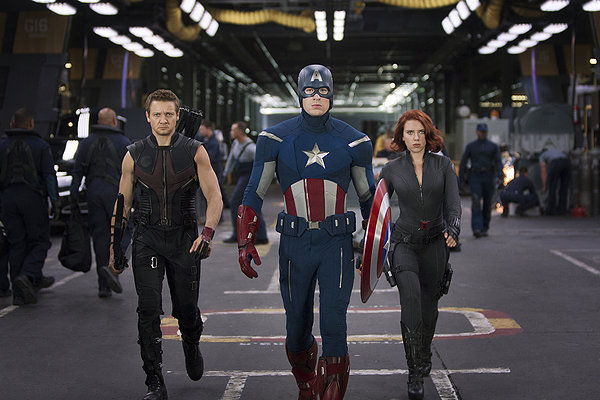 Whedon, the king of clever genre deconstruction last seen in the excellent meta-horror film Cabin in the Woods, plays it relatively straight, giving his big, effects-driven film a straight-laced sense of sincerity. It’s not making fun of these sort of big-budget, effects-driven smash-em-ups, it just wants to deliver the biggest smash-em-up yet. To that end, The Avengers achieves maximum smashitude (trademark pending). By its rousing finish, the movie has become so massively entertaining that you forget the draggy first half. The scope of this thing is just massive. The last thirty minutes is solid action across miles of crumbling, just-asking-to-be-exploded city landscape. But the trick that Whedon pulls off is how to orchestrate action on a monumental scale without losing sight of scale, pacing, and character. You’d think with a full deck of superheroes that somebody would be shortchanged when it came time for the rough and tumble stuff. Not so. Instead of fighting one another, the prospective Avengers work together in all sorts of combinations. The characters are well integrated into the fracas, making particular use of their abilities, and finding new locations of focus every few minutes. This expert hero shuffling keeps things feeling fresh amidst the constant din of chaos.
In fact, the movie finds time to give every hero his or her due, finding a small moment to reveal some characterization. I thought Whedon’s biggest challenge was going to be the juggling act of balancing so many heroes and so much screen time, but the man found a way, like he regularly does, to squeeze in character with ensemble action. The Hulk fares the best. After two movies, it feels like Whedon has finally nailed the character; granted, this success may be credited to the fact that Bruce Banner (all hail Ruffalo) is kept as a supporting character. The struggle of the character being likened to a recovering addict is a smart way to present the character without getting too morose (I enjoyed the revelation that the “Hulk” half prevented Banner from killing himself). When he’s told his mission is to smash, you can feel the exuberant joy of an unleashed Hulk id. The Hulk had two great audience-applause moments that made my theater go berserk. I also really liked the attention given to Black Widow and her lonely back-story. Hawkeye was a complete badass, though he only gets to do fun stuff in the madcap finale. The trouble with the hero team-up franchises is that not everyone’s on the same level of power. Thor is a god for crying out loud, Iron Man has super weapons, Hulk is Hulk, Captain America at least has superhuman strength but what do Hawkeye and Black Widow bring to the team? When you’re competing with all that power, being good with guns or a bow seems pretty puny. And with Hawkeye, there’s going to be a limit to his effectiveness unless he has a magic bag of replenishing arrows. Still, Whedon finds ways to make the heroes badass and humane in equal measure, and surprisingly funny, which is welcomed.
It’s hard to believe that Whedon had only directed one feature film before (2005’s Serenity, based upon Whedon’s canceled Firefly show) being given the keys to the Marvel universe. He’s directed several TV episodes of his signature shows but the man has never produced anything on this scale before. Given a gigantic canvas, Whedon delivers the goods. His action sequences are rollicking and fun and, best of all, shot and edited in a fashion where you can understand what is happening (take some notes, Hunger Games franchise). The action is well choreographed and elevated with organic complications and particular attention paid to location, like the Nicky Fury airship. Whedon is a master of the plot payoff, setting up his elements and then piloting the narrative to satisfying conclusions and integrations (Cabin in the Woods is also a pristine example of this gift). If you’re going to introduce an airship, you better believe that sucker is going to threaten to crash. I’m glad that Loki was brought back as he was the best Marvel big screen baddie yet, though I’m disappointed they essentially put him on ice for an hour.
 The technical elements are ably polished even for this kind of film. The cinematography by Seamus McGarvey (Atonement) is terrific, utilizing bright color in a way that the visuals pop. The special effects are top-notch and you just feel immersed into the action. The destruction is cataclysmic but rarely does the movie feel phony. I was impressed by the Hulk designs and the sequences in inky space with our alien adversaries. For that matter, are these aliens robots? It’s unclear whether the giant flying centipede-like ships are creatures. The 3D conversion is one of the better outings due to the fact that it doesn’t keep throwing stuff in your face. Plus, viewing Johansson’s leather-clad assets in 3D certainly has its own appeal, as does Gwyneth Paltrow in jean shorts. Hey How I Met Your Mother fans, Cobie Smulders looks practically smoldering in her S.H.I.E.L.D. agent outfit too. Okay, I swear I’m done with the female objectification.
I hesitate calling The Avengers the greatest super hero/comic book movie of all time, as the teaming hordes of Internet fanboys foaming at the mouth are wont to do. If your definition of a comic book movie is a giant sandbox with all the coolest toys, then this is your film. This is a comic book turned flesh. The Hulk and Thor fight and prove who is the strongest Marvel man, that’s got to be a geek’s wish come true. Many of the infighting sequences felt like, servicing the tastes of the fanboys, and after a while the constant hero on hero action felt tiresome. I get that we have a clash of egos going on here, but the movie suffers from a lack of narrative cohesion, by which I mean that the first hour of the movie feels like a series of guest appearances by heroes on loan. The movie doesn’t fully come together until the point where the team comes together; I doubt Whedon intended that symbiotic relationship. The movie feels more like a patchwork of standout scenes and memorable moments that a fully formed and cohesive story. If you haven’t seen the previous four Marvel movies (Iron Man, Iron Man 2, Thor, Captain America), you’ll be pretty hard-pressed to follow the story. Loki’s motivation and plan seems rather sketchy other than causing discord amongst the heroic ranks. His powers seem inconsistent and vague. Also I found the musical score by Alan Silvestri to be bland and unworthy.
The Avengers is sure to be geek nirvana for many of the comic book faithful. It’s an audience pleaser of mass scale, and I’m sure that your theater will be cheering in abundance. Whedon has pulled off the near impossible. The movie is a thoroughly entertaining, exciting, and witty popcorn spectacle of the first order. But where the movie hits the ceiling, at least for me, is that it ONLY wants to be the best super hero movie and this seems like limited ambitions. It’s like making the very best possible women in prison movie (great, but is this really all you set your sights on?). I had a great time watching Whedon’s handiwork but I wish it mined the outsized territory for bigger themes, a little more than audience-satisfying pyrotechnics, something I feel that X-Men: First Class did a better job of handling. Don’t get me wrong, I greatly enjoyed The Avengers and it’s a fantastic start to the summer movie season, but by no means is it The Dark Knight or even aspiring to be, and that’s okay. Enjoy the busy escapades of Marvel’s next smash franchise. Who knows when they’ll be able to wrangle everyone together for another adventure, but judging by the sounds of ringing cash registers, the answer is sooner than we think.
Nate’s Grade: B+
Share this:

Iron Man 2 (2010)
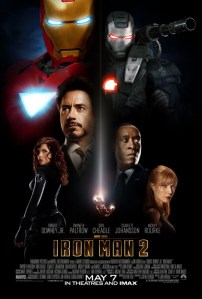 Iron Man was a fresh surprise in the summer of 2008, offering a superhero movie dominated by a middle-aged man’s personality and not the special effects. The story was not overwhelmed by all the demands of what we expect in a glorious summer popcorn experience. Marvel was smart to sign on the same team behind the first film, including director Jon Favreau, but setting a deadline exactly two years after the first film made me worry. There wasn’t much time to get everything together, and it should be no shock that Iron Man 2 feels rushes and absent the finesse of the first film. As much as it pains me to say it, Iron Man 2, while fun in spots, doesn’t come close to the original. You can trace much of it back to the sequel ethos that you take what worked in Part 1, make it much, much bigger and louder, and now you have Part Two. But what worked so exceptionally well in the first Iron Man movie was not the action sequences but the characters, so guess what happens when you pollute the narrative with more characters and disposable action sequences?
Tony Stark (Robert Downey Jr.) is a self-made superhero and now the world knows that he is indeed the metallic warrior, Iron Man. Stark refuses to hand over his technology to the government, saying he has “successfully privatized world peace.” He appoints his girlfriend/loyal assistant Pepper Potts (Gwyneth Paltrow) to CEO so he can devote his time to ridding the world of evil and lapping up the fame that goes with being Iron Man. Lt. Col. James Rhodes (Don Cheadle replacing Terrence Howard) is concerned for his buddy but also eager to help play around with that super suit. But not everybody loves Tony Stark, notably Justin Hammer (Sam Rockwell), a rival weapons dealer aiming for a Pentagon contract, and Ivan Vanko (Mickey Rourke), a Russian scientist who blames his father’s exile from America and Siberian internment on the Stark family. When Hammer sees Vanko’s attack at a Monaco speedway, he knows he has found an ally against Stark. Hammer whisks his newest Russian friend to New York and enlists his expertise in creating an army of super mechanical fighting suits.
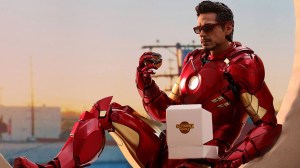 The screenplay by actor-turned-writer Justin Theroux (Tropic Thunder) is overstuffed with people and events all fighting for screen time and narrative dominance that it starts to become unintentionally comical after a while. There are too many storylines jostling for control when any one of them could have comprised a whole movie: military demands to have the suit, Tony deals with blowback from being the most famous man in the universe, and escalation (others trying to top Stark). Don’t even get me started on how Iron Man 2 bends over backwards to advertise that future Marvel Avengers movie lead by Nick Fury (Samuel L. Jackson). I mistakenly believed that the trailers ended before my movie started. There’s a storyline where Tony’s blood is becoming infected with a dangerous chemical every time he uses the Iron Man suit, so being a superhero is literally killing him. You can work with that for some pathos, debating the needs of one man vs. the needs of society and the greater good, personal sacrifice, mortality, legacy, but it all gets way too easily resolved in an absurd way (all I’ll say is, thanks Mad Men‘s Roger Sterling!). It tries to up the ante when less would have been considerably more.
Most of the new characters feel poorly integrated, further causing distraction to any attempts at narrative cohesion. Iron Man 2 also pushes Johansson into the mix so that she can shake up the Tony/Pepper relationship and, plus, she looks good in a skintight cat suit. But her third wheel/love triangle status is barely touched upon and Johansson gets one solid action sequence where she takes out a litany of goons in a hallway with the amazing power of her spinning thighs. Johansson is mostly just another assistant to take notes in the background, although she does it beautifully. The Rourke scenes are few and far between. They establish him as an intimidating force and then he pretty much sits in a room tinkering with stuff, garbling Russian, and feeding his cockatiel for the rest of the movie. He never feels like a real threat or a true match for Tony. Rockwell is the more appealing, slimy villain of the duo, aided by Rockwell’s exasperated bellowing and desperation for the spotlight. Hammer is more interesting to me than a Russian ex-con that rarely speaks, let alone speaks in English. He’s given so little opportunity to develop Vanko as a character. And yet Gary Shandling, as a smug senator trying to make Stark accountable to the U.S. military, might be the film’s best villain of the bunch (curious side note: Shandling and Rourke look oddly similar).
 The personal relationship between Tony Stark and Pepper Potts was the heart of Iron Man. They had that snappy, droll, screwball comedy-esque give-and-take, with hints of something more underneath. This time, the movie doesn’t even speak about their relationship at all, like it never happened in the first film. That scene where she kisses his Iron Man helmet, tosses it out the belly of a plane, and he dives off uttering, “You complete me”? Not in the film. You start to wonder why the movie is being purposely vague and it gets maddening. Their relationship lacks the frustration tinged with flirtation and replaces it with agitation. Both Tony and Pepper are harried and on each other’s last nerve, which doesn’t make for much romantic traction. Their chemistry seems to have dampened. I’m kind of with Pepper on this one because Tony Stark might be even too obnoxious in this movie. Following the sequel-it is code, Tony’s egotistical behavior is expanded and he becomes prone to self-destructive behavior, getting riskier and riskier, pushing others away including, perhaps, decent portions of the audience. He’s stopped being the cocky, likeable arrogant playboy and transformed into a bit of a rich douchebag. Part of this is related to the storyline about the suit literally killing Tony, and his character’s alcoholism featured heavily in the comic books, but it’s just another plot element that feels like it was put in for momentary conflict and then easily resolved or dropped. I understand Tony will be his biggest antagonist but that didn’t stop the first Iron Man film from flying high in entertainment.
The first Iron Man had an unexpected low level of action for a summer movie, but because of the characters you didn’t care. It was that rare comic book movie where you wanted more dialogue and fewer sound effects. To be fair, Favreau and crew saved a pretty nice Iron Mano y Iron Mano fight sequence at the end. Following that narrative lead, Iron Man 2 is structured pretty much like the first when it comes to action. There’s the attack at the Monaco raceway, which features an unrealistic, cartoonish tone that conflicts with the rest of the flick. But the film’s biggest moment of sustained action is the climax involves Tony Stark versus a bunch of silly killer robots. Soulless robot drones don’t get very compelling, plus haven’t we seen a thousand movies where people combat killer robots? What’s more disappointing is that Favreau incoherently stages the action. It’s not due to any sort of hyperactive editing, no, the culprit is that the onscreen action is just moving way too quickly. As a result, much of the action feels like whooshes of color. It’s hard to adjust your eyes to the rapid movement and process what exactly is going on. Because we can’t follow the action the whole thing lacks tension, danger, and drama. I wanted to be blown away by the action, which has several trailer-ready moments of awesome, but mostly I just wanted to be able to understand what I was watching.
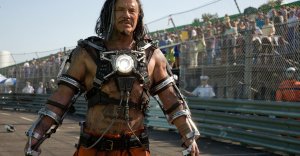 Despite all my complaints, Iron Man 2 still manages to be a fun time out at the movies. Downey is always immensely talented and brings great amounts of energy to the role, centering the movie on his witty charms. While his character is less engaging this go-round, Downey is still on top of his game. Rourke, Rockwell, Paltrow, and Johansson all contribute fine performances when they’re on screen. The low output of Iron Man in suit is compensated by having TWO Iron Men, thanks to Rhodes donning the metal gear and fighting alongside his pal. The opening of this movie captures your interest fairly well, though it loses it again thanks to slack pacing and an influx of new faces. The tone of the movie takes a cue from Downey and the movie as an agreeable, comedic feel without seeming overly glib. And hey, the special effects are pretty nice, too. Iron Man 2 is an adequate popcorn movie but the tragedy of the movie is that the first film was much more than adequate. I think the Iron Man film franchise is in need of a slight upgrade.
Nate’s Grade: C+
Share this:

The Spirit (2008)
 This is the last time someone will let Frank Miller direct. Astoundingly bad, The Spirit is borderline camp for every absurd and bizarre second. It careens all over the place, never settling on a tone. So one minute it will be hard-boiled noir and the next it will break down the fourth wall and amp up the goofy slapstick to Looney Tunes levels. The story is threadbare, the characters are half-developed ideas, and each scene almost exists in its own five-minute world before Miller barrels forward. Sure the flick has some appealing visuals, but even those are derivative of the superior Sin City. As a director, Miller doesn’t cut it. He will shoot scenes with nothing but close-ups, giving no point of establishment for the audience, and he’s too prone to random diversions. Miller displays zero ability, or a complete disregard, for directing actors; they are terrible in different ways. Gabriel Macht, as the back-from-the-dead crime fighter The Spirit, sounds like Paul Rudd doing a Harrison Ford impression. Samuel L. Jackson, as the nefarious criminal/mad scientist/also semi-immortal The Octopus, overacts to a degree not even seen by Samuel L. Jackson. Scarlett Johansson, as an evil assistant, can’t even hide her disdain and boredom. This stuff just becomes unchecked lunacy, but it still manages to be boring through and through. The hero is a stiff, all the women are sex objects, and the conflicts are pointless when the combatants can’t be killed. The only thing worth mentioning is that Eva Mendes is still a gorgeous looking woman. Even Miller couldn’t fumble that one.
Nate?s Grade: D
Share this:

He’s Just Not That Into You (2009)
 Based upon the best-selling nonfiction book, the movie follows the interconnected lives of a cadre of characters trying to get lucky in love. As with any ensemble piece, some storylines are better than others, notably Ginnifer Goodwin (HBO’s Big Love) as a naïve and hapless gal confused by the ever-changing rules and rituals of contemporary courtship. Her scenes with Justin Long, as her dating coach, are the movie’s high-point. The two actors have a light, charming chemistry and their scenes get at the heart of the male/female dating dysfunctionality without feeling trite. But in between, you get a lot of hackneyed yakking about the stereotypical differences between men and women, how dumb men are, how crazy women can be, etc. It’s all been covered to death by other romantic comedies to the point that it feels like common knowledge, which makes it tiring to sit through. Some of the drama feels overly manufactured, like Jennifer Aniston pushing to get married because she her little sister got engaged, there are characters that are just annoying people, like Kevin Connolly continuing to nip at the heels of Scarlett Johansson for some scraps, and Some of the material is weirdly dated, like Drew Barrymore talking about being “Myspace-ed” by a prospective date (Hello, it’s all Facebook all the time now). Naturally, it’s all rather predictable as well, however, this is not the fun date movie it may seem. It hits some rough dramatic patches, like the pains of infidelity, losing trust in a spouse, manipulating people, and occasionally there will be a moment that comes across as genuine and heartfelt, like when Ben Affleck wins over Aniston simply by being thoughtful and doing the dishes. It’s in these sporadic moments that He’s Just Not That Into You feels like it’s tapped something a little deeper and more meaningful than scraping the barrel of romantic comedy clichés.
Nate?s Grade: C+
Share this:

The Other Boleyn Girl (2008)
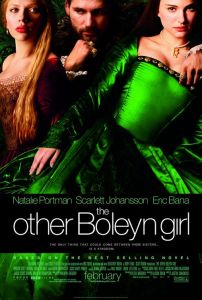 The story of Henry the Eighth and his many wives is a tale full of romance, danger, betrayal, and sweeping historical changes; it’s the most popular soap opera of its age. The 700-page book was naturally going to get slimmed down as a feature film, and The Other Boleyn Girl feels a bit too streamlined for all the heavy historical events that take place. The production values are all top-notch and the story has some juicy moments. It presents an intriguing angle by showcasing the conniving rivalry between the Boleyn sisters (Scarlett Johansson, Natalie Portman). The acting falls under that period film gravity where the actors all speak stately and enunciate every syllable slowly, like they were testing out the sound for the first time. Portman is especially fun in a villainous role. Eric Bana is completely at odds with history as Henry VIII, but I suppose it would be harder for modern audiences to accept young nubile ladies vying for the affection of a huge, ugly man with a leg of mutton in his grip.
Nate’s Grade: B
Share this:

The Black Dahlia (2006)
 Hey, I got an idea. How about we make a Black Dahlia movie and hardly involve anything having to do with the notorious Black Dahlia murder? I’ve got an even better idea; let’s center the action around a love triangle involving cops who are, say it with me, too close to the case. And then we’ll have a wacked out rich family where the mother (Fiona Shaw, God bless her) gives a performance that isn’t three-sheets-to-the-wind drunk, she is staggering, cataclysmically, powerfully, off-the-wall drunk. Watching her sway and sneer and hiccup is like watching Daffy Duck in this Brian DePalma mess. The central actors feel too young for their parts (the best actor is Mia Kirshner, seen briefly in an audition reel as the soon to be eviscerated Elizabeth Short), and the ending is an insipid caper to an ongoing, unsolved murder mystery. The Black Dahlia is appallingly boring and yet also appallingly dimwitted, but it does occasionally look good thanks to the technical proficiency of its director. DePalma has had a very up and down career. Consider this one of his valleys.
Nate’s Grade: D
Share this:

The Prestige (2006)
 Christopher Nolan can do no wrong in my book. The director of Memento, Insomnia, and Batman Begins has bewitched me with his clever non-linear storylines and artistic vision. The Prestige is 2006’s second period set magician movie, and in my opinion it’s the better of the two. Nolan’s film lacks the magic of The Illusionist, instead focusing more on the bitter realities of obsession, self-destruction, and the lengths that men will travel for vengeance. The script centers on a pair of dueling magicians (Christian Bale, Hugh Jackman) that are each trying to discover the other’s trick and top them. The storyline is as twisty as a pretzel and told in Nolan’s familiar non-linear fashion, building to a very dark reveal. Whereas The Illusionist sweeps viewers up with the wonder of magic, The Prestige is all about how tricks are orchestrated both on and offstage. The results are a tad cold; you don’t really feel for either magician. The movie is itself a trick but one grandly told with excellent slight of hand. The final act takes a step outside of the film’s tone but it works for me, and it’s been weeks since I last saw the haunting final images and I still cannot get them out of my mind. The Prestige is another notch on my Nolan love meter.
Nate’s Grade: A
Share this:

Match Point (2005)
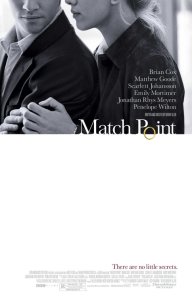 This is an excellent return to form for Woody Allen and his best film since 1987’s Crimes and Misdemeanors. The first half is deliberately slow, yes, but it is justified by the second half which more than makes up for it. The first half needed to be as slow as it is to set up the incredible minutia of this rich, elite world that former tennis pro Chris (Jonathon Rhys-Myers) has been adopted into. We need to see how comfortable this life is to understand why he doesn’t want to give it up and why he goes through the machinations he does in the second half. The characters and dialogue are spot-on and Allen has transported his world of the upper crust New York elite so well over to London, and the change of scenery has reawakened his writing. Allen knows the privileged world very well and their disconnected view point. However, he rightly centers his film not on the neurotic upper crust but on his social climbers Chris and Nola (Scarlett Johansson), a beauty engaged to Chris’ prospective brother-in-law. It is the second half of Match Point that makes it great. Allen tightens the screws on his social climbers and the tension is superbly taut. The dark turns and in the final act are greatly entertaining, as Allen delves further into his look at a universe built around chance and disorder. The returning imagery of the ball hitting the tennis net elicited gasps from my audience, and I was one of them. I love that Allen lets his story continue to unfold after the dark twists. The film’s biggest flaw is anchoring the entire point of view on Rhys-Myers, a somewhat limited actor that reminded me of Jude Law’s character in Closer. Johansson is an excellent noir femme fatale, her husky voice perfectly suited. Frankly, if ever there was a Scarlett Johansson nude scene, this movie was crying out for it. She has her tawdry affair with Chris and there’s even a sequence where we see her laying on her stomach nude while he applies baby oil to her. Their sex is supposed to be so impassioned and carnal, in contrast to his boring but stable relationship with Chloe (Emily Mortimer). And yet no nudity? Woody Allen, you’ve let me down. Your film, on the other hand, is intelligent, sharp, dark, taut, and wonderfully entertaining.
Nate’s Grade: A
Share this:

The Island (2005)
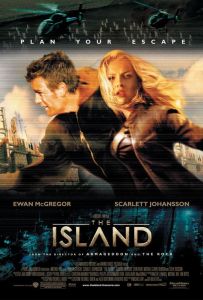 To many film critics, director Michael Bay is the devil. He’s the man behind such ADD-edited hits like Armageddon, both Bad Boys, and Pearl Harbor. Each film was more or less savaged by critics and each film was a hit. Bay has always said he makes popcorn movies for audiences and never listens to the critics. That would probably be a good thing since they don’t exactly have a lot of nice things to say about Bay and especially his editing techniques. But how would someone like Bay, who dreams about blowing stuff up with every night’s sleep, handle material a little more subtlety than, say, corpses filled with drugs being thrown at oncoming traffic (see: Bad Boys II or better yet, don’t)? The Island is Bay’s first film without uber-producer Jerry Bruckheimer and it’s also Bay’s first encounter with science fiction. Can he make The Island into another popcorn miracle or will his blockbuster tendencies get the better of him?
In the year 2020, the Earth has been contaminated by pollution. The survivors live in a series of isolated towers and are monitored, given strict diets and jobs, and even matching white jump suits. There is an upside to this life; every so often there is a lottery where the winning inhabitant gets a trip to The Island, the last uncontaminated spot on Earth. They’ll spend the rest of their days living it up in paradise, or so they think.
Lincoln Six Echo (Ewan McGregor) has been at the facility for three years. He has questions for the good doctor Merrick (Sean Bean, your go-to guy for villains when you can’t afford Al Pacino), the man in charge of the place. Lincoln questions his purpose and wonders why he keeps having recurring nightmares with images he can’t place. He’s also been having a very close friendship with Jordan Two Delta (Scarlett Johansson), though they?re not allowed intimate contact and the living quarters are separated by gender. One day Lincoln finds a butterfly on a different level of the facility and investigates the higher levels. In a few minutes time, Lincoln discovers the truth about the facility: it’s a station harvesting clones to keep rich people going when they need an organ or two. There is no Island but there is an operating room that you won’t return from. Lincoln escapes back into the facility’s population but springs into action when he learns Jordan has been selected to go to The Island. He fights the facility’s staff, grabs his girl, and the two are off to learn the truth of their world and to live.
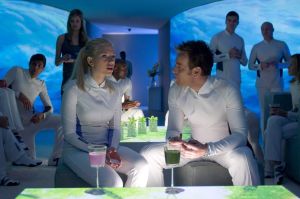 McGregor is on autopilot with this one but still manages to have some fun, especially when he’s playing two different versions of himself (“What’s with all the biting?”). Johansson looks more beautiful than ever but does little more than stare vacantly. It doesn’t help that a majority of the dialogue after the half-way mark consists of one-word shouts like, “Go!” and “Move!” and of course, “Lincoln!” The best actor by far in The Island is Michael Clarke Duncan who plays a clone who wakes up on the operating table. His mad rush of screaming, tears, confusion, horror, and betrayal may be some of the finest two minutes of acting from the year. Duncan’s cries will hit you square in the gut.
The fish out of water scenario does provide some fun moments of humor, like Lincoln being confused by the phrase “taking a dump.” The Island also asks how people who have never known sexuality deal with their expressions of sexuality (plus it doesn’t even come close to viewer discomfort of something like The Blue Lagoon). The always welcomed Steve Buscemi provides the biggest laughs in the movie as the wise-cracking outsider who helps the runaway clones.
It’s comforting to know that in the future product placement will be as large as ever. I?m normally not too offended by product placement in ads, but The Island seems like it’s contorting to show company names. In one scene, Jordan gazes at an image of herself in a perfume ad, and it’s a real ad Scarlett Johansson did. This got me thinking, what if The Island‘s villains were really today’s actual flesh-and-blood movie stars that wanted fresh parts. The real McGregor and Johansson would become the bad guys. Unfortunately, it seems a little too meta to pull off for a Bay film.
The Island is an intriguing sci-fi movie that doesn’t know what to do once it gets to the surface. As soon and our clones go on their Logan’s run, the movie devolves into a series of bloated, mediocre chase scenes. If the first half is Bay at his potential best, the second half is Bay at his lazy, expected self. The chase scenes aren’t too lively and, except for a late subplot involving McGregor playing dual roles, The Island wilts as soon as it turns into an action movie. There doesn’t seem to be enough plot for this overlong 140 minute movie. Bay’s requisite chaotic grandeur and spectacle has a ho-hum feeling and dulls the viewer right when they should be racing with excitement. Bay’s done this all before and better, and that’s why the first half is so exciting a change for him. It’s thoughtful, tense, interesting, well plotted and visually fun, and then we regrettably hit the second half and it all goes downhill from there.
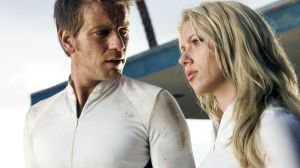 The movie limps to its over-extended climax and saps all the potential from the opening. The Island really is two disjointed movies slapped together. The first hour is a classic science fiction setup and we are given morsels of information like bread crumbs, which heighten the tension. The second half is an unimaginative, plodding thrill ride that never seems to take off. Sure, the first half may be derivative of a hundred other sci-fi films (most notably Parts: The Clonus Horror) but the second half is derivative of a thousand other action movies. I’ll take smart sci-fi over dumb action most days, even during the bombast of summer. It feels like The Island began as a scary sci-fi film and in order to make it to the big screen the studio had to piggyback a lifeless action movie on top of it. The Island‘s action sequences feel like Bay fell asleep at the wheel.
It may seem like I’m being over cruel about The Island, but the reason I lambaste the second half is because I was so thoroughly entertained by the first half. For many The Island will be enough to quench their summer thirst, but for me it only showed flashes of life in the first half. Once all the explosions, noise, and flying debris kicked in, The Island transforms into any other dumb action movie. Such promise, such vision, all quickly flushed down an embryonic feeding tube. Even if someone prefers the noisy second half they would still take issue with the first half, calling it slow and boring. Fans of Bad Boys II and Logan’s Run don’t exactly mix well. How can a movie possibly work this way?
Bay may be a master maestro of explosions and gunfire, but The Island flat lines when it transitions from thoughtful, eerie sci-fi parable to rote action flick. This feels like two very different movies slapped together, and most audiences are going to like one half stronger than the other so the film won’t work. The action sequences feel unimaginative and all of the film’s potential gets stranded by its about-face in tone. We’ve seen all of these things before, and that’s what’s most regrettable about where The Island leaves you after flashing an iota of glossy potential. Bay may not be the devil but he’s certainly losing his edge, and The Island would have been all the better for it.
Nate’s Grade: C+


 nathanzoebl
You must be logged in to post a comment.