Blog Archives
White House Down (2013)
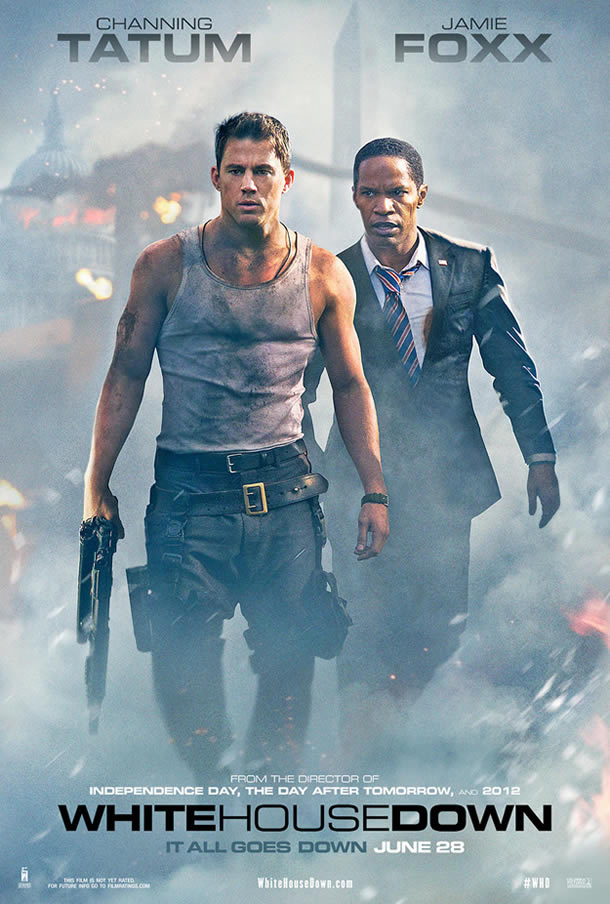 Director Roland Emmerich, the maestro of the dumb fun blockbuster, is never going to get the credit he deserves but the man is something of a mad genius when it comes to putting together spectacle-rich, low-calorie but still satisfying summer entertainment. Take White House Down, the second of 2013’s Die-Hard-in-the-White-House movies. It’s really more of a buddy film contained to that famous structure. It’s not a smart blockbuster by any means but it makes up for any and all flaws with its sheer overpowering sense of fun. Stuff gets blown up real good, the action is brisk, and there are satisfying payoffs for story elements that felt like they were, at first glance, merely thrown together. You may walk away surprised at how much you’re enjoying the comedic interplay between Secret Service agent Channing Tatum and president Jamie Foxx. Plus it’s fun to see the president in on the action instead of merely as a hostage, like the earlier Olympus Has Fallen. In direct comparison, I’d have to say White House Down is the better of the two movies, both in payoff and action. It’s nice to have a movie that’s just fun to watch, that goes about its blockbuster business with precision, supplying a few decent twists, and giving us heroes worth rooting for and action sequences that are well developed and that matter no matter how ridiculous. Emmerich movies are blissfully free of self-serious malarkey, though his weakest hit, 2004’s Day After Tomorrow, got a bit preachy. His movies know what they are and know the demands of an audience. What I needed this summer was a movie designed to make me cheer the impossible. White House Down is a romp.
Nate’s Grade: B+
Share this:

Lincoln (2012)

Steven Spielberg’s long in the works biopic of Abraham Lincoln could have easily been retitled, The Thirteenth Amendment: The Movie, such is the narrow band of focus. Lincoln is an engrossing, handsomely mounted study in the political machinations that went into passing the 13th amendment to outlaw slavery. Unless you’re a fan of history or politics, I can’t imagine that this movie is going to prove that engaging for you. This is a big movie about Big Moments with lots of people with beards giving speeches. Daniel Day-Lewis does a tremendous job as our titular sixteenth president, giving the man more foibles and traces of humanity than I can remember from any screen portrayal. Liam Neeson (The Grey) had long been attached to be Spielberg’s Lincoln, but I cannot fathom any other actor in the role after seeing Day-Lewis’s amazing work. I think he’s a shoo-in for his third Oscar. It’s intriguing to witness what a political animal Lincoln was, able to play off different sides to get his way. In the end, you may even feel a stir of patriotic pride, inspired by the good that government can grant with the right leaders for the right causes. The supporting cast all provide great performances, from Sally Field as the volatile Mrs. Lincoln, to James Spader as a conniving lobbyist, to Tommy Lee Jones as a stubborn curmudgeon… so basically Tommy Lee Jones. Just about every speaking part is a recognizable character actor. Who’s going to turn down the prospect of a Spielberg Lincoln movie? The tighter window of focus allows the movie greater depth as an important political juncture in our nation’s history, but Lincoln could have also been the 19th century equivalent of that Schoolhouse Rock song, “I’m Just a Bill.” This is an easy movie to admire but I think a more difficult film to love, to fully embrace.
Nate’s Grade: B+
Share this:

Abraham Lincoln: Vampire Hunter (2012)
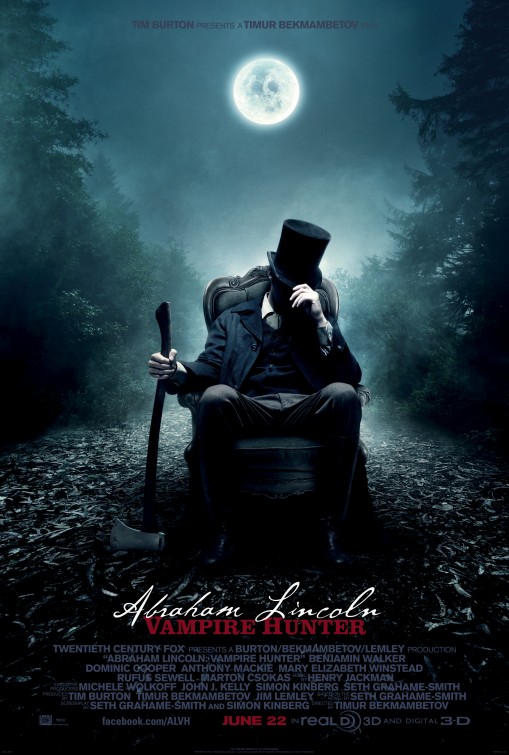 Did you know that our sixteenth president had a rather unorthodox hobby, and it was really the purpose that drove him into politics and later the White House? That’s what the gonzo best-selling book Abraham Lincoln: Vampire Hunter purports. When he was talking about a house divided not being able to stand, he was secretly talking about vampires, you see. The film version, under the tutelage of producer Tim Burton, looks like it’d be an axe-swinging good time. I realize the absurdity of wishing the filmmakers had hewn closer to the source material, a radical reinterpretation of American history, but there it is. I cannot tell a lie.
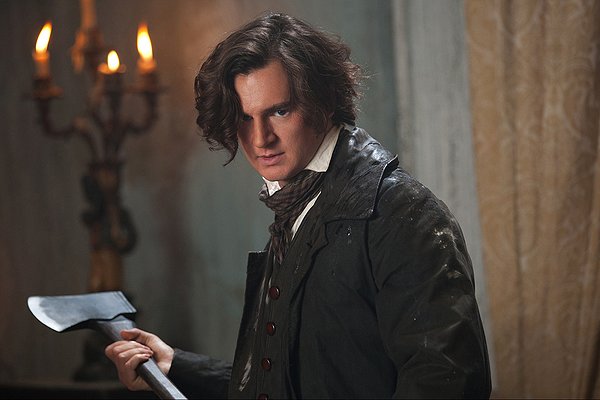
Abraham Lincoln (Benjamin Walker) is a man determined to rid this new country of the scourge of vampires. His mother was murdered by a vampire landlord, Jack Barts (Marton Csokas), when Lincoln was only a little boy. As an adult, Lincoln tries to avenge his mother’s death but Barts is too strong. Henry (Dominic Cooper) saves Lincoln and teaches him all about vampires and, more importantly, how to hunt and kill them. They strike up a partnership: Henry will provide names of vampire targets and Lincoln will dispatch them with extreme prejudice. Lincoln tries to live a solitary life but keeps building attachments; to his co-worker Joshua Speed (Jimmi Simpson), to his childhood friend Will (Anthony Mackie), who needs Lincoln’s help to forge some slave papers, and the enchanting Mary Todd (Mary Elizabeth Winstead). Abe realizes the limitations of killing vampires one by one. The vampires are exploiting Southern slavery as an all-you-can-eat buffet. Lincoln realizes the only way to foil the vampires is to eliminate slavery, and to do so he must be in a high government position, and so Lincoln retires his axe to turn to abolitionist politics.
 It feels that rather than embrace the courage of its convictions, the movie is trying to please as many mass markets as possible. So many characters and storylines are inserted wholesale without any connection to the book. The film is almost unrecognizable from the book. Now, I’ll quit my bemoaning for the time being because a movie has to exist on its own merits, but Abraham Lincoln: Vampire Hunter is just a mess. As far as new characters included only to appeal to broad audiences, there’s the Black Best Friend, long a staple in movies meant to say, “Hey, our lead character is hip and has no problems with race,” but really it’s always been a depressing act of pander and I always feel sympathy for the thousands of black actors who have to compete over the limited best friend parts. Giving Lincoln a black best friend seems to remind the audience that Lincoln was against slavery, you know, in case anyone didn’t know anything about the man nicknamed the Great Emancipator. Then there’s the ascension of Mary Todd Lincoln into a feisty, strong-willed, formidable ally rather than the insular, clinically depressed woman she was in real life and in the book. Mary even gets some grand hero moments taking out a vampire in slow-mo coolness. The transformation of Mary feels just as big a pander as the character of Will. Then there’s the idea that Lincoln and his small inner circle of pals are placed in the center of action, like they alone and their heroic escapades single-handedly turn the tide of war. It’s handled so ham-handedly that it all plays out like they’re the Scooby Doo gang solving the Case of the Vampire Insurrection.
Lincoln’s history is given such shrift attention, just enough to fill out the standard tortured hero’s backstory for the aims of the story. We see Lincoln as a child but just enough to establish his tragedy and hunger for revenge. Then we cut to him as an adult and going to kill Barts. That’s quite a big leap in time with little careful setup. The time before Lincoln’s presidency is just enough to supply him with a stock character posse and a plucky love interest, and then it’s right to the Civil War. So much time in between the main events just gets squeezed out, and so Abraham Lincoln: Vampire Hunter feels like it’s always one scene away from a clumsy montage.
The vampire threat, as presented, also feels too insurmountable. Not only can these vampires walk in the daylight, they’re super strong, super fast, and can make themselves invisible, a neat new trick. When they ally with the South they seem nigh unbeatable. The movie makes the mistake of making the adversary seem too powerful, so the eventual thwarting of the vampire Confederacy feels too easy and far-fetched given the magnitude of the threat. Adam (Rufus Sewell) is hinted at being like the first vampire, but then this idea is never picked up again. Why even hint at something significant if you have no intention of pursuing it? There’s another new wrinkle where vampires are incapable of killing their own kind. If this is the case then why aren’t the vampires turning every single person they can find into vampires? It shores up their side and guarantees less potential people that could kill them. I’m curious how certain swaths of southerners are going to react to seeing their beloved Confederacy teeming with devilish creatures. Then again, I think the romanticism of the Confederacy is hogwash. When insurrections win we call them revolutions of independence, and when they lose we call them treason. Guess what? The South lost.
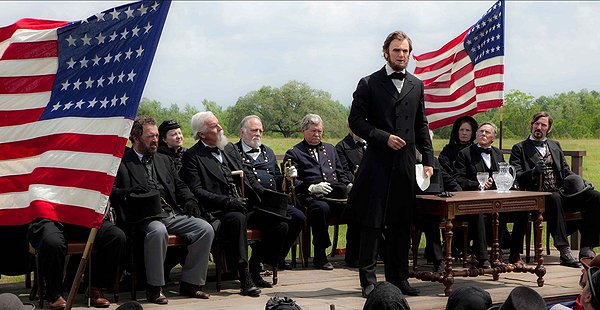 As much as I enjoyed his book, I have to lay the blame at the hands of Seth Grahame-Smith, who adapted his book into the screenplay (he’s 0-2 this summer after his disastrous screenplay for the other vampire movie this summer, Burton’s Dark Shadows). Granted, I’m sure he got intensive notes on how to alter his story for the big screen; the whole projects reeks like it had too many cooks in the kitchen. The interconnection from the book, finding clever ways to marry history and alternative history together, have been ground down to stream line Lincoln into an American super hero. Not only is he handy with an axe, this Honest Abe can leap from racing horse back to racing horse back, and even get clobbered by a horse and keep on going. The coda at the end feels like a missed opportunity to carry on the Lincoln tradition into our modern age. With the clever reworking replaced by blockbuster superficiality, the film merely takes history and has it perform the outrageous rather than finding smart ways to connect all the outrageousness to the established facts.
What the movie has to the credit of director Timur Bekmambetov is a strong visual pulse. Bekmambetov directed 2008’s testosterone-soaked Wanted, so you know you’re going to get some crazy and eye-catching images on display. The action sequences do pack a punch and I’ll admit that seeing an axe utilized as an inventive martial arts weapon is considerably cool. There are two standout set pieces. The first is a fistfight between Abe and Barts in the middle of stampeding horses. You feel right in the thick of the action, horses stampeding all around, the sun setting to offer an eerie yet beautiful glow to the ordeal. It’s one of the more reality-stretching moments, as I noted above, but man if it isn’t thrilling and lovely to watch. The other standout sequence is a climax aboard a speeding locomotive itself atop a large wooden bridge engulfed in flames. Abe and Will stand back to back, swapping the axe to kill vampires, and then hey have to outrun the collapsing train. In these moments, the movie is joltingly alive, bursting with excitement and that rare yet glorious feeling of watching something beautifully different. I just wish this sensation wasn’t so fleeting in the movie.
Abraham Lincoln: Vampire Hunter is a violent historical reworking that isn’t good enough to be properly entertaining and it isn’t bad enough to be considered camp. The film is mostly disappointing because it should feel far more engaging given its whacked-out premise the very cheeky promise of its title, and strong source material, a pulpy, ripsnorter of a read. The movie has some stellar standout moments but I think what ultimately hinders the entertainment value is how dumb everything comes across. This is not dumb in the winking, self-aware, satiric sense, but dumb in more of the blockheaded, Michael Bay, formulaic blockbuster sense. I wouldn’t even classify this movie as an enjoyably dumb, a silly summer slice of escapism like Battleship, which is looking better every week after new, disappointing summer releases (and it’s not even July yet!). The spirit of this movie is missing, the cleverness of the conceit drained, and the fun is bottled up. What this movie reminds me of is the stupid 2003 film The League of Extraordinary Gentlemen, which took classic literary characters and threw them into a genre movie. Both movies figure the exercise alone, seeing classic literary or historical figures in absurd contexts, was enough to justify entertainment. I say that you have to work harder.
Nate’s Grade: C+
Share this:

Frost/Nixon (2008)
 The adaptation of the hit stage play, with its original leads, is an intellectually stimulating experience and a fluid adaptation from stage to screen, thanks to director Ron Howard. The acting is top-notch; Frank Langella may not readily resemble President Richard Nixon but he inhabits the man completely. In a surprising twist, Frost/Nixon is not a heavy-handed story that merely beats up on an antagonist that can no longer defend himself. Nixon’s faults are not excused but the man is presented in a deeply humanistic portrayal. This isn’t a mustache-twirling rogue but a man who came from abject poverty, who rose above his critics who dismissed his humble beginnings, and who has regret and shame for what transpired while he was in office. And he’s funny. Nixon is a funny man. Characters are not just political punching bags here. Peter Morgan’s screenplay, based upon his stage play, brings tremendous excitement to the art of debate, framing it like a boxing match. The sparring side notes present some of the more fascinating details between the series of four interviews between Nixon and British personality David Frost (Michael Sheen). But here’s the thing. Frost/Nixon is an entertaining movie but once it’s over it completely vanishes from your brain. It leaves little impact. The movie tries to make Frost’s coup a bigger deal than it was. The film is constantly trying to convince you of its importance. It’s a swell time for two hours but after that, what? Obviously the grilling of the president for getting away with crimes in office is supposed to be a statement on the outgoing President Bush, but what? Should we hope that an unassuming figure much like Frost will be able to get Bush to open up his soul? Get Regis Philbin on the phone.
Nate’s Grade: A-
Share this:

W. (2008)
 Director Oliver Stone’s first draft at history is never boring but it’s rarely insightful. The film portrays George W. Bush (Josh Brolin) as a stubborn and simple man trying to live outside his abilities and the long shadow of his successful and emotionally distant father. George W. was not the favored son, as he is routinely reminded, and Ma and Pa Bush express their frustration. And yet the son who did not have his family’s support and acumen accomplished what no one else in the family had. He won reelection. He toppled Saddam Hussein. And then it all came crashing down. Ultimately, who was this movie made for? The detractors of Bush will view the film being too light, providing a psychological context that humanizes the man amongst his mistakes. You may even feel some sympathy as George W. repeatedly tries to earn his father’s approval. The movie is not a partisan or mean-spirited skewering. The fans of Bush will consider the film to be a cheap shot that restrings famous blunders and transplants Bush malapropisms into new settings. People may take offense at the idea of the current Iraq War being a result of unresolved daddy issues. Seriously, for a two-hour movie spanning the life and career of the most reviled modern day president, did Stone need to include the moment where Bush almost choked to death on a pretzel? Over the 2000 election debacle? Over the Air National Guard? Over 9/11?
W. lacks a strong point of view and the film’s timeline closes too soon, only going so far as January 2004, not even the halfway point for a two-term president who has only sunk lower in national approval from that moment. A miniseries would be a better medium to explore the failures and calamities and personalities of the Bush Administration. Brolin is terrific in the title role and he never dips into parody. The rest of the actors are hit-or-miss and the movie becomes somewhat of a game of identifying famous historical figures in their one-scene appearances. My biggest surprise was how much I felt emotionally connected to the first President Bush, played by James Cromwell in a performance that doesn’t even attempt to imitate the real-life figure. Stone and screenwriter Stanley Weiser (Wall Street) certainly don’t hide the characters they connect with (Colin Powell, often the voice of reason, is given a stirring speech calling for caution). Certain creative license is taken to provide dream sequences that can point toward the inner turmoil of Bush, like when his father admonishes him for destroying 200 years of the family’s name over the Iraq War. Overall, W. is an empathetic and sometimes dithering portrayal of the 43rd United States’ president that could have succeeded if it had more to say.
Nate’s Grade: B-
Share this:

National Treasure: Book of Secrets (2007)
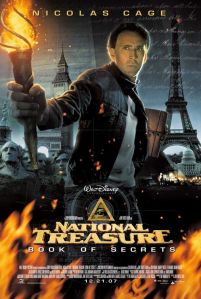 National Treasure: Book of Secrets is like a big dumb puppy that just wants love. It does a trick and thinks it deserves some form of recognition, and me with my cold heart just wants to shrug and move on with my day. How can I be so unmoved when there’s even a cartoon before the movie? For any prospective moviegoers, if you enjoyed the 2004 National Treasure, where I remind all that the U.S. Declaration of Independence had a secret treasure map on its other side, then chances are good you’ll enjoy Book of Secrets. That’s because they’re pretty much the same movie.
Ben Gates (Nicolas Cage) and his father (Jon Voight) are basking in their newfound respect from proving that their crackpot treasure schemes were in fact real. Their respectability is turned upside down, however, when Mitch Wilkinson (Ed Harris, with a dollop of a Southern drawl) has evidence that great-great-grandaddy Gates was responsible for planning President Lincoln’s assassination. He has a piece of John Wilkes Booth’s diary and a list of conspirators is jotted down, with great-great granddaddy Gates listed right there. The diary is authenticated and the Gates are devastated but ultimately unconvinced. They know their Civil War era ancestor would never betray his country and was unknowingly decoding a secret that could lead the Confederacy to an ancient golden temple, something that could help turn the tide of the war. This ancestor ripped pages out of the diary and threw them in a fire to protect the welfare of his country and was then shot by a secret Confederate soldier. In order to clear his ancestor’s good name, Ben Gates will have to find this hidden treasure, which is precisely what Mitch has wanted from the start.
 Gates re-teams with his pals from their first successful adventure, computer whiz Riley (Justin Bartha) and Abigail (Diane Kruger), who has thrown Gates out of their home due to his single-minded focus. Dating a treasure hunter is a certain path to a rocky relationship, ladies. Riley, who even wrote a book about his treasure exploits but still can’t get recognized, is game but Abigail has to be tricked into help. The group finally figures out that the only way to verify the temple’s hidden location is by getting their eyes on the mysterious President’s Book of Secrets, which only presidents can read. This means that Ben has no choice but to get the president (Bruce Greenwood) alone and beg to see a book not meant for outside eyes.
Book of Secrets is a little less dopey than the first preposterous National Treasure adventure, but that doesn’t mean it isn’t chock full of stupidity. According to these movies, apparently damn near everything in this country is built over an Indian burial ground or a giant cavern of treasure. I advise all readers to try digging in their backyards because it appears that the odds are in their favor (also: beware of your real estate company moving the tombstones but not the bodies). The clues are a little less mind-boggling, so instead of a single brick that’s been undisturbed for 200 years we get matching furniture for the Queen of England and the President of the United States. One doozey of stupidity is that one clue requires people to douse a large rock formation with water in hopes that they hit exactly the right spot and have an invisible eagle make its appearance. The plot is still structured on the clue-leads-to-other-clue template, which can be exhausting after a while because there’s never any indication of progress until the end arrives.
The subplot about kidnapping the president is ridiculous in the fact that, while already being dumb, it adds needless conflict. When Gates “”kidnaps” Mr. President he does so through a secret tunnel under George Washington’s Mt. Vernon estate. The passage closes behind them and cuts off the frantic Secret Servicemen. It is here where Gates makes his plea for the titular Book of Secrets, which the president confirms but cannot confirm publicly (well, it is a secret book of secrets). Instead of sensibly saying to his men, “Sorry guys, you know how old these places are, we got trapped, but Mr. Gates here helped get me out,” the movie tries to claim that the next course of action is that Gates will be on the run for kidnapping the leader of the free world. Huh? What makes this sequence stand out is how easily explainable it could all pass, and yet Book of Secrets figures the movie is better served by a contrived complication to add more outside pressure on Gates and his treasure hunting crew.
Of course all of the silliness and off-the-wall shenanigans would be acceptable if the film delivered some exciting action sequences that pinned you to your chair, but just like the first National Treasure, this movie is pretty much devoid of a well-thought out action sequence. Returning director Jon Turtletaub has no real visual flair and lets the material simply lay there on screen without much effort to jazz it up. Many action sequences are brief and never really flirt with complications. Usually, the script will propose a simple sequence of events like, say, “Good Guys on Run from Bad Guys” and then Turtletaub will show us exactly that, no better no worse. There’s nary a scene that actually utilizes its globetrotting destination to its advantage; most of the action is not geographic based, which means that it could happen anywhere because it doesn’t take advantage of the specifics of exotic locales. That is inexcusable to me, a big fan of good action sequences. A lengthy trip to an underground golden temple tries the patience as it rambles on and unabashedly apes the Indiana Jones series. Book of Secrets has a halfway decent car chase through the streets of London and that ends up being the highlight of the film. The trouble is that there’s more than an hour left at that point.
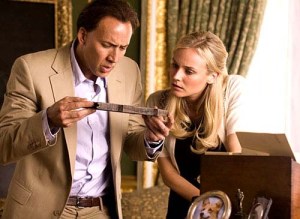 Book of Secrets is a slightly better film than the original. It jumps around in time through the lineage of the Gates clan and gives a better sense of the personal stakes for Ben and his father. Having their long-dead heroic family members linked to a dastardly assassination is good motivation for action, even if that action is ultimately finding an underground temple of gold (how A+B = C I will never know). The production design is skillful and the various European locations bring some sense of grander excitement that, sadly, will never be fully capitalized upon. The characters are still pretty shallow and one-note, but it seems like it’s less annoying this time because there’s less setup on who these characters are, which is, in short, shallow and one-note.
Cage is on autopilot and plays up his goofy mannerisms and William Shatner-esque line readings. This is a paycheck job for Cage and nothing more. Just because the first flick made tons of money is a lark to him and not an indication that he should try something different. He’s giving the people what they seemingly want, which is a wacky Nicolas Cage hamming it up with his patented version of kooky acting. Kruger is the exact copy of her character from the previous National Treasure, meaning she’s the bickering blonde counterweight to the conspiracy theorists on the journey. I suppose she plays a damsel in distress adequately. Voight gets more screen time this go-around thanks to a plump subplot involving the team seeking out the assistance of his ex-wife, played by Oscar-winning actress Helen Mirren. Yes, that Helen Mirren. Harris is given a do-nothing part as the villain and then the movie can’t even follow through on that. Everyone seems to have fun with all the nuttiness and goofy stunts, so I can’t fault them too much for faking it in a big Hollywood blockbuster.
I understand the appeal of these movies, which have found a sizeable audience willing to lap up a Cliff Notes of History along with their popcorn thrills. I imagine the fans of the original will show up in droves and make sure that National Treasure 3: The Mystery of Franklin’s Syphilis is fast-tracked for a future holiday release. I don’t mean to be a killjoy (my mother really enjoys these films) but I cannot get behind the National Treasure movement when the movies are riddled with rampant stupidity, contrived situations, convoluted conspiracies, one-note characters, and inept action sequences that never amount to much of anything beyond teetering homage to better adventure films. Book of Secrets is essentially the exact same movie reheated to take the chill off. Replace Sean Bean for Ed Harris as rival treasure hunter, add another female character, and there you have it, a mostly undisturbed formula that proved profitable in 2004.
Nate’s Grade: C
Share this:

Death of a President (2006)
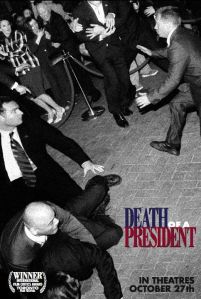 It’s been called morally reprehensible and obscene. Theater chains have refused to even touch it. The White House is concerned it will spawn a deadly array of copycats. The controversial movie in question is a little independently produced mock documentary about the assassination of George W. Bush in the year 2007. It’s kind of funny that this small talking-heads piece has so many people talking, because without its central gimmick, no one would be utterly a word about Death of a President. No readers, they would all be fast asleep.
We’re introduced to various people involved in the fateful event. In October 2007, Bush is appearing in Chicago and the city is overrun with protestors armed with angry signs and angrier words. A handful of protestors even break police lines and come within a hair of the president’s motorcade (to his credit, Bush doesn’t take it personally). Then as he’s leaving a speech, shaking hands along a roped line, shots are heard and the president goes down. In the aftermath many are suspected, including disenfranchised Iraq war vets, protestors, and a Muslim man who may have a connection to al-Quaida.
 Death of a President has the potential to be little more than extreme left-wing wish fulfillment. No matter your thoughts on Bush as a president and a person, I hope the majority of people would not wish death upon him. I think the appeal of this mock-doc is the ghoulish rubbernecking of watching the president die right before your eyes. The moment is quick and mostly just Bush bending over in pain. The lead-up to the kill manages to quicken the pulse. Is it offensive to flirt with the idea of killing our elected leaders while they are still in office? Is it more repugnant when filmmakers use advanced computer effects and archival footage to make the moment as real as possible? It seems that the movie is coming at the peak of an unpopular president and an unpopular war, so some moviegoers will buy their tickets just to vicariously watch Bush die. Those same folks will be surprised how sympathetic and likeable Bush comes across in passing.
Questionable ethics aside, the movie is a whodunit built around a fortuitous gimmick, but once the title death takes place the movie utterly collapses. The ensuing hour turns into an investigation into who had their finger on the trigger. Death of a President has a baffling lack of political insight. The government centers their investigation on a Middle Eastern man of Syrian descent, fudges evidence out of pressure, and tries to build support for a unilateral military response, civil liberties get trampled upon in the name of security, and yet it’s all so sadly predictable. Death of a President is merely repeating the news of our tumultuous times, and it feels so stiltedly scripted. You can?t help but think that the current political scandals are far more weird and fascinating than this ho-hum what-if political science scenario. It’s just recycling current events and changing corresponding details. There?s nothing new or interesting here. As soon as Bush gets shot down so too does the film?s chances of exploring anything meaningful.
 The second half of this film is downright narcoleptic. The investigation is deep in procedural gobbledy gook and the film feels impersonal. I mean, a sitting president has been assassinated in the age of cable TV, global economy, and the war on terror, and all the film can muster is trying to piece together the minutia of how to prosecute a case? I’m sorry, presidential assassination ranks a bit above your standard Law & Order output. There are so many interesting doomsday outcomes that could come about (especially with the scary thought of a President Cheney) and yet the film finds the most boring, insignificant, tedious path. This is inexcusable. It all feels so pathetically small for an act that would be immeasurably monumental. The film is shocking in how little it has to say about anything. It is devoid of commentary and complexity.
Director/co-writer Gabriel Range stages the entire film exactly like a prime time TV news report. It’s slick and packaged well, and the cut-and-paste magic creates an eerie realism. Range uses a mix of archival footage and CGI to illustrate Bush’s assassination. Cheney’s eulogy is actually extensively culled from the speech he gave at Ronald Reagan’s funeral. Don’t know if that?s respectful or not. The technical credentials are worthwhile; the heavy-handed message is not. This is not satire. This is shallow and secondary and pointless. I think Range has treated Death of a President more like an audition film, hoping for bigger and better things. At least, I hope whatever comes next for this man is better.
Death of a President isn’t a terrible movie but it’s way too simplistic, ham-fisted, myopic, and freakin’ dull. The controversy attached to this tiny movie may mislead you into thinking it’s something worth seeing. It’s not. The visual trickery and talking-head structure makes it seem like something you’d see on TV, and you should take that to heart. Wait for TV with this one. Its direct-to-TV ticket is booked as soon as audiences find out what the movie really is. That is, if you can manage to rouse them awake.
Nate’s Grade: C-
Share this:

Thirteen Days (2000)
 Another Kevin Costner film?! I’d rather suffer uncontrollable urination problems!” you could be saying to yourself. After Costner’s recent track record, hearing that he’ll have full Bostonian accent in hand seems a little nerve-racking. But despite Costner’s beantown speech 13 Days is a real surprise in just how much tension it actually wrings from the true story of the Cuban Missile Crisis.
Though 13 Days will suffer from the same problem Titanic did, people know their history and know how it ends. Though we all know we weren’t obliterated in nuclear war (At least I hope the majority of us know) 13 Days shows us the suspense through back-door politics as a fly on the wall in the White House. The audience sees all the political wrangling and power struggles in this cat-and-mouse game that made two nations hold their breathes in a high stakes stare-down. Bruce Greenwood, mainly known for beguiling Tommy Lee Jones in an assortment of flicks, plays our Commander in Chief John F. Kennedy. Costner seems to be a presidential advisor that could easily be mistaken for JFK’s imaginary friend the amount of time they spend together alone. Steven Culp plays Bobby Kennedy, and the fab threesome make up the core team that handled this bombastic situation. Of course there are dozens of other individuals involved within varying degrees, with the military leaders wanting procedures to lead them to inevitable war with Communist Soviets.
 The warhawks recommend a Cuban invasion whereas the option of a quarantine hangs in sight as well. Through the next trying thirteen days stress will accumulate as options become more clear as deadlines become clearer. The political maneuvering makes for a gripping story, though a tad punched up at certain areas. It proves time and again that history makes the best stories.
Let’s get down to what’s on everyone’s mind: how much is the suck-ratio zooming on Kevin Costner in this picture? Well, his accent is very very jarring to begin with but you kind of get used to it after ten minutes of wear and tear. Costner does an alright acting job but the real spotlight is on the Kennedy brothers. Greenwood and Culp turn in star-making performances that gives human glimpses to the already prolific Kennedys. Culp is outstanding as Bobby, showing that the superiors discount him because of his young age but that he’s a shrewd and thoughtful politician. Greenwood doesn’t exactly sound like JFK but he adds particular dimension to the man behind the center of the crisis.
13 Days is a prime example of showing how intense and frightening fiction can be. Director Roger Donaldson uses black and white interludes for no real reason, but his final product is one of nail-biting suspense.
Nate’s Grade: B+
Share this:

Dick (1999)
 What should have been a biting satire on the whole Watergate mess and Nixon’s resignation comes off as hackneyed and clumsily written. The jokes are stale and moronic, the script is sophomoric, and the satire is not even close to biting. It all appears like it was written by a freshman that got the Cliff Notes on Watergate then decided to watch an episode of Charlie’s Angels.
Kirsten Dunst once again manages to make me question when I will ever enjoy her in a performance. The ditzy girls idea grows thin by the opening sequence let alone stretched to the rest of the movie. There are some bright spots like Dan Hedaya playing Nixon uncannily, and some former SNL and Kids in the Hall alums having fun with the material and parodying their characters. So why didn’t they feature more of them?! Please tell me! The movie is lame and unfunny, and even more so when you account all the double entendres using the name “Dick.” I could very easily use the title of the movie in some sexually inuendous reference to how bad this movie sucks, but I’m above that. For now.
Nate’s Grade: C


 nathanzoebl
You must be logged in to post a comment.