Blog Archives

Before the Devil Knows You’re Dead (2007)

Sidney Lumet is 83 years old and still directing movies, God love him. The man is behind cinematic milestones and classics like The Pawnbroker, Serpico, Dog Day Afternoon, Network, and 12 Angry Men, which goes back all the way to 1957 – 50 freaking years ago! The longevity of this man is admirable. He hasn’t pulled together a compelling film in some time, but Before the Devil Knows You’re Dead is a stirring, character-driven crime drama that reveals itself to be a first-rate melodrama.

The film is anchored by two huge performances by Philip Seymour Hoffman and Ethan Hawke, playing a pair of brothers both on hard times. Hoffman’s character, Andy, has been living well outside his means to keep up appearances and to sate his taste for a local heroin den. He’s in charge of company payroll and an internal review just discovered a pair of terminated employees still drawing checks, the source of Andy’s cash to pay for his lavish lifestyle. Hawke’s character, Hank, is behind on child support and belittled by his ex-wife. He’s having a hard time even finding the dough to pay the 100 bucks for his daughter to go see The Lion King in New York City. Andy hatches a scheme to solve both their money woes: they’re going to knock over a mom-and-pop jewelry store. It just so happens that the store belongs to Andy and Hank’s mom (Rosemary Harris) and pop (Albert Finney). The plan goes hopelessly awry and both brothers feel intense pressure in the aftermath.

Lumet and debut screenwriter Kelly Masterson really know how to ratchet up the suspense. The nonlinear timeframe keeps the audience on its toes and continuously rewriting what we think we know. Unlike movies like Babel and 21 Grams, the plot is actually assisted by skipping around time and telling the story out of order. We get the basics and then the details begin to take shape, but because of the prior knowledge the film packs an increasing sense of dread that builds in intensity. As the brothers sink lower trying to cover their misdeeds, Lumet and Masterson crank up the tension to a peak. The knotted and twisty narrative exposes the fragile dynamic of this family and keeps the audience alert and hungry for more.

Hoffman is at his sleazy, duplicitous best with this performance. His character is a man accustomed to getting what he wants and he knows all the manipulative tricks to get there, be it bullying or cajoling. He’s a pusher with so much anger and desperation just below the surface. Andy never feels respected or loved by his father, and he has a great scene where he breaks down in a fit of rage and tears in response to his father apologizing for the bad upbringing. Hoffman imbues great emotional complexity to a man whose world is crashing down. It is enthralling to watch.

Not to be outdone, Hawke puts forth his finest effort of his career. He’s the baby of one very corrosive family; he misplaces trust and admiration in his big brother. Hank isn’t the sharpest tool in the shed but he has a distinct weariness to his worries, living day-to-day with the knowledge that the world sees him as a loser or a screw-up, losing the respect of his own daughter. When things go bad he unravels rapidly while still holding to his secrets. It’s a performance brimming with nervous anxiety, mounting regret, and self-effacement.

The secondary characters don’t get nearly the attention and consideration. Marisa Tomei is more a plot device than a character; she’s Andy’s wife but has been having an ongoing affair with the more nurturing Hank. She spends most of her scenes in some form of undress and feels more like another notch in the complicated relationship between the brothers.

Finney is fine with a rather small role that merely requires him to be aghast or incredulous with the slow police work. I don’t know if a suitable Finney performance can compensate for a staggering leap of character late in the movie, but I suppose I’d rather have any Albert Finney performance in a movie than none at all. Before the Devil places Finney’s character on a perch and just doesn’t give him much outside of his own dawning realization of who was responsible for the botched robbery.

Before the Devil Knows You’re Dead is a gripping family tragedy that takes on a Shakespearean quality as it comes to a somber, chilling close. The wordy titles comes from an Irish drinking toast that states, “May you have food and raiment, a soft pillow for your head; may you be 40 years in heaven, before the devil knows you’re dead.” The message declares the inescapable consequences of our actions. This is a film about the disfiguration of one family; it’s bleak, tragic, but whole-heartedly entertaining and extremely focused in its aims. Lumet has returned to smashing form and reminds an audience that there’s still plenty of vigor left in this 83-year-old director.

Nate’s Grade: B+

Mission: Impossible III (2006)

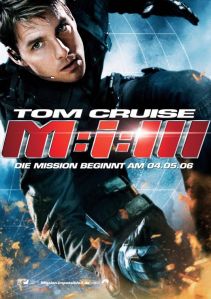
Few celebrities have had the intense flame-out Tom Cruise has experienced in a little over a year’s time. First there was the PDA-heavy relationship with Katie Holmes, never a wet tongue-kiss away from a camera. Then there was the couch aerobics on Oprah Winfrey’s set, bleating his over-the-top declarations of love like Roger Rabbit. This was followed by a series of testy interviews about his war of words on psychiatry and prescription drugs. Entertainment Weekly just ran a cover story asking, “Is Tom Cruise worth his paycheck?” He’s gone from Hollywood’s most bankable actor to a national punch line. To bring new life to Cruise’s spy series, he tapped TV mastermind J.J. Abrams to make his feature debut after Cruise churned through two seasons of spy series Alias DVDs. Abrams is a gifted franchise starter, first with Alias and then with Lost, and with Mission: Impossible III he does the best he can to erase the memory of Tom Cruise, daredevil of furniture.

Ethan Hunt (Cruise) is out of field work at the Impossible Mission Force, training recruits for the big time. He’s settled into a comfortable home life with Julia (Michelle Monaghan), a woman he’s blissfully engaged to be wed. Ethan’s happy home is disrupted when IMF needs his services. It seems one of his trainees (Keri Russell, Felicity goes badass) has been captured by an arms middleman Owen Davian (Phillip Seymour Hoffman), a man that will get any deadly force to the right bidder. Hunt reluctantly goes back into the field, assembling a team that includes Luther (Ving Rhames), Zhen (Maggie Q, quite fetching), and pilot Declan (Jonathan Rhys Meyers). Their mission goes badly and Hunt is reprimanded for his cavalier actions. He’s determined to snag Owen and get justice. This leads to an incredibly stuffed game of cat-and-mouse, each jockeying for leverage. There’s some super powerful device called the “rabbit’s foot” that everyone wants but it’s not really important. What is important is that Owen is eager to strike back at Ethan’s most vulnerable point — harming Julia.

This movie is quite possibly one of the greatest TV adaptations of all time. No, not the Mission: Impossible series but Alias. Just like J.J. Abrams’ TV brainchild, this slick, propulsive caper puts a smart spin on familiar ground. We’ve got the flash-forward narrative trickery, the super gadgets, the undercover teamwork, the world-trotting sprawling vistas, and anchoring the whole thing with an emotional counterpoint, trying to lead a double, “normal” life and keeping your loved ones equally safe and in the dark. There’s a great scene in the middle of a mission where Ethan and Luther casually discuss the impossibilities of living a normal life given what they do. Luther warns that those close to you will only end up getting hurt, and by this point thanks to a startling, right-to-the-point opener with a gun to sweet Julia’s head, we know he’s right. That’s what makes the third go-round different: Abrams has injected some emotion into the darn thing. Ethan is pressed back into service and then becomes something of a knight in shining Kevlar, trying to save his beloved in the crossfire of international espionage. There are a handful of scenes between Cruise and Monaghan and they sell the emotional drama in tender quiet looks. As a result, the audience and Ethan are rooted to their seats beyond just the assembly line of pyrotechnics. Just like Alias (at least up until Season 3 when it jumped the shark with the long-lost sister). It’s like if True Lies was played straight and Tom Arnold was mercifully forgotten.

Ah, but what pyrotechnics they are. Things get heated with a trip to the Vatican and they literally do not let up, all the while raising the stakes by pulling Ethan’s home life closer to the danger of his job. You’ll be left breathless absorbing all the exhilarating action sequences, which to my best estimate are more than the first two flicks combined. The stunts are superbly death-defying. What makes action sequences so enjoyable, pay attention you Hollywood rubes, is when the stage is set and then we watch organic complications. Abrams has a tremendous feel for action and playfully extends virtuoso sequences of awesome carnage. An attack on a bridge is simply outstanding and gave me an overload of geeky joy. We’re given the tight, controlled setting, and then Abrams introduces the outside conflict and keeps developing it masterfully step by step. There’s air attacks, there’s running back and forth amongst the wreckage, there’s searching for guns while escaping attack, and then there’s flying leaps over gaping concrete holes. I was jumping in my seat with boyish glee. The slow-mo gun toss between Cruise and Russell? Awesome. The swing-shot jump off a gigantic skyscraper in Shanghai? Awesome. The use of Simon Pegg (Shaun of the Dead) as gadget guru? Awesome. Mission: Impossible III is, if nothing else, an incredible adrenaline rush orchestrated by a man with a finger directly on the pulse of his audience. By summer popcorn standards, Mission: Impossible III is everything you could hope for. Sure it’s highly implausible but it’s just so damn fun.

Abrams has created quite a breakthrough for himself. Long regarded as a TV visionary for his tangled, engrossing pop-pulp like Alias and Lost, Abrams shows what he can do with a bazillion dollars and one of the world’s most recognized stars. Abrams intelligent, deft handling of his material, elevating tired genre devices with flash and reverence, reminds me of a young Steven Spielberg. This is a man that respects his material and respects his audience, but still knows how to bring home an entertaining movie. I’ve followed Abrams’ career since getting hooked on Alias in 2001, and I’m confident he will become the best friend a movie geek could ever have (Star Trek fans should be clicking their heels about Abrams’ rumored involvement). Even though Mission: Impossible III is Abrams’ film debut (and on record the most expensive ever for a first time film director) he already shows more command, more wit, and more hipness than most of Hollywood’s graying old guard.

Finally, this is the first Mission: Impossible film to utilize the team aspect of the TV show. Granted, Cruise still does most of the running, jumping, climbing trees, but thankfully this movie is more than the Tom Cruise Kicks Everyone in the Face Show a.k.a Mission: Impossible II. The supporting cast all have their one great moment and part of the fun is their interaction, seeing the pieces fit into place. Just like last summer’s Batman Begins I would like to see another movie immediately with everyone involved. Make it happen. This is the Mission: Impossible world I want to explore in greater detail.

Mission: Impossible III is not bulletproof. The movie seriously needed more time for its villain. Hoffman does a great job of bringing his bad man to grumpy life. He goes about business with a detached nonchalance, like a plumber fixing his 10,000th clog. It may sound silly but it works because Hoffman gives his character a lizardy, unscrupulous sense of ethics. He really will put a bullet between the eyes of anyone, possibly while reheating some food in his microwave. That’s the greatness of Hoffman’s villain, how ordinary he sees his line of work and what it calls him to do. Now, with such a terrific villain it would behoove Mission: Impossible III to give him plenty of screen time. Sadly, Hoffman has about three real scenes, and his end is anticlimactic and so is the film as a whole. And what does IMF have to do to curb moles? There’s been one in all three Mission: Impossible movies. Maybe they should offer better vacation plans.

Tom Cruise may have done a lot to wear out his welcome with the public but he knows to surround himself with good people. The decision to let J.J. Abrams helm Mission: Impossible III has finally given this franchise vision and sustained excitement. This movie is far more emotionally based than any other in the series and there’s a genuine emotional reason for all the fireworks this time. The team aspect is finally addressed and Hoffman makes a truly lecherous, scary villain. But the bread and butter of this flick are its breathless action sequences, brilliantly choreographed by Abrams, a name destined for even greater things. Abrams knows how to spin genre clichés into clever, loose, twisty, funny, thrilling, emotionally centered gold. I don’t care if Cruise abused a couch and the public’s good will; Mission: Impossible III is an extravagant popcorn movie and a great way to start the summer. If only they were all like this.

Nate’s Grade: B+

Capote (2005)

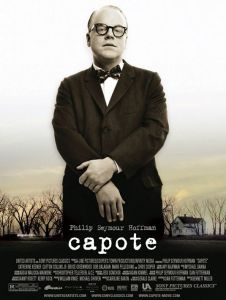
This is a really solid, probing movie about human relationships and the oversized personality of famous author Truman Capote. It’s a very illuminating character piece on its titular star. We see many different facets of his character; part of the connection is because Phillip Seymour Hoffman is so flat-out brilliant in his portrayal of Capote. He’s got that unmistakable nasal voice down, but Hoffman excels at the little things of character, his command of a crowd, his inflections, his physical movements, his ability to look exhausted and pained but embarrassed and prideful at the same time. Capote shows you why everyone wanted to rub elbows with him with how he tells a story and whips up an audience. This is another in the trend of warts-and-all biopics, and you see how calculating he is (he says he never lies). Every confession he offers is manipulative and meant for self-gain, like when he tries to get a witness to talk or get the Kansas P.I. to show him the murder photos. You see how the wheels work within this character. And then Capote shifts as he delves further into the case into his unlikely relationship with Perry Smith. Capote keeps them alive by providing money for their attorneys so he can get more for his book. But there can be only one ending to provide closure to his book — their death. There are several wonderful exchanges of dialogue between Smith and Capote and their quiet, smiling lies they give each other. All we see of Smith is the polite man who draws and read poetry in his jail cell, and the bond growing between him and Capote. The film’s climax eradicates any sympathy built and we see the unpredictable, unmerciful nature of violence. Capote really hammers home the dichotomy of persona, with each side playing the other. The cast is splendid and everyone makes their small roles click, particularly Catherine Keener as novelist Harper Lee and Chris Cooper as the Kansas P.I. What’s even more surprising is that Capote was even better the second time I saw it. There’s so much to find in this excellent character piece.

Nate’s Grade: A

Cold Mountain (2003)

Cold Mountain (2003)

Premise: At the end of the Civil War, Inman (Jude Law, scruffy) deserts the Confederate lines to journey back home to Ada (Nicole Kidman), the love of his life he’s spent a combined 10 minutes with.

Results: Terribly uneven, Cold Mountain‘s drama is shackled by a love story that doesn’t register the faintest of heartbeats. Kidman is wildly miscast, as she was in The Human Stain, and her beauty betrays her character. She also can’t really do a Southern accent to save her life (I’m starting to believe the only accent she can do is faux British). Law’s ever-changing beard is even more interesting than her prissy character. Renee Zellweger, as a no-nonsense Ma Clampett get-your-hands-dirty type, is a breath of fresh air in an overly stuffy film; however, her acting is quite transparent in an, “Aw sucks, give me one ‘dem Oscars, ya”ll'” way.

Nate’’s Grade: C

Punch-Drunk Love (2002)

So what do you get when you cross clown prince Adam Sandler and the writer/director of the lengthy epics Magnolia and Boogie Nights? Well you get the most unique romantic comedy ever, that’’s what.

Barry Egan (Sandler) is a self-employed supplier of novelty toilet plungers. His seven older sisters have made it their job to torment him ever since he was young. In moments of confession of his unhappiness Barry usually prefaces by pleading with people not to tell his sisters. Barry is a timid introverted wallflower yet full of volatile rage fit to senselessly trash a restaurant bathroom. Lena Leonard (Emily Watson) pursues Barry after being introduced through one of his sisters. Lena latches onto the oddball and he finds the maternal comfort and acceptance he has missed his entire life. Somehow these two souls have crossed paths and become exactly what the other has always needed.

But Barry has trouble ahead of him. One night he called a phone sex line and innocently gave out all of his personal information over the phone. Now a sleazy Provo mattress store owner (Phillip Seymour Hoffman) is extorting money from Barry and using four blond Mormon brothers as his muscle. When Barry confronts the thugs, whom have now begun to endanger Lena as well, he boldly states, “”I have a love in my life and that gives me more strength than you will ever know.”” You can’t help but believe it and genuinely feel for the resurgence of this character’’s dignity.

Writer/director Paul Thomas Anderson spins an engrossing character study deconstructing the angry goofball Sandler has been so accustomed to playing in all his slapstick comedies. He plays the same character archetype but is now given new dimensions to play with and depth. The true revelation of Punch-Drunk Love is that Sandler can really act. No, really, I’’m dead serious.

The direction and writing are much more restrained than with Anderson’s previous films. The world of Punch-Drunk Love is full of stark colors, slow camera movements and vast amounts of spatial emptiness. The scope is much narrower, focusing on a small set of characters and just allowing them to tell the story without outside interference — like a frog shower. Due to the attention paid to Barry, everyone else becomes underwritten including the stoic love interest. After being convinced of Barry’’s instabilities the audience is left to assume sheer blind faith at what Lena sees in Barry.

Punch-Drunk Love gleefully ignores and plays with romantic comedy conventions. The running time is under 90 minutes, (which is still only HALF of Magnolia) but the pacing is precise. John Brion’s percussion heavy musical score wonderfully displays the boiling anger behind Barry’s placid exterior during key moments.

The storytelling of Punch-Drunk Love is full of uneasily accessible quirks and will likely be reacted to with hostility by mainstream America. What Anderson has crafted is an arty Adam Sandler movie that few thought even possible. Next thing you’’ll tell me is that David Lynch will do a G-rated Disney Film. What’’s that now?

Nate’s Grade: B+

Red Dragon (2002)

The following is a conversation overheard between two studio producers:

“Person #1: So this Hannibal movie made like a ton of green. What else can we do to squeeze out some more money?”

Person #2: “Hey, do you remember a movie called Manhunter based on the first Lector novel?”

Person #1: Nope.

Person #2: That’s fine because nobody else does.

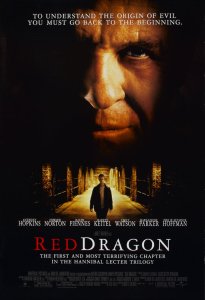
It’’s official folks: Hannibal Lector, America’’s favorite cannibal, is now more comical than scary. See the element that 1991’’s Silence of the Lambs carried with it was a stealthily gripping sense of psychological horror. It hung with you in every closed breath you would take, surrounding you and blanketing your mind. I mean, there aren’t many serial killer movies that win a slew of Oscars. And while the follow-up, last year’’s Hannibal, gleefully bathed in excess at least Ridley Scott’’s sequel was so over-the-top with its Baroque horror that it was entertaining. So what’’s Red Dragon, the latest Lector flick based on Thomas Harris’ first novel like? Well it’’s like the bastard child of Lambs and Hannibal after a drunken one-night-stand neither would be proud of in the pale light of morning.

In an extended prologue we see the capture of the good doctor with a good appetite, Hannibal Lector (Anthony Hopkins, completing his trilogy of the character). FBI Agent Will Graham (Edward Norton) seeks his advice on a profile of a serial killer, not knowing that Lector more than fits the bill. A violent struggle ensues that leaves Graham with a long scar across his abdomen and Lector locked away for nine consecutive life sentences.

Turns out there’’s another madman on the loose. The “Tooth Fairy,” dubbed by tabloid journalist Freddy Lounds (Phillip Seymour Hoffman), has butchered two families in their homes and inserted shards of broken mirror into their eyes. The FBI coaxes Graham out of retirement to try and track down the “Tooth Fairy.” But it seems in order to make any significant ground he must seek help from an old advisor –– Hannibal Lector.

The crux of the film follows Graham’’s attempts to figure out the identity of the “Tooth Fairy,” which we learn fairly fast is pretty boy Ralph Fiennes. Seems Fiennes has a cleft palette and years of physical and sexual abuse to toil over. He desires to transform into a mythical Chinese creature known as the Red Dragon. But wait, the lonely Fiennes is befriended by a lovely blind woman (Emily Watson) who identifies having people look differently at her. Can her affections melt the cold heart of a cold-blooded killer? Well, if they did there’d be no other half of this movie.

What Red Dragon feels like is more of a checklist of what we expect to see in a Hannibal movie than anything of creative nourishment. It’’s like a slimmer version of Lambs plot. Once again there’’s an FBI agent who recruits Hannibal for advice on tracking down a serial killer. Once again there’’s a disturbed killer trying to transform himself. Once again Hannibal Lector scares the crap out of anyone at will. Check, check, and check. Creative stagnation? Double check. The most disappointing aspect is the rudimentary feel this whole exercise has. Even though Red Dragon is a prequel it still seems like it’’s begging to meet our expectations of two earlier films.

The first stab at the Red Dragon novel was in 1986 by director Michael Mann (Ali, The Insider) with the thriller Manhunter. William Peterson (before his work at CSI) was a more brooding Graham, Tom Noonan was a spookier “Tooth Fairy,” and the tension was stacked better. There were no comparative expectations.

Norton is the finest actor of his generation but has certain trouble breathing life into Graham. The character is far more straight-laced than what we’’ve been told is an expert at delving into the minds of killers. Graham’s relationship with Lector doesn’’t have any of the complexity, or interest, that Jodie Foster’’s Clarice Starling had. He can even be very flat-footed in his detective work for a specialist. He stares at the home videos of the two slain families for about an hour wondering what the connection is while we in the audience shout it out to him. Let’s go to the videotape Ed!

Anthony Hopkins returns as the devil in the flesh and seems to have another grand old time. Lector worked in Lambs because he was caged up, like a wild animal not meant for four glass walls. You never knew what would happen. He’d get in your head and he would know what to do with your gray matter — not that he didn’’t have a culinary degree in that department with Hannibal. With Red Dragon, Hannibal is just window dressing to another serial killer. He’’s a supporting character in a story that he has nothing to do with. He’’s reduced to comic relief with his sudden attacks of chattering teeth and velvety voice. The amazing supporting cast of actors all do well, especially the beaming Watson who will shine in anything you put her in. Just try.

Ultimately the story of Red Dragon is far from flawless and meanders for quite a while. It would have been a marginally competent movie had it not been trying to replicate Silence of the Lambs so damn hard. So, is this the last you’ll see of Hannibal Lector? No as long as clinging cash registers can still be heard. Cue evil laughter.

Nate’s Grade: C+

Almost Famous (2000)

Cameron Crowe’s semi-autobiographical 70s rock opus is like a gigantic hug. It’s warm, engrossing, feel good, and leaves you with a smile wishing for more. Almost Famous may be the best movie going experience of the year. You likely won’t have a better time from a movie.

Fresh-faced newcomer Patrick Fugit plays the 15 year-old version of Crowe who is a budding writer for Rolling Stone. He’s tapped to tour and send in a story on the fictional band Stillwater fronted by singer Jason Lee and guitarist Billy Crudup. Stillwater is everything the typical early 70s rock band was and should be: long hair, tight pants, and continuous inner turmoil and squabbling. Little Fugit captures all of this with wide-eyed exploration as he stretches away from his overprotective mother played by the lovely Frances McDormand. Phillip Seymour Hoffman also pops in to do a brilliant portrayal of music critic Lester Bangs. Kate Hudson shines in a break-out performance as a “band-aid” to Stillwater; which is an uncertain mix of naive groupie and musical muse. She’s together with fellow “band-aids” Anna Paquin and Faruiza Balk.

The writing of Almost Famous is textured and fully satisfying. The turns it takes down the road are expert and you know you are in the hands of a true artist. Crowe’s direction again makes leaps and bounds in improvement with every new feature. He and his wife wrote all of the songs the fictional band performs and it sounds like, to my ears, he had a few more job offerings he could have easily been suited for.

The acting is phenomenal with every cast member contributing nicely to the fold. Crudup is the anchor, Hudson is the gleaming star, Fugit is the tender surprise, Lee is the emotional lightening rod, and Frances is the mother that we all would love to have deep down inside. She is at the level that is most difficult for a parent: she must begin to let go so they live their own life, yet she’s raised him from harm since he could spew mashed carrots. Surely, if the world had justice Frances will be winning her second Oscar.

Almost Famous is a breathing work that borderlines perfection. It’s a great time to be had just sitting and experiencing what the movie has to offer.

Nate’s Grade: A

Reviewed 20 years later as part of the “Reviews Re-View: 2000” article.


Magnolia (1999)

Absa-fucking-brilliant.

Nate’s Grade: A

This movie also revisited and analyzed in the article, “1999: The Greatest Year in Film? A Review Re-View.”

The Talented Mr. Ripley (1999)

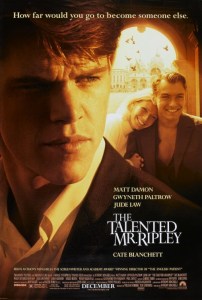
Interesting and beautifully filmed and yet the complexities have a vacation-porn feel to them as the story churns further. Excellent acting with all involved as they display the top of their game. Matt Damon is magnetic as the socially murderous Mr. Ripley, and often times a bit frightful. He does what he feels needs to be done once he gets a taste of the good life and wants nothing from leaving it behind. Supporting players such as Jude Law and the oh so talented Phillip Seymour Hoffman contribute solidly and flawlessly. Ripley actually packs more suspense then you would think from the man responsible for one of my most boring theater experiences (I mean of course The English Patient) but wrings true tension and challenges the audience to pull for the bad guy. I must note that the ambiguous ending seems to detract from the impact of the movie. But for many reasons and despite seeing Damon eerily coddle up to a corpse, Ripley is a fine flick with some great characters presented. The more I watch this film the more I enjoy it.

Nate’s Grade: A-