Blog Archives
The Legend of Hercules (2014)
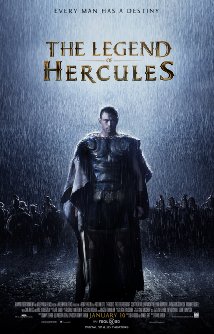 It’s as if director Renny Harlin watched Gladiator and said, “Yeah, I can do that, but much worse.” The plot is almost exactly a ripoff of the 2000-Best Picture winner, having the godly Hercules besmirched and thrown into the arena, where he must build a name for himself in gladiatorial combat and work the support of the crowd in order to gain his vengeance against a jealous tyrant with daddy issues. If that wasn’t enough, the visual aesthetic is very much a CGI-heavy melange of 300, with the super stylized slow-mo action standing in the way for plot. A sword-and-sandals epic should not be on the verge of putting you to sleep, but Hercules goes there. Kellan Lutz (Twilight) might have the right build to fill out the character but he’s too limited as an actor to do much beyond the fight choreography. The only reason to see this movie is if you’re trapped on an airplane and it happens to be on. Who would have thought that the flawed Brett Ratner-directed Hercules movie would look even better?
Nate’s Grade: D
Share this:

Exodus: Gods and Kings (2014)
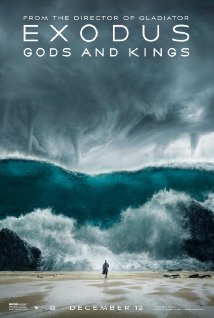 Director Ridley Scott (Prometheus) is back to work some of his Gladiator magic on another sword-and-sandals epic, the classic story of Moses, this time played by an ever-bedraggled and bearded Christian Bale. It’s been a banner year for Christianity at the movies, though most of those films have been uninspiring save for Darren Arofonsoky’s radical and ambitious Noah. That movie did not go over well with many conservative ticket-buyers. That’s the danger of adapting the biblical epics; pleasing the core audience means not straying too far from the accepted renditions of the oft-told tales, no matter if those popular renditions are themselves inerrant. Exodus: Gods and Kings is an underwhelming translation that slogs through the miraculous. It’s empty CGI wonder in place of authentic storytelling and emotional resonance.
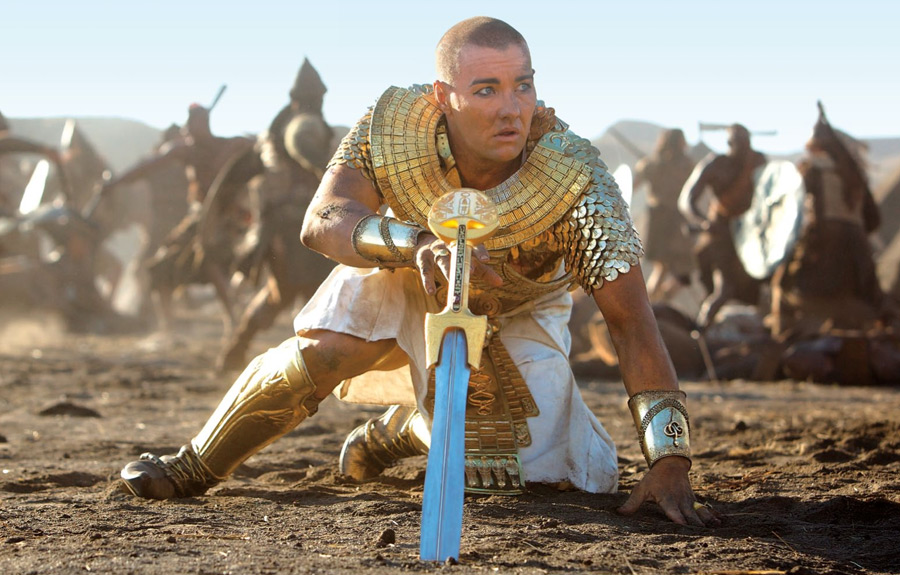
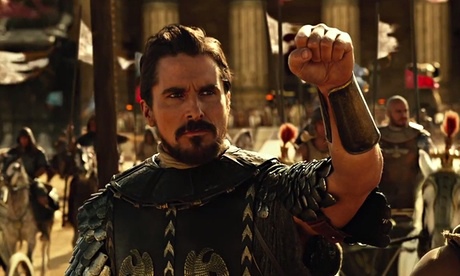 Exodus: Gods and Kings is a big-budget biblical epic that is startling in what it lacks, namely any amount of surprise or character development. The Moses story is oft told so I’m glad that Scott’s film skips ahead to when he’s already an adult. No basket in the reeds necessary. The brotherly conflict has little impact because, besides Moses, no other character is even given proper attention. Ramses (Joel Edgerton) is pretty much a thoughtless killer from the start, someone who ignores his advisers when it comes to political unrest and just slaughters his own starving people. He is by no means a dynamic villain in any shape, which is disappointing because the role has such dramatic potential. The 1998 animated film The Prince of Egypt did a better job exploring the relationship between Moses and Ramses, the pharaoh. In fact, that movie did just about everything better, and it had some pretty songs too. Stuck with a one-note villain, Exodus tries to round out Moses by making him a figure of doubt, providing an arc where he finds his voice when he finds his faith in Judaism. The film even sets it up so Moses has to go on his quest so he can just return home to his family. It’s a pretty strict hero’s journey storyline. Bale is plenty good. His character just isn’t that interesting nor is anyone else. Being stuck with this crew for 150 minutes can get to be rather tedious. That’s because the real emphasis has been put on the special effects and digital landscapes. The action is acceptable but little sticks in your memory. I’m starting to become numb to CGI spectacle. I’m starting to think back to the epics from the 1950s and 60s, when there was no such thing as computer effects. Every person assembled for those epic shots of huddled masses was a real human being, and that’s becoming more impressive with each and every CGI spectacle with copy-and-paste digital figurines.
Given the predictable nature of the plot, you try and find little moments or directions that stand out, something, anything to mark this newest Moses story as different from the numerous retellings of cinema’s past. Beyond the modern-day special effects and the strength of Scott as a visual artist, here is a short list of what you have to look forward to with Exodus: Gods and Kings.
1) An attempt to ground a biblical epic with realism. If conservative audiences were upset with Aronofsky’s portrayal of the Almighty in Noah, just wait till they see what Exodus does. It’s not that God has been removed from the tale, it’s just that God has been mitigated in a way as to provide a rational throughline to follow the supernatural events of the ten plagues and so on. There’s even the possibility that Moses is just seeing things in his head. Two different characters advise Moses that being hit on the head could be the real source for his visions of God. Joshua (Aaron Paul) spies on Moses at several points arguing with God but sees no one else. The plagues are presented in a cause and effect series of misfortunes, with the Nile being turned red due to a surge of crocodiles munching on all the fish. The polluted water then causes the frogs to leave en mass, which then causes them to die and bring about waves of flies, which bring disease to sicken the livestock as well as boils for the Egyptians. Some thought went into this, however, it’s all inconsequential with the Angel of Death killing the first-born sons. There’s no real skeptical or scientific method to explain away this one, as the biblical story relates, and so the grounded approach seems misplaced. It takes away the miraculous from the miracles. And yet, even the parting of the Red Sea is given this same approach, with it resembling low tides brought about by perhaps a meteor strike. The fantastical nature of the Moses story feels handicapped by going a more realistic route. This is not the biblical epic for realism.
 2) God is literally represented as a petulant child. When God does make Himself present for Moses, it’s in the form of a young child who is often mocking his servant. This is an angry often-bloodthirsty God who doesn’t appreciate being challenged. He complains how long Moses is taking with his war of attrition, and Moses says right back, “Impatient? You waited 400 years with ‘your people’ in slavery.” A fair complaint, and one that God does not answer.
3) Bad overall casting. Whitewashing isn’t exactly a new trend in Hollywood. It’s not like Charlton Heston looked particularly Middle Eastern. However, it’s rather distracting to watch a movie starring Egyptians and Middle Eastern Jews portrayed by a Welshman, an Australian, John Turturro, Sigoruney Weaver and Aaron Paul. I am a fan of each of these actors but they are just wrong for these parts. There are very little people of any color in the film despite the fact of its geographic location. Moses marries Zipporah, who several biblical scholars believe to be Ethiopian, which seems like a natural opportunity for some much-needed diversity in the cast. Just because you give Paul a bushy beard does not mean he suddenly resembles a Middle Eastern Jew. Same thing with adding eyeliner and bronzer to Edgerton. Then there’s the bizarre appearance of Scottish actor Ewen Bremner (The Rundown) as an adviser for the king. Taken as a whole, the whitewashing is a nagging distraction from a supposedly more grounded approach. To be fair, having relatively unknown (as far as the public is concerned) actors of appropriate ethnic background speaking in subtitled Hebrew and Egyptian sounds like a hard sell for a studio footing a $140 million dollar bill.
4) Lots of dead horses. This is not a friendly movie for our equine friends.
5) Moses sex. Well, sort of, because showing a husband and wife being physically intimate will still offend some of the more conservative ticket-buyers. So after Moses goes through his somewhat romantic question and answer ritual with his wife, the camera pans away from the disrobing couple and fades out. Classy. Now on to more CGI spectacle and carnage thank you very much.
I admire Noah more and more and think he successfully found a way to make a biblical epic accessible, challenging, and complex morally and psychologically without sparing the dark details. In essence he found a way to make a popular story new and interesting again. Scott’s Exodus just leaves me shrugging my shoulders. It’s by no means an appalling film. Beyond the big-budget modern-day spectacle, there isn’t enough going on in this movie to even justify all the expenses. The characters are too sketchy and given little to do, especially Ramses who pretty much just sneers and barks for 90 minutes. The costumes are fancy, the production design is lush, and all the technical elements are impeccable. It just falls woefully short on what should make you care. It feels like a product more than a film and a resonating story, and as such it’s delivered just in time for the Christmas shopping season for the masses. The film takes too long to get started and too long to conclude. It has some moments in the middle, especially when Moses is plotting his political insurrection, but as a whole Exodus is disappointingly lackluster. It ends up becoming empty and noisy CGI spectacle, with lots of yelling to compensate. It’s hard to find inspiration from the film when you’re checking your watch.
Nate’s Grade: C
Share this:

Inherent Vice (2014)
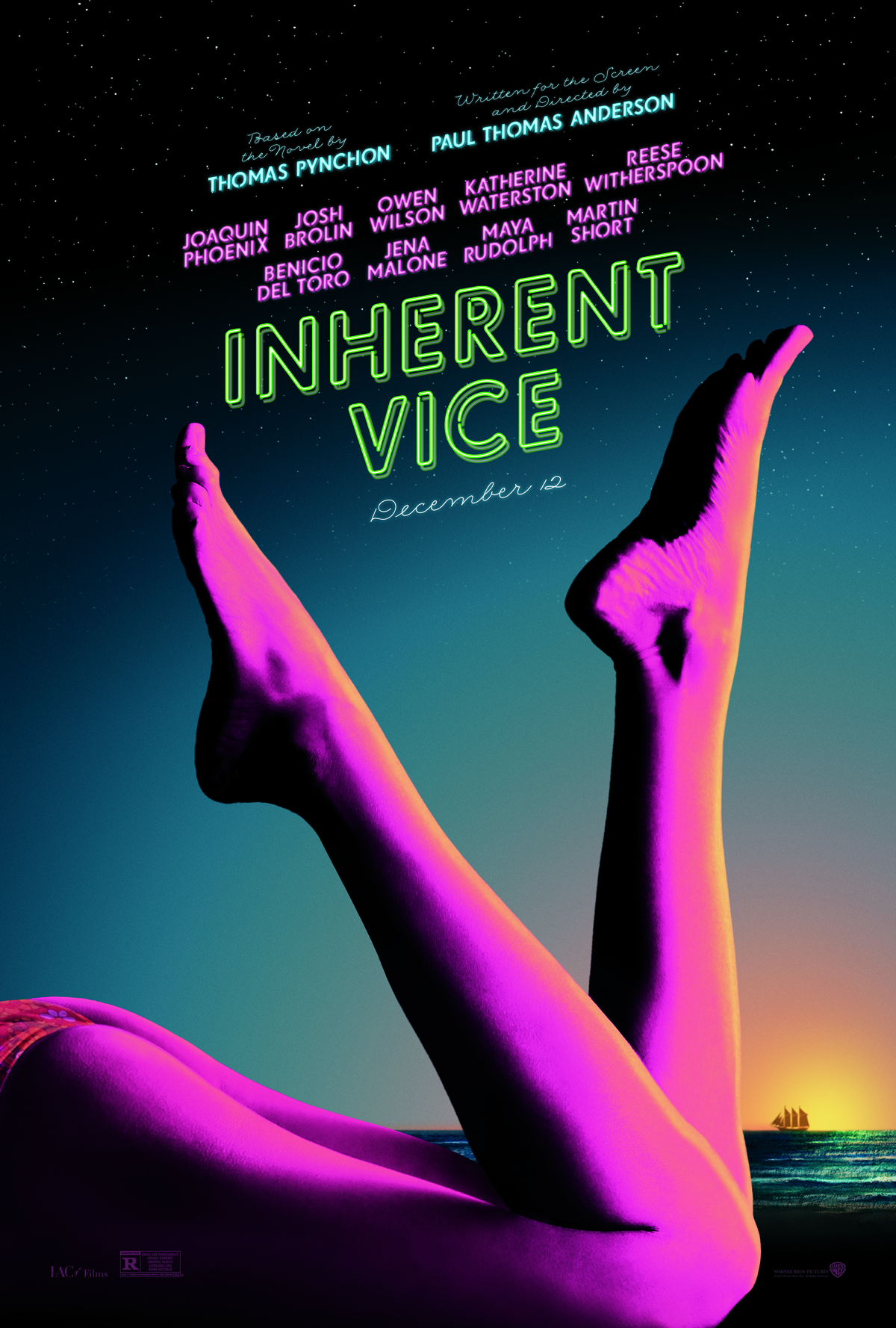 This is one of the most difficult reviews I’ve ever had to write. It’s not because I’m torn over the film; no, it’s because this review will also serve as my break-up letter. Paul Thomas Anderson (PTA), we’re just moving in two different directions. We met when we were both young and headstrong. I enjoyed your early works Paul, but then somewhere around There Will be Blood, things changed. You didn’t seem like the PTA I had known to love. You became someone else, and your films represented this change, becoming plotless and laborious centerpieces on self-destructive men. Others raved to the heavens over Blood but it left me cold. Maybe I’m missing something, I thought. Maybe the problem is me. Maybe it’s just a phase. Then in 2012 came The Master, a pretentious and ultimately futile exercise anchored by the wrong choice for a main character. When I saw the early advertisements for Inherent Vice I got my hopes up. It looked like a weird and silly throwback, a crime caper that didn’t take itself so seriously. At last, I thought, my PTA has returned to me. After watching Inherent Vice, I can no longer deny the reality I have been ducking. My PTA is gone and he’s not coming back. We’ll always have Boogie Nights, Paul. It will still be one of my favorite films no matter what.
 In the drug-fueled world of 1970 Los Angeles, stoner private eye Doc (Joaquin Phoenix) is visited by one of his ex-girlfriends, Shasta (Katherine Waterston). She’s in a bad place. The man she’s in love with, the wealthy real estate magnate Mickey Wolfmann (Eric Roberts) is going to be conned. Mickey’s wife, and her boyfriend, is going to commit the guy to a mental hospital ward and take control of his empire. Then Shasta and Mickey go missing. Doc asks around, from his police detective contact named Bigfoot (Josh Brolin), to an ex (Reese Witherspoon) who happens to be in the L.A. justice department, to a junkie (Jena Malone) with a fancy set of fake teeth thanks to a coked-out dentist (Martin Short) who may be a front for an Asian heroin cartel. Or maybe not. As more and more strange characters come into orbit, Doc’s life is placed in danger, and all he really wants to find out is whether his dear Shasta is safe or not.
Inherent Vice is a shaggy dog detective tale that is too long, too convoluted, too slow, too mumbly, too confusing, and not nearly funny or engaging enough. If it weren’t for the enduring pain that was The Master, this would qualify as Anderson’s worst picture.
One of my main complaints of Anderson’s last two movies has been the paucity of a strong narrative, especially with the plodding Master. It almost felt like Anderson was, subconsciously or consciously, evening the scales from his plot-heavy early works. Being plotless is not a charge one can levy against Inherent Vice. There is a story here with plenty of subplots and intrigue. The problem is that it’s almost never coherent, as if the audience is lost in the same pot haze as its loopy protagonist. The mystery barely develops before the movie starts heaping subplot upon subplot, each introducing more and more characters, before the audience has a chance to process. It’s difficult to keep all the characters and their relationships straight, and then just when you think you have everything settled, the film provides even more work. The characters just feel like they’re playing out in different movies (some I would prefer to be watching), with the occasional crossover. I literally gave up 45 minutes into the movie and accepted the fact that I’m not going to be able to follow it, so I might as well just watch and cope. This defeatist attitude did not enhance my viewing pleasure. The narrative is too cluttered with side characters and superfluous digressions.
The plot is overstuffed with characters, many of which will only appear for one sequence or even one scene, thus polluting a narrative already crammed to the seams with characters to keep track of. Did all of these characters need to be here and visited in such frequency? Doc makes for a fairly frustrating protagonist. He’s got little personality to him and few opportunities to flesh him out. Not having read Thomas Pynchon’s novel, I cannot say how complex the original character was that Anderson had to work with. Doc just seems like a placeholder for a character, a guy who bumbles about with a microphone, asking others questions and slowly unraveling a convoluted conspiracy. He’s more a figure to open other characters up than a character himself. The obvious comparison to the film and the protagonist is The Big Lebowski, a Coen brothers film I’m not even that fond over. However, with Lebowski, the Coens gave us memorable characters that separated themselves from the pack. The main character had a definite personality even if he was drunk or stoned for most of the film. Except for Short’s wonderfully debased and wily five minutes onscreen, every character just kind of washes in and out of your memory, only registering because of a famous face portraying him or her. Even in the closing minutes, the film is still introducing vital characters. The unnecessary narration by musician Joanna Newsome is also dripping with pretense.
 Another key factor that limits coherency is the fact that every damn character mumbles almost entirely through the entirety of the movie. And that entirety, by the way, is almost two and a half hours, a running time too long by at least 30 minutes, especially when Doc’s central mystery of what happened to Shasta is over before the two-hour mark. For whatever reason, it seems that Anderson has given an edict that no actor on set can talk above a certain decibel level or enunciate that clearly. This is a film that almost requires a subtitle feature. There are so many hushed or mumbled conversations, making it even harder to keep up with the convoluted narrative. Anderson’s camerawork can complicate the matter as well. Throughout the film, he’ll position his characters speaking and slowly, always so slowly, zoom in on them, as if we’re eavesdropping. David Fincher did something similar with his sound design on Social Network, amping up the ambient noise to force the audience to tune their ears and pay closer attention. However, he had Aaron Sorkin’s words to work with, which were quite worth our attention. With Inherent Vice, the characters talk in circles, tangents, and limp jokes. After a protracted setup, and listening to one superficially kooky character after another, you come to terms with the fact that while difficult to follow and hear, you’re probably not missing much.
Obviously, Inherent Vice is one detective mystery where the answers matter less than the journey and the various characters that emerge, but I just didn’t care, period. It started too slow, building a hazy atmosphere that just couldn’t sustain this amount of prolonged bloat and an overload of characters. Anderson needed to prune Pynchon’s novel further. What appears onscreen is just too difficult to follow along, and, more importantly, not engaging enough to justify the effort. The characters fall into this nether region between realism and broadly comic, which just makes them sort of unrealistic yet not funny enough. The story rambles and rambles, set to twee narration that feels like Newsome is just reading from the book, like Anderson could just not part with a handful of prose passages in his translation. Much like The Master, I know there will be champions of this movie, but I won’t be able to understand them. This isn’t a zany Chinatown meets Lewboswki. This isn’t some grand throwback to 1970s cinema. This isn’t even much in the way of a comedy, so be forewarned. Inherent Vice is the realization for me that the Paul Thomas Anderson I fell in love with is not coming back. And that’s okay. He’s allowed to peruse other movies just as I’m allowed to see other directors. I wish him well.
Nate’s Grade: C+
Share this:

Hercules (2014)
 What happens if you make a Hercules movie but take out all the unique things that make the classic hero who he is? Would he still be Hercules? This question is at the heart of director Brett Ratner’s newest film, and it’s better than expected, which is a nicer way of also saying it’s not as bad as it looked like in its terrible cheesy advertising. It might be the most entertaining Brett Ratner film yet for what that statement is worth.
So, who is this Hercules? Besides looking like The Rock, he’s a mercenary who leads a band of warriors that are carefully left out of those widespread tales of his heroics and derring-do. Hercules’ nephew (Reece Ritchie) is the mouthpiece for the group, spinning the tales into epic poetry. There’s also a female archer, a sarcastic second-in-command good with throwing knives, an animalistic swordsman, and an older spearman (Ian McShane) who is given fleeting prophetic images, mostly about his own death. There’s a reason these people aren’t described much beyond their character-defining weaponry. This gang is hired by Lord Cotys (John Hurt) to protect his people from a Thracian warlord who rumor has it is a centaur. Could he be? Have you been paying attention?
 Depending upon your tastes, you may either find this new approach refreshing or feel completely ripped off. It does seem that all of those cool glimpses of Hercules going through his grueling trials, fighting giant beasts, doing generally Herculean acts, well it was all comprised to the opening two minutes, which is why I feel no spoiler guilt over revealing the true nature of the movie. It’s not really a Hercules film. Yeah, The Rock is just about the closest living example of a modern Hercules (he shouldn’t have the hobo beard, though), but it’s in name only. Whether this is a stopping point is up to the viewer. It does seem like a disappointing bait-and-switch to tease out what promises to be an epic with giant mythological beasts, and I feel like the audience has every right to be irritable they have been denied this. But if you move beyond this legitimate gripe, the resulting movie is actually serviceably entertaining, which again sounds like a backhanded compliment unless you remember how truly lousy it looked from its initial goofy trailer.
The plot is predictable at every step of the way, except one character I swore was going to be a backstabber due to pigeonhole casting surprised me when they turned out to just be another underdeveloped yet loyal sidekick. Other than that, and I apologize for the vagueness of that sentence, this is a movie you can accurately predict without having to even watch it. The mercenaries are hired for a cause, perhaps they’ll start feeling differently about what they’ve been called in to do, get more involved, and then oh no, perhaps the heroes and villains were all mixed up after all. The plot structure is at its most simplistic (mild spoilers, but really, come on): Act 1 break – they take the mission. Act 2 break – oh no, the guy was bad all along and they’ve been working for the wrong side. Act 3 is then essentially battle and vengeance against the true villains. There’s almost an admirable efficiency to its formula plot mechanics, including the tortured hero back-story over his slain family and the forced reveal of who was behind said slain family being slain. If you don’t want to overwhelm your brain, then Hercules will do.
Free of the rigors of being original or complex, the movie is open to accomplish its minimal goals of entertainment, and to this end I would call the movie a mild success. The action is involved just enough to keep things interesting, especially when Hercules and his battalion are beset on all sides by green-skinned guys who, for whatever reason, hid in holes in the ground. There’s a primal joy watching The Rock carry around a giant Captain Caveman-style club and gleefully beat people with it, especially when the recipients fly like 30 feet in the air. There’s a pleasure to be had with a stripped down and somewhat dumb action flick where everyone is running around in leather or loincloths. The action is more Hercules by way of Conan the Barbarian but without the monsters and sorcery. There’s a fun running gag where McShane’s character keeps thinking he’s come to his final moment, the death that has been prophesied, only to be denied it time and again, causing some slight frustration on his part. The pacing is also swift enough that you won’t be bored for long periods of time.
 But at its heart, this is still a rather block-headed action film with questionable choices. While scrubbing the supernatural elements from the story, this still exists in the unbelievable world of Movie Land where the good guys can do anything. The archer never runs out of arrows. The good guys never miss. At one point, Hercules topples a 100-foot tall marble statue like he’s Samson. So even though it wants to be a more grounded take on the legend, it’s still filled with all that silly impossible action movie stuff we see all the time. Then there are just small impractical things that exist only for the fact that someone thought it looked cool. There’s a secondary villain (Peter Mullan!) who prefers to use a whip made of a spinal cord. This can work in one-on-one confrontations but in the open field of battle, with men churning all around, it seems like a rather poorly ineffective weapon. Lastly, there’s a trite message about the power of believing yourself. See, Hercules needs to believe he’s a worthy hero and he’ll rise to the occasion. All you have to do is believe in yourself and anything can happen… if you happen to be The Rock or look approximately like him.
This new spin on one of the oldest heroes is generally entertaining, that is, if you can accept the bait and switch of its premise, robbing Hercules of his godlike abilities. It’s like doing an action movie about Greek mythology but taking out all the mythology and just having a bunch of dudes poking each other with spears and swords. Actually, it’s exactly like that. With Ratner at the helm, you know there’s going to be a ceiling, but the film is so unabashedly clear with its simple intentions that I found it hard to grumble, and so just soaked up an average action adventure with one of the genre’s best leading men. As far as summer action vehicles go, it’s got just enough going for it, but see all the other good films first. Make a list. Check it twice.
Nate’s Grade: B-
Share this:

42 (2013)
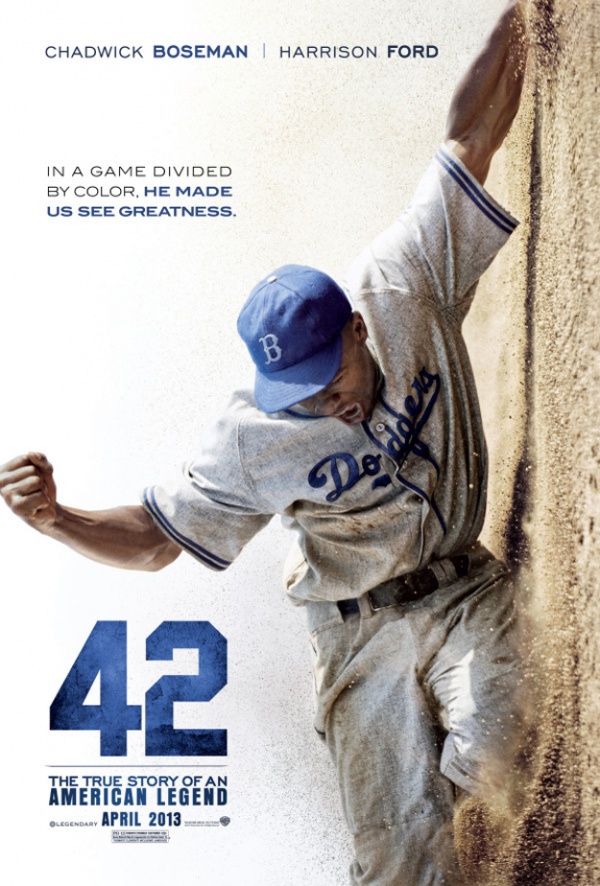 Staid and square, a bit like its lead, 42 is a biopic on Jackie Robinson breaking the color barrier in baseball, and while it’s reverential to a fault, it could have used more life. As a character, Robinson is simply not terribly interesting because he’s being trapped within a limited prism of inaction. Robinson the man could be fascinating, but Robinson the character of this movie is a bit of a bore. That’s why the film is just as much about Brooklyn Dodgers owner Branch Rickey (Harrison Ford), a far more colorful character that gets to chomp cigars and lecture people with countless speeches accompanied by heroic piano cues. 42 is crammed to the gills with messages but they’re so transparent and overdone, occasionally ham-fisted, where every important thought is spelled out and underlined and repeated for the audience. The corny sentimentality clashes with the danger and hostility Robinson bravely faced. We got stuff like a little kid praying to God that Robinson hits a homer to “show what we can do,” a white guy trots up to Robinson and he seems dangerous… only to want to wish him well, and then there’s all the white players learning lessons of tolerance, treating Robinson as if he’s some prop for their own self-actualization. The greatest acting in the movie, a bit that may take your breath away, is from Alan Tudyk who plays a competing team manager. He is like a racist Foghorn Leghorn and he just… keeps… going. This sequence is the film’s best because it feels earned, complete, and lastly emotionally resonant. 42 is an acceptable biopic, effectively triumphant where it counts, but it feels too dated, too safe, and overburdened with doling out a slew of messages rather than telling an engaging and difficult story.
Nate’s Grade: B-
Share this:

Lee Daniels’ The Butler (2013)
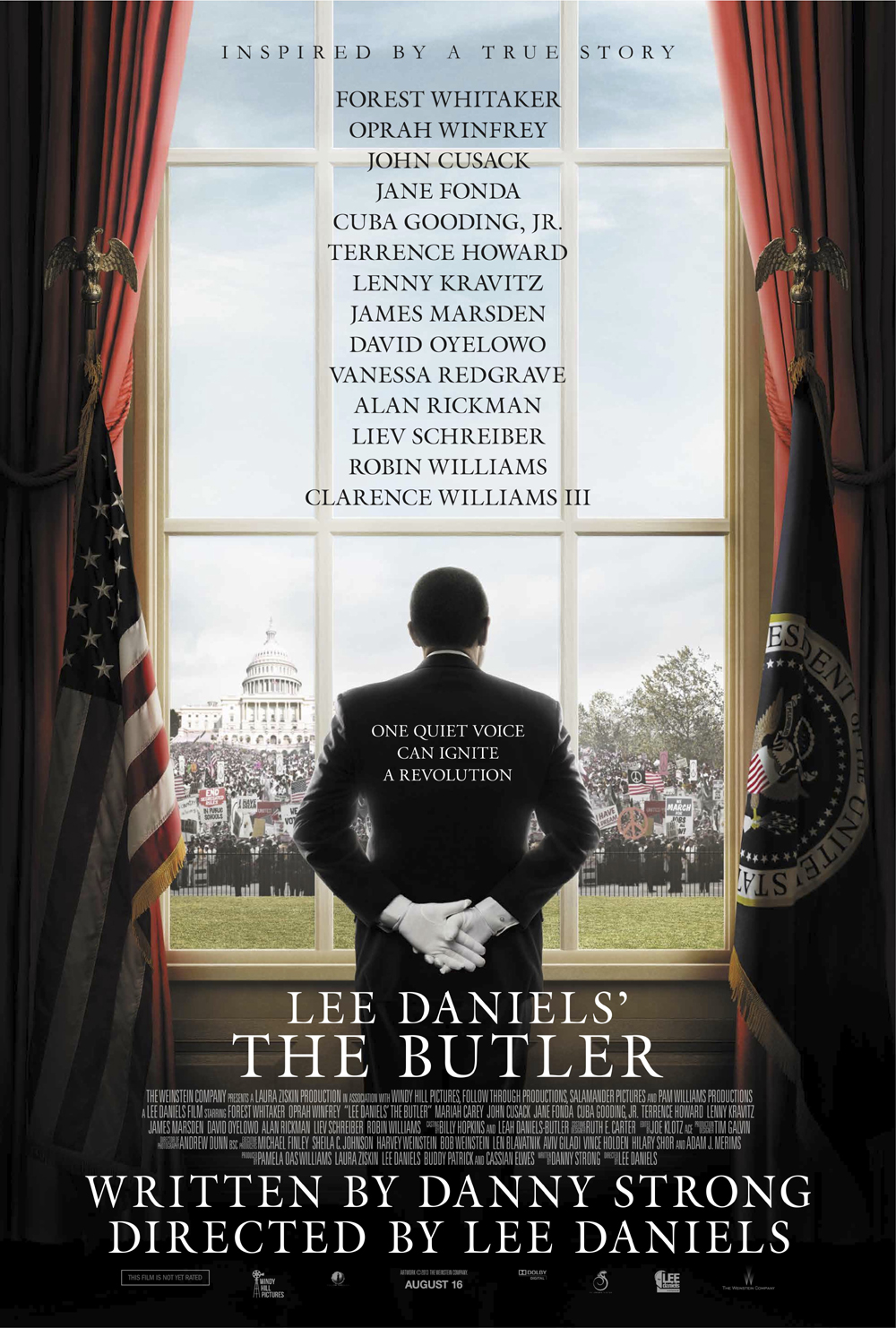 Before I begin my review, I feel the need to come to the defense of Oscar-nominated director Lee Daniels (Precious). Despite what Internet message boards and detractors may have you believe, it was never the man’s intention to insert his name into the title of his latest film, Lee Daniels’ The Butler. Warner Brothers claimed copyright ownership over the title of The Butler. The MPAA mediates title discrepancies in cases where one movie could clearly be confused for another. However, Warner Brothers’ claims a 1915 silent short film in their vault by the same name. Is anyone in the year 2013 really going to pay a ticket for the Butler and reasonably expect a silent short that’s almost 100 years old? Rather than pay a financial settlement, The Weinstein Company decided to alter the original title, adding the director’s name. This isn’t The Butler. Now it’s Lee Daniels’ The Butler. So before I get into the thick of my review, I’d like to absolve Daniels of Tyler Perry-levels of hubris. You’ll excuse me for just referring to it as The Butler throughout the duration of this review, not to be confused with a 1915 short film.
From Harry Truman to Ronald Reagan, one man served them all and his name is Cecil Gaines (Forrest Whitaker). He was a White House butler for over 30 years, even attending a state dinner at the behest of Nancy Reagan. Cecil grew up on a Georgia cotton plantation and moved up the ranks in high-class service. His wife, Gloria (Oprah Winfrey), wishes her husband would worry more about his own home than the White House. Cecil’s two sons, Louis (David Oyelowo) and Charlie (Elijah Kelley), have very different views of their father. Louis feels like dear old dad is too close to the men of power, and Louis is going to do what he can on the frontlines of change.
 I’m sure everyone had good intentions with this movie, but I walked away with the overwhelming impression that The Butler was too heavy-handed, too corny, and too mishandled with its plot construction for it to be the effective drama all desired. I also know that my opinion is of a minority, but that has never bothered me as a critic. Let’s start with the biggest handicap the film has going, and that’s the fact that its central character, the titular butler, is too opaque for a biopic. Early on, Cecil rises through the ranks of black service workers because of his skill, and that skill is none other than “having a room feel empty with [him] inside it.” I’m not downplaying the man’s dedication, or the culture he grew up in that preferred their black workers to be silent, but here is a movie where the man’s claim to fame is that he served eight presidents but he was in the background for all that history. I wasn’t expecting Cecil to lean over and go, “Mr. President, that Voting Rights Act might be a good idea, and I’ll help ya with it.” He is just sort of there. I was expecting him to have some larger significance, especially in his own life, but here’s the kicker: by the end of the movie, you’re left with the impression that all of his years of service were for naught. Cecil comes to the realization that his son, who he has sparred with for decades, was right and he was wrong. Is this the intended point? My colleague Ben Bailey will argue this is Daniels’ subversive intent, to undermine the tenets of typical biopics, to fashion an anti-biopic. I am not as convinced.
The problem is that Cecil is a passive character, which makes him the least interesting character in his own story. He served eight presidents, yes, but what else can you say about him as presented? What greater insights into life, himself, or politics does he have during those years with seven different presidential administrations? I cannot tell. I was thoroughly astounded that Cecil, as a character, was boring. I suspect this is why screenwriter Danny Strong (Recount, Game Change) chose to split Cecil’s story with his son, Louis. Here is a character on the front lines of the Civil Rights movement, getting chased by mobs, beaten, sprayed with firehouses. Here is an active character that wants to make a difference. He also happens to be mostly fictional.
While the film opens with the phrase “inspired by a true story” you should be wary. Upon further inspection, very little is as it happened. I think all true stories, when adapted to the confines of a two-hour film narrative, are going to have to be modified, and pure fidelity to the truth should not get in the way of telling a good story, within reason. I don’t have an issue with Louis being fictional, but it points to the larger problem with the biopic of such an opaque man. The real-life Cecil, Eugene Allen, had one son who went to Vietnam and married a former Black Panther. Strong splits the difference, supplying two sons with different paths. Because of his invention, this means Louis has the benefit of being present at a plethora of famous Civil Rights events, like the Woolworth counter sit-in, the Freedom Rider bus burning, and the assassination of both Malcolm X and Martin Luther King Jr. Seriously, he’s in the same motel room with MLK in Memphis. With the exception of the Woolworth sit-in, the Civil Rights events feel like minor pit stops, barely spending any time to develop. It ends up feeling like a facile Forrest Gump-like trip through the greatest hits of the Civil Rights movement.
This narrative expediency also translates to the supporting characters in The Butler. Beyond Cecil, Louis, and Gloria, there aren’t any characters that last more than one or two scenes. Cecil’s White House co-workers, played by Cuba Gooding Jr. (Red Tails) and Lenny Kravitz (The Hunger Games), provide amiable comic relief but little else to the narrative. Terrence Howard (Dead Man Down) has an affair with Gloria and then is never seen again. That affair, by the way, is also never referenced again nor does it have any further ramifications with the relationship between Cecil and Gloria. So then what was the point? There is a litany of famous faces playing real people, but they’re all in and out before you know it. The actors portraying the presidents are more an entertaining diversion than anything of real substance. Alan Rickman (Harry Potter) as Reagan gets the closest in the physical resemblance game, though I strongly doubt Reagan, as presented in the film, sat down and openly admitted he was wrong to his African-American service workers. John Cusack (The Raven) as Nixon is a hoot. The movie speeds right through the Ford and Carter administrations, so I’ll play my own game of casting (Ford: Dan Akroyd; Carter: Billy Bob Thornton). The presidents, like the clear majority of supporting players, don’t stick around long enough to leave an impression. It’s as if our prior knowledge of these famous faces is meant to serve as characterization. Beyond the immediate Gaines family, you don’t feel like you’re getting to know anyone.
 Then you bring in Daniels as director and the man has not shown much of a penchant for, let’s call, subtlety. This is, after all, the same man who directed Nicole Kidman in the ways of urinating upon Zac Efron. A coherent tone has often been elusive in Daniels’ films, which veer into wild, loud, sometimes clashing melodrama. The most clashing thing in The Butler are the matching 1970s and 80s fashion that will burn your eyes. He tones down his wilder sensibilities but The Butler is an especially earnest movie; but overly earnest without earned drama usually begets a corny movie, and that’s what much of The Butler unfortunately feels like. The significance of the Civil Rights movement and the bravery of the ordinary men and women, and children, fighting for equality cannot be overstated. These were serious heroes combating serious hate. I expect a serious movie, yes, but one that isn’t so transparent about its Staid Seriousness. The Butler is very respectful to history (fictional additions aside) but too often relies on the historical context to do the heavy lifting. It also hurts when the film is so predictable. At one point, I thought to myself, “I bet Cecil’s other son gets shipped to Vietnam and probably dies.” Mere seconds after this thought, young Charlie Gaines says he’s going to Vietnam. I’ll leave it to you to discover his eventual fate.
Daniels’ true power as a director is his skill with actors. The man nurtured Mo’Nique into an Academy Award-winning actress. From top to bottom, no actor in this film delivers a bad performance, which is a real accomplishment considering its stable of speaking roles. Whitaker (Repo Men) is the anchor of the movie and he puts his all into a character that gives him little to work with. He brings a quiet strength and dignity to Cecil, able to draw you in even as he’s presented so passively and ultimately perhaps in the wrong. Winfrey hasn’t been acting onscreen since 1998’s Beloved. Gloria is an underwritten part but she does the most with it and I’d like to see more of Oprah the actress more often. Another highlight is Oyelowo (Jack Reacher) as the defiant son fighting for what he believes is right. I want to also single out former America’s Next Top Model contestant Yaya Alafia as Louis’ girlfriend and eventual Black Power participant, Carol. She’s got real potential as an actress and if she gets the right role she could breakout and surprise people.
Lee Daniels’ The Butler (just one last time for feeling) is an earnest, emotional, but ultimately unsatisfying picture and it’s mostly because of its title figure. The figure of Cecil Gaines is not the kind of man that the entire perspective of the Civil Rights movement can be hung onto as an allegory. He’s treated as background of his own story. If the filmmakers wanted to highlight the life of a man who grew up on a cotton plantation, worked in the White House, and who lived long enough to see an African-American be president, well then tell me that story. But they don’t. I think Daniels and Strong knew the limitations of their central figure, which is why the son’s role was invented to provide a more active perspective outside the hallowed walls of 1600 Pennsylvania Avenue. In the end, I really don’t know what the message is, because the one I’m left with is that Cecil Gaines realizes late in life how wrong he was, not just with his son, but his faith in the office of the presidency. I doubt the majority of filmgoers are going to walk away with this message. While well acted and with a sharp eye for period details, The Butler is earnest without having earned your emotions.
Nate’s Grade: C
Share this:

The Great Gatsby (2013)
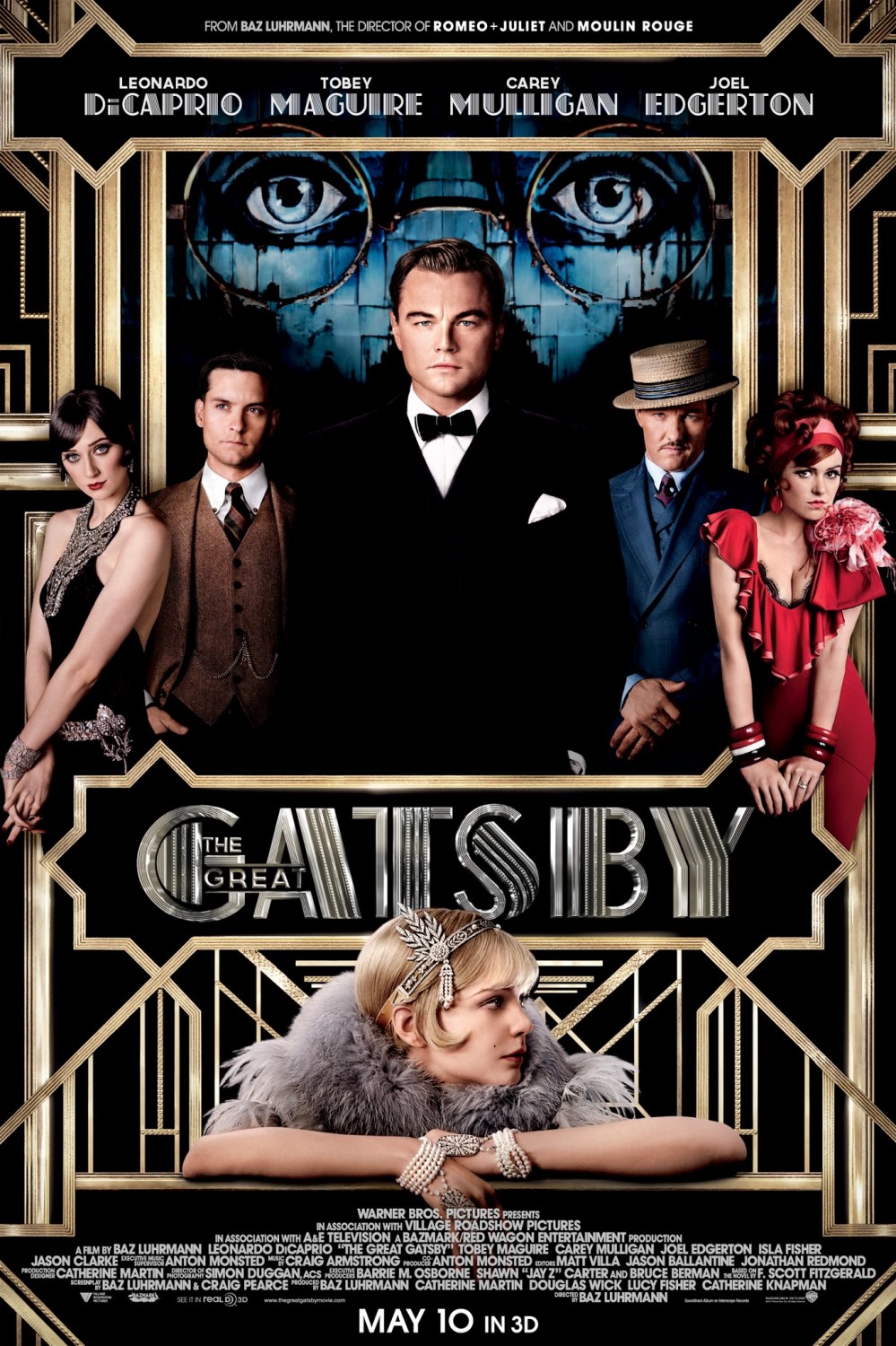 It seemed like some sort of educational mandate that every child in the United States was forced to read F. Scott Fitzgerald’s novel, The Great Gatsby, when they were in high school. In my highly unscientific number crunching, it appears that those who actually enjoyed the book are in the minority. I recall loathing it, but then again, when you’re fifteen, you sort of loath everything. Enter Australian director Baz Luhrmann, the showman who exploded the screen in razzle-dazzle run amok with Romeo and Juliet and Moulin Rouge!. Not exactly the kind of filmmaker one would fathom helming an adaptation of a classic of American literature, but the man’s style of excess seems like a suitable match for Fitzgerald’s tale of high-class overindulgence.
In 1922, young Nick Carraway (Tobey Maguire) moves to the hustle and bustle of New York City, living close to his cousin Daisy (Carey Mulligan) and her rich husband Tom Buchanan (Joel Edgerton). He’s also the neighbor to the mysterious and newly rich Jay Gatsby (Leonardo DiCaprio), a reclusive man who opens his mansion up to prolific bacchanals. Rumors persist in who he is and how he accrued his enormous fortune. He’s an old flame of Daisy’s and is secretly hoping she’ll attend one of his raucous soirees. He enlists Nick to help arrange a reunion for them, and soon enough Gatsby is already planning their happy future together again. Trouble is, Tom isn’t willing to lose his wife without a fight.
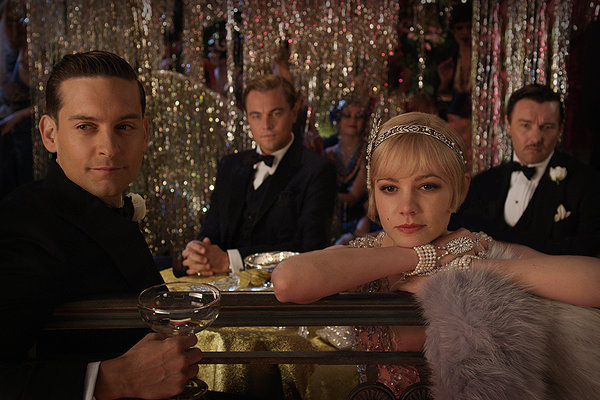 Luhrmann’s helming of The Great Gatsby gave me exactly what I desired and expected. The movie is convulsing with energy and the first hour just moves; be it the camerawork or people onscreen, for long stretches there always seems to be some degree of onscreen movement. Luhrmann’s signature theatrical visual atmosphere is vibrant, joyous, and a perfect translator of the lavish lifestyles of the noveau rich in the Roaring ‘20s. The man brings to startling life the sensations of being young, privileged, and carefree, and the use of anachronistic music, while not nearly as textured and thematically relevant as Moulin Rouge!, adds to the fun. I quite enjoyed a low-key, jazzy rendition of Beyonce’s “Crazy in Love.” Luhrmann’s style treks in excess but it’s a much more pleasant, dreamy, and altogether beguiling form of artistic indulgence than, say, Michael Bay or Tony Scott and their respective macho visual fetishes. Luhrmann’s campy sense of style doesn’t come across as overly suffocating or distracting, at least to my eyes, and instead the man injects his movies with tremendous energy, immersing you into a new world of old and modern. This is what Luhrmann was meant for. While other canonical classics of American literature may not survive a glitzy Lurhmann treatment, it’s a good match for the extravagant excess of Fitzgerald’s setting. Lurhmann’s visuals are glorious, and the 1920s era is brought to glamorous life. You get the sense it was one giant party without any lasting consequences (if you were rich enough).
The second half of the movie slows down considerably after the amped-up introduction. We’re caught up in the characters at this point, as we should be, and the Gatsby/Daisy reunion dominates the plot. I suppose there are only so many Busby Berkeley numbers and confetti explosions one can encounter before the plot has to set in. Lurhmann and company stick pretty faithfully to Fitzgerald’s plot (rest easy, lazy high school students of today and tomorrow). Interestingly, they are far more explicit about Gatsby’s securities fraud, knowingly making a fortune off junk bonds, all in the name to impress Daisy. There’s a genuine sense of respect for the source material even with Luhrmann’s visual flourishes; at several points, Fitzgerald’s text floats onscreen. The problem is that Luhrmann’s Gatsby is almost entirely focused on the romantic coupling of its title figure and Daisy. Gone is the class criticism, the indictment of the follies of the rich, the examination of the dark side of the American Dream, and the subtext. You’ll get plenty of shots of that famous green light, 20th century literature’s most famous and unsophisticated symbol (pay attention kids: green means go), but there’s little time for complexity. It’s not a screen romance worth this much attention, which is kind of the point, but when the movie clocks at over 2 hours and 20 minutes, drawing out a lackluster romance can become rather grating.
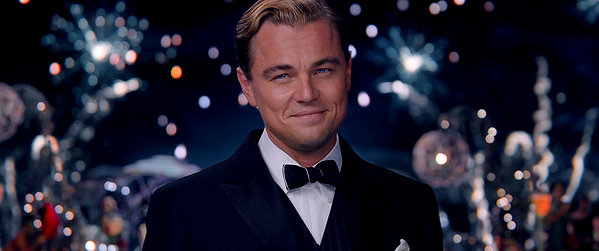 If I were top cite one major fault in Luhrmann’s incarnation, it’s that it adopts Nick’s fawning perspective and treats Gatsby as this tragic romantic figure. I acknowledge with every adaption there is a degree of interpretation, and romantic hero is certainly one facet of Gatsby, certainly how he sees himself, but by the end of Fitzgerald’s novel, Gatsby is really more a naïve man who really only sees Daisy as trophy, a prize for his reinvention and jumping up to the storied moneyed class. Daisy herself is certainly weak-willed but her emptiness (she says there’s nothing better than for a girl to be a “beautiful, young fool”) is part of the appeal to Gatsby because he can remake her however he wants. He’s not interested insomuch as her as a person. I don’t think that the Gatsby/Daisy escapades fall into the ranks of Great Tragic Couples of Literature, but that’s how Luhrmann interprets the novel, transforming Gatsby into a revered, honorable, and heartbreaking romantic we’re meant to shed a tear for. I suppose since we’re reliving the story through Nick’s perspective that events could be colored differently. Beyond just a simplistic analysis, it also misses the greater and more futile tragedy of a man trying to escape his past by obsessively recreating it.
The acting is fairly good all around, though the standout is certainly not whom you’d expect. DiCaprio (Django Unchained) is a good fit for the handsome social-climber, but the movie only asks him to play a limited range of emotions, rarely breaking free to show glimpses of the darker, less polished side of Gatsby’s carefully crafted image. He doesn’t exactly exude the charisma you would think necessary for the man, plus his use of “old sport” is so overly abundant it approaches farce. Maguire (Brothers) is a bit too earnest even for his role. It becomes readily clear within minutes that Maguire does not possess a voice for narration. The man is also a bit too old, at 37, to play the naïve, stars-in-his-eyes Nick Carraway. Mulligan (Shame) is given the least to work with since Daisy is meant to be rather opaque but she brings an extra amount of sympathy for a character trapped by her indecision and the demands of men. Easily the best actor in the bunch is Edgerton (Warrior). It would be easy for the guy to simply be the brutish heavy, the angry husband and easy to hate antagonist. Edgerton showcases a surprising depth, and you may find yourself feeling some smidge of sympathy for the lout.
Much like Luhrmann’s Moulin Rouge!, it’s an easy prediction that his Great Gatsby will be equally divisive. There will probably be as many critics decrying Luhrmann’s blitzkrieg of confetti and style as a campy cannibalization of an American classic as there will be celebrating the mad energy and obsequious reverence exhibited in a handsomely mounted, big-budget adaptation. The movie is even being presented in 3D, and did you ever think you’d hear the phrase “The Great Gatsby in 3D” in your life? I enjoyed Luhrmann’s gaudiness and indulgences, painting the screen with his vivid imagination. The impressive production design, costumes, visual effects, and overall visual aesthetic of the movie are a feast for the eyes. Now there are plenty of indulgences and excesses in the movie, particularly the emphasis on grand romance, but Gatsby entertains with few lags. Having read the book once and disliked it heartily in my youth, I can readily say that here is an example of where the movie is better than the book. Now if someone could go about making an improved version of The Lord of the Flies and A Tale of Two Cities, whatever you have to do, my teenage self will thank you kindly.
Nate’s Grade: B
Share this:

Emperor (2013)
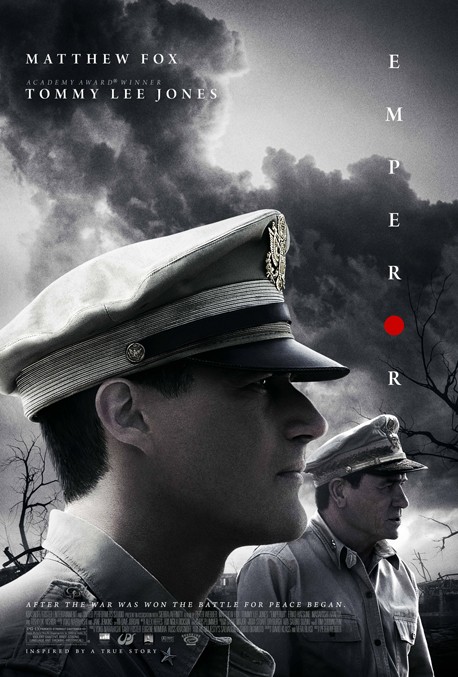 When you’re tasked with retelling an interesting part of history, a story that few are familiar with, it’s best to get out of the way. You don’t need to gussy it up if the history, itself, is interesting enough to warrant a movie. Such is the case with Emperor, a drama set in Japan weeks after their surrender to Allied forces in WWII. General Douglas MacArthur (a stodgy, scenery-chewing performance from Tommy Lee Jones) will rely upon the advice of one man (Matthew Fox) whether to try the Japanese emperor for war crimes for his possible involvement in the Pearl Harbor attack. The country is still recovering from the shock of nuclear bombs, its people could rebel against foreign occupiers, and the future of the country feels precariously on the brink. All of this makes for a good setting for a story, but Emperor doesn’t stick this out. It keeps falling back to a lame love story about Fox’s college days when he was smitten with a Japanese woman. So, now in Japan again, he desperately looks for her, having amber memories to times where he chased her around wooded areas (they must have done this a lot as a couple since it makes up the majority of his flashbacks). You keep thinking, isn’t there a bigger story at work here than one guy’s failed college romance? The rest of the movie is treated so cursory, with stiff-lip TV procedural attention, so that the details are all we get and the people get lost. Ultimately, Emperor is a movie that crushes us with the wrong history, misses out developing all the meaty stuff, and thinks what we truly want is Fox chasing after his lost love. It’s a shame the movie is so boring while the history is not.
Nate’s Grade: C
Share this:

Gangster Squad (2013)
 It’s hard to mention the action thriller Gangster Squad without a passing reference to the Aurora, Colorado movie theater shooting in the summer of 2012, the reason for the film’s five-month delay and reshot action sequence. Gone is a shootout at the movies and now we have a confrontation in the streets of Chinatown. I wish they hadn’t stopped there. If given the opportunity, and remember they did have an additional five months, I would have scrapped Gangster Squad almost completely and started fresh.
In 1949, former boxer Mickey Cohen (Sean Penn) has seized control of Los Angeles organized crime. His influence extends even into a police, which forces Chief Parker (Nick Nolte) to go to desperate measures. He asks Sgt. John O’Mara (Josh Brolin) to assemble a team of enforcers to fight back. They won’t have badges but they will be pushed to use whatever means necessary to carry out their mission, which means blurring the line between what is considered lawful. O’Mara assembles a super group of former officers and one of them, Sgt. Jerry Wooters (Ryan Gosling) gets into even deeper danger when he starts seeing Mickey Cohen’s main squeeze, Grace Faraday (Emma Stone).
This movie is like if The Untouchables and L.A. Confidential had an illegitimate child and then abandoned it in a sewer where degenerate hobos raised it. Gangster Squad rips off other gangster movies with liberal abandon that I can’t even begin to list the lifts. I’d be less offended if I felt that the movie had more on its mind than just replicating the tone and look of noir cinema. Actually, it feels more like what they want to replicate is the tone or style of the video game L.A. Noir.
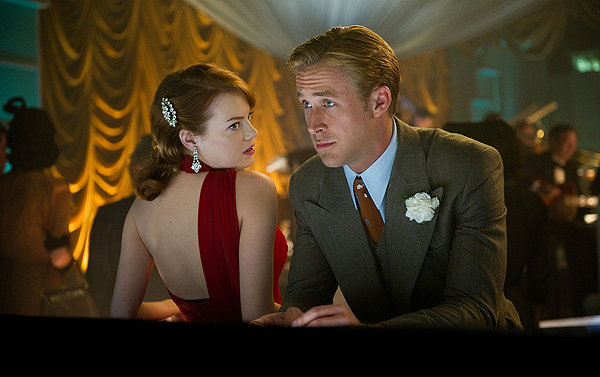 The main problem is that Gangster Squad really only has the skeletal outline of a plot. It’s missing any essential character and plot development. Here, I’ll summarize the barebones plot for you: Mickey Cohen is a bad guy. O’Mara forms a team. They have a montage taking out bad guys. Mickey takes out one of them. They have a showdown. That, ladies and gents, is it. There really aren’t any scenes that diverge from those scant descriptions. It felt like only five minutes passed from one of O’Mara’s guys getting killed (and just like The Untouchables, it’s the nerdy one) to them descending on Cohen’s headquarters and duking it out. Why does the film introduce the conflict of Wooters seeing Cohen’s girl if he never finds out? There isn’t even one scene presented to take advantage of this conflict. It just ends up being another half-baked plotline. It feels like the only development we get with Gangster Squad is through montages. What is also apparent is that O’Mara and his team really don’t have anything resembling the faintest notion of a plan. We watch them take out some bad guys via fights and shootouts but there’s no higher plotting to it. You get a sense that these former cops are just playing it by ear, looking for a fight every night. It’s hard to imagine that these people, even with their law enforcement and war experience, could be effective in the long term. Without any formative organization or greater planning, these guys just seem like dull bruisers bouncing from fight to fight with no sense of direction.
Then there’s the paucity of character work, relying solely on genre archetypes to do its work for the movie. O’Mara is the determined family man but his team can best be described by one-word classifications: The Black Guy (Anthony Mackie), The Nerdy Guy (Giovanni Ribisi), The Mexican Guy (Michael Pena), The Young Guy (Gosling), The Old Guy (Robert Patrick). That’s about it, though I suppose they do have different weapon preferences meant to supply all that missing characterization. Oh look, Officer Harris (Mackie) brings a knife to gunfights. That’s pretty much the beginning and end of his character. Wooters is so lackadaisical he feels like he’s on drugs, and Gosling’s soft-spoken, mealy-mouthed line delivery only adds to the effect. It feels like Gosling, in a stretch to find something interesting out of the mundane, said to himself, “I wonder if I could give a whole performance where I only speak under a certain vocal register.” Then there’s the woefully miscast Stone (The Amazing Spider-Man) as the femme fatale/mol to Mickey. I love Stone as an actress, but man-eater she is not and sultry seductress doesn’t fit her well either. Perhaps with the aid of a sharper script and a greater depth of character she could rise to the challenge. At no point does Gangster Squad really even attempt to make these people multi-dimensional. They never reflect on the moral turpitude of their own vigilante justice or the ramifications of their actions. There’s no room for ambiguity here.
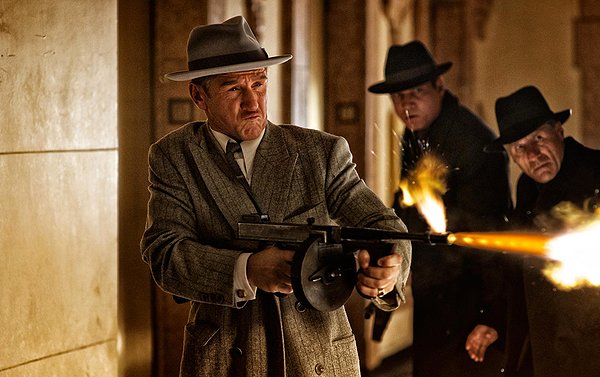 Finally, we must speak of Mr. Sean Penn (Milk). The man’s actorly gumbo goes into campy overdrive. In these rare circumstances, you aren’t watching Sean Penn Esteemed Actor so much as Sean Penn Human Vortex of Overacting. Normally I would criticize Penn for going over the top but over the course of 110 minutes, he single-handedly becomes the only entertaining thing in the movie. He’s chewing scenery up a storm, yes, but at least he’s channeling the pulpy silliness of the whole movie. I came to enjoy his antics and outbursts and thus became more empathetic of Mickey Cohen and his efforts than I did with O’Mara. Such is the danger screenwriters run when they spend more time crafting an interesting villain than a hero.
Gangster Squad is what happens when a movie is sold on title and genre elements. To be fair, it’s a bang-up title. The plot is half-baked at best, really only serving as a thin outline of a gangster movie, but instead of adding complexity and intrigue and characterization, they just ran with it. The actors are either camping it up or out of their element, the action and shootouts are pretty mundane, and the story is just uninvolving, even for fans of film noir like myself. It’s a good-looking film from a technical standpoint, but that’s as far as I’ll go in my recommendation (it could be an odd pairing with Milk considering the two shared actors). It feels like it just wants the setting elements of film noir, the atmosphere, and then figures just having good guys and bad guys shoot it out will suffice. That glossy, high-sheen period look just seems like a cool façade, and a cool façade seems like the only ambition of Gangster Squad. I can’t really recall any signature action sequence, snappy quote, plot development, or peculiarity worthy of remembering. It may be one of the most forgettable gangster movies Hollywood has produced.
Nate’s Grade: C
Share this:

Django Unchained (2012)
 It’s an understatement that no one makes films like Quentin Tarantino, though after Pulp Fiction it seemed like everyone was trying. The famous writer/director is an audacious filmic DJ, taking samples from all genres and mixing and matching them into a new and elevated form of art; he takes low-grade B-movie concepts and genres and turns them into highly literate A-class films. My only quibble is that, while I heartily enjoy the man’s unique efforts, I don’t know if we’re ever going to see a different Tarantino anymore. Since 1997’s Jackie Brown, he seems intent on re-imagining exploitation films and B-movies and putting his articulate spin on them. I have yet to dislike a Tarantino film (I rate Jackie Brown the lowest but that’s still an A-) and I’ll be first in line for anything the man attaches himself to as writer/director. Django Unchained is Tarantino’s ode to spaghetti Westerns, and it’s every bit as violent and tense and entertaining as you’d hope it to be.
In 1858 Texas, an abolitionist bounty hunter, Dr. King Shultz (Christoph Waltz) frees a slave named Django (Jamie Foxx) and enlists his help in tracking down a team of outlaws. They strike up a mentorship, gunning down outlaws for money. “Kill white folk and they pay you for it? What’s not to like?” Django reasons. After a successful season nabbing bad guys and training Django in the ways of shooting, the men come to a crossroads. Django is looking for his wife Broomhilda (Kerry Washington). She was torn away from him and sold off to wealthy Mississippi plantation owner Calvin Candie (Leonardo DiCaprio). Schultz and Django cook up a scheme to rescue Broomhilda. Schultz will pose as a rich power player wanting to enter the “mandingo fighting” game (think savage gladiatorial combat). Django will play a black slaver, and expert when it comes to picking out prized fighters. With a generous offer, the two get invited to Candie’s family plantation, dubbed Candieland. Standing in the way of their plan is Stephen (Samuel L. Jackson), Candie’s head of the house. Stephen is deeply suspicious of their guests and ready to expose them for who they truly are.
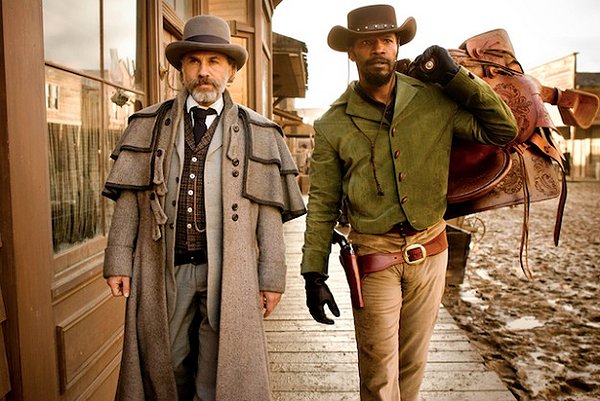 I’ve been dragging my feet writing a review of Django Unchained and I’m trying to determine why that is. Just after typing that sentence I spent 30 minutes checking my e-mail. I’m an avid Tarantino fan, so I’m left wondering what my hesitation is about. I certainly enjoyed the film, thoroughly, but perhaps my question is whether I should have enjoyed the film as much as I did given the historical reality of slavery. No movie will ever approach the true horrors of slavery; even the very act of owning another human is a detestable and crushing reality. Of course I’m coming at this movie from the perspective of a white male, so I feel like aspects of my commentary can only be minor. Is the backdrop of slavery too horrific for Tarantino to stage his spin on a revenge-filled Western? Spike Lee seems to think so via his critical public remarks. Tarantino has great glee in reveling in over-the-top movie violence, the kind that audiences (at least mine) cheer for. I guess the questionable angle is marrying the two realities and tones. You don’t want to take away from the brutality of slavery and at the same time you want to tell a compelling revenge-soaked thriller that satisfies with its buckets of blood. I’d say Django Unchained mostly finds the right balance to hit you in the gut one minute and the next have you clapping along.
It seems like the media is pressing every black celebrity for his or her personal thoughts on Django and especially Tarantino’s copious use of the N-word. Tarantino has gotten into hot water before with his penchant for the N-word, notably his own sequence in Pulp Fiction, but the N-word is entirely period appropriate for Django. Let’s face it, a majority of Americans, let alone Southerners, had really one word for slaves, and it wasn’t kind. This is the word that would have been uttered. However, after seeing the film a second time, I can see the complaints about the overwhelming use of the N-word. If you were to turn this into an awful and disrespectful drinking game, you’d probably pass out before DiCaprio even steps onscreen.
Like Inglourious Basterds, this movie is really a series of sit-downs that simmer with tension. The man has gotten so good with establishing the particulars of a scene, what the characters desire, and to push it to its breaking point when it comes to tension. While I don’t think anything approaches the highpoints of Basterds, this is still a movie that luxuriates in beautifully played tension and the danger lurking underneath Tarantino’s finely crafted words. And let’s talk about those wonderful words of Tarantino talk, the kind that seem so effortless to build sensationally interesting characters. The man sure enjoys writing his umpteenth variances on badasses engaging in verbal pissing contests (the literal kind are far less entertaining, at least for me). When you have character this sharply developed with such counter objectives, I could watch them duke it out all day. There are some pacing concerns with the movie, particularly once we get to Candieland, but when I’m engaged this much in a movie, I’d rather it go overboard than scrimp. Tarantino’s signature cool/funny/funny cool dialogue is alive and well. Every scene advances the plot, pushes it toward its bloody conclusion where bodies explode with sprays of red mist. It’s completely over-the-top in the Kill Bill vein, enough to draw snickers and laughter from a crowd, but Tarantino knows how to serve up a satisfying ending even with a body count to rival Hamlet.
 I don’t want to give the wrong impression that Django Unchained is deadly serious given the subject matter and historical context. I don’t think it disrespectfully sanitizes the horrors of slavery, but Tarantino’s brand of humor finds opportune moments to poke through. There’s a sequence with an early version of the KKK, a group of Southerners on horses arguing over whether they need to wear the ill-fitting bags on their head they prepared (plus Jonah Hill cameo). I was laughing so hard I thought people around me were going to shush me. It may well be the funniest thing Tarantino has ever written. There’s also natural humor to be had in the awkward handling of race relations, something that hasn’t exactly been perfectly ironed out to this day. A wealthy plantation owner (Don Johnson) struggles to explain how his slaves should treat Django, presented as a freeman by Schultz. “You want me to treat him like white people?” someone asks. This is followed promptly with a curt, “No.” There’s also plenty of gallows humor to be had with the over-the-top violence that pervades in the finale. It’s all key moments to blow off steam, so to speak, and make the film more bearable.
Django Unchained follows a traditional Western plot; in fact I’d say what we watch is essentially Tarantino’s whacked out spin on The Count of Monte Cristo (Alexander Dumas is even referenced in the film by name). Our lead character, Django, is in the Clint Eastwood mode of the strong and silent type. Schultz is the one who does all the talking while Django learns and glowers. They make a terrific buddy team and you almost wish that Tarantino had just diverged his story and allowed them to keep doing their bounty business. But Django’s wife needs some saving and that’s where the movie slows down. I wish Broomhilda had been given more character development. She’s pretty much the princess that needs saving, much like the German folk tale we learn is where Broomhilda gets her uncommon name. My sister described Django Unchained as a love story and I think that’s being a little generous (Tarantino did cut much of her torture, physical and sexual, from his script). We certainly feel Django’s desire to rescue her, and we worry about all the plot machinations and masks the characters must wear to accomplish this feat. With that said, the movie still has plenty of sucker punch surprises, much like Basterds, where violence erupts and despicable characters are given arias to illuminate the depths of their depraved worldviews.
I do wish that Tarantino had been a bit more judicious with his editing (the first without longtime editor Sally Menke who died in 2010) and curtailed all his self-indulgent meta film homage nods. We get stuff like Amber Tamblyn (The Sisterhood of the Traveling Pants) in one shot. Why you ask? See her father also stars in the movie in a small role, and he once played a character titled “Son of a Gunfighter.” So in his own credits, Tarantino lists him as “Son of a Gunfighter” and his daughter as, what else, “Daughter of a Son of a Gunfighter.” When all of that contorting is for an end credits gag and one shot in the whole movie, you feel like it was strictly masturbatory. Then there’s the original Django, Franco Nero, asking Foxx how to spell his name. Old Django asking new Django how to spell his name. I guess it’s supposed to be like a cinematic passing of the torch but it’s another moment that feels superfluous in a 165-minute movie. The movie can get a tad exhausting. The final 15 minutes, while still smartly written and boasting some terrific bloody comeuppance, feels like an add-on that wasn’t needed. It does manage to tie some elements back together but at this point the audience is ready for Django to ride off into the sunset, not have another obstacle to overcome in improbable yet badass fashion. At my first viewing, the kid behind me kept complaining to his parents that the movie had failed to end (“This is still going? It’s already been two hours!”). I also understand the fruitless and ironic nature of asking Tarantino to reign in his self-indulgences; that is, after all, what makes him who he is.
As expected from Westerns, the movie is a boy’s show. Foxx (Ray) has a steely screen presence that works very effectively for the character. The man’s quiet confidence and growing insolence play well, as he burrows into a role that boosts his confidence and assertiveness. Foxx’s journey from beleaguered and shell-shocked slave to mighty walking vengeance is definitely a full performance and one that Foxx delivers without any winks to the camera. Waltz (Carnage) will be dinged for playing a character similar to his Oscar-winning role in Basterds, but he’s still joyously entertaining, with that strange speech pattern of his that he plays like a musical instrument. He has a lot to say with plenty of theatrical flourishes, but that’s what makes him so entrancing. Simply put, Waltz and Tarantino are a match made in heaven.
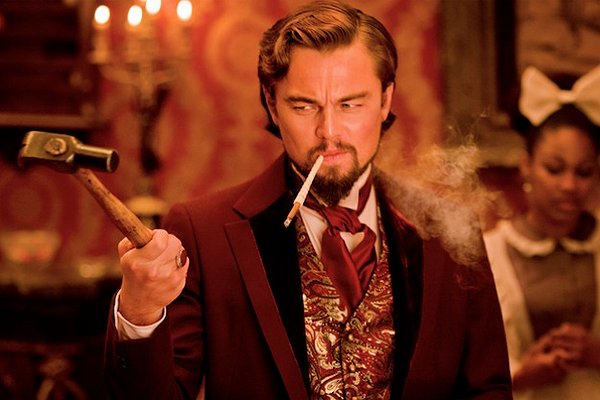
 DiCaprio (Inception) doesn’t appear until over an hour into the film but he’s worth the wait. At my first screening, I thought DiCaprio was good but was unimpressed. Upon a second viewing, I must say my appreciation grew for the man’s performance. Calvin Candie is certainly a vile man and DiCaprio is able to give him such an intriguing brio; he’s not the magnetic source of evil that Waltz was in Basterds, a man able to stay two steps ahead of his prey. Candie is easily taken for a fool. He’s not the smartest guy in the room but he can work up a pretty sizable fury; DiCaprio actually cuts open his hand during a confrontation and remains in character, undeterred. But the best actor in the movie is Jackson (The Avengers). There are far more layers to his head house slave than meets the eyes. It sure seems like he’s really the fist behind the glove. He may put on an act for company, but the man is far more calculating and sinister than anyone else in the film. You know he’s a good villain when the audience cheers the loudest at his demise (don’t act surprised, spoiler-phobes). I wouldn’t be surprised if Waltz, DiCaprio, or even Jackson get nominated for supporting Oscars.
It seems like Tarantino has also stumbled into a hidden lucrative subgenre at the box-office, namely the historical revenge film. Who doesn’t want to see a group historically shafted get some sweet revenge, the bad guys punished, and all with sparkling dialogue? In 2009, Tarantino went on a Nazi scalping spree and got to shoot Hitler in the face. With Django, a brutalized slave becomes the hero of his own story and kills some vile slave owners and traders. It’s essentially a Nat Turner-style rebellion from history, albeit with some harebrained scams and colorful characters. Following this lucrative model, Tarantino could take other maligned minorities and give them cinematic justice. Sadly, there are too many examples to count where Tarantino can take inspiration.
Django Unchained is a bloody, rollicking, talky, messy, exciting, surprising, uncomfortable yet satisfying movie and probably one of the oddest crowd-pleasers in recent memory. I saw it on Christmas day and my theater was a sell out. They loved it, soaking up every minute, laughing at the funny parts and wincing at the gruesome violence. I couldn’t think of a better way to celebrate the birth of baby Jesus. It doesn’t whitewash the evils and viciousness of slavery, but at the same time Tarantino knows how to serve an audience and their demands for big characters, big set pieces, and big vengeance. Django is a sturdy Western/blaxploitation film, and whatever other genres Tarantino feels like tossing into his cinematic blender. Whatever you classify it as, Django Unchained is another Tarantino original specialty and his tremendous talent comes through loud and clear, even with a few false endings and self-indulgences at play. It looks great, has a great soundtrack, and presents great acting talent reciting Tarantino’s great words like they were prized possessions. It’s a bit long and a bit overdone, but when you’re enjoying yourself, who wants to leave the party early?
Nate’s Grade: A


 nathanzoebl
You must be logged in to post a comment.