Blog Archives
A Complete Unknown (2024)

I’m not really a Bob Dylan fan. While I can appreciate several of his songs, it’s his voice that has always put me off. An entire movie about the mystique of Dylan and his rise through the 1960s folk scene was never going to be too appealing for me. So keep all of that in mind as I tell you that A Complete Unknown is a thoroughly fine movie with the not-so grand insight that this famous troubadour might just be a talented prick. The end. Director/co-writer James Mangold returns to the musical biopic sub-genre almost twenty years after his Walk the Line (a non-Joaquin Phoenix Johnny Cash has a cameo in this movie too, securing the Boomer Music Cinematic Universe). It all feels very stately and staid and reverent and, especially during its climax, hopelessly quaint. The conclusion is over whether or not Dylan will play music at the Newport Folk Festival that the fuddy-duddy programmers demand. Will he go electric? Will he play traditional folk? Will you care? I suppose it’s about people trying to control and define this idiosyncratic artist who wants to be himself, whatever that may be, whatever feathers may be ruffled by the traditionalist gatekeepers of the folk music scene. This celebration of artistic integrity and creative revolution would mean a little more if I got a better understanding of Dylan as a person. Blessed with audience foreknowledge, we already know he’s going to be successful and that his creative impulses will be rewarded. Timothee Chalamet does a fine Dylan impression and recreates the famous songs with an impeccable nasally impersonation. For my money, I’d rather this have been a Pete Seger (Edward Norton) movie about his passing of the torch from one generation of folk artists to another and recognizing that the culture and peace movement were moving beyond him. Regardless, if you’re a Bob Dylan fan, there’s plenty to like, especially many extended jam sessions. If you’re looking for more than a handsomely recreated Best Of album, you might need to read a book instead.
Nate’s Grade: C+
Share this:

Saturday Night (2024)/ September 5 (2024)
Recently two ensemble dramas were thought to have awards potential that never materialized, and I think I might know at least one reason why: they are both undone by decisions of scope to focus on either a single day or a 90-minute period to encapsulate their drama.
 With Saturday Night, we follow show creator Loren Michaels (Gabriel LaBelle) the night before the premiere episode of the iconic sketch TV series, Saturday Night Live. The story is told in relative real time covering the last 90 minutes before its initial 11:30 PM EST debut in 1975. We watch Michaels try and deal with squabbling cast members, striking union members, failing technology, his ex-wife (Rachel Sennot) who also happens to be a primary producer of the show, muppets, and studio bosses that are doubtful whether this project will ever make it to air. I understand in essence why the real-time setting is here to provide more pressure and urgency as Michaels is literally running out of time. The problem is that we know the show will be a success, so inventing doubtful older TV execs to add extra antagonists feels like maybe the framing by itself was lacking. Think about Air but you added a fictional exec whose only purpose was to say, “I don’t think this Michael Jordan guy will ever succeed.” There are interesting conflicts and subplots, especially with the different groups that Michaels has to manage, but when it’s all stuffed in such a tight time frame, rather than making the movie feel more chaotic and anxious, it makes those problems and subplots feel underdeveloped or arbitrary. I would relish a behind-the-scenes movie about SNL history but the best version of that would be season 11, the “lost season,” when Michaels came back to save the show and there were legitimate discussions over whether to cancel the show. Admittedly, we would already know the show survives, but does the public know what happened to people like Terry Sweeney and Danitra Vance? Does the public know what kind of sacrifices Michaels had to make? That’s the SNL movie we deserve. Alas, Saturday Night is an amiable movie with fun actors playing famous faces, but even the cast conflicts have to be consolidated to the confined time frame. This is a clear-cut example where the setting sabotages much of what this SNL movie could have offered for its fans.
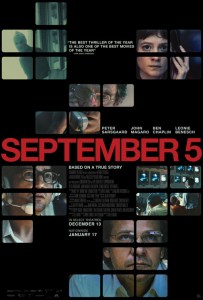 With September 5, we remain almost entirely in the control room of ABC Sports as they cover the fateful 1972 Munich Olympics after the Israeli athletes are taken hostage by terrorists. It’s a subject covered in plenty of other movies, including Steven Spielberg’s Munich and the 1999 Oscar-winning documentary One Day in September, but now we’re watching it from the perspective of the journalists thrust into the spotlight to try and cover an important and tragic incident as it plays out by the hour. It’s an interesting perspective and gives voice to several thorny ethical issues, like when the news team is live broadcasting an oncoming police assault, which the terrorists can watch and prepare for as well. The movie is filmed in a suitable docu-drama style and the pacing is as swift as the editing, and that’s ultimately what holds me back from celebrating the movie more. It’s an interesting anecdote about media history, but September 5 fails to feel like a truly insightful addition to the history and understanding of this tragedy. It’s so focused on the people in the studio and restrained to this one day that it doesn’t allow for us to really dwell or develop in the consequences of this day as well as the consequences of their choices on this fateful day. The movie feels like a dramatization of a select batch of interviews from a larger, more informative documentary on the same subject. It’s well-acted and generally well-written, though I challenge people to recall any significant detail of characters besides things like “German translator” and “Jewish guy.” It’s a worthy story but one that made me wish I could get a fuller picture of its impact and meaning. Instead, we get a procedural about a ragtag group of sports journalists thrust into a global political spotlight. There’s just larger things at stake, including the inherent drama of the lives at risk, than if they’ll get the shot.
Nate’s Grades:
Saturday Night: C+
September 5: B
Share this:

A Real Pain (2024)
 A funny, poignant, and surprisingly gentle movie about two cousins going on a journey to retrace their family history and honor that legacy while trying to reconcile their privileged connection to that past. Written and directed by Jesse Eisenberg, who also stars as David, a generally normal family man traveling with his much more jubilant and troubled cousin, Benji (Kieran Culkin). They’re on a tour through Poland and visiting infamous Holocaust historical sites, ultimately finding their grandmother’s home she fled so many decades ago. The cousins are dramatically different; David is timid and anxiety-ridden, and Benji is the life of any party, an impulsive yet charming people-person. The tour is meant to draw them closer together, to each other, to their shared historical roots, but it might also make them realize what cannot be reconciled. This is an unassuming little movie about a couple characters chafing and growing through their interactions, getting a better understanding of one another and what makes them tick. It’s really the Benji show, and Culkin is terrific, effortlessly charming and funny but with a real tinge of sadness underlying his garrulous energy. There’s real pain behind the surface of this character that he’s trying so hard to mask, though it appears in fleeting moments of vulnerability. Benji causes the various characters along the tour to think differently about their own situations, their own connections to the past, including his cousin, and ultimately makes the journey feel worthwhile. At a tight 90 minutes, A Real Pain is a small movie about big things, and Eisenberg has a nimble touch as writer/director to make he time spent with strangers feel insightful and rewarding.
Nate’s Grade: B+
Share this:

Nickel Boys (2024)
 This might be the most immersive and biggest directorial swing of the year. Director/co-writer RaMell Ross adapts the Pulitzer Prize-winning novel by Colson Whitehead about a reform school for juveniles more like a prison during the Civil Rights era. Ostensibly, the Nickel Academy is an institution that is meant to teach moral lessons and responsibility through outdoor labor. In reality, it’s a school that benefits from labor exploitation and has no intention of fulfilling its promise that students can possibly leave before they turn eighteen. This is even worse for African-Americans, as the school is also segregated and the students have to endure the racism of the administrators and other white juvenile delinquents who still want to feel superior to somebody. It’s a cruel setting destined to spark risable outrage, especially knowing that our main character, Elwood Curtis, is a victim of profiling and being in the wrong place at the wrong time, a star student selected to take college classes at an HBCU. The big artistic swing of Nickel Boys is the choice to tell the entire movie through first-person perspective, with the camera functioning as our protagonist’s eyes and ears. As the camera moves, it is us moving. It makes the movie intensively immersive, but I had some misgivings about this storytelling gimmick. It limits the resonance of the central performance as we can’t see the actor and his expressions and emotions, which I found frustrating. Ross also decides to do this same trick twice with a second character who befriends Elwood. Now we can see more of our main character, through this other person’s eyes occasionally, but it’s also like having to re-learn the visual vocabulary, and switching from viewpoints was distracting for the immersion and to recall whose eyes were whose at any moment. There’s also flash-forwards to adult Elwood that only served to muddle the tension. There’s enough genuine drama in this setting that I wish Nickel Boys might have been a more traditionally-made drama. Still, it’s a fine movie, but the aspect that will make it stand out the most is also what I feel that holds it back for me from being more profoundly affecting.
Nate’s Grade: B
Share this:

The Brutalist (2024)

The indie sensation of the season is an ambitious throwback to meaty movie-going of the auteur 1970s, telling an immigrant’s expansive tale, and at an epic length of 3 hours and 30 minutes, and an attempt to tell The Immigrant Story, and by that we mean The American Story. It’s a lot for any movie to do, and while The Brutalist didn’t quite rise to the capital-M “masterpiece” experience so many of my critical brethren have been singing, it’s still a very handsomely made, thoughtfully reflective, and extremely well-acted movie following one man trying to start his life over. Adrien Brody plays Laszlo Toth, A Jewish-Hungarian survivor of the Holocaust who relocates to Pennsylvania in 1947. He starts work delivering furniture before getting a big break redesigning a rich man’s library as a surprise birthday gift that doesn’t go over well. Years later, that same rich man, Harrison Lee (Guy Pearce), wants to seek out Laszlo because his library has become a celebrated example of modern architecture. He proposes Laszlo design a grandiose assembly that will serve as a community center, chapel, library, gymnasium, and everything to everyone, standing atop a hill like a beacon of twentieth-century civilization. Everything I’ve just written is merely the first half of this massive movie, complete with an old-fashioned fifteen-minute intermission.
The second half is about crises professional and personal for Laszlo; the meddling and compromises and shortfalls of his big architectural project under the thumb of Harrison, and finding and bringing his estranged wife (Felicity Jones) to America and dealing with the aftermath of their mutual trauma. I was never bored with writer/director Brady Crobett’s (Vox Lux) movie, which is saying something considering its significant length. The scenes just breathe at a relaxed pace that feels more like real life captured on film. The confidence and vision of the movie becomes very clear, as Corbett painstakingly takes his time to tell his sprawling story on his terms. I can appreciate that go-for-broke spirit, and The Brutalist has an equal number of moments that are despairing as they are enlightening. I was more interested in Laszlo’s relationship with his wife, now confined to a wheelchair. There are clear emotional chasms between them to work through, having been separated at a concentration camp, but there is a real desire to reconnect, to heal, and to confront one another’s challenges. It’s touching and the real heart of the movie, and it easily could have been the whole movie. The rest, with Laszlo butting heads against moneymen to secure the integrity of his vision, is an obvious allegory for filmmaking or really any artist attempt to realize a dream amidst the naysayers. The acting is terrific across the board, with Brody returning to a form he hasn’t met in decades. Maybe his career struggles since winning the Best Actor Oscar in 2003 have only helped imbue this performance with a lived-in quality of a soul-searching artist. Pearce is commanding and infuriating as the symbol of America’s ego and sense of superiority. The musical score is unorthodox but picks up a real sense of momentum like a locomotive, thrumming along at a building pace of progress. The only real misstep is an unnecessary epilogue that spells out exactly how you should feel about the movie rather than continuing the same respect and trust for its patient audience. The Brutalist is an intimidating movie and one best to chew over or debate its portrayal of the American Dream, and while not all of its artistic swings connect, the sheer ambition, fortitude, and confident execution of the personal and the grandiose is worth celebrating and elevating.
Nate’s Grade: B
Share this:

Sing Sing (2024)
 An uplifting ode to the power of the arts, Sing Sing follows the men of a prison arts program and it’s easily one of the finest films of 2024. We follow the men of the New York prison of the title, lead by Divine G Whitfield (Colman Domingo), a thespian that relishes the dramatic spotlight and the deserved lead of every production. When the next show is suggested as a comedy, Divine G has to accept ceding the spotlight and mentoring a promising but struggling new member (Clarence Maclin) with talent and potential. It’s effectively a “let’s put on a show” formula of old, however, the setting and the weary reflections are what provide the movie its power. All of these men have made mistakes in their respective lives to wind up here, though Divine G maintains his innocence and is preparing his case for a parole board hearing. This program allows them an escape, an opportunity as one puts it to “become human again” While some may scoff at the acting games and costumes, this is sacred ground, a precious oasis for them to discover more about themselves. The sincerity of Sing Sing is wince-inducing. It is beautiful, tender, compassionate, and deeply personal while being very universal. The lived-in details are fantastic and give great authenticity to these men and their stories, wonderfully portrayed by several non-actors making the most of their own spotlights. Domingo (Rustin) is amazing as the proud and generous leader who is ably trying to lift his fellow men up even higher. The film concludes with real footage from the Rehabilitation Through the Arts (RTA) program, and it’s the fitting culmination for a movie that readily reminds us how restorative and needed the arts are for a fuller sense of who we are.
Nate’s Grade: A
Share this:

Million Dollar Baby (2004) [Review Re-View]

Originally released December 15, 2004:
Million Dollar Baby, much like its fledgling female boxing character, has come out of nowhere and made a considerable deal of noise. This little homespun film directed by Clint Eastwood didn’t have the glitz and sheen of other awards friendly movies, but now it seems that Eastwood?s own baby may clean up come Oscar time. Can Million Dollar Baby tackle the enormous hype surrounding it? Yes and no.
]Frankie (Eastwood) is a hardened boxing trainer too concerned for his fighters’ welfare to allow them to fight in championship bouts. He’s the kind of cynical old man that enjoys pestering a priest and causing him to unleash an F-bomb. Frankie and his longtime friend Scrap (Morgan Freeman) run a rundown gym and talk un-sentimentally about their older days as prize fighters. Then along comes Maggie (Hilary Swank), a 32-year old waitress who’s got nothing to believe in except her possibility as a boxer. She wants Frank to train her into the champ she knows she can be. He refuses saying he doesn’t train girls. She’s so determined she won’t take no for an answer. Frank finally agrees, especially after some help from Scrap, and starts to teach Maggie everything she needs to know to be a star pugilist. The two begin to open up to each other emotionally and Maggie seems destined to become a force in the ring.
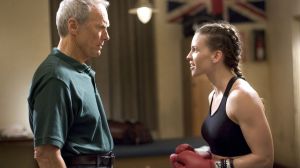
Million Dollar Baby‘s greasiest attribute is its trio of knockout performances. Swank owns every second of this movie. She’s unremittingly perky, conscientious but also dogged, stubborn, and irresistibly lovable. Swank embodies the role with a startling muscular physique and a million dollar smile. Her performance is equal parts charming and heartbreaking. Maggie’s the heart of Million Dollar Baby and Swank doesn’t let you forget it for a millisecond. Come Oscar time, I’m sure she will be walking onstage to grab her second Best Actress Oscar in five years.
No one does grizzled better than Eastwood, and maybe no other actor has made as much of an acting mark by squinting a lot. Million Dollar Baby is probably his best performance to date, though for a good while it sounds like Frank has something lodged in his throat (pride?). Frank has the greatest transformation, and Eastwood brilliantly understates each stop on the journey until landing in a vulnerable, emotionally needy place.
Freeman once again serves as a film’s gentle narrator. There isn’t a movie that can’t be made better by a Morgan Freeman performance. His give-and-take with Frank feels natural and casual to the point that it seems improvised on the spot. Freeman unloads some great monologues like he’s relishing every syllable, chief among them about how he lost his eye. It’s wonderful to watch such a great actor sink his teeth into ripe material and deliver a performance that may net him a long-awaited Oscar (I think he’s due, and likely so will the Academy).
For whatever reason, Eastwood is hitting a directing groove in his twilight years. First came Mystic River, an ordinary police whodunnit made exceptional by incredible acting. Now Eastwood follows up with Baby, an ordinary sports film made extraordinary by incredible acting. Hmmm, a pattern is forming. The cinematography is crisp and makes great use of light and shadow to convey emotion. Eastwood’s score is also appropriately delicate and somber. The boxing sequences are brief but efficient.
Million Dollar Baby is a very traditional story that is at times surprisingly ordinary. Maggie’s the scrappy underdog that just needs a chance, Frank’s the old timer that needs to find personal redemption, and Scrap’s the wise old black man. Once again, an old curmudgeon takes on a rookie and in the process has their tough facade melt away as the inevitable victories pile up. Million Dollar Baby is a very familiar story but then again most boxing tales are fairly the same in scope.
What eventually separates Million Dollar Baby from the pack is its third act twist. You think you know where Eastwood’s film is headed, especially given the well-worn terrain, but you have no clue where this story will wind up. The plot turn deepens the characters and their relationships to each other in very surprising ways. You may be flat-out shocked how much you’ve found yourself caring for the people onscreen. It almost seems like Eastwood and company have used the familiar rags-to-riches underdog drama to sucker punch an audience into Million Dollar Baby‘s final 30 minutes. We’re transported into an uncomfortable and challenging position, and Eastwood won’t let an audience turn away.

Million Dollar Baby is not the colossal masterpiece that critics have been drooling over. For one thing, the group of antagonists is not nearly as textured as our trio of leads. They’re actually more stock roles that further enforce the ordinary story of Million Dollar Baby. Maggie’s trailer trash family is lazy unsupportive batch of stereotypes. The evil female boxing champ just happens to be a German who doesn’t mind playing dirty. One of the boxers at Frank’s gym is an arrogant showboat just waiting to be nasty while the teacher’s back is turned. Million Dollar Baby excels at showing depth and humanity with its lead trio, yet it seems if you aren’t in that circle you’re doomed to wade in the shallow end.
Eastwood shows that great acting and great characters you love can elevate a common framework. The package may be similar to a lot of films before about scrappy underdogs, but Million Dollar Baby lacks comparison in its genre when it comes to its enthralling acting and characters. The father-daughter bond between Frank and Maggie is heartwarming. The final reveal of what her Gaelic boxing name means may just bring tears to your eyes. The results are a very fulfilling movie going experience, albeit one that regrettably may not live up to such hype.
Million Dollar Baby has been showered with heapings of praise and become a formidable Oscar contender. The story treads familiar waters but its outstanding acting and deep and humane characters elevate the material. The film can’t match the hyperbole of critics but Million Dollar Baby is an ordinary but greatly satisfying ride led by compelling acting. The film hums with professionalism and seems to just glide when everything comes together magnificently, particularly in that last 30 minutes. Eastwood is hitting an artistic stride and it’s actually exciting to see what Clint will do next. Million Dollar Baby may not be a first round knockout but it definitely wins by decision.
Nate’s Grade: B+
——————————————————
WRITER REFLECTIONS 20 YEARS LATER

Million Dollar Baby was its own underdog story that showed its strength when it mattered most, taking the 2004 Best Picture Oscar, as well as Best Actress for Hilary Swank and Best Supporting Actor for Morgan Freeman. It wasn’t even on many award prognosticators’ radar until the final month of the year. The odds-on favorite for most of 2004 had been Martin Scorsese’s Howard Hughes biopic The Aviator, a lavish recreation of Old Hollywood with the power of Harvey Weinstein behind it. After 2002’s Gangs of New York went 0-10 with its Oscar nominations, Weinstein vowed this would not happen again and that he would get Scorsese that first directing Academy Award, so no expense was spared with a $110 million-dollar budget, exceeding the previous highest Miramax budget from 2003’s Cold Mountain. The narrative was set, the power of Weinstein was behind it, and the context of Hollywood celebrating its own history has long been an appealing formula for an easy Oscar victory. Then came Clint Eastwood’s scrappy little boxing movie and it sucker-punched the established awards narrative, taking the top prize (Sorry Harvey, but if it was any consolation, The Aviator improved upon Gangs’ ratio, winning 5 of 11 noms).
Twenty years later it’s impossible to discuss the legacy of Million Dollar Baby without talking about the legacy of Eastwood as a director. He’s been directing movies ever since 1971’s Play Misty For Me. He initially stuck to what he knew, thrillers and Westerns, with the occasional passion project like 1988’s Charlie Parker biopic, Bird. It all changed for Eastwood with 1992’s Unforgiven, a searing deconstruction of the Western and masculinity and conveniently digested American myth-making that won Best Picture and Best Director for Eastwood. From there, the flinty-eyed, gravelly-voiced filmmaker was seen as an Oscar favorite, though he was only nominated for Best Director three other times out of the twenty-five films he directed after. Eastwood’s been regarded as some higher-minded adult director, but looking over his long list of directorial efforts, the man has always kept to his preferred milieu of thrillers and Westerns with the occasional somber biopic. The more assumed Academy-friendly projects typically gained minimal traction, usually acting nominations like with Richard Jewell, Invictus, and The Bridges of Madison County. Sometimes they’ve just been complete artistic whiffs, like J. Edgar, Jersey Boys, or Hereafter.
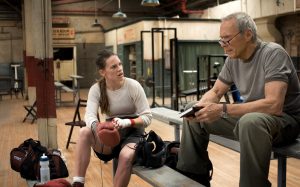
The movies that got the most acclaim from Eastwood as director were the elevated genre movies, be they crime thriller (Mystic River), Western (Unforgiven), or sports underdog drama (Million Dollar Baby). The man has an inherent interest in genre movies. He may make a WWII drama from the point of view of the Japanese, completely in Japanese, but then next he’ll make a movie about being a “Get off my lawn” grumpy grandfather taking on street gangs. He made a movie about sending geezers into space, a juror realizing he may actually be guilty of the crime he’s intended to judge, and a corrupt president covering up his crimes (that guy wasn’t even a convicted felon upon inauguration -ha). The man is at his best when he sticks to what he knows, and when he can collaborate with writers who can get the best out of his instincts, the results can be exceptional. He’s a man interested in telling genre stories, and I can respect that. He’s notoriously spartan in his directorial approach with actors, typically only allowing two or so takes before moving on, a.k.a. the anti-Kubrick. The photography is so stark is might be confused for being black and white. There is a stripped-down-to-its-studs quality to the best of Eastwood’s movies, which is why deconstructionist examinations over genres can be especially rewarding. It allows for a larger space for characters to expand and grow and challenge our expectations, which is where Million Dollar Baby still works so well twenty years after it unexpectedly KO’d the awards circuit.
This is a Cinderella sports story balanced by an invigorating surrogate father-daughter relationship. Maggie Fitzgerald (Swank) is so eager to prove herself as a boxer, and we’re so happy to see her gain success and dignity, helping to give her trainer Frankie Dunn (Eastwood) a new sense of purpose. Everything is going right for this pair and it feels like the Hollywood movie we would all know and love, and then it all gets violently torn away when Maggie is injured in the ring and becomes paralyzed from the neck down. From there, Million Dollar Baby transforms from its sports movie formula and becomes something so much more meaningful and interesting and emotionally affecting. We’re constantly playing a mental contrast from before and after the accident. She’s so optimistic and bouncy and full of life. To see the joyous Maggie using her body to give her confidence and identity and overcoming adversity and intimidating more professional opponents through force of will, and then to see her bedridden, wheezing through a ventilator, and so deeply lost in her slack eyes, it’s something awful. She survived the injury but her spirit has been obliterated. Now, this isn’t a commentary on how disabled people cannot live fulfilling lives and might as well be euthanized. Maggie is the one who makes the choice to be euthanized and she will not be swayed, and this decision puts it to her coach, a lifelong Catholic, to demonstrate his love for his pupil through assisted suicide. To me, all that is WAY more dramatically interesting than if she had simply won the big title fight and proven all her many doubters wrong.

Swank rightfully won her second Oscar for Best Actress with a performance of such vitality and despair. At the end, when she’s stuck in that hospital bed, and she’s trying to chew off her own tongue so she can bleed to death, it’s such a devastating change from the chipper, optimistic scrappy underdog. Eastwood is gruff and growly and nearly unintelligible at points, but his reactions and his generosity as an actor help Swank achieve even higher acting greatness. Strangely enough, while Freeman is perfectly good in his Oscar-winning role, you could have cut him completely from the movie and affected very little, besides needing a new outlet for Eastwood to unintelligibly grumble towards.
It can feel like Million Dollar Baby is two different movies smashed together, one without an ending and one without a beginning. If you felt like you were plugged into that rousing sports underdog movie, I can understand feeling cheated by the rug pull. I feel like the version of this movie, by its end, is the one it wanted to be all along, and it’s using your emotional investment in these characters to make the decisions all the more grueling and tragic. Twenty years later, I think I enjoyed the moments before the accident a little less and the moments after the accident much more, and considering the ending seems like the whole point for Million Dollar Baby, that seems like an endorsement for its staying power two decades hence. It still has enough power today from the performances and where it pushes those characters. Million Dollar Baby is still a winner because it fit so well as a vehicle that Eastwood could elevate. He’s 94 years old and not likely directing too many more movies, but if anyone can keep making movies into their triple digits, it’s this man.
Nate’s Grade: A-
Share this:

Anora (2024)
 The critically-anointed Anora is the indie of the year, winning top prize at the Cannes Film Festival, the first for an English-speaking movie in over a dozen years, and poised to be a major awards player down the stretch, some might even say front-runner for top prizes. It starts like a deconstruction of Pretty Woman, with Mikey Madison (Scream 5) playing Anora, a stripper who recognizes the advantageous possibilities flirting with a young rich Russian scion, Vanya. He wants her to be his girlfriend, and over a sex-fueled week, he’s so smitten that he wants to make Anora his wife. This whirlwind relationship hits the wall, however, once Vanya’s family inserts themself into his life, determined to annul the hasty marriage at all costs.
The movie becomes infinitely better at the hour mark when the exasperated extended Russian family comes into the picture. You worry they might be menacing, as they don’t want this stranger with access to the family wealth, but they’re far more bumbling, and Anora transforms into an unexpected comedy. It certainly wasn’t an authentic romance. Clearly Vanya was a meal ticket more than a three-dimensional romantic interest. The kid is an immature, annoying dolt, so we know Anora isn’t legitimately falling in love with him. The scenes of them building a “relationship” could have been cut in half because we already understood the nature of the two of them using one another. The last hour makes for a greatly entertaining turn of events as the unlikely and bickering posse searches New York City for a runaway Vanya. The movie feels propulsive and chaotic and blissfully alive. Ultimately, I don’t know what it all adds up to. Anora isn’t really a sharply drawn character, but none of the characters are particularly well developed. The pseudo-romantic fantasy of its premise, becoming a “princess” of luxury, isn’t really deconstructed with precision. It’s an unexpectedly funny ensemble comedy at its best, but I’m left indifferent to what other value I can take away. It’s well-acted and surprising, but it’s a vacuous side excursion made into a full movie that somehow has bewitched movie critics into seeing more. Perhaps they too have become overly smitten with Anora’s surface-level charms.
Nate’s Grade: B-
Share this:

Wicked: Part One (2024)

It’s shocking that it took this long for Wicked to make its way from the Broadway stage to the big screen. The musical, based upon Gregory Maguire’s novel, began in 2003 and while it may have lost out on the biggest Tony Awards that year to Avenue Q (it seems astonishing now but… you just had to be there in 2004, theater kids) the show has been a smash for over two decades, accruing over a billion dollars as the second highest-grossing stage show of all time. As show after show got its turn as a movie, I kept wondering what was taking so long with an obviously mass appealing show like Wicked. It’s the classic Hollywood desire of “same but different,” a reclamation project for none other than the Wicked Witch of the West, retelling her tale from her perspective. Well, Wicked’s time has eventually dawned, and the studio is going to feast upon its protracted wait. Taking a page from the YA adaptation trend that dominated the 2010s, they’ve split the show into two movies, separated by a full year, hoping to better capitalize on the phenomenon. I was wary about Part One being 150 minutes, the same length as the ENTIRE Wicked stage show, but having seen the finished product, and by “finished” I mean one half, I can safely say that Wicked is genuinely fabulous and deftly defies the gravity of expectations.
In the fantasy world of Oz, the green-skinned outcast Elphaba (Cynthia Erivo) is looked at with scorn, derision, and fear. She’s always been different and never fully accepted by her father who blames her for her mother’s death and her younger sister Nessarose (Marissa Bode) being stricken to a wheelchair. Nessa is going to study at Shiz University with all the other up-and-coming coeds of the land of Oz, including Glinda (Arianna Grande), a popular and frivolous preppie gal peppered in pink pastels. Glinda desperately wants to be taken seriously and become a witch, studying magic under the tutelage of the esteemed Madame Morrible (Michelle Yeoh). Instead, Morrible’s fascination falls upon Elphaba after she reveals her tremendous magical ability in a moment of extreme emotion. Now Elphaba is enrolled at the magic school and learning about the way of the world, and she’s stuck with Glinda as her roommate. The two women couldn’t be any more different but over the course of the movie, we’ll uncover how one became Glinda the Good and the other the Wicked Witch of the West.

At two-and-a-half hours long, again the length of both acts of the stage show, Wicked Part One only covers the events of the show’s first act, and yet it feels complete and satisfying and, even most surprising, extremely well paced. It’s hard for me to fathom what could have been lost to get the running time down as each scene adds something valuable to our better understanding of these characters and their progression and the discovery of the larger world. It’s a movie that feels constantly in motion, propelling forward with such winning ebullient energy that it becomes infectious. It’s also not afraid to slow things down, to allow moments to breathe, and to provide further characterization and shading that wasn’t included in the stage show. The adaptation brings the fireworks for the finale and raises the visual stakes and danger in a manner that feels exciting and compellingly cinematic. Considering the resplendent results, I feel I could argue that the movie is actually -here comes the heretical hyperbole, theater kids- an improvement over the stage musical. It makes me even more excited for a bolder, longer, potentially even more emotionally satisfying second part in November 2025.
One of my primary praises for 2021’s In the Heights was that director John M. Chu, who cut his teeth helming the Step Up movies, knows exactly how to adapt musicals to maximize the potential of the big screen. If you’re a fan of musicals, old and new, you’ll find yourself swept away with the scope and intricacy of these large fantasy worlds, the flourishes of costume and production design, as well as the creative choreography making fine use of spaces and the power of film editing. There’s a rousing dance sequence set in a library with shelves that rotate around the room, making the slippery choreography that much more immersive, impressive, and acrobatic. Even big crowd numbers are given the knowing framing and sense of scale to hit their full potential, from the opening rendition of Munchkinland celebrating the death of the Wicked Witch of the West complete with giant burning effigy that would make a Wickerman envious, to the introduction to the City of Oz where it appears every citizen has a jovial role to play in welcoming strangers to their enchanted capital city. Chu’s nimble camerawork allows us to really enjoy the staging and skills of the talent onscreen, bringing a beating sense of vitality we crave from musical theater writ large. Wicked is simply one of the best stage-to-screen adaptations in musical theater history and a joyous experience that allows the viewer sumptuous visuals.
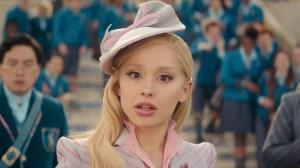
At its core, the story of Wicked is about some pretty resonant themes like self-acceptance, bullying, the fear of what is different or misunderstood, and all of this is built upon an irresistible friendship between Glinda and Elphaba. The rivals-to-allies formula isn’t new but it is tremendously effective and satisfying, especially when both characters are as well drawn and deserving of our empathy as these two ladies. They’re each on a different meaningful character arc for us to chart their personal growth and disillusion with what they’ve been taught is The Way Things Are. One is starting from a disadvantaged position and gaining traction through an outward demonstration of power, and the other is beginning in a position of privilege and becoming humble and more considerate as she acknowledges the challenges of others in a manner that doesn’t have to reconfirm her enviable “goodness.” It just works, and both women are fantastic in their roles. I was on the verge of tears at several points and my heart felt as full as a balloon throughout because of the emotional engagement and heartwarming camaraderie between our two leading ladies. With all its razzle dazzle, Wicked is a story of feminine friendship first and foremost and emotionally rewarding to experience, with the soaring music as a bonus.
Let’s finally talk about the music, a key factor in the enjoyment of any musical, naturally. The music was written by Stephen Schwartz, the Oscar-winning composer for “Colors of the Wind” from Pocahontas as well as “Believe” from The Prince of Egypt. I found his Wicked numbers to range from good to astoundingly good, with catchy ear-worms like “Popular” to the anthemic power and sweep of “Defying Gravity.” The cheeky and toe-tapping “Dancing Through Life” is a showcase for Jonathan Bailey (Bridgerton) and benefits from the aforementioned creative library choreography. “I’m Not That Girl” is a heartbreaking ode to the girls who don’t think of themselves as enough, which is begging for a reappearance in Part Two. The only clunker is “A Sentimental Man” but that’s more the result of the deficiencies of Jeff Goldblum as a singer than the song. I await the reuse of themes and motifs that will make the music even more thematically rich in the eventual Part Two.

Count me as part of the skeptical throng when it was announced that Grande, who hasn’t acted in over ten years, was cast as Glinda. I’m here to say that she is uniformly great. The Glinda role is the more outwardly showy role and thus immediately more memorable. It’s the far more comedic role, in fact the main source of comedy in the show, and Grande has serious comedic chops. Naturally she excels with the singing and its purposeful miasmic bombast, but it’s the subtle comedic styling and the exaggerated physicality that impressed me the most, like a moment of her twirling on the floor as an added dramatic flourish. There’s one scene where she’s just marching up and down a hallway in full exuberance, kicking, dancing, and exploding with joy. I anticipated that Erivo (Bad Times at the El Royale) would be exceptional, and of course the Broadway vet is, as she brings such simmering life to Elphaba. There’s a strength in equal measure to her vulnerability, making the character fully felt. Erivo also delivers during the big moments, like the climax of the movie that can give you goosebumps in hiw it weaves together empowerment and defiance and self-acceptance. Together, the two women are an unbreakable pair of performers and heroes that we’ll want to see triumph over adversity.
After decades of belabored waiting, Wicked finally makes its journey from stage to screen and I must say it was worth every minute. The film, even at only one half, feels complete and richly realized, building upon the strong foundation of the stage show and its numerous winning elements and masterfully translating them to cinema, taking full advantage of the visual possibilities while also expanding upon the story and themes for further enrichment. While born in the early 2000s War on Terror Bush era of politics, Wicked’s themes of anti-immigrant fear-mongering as scapegoats still bears striking resonance today, as do the emerging warnings of fascism in Oz. If you’re a fan of The Wizard of Oz, musical theater, or even just grandiose spectacle that doesn’t dilute grandiose feelings, then step into Wicked and you too will feel like you’re floating on air.
Nate’s Grade: A
Share this:

Robot Dreams (2023)
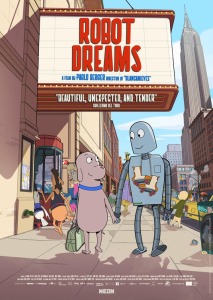 What a delightfully tender little movie Robot Dreams proves to be. It’s based on a picture book and its story is mostly about a lonely Dog who orders a build-your-own-robot for companionship and their friendship. Much of the movie hinges on the Robot being trapped on a Long Island beach closed for the season, so our intrepid Dog must go on living in his New York City apartment through the seasons while he waits to rescue his friend. The movie is wordless and based upon a picture book, but that doesn’t mean this is chiefly kid’s stuff. It touches upon the profound with such elegance and efficiency, brilliantly relatable and recognizably human. It’s all about our need for connections, and even when they are separated, both the Dog and Robot find other connections with other characters, and then it comes back to our worry that they won’t actually reunite after being apart for the majority of the movie. I was reading some gay coding between the two as well but maybe that was my own projection. My nine-year-old son was quite taken with the movie and could easily follow along, though he was also very much not a fan of the bittersweet ending, his first taste of providing the whole “what you need, not what you want” conclusion. Robot Dreams is lovingly realized, its animation so clean and crisp with wonderful characters populating an alternative 1980s NYC. It’s simple and sweet and irresistible.
Nate’s Grade: A-


 nathanzoebl
You must be logged in to post a comment.