Blog Archives

Reagan (2024)

My seventy-five-year-old father doesn’t get out to see as many movies as he used to, but one he was dead-set on seeing in theaters was Reagan. My sister took him and he came back singing the movie’s praises, celebrating Dennis Quaid’s portrayal of the 40th president of the U.S. of A. and extolling the virtues of this trip down Boomer memory lane. I’m glad my father enjoyed the movie. I’m glad the filmmakers could provide him two hours of uplift and entertainment, especially during times like these where my whole family can use the escape from present-day worries. I’m also retroactively relieved that I didn’t see the movie with him, though as a dutiful son and his movie buddy for decades, I would have. I’m glad because our opinions on the overall artistic merits would have been significantly different, and I wouldn’t want to rain on my father’s personal enjoyment (that’s what the written word is for).

For the benefit of analyzing Reagan as a movie first and foremost, I’ll reserve my reservations about his political legacy for the end of the review, but even as a standard presidential biography, Reagan the movie is a disappointing and reductive trip through one man’s Wikipedia summation of a career. I’ve become much more a fan of the biographies that choose a seminal moment from a public figure’s life to use as a framing device for the larger legacy (think 2012’s Lincoln focusing on the passage of the thirteenth amendment). I’d prefer that approach to the more familiar cradle-to-grave structure that often feels like a zoom through their greatest hits where none of the events are granted the consideration or nuance deserved. With Reagan the movie, we’re sprinting through history, although Reagan doesn’t even become president until an hour in. Instead, the focus is unilaterally on Reagan’s opposition to communism and the Soviets. Obviously distilling eight years of a presidency into a couple hours is a daunting and improbable task, the same difficulty for distilling any person’s complicated life into an accessible two hours of narrative. Still, you should have expected more.

For those coming into the movie looking for a critical eye, or an even-handed approach to this man’s faults and accomplishments, the movie condenses itself into a narrow examination on communism and the Cold War, a story we already know proves triumphant. The cumulative problem with Reagan the movie is that it doesn’t really add to a deeper understanding of the man. With its streamlined narrative and pacing, the movie sticks to its Greatest Hits of Reagan, especially his speeches. There are several famous Reagan speeches littered throughout the last act of the movie, and it doesn’t do much for a better understanding of the man delivering those remarks as just hitting upon people’s memories of the man in public venues. It would be more insightful to watch the team behind the scenes debating their choices. The movie portrays Reagan the man more like Saint Regan, arguing if there are any presentable faults they should be readily forgiven because it was all in pursuit of morally impregnable goals (he remarks that the vicious right-wing contras remind him of George Washington and the early colonial army…. yeah, sure). The filmmakers are too afraid to say anything too critical but also to reveal anything truly revelatory about their subject. So the movie becomes a glossy nostalgic-heavy drama without much in the way of drama because Reagan will always persevere through whatever hardships thanks to the power of his convictions, which will always be proven right no matter the context and repercussions. The movie seems to imply all his decisions led to the fall of the Berlin Wall, so it all must have worked out, right? Well, not for everybody, movie, but we’ll get to that in due time.

The filmmakers elect to frame the movie through a curious narrator – a retired KGB officer (Jon Voight) that has followed the life and times of Ronald Reagan going back to his early days. Apparently, this Soviet spy saw true greatness in Reagan way back and thought he might become a threat to the continuation of communism. It’s a strange perspective to be locked into, the enemy complimenting Reagan from afar and ultimately crediting the man’s faith in God as the reason that America triumphed over the Soviets. It means then that every scene has to be linked to our KGB narrator, and sometimes that can get questionable, like when he’s talking about Reagan’s time as a teenage lifeguard, or the time Reagan was being bullied by local kids, or Regan’s intimate conversations with his first wife, Jane Wyman (Mena Suvari). The scenes in Hollywood are so clunky, especially a dinner where the movie wants us to look down on Dalton Trumbo, blacklisted Hollywood Ten writer. This man stood for his principles and suffered a real backlash, and you want me to think of him as misguided and part of some liberal communist cabal (the movie also includes a picture of Oppenheimer as part of its Soviet influence targets)? By insisting upon a narrator that’s not Reagan, that means this KGB spy it also means that we’re seeing the world of Ronald Reagan through an interpreter’s prism, which makes the scenes even more curious for being such an unexpected cheerleader over Reagan’s amazing instincts and abilities. It would be like having Stalin narrate a biopic about FDR and showering the president with gushing praise.

Limiting the movie’s focus to Reagan’s lifelong battle against communist forces makes for a much cleaner and more triumphant narrative, and also leads to an ending we all know is coming, not that surprise or nuance is what the primary audience is looking for. The movie posits that Reagan pursued becoming the country’s chief executive for the selfless mission of standing up to the nefarious forces of communism. Then again, in the opening moments, the movie also tacitly implies that maybe it was the Russians who shot him back in 1981 when it was really an incel who thought he might impress Jodie Foster. Those opening moments also present a cliffhanger to come back to, as if there’s a gullible portion of the audience that is hanging on pins and needles in anticipation whether or not Reagan really was killed back in 1981 (“But… but if Ronnie dies, then who was left to beat the commies?”). It’s a very selective narrative framing that makes the movie easy to celebrate because Reagan is presented as America’s steadfast defender who stood up for our apple-pie American values and brought down the Soviets. Reagan certainly played his part in helping to facilitate the collapse of the Soviet Union, but he was one man coming in at the end of a chain of events spanning decades. I liken it to having a group project in school where you and your cohorts work steadily all week, and then the day it’s due, a kid who’s been absent all week except for that day comes onto the project, adds some contributions, and then takes credit for everything accomplished. Reagan gets his due but so do the other U.S, presidents, secretaries of state, and lots and lots of ambassadors that also helped reach this monumental conclusion. However, the biggest contributor to the collapse of the Soviet Union belongs to the Soviets themselves and their rejection of living in a reality in conflict with the dogma of their political leaders (sound familiar to anyone?).

The screenwriters also position the Great Communicator as being so powerfully persuasive that all it took was one speech and everyone was left helplessly in thrall of this man’s honeyed words. It takes on such a grandiose scale that makes Reagan look like a superhuman. The movie sets up its climax over whether or not Reagan will say “tear down this wall” in a speech at the Brandenburg Gate in 1987, which heightens the drama to a level of self-parody. Is there any spectator wondering if Reagan will eventually say the words that became famous? Beyond the false drama of whether or not Reagan will utter this phrase, the movie tries to fashion some unconvincing behind-the-scenes hand-wringing over what it will mean if Reagan says these words while in Germany. As if the man has ever been shy about denouncing communism and the Soviet state beforehand. The movie also exists in a world where every world leader and responsible adult is glued to a TV set watching Reagan speechify at any key moment. Hilariously, after Reagan does indeed say “tear down this wall,” the film cuts to Margaret Thatcher watching and solemnly saying, “Well done, cowboy.” The rousing music reaches a crescendo, the Reagan team celebrates like they just landed a man on the moon, and the implication is that now that Reagan has put these four words together in sequence, well that Gorbachev fella has no choice now. The movie is set up like this speech is the final blow that pushes the Soviet Union into the dustbin of history. And yet, the next scene of the Berlin Wall coming down has a helpful on-screen designation of time: “two years later.” So Ronnie gave his amazing speech and it immediately led to the end of East Germany… two years later. Does George H. W. Bush get all the credit for being president when the Soviet Union actually collapsed in 1991? I’m sure we can find a speech somewhere where he said something bad about them, and if Reagan the movie is an indication about political persuasion, all he had to do was say the words out loud. Then the wicked communist curse is broken, but few people knew that, only those who worked for Ronnie.

The movie goes to this magical solution time and again, as Reagan is able to solve any crisis with just the right combination of words. Whether it’s Vietnam protestors he cows into retreat by shushing them, or even a debate where all he has to do is throw out a joke and the opposition must crumble because nobody can recover in the face of a joke; the movie presents time and again a silly and reductive version of politics where all it takes is for people to hear the cherished words of Saint Reagan and be converted. Look, Reagan was an influential figure and inspired a generation of Republican leaders to follow in his wake, and yes his telegenic skills were an asset to his understanding of how to handle issue framing. But to reduce everything down to his overwhelming oratory powers of persuasion makes it seem like everyone in the world is falling prey to a linguistic cheat code they are unaware of. It’s the kind of deification that we might see in a North Korean movie extolling the powers of Kim Jong-Un (“He golfed a hole-in-one with every hole”). This is what a hagiography does rather than an honest biography, and that is why Reagan becomes a relatively useless dramatic enterprise except for those already predisposed to wanting to have their nostalgia tickled and their worldviews safely confirmed.

I wasn’t exactly expecting, say, an even-handed review over Reagan’s legacy, but there’s something rather incendiary about how it distills all of the opposition to Reagan and his policies. Our KGB narrator intones that not everybody was a fan of good ole Ronnie, and then in an abbreviated montage we get real news footage of protestors with placards condemning the Reagan administration for ignoring the AIDS epidemic, for tax cuts for the rich, for supporting the apartheid government of South Africa, for gutting social safety net programs, etc. The handling of the Iran-Contra scandal is hilariously sidestepped by the same Reagan who is shown on screen being so dogmatic about sticking to law that he fired all the striking air traffic control workers. It’s not enough that the movie reduces all relevant critical opposition to Reagan to a brief music montage, it’s that the movie then quickly transitions directly to a map of the 1984 electorate with Reagan winning in a landslide, as if to say, “Well, these cranky dead-enders sure were upset by these issues, but they must be wrong because the American people overwhelmingly re-elected him.”

I never found Quaid’s performance to be enlightening or endearing, more mimicry that settles into an unsettling cracked-mirror version. It always felt like an imitation for me, like something I’d see on Saturday Night Live in the 1980s with Phil Hartman. He holds the grin and nasally voice but delivers little pathos. It’s not exactly the actor’s fault when the screenplay gives him such little to do. There was a real opportunity to better humanize him toward the end as his mental decline was becoming more of a force. Instead, it’s relegated to the very end, as a gauzy way to usher the man off the stage with our sympathies. Voight (Ray Donovan) gets the most lines in the whole movie and really seems to savor his Ruskie accent. Curiously, his character is talking to a promising KGB pupil trying to learn where they went wrong and it’s not set up to be Vladamir Putin, himself a former KGB agent. The only other significant supporting role that lasts is Nancy Reagan played by Penelope Ann Miller (The Shadow, Carlito’s Way) and she’s relegated to the suffering spouse on the sidelines that always has the steel spine and the word of encouragement. Her best moment of acting was her embarrassment as a captive witness to Ronnie, before his step into politics, awkwardly dancing on stage with the PBR players as a shill for the beer company.

Let’s be honest about who Reagan is aimed at, an older, mostly conservative audience looking back at the time of Reagan’s reign and thinking, “Those were the good old days.” It’s not made for people like me, a progressive who legitimately believes that many of our modern-day problems can trace their source from the eight years of the Reagan administration. I’m talking about the trickle-down-economic fallacy that girds so much Republican magical thinking when it comes to taxes. I’m talking union busting, I’m talking his “welfare queen” projection, I’m talking the selling of arms for hostages (bonus fact: the Reagan campaign was secretly negotiating with Iran not to release the hostages until after the election to better doom Jimmy Carter’s chances of re-election), I’m talking about making college education far more expensive by massive cuts to state funding, I’m talking the rise of the disingenuous “textualist” judicial philosophy that only seems to mean something when its proponents want it to, I’m talking about training and arming Osama bin Laden to fight the Soviets in Afghanistan (wonder why the movie chose not to include this since it is Reagan fighting communism), and so on and so on. Naturally none of these are held to scrutiny by Reagan the movie because it’s from the writer of God’s Not Dead and the director of Bratz.

Suffice to say, Reagan has many notable shortcomings depicting a president who, with every passing year, only seems to add to his own shortcomings in legacy (the Party of Reagan has willfully given up all its purported principles to become the Party of Trump). If you’re looking for an overly gauzy, sentimental, and simplistic retelling of what people already know about Ronald Reagan, then this movie is for you. If you’re looking for anything more, then this is the New Coke of presidential biopics.

Nate’s Grade: C-

The Murder of Nicole Brown Simpson (2020)

As soon as I read about the director of The Haunting of Sharon Tate’s follow-up movie, I knew it was destined for a spot on my worst of 2020 list. This filmmaker wasn’t exactly presenting nuanced and sympathetic portraits of famous dead celebrities, and instead was exploiting their fame and their famous demises for cheap genre thrills. The Murder of Nicole Brown Simpson was always destined to be a bad movie with these people involved with these intentions. This sleazy thriller is rife with bad decisions, bad faith, and victim blaming to its very nasty core.

Nicole Brown (Mena Suvari) is trying to start her life over after divorcing her famous husband, O.J. Simpson (Gene Freeman). She meets a painter named Glen (Nick Stahl) and invites him to paint her home, to make it more her new sanctuary. Except Glen is a disturbed drifter who will eventually be known as the Casanova Killer who had murdered many blonde women. From there, Glen stalks Nicole and terrorizes her to her very end. Sigh.

The very nature of its premise alleviates the guilt from Nicole’s abusive, controlling husband. Oh sure, the movie still says O.J. is dangerous and jealous and protected by his personal relationships with many of the local law enforcement, but this is mitigated by the very act of using O.J.’s own half-baked alibi assertion from the infamous cash-grab hypothetical literary tome, “If I Did It.” In this highly disingenuous “hypothetical,” O.J. says he might have met a friend named “Charlie” and it was “Charlie” who did the killing and O.J. says he was simply blacking out that night as an unexpected accomplice. First off, the very nature of this book is disgusting, but the fact that this movie uses it as a foundation to posit an alternative theory that lessens O.J.’s blood-stained culpability is like re-telling the Ted Bundy’s account where a frisky and mischievous friend was really the one consuming people. What exactly is the purpose of presenting this alternative theory, which is predicated on the flimsiest of even a whisper of evidence; Glen Rogers’ brother says that mentally disturbed Glen once told him he killed Nicole Brown. That’s it. Add Glen talking to a voice in his head, a dark impulse he calls “Charlie,” and that’s the only connective tissue the movie provides for this new theory.

The entire inclusion of this “Could it be someone else?” theory is for crass sensationalism. Because if the filmmakers were trying to do anything beyond gaining craven attention, they would present a more compelling relationship between Nicole and Glen. The portrayal makes Nicole look like the biggest moron and the movie seems to flirt with the insidious idea that she might have invited her murder onto herself. First, she meets Glen in her neighbor’s driveway, having never seen him before, and invites him into her home and offers him a job, and all of this is miraculously before she even knows the man’s last name, an address, or references. He makes a shifty statement about past work experience being “here and there” and she hires him. The next time we see them together they’re already sleeping together. It feels like I was watching character assassinating propaganda, especially recalling O.J.’s crazed accusations of Nicole sleeping with every many she could find because, to him, she must be a whore. In one of the more wince-inducing moments, Nicole admits to her therapists that she misses the sex with her abusive ex-husband. Any feminism points the filmmakers thought they were providing by showcasing Nicole’s terror and resolve in starting a life away from O.J. just get sabotaged again and again by moments like this. Because Nicole isn’t a person to these filmmakers, she’s a marketable victim who was too stupid to understand how dangerous multiple men were.

There’s also a problem structurally with The Murder of Nicole Brown Simpson because she discovers Glen’s unhinged side very quickly. There’s no prolonged buildup of piecing things together. There is half a movie left, which means the filmmakers have an awful lot of time to kill before the actual killings. There’s a drawn-out sequence where Nicole is shopping with the Kardashians (you better believe there are Kardashian kid cameos!) at a nearly empty mall and she sees Glen stalking her. The sequence just keeps going on and on until she’s now stalking him. It’s a sequence that fulfills little we didn’t already know about Glen as a dangerous man. This is further emphasized in unnecessary ways by showing him picking up a doomed woman at a dive bar (literally called “Sinners and Saints” – sigh) and suffocating her, setting her car on fire, and presumably leaving behind plenty of physical evidence like fingerprints. It’s a gratuitous sequence where we get to watch another woman get murdered before our special murder victim gets her showcase. There’s even a shockingly superfluous nightmare sequence that literally rips off the imagery from A Nightmare on Elm Street where Nicole is battling some invisible poltergeist that drags her up a wall and onto the ceiling. It’s filling time, which the movies does even after it finally meets its titular action. There’s a whole two minutes or so of watching a dog walker creep upon the Brentwood crime scene as if we already didn’t know what happened, so where is the suspense? Then the movie fills time even more blatantly by relying on a clip package of real-life TV news from the murders, the Bronco chase, the trial, O.J.’s acquittal, and then portions of his interview for “If I Did It.” It’s literally a clip show to get across that all-important 80-minute feature-length threshold. Watching this abysmal movie, it’s clear that the filmmakers had no real intention of presenting a story and were just presenting the most baseless historical “what if.”

The dialogue in this movie can be wretchedly obvious and trolling for forced profundity with heavily applied and snide dramatic irony. This occurred in the director’s previous film, using the audience’s knowledge of Sharon Tate’s eventual slaying to force a sense of literal and figurative premonition to use as dread. This was at its worse with her awful visions but it also translated to her many heavy-handed pontifications on whether she was fated. With this new film, Nicole is basically looking dead-eyed into the audience after every one of these lines. That includes an admission, “I worry he’s going to murder me and get away with it,” and that’s only five minutes into the movie. I would estimate twenty percent of Nicole’s dialogue in the movie is her contemplations that O.J. will be the literal death of her, like chiding a dismissive L.A.P.D. officer for eventual guilt about not intervening when he had an opportunity. These moments are meant to make Nicole Brown seem more tragic but why does she need any benefit of extra tragedy for empathy?

Look at this wig!

I chiefly pity Suvari (American Beauty). She likely thought she was doing the real Nicole Brown a service by portraying a woman who was trying to work up her courage to push back against her abuser. She probably thought these moments were humanizing Nicole, presenting a more recognizable face beyond the splashy tabloid headlines (see, she has difficulty working a home alarm system too!). I need to believe that Suvari felt she was doing some service because her name is listed as an executive producer, and I would hate to think she was onboard with the more wrongheaded and sleazy aspects of the film becoming a misguided reality. Suvari seems adrift for most of the movie, perhaps the weight of all that dramatic irony crushing her down. However, she doesn’t seem as adrift as Taryn Manning (Orange is the New Black) as a boozed-up cartoon of Nicole’s friend, Faye Resnick. She snorts cocaine. She tries to seduce Nicole at one point, referring to past trysts (more propaganda?). She has a remarkable helmet of a giant blonde wig that looks like it’s crushing her tiny neck. It’s a performance that seems too off-kilter that it almost reminded me of some of the acting I’ve witnessed in The Room. Then there’s Stahl (Sin City) who just acts like a sketchy guy from his first moment onscreen. It makes it hard to believe that Nicole would, after her interactions with O.J., so obliviously accept this new man into her home and into her bed. Then there’s Agnes Bruckner (Love and Chocolate) as a jaw-clenching Kris Kardashian, a character who probably should have just been removed entirely.

The Murder of Nicole Brown Simpson might not be as offensively bad as The Haunting of Sharon Tate, but even that declaration is not exculpatory. This is still a terribly written, terribly directed, and terribly made movie based on a terrible premise. Even if the filmmakers wanted to tell a compelling alternate theory to the much-publicized Trial of the Century, it sure doesn’t look like they had any interest other than grabbing their own attention-seeking headlines. There is no thought put into any part of this movie outside of its outrageous premise. At least we’re spared having to relive Nicole’s bloody death through several gross fake-out premonitions like Sharon Tate. The Murder of Nicole Brown Simpson wants to position its lead heroine as a tragic figure, but she was already a tragic figure, and it definitely doesn’t earn the artistic right to play Nicole’s real-life 911 calls where she frantically begs for help from her enraged husband. You don’t get to present a feature film that says O.J. didn’t do it and then play her real 911 calls of abuse from O.J. It’s a stark reminder of the resolute bad faith of the people involved in this lousy production. Beware famous dead celebrities, because even the grave can’t protect you from director Daniel Farrand’s gross revisionism for profit.

Nate’s Grade: D

American Reunion (2012)

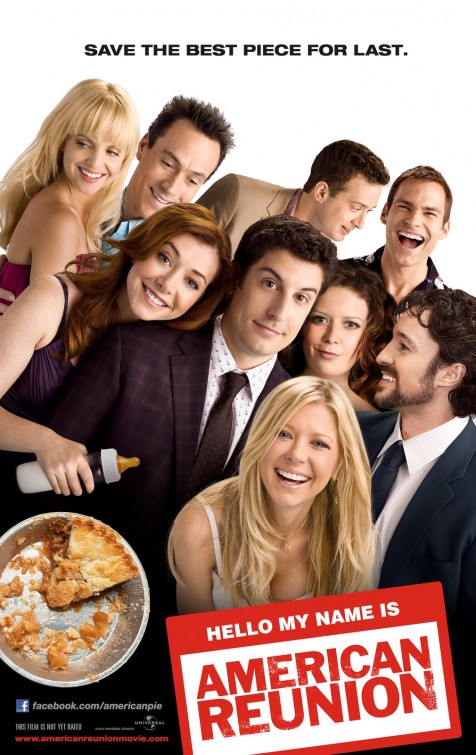
What loser doesn’t attend their 13th high school reunion? Who even organizes such an untimely event? The generally unnecessary American Reunion is being dished out to the public for a number of reasons. The studio would like to revive their once lucrative sex-comedy-meets-baked-goods franchise, and most of these actors could desperately use the work. Remember when the likes of Chris Klein, Mena Suvari, and Tara Reid were above-the-title names? What I recall, now that the gang is together again, is that I found most of these characters to be dullards. They’re in their 30s, have careers and families, and stupidly comfortable lives, yet they’re up to the same old hijinks, which just seem a bit more desperate and embarrassing this time around. Seann William Scott, the franchise’s true wild card, is still amusing as ever, but I couldn’t swallow the forced nostalgia for characters that are unappealing. Jason Biggs and Alyson Hannigan still make a nice pair, but rehashing the old gang mitigates their screen time. Comedy-wise, the movie has a few memorable gross-out moments but nothing really hilarious. I laughed from time to time but mostly I was bored, and Klein, especially in his new post-Street Fighter ironic version of himself, is rarely boring. It’s a pleasant enough experience and I suppose fans of the original films will get a kick out of seeing who ended up where and, in particular, what he hell happened to Reid’s leathery face. Otherwise, American Reunion is a gathering that nobody called for and fails to justify all the effort. Then again, my favorite of the American Pie films is the second one, so take my words with caution.

Nate’s Grade: C

American Pie 2 (2001)

First and foremost I disliked the first American Pie movie. It just rang very transparent for me and I didn’t laugh once – a capitol crime with a comedy in my book. So I wasn’t exactly looking forward to another addition with the American Pie family, but ventured out with friends and found myself enjoying this second helping of raunch. And this time I genuinely laughed at several points and found it overall less insipid.

To American Pie 2‘s benefit all the characters have been introduced prior and are familiar to the audience, therefore no time is wasted on pointless set-up. The movie jumps right out to the familiar faces and decides to further the AP2 universe. Jim (Jason Biggs) and friends are returning back home after their first year of college. Jim has not had a sexual experience since his prom night with Michelle the band geek (Alyson Hannigan) and he is completely in doubt of his abilities in the bedroom. Complicating matters is the news that the Czech student of his fantasies Nadia (Shannon Elizabeth) is on her way back and is eagerly anticipating another tryst with Jim. Kevin (Thomas Ian Nicholas) is still hung up on his ex Vicky (Tara Reid) and worrying that his friends will grow apart and college will change everything. Oz (Chris Klein) seems to be doing fine with his monogamous relationship to Heather (Mena Suvari), despite the taunting of Stifler (Sean William Scott) that he needs to spread out. Finally Finch (Eddie Kaye Thomas) is still chasing after the only woman that ever caught his heart, Stifler’s mom.

After the boys return back to their roots the police bust a party at Stifler’s pad, and they are without a place to party for the summer. Kevin brings to their attention the idea of renting a cabin on the beach for the summer. The place serves as a spot for the boys to enjoy their sunshine-y days away from school and stay together as friends, as well as attempt to get an abundance of tail. Hi-jinks ensue.

AP2 almost seems to follow the formula of the first one to the letter. The opening scene has Jim’s dad (the always hilarious Eugene Levy) walking in on an embarrassing moment for Jim (you think he’d learn that doors have locks at this point). Jim encounters a horrific sexual accident that he must discuss with his father afterwards. Stifler gets a not-so-nice encounter with a bodily fluid in the beginning party. And it all ends with a big party to end all parties with everyone hooking up with a partner for some post-coital spooning. The script was written by the same writer of the first yet he seems to be playing connect the dots with his own formula.

What American Pie 2 does to separate itself as more enjoyable than the first is give the interesting characters the majority of the time and leave the least interesting sputtering for air. The interesting ones follow: Jim is a nice guy full of the same insecurities that plague a teenager and intimacy, and Biggs plays him as an everyman who somehow always seems to come into sadistic moments of embarrassment. With Jim’s wish to be more sexually adept he visits the infamous band camp and finds Michelle once again who agrees to coach him on techniques and pointers. Hanigan is given an incredible amount more of screen time and she’s glowing in every second of it.

Also the man-you-love-to-hate Stifler has a larger role leading his group of lakeside roommates into encounters with lesbians and other sexual calamities. Scott may be playing Stifler as a jerk but he’s entertaining and genuinely funny, and at one point you can’t help but root for the crass frat boy. Finch has learned that Stifler’s mom will be paying a visit to their cabin at the end of the summer and spends his time studying up on Tantra and Zen to fully explore his inner sexual prowess.

The entire cast from the first American Pie romp does return, though not everyone has equal time. Mena Suvari (still looking so young) leaves in the beginning of the film and then comes back at the very end. The insatiably annoying Reid (who has eyes that I can’t tell where her whites end and irises begin) thankfully is only in the film for two short scenes which leads me to question was she even necessary in the first place? Natasha Lyonne is only in scenes alongside Reid, so her stint in the sequel is equally as brief. Elizabeth’s role might be central to Jim’s quest for sexual fulfillment, but she only pops up in the last eight minutes of the film – and doesn’t show her breasts this time. Now that I think about it Klein and Nicholas really weren’t in the film too much either except for standing in the background while another character talked.

The soundtrack is a collection of every pop “punk” band that’s been playing on MTV since May of that year. It’s like the producers just watched the channel for a week and would point to the ones they wanted.

The film still is a mishmash of gross out sexual humor and sentimentality, but for some reason it’s a lot easier to swallow the second time around. For all its bodily fluids and crudeness, American Pie 2 has a stickily sweet secretly conservative old-fashioned heart. Though the makers would never tell you so. In a summer almost bankrupt on entertainment value I’ll leisurely take a slice of American Pie 2.

Nate’s Grade: B-

Loser (2000)

Jason Biggs came to fame by getting sexual healing from pastry and Mena Suvari for coming up roses besides Kevin Spacey. So now the two American Pie graduates embark on college in Loser, the latest offering by classic teen comedy director Amy Heckerling (Fast Times at Ridgemont High, Clueless).

Loser tells the tale of a self-describe outcast Paul (Biggs) who ventures out of a rural town to the big bad city of New York for college education. Before he leaves he confides to his family his fear that everyone will be “like on Seinfeld.” Upon Paul’s arrival he’s deemed a laughable dolt by his fratboy roomies and even forced to live in an animal shelter. Paul has a difficult time adjusting to the new world until he meets a kindred spirit in the intriguing Dora (Suvari) one day in class. Dora herself is a struggling student not fitting in easily. She even has a secret tryst with her professor played by Greg Kinnear.

All of the characters in Loser other then its leads are one-dimensional cartoons. Paul’s dorm mates start off as mean-spirited brats but then unsettlingly become attempted date rapists with plans involving roofies. Am I the only one bothered that their actions are never dealt with but glossed over? Dora’s relationship with Kinnear only cheapens the intelligence of her character. From the beginning he is a smarmy jerk (as are most in Loser) whose most romantic line consists of “Would you please sit there and just not talk.” What woman wouldn’t fall for someone like that?

Loser is no outright loser though. It does have its funny moments and starts off well enough. Paul and Dora are sweet characters that keep our interest. Kinnear plays a snide jerk well. But somewhere in the middle Loser shifts from what it could have been into what it reluctantly is.

Biggs and Suvari are the only nice people on screen, and it makes little sense that in a world of hipsters that these two would put up with all of their abuse and not see one another. It’s obvious that they should be together except to them, so it’s just a matter of time before they hug and kiss. The movie is basically a waiting game to see when Suvari is going to wise up.

Heckerling has been a strong force for many an influential teen comedy but her latest effort seems like she lost interest somewhere within. Loser had the possibility of being the Clueless for the not-so-in-crowd but instead mimics the title far more than intended.

Nate’s Grade: C

American Beauty (1999)

American Beauty balances between dark comedy and moving drama not only well but tremendously on target. It’s a slice of life showing the dark side of a faceless and cold suburban life. The deterioration of a family and the escape of one man as he realizes the trivial nature of the things that get in the way of seizing life. American Beauty is not a rose for everyone but it’s one standing out from the pack screaming to be picked.

Kevin Spacey plays Lester Burnham, the husband and father of our story’s family. Life has been sucked dry from his system and he’s lost interest in everything he holds around him.

Annette Benning plays Carolyn Burnham, mother and wife. She breaths the mantra, “To be successful one must present an image of success at all times.” like she was beating a Bible until it bled. She’s a woman whom image is everything, and looking good is all that matters. She has become so detached from her family and life that she has actually lost her humanity in the hunt for success while waving her cheerful smile as a mask that eludes to the superficial inside. Carolyn is a woman who refuses to let herself fail or have weakness, and those around her to make her seem weak.

Thora Birch, of Alaska and Now and Then fame, is the estranged daughter to Spacey and Bening. She feels alienated from her parents, and despises them from easily seeing through each. Thora discovers new ways to feel contempt for her parents with each day. She is a repressed child who is looking for an outlet of understanding and help. Enter pot dealing creepy new neighbor Wes Bentley. He sees true beauty where no one could, and is the escape and shoulder that young Thora has needed all her life from her monstrously neglectful parents. Wes videotapes everything in an effort to keep the memories of beauty alive to venture back and relive the moments. He shares his prized image with Thora one day, that of a plastic bag inflating and deflating with the autumn breeze as it swirls around almost balletic dancing. The image is mesmerizingly hypnotic and you understand that Wes is a character who looks beneath the surface and most likely the most noble in the entire movie.

Mena Suvari switches from sweet choirgirl from American Pie to ditzy teen vamp. She is a person who feels such insecurity for herself that the only happiness she can arrive is from being wanted by other people. She must have acceptance in some form or another, and “ordinary” to her is a worse word than “ugly.” She acts like a teen nympho but in the end reveals that she is really an innocent young girl desperately wanting to be liked and wanted.

There are other characters that round out the cast; a brief appearance with Scott Bakula who makes a quantum leap into a gay neighbor, Allison Janney as the mother to Wes and the silent hollow image of a wife she has become to socially hide her husband’s secret, Chris Cooper again as an abusive father who’s maliciously homophobic but hiding a devastating secret deep within, even Peter Gallagher with the biggest eyebrows you’ve ever seen as a suave real estate mogul that knows how to cater to Carolyn’s thematic problems.

The basis of the story hinges on Lester’s reawakening. He is a man going through the motions of life like a walking dead man. A man who tells people that even he wouldn’t remember himself. Lester is an unhappy cog until viewing his daughter’s friend Angela (Suvari) at a high school basketball game. At first glimpse she becomes the intense object of his desire and obsession, and his focus on life centers around this young gal. But with that moment Lester’s life is broken, and his eyes are opened for the first time in a very long time. He sees the trite redundancy with the day-to-day grind of ordinary suburbanite life. Lester breaks free and does what he wishes, he is a free man. Free of his job, his nagging ice queen of a wife, free of all worries and fears.

As far as Oscar races go, all others don’t even bother filling out an application for an invitation – Spacey has Best Actor locked. He might as well start clearing a space on his shelf next to the one he got for The Usual Suspects. Spacey is so wonderfully wry and self degrading that he transforms into an actually likeable almost laid back hero for the audience. They know his tragic fate and feel good when he gets the most he can with each day, and not letting himself be pushed around anymore. Benning is also delightful and wickedly hilarious in her materially overzealous soccer mom. Birch is excellent showing the pains of alienation and showing that despite what her character thinks she is really the last person on earth who needs a boob job. Director Sam Mendes’ first feature after touring the theater circuit shows his devotion to characters and actors with subdued symbolism layered between every frame of film. I say Oscars should go all around and this movie deserves a good swapping of gold statuettes.

I could go on talking about the depth and characters for hours but I’ll just stop here and say that you won’t see a more engaging, compelling, and brutally honest and sadly funny film in the entire year of 1999. One of the best films not only of this year but of the entire decade.

Nate’s Grade: A

This movie also revisited and analyzed in the article, “1999: The Greatest Year in Film? A Review Re-View.”

American Pie (1999)


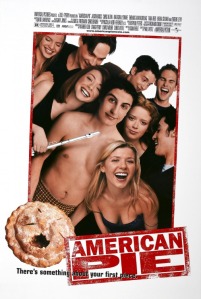
I may be a lone voice in a sea of opposition but I’ll say that I really didn’t laugh much at this latest teen sex romp. I wanted to laugh more than I did, oh I did, but it never really transpired. The movie throws together out of place gross-out gags and false sentimentality. The entire thing was predictable and for the most part stale. I may be over-analyzing a teen sex comedy, but that’s what I had to do with the time where I wasn’t laughing. The creators of this seem to imply that gals who don’t put out aren’t worthwhile or even cool. I could never feel for any of the characters or relate because they were all so shallow. There are some humorous scenes in this flick but they are few and far between. Many of the jokes just fall flat. Overall I could say I was greatly disappointed with American Pie and hope that the most innovative joke in the next teen sex comedy isn’t played to death in commercials and turned into a tagline. Are you listening Universal marketing team?

Nate’s Grade: C