Blog Archives
Joker: Folie à Deux (2024)
 Movie musicals can be sweeping, invigorating, and at their very best transporting, They mingle the high-flying fantasies and visual potential of cinema, and we’ve gone through many waves of kinds of musicals. Today, we’re in an outlandish world of the outlandish musical, an experience in ironic air quotes, where stories that you never would have thought could be musicals would then dare to be different and attempt to be musicals. The much-anticipated Joker sequel, Folie a Deux, dares to be a challenging jukebox musical of old favorites. The French movie Emilia Perez tells the story of a cartel leader that undergoes a sex change and tries to do good with her second life. Both movies are deeply interesting messes as well as experiences I don’t think actually work as musicals.
Joker 2, which I will be referring to it as for the duration of this review mostly because I don’t want to type out Folie a Deux, and not due to some explicit dislike of the French, is a fascinating misfire that comes across as downright disdainful of its audience, its studio, and its very existence. The last time I felt this way from a sequel was 2021’s Matrix Resurrections, another fitfully contemptuous movie that was alienating and self-erasing and also from Warner Brothers. The first Joker movie in 2019 was a surprise hit, grossing over a billion dollars, which meant that the studio wasn’t going to sit idly by and not force a sequel for a movie clearly intended to be one complete movie. While the first movie cost a modest $50 million, the sequel cost close to $200 million, with big pay days for Joaquin Phoenix, Lady Gaga, and co-writer/director Todd Phillips, who I have to remind you, dear reader, was actually nominated for a Best Director Oscar in 2019. Having gotten their paydays, it feels like Phillips and his collaborators have set out to scorch all available earth, going so far as to even insult fans of the earlier movie. Add the bizarre musical factor, and I don’t know how else to describe Joker 2 but as an alienating and miserable protracted exercise in self-immolating artistic hubris. It’s so rare to see this level of artistic clout used to proverbially stick a finger in the eye of every fan and studio exec who might have hoped there could be something of value here.
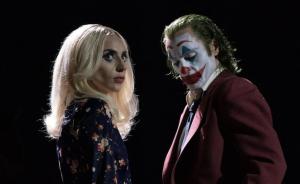 Let’s tackle the plot first, as we pick up months after the events of the 2019 film where lowly Arthur Fleck (Phoenix) is being tried for the murders he committed, most famously on a TV talk show where he debuted his stand-up comedian persona as Joker in full regalia. There’s an (un)healthy contingent of the rabble that idolize Arthur, finding the Joker to be some kind of mythic hero of class-conscious revolution, pointing out how society is failing all the little guys getting crushed by the rich and powerful and privileged, like that dead Wayne family. One of those fans is Lee (Gaga), a.k.a. Harleen Quinzel, a disturbed young woman obsessed with getting closer to Arthur, and he is extremely appreciative of the fawning attention. The defense case hinges upon whether or not Arthur was acting on his own accord or had a psychotic break, disassociating as “Joker,” and thus cannot be held accountable for the murders. Except it seems “Joker” is all the people of Gotham want to talk about, whether it’s the media or the public, and what about poor lonely Arthur?
If I had to fathom a larger thematic point, it feels like Phillips is trying to put our media ecosphere and comics fandom into judgement. He’s pointing to his movie and saying, “You wouldn’t have cared nearly as much about this project had it just been some other spooky, disturbed man losing his sanity and lashing out. You only care because he would eventually become the notorious Batman villain or lore, and that’s why you’re back.” Well, to answer succinctly, of course. When your movie’s conceptual conceit is all about providing a gritty back-story for a famous supervillain, don’t be surprised when there’s more attention and interest. This would be the same if Phillips had made a searing drama about teenage nihilism and easy access to guns and then called it Dylan Klebold: The Movie (one half of the Columbine killers, if you forgot). Stripping back layers to provide setup for a famous killer will always generate more interest than if it was some fictional nobody. It’s an accessible starting point for a viewer and there’s an innate intrigue in trying to answer the tantalizing puzzle of how terrible people got to be so terrible.
I found the 2019 movie to be a mostly interesting experiment without too much to say with its larger social commentary. It felt like Phillips relied a bit too heavily on that assumed familiarity with the character to fill in the missing gaps of his storytelling. It was a proof of concept for that proved successful beyond measure (a billion dollars, 11 Oscar nominations, including THREE for Phillips). This time, Phillips is taking even less subtlety with his blowtorch as he actively annihilates whatever audiences may have enjoyed or appreciated in the first movie.
 And in order to fully appreciate the scope of this movie’s active distaste for its own existence, I’ll be treading into some major spoilers, so jump forward a paragraph if you wish to remain unspoiled, dear reader. The conclusion of this sequel is a miserable succession of hits that degrades Arthur. At the conclusion of the 2019 original, at least you could say he was becoming a more realized version of what he wanted to be, albeit a disturbed murderer, but one who became the face of a revolution and gained a legion of adoring followers that he desperately craved. At the end of Joker 2, Arthur pathetically admits in his trial there is no alternate Joker persona and that he’s just a sad loser. Then Lee admits that she was only ever interested in “Joker” and wants nothing to do with Arthur the sad loser. And then upon returning to prison, another inmate confronts Arthur, apparently feeling personally betrayed for whatever reason. This irate prisoner stabs Arthur to death and then laughs in a corner, slicing a smile into the sides of his mouth, Heath Ledger-style. The movie literally ends with Arthur laying in a pool of his own blood, staring dead-eyed into the camera, with Phillips metaphorically painting emphatically at his corpse and defiantly saying, “Look, he’s not even the Joker now! Do you still care? Do you?” These movies were designed to be the untold history of the man who would be Joker, and they now have ended up being four hours about the guy whose idea maybe inspired a criminal lunatic to improve upon what he felt was another guy’s brand. What’s even the point? We followed two movies about the guy who isn’t the Joker? Seems pretty definitive there won’t be a third Arthur Fleck movie, as there’s nothing left for Phillips and his anarchic collaborators to demolish to smithereens.
When I heard that Joker 2 was going to be a musical, I actually got a little excited, as it felt like Phillips was going to try something very different. Now the curse of many modern movie musicals is trying to come up with an excuse for why the world is exploding in song and dance, like 2002’s Chicago implying it’s all in Roxy’s vivid imagination. Joker 2 takes a similar approach, conveying that when Arthur is breaking out into song that it’s a mental escape for him, that it’s not actually happening in his literal reality. Except… why are there sequences outside Arthur’s point of view where other characters are breaking into song, notably Lee? Is this perhaps a transference of Arthur’s perspective, like he’s imagining them on the outside joining him in tandem? The concept fits with his desperate desire to forge meaningful human connections with people that see him for who he is, and having another character harmonize with him provides a fantasy of validation. Except… there’s no meaningful personal connection between Arthur and the allure of movie musicals. It’s not like he or his domineering mother, the same woman he murdered if you recall, were lifelong fans of musicals and their magical possibilities. It’s not like 2001’s Dancer in the Dark where our lonely protagonist dreamed of being in a movie musical as an escape from her depressing life of exploitation and poverty. It just happens, and you’re listening to Phoenix’s off-putting, gravelly voice straining to recreate classics like “For Once in My Life” and “When You’re Smiling (The Whole World Smiles With You).” It’s also a criminal waste of a perfectly game Gaga.
 Phillips’ staging of his musical numbers are so lifelessly devoid of energy and imagination. Most of our musical numbers are merely in the same setting without any changes besides now one, or occasionally two, characters are singing. There’s one number that becomes a dance atop a roof, and several duets that appear like a hammy Sonny and Cher 1970s variety TV show, and that’s all you’re getting folks in the realm of visual escapism and choreography. In retrospect, it feels like the musical aspect of the sequel might have been a manner to pad it to feature-length, adding 16 performances and over 40 minutes of singing old standards. There’s a good deal of repetition with this sequel, as much of the plot is restating the events of the first film; that’s essentially what the courtroom drama facilitates as it trots out all the previous characters to recap their roles and point an accusatory finger back at Arthur.
There is one lone outstanding scene in Joker 2, and it happens to be when Arthur, in full Joker makeup, is cross-examining his old clown entertainer work buddy, Gary Puddles (Leigh Gill). Arthur admonishes Gary, saying he spared him, and Gary painfully articulates how hellish his life has been as witness to Arthur’s killing, how little he sleeps, how it torments him and makes him so afraid. For a brief moment, this character shares his vulnerability and the lingering trauma that Arthur has inflicted, and it appears like Arthur is wounded by this realization, until he settles back into the persona he’s trying to put forward, the “face” for his defense, and goes back to ridiculing Gary’s name and turning the cross-examination into an awkward standup session. It’s a palpable moment that feels raw and surprising and empathetic in a way the rest of the movie fails to.
Is there anything else to celebrate with Joker 2’s troubled existence? The cinematography by Lawrence Sher can be strikingly beautiful, especially with certain shot compositions and lighting contrasts. It makes it all the more confounding when almost all the musical numbers lack visual panache. The Oscar-winning composer returns and while still atmospheric and murky the score is also far less memorable and fades too often into the background, like too many of the technical elements. Joker 2 has plenty of talented people involved in front of and behind the camera, but to what end? What are all their troubles adding up to? It practically feels like a very expensive practical joke, on the audience, on the studio, and that is genuinely fascinating. However, it doesn’t make the end product any better, and the film’s transparent contempt sours every minute of action. Even if you were a super fan of Joker or morbidly curious, steer clear of Folie a Deux, a folly on all of us.
Nate’s Grade: D
Share this:

House of Gucci (2021)/ The Last Duel (2021)
 The octogenarian filmmaker Ridley Scott has been a prolific and influential director for decades, but rarely has his high-powered work ethic been as obvious as within a 30-day window. Scott directed two movies, both aimed at adults and potential awards consideration, and both co-starring Adam Driver in a supporting role, and both as subtle as the outlandish fashions of the 1980s. Scott is not a subtle filmmaker by trade. He favors rousing excess and bold characters making bold decisions. This is not the first time Scott has managed to release two movies in a single calendar year (2017: Alien Covenant and All the Money in the World; 2001: Black Hawk Down and Hannibal) but for both movies to be released within a month, and share thematic similarities, is worth noting. The films also share many of the same artists (editor, composer, director of photography) as House of Gucci was filmed a mere four months after wrapping The Last Duel, which was delayed because of the pandemic. Both movies are based on true stories but go in different directions for artistic impact. House of Gucci veers into tragi-comic camp to its entertainment benefit, and The Last Duel spares subtlety for blunt political points.
The Gucci family has enjoyed nearly a century as fashion royalty. They’re known for their classic look, the care that’s put into their leather, and the long-standing resistance to change. Enter Patrizia (Lady Gaga), an ambitious young woman who doesn’t want to work for her father’s truck-driving company forever. She sets her sights on Maurizio (Driver), the mild-mannered son of Rodolfo (Jeremy Irons) and nephew to Aldo (Al Pacino), the co-heads of the Gucci empire. Their whirlwind romance leads to marriage and Patrizia insisting that her beloved take more control of the family business and make his mark as a Gucci.
 The real reason you should go to the theaters for all 150 minutes of gargantuan Gucci drama is because of the monumentally captivating performance by Gaga. I will suffer no fools on this subject: Gaga is flat-out wonderful. As the kids on the social media say, she clearly understood the assignment. Gaga is knowingly broad and hamming it up but she is having the time of her life. I was impressed with her acting in 2018’s A Star is Born and how natural she was onscreen. Now she’s playing a distinctly drawn character and she dissolves into the role, smirking it up and purring with every line. You won’t exactly trust this woman, who is proven to be conniving and ambitious but also effective at manipulating others and earning her position of prominence, but you’ll love watching her onscreen whether alone or dancing circles around her cohorts. Gaga understands completely that this sordid tale plays better intentionally dipping into camp, making bold and outrageous what otherwise could have been underplayed. It’s an outrageous story with outrageous wealth and privilege, and it deserves to be told in an outrageous manner. That doesn’t mean dismiss the drama as minimal, but it recognizes the tone that will best bring out the entertainment value of the soapy plot elements. No one needs this kind of story played miserably strait-laced and absent any light; nobody needs another astoundingly awful The Counselor (sorry, Ridley). Take the sex scene between Gaga and Driver. It is so loud, so obnoxious, so over-the-top, and it stays at that level for a thrust-heavy protracted period, that the movie, and Gaga especially, is inviting you to laugh along. Gaga is the one who fully understands the edict of more-more-more the most and demonstrates it with her charmingly over-the-top performance. She is fully deserving of Academy recognition and to be memorialized as a thousand memes and GIFs.
House of Gucci feels very much like a Ryan Murphy show condensed to a feature-length over-extended special. For those unfamiliar with Murphy’s genre-bending TV work on FX (American Horror Story, American Crime Story) and now Netflix (Ratchet, Hollywood), the provocateur never met a juicy twist or outlandish plot element he didn’t love to use, abuse, and inundate the viewer. He’s like a creative prankster freely celebrating the ridiculousness of the prime-time soaps of old while also providing ironic counterpoints to them. It can be a riveting experience when it all works together and an unmitigated yet often fascinating hot mess when it doesn’t. Subtlety also rarely factors into a Murphy show. He also loves opening up the fabulous lives of the fabulously wealthy, including the heralded Versace family, and the fabulous lives of Hollywood stars in tremendous acrimony, like Bette Davis and Joan Crawford, for our envious guilty pleasure consumption. The House of Gucci feels comfortably pitched in that Ryan Murphy sweet spot, especially if you’re a fan of the populist high-gloss escapism of Murphy’s campy forays.
 Because of this tragi-comic tone, House of Gucci keeps things rolling with eye-rolling excess and consistent laughter. It’s essentially watching Patrizia climb the ladder of power within the Gucci family, eliminating her enemies and neutralizing her opposition. She’s so strong-willed, ruthless, and successful, that it’s fun to watch this outsider, who was seen as a gold-digging harlot by some within the cloistered family, systematically tear apart the tut-tutting elites. It’s structured in many ways like a gangster movie with its rise-and-fall narrative and, in its final half hour, it becomes a full-fledged crime story, one whose outcome I had no idea about. If you’re unfamiliar with the Gucci family story and scheming, like me, the movie will play even better with its level of surprise and colorful characters. This is Scott’s most light-footed work since 2015’s The Martian.
Another shocking surprise is how enjoyable Jared Leto (The Little Things) is as clownish cousin, Paolo Gucci. The actor is buried under pounds of prosthetic makeup and is performing on the same tonal wavelength as Gaga; these two know best what kind of movie they’re starring in. Leto is so deliciously, amazingly over-the-top that all of his Method affectations are part of the appeal rather than being a distraction. This character is a riotous naïve hack, a Gucci with the worst ideas in fashion but the inability to recognize his creative shortcomings. He would be set up for tragedy in a different kind of movie, like a Falstaff if you want to go all Shakespearean, but in this version of this story, he’s a buffoon with no self-awareness. Every time he appears onscreen, it’s deserving of a live studio audience applauding like a TV sitcom character that has stumbled into a prestige drama by mistake. This performance is so hugely Italian is practically exhaling mozzarella cheese. He could be the missing Mario triplet. Watching Leto and Pacino go back and forth is like watching a competition over who can chew the most scenery with the most overblown Italian accent, and I gave in and loved every second of it.
 The overall length of House of Gucci starts to grate and the indulgence of the lavish lifestyles of the famous family gets repetitive. We don’t need five montages of wealth and luxury when one will do. Once Patrizia and Maurizio rise to control Gucci, the movie seems to coast, so much so that the eventual divide between the two seems arbitrary and undeveloped. When the movie transitioned to this point, I was left wondering what had exactly been their relationship breaking point. Maybe that’s the point and the absence is meant to convey how Maurizio has changed, given into the fast cars and fancy suits of a lifestyle he previously seemed indifferent to. The movie feels long and overly extended for a feature. The content could have worked as one of those glossy Ryan Murphy miniseries, but as a movie it could have used some judicious accounting.
House of Gucci is going to be the most entertaining for people seeking a less realistic, brooding, and contemplative drama about power and corruption and more seeking a delightfully baffling and campy mess of a movie. Lady Gaga and Jared Leto are playing their respective roles to the hilt, and it’s a hoot to watch them have as much fun with such broadly comic characters. Perhaps the tragi-comic tone will feel in poor taste for some (designer Tom Ford, a player in the Gucci resurgence in the 1990s, has said so), but I found House of Gucci to be a ridiculous movie that knew where it should go big and where it should go small, and it favored big early and often.
 In contrast, The Last Duel is based upon a true story of the last time France used judicial trial by combat. It’s the 1300s, and Sir Jean de Carrouges (Matt Damon) is a soldier for King Charles VI and looking to repay his mounting debts. He enters a marriage with Marguerite (Jodie Comer) for her dowry and promised land. However, Sir Jean finds his former squire and friend Jacques Le Gris (Driver) the recipient of the land, having been gifted it as thanks from the local lord, the carousing Pierre d’Alencon (Ben Affleck). Sir Jean is outraged by the offense. Then the bombshell hits: Marguerite accuses Le Gris of raping her. Le Gris denies it to his core. Sir Jean challenges his former friend to a trial by combat whereupon only one man will walk away alive.
The Last Duel could have also just as easily been titled, Sucks to Be a Woman: The 14th Century Edition. It’s a blunt assessment of systemic misogyny and the cruelty that was so casual that Church officials were blaming women for tempting men into raping them. This is an upsetting movie by design, and it’s filled with head-shaking arguments like a “real rape” cannot cause a pregnancy (“That’s science,” the court prosecutor says, in a nod to a future Todd Akin), that pregnancy is facilitated if the woman experiences an orgasm, so ipso facto how could the accused rape be in fact a rape if the lady is pregnant because that means she must have enjoyed herself. It hurts me to even type this diseased thinking, and I don’t consider it a spoiler to list some of the absurd arguments that will be unleashed in the name of institutional sexism. You could just as likely come up with your own ridiculous arguments playing a game of sexist Mad Libs and it will likely be featured at some point throughout The Last Duel. This is not a condemnation of the movie but a realization that its main journey is going to be a bleak grind, one that consistently makes you sigh deeply and feel uncomfortable for all the countless millions of women.
 I fully believe that there are important lessons to be had in empathy and shattering ignorance when it comes to uncovering history as it is and not history as it is written. For some, the events of The Last Duel will hardly be eye-opening, but that doesn’t mean that it cannot engender greater consideration and thought to not just the historical context of the Medieval period but on the classic tales of chivalry and masculinity that have been passed down verbatim through centuries. The division of character perspectives is almost like uncovering the historical perspective through layers of obfuscation and legend. We see the movie three times, each from the point of view of another. We start with Sir Jean who views his life as abused loyalty, a dutiful soldier who fights for God and country and is constantly attacked by scheming upstarts. This beginning perspective is the most basic one, lacking dimension and keeping to a rigid right/wrong dichotomy. This is the kind of boilerplate that goes into legends. The second perspective, and seemingly longest, presents the villain’s perspective but where he clearly views himself as a dutiful soldier whose loyalty is also abused. He becomes obsessed with Marguerite and dreams of her and is convinced that her evinced kindness is really flirtation. He completely views the rape as a consensual outing. This perspective is more reflective than the first and insightful insofar as it’s meant to convey how men of this society can fool themselves into thinking their abuse is requested and obliged. This perspective is meant to convey the, for lack of a better word, common thinking and confirmation bias of centuries of entrenched systemic misogyny.
Despite its grim subject matter, The Last Duel is assuredly a feminist film and does not condone or dismiss the actions of its sexual predators. In trying to showcase differing perspectives, the movie is not asking us to question whether the rape was real or not, it’s asking us to understand, not excuse, the perspective of the perpetrator to better understand, not excuse, the landscape that produced so many more perpetrators. It’s historical context that some will argue is exploitative. Do we need to have the brutality shoved in our faces to better understand the plight of women? The screenplay is written by Damon and Affleck, their first collaboration since 1997’s Oscar-winning Good Will Hunting, and they made the decision to have Nicole Holofcener (Can You Ever Forgive Me?) write the feminine perspective from their story.
 The third and final perspective is the one more aligned with the truth, and it’s here that we can begin to compare the points of difference between the prior two male perspectives. Early on, Marguerite’s marriage is de-romanticized. She is expected to bear a son at all costs. As time passes without a child, her husband begins to have his doubts about her worth. He didn’t have this problem with his first wife, he adds, to let her know where the problem is coming from. Yet Marguerite is also a natural problem-solver and manager, and when left alone to tend to her husband’s estate, she enacts policies that are clear improvements. Again, it’s another symbolic example of how many capable and intelligent women were intimidated into being primarily child-bearing mares. When she tells her husband she has been raped, Sir Jean takes it as an offense against him first and foremost. He also undresses and insists that Le Gris will not be the last man to “know [his] wife.” When Sir Jean boldly challenges Le Gris to a trial by combat, he fails to mention to his wife that if he were to lose, and thus found unfavorable in God’s eyes, then she will be burned alive as punishment for a false accusation. She asked for the justice of the courts, but that wasn’t good enough for her husband’s pride (to be fair, the courts were also stacked with bias to the liege lord). If the first perspective is the one most likely to be recorded, and the second most likely to be held by the men of this time, then it’s the final perspective that is reality, and one that has been ignored.
This all leads up to a climactic duel that had me rooting for both men to kill each other, unless that forfeited the life of Marguerite somehow through its arcane rules. I felt genuine tension because I was dreading the bloody outcome. I was suspecting the worst, with Le Gris to persevere and the movie to basically say, “Well, that’s what it was like, folks.” It’s a brutal sequence. The extended confrontation is thrilling exactly because the movie has done its work to establish genuine emotional stakes. I feared for the life of Marguerite, trapped in this ridiculous system of narcissistic men hitting each other for God’s favor rather than trusting the voice of the victim. It’s absurd in the same vein as drowning a woman to prove whether she was a witch is absurd. I won’t spoil the ending results, but I think it pays off the grind of the preceding two hours while staying true to the characters and their perspectives until the bitter end.
 The Last Duel is not exactly a subtle film, but when the political message is intended to be blunt and alarming, is it better to use the dross of artistic subterfuge or be blunt? The characters are more archetypes than multidimensional figures, and even the extra time with them produces more of the same but at least offers a reflection of their respective reality distortion fields. The symbols are rather obvious throughout, like Marguerite breeding horses (look, that mare is like you!) and the cultural lessons are not exactly revolutionary. But when people need to be shaken, to dramatically rethink their cozy relationship with historical assumptions, then I say you bring a rhetorical sledgehammer rather than a scalpel. One can almost hear a certain political figure of recent prominence flatly echoing, “But he strongly denies it,” as proof of innocence in the face of overwhelming evidence otherwise (“locker room talk” and the like). But this story of toxic masculinity and systemic victimization doesn’t deserve to be told subtle and with brave faces in the wake of quiet indignities. It’s trying to re-contextualize heroes and villains of chivalric legend without losing sight on the human viewpoint. Whether viewers think they need a 150-minute lesson in how awful it was to be a woman is going to be a personal decision, and the reason I think many adults stayed away (sorry Ridley, it’s not we Millennials that this movie was marketed toward). This could have been trimmed down, especially with all the overworked palace intrigue in the middle. It’s an uncomfortable movie by nature, but one with relevant power and empathy and grueling suspense. The Last Duel is an uncompromising movie that asks the audience to think most of the unseen perspective too often overlooked.
House of Gucci is meant for titillation and diversion. The Last Duel is meant for conversations and denied catharsis. Even when the movie ends, you’re left with the underlined impression that this one woman’s plight is the same as so many others who will never know the spotlight. Both movies take clear aim at distinctly different tones and achieve their aims through their devotion and execution. Scott is a brilliantly visual tactician who simultaneously makes the outdoors look their driest and wettest. I cannot say either movie is elevated to another level it would have been unable to achieve thanks to Scott’s able direction, but he feels more committed and invested in both stories, and in particular the performances, than in his most recent output. I’m happy that Hollywood is still making mature moves for grown-ups, even if The Last Duel looks like a costly box-office dud. Both of these Scott ventures are worth watching. It all depends on your desired mood. Do you want to lounge in luxury and laugh it up, or do you want to feel miserable but more educated? Either way, these movies will mostly deliver what they promise for your 150 minutes of attention.
Nate’s Grades:
House of Gucci: B
The Last Duel: B+
Share this:

A Star is Born (2018)
 There have been four official renditions of A Star is Born. I say “official” because other storytellers have imitated the famous formula countless times (2011’s Best Picture-winner The Artist is essentially the same tale). The original 1937 version starred Janet Gaymor and Frederick March and was about a Hollywood acting starlet. The 1954 version starred Judy Garland and James Mason and was nearly three hours. The 1976 version swapped Hollywood for the music industry, starring Barbara Streisand and Kris Kristofferson (a generation asks, that guy from Blade?). Now Bradley Cooper has taken to reviving this old favorite, much like a singer re-imagining a classic song. As a character says in the film, there are only 12 notes within each octave, and it’s up to the individual artists to take those same 12 notes and spin them in meaningful ways; it’s the singer, not the song. Cooper and his company have refashioned A Star is Born for 2018 audiences, and it’s an emotionally satisfying showcase for its booming stars.
Jack (Cooper) is a popular singer-songwriter with a long career of hits stretching back decades. Ally (Lady Gaga a.k.a. Stefani Germanotta) is a waitress with big dreams of stardom. She writes her own songs but is afraid to perform them because of her looks. One night Jack stumbles onto her performance in a drag club, and from there he’s smitten. He invites her onstage at one of his concerts and the duo sing Ally’s song she wrote. From there they’re inseparable and Ally’s career explodes. She transitions to a solo pop act thanks to a thinly veiled villainous British manager (Rafi Gavron). Jack’s addictions and maladies seem to be getting worse as the relationship continues and Ally must choose between her blossoming career and being the caretaker for the self-destructive man she loves.
 This is Bradley Cooper’s debut as a director, as well as a screenwriter, and he knows that the formula of A Star is Born is universal and requires little tinkering. The real draw will be in the characters and the performances, and that’s where A Star is Born 2018 shines. Cooper’s character is a talented mess and we’re introduced to both aspects early. The film opens with him playing onstage and it’s full of vigor, swagger, and all shot in a long take to keep the electric feeling alive, also highlighting Cooper doing his own strumming. This is a rock star that knows what he’s doing, we immediately sense. Then in the car ride as he desperately looks for a source of alcohol, we see how cavalier he is about his own addictions and self-destruction. He’s also suffering from tinnitus and refuses to wear hearing aids because he feels it will make it harder for him to be in the moment, thus taking away something from the authenticity of his performance. That’s a key word when it comes to Jack. He is obsessed with authenticity and using the spotlight to say something meaningful. This ethos will cause friction in his relationship with Ally as she gets molded into a pre-fabricated pop star with lyrics about butts in jeans. Jack knows deep down that his time in waning, both commercially and physically, and he is driven to make the most of it before the spotlight dissipates. In some ways, Ally is a reclamation project for his career and his person. It’s not manipulative. He genuinely wants to do right by her and give her the opportunities that he thinks she deserves. I never doubted Jack’s fidelity to Ally, especially as we learn piece-by-piece his troubled back-story with a troubled father. Jack has two significant relationships in his life, Ally and his older brother and tour manager, Bobby (Sam Elliot). He pushes them away while needing to draw them closer and that conflict drives the character more so than his musical legacy.
Cooper the actor does a suitably good job losing himself in the character, alternating charm and warmth and rage and stubbornness. His singing vocals are pretty solid and add to the overall impression of Jack as a character rather than an acting vehicle for a director who wanted to show off. As a director, Cooper follows the instincts of his character and has a very practical, no-frills sense of style, sticking to longer takes and pinning the camera to his performers to get every nuance of emotion across their tear-stricken faces. His camera instincts are on verisimilitude and trust in his actors, and they deliver for him. I liked the little moments that Cooper finds to let his characters stretch and for his film to breathe. The initial courtship between Ally and Jack over the course of one long night sets the tone for the rest of the movie. We can tell early on there’s something special between these two. There’s also some fine moments between Cooper and Elliot (The Hero) expressing the hardships of two hard-headed brothers tired of dealing with the scars of their alcoholic father. It’s a delicate balance so the soapier elements don’t overwhelm the pivotal sense of realism that Cooper is after. The fact that he finds that right balance throughout a 135-minute movie is an accomplishment in and of itself, let alone for a novice director, although the pacing is a bit sluggish at points.
 This is rightfully Gaga’s show and she dazzles on stage and on screen. It’s tailor-made to be a showcase for Gaga and her sensational singing, so she’s got many supports from Cooper and company to succeed. Cooper is good but she is unquestionably great. It’s her movie and just as Ally becomes a star so too does Gaga. It’s not just the musical performances too, which are uniformly outstanding while still being able to be done through the lens of her character. Her performance of “La vie en Rose” is slinky, brimming with assurance, and magnetic to watch, giving the audience a sense to what Ally is capable of. You can easily see why Jack would become enchanted with her immediately. Her big moment singing her original song to a stadium of thousands is the highlight of the film. Cooper’s camera stays trained on Ally on the sidelines as she goes through a myriad of emotions, working up the courage to saunter onstage at the right time to belt out her original tune. It’s a thrilling and emotionally rousing moment that feels literally star making. You see her nerves melt away as she lets go and immerses herself in the music. The dramatic moments are just as nicely delivered, though there are the occasional bump or two. Gaga has a feisty sense of self that pushes her to push back, but she can also be achingly vulnerable and lovesick as her character falls head over heels for a troubled man. She’s present in every scene and has a strong rapport with Cooper. I fully expect her to earn an Oscar nomination for her performance and likely one for an original song.
With all that being said, A Star is Born 2018 also strangely relegates Ally’s character. Walking away, I began thinking over the movie and its characterization and I realized that Cooper and his team of screenwriters have given the rising star the least amount of material. She’s got the most screen time and her character arc is evidently clear, the rags-to-riches ascent, the naiveté giving way to hard-won wisdom and heartache. She has big dreams and gets more confident as the film continues and her career comes alive. All of that is clear, but dig deeper and you’ll discover less than you remember. Ally doesn’t even follow the track where as her notoriety increases so does her ego. She’s pretty much the same caring, humble, ambitious human being as a waitress and as a Grammy award-winning musician. I suppose her static status says something about how solidified her own sense of self is even after her dreams come true. She’s not one for the temptations of the recording industry and grater fame and fortune. I don’t think she even has a flaw; perhaps a mild lack of confidence in her performance abilities thanks to shallow male executives that equate physical looks with commercial mass appeal (Gaga herself has spoken about the negative feedback she received for years because of her looks). But a lack of confidence is a pretty weak and easily resolved flaw in a narrative. I think her big character flaw is actually her devotion to her self-destructive relationship with Jack. In order to go into more detail, I’ll be spoiling portions of the movie (if you haven’t seen any of the other versions) so please skip the next paragraph to remain absolutely pure.
 Inherent with every rendition of A Star is Born is one performer on the rise and one performer on the decline. This goes with the territory, as does the falling star having some kind of crippling addiction that only gets worse. Cooper is too devoted to bringing a sense of realism to his film to merely add a happy ending. The romantic relationship between Ally and Jack is the heart of this movie but I began questioning whether it was actually a good relationship, not good in a sense of the quality of writing but good in a sense of whether it was ultimately healthy for Ally. He’s an alcoholic, a pill-popper, and he’s pushing himself too hard in a race against his irreversible hearing loss. He’s spiraling and figuratively drowning (literally in the 1954 version) and looking for a lifeline, and that’s Ally. She becomes a primary caregiver for his benders. She’s willing to sacrifice her career for him, and that level of devotion alarms even Jack, pushing him into making a fatal decision in the guise of helping her. That’s right, it’s a movie that portrays suicide not just as a tragedy but also as a misplaced gift (2016’s Lights Out did something similar to resolve its supernatural dilemma). It’s hard to tell what Cooper’s view of this decision is, whether it’s romantic or wrong-headed and cruel. Their relationship is self-destructive and Ally’s insistence on sticking it out, with a man who doesn’t trust his own will power to stay sober, comes across as a questionable asset. Should I not be hoping that she leaves and finds happiness with someone who is healthier for her?
A fun thing I noticed was the ongoing appearance of alums from the TV series Alias. The show aired from 2001-2006 and was some of the best network TV, especially its first two rollicking seasons of spy hijinks. Cooper was a supporting character on that show and he does right to his co-stars by using his own increasing leverage in Hollywood (three Oscar nominations, repeated bankabaility) to give them high-profile work. Greg Grunberg, J.J. Abrams’ lucky charm, plays Jack’s understanding and put upon personal driver. Ron Rifkin plays an addiction counselor that offers hard wisdom to Jack. I was hoping that Victor Garber and Jennifer Garner might be around the corner but alas it was not to be.
A Star is Born 2018 is a worthy and emotionally involving addition to the oft-repeated formula. It’s more emotionally grounded, eschewing sensational melodrama for something authentic and resonating after it’s long over. This is a familiar story but it’s been made relevant to a modern audience and given an emotional clarity that is richly affecting. It’s a big Old School sort of movie with big feelings but Cooper maintains a sense of integrity throughout, treating his characters as flesh-and-blood human beings. Gaga is the sensational standout but every actor does good to great work here. I wish the script gave her character more dimension and opportunity to flash even more complex impulses, but I’ll be happy with what I got. A Star is Born 2018 may be the best version yet, and that’s saying something for a story that’s been kicked around since FDR. It’s the singer, not the song, and this movie is sweet music to your ears.
Nate’s Grade: B+


 nathanzoebl
You must be logged in to post a comment.