Blog Archives
The Iceman (2013)
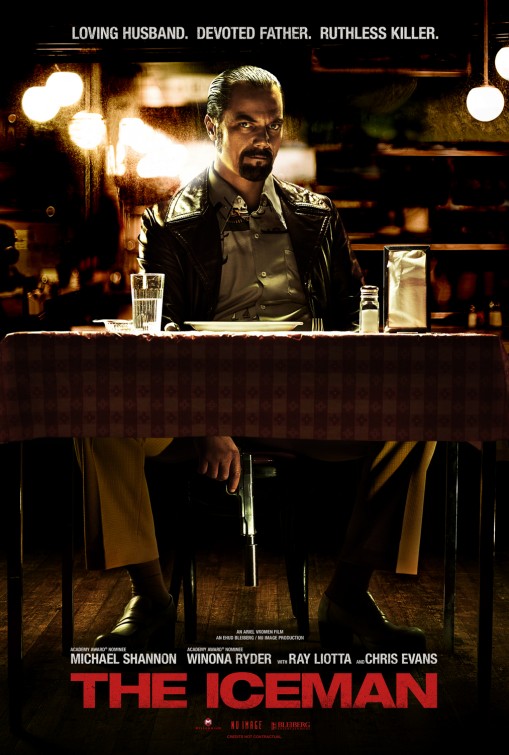 We’re fascinated by hired killers. Chalk it up to morbid curiosity or perhaps perverse, secret wish fulfillment, but we’re all titillated a tad by the murderous for hire. The Iceman is all about Richard Kuklinski (Michael Shannon), who worked as a contract killer for the mob from 1966 to 1988. He’s estimated to have killed over 100 people. A mob middleman (Ray Liotta) is impressed that Kuklinski shows no fear with a gun in his face, and so the guy gets hired to rack up the bodies. At the same time, Kuklinski has a wife (Winona Ryder) and two daughters, all of whom have no clue what daddy does for a living until he’s finally brought to justice.
The main issue at play with The Iceman is that it’s trying to draw out a character study for a rather impenetrable person. It’s hard to get a solid read on the character of Richard Kuklinski. The compartmentalizing of these two very distinct lives is a fascinating psychology to explore, one I wish the filmmakers had spent a majority of the screen time upon. The internal justifications, struggles and compromises would make for an excellent and insightful look into the psychology of killer rationalization. However, I don’t know if this movie would even be possible from this subject. Kuklinski is by all accounts a pretty detached guy. There just doesn’t seem like there’s a lot to him. His circumstances are interesting, beaten into an emotionless cipher by his father, brother to a fellow sociopath, and trying to make a reasonable life for himself while keeping his inner urges at bay. The sociopath-tries-to-make-good storyline is reminiscent to fans of TV’s Dexter, and there’s plenty of room to work there. It’s an intriguing contradiction, the man who cares for so little protecting his family. In the end, we don’t really get a sense of why beyond the illusion of the American Family that Kuklinski wants to hold onto, to make himself seem normal, to prove to his family he could break free from their influence. Even typing this I feel like I’m giving the film more depth than it actually illustrates. Even though he tries to play the part of devoted family man, we rarely see any evidence of devotion. He provides, yes, puts his kids in private school, but he puts his family at risk and doesn’t seem to have affection for them as much as propriety. They are his things and nobody will mess with them. Your guess is as good as mine if he genuinely loves any of them.
 Too much of the film gets mired in standard mob clichés. This guy upsets that guy; this guy wants the other guy dead. It all becomes the focal point of the movie, Kuklinski getting caught up in, essentially, office politics. Even the true-life details of the grisly methods of death feel like wasted potential for a better story. He goes on a job, he botches a job, he gets let go, so to speak, he strikes up a new partnership with another contract killer, Mr. Freezy (Chris Evans in a bad wig). That last part could have been a movie unto itself, watching an odd couple of hitmen plan, execute, and then dispose of their targets. The Iceman nickname comes from their process, freezing the dismembered corpses for months so that coroners cannot get a read on when the bodies were slain. While Evans is entertaining, this entire portion of the movie could have been eliminated, its bearing on the plot minimal. Likewise, the movie has several small roles populated by recognizable actors, which become a series of one-scene distractions. Kuklinski goes out on a hit and it’s… James Franco. Then there’s Friends actor David Schwimmer as a sleazy, ponytailed, nebbish mob screw-up. Stephen Dorff has one moment as Kuklinski’s angry, desperate, murderous brother in prison. The actors are all fine, with the exception of Franco, but many of them are just another reminder of the film’s disjointed attention.
I mentioned in Pain and Gain the notion of portraying true-life criminals as sympathetic figures, and the queasy nature of this complicit interpretation. The Iceman never really tries to make Kuklinski sympathetic or some form of an antihero, and I think the movie is better for it. One of the earliest moments in the film is Kuklinski slitting the throat of a guy who harassed him and defamed his lady. This is BEFORE the guy is even hired as a contract killer too. It seems like when the guy can’t murder he becomes a worse family man. Even in the end, he’s testing a new batch of cyanide on the neighborhood cat. The movie presents Kuklinski as he is, though you’ll be forgiven for feeling some initial pings of sympathy when you seem him try and protect his family. Granted his family could also very well use protection from him.
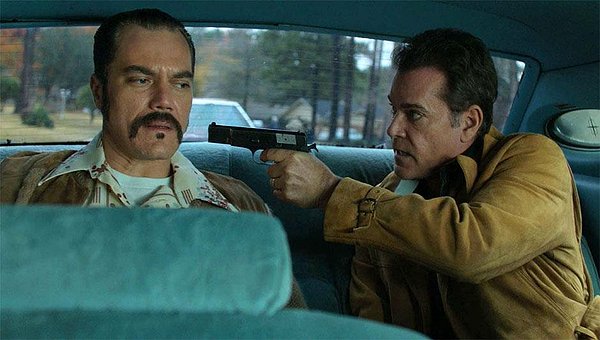 Shannon’s (Premium Rush) performance is what keeps you watching. There are few actors who are as intense as this guy, though I’m used to seeing him play unhinged psychos bouncing off the walls. Kuklinski is just as troubled as his other roles but he’s all reserve, steely nerves, and anger that eventually bubbles over into violent rage. Shannon is still such a good actor that even with a thin character, or at least thin characterization, he can be completely compelling to watch onscreen. One of the more peculiar, inconsistent elements of the film is Shannon’s constantly-changing facial hair. I think I lost count at about nine or ten different facial topiary variations. There were times where it will be different in consecutive scenes. I guess that’s a tipoff of a time jump, but his morphing, period-appropriate facial hair also became a point of amusement.
What makes The Iceman so disappointing in retrospect is how much potential it seems to squander. There’s a great story to be had with a contract killer by night and a family man by day. That contradiction, the struggle, the psychology is all rich material to work with. It’s just that Kuklinski is not necessarily that guy; he’s not too deep, at least not in this version, and his killer work problems are just not that compelling. If this is what the filmmakers were going to do with their real-life subject, then they might as well have just used Kuklinski as inspiration. Take the best parts and then compose a different lead character, someone more emotionally transparent or relatable or just plain old interesting. Just because it’s a real story doesn’t mean you’re indebted to telling every true facet of it, especially when a better story is within sight. Shannon is a terrific actor and does his best to make the film worth watching, but from distracted plotting to unmet analysis and emotional exploration, it’s hard to walk away from The Iceman and not feel a bit chilly.
Nate’s Grade: C+
Share this:

Pain & Gain (2013)
 I think the audience for Pain and Gain is going to know exactly who they are, and I count myself amongst that number. The latest from director Michael Bay, often treated tantamount to Satan in many critical circles, has the based-on-a-true-story hook but really it’s the big stars, stylish violence, peculiar criminal antics, and overall overflowing machismo of the picture that will draw its audience. I knew after one watch of the trailer that I wanted to see it, though I was somewhat ashamed of the level of my interest (don’t want to taint your critical credentials with too much sympathy for the devil, after all). Pain and Gain is a trashy and entertaining jaunt, just as I hoped it would be, but it overstays its welcome and may leave you fatigued and possibly dejected (so… a typical Michael Bay movie? Still got it).
In 1995, three Miami, Florida goons enacted one of the most bizarre and sordid criminal schemes, a story that could supply a tabloid with enough juicy exposes for a year. Daniel Lugo (Mark Wahlberg) and his co-worker Adrian Doorbal (Anthony Mackie) are personal trainers at Sun Gym. Their days consist of pumping iron and hitting on ladies. One of Lugo’s clients is Victor Kershaw (Tony Shalhoub), a wealthy businessman with a nasty temper. Lugo and Doorbal, with the help of an ex-con and ex-junkie (Dwayne “The Rock” Johnson), kidnap Kershaw, hold him hostage for weeks, torture him, and eventually get him to sign over his assets to them. Afterwards they try to stage his “accidental” death, though like most things, it does not go according to plan. Penniless and broken, Kershaw seeks out help from a retired private eye, ED DuBois (Ed Harris), to provide validation for his case. The Miami police are laughing off his claims. Kershaw is concerned that the Sun Gym gang will strike again when their lavish lifestyle dips, and he’s right. Lugo and company get into even more trouble and the body count rises.
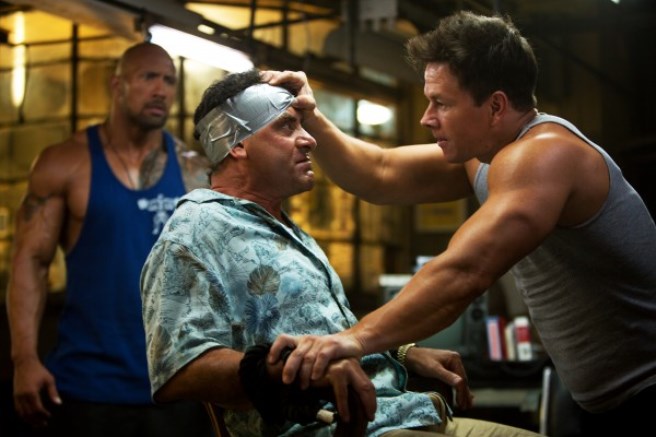 The results on screen are often entertaining in an over-the-top fashion, sustaining a rubbernecking captivation much like a horrendous car wreck. You just have to see how much crazier this thing gets, all the while muttering to yourself, “This was a true story?” It even gets to the point where the movie will remind you, via onscreen text as a man barbecues a batch of severed hands, that yes this is still a true story. Naturally there have been fictional inventions, character composites, and some details have been dropped to fit into the confines of a film narrative, but online research shows me that most of the larger plot beats are accurate, thus making the film even more compelling and disturbing. When the film is on, it feels manically alive with intrigue and absurdity. The problem is that it cannot keep this manic tone alive forever especially when actual innocent bodies start piling up (more on that later). There’s a certain uncomfortable tonal incongruity as the film develops and the comedy picks up a distasteful resonance. I love a well-executed dark comedy but just because something is macabre or unexpected does not automatically make it funny. Still, the movie has enough high-energy antisocial antics to keep you planted in your seat, laughing through bafflement.
Pain and Gain isn’t subtle in the slightest and yet it’s easily the most nuanced film of Bay’s career. Of course there are still the sleek cars, sexy babes, emphasis on style, and wanton destruction that are hallmarks of the man’s career, but the perspective is given a satirical prism, dropping us into the deluded, sub-American Psycho perspective of Lugo, a man with a very cracked view of the American Dream. The moral message reminds me of Marge Gunderson’s concluding musing in Fargo, telling a captured criminal, “There’s more to life than a little money, you know.” There’s some slight social commentary on wealth and the dirty tricks of capitalism, but really it’s the narcissistic delusions of a jacked-up criminal who believes he can succeed because he’s “seen a lot of movies.” You may even find yourself sympathizing with some of these knuckleheads, that is, until things get way out of hand. The screenplay by Christopher Markus and Stephen McFeely (Captain America: The First Avenger) is briskly paced and packed with bizarre details and even jumps into six different characters for voice over (Wahlberg, Johnson, Mackie, Shalhoub, Harris, and Bar Paly). For some characters it works as a great insight into their twisted logic but for others it’s just an easy set up for ridicule. The juvenile humor (did we really need a visual pubic hair joke?), candy-coated film palate, and sugar-rush, roid-rage plotting feel like a suitable match for the talents of the bombastic Bay.
The last thirty minutes of the movie will test your sensibilities of good taste. I’m all for having unlikable central characters just as long as the writer makes them interesting (what good is likeable but boring, the “friend zone” of characterization?). Some of movie history’s most fascinating characters have been scumbags and psychos. However, with that being said, I need my unlikeable characters to at least progress. When I’m stuck with a bad dude who keeps making the same bad mistakes, it can grow tiresome, and that’s where Pain and Gain ultimately lost me. Bay can’t quite keep up the charade of ironic bemusement forever, and a saggy second half starts to tread water, forcing the characters to act even more outlandish and inept. Did we need The Rock losing his big toe and then inexplicably giving it to a dog? It feels like the movie is filling time until the accidental murders come into being, raising the stakes. For a movie that’s 130 minutes, there should not be any need to fill time. During that long sad stretch, you start to feel disquiet, like the movie has lost its sense of perspective and the jokes have gotten too mean, too ugly, too outlandish. It doesn’t feel funny any more, and maybe that’s ultimately the point, but by the end Pain and Gain has soured. It overstays its welcome and then some.
 Its tone and connection to the real world raises an interesting and thorny question over whether something like this is appropriate. Should a story that involved the murders of innocent people end up becoming an over-the-top, stylized, lavishly glamorized Hollywood crime comedy? It has been over 15 years since the events of the Sun Gym gang, but is there a statue of limitations on good taste? Are we eventually destined for a vulgar film tackling the poor lives of the victims of 9/11? The answer is almost certain. What is off limits, or more pressingly, should anything be off limits to a comedic narrative? Is anyone really furious with Trey Parker and Matt Stone over their first film, Cannibal the Musical, transforming nineteenth century murder into song and dance? I doubt it, and yet there was something very off-putting about 2011’s 30 Minutes or Less, an unfunny comedy based around the true story of a pizza guy strapped with a bomb and ordered to rob a bank. The guy was blown to bits in real life (ha ha?). I guess I, as well as audiences, would have been more forgiving if the movie had been funny. I’m sure there would be fewer objections if Bay’s film had been more of a sober, contemplative drama on the sad acts of a bunch of desperate criminals, but with all the hyperbolic elements, machismo, and so-crazy-it-must-be-true plot turns, how could you turn this story into a serious drama? Not from the perspective of the nitwit criminals, at least. I don’t think the movie is ever positioning these guys as anti-heroes or excuses their excess.
Wahlberg (Ted) broke out as an actor thanks to a similar role as a wannabe star whose ambitions exceeded his grasp, and the man does dumb as good as just about anyone in Hollywood. It’s a specific kind of dumb, the angry, arrogant, pissy, self-involved kind of dumb that makes it acceptable to ridicule his character to no end. Johnson (G.I. Joe: Retaliation) gets to explore some interesting range as an actor, pacing around the demons of his character before just going hog-wild with the excess. Mackie (Gangster Squad) is arguable the most sympathetic of the group but also with the most to lose. Compared to his peers, he’s practically mild-mannered even though he takes injections into his penis. Shalhoub (TV’s Monk) is amusingly apoplectic and just enough of a jerk that you excuse his misfortune, at least for a little while. Ken Jeong (The Hangover) and Israeli model-turned-actor Bar Paly give the exact performances you would expect them to deliver. The best actor in the whole movie, though truth be told there isn’t a stinker in the bunch, is Emily Rutherford (Elizabethtown, TV’s The New Adventures of Old Christine) who plays Dubois’ wife. She has this calming, down-to-earth presence that seems to bring a small sense of peace to the madcap antics. She doesn’t have a lot of screen time but you’ll wish she had lots more.
Perhaps I’m being unfair to a movie that clearly isn’t intending to be anything but naughty, tacky, and gleefully excessive. In a way Pain and Gain reminds me of Tony Scott’s Domino, loosely based upon a true story but crushed to death by narrative kabuki and Scott’s characteristic excess. If I wanted to defend the much maligned Michael Bay, I’d argue what the real difference is between his excess and the excess of the more critically lauded Scott? Bay doesn’t have a slate of movies to his credit the likes of Top Gun, Crimson Tide, or True Romance. But isn’t flashy, artistic excess all the same when in the name of empty storytelling? Domino is also an apt comparison because it’s ultimately tiresome and far overstays its welcome, losing its audience with an endless array of odd sidesteps and moronic, deviant characters. While Pain and Gain has enough quirk and style to justify consideration, you may not respect yourself once it’s over.
Nate’s Grade: C+
Share this:

Django Unchained (2012)
 It’s an understatement that no one makes films like Quentin Tarantino, though after Pulp Fiction it seemed like everyone was trying. The famous writer/director is an audacious filmic DJ, taking samples from all genres and mixing and matching them into a new and elevated form of art; he takes low-grade B-movie concepts and genres and turns them into highly literate A-class films. My only quibble is that, while I heartily enjoy the man’s unique efforts, I don’t know if we’re ever going to see a different Tarantino anymore. Since 1997’s Jackie Brown, he seems intent on re-imagining exploitation films and B-movies and putting his articulate spin on them. I have yet to dislike a Tarantino film (I rate Jackie Brown the lowest but that’s still an A-) and I’ll be first in line for anything the man attaches himself to as writer/director. Django Unchained is Tarantino’s ode to spaghetti Westerns, and it’s every bit as violent and tense and entertaining as you’d hope it to be.
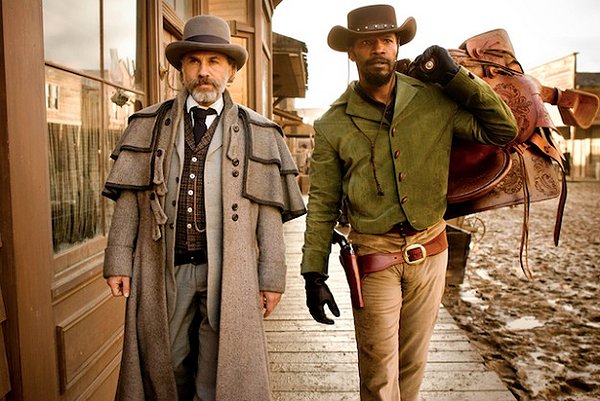
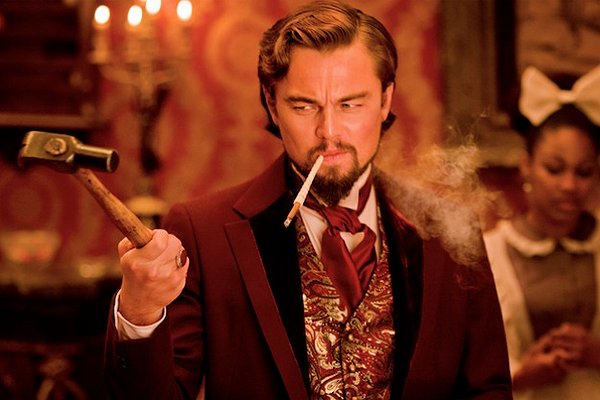
In 1858 Texas, an abolitionist bounty hunter, Dr. King Shultz (Christoph Waltz) frees a slave named Django (Jamie Foxx) and enlists his help in tracking down a team of outlaws. They strike up a mentorship, gunning down outlaws for money. “Kill white folk and they pay you for it? What’s not to like?” Django reasons. After a successful season nabbing bad guys and training Django in the ways of shooting, the men come to a crossroads. Django is looking for his wife Broomhilda (Kerry Washington). She was torn away from him and sold off to wealthy Mississippi plantation owner Calvin Candie (Leonardo DiCaprio). Schultz and Django cook up a scheme to rescue Broomhilda. Schultz will pose as a rich power player wanting to enter the “mandingo fighting” game (think savage gladiatorial combat). Django will play a black slaver, and expert when it comes to picking out prized fighters. With a generous offer, the two get invited to Candie’s family plantation, dubbed Candieland. Standing in the way of their plan is Stephen (Samuel L. Jackson), Candie’s head of the house. Stephen is deeply suspicious of their guests and ready to expose them for who they truly are.
 I’ve been dragging my feet writing a review of Django Unchained and I’m trying to determine why that is. Just after typing that sentence I spent 30 minutes checking my e-mail. I’m an avid Tarantino fan, so I’m left wondering what my hesitation is about. I certainly enjoyed the film, thoroughly, but perhaps my question is whether I should have enjoyed the film as much as I did given the historical reality of slavery. No movie will ever approach the true horrors of slavery; even the very act of owning another human is a detestable and crushing reality. Of course I’m coming at this movie from the perspective of a white male, so I feel like aspects of my commentary can only be minor. Is the backdrop of slavery too horrific for Tarantino to stage his spin on a revenge-filled Western? Spike Lee seems to think so via his critical public remarks. Tarantino has great glee in reveling in over-the-top movie violence, the kind that audiences (at least mine) cheer for. I guess the questionable angle is marrying the two realities and tones. You don’t want to take away from the brutality of slavery and at the same time you want to tell a compelling revenge-soaked thriller that satisfies with its buckets of blood. I’d say Django Unchained mostly finds the right balance to hit you in the gut one minute and the next have you clapping along.
It seems like the media is pressing every black celebrity for his or her personal thoughts on Django and especially Tarantino’s copious use of the N-word. Tarantino has gotten into hot water before with his penchant for the N-word, notably his own sequence in Pulp Fiction, but the N-word is entirely period appropriate for Django. Let’s face it, a majority of Americans, let alone Southerners, had really one word for slaves, and it wasn’t kind. This is the word that would have been uttered. However, after seeing the film a second time, I can see the complaints about the overwhelming use of the N-word. If you were to turn this into an awful and disrespectful drinking game, you’d probably pass out before DiCaprio even steps onscreen.
Like Inglourious Basterds, this movie is really a series of sit-downs that simmer with tension. The man has gotten so good with establishing the particulars of a scene, what the characters desire, and to push it to its breaking point when it comes to tension. While I don’t think anything approaches the highpoints of Basterds, this is still a movie that luxuriates in beautifully played tension and the danger lurking underneath Tarantino’s finely crafted words. And let’s talk about those wonderful words of Tarantino talk, the kind that seem so effortless to build sensationally interesting characters. The man sure enjoys writing his umpteenth variances on badasses engaging in verbal pissing contests (the literal kind are far less entertaining, at least for me). When you have character this sharply developed with such counter objectives, I could watch them duke it out all day. There are some pacing concerns with the movie, particularly once we get to Candieland, but when I’m engaged this much in a movie, I’d rather it go overboard than scrimp. Tarantino’s signature cool/funny/funny cool dialogue is alive and well. Every scene advances the plot, pushes it toward its bloody conclusion where bodies explode with sprays of red mist. It’s completely over-the-top in the Kill Bill vein, enough to draw snickers and laughter from a crowd, but Tarantino knows how to serve up a satisfying ending even with a body count to rival Hamlet.
 I don’t want to give the wrong impression that Django Unchained is deadly serious given the subject matter and historical context. I don’t think it disrespectfully sanitizes the horrors of slavery, but Tarantino’s brand of humor finds opportune moments to poke through. There’s a sequence with an early version of the KKK, a group of Southerners on horses arguing over whether they need to wear the ill-fitting bags on their head they prepared (plus Jonah Hill cameo). I was laughing so hard I thought people around me were going to shush me. It may well be the funniest thing Tarantino has ever written. There’s also natural humor to be had in the awkward handling of race relations, something that hasn’t exactly been perfectly ironed out to this day. A wealthy plantation owner (Don Johnson) struggles to explain how his slaves should treat Django, presented as a freeman by Schultz. “You want me to treat him like white people?” someone asks. This is followed promptly with a curt, “No.” There’s also plenty of gallows humor to be had with the over-the-top violence that pervades in the finale. It’s all key moments to blow off steam, so to speak, and make the film more bearable.
Django Unchained follows a traditional Western plot; in fact I’d say what we watch is essentially Tarantino’s whacked out spin on The Count of Monte Cristo (Alexander Dumas is even referenced in the film by name). Our lead character, Django, is in the Clint Eastwood mode of the strong and silent type. Schultz is the one who does all the talking while Django learns and glowers. They make a terrific buddy team and you almost wish that Tarantino had just diverged his story and allowed them to keep doing their bounty business. But Django’s wife needs some saving and that’s where the movie slows down. I wish Broomhilda had been given more character development. She’s pretty much the princess that needs saving, much like the German folk tale we learn is where Broomhilda gets her uncommon name. My sister described Django Unchained as a love story and I think that’s being a little generous (Tarantino did cut much of her torture, physical and sexual, from his script). We certainly feel Django’s desire to rescue her, and we worry about all the plot machinations and masks the characters must wear to accomplish this feat. With that said, the movie still has plenty of sucker punch surprises, much like Basterds, where violence erupts and despicable characters are given arias to illuminate the depths of their depraved worldviews.
I do wish that Tarantino had been a bit more judicious with his editing (the first without longtime editor Sally Menke who died in 2010) and curtailed all his self-indulgent meta film homage nods. We get stuff like Amber Tamblyn (The Sisterhood of the Traveling Pants) in one shot. Why you ask? See her father also stars in the movie in a small role, and he once played a character titled “Son of a Gunfighter.” So in his own credits, Tarantino lists him as “Son of a Gunfighter” and his daughter as, what else, “Daughter of a Son of a Gunfighter.” When all of that contorting is for an end credits gag and one shot in the whole movie, you feel like it was strictly masturbatory. Then there’s the original Django, Franco Nero, asking Foxx how to spell his name. Old Django asking new Django how to spell his name. I guess it’s supposed to be like a cinematic passing of the torch but it’s another moment that feels superfluous in a 165-minute movie. The movie can get a tad exhausting. The final 15 minutes, while still smartly written and boasting some terrific bloody comeuppance, feels like an add-on that wasn’t needed. It does manage to tie some elements back together but at this point the audience is ready for Django to ride off into the sunset, not have another obstacle to overcome in improbable yet badass fashion. At my first viewing, the kid behind me kept complaining to his parents that the movie had failed to end (“This is still going? It’s already been two hours!”). I also understand the fruitless and ironic nature of asking Tarantino to reign in his self-indulgences; that is, after all, what makes him who he is.
As expected from Westerns, the movie is a boy’s show. Foxx (Ray) has a steely screen presence that works very effectively for the character. The man’s quiet confidence and growing insolence play well, as he burrows into a role that boosts his confidence and assertiveness. Foxx’s journey from beleaguered and shell-shocked slave to mighty walking vengeance is definitely a full performance and one that Foxx delivers without any winks to the camera. Waltz (Carnage) will be dinged for playing a character similar to his Oscar-winning role in Basterds, but he’s still joyously entertaining, with that strange speech pattern of his that he plays like a musical instrument. He has a lot to say with plenty of theatrical flourishes, but that’s what makes him so entrancing. Simply put, Waltz and Tarantino are a match made in heaven.
 DiCaprio (Inception) doesn’t appear until over an hour into the film but he’s worth the wait. At my first screening, I thought DiCaprio was good but was unimpressed. Upon a second viewing, I must say my appreciation grew for the man’s performance. Calvin Candie is certainly a vile man and DiCaprio is able to give him such an intriguing brio; he’s not the magnetic source of evil that Waltz was in Basterds, a man able to stay two steps ahead of his prey. Candie is easily taken for a fool. He’s not the smartest guy in the room but he can work up a pretty sizable fury; DiCaprio actually cuts open his hand during a confrontation and remains in character, undeterred. But the best actor in the movie is Jackson (The Avengers). There are far more layers to his head house slave than meets the eyes. It sure seems like he’s really the fist behind the glove. He may put on an act for company, but the man is far more calculating and sinister than anyone else in the film. You know he’s a good villain when the audience cheers the loudest at his demise (don’t act surprised, spoiler-phobes). I wouldn’t be surprised if Waltz, DiCaprio, or even Jackson get nominated for supporting Oscars.
It seems like Tarantino has also stumbled into a hidden lucrative subgenre at the box-office, namely the historical revenge film. Who doesn’t want to see a group historically shafted get some sweet revenge, the bad guys punished, and all with sparkling dialogue? In 2009, Tarantino went on a Nazi scalping spree and got to shoot Hitler in the face. With Django, a brutalized slave becomes the hero of his own story and kills some vile slave owners and traders. It’s essentially a Nat Turner-style rebellion from history, albeit with some harebrained scams and colorful characters. Following this lucrative model, Tarantino could take other maligned minorities and give them cinematic justice. Sadly, there are too many examples to count where Tarantino can take inspiration.
Django Unchained is a bloody, rollicking, talky, messy, exciting, surprising, uncomfortable yet satisfying movie and probably one of the oddest crowd-pleasers in recent memory. I saw it on Christmas day and my theater was a sell out. They loved it, soaking up every minute, laughing at the funny parts and wincing at the gruesome violence. I couldn’t think of a better way to celebrate the birth of baby Jesus. It doesn’t whitewash the evils and viciousness of slavery, but at the same time Tarantino knows how to serve an audience and their demands for big characters, big set pieces, and big vengeance. Django is a sturdy Western/blaxploitation film, and whatever other genres Tarantino feels like tossing into his cinematic blender. Whatever you classify it as, Django Unchained is another Tarantino original specialty and his tremendous talent comes through loud and clear, even with a few false endings and self-indulgences at play. It looks great, has a great soundtrack, and presents great acting talent reciting Tarantino’s great words like they were prized possessions. It’s a bit long and a bit overdone, but when you’re enjoying yourself, who wants to leave the party early?
Nate’s Grade: A
Share this:

Seven Psychopaths (2012)
 Writer/director Martin McDonagh only has one movie to his name but the man has already accrued legendary status in some circles. The 2008 dark comedy In Bruges didn’t create much of a blip at the box-office, but its blend of absurdist comedy, dark drama, shocking violence, and languid contemplation found a rabid cult following. I have several friends who regard In Bruges as the best film of 2008 (WALL-E still reigns supreme for me but I quite enjoyed In Bruges).McDonuagh’s latest, Seven Psychopaths, reminds me of Barton Fink: both are about struggling writers, both are satires of the film industry, and both have sudden splashes of violence and a serial killer who pushes the protagonist to artistic completion. In other words, Seven Psychopaths is a fun film and a great time at the movies.
Marty (Colin Farrell) is experiencing some killer writer’s block. He’s stuck on his new screenplay titled “Seven Psychopaths.” His buddy Billy (Sam Rockwell) is eager to help out. The guys run afoul of another psychopath, mob boss Charlie (Woody Harrelson), due to Billy’s side business. He kidnaps rich people’s dogs and then his partner, Hans (Christopher Walken), returns them and collects a reward. Billy and Hans have kidnapped the wrong shih tzu, and now Charlie and his muscle is going to make them pay.
 The refreshing thing about the bloody, wickedly entertaining Seven Psychopaths is that it constantly surprises you. This is such a rarity with modern movies, particularly Hollywood movies that attract as notable a cast as this one. McDonagh is wonderfully adept at throwing narrative curveballs. There were a few surprises where I literally jumped in my seat. You constantly think you have the movie figured out, and then it goes down a different alley and becomes more interesting. One of the pleasures of having psychopathic lead characters is that they are impulsive and do not have to follow the normal purview of logical decision making. They might just call the bad guys and divulge where they are hiding. They can do anything at any moment, and part of that unpredictability is what makes the movie feel so electric, so creatively alive. I must stress that McDonagh surprises in ways that feel satisfying and yet believable given the world he’s concocted. Part of the fun in the first half is just figuring out who the seven psychopaths will be. It’s not like it’s some laconic chamber piece mystery but the psychopaths are an eclectic mix from the real to the fictional to real characters doubling as inspiration for fictional ones. I think in the end there may only be six psychopaths, unless McDonagh is counting himself amongst the numbers.
McDonagh also has a blast deconstructing the very kind of movie that he’s providing. Marty bemoans writing another rote psychopathic killer movie where the violence is fetishized and the bad guys are mythologized into idols. You think the film is headed in one direction, in the Guy Ritchie-style standoffs and shootouts, and then it takes a less traveled path, one where it criticizes these sorts of movies and ponders existential questions about the nature of self-expression and death. It began as a care-free movie about thugs and writers and transformed into a movie that manages to have something to say about life, philosophy, and the cyclical nature of vengeance. Two of our three main protagonists are pacifists and remain so to their imperilment. At one point, a character narrates how this story as a proper movie would end, and it covers all the nihilistic clichés of vengeance and epic body counts. But then Marty, and McDonagh as well, wants to turn away from the expected, from violence for the sake of violence, from the exploitation of stylized suffering. McDonagh doesn’t forget to entertain while he’s making you think in between those handfuls of popcorn. The female characters in the movie (Abbie Cornish, Olga Kurylenko) are generally wasted, in different senses, but McDonagh uses this as another charge against this type of film (a boy’s night out of carnage). This is an accessible movie that can be enjoyed on a whole other meta level. I loved the various gear changes. For me it took the pulpy action material and elevated it to another level of genius.
 McDonagh still maintains his darkly sardonic streak of humor that made In Bruges such a riot. I was laughing throughout Seven Psychopaths; chortles, snorts, giggles, big belly laughs. With its heedless violence, obviously this will not be a film that runs on every person’s wavelength of funny. The very opening involves two mafia hitman debating whether shooting somebody in the eye takes actual precision or just dumb luck. It’s the sort of mundane conversation you’d see in a Quentin Tarantino movie, and also the precursor to something nasty and ironic. McDonagh’s sense of humor is similar to Ritchie or the Coen brothers, but the man establishes his own sense of wicked whimsy. The absurdist dialogue is always a hoot and can generate serious malice, especially when delivered by stern psychopaths. Rockwell (Moon) in particular is outstanding and delivers a virtuoso performance of the unhinged. The man just radiates energy. You’ll feel jacked up just watching him. I keep waiting for this underrated actor to break out with each star-making turn, and his comedic zing is played to perfection in Seven Psychopaths. In contrast, Walken (Hairspray) is rather reserved as he underplays his character, one of the saner men he’s played. It feels like the passing of the torch from the older generation of psychopath to the newer generation.
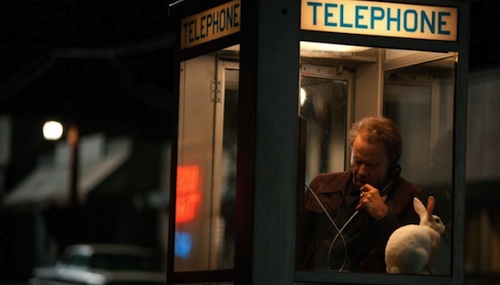
Being a colorful movie about colorful bad guys, and girls, you’d expect there to be some grade-A oddballs, and McDonagh does not disappoint. Some of the psychopaths in question have little bearing on the story plot-wise. There’s Zachariah played by the impeccable Tom Waits (The Imaginarium of Doctor Parnassus). He answers an ad that Billy set up for psychopaths to share their stories to Marty. His tale involves cross-country spree killing of serial killers, rabbit petting, and the love of his life, and partner in crime, leaving him. As far as plot, this little aside has little significance to the plot other than setting up a superb joke to end the movie with. But the character is so interesting, multidimensional, and played with equal parts aloofness and sincerity by Waits, that you can’t imagine the movie without him. Several of these psychopaths could have been the stars of their own movie, from the vigilante killing mob thugs to the tale of one father’s long path to vengeance. Even the fictional psychopath, the Vietnamese man (Long Nguyen) seeking vengeance against G.I.’s, could have enough weight to carry a feature film. The amazing part of the movie is that you don’t feel like any of these characters are shortchanged. McDonagh finds ways to emotionally ground his characters, allowing the audience to empathize amidst the bloodshed and loony characters. We care about Hans and his ailing wife; we care about the friendship between Marty and Billy. It’s real for these characters and so it feels real to us, despite the hyper-real flourishes of the movie.
If you’re a fan of In Bruges, or just dark comedies mixed with sudden violence, then you’ll probably find something to enjoy with Seven Psychopaths. You don’t have to be nuts but it helps. McDonagh has crafted another winner with sharp dialogue, a twisty plot full of surprises, incisive commentary on movies and movie expectations, as well as some sincere soul-searching and poignancy. This baby has it all, folks. Above all else, it’s just a blast of fun. the actors all seem to be having the times of their lives, notably Rockwell, and the morbid laughs and off-kilter thrills should cement another McDonaugh film for cult status. Seven Psychopaths is a palyful movie along the lines of Kiss Kiss Bang Bang and even Adaptation. It’s bursting with ideas and comments and jokes. when you leave the theater you almost want to get back in line and start the ride all over again.
Nate’s Grade: A-
Share this:

Killer Joe (2012)
 This is one nasty, alarming, but very involving movie that wallows in darkness and plays it up for laughs. Killer Joe is a dysfunctional family drama, a crime thriller, and a mesmerizing character study when it comes to the lessons of amorality. Based on the play by Tracy Letts (August: Osage County), Joe (Matthew McConaughey) is a crooked cop who works as an assassin on the side. A weasely loser (Emile Hirsch) and his family hire Joe to kill their mother for the insurance money. Things get out of hand in frequent measure, with splashes of brutal violence, healthy amounts of sex and full-frontal nudity, and a disturbing sexual act with chicken that more than earn this film its adults-only NC-17 rating. What makes the movie rise above base exploitation is its depraved, deep-fried sense of humor. There is plenty of uncomfortable laughter and guffaws. The end of the film, during a fever-pitch of violence, is so sudden, so kooky, so debauched, that my friend and I burst out laughing. Without its wicked sense of humor, and its sharp ear for working-class dialogue, the movie could be accused of wallowing in the muck. There’s also the terrific acting, chiefly from McConaughey. He gives a hypnotic performance, chilling, unpredictable, and deeply committed to retribution. When he zeroes his cold eyes on you, boy does the flesh crawl. It’s an intense performance and arguably the best of the man’s career. Directed by William Friedkin (who also directed the 2006 adaptation of Letts’ play, Bug) with brutish élan, Killer Joe is one nasty piece of work, but given the right audience, it could prove to be a perverse entertainment.
Nate’s Grade: B
Share this:

God Bless America (2012)
 Bobcat Goldthwait’s (World’s Greatest Dad) pitch-black social satire is something akin to Idiocracy meets Falling Down. Frank is a terminally-ill man (Joel Murray), fired from his job, and he’s had enough with the coarsening of American culture. He teams up with Roxy (Tara Lynne Barr), a precocious teenager, and embarks on a killing spree intended to take out the people responsible for making us so mean. Nothing is subtle about Goldthwait’s satire, and while the victims are easy targets (reality TV, media fear-mongering, hateful religious extremists), the results are wickedly funny and entertaining on a vicarious level. Murray is given a few standout speeches about the poisoning of intelligence, the celebration of self-absorption and ignorance, and while it may be preaching to the choir, God Bless America has enough moments that make you want to stand up and salute. There is a sequence in a movie theater where Frank and Roxy kill a group of noisy, inconsiderate teenagers, and I think this part should be shown before every movie, in every theater, for the rest of time.
What stops the film from being an irresponsible 90 minutes of pure cranky wish-fulfillment is that Goldthwait does not condone his killer’s point of view. The movie finds ways to undercut the glamorization of what they do, whether it’s robbing Frank of a movie-style “cool kill,” having Roxy list off every annoyance she think is worthy of being killed over (including people who misuse the word “literally” and Diablo Cody) and having Frank reign her in, or the fact that Frank admits to finding some common ground with a blowhard pundit’s political views. This is definitely a movie for a select audience, but for people with a perverse sense of humor and a sense of rising frustration and dread over the popular culture, God Bless America is the movie equivalent of a cultural enema. It’s the darkest movie about manners you’ll likely see in a lifetime.
Nate’s Grade: A-
Share this:

Columbiana (2011)
 Apparently, Columbians and several academic professors of Columbian descent have taken offense with the implications of the new action film from the stewardship of producer/co-writer Luc Besson (name a French action movie from the last 20 years and he’s likely had some hand in its development). The criticism being drawn is that Columbiana paints an unflattering picture of life in the South American country of the, almost, same name. I suppose that could be one charge against the film, but why be so limiting? Columbiana doesn’t make anybody look good, except for its star Zoe Saldana (Avatar, Star Trek), who could even stand to eat a few more sandwiches if you ask me.
10-year-old Cataleya (Amandla Stenberg, soon to breakout in a big way as Rue in next year’s Hunger Games) has the misfortune of watching her parents gunned down in front of her eyes. Her father ran afoul with the local drug lord, though we’re never told why. The drug lord’s main henchman, Marco (Jordi Molla), is looking for a microchip Cataleya’s father gave her. The girl stabs Marco in his hand and leaps out a window, darting through the streets of Bogotá with goons chasing after. She makes it into a U.S. embassy and offers up this microchip filled with significant data (what we’re never told) as her passport to America. She eventually finds her way to Chicago, where she lives with her Uncle Emilio (Cliff Curtis, doing an accent on loan from Scarface). She wants to be a killer to avenge her parents, and her uncle agrees to help. Flash forward 15 years, and the adult Cataleya (Saldana) is working as a hired assassin. Her calling card is painting the cataleya orchid on the chests of her victims. Why? To attract attention from the right parties. She’s playing a dangerous game, as they always do, romancing an artist (Alias’ Michael Vartan), staying a step ahead of the authorities, and working her way up the Colombian goon food chain to get back at Marco and his boss.
 This is one of the dullest action movies I’ve had the privilege of sitting through. I was actively counting down the minutes until it would be over about halfway in. It’s not because Columbiana is particularly bad, it’s just so staggeringly routine, a French-styled action thriller cobbled together from the leftover bits of previous French-styled action thrillers (take one part La Femme Nikita, some faux Professional gravitas, add some District B13 parkour, how about a few outlandish Transporter getaways, and bake for 30-40 minutes). There are a few decent action sequences but lots of time in between, time that lets the film’s momentum lag and allows space to start contemplating all the questionable aspects of the picture. There are so many lazy, recognizable pieces onscreen, from the idiot FBI agents, who are always late on the trail, to the underwritten romantic love interest who is only there for booty calls and to accidentally be endangered, to the oblique bad guys who are just bad, and sometimes rather bad at being bad. These guys couldn’t outrun a 10-year-old girl in Columbia, what makes me think they’ll get their act together and take out the adult version? And I absolutely hate it when movies, set in other lands, have the characters speak one line in their native tongue and then transition immediately into English spiced with the occasional foreign phrase. Columbiana has the notoriety of making me yearn for the days where a female assassin picking off men twice her size was a novel concept/image.
Turn after turn, beat for beat, the plot has characters behaving in contrived ways because the story would not work without these contrivances. Cataleya says she’s an expert killer, but much of her expertise involves an insane number of coincidences and variables that are impossible to account for. We’re talking about the bathroom habits of guards, the amount of coffee consumption, the placement of specific prison cells, the precise number of guards and their own attention spans, the fact that every single person would not notice security cameras being messed with, and even nitty-gritty stuff like the amount of water in a plastic cup and the exact size of a hole that would allow the right amount of liquid to drip and pool into a spoon. Not to mention the fact that this also works on the assumption that police finding a plastic cup and a spoon inside a security panel would not find any of this suspicious. What the hell? That’s not rigorous planning and flawless execution? That’s divine intervention and/or good luck. At least in other hitman films that would study their prey to make it look like an accident. Not our Cataleya. She’s been taking out goons and leaving her calling card in an effort to attract attention from a certain Columbian cartel leader. The problem is that it takes her 15 years and over 22 murders before her skills attract media attention. That’s a frustration that the Son of Sam might identify with. But how would murders in Chicago attract attention in Columbia?
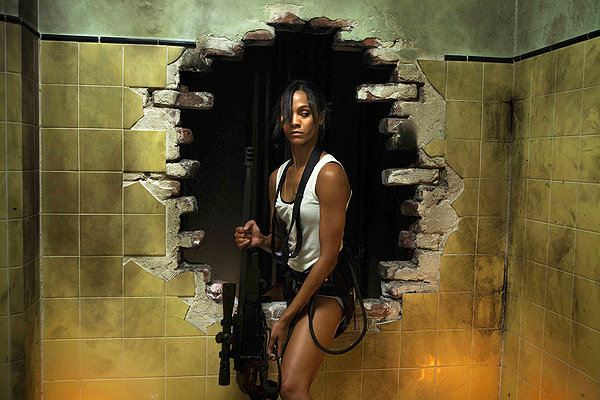
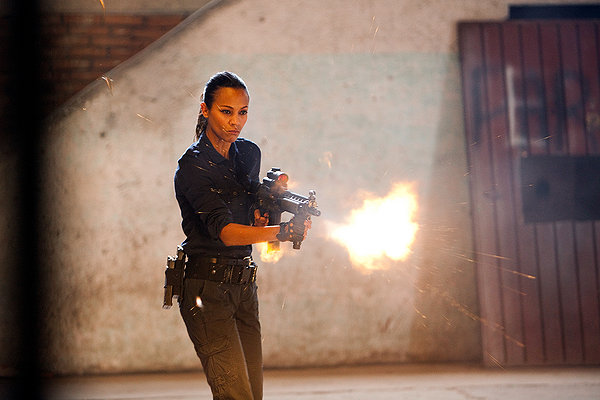
The only thing noteworthy for an enterprise that is so inherently generic is the weird moments that catch your attention. First, Saldana’s emaciated, wiry, potentially malnourished frame certainly draws your attention. Has there ever been a skinnier assassin on screen? There’s a reason that this woman is able to constantly squeeze inside air ducts and other cramped spaces; she’s practically a contortionist with her body. Now the actress has always been petite but her diminished physicality makes everything she does seem so much less believable. When she’s slinking around with a humongous assault rifle, you’d think the rifle weighs more than Saldana. And then when she engages in hand-to-hand combat, you keep waiting for some bad guy to grab her by the scruff of her neck and just hold her at arm’s length, a safe distance from potential kicks. Despite all her steely glares, Saldana just does not come across as a believable hitman. To top that off, the way director Olivier Megaton’s (Transporter 3) cameras seem to worship her lithe, leggy body gives an unsettling support for Saldana’s teeny tiny body. Now people can be just as discriminatory toward thin people as they can be with the overweight, but with Columbiana, Saldana’s skinny body negatively impacts the reality of a story already riddled with logic gaps.
 Then there’s Cataleya’s uncle who himself is something of a criminal under lord. She wants to grow up and be a killer and he just sort of shrugs and says, “Okay,” in the same tone of voice as if she had said she wanted to be a cowboy. But this is Movie World, a place where Cataleya’s father tells his driver, “We’ve got maybe an hour at most before he kills my whole family,” and then spends that fateful hour in such a lackadaisical fashion. He stops and walks around his car, sits down his little girl to have one last talk, waits for his wife to pack; there’s no sense of urgency here. People, you got one hour to supposedly live, you don’t pack a suitcase you just get in the car and run! But getting back to Uncle Emilio in Chicago. After he enrolls her in school, she’s sulky because she doesn’t think there’s anything she can gain from American education. She just wants to learn the ways of a killer. Her uncle, in a misguided feat to teach her a lesson, pulls out a gun and shoots randomly into a street, causing a car to crash and dozens of witnesses to huddle. “What can I teach you if you don’t learn?” he says, somehow giving the least inspiring case for public education. Then, preposterously enough, he and Cataleya scamper off at a mid-trot, casually eluding the police and all the dozens of witnesses who have clearly been able to see them this whole time.
Columbiana is one of those cookie-cutter action movies that just coasts on the apathetic expectations the audience has when they knowingly plop down money for a generic genre picture. And generic is certainly Columbiana. It’s a fairly standard revenge picture with some fairly standard action, devoid of any discernible kinetic style that might make for memorable sequences. Columbiana would not exist if it weren’t for a wealth of clichés and contrivances; the whole enterprise is bursting at the seams thanks to all its shortcuts in story and character. What does the title even mean? Is the film Columbia-esque? Is the depiction of skinny assassins and preposterous, illogical action supposed to be reminiscent of life in the country of Columbia? I think the film paints a worse picture of Chicago than Columbia, but at any rate this is an action thriller that can’t be bothered to thrill. Columbiana is generic to the point of desperation, where even the sight of Saldana in a skintight cat suit can become underwhelming in time, a tragedy of international proportions.
Nate’s Grade: C
Share this:

Hanna (2011)
 We all seem to love child prodigies. The concept of someone so small doing something well ahead of their years seems to fascinate our minds. I suppose the same holds true for professional killers. We all seem smitten with teenage depiction of super-powered killing machines. Last year presented Kick-Ass whose real star was the adolescent Hit Girl (Chloe Moretz-Grace), pint-sized reaper of carnage. Then there’s River from Serenity, Gogo from Kill Bill: Volume One, the ladies of Sucker Punch, the Heavenly Creatures girls (at least this one is based on a true story), and pretty much half the cast of Battle Royale. Just wait until The Hunger Games comes to screens in 2012, built upon the premise of 12-18-year-olds fighting to the death on national television (so the premise is almost exactly Battle Royale). We love our innocence mixed with ironic cynicism. Along comes Hanna, the tale of another teenage girl leaving a trail of bodies in her wake.
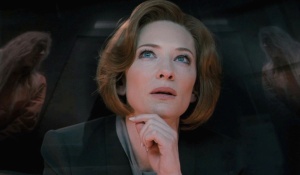
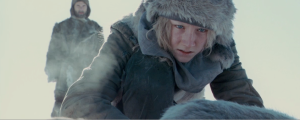
Hanna (Saoirse Ronan) is a sixteen-year-old girl living above the Arctic Circle with her father, Erik (Eric Bana). She’s been in survival mode all of her life, preparing for a day when she would finally break free and seek vengeance. CIA Agent Marissa Wiegler (Cate Blanchett) killed Hanna’s mother and has been lying in wait to finish the job, eliminating the rest of the family. Erik has taught his daughter well to think on her feet, master several languages, and become an excellent marksman/fighter. Hanna makes the choice to set their plan into motion. She triggers a device that signals to the CIA where they are. Marissa sends a crew to pick up Hanna and Erik, but only finding the girl. Once in an underground CIA compound, Hanna turns her focus on Marissa, killing her double (good call, lady), and breaking out of the compound. She finds that she’s been taken to Morocco. Fortunately, a family is traveling through the land and Hanna can catch a ride before she meets up with dear old dad in Berlin. Marissa sets out on a manhunt to find Erik. She hires a group of German criminals (led by Tom Hollander) to retrieve Hanna (“I need you to do things my agency will not let me do,” she reasons). Everyone is on a crash course to Berlin, where Hanna’s mysterious origin will be finally revealed.
 Director Joe Wright blew away all my expectations for him. The British director was mostly known for visually lavish period pieces like Pride and Prejudice and Atonement. This is a drastic change of pace and proof that the occasional art director can produce a great-looking, meditative action thriller that still delivers the goods. Wright’s camerawork is beautiful, making artful use of composition, lighting, and editing to deliberate purpose. There were several moments that I just got caught up in the look of the film, aided by the energetic if sadly too-often absent score by The Chemical Brothers (I love the chunky bass groove on “Container Park”). I was just impressed what could be produced under the guise of action cinema. This is an elevation of the genre. Wright’s color palette is awash in ominous reds, soft blues, and delicate yellows, which helps give the film this painterly approach to photography. Pay attention to the dream-like visual metaphors connected to fairy tales (Marissa seems to have a tooth cleaning fetish –“What big teeth you have…”). At the same time, Wright knows how to stage a terrific action sequence. His signature tracking shots allow the audience to become enveloped in the action, taking in the punches and kicks without the disorientation of the popular erratic editing style of modern action cinema. Bana taking down a bunch of goons in a subway level is made more thrilling because we see every second of activity, allowing the moment to build in tension as he is followed, then cornered, then strikes out.
17-year-old Ronan has left the awkward pubescence of The Lovely Bones far behind her. Like her Atonement director, she too steps far beyond our concept of what she is able to perform. Ronan is a five-foot-tall wrecking crew. She keeps her eyes intensely focused, tense blue orbs. At the same time that she convincingly kicks butt up and down the screen, Ronan successfully communicates the internal drama of her character. Hanna is an outsider trained her whole life for a single purpose. When she’s left in a Moroccan back room, Hanna is overwhelmed by the cacophony of noises by electronic appliances, at a loss to make the melange of sound cease. She’s a victim of her own upbringing and her father’s quest for vengeance. Ronan keeps her icy cool demeanor when she means business, but the Irish lass and her straw-blonde hair manage to find the girl inside the super girl. Bana (Star Trek) is suitably stoic and conflicted as the father, and all hail Blanchett (Robin Hood) as a good villain for once. With her Southern drawl, she presents an alluring sense of menace throughout without breaking down into over-the-top histrionics. Blanchett is so good as a slippery CIA agent that you wish she didn’t farm out her villainy to a group of German goons.
 What holds Hanna back from greatness is it uneven natures of its plot and the lack of sustainable action. The movie is just as much a strange coming-of-age saga for a girl who was raised in the woods. The lengthy travelogue with the British family from North Africa through Spain kills the film’s momentum routinely. Things will start picking up, the excitement builds, and then we cut back to the goofy caricature of a flighty liberal family (Olivia Williams and Jason Flemying as the parents). Despite the painful “do what you feel?” parenting cues, the family unit seems to have some level of functionality. These scenes are meant to contrast with Hanna’s own upbringing. It’s meant to show the life that Hanna has never been allowed to choose. But I got that rather quickly. Also, if you want to sell the “alternative path” contrast it would have more impact if this foil family were more appealing and less annoying. Even moment Hanna tags along as a stowaway with this family it disrupts the momentum. I understand that Hanna needed some narrative excuse to get from the rocky deserts of Northern Africa into central Europe, but when you’re dealing with a super kid, why rely on her just hitching a ride with a van full of hippies?
What really let me down was the lack of sustainable action that developed. While I’ve already credited Wright’s handling of the onscreen fisticuffs, I just wish there was more of it. The action occurs in spurts that fail to keep up. That tracking shot fight sequence is wonderful, but it’s too short. Hanna taking out men twice her size is undeniably enjoyable, but short of an excellent sequence of hide-and-pummel through a cargo ship yard, Hanna is never put in a position of risk. Sure she’s in danger but she’s never overmatched, which is part of the reason why the action sequences only happen in bursts. Her competition never seems to be truly threatening. Hollander (looking eerily, eerily like celebrity blogger Perez Hilton) in white bike shorts is not that intimidating. He’ll stand out, which might not be what a CIA agent wants when she hires goons to track and kill a super kid, but he’s never more threatening than Henchman #2 status, though he’s been irresponsibly promoted for the purposes of this movie. I realize that Wright and his screenwriters, Seth Lochhead and David Farr, wanted a character-based action thriller. Hanna is that film, but it could have been a more thriller vehicle if more attention was spent on the realities of their dramatic setup. The problem with making Hanna a super kid warrior is that she needs either BETTER competition or MORE competition. Pick one. But having a small number of inferior toughs seems like the worst outcome for people who want solid, sustainable action.
 The plot of Hanna is fairly conventional but the style and feel of the film are anything but. Wright has assembled a first-class art-thriller that would have been a work of true greatness if the plot could have gotten itself figured out. Splitting time between action set pieces and a family road trip is not an ideal use of running time. The action works fantastic, that is, when it does make its too-brief appearances. I’ve read several comparisons to Run Lola Run due to the stylized visuals, pace-setting electronica score, and likely general German setting, but I feel these comparisons are surface-level; Lola was a firecracker of style and energy rarely replicated in film (it’s my go-to film to show people who are self-described haters of foreign films). Hanna is no Lola, but Hanna is still a class ahead of her peers. Wright and company have produced a film that is moody, stylish, thrilling, and just a little bit ridiculous. As Hanna says to her prey, she just missed your heart. Whether that’s by design or accident, we’ll never know.
Nate’s Grade: B
Share this:

The Mechanic (2011)
 The Mechanic is a routine remake of a 1972 Charles Bronson hitman thriller. But when did “mechanic” ever become commonplace slang for “killer”? The film treats this concept like everyday knowledge. Bishop asks, “You know what a mechanic is?” A character responds matter-of-fact: “A hitman.” And the “mechanic” services are advertised via a system that includes a Craigslist style message board. It makes me wonder what the “adult services” section on Craigslist was really all about this whole time.
Arthur Bishop (Jason Statham) is the world’s greatest hitman. He meticulously plans his hits, deciding whether to make it look like a suicide or an accident or whether to send a message. He’s the cleanest of the cleaners. Then he gets a very delicate assignment – he’s to take out his mentor, Harry McKenna (Donald Sutherland, taking a paycheck). Bishop’s boss (Tony Goldwyn) tells him that somebody is going to kill Harry. If it’s Bishop at least he can make it more humane. Bishop takes out his mentor and makes it look like a carjacking. Then Harry’s screw-up of a son, Steve (Ben Foster), appears to get vengeance for his old man. Bishop takes the hotheaded kid under his wing and trains his to be an assassin. Then, naturally, Bishop discovers he was set up and played by his employers, which brings about a larger examination on the cyclical nature of violence. Just kidding. There’s more killings.
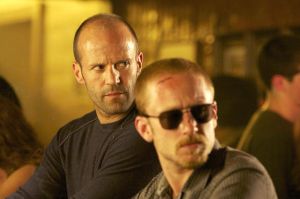 To say that The Mechanic is a well-oiled formula picture is probably the kindest thing that can be said. It follows the path of its hitman forbears fairly close. The opening pre-credit sequence is a hit that established the abilities of our deadly lead, Donald Sutherland pops up just long enough to lay down the necessary exposition for the film, and then before we even finish the first reel (20-minute mark) the movie manages to introduce a sexy female (Mini Anden) whose only purpose, in grand action movie tradition, is to have enthusiastic sex with the lead whenever his tank is low. The rest of the movie follows rather lockstep with the various beats of the genre, meaning that Bishop takes on an apprentice, shows him the ropes, they bond by taking out the bad guys, and then of course the final show drops and the truth about Bishop killing Harry is revealed. Along the way, The Mechanic does enough to satisfy genre fans looking for the goods when it comes to thrills.
The best moments are the tag-team hitman efforts of Bishop and Steve. The stuntwork is occasionally impressive like when Bishop and Steve repel down a large hotel building or when a car literally drives all the way inside a bus. There’s a brutal, visceral fight between Steve and his first kill that serves as the film’s highpoint. It was these sequences that made me actually sit back and think, “You know, I think this concept would actually play best as an ongoing TV series.” Think about it: you’d have your target of the week, the planning and execution that always make for satisfying payoffs, and then week-to-week Bishop and Steve would continue their complicated relationship with Bishop’s guilt eating away at him while he tries to keep the truth at arm’s length away from his neophyte partner. To me, that sounds much more dramatically rich while still keeping the body count consistently high.
Of course by hewing so close to the confines of genre, The Mechanic also has very little going on outside of the mini-missions of the hit jobs. Bishop obviously has been misled and setup by his sleazy employers. It’s fairly clear early on that when a guy gets out of a limo in a three-piece suit and tells you that the old man in the wheelchair is the bad guy, red flags should be waving. There doesn’t seem to be a formidable opponent in this fight mostly because Bishop is long described as the best at what he does. So how do you stop the best? You’d think you’d hire other players of comparable skill or offer an incalculable amount of money to kill the guy. But our villain doesn’t do any of this. Five minutes prior to his death, our villain fails to even once threaten Bishop (don’t even pretend like that’s a spoiler). The main conflict is really the complicated connection between Bishop and Steve; however, this relationship is kept at a slow simmer the whole film, even after Steve pieces together the ugly truth. The character development is left mostly at an inferential level. That means that there are long stretches where the characters glare, dispense with macho cool speak, glare with sunglasses, and then fall back on some unique hitman quirk they all have to relax (Bishop listens to classical music on vinyl records because he takes life yet appreciates beauty! IRONY!).
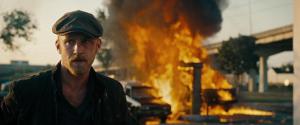 But the ending needs to be further discussed because it leaves a terrible aftertaste. Given the dramatic dynamic at work, you pretty much know that Bishop and Steve will eventually come to a head. Bishop regrets what he’s done and is trying to make amends and find some meager form of redemption by taking Steve under his wing. He’s trying to make amends for the many sins in his life. He’s coming to terms with his life’s choices. So then you would assume (spoilers to follow) that when Steve ultimately seeks his own very deserved sense of vengeance, that the old pro would accept his doomed fate. It makes the most sense. It provides an end for the character’s journey, it provides closure to Steve, and it allows for an ending where people have to pay for their life’s mistakes. It’s not even downbeat because it feels right; it’s the correct ending for this material. It’s also the way the original Mechanic ended. But why end the movie on Statham accepting death? That would shuttle any chances for Mechanic sequels. And so, in a colossal cop-out, our hero narrowly survives and even manages to set up a bomb to take out Steve. While his young partner was emotionally unstable and looking for an outlet for his billowing anger, but the man was warranted in his vengeance. It’s entirely the wrong ending for not just this kind of movie but this movie specifically. It smacks of a pathetic attempt to leave the option open for a would-be franchise. It eliminates the entire idea of consequences mattering.
Statham gives the exact same performance he’s been giving in every movie for a decade plus. You know what you’re getting with a Statham action vehicle, for better or worse. He’s going to get shirtless, he’s going to dispatch the bad guys with relative ease, and never once will an expression flash across his stony face. He even verbalizes guilt while still being completely stone-faced. You don’t really buy any inner turmoil with this guy; he’s too “cool” to have feelings other than anger and vengeance. But then Foster practically redeems the entire movie. The young actor has been delivering intense performances for years now, whether it is an emotionally unstable guy in Alpha Dog, an emotionally unstable guy in Hostage, an emotionally unstable guy in 3:10 to Yuma, or an emotionally unstable guy in The Messenger. Notice a pattern? I’m amazed the reservoir of little tricks Foster finds to make Steve pop. Foster gives a far better performance than the movie deserves.
The Mechanic is a routine action movie that fails to rise above its genre conventions due to a lackluster plot, some vapid character development, and a horrendous ending. Statham does his thing, his shirtless chest gets due prominence, but the movie lets both he and a game Foster down. The kills are rather sloppy leaving behind mountains of evidence and dead bodies, and yet there seem to be no consequences. That makes for a long march to an inevitable conclusion with a few bursts of colorful violence to entertain. But what actually exists on the screen isn’t half bad. It’s fairly unremarkable, straightforward genre pap, but that can be suitable for the right audience and the right frame of mind. I was seeking something brainless to excite me when I caught The Mechanic, and it modestly achieved these modest goals.
Nate’s Grade: C
Share this:

The Killer Inside Me (2010)
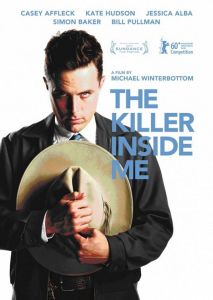 This is an unsettling thriller that takes us into the mind of a psychologically dangerous deputy policeman (Casey Affleck). He patrols the small Texas city by day and kills for pleasure by night. The movie runs into a problem because the character doesn’t have a semblance of any moral code, which sounds contradictory for a serial murderer. He doesn’t kill for profit or to cover a secret or anything that would come across as identifiably rational. He kills because he feels he has to; he’ll even kill the mistress he loves because he can’t control himself. It’s an upsetting premise that keeps the audience at a controlled distance throughout the film. There’s an ongoing theme of extreme sexual brutality, and director Michael Winterbottom (A Mighty Heart) seems to linger on extended sequences of sadomasochistic sex and ugly violence against women. There’s some ugly stuff here, like watching Jessica Alba get her face pummeled for a solid two minutes. You just feel sorry for what Alba and Kate Hudson go through (“voiding a full bladder” is amazingly low on the list of awful these women endure). Eventually Affleck has to keep killing to cover his tracks, and the threat of getting caught provides some moderate tension, a relief from wallowing in cruelty. All of this ickiness would seem worthwhile if it felt like we were learning something about our disturbed lead. Affleck plays his opaque character rather flatly, making him free of charisma, empathy, and sadly, insight. He’s just the same as a masked killer in a slasher movie. That’s the worst disappointment in a film with so much ugliness.
Nate’s Grade: C


 nathanzoebl
You must be logged in to post a comment.