Blog Archives

Sherlock Holmes (2009)

Sherlock Holmes as a gritty pub-brawler? Before you dismiss the big-budget Hollywood retooling of the literary detective, look back at author Arthur Conan Doyle’s source material. Appearing in over 50 stories, Holmes was a bit of a rude rapscallion who would get into brawls and recreationally use cocaine. It was only until Dr. Watson stepped into his life that Holmes cleaned up and became a proper, respectable gentleman and the figure we know. With stylish director Guy Ritchie (RocknRolla) attached, it appears that this Holmes for a new generation is actually a throwback to his roots.

Famous detective Sherlock Holmes (Robert Downey Jr.) and his assistant, Dr. Watson (Jude Law), are at an impasse. Watson wishes to leave Holmes establishment and start a new life with a woman he loves. Holmes is also threatened by Lord Blackwood (Mark Strong), an aristocrat in prison for killing women in ritualistic manners of the dark arts. He’s about to be executed when Lord Blackwood promises he will return from the dead, and his murders will continue. Sure enough, after Blackwood is hung by the neck and pronounced dead by Watson, the murders resume and the dead man himself is seen walking among the living. Holmes is on the trail of his resurrected foe when he meets Adler (Rachel McAdams), the woman who broke his heart. She’s employed by a mysterious stranger and becomes mixed up in the deadly hunt to stop Lord Blackwood.

As is quickly becoming commonplace, Downey is the best part of the movie. His combative relationship with Law makes the movie worthwhile. They have a feisty, squabbling chemistry that generates a lot of humor, and they interact like a 1980s buddy cop movie. Their verbal jousting practically saves the movie from collapsing due to the overwrought plot. At its best moments, Sherlock Holmes feels like a buddy cop movie transplanted to Victorian England. Downey is having a hoot as the character and brings a vibrant energy to his role, turning Holmes into an eccentric who gets buggy if he cannot obsess over a case, taking several cues from the Monk playbook of eccentric detective genius. Downey is cocksure and a charming cad, enjoying every moment he can outsmart the competition. Law is more equal than sidekick and plays the straight man to Downey’s neurotic detective. I’m not usually one to bemoan foreign accents, but this is one movie that would benefit from subtitles. The actors don’t necessarily talk in thick accents but they speak so fast that it begins to sound like an unintelligible mumble.

The romantic subplot is a non-starter as Holmes reunites with both The One That Got Away and his Crafty Equal. McAdams is a fine actress with a luminescent smile, but her involvement is really an afterthought. She’s the old flame that always re-enters in those 1980s buddy cop movies. She stays long enough to rekindle some old feelings and provide a figure in need of rescuing. Her storyline is one of several that could have been completely eliminated. The same could be said for Watson’s girlfriend, the steamboat accomplice, the put-upon maid, and many of the conspirators.

The plot for Sherlock Holmes feels like three screenplays were crudely sewn together. There are so many junky side stories and characters that need to be eliminated. It’s just far too busy without anything making real traction. The story is weighed down with expository dialogue and mounting subplots. There are a few sequences that jump forward in time but don’t inform the audience, so we’re left a tad discombobulated. The film jumps immediately into the fray without any pertinent flashbacks or setup, daring the audience to pay attention. At some point in the middle I gave up, having disengaged from the plot and determined to simply wait it out for Holmes to explain what I was missing. I think at one point I was even starting to nod off to sleep, which is a deadly sign for an action movie. The central occult conspiracy has a lot of men in cloaks but no discernible outcome. The movie is littered with conspirators and locations and details that all seem meaningless until Holmes can tie all the jangled pieces together. The script is overloaded and half-cocked and bides its time waiting for Holmes to provide relative clarity. It gets old after a while when only Holmes knows the clues and he won’t share.

You don’t usually think of the intellectual detective in the deerstalker cap as a man of action, but this brash reinterpretation would be acceptable if Holmes found himself in some action sequences that would befit his legendary stature. Ritchie?s hyperbolic shooting style makes for a lot of fast whooshing and quick spinning but it doesn’t add up to many satisfying sequences; the best is probably a battle with Holmes and a giant that destroys a shipyard plank by plank. Ritchie introduces an intriguing action device for this beefed-up Holmes; he mentally envisions the steps of his attack, going from punch to counter punch. This technique is a fun peek into the mind of Holmes and it makes the action easier to follow for the audience. The fact that this narrative action device is used twice in the 30 minutes made me alert. Surely this cool little stylish flourish would come into play during a climactic moment. Nope. This visual quirk is done twice and then curiously never resurfaces. Instead, the movie ends in a climax dotted with the tired routine of atop high places. The showdown is rather weak. Watching Holmes and Watson beat their way through thugs has its meta-literary appeal but Ritchie and his screenwriters fail to summon entertainment amidst the cluttered chaos.

I am a self-described Ritchie fan, though he hasn’t made a good movie since 2001’s Snatch. He lathers on the style right from the opening studio titles being integrated into the cobblestone streets of London. The production design is impressive and the actors seem to be having a game go with the literary legend, but it all comes back to the murky story. Sherlock Holmes could have succeeded on a crackerjack story or on being an entertaining thrill-ride, but it fails in both areas. The nonsensical conspiracy plot feels like a leftover from a bad Dan Brown novel (redundant?) with secret societies and mystic orders and blah blah blah. The characters feel less than real because they aren’t given time to be fleshed out, so they resort to being stock archetypes locked into well-defined place by the fact that the plot gallops from the start. The action is uninspired and occasionally incoherent. Sherlock Holmes as a man of action is an acceptable premise but he needs to be placed in strongly constructed, inventive action sequences. I like Downey and Law, and I especially like their time together, but the movie lets them down. Maybe I was just holding out hope that Holmes would come back and explain the whole movie, providing compelling evidence for mass entertainment that I had been missing. It was never to be.

Nate’s Grade: C+

Closer (2004)

A funny thing happened to me when I sat in a theater to see Closer. It was packed, surely due to the film’s heavy star power. As the film played out I began to notice that my audience was laughing consistently, at moments that weren’t necessarily meant for humor. I don’t think they were laughing at the film, instead I think it was a defense. You see, I’m sure the majority of those couples read Closer to be a much different film than it is. They saw the pretty faces of Jude Law, Natalie Portman, and America’s sweetheart Julia Roberts. They were expecting something, let’s say, lighter than the cruel savagery of Closer. When America’s sweetheart Julia Roberts compares the taste of two men’s semen, you know this isn’t any Gary Marshall movie (forgetting Exit to Eden, and please do).

Dan (Jude Law) is an obituary writer planning to pen a novel one of these days. He locks his eyes on Alice (Natalie Portman), a stripper from the States, while walking one day. She gets hit by a car and Dan takes her to a hospital. Flash forward and Dan and Alice are dating but his eyes are already wandering. During a photography session with Anna (Julia Roberts) he kisses her but is spurned. He takes his revenge on some soul in cyberspace, pretending to be Anna and arranging a meeting. That sap turns out to be Larry (Clive Owen), and they actually do start dating. Then things get messy. Couples leave one another, get back together, swap lovers, and come crawling and begging for forgiveness or punishment. The rest of Closer is like a long game of relationship Red Rover.

Director Mike Nichols has a definite affinity for his four actors (they are the only ones in the film with speaking parts). He shoots Closer as an actor’s showcase, with constant close-ups and no handheld camerawork. He places the emphasis on his actors. The results are more familiar to Nichols’ early films like Who’s Afraid of Virginia Woolf? and Carnal Knowledge. However, Closer isn’t as insightful as it thinks it is. It presents cruel characters doing dastardly acts, but this is stuff that wouldn’t impress Neil LaBute (In the Company of Men). There is intelligence to the film?s dialogue but it’s wasted on a ramshackle story.

The acting of Closer both helps and hurts the film. It seems that the two primarily wronged characters (Larry, Alice) give the better performances.

Owen is the standout performer of the ensemble. Playing the Dan role onstage has given him an intimate feel for the story’s characters. He’s the most decent of all four until the weight of circumstances finally pushes him to the limit. He’s the character the audience sees themselves in, so it helps that Owen gives a great performance of quiet dignity and slow self-destruction. He expresses more emotional turmoil in his eyes than most actors do with their whole body. Portman is having a breakthrough year for herself. First she showed pluck and grace in Garden State, and now with Closer she has graduated to the adult table. She radiates a fragility that makes you want to hug her. Portman will probably always look like a little doll (which works for her role as a stripper).

The beauty of Roberts and Law hurts the ugliness of their characters. I make no bones about my general dislike of Roberts as an actress. Her acting in Closer is like a soft-spoken, pouty child. She jumps from man to man, looking sullen or pensive, but comes off more petulant. Law is better, but his handsome devil is not in the details. Dan is a womanizing cad but we never get any understanding for why he acts as he does. Law can be hypnotizing, but like Roberts, his pretty facade takes away from the impact of Dan’s ugly behavior.

Despite the title, you get no closer to getting to know or understand the characters. It’s really almost a stretch to call them characters because they’re more accurately different positions in an argument. The only characterization Closer has to offer is suffering and inflicting suffering. Closer really has one voice coming out of the mouths of different pretty actors.

The film has the annoying habit of skipping ahead in time and not telling the audience. We’re left to catch verbal asides that time has passed. After a while you’ll get the hang of it simply by assuming that the beginning of every new scene is the start of a new date in time. Closer is nothing but a string of uncollected scenes, usually involving people leaving a lover or starting a new fling. The actors come on, do their part, then they leave and we move on to a different scene. This is not staged as a movie.

The trouble with Closer is that it never really feels like it’s going anywhere. There’s no progression. Sure, couples swap, people get revenge, but the connection of sequences is lacking. The way it is, Closer could have gone on forever. It’s a series of scenes smashed together, not a story that rises and falls and builds to a climax.

Closer is an exploration into the darkness of human behavior starring some of the prettiest actors Hollywood can spare. The story goes nowhere, the ending doesn’t accomplish much, the characters lack convincing depth, but some of the acting is good and there is a ray of intelligence to the film. Fans of the above-the-title actors should enter Closer with caution. It’s a dark film with little to feel good about. Closer is brooding, moody, and probably the first and last time we?ll hear Julia Roberts talk about the taste of semen. Unless, of course, Gary Marshall starts pre-production on Exit to Eden 2: Rosie O’Donnell’s Bondage Boogaloo.

Nate’s Grade: C+

Sky Captain and the World of Tomorrow (2004)

Sky Captain and the World of Tomorrow started as a six-minute home movie by Kerry Conran. He used computer software and blue screens to recreate New York City and depict a zeppelin docking at the top of the Empire State building. The six-minute short, which Conran spent several years completing, caught the attention of producer John Avnet (Fried Green Tomatoes). He commissioned Conran to flesh out a feature film, where computers would fill in everything except the actors (he even used the original short in the feature film). The dazzling, imaginative results are Sky Captain and the World of Tomorrow.

Polly (Gwyneth Paltrow) is a reporter in 1930s New York. She?s investigating the mysterious disappearance of World War scientists when the city is invaded by a fleet of robots. The city calls out for the aid of Sky Captain, a.k.a. Joe (Jude Law), a dashing flying ace that happens to also be Polly?s ex. Joe and Polly form an uneasy alliance. He wants to stop Totenkopf (archived footage of Laurence Olivier) from sending robots around the globe and rescue his kidnapped mechanic, Dex (Giovanni Ribisi). She wants to get the story of a lifetime, a madman spanning the world to abduct scientists, parts, and the required elements to start a doomsday device. Along the way, Captain Franky Cook (Angelina Jolie) lends her help with her flying amphibious brigade. Together they might stop Totenkopf on his island of mystery.

Sky Captain is a visual marvel. It isn’t necessary a landmark, as actors have performed long hours behind green screen before (just look at the Star Wars prequels). Sky Captain is the first film where everything, excluding props the actors handle, is digitally brought to life inside those wonderful computers. The results are breath-taking, like when Polly enters Radio City Music Hall or during an underwater dogfight with Franky’s amphibious squadron. Sky Captain is brimming with visual excitement. The film is such an idiosyncratic vision that there’s no way it could have been made within the studio system.

Sky Captain has definite problems. For one, the characters are little more than stock characters going through the motions. The story also takes a backseat to the visuals. The dialogue is wooden and full of clunkers like, “You won’t need high heels where we’re going.” Generally the dialogue consists of one actor yelling the name of another character (examples include: “Dex!” “Joe!” “Polly!” and “Totenkopf!”). My father remarked that watching Sky Captain was akin to watching What Dreams May Come, because you’re captivated by the painterly visuals enough to stop paying attention to the less-than-there story and characters. The characters running onscreen also appears awkward, like they’re running on treadmills we can’t see, reminiscent of early 1990s video games.

Let’s talk then about those characters then. Paltrow’s character is generally unlikable. She’ll scheme her way toward whatever gains she wishes, but not in a chirpy Lois Lane style, more like a tabloid reporter. She whines, she yells, she complains, she berates, and she doesn’t so much banter as she does argue. Sky Captain is more enigmatic as a character. He seems forever vexed. Jolie’s Captain Franky Cook gives her another opportunity for her to use her faux-British accent. Jolie’s character is the strong-willed, sexy, helpful heroine that should be the center of the film, not Paltrow’s pesky reporter.

It’s also a bit undignified to assemble Laurence Olivier as the villain. It’s very unnecessary, but at least he wasn’t dancing with a vacuum cleaner.

Now, having acknowledged the flaws of Sky Captain, I must now say this: I do not care at all. This is the first time I’ve totally sidestepped a film’s flaws because of overall enjoyment. I have never felt as giddy as I did while watching Sky Captain and the World of Tomorrow. When the giant robots first showed up I was hopping in my seat. When I saw the mixture of 1930s sci-fi, adventure serials, and Max Fleischer cartoons, I was transported to being a little kid again. No movie has done this so effectively for me since perhaps the first Back to the Future. I loved that we saw map lines when we traveled from country to country. I love the fact that the radio signal hailing Sky Captain is reminiscent of the RKO Pictures opening.This is a whirling, lovelorn homage that will make generations of classic movie geeks will smile from ear to ear. I don’t pretend to brush over the flaws, with which story and characters might be number one, but Sky Captain left me on such a cotton-candy high that my eyes were glazing over.

One could actually make a legitimate argument that the stock characters, stiff dialogue, and anemic story are in themselves a clever homage to the sci-fi serials of old, where the good guys were brave, the women plucky, and the bad guys always bent on world domination. I won?t make this argument, but it could lend credence more toward the general flaws of Sky Captain and the World of Tomorrow.

Sky Captain is an exciting ode to influences of old. It’s periodically breath-taking in its visuals and periodically head scratching with its story, but the film might awaken childhood glee within the viewer. I won’t pretend the film isn’t flawed, and I know the primary audience that will love Sky Captain are Boomers with a love and appreciation for classic cinema. Sky Captain and the World of Tomorrow will be a blast for a select audience, but outside of that group the film’s flaws may be too overwhelming.

Nate’s Grade: B+

Cold Mountain (2003)

Cold Mountain (2003)

Premise: At the end of the Civil War, Inman (Jude Law, scruffy) deserts the Confederate lines to journey back home to Ada (Nicole Kidman), the love of his life he’s spent a combined 10 minutes with.

Results: Terribly uneven, Cold Mountain‘s drama is shackled by a love story that doesn’t register the faintest of heartbeats. Kidman is wildly miscast, as she was in The Human Stain, and her beauty betrays her character. She also can’t really do a Southern accent to save her life (I’m starting to believe the only accent she can do is faux British). Law’s ever-changing beard is even more interesting than her prissy character. Renee Zellweger, as a no-nonsense Ma Clampett get-your-hands-dirty type, is a breath of fresh air in an overly stuffy film; however, her acting is quite transparent in an, “Aw sucks, give me one ‘dem Oscars, ya”ll'” way.

Nate’’s Grade: C

A.I. (2001)

A.I. is the merger of two powerhouses of cinema – Stanley Kubrick and Steven Spielberg. The very mysterious film was given to Spielberg by Kubrick himself who thought ole’ Steven would be a better fit to direct it. The two did keep communication open for like a decade on their ideas for the project until Kubrick’s death in March of 1999. What follows is an imaginative futuristic fairy tale that almost grabs the brass ring but falls short due to an inferior ending. More on that later.

In the future technological advances allow for intelligent robotic creatures (called “mechas”) to be constructed and implemented in society. William Hurt has the vision to create a robot more real than any his company has ever embarked on before. He wants to make a robot that can know real love. Flash ahead several months to Henry and Monica Swinton (Sam Robards and Frances O’Conner) who are dealing with their own son in an indefinite coma. Henry is given the opportunity to try out a prototype from his company of a new mecha boy. His wife naturally believes that her son could not be replaced and her emotions smoothed over. Soon enough they both decide to give the boy a try and on delivery comes David (Haley Joel Osment) ready to begin new life in a family. David struggles to fit in with his human counterparts and even goes to lengths to belong like mimicking the motions of eating despite his lack of need to consume. Gradually David becomes a true part of the family and Monica has warmed up to him and ready to bestow real love onto their mecha son.

It’s at this point when things are going well for David that the Swinton’s son Martin comes out of his coma and returns back to his parents. Sibling rivalry between the two develops for the attention and adoration of their parents. Through mounting unfortunate circumstances the Swintons believe that David is a threat and decide to take him away. The corporation that manufactured David had implicit instructions that the loving David if desired to be returned had to be destroyed. Monica takes too much pity on David that she ditches him in the woods and speeds off instead of allowing him to be destroyed.

David wanders around searching for the Blue Fairy he remembers from the child’s book Pinocchio read to him at the Swinton home. He is looking for this magical creature with the desire she will turn him into a real boy and his human mother will love him again. Along David’s path he buddies up with Gigolo Joe (Jude Law), a pleasure ‘bot that tells the ladies they’re never the same once he’s through. The two traverse such sights as a mecha-destroying circus called ‘Flesh Fairs’ complete with what must be the WWF fans of the future, as well as the bright lights of flashy sin cities and the submerged remains of a flooded New York. David’s journey is almost like Alice’s, minus of course the gigolo robot of pleasure.

There are many startling scenes of visual wonder in A.I. and some truly magical moments onscreen. Spielberg goes darker than he’s even been and the territory does him good. Osment is magnificent as the robotic boy yearning to become real, but Jude Law steals the show. His physical movement, gestures, and vocal mannerisms are highly entertaining to watch as he fully inhibits the body and programmed mind of Gigolo Joe. Every time Law is allowed to be onscreen the movie sparkles.

It’s not too difficult to figure out which plot elements belong to Spielberg and which belong to Kubrick, since both are almost polar opposites when it comes to the feelings of their films. Spielberg is an idealistic imaginative child while Kubrick was a colder yet more methodical storyteller with his tales of woe and thought. The collaboration of two master artists of cinema is the biggest draw going here. A.I.‘s feel ends up being Spielberg interpreting Kubrick, since the late great Stanley was dead and gone before he could get his pet project for over a decade ready. The war of giants has more Spielberg but you can definitely tell the Kubrick elements running around, and they are a gift from beyond the grave.

I thought at one point with the first half of A.I. I was seeing possibly the best film of the year, and the second half didn’t have the pull of the first half but still moves along nicely and entertained. But then came the ending, which ruined everything. There is a moment in the film where it feels like the movie is set to end and it would’ve ended with an appropriate ending that could have produced lingering talk afterwards. I’m positive this is the ending Kubrick had in mind. But this perfect ending point is NOT the ending, no sir! Instead another twenty minutes follows that destroys the realm of belief for this film. The tacked on cloying happy ending feels so contrived and so inane. It doesn’t just stop but keeps going and only gets dumber and more preposterous form there. I won’t go to the liberty of spoiling the ending but I’ll give this warning to ensure better enjoyment of the film: when you think the movie has ended RUN OUT OF THE THEATER! Don’t look back or pay attention to what you hear. You’ll be glad you did later on when you discover what really happens.

The whole Blue Fairy search is far too whimsical for its own good. It could have just been given to the audience in a form of a symbolic idea instead of building the last half of the film for the search for this fictional creature’s whereabouts. The idea is being pounded into the heads of the audience by Spielberg with a damn sledge hammer. He just can’t leave well enough alone and lets it take off even more in those last atrocious twenty minutes.

A.I. is a generally involving film with some wonderfully fantastic sequences and some excellent performances. But sadly the ending really ruins the movie like none other I can remember recently. What could have been a stupendous film with Kubrick’s imprint all over turns out to be a good film with Spielberg’s hands all over the end.

Nate’s Grade: B

Reviewed 20 years later as part of the “Reviews Re-View: 2001” article.

Enemy at the Gates (2001)

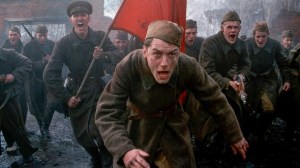
Enemy at the Gates tells its tale over the pivotal Battle of Stalingrad where over a million Russians lost their lives to repel the German advancement. The Russians at this point were throwing boys as young as school kids into the battle and arming some of them with nothing. It was an attempt to create wave upon human wave to overrun the Germans. The Battle of Stalingrad was a decisive moment in WWII, but how Enemy of the Gates portrays it – the battle was nothing. The entire war was turned by two men.

The beginning to the film (and also the best part) shows the immediacy of the war and is very parallel to the Omaha invasion. People are shepherded into box cars onto a train, then arrive on the river and travel by barge to the ports of Stalingrad, then are sent up a hill one with a rifle and one with the rifle’s ammunition, and then thrown into the battle on the other side. Literally, an hour could pass from leaving home and death. Enemy at the Gates doesn’t paint a pretty picture of the Russians themselves (this is a Hollywood film after all) and displays the Russian war tactic of firing on your own men if they have the gall to retreat.

A survivor of the slaughter is Vassily Zaitsev (Jude Law), a rural farm boy with a great shot. He takes out a slew of Germans that have him and fellow Russian Danilov (Joseph Fiennes) trapped in the ruins of a city. Once back to friendly quarters Danilov decides to turn Vassily into a hero and prints numerous propaganda fliers and articles about his many triumphs to increase the morale of the faltering Russian army. Vesilly becomes a hero and a celebrity, though he continues to have his doubts if he can live up to his inflated image.

Rachel Weisz (The Mummy) plays the peppy patriotic girl who comes between our two mates creating an awkward Hollywood favorite: the love triangle. The very fact that she, and other women, are out there on the front lines defending their Motherland should not be taken as something in the advancement of feminist ideals in WWII Russia – at this point in the war them Ruskies would arm dogs and squirrels if they could.

Enemy at the Gates introduces its villain as an expert Nazi sniper played by recently Oscar nominated actor Ed Harris. Harris plays the character cold, yet sincere, like he is following the ways of war but not because he wishes to. He has a duty and he will accomplish it, down to the meticulous wire if he must. Harris’ sniper is sent in to assassinate Vassily Zaitsev and more importantly kill the morale of the Russians. This sets up the film’s showdown between the Law and Harris. Two men who are patient and silent killers dueling to see which one of them blinks first. A cat and mouse game amongst the fallen remains of a once proud city.

At least that’s how it happened in real life. The two men played a waiting game that went on for over two days to see whom would move first. The Nazi slipped and wound up dead. But this standoff where you couldn’t move for fear of being shot at any moment of weakness would’ve been fascinating alone to tell, especially if done straight. Instead we get Hollywood’s Saving Private Ryan.

A rather peculiar aspect associated with Enemy of the Gates is the amount of people that die from being shot in the head. I mean, I actually looked and counted, there was maybe two people in this film that did not die from bullets that were not exploding through their heads. It gets a little silly as it goes and almost becomes an unintentional joke as we go on with 15… 20… 40 some CGI shots of bullets zipping through people’s foreheads. And the way the snipers are portrayed has it seem like a slasher film – you duck your head around that corner you are instantly dead!

Director Jean-Jacques Annaud’s previous film was the pretty but oh-so-mind-numbing-long Seven Years in Tibet. Here he takes the torch from Spielberg and plays with all the Ryan elements; dabbling with some blues, and muddy browns, and wreckage and what not. Annaud’s film is less a war film and more of a war propaganda film showing the strong effects it can attribute. Annaud also has the distinction of having the most awkward sex scene I’ve ever seen in a film. Weisz comes into where Law is sleeping and sneaks under his blanket. Except Law is sleeping in a row of other soldiers all lying on the cold cement ground with rubble all around them. The scene is very awkward to sit through and I feel will become notorious for it.

The movie isn’t all bad. Some scenes do have good tension and excitement. Law and Harris give credible performances, and Bob Hoskins appears for a very memorable role as Nikita Khrushchev. Enemy at the Gates is a war movie played with Hollywood elements that are as clear as day and weigh down whatever chance the film had. And would it have killed the cast if they could have tried a Russian accent!?

Nate’s Grade: C+

The Talented Mr. Ripley (1999)

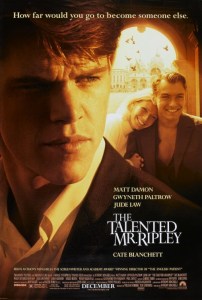
Interesting and beautifully filmed and yet the complexities have a vacation-porn feel to them as the story churns further. Excellent acting with all involved as they display the top of their game. Matt Damon is magnetic as the socially murderous Mr. Ripley, and often times a bit frightful. He does what he feels needs to be done once he gets a taste of the good life and wants nothing from leaving it behind. Supporting players such as Jude Law and the oh so talented Phillip Seymour Hoffman contribute solidly and flawlessly. Ripley actually packs more suspense then you would think from the man responsible for one of my most boring theater experiences (I mean of course The English Patient) but wrings true tension and challenges the audience to pull for the bad guy. I must note that the ambiguous ending seems to detract from the impact of the movie. But for many reasons and despite seeing Damon eerily coddle up to a corpse, Ripley is a fine flick with some great characters presented. The more I watch this film the more I enjoy it.

Nate’s Grade: A-