Blog Archives
Labor Day (2013)
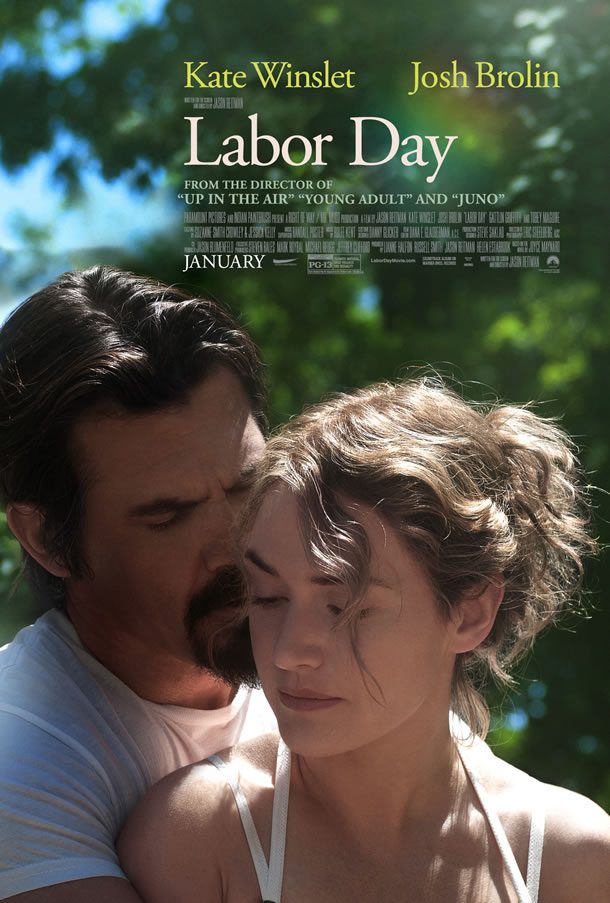 Labor Day, based upon the novel by Joyce Maynard, is the kind of sappy material that you never would have expected director Jason Reitman to attach his name to. Reitman has been accumulating an enviable career of top-shelf dark comedies (Thank You for Smoking, Up in the Air, Young Adult), yet his touch with characters and actors, as well as his delicacy with tone, reminded several of a young Billy Wilder. The stuff of Labor Day felt more like a Lifetime channel original movie. This is just one artistic miscalculation from the start and it doesn’t get better as it goes.
Back over Labor Day weekend in 1987, young Henry (Gattlin Griffith) is living with his grieving mother Adele (Kate Winslet) and performing many of the duties of a husband (don’t get gross). It’s been some time since Henry’s parents divorced but Adele has become a shell-shocked recluse who can barely talk or look others in the eye. While visiting a grocery store, Henry runs into a dangerous man named Frank (Josh Brolin). He’s bleeding from the abdomen and intimidates Adele to give him a ride. Frank is an escaped prisoner and he takes to hiding at Adele’s home. After the initial hostage period, Frank allows Henry and Adele to walk around freely, as long as they don’t tell anyone where he is. As the days pass, Frank helps out around the house, helps Adele get out of her funk, and becomes a surrogate father figure for Henry. The unconventional family must evade the police and skeptical townsfolk to make a run for it.
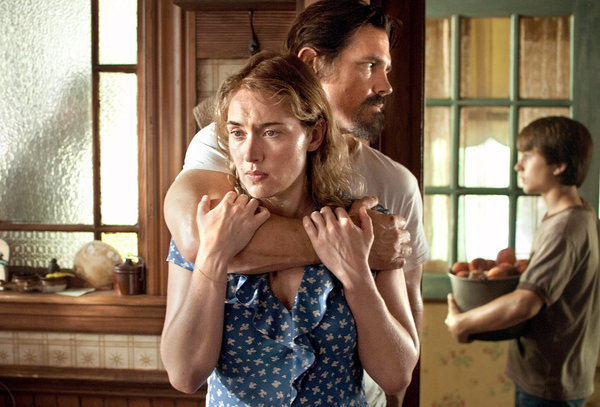 The very premise and its tone are just not a good fit for Reitman. First off, the movie plays out far more like a hostage thriller than any sort of romance. If you were to look deep inside, the romance can be explained as one very emotionally needy woman and her child going through Stockholm syndrome. The entire movie takes place over the titular Labor Day holiday, which means that all these changing feelings have to morph over the time period of three days. I don’t know if I’d call that love, even in Movie Land. Hey, Frank didn’t kill everyone and he helps around the house, isn’t he great? These people should be far more afraid for far longer. It is almost comical how saintly Frank becomes and how many surrogate father activities he squeezes into the abbreviated window of time. He performs handyman jobs all around the house, teaches young Henry how to change a tire, tosses a baseball with the kid, teaches everyone the finer points on pie making, and other such helpful activities. I understand that these two lonely people finally see a replacement man; for Henry a father, for Adele a lover. Again, the three-day time window makes everything appear like the manifestation of Stockholm syndrome. How many of those abducted have uttered, “He’s not that bad. You just don’t know him like I do”? Frank’s back-story is tragic but he is a wanted felon and he has no problem threatening both of these people’s lives in the beginning. Yeah he doesn’t resort to violence or yell in their faces, but why would he against an adolescent boy and his easily cajoled mother? No matter how long Reitman spends showing us the softer side of Frank, especially while preparing delectable dishes of food, he’s no more developed than the common Misunderstood Bad Boy.
Then there are the dawdling coming-of-age moments clinging to young Henry, a boy growing up quickly in a tumultuous holiday weekend. It strikes me as tonally odd to already take a tricky balancing act with the film’s plot and then tossing on a coming-of-age addition. The story is told from Henry’s perspective, and that’s a major problem as well. He’s the least interesting person in this dramatic setup. Being confined to his viewpoint often keeps us distant from the deeper drama going on. I’d rather spend time with Adele and Frank bonding so that the romance can find some traction, but no. Al we hear are the thumps from the other side of the wall and the gentle whisperings between them in stolen glances. It’s a frustrating perspective because quite frankly nobody really cares about this kid’s sexual awakening and his daydreams about the cute girl’s bra. His dad (Clark Gregg) wants to talk to him about the birds and the bees. His mom talks about the same. It’s a somewhat uncomfortable position for the audience with both parents wanting to cover the sex talk. There’s a wanted man hiding in his home! Henry’s personal growing up drama has no equivalency to this. Of the three main characters, doesn’t Henry seem like the worst participant to tell the story? It doesn’t help that Tobey Maguire narrates as older Henry. Have we not learned from The Great Gatsby: Maguire’s voice does not suit narration.
It’s the film’s more tense moments where you get glimpses of the real movie here, the thriller that’s been gussied up and disguised as some strange romance. Whenever someone gets close to discovering what’s really going on in that house, the movie picks up and grabs your interest once more, albeit fleeting. The fear of getting caught is potent but it should have been more omnipresent. The film, through Henry’s perspective, is treated like this nostalgic chestnut of that one summer a convicted killer held us hostage. The police are canvassing for an escaped prisoner but the neighborhood doesn’t seem to be that alarmed, still going about their business bringing desserts and fresh produce to one another’s doorstep. Too much of the film implies the threat, like with a short glimpse of a police checkpoint, but places it on the back-burner so that the romance can take shape. Again, this is a byproduct of being stuck in Henry’s perspective whereas the kid might not have the best understanding of how serious everything is (he’s worried his mom will abandon him and run off with Frank). But in those brief moments of dread and tension, this is where Labor Day works, and Reitman does a great job of turning the screws and building that suspense. It makes you wish the whole thing were a thriller.
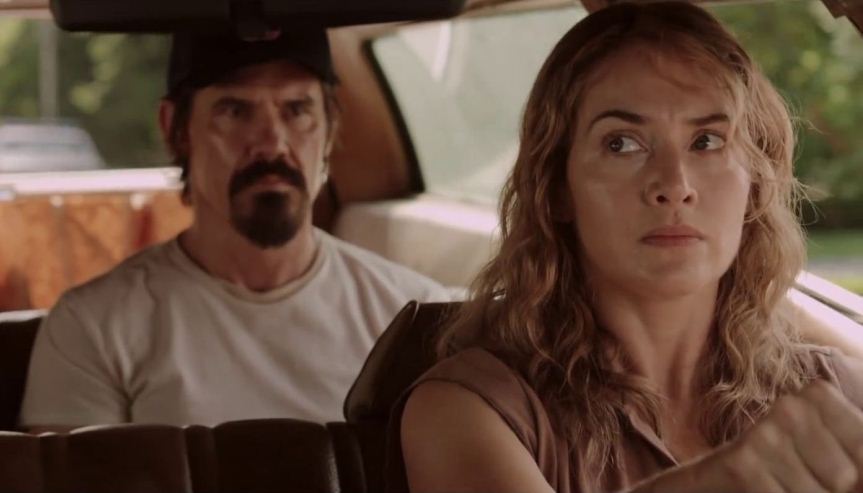 No one is going to question that Winslet (Divergent) and Brolin (Gangster Squad) are great actors, but boy do these characters underachieve. There is one very effective and moving monologue Winslet has about her pregnancy problems that have turned her away from the world, but it’s not enough. For much of the movie, she plays such an anxious and internalized character, so it’s hard to really follow her emotional development. That monologue does the most heavy lifting but it’s pretty wan before and after. Winslet is too good an actress to play essentially a catatonic woman that’s fairly mute. Brolin can play a soulful brute in his sleep. There’s so little to challenge him and so he seems on autopilot. It also hurts that both Frank and Adele have very limited conversations. It’s a romance told in gestures and handclasps (and the rhythmic thumping of walls at night). It’s not their fault that their characters are underwritten and unsatisfying. Griffith (Green Lantern) is a nice young actor but he too is forced to communicate much with little and comes up short. James Van Der Beek (TV’s Dawson’s Creek) is a local cop who appears for one scene, and afterwards you wish he would stick around longer. Look for Reitman good luck charm J.K. Simmons (Dark Skies) as a helpful neighbor.
Reitman is such a talented director that he can almost pull off sequences in Labor Day despite all of its inherent structural, tonal, and perspective flaws. From a technical standpoint, the movie is a gauzy, amber-accented tale with plenty of strong alluring visuals to set you at ease. There are these trembling moments where you almost see what attracted Reitman to the film, but the finished product is just a mushy misfire. It’s earnest without having earned our emotions, and the thriller elements and the romance elements are in constant conflict. We all remember our grandparents telling us that magical moment they knew they had met the one when he tied her up and held her hostage. Much of the drama that comes from the premise is handicapped from the mistake of having Henry as the chief storyteller and point of view. His limited involvement means we’re kept at the peripheral for too many important moments. I have no doubt Reitman will rebound and quickly (he’s already filming his next movie and has optioned a book for his next next movie). Get ready to have Labor Day play every subsequent Labor Day weekend on the Lifetime channel, its true home.
Nate’s Grade: C
Share this:

Cats & Dogs 2: The Revenge of Kitty Galore (2010)
 Obviously this movie is bad. A sequel to a lukewarm family film from nine years ago, the chances were slim that Cats and Dogs 2: The Revenge of Kitty Galore would have ever worked. They don’t even have the temerity to have the subtitle read “Pussy Galore” for fear that repeating the most famous Bond girl name might cause parents discomfort. It’s a live-action talking-animal movie that posits that cats and dogs have been fighting an ages-old feud and they all have secret lairs and technology at their service despite lacking opposable thumbs. Really, premise alone you’re already lowering the standards, and with standards firmly and securely lowered, you may even laugh once or twice (that’s probably about it). It depends on how susceptible to puns you are because that is the primary joke vehicle. The film makes an attempt to throw animals into a Bond-styled action thriller with, pardon me, shaggy results. The character animation is poor, the dialogue feels like it was stitched from one groan-worthy pun after another, and yet Cats and Dogs 2 doesn’t offend with its sheer badness. Premise alone, you sort of watch the thing in a vegetative state.
Nate’s Grade: D+
Share this:

Extract (2009)
 Writer/director Mike Judge’s third movie isn’t quite as funny or just plain fun as his previous pair, Office Space and Idiocracy. Set in a local factory, we follow the misadventures of the boss (Jason Bateman) as he deals with incompetent employees, looming lawsuits, and a wife (Kristen Wiig) who he feels disconnected with. What Judge has is two competing movies; one of them garners the bulk of the first 45 minutes and proves to be funny. The other gets most of the second half and plays out sloppy and dumb. The more interesting half involves Bateman trying to feel guilt-free about wanting to have an affair, so his friend (Ben Affleck, very funny) hires a clueless gigolo to seduce the wife. This scheme actually works but causes humorous complications, like when the gigolo keeps going back for more. This comedic scenario would be enough for one movie. The other half of the tale involves Bateman trying to sell the company but the buyer is wary of an impending lawsuit due to an accident on the work floor that left a man sans his testicles (so much wasted potential here). Mila Kunis is the sexy con artist behind the scenes, encouraging the ball-less worker not to settle. Obviously Judge had work-related gags he wanted to tackle, but he proves that his real interests lie in the complicated relationship comedy. Extract fumbles forward not knowing what kind of movie its really wants to be, so it settles for hackneyed solutions and abrupt endings. Extract would have been a better comedy completely removed from the workplace.
Nate’s Grade: B-
Share this:

Up in the Air (2009)
 Up in the Air is the kind of movie that slyly sneaks up on you. This charming comedy is much like George Clooney’s character, a man paid by cowardly bosses to fire their employees. He’s so good at his job that his skills appear effortless, but at the same time he can take heavy subject matter and make you feel better and thankful afterwards. The topical backdrop of corporate downsizing and layoffs could produce plenty of easy pathos, but Up in the Air works expertly on several layers; it’s a brisk, clever comedy with revealing repartee; it’s an adult romance that blissfully lets them behave like mature adults; and it’s a moving character piece about people realizing what they have gained and lost due to their lifestyle choices. When Clooney is fighting back tears from a crushing disappointment over being overlooked to walk his sister down the aisle, it may be the most compactly perfect moment of acting in his career. Throughout director Jason Reitman’s script (he co-wrote the adaptation of Walter Kirn’s 2001 novel), the human element is debated in our technological age. Clooney’s young cohort (Anna Kendrick) wants to simplify by firing people over the Internet. What is the cost of losing our human connection? Reitman doesn’t resort to a stolid happy ending, which is somewhat of a relief. The movie doesn’t present easy answers or pretend that life can be tied up with a bow. Up in the Air is a bristling comedy with an understated emotional current running alongside. It’s racking up tons of awards and deserves many of them, though I won’t get t the point of calling this the best film of 2009. However, Reitman has delivered another deeply entertaining, charismatic, and involving comedy that sprinkles in potent human drama.
Nate’s Grade: A
Share this:

New in Town (2009)
 Uninspired, slack, overly sentimental, deeply formulaic, the romantic comedy New in Town is so lazy it could have been written by a committee of trained chimps. This tired fish-out-of-water story takes a big city businesswoman (Renee Zellweger) and drops her in frigid small town Minnesota. Get ready for funny Fargo accents and dated stereotypes, doncha know. First the locals are ridiculed and then our big city gal discovers that these small town folk are to be envied. Just once, I’d like to see a Hollywood movie where a big city professional takes an extended jaunt in some Podunk town and discovers at the end… that small towns are overrated and they’ll take the big city any day. Sorry Sarah Palin, small towns do not have a monopoly on values and are not any more truly American than we city dwellers. Anyway, Zellweger looks like she’s in pain the whole time, then again that could be that natural contortion of her scrunched-up face. There’s a romance between her and the local union rep (Harry Connick Jr.), some lessons to be learned, and a late savior in the form of tapioca pudding. New in Town is moronic at most every step, and given the current wintry economic climate, a romantic comedy about downsizing feels like a bad joke in itself.
Nate’s Grade: C
Share this:

I Love You, Man (2009)
 A thoroughly genial comedy, I Love You, Man is an easily enjoyable flick that has fun upending romantic comedy tropes. The movie follows Peter (Paul Rudd) and his search for a “bromance,” a heterosexual male friendship that follows similar dating patterns seen in typical romantic comedies. Peter finds his match with Sydney (Jason Segel), a semi-sophisticated slob. Rudd has been a superb smartass in so many movies, which makes it all the more surprising at how incredible awkward he plays Peter. This man seems embarrassed with every breath he takes. It becomes moderately endearing to see him break out due to his male bonding with Sydney; the nice guy comes of age by becoming impolite and vulgar. The plot takes some predictable turns, like when Peter’s fiancé (Rashida Jones) is upset that her man wants to spend more time with his new pal than with her. Rudd is the most charming actor on the planet, which makes it somewhat wasteful to stick him as a straight man in a comedy. Segel takes great advantage of his character’s boorish behavior and is consistently funny. The supporting actors lift their underwritten roles, especially Jon Favreau as an altogether asshole. I Love You, Man banks on plenty of pleasant vibes and amusing performances. It may never be a gut-buster when it comes to laughs and it may not be fully lovable but it’s certainly easy to like.
Nate’s Grade: B
Share this:

Burn After Reading (2008)
 The Coen brothers tend to follow serious works with silly, and now that they have a heap of Oscars from 2007’s No Country for Old Men audiences can expect extreme silliness. Burn After Reading is a farce in the best sense of the word; it’s a send-up of the spy thriller where morons inhabit every role. The incompetent characters repeatedly act impulsive and the whole movie’s tone is cranked to outlandish heights. The score by Carter Burwell is like a continuous thundercloud that underscores the ridiculous and faux ominous atmosphere. The Coens have been accused of ridiculing their characters and being too detached and clinical as screenwriters. I do not believe this for a moment. Anyone who watches Burn After Reading can tell that the Coens love their characters, especially Brad Pitt’s ebullient personal trainer. Pitt is a comic joy and brings fresh life to his fun character, a highly cheerful doofus who can’t stay still. Even the funky way Pitt walks is worth a giggle. Burn After Reading takes some surprising twists and turns and could have been much longer than 96 total minutes. The Coens go to such terrific lengths establishing great oddball characters and great comedic scenarios, and then the whole movie just comes to a close when it feels like it’s hitting another gear. Still, Burn After Reading may be no masterpiece but its yet another unconventional and mostly entertaining comedy from the reliably quirky Coen brothers.
Nate’s Grade: B+
Share this:

Postal (2008)
 I feel very strange at this moment. I may need to consult a physician. I’m undergoing an altogether new and confusing sensation. You see, I’m hesitant, almost embarrassed to admit this, but I finally found a Uwe Boll movie that I, well, don’t hate. In fact, I was laughing with Postal and not derisively at it. I would never have guessed that a social satire co-written and directed by Boll, which begins with hijackers flying a plane into a large skyscraper, is actually intentionally funny. That’s not to say that the outrageous, violent, and messy film is verifiably good, but for the first time I feel like Boll is genuinely progressing as a filmmaker and may prove that he can craft a competently entertaining movie in the future. And if you know anything about Boll, that statement is akin to going from crawling to flying an F-14 fighter jet blindfolded while constructing a birdhouse out of Popsicle sticks.
The slapdash plot takes place in the small town of Paradise, Arizona. Postal Dude (Zack Ward, TV’s Titus, Bloodrayne II) is a guy who gets pushed around by life. His fat wife is cheating on him constantly, he’s bullied by rednecks that live in the neighborhood trailer park, and he can’t find a job to escape. He’s looking for any way out. His uncle Dave (Dave Foley) has started a doomsday religious cult of disenfranchised hippies. The IRS is currently targeting him and needs a quick money fix. Uncle Dave and Postal Dude scheme to steal the lone shipment of “Krotchy” dolls, a doll that resembles male testicles that is highly in demand (the Chinese shipment capsized and the crew all died, but luckily the dolls were saved). Also looking to snatch the dolls is a terrorist cell that includes Osama bin Laden (played by Jewish actor Larry Thomas, best known as the Soup Nazi on Seinfeld). The plot isn’t important per se, but you will find yourself openly questioning why respected actors like J.K. Simmons and Seymour Cassel are doing in this mess.
 I think Boll has finally found a genre best suited for his cinematic interests. Setting Postal in the wacky comedy world has a freeing effect for Boll: he doesn’t have to adhere to any form of logic. His other movies usually suffered through continual lapses in thought and deed. With Postal, Boll can be as silly as he wants and not have to worry about disrupting his narrative. It should be no surprise then that Postal contains the best acting ever seen in a Boll movie. The good German has always had a seemingly inability to control his actors or provide any helpful direction, but finally he has found a genre that will work with actors giving unrestrained performances that are figuratively all over the thespian map. Shockingly, Ward and Foley both give quite good straight-laced comedic performances (nothing can prepare you for Foley’s generous dose of full-frontal nudity).
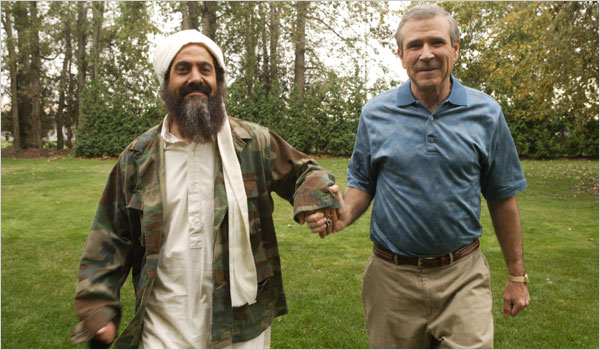
Boll stuffs a lot of extreme elements into his movie, including Islamic terrorists, Osama bin Laden frolicking hand-in-hand with President Bush, inbred rednecks with garish teeth, sex scenes with the morbidly obese, crass racial stereotypes, sexual abuse gags, the media’s opportunism in response to tragedy, an ending that takes a page from Dr. Strangelove, a mentally handicapped martyr, and much more. The movie’s aim is to offend and it has many targets. Boll is no insightful political satirist but even he finds humor in the absurd. The movie is blunt and belittles everyone. Postal skewers religious fundamentalism/apocalyptic yearnings on all sides. There is one sequence where Ward is pinned down by rednecks, Islamic terrorists, and crazy cult followers. He tries appealing to their hearts and establishing common ground. “Well,” one of the terrorists says, “We all hate the Jews,” and then everyone nods solemnly. That’s funny. It’s not deep or biting but it is funny in setup and delivery. I give credit where it’s due. Postal takes some seriously demented detours that take advantage of the wacky, anything-goes atmosphere.
The movie’s jokes hit high and low but some of them definitely stick. The concept of our main character caught in a shootout at the welfare office is given a wicked twist when he crawls along the incapacitated victims looking to trade up a better waiting number. There are comedic riffs hat actually work. Postal isn’t clever or scathing, and is hardly subtle or nuanced, but I could honestly see Postal developing a small cult following, one removed from the cult following already built around bashing Boll.
 Here is a list of moments that made me actually laugh: using a man in a vegetative state bound in wheelchair as a stepping stone to help climb a chain-link fence, Foley and Ward arguing decimal placements, watching Mini-Me actor Verne Troyer pushing a suitcase bigger than himself across a long shot, the fact that Osama bin Laden casually walks around in broad daylight to underscore the nagging fact that the man is still at large, the concept of using a cat as a silencer for a gun (fear not animal lovers, the cat lives), a “God shelter” in case of rapture, Osama attending a workshop on leadership styles and having his credit card declined, a character’s dying attempt to discover if he’s gay or merely bisexual, and the insane religious prophecy involving Troyer and 1000 horny monkeys. That last one is almost inspired in its sheer lunacy. The best part for many will be when Uwe Boll appears onscreen as himself. He admits he finances his crummy movies via Nazi gold and then, no kidding, the actual creator of the Postal video game appears and shoots Boll in the groin. For many, this is a vicarious moment to be savored.
Postal could have worked even better had Boll had a more consistent tone. Simply put, being offensive and shocking and wallowing in bad taste does not guarantee being funny. Watching a truck run over a baby carriage isn’t funny because it’s shocking. Without greater context or setup, it’s the equivalent of a tired and morose “dead baby” joke: tasteless but lacking any humor. And yet here are more missed comedic opportunities that Boll fails to capitalize upon. The missed comedic opportunities mount (Islamic terrorists eventually descend upon a redneck trailer park and … nothing?). Some jokes teeter but then hit a wrong note and become uncomfortable. Watching a black police officer (Chris Spencer, Bloodrayne II) brutally murder an Asian driver is not funny. Seeing a montage of children being massacred by stray gunfire is not funny and has no hope of being funny. When the movie utilizes realistic violence, it must walk a very delicate tone to spring laughs from darker territory. Realistic violence by itself is not funny because brutality is hard to milk for laughs.
Boll will drift and lose his comedy momentum. The highly publicized opening sequence is actually kind of funny. Two terrorists have hijacked a plane but then have second thoughts after they realize there are discrepancies about the number of post-martyrdom virgins. They begin to then analyze the gaps in theology and decide to turn the plane around and head to the Bahamas instead. With this segment Boll has taken a politically sensitive subject and given it a twist. Where the segment goes wrong is not when the passengers storm the cockpit and cause the plane to crash, this serves as irony. Where the segment goes wrong is when it cuts to a window washer atop a skyscraper and we watch the plane come closer and crash into a fiery blaze. The view doesn’t serve as any comedic punchline and places the viewer in an uncomfortable position of not only reliving 9/11 but also reliving it from a hapless victim’s perspective. It’s one example of a misstep that ruins the joke. By the film’s end it has turned into an incoherent bloodbath.
 Not to kill Uwe Boll with praise, but Postal is also his best looking movie to date. The shot compositions are framed well, there is actual camerawork that gives off a slight Coen brothers’ vibe, and the cinematography by Boll staple Mathias Nuemann is crisp and clean. This is a good-looking movie that works within its limited budget and locations.
Postal wasn’t given much of a chance out of the gate. It has been sitting on a shelf for over a year, it was dumped into a small number of theaters opening the same weekend opposite the slightly higher profile Indiana Jones sequel. Boll arranged a free screening of the film and a majority walked out after the opening segment involving the hijackers. Postal is a bizarre and distasteful movie that relies too heavily on shock tactics and the idea that offensive equates humor. There are holes, inconsistencies, shallow satire, and many missed comedic opportunities, and yet, in spite of everything, I laughed at several points. This is Boll’s most intentionally entertaining movie to date. While it may sound like heresy, I would rather watch Postal again than the much more commercial and critically lauded Pineapple Express.
It feels like Boll is actually progressing as a filmmaker, however, I make this statement under the caveat that the confines of the wacky comedy genre forgive lapses in content. But I may not be alone. Boll submitted his flick to the Hoboken International Film Festival and actually won. Boll was named Best Director and the film was awarded Best of the Festival, which is a category based upon audience votes. Perhaps it’s just my lowered expectations with any Boll production, but Postal almost works; not quite but almost. And that’s a tremendous leap forward for a man whose movies have made me retire synonyms for “stupid.”
Nate’s Grade: C
Share this:

Juno (2007)
 Juno is a hysterical teen comedy with equal parts sweetness and sour. The idea of an underage pregnancy certainly presents a lot of conflicts and seriousness but the film avoids direct messages on the big topics thanks to large doses of levity and some hard-earned wisdom. With this serving as a companion piece to Knocked Up, I suppose Hollywood is convinced there’s something inherently funny about unplanned pregnancy. Remember that, suddenly expectant fathers and mothers.
16-year-old Juno MacGuff (Ellen Page) drinks her “weight in Sunny D” to take pregnancy test after test, but each pee-dipped stick gives the same result: Juno is going to become a mommy. The father is Paulie Bleaker (Michael Cera), a fellow high school student who has a fondness for jogging shorts and orange Tic-Tacs. Juno’s father and step-mother (J.K. Simmons, Allison Janney) lament that they wish their daughter would have told them she was expelled or into hard drugs instead of being pregnant. Still, they are supportive and Juno decides to give away her bun in the oven to a childless couple, Mark and Vanessa (Jason Bateman, Jennifer Garner).
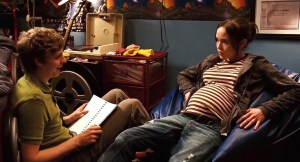 Juno doesn’t patronize or dismiss the gravity of what is indeed happening (a life is being brought into this world); Juno says she is trying to come to grips with issues “way beyond my maturity level.” There are moments that reveal real sadness and regret for some of these characters, and moments of palpable doubt about what it means to officially grow up and assume responsibility for another. Juno also refrains from easy high school stereotypes and coarse humor. Juno is an intelligent comedy that doesn’t make light of its circumstances even if the sarcasm is off the charts. It’s this winning combination of wicked wit and heart that makes [I]Juno[/I] destined to be a crowd-pleaser.
Writer/blogger/former stripper Diablo Cody makes one hell of an impressive screenwriting debut. The dialogue is practically sparkling and revels in the hip, hyper-literate realm that used to dominate the teenage speech patterns of shows like Dawson’s Creek. Sure, it’s not terribly realistic when characters can spout pithy one-liners mixed in with heavy jargon and lots of cool speak, but what do I care when I’m cracking up with laughter so often. But Juno cannot easily be dismissed as glib because Cody throws in some incisive moments that display shades of vulnerability and tenderness with her wacky assortment of characters. Even the aloof oddballs have moments that deepen them from just being quirky for quirky’s sake. These people are more than just receptacles for Cody’s wonderful words; they may begin that way but through the course of 96 minutes they manage to transform into flesh-and-blood where we, the audience, feel their pain and celebrate their happiness. You may be surprised, as I was, to discover yourself holding back tears during the movie’s inevitable and tidy conclusion.
The heavily acoustic score banks on a lot of pleasant, leisurely strumming but it suits the film and the song selections are apt. The very end involves a long acoustic duet rendition of the Moody Peaches’ “Anyone Else But You” and it may be one of the most disarmingly sweet, romantic moments of the year (the repeated lyric “I don’t see what anyone can see in anyone else” is a perfect summary for two outsiders finding their match). In fact, it’s probably the most potentially romantic song ever to include the line “shook a little turd out of the bottom of your pants,” but then again I do profess ignorance when it comes to romantic odes that include defecation references. Somewhere there has to be a Barry White song that has to cover this.
 Director Jason Reitman feels like a natural fit for this smart-allecky material. He lets the story take center-stage and, just as he proved with last year’s Thank You for Smoking, he can coax terrific performances from a strong body of actors. He keeps the pace chugging along and keeps form command of the many storylines and characters needing to be juggled. Juno is a comedy that says more about a character through a handful of smart, wry observations that cut to the bone, which is helpful considering the short running time means the film needs to do the most with its time.
Page should have been crowned a star immediately after her blistering performance as jail bait with claws in Hard Candy, but perhaps her top notch comedic turn in Juno will right this slip-up and give Page the opportunity to star in, at least, the same amount of movies as, oh, I don’t know, Amanda Bynes (Seriously, Hollywood, are you just throwing money at her?). Page is the perfect embodiment of the wiseacre teenager that thinks she knows more than anyone else. She recites the refined dialogue with such precision and ease, always knowing what segments to enunciate or de-emphasize to maintain a seamless comedic tone. Page brings great empathy to a know-it-all character and is the snarky spirit that makes Juno resonate.
The supporting cast around Page doesn’t let her down. Cera gives another fine performance of comic awkwardness befitting a teenager contemplating fatherhood. Simmons and Janney make a great pair of unflappable parents, particularly Janney who gives an ultrasound doc a memorable tongue-lashing for an off the cuff remark about Juno. Bateman works the same laid-back demeanor that he excelled at on TV’s Arrested Development. Rainn Wilson (TV’s The Office) makes a very funny cameo in the beginning.
 Garner as an actress has been somewhat hamstrung by her roles, either focusing on her multitude of ass-kicking abilities or landing her leads in romantic comedies that don’t require more than dimples and twinkling eyes. In Juno she is driven by her desire to have a baby; she’s affluent, prim, and an easy joke thanks to her stick-in-the-mud seriousness. But then Juno and the audience get a glimpse about how important being a mother is to Vanessa, and Garner nails a rather touching scene where she directly speaks to the growing child inside Juno’s belly upon Juno’s request. She speaks softly to the baby, briefly mentioning how loved they will be, and then she marvels at feeling the baby move. In lesser hands this scene could have induced eye rolls but instead seems genuine and a turning point for how we see Vanessa.
If Juno does have a flaw it is a minor one. The film places its teen romance on the back burner for so long that when it resurfaces and positions itself front and center the storyline lacks credence and believability. The conclusion would have had more emotional weight had the filmmakers spent more time on the teen romance angle, but regardless I was still amused, entertained, and grateful for the ending that came.
Juno is a delightfully tart and hysterical comedy that is easily quote-able thanks to Cody’s quick-fire retorts and snappy dialogue. Page is destined for greatness and Reitman proves once more that he can handle anything thrown at him with deftly comic aplomb. This is an impressive and assured comedy that bristles with comic vitality and confidence. This holiday season, make sure to take a trip to Juno.
Nate’s Grade: A
Share this:

Spider-Man 3 (2007)
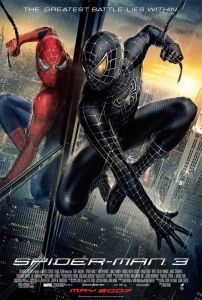 Who the hell are you Spider-Man 3 and what have you done with the franchise I loved? After the massive commercial success of first two Spider-Man chapters, my expectations had been raised fairly high. The more time that passes the more I reflect on how disappointing Spider-Man 3 sadly is. Part of my dashed hopes are because the 2004 Spider-Man sequel was a wonderful follow-up to a pretty swell introduction, and I placed that movie in my Top Ten list for the year and consider it one of the best comic book movies of all time. There’s some great popcorn entertainment to be had with Spider-Man 3, but man is this film just beside itself in wasted potential, a lack of focus, and some really poor choices.
Things are going pretty well for Peter Parker (Tobey Maguire). He plans on asking Mary Jane (Kirsten Dunst) to marry him and New York City is planning a parade out of appreciation for Spider-Man. But the good times can’t last long. Harry Osborn (James Franco) has accepted his fate and become a second generation Green Goblin villain, out to avenge his father’s death at the hands of Spider-Man. But Peter also has to be on the lookout for his job at the newspaper. Eddie Brock (Topher Grace) is an unscrupulous photographer out to replace Parker and nab a picture of Spider-Man caught in a bad light. An alien substance has also hitched a ride to Earth via meteorite and sought out Peter Parker. The black goo attaches itself to Peter and forms a black Spidey suit, one that gives him intoxicating power and a slimy menace. The new Peter cavalierly flirts with bouncy lab partner Gwen Stacy (Bryce Dallas Howard), hurts his friends, and loses his do-gooder ways.
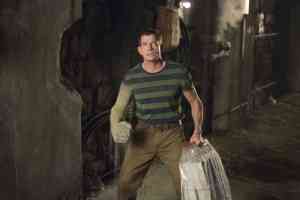
Meanwhile Flint Marko (Thomas Haden Church) has escaped from prison. It seems the police got it wrong and now inform Peter that Marko confessed to being the one who killed Peter’s uncle. While on the run Marko happens to tumble into an open pit that is a science experiment and becomes fused at a molecular level with sand. He uses this new power to rob banks in order to save his sick daughter at home. Peter, with the power of the alien suit, hunts the Sandman to get his own slice of sticky vengeance.
 The film has way too much on its plate. There are too many characters, too many undeveloped storylines, too many coincidences, too many contrivances (Amnesia? Really? Really?), and too many aborted moments of drama. Spider-Man 3 is an undisciplined mess. The film practically stumbles from one scene to the next and lacks the coherency and intelligence of the earlier entries in the series. The third film tries to do too much and please too many interests, and as a result it may end up pleasing few fans. I had some trepidation when I learned that there was going to be upwards of three villains for this movie, but I swore that it could work since Batman Begins confidently worked around a trio of big bads. Three villains do not work in Spider-Man 3. Let me dissect this rogue’s gallery and where they fall short.
1) The Sandman is kind of a lame idea from the start. His power seems to limit his available locations, and I’m surprised that he wouldn’t stick to beach areas as a means of playing to his sandy strengths. Regardless, the character plays no part in almost anything that happens, and the Sandman is given one note to play. He’s got a sick daughter and he robs to try and pay for her medicine. That’s great on paper but it never really seems to give the character any sense of urgency or frustration. If he got special sand powers why not sneak into banks through cracks in walls instead of forming as a giant sand monster? Church attempts to imbue the character with a sad soul but he just comes across as being wooden. If he was really on the hunt for money to save his daughter then why does he just slouch around all the time? Wouldn’t it be easier to rob a city not patrolled by a web slinging super hero? How can he say he’s a misunderstood victim of luck just minutes after he tried killing Peter? He seems like a dull lunkhead. The Sandman is given a tiny wisp of character detail (sick kid!) and that’s it. He doesn’t get any other characterization and is kept on the run and pops up whenever the film needs him. He becomes a token character until the very end where Church is given 2 minutes to pour his heart out to Peter. Two minutes of character at the start, two minutes at the end, and a gaping center. The Sandman isn’t so much a character as the ideal of some issue that the filmmakers want to have Peter work through.
And what is that issue? Why vengeance and forgiveness. You see, Spider-Man 3 foolishly rewrites its own history and now it was the Sandman hat killed Peter’s Uncle Ben. This revision does not work at all and actually legitimately damages Spider-Man. Just like Bruce Wayne is tackling crime to alleviate his guilt, so too is Spider-Man, who can never shake the fact that he could have prevented his uncle’s death had he done the right thing moments before. By introducing a new killer it means that Peter has no responsibility for his uncle’s death. This completely strips away the character’s guilt and rationale for what compels him to swing from building to building to fight crime.
 2) Eddie Brock/Venom is wasted as well. Director Sam Raimi has said before he’s not a fan of Venom and doesn’t get the character, and I feel that his contempt carried over into the film. Venom and the black alien goo are given about the same abysmal care as other half-baked plot points. Eddie Brock has about three total scenes before he gets to transform into Venom thanks to the alien substance, and none of these scenes fully flesh out who the character is or justify his relationship with Peter Parker. When we do see Venom in the finale its all too rushed and hokey. The effects make him look less like alien and more like a wax figurine (I suppose there could be intelligent wax life amongst the stars). For whatever dumb reason the alien suit has to retreat so we can see Grace’s face while he taunts and mocks with bad vampire teeth that are meant to inspire what exactly? The character is rushed and underdeveloped and should have been saved for the next sequel instead of being given lip service in this one. Venom is supposed to be the evil doppelganger to Spider-Man, not some smart-alleck with frosted hair that gets about 15 minutes of screen time. I like Grace, I really like him a lot and envision him as his generation’s Tom Hanks, but he does not work in this movie. He could, but I get the sneaking suspicion that Raimi sabotaged the Venom role on purpose or at least subconsciously. The villain goes out with a whimper and it feels like a giant, foolish wasted opportunity that becomes more maddening the more I discuss it. The presence of Venom feels like a shallow attempt to placate a younger generation of comic fans and to sell more action figures.
The alien goo suit is supposed to tempt Peter and bring out his wicked wild side. So what does he do? He acts like he’s auditioning for the lead in The Mask. This embarrassing sequence is painfully goofy and will make you cringe and shield your eyes. Peter flirts with girls and dances at a jazz club, and this is supposed to be the dark side of Spider-Man? What the hell? I acknowledge that Peter has always been an unpopular dork and would be a dork even if he ventured to the dark side, but how does this square with the more serious and edgier tone the film is grasping for? Evil Peter seems more like a broody emo kid, with shocks of black hair in his eyes and traces of eyeliner. The dark side of Spider-Man, much like the rest of the film, is given little time or thought. Peter’s trials with the symbiotic suit last about a reel or two and then it’s abruptly finished.
 3) Harry should have been the main focus of this sequel and it?s a shame the filmmakers had to cram so much crap into a story already heavy with plot leftovers. Harry has the most obvious arc through the three movies and deserves better than to be knocked out of commission by amnesia. The conflict between Peter and Harry is where the film finds its emotional core and it would have been wise to expand this section and eliminate one of the other underutilized villains (my vote: both Venom and Sandman). Harry’s vow to avenge his father is far more interesting than what the other two villains have as motivation, and plus Harry requires no extra time-consuming setup to slow the pacing down. I’m glad the final battle encouraged Harry to come out and play; the film finally gives Franco the screen time he deserves, but it should have been more. The worst plot device in the film involves Harry’s all-knowing butler who has some vital information he most certainly should have shared years ago. So much time is spent on storylines that go absolutely nowhere, and the musical chairs of villains, that the film resorts to having a freakin’ butler tap someone on the shoulder and say, “Excuse me sir,” just to tie things up in the most awkwardly shrift way possible. And even if what the man says is true, how does his perspective add any clarity to the situation? Think about it. I have.
The romance between Peter and Mary Jane feels awfully trite and meandering. Spider-Man 3 lacks the tight focus of the second film. It throws contrivances to place a wedge in their relationship, like the fact that Mary Jane is fired from her Broadway gig but doesn’t tell Peter, or the fact that they never seem to answer the phone on time when the other person is apologetic. Gwen Stacy is less a character than simply a dimwitted blond tool to make Mary Jane jealous and sulk. The ups and downs in this relationship feel pretty forced and some moments defy all human understanding. At one point Mary Jane is forced by Harry to break up with Peter to spare both their lives. So she breaks the news in a park, and Peter is devastated, but why in the world does she never say anything again? Why would she not clear things up after time had passed to explain her actions? Spider-Man 2 ended with Peter finally getting the girl but also on a hint of doubt, and it was marvelous. Spider-Man 3 just sort of ends with everyone presumably in the same place they started.
Spider-Man 2 really succeeded on how focused it was and how it related its action with character. Spider-Man 3 has to resort to cheap and lazy devices to cover its storytelling pitfalls. Don’t even get me started on the fact that the film has to resort to a newscaster narrating our final battle where he actually asks, “Is this the end of Spider-Man?” This might be the end of the quality associated with Spider-Man.
 After having spent a whole slew of words detailing in length where the film goes wrong, allow me to illustrate some of what the film does right. Whenever it sticks to action, that’s when Spider-Man 3 works, and Raimi has cooked up some wonderful whiplash-inducing action sequences. The first battle between Peter and Harry is intense and sets the film on the right path, but the action as a whole isn’t as closely tied to Peter’s domestic life and emotional troubles as it was in the other films. A high-rise rescue from a crumbling office building will stir some 9/11 memories but it is awesome to behold. The effects have improved and the swinging shots through New York look the best they ever have. The greatest moment in the film is perhaps the birth of the Sandman as he rises grain by grain from a pile of sand and attempts to reform himself. Aided by some lovely music, the moment takes on a beautiful and unexpected poignancy. This is where Raimi and the CGI wizards hit it out of the park. Nothing rivals the train sequence in Spider-Man 2, though.
It might be dangerous to say, but I feel jilted from this film and either new blood needs to be brought in or the filmmakers need more time and control to make a Spider-Man sequel worthy of its name. This is the gold standard for super hero movies and its been tarnished and sullied. Spider-Man 3 has moments to dazzle and excite but it also feels battle fatigued from carrying the dead weight of extraneous characters and half-baked storylines. There are too many balls in the air for Raimi to juggle. This Spidey chapter squeezes too many ideas in too short a space. After obliterating box-office records, Sony has stated that they plan on three more Spider-Man sequels. If this film is the tipping point, then I’m afraid of what will be swinging down the pipe in years to come.
Nate’s Grade: C+


 nathanzoebl
You must be logged in to post a comment.