Blog Archives
Tusk (2014)
 You’ve never seen a Kevin Smith film quite like this. Even after the man’s first foray into the horror genre with the flawed but tonally ambitious Red State, I never would have expected the man best known for lewd discussions over pop-culture minutia to take note of The Human Centipede and more or less say, “Hey, let me try.” After a short self-imposed retirement, it seems like Smith is creatively reinvigorated, crafting even more boutique films that no one else would make, and Tusk is a prime example of this. Whether or not the world needs a film where a man is kidnapped and physically transformed into a walrus is a personal question you’ll have to answer in your own space.
Wallace Bryton (Justin Long) is an egotistical podcaster who is something akin to the mean-spirited version of Ira Glass. He travels around the country interviewing strange people for their strange stories, all to relate to his travel-phobic pal and podcast co-host, Teddy (Haley Joel Osment, all grown up). The two guys then crack jokes and make fun of these pathetic weirdos and losers. While in Canada, Wallace finds a curious posting in a men’s room from a man named Howard Howe (Michael Parks) seeking a companion to share his lifetime of stories with. Wallace jumps at the chance, enters Howard’s secluded home, and listens as the older, wheelchair-bound eccentric spins several yarns, notably a tale where he was lost at sea. His only “friend” was a walrus who he credits with helping to save his life. He misses his seafaring friend, and Howard has secretly drugged Wallace with the intent or transforming him into a human-walrus composite.
 If you’re a fan of bonkers body horror and demented humor, then Tusk just might be a short but potently nasty little treat for you. If you’ve seen enough similar genre entries you’ll likely be guessing several of the plot turns before they happen, like the tea being laced with a chemical or Howard holding back his real and fiendish capabilities. However, there are moments that simply defy prediction, especially the last half of the movie where Smith doubles down on the madness of executing his premise. The tone is rather uneven and can prove to be a hindrance, with the first half more dramatic and the second half more absurd comedy. Smith impresses early on by slowly teasing the reveals: the duplicitous Howard, the revelation of missing parts, the full-on transformation. The knowing camerawork and long, creepy conversations build suspense even when we stop and realize how ridiculous this entire movie can be. And that’s not an insult but a compliment, even a saving grace when the movie takes a few too many unwieldy detours (more on that later). With a premise this bizarre, and from a director in such unknown territory as Smith has waded, I, dear reader, was laughing throughout. Tonally, it felt like Smith was acknowledging the silliness of his movie but still being true to genre. There are some genuinely creepy and unsettling moments sprinkled throughout. The practical makeup gore can at times make skin look like a crumply raincoat. The final image of Long as a human walrus is both ludicrous and a horrifying sight you cannot un-see.
Much of the movie is a series of conversations and monologues featuring Long (Dodegball, He’s Just Not That Into You) and Parks (Kill Bill). Hell, even Genesis Rodriguez (Man on a Ledge) gets a monologue; she’s Wallace’s put upon girlfriend who doesn’t like the man he’s become with fame. It’s a rather rote part undeserving of a performance as good as Rodriguez delivers. She must have thought, “Here’s my acting reel for the next few years; look casting directors, I can do much more than look hot.” Back to the central duo, Long and Parks. The film’s greatest assets are these actors and the movie is at its best when they share the screen. After his skin-crawling turn as a bile-spewing zealot in Red State, I expected Parks to be unhinged and frightening, which he is in spades. The man’s calm demeanor is especially eerie. When he breaks into openly mocking his victims, adopting Wallace’s howling cry, is another moment that bounces from creepy to funny and back to creepy again. It’s a performance pattern that Parks nimbly dances throughout the film. Honestly, this may be the strongest performance of Long’s career. He gets to portray an array of different shades with his character, from egomaniacal jerk to timid victim and finally raging science experiment (Smith’s script reminds you often how much of a jerk Wallace was). It’s more than just a performance of panicked screams. Long manages to find a character here and stays true to him, even as Wallace’s psychological grasp is broken. He almost grounds the absurd third act due to the strength of his performance.
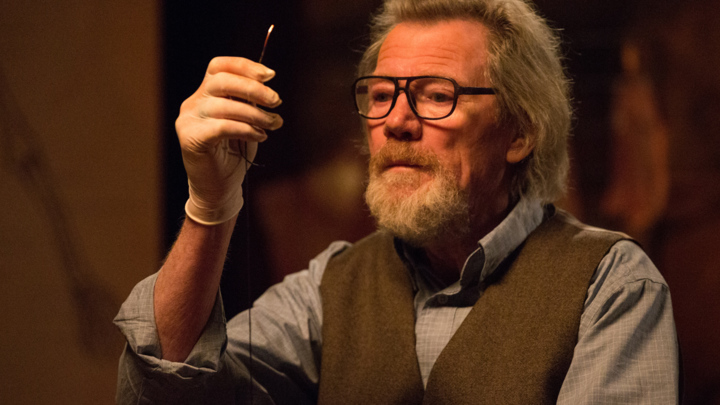 It’s that more jocular second half where Tusk starts to lose its momentum and focus, and that’s primarily because of the introduction of the character Guy Lapointe (Johnny Depp), a French Canadian private eye. Yes, that Johnny Depp, starring in a Kevin Smith movie, adopting a silly accent and a silly fake mustache and becoming what is essentially his take on Peter Sellers’ Inspector Clouseau. It’s a character that feels like he walked in from the set of a different movie, one that is far more aimlessly wacky. The sequences with Lapointe are also laboriously overstuffed. They just go on and on, and you fee whatever sense of momentum starting to flee, sadly. Depp is amusing and I’m genuinely thrilled to see him in a small movie where he can afford to be even weirder. The problem is that the Lapointe scenes feel more like an improv session that Smith was afraid to cut short or nudge in a different direction, as if he was so gracious about Depp agreeing to be involved that he ceded all control of those scenes. The introduction to the character is a ten-minute sequence, itself with an overextended flashback, and after the initial shock and fun of watching Depp wears off, I started wishing to get back to the man-walrus.
Tusk is a unique experience, a macabre experimental lark from Kevin Smith, but it also seems to be the first in a new direction for a man who made his millions on stoner comedies. Smith is currently underway on three other movies, all of them horror, two of which are the next stages in what has become his Canadian Trilogy of Terror. While Tusk hasn’t made a blip at the box-office (if ever there was a film that cried out for on-demand, here it is), it has reawakened Smith’s creative impulses and now the guy can’t stop. Tusk is gross, funny, and genuinely creepy before it goes overboard with its very special guest star. I understand from a plot standpoint why another main character was necessary, but the movie needs some further discipline and tightening that it lacks. Basically, after reading the premise, you’ll know whether or not this film is for you. My friend accompanied me without any knowledge of the plot or the genre, and she enjoyed it. Perhaps there’s hope for you as well.
Nate’s Grade: B-
Share this:

Boyhood (2014)
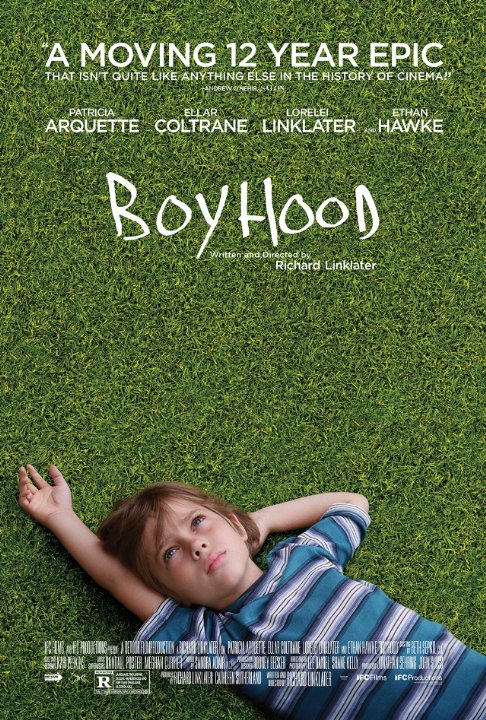 Richard Linklater is one of the most experimental filmmakers in the indie community, but just about everyone was caught unaware when he announced the completion of his newest project, Boyhood. For the past twelve years, Linklater and a small crew had been shooting a secret movie chronicling the life of a boy from age six to eighteen. The ensuing twelve years gave Linklater plenty of time to examine his narrative, and he also happened to make nine other movies while working on Boyhood. Now his covert pet project is playing to near euphoric reviews and plenty of early awards buzz. As big a fan I am of Linklater as a storyteller, especially with his brilliant Before trilogy, I feel hesitant to find fault in such an ambitious, sprawling project. This is a very good movie all around, but I have enough remaining reservations that keep Boyhood from being in the same league as Linklater’s best work.
Mason (Ellar Coltrane) and his older sister Samantha (Lorelei Linklater, the director’s own daughter) are living with their Mom (Patricia Arquette). She’s struggling to get by, with little help from their Dad (Ethan Hawke), who took off to Alaska to find work but really as a means of shirking responsibility. Dad comes back into their lives, Mom enrolls in school to provide a better life for her children, and along the way and many moves there are bad stepfathers that come in, new children and step-siblings, new schools, new boyfriends and girlfriends, and all the moments that add up to comprise a life.
Boyhood is less a film and more a cinematic experience that’s hard to replicate. It thrums with the natural rhythms of life, rising and falling on the small moments. Now there are a few larger scenes of drama, mostly concerning breakups and an abusive alcoholic stepfather, but otherwise the film follows the natural progression of not just Mason but his enter sphere of influences, namely family members, friends, girlfriends, etc. It’s a portrait of time beyond all else, and Mason’s parents are just as interesting to follow. Like their children, they too are in over their heads, looking for proper footing and a sense of identity, and in the ensuing 160-some minutes, we won’t just watch a boy become a man but two adults become responsible, accomplished, and determined caregivers. There is much to take in and to immerse one’s self in the refreshing minutia of life itself. The film feels authentic at every step, sometimes to its own detriment (more on that below), and it’s quite easy to plug into this relatable family drama and become engrossed. Don’t let the hearty length scare you, we are moving through 12 years and as such the segments don’t overstay their welcome. After every time leap, there’s a small game of trying to play catch up, noting all the differences, not just the actors growth spurts, but the new touchstones; before Mom was arranging a date with her psychology professor, and now they’re coming back from their honeymoon. It also allows us to watch the subtle transformation of characters but also watching the long consequences of anger. Dad takes Mason and Samantha out and is floored by the revelation that neither remembers a family camping outing that was filled with laughter. What they remember, starkly, are the shouting matches between mom and dad. It’s a definite wake-up call.
 Because of its in-the-moment nature, it’s difficult to single out storylines that play out significantly better than others. Each person is going to respond better to different moments, the points of relatability and comfort. I loved a scene where Dad plunges into the awkward territory of having the Sex Talk with his teen daughter. It’s just as awkward and funny as you’d expect, but they plow along and it’s a small moment where Dad shows his own growth as a responsible parent, a man who understands the world his children will enter and the pitfalls that await, who wants them to do better than he did. It’s a funny scene sure enough but it’s also a clear shift in Dad as a character. The allure of realism is rarely broken throughout the film, which imbues the film with a bracing sense of honesty in its details. There aren’t any big inspirational speeches (maybe one by a teacher), mostly talks meant to bridge the gap of understanding. There aren’t any eureka moments, in fact Mom even bemoans the absence of feeling something more significant when her children have left the nest. There aren’t any singular-defining dramatic moments because we are all the sum total of many moments, good and bad. The greatness of Boyhood is that it is a film of moments but moments you want to indulge in, like lingering nostalgic memories. It’s a richly pleasant experience.
My friend and critic colleague Ben Bailey asked me whether this story would have been irreversibly different or worse had they just cast several young actors or used makeup as a primary force to illustrate the passage of time. After giving it a good ponder as any critic should, the conclusion I came up with was a surprising… “No.” With the 7 Up documentary series, or Linklater’s own Before trilogy, the passage of time is also a reflection of us, allowing us to likewise catch up with the familiar faces but reflect upon our own lives. Plus it’s a work in progress, a series that matures and evolves and with each additional segment becomes a stronger and more compelling whole. With Boyhood, we get the entire passage of time all in one movie, and it just doesn’t play the same. With the other series I’ve mentioned, we get entire movies to dig into these people at different pit stops in their lives. With Boyhood, it’s less so. Here we get the (to our knowledge) full story, and watching the actors age is its own interesting experiment, but is this story really aided by this approach? I have my doubts, at least to the degree to justify the 12-years-in-the-making gimmick that has captured most of the media attention. It’s just as interesting to compare and contrast the other actors, notably Mason’s onscreen parents. 2002 Ethan Hawke is still the young reckless heartthrob, whereas 2014 Ethan Hawke has a bit of a paunch, lines around the eyes, and the gradual acceptance of his changing life style. But does the gimmick add any greater thematic impact to the film other than the odd notoriety of watching a visual yearbook for a select series of actors?
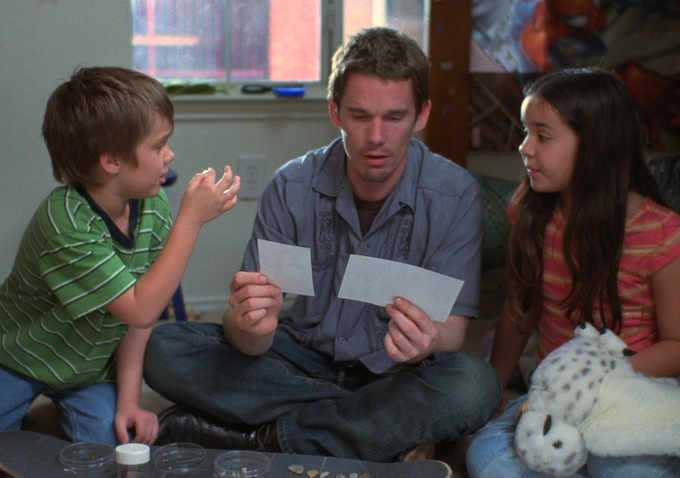 The other quibble I have is larger, mostly that the movie is tied to a character that is rather something of a bore. As a child, Mason is more reactionary to the world around him, taking in all these experiences, especially the hurtful remarks of adults and the long-term effects of all that marital discord and abusive stepfathers. He’s quiet, a bit lackadaisical, generally procrastinating and stretching rules, but he’s really just a boring kid who grows into a boring teenager. Now there are certainly plenty of relatable qualities to him that extend beyond his external situations and family conflicts. Plenty will be able to relate about the struggle to fit in, the points of self-discovery, and the initial buzz of a romantic mingling, among other coming-of-age moments. The problem is that Mason is struggling with finding his own onscreen identity. It would be foolish to have this kid suddenly know with divine clarity who he is and what he wants to be, but would it be breaking the confines of realism to give this character a personality? He ends up becoming this blank canvas for the audience to project themselves onto. If we’re going to spend nearly three hours watching the emergence of a character, it needs to be someone the audience can engage with so that their journey has a lasting emotional impact. Mason is an ordinary teenager, which means he’s an otherwise shrug-worthy figure for this massive of an undeserved spotlight.
Perceptive, funny, warmly affectionate, and well made in just about every capacity, Boyhood is an enjoyable movie from start to finish, another fine achievement for director Richard Linklater. It is a movie about a young man coming into his own, but it’s also a film about those around him doing likewise, maturing, aging, but mostly gaining some stronger sense of themselves and stepping out to make this happen. It’s a tale of life told in micro and macro, and while it lacks the cumulative impact or the 7 Up series of the Before films, it certainly has enough measured drama and honest reflections to stir a bevy of feelings with its audience. I only wish the main character was a more interesting focal point for this twelve-years-in-the-making project, especially with all that added time for Linklater and company to double back and alter their narrative. The character quibbles, and the ultimately unnecessary gimmicky nature of its conceit, are enough to blunt its overall longstanding resonance for me, but this is still a very fine movie and one that no other filmmaker working today could deliver. I just wonder what other secret films Linklater is keeping from us.
Nate’s Grade: B+
Share this:

Chef (2014)
 Chef must have been something of a needed break for its star, writer, and director, Jon Favreau. He’s directed three large-scale Hollywood sci-fi mega movies in a row, a long way from Favrieau’s first big break, Swingers, which he wrote for himself. It was time for something a little smaller, quieter, and more personal, and Chef is just the ticket, a familiar but still greatly satisfying slice-of-life movie about a frustrated chef finding his mojo. Favreau plays a famous chef who cracks under the pressure of delivering the same safe food day in and day out. He loses his job after an increasingly hostile Twitter war with a food critic who calls him out for his safety in blandness. This pushes Favreau out of his comfort zone; he starts an independent food truck, bonds with his son, and generally begins to embrace his new invigorating freedom. Don’t see this movie on an empty stomach because it will be torture. The food preparation shots are tantalizing as are the general discussions over the adoration of food, the heavenly feel of a good meal (an aspect that’s even utilized as foreplay in the film). The entire film is stoked by a laid back charm, an amiable camaraderie between Favreau and his cast, so much so that we don’t care when the film sort of stalls. It’s a far lengthier period between Favreau losing job and getting the food truck than necessary, and the ending is abrupt with an almost absurd amount of resolution tie-ups crammed together without additional progression. The characters are likeable enough, funny, and their passions have a way of enveloping the audience, so much so that a fairly predictable plot is excusable. Chef is a lovely little palate cleanser at the start of the summer movie season and an enjoyable excursion. Just fill up before seeing it or else.
Nate’s Grade: B+
Share this:

Heaven is For Real (2014)
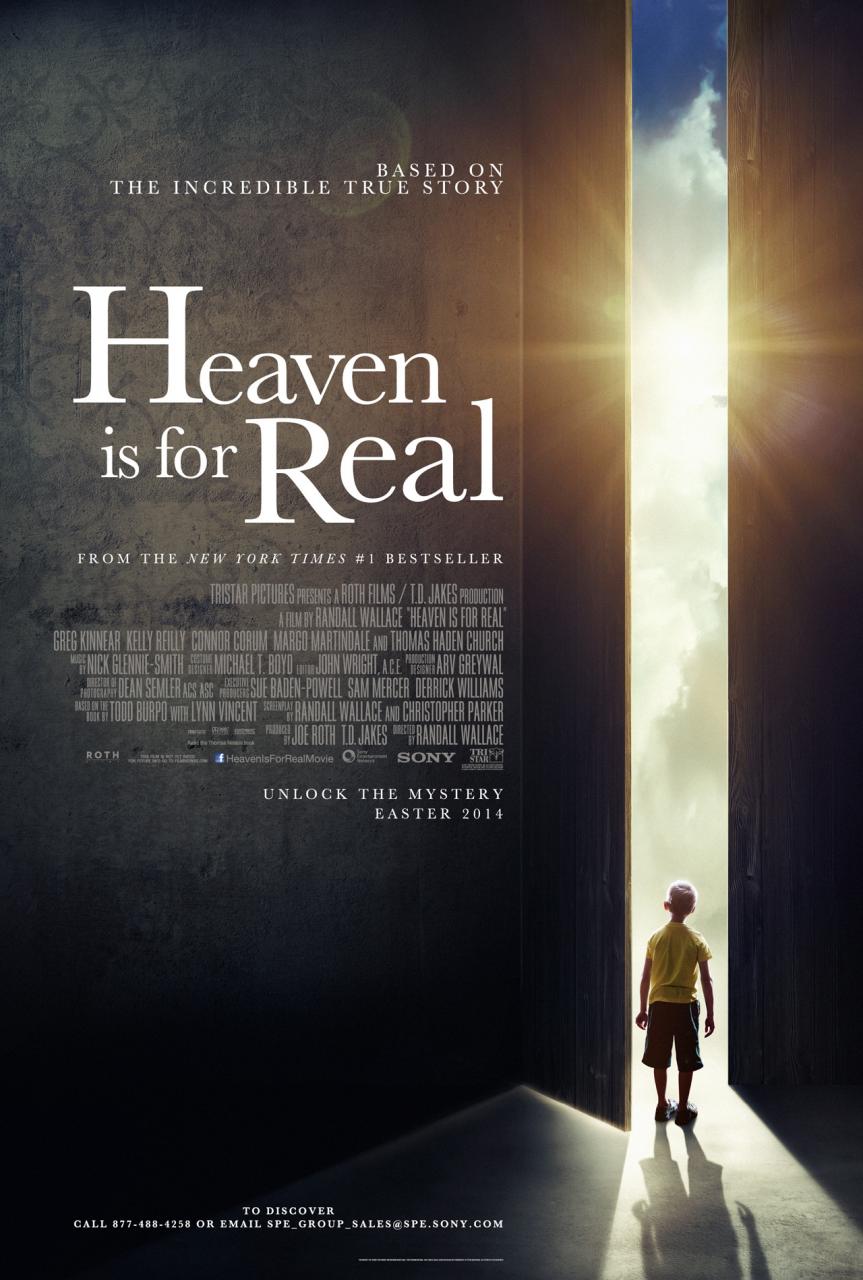 Christian movies have been lighting up the U.S. box-office this year. First there was Son of God, which opened at over $30 million dollars for what is essentially a retread of what people could see for free on TV. Then there was Noah, the Biblical epic given a new life with modern special effects magic. Then the little indie that could, God’s Not Dead, which continues to hang around the box-office, collecting astonishing sums. Now in time for Easter is Heaven is For Real based upon the best-selling book of the same name. Adapted and directed by Randall Wallace (Secretariat, Braveheart), the film manages to be emotional, earnest, and efficient, even despite not really having the elements needed to be called a film.
Todd Burpo (Greg Kinnear) is the pastor for a small town in rural Nebraska. He and his wife Sonja (Kelly Reilly) are struggling to pay the bills and care for their two children, Cassie (Lane Styles) and Colton (Connor Corum). One fateful day, Colton is rushed to the hospital with a burst appendix. He makes it through the operation. Afterwards, he tells his family the amazing news that while unconscious he visited heaven. The Burpos are ready to dismiss their son’s experience as a response common to those who went through near-death experiences, except little Colton never died on the operating table. Todd is unsure what to do with his son’s information, including key knowledge that he has no Earthly way of knowing. The members of Todd’s church worry about trusting the child’s account, and are wary of the media circus, and may just hire a new pastor for all the trouble caused by Colton’s confession.
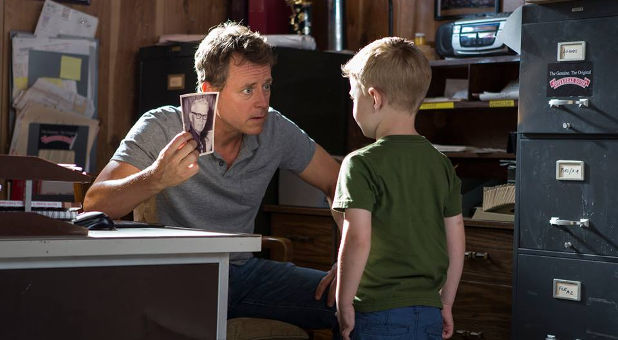 Kinder and gentler, here is a movie that has an inclusive, positive message executed with earnest conviction. The drama isn’t subtle but it can be effective. The music rises, the actors crinkle their faces and get tears in their eyes, and you’re left feeling like there’s something in your own eye. It may be manipulative in some sense but it’s so well executed, and without any hint of pretension or agenda, that I really didn’t mind. It’s a heartfelt movie that could fervently inspire the masses that pack the theater. I’d much rather have any Christian consumers, or the curious, check out this well-meaning movie than the mean-spirited and spurious God’s Not Dead. This movie actually allows its characters to feel like regular people who exist in our world. Todd and Sonja have a sex life, and the Burpo family doesn’t just sing famous Christian tunes in the car, they’ll shout Queen at the top of their lungs. In other words, they’re a fairly normal Midwestern family, and I appreciated that the movie didn’t feel the need to sanctify them. The supporting characters also have dollops of depth to them, at least in the hands of actors like Thomas Haden Church (so wonderfully deadpan) and Margo Martindale (her sorrow fermenting into bitterness). Heaven is for Real is anchored by two strong performances by Kinnear (The Last Song) and Reilly (Flight) as the parents. Both of these actors get a wealth of emotions to play, a few crying scenes, one angry outburst, and they sell it all, never overplaying the emotions of the scene, gently grounding the film with compassion.
I suppose in some capacity this film could be the more religious version of The Sixth Sense. It’s about a gifted child who sees things others cannot and who battles with being taken seriously by the scolding adults. We know that he’s going to say something he should not know, the adults would gasp and say, “How did you know that? There’s no possible way,” and then we’ll repeat this process. It reminded me of when young Haley Joel Osment finally gets through to his mother when he tells her that grandma saw her dance and is proud of her. Just add a dash of non-denominational Christianity.
The problem is that there really isn’t a movie here. Heaven is For Real is comforting and earnest, but there just isn’t a story here that translates into the structure and form of a film, and it shows. First off, there really isn’t much in the way of authentic conflict here. After Colton is saved, the only real conflict is whether to believe what he experienced. This setup could work in the scheme of a movie if his parents were not believers; thus their arc is one that goes from disbelief to belief. However, the movie already begins with the Burpos as good Christian folk. Todd is the town’s pastor for crying out loud, so you’d think he wouldn’t be troubled with his own set of doubts. These are also rather good people. In the opening scenes, despite being behind on bills, Todd refuses to charge someone for his garage-repair services and accepts free carpet instead. In the end, when Todd is preaching and talking about his own journey and how prideful he was back at the start, I’m left wondering what he’s talking about. I suppose he didn’t have to try and run to third base in that church softball game, but is that really all we have to go on? Would staying on second symbolize his lack of faith? What I’m saying is that the Burpos don’t really travel on a character arc, so their squabbles over their son feel forced. More so, the struggles with Todd’s church feel the most inauthentic. I just don’t get it. The pastor’s kid says he went to heaven, and the congregation has members that are mad, but mad at what? Should the pastor, who preaches about heaven for a living, dispute his son, especially when the boy possesses extraordinary knowledge? I don’t understand what the conflict is here and neither does the movie, which doesn’t really adhere to a three-act structure, and just sort of ends without much preparation. People just believe. End. Why did it take this long? It’s not like these people are stone-cold atheists.
 It’s that lacking sense of urgency, let alone goals or a central through line, which makes me question how Heaven is For Real spends its time. Why does the movie choose to spend as much time on scenes that don’t seem to matter? The first act is spent with such dramatic moments as… Todd playing softball and breaking his leg (the one thing that pushes the film into PG material). And from that… a completely unrelated kidney stone infection. Then from there… the family takes a trip to the Denver zoo. I was getting restless myself that this kid was never going to get to heaven. I kept waiting for these moments to have consequence, like how the Burpo kids fall ill after visiting the zoo. Aha, it must be connected to the zoo (monkey pox!). Nope, it’s his appendix rupturing. Very little of the pre-heavenly visit looks to have any bearing on the overall plot, instead providing texture to the family life. I suppose Todd passing the kidney stones was meant to be a comedic excursion (Church says the average is passing 15 stones – that is too insane for me to believe at face value). Why kind of hours does Todd have for his family when he’s a minister, a full-time job, repairs garage doors as a second job, then volunteers as a firefighter AND coaches a high school wrestling team? He’s got way too much on his plate but objects to the idea of his wife getting a job. What purpose does Todd seeing a psychiatrist on short notice serve other than allowing an externalization of his internal doubts? I’ll let that one slide, but they never come back to the psychiatrist. Too much of the movie feels like padding and stalling until the non-conflict reaches its end.
Wallace also shows a lack of faith in his own audience. By choosing to visualize the heavenly sequences, though brief they are, the movie risks being goofy, as whatever man can derive will never be comparable. If the whole movie is about whether or not to accept Colton’s story on faith, why do we have to have dramatizations of his story? Isn’t that cheating? The heavenly sequences don’t really add much oomph to the story any way. Colton goes to church, watches vaguely humanoid angels bathed in light hover and sing. He asks them to play “We Will Rock You.” The angels laugh but they don’t play the classic Queen rock song/universal sports anthem. Is it a matter of taste, angels? Who doesn’t like Queen? Then Jesus shows up and walks Colton outside. Other than a visual glimpse of Colton hugging his dead sister, that’s it. The other issue with depicting heaven onscreen, or something close to it, is that we can start picking it apart. Just ask Peter Jackson and his miscalculated Lovely Bones. If everyone is young in heaven, as Colton observes, then do we get a say in what our prime age is? I personally think George Clooney is a more handsome man as he ages than back in his E.R. days. And why does Jesus have to dress in the standard robes and sandals of 2000 years ago? Couldn’t he wear something more casual? Just imagine: Jesus relaxing in the pajama jeans. Then there’s Colton coming across his departed sister, who died at eight months, but is represented by a 6-8-year-old girl. Does this mean she’s going to be like that for eternity? Does she not get to choose to be an adult? See what I mean about picking it apart?
Its heart is in the right place, its message is inclusive and positive, and ultimately Heaven is For Real preaches about making life on Earth just as significant as the one after, and so I can say that the film is a relatively inoffensive and effective drama. It isn’t enough to say heaven is for real; the movie challenges the audience to do more. It doesn’t go overboard into maudlin territory, though it comes close enough with some of the wistful child acting. There really isn’t much of a movie here, and some of the choices seem to backfire, but it’s saved by its sense of earnestness, compassion, and some above average acting. Amidst the glut of evangelical movies this spring, I’d recommend Heaven is For Real above the rest (I’m excluding Noah from this list). It’s a thoroughly nice movie, and a film that should inspire its core audience, but in a good way, unlike God’s Not Dead. I can’t exactly say that this is a movie that needed to be made, especially from the cut-and-dry source material, but there’s a level of skepticism and reality imposed on what could easily be transformed into a blunt outreach piece. Even though the outcome is never in doubt, there’s an intelligence to the craft here that is much appreciated. Heaven is For Real may not be a great movie, but it works well enough as a movie when it shouldn’t, and that’s enough of a success in my book.
Nate’s Grade: B-
Share this:

Bad Words (2014)
 Given the premise, you’d be right to assume that there are many easy laughs when it comes to Bad Words. A grown man (Jason Bateman, making his directing debut) is competing alongside children in a spelling bee, intimidating them, psyching them out, and otherwise being a rude and vulgar human being. Now, besides the fact that being older doesn’t automatically give anyone an edge over in spelling, I worried that too much of the movie would fall upon the patterned setup of Bateman just saying something inappropriate to children. Some of these jokes are funny, most somewhat expected, but the real enjoyment of Bad Words is the buddy relationship formed between Bateman and a young Indian speller (Rohan Chand). The story follows some similar beats from the more scabrously funny Bad Santa. The heart it develops in the second half isn’t quite enough to tie up everything. I applaud the film for finding a happy ending that feels at least in keeping with its tone. As a director, Bateman has a smooth handling with his actors and a sharp overall sense of comic timing, as one would hope. My issue with Bad Words is that it isn’t outrageous enough, relying on the setup or Bateman’s mean insults for oodles of easy laughs. I was entertained with Bad Words but I wish it followed the convictions of its insolent lead character and cared less about making an audience care. It’s a dirty movie that goes soft.
Nate’s Grade: B-
Share this:

Best Night Ever (2014)
 There are no more reviled names in the world of comedy than the duo of Jason Friedberg and Aaron Seltzer. Together, these writer/directors have unleashed such loathsome films as Epic Movie, Meet the Spartans, and their most recent spoof, The Starving Games. Each film was further evidence that Friedberg and Seltzer had no grasp on the basic tenets of comedy. But, free of the shackles of a spoof formula, what could these two accomplish? That’s a question no one on the planet was seriously pondering but here comes Best Night Ever, a found footage comedy where four thirty-something female friends (Desiree Hall, Samantha Colburn, Eddie Ritchard, Crista Flanagan) travel to Las Vegas and get into oh so scandalous trouble. How original, right?
Being Friedberg and Setlzer’s first straight comedy, it’s fascinating how it fails in a completely different yet similar manner than their normal spoof monstrosities. The problem, among others, with their spoofs is that they are not structured for comedy but merely lame pop-culture references, with the reference standing in the place of what should be a joke. It’s a notable absence of comedy. With their first original work, Friedberg and Seltzer lose the references but forget to replace them with, you know, comedy. Take for instance a scenario where our four heroines hide in a dumpster. The police are outside and they don’t want to be caught. All right, this setup could afford some nice squeamish comedy. Instead, we hold onto the same painfully long night vision shot (4 minutes and 45 seconds – thanks Ignatiy Vishnevetsky at AV Club) with the ladies breathing heavily. It takes several minutes until this situation changes, when the girls start singing “What’s Up?” by 4 Non Blondes as a patented means of soothing a panicked friend, which itself isn’t any funnier. Let’s unpack this scene. They’re in an uncomfortable place and forced to be quiet lest they alert the police. Why set this up and do nothing with it? And the supposed payoff for the scene is more a jump scare than a joke, and it’s not worth the wait. There’s also a lengthy dialogue-free montage where the girls do a scavenger hunt of activities around Vegas, most of which are fairly innocuous for a sex comedy (rub a bald man’s head?). There’s no wilder escalation. When the girls put a blacklight to their seedy motel room, it goes as expected. Oh no, semen stains are everywhere, but you keep waiting for a capper. It’s got to be more than this, something different, something a little more bizarre, like perhaps someone spelling out their name in semen. Nope. And that’s Best Night Ever in a nutshell (no pun intended): a tediously long wait without payoff or jokes.
 Best Night Ever wants to pretend it’s intended for a female audience but the writing makes it seems like Friedberg and Setlzer don’t know women. It’s a girls’ night out, and from a male perspective, which means a lot of shouting, “woo,” dancing, drinking, and all sorts of tame activities. None of these people feel like human beings, let alone friends that we should care about. Being Friedberg and Seltzer’s first R-rated comedy, the guys should be embracing the tasteless possibilities, getting their ladies into crazy scenarios that spiral out of control. Instead, the whole sad affair has such a timid feel, as if Friedberg and Seltzer decided a largely female audience would be put off by too much crass content. There’s a sequence where the ladies take pills they found in am ambulance. All right, you’re thinking, this should lead somewhere. Oh how wrong you’d always be expecting something from these two filmmakers. We’re treated to an extended sequence of the girls just dancing for several minutes, in slow-mo no less, mouthing, “Best night ever.” That’s it. Why does the movie repeatedly pull its punches when it comes to the bridesmaids behaving badly? I think it’s the misplaced idea of not wanting to rankle its target audience, that women have a lower quotient for bad taste.
Let’s explore what happens in the lone sequences where Friedberg and Seltzer decide to indulge their R-rated crassness. The ladies kidnap the valet driver who they believe mugged them. Disguised in ski masks that can’t help but trigger associations with Spring Breakers, they break into his home, strap him to his bed, and then one of the ladies eventually urinates on his face. And if that wasn’t enough, she craps on him as well accidentally. Of all the directions this setup could have gone, a woman pooping on a man’s face just seems lame, having to settle for cheap shock value over jokes. The end gives us our first glimpse of nudity, as the ladies stumble into the wrong hotel room on an amorous interracial couple. Incensed, the naked couple couple chases after them. The chief threat is an overweight black woman and, apparently, her overweight nude body is meant to be the outlandish joke. Oh look, a fat woman chasing after our characters! And so, her nudity is allowed because it’s meant to be comical (visions of Borat dancing in my head). Like other sequences, this part is drawn out and exhausts whatever brittle comic potential it may have had. Then there’s the lingering thought that the only minority characters in the movie are presented in states of undress, their nudity meant to serve as discomfort.
I understand the sexy marketing hook of making a found footage movie, but does the entire film have to be stuck in this limited narrative constraint? Can a movie not just incorporate found footage elements but be free to break away on its own, like The Purge? Alas, Friedberg and Seltzer embark on found footage and can’t even adequately maintain that guise, often failing to produce reasons for why their characters are still filming. First off, why would anyone just film themselves introducing who they are on a bachelorette voyage when, presumably, the only people watching it will be close friends? Then there’s the pesky habit where people keep holding the camera out, framing all four ladies so carefully. Then there’s the fact that the footage is seen rewinding and fast-forwarding, presenting sequences out of sequence, some with intertitles added for dates because having a date stamp for a recording wouldn’t be good enough. So, the age old question, who did all this? Who added music to the sequences? Then there’s the fact that later on the camera cuts to reaction shots and different angles in single scenes, completely destroying the illusion of being found footage. Why blur nudity in an R-rated movie in general, but even more so, if this is found footage, what hypocritical hypothetical editor is blurring certain nudity and letting other nudity pass? Nothing of substance or humor is added to this film by forcing the prism of found footage. Instead it only makes the characters dumber and less realistic than the one-note placeholders they already are.
 Let’s talk about those characters. Comedies have a long history of putting together archetypes; take for instance The Hangover, a surefire inspiration for Friedberg and Seltzer. We’ve got the smarmy asshole, the uptight straight guy, and the goofy nutball, all classic comic archetypes that can bounce off one another. With Best Night Ever we have… the… mother… the slutty one… the… actually it doesn’t matter because the characters are so poorly written that they are indistinguishable. Not one of them has a personality or anything memorable to them. They’re all one type: bland. The only way I was keeping track of who’s who was by hair color, and even that is something of a challenge at times (two redheads?). Friedberg and Seltzer hastily throw in some “character details” for some, like one one just had her husband leave her for a man and another is a mother and has a breast pump. Okay, 1): why pump milk on a Vegas trip? Is that going to keep on the multi-hour car ride home? And 2): you’d expect with a detail like that there would be a later payoff…. Nope. Like most things in the movie, the details are just hastily thrown into the mix and readily discounted.
I was morbidly curious what Friedberg and Seltzer would set their sights on when not cannibalizing pop-culture in their spoof movies, and now I know. Best Night Ever is just as inept a comedy as their previous spoof atrocities. It irritates me even more that Friedberg and Seltzer could have done any comedy they want, and this is what they delivered, a tacky and too often timid sex comedy that has far too many drawn out sequences in place of actual humor. I don’t think found footage works in the context of comedies. It provides a sense of realism, and the long takes naturally build tension, but these aspects benefit the horror genre, not so much comedy. With comedy you still need to develop setups, complicate them, provide payoffs, and make sure to provide detours from the expected. There is nothing truly unexpected from this girls’ night out, and the cheap jokes rarely build or alter, so the pained setup at the beginning of the scene remains the same by the end. The simple premise of a bachelorette party gone wrong is ripe with potential, a potential that will never see any flicker of life under the guise of Friedberg and Seltzer. I never thought I’d write this but these two can just go back to their spoofs. Of course my first request would be never to make another movie again.
Nate’s Grade: D-
Share this:

God’s Not Dead (2014)
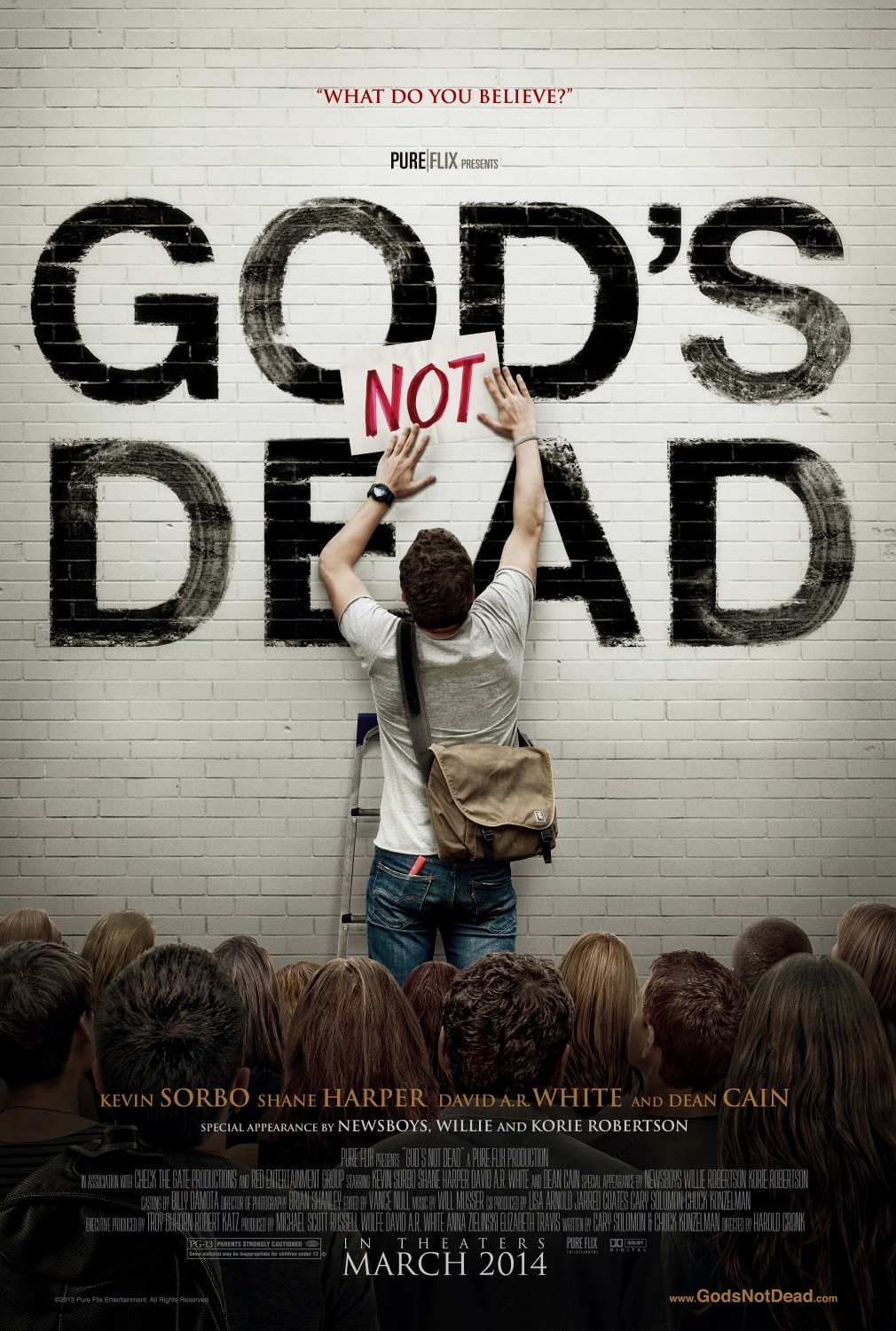 Before I dive deep into the unfortunate indie film, God’s Not Dead, allow me to disclose my own leanings. While I can objectively deconstruct and analyze a film, as I intend to with this one, allow me to state that I consider myself a Christian. I also happen to have several friends of different faiths including some who are atheists. We can civilly discuss our differences without having to demonize one another, finding merit in the different tracks people take to add value to their time on this Earth. Well somebody should have let God’s Not Dead know that the world isn’t so didactic, and the best way to reach people is not to loudly declare your own sense of superiority. This is such an angry little movie disguised with a misleading happy face.
Josh (Shane Harper) is a freshman assigned to Professor Radisson’s (Kevin Sorbo) introductory philosophy class. He’s been warned early on that the prof has a target for Christians in his class. Sure enough, on day one, Radisson offers his class a tempting offer: if they will turn in a slip admitting God is dead, then they will automatically get a good grade and the class will move on to other thinkers. Josh can’t do that, so Radisson challenges the coed to prove the existence of God over the course of three classes. Josh’s peers will serve as the jury of this theological trial.
 It should go without saying that God’s Not Dead feels like it exists in a world that doesn’t come close to resembling reality. That’s fine, movies don’t have to be a perfect reflection of our world, but when a film purports to be the reaction to the persecuted, it has to bend over backward to create its illusion of persecution. One of the big giveaways early on was the fact that all but one person in a full class would acquiesce to admitting, “God is dead” for a better grade, especially a school in the South (the film was filmed in Louisiana). The next giveaway was when Josh’s girlfriend threatens to break up with him if he goes through with challenging Radisson. Her thinking: if Josh gets a poor grade in one class his freshman year, he’ll never be able to go to law school, and their future plans will be kaput. Who thinks this way? Another giveaway was the representation of academia, namely the professors at the university, all of whom come across as snobby, self-satisfied, smug, and mean-spirited even to the point that they’re mocking their own colleague’s girlfriend to her face. People don’t behave like this. Then again this is more of a parable than a story, and more of a conversion exercise than a movie.
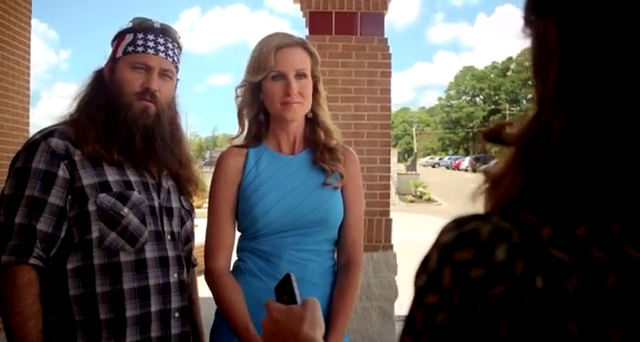
The genesis of this movie feels like it was spawned from a collection of e-mail forward bogeymen, in particular the notion of Christian persecution. For starters, a far majority of this country identifies as Christian, as do the politicians making and enforcing the laws. This is very much a Christian country, so why do certain people feel they are under attack? Even accepting the premise, the movie is rife with creaky subplots that don’t add weight to the film, only padding. There’s the Chinese student who wants to gravitate toward Christianity, whose father warns him to go with the flow lest they upset the Chinese government (COMMUNISM!). There’s the Muslim student forced to wear a headscarf and who secretly listens to Billy’s Graham’s son on her iPod, afraid of what her traditional father would do if he found out (MUSLIMS!). There’s a blogger that writes for “The New Left” who wants to ambush good Christian celebrities like the Newsboys and one of the bearded gents from Duck Dynasty (he looks eerily like my critical colleague, Ben Bailey) with her position of outrage (LIBERAL MEDIA!). In light of the controversy over the Duck Dynasty patriarch saying gays are on par with terrorists and black people were more cheerful in the Jim Crow days, it’s even more unusual. These additional storylines are grafted on with such witless care, belaboring the running time.
Radisson is the prime bogeyman, the smug, self-satisfied atheist intellectual (LIBERAL! COLLEGE! ATHEIST!). No college professor is EVER going to force his or her students to declare God dead in class. They would be disciplined severely and booted. Radisson can spout out a few famous names, but really the man resorts to bullying and intimidation, including physical threats against Josh. There’s no way a dean would allow this to stand. The classroom, and higher education in general, is meant to provoke discussion, especially for a philosophy class. The notion that a philosophy professor would think only in reductive right/wrong terms is idiotic. The entire idea of college as this liberal brain-washing ground that infringes upon the freedoms of Christians, a feeling cataloged in the end credits with reported legal cases, falls apart when you understand that college is about the exchanging of ideas. A Christian viewpoint is but one viewpoint, and within that group the variances are many. Simply being exposed to differing views, texts, and people is not cause for alarm, unless, of course, the person is too insecure in their own faith. The anti-intellectualism argument seems to believe that the more knowledge one is exposed to, the more choices they have, the less trustworthy they can be with making up their own mind.
 Then there’s just the overall poor nature of Josh’s debates. If you’re going to put God on trial, then devote the majority of the movie to this exercise. Cut the many subplots just floating around gunking up the narrative. Josh is in charge of presenting a compelling case for the existence of God. He opens with the notion that man cannot prove God exists but they also cannot disprove God. Huh? Josh, you’re tasked with proving the Almighty and you start with this rhetorical nonsense? Let’s apply this logic elsewhere: I can’t NOT prove that eating ice cream spares me from getting struck by lightning. An intelligent case can be made for a Creator, but that’s not what happens here. Instead, Josh relies on circular logic while blasting others for circular logic. He cites Genesis as the accurate scientific account for the Big Bang, saying science had it wrong, forgetting that science is, pardon the term, an ongoing evolution building off the previous ideas and breakthroughs. He also grossly misrepresents the theory of evolution, the timeframe of developing life, provides a ham-fisted rationalization for the existence of evil, and finally resorts to pressuring Radisson to admit he is a lapsed Christian who has never forgiven God for the death of his mother. Because, you see, an atheist can’t simply come to their beliefs logically. The final head-scratcher is when the class unanimously votes with Josh “I am Spartacus” style, not a single soul, in a philosophy class no less, quibbling over the flawed presentation (Hey, he made animated PowerPoint slides! That’s all we need). I also doubt that any modern-day college class would be filled to capacity especially a class as potentially boring and esoteric as a philosophy class for eighteen-year-olds.
Let’s focus on the really nasty core of God’s Not Dead, which states explicitly and implicitly that anybody who is not a Christian is without morals and judgment. Josh, in his concluding argument, cites Dostoevsky (though it’s really a character in his book) saying, “If God does not exist then everything is permitted.” His argument boils down to the concept that those who do not believe in God are without moral clarity. That’s generally insulting and downright hostile, presupposing that the only reason people treat other human beings with kindness and respect is because of religious faith and not, you know, an innate personal sense of right and wrong. Newsflash: no one religious group has a monopoly on moral values. Hammurabi didn’t need Christianity to come up with a system of moral laws to live by in 1700 BC. I don’t kill my neighbor merely because I fear cosmic retribution. Likewise I don’t help a person in need because I want my brownie points; I do it because I know it’s right. The entire movie exists in such a black and white terms, and to keep up with this edict every non-Christian is presented as a terrible, often mean-spirited human being. The Muslim father believes in God, but not the Christian God, and so he must beat and threaten his daughter for her clandestine conversion. The superficial businessman (Dean Cain) has riches but at what price? The liberal blogger has her career but in her time of need nobody close to comfort her. The film posits that atheists or non-Christians are without morals and cannot be truly happy in life. It’s this gnawing and unnecessary sense of superiority that infuses the film, leaving an unsettling aftertaste of smugness for a movie purporting to castigate others for their own smugness.
Let’s talk about the liberal blogger and Radisson for a moment. It’s not enough that we can’t allow intelligent people to have differing perspectives and beliefs, and respect those differences; no every person with a different view on God must be punished. The liberal blogger finds out she’s dying from cancer. Big spoilers ahead: Radisson is fatally hit by a car. Our kindly reverend character has just enough time to get Radisson to profess his love for Jesus on his deathbed before stepping off into the light. And so, our voices of dissent are unceremoniously killed off. Literally we jump from the death of a man outside to an extended Newsboys concert that asks people to text bomb their pals, a text which just happens to be the name of the movie and the Newsboys’ 2011 album. It’s a little unseemly from a dramatic standpoint but from an ethical standpoint more so.
 I’ve expended a lot of words examining the content of God’s Not Dead, so allow me to judge it as a film. For starters, there are way too many subplots that eat up valuable time, mostly people on the periphery meant to provide validation to Josh for his actions. Tonally, several of these segments clash, especially the kindly minister and his wacky misadventures trying to drive to Disney World. The time in the classroom is the hook of the film but it gives us about equal time with the liberal blogger or the Muslim daughter or any other distracting side character. Also, the filmmakers have the annoying habit of cutting to another scene and then back while their first scene continues to play out. I assume they’re forcing parallels but in reality it’s just shoddy editing that disorients an audience. Then there’s the sequence where the Muslim girl’s younger brother is entering her bedroom, going to discover what she’s listening to on her iPod, and it’s played hilariously like a horror movie with the lurking shadows. There are directing choices that take away from the potential drama of scenes. From a technical standpoint, God’s Not Dead looks slightly better than other Christian widespread releases, but the filmmakers are worse storytellers than the Kendrick brothers (Courageous).
The acting is inoffensively bland with one notable exception. Despite what you may think, Sorbo (TV’s Hercules) is actually pretty good as the raging atheist. He digs into his character’s pool of anger and arrogance and produces a performance that weirdly feels moderately grounded, even for a character that is not. I don’t really know why the Duck Dynasty cameo was necessary but I suppose the filmmakers felt they needed additional star power to lure their target audience.
God’s Not Dead is a surprisingly mean little film that hides its purpose under the auspices of evangelism. I expected a pro-Christian message and it has every right to put forward its own viewpoint, but the film isn’t so much pro-Christian as anti-everyone not already following the same limited interpretation of Scripture. This is not an inclusive film that will reach out to those lost sheep. Putting aside the poor filmmaking and plotting, the misplaced persecution complex, and the straw man arguments, the most disappointing aspect of God’s Not Dead is the illusion of intellectual rigor. The merits of Josh’s less-than-stellar arguments are not the point, though any person skilled in critical thinking should be able to poke holes in his faulty rationale. The point of the film is to feed into an unjustified sense of being wronged, that even though Christians are a clear majority in our country, that somehow they are under attack simply because others are allowed equal opportunity to share their own valid views and beliefs. In the black and white universe of God’s Not Dead, there is only one way to be happy, to be moral, and if you’re not on this team than there’s no way to achieve anything of substance in your life. Do you see the difference? It’s not that my side is good, it’s the notion that my side is better, that your side is worse. It’s a distinction that adds a decidedly sour note. This is a movie after all where the purveyors of atheism have to be struck down with death. God’s Not Dead is likewise striking ‘em dead at the box-office, but you should hold the movie to a higher standard.
Last note: the very title is a misuse of Nietzsche’s quote. The full quote is, “God is dead and man has killed him,” which implied man no longer needed religion to serve as its lone basis of moral authority.
Nate’s Grade: D
Share this:

Adult World (2014)
 People often celebrate independent films as an oasis of creativity in comparison to the cookie-cutter blockbusters that populate Hollywood. However, indie film can have just as many formulaic, half-baked, cookie-cutter films that waste your time. Case in point, the indie comedy Adult World, a movie that feels out of time and place.
Amy (Emma Roberts) is a recent college graduate who has big dreams of being a poet. Her idol, Rat Billings (John Cusack), even lives in town, giving her ample stalking opportunities. But Amy only seems to get rejection slip after rejection slip in the mail. Her parents cannot afford to bankroll her lifestyle, and so Amy sets off on her own, shacking in with a transvestite, and gaining a job at Adult World, a small mom-and-pop porn store. Amy holds onto hope that she can become a great poet with Rat’s mentoring.
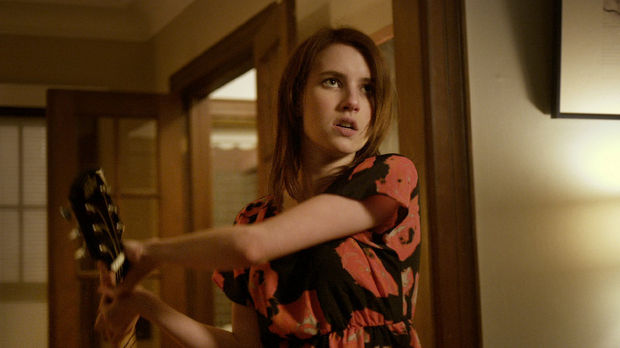 The movie feels overly quaint, like its premise, and much of the character interplay, came from a script from 1996 that was lost until now. The entire enterprise feels painfully dated in scope, humor, and its sense of peculiarity. I don’t even know why the filmmakers decided to set the movie in modern times. The excuses they devise for why a mom-and-pop porn store exists in the world of 4G wi-fi Internet never come close to working. Yes, we still have the traditional brick-and-mortar porn stores to this day, but those have a wealth of selection. This is like a tiny store with a few walls of movie titles, movies that people rent and return. Remember those, video rental stores? Again, dated. The very existence of the porn store disrupts the credibility of the film; not to suggest it would be perfect without this one plot element. There’s such a dated sense of titillation having a desperate woman land a job at a porn store. Oh no, she’s out of her element! The problem with the porn store is that they never do anything with it. There are perhaps four jokes directly related to the fact that it is an adult novelty store, but beyond that it would have been the same if they just sold toasters (note to self: look into potential market for adult novelty toasters). At no point does it prod our heroine along her journey or really have any larger impact besides the place where she meets her eventual love interest. The mom and pop that own the store are never seen again after their introduction, meaning the film even abandons one of the easier comedic scenarios of the elderly, folksy pornographer.
The entire storyline of a would-be poet slumming it at a porn store, learning some hard lessons, and finally finding her footing, well the whole thing just feels so much like a byproduct of 1990s filmmaking, when the broader commercial impact of indie film was being explored. The middle-class suburban girl being pushed out of her comfort zone by a band of quirky misfits in a fringe setting, well it just feels so dated. Even so, that doesn’t mean that this kind of story setup will flounder. Under the right care, even dated material can succeed, but Adult World coasts on the supposed outrageousness of its premise and characters. The trouble is that these people are more of less indie film cartoon characters with no real depth to them. Amy is mostly a brat but we never seem to go beyond the surface of her oversized ego and sense of certainty in her talent. Her relationship with the self-loathing Rat is meant to open herself up the harsh realities of the world, the rude awakening of every post-grad. Except he’s really just a jerk that treats her like garbage and eventually humiliates her. At no point do you get the impression that either character is really having much of an impact upon the other, beside general annoyance or frustration. Then there’s the character of Rubia, a transvestite Amy meets on the bus and within ONE DAY Amy asks if she can move in with this total stranger. Again, the idea of the kindly transvestite who becomes the heroine’s roommate, doesn’t that feel so dated too, so desperate to be edgy? Rubia is also ill defined and one-note. I’m surprised the filmmakers had the restraint to not give Rubia a tragic back-story.
 With all that said, the movie is never as funny or as interesting or as edgy as it seems to believe it is. I may have laughed once or twice for the entire movie. I certainly wasn’t attached to the characters by any means. There’s a segment where Amy and Rubia discover Rat driving through town, so they hop on a bike and pedal after him. It’s played out like it’s supposed to be this stroke of comedy, complete with backbiting comments from Rubia, but it’s never funny and it just continues to play out, never altering to possibly become funny. Here’s something that is funny: after Amy’s parents tell her they cannot afford to pay for her poetry submissions, she runs away from home. The funny part isn’t her decision-making or the act of running away itself. The real funny part is that we don’t see or hear from Amy’s parents again for over an hour. Did her mother and father not care that their only child has disappeared? Are they secretly relieved? Amy doesn’t even refer to her parents, so we’re left wondering if there may be a missing person’s report floating around somewhere. It’s details like this, and the lack of taking advantage of the comic possibilities of the porn store setting, that showcase just how terribly Adult World goes about developing its shoddy story.
Then there’s the overall sludgy look of the film itself. Filmed on location in Syracuse, New York during a wintry period, it’s as if director Scott Coffey (Ellie Parker) wanted to communicate the misery of his characters with a visual style that made you feel their pain. This is one of the crummier looking wide releases I’ve ever seen. The cinematography is just dreary but without any strong sense of visual composition. I know this was a low-budget effort but Coffey and his team do such little work to hide the limitations; the set dressing is pathetically bare when it comes to locations, like the porn store. Every shot, every scene just reminds you further that Adult World just didn’t have the money, or the right people for the money. Coffey’s other sin is his mishandling of his actors. Roberts (We’re the Millers) and Cusack (Lee Daniels’ The Butler) are two very capable actors but they seem abandoned here. Cusack is just a misanthrope who treats every moment with annoyance, and it gets tiresome. Roberts is all over the place, needing a gentle tug to help bring her histrionic character back to a suitable reality.
I cannot think of any reason a person should take useful time out of their day to watch Adult World. The film isn’t funny. The characters are bothersome and lacking depth. The essential premise, the hook of the movie, is incidental and inconsequential. There is just a general malaise about the film, a lack of development that saps the characters and the story. Oh sure, things occasionally happen, or characters will magically reveal insights, but it’s always in the most hasty, inorganic fashion. Even the title is so on-the-nose to be annoying absent further examination. By the end of the movie, I think we’re left with Amy realizing that she might not be as talented as she thought, but hey, at least she has an arty boyfriend now. If this is a late blooming coming-of-age tale (a la Frances Ha) it misses all the necessary elements that push our heroine to grow. Instead, we’re saddled with a crummy looking movie with poorly developed characters, a nascent sense of comedy, and a plot that feels quaintly dated at every turn. If this is what growing up looks like, take it from me and skip Adult World.
Nate’s Grade: C-
Share this:

Veronica Mars (2014)
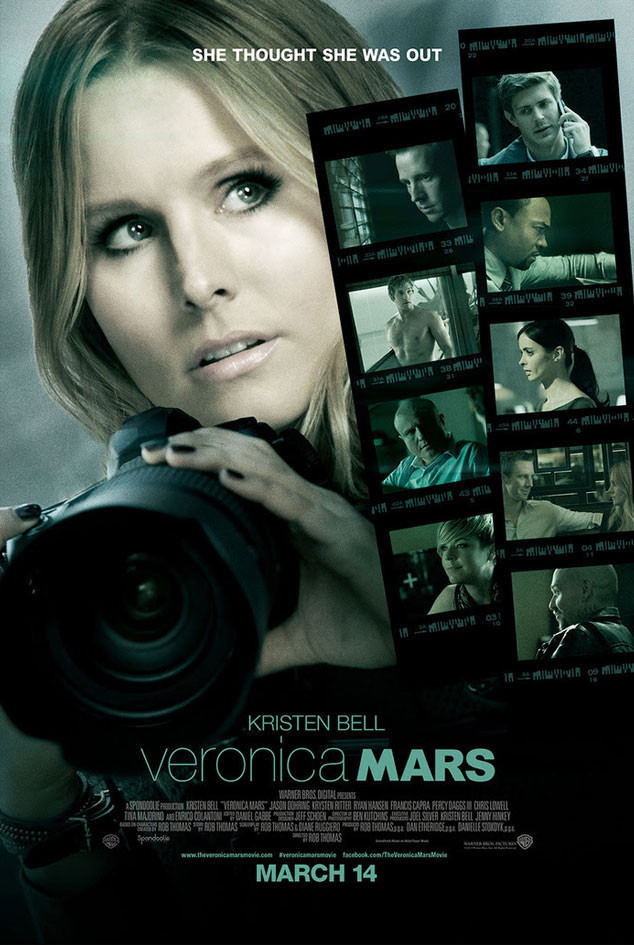 More people know the name Veronica Mars now than probably combined from its short-run on TV from 2004-2007, and that’s squarely because of its record-breaking haul brought in through the fundraising site, Kickstarter. Within hours, the project had already raised two million dollars, on its way to over five and a half million, enough for a long-awaited movie that fans have been teased with ever since the series cancellation. Creator Rob Thomas and his actors were beside themselves in gratitude to their fans (dubbed “marshmallows”). Fueled by the eager hopes of its fans, the movie went into production and is now available for digital download to many of its donors and in a handful of theaters.
Veronica Mars (Kristen Bell) has left behind her hometown of Neptune, California. She’s on the verge of signing with a major New York law firm, and an old friend comes calling. Veronica’s former flame, Logan (Jason Dohring), has recently lost his pop star girlfriend, also a Neptune graduate. He’s suspected of being the killer but he swears his innocence. With the promise of her assistance only lasting a few days, she flies back home and reunited with her old friends (Mac, Wallace, Weevil, Dick) and her father, private investigator Keith Mars (Enrico Colantoni). Veronica should go back to New York with her boyfriend Stosh “Piz” Piznarski (Chris Lowell), she should accept the job offer from the firm, but she can’t help herself fall back into old patterns. She misses the danger, the intrigue, and maybe enough, Logan himself.
 The curious case of Veronica Mars: The Movie is that it was truly made for the fans, those 90,000 people who contributed to their Kickstarter goal. It’s not made for the casual moviegoer who has no foundation with the television series. That’s not to say that Thomas doesn’t try and make the film more inclusive. The neophyte could reasonably follow along, and there is a fast-paced prologue to catch the audience up on the major developments of the series, though almost all from season one. A non-fan could watch this movie but I have no idea what they would get out of it because they would be missing all the connections and context that provide the depth. In a way, this situation reminds me of David Lynch’s Twin Peaks: Fire Walk with Me. Unless you were a fan of Lynch’s iconic thought short-lived TV series, there was no way you were going to follow along or be interesting in following along. It was a movie made for its fan base, and there’s nothing wrong with that though it always helps to provide enough entertainment to prove to the newbies why they should be fans in the first place. I don’t think the Veronica Mars film is able to achieve this. Sure, I enjoyed myself but that was because of my pre-existing fan club and my years-in-the-making desire to finally see proper closure to the characters I came to care about. I feel like someone without that devotion would watch the 105 minutes of Veronica Mars and question what all the fuss was about.
That’s because at feature-length, Veronica Mars is really more of an extended episode of the TV show, and not one of the top tier episodes. As a debut film director, Thomas does a serviceable job of recreating the series noir visuals. The mystery is sufficient if a little dull, lacking a strong sense of urgency throughout most since Logan is already walking around free of charges. The real anchor of the story is bringing Veronica back to Neptune and bringing her back into the family business. The class injustice was a hallmark of the TV series but it’s merely one more slightly malnourished storyline cluttering up the narrative. There are no real reasons to check in on so many characters beyond the fact that it provides resolution for fans. A ten-year high school reunion seems engineered just for this purpose, allowing the new old faces to all reappear again and catch us up. There are characters that appear in near-cameo form (though the surprise celebrity cameo is quite amusing). Even the romance feels mostly grafted onto the story because the core audience demands Veronica and Logan reunite, in all senses. It just becomes a matter of time waiting for the inevitable, as it is with all romantic comedies, except the romance is sidelined here until it isn’t. As a film, it doesn’t feel organically handled that Veronica would leap back into Logan’s arms, and so soon, unless, of course, you are one of those fans (I know MANY) who have been waiting seven years for that moment. Fan service is one thing but it shouldn’t detract from the internal logic of the featured story.
 What does still work are all the hallmarks of the TV show, even if they are less effectively showcased for first-timers. The plucky, sarcastic nature of Veronica still turns her into a heroine worth rooting for, a force of will that has her flaws as well. Bell (Frozen, TV’s House of Lies) can just about do it all, from goofy to heartfelt to ferocious. It’s clear how much she adores this character she helped bring to life ten years ago. The father/daughter relationship is warmly affectionate without dipping into sappy territory. The dialogue is still snappy, though having late twenty-somethings saying it rather than high schoolers has dulled some of the edge. There’s also the sleazy addition of older men hitting on Veronica now that she’s officially out of high school, so hooray. The season-long mysteries of the series, while satisfying and twisty, were secondary to the characters, and watching the overall jovial camaraderie of the cast, is a reminder at how much fans adore these people.
I can objectively critique the faults in the film, as I’ve tried to do for a couple paragraphs, but this is a movie where I set aside my critic hat and merge with the fans. I too contributed to the Kickstarter because I’ve been dying for a sense of closure for one of the best TV shows in the mid-aughts. The finale of season three left much of the show in doubt; Thomas was not counting on cancellation. While fan fiction can run rampant in these circumstances in order to cater to fan demands, it doesn’t compare to the creator being given a reprieve to tie up as many loose ends as possible. That’s the greatest accomplishment of the Veronica Mars movie is that it feels like a genuinely satisfying sense of closure for the fans. While not every storyline is wrapped up, like for instance Weevil’s path, it ends on a point where you can reasonably guess where the characters would continue from here onward if we were never to check in with them again. This is a good resting place. But given the runaway success of the Kickstarter campaign, maybe Warner Brothers could be convinced there are more stories to be told here. I’m cautiously optimistic but really Thomas has already given the fans just about everything they could want, unless they were the Veronica/”Piz” minority of shippers.
Whatever you think of the final product, Veronica Mars: The Movie has changed the way movies can get financed. Smaller boutique films with a passionate fanbase can now get the ball rolling, putting their money into a down payment on seeing their dream movie becomes a reality, convincing studio heads to roll the dice with less risk. I invite all newcomers to watch the series, since that is where it was best. As a film, it’s enjoyable enough and satisfying for the fervent fans, supplying needed closure. However, for people that don’t already have connections to these characters and this world, I don’t think there’s enough going on in the movie to attract a larger discipleship.
Nate’s Grade: B
Share this:

Nebraska (2013)
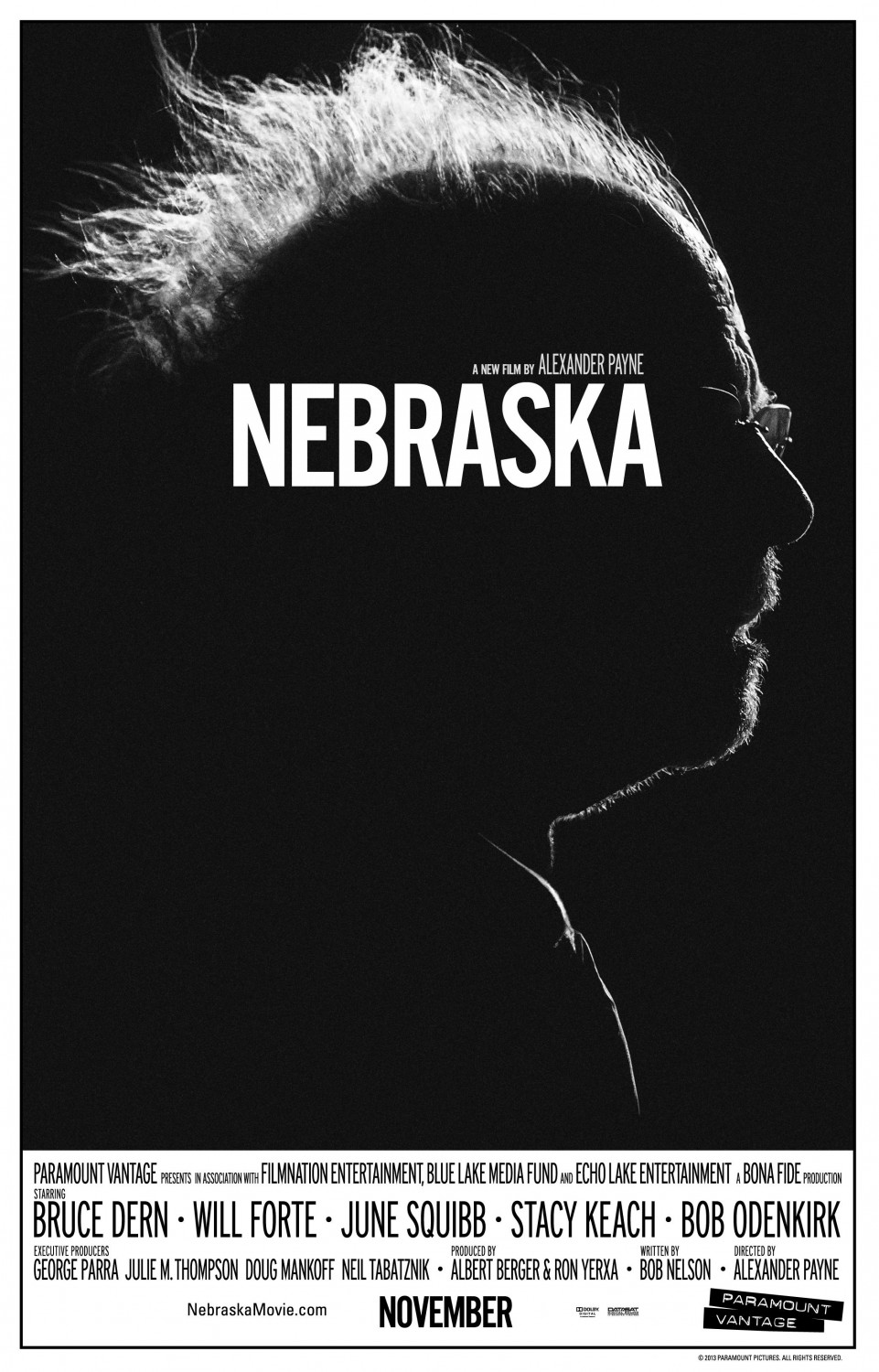 Nebraska is a slow burn, wryly-funny character study of understated proportions, highlighting Midwestern culture rarely given its big screen due. So, in essence, it’s an Alexander Payne movie.
Woody Grant (Bruce Dern) is an elderly man convinced he has won a million dollars and all he needs to do is travel to Lincoln, Nebraska to claim his loot. It’s one of those mass mailings really meant to get people to buy magazine subscriptions, but Woody will not be stopped, sneaking out to walk all the way to Nebraska from his home in Billings, Montana. David (Will Forte) is in a rut himself. He’s recently been dumped, his job is going nowhere, and his father refuses to accept his million dollars isn’t real. There’s a question of how lucid Woody is, and so to placate his old man, David decides to drive his father to pick up his winnings, to humor him before his mind may be gone for good.
 Despite the overtly sitcom machinations of the inciting incident, which even the characters dismiss, the film is really a drama about the relationship between a father and son and the culmination of our life choices. Woody and David are not close by any conventional means but over the course of their road trip, David begins to see his father in a different light; the old wounds are not forgotten, but David is learning about who his father is through others. He’s been so mad at his father for so long that it was the only identity he had for the man. Now in his deteriorating mental state and physical fragility, his father has a sense of vulnerability that brings about decidedly mixed emotions. In his fragile state, is he the same man or at least the same man David remembers? Then there are all the family revelations springing out from the situation. With a genuine millionaire in their midst, the family is coming out of the woodwork clamoring for their own pieces for all the unpaid assistance they’ve given Woody over the years. Initially, it makes Woody look like he’s been stuck trying to find his footing his whole life, as we learn about the lingering post-traumatic stress effects from his war service. Was he lazy, undiagnosed PTSD, or, as another character surmises, too ashamed to say no when others asked for help, and so he was taken advantage of in the guise of assistance from unscrupulous friends and family. The question remains who is Woody?
This is one of those observational slice-of-life films, and your enjoyment of it will depend on your threshold for the taciturn types. These are the strong silent types who keep most of their feelings to themselves. There’s a very funny sequence where Woody and his aged brothers have gathered around a TV, and to listen to the dry mostly car-related conversation bounce back and forth like a dead, floating wiffle ball, is a great comic moment but also a nice insight into an older generation and their communication. Given the perspective of the film, it’s hard to deduce whether the plainspoken people are being satirized or whether it’s a loving send-up of a specific culture. With Payne’s involvement, I lean more on the affectionate tweaking rather than a mean-spirited ridiculing of small town folk and their small town ways. There are funny situations, like David and Ross teaming up for some misplaced justice, and there are characters more broadly drawn for laughs, particularly Woody’s wife (June Squibb), but the overall interaction of the characters, their speaking vernacular, and how they viewed themselves, that is what made me laugh the most and appreciate the script. You feel like you’re dropping in on these people’s lives; every character feels like they could be a real person, not a stereotype. And boy does money really bring out the worst in people.
With Woody and his son visiting his old haunts, the movie inevitably becomes a reflection of a man taking stock of his life, regarding the choices he made and did not make. The pit stop in town opens up the character and David learns far more about his father, with old girlfriends, old business partners, and old rivals. What I appreciated further is that Nebraska doesn’t try and soften Woody; he’s not going to be some old curmudgeon who over the course of 90 minutes has his icy heart thaw and comes to realize the errors of his ways. Nope. Our views on the old man may soften when we get a fuller picture of who he is ad the life he’s lead, but the man himself is the same. He’s readily belittled, insulted, looked down upon, even by his own family members, especially his sassy wife. It’s easy for him to retreat into alcohol and wonder what if. As the family picture broadens and becomes more clear, the film approaches simply yet touching revelations about the family and the nature of legacy. There’s a father/son examination, but there’s also the discussion of what to do when your parents become too ill to take care of themselves. It’s not exactly The Savages, but there’s a circling sense of burdensome decision-making that provides an extra level of pathos to the sitcom setup. By the end, Nebraska squeezes out some earned sentiment without losing its edge or sense of identity. There’s a lot more going on then just some send-up of rubes.
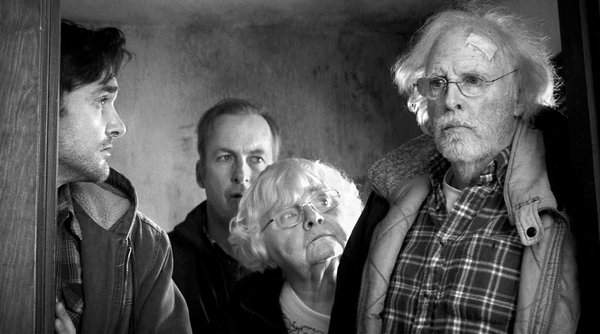 People have been raving about Dern (TV’s Big Love, Django Unchained) ever since the film’s Cannes premier, where the man earned top acting honors. The man deserves every positive words penned. He’s simply fantastic. The character vacillates between outward hostility, spacing out, and general Midwestern emotional reserve, and Dern is able to sell you on every emotional beat without breaking character. He’s unrepentant and demands to be taken for who he is, and his matter-of-fact bluntness has a certain charm to it, like when he admits to David that he never had any plans for kids. He just liked to “screw” and their mother was a Catholic (“You do the math”). I even appreciate that Woody would use the term “screw,” which seems more appropriate. As a two-man show, it’s a shame that Forte (TV’s 30 Rock, The LEGO Movie) doesn’t exhibit the dramatic chops to keep up with his onscreen pop. It’s nice to see him attempt something so different but his limitations are too evident; it’s just another gear that’s not present. At no point would I call Forte’s performance bad but he’s just unable to keep up. Squibb (About Schmidt, Meet Joe Black) is a hoot though the character seems to be permanently stuck in “wacky” mode. She’ll crack you up with her unrestrained commentary, but you may wonder if there’s any more to this character than saying outrageous, curt comments.
This was the last Best Picture nominee I’d failed to catch up with, and while it’s entertaining, funny, and unexpectedly touching thanks to terrific acting and a sharp script, but it also might be the weakest Alexander Payne film yet. This is the first film that the Oscar-winning director hasn’t written himself. Bob Nelson’s screenplay may never have even been glanced over by Payne had it not been for the state of its title (Payne’s films general take place in Omaha). It’s got Payne’s stamp, as would any film he directs, but it also feels like it’s missing something ephemeral, not to get too pretentious. This is a quality study of a cracked group of characters that, upon further review, aren’t as cracked as we may think. They’re just flawed people trying to get along as best they can. Even amidst the snide and antagonistic conversations, there’s gentleness here about the value of family that resonates above the din of the shouting. By film’s end, what started as a cockeyed sitcom transforms into a film that has more meaning and emotion, never betraying its guarded sense of self. When I say the weakest Payne film, this is not an insult but merely an observation. Even the weakest Alexander Payne film is going to be so much better than just about everything out there.
Nate’s Grade: A-


 nathanzoebl
You must be logged in to post a comment.