Blog Archives
Beau is Afraid (2023)
 Beau is Afraid is a ramshackle mess of a movie, and that is both the highest compliment and an indictment on its tremendous excess and lack of focus. It’s Ari Aster’s big swing after his modest successes in elevated horror (Hereditary, Midsommar), so the indie maven studio A24 gave him a thirty-million budget and three hours and full artistic reign to do whatever he wanted, and love it or hate it, one has to objectively admit, Aster really went for something all right. I’m still deliberating where that final something falls on the artistic merit equation. There’s undeniable ambition and artistry here, but there’s also so many ideas and moments and bloat, it genuinely reminded me of 2007’s Southland Tales (did your stomach just drop, dear reader?). It’s because both movies are stuffed to the brim with their director’s assorted odd ideas and concepts, as if either man was afraid they were never going to make another movie again and had to awkwardly squeeze in everything they ever wanted into one overburdened project (in Richard Kelly’s case his suspicion might have been correct, as he did only direct one more feature -so far). While I certainly enjoyed -if that is the right word- Aster’s movie more, Beau is Afraid is not an easy movie to love, or enjoy, or even simply sit through, and not just because of its bloated time.
 If I had to boil down this sprawling movie into one easy-to-digest concept, it’s about Jewish guilt. If you’re not a fan of feeling uncomfortable or anxious from the intensity of a movie, I would skip this one entirely. Beau (Joaquin Phoenix) might as well be a stand-in for the biblical figure of Job for all the cruel punishments and indignities he endures. Just when you think, “Well, it can’t get any worse,” Aster rolls up his sleeves and rises to the challenge and makes things even worse for his pathetic put-upon plebeian. This is a movie of escalating discomfort, chiefly meant to convey the constant state of anxiety that is Beau’s daily existence, and for the first hour or so, Aster works marvelously at making you squirm. It’s a movie less meant to reflect our objective reality and more a projection of one man’s anxious feelings and paranoia, the unsettling urge that everyone secretly hates you and something bad is always ready to lethally strike.
Beau is Afraid is an absurdist comedy of heightened almost screwball proportions, with Beau becoming increasingly frazzled and muttering “Oh no” hundreds of times as fate has it out for him. Small worries become all-consuming, like the simple task of trying to get water to swallow his new prescription medication, and how this eventually spirals to the ransacking of his apartment building, which is also all Beau’s fault, inadvertently, though that won’t mitigate the guilt. There are numerous fears and worries amplified to breaking points, inviting morbid chuckles and nervous titters. Beau sits in his bathtub to stare at an unknown man squeezed against the walls of his ceiling and about to slip and fall. Why is this man there? Why does Beau not immediately leap out of the tub? Why do both men remain fixed in their positions until the inevitable? It’s because it’s a ridiculous paranoid fear manifested into a ridiculous scenario made even more ridiculous. It’s the same with ignoring his mother’s calls only to have a stranger answer her phone to inform Beau that she has been killed and happens to be without a head now. It’s a realistic fear, avoiding phone calls and the draining emotional energy required to answer, and following it up with a consequence of darkly absurdist proportions to make him feel even worse. The movie leaps from one squirm-inducing, grueling sequence to the next, testing your limits and patience. There’s a post-coital revelation debunking, and then confirming, an outlandish worry that made me laugh out loud with tremendous auditory force. What else could I do? It certainly feels like Aster is inviting the audience to laugh at Beau’s pain and tragedy because what other human response can there be but to laugh in the face of unrelenting torment?
 Where the movie loses momentum is about halfway through, after Aster has established the drive of the movie, Beau’s attempts to get to his mother’s funeral so they can finally bury her. Every hour he is delayed, Beau is reminded that his mother’s body is rapidly decaying and only furthering her “humiliation” at the hands of Beau’s inaction. The second part of the movie involves Beau recovering from injuries in an upper class family’s home, the same family (Nathan Lane, Amy Ryan) that accidentally ran him over and is now kind of holding him hostage against his weakened will. We have an urgent goal, we have obstacles keeping him from that goal, and this is where the movie continues to work, as each new attempt to escape only confirms how much stranger and dangerous this family unit is. This dynamic plays into the established heightened fears and absurdist complications. It’s keeping him from his goal. But when he does eventually free himself from this hostage scenario, he literally wanders into the woods and discovers a troupe of thespians that refer to themselves as the Orphans of the Forest, and then a theatrical production may or may not present the rest of Beau’s natural life. This was where the movie’s momentum, which had steadily been ratcheting up along with the dark comedy, began to flag, and when I started to worry, then suspect, then confirm my sinking feeling that this all isn’t going to add up to something more cohesive and thought-provoking. It’s really more a movie of sustained memorable moments and unpredictable, tone-shattering twists and turns. Beau is Afraid is unpredictable, and that both works as an asset and eventually as a handicap. That’s because every scene is hammering the same overall thematic point just with a different stylistic arrangement of fears and anxiety. Following this redundant framework, a 130-minute version of this movie world would feasibly have the same thematic impact as the 180-minute version, merely eliminating some of the many detours.
Another nagging aspect of the movie that failed to add up to much more for me was how little Beau seems to matter in his own story. He’s more intended to be the universe’s lone fall guy rather than a person, a victim whose chief characterization is his ongoing victimization. He suffers and that is his identity. Considering the movie is more a loose fable, this can work since Beau is essentially a stand-in for all of humanity, but there are more personal aspects of him worth exploring in finer detail. The toxic relationship with his mother is worthy of further examination, especially the decades of emotional manipulation to ensure Beau would never replace her with another woman. I wish Aster had devoted more of his 180-minute run time to exploring Beau as a person rather than pitting him against a proverbial assembly line of pies to the face. Phoenix (Joker) has so little to do here except stare wide-eyed, helpless, and mumble as the world constantly befuddles and antagonizes him. It’s a performance purely of pained reaction.
 Can I recommend Beau is Afraid? For most viewers, probably not. It’s too long, too sporadic, and doesn’t come to anything cohesive or cumulative or even meaningful beyond a mean-spirited sense of pessimism directed at our titular human punching bag. It’s wildly ambitious and off-putting and bloated and outlandish and the kind of big artistic swing that artists usually only get so rarely in their careers. And yet I have to admire the sheer gusto of Aster making a movie this strange and alienating, a movie that’s constantly altering its very landscape of possibilities, usually to the detriment of Beau’s physical and mental well-being. It is an exhausting experience, so that when the end finally arrives, we, much like Beau, are simply ready to accept the finality we’ve been waiting for after so much abuse. There are moments throughout these ungainly 180 minutes that are sheer brilliance, and sequences that are sheer torture, some of which are on purpose. There’s also just way too much of everything, and without variance or finer exploration of its themes and specific characterization, it becomes a cosmic game of whack-a-mole where you might be the one actually getting hit over the head, and after so long I can’t blame anyone for not enjoying the prolonged experience.
Nate’s Grade: B-
Share this:

Five Nights at Freddy’s (2023)
 I’ve learned so much more about pre-teen horror video games in the years since I’ve become a parent. There is no shortage of horror-themed games, many of them available through Roblox, that act as gradual entry points for burgeoning new horror fans that might not be emotionally ready for more intense horror (for my money, the creepy smiley creatures with dozens of teeth are more frightening than Michael Myers on any day). This brings me to the Five Nights at Freddy’s movie based on the insanely popular video game series that essentially said, “What if Chuck E. Cheese was, like, evil?” The game involved shifting between security cameras to keep watch on some frisky animatronics that have a hard time staying put, and of course jump scares and bloodless deaths. It’s a game about alternating camera feeds and waiting, and so the big screen version is also a movie very much about waiting for the creatures to stir. That’s probably why a quarter of the feature is watching Josh Hutcherson (The Hunger Games) travel into a dream-space to try and communicate with mysterious children to figure out what must be some of the more obvious plot revelations that he just can’t seem to grasp about this sleepy town and its history of missing kids. Why are we spending this much time on the human character’s back-story when we have killer robots to maim dumb teenagers? There are more scenes with the ghost kids than the animatronics of fame. The protagonist’s motivation seems wishy-washy since he’s putting his life on the line to keep his little sister and then makes an ill-advised bargain with the robots to get rid of her because… we need a moment for him to realize what really matters most? Huh? The scenes of horror rely much more on impressions, favoring shadows and implied violence than featuring anything too overt. I found the revelation of the ultimate villain to be laughable, no matter if it matches up with whatever the convoluted lore is for a game that, again, is flipping through TV channels and trying not to get eaten. There just isn’t a whole lot going on here, and the human drama of Hutcherson trying to win custody of his little sister feels a bit too dramatic and real for something this silly. He can’t get any other job than guarding an abandoned pizza parlor? Why does anyone just not enter the restaurant? He keeps returning to the job even after he realizes the danger. Unless you’re a diehard fan thrilled to just see live-action versions of your favorite furry friends, Five Nights at Freddy’s fees like four nights too many.
Nate’s Grade: C
Share this:

Talk to Me (2023)
 If you were at a party and were told that if you shake hands with a severed hand you could allow a ghost or spirit or whatever into your body, would you agree to this? I may be naive but I think most free-thinking adults would pass on this opportunity, but then again people are chasing all sorts of dangers as distractions or coping mechanisms, so perhaps I’m dead wrong. Now, if you present this same question to teenagers, I’m positive of different results. This is the kickoff for Talk to Me, the new hit horror movie of the summer. Mia (Sophia Wilde) discovers that this magic hand can allow her to see and talk with her mother, who killed herself about a year prior. How far will she go to reach out to her mother and what consequences is she willing to bear?
Reminiscent of Smile, the small horror hit from last year, Talk to Me is a small-scale horror thriller that might not have much extended thematic commentary but it knows how to goose an audience and ratchet up your sense of dread and compiling unease. The premise is gloriously straightforward and creepy from the start, allowing a possibly malevolent spirit to inhabit your body as a thrill. There are plenty of places to go with this premise, as flirting with the “other side” has been a staple of horror movies, just as much as teenagers making bad decisions. It’s a possession movie by way of an addiction metaphor, finding a new and impossible to replicate high, and this too as a vehicle for our protagonist to try and obliterate her grief. The characters feel downright euphoric afterwards, having communed with someone or something, and it certainly makes for fun spectator viewing. The vulnerability of losing control, and especially to a power that you have little understanding of, is a potent direction for the story. Naturally, once we’ve established “safe parameters,” we must then break them and suffer the consequences, and Talk to Me does a truly excellent job of making you feel that omnipresent trepidation. This is a creepy movie that makes fine use of practical effects and an engaged sound design. It’s nothing new from a technical standpoint but it’s yet another example of someone knowing what to do with their tools to create an affecting and uncomfortable atmosphere of uncertainty. It’s more a well-engineered thrill ride, much like my assessment of Smile, but when it’s this well done, you’re just happy to have a conductor who is operating on such a high level of execution.
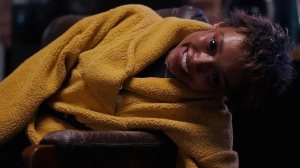 There isn’t much in the way of commentary with the movie besides some fleeting criticisms of transforming personal pain and discomfort into a spectator brand. The movie doesn’t have much to say on this front other than teenagers are predisposed to make bad decisions, and giving them cell phones, social media, and a magically cursed totem might be a damning combination. The different characters treat the possessions like a party, everyone with their phone ready to record the crazy and unexpected results, many of which they cannot fully understand. There’s something there about messing with forces beyond your control and feeling protected, possibly even nigh invincible, because you’re a bystander and not a direct participant, that holding a screen in front of your face somehow stops you from being complicit in the activity. The movie utilizes the severed hand as more of a plot device than a starting point for intriguing dimensions of social commentary. Thanks to how well executed the movie is, I forgave the oversight.
I wish the movie had explored some of its intriguing avenues a little further, but one area I’m glad we didn’t need to delve into was the origin of the severed hand. Many of these curse movies push the protagonist to investigate the mysterious origins of the Evil Thing and try to find the beginning of the chain of death and destruction, such as The Ring, Smile, and It Follows. There may be a fascinating story behind this totem but I’m more than comfortable just accepting it on its own vague terms as our catalyst for unrest. I don’t require its unholy backstory. This devotes more of the 90 minutes to focusing on the characters and their emotional turmoil, which allows the grief metaphors to really simmer. It also makes for an intriguing dilemma because Mia has been granted access to her deceased mother through these very unusual circumstances. She misses her dearly and is willing to break rules to continue that connection, which puts others at risk and brings about lingering consequences. Once mom is back, it becomes an ongoing game of whether or not this could be her real mother or something malevolent manipulating her. I found this storyline to be more compelling than a series of clues connecting to more clues to reveal the history of the severed hand, likely learning about a litany of prior owners who have experienced tragedy and ruin. This centered the movie more as an extension of our main character’s grief and the limits and risks she was willing to meet in order to find closure.
 The directors have been a mainstay on YouTube for a decade as the popular RackaRacka channel, and the Australian twin brothers Danny and Michael Philippou make a seamless transition into big screen horror. They don’t overload their movie with stylistic distractions, and the editing is very confident and patient to better build a sense of dread. It’s that atmosphere that proves to be the best element of Talk to Me, as the second half pushes the audience to question what we’re seeing and whether it’s reality or hallucination (also like Smile). When there are stylistic flourishes, it’s almost like its own form of a jump scare, a break from the normal. The opening house party sequence is filmed like one continuous tracking shot and it succeeds in building your unease and anticipation that some very bad things will be happening soon enough. I was especially impressed by the ending, which I won’t spoil in any significant sense, except to say that it’s a fitting and humbling conclusion that also provides a nicely morbid reversal.
If you’re in the mood for a spooky spine-tingler that delivers the goods with a streamlined story and extra emphasis on its protagonist’s fraying emotional state, then Talk to Me is for you. It’s nothing revolutionary but it is creepy and quite effective and evidence that the filmmakers have been taking careful notes about what makes horror stories and movies succeed. Sequels and prequels are likely inevitable, though I don’t know if the premise supports an extended universe of lore and complications, but I’m willing to be wrong. Go ahead. Take hold.
Nate’s Grade: B
Share this:

Obstacle Corpse (2022)

Hope Madden has been an esteemed critic, journalist, and writer for many Columbus media publications and television for years. She and her husband, George Wolf, run MaddWolf, a popular film blog, and head the Fright Club podcast and horror film programming at the Gateway Theater. They know movies inside and out and they know horror. So it makes sense for Obstacle Corpse to be Madden’s first feature as a writer and director. It’s a high-concept horror comedy filmed in the Columbus, Ohio area and now available to watch on Amazon. Madden and Wolf are both part of my Columbus film critics’ group, and so I will, as I always strive for with reviewing Ohio-made indies, attempt to be as objective as possible knowing many involved in the cast and crew. Obstacle Corpse is, above all things, enjoyably demented. It’s a low-budget horror movie that understands that an indie horror movie is going to succeed through concept, personality, and mood, and Madden pays attention to each of those winning dimensions.
Sunny (Sylvie Mix) just wants to impress her domineering and dismissive father. She signs up for the Guts and Glory competition, a twelve-event obstacle course, to prove herself. Each contestant is expected to bring a partner, so she brings her best friend Ezra (Alan Tyson) who is ready to get back home and out of the woods pronto. That’s even before they discover that the teams have gathered for some brutal competition. Each team is also required to kill their teammate over the course of the grueling events, so will Sunny and Ezra survive, and will they possibly turn on one another to save themself from the deadly games?

The premise is a quick hook, a deadly version of an obstacle course, and makes twisted sense, not just from a canny take-something-from-childhood-but-make-it-deadly calculus of recent gimmicky horror. There are plenty of adult-oriented obstacle courses known for their physical endurance, like the Tough Mudders and Spartan Race and Ninja Warrior, so an escalation into literal life-and-death stakes as an experiential attraction makes sense in a twisted fashion. Madden has also done what I wish several other indie filmmakers would and distinguished her large net of crazy characters. There’s a wonderful sense of personality to the different groups, which helps the audience keep track of the many different faces, but it also allows the characters to be more playful. I don’t care why some would dress up like clowns for this competition and others as baseball players, I’m just glad that these characters are happy to stand out. I enjoyed a middle-aged man eager to transform every moment into a phony social media tableau. I readily enjoyed the hyper-competitive nature of Stephanie (Gareth Tidball), an intense woman who gets off on the thrill of each challenge. I enjoyed one grumbling angry man (Wolf) who could be counted on to struggle in last place no matter the obstacle. I enjoyed a tracksuit-clad bickering couple. I liked a family of siblings that distinguished itself in paired T-shirts, with one pair wearing “single” and the other wearing “double.” I didn’t quite understand it since they were both pairs but I liked the effort all the same. Even little details can add much.
The mood of Obstacle Corpse is chiefly one of carefree fun, an amiable tone that brings a comedic lightness to even the most ghastly of circumstances. It’s prevalent throughout the movie and makes the 80 minutes easy to digest. Madden’s good times are best summarized by the scene-stealing performance of Mason (Donovan Riley Wolfington, Madden’s son), a costumed chef dishing out cold vengeance from his ice cream truck. This character is presented as a change agent, an unexpected wildcard who is disrupting the establishment overseeing the games. He’s a live-wire of energy, channeling Deadpool or a Looney Tunes cartoon at different points, and he will dismember contestants while gleefully singing his violent versions of Christmas carols. It’s a standout performance in a large cast of varied characters, and Wolfington is just operating on another level of insane amusement. The character also becomes one to easily root for because he’s an antihero underdog taking advantage of others underestimating him, and he’s also that change agent, bringing a bloody sense of justice to those involved in the continuance of the games. A late-in-the-game revelation about his history made me wish for more development to better utilize the key info, but Wolfington is the best mascot for the movie’s demented charms.

Given its large cast, there are several that made a favorable impression as they navigated the comedy aspects. Mix (Poser, Double Walker) is a definite find for Columbus cinema and will be going places in no time. She is a natural actor and serves as our baseline of normality, a shifting concept in a world of violent mayhem. Tyson (Stowaway) is a great foil as Sunny’s friend. He’s more effete and unimposing, at first glance, so his incredulous reactions are a welcomed source of comedy and reason. Tony White does a lot as a clown/mime who befriends our “normal” characters. He gives a very expressive and charming performance, and yet there are a couple of moments where his tortured emotions serve as a surprising well of feelings (he is labeled as Sad Clown, after all). Even producer Jason Tostevin (Hellarious) has a laconic menace as the head of the games security, and he delivers a monologue about achieving your peak greatness that sounds like a self-help guru comfortable into the exploitative routines. He’s our face of the establishment, so as things begin going haywire from our anarchic chef, his discomfort provides a consistent outlet for satisfying comeuppance. You can tell the cast is enjoying themselves, and that casual camaraderie helps to add to the overall silly and bloody fun of the movie.
I wish the parameters of this killer event had a bit more clarity and development to really maximize the possibility. First, I thought that these many obstacles were themselves going to be part of the killer challenge, something akin to Squid Games where familiar childhood playground games have been transformed into life-and-death contests. That’s not the case, so watching characters overcome a cargo net or a set of tires feels somewhat disappointing because what would the appeal of this physical track be beyond the murdering? I think part of the joke is that these are ordinary park obstacles that are causing so many so much struggle. The rules of this course can also be rather murky. We see the enforcement of what happens when a contestant kills outside of an official obstacle course event, but the rest of the rules are left too vague. Contestants are welcome to bring their own weapons, like bats and knives, so could someone simply bring a high-powered gun and mow down the entire competition? How does this work exactly? What prize do the winners receive at the end other than having killed their partner? Did Sunny’s father understand what exactly she was getting into and approved? I’m also left slightly bewildered how many of these teams are family members that are so eager to kill one another. I’m not opposed to the possible fratricide plot, but I think the movie needs to present more conflicts within the couples to present as possible explanation for this murderous intent (maybe an old score to settle like stealing a girlfriend, maybe it’s an inheritance battle, maybe it’s sussing out what the particulars are of the familiar tension, etc.). It’s shocking to watch an older brother pitch his younger brother into a fire and kids killing kids (off-screen), but the shock value only goes so far, and having more setup or context could have added more satisfaction. I guess many are just wannabe psychopaths looking for any excuse to indulge their darker impulses.

I think about the brilliant simplicity of 2019’s Ready or Not. The movie’s premise is essentially a killer game of hide and seek, already a rather uncomplicated children’s game. But the filmmakers carefully established the rules and stakes, with the family holding to he belief they need to kill the person hiding before sunrise or else they will all die thanks to a generational curse. It’s outlandish but the movie presented all the vital information and then let things rip. In the case of Obstacle Corpse, it’s around the fifty-minute mark before our main characters, the normies, discover the actual deadly stakes of the game, and their response seems a tad… relaxed. Part of this is, as earlier described, the amiable low-stakes charm of the movie, so nobody ever brings too much of a sense of actual reality to the absurd competition and its slapstick violence.
I also wish Obstacle Corpse had coalesced more of a class-conscious political commentary. We are introduced to a wealthy couple who are bankrolling the games under the auspices of live online betting, a concept also explored in many other movies that summarize the villains as bored rich people betting on the lives of the poor (Squid Games, Escape Room, The Hunger Games, etc.). That works, though the script only gives us one or two check-ins with our wealthy couple as they seem more interested in canoodling than keeping up with their own spectacle. Maybe that signifies how blase they are about human life but it felt like a missed opportunity. I kept envisioning a version of Obstacle Corpse that really trained its fire on the callousness of the rich, with the teams each being a boss or CEO and some lackey or intern that they’re stringing along, meaning each competitive couple already has a class distinction. The plot informs us that the veterans know they are inviting their guest to their intended doom, so why not project onto a corporate or wealthy head and their contempt for a lower-class worker they see as literally disposable? Perhaps these fragile wealthy men think they’re so much more capable or threatening than they really are, a concept given some attention through the hyper-macho character of Richard (Brian Spangler) who can’t live up to his overblown expectations. There’s an overinflated sense of toxic masculinity that relates to physical dominance that was worthy of even more deconstruction and criticism. I think this dynamic would have allowed the movie to hone and target its ire with more potent satirical firepower.
Even with some of my misgivings about clarity and untapped thematic potential, Obstacle Corpse is an enjoyable horror comedy for fans. The blood gushes constantly and the gore is impressively grotesque for its minimal budget. There are some impressive shots for a movie 95 percent filmed in the woods. Madden has crafted a movie that works regardless of budget, with its larger-than-life characters and conflicts resulting from a strong and memorable high-concept premise. The emphasis is more on comedy than horror, like the world’s most demented summer camp outing. Given the large cast of characters, the movie always has a new batch of people to jump through, which keeps the movie fresh even when the suspense can slacken because of the comedic emphasis. It’s not a one-joke movie, and the fun of the cast can often be felt, especially the grand ball of a time had by Wolfington. There are things left out I wish had been explored further, but this is a solid start for Madden and her team in the realm of indie genre filmmaking. If you enjoy your comedy with a heaping helping of blood and bad taste, give Obstacle Corpse a chance.
Nate’s Grade: B-
Share this:

Three Quarters Dead (2023)

I don’t normally review short films but I was asked to by an Ohio filmmaker, and so I agreed to do my best in providing a review of a movie that runs a total of only seven minutes. Three Quarters Dead is the latest from writer/director Angelo Thomas, a rising Ohio filmmaker who already has two movies under his belt, The Incredible Jake Parker and the documentary, DeRosa: Life, Love & Art in Transition. Short films must still function under the same guiding rules as feature-length films: there needs to be a beginning, middle, and end; characters should be engaging; conflict should be clear and developed; and the audience needs a reason to care. Granted, you expect more from an 80-minute movie than an eight-minute movie but you’re still expecting the basics of story, character, and entertainment to land. Three Quarters Dead is a cute little movie that nibbles at the edges of some profound concepts but settles a little too quickly.
We begin at the end, well the end of Zach’s (Eric Six) life. He’s moved on from the mortal plane and wakes up inside a peculiar movie theater. There are only three other patrons sitting in attendance and two of them are skeletons. David (David Reid Hatfield) is the only other living patron, though perhaps that term doesn’t even qualify. He has a sickly, zombie-like pallor and prefers to munch on popcorn sprinkled with maggots. David serves as a guide for wayward spirits, helping them transfer to the Great Beyond outside the theater. Until then, they can sit and watch movies for possibly an eternity of downtime.
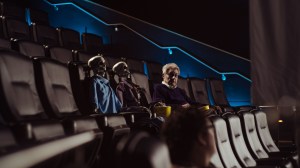
The premise of a movie theater as purgatory is a fun concept and has several areas to connect with the theological and philosophical aspects inherent in any life-after-death story. I liked the projectionist being the equivalent of God looking down from above, offering light and diversion while the mortals sit and wait for answers that might never come. I liked the idea that David has been here so long that he forgot who he is. He is literally deteriorating physically and mentally. The presence of skeletons implies that you can possibly rot away and never even make it to the other side (unless these are just for ambience). Whenever you present a fantasy setting, the audience is going to be keen to adjust to the rules and expectations of this abnormal setting. The premise begs plenty more questions. I was surprised at no point does the short imply what the souls are even watching. This would provide more material either for comedy, like complaining about being stuck watching only so many movies so many times, for character exploration, maybe the movies are chosen that have a specific meaning to each soul, or some melodramatic rumination, like the characters are watching home movies of their own life and its ups and downs, regrets but also the joys that fill the bounds of a life lived. Considering that Zach is revealed to have taken his own life (he even has the note still with him, though its words are not shared either), it would have been helpful to either shed more details about this unique space and its connections for our newcomer or the newcomer’s life that he’s bidding goodbye to. I was left with an unrequited desire for more than the story was willing to offer for its seven minutes.
The central metaphor of a movie theater as a supernatural setting is a good starting point. The script was a little too locked-in on the discovery period and needed more development. Zach is such a blank from a character standpoint, which is acceptable since he’s the audience’s entry point. He seems to emit no real strong emotions or defiance about his strange situation. This may be a result of just being overwhelmed by the sheer existence of another spiritual plane, or this could also be him trying to remember who he was when he was alive. The dynamic of New Guy/Veteran is a comedy staple, learning the ropes from the charming and wily veteran. It seems like a storytelling disadvantage to limit the knowledge base of both parties. We’ve just spent a few minutes with David when he learns that Zach will actually be his replacement. I wish this had been revealed upfront rather than reserved for an ending meant to provide some uplift and reward. We still could have had the same end results but now there would have been an immediate urgency, David only having so many minutes (maybe even make it real-time) to teach his replacement the ropes before he gets recalled to that Great Beyond. If Zach is taking on this new responsibility, you would think he’d need to understand how exactly he’s supposed to help souls transition.

The movie is technically polished and has a nice score from Brooks Leibee (DeRosa). The shot selections are somewhat minimal, likely a result of budgetary time limits, but it also makes the movie visually staid. Many of the edits are simply from two shots from the same angle. It’s efficient but can also be bland over time. Also, I’m surprised there wasn’t a godlike point of view shot from the projectionist booth, at least a high angle looking down from above, but that might have given away the fact that nothing was actually on the screen during filming. The makeup effects for David are simple but effective and do well to assist the actor’s mordant performance.
I enjoyed both actors, though Hatfield (Dogwood Pass, Quarantwinned) has the more fun role as the decrepit veteran teaching us all about this unique space. He gives glimpses of even more honed comedic skills that I wish the short could have utilized. Six (Christmas Collision) is given the less fun role of being responsive but the character is so subdued that he can feel like a proverbial and literal seat-filler. I liked the two actors together and wished their interaction had a bit more energy to it.
Three Quarters Dead is an amusing and light-hearted short even as it skirts over some more meaningful and darker material. It’s a promising idea with more intriguing directions that are unexplored. Partly because of the limits of short-form storytelling but also partly because the concept just wasn’t creatively pushed further. It’s a quick seven minutes that elicits some smiles and maybe even a chuckle (I enjoyed the quarters classification of its title). You won’t regret watching it, and trust me, I’ve watched dozens of short films that I do very much regret ever having seen. Even with a few precious minutes, bad filmmaking and a paucity of coherent ideas can become most evident. Three Quarters Dead is a fun little horror comedy that coasts on charm, good vibes, and the tantalizing possibility of more, but like the characters trapped inside that theater, you’ll be left waiting.
Nate’s Grade: B-
Share this:

Scream 6 (2023)
 When horror franchises dramatically shift their locations to somewhere new, like New York City, it’s usually a bad sign that the series is desperately looking for new creative life. Not every franchise can rebound like a Leprechaun in Space. Most of them just become another Jason Takes Manhattan, where now instead of Character Group A running and dying from the masked killer, it’s now Character Group B running and dying from the same masked killer. It’s more reminiscent of cartoons where the backgrounds might change but the on screen events are stuck in the same drab routines. The Scream franchise was rebooted with 2022’s satisfying fifth installment, so I hoped that a sixth Scream could at least exceed where so many others have failed. Those hopes were quickly fulfilled in what I consider to be one of the best sequels of the seminal slasher series with all of its air-quote irony.
There are more than a few entertaining new turns as the bloody hi-jinks head to the Big Apple. It feels bloodier and gorier than most of the Scream movies, but it also has well-developed suspense sequences that work extremely well at making you squirm. Every brutal burst of violence elicited a “oomph” exhalation from me, and I found myself tensing up as the initial scene constructions transformed. I was quite enjoying myself from set piece to set piece. Take for instance an escape that requires the characters to flee from one high-rise window to another across an alley via a rickety ladder. Or take a subway escape packed with masked Halloween revelers to make you paranoid who among the many Ghostfaces might be the potential killer (I enjoyed the other costumes of horror old and new – I saw you Midsommar May Queen). Even a hide and seek sequence inside a convenience store can be thrilling. All credit to returning Scream 5 directors Matt Bettinelli-Opin and Tyler Gillet, the same pair that delivered 2019’s wonderfully twisted Ready or Not. These gentlemen have proven that they know how to squeeze the most tension from any scenario no matter how bizarre. I loved that the opening kill (Ready or Night alum Samara Weaving) goes in a different direction, revealing the culprit right away, and then it goes in even another direction. There are still some new cool tricks to be had with the sixth installment in a 27-year-old horror series.
 I was asked if you had to watch any of the prior Scream movies to enjoy Scream 6, and while it’s not necessary, you will be missing out on some of the larger connective tissue and themes. You should definitely have familiarity with Scream 5 since it’s a direct sequel and continuation of the core (four) characters. I was surprised how much more emotional resonance I found with the Carpenter sisters than any of the other characters, new or legacy, from the earlier movies. I think it was smart having Sam (Melissa Barrera) be the daughter of the first Ghostface as was her seeing visions of her late father, this time as an adult Skeet Ulrich, which might have been the wrong choice considering the character never lived to be this age (is her imagination doing one of those age approximations you see for runaway kids?). Our lead heroine is trying to navigate where her instincts are taking her, which might be a darker path that she feels trepidation about ignoring for only so long. Sam’s therapist balks when he discovers her actual parentage, which makes him maybe the worst therapist. Her relationship with her younger sister Tara (Jenna Ortega) is more complex than any of the close friendships of Sydney Bristow. Even with all the carnage and bloodshed, Scream 6 still finds breather moments to let the sisters react realistically to their dilemma and how it affects their own relationship. I’m glad these characters returned because they serve as the emotional focal point of an otherwise famously glib franchise.
The biggest drawback from Scream 6 is the tacit understanding that this will not be the final film in the franchise given its box-office success, the first film to cross the $100 million-dollar threshold since 1997’s Scream 2. This feels like a culminating climax as the characters now view their lives not as their own but as part of a “franchise,” which means the stories will keep going on beyond them and that nobody is safe, not even the “leads.” For a series entrenched in heavy meta-textual irony, it feels like it’s reaching the end of its genre self-awareness cycle when the movie acknowledges itself as its own IP. The scope of the movie is retrospective, not just reaching back and acknowledging the history of where things began for the legacy characters but for every movie. Each one of the former Ghostfaces is being collected and commented upon, with murder nerd Easter eggs left at each crime scene or in its contextual arrangement. It’s the kind of totality that I would expect from a movie franchise coming to an end, and nodding at its various twists and turns, finding places to even include elements from the lesser beloved Scream sequels. There’s even an unspoken satirical jab at the number of characters that miraculously survive, as if the film is throwing up its hands and saying why not, as if this is the last movie and the rules of who survives and who dies are inconsequential because we’re subverting expectations, as we’ve been explicitly told, so expect the unexpected.
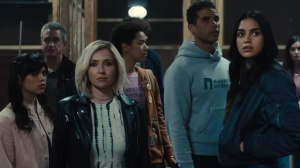 The other aspect of this drawback involves some slight spoilers but I’ll try and tread lightly. After our genre-savvy movie geek explains the stakes of this new episode, the characters start to review one another as potential suspects, and the new supporting characters even cast an accusing eye on the returning characters saying they could have cracked from their trauma. There’s emphasis on the drive to subvert expectations and break away from the patterns of old.
And here is where I’ll venture into some light spoilers so if you want to skip ahead to the next paragraph, please do so, dear reader. There is an ongoing thread where an Internet subculture has re-framed the Carpenter sisters as the real villains of their own horrendous story, and it’s an intriguing element that brings the echo chambers and confirmation bias and novice sleuths-in-the-making of the Internet to further examination. It’s reminiscent of any bottom-feeding conspiracy that asks people to pick apart their reality for “the real story” magically hidden in plain sight. The Scream franchise is famous for its fun guessing game of who the real killers could be from our gallery of suspects, and Scream 6 is no exception. However, the subversion that could have really separated this Scream from its elders is by having the killers actually be… nobodies (the Rian Johnson twist). What if the mask comes off and it’s a brand new character? I’m sure many viewers would feel like they had been betrayed, but then the point emerges that it’s simply some conspiracy theorist who has gone full-tilt crazy into the cult and taken matters into their own hands, attempting to hold “the real killers” to account or to prove they were truly guilty. And the larger point is that the “fake news” has already won out. It doesn’t matter what happens from here, what news coverage should stamp out ignorance, because you can’t pull every cult member out of their self-inflicted cocoon of delusion, which means there will always be more to take their place. That’s the legacy of what has transpired, that there will never be a real escape any longer. I thought that would be such a jarring and thematically intriguing and summative ending.
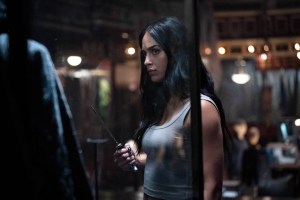 For the many fans of the slasher series, I believe Scream 6 retains plenty of the same pleasures of its prior movies while stretching out into new and interesting directions. It helps that I cared about the central sisters, at least enough by the low bar of horror movie standards. It’s bloody, fun, twisty, and satisfying enough that it could have served as a capper for the entire franchise. But it won’t be. I look forward to this new creative team re-evaluating trilogies better than Scream 3 did. In the meantime, this is a bloody good time to be had for long-term fans and newcomers from the 2022 reboot alike.
Nate’s Grade: B
Share this:

Winnie the Pooh: Blood and Honey (2023)
 The surprise horror movie Winnie the Pooh: Blood and Honey is likely a preview of what’s to come when well-known stories and characters fall under the public domain. However, the cheerful Pooh that most people recall is from the Disney animated shorts and films which began in 1966 and still fall under current copyright laws. So if you were gonna make a killer Pooh bear, he better resemble author A.A. Milne’s original creation and not the Disney version or else you’ll incur the wrath of the many lawyers of the Mouse House. In writer/director Rhys Frake-Waterfield’s version, Pooh and Piglet are on a killing spree after their dear Christopher Robin (Nikolai Leon) grows up and abandons them (they ate poor Eeyore). However, most of the movie is about thick-bodied malevolent men in masks preying upon young British women who are regularly in their underwear or bathing suits. To say this movie is creatively lacking is an understatement. Blood and Honey isn’t just a bad B-movie, it gives a bad name to enjoyably bad B-movies.
The only reason this movie exists is for the novelty of its existence, so that younger horror fans, and those with a healthy appreciation of irony and bad movies, can say, “I watched a killer Winnie the Pooh movie.” No other thought was given to this entire enterprise after that first one. The intellectual property fell into the public domain and now the filmmakers are scooping it up for a cheap and easy, “Well, I haven’t ever seen [wholesome or kid-friendly character] behave like that,” and “that” being blood-thirsty and cannibalistic. I am not against the very idea of this movie, but Frake-Waterfield puts no subversive connections to anything happening. It’s just a low-rent slasher movie with British coeds being knocked off by a guy in a bear mask and a guy in a pig mask. The characters could have been renamed as anything and the movie would have had the same impact. For that matter, the masks could have been swapped with, oh let’s say, a mask of Presidents Richard Nixon and Gerald Ford. Then we could come up with some half-baked explanation of Nixon and Ford reawakening from the dead and seeking to kill the youth vote to better ensure Republican candidates win elections. It would make just as much sense as anything else. The characters of Pooh and Piglet are not in any way reflected upon or given distinct personality or any connections to their non-killer interpretations. In the opening narration, we’re told that the vengeful animals of the 100 Acre Wood swore to conveniently never speak again and to revert back to their base nature. Fine, but then why is Winnie the Pooh still wearing human clothes? Why are they using tools? Why are they walking on two legs (four legs good, two legs bad)? And, most inexplicably, when did Pooh learn how to drive a car? There’s an onscreen kill where Piglet positions a captured woman in the path of a car tire, and it seems torturously convoluted for “killer animals reverted to being animals.” The entire enterprise lacks any subversive connection to the characters and story it’s intending to upend, and the whole movie feels creatively void.
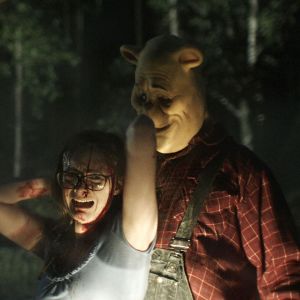 Here’s another example of how little thought was put into this movie beyond getting it to completion. The main character has a past trauma of being molested by a man who was stalking her and broke into her home. For our own edification, this scene is played visually for us, with the intruder taking their time to slowly pull down the strap of our sleeping protagonist’s shirt. So we have a past trauma and the character is now experiencing a new trauma, so from a writing standpoint, you would expect this horrible situation would be a way for the character to exorcise her trauma in a very extreme circumstance and there would even be a parallel for her to triumph over as a rudimentary character arc. It would, at the very least, provide a story justification for why our main character has endured her suffering, so as to work through that as her arc. Well, none of that seems to matter, nor are there any pertinent parallels, and so her past of having a creep break into her home, hover over her asleep, and touch her body was just prurient exploitation. Look, I understand the horror genre is built upon its tried-and-true exploitation elements, boobs and blood and the like. That’s what the audience for a killer Pooh movie comes to expect. I understand why Pooh is ripping the top off one woman before slamming her head into a meat grinder, though it still made me feel icky and sad, but that’s my central response. I did a lot of exasperated sighing and shaking of my head throughout the bloated 80 minutes of movie. After a slightly eerie and decently animated opening, this movie is creatively bankrupt on all fronts.
Winnie the Pooh and Piglet and the rest of the population of the 100 Acre Wood are products of Christopher Robin’s imagination, so him leaving them is more him moving on from his childhood enchantments rather than abandoning his friends. I guess this movie’s version chooses for them to have really existed, which raises some questions over what these creatures were doing before they ever met Christopher Robin. Were they animals and then Christopher Robin’s love and attention magically transformed them into anthropomorphic creatures? If so, then this little boy’s imagination has an amazing power to tap into. Although, to be fair, Disney itself made a 2018 movie with an adult Christopher Robin (Ewen McGregor) who was being followed by the stubborn animals of the 100 Acre Wood who sought him out to remind him about the power of friendships and belief that, I assume, he seemed to have lost track of as a jaded adult.
 Taking a look at the larger filmography of Frake-Waterfield, a devious pattern starts to emerge. The movies are built on title and concept, and there sure are a lot to choose from. As a producer, he has 21 movies released all since 2021 and another 14 in the works, including a sequel to Blood and Honey. Here, dear reader, are some of the titles of the past and future Frake-Waterfield productions: Dinosaur Hotel, The Legend of Jack and Jill, Spider in the Attic, Easter Killing, Wrath of Van Helsing, Croc!, Kingdom of the Dinosaurs, Curse of Jack Frost, The Killing Tree (about a murderous Christmas tree), Firenado, Monsternado, Bambi: The Reckoning, Mary Had a Little Lamb, Peter Pan’s Neverland Nightmare, Crocodile Swarm, Dinosaur Prison, and Snake Hotel. It almost plays out like a B-movie Mad Libs exercise. Take an animal people fear (snakes, crocodiles, dinosaurs) add a place (hotels especially, though is Snake Hotel a lodging intended for people who love snakes or for the snakes themselves?) and, when in doubt, swipe some public domain IP that has an innocent or more wholesome reputation and switch it up (Steamboat Willie but as a sex trafficker?). I’m not against schlocky low-budget horror movies that are acutely aware of their schlock. The killer Christmas tree movie actually seems ridiculous enough to be fun. Except, having seen Blood and Honey, I’m dubious that any of these will actually take advantage of their goofy concepts.
Even if you were turning into Blood and Honey for the ironic yuks, there’s nothing to really laugh at here. This is a bad movie rather than an enjoyably bad movie. It’s a movie that only exists because somebody thought enough people would be curious to watch a killer Winnie the Pooh movie. That’s the reason I tuned in, but from the second minute onward, there’s no reason to bother watching the remaining mess. Just imagine a low-rent slasher film with unimaginative kills, boring characters, a lack of any subversive connections or reframing of its source material, and an ending that doesn’t so much conclude but simply give up for a sequel, and you’ll have replicated Blood and Honey. As one saving grace, I will say that the movie has more polished cinematography than most of its low-budget ilk. The startling lack of imagination of everything else is depressing, as is the fact that this movie has earned over four million at the global box-office, hoodwinking enough rubberneckers looking for a good bad time. The problem is that Winnie the Pooh: Blood and Honey is only a bad bad time.
Nate’s Grade: D-
Share this:

Free to a Bad Home (2023)
 Last year, I was approached by HaleHouse Productions, a company led by the Ohio filmmaking and brotherly duo of Kameron and Scott Hale, to review their first feature, Entropy. It was a small indie shot with a bunch of friends over the course of the COVID-19 lockdown, and I appreciated the artistic aptitude of ganging together during such trying times, but ultimately I found the movie’s flaws to be too overwhelming. I was slightly surprised when HaleHouse reached out to me a year later and solicited another review for their next horror movie, Free to a Bad Home. After all, I had been critical about their earlier film, but they said they appreciate reading the reviews, and this has always been my aim when I write these critiques for Ohio-made indies, to try and provide a professional review with clear and coherent constructive criticism and earned praise. So I figured why not, and I watched Free to a Bad Home, and now I’m wondering if HaleHouse is still going to seek out my opinion when it comes time for movie number three.
I was happy that the Hale brothers (credited as both writers and directors) took the anthology route because, greedily, it means more stories to be told, and it also conveniently allows the audience to leap to another story if the current one wasn’t exactly firing. It’s a numbers game: rather than hoping for one story to entertain, now we have three shorter stories to hopefully engage and entertain. However, the needs of telling a short are still very similar to that of a feature-length screenplay; you still need interesting characters, you still need a story with a beginning, middle, and end, and you still need to use your time wisely, whether it’s a five-minute story or a two-hour one. While Free to a Bad Home divides its time between three smaller tales, and one perfunctory wraparound, I can’t say the movie still knows what to do with its 80 minutes (divided by three). Any horror movie needs adequate time to establish mood. There are plenty of movies that are nothing but a mood piece, like David Lynch or the recent indie breakout Skinamarink, where the intent to present an experience that detaches the audience from the known and places them into a limbic middle zone of uncertainty and dread. Storytellers are going to need some time to establish the main characters, their dilemmas, the setting, and where and when things are going peculiar or wrong. Watching Free to a Bad Home, it felt like each segment had an idea but left it frustratingly vague and with regrettably little development to carry it.
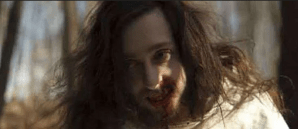 Ignoring the wraparound, the first segment is about Amy (Miranda Neiman) overcoming loss while visiting her old home. She spends a lot of time walking around, hearing strange noises, and getting lost through drinking. Her sister comes around too. It lasts around twenty minutes and much of it hinges upon the very ending twist, which explains what happened to her husband and why it is weighing so heavily on Amy. Except the preceding twenty minutes doesn’t feel like we’re getting more intrigue or insights into Amy or even her fraying psychology. She’s seeing weird visions of a guy in bed sheets and a strange sinkhole in the woods, but a lot of the running time is sitting and waiting. We understand she’s in some stage of mourning. This isn’t really further developed after being established, and that’s the issue with many of the segments. It’s an idea, and there’s a conclusion that is generally predictable, but we’re missing the middle. You could include the first three minutes, the last three minutes, and cut out the in-between, and the “Amy” segment would play out the exact same way. The problem is that the end is too obvious to simply keep the character in a holding pattern for so long with only minimal action. The character is very much sitting around and waiting, and so are we for too long. It’s structured like a haunted house story where a woman is coming undone. Except we don’t get better insights into this person over time, nor do we get increasingly scary haunting or her unraveling mental stability.
The second segment follows Ryan (Jake C. Young) breaking into a home and taking just the most absolutely leisurely time looking for anything of value. We spend nearly ten minutes just watching this guy walk into a room, look around, and then leave to go search in another room. I think the drawn out time is meant to heighten the vulnerability of our thief, making the audience worry that he’s spending too long and is more likely to get caught. First of all, that requires me to find this character likable or interesting to care if he avoids exposure and arrest. This could happen if somehow during these ten minutes we’re learning about dear old Ryan. Maybe we see his problem-solving skills, maybe he gets an inopportune call that he tries to get out of but reveals his own status of financial insecurity, and maybe he even encounters evidence of the family that lives here and makes comment, like he’s a disgruntled employee trying to take what he feels is deserved from a wealthy executive. Anything other than watching one guy walk into several rooms and look around for valuables. At long last he finds something unexpected, a woman named Camilla (Roni Locke) chained to a mattress. Rather than pretend to be a traumatized victim of trafficking, which would be the easy assumption, this woman declares herself a demon who will help Ryan open the family’s expensive safe. However, if he were to release her, she promises to kill the family next door. Do we know anything about them? No, not really, but the devil’s bargain is established: personal gain for the death of strangers. Once again, the ending seems obvious given the lack of substantial character development. The hook is the offer from the evil entity and the cost of his own selfishness, but this hook is diminished when we don’t exactly get any personal struggle wrestling with the decision or its horrific outcome.
 The final segment is the longest, nearly half the total running time, and we follow Julia (Olivia Denis) who is going with her older sister and her friends to a Halloween party. There’s the start of something here with a younger sibling eager to grow up and hang out with older peers, with the drawback of getting into trouble in the pursuit of being seen as cool. Except none of the four characters we follow to the party really distinguish themselves as people. We spend more time watching them do acid in the car, slowly, than we do anything else. It’s a full ten minutes of watching ladies drop drugs into their eyes while moody neon lighting bathes their skin and the synth score rings. We’re clearly going for an immersive mood here but the drug usage, so heavily covered, isn’t ever conveyed in plot or perspective. When the characters arrive at their party, we don’t see any hallucinations or hear anything amiss, which could have been more visually interesting as well as ratchet up tension that things are unwell. Instead, the ladies attend a very sparsely attended gathering where they unveil a smiling corpse and then take turns projectile vomiting onto the body. Then the women are chased and easily dispatched. The end.
So what do all the story segments have in common? There’s plenty of idle waiting. There’s a real dearth of characterization outside whatever the initial premise might afford. There are specific stylistic fixations that are often to the detriment of pacing and story, like the low-light investigation of Ryan and the trance-like neon dream of the ladies tripping on eye drops. There are also obvious endings that don’t feel any better realized or subverted or better set up. Every anthology collection is going to be a mixed bag depending upon your personal tastes, but there’s a certain safety in numbers. I didn’t love all 26 segments on 2012’s The ABCs of Death but there were enough that tickled my fancy, likewise with the many V/H/S collections. However, each of the three anthology tales in Free to a Bad Home suffers from simply not having enough to do.
There are concepts here that can work. The idea of an anthology movie following a cursed object is a fine starting point, almost like the horror equivalent of 1999’s The Red Violin, an underrated indie that traced the adventures of a special violin through centuries of owners. The idea of a criminal coming across a caged demon who tempts them with a Faustian bargain is good. The setup of a younger sibling wanting validation and tagging along for something they are unprepared for, that’s a strong starting point for a night of unexpected terror. A woman alone in her old home and haunted by her memories is a familiar but potent starting point for horror. These core ideas can work but not one is given substantial development to make them matter.
 If you wanted to trace the lineage of a cursed object, I think it would have been more creatively fulfilling to tell your stories in distinctly different time periods, highlighting shifting values but also the different appeals this haunted object might have had depending upon the times. Imagine a woman coming across a cursed piece of jewelry in 1890 or 1950 versus modern-day. There’s nothing in any of the three stories that ties them to a specific time period, so why not venture into other times to give a larger sense of history and the ramifications of this curse? As a low-budget indie, I understand the production reasons why the three stories are all contemporary, though the movie opens with a quick succession of suicide and murder in two earlier time periods. Creatively, the movie feels too easily satisfied and needed to push its ideas and horror further. As it stands, Free to a Bad Home feels like a collection of disappointing shorts rather than one single story disappointment, which oddly enough makes the movie feel even more disappointing.
For being a small indie Ohio production, there are some impressive artistic values. The cinematography by William E. Newton (Black Wolf) can be occasionally entrancing, like during the drug-addled driving sequence that is a little too in love with its protracted mood. The practical makeup effects are sparing but can be unsettling and effective, most notably during a coda where a woman picks at a very open wound on her face and works it to disgusting lengths.
Free to a Bad Home doesn’t separate itself from the glut of cheap horror movies with half-formed stories. Rather than squandering one story over the course of 80 padded minutes, now it’s squandering three-ish stories over the course of 80 padded minutes. I’m a little surprised there isn’t more horror as well, whether that’s conventional exploitation elements like gore and sex, or simply just constructed and sustained sequences of terror and dread. For genre fans with a love for DIY indie spirit, there may be some entertainment to be had with Free to a Bad Home. You can tell the Hale brothers and their small crew have their passions for the material. I only wish more scrutiny and perhaps outside assistance in the writing and development of future tales to make the most of the potential. Free to a Bad Home is available on Tubi and other streaming services, making the title even more apt. For me, there was just too little going on creatively to maintain my ongoing interest and waning attention.
Nate’s Grade: D+
Share this:

M3GAN (2023)
 It’s early January, typically a dumping ground for the unwanted leftovers of Hollywood studios, but an unexpected meme queen has emerged in the form of M3GAN. The latest hit from Blumhouse is styled as a horror-comedy and from the same writer as 2021’s Malignant, which was a delightfully gonzo horror movie that only got more absurdly entertaining the crazier it went. My hopes for M3GAN were confirmed early as I laughed within seconds of the movie. There isn’t much in the way of genuine scares as a PG-13 chiller, so M3GAN leans into the knowingly awkward camp comedy. An advanced robot is given to an orphan to test-drive and the little robot forms a strong attachment that cannot be broken even by bloodshed. It’s a crazy killer doll movie combined with a crazy killer robot movie as well as a corporate satire. When the little robot literally bursts out into song to help cheer up her human counterpart, there’s nothing to do but laugh and acknowledge this is what the filmmakers wanted in response. It’s a fun movie that doesn’t overstay its welcome but needed a little more crazy or a little more biting satire to really satisfy. I was hoping for a more Malignant-style escalation of crazy and was left wanting. Still, it’s a goofy horror comedy that just wants to have fun with the uncanny valley of your expectations.
Nate’s Grade: B
Share this:

Skinamarink (2023)
 Before going any further, let me acknowledge that this movie was, in all likelihood, never going to be my thing, so take everything I write next with caution and context. Skinamarink is the latest indie horror sensation and it’s easy to root for. It was made for a pittance, roughly $15,000, and filmed entirely in writer/director Kyle Edward Ball’s family home in Edmonton, Canada, and after being accidentally leaked online in its entirety in late 2022, the movie became a stalwart of TikTok and the talk of indie horror fans, enough so that it earned a nationwide theatrical release based upon its word-of-mouth buzz. This guy had an idea, shot it himself and for extremely little, and now horror fans across the country can gather and watch this man’s efforts. That’s commendable. Ball is living out a filmmaker’s dream, and I congratulate the man on being able to conceive a micro-horror concept that could connect with so many eager horror fans. I hope he rides this wave and is able to make even more movies while still holding to his creative terms. However, Skinamarink was too experimental an experience for me. It’s like having someone describe their nightmare for you in tedious, clinical detail when you’d really like to do anything else. I kept waiting and waiting for anything to materialize. I was just left waiting and bored.
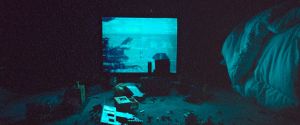
 This is less of a plot or character-driven movie and more one of those horror movies meant to exist on a subconscious dream logic parallel, tapping into something primal. The environment is very limited. We’re stuck inside a home at night for the entire duration of the movie, ostensibly following or adopting the perspectives of two children who wake up in the middle of the night. Something is wrong with their parents, and it sure sounds like there’s another more sinister presence in the home preying upon all of them. We hear noises coming from just out of reach. We see feet and heads but never the faces of people. An old TV continuously blares public domain cartoons that echo through the home. There are some Legos on the floor. Sometimes the doors and windows, and even a toilet, will disappear. Nobody tries to use a phone or leave the house. I was hoping over the 100 minutes that some grander design would reveal itself. Alas, if it did reveal itself, my patience had already been exhausted and so was my brain trying to make sense.
This kind of minimalist tone poem movie is just not for me. I was hopeful that eventually the different mysterious pieces might start forming a more cogent picture of what was happening, or even an understanding of the new rules within this enclosed nightmare universe, but it never materialized. Because nothing really adds up with Skinamarink you could have rearranged any scene without having a deleterious effect. There is no structure, no discovery, nothing to warrant this movie being 100 minutes when ten would have given the same artistic impression. It feels like one of those movies that someone else would watch in another movie that was cursed, a la The Ring. Imagine watching the strange imagery of The Ring cursed video but for two hours. Wouldn’t that grow tiresome? There were some moments that unnerved me, like a rare extended scene of dad imploring the child to look under the bed, and the occasional non-sequitur hushed morsel of dialogue that can creep you out (“That’s why I took her mouth away”). I feel like the entire movie is a giant ASMR experience and would be best watched alone, in the dead of night, and with headphones on for a fully immersive sound design. The movie’s lo-fi style applies to its soundtrack as well, which is constant with hisses and pops like an old record. It’s effective but, like everything else in the movie, becomes less effective or interesting upon its excessive repetition.
 I was reminded of Terrence Malick, another filmmaker whose artistic output doesn’t appeal to me. As I wrote for 2005’s The New World: “[Malick] doesn’t so much involve a plot as he does a large open space for his characters to pontificate about the world around them, mostly through whispery voice over. Malick fans will take in his artistic capture of sight and sound, but the rest of us out there will be scratching our heads, that is, when we’re not falling asleep. Seriously, how do you edit something like this? How does Malick know that THIS shot of a tree blowing in the wind needs to be slotted here, while this OTHER shot of a tree blowing in the wind needs to definitely come later? Malick is a stubborn mystery.” I kept thinking these exact same critical thoughts throughout Skinamarink: how does one even approach editing a movie like this? How do you put this shot of a door at minute 43 but reserve this other shot of a door for minute 56? Because the movie doesn’t build or alter its approach, it feels punishingly monotonous. We’re seeing the same rooms from the same angles, the same TV, the same Legos, and the occasional whisper or growl of dialogue. I guess the repetition could contribute to a growing sense of dread or an inability to escape, and for some I’m sure the movie had that effect. For me, I couldn’t connect on its liminal wavelength.
I think the filmmaker was reasonably trying to recreate a relatable childish nightmare, waking up and sensing something is wrong, the adults cannot help you, or are missing themselves, and there’s no escape to be had as you try to wake up. The lo-fi inventiveness on a very limited budget is admirable, but for me, it would have been just as effective as a clips package. Actually, the entire movie is a glorified clips package, because one scene rarely if ever connects to the following scene, or one shot connecting to the next consecutive shot, so it feels like an endless fuzzy loop. I watched one of Ball’s videos on his YouTube channel, a resource that proved to be his inspiration for the movie, and it was a one-minute short labeled as a nightmare and it consisted of opening one door and pushing inside only to be met with another door, and then the whole thing repeats for a full minute. The point is easy enough to grasp, the futility and helplessness, and even at a minute in length, the video is pushing the bounds of its thin concept to a breaking point. I feel like Skinamarink is the same thing, a concept pushed beyond its breaking point without additional intrigue or substance. I congratulate Kyle Edward Ball and his minimal crew for making a shoestring budget horror hit. It’s just too experimental and lacking narrative traction and substance to be a hit with me.
Nate’s Grade: C-


 nathanzoebl
You must be logged in to post a comment.