Blog Archives
Tell No One (2008)
 Now this is a thriller made with surgical precision. This French film traces a doctor trying to uncover the mysterious murder of his wife, who may be alive after all. The doc needs to stay one step ahead of the police, who still think he’s responsible for his wife’s murder, and he has to also watch out for other shady figures who may be responsible for his wife’s disappearance. This engrossing thriller is character-based and while the twists and turns could induce whiplash, nothing feels totally out of place or unbelievable. This is a movie that holds up upon reflection. All the pieces fit together. Tell No One is exciting, intellectually stimulating, and it keeps you guessing, and yet the movie has a deep emotional core and resonates with palpable feeling. This is a terrific movie that should appeal to just about everybody with a pulse.
Nate’s Grade: A
Share this:

Gomorrah (2008)
 In the Bible, God promised not to obliterate the town of Gomorrah if Abraham could find a righteous man. That didn’t work out so well. This stirring Italian crime drama explores the long-reach of the Camorra crime syndicate stationed in Naples. The oldest Italian criminal organization is larger than the mafia, and the film’s four overlapping narrative threads showcase how the Camorra has a grip on every industry. The usual criminal enterprises are there, from drug trafficking to hired murders, but the organization is also deeply involved in the fashion industry as well as toxic dumping; in a perfect metaphor for the entire film, the Camorra is profiting by burying toxic death just below the surface. The objective docu-drama style lends disturbing reality to the ordeal, though the screenwriting too often feels like a pumped-up “true crime” novel – there’s far more emphasis on the minute details than the people. The movie makes empathy nearly impossible, not that this is necessarily a stinging detriment. The movie steers away from the excitement of violence and instead the death is merciless and swift and unexpected. Gomorrah strips away all the romantic notions involved with the gangster lifestyle; the two teenage gangster wannabes who quote Tony Montana are in for a rude awakening by the established toughs. The movie can be punishing and bleak but it’s always fascinating and told with factual backing that makes it spooky. It may not be as powerful or intense as 2002’s City of God but this is certainly one movie that can be punishing and bleak but it’s always fascinating.
Nate’s Grade: A-
Share this:

Let the Right One In (2008)
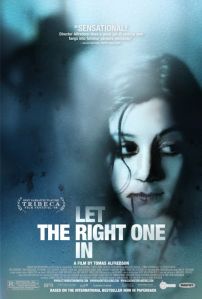 This is a pre-teen vampire love story that is miles away from Twilight folks; it’s solemn, mature, stark, violent, tense, and astoundingly ambiguous. Director Tomas Alfredson pares down the emotions and the entire film takes on a very reserved and curious atmosphere, which I feel heightens the sense of wonder and dread about a supernatural romance. The relationship between 12-year-old Oskar (Kare Hedebrant) and 12-year-old looking vampire girl Elie (Lina Leandersson) is entirely believable and constantly intriguing, as key information is doled out like breadcrumbs. Oskar is negotiating puberty and Elie is well aware of what awaits. The movie works as an example of methodical horror where emphasis is placed upon anticipation and the imagination. The climax at a community pool is one of the best film finishes of the year. I was a tense ball of nerves, and I love the movie’s closing shot. Even better, the movie works as an intriguing and intricate drama about human relationships. I can revisit Let the Right One In and dub it an unconventional and moving romance. Or I can revisit the film and dub it a melancholy examination of a manipulative and parasitic relationship, as Oskar might be doomed to a fated life like Elie’s former guardian. I can keep revisiting this Swedish horror film and discover more to discuss and diagram each time. And I didn’t need a single scene where the vampires played super hero baseball games.
Nate’s Grade: A-
Share this:

Reprise (2008)
 This very New Wave-styled Norwegian film manages to be thoughtful and intelligent, stylish without being vapid, touching, and it brilliantly captures the exuberance of youth on the cusp of adapting into maturity. Reprise follows two best friends and aspiring writers; Phillip finds success immediately but cannot handle it, and Erik must fight through rejections. Director/co-writer Joachim Trier (cousin to Lars) has given the film a hypnotic triptych narrative structure, meaning there are flashbacks, flash forwards, flashbacks within flashbacks, and the viewer is best advised to just succumb to the thrills of the narrative and sort it all out later. The structure made me feel totally immersed in the lives of this small unit of 20-somethings. You get a lifetime of detail thanks to the tangential narrative structure and the help of an occasional narrator. The film has a remarkably deft touch when it comes to crafting realistic characters; the pangs of uncertainty, jealousy, and insecurity all ring true without being trite or obvious. But the movie never gets dour or pretentious as it covers weighty topics. The movie also has an indelible energy that is hard to ignore. Reprise is playfully edited and constantly moving, sometimes forward, sometimes backwards, sometimes telling us a possible scenario that sounds better than reality. I found several small moments to be provocative, like Phillip trying to replicate the happy memories of time and place by trying to re-stage a photo of his girlfriend with his girlfriend (a lovely Viktoria Winge). Reprise is full of small tender moments that speak volumes. This is a terrific film brimming with life and verve and clearly targets Trier as an inspiring filmmaker to watch.
Nate’s Grade: A
Share this:

Lust, Caution (2008)
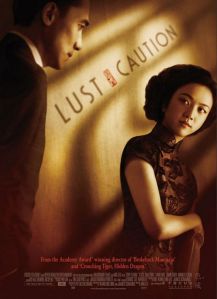 Ang Lee’s period romance is no Brokeback Mountain, though there is a heavy supply of thrusting. Lust, Caution is an NC-17 rated peak into life in China under Japanese occupation in the 1930s. Most of the film follows a school drama club that decides to become freedom fighters. They scheme to murder Chinese officials working with the Japanese government, and one gal (Wei Tang) is tapped to seduce and then kill a high-ranking official. For such a controversial movie, the sex scenes don’t even begin until 90 minutes into the flick (though our undercover heroine is deflowered by her drama club peer for the good of her mission). The movie is exquisitely shot, handsome in its details, and the lead performance by Tang is exceptional, simmering with conflicting emotions and some real sensual heat. The sex scenes doe have an erotic potency to them and they are more explicit than the kinder gentler fare found in typical Hollywood movies that consist of only seeing the slow-motion ecstasy result from a man on top. The offbeat love story gestates too late in the film’s run, leaving little time to delve deeper. Too much of the movie concerns back-story following the drama club’s road to becoming revolutionaries, and while it’s interesting it’s also rather needless on second thought. There’s a nine-minute difference between the R-rated version and the theatrical NC-17 cut; what’s in those nine minutes I do not know since I saw the edited version, but I’ve been told it’s a lot of thrusting. In lusty terms, the movie is heavy on foreplay and too short on a satisfying climax.
Nate’s Grade: B-
Share this:

Mongol (2008)
 Genghis Khan can’t be all bad. The Oscar-nominated foreign film Mongol dares to show the little known softer side to the man that conquered most of the known world in the early 13th century. The film follows the rise of Temudjin (Tadanobu Asano). Mongol has the look and feel of epic adventures of old, the type of stuff Hollywood was churning out at four-hour lengths in the 1960s. The cinematography is excellent and sweeping, the real-life filming locations add great authenticity to the tale, and the acting is universally strong, especially Asano and his stalwart and attractive wife, Börte (Khulan Chuluun). Even though Asano is Japanese he makes a much more convincing Genghis Khan than John Wayne (I advise everyone to skip 1956’s The Conqueror). Most of the film concerns Temudjin’s relationship with his wife and his blood brother, Jamukha (Honglei Sun). Eventually he must defeat his powerful blood brother and consolidate the Mongolian people. The interpersonal relationships between the three principles are surprisingly deft and full of insight. For a two-hour film detailing the life of Genghis Khan, the movie doesn’t resort to many battle sequences. The combat is exhilarating and stylish without ever becoming self-conscious. I read that Mongol is intended to be part one of a trilogy following Genghis Khan, so perhaps there will be more military strategy and battles once he steps off his home turf.
The movie lost me somewhere in its languid middle and never fully regained my attention. The movie starts off well, ends decently enough, but man the time in between gets terribly repetitious. Temudjin is captured. He escapes. He’s captured. He escapes. His wife is captured. He rescues her. I have no idea if all the events the film portrays are necessarily historically accurate as depicted. Even if they are, the filmmakers could have provided a stronger through-line to connect the events and provide a better sense of overall direction. Mongol is certainly a good film but it’s not great. It even feels a tad pre-programmed, like it was constructed for a U.S. audience that has grown accustomed to the likes of Braveheart and other bloody history epics. I’ll keep a passing notice on whether Mongol Part Two (the rise) and Mongol Part Three (the fall) improve upon Part One.
Nate’s Grade: B
Share this:

The Orphanage (2007)
 The haunted house spook sub-genre has mostly delivered fairly pedestrian results (Oh no, it’s only a cat), but let The Orphanage stand as undeniable proof that with patience and talent the haunted house can still be scary as hell. The film takes its time to establish a truly unnerving atmosphere where even genre clichés like creepy kids in creepy masks become compelling and scary. The haunted house usually revolves around some form of a mystery, and The Orphanage is able to tap out an interesting tale that provides plenty of emotional depth. The mystery unravels at a nice pace and the film grows in intensity and dread. Plus, the movie doesn’t spell out everything and respects the viewer’s intelligence. Invariably, this film will be compared to The Others, another superior chiller also from a Spanish filmmaker, especially given the conclusions reached by the end. But debut director Juan Antonio Bayona certainly makes a strong impression with his subtlety and ability to transform conventional creaks and surprises into effective thrills. I’d be happy to sit through more haunted houses if they were all as good as The Orphanage.
Nate’s Grade: A-
Share this:

The Counterfeiters (2007)
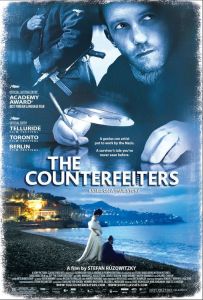 The Oscar-winner for 2007 foreign film is certainly a fine film and a respectable winner, but let’s be honest, the foreign film category was watered down a tad. France nominated Persepolis over The Diving Bell and the Butterfly because a country is only allowed to nominate a single film (sucks to be you, countries with good movies). This rule has resulted in past incidents like Spain nominating Tuesdays in the Sun over Pedro Almodovar’s Talk to Her, which ended up winning the 2002 Best Original Screenplay Oscar despite Spain’s snub. The hard decision by France was moot because Persepolis didn’t make the Academy 2007 shortlist of nine nominees. The biggest snub from that shortlist was Romania’s 4 Months, 3 Weeks, and 2 Days, a harrowing film about two college-aged women seeking an illegal abortion in 1980s communist Romania. It won the Palme d’Or at the Cannes Film Festival and also won the Best Picture award by the European Film Awards (Austria’s The Counterfeiters wasn’t even nominated). Then there was Israel’s amusing and touching film, The Band’s Visit, about an Egyptian band that takes a wrong bus and finds itself in an Israeli town. But the Academy’s foreign films ruled that The Band’s Visit had too much spoken English and therefore could not be ruled as a foreign film. Also left out were Germany’s Edge of Heaven and Spain’s The Orphanage. Nothing against The Counterfeiters but the foreign language field had already snubbed most of the main contenders.
The Counterfeiters is a deeply fascinating true-story about the world’s largest counterfeiting ring. Sal Sorowitsch (Karl Markovics, with a face as hard as flint) is a master forger leading a life of luxury in Berlin until the police capture him and send him to a concentration camp with his fellow Jews. As World War II carries on, the Nazis recruit Sal to lead a team to forge the British pound and the American dollar. The Nazis hope to destabilize their enemies’ economies. Sal is given greater freedoms in the camp and the S.S. officers try to become his chums. But he has to ask himself what his cost his actions will have. He could be prolonging the conflict and actually helping Germany win, but if he doesn’t assist the Nazis then he will surely be murdered as will his team.
Write/director Stefan Ruzowitzky creates great tension from scene to scene but it is the moral dilemmas that stick. What are principles worth? Are they worth dying for? Are they worth endangering others’ lives? The movie takes a docu-drama approach with bobbing handheld camerawork; even the film stock looks like it was soaked in grime for authenticity. And yet I wish The Counterfeiters had chosen to be less enigmatic. The main character is a criminal that keeps his emotions close to the vest, but Ruzowitzky cheats the audience by keeping Sal mostly in his head. The story is filled with factual intrigue and the natural tension given the situation, but after it’s over there isn’t much that’s memorable for a genre that expects more of itself. The Holocaust genre (and let’s not kid ourselves, it is a genre at this point) has some pretty high dramatic expectations and produces films that sear into our brains. The Counterfeiters is a very well told tale with great acting and some interesting character relationships but it can’t fully measure up to other Holocaust parables.
Nate’s Grade: B+
Share this:

The Lives of Others (2006)
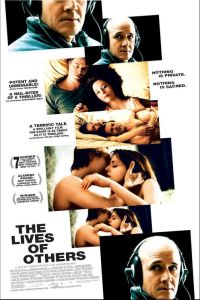 A mesmerizing and piercing human drama that burns into your memory long after it’s over. This Oscar-winner for Best Foreign Film actually deserved to beat out Pan’s Labyrinth. This vastly intriguing, dense, and extremely moving film explores life inside East Germany before the Wall fell, a life not often seen in the movies. The crux of the movie follows a career officer (Ulrich Mühe) in the secret police who has been assigned to eavesdrop on a playwright and his actress girlfriend. It is this assignment that shakes the man’s blind faith in his government, and The Lives of Others becomes nerve-wracking when our silent listener decides to become active in trying to protect his subjects from his boss. This is masterful, artistically illuminating filmmaking with a tight, deeply felt story and superb acting and direction. Germany has been crafting some of the world’s finest cinema as of late, including Oscar-winner Nowhere in Africa and Oscar-nominees Downfall and Sophie Scholl. See this film before Hollywood remakes it and ruins it. Tragically, Mühe died of stomach cancer in July 2007 just as American audiences began to see The Lives of Others and witness the depths of his talent. He will be missed by the world of cinema but his work in The Lives of Others is a lasting testament.
Nate’s Grade: A
Share this:

Black Book (2006)
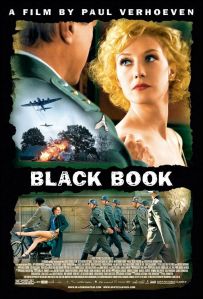 If there’s one thing you can say about Dutch filmmaker Paul Verhoeven, it’s that his films are never boring. He’s shameless when it comes to the amounts of sex and violence he squeezes into his films, and this isn’t typical bouncy violence but cold, serious violence that manage to have whiffs of dark comedy to it. The sex is sleazy and ridiculous, often outpacing the late-night flesh peddlers on Cinemax. I don’t think Verhoeven knows how to do anything subtle, and frankly I wouldn’t want him to. The man is responsible for brawny sci-fi (Total Recall, Robocop), killer lesbians (Basic Instinct), the most subversive mainstream Hollywood movie of the modern era (Starship Troopers is pro-fascism, people), and the most surreal visual effect I have seen in my life – a breast groping itself (Hollow Man). Verhoeven even shows up in person to accept his Razzie award for Worst Director for 1995’s camp classic, Showgirls. This man doesn’t have an off switch. The man makes enjoyable movies, both intentionally and unintentionally.
It’s been a long six years since Verhoeven’s last film and in that time off he’s settled back into his homeland. Black Book (Zwartboek) is a tale loosely based around true stories involving the Dutch resistance in the Nazi-occupied occupied Netherlands. And if there is anyone that can throw in some sex with our good old-fashioned WWII violence, it is Paul Verhoeven.
Rachel (Carice van Houten) is a Jew hiding out in the Netherlands. She and her family is trying to pass out of the country by river when they are ambushed by the guns of a Nazi boat. Rachel is the lone survivor and watches all of her family members get mowed down. She joins the underground resistance movement to find out who betrayed her family. She dyes her hair blonde, both above and below the waist to be thorough, and cuddles up to a stamp-collecting S.S. leader, Ludwig Muntz (Sebastian Koch). She works her way into his trust and along the way uncovers a twisty conspiracy to trick rich Jews into ambushed escapes.
 Black Book is skillfully made and pulpy enough to keep the viewer’s enjoyment level in a good place. From start to finish the movie presents enough trials and setbacks to keep an audience satisfied, and enough sex and violence to meet out the standard Verhoeven quota. Nazi occupation hasn’t been deeply explored from the Dutch point of view, and Verhoeven decides not to make everything so black and white. Muntz is a compassionate S.S. officer that wants to work negotiations with resistance fighters to stop further bloodshed. Rachel deeply falls for him, at the disgust of some of her fellow men at arms. On the other side of the coin, once the Nazis have been toppled there are several Dutch civilians and bureaucrats that can behave just as cruel. Those now with power strike out against those deemed to have sympathized and collaborated with German rule. Verhoeven is making a point that there was good and bad on both sides, which is admirable, though this point has been made better elsewhere. Black Book is filled with various twists and double-crosses, so the audience is involved until the very end. Plus, the sex and violence help too.
There’s terribly little below the surface when it comes to Black Book. It’s a thrilling, unabashedly entertaining movie but nothing beyond a sexed-up, suped-up version of a 1940s behind-enemy-lines potboiler. The characters have little to them beyond basic motivations like greed and lust and revenge, so it all can seem like an empty but high-spirited, fun-filled time at the movies. Verhoeven has never imbued his female roles with much characterization, more often showcasing them as ass-kicking vaginas on legs (whoa, now there’s a mental image for you). Another flaw is how Black Book is structured. We open on a tourist trip to Israel in 1954 and see Rachel teaching a class of schoolchildren. This colossal misstep drains the tension from whenever Rachel is in danger; we already know she has to survive to teach our little ones. [I]Black Book[/I] is a largely fictional take, a collection of various historical pieces and figures, so that means that the outcome for our heroine is not preordained. Rachel very well could die amidst her undercover infiltration, but alas the movie opening in flashback erases this threat.
Van Houten is an enticing screen beauty that brings to mind Hollywood stars of old. She has a very simple, prim, elegant look to her, and a presence that is coy and sensual but far from trashy or vulgar. This helps add traces of believability to a figure that does some incredible acts in the name of God and country. Hollywood would have cast Rachel as a tall, buxom bombshell, but it would all be wrong. If this girl turned heads she would be dead. Van Houten gets thrown through the wringer, and at one point literally shit upon, and she handles it with steely grit. The best moments are when we see how Rachel rebounds from setbacks, when she is forced to break from her resolve and think. Her first encounter with Muntz in a train car is a good example, but even better is how she reacts when Muntz accuses her of dying her hair and being a Jew. She grabs his hands and places them on her hips and finally rests them on her exposed breasts. “Are these Jewish?” she asks. She defuses the situation and lives another day, and it’s perfectly played by a nervous but nervy Van Houten. She makes two plus enjoyable hours even more enjoyable.
 Black Book is clearly and fairly rated R, but part of its rating piqued my curiosity. One of the items that help push the film into the restricted rating is “graphic nudity.” Now, what exactly is graphic nudity? I recall last year’s Babel also getting an R-rating for what was deemed “graphic nudity.” One thing the two films have in common is that they both show quick glimpses of exposed female genitalia. I suppose that the MPAA feels that nudity becomes graphic when we see pubic hair. This confounds me. What about pubic hair turns nudity into an extra, more offensive category of nudity? At the end of the day, it’s just hair, people. I did some quick research and [I]Basic Instinct[/I], infamous for Sharon Stone’s career-making leg crossing, is rated R for mere “strong sexuality.” For the record, when Stone flashes her naughty bits they were bare. So let the record show that hair seems to be the qualifier between what is nudity and what is graphic nudity. Maybe I’ll write a dissertation on this some day.
As for another aside, how freaking cool is the name Zwartboek? It sounds like some fun term I’d come across in the pages of Douglas Adams’ The Hitchhiker’s Guide to the Galaxy. The Dutch language is a tad bizarre for my American ears; it’s sounds like a mixture of English and German, and sometimes it seems like a subtitled sentence is actually direct English. I know I can’t stop saying “zwatboek” around my home in place of gasps and curses.
Black Book is Verhoeven’s first Dutch language film in over 25 years, and it also feels like he’s enjoying movies again after his bad experiences across the Atlantic. I welcome more entertaining Dutch films from their favorite filmmaking son. He may not be he most subtle man behind a camera, but we already have plenty Terrence Mallicks and Gus van Sants to bring confounding contemplation to movies. We need more people like Vanhoeven who know how to please the sense, kick you in the balls, and make you grateful for the experience.
Nate’s Grade: B


You must be logged in to post a comment.