Blog Archives
The King of Kong: A Fistful of Quarters (2007)
 The King of Kong: A Fistful of Quarters is a short but sweet documentary that follows the lengths two men will go to set the records for the classic arcade game, Donkey Kong. We learn a whole lot about the many faces that populate the world of competitive video games, like Walter Day as official record-keeping referee, Steve Sanders as a fraudulent Donkey Kong champ in his youth who has now become a lawyer, Mr. Awesome, and the gaming world’s superstar, Billy Mitchell. He holds several world records including a score of 800,000 for Donkey Kong. Enter Washington science teacher Steve Wiebe who dutifully plays Donkey Kong in his garage. He challenges Billy’s score and videotapes himself passing 1,000,000 points; all the while you can hear his son in the background screaming to have his butt wiped.
What becomes very apparent is that the entire record-keeping system is tilted in Billy’s favor. It’s both sad and funny to watch a group of grown men who have all gravitated toward one man at video games. Billy’s claim to fame is he’s the best at video games, and he has a restaurant, a line of hot sauce, and other products that sell because he has that small sliver of fame. And this select circle of gamers essentially is a freaking tree house and they don’t like someone from the outside crashing their private party. This group of man-child sycophants is clinging to their small notoriety like a life preserver on a doomed ocean liner. It’s baffling how serious and self-involved they all come across; while on the phone with Billy, Steve Sanders, while dining, says in the most hyperbolic alertness that Steve has come into the restaurant “uninvitedly” like it’s some grave offense. It’s a restaurant! (Billy at one point literally says, “No matter what I say, it draws controversy. It’s sort of like the abortion issue.”) These few established gamers throw hurdles at Steve and even dismantle his Donkey Kong machine to snap pictures looking for some tenuous proof that his score was inflated somehow. When they find a small dew drop of glue in one corner of the control board, they claim that this, compiled with the fact that the board was given to Steve by a known enemy to Billy, is enough to disqualify Steve’s record-breaking million point score.
 They challenge him to break the record in public and that’s what Steve does, which is more than what Billy Mitchell is capable of. Steve travels to renowned New Hampshire arcade FunSpot and, under the glare of Billy lackeys, breaks 900,000 and gets to the heralded “kill screen,” where the old arcade game, because it has exhausted its memory, begins a stage simply to kill Mario within seconds. We’re told only two others have been ever known to reach a kill screen in public.
And then Brain Kuh pops in a videotape that Billy sent. The tape is a recorded game, presumably of Billy playing, where he passes 1,000,000 points on Donkey Kong and undermines Steve’s recent accomplishment. The sycophants are all abuzz, with Kuh on the phone with Billy relaying every moment in hilarious fawning detail. Apparently, it wasn’t kosher for Steve to submit a recorded video of his score but Billy doing the same thing is acceptable. This double-standard is even more dubious when you realize that Billy Mitchell is one of the deciding members on whether or not to credit Steve’s million-point tape; isn’t that a bit of a conflict of interest? Billy’s record-breaking tape has a mysterious blur that only appears on the side of the screen with the score, and the blur conveniently or coincidentally covers the score as it passes into seven digits. Surely that is more questionable than a dollop of glue on a control board, but oh well, the score stands.
The last part of the film involves the Guinness Book of World Records reaching out to Walter Day to setup a section on video game score records. The location for this showdown is even in Billy’s own backyard of Hollywood, Florida. Steve travels 3,000 miles to be there and challenge Billy head-to-head in public, but the many days go by and Billy refuses to put his skills to public scrutiny. Is he afraid to lose in public, or is there really something funny with that record-breaking tape he submitted to FunSpot?
King of Kong is pleasantly structured like a sports movie. Billy is portrayed as the villain, the establishment, and Steve is the underdog that just wants to succeed at something in a life that seems filled with disappointment. Even better, the filmmakers made a training montage set to “Eye of the Tiger.” The movie follows the expectations of a triumph-of-the-will tale, and King of Kong is all the better because of the silliness of the world of competitive old school arcade games. The sincerity and seriousness is so high that you cannot be faulted for asking whether or not this film is a mockumentary. It doesn’t seem to be real but that’s part of what makes it’s so fun to watch. Yes there’s some bias in the editing, but Billy Mitchell sure makes it easy to be characterized as a villain living high on his spoils of long ago. He openly connives and an old woman he’s helping reach a Q-Bert record even refers to him as “devious.” I think Billy even relishes the role of villain.
 King of Kong is filled with great personalities and Kuh may be one of the funniest and most pathetic real-life figures I’ve seen in recent documentaries. He’s a self-described “prodigy” of Billy’s, and he was one of the two people who ventured into Steve’s garage while he wasn’t home. He “retired” at age 30 and was one of the most vocal proponents of Steve proving his skills are valid in a public site. He says the true game player must perform in public, under pressure, with another gamer looking on, possibly playing mind games with you (he really does say this, I swear). Yet when Billy doesn’t follow suit, it’s legit. Steve was playing at the time the video was shown and asks to watch it. Kuh declines, saying it was a “one-play only show,” never mind the fact that Billy could have studied Steve’s own winning tape for hours. His hypocrisy and weasel nature aside, when he speaks directly to the camera to narrate Steve’s ongoing Donkey Kong game is where the true depth of how sad this guy is comes on display. He’s talking about how far Steve is advancing with thinly veiled envy and desperate hopes of a bad turn of events; he advises to be on alert for “wild barrels” and “aggressive fireballs.” It’s altogether pathetic. “For someone else to beat me to the kill screen would be a letdown,” he says, “but let’s see what happens, maybe he’ll crack under the pressure and maybe I’ll get my chance to do it first.”
King of Kong is a vastly entertaining documentary told with wit and visual flair. Debut filmmaker Seth Gordon has crafted a highly enjoyable little glimpse into the strange lives of competitive gaming. Following a sports movie model, it’s easy to root for the underdog and get swept up in the compelling, if bizarre, storyline. King of Kong is arresting and fascinating documentary on the agony of defeat and the thrill of competition.
Nate’s Grade: B+
Share this:

No End in Sight (2007)
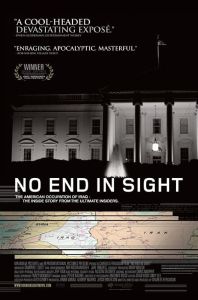 Director Charles Ferguson lived his life as a PhD political scientist, and then he felt compelled to make a movie. No End in Sight doesn’t focus much on the origins of the current Iraq War, which have been well documented and discussed in many other realms, instead the movie takes an exacting look into where the U.S. government fouled up the occupation after toppling Saddam Hussein. Because of this approach, Ferguson’s expose cannot be dismissed under false propaganda claims, and because his interviews mostly consist of the people on the ground who were responsible to stabilize the country, No End in Sight is blessed with plenty of hard-hitting first-hand accounts by the people given the hurried, thankless job of rebuilding a conquered nation.
General Jay Garner and his team, including Colonel Paul Hughes and Ambassador Barbara Bodine, were given 60 days to plan for a post-war Iraq. In contrast, FDR spent years planning ahead for an occupation of Germany. Planning was difficult because when they arrived in Baghdad the post-war looting made setting up a government a formidable task. They not only had to find means to contact people but they had to figure out ways simply to operate in an environment where looting had destroyed buildings and proper tools for communication. They were in charge of ORHA, the Office of Reconstruction and Humanitarian Assistance, which was not run through the State department, as would be normal, but run by the Defense department.
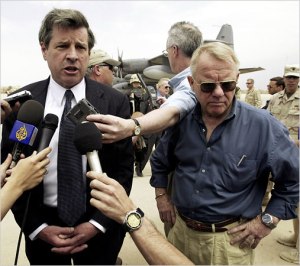 The film holds its harshest criticism for L. Paul Bremer, the man appointed to run the Coalition Provisional Authority, formerly ORHA. Bremer, like many who planned the post-war occupation and were placed in key positions within the occupation, had no military experience, no foreign policy experience with the Middle East, a notoriously tricky region, and he didn’t speak a lick of Arabic. In any other scenario, he would be judged unqualified for his heavy duty ahead. No End in Sight lays out three grievous errors that Bremer made in the summer of 2003 that gave birth to the ongoing insurgency and sent Iraq spinning out of control. The first was absolving any previous work to reach out and include Iraqis in helping to form a working provisional government. Bremer was more a my-way-or-the-highway kind of guy, which may be why he was esteemed in a presidential administration filled with these types. This alienated the Iraqi people and began Bremer’s calamitous habit of bridge burning. His second error was his decision to eliminate the Ba’ath party, Saddam Hussein’s ruling party, and bar members from any future government service. This stripped teachers, engineers, intellectuals, the very people integral to build the infrastructure of a nation, and made them permanently unemployed in Iraq. Many members had merely joined the Ba’ath party because it was the only way to secure a steady job.
But by far the most baffling and incompetent decision Bremer made was to disband Iraq’s army. This boneheaded move went against the recommendations of U.S. military figures, and in the blink of an eye, the 500,000-strong Iraqi army were without a job and an income. There were overtures from military leaders to ORHA; Paul Hughes recounts that one officer promised him 12,000 men in a week if asked. So, in a situation where the U.S. military did not have enough soldiers on the ground to even halt looting, Bremer disbanded Iraq’s best solution for restoring law and order. Half a million angry, disenfranchised, combat-trained, well-armed men were now left to fend for themselves, and if the U.S. didn’t care for their expertise then death militias would. It should come as no surprise that shortly after this colossal miscue is when Improvised Explosive Device (IED) attacks on the U.S. troops surged along with U.S. casualties. It seems like at that point the verdict had come against the U.S. occupation.
 Bremer’s decisions alienated, humiliated, and inflamed the people of Iraq, and they went against the recommendations by people that knew what they were talking about. The greatest tragedy that comes to mind is that, despite morally questionable, downright repugnant reasons for entering this conflict, the U.S. could have done this right. Saddam was indeed a bad man and the people of Iraq were initially receptive to see what the U.S. occupation would bring about. They weren’t expecting rampant unemployment, no tangible security force, being excluded from decision-making, having American private contractors bleed them dry, and an utter lack of basic human services like power and clean water. Add a long-standing religious feud into the mix and it’s no wonder the country has descended into a quagmire. No End in Sight makes the dots easy to follow and connect the cause-effect relationships into where we are today.
It’s hard to watch the film and not feel your blood boil. While No End in Sight is presented soberly and with clear-headed precision, watching the absurd miscalculations and naiveté prevail over the opinions of experts is infuriating. General Shinseki recommended to Congress that several hundred thousand troops would be required after toppling Saddam. Paul Wolfowitz, deputy Secretary of Defense, swiftly countered this assertion by claiming that it was unimaginable that it would require more troops to secure the peace rather than engage in war. “Unimaginable” is the key word here; Wolfowitz just couldn’t potentially fathom a reality that was known by most high-ranking military officials. Stabilizing a country is far more taxing than simply taking out an opposing force. Shinseki, who guided occupation forces in Bosnia and Kosovo, was ignored and pushed into “early retirement,” and Wolfowitz’s plan was followed (Wolfowitz also famously stated that the war would pay for itself thanks to Iraq’s oil revenues).
 No End in Sight does have a figure of amusement and it just so happens to be Secretary of Defense Donald Rumsfeld. The film opens with his farewell address after the 2006 midterm elections where Republicans lost control of Congress and Rumsfeld was shortly ousted from his job days later. He calls the Iraq War little understood and declares that Bush and his team’s accomplishments will one day get the full historical notation they deserve. Of course, the irony is that the designers of the Iraq War had little understanding of what they were getting into and ignored the warnings and advice of those whose opinions conflicted with the Administration line. Many clips of Rumsfeld news conferences are shown and the man comes across as flippant and disingenuous. He dismisses the looting as “stuff happens” and argues TV news is re-running the same image of a man absconding with a vase (“And you have to wonder, are there that many vases in the whole country?” he adds). The Iraq looting destroyed a museum that had artifacts dating back 7,000 years to the dawn of civilization and a library with hundreds of ancient manuscripts was burned to the ground; an entire country’s deep culture and history went up in smoke and Rumsfeld was using it as a setup to a vase joke. The clips further remind the audience that Rumsfeld, one of the chief architects of the war along with Vice President Dick Cheney and Wolfowitz, simply disregards information he doesn’t agree with, whether it may actually be right. The leaders of the Bush Administration demonstrate time and again a supreme disconnect from reality.
No End in Sight is one of the best documentaries yet on the Iraq War and a definitive indictment on the lack of substantial care given to post-war planning. No one can accuse this film of slander or pushing an agenda; this is an exacting autopsy on the current chaos in Iraq, and it has cold facts and hard truths to back up its convictions. Even if you feel that you know all the blunders tied to Iraq, this sensational film is not merely a repackaging of dogma. It’s eye-opening and intensely fascinating and one of the better films of the year; it’s an argument made on the merits of evidence and testimony, and it is damning. One soldier reflects upon the current conditions and flatly asks, “This is the best America can do? Don’t tell me that.” Then after a small pause he adds, “That makes me angry.” You are not alone, brother.
Nate’s Grade: A
Share this:

Crazy Love (2007)
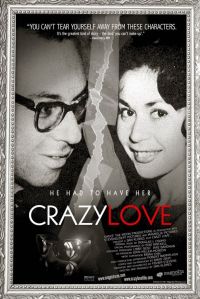 A fine documentary subject and intriguing characters, but this film doesn’t feel like it has any reason for being as long as it is or even existing outside the realm of a TV special. Constructed mostly from interviews, there’s not much in the way of visual representation, and after a while the subject (boy meets girl, boy must have girl, boy hires man to toss acid in girl’s face, girl eventually goes back to boy?) starts to peter out of material. There’s definite shock and puzzlement to this bizarre tale of so-called love, and a whole lot of psychological disorders and dependencies, but there isn’t too much of a full-blown movie here. The material could have been adequately covered as a special on the History Channel of some other cable outlet.
Nate’s Grade: B-
Share this:

Sicko (2007)
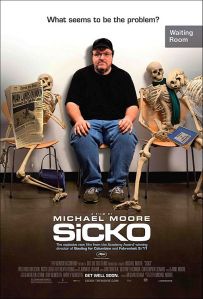 I live in a Western society without universal health coverage, the only Western society without, actually. Living in a consumer-driven society has its plusses and minuses, as any system will, but as political lightning rod Michael Moore’s new film Sicko indicates, perhaps under that system the Hippocratic oath may need to be changed from “do no harm” to “do no harm to the bottom line.” Sicko is different from Moore’s familiar political screeds; no, this is a deeply humanistic Moore who presents a scathing expose on the broken American healthcare system under the control of major corporations. This doesn’t taste like propaganda, not this time.
The film is really structured into three segments: health care horror stories, a comparison of other countries and their systems, and the jaunt with 9/11 rescue workers. The horror stories are the best condemnation of our system and also the film’s best point of argument for change. The additional segments provide more persuasive food for thought but are less explosive. Moore’s best points are his damnation of our home healthcare. I imagine the film is full of selective information and some bias, but the true stories of these people wronged by a system meant to protect are all the information needed to point to change.
 The first part quickly alerts the audience that, unlike the advertisement declaring that this is the funniest of Moore’s films, Sicko really is by far the saddest and most emotionally disheartening film the scruffy man with a camera has ever concocted. Endless full-length movies could be fashioned simply from the personal stories of those with insurance, and especially those without insurance, and how their lives have been ruined or devastated by the decision making of the American health care system. Sure, this segment is a blatant emotional appeal, but that doesn’t excuse what happened to these victims. One man accidentally sliced off two of his fingers and then had to choose which one he could afford to reattach. By far the most infuriating cases are the clear-cut examples where medical intervention would have saved lives. A mother lost her young daughter because she made the mistake of seeking help from a non-HMO approved hospital. She died in the wait to transfer her to another hospital while the mother begged the onsite doctors to treat her child. One woman even worked for a healthcare company and had her husband’s bone marrow transplant because they deemed this long-standing and highly successful surgery as “experimental.” Her husband had a perfect match thanks to his brother. He died a month later. Hearing these people’s sobering sob stories, one after the other, is like repeatedly getting punched in the stomach. It’s hard not to tear up as you witness peoples loved ones being transformed into profit loss statistics.
Moore also gets some plum interviews with former workers within the healthcare industry, and we see that the burdens of their actions still haunt them. One woman breaks down as she confesses a conversation she had over the phone with a couple applying for coverage. The couple was so overjoyed and relieved, but this woman new immediately that they would get denied, and that this moment of happiness would be utterly destroyed weeks later when that fateful letter was delivered in the mail. It’s explained by these people that the real mission of the big insurance companies is to find a way not to pay, thus achieving the exact opposite of what insurance is supposed to be. If by some miracle you do have insurance, they do approve your operation, and you have not incorrectly filled out your application, that’s when they set in the heavy hitters. These people scour through any record they can find to discover any means of denying converge. One woman had her surgery paid for by her insurance agency, then the agency found out that she had misled them by never reporting a serious medical condition in her patient history — she had a yeast infection. They then canceled payment and told the doctors to get their money from her instead. No stone shall go unturned in the pursuit of skipping out on the bill.
 This segment also presents some of the most indicting information as well as some of the weirdest. A healthcare professional testifies to Congress that she received higher placement by denying coverage to people who presumably died without it. Bonuses are awarded to the agent with the most denials. Congress passed a Medicare reform that effectively handed the government system over to private interests, allowing drug companies and insurance agencies to become middlemen and drive up prices and cut out competition. The Senator at the helm of this reform became the CEO of a pharmaceutical company with a starting salary at $2 million. Coincidence? The strangest item is a record the American Medical Association distributed decades ago that stirred up fears of how socialized medicine would weaken our country and grease the wheels for a takeover by those dirty, spooky communists waiting in the wings. None other than eventual American president Ronald Reagan narrated the record.
Sicko then becomes an extended commercial for foreign healthcare programs. Moore visits Canada, England, France, and finally Cuba to see how other countries take care of their own. Throughout the film we’re warned by those in power how disastrous a universal healthcare program would be and how people would not be getting better care. Moore stumbles through every country and interviews doctors and patients in waiting rooms, all of who speak enthusiastically about a program where anyone can walk anywhere and get covered for free or at minimal cost. In France, there are roving doctors that take emergency house calls 24 hours a day, and this system was inspired by a man who reasoned if he could get a plumber 24-7, why not a doctor? A clog is a clog. Every one of these countries has a lower infant mortality rate as well as a higher life expectancy. This segment is informative and dispels misconceptions about foreign care, but it’s also hardly open and shut. The economic realities aren’t fully explored by a handful of glowing interviews where the subjects are sympathetic to Moore’s viewpoints. What is the cost of living in these countries with so much paid sick leave? What is the average salary like? How much are taxes to pay for universal coverage? What is the wait like for serious but not life-threatening operations? I am by no means saying that these other countries do not have favorable systems, but Moore is not covering the costs of those government-controlled healthcare systems.
 The final segment is typical of the stunts in other Moore movies. He interviews a collection of 9/11 rescue workers that volunteered to clear rubble for weeks and months and now have serious health problems from time spent at Ground Zero. Because they were not government employees, the government rejects paying for their medical care. These people were selfless when their nation needed them most, and now the fact that our own government has turned its back on returning the favor is deeply shameful. Moore takes these 9/11 workers and others and travels by boat to Guantanamo Bay in Cuba, where those responsible for 9/11 are getting better healthcare. The rescue workers are brought to tears at the discrepancies between the Cuban health system and the American counterpart they’ve been butting heads with for years. Moore paints an all-too rosy picture for Cuba, a country of notorious political repression, censorship, and the internment of homosexuals. These points are conveniently left out while Moore marvels at the advanced care his charges receive for free.
Sicko is a powerful and searing condemnation of what Americans live with to live. Moore always seems to formulate a conspiracy-laden thesis through his documentaries, but this is one I can definitely get behind. Moore theorizes that Americans are kept demoralized and in fear so that they will be kept complacent. Saddled with mounting debt, you’re not going to rock the boat when you have to keep your job as the only means of affording medical care. The U.S. industry seems to working backwards; instead of protecting people they are protecting shareholders. When people starting dissolving and all that can be seen is profit ledgers, that’s when we’ve gone too far and twisted a system meant to heal people and prolong their lives and not empty their wallets. Moore doesn’t present a strong alternative but presents overwhelming evidence that change is in dire need. Sicko is skillfully presented, has some humor to it, but is by far a more draining and agitating experience than a fun one, ultimately scaring the viewer to ever fill out an insurance application again. Ever have a yeast infection?
Nate’s Grade: B+
Share this:

Shut Up & Sing (2006)
 With the clarity that a few years offer, can we all agree that what happened to the Dixie Chicks on the eve of the Iraq War was insane? Lead singer Natalie Maines, in concert in London, told the crowd that the group was not for war and was ashamed President Bush hailed from Texas. What followed was a maelstrom of irrational behavior; boycotts beckoned, people protested, and long-time Dixie Chicks fans threw out their CDs and called the group traitors, my God, someone even sent a death threat, all for disagreeing with a country’s march to war. Shut Up & Sing chronicles their lives at the time of the 2003 controversy and their 2006 follow-up album, mostly compromised of songs inspired by the anger and frustration they felt. The documentary itself is nothing too slick or overproduced; it really just follows a headlining group through the most volatile time of their life. For that, it’s intensely fascinating and bizarre to watch the Chicks backlash, but there’s little else as compelling. Several of those in protest questioned the Dixie Chick’s patriotism for questioning whether the war was necessary, and some said they should be strapped to bombs over in Iraq. Four years later, 3500 American deaths, no WNDs, scandal after scandal, no discernible way out, a civil war, and a president that can’t even get the time of day, I wonder how many of those decrying the Chicks would be apologizing to them today. Another highlight of Shut Up & Sing is the most ludicrously ignorant statement I may have ever heard, courtesy of Toby Keith defending his songwriting skills: “She said ‘We’ll put a boot up your ass’ is ignorant, and that anyone could write that. Well, she didn’t write it.” Bravo Mr. Keith, bravo.
Nate’s Grade: B
Share this:

This Film is Not Yet Rated (2006)
 Filmmaker Kirby Dick is a ballsy man. First, he crafts a rousing journalistic expose on the un-impartial and arcane practices of the Motion Picture Association of America ratings board. Then, and this is genius, he submits his own muckraking documentary to that same board for a rating. Dick’s potent film is ambitious and tries to do too much, touching every topic related to the MPAA it can think of; it practically steamrolls over the ideas of piracy and the fact that a national ratings board eliminates the all-too-likelihood of arbitrary local ratings systems. But Dick squares the MPAA in his sights and his aim is deadly. This is an organization that says it is voluntary and has no editorial control over how movies are made. But how voluntary is it when the NC-17 rating is treated as a commercial kiss of death, where newspapers won’t run ads, video stores won?t carry the film, and advertising is strictly limited?
Dick makes brilliant note of the different hypocrisies of the ratings systems. Sex is graded far more harshly than wanton violence, and what’s even worse is homosexual sex. Dick juxtaposes film clips side-by-side, one with heterosexual sex where the film received an R-rating, and the other with homosexual sex where the film received an NC-17 rating. The scenes are nearly identical except for the gender of the people involved. Also, sexual thrusting also seems to get the MPAA’s goat. An animated sequence detailing what is and isn’t allowed in a film per rating is hilarious (you did know you got one F-bomb for a PG-13 as long as it is not in reference to sex, right?). There’s a lot of filmmakers in here to share their MPAA horror stories of what was and wasn’t accountable for taste and some of it is baffling; Hilary Swank wiping her mouth after going down, off camera, on a girl is the difference between R and NC-17. The MPAA also has a disturbing habit of grading harshly when it comes to films that show women receiving pleasure through sexual intercourse.
The MPAA is also the only ratings board where its members are kept in secret in an effort, they say, to thwart coercion. Dick hires a private eye, who happens to be a lesbian no less, and together they hunt down the raters and reveal to the public for the first time who these arbitrators of taste really are. MPAA mastermind Jack Valenti said the raters would be comprised of normal parents; well Dick’s film exposes that many on the board have adult children, and some don’t have any kids at all. Plus there are two members of the clergy on this board in an “advisory” function. The film isn’t mean-spirited but is very angry but it’s an anger that Dick makes sure you understand and relate to. The most astonishing aspect of this documentary is that the MPAA actually listened and is loosening certain rules, allowing filmmakers to cite precedence when arguing for or against their ruling (“Hey, you can stab a guy in an ear with a penis in Scary Movie but we can?t have two women kiss?”). This is a must-see for film fanatics and those curious how the industry ceded power to a small group of middle-aged homeowners.
Nate?s Grade: B+
Share this:

Who Killed the Electric Car? (2006)
 The answer should be pretty obvious. However, this is not a slapped together bundle of liberal outrage. This is a lucid and refined argument that car companies, oil companies, and other interests essentially turned back the clock on invention and progress, something that is deeply upsetting. The market for an electric car was here and continues to be here, and this film shows that the car companies would rather destroy every electric car and pretend it never existed. This documentary relies on a lot of talking heads, many in the auto industry or former electric car drivers, but the information is easy to grasp and does not overwhelm the viewer. All I can say is, thank God for the Japanese. When the electric cars were up and zooming, car companies proposed their own cleaner-air alternative, the hydrogen car, something we’re told is never going to happen. But the Japanese were so scared by the amount of talk American car companies made that they themselves developed a hybrid car while their American competitors were just twiddling their thumbs idly. Well done, nation of the rising sun.
Nate’s Grade: B
Share this:

Jesus Camp (2006)
 Every year Pastor Becky holds a camp in North Dakota called “Kids on Fire.” It isn’t your typical summer camp where they weave baskets or go swimming. This is a Christian-based camp with one objective: to brainwash impressionable children. Jesus Camp is nothing short of startling and eye opening. These people mean well, I hope, but what we’re witnessing is nothing short of child abuse. I was watching these kids’ childhoods vanish right before my eyes as grown-ups recruit them to be foot soldiers in the army of God. These kids are shoveled dogma to the point that they become robots, and it’s because kids are so impressionable that the adults know it will stick. I defy anyone not to die a little when they hear a kid say he was “saved” at age five because he wanted more out of life. FIVE! Another little girl, around 10, uneasily admits she finds herself dancing “for the flesh” at times instead of for the Lord.
The most heartbreaking moment of the film is when we see one kid share his faith. He so badly wants a religious experience, to feel the touch of God in his life, but he regrets that doubt keeps setting in and life has a habit of making faith a hard commodity to grasp. All around him are kids writhing on the ground, bleating in tongues, weeping because they feel God inside them, and here?s this poor kid dealing with the same struggles that most adults go through when it comes to religion and spirituality. There’s a moment when he?s even rocking back and forth with his hands open, tears down his face, desperately wanting what the others seem to so easily be channeling. My goodness, it’s hard to watch. You just want to hug the kid.
 Where things get really scary is when the people supporting the camp blur the line between religion and politics. His mother home schools Levi, and there’s a moment where he’s reading his textbook and his mother says, “Did you get to the part where they say science hasn’t proven anything?” His mother then dissects global warming as myth and propaganda. What does the Bible have to do with global warming? Absolutely nothing, but it’s a conservative Republican talking point to question the validity of science and climate change. And that’s when the realization dawns: this camp isn’t creating soldiers for God but a broader voting base for the Republican Party. That’s why they debunk global warming, that’s why they ignore science, that’s why they learn about aborted fetuses, and that’s why they’re reminded of the “murder” of Terri Schiavo. I’m sorry but it is just entirely inappropriate to berate 6 and 7-year-old kids about abortion practices. One camp leader instructs the kids to smash a cup representing “government” and to pray for righteous Supreme Court nominees. These items have nothing to do with the actual Christian religion but they sure have a lot to do with how the Republican Party courts the religious vote. At one point Pastor Becky dredges up a cardboard cutout of George W. Bush and the kids are instructed to kiss it and bless him. Excuse me madam pastor, isn’t that idol worship?
The idea is that taking away a child’s reason and ability to think is in their best interest. I do not subscribe to the theory that ignorance is a defense against the world. But that’s exactly what these children are being forced to become — ignorant. They will become true believers and there’s no debate with a true believer, because they know they’re right no matter what evidence is set before them. Personally I don’t understand why science and religion have to be butting forces that cancel each other out, but that’s because I reason my beliefs with the realities of the observable world. These kids will never have that chance.
But what these people are doing is fear mongering and preying on a child?s instinct to belong. Pastor Becky condemns Harry Potter: “[He’s] an evil warlock and in biblical times he would have been burned!” She breaks down these kids and then rebuilds them just like the military. However, I don’t think the army of God needs wee ones knocking on doors to say the Earth is 6000 years old and fossils were just something the Jews hid as a hoax (this is a joke, but who knows what these kids could be led to think). One girl walks up to a group of older black men and asks if they know where they’re going when they die. “Heaven,” they simply reply. She questions if they’re sure and then leaves, and as she walks across the street she quietly tells her friends, “I think they were Muslim.” Sigh.
 The movie also has the best unintentionally hilarious moment of 2006. Pastor Ted Haggard is interviewed in depth and we see him preach to a congregation of hundreds. He says that as long as evangelicals vote, then no one can topple them. Months after the theatrical release of Jesus Camp, and a week before the 2006 midterm elections, a gay prostitute came forward confessing that Haggard had paid for sex on numerous occasions and even used meth. Haggard released a statement saying he had a lot of demons that made him do vile acts. In Jesus Camp, we see Haggard looking directly into the camera where he speaks as his conscience, saying, “I know what you did. I’m going to tell your wife.” The transparency is amazing and quite funny.
From a technical point of view, Jesus Camp doesn’t have a lot going for it. The music is pretty keen and the editing has a nice narrative to it, framed by a pastor on talk radio denouncing tactics and proselytizing. Mostly the filmmakers have such a harrowing scene that they just point their cameras and let their subjects be. There’s not a lot of commentary from their part, instead they choose to convince their audience through the power of what they see. The documentary is even-handed and could be commended by both sides of the political aisle. Some will be infuriated while others will be stimulated.
Jesus Camp is the scariest movie I’ve seen all year and also one of the saddest. Children should be allowed to be children and enjoy the time they have before the world gets complicated. They are not to be used as pawns in someone?s attempt to steady their political status quo. I know people mean well, but this isn’t helping. Pastor Becky is in awe at the Muslims who are willing to die for their cause. She wants the exact same thing from a Christian point of view. And that’s where she fails. You don’t fight fundamentalism with fundamentalism. You create a dialogue and try to reason, but how can you reason when all you know is that you’re right at all costs and everyone else is wrong? Jesus Camp did have a positive impact. Pastor Becky has decided to close the camp. I feel it may be a small victory though. There will be plenty more that pop up in her wake. These people want to “take back America.” Does that mean for the rest of us that our country is being taken away?
Nate’s Grade: B+
Share this:

An Inconvenient Truth (2006)
 Al Gore is possibly the least likely movie star in the history of movies. The former Vice President and 2000 presidential candidate has been making the scene with An Inconvenient Truth, a potent documentary warning about the impending perils of global warming. Gore has traveled all over the globe giving a well-honed Power Point presentation on the topic. An Inconvenient Truth is a 90-minute big screen version of this presentation. Consider it more concert film than documentary. An Inconvenient Truth is equal parts spellbinding and terrifying. Best of all, it’s that rare film that could quite honestly change the world for the better.
This is like sitting through an impassioned lecture by your favorite college professor. Gore smartly turns the issue of global warming from a political issue to a moral issue and asks how can we let this happen to our planet. He delivers a highly persuasive science show that should shake everyday Americans out of complacency and galvanize them to action. But what’s best about An Inconvenient Truth is that it doesn’t crush you to death with data. Gore explains the perils of climate change in general, easily graspable terms and uses choice pictures to service his message. It’s downright startling to see photos of glaciers and lakes that have gone dry in such a short span of time. As the film continues, Gore gains momentum and the facts, graphs, and charts multiply, and you’ll be hungry for even more. An Inconvenient Truth is a great learning tool because it really whets your appetite for knowledge and follows through on its convictions. Gore climbs an elevated lift to illustrate on a chart where carbon dioxide emissions will be heading. The moment is both grand theater and a stupendously straightforward visual demonstration that there will be far, far, faaaaaar greater carbon dioxide emissions in the near future than there has even been in 650,000 years.
 Gone is the hectoring, emotionless Al Gore that people seem to recall from his political days. An Inconvenient Truth displays a Gore rich with humor, command, and most surprising of all, guile and charm. Old Gore might have harrumphed at his critics and come across like a walking stiff, stick firmly entrenched in rear. The Gore on display here seems candid, spirited, and easily engaging, plus he never comes across as preachy. It helps when he’s presenting on a topic he’s devoted much of his life to being a cheerleader for. Nevertheless, he’s a disarming speaker and it’s easier to swallow his spoonfuls of science when he’s turning on the charm.
Gore presents an overwhelming case for the existence of steady global climate change. But why then is there still much hand wringing about whether scientists can even agree? An Inconvenient Truth seems to have the answer. We see a ten percent sample, around 900 peer-edited scientific reports, concerning the topic of global warming. Not one of the 900 reports concluded that the proof of global warming was inconclusive. However, we then see that over 50 percent of all media reports mentioning global warming cite scientific wavering, saying the jury’s still out in the scientific community when it is anything but. Perhaps this is why people still see global warming as inauthentic hippie alarmism. Gore tackles his critics and presents very levelheaded reasoning. You can tell this man believes strongly and genuinely in the topic.
Let me put aside my film critic hat, if I may for one moment. I am getting fed up with how flippantly people dismiss science when it conflicts with their own belief system or agenda. There was a time when people looked at scientific findings and accepted them, saw their extensive testing and recalculating, and chalked it up to truth. Nowadays we have people trying to define their own versions of science, whether it be a new opening to slip religion into a classroom (Intelligent Design), a new way to control behavior (suppressing FDA-approved birth control studies), or simply a way of turning back time and civil rights (erroneous abstinence only sex ed). This stuff really irritates me. Let’s trust the science to the scientists, not Pat Robertson when he says he knows condoms are unreliable. When I get a cold I don’t consult my pastor, do you? That’s why I too am frustrated by what Al Gore sees. There’s a cabal of special interests trying to turn the issue of global warming from fact to theory, and in the process delaying serious response because it affects their cash flow. Okay, rant completed.
The science side of the equation is open and shut. Global warming is taking place but what can we do about it? We learn in the movie that the United States is the biggest polluter in the world. Thankfully, An Inconvenient Truth actually suggests ways of cutting down on energy that the average American can do. The end credits are full of helpful do-good aphorisms and suggestions to combat climate change. One of those suggestions just happens to be telling your friends to see An Inconvenient Truth. Surely the makers of this film get nothing out of that option.
 Less effective are the minor asides the film takes to look into Al Gore’s personal and political past. The point I suppose is to show how we can turn personal tragedy or setbacks into a rallying point to save the planet. I don’t really know. These segments clog up the engrossing horror story Gore is dictating. I don’t want to learn about Gore’s tobacco farming family or how he handled losing the 2000 presidential election, I want to get back to the doom, the gloom, the graphs, and the pictures! It’s the equivalent of listening to a grand ghost story by camp light and having the storyteller occasionally stopping to mention they once caught an eight-pound bass. Get back to the good stuff already.
You don’t have to agree with Gore’s politics or even like him to be strongly affected by An Inconvenient Truth. As a film, it’s little more than a bigger stage for Gore’s patented, visually friendly slideshow, but as a message movie its aim is true and striking. Gore lets the science speak for itself and to that end the case seems closed. Global warming is happening, despite what media reports, skeptical business big wigs, and energy polluters might say. It’s saying something about the reach and importance of a documentary when actual oil companies are releasing smear commercials to discredit its message. Gore’s impassioned science lecture is fascinating, incredibly informative, and easy on the eyes with lots of stark pictorial examples. Al Gore is right; global warming is too big to be deemed a matter of political right and wrong. It demands attention and action, and An Inconvenient Truth demands to be seen; it’s not the best movie of 2006 but it’s certainly the most important.
Nate?s Grade: B+
Share this:

Enron: The Smartest Guys in the Room (2005)
 The brilliance of this Oscar-nominated documentary is how distills a complicated, math-heavy scandal and makes it so easily digestible. The Enron tale really is a story calling out for the medium of film, relying on sound bytes, testimonials, public statements, interviews, video clips, and director Alex Gibny masterfully orchestrates the telling. The film is insightful, informative, and incredibly entertaining. It’s a real pleasure to watch, and you’ll be left scratching your head at how certain economic laws are even possible. If you are confused by the Enron scandal or know little to nothing about the biggest corporate scandal of our times (Enron was the seventh biggest corp. at one point), spend two hours of your life and watch this excellent film.
Nate’s Grade: A


 nathanzoebl
You must be logged in to post a comment.