Blog Archives
Wake Up Dead Man (2025)
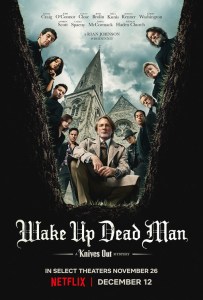 Being the third in its franchise, we now have a familiar idea of what to expect from a Knives Out murder mystery. Writer/director Rian Johnson has a clear love for the whodunit mystery genre but he loves even more turning the genre on its head, finding something new in a staid and traditional style of storytelling. The original 2019 hit movie let us in on the “murderer” early, and it became more of a game of out-thinking the world-class detective, Benoit Blanc (Daniel Craig). With the 2022 sequel Glass Onion, the first of Netflix’s two commissioned sequels for a whopping $400 million, Johnson reinvented the unexpected twin trope and let us investigate a den of tech bro vipers with added juicy dramatic irony. With his latest, Wake Up Dead Man, Johnson is trying something thematically different. Rather than adding a meta twist to ages-old detective tropes, Johnson is putting his film’s emphasis on building out the themes of faith. This is a movie more interested in the questions and value of faith in our modern world. It still has its canny charms and surprises, including some wonderfully daffy physical humor, but Wake Up Dead Man is the most serious and soul-searching of the trilogy thus far, and a movie that hit me where it counts.
In upstate New York, Pastor Jud (Josh O’Connor) has been assigned to a church to help the domineering Jefferson Wicks (Josh Brolin). The congregation is dwindling with the exception of a few diehards holding onto Wicks’ message of exclusion and division. The two pastors are ideologically in opposition, with Pastor Jud favoring a more nurturing and welcoming approach for the Christian church. Then after one fiery sermon, Wicks retires to an antechamber and winds up dead, with the primary suspect with the most motivation being Pastor Jud. Enter famous detective extraordinaire Benoit Blanc to solve the riddle.
 I appreciated how the movie is also an examination on the different voices fighting for control of the direction of the larger Christian church. Wicks is your traditional fire-and-brimstone preacher, a man who sees the world as a nightmarish carnival of temptations waiting to drag down souls. He sees faith as a cudgel against the horrors of the world, and for him the church is about banding together and fighting against those outside forces no matter how few of you remain to uphold the crusade. Pastor Jud rejects this worldview, arguing that if you think of the church as a pugilist in a battle then you’ll start seeing enemies and fights to come to all places. He’s a man desperate to escape his violent past and to see the church as a resource of peace and resolution but Wicks lusts for the fight and the sense of superiority granted by his position. He relishes imposing his wrath onto others, and his small posse of his most true believers consider themselves hallowed because they’re on the inside of a special club. For Pastor Jud, he’s rejecting hatred in his heart and looks at the teachings of Jesus as an act of love and empathy. It’s not meant to draw lines and exclude but to make connections. These two philosophical differences are in direct conflict for the first half of the movie, one viewing the church as an open hand and the other as a fist. It’s not hard to see where Johnson casts his lot since Pastor Jud is our main character, after all. I also appreciated the satirical tweaks of the church’s connections to dubious conservative political dogma, like Wicks’ disciples trying to convince themselves the church needs a bully of its own to settle scores (“What is truth anyway?” one incredulously asks after some upsetting news about their patriarch). It’s not hard to make a small leap to the self-serving rationalizations of supporting a brazenly ungodly figure like Trump. At its core, this movie is about people wrestling with big ideas, and Johnson has the interest to provide space for these ideas and themes while also keeping his whodunit running along pace-for-pace.
There is a moment of clarification that is so sudden, so unexpectedly beautiful that it literally had me welling up in tears and dumbstruck at Johnson’s capabilities as a precise storyteller. It’s late into Act Two, and Blanc and Pastor Jud are in the thick of trying to gather all the evidence they can and chase down those leads to come to a conclusive answer as to how Pastor Jud is innocent. The scene begins with Pastor Jud talking on the phone trying to ascertain when a forklift order was placed. The woman on the other side of the line, Louise (Bridget Everett, Somebody Somewhere), is a chatty woman who is talking in circles rather than getting to the point, delaying the retrieval of desired information and causing nervous agitation for Pastor Jud. It’s a familiar comedy scenario of a person being denied what they want and getting frustrated from the oblivious individual causing that annoying delay. Then, all of a sudden, as the frustration is reaching a breaking point, she quietly asks if she can ask Pastor Jud a personal question. This takes him off guard but he accepts, and from there she becomes so much more of a real person, not just an annoyance over the phone. She mentions her parent has cancer and is in a bad way and she’s unsure how to repair their relationship while they still have such precious time left. The movie goes still and lingers, giving this woman and her heartfelt vulnerability the floor, and Pastor Jud reverts back to those instincts to serve. He goes into another room to provide her privacy and counsels her, leading her in a prayer.
 The entire scene is magnificent and serves two purposes. This refocuses Pastor Jud on what is most important, not chasing this shaggy investigation with his new buddy Blanc but being a shepherd to others. It re-calibrates the character’s priorities and perspective. It also, subtlety, does the same for the audience. The wacky whodunit nature of the locked-door mystery is intended as the draw, the game of determining who and when are responsible for this latest murder. It’s the appeal of these kinds of movies, and yet, Johnson is also re-calibrating our priorities to better align with Pastor Jud. Because ultimately the circumstances of the case will be uncovered, as well as the who or whom’s responsible, and you’ll get your answers, but will they be just as important once you have them? Or will the themes under-girding this whole movie be the real takeaway, the real emotionally potent memory of the film? As a mystery, Wake Up Dead Man is probably dead-last, no pun intended, in the Knives Out franchise, but each movie is trying to do something radical. With this third film, it’s less focused on the twists and turns of its mystery and its secrets. It’s more focused on the challenging nature of faith as well as the empathetic power that it can afford others when they choose to be vulnerable and open.
Blanc doesn’t even show up for the first forty or so minutes, giving the narration duties to Pastor Jud setting the scene of his own. Craig (Queer) is a bit more subdued in this movie, both given the thematic nature of it as well as ceding the spotlight to his co-star. Blanc is meant to be the more stubborn realist of the picture, an atheist who views organized religion as exploitative claptrap (he seems the kind of guy who says “malarkey” regularly). His character’s journey isn’t about becoming a true believer by the end. It’s about recognizing and accepting how faith can affect others for good, specifically the need for redemption. Minor spoilers ahead. His final grand moment, the sermonizing we expect from our Great Detectives when they finally line up all the suspects and clues and knock them down in a rousing monologue, is cast aside, as Blanc recognizes his own ego could be willfully harmful and in direct opposition to Pastor Jud’s mission. It’s a performance that asks more of Craig than to mug for the camera and escape the molasses pit of his cartoonish Southern drawl. He’s still effortlessly enjoyable in the role, and may he continue this series forever, but Wake Up Dead Man proves he’s also just as enjoyable as the second banana in a story.
 O’Connor (Challengers, The Crown) is our lead and what a terrific performance he delivers. The character is exactly who you would want a pastor to be: humble, empathetic, honest, and striving to do better. It’s perhaps a little too cute to call O’Connor’s performance “soulful” but I kept coming back to that word because this character is such a vital beating heart for others, so hopeful to make an impact. It’s wrapped up in his own hopes of turning his life around, turning his personal tragedy into meaning, devoting himself to others as a means of repentance. He’s a man in over his head but he’s also an easy underdog to root for, just like Ana de Armas’ character was in the original Knives Out. You want this man to persevere because he has a good moral center and because our world could use more characters like this. O’Connor has such a brimming sense of earnestness throughout that doesn’t grow maudlin thanks to Johnson’s deft touch and mature exploration of his themes. O’Connor is such a winning presence, and when he’s teamed with Blanc, the two form an enjoyable buddy comedy, each getting caught up in the other’s enthusiasm.
Johnson has assembled yet another all-star collection of actors eager to have fun in his genre retooling. Some of these roles are a little more thankless than others (Sorry Mila Kunis and Thomas Haden Church, but it was nice of you to come down and play dress-up with the rest of the cast). The clear standout is Glenn Close (Hillbilly Elegy) as Martha, the real glue behind Wicks’ church as well as an ardent supporter of his worldview of the damned and the righteous. She has a poignant character arc coming to terms with how poisonous that divisive, holier-than-thou perspective can be. Close is fantastic and really funny at certain parts, giving Martha an otherworldly presence as a woman always within earshot. Brolin (Weapons) is equally fun as the pugnacious Wicks, a man given to hypocrisy but also resentful of others who would reduce his position of influence. The issue with Wake Up Dead Man is that elevating Pastor Jud to co-star level only leaves so much room for others, and so the suspect list is under-served, arguably wasted, especially Andrew Scott (All of Us Strangers) as a red-pilled sci-fi writer looking for a comeback. The best of the bunch is Daryl McCormack (Good Luck to You, Leo Grande) as a conniving wannabe in Republican politics trying to position himself for a pricey media platform and Cailee Spaeny (Alien: Romulus) as a cellist who suffers from deliberating pain and was desperate for a miracle delivered by Wicks. He’s the least genuine person, she’s hoping for miraculous acts, and both will be disappointed from what they seek.
Wake Up Dead Man (no comma in that title, so no direct command intended) is an equally fun movie with silly jokes and a reverent exploration of the power of faith and its positive impact, not even from a formal religious standpoint but in the simple act of connecting to another human being in need. This is the richest thematically of the three Knives Out movies but it also might be the weakest of the mysteries. The particulars of the case just aren’t as clever or as engaging as the others, but then again not every Agatha Christie mystery novel could be an absolute all-time ripper. That’s why the movie’s subtle shifts toward its themes and character arcs as being more important is the right track, and it makes for a more emotionally resonant and reflective experience, one that has replay value even after you know the exact particulars of the case. If you’re a fan of the Knives Out series, there should be enough here to keep you enraptured for more. Because of that added thematic richness, Wake Up Dead Man has an argument as the best sequel (yet).
Nate’s Grade: A-
Share this:

Layer Cake (2005) [Review Re-View]
 Originally released June 10, 2005:
Layer Cake may be the least intimidating name ever for a crime movie. It conjures images of bridal showers, cooking shows, and birthday parties. It does not necessarily bring to mind thoughts of gangsters, assassins, drug trafficking, and the seamy underbelly of London’s criminal underground. Unless you’re watching some really awesome cooking show I don’t know about. The “layer cake” in question refers to the hierarchy of criminals. This isn’t unfamiliar territory for Matthew Vaughn, who produced Guy Ritchie’s Lock, Stock, and Two Smoking Barrels and Snatch. This time it’s Vaughn sitting in the director’s chair and the results are exceptionally entertaining. Layer Cake is a cinematic treat.
Daniel Craig (Road to Perdition) plays our untitled lead, referred to in the end credits as “XXXX.” He’s a cocaine dealer but not a gangster by any means. He wants to make his money, not step on any important toes, and then walk away on top and without any gaping holes in his body. Craig is summoned by his boss Jimmy (Kenneth Cranham) and given two missions, whether he wants to accept them or not. The first is to relocate the missing daughter of a very powerful friend of Jimmy’s. The second, and far more dangerous job, is to secure a package of millions of stolen ecstasy pills and make a profit. Complicating matters is the angry Serbian mob that the pills were stolen from. They’ve dispatched a deadly assassin known as Dragan to track down their stolen drugs and kill anyone involved. Craig is left to juggle the investigation, find a buyer, stay ahead of Serbian hitmen, get some time in with a hot new girl, and all the while keeping his higher-ups content enough not to kill him themselves.
 Layer Cake should be the film that makes Craig the star he so rightfully deserves to be. This man is a modern day Steve McQueen with those piercing blue eyes, cheekbones that could cut glass, and the casual swagger of coolness. Craig grabs the audience from his opening narration as he explains the ins and outs of his business. We may never see Craig sweat but he still expresses a remarkable slow burn of fear so effectively through those baby blues. He’s in over his head and the audience feels his frustrations. In an interesting character twist, when Craig does resort to killing, he’s actually tormented and haunted by his actions.
As with most British gangster flicks, there are a batch of colorful characters that leave their mark. Dragan (Dragan Micanovic) is a wonderfully enigmatic ghost of an assassin always one step ahead of Craig and the audience. Morty (George Harris) and Gene (Colm Meaney) add heart and bluster as Craig’s trusted right hand men. But the actor who steals the whole film with a malevolent glee is Michael Gambon (Harry Potter and the Prisoner of Azkaban). He plays Eddie Temple, the man behind the men behind the scenes. Gambon delivers the harshest of speeches with a velvety pragmatic calm. We don’t know what runs deeper with Eddie, his tan or his scheming.
Sienna Miller plays the thankless love interest to Craig. She’s pretty, sure, but there isn’t much acting ability on display in Layer Cake beside some smoldering glances. We never really know what Craig sees in her besides being another cute blonde to choose over. Miller isn’t alone in the “underwritten character department.” Layer Cake is crammed with secondary characters that pop in and out when it’s necessary. It’s not too annoying but it does mess around with an audience?s ability to follow along coherently.
Layer Cake is not one of the slick, whack-a-mole ventures Ritchie has given us (pre-Madonna). No sir, this is a brooding, serious and nearly terrifying look at the old adage “crime doesn’t pay.” Very few crime centered films express the day-to-day anxiety of just being a criminal. Jimmy reminds Craig that he’ll never be able to walk away because he’s too good an earner for his higher-ups. In Layer Cake, you can get killed for being too greedy, being too careless, being too good at your job, and even just being in the wrong place. Eddie sums it up best whilst describing Faust: “Man sells his soul to the devil. It all ends in tears. These things always do.”
 Vaughn has a polished visual sensibility that doesn’t overwhelm the viewer. He keeps the camera fluid and steady with a minimal amount of cuts. A nifty opening scene involves an imaginary drug store (stocked with pot, cocaine, and the like) melting into a real drug store (one hour photo, impulse items at the register). When the tension does mount Vaughn knows just how to turn the screws. A late sequence involving a chase between the SWAT team and our batch of criminals had me on the edge of my seat. For a first time director, Vaughn also has great patience. He doesn’t rush his storyline and he doesn’t suffocate his movie with visual flourishes. He also has a great deal of faith in his audience’s intelligence. This isn’t as lively as Snatch or Lock, Stock, but that’s because Vaughn’s film is also much more serious and dangerous.
This is an intricate and gripping film but it might be a little too complex for its own good. Twists and double-crosses are expected in this genre, but writer J.J. Connolly has so many characters running around and so many hidden agendas that it’s nearly impossible to keep track. Some of the subplots and back stories add very little like the inexplicable “Crazy Larry” flashbacks. I left the theater still confused about plot points but refreshingly satisfied nonetheless.
Layer Cake is the most thoroughly exhilarating time I’ve had at a theater this year. This pulpy daylight-noir caper is full of memorable hoods, plenty of twists and turns, and a star making performance by the steely-eyed wonder that is Daniel Craig (rumored to be the next 007, though in my heart I’ll always root for Clive Owen). Fans of Ritchie’s frenetic gangster flicks should be entertained. Anyone looking for a clever and exciting potboiler that treats violence and crime seriously should start lining up immediately. If you’re suffering from the cinematic wasteland that 2005 has shaped up to be so far, then have yourself a generous helping of Layer Cake and thank the Brits.
Nate’s Grade: A
——————————————————
WRITER REFLECTIONS 20 YEARS LATER

Back in 2005, Layer Cake was really a proof of concept movie for many items. It was proof that someone could take a Guy Ritchie-style crime pot boiler with colorful Cockney criminals and plenty of twists and unexpected violence and play it straight and serious. It was proof of Matthew Vaughn as a director, who had previously served as a producer of those early Ritchie films. It was proof of Sienna Miller as the next It Girl, a proclamation that carried her for years despite mixed results with the movies. Most of all, it was proof of its lead, Daniel Craig, as being so suave he should be considered the next possible 007. James Bond producer Barbara Broccoli has gone on the record saying this movie is what officially put Craig on their radar and got him the gig that has defined his career trajectory. Twenty years later, Layer Cake is still a potent and smooth little thriller that glides right by on its intelligence, sex appeal, and Craig’s charisma
I find myself agreeing with so many of my original points from 2005 so I don’t want this re-examination to be merely a “ditto” without some additional critical analysis. Even though it’s based on a book by J.J. Connolly, who adapted his own novel, the movie feels very much in the company of those early Guy Ritchie movies that Vaughn began producing. Ritchie burst onto the international scene with 1998’s Lock, Stock, and Two Smoking Barrels, a brash and stylish crime comedy with outlandish characters, violence that alternated between visceral and slapstick, and twisty plots that often left your head spinning. It was like a mixture of Tarantino and a more lewd Looney Tunes cartoon. While the early Ritchie films, including my favorite, 2001’s Snatch, have their share of characters with grounded stakes, the reality is exaggerated, with the appeal being these grandiose personalities butting against one another. No one would confuse one of these Ritchie movies with a realistic portrayal of London criminals. They’re fun. What Layer Cake does so well is take a Ritchie-esque premise with plenty of low-life screw-ups and hardasses and plays it straight. It takes this middle-level drug distributor and makes his life less a comedy of errors and more a never-ending anxiety attack about how he can become undone from any angle. The movie sure doesn’t make a life of crime look appealing.
 Craig’s character, named XXXX, is a smart guy just trying to keep his head down and do his job. The problem for him is that he’s too good at earning money for bad men who like money. In this life, you can get killed for any number of reasons, some of them logical and pragmatic, and others rash and illogical: not being a good enough criminal, being too good of a criminal, thinking he’s too good of a criminal, someone else wanting to make a name for themself and establish cred by going after you, dumb luck, etc. XXXX has his rules and standards to live by to ensure he limits his risk, but when your profession is literally dealing with money and unscrupulous types, there is no absolute zero in that risk. He may be smart and measured but he’s also working with plenty of stupid people who don’t know they’re stupid, and then you mix in vice and avarice with that, and it can be a combustible cocktail of dangerous idiots intruding on whatever peace and distance XXXX has cultivated for himself. In the movie, XXXX is burdened with competing tasks. He’s been offered a stash of stolen ecstasy pills, and his slimy boss wants them sold no matter what, but the assassin hired to retrieve them definitely wants them back too. Either way, our lead character is endangering himself by making someone unhappy. He’s dropped into the sticky morass of power plays and competing interests that will challenge his intended neutrality.
I think the ending for Layer Cake is brilliant and very fitting. For almost two hours, we’ve followed XXXX through hell and back and it looks like he’s found a way out, siding with the right hoodlums and eliminating different risky angles needing to be resolved. He’s kept to his stated retirement of not going out on top and instead going out while comfortable and capable. He’ll leave the business to his associates because he’s tired of looking over his shoulder. And as he walks out with his pretty lady (Sienna Miller) around his arm, that’s when he abruptly gets shot by Sidney (Ben Whishaw – yes, the future James Bond is killed by his future Q). This isn’t some tough or some hotshot; he’s a lanky nephew to another gangster, and he hasn’t exactly shown anything close to a killer instinct. In his brief appearances beforehand, he’s seemed out of place, like a latchkey kid who wandered into a criminal enterprise and everyone has been humoring him for good measure. The only thing he has is… was… the blonde girlfriend (Miller) who’s clearly not interested in him. After playing it so cool and calculated, he’s taken out by this twerpy nobody because he had the audacity to try and steal “his girl.” Even if you are the smartest guy in the room and you’ve made all the right moves, all it takes is one twitchy trigger finger and one grumbling grievance to take you from living to dead. Our hero is denied his happy ending driving off into the sunset with his modest sums of money and his newly acquired pretty woman. Try as he might, XXXX, gunned down mid-sentence as he reveals his real name, becomes just another unfortunate corpse.
 Vaughn’s skilled direction immediately made him an attractive target for bigger studio fare. He was originally attached to direct 2006’s X-Men: The Last Stand but left weeks before filming for stated “family reasons.” In 2023, Vaughn revealed that he left because of the tight production timeline, going from pre-production to a complete movie in under a year, but it was really the shady behavior of Fox execs that pushed him out the door. Apparently one exec put together a fake script to lure Halle Berry back, including scenes of her character Storm saving vulnerable children in Africa to appease Berry, scenes that were never intended to ever be filmed. It was a ploy to trick her into signing onto the film. After two more geek-friendly adaptations, 2007’s Stardust and 2010’s Kick-Ass, Vaughn was courted yet again back to the X-Men franchise. Once again there was a tight one-year turnaround deadline but Vaughn stayed on board and delivered what I consider to be the best X-Men movie, 2011’s First Class. It revitalized the declining franchise, enough so to lure Bryan Singer back. Singer had departed in 2005 to make his Superman movie, opening the door for Vaughn’s first foray with the world of mutants. Now that Vaughn had reinvigorated the franchise with a new cast of younger actors, Singer was ready to take it back to helm 2014’s Days of Future Past. Vaughn was rumored as one of the potential names to make the first new Star Wars movie in ten years. Instead, he made his own action franchise with 2015’s Kingsman. Granted it was based upon the comic by Mark Millar, the same author behind Kick-Ass and Wanted, but it was Vaughn’s signature all over this new spy franchise. Vaughn had constructed a new Bond for a new age. At this point, I was dubbing Vaughn the best working director to use studio money. Each movie was different but made with style and panache with great structure and payoffs. And then…
I think he got so enraptured with the world of Kingsman that he’s now trapped himself creatively. In the ensuing years, he’s made one Kingsman sequel and one prequel, both of them varying degrees of underwhelming, and another action spy-thriller that might as well be called Kingsman-lite, 2024’s Argyle. For an artist that was dabbling with so many genres beforehand and finding sure footing and a way to make his stamp within each, he now feels stuck, finding diminished returns with each iteration of yet another swanky spy action movie with snark. I’m not even an Argyle hater, a movie that appeared on numerous Worst of the Year roundups but one I consider perfectly fine as a TNT Sunday-afternoon kind of chill entertainment. I loved Kingsman when it was originally released in 2015, but looking back, it appears like this was Vaughn building his own prison brick by brick. Maybe he was too preoccupied with turning it into a franchise with many tendrils stretching all over. I truly wish Vaughn would hop genres once again and leave the realm of spy action to others at this point. Maybe he needs a return to something straight akin to Layer Cake without its tongue already so firmly implanted in-cheek.
 But this movie will forever be known as the movie that secured Craig as the next James Bond. He had been working in movies for a while with some high-profile supporting roles like 1998’s Elizabeth and 2001’s Tomb Raider and 2002’s Road to Perdition, but this was a platform that showcased the suave presence of this actor like nothing before. He was so magnetic and a perfect choice for this character, and just listening to him try and talk his way out of jams with so many loose canons was as impressive and entertaining as any high-stakes chase or shootout. These sort of star-making roles are rare and even more rare when they do indeed prove to be star-making. It becomes an artifact to analyze what qualities people with money and influence were won over by. It’s interesting that Craig’s character is so anti-guns and wanting nothing to do with the more unsavory and violent aspects of his profession. When he does hold a gun for the first time, one he compliments as being “really pretty,” he holds it out and strikes a pose, dashing through a hallway like he was James Bond, and it’s just especially funny with hindsight.
The movie is also filled with familiar faces that would become even more familiar over the years, including Tom Hardy, Sally Hawkins, Whishaw, Burn Gorman, and some Vaughn regulars, alums from Snatch and Lock, Stock, Jason Flemyng and Dexter Fletcher. Flemyng became Vaughn’s lucky charm, appearing in his first four movies in some capacity, much like Greg Grumberg does for J.J. Abrams. There you go, an SAT-style relationship sentence I never thought I’d write: Jason Flemyng is to Matthew Vaughn as Greg Grumberg is to J.J. Abrams. My original review in 2005 highlighted Michael Gambon as the biggest honcho, the top tier of this criminal layer cake. I wrote: “He plays Eddie Temple, the man behind the men behind the scenes. Gambon delivers the harshest of speeches with a velvety pragmatic calm. We don’t know what runs deeper with Eddie, his tan or his scheming.” He’s so good at being so malevolent without ever having to raise his voice or anything outwardly hostile.
 This movie has a personal factor for me because I was so highly anticipating it that, during a trip through the British Isles with my father in May 2005, I bought it on VHS overseas. I naively thought that while DVDs had different regions to thwart piracy, that VHS tapes would be rather universal considering it’s just tape being read. I got home, popped it into my American machine, and the thing wouldn’t work. This was one of the biggest souvenirs I got for myself during that trip, which my father wanted to embark as something memorable we could share together, and now that he’s recently passed, I do think back on those experiences and part of me wishes my 23-year-old self would have been more actively appreciative. So now with Layer Cake, part of me will always think about that VHS tape, and that trip, and my father, and it will make me miss him more, but I am glad we got to share that experience.
Ever since I’ve been doing this re-review project, now going on five years, it’s a relief to see my twenty-year-younger self having written a smart and articulate review, especially when I mostly agree with it even so many years later. Again, I find myself nodding along to just about everything I had written with my past critique, from singing the praises of Craig and the general examination of day-to-day anxiety, to shaking my head at the underdeveloped Sienna Miller character served as little more than a trophy for our hero to take with him into retirement. It still is a movie overstuffed with characters and storylines and antics that probably could have been trimmed around the edges, but that same burdensome feeling connects with the emotional state of our lead, the anxious feeling of having too much to do and not enough time to achieve it, so in a way, it’s excusable. I don’t know if I think the movie is quite at the same level, calling it “thoroughly exhilarating” seems a bit much, but Layer Cake is still a movie that proves fresh even twenty years later, and one worth a second helping.
Re-View Grade: A-
Share this:

Queer (2024)
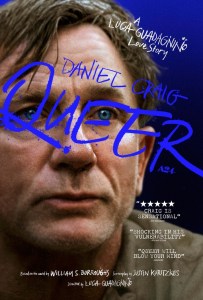
Based upon Beat writer William S. Burroughs, and by the creative team behind this year’s Challengers, Queer is a gay romantic drama equal parts desire and desperation. It also happens to be a confounding artistic misfire and one of the more head-scratching Oscar-bait entries of late.
Set in the 1950s, William Lee (Daniel Craig) is a middle-aged writer living in Mexico City and looking for companionship. One day he meets Eugene Allerton (Drew Starkey, Outer Banks), a young Army expat who he can’t stop thinking about. Lee circles the man, flattering him and throwing affection his way, and eventually the two of them get involved in a relationship, though Allerton is quick to proclaim he is “not queer.” Can they find something lasting or meaningful and work through their own doubts and personal hang-ups?
What really hinders this doomed romance is that it never feels special for either of the participants, at least something to remember through the ages. Unrequited romances in an era where people could never act out their passions because they were considered inappropriate or obscene are their own sub-genre of movies, the Romance That Could Not Be. I initially thought that Queer was going to be a gender flip of 2015’s Carol, Todd Haynes’ film about two gay women trying to carry on a covert relationship through glances and finger touches. Queer is not Carol, and I wasn’t even a big fan of Carol. For starters, even though the setting is in 1950s Mexico City, it doesn’t at all feel like any of the characters are being forced to repress their authentic selves. I’m unfamiliar with whether or not Mexico was so accommodating to gay foreigners, but from a narrative standpoint, it saps the story of conflict on a social scale. If society accepts these men carousing around the neighborhood for homosexual hookups, then what’s halting our gay couple for achieving happiness cannot be external, it must be internal. That means we need to know much more about these characters because we can’t just blame the pressures of society keeping these men apart and/or repressed. The problem with this approach is that the story keeps both of these characters too far at a distance to fully understand them, including any faults that might ultimately lead to their falling out or parting ways.

The burden of romances that are meant to be so powerful they leave a mark, good or bad, is that you need to feel that ache and power so that it feels tragic they could not work out, that they will be haunted by the memory of what they had and what could have been. With Queer, I can’t understand what drew either of these men together beyond lust and inertia. Eugene is an enigmatic blank of a character, a young G.I. who doesn’t consider himself queer. That’s as much as you’re going to get about this man as he’s mostly held as a desirous placeholder, something for our older character to yearn over, but he already feels like a half-remembered, overly-gauzy nostalgic memory of a person even in the present. He’s just kind of there. He doesn’t say much, he doesn’t do much, but he’s reciprocal, and I guess that’s something. The character of William Lee is a writer living abroad, ostensibly writing and publishing with financial freedom. His life abroad is essentially an ongoing vacation where he gets to casually drink, stroll about, and find younger men to warm his bed. Now if Lee had all these things but, because of his middle age, he was seen as less desirable, that these young men only used him for their own gratification and then abandoned him, then we have a scenario where he might find someone who can fulfill what he is missing, who can be different from the others. I don’t know what either of these men see in one another because they’re both so terribly underwritten. It makes it hard to care or become emotionally invested in these men and their connection.
Then the movie just collapses entirely in its meandering, abstract, and generally mystifying second half. I figured the movie would be these two men leaning into their feelings and daring to act them out, becoming infatuated with one another, and that’s really only the first half. Then Lee gets the idea to travel to South America to look for a rare plant believed to offer telepathic powers. Now clearly there’s some metaphors here about the desire for connection and understanding, and you would think the motivation would be spurred by being denied these aspects. Instead, Lee and Eugene seem to lack any real challenge to being together, nor is there any pertinent threat that Eugene will leave him or that there is any competition for his affections. There’s not really a conflict present that can keep them apart; even Lee’s drug addiction plays such a minimal part. I suppose it’s meant to convey the character’s dependency issues, but then present a parallel where Eugene is his new drug, his new obsession, and chasing it leads to his self-destruction. That’s not what we get. We get a boring couple going on a weird vacation. This journey south becomes one very tedious expedition into extended trippy visuals and sketchy symbolism like vomiting out one’s heart. It was at this point that my wife had lost all patience with the movie and just wanted it to end. I couldn’t blame her. Even if the story and characters were lacking for the first half, they’re just abandoned completely in that second half. The movie is actively challenging you to disengage with it when it already gave me little to hold onto.

The main headline for Queer was that this is Craig’s big awards gamble, and he is good, but absent the material to really explore the complexity of his character, the performance is limited because Lee is so archetypal. He’s the middle-aged lush, the sad gay man looking for love and connection in an era that was not kind to said pursuit, and yet in Queer he’s not really persecuted, he’s not really challenged, and he’s not really explored in any meaningful manner. Craig has a few moments where he showcases the vulnerable heartache at the edges of this man, giving you a glimpse of a tortured soul that would have been worthy of being explored with more development. Alas, as the movie descends into its second half abstract, Lynchian morass, I gave up my attempts to find meaning and depth and just became morbidly curious where this all could possibly lead. The conclusion is meant to evoke some sense of tragedy and regret, but Queer failed to make me interested in these two men being together and it failed in making me interested in them at all. At two hours, the biggest struggle of Queer is the patience of the audience to keep watching.
Nate’s Grade: C-
Share this:

Glass Onion (2022)
 When writer/director Rian Johnson wanted to take a breather after his polarizing Star Wars movie, he tried his hand at updating the dusty-old Agatha Christie mystery genre, and in doing so created a highly-acclaimed and high-grossing film franchise. The man was just trying to do something different and at a smaller-scale with 2019’s Knives Out, and then it hit big and Netflix agreed to pay $400 million dollars for exclusive rights to two sequels. Now as Johnson has reinvented his career as a mystery writer the big question is: can he pull it all off again?
Renowned detective Benoit Blanc (Daniel Craig) has been invited to the world’s most exclusive dinner party. Miles Bron (Edward Norton) has invited all his closest friends to his Greek island soiree, setting up a murder mystery game his friends must spend the weekend solving. Except there are two interlopers: Andi Brand (Janelle Monae), the former partner of Miles who was betrayed by Miles and his cronies and… Benoit Blanc himself. Why was the detective invited to the murder dinner party unless someone planned on using it as an excuse to actually kill Miles?
 Knives Out was a clever deconstruction of drawing room mysteries and did something remarkable, it told you who the murderer was early and changed the entire audience participation. Instead of intellectually trying to parse clues and narrow down the gallery of suspects, Johnson cast that aside and said it didn’t matter as much as your emotional investment for this character now trying to cover up her tracks while working alongside the “world’s greatest detective.” It made the movie so much more engaging and fun, and for his twisty efforts, Johnson was nominated for a Best Original Screenplay Oscar. Now, every viewer vested in this growing franchise is coming into Glass Onion with a level of expectations, looking for the twists, looking for the clever deconstruction, and this time It feels like Johnson is deconstructing the very concept of the genius iconoclast and including himself in the mix. The movie takes square aim at the wealthy and famous who subscribe to the idea of their deserved privilege, in particular quirky billionaires whose branding involves their innate genius (many have made quick connections to Elon Musk in particular). The movie’s first half is taken with whether or not Miles Bron’s murder mystery retreat will become a legitimate murder mystery, but by the midpoint realignment, Glass Onion switches into pinning down the bastard. It makes for a greatly satisfying conclusion as Blanc exposes the empty center of Miles’ calculated genius mystique.
 As Blanc repeatedly says, the answers are hiding in plain sight, and this also speaks to Johnson’s meta-commentary of his own clever screenwriting. This is Johnson speaking to the audience that he cannot simply copy the formula of Knives Out. This is a bigger movie with more broadly written characters, but each one of them feels more integrated in the central mystery and given flamboyant distinction; it’s more like Clue than Christie. Through Miles’ influence, we have a neurotic politician (Kathryn Hahn), a block-headed streamer (Dave Bautista) pandering to fragile men on the Internet, a fashionista (Kate Hudson) who built an empire on sweatpants and has a habit of insensitive remarks, and a business exec (Leslie Odom Jr.) who admits to sitting on his hands until given orders from on high by Miles. All of these so-called friends are really bottom-feeders propped up by Miles’ money. It would have been easy to simply replay his old tricks, but Johnson takes the heightened atmosphere of the characters and plays with wilder plot elements of the mystery genre, such as identical twins and secret missions and celebrity cameos (R.I.P. two of them) and corporate espionage. The very Mona Lisa itself plays significantly into the plot (fun fact: Ms. Mona was not the universally revered epitome of art we know it to be until its 1911 theft). This is a bigger, broader movie but the larger stage suits Johnson just fine. He adjusts to his new setting, veers into wackier comedy bits with aplomb, and has fun with all the false leads and many payoffs. You never know when something will just be a throwaway idea, like the hourly chime on the island, or have an unexpected development, like Jeremy Renner’s hot sauce. Glass Onion is about puncturing the mirage of cleverness, and by the end, it felt like Johnson was also playfully commenting on his own meta-clever storytelling needs as well.
It’s so nice to watch Craig have the time of his life. You can clearly feel the passion he has for the character and how freeing this role is for an actor best remembered for his grimaced mug drifting through the James Bond movies. Craig makes a feast of this outsized character, luxuriating in the Southern drawl, the loquaciousness, and his befuddled mannerisms. After Knives Out, I begged for more Benoit Blanc adventures, and now with a successful sequel, that urge has only become more rapacious. Johnson has proven he can port his detective into any new mystery. Netflix has already paid for a third Knives Out mystery movie, and I’d be happy for another Blanc mystery every so many years as long as Craig and Johnson are willing. These are fabulous ensemble showcases as well with eclectic casts cutting loose and having fun. Norton (Motherless Brooklyn) is hilariously pompous, especially as Blanc deflates his overgrown ego. Bautista (Dune) is the exact right kind of blowhard. Hudson (Music) is the right kind of ditzy princess with a persecution complex. Her joke about sweatshops is gold. Jessica Henwick (The Gray Man) has a small role as the beleaguered assistant to Hudson’s socialite, but she delivers a masterclass in making the most of reaction shots. She made me laugh out loud just from her pained or bewildered reactions, adding history to her boss’ routine foot-in-mouth PR blunders.
 There is one big thing missing from Glass Onion that holds it back from replicating the surprise success of its predecessor, and that’s the emotional lead supplied by Ana de Armas. She unexpectedly became the center of the 2019 movie and it was better for it. Glass Onion tries something similar with Andi Brand, and while she’s the easiest new character to root for among a den of phonies and sycophants, it’s not the same immediate level of emotional engagement. That’s the biggest missing piece for Glass Onion; it’s unable to replicate that same emotional engagement because the crusade of Andi Brand isn’t as compelling alone.
Glass Onion is a grand time at the movies, or as Netflix insisted, a grand time at home on your streaming device. It’s proof that Johnson can handle the rigors of living up to increased expectations, making a sequel that can stand on its own but has the strong, recognizable DNA of its potent predecessor. It’s not quite as immediate and layered and emotionally engaging, but the results are still colorful, twisty, and above all else, immensely fun and satisfying. I’m sure I’ll only think better of Glass Onion upon further re-watching as I did with Knives Out. Johnson once again artfully plays around with misdirects and whodunnit elements like a seasoned professional, and Glass Onion is confirmation that Benoit Blanc can be the greatest film detective of our modern age.
Nate’s Grade: A-
Share this:

No Time to Die (2021)
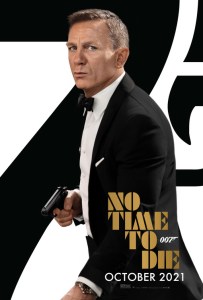 One cannot talk about No Time to Die without talking about finality. I’ll try and dance around significant spoilers but the movie by design is meant to serve as the capper to the Daniel Craig era filling out the world’s favorite martini-drinking British secret agent. I thought that 2015’s Spectre was the swan song for Craig as it brought back a famous franchise villain Blofeld (Christoph Waltz) made the man Bond’s secret half-brother, and it tried to explain how every bad thing that seemed to befall Bond was the machinations of an evil conspiracy, and then it literally ends with Bond driving into the sunset in his classic car with his girl (Lea Seydoux) by his side. It felt like the end, and it felt very much like everyone was just done and tired. And then the Bond producers wanted one more shot, or more likely one more lucrative franchise entry, to send an even older, battle-tested Craig on his way. I was wary of another Spectre-like entry, one that was tying back to the elements of decades-old for empty homage. Does anyone really care that the villain is meant to be Blofeld who means next to nothing to audiences in this era? After watching all 160 minutes of the longest Bond on record, for an actor who has portrayed 007 for 15 years, I have to say that No Time to Die is a terrific action movie and a welcomed second chance at a sendoff for the modern era of Bond that has gone through great artistic rebirth.
Bond’s cozy retirement is short-lived. Spectre agents have found him and Madeleine (Seydoux) and now Bond is forced to ship off his love for her safety. Years later, Lyutsifer Safin (Rami Malek) is determined to take down the last vestiges of the Spectre organization, the same group responsible for murdering his family. Bond is recruited by the newest 007 agent, Nomi (Lashana Lynch), to help MI-6 locate a kidnapped scientist with a powerful nanobot poison that can be genetically targeted to a specific person. Bond agrees especially once he realizes that Safn and his dangerous organization are targeting Madeleine, who has a big surprise of her own.
 As an action movie, I will argue that No Time to Die is better than 2012’s Skyfall, the Bond film that is widely seen as the high point of Craig’s tenure but one I find overrated. Director and co-screenwriter Cary Fukunaga, the second director ever given a writing credit for a Bond film, has crafted a beautiful movie with a real sense on how to showcase the majesty and suspense. Nothing will likely rival the superb cinematography by the legendary Roger Deakins on Skyfall, but this movie gets as close as you can get. It’s a remarkably beautiful looking movie. I mean that not just in the exotic locales and scenic vistas but simply in its depiction of action. The visual arrangements are noticeably several levels higher in quality, elegantly composed and lit to make each scene so pleasing to the eyes even before the information of the scene translates. Fukunaga (True Detective) frames the action in clear shots and clean edits so the audience is oriented with every shot and each patient edit point. For an era that began by trying to adopt the Paul Greengrass-style of docu-drama edits popularized with the Bourne sequels, it’s quite a welcomed change. I appreciate that action directors have creatively gone more in a direction of longer takes, wider shots, and a conscious effort to showcase the ingenuity and skills of its action choreography. Let us enjoy watching the masters of action operate at their highest level. Fukunaga understands this, and while the action might not be the best in the series, it is lovingly orchestrated and displayed.
There is a delightful mid-movie set piece that deserves its own attention mainly because of how actress Ana de Armas (Knives Out, Blade Runner 2049) steals the show. She plays Paloma, a CIA agent working in coordination with Bond, and the two of them wreak havoc across a Cuban neighborhood while wearing their finest evening wear. She immediately leaves a favorable impression and struts her stuff while operating heavy machinery with confidence. This part feels the most aided by co-screenwriter Phoebe Waller-Bridge’s contributions. Craig personally requested that Waller-Bridge, best known for award-winning TV like Fleabag and the first season of Killing Eve, come aboard and help polish the script, including characterization and dialogue. This sequence feels the most in keeping with her past spy thriller work and penchant for strong female characters who are meant to take the lead. de Armas is so memorable, and her segment so self-contained, that it feels like a backdoor spinoff to set up her own character’s franchise, and one that I wouldn’t hesitate to watch.
 If you thought Spectre was getting convoluted with how it tried to bend over backwards to explain how one man and one villainous conspiracy were manipulating all of Bond’s many miseries and setbacks, well then things are going to get even worse for you to keep up with. I’ll credit returning screenwriters Neal Purvis and Robert Wade, who have been with the storied franchise even before Craig’s 2006 debut, with attempting to make the continuity matter for a franchise that often throws up its hands at continued emotional stakes. By stretching backwards with ret-cons and added flashbacks, every new Bond movie tries to better evaluate the previous ones including the poorer movies, like Spectre and 2008’s Quantum of Solace. It’s like saying, “Hey, you didn’t like those bad guys in that movie? Well, these are the real bad guys,” or, “Well, maybe you didn’t like them, but their heinous actions gave rise to these new bad guys.” However, a consequence of continuing to add further and further clandestine machinations, and spiraling consequence from those machinations, is that Bond has now become a tangled web that is more convoluted without offering much in the way of payoff. I don’t think much more is gained introducing a new villain saying, “It was me all along,” when we don’t have an established relationship or interest with these new villains. Imagine introducing the Emperor back in Episode 9 of Star Wars and saying he was secretly behind everything… oh wait.
There are also benefits to this approach and No Time to Die crafts a sendoff unlike any other final entry for a Bond actor. This is a franchise going back sixty years, but the 007 brand has endured because no one actor is bigger than the brand. The franchise is regularly resetting with each new addition. The hyperbolic bombast and tongue-in-cheek frivolity of the Pierce Brosnan years (1995-2002) was replaced with a more grounded, gritty, and psychologically wounded Bond, made even more so by giving him personal attachments and then taking them away. I would argue this decade-plus with Craig (2006-2021) has involved the most mature and personal movies of the franchise;s history. It’s fitting then for the final film to pay service to that elevated take on the character. If you’re treating the secret spy as more of a person than a suit and a gun and a wisecrack, then that character deserves an ending that stays true to prioritizing more human elements of the character. To that end, No Time to Die works as a final sendoff, and I feel pretty confidant saying Craig is officially done now.
After a year and a half of delays from COVID, as well as its parent company, MGM, being bought for billions by Amazon, we finally have the final Bond movie in Daniel Craig’s successful run, and it’s a worthy finale for an era of the franchise becoming relevant again. I don’t know if that many people are emotionally attached to the character, likely more so just the nostalgia and the franchise, but if ever you were going to tear up from a James Bond thriller, this would be the one. It’s an exceptionally strong visual caper, with smooth and steady direction from Fukunaga, and while overly long and convoluted and a dull villain, it comes together for a worthy and celebratory conclusion that stands with the best of Bond. I’ll still cite 2006’s Casino Royale as the best Craig Bond, and one of the best ever, but No Time to Die is a solid second-place entry, and it does what few other Bonds ever could: fitting finality. Until, naturally, the popular series inevitably reboots with the next handsome leading man sipping a signature vodka martini (shaken, not stirred).
Nate’s Grade: B+
Share this:

Knives Out (2019)
 Rian Johnson is a filmmaker who likes to dabble across genres and put his high-concept stamp on them. His debut film, 2006’s Brick, was a moody noir-flavored mystery set in a modern high school. His next film, 2009’s The Brothers Bloom, was a whimsical con artist movie with cons-within-cons, and then Looper took time travel and twisted it into knots. From there the man was tapped to not only direct a new Star Wars movie but write one, and 2017’s The Last Jedi proved so divisive that Russia literally created robotic accounts to exploit raw feelings to better sow discord among Americans and undermine democracy. Johnson must have needed a detox from that galaxy far far away, and Knives Out is his version of an Agatha Christie-styled parlor mystery. Once again Johnson has taken an older genre, subverted its form, and made it his own in a way that feels reverent while also fresh, fun, and thoroughly entertaining.
Harlan Thrombey (Christopher Plummer) is a world-renowned mystery writer with a publishing empire in the millions. Then on the night of his birthday party, Harlan is found dead and every family member is a suspect. Could it be Marta Cabreara (Ana de Armas), the nurse who was last seen taking care of the old man? Could it be the daughter, Linda (Jamie Lee Curtis), eager to get out of her marriage to a cheating husband (Don Johnson, having a moment this fall)? Could it be the son Walt (Michael Shannon) who was going to lose his position of power in control of the family publishing empire? Could it be grandson Ransom (Chris Evans) who didn’t show up on time for the party but showed up early for the will reading? The local police detective (Lakeith Stanfield) is doing his best to navigate the many suspects. And then there’s the famed private eye, Benoit Blanc (Daniel Craig), hired by an unknown benefactor to discover foul play, who interrogates each family member, investigates the corners of the estate, and uncovers the truth.
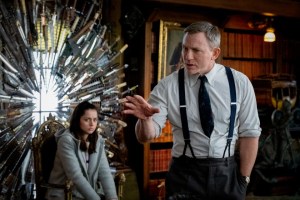 Knives Out is an incredibly fun movie to watch fly by for its extended 130-minute running time. The guessing game is enjoyable and there is a plethora of suspects and red herrings. Johnson is clearly a fan of the genre and doing his best to send it up in his own way while still staying true to its roots. Just look at the silly, Dickensian names and you can tell Johnson is enjoying himself (there’s a character named “Ransom”). The mystery is clever but it becomes something more than a whodunnit (more on that below) and that’s when Knives Out becomes special. Johnson has been repeatedly accused of being too clever by half, looking to produce some meta gymnastics to subvert audience expectations but to what end? This was an issue with the very end of Brothers Bloom and many had this same complaint with The Last Jedi. It’s not enough to subvert expectations if the alternative isn’t as compelling. Still, the choices that Johnson makes with Knives Out best serve to improve the emotional involvement in the story. That quality seems like a rarity when it comes to murder mysteries, because it’s all about solving the crime and not necessarily how it affects the people on a more human level. It’s a problem to be solved, an equation on the board, and the process eliminates the variables systematically. Except with Knives Out, Johnson opens up the central figure of Marta in such a way that she becomes a symbolic figure for the immigrant experience in this country, fighting for dignity and recognition. The political commentary isn’t deep, and some of the shots feel a little cheap, but where Johnson succeeds is treating Marta as an empathetic stand-in for an often-invisible class.
A half-hour or so into the proceedings, Johnson makes a very conscious choice that changes how we understand the mystery and especially how we’re involved. I’ll be careful about spoilers but suffice to say we get some very crucial information that makes us look at the murder differently. For the first act it feels like it’s heading into a whodunnit with our clan of suspicious relatives, but it does something else, and I would argue something better. The problem with an Agatha Christie-style whodunnit is that the film is structured toward solving one central mystery and other important dramatic elements can fall by the wayside. Once you know who the killer is, was the journey to unmask them worth the twists and turns? Johnson instead lets the audience in on crucial information so that Knives Out alters, and the “who” is less important than how this information affects our relationship with a set of characters. It becomes less who is the killer and more will this culprit get caught and how will they beat the encroaching investigation. It transforms the entire structure, where instead of everything leading to one reveal, now it becomes a series of mini-panics and scrambles to stay ahead of a trap. This made me that much more personally involved and Johnson doubled the dramatic irony and tension of scenes. It becomes more a series of obfuscation where we’re involved, remembering what clues might be the ones that ultimately prove too inescapable. There is a downside to this approach, letting out some big reveals early also serves to downplay the vast majority of the supporting players. These people are all given motives and suspicions early on, but once Johnson unloads his twists too many of these same characters just fade into the background, their story use extinguished.
 Another cheerful aspect of Knives Out is simply how much fun its cast is having, none more so than Craig (Spectre). I never really gave much thought to Craig as a comedic actor until 2017’s Logan Lucky, where he seemed to be unleashed, digging full bore into a charming and kooky supporting character, and it was downright joyful to watch him cut it up onscreen. He’s given such serious, macho roles but he really excels in the right comedic role, and he just has the time of his life playing Blanc. His southern-fried accent, penchant for theatricality, and garrulous nature all contribute to both tweak the idea of the clever inspector while playing into those clichés as well, steering into the fun we have with them. There were several moments I was left breathlessly cackling because of how Craig was delivering his lines with such relish. His explanation of the mystery being “a donut hole inside a donut hole” might be one of the best film scenes of the year. It also helps that Blanc has an affectionate working relationship with Marta, the heart of our movie, which makes this eccentric even more endearing to the audience. Just as Kenneth Branagh is continuing the adventures of his mustachioed private eye, I would happily watch another murder mystery featuring Blanc if Rian Johnson felt so inclined (pretty please).
The other actors do fine work even if many of them end up being underwritten figures either meant to be threatening suspects or cartoonish buffoons. Armas (Blade Runner 2047) is the lead actress and often the contrast for our rich elites and their out-of-touch perspectives; she’s the sounding board for their pettiness, acrimony, entitlement, and thinly-veiled racism. Armas just shines in the role as this figure who routinely makes the right choice even when it costs her. She’s a relatable, hard-working, kind character trying to keep her moral bearing in this high-stakes contest. Evans (Avengers: Endgame) is enjoyably smug and a welcome force to antagonize and puncture the egos of his fellow family members. Shannon (The Current War) has his effective moments of conveying menace and being laughably impotent. Every other actor does good work but too many of them barely make a blip. I forgot Riki Lindhome (Garfunkel and Oates) was in this movie from scene to scene. It’s a big cast so the goal is to make the most of their moments, and there isn’t a bad performance in the bunch, though some are far more broad.
Knives Out is a fun experience and further proof that when Rian Johnson really sets his mind on a certain genre, good and clever entertainments sprout. I want this man to tell the stories that excite him because there are still many more genres that could use the Rian Johnson stamp.
Nate’s Grade: A-
Share this:

Spectre (2015)
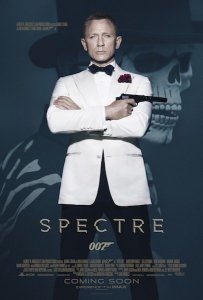 It’s hard to keep a franchise that can almost count its decades on one whole hand fresh and relevant, but Daniel Craig’s time as 007 has done just that. Starting with 2006’s magnificent Casino Royale, we got a grittier Bond, a man with a bruised psychology that was interested in more than just how many bad guys he could callously kill and sexy ladies he could securely seduce. It was a franchise that modeled itself more after the Jason Bourne films, and it worked tremendously, giving the 40-year-old franchise new relevancy for modern audiences that have grown up on the Bond canon. 2012’s Skyfall was the biggest bond hit of all time, grossing over a billion dollars worldwide. It was going to be a hard act to follow. Spectre, for all intents and purposes Craig’s franchise farewell, is a lousy swan song. It’s the weakest of the Daniel Craig Bond era but that claim would require me to rewatch 2008’s Quantum of Solace; however, just from memory, Solace had more engaging moments, stunts, and even a better theme song, so I’ll stick with my proclamation: Spectre is the most mediocre Craig Bond.
James Bond (Daniel Craig) is hunting the organization responsible for the deaths of those closest to him, namely Vesper (Eva Green) and the prior M (Judi Dench). His path has lead to the nefarious SPECTRE terrorist organization and its mysterious and feared leader (Christoph Waltz), who has his own personal reasons for causing Bond misery.
 The movie’s biggest mistake was its insistence that the audience will want to know how all the events tie together as a whole. Due to this position, it makes Spectre the awkward retcon exercise it is, trying to provide winks and nods to past Craig Bond outings while saying, “Oh yeah, all that evil stuff, well this guy is The Guy behind it all.” Adding an extra layer of a criminal conspiracy doesn’t somehow make those events more interesting or provide the need for conclusion; it piggybacks off the earlier movies and pretends it has shown its own work. Spectre thinks the accumulated plot events and deaths of three movies is the same as properly setting up a story and its villains, and that’s just not the case. The other problem with trying to connect the dots to three previous movies is that Spectre has even fewer chances to stand on its own merits, which are admittedly fewer. Lea Seydoux (Blue is the Warmest Color) is a bland addition as a Bond Girl, and oh does she pale in comparison to the capable and indispensable Rebecca Ferguson in the latest Mission: Impossible sequel. Their relationship is never as interesting or as properly developed as the film thinks. The stakes of the movie (surveillance abuse) feel too abstract and low-key, or at least poorly articulated, to feel important. If you’re going to turn the focus of the narrative on offering an apparent climax for multiple movies, it better deliver and feel like it was worth the effort, and Spectre just does not feel like that.
The other thing hat just doesn’t work is the bad guy, which is puzzling because Waltz was born to play a James Bond villain. The Craig Bonds have followed the more stripped down route even in their villains, once the parlance of the most colorful megalomaniacs that action cinema had to offer (and there’s also the eccentric henchmen). There’s a delayed buildup to revealing Waltz (Django Unchained) where other characters will talk in hushed whispers about just how dangerous and powerful the man in charge of Spectre is. A nagging problem is that we’re too often told these things without being shown them. A similar problem affected Skyfall where we spent half the film being told how dangerous and skillful its villain was, but at least Silva (Javier Bardem) lived up to the hype when he arrived, at least for a little while before degenerating into your standard psychopath. Waltz has exactly two sequences before the final showdown. That’s it, and for one of them he’s almost entirely in shadow at the end of a large table of shadowy figures. He’s not given a strong angle to play with his villain (spoilers) and his ultimate personal connection to our 007 agent feels far too forced and slight. Just like the rest of its hasty retconing, Waltz’s connection is meant to feel significant but its not dealt in any way like it should be significant. It’s almost a casual toss-off. It’s even worse when Waltz calls Bond his “cuckoo,” meant to be dark but is just really silly. Waltz is completely wasted in what is little more than a perturbed middle manager role. His climactic showdown with Bond feels impractical even for Bond movies. His downfall is even worse and made me laugh out loud how easily it all comes crashing down. If the emphasis of your movie is how the Big Bad is responsible for all the previous misfortune, then you better make sure the character was worth the wait.
 Sam Mendes (Skyfall, American Beauty) returned to the director’s chair and stages some nicely photographed sequences, but with the exception of a stirring opening sequence, the action of Spectre is quite tame and forgettable. The opening in Mexico City during the Day of the Dead celebrations has an interesting atmosphere and an ongoing tracking shot to pull us in from the start. From there, Bond has to take out a high-profile Spectre baddie and their struggle eventually carries over into a helicopter, both men punching wildly and trying to hold on for dear life as the copter whizzes upside down repeatedly. It’s a good set piece with some fun and unique aspects, like Bond escaping the crumbling wall of a building, but it’s the sheer thrill of watching the battle inside the helicopter that makes this opener a doozey. After that, I was sad to discover that nothing could measure up. Skyfall also peaked with its opening action caper but it still held my interest as it barreled toward its conclusion. I was resisting the urge to go to sleep with Spectre. An air chase over the trails of a mountain is interesting but doesn’t evolve, which is something vital to all exciting action sequences. If the action is static, it’s most often not going to be good after the initial rush wears off. There’s a decent car chase late at night in Rome but I got to think why Bond would be fleeing just one henchman even if that paid muscle were played by physical brute David Bautista (Guardians of the Galaxy). The film’s budget was reportedly $245 million and I just do not know where that money went.
The Craig era will be known for revitalizing the franchise, saving it from its self-parody excesses that were swallowing the series alive. We were watching Craig’s version of 007 become the hardened, quip-heavy, flippant killing machine and womanizer, except that he doesn’t feel like that character by the end of Spectre. If the course of four films was to bring the Bond we know into fruition, then it didn’t quite work, and that personally thrills me. Craig’s character is far more interesting, haunted by the people he couldn’t save, than the action hero Bond staple. However, while Craig’s character maintained a trajectory that staid true to its aim of bringing more depth to its central hero, the series was starting to hew closer to the classic Bond mode of empty bombast, and Spectre is the final proof of this. It’s getting closer to the crazy villains and spy hijinks of old territory. It’s a story that wants climax and resolution but cannot supply it without relying heavily upon the three previous movies to supply the weight this one lacks. It’s a rather lackluster farewell for Craig, an actor who deserved better. Judging by his interviews, I think he’s just happy to be out. He’ll be missed. Spectre will not. Now bring on Idris Elba please!
Nate’s Grade: C+
Share this:

Skyfall (2012)
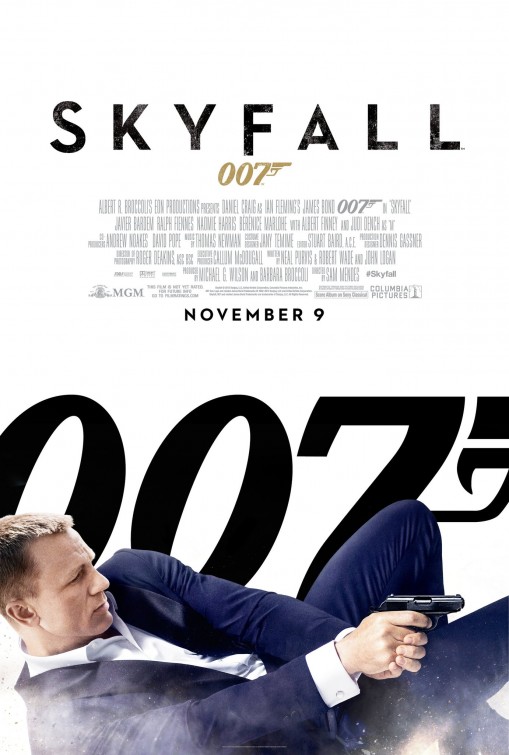 The James Bond franchise, one of the most enduring of all time, has been open to criticism since it came back in a big way with 2006’s Casino Royale. Fans have started to whine that the Bond movies are no longer the Bond they remember, and they’re probably right. In 2006, the producers decided to go back, reboot the series, and introduce a more grounded Bond, a man with more demons than quips. This backlash to a successful reboot seems so funny to me, especially considering the dubious nature of these older Bond movies. Can we all just take a moment and objectively admit that half of the Bond movies are absolutely awful? Skyfall is the third in the new Daniel Craig Bond era, and it’s received universally ecstatic reviews. It’s a fine work, surprising and satisfying in equal measure, but it’s no Casino Royale for me, but what can be?
James Bond (Craig) is recovering from a serious injury after a fellow agent, Eve (Naomie Harris), accidentally shoots Agent 007. In her defense, he was atop a speeding train battling a baddie and her boss, M (Judi Dench), ordered her to fire. In the weeks that follow, Bond is struggling to adapt. He’s lost a step physically and now has to deal with his own doubts. Naturally, this isn’t the most opportune time for crises of faith. MI6 is under attack by one of their own, a former agent turned powerful techno-terrorist named Silva (Javier Bardem). The man has a serious grudge against M and is exposing MI6 undercover agents to punish her. After an attack at MI6 HQ, the agency is left scrambling and sends Bond out to nab Silva, even if Bond isn’t physically ready to return to field duty. Silva is determined to kill M and destroy the agency that left him for dead.
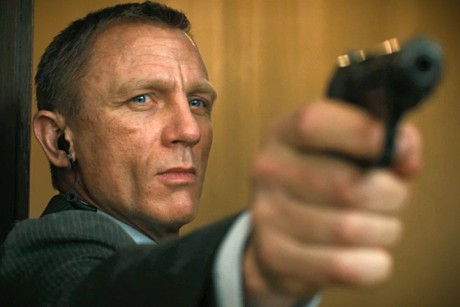 While Skyfall is indeed a good Bond movie and worlds better than 2008’s Quantum of Solace, it still cannot meet the rapturous applause it’s receiving among critical circles. It starts off strong with a nifty action sequence in Istanbul (the go-to action setting for 2012). Bond is chasing a bad guy, and we go from foot chase to car chase to rumbling on top of a speeding train. And there are natural complications that take advantage of geography! When Bond hops on the train, he climbs into a construction crane to fight back, smashing open the back of the train car. It’s a terrific opener that gets things starts briskly, and the sexual chemistry between Craig and Harris (28 Days Later) is palpable. Then the movie pretty much deflates in the second half. There’s a build-up to the villain and his master plot, but once that plot is revealed the film can’t live up to the hype. There are enough plot elements that feel important but eventually get discarded. Here’s a minor example: Bond is given a handgun programmed to his palm print, so it will only fire with Bond wielding it. It’s the only gadget in the movie, so you’d expect it to be utilized in a significant way. One nameless thug uses it then gets eaten by a Komodo dragon. That is it. Seems like an awful waste of funds for it to be thrown away so casually.
The last act has a protracted finale in Scotland, exploring Bond’s ancestral home and his tragic backstory. I’d like to think the insights we’re offered are important but I don’t believe they are. Bond was an orphan (the best recruits, says M) and Albert Finney (Big Fish) was his quasi-father figure/caretaker. It’s not enough to compensate for the slack pacing and encroaching boredom present. The good guys are holed up in an estate, waiting. And that’s what you want in a Bond movie, let alone any action film, for the heroes to sit and wait. An action movie should be building to a climax of intensity, thematically as well as plot-wise. Skyfall is that rare Bond film that flirts with coming undone; each passing action sequence seems less interesting than the one before.
With Mendes directing and Roger Deakens, the greatest working cinematographer, at his disposal, this has to be the best looking Bond movie. The shot compositions are often stunning, making fine use of the visual space and the balance of light and shadow. There are even some shots that might remind you of Mendes previous films like American Beauty or Road to Perdition. Added with some above average action, it makes the thrills an even better sight. There was a fight sequence in a Chinese high-rise almost completely in unbroken silhouette, with the neon tentacles of advertisements dancing in the background. It’s a wonderful image. Even when the movie was losing me at points, I could at least admire the visuals. I was worried that Mendes would not have a deft feel for action. After all, another indie director mostly known for dramatic work, Marc Foster, helmed Solace. That selection did not work out so well, though the script was notably weak. Mendes, on the other hand, can stage some pretty exciting action sequences with judicious editing, allowing the audience to follow along with ease. He’s not exactly a knockout when it comes to constructing action sequences, but the results are more than adequate for a guy whose last two movies were Away We Go and Revolutionary Road.
For the previous Craig entries, it feels like the movies have borrowed more from Jason Bourne than Bond. They’ve gone for a grittier, darker, more realistic portrayal. Skyfall takes a very interesting angle with the character, showing a Bond coming to terms with his physical limitations. It’s a Bond that has to confront his most nefarious foe: aging. Mallory (Ralph Fiennes) tells the agent that the whole spy business is “a young man’s game.” In the old days, you needed men with lairs in volcanoes and giant doomsday lasers. Now you can send the world into irreversible chaos with a laptop. Skyfall is at its most engaging when it confronts the old world of spies and the scary new world of technology. Can the Queen and MI6 compete or will they be left behind? Bond and his organization must confront their limitations and mortality, and this added dimension of vulnerability makes the series far more emotionally resonant.
 Here’s my main problem with the villain: it’s a bait and switch affair that leads to unfulfilled potential. Silva has been spoken of with such awe, a man who could bring governments to their knees with the click of a button. He’s made out to be this dangerous cyber-terrorist genius. So what happens for the second half of the movie? He chases people around and shoots guns. It’s like Skyfall completely forgets what made their villain special. Bardem gives a flamboyant performance with an extra dash of actorly nuttiness, but it’s nowhere near the memorable menace of 2007’s No Country for Old Men. That’s an unfair comparison, I know, but where the movie really starts losing it is when Silva loses it. He becomes just another garden variety psychopath, though one with a creepy oedipal complex. Psychopaths do not work in the James Bond universe. Agent 007 needs a foil that is smart, not crazy and a mad genius rather than mad. I recognize that Silva’s psychological shambles is meant to be a sign of the potential fate of all agents, let alone agents that are given up by M. That doesn’t mean you abandon all the traits that make the villain who he is. The problem with Silva, despite a rather jarring monologue about the effects of surviving a cyanide capsule, peaks with his first appearance. He has a grand entrance and places Bond in a very precarious position, forcing him to confront his physical failures. That’s the villain I want to see. And the awkward handsiness of Silva will also lead many to question whether he’s gay, which wouldn’t matter if the movie wasn’t so clunky.
It also feels like Skyfall may be the conclusion to this incarnation of Bond. I know Craig has been signed for two more films, and that’s great news as he’s fully made the character his own at this point, but the movie seems to setup the Bond we’re better acquainted with. We started from scratch with Casino Royale and now the familiar world, with the reemergence of familiar characters, is coming into focus. The scenes with the new Q (Ben Wishaw), a gangly whiz kid, are enjoyable and they contribute thematically to the old vs. new/age vs. youth conflict at heart. This feels like a transition film, meant to pass from the bruising realism into the polished pyrotechnics of the franchise’s past. There’s a reason the famous gun barrel shot happens to conclude the movie, because by the end of those 142 minutes, it now feels like the formation of James Bond has completed. There are also plenty of in-jokes and references for Bond aficionados to lap up. Even the (lackluster) title song by Adele is in the vein of the old Shirley Bassey numbers.
While not living up to the exultant hype machine, Skyfall is certainly a good Bond movie, though not nearly good enough to be in the conversation of the best. The action starts strong but is prone to diminishing returns especially as the movie transforms into a more ordinary action thriller. The most memorable sequence is in the opening, which isn’t a very good sign for the rest of the movie. It’s still a suitable action movie, and one that pays closer attention at character for a character that’s lived for 50 years in various film incarnations, but just because it pays more attention to character doesn’t mean it does it well. Perhaps I’ve just become spoiled after the artistic and commercial heights of Casino Royale. This is still an entertaining movie that often looks great and has some great actors doing suitable work. We’re still far and away from the loonier Pierce Brosnan episodes, so there is that. I imagine audiences will be more favorable than I am and make Skyfall the most successful James Bond film in history. That’s fine because it feels like, with everything established, that we’re about to hit a new and exciting phase with Craig’s version of the character, and that will leave me shaken and stirred.
Nate’s Grade: B
Share this:

Cowboys & Aliens (2011)
 Never as good as a film should be given the talent involved, nor as bad as its detractors might have you believe, Cowboys & Aliens is an entertaining genre mash-up that’s about 60 percent Western, 30 percent alien thriller, and 10 percent naked Olivia Wilde, which is too small a percentage in my opinion. For a solid hour, the movie follows the rhythms of classic Westerns and Daniel Craig has a face vividly made for the Western canvas. The sci-fi elements feel well integrated in small doses, however, when the movie goes all-out intergalactic gun slinging is when the narrative gets swallowed whole by the crude blockbuster nature of this beast. The plot is pretty standard Man with a Dark Past stuff, and can we put a moratorium on people suffering amnesia and choosing to be better people? The characters never really feel real but they feel believably stock for their genre. For a PG-13 movie, the violence can get pretty gruesome, especially in its gooey disembodiment of the alien invaders. You almost feel sorry for these nefarious gold-hoarding (yes, you read that right, the aliens are after our gold – Glen Beck was right!) creatures. The action sequences are a notch above average, the emphasis on practical effects is appreciated, and the movie takes some darkly comic turns, which kept me amused even when the movie’s IQ was dropping at a precipitous rate for the last act. Cowboys & Aliens never pretends to be anything more, or smarter, than its blunt title.
Nate’s Grade: B-
Share this:

The Girl with the Dragon Tattoo (2011)
 Nothing says holiday treat for the whole family like a nearly three-hour movie about rape. Late author Stieg Larsson’s best-selling trilogy made three very successful Swedish films, all released last year in indie theaters. It was only a matter of time before Hollywood optioned The Girl with the Dragon Tattoo, benefiting those averse to reading subtitles. At least they hired the right director in David Fincher, a man used to plumbing the depths of human depravity in films like Seven, Fight Club, and Zodiac. Fincher’s take is pretty dark and hardcore, but once you wash all that perfectionist grime off, I prefer the Swedish film in just about every way.
Crusading journalist Mikael Blomkvist (Daniel Craig) is smarting from a court case that found him guilty of libel. He’s commissioned by a wealthy businessman Henrik Vagner (Christopher Plummer) to investigate the 40-year-old disappearance of his granddaughter, Harriet. Henrik strongly believes she was murdered by one of the sinister members of his extended family, a group of shady characters with some allegiance to Nazism. Mikael is assisted by the unorthodox computer hacker Lisbeth Salander (Rooney Mara), a rail-thin Gothic gal clad in tattoos and piercings. Their partnership sometimes gets blurry as they grow closer over the course of the investigation. Together the pair investigates a series of grisly, ritualistic murders related to Harriet’s disappearance, and the closer they get to discover the truth the more dangerous things get.
 So the burning question: is Fincher’s take better than the original Swedish version? Well, in some areas yes but in many areas I’d have to say no, that I prefer the lower budget, no-name Swedish version. Obviously a director of Fincher’s caliber is going to significantly raise the quality of a production, and the technical merits of Fincher’s Dragon Tattoo are without question. This is a seedy, grimy, prurient, and very dark (in both lighting and thematic material) little movie. There’s always been an eerie beauty to Fincher’s cool aesthetics, and it’s on display here as well. Many of Fincher’s Social Network crew carried right over to Dragon Tattoo, so the editing is crisp, the cinematography sleek, and Trent Reznor and Atticus Ross’ score is a storm of ominous tones. Their plaintive score is actually a fairly unmemorable muddle, never approaching the energy, intricacy, or diversity of their Oscar-winning score for The Social Network. However, the extra polish and the glut of familiar actors takes away from the intrigue of the movie. When something meant to be gritty is too artistically stunning, it detracts from the thematic intent of the story. That sounds like a contrary way to insult Fincher for making his movie look too good, but perhaps that’s the best way of stating the point. Niels Arden Oplev is nowhere near the filmmaker that Fincher is, nor did he have the budget or creative freedom afforded Fincher, but perhaps someone of lesser talents was better suited to best tell this tale. By all means, the American Dragon Tattoo is a more visually alluring film, but Oplev’s film is more fully felt. I recently rewatched the Swedish version again for points of comparison and found myself much more involved in the characters, the story, and the actors, even though I had already seen the movie. Fincher’s version may be the better-looking movie, but surprisingly Oplev’s is just the better movie, period.
The adaptation by Steven Zallian (Schindler’s List) actually hews closer to Larsson’s book than the Swedish film, though Zallian redirects the film into a new ending. But the additions don’t seem to add anything of substance to the narrative (Blomkvist’s teenage daughter; dead cat), and the new ending feels more confused than helpful. Most of all, Zallian’s script devotes less time to the characters of Lisbeth and Blomkvist. I had a better understanding of these characters and their complicated, shifting relationship in the Swedish film. That narrative was much cleaner with helpful, clarifying procedural details and a dose of ambiguity. Simply put, the story just flowed better in the Swedish film. The personal connection Blomkvist had to Harriet (she was his babysitter long ago) has also been severed. Many of the story’s problems are still the same regardless of language or adapter. There is a clear disparity when it comes to audience interest in the two leads. What’s more interesting, a punky, bisexual, computer hacker or a disgraced, somewhat bland journalist? Exactly. Also, the story takes far too long to put our lead characters together, over an hour at that. The murder mystery is filled with murky plot points, pieces that seem like they might be integral but then turn out to be incidental. It takes a good while to process and familiarize oneself with the expository details of the case, but under Zallian’s draft, the mystery is given less room to breath. For a movie clocking in at 150 minutes, things feel untidy and rushed. The resolution feels drawn out to ungodly Lord of the Rings-lengths; I swear there must be a solid 20 minutes after the eventual serial killer is dealt with. It just feels like it goes on forever. Still, the characters are what ultimately makes Dragon Tattoo engaging, and Zallian’s efforts cannot dampen the captivating, curious nature of Lisbeth Salander.
Both Craig and Mara give fine performances but I prefer both Swedish actors to the A-listers. Craig is certainly a better actor than his Swedish counterpart, but the role is a middle-aged journalist and not James Bond, and thus a better fit for the unknown Swedish actor, Michael Nyqvist (Mission: impossible: Ghosts Protocol). Blomkvist isn’t supposed to be an ass-kicker. As a result, you don’t feel his terror as he gets in deeper and lands in serious physical jeopardy. Likewise, following in Noomi Rapace’s (Sherlock Holmes: A Game of Shadows) shoes was going to be a difficult feat for any actress, but Fincher got the girl he wanted, Mara, who tore down Mark Zuckerberg with precision in The Social Network. Mara commits herself completely to the role and undergoes a severe physical transformation (bleached eyebrows, wiry frame, nipple piercings), but she lacks the intensity of Rapace, the spiteful attitude, the recklessness and the resourcefulness. Rapace felt like a caged animal that could explode at any moment; Mara feels more like a lost puppy. I’m being intentionally cavalier with my word choice. Mara is quite good as Lisbeth; it’s just that Mara can’t quite measure up to the preceding tattooed girl. It feels like there’s a lot more going on with the Swedish Salander, whereas the American (still Swedish) Salander is waiting for her cue. It’s like Mara has dressed the part and waits for the character to just click over.
 I’m not one for lazy analysis, but I feel like the uncomfortable issue of sexual violence/ voyeurism needs to be addressed, and I find that everything I wrote a year ago in my original Girl with the Dragon Tattoo review could readily apply to its Hollywood counterpart. So here goes: “The book’s original title was ‘Men Who Hate Women’ and that seems apt given what occurs on screen. Sure there’s a serial murderer on the loose but that’s par for the course. Even the grisly ritualistic killing stuff. But Lisbeth encounters a lot of malice and hostile male aggression, some of it very sickening. There’s a startlingly extended rape sequence, followed by some sadistic, if justifiable, revenge. It all contributes to an overall tone of queasy misogyny that seems to waver between intentional and unintentional. I’m not sure tone-wise whether the movie ever creeps into unsettling voyeurism at the behest of women in explicit sexual peril, but it certainly is a distraction. It can get pretty hard to watch at times in this disturbing thriller. I hope the eventual sequels don’t follow this same queasy, upsetting tone but I also worry that this may be unfortunately part of the books/movies’ appeal.”
For those new to Lisbeth and Larsson’s sordid saga, The Girl with the Dragon Tattoo will more than likely play well, a squalid thriller with the nicest coat of gloss you could ever hope for given the material. This is dark, rape-heavy stuff, and an odd adult drama to position as a Christmas release, but the collective appeal of the best-selling books should guarantee so many butts in the seats. It’s likely a safe bet that a high majority of those paying customers are unfamiliar with the Swedish version of the same story, which is a shame because, short of a few technical advances, I believe the Swedish film to be the superior movie. It had better acting, more appropriate casting, a rounder narrative that fleshed out the characters, their relationships, and their histories better, and a better score (sorry Trent, better luck next time). It’s still a movie that registers a “good” on most critical accounts, and Lisbeth Salander is still a fascinating person, a wounded warrior that catches the imagination. I’ll be curious to see if the subtitle-free Girl with the Dragon Tattoo does well enough at the box-office to warrant filming the next two decidedly lesser books. Whatever the case, there will always be the Swedish films and Ms. Rapace’s star-making performance.
Nate’s Grade: B


 nathanzoebl
You must be logged in to post a comment.